

A Coordinated Electric System Interconnection Review—the utility’s deep-dive on technical and cost impacts of your project.

Difference Between OSHA, NEC, NFPA, and NERC Compliance in Electrical Engineering

Calendar icon. D

May 9, 2025 | Blog

Electrical workers in hard hats and vests inspect wiring, using tablets in a facility.

In the complex world of electrical engineering, ensuring regulatory compliance is just as critical as technical design and system performance. Whether working on utility-scale substations, industrial facilities, or commercial power systems, electrical engineers must navigate multiple standards to maintain safety, reliability, and legal compliance.


Four of the most influential frameworks that shape electrical engineering projects in the U.S. are OSHA, NEC, NFPA, and NERC. While they are often referenced together, they each serve unique purposes and apply to different aspects of the industry. At Keentel Engineering, we specialize in helping clients interpret and comply with each of these standards as part of our full-service electrical engineering solutions.


OSHA (Occupational Safety and Health Administration)

Purpose

OSHA is a federal agency responsible for enforcing workplace safety laws. For electrical engineers, OSHA standards regulate safe work practices, electrical hazard mitigation, and personal protective equipment (PPE) requirements.

Key Relevance to Engineers

  • Arc flash and shock protection (1910.269 and 1926 Subpart K)
  • Lockout/tagout (LOTO) procedures
  • Grounding and isolation before maintenance
  • Safety training and documentation

Application

Engineers must design systems and procedures that comply with OSHA standards to protect field workers, technicians, and maintenance staff.


NEC (National Electrical Code) – NFPA 70

Purpose

Developed by the National Fire Protection Association (NFPA), the NEC sets the standard for safe electrical design, installation, and inspection.

Key Relevance to Electrical Engineers

  • Cable and conduit sizing
  • Overcurrent protection
  • Grounding and bonding
  • Panelboard and switchgear specifications

Application

NEC is legally adopted in most jurisdictions. Engineers must apply NEC principles in drawings, load calculations, and field construction standards to ensure code-compliant electrical design.


NFPA (National Fire Protection Association)

Purpose

Beyond NEC, NFPA publishes other codes such as:

  • NFPA 70E: Arc Flash Safety in the Workplace
  • NFPA 72: Fire Alarm and Signaling Codes
  • NFPA 110: Emergency Power Supply Systems

Key Relevance to Electrical Engineers

  • Risk assessment and arc flash boundary calculations
  • Fire protection system interface with electrical systems
  • Emergency power system design

Application

Electrical engineers use NFPA codes for fire safety integration and to support life safety systems and backup power planning.


NERC (North American Electric Reliability Corporation)

Purpose

NERC focuses on bulk electric system (BES) reliability. It sets standards for utility-scale generation, transmission, and large-scale industrial users.

Key Relevance to Electrical Engineers

  • PRC standards (Protection and Control)
  • MOD standards (Modeling and Studies)
  • TPL Transmission Planning
  • FAC (Facility Ratings and Verification)

Application

Keentel Engineering supports NERC compliance through services like:

  • Relay coordination and protection studies (PRC-019, PRC-024, PRC-025, PRC-027, PRC-029)
  • Dynamic model validation (MOD-032, MOD-026, MOD-027 Testing)
  • Facility ratings documentation (FAC-008)
  • Cybersecurity architecture review (CIP series)

Why Compliance Matters

Compliance is not just a checkbox—it’s an engineering responsibility. Ignoring OSHA, NEC, NFPA, or NERC requirements can lead to:

  • Safety incidents or fatalities
  • Legal penalties and shutdowns
  • Project rework or denied permits
  • System unreliability or outages

At Keentel Engineering, we bring over 30 years of expertise to ensure your project complies with all relevant codes and standards while remaining on-time and on-budget.


Learn more about our NERC compliance solutions: NERC O&P 693 Compliance Services

See how we apply NEC, NFPA & OSHA in power system projects: Electrical Substation Design Services


Frequently Asked Questions (FAQ)

  • Do electrical engineers need to be OSHA-certified?

    While not required, engineers working in the field benefit from OSHA 10 or 30 training to understand jobsite safety responsibilities.

  • Is NEC mandatory for every project?

    Yes, in most jurisdictions. NEC is adopted as law through local and state building codes.

  • What is the difference between NFPA 70 and 70E?

    NFPA 70 is the National Electrical Code, while NFPA 70E covers arc flash safety and electrical workplace hazards.

  • When does NERC compliance apply?

    NERC applies to entities involved in the generation, transmission, or reliability of the bulk electric system, typically 100 kV and above.

  • Can Keentel help with PRC-019 and PRC-024 studies?

    Absolutely. We perform protective coordination and settings verification to comply with PRC requirements.

  • Do NEC and OSHA overlap?

    Yes, especially regarding safe electrical installations. NEC ensures system safety, while OSHA ensures worker safety.

  • Who enforces NFPA codes?

    Fire marshals and AHJs (Authorities Having Jurisdiction) enforce NFPA codes depending on the state or local laws.

  • Are backup generators covered under NEC or NFPA?

    Both. NEC governs installation, while NFPA 110 governs operational reliability.

  • What is a NERC Facility Rating (FAC-008)?

    It’s the defined thermal, voltage, and stability limits of equipment—critical for planning and reliability studies.

  • How often should arc flash studies be updated?

    NFPA 70E recommends every 5 years or after significant system changes.

  • What is MOD-032 compliance?

    It requires accurate dynamic models of generating units for reliability simulations.


  • Is a licensed P.E. required for NERC reports?

    Yes, most NERC compliance documentation must be signed and sealed by a Professional Engineer.

  • What kind of projects require OSHA lockout/tagout (LOTO)?

    Any maintenance or service work on energized equipment mandates LOTO protocols.

  • How does Keentel manage multi-standard compliance?

    We integrate OSHA, NEC, NFPA, and NERC into every design, commissioning, and study phase.


  • Can a system be NEC compliant but still violate OSHA rules?

    Yes, especially if safe work practices aren’t followed despite code-compliant installations.

  • What does NFPA 72 focus on?

    Fire alarm systems—detection, signaling, notification, and integration with other building systems.

  • Who needs to comply with CIP standards?

    Entities with critical cyber assets that can affect the bulk electric system.

  • Does Keentel offer training on these standards?

    Yes, we provide in-house or virtual training sessions for clients and field crews.

  • What is the penalty for NERC non-compliance?

    Fines can reach up to $1 million per day per violation, depending on severity.

  • How can Keentel Engineering support my compliance project?

    From studies and design to documentation and audits, we offer full-service engineering with compliance built in.


Need help ensuring your next project complies with OSHA, NEC, NFPA, and NERC requirements?

Contact Keentel Engineering today — your trusted partner in safe, code-compliant, and future-ready electrical engineering.


A smiling man with glasses and a beard wearing a blue blazer stands in front of server racks in a data center.

About the Author:

Sandip "Sonny" R. Patel, P.E.

IEEE Senior Member · Founder & CEO, Keentel Engineering

In 1995, Sonny Patel earned his Electrical Engineering degree from the University of Illinois. But degrees don't build legacies — action does.

For three decades, he has worked the power industry from every side of the table: 16 years as a utility engineer at Exelon/Commonwealth Edison; generation leadership across hydroelectric, industrial steam turbine, and a 9 GW renewable fleet; NERC Regional Entity Senior Compliance Engineer and Audit Team Lead, auditing some of the nation's largest utilities; and testing and commissioning lead on equipment up to 765 kV — the very top of the North American grid.Utility. Generator. Regulator. Consultant. Few engineers have seen all four seats. Fewer still have sat in them.

His experience spans nuclear, hydro, conventional generation, renewables, oil and gas, mining — and today's data centers, where he is authoring a three-book series on data center design. He is a Licensed Professional Engineer in six states and a Licensed Electrical Contractor in Florida (Unlimited EC) — he doesn't just design the work; he's qualified to stand behind its execution.Today, as Founder and CEO of Keentel Engineering, Sonny leads a nationwide team of engineers delivering substation design, power system studies, NERC compliance, and commissioning — done right, coast to coast.Three decades. Every side of the table. One standard: accountable engineering.

Four workers in safety vests and helmets stand with arms crossed near wind turbines.

Let's Discuss Your Project

Let's book a call to discuss your electrical engineering project that we can help you with.

Man in a blazer and open shirt, looking at the camera, against a blurred background.

About the Author:

Sandip "Sonny" R. Patel, P.E.

IEEE Senior Member · Founder & CEO, Keentel Engineering

In 1995, Sonny Patel earned his Electrical Engineering degree from the University of Illinois. But degrees don't build legacies — action does.

For three decades, he has worked the power industry from every side of the table: 16 years as a utility engineer at Exelon/Commonwealth Edison; generation leadership across hydroelectric, industrial steam turbine, and a 9 GW renewable fleet; NERC Regional Entity Senior Compliance Engineer and Audit Team Lead, auditing some of the nation's largest utilities; and testing and commissioning lead on equipment up to 765 kV — the very top of the North American grid.

Utility. Generator. Regulator. Consultant. Few engineers have seen all four seats. Fewer still have sat in them.

His experience spans nuclear, hydro, conventional generation, renewables, oil and gas, mining — and today's data centers, where he is authoring a three-book series on data center design. He is a Licensed Professional Engineer in six states and a Licensed Electrical Contractor in Florida (Unlimited EC) — he doesn't just design the work; he's qualified to stand behind its execution.

Today, as Founder and CEO of Keentel Engineering, Sonny leads a nationwide team of engineers delivering substation design, power system studies, NERC compliance, and commissioning — done right, coast to coast.Three decades. Every side of the table. One standard: accountable engineering.

Leave a Comment

Related Posts

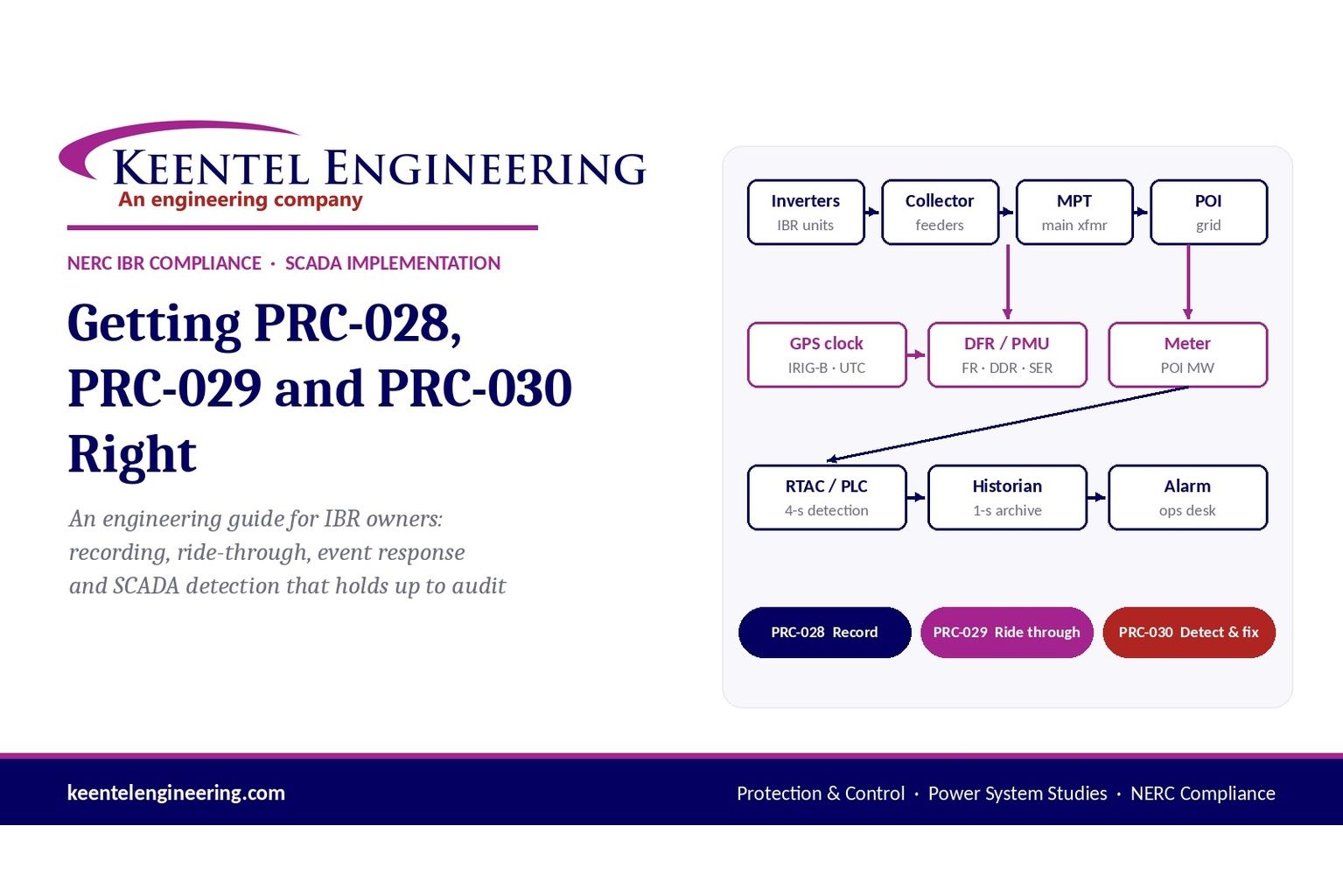
PRC-028 PRC-029 and PRC-030 NERC IBR compliance guide
By SANDIP R PATEL • October 3, 2026
Engineering guide to PRC-028 disturbance recording, PRC-029 ride-through and PRC-030 event detection for inverter-based resources.
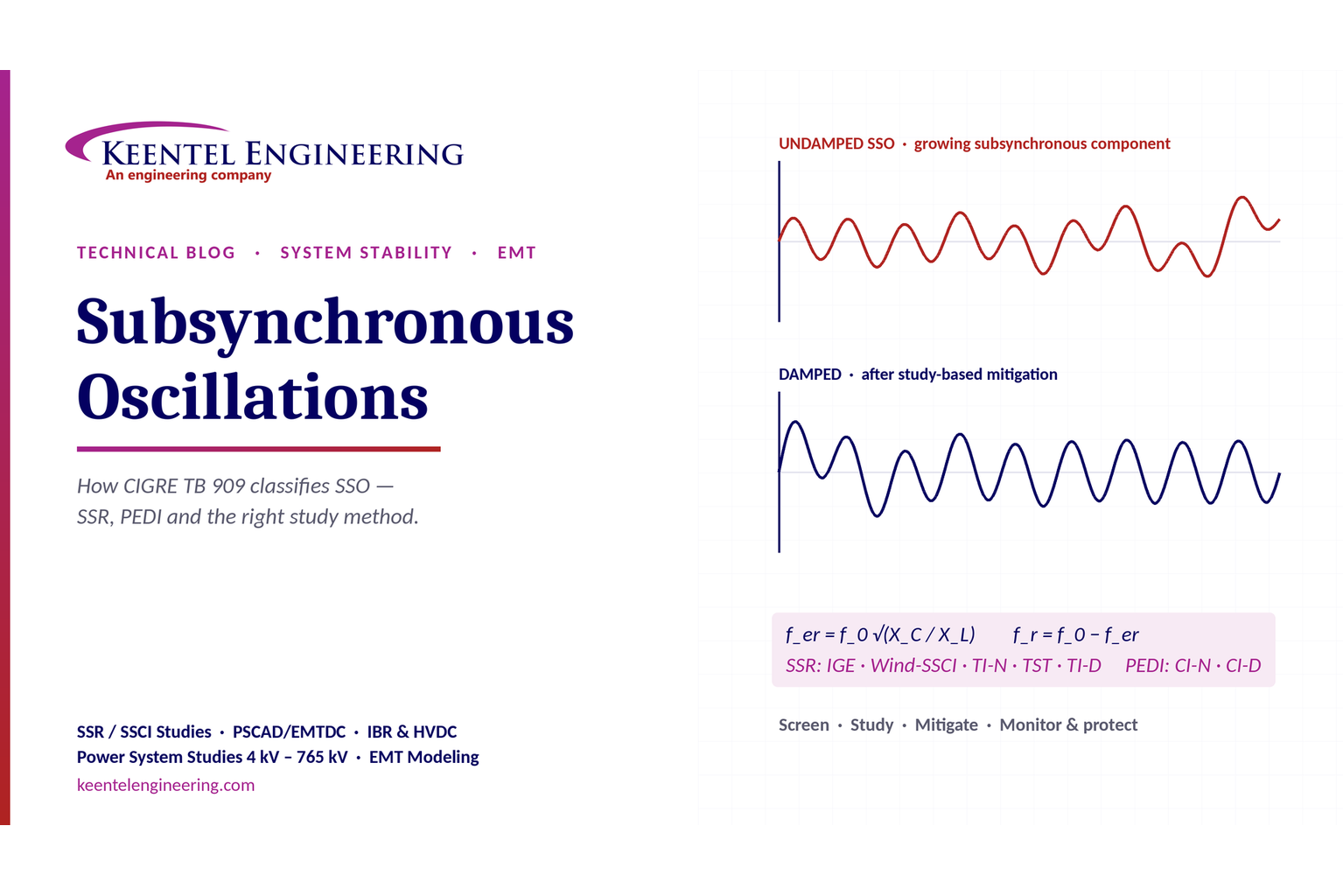
Keentel Engineering graphic showing damped and undamped subsynchronous oscillations.
By SANDIP R PATEL • October 3, 2026
A practical guide to SSO classification, SSR, PEDI, Wind-SSCI, EMT analysis, mitigation and protection based on CIGRE TB 909.
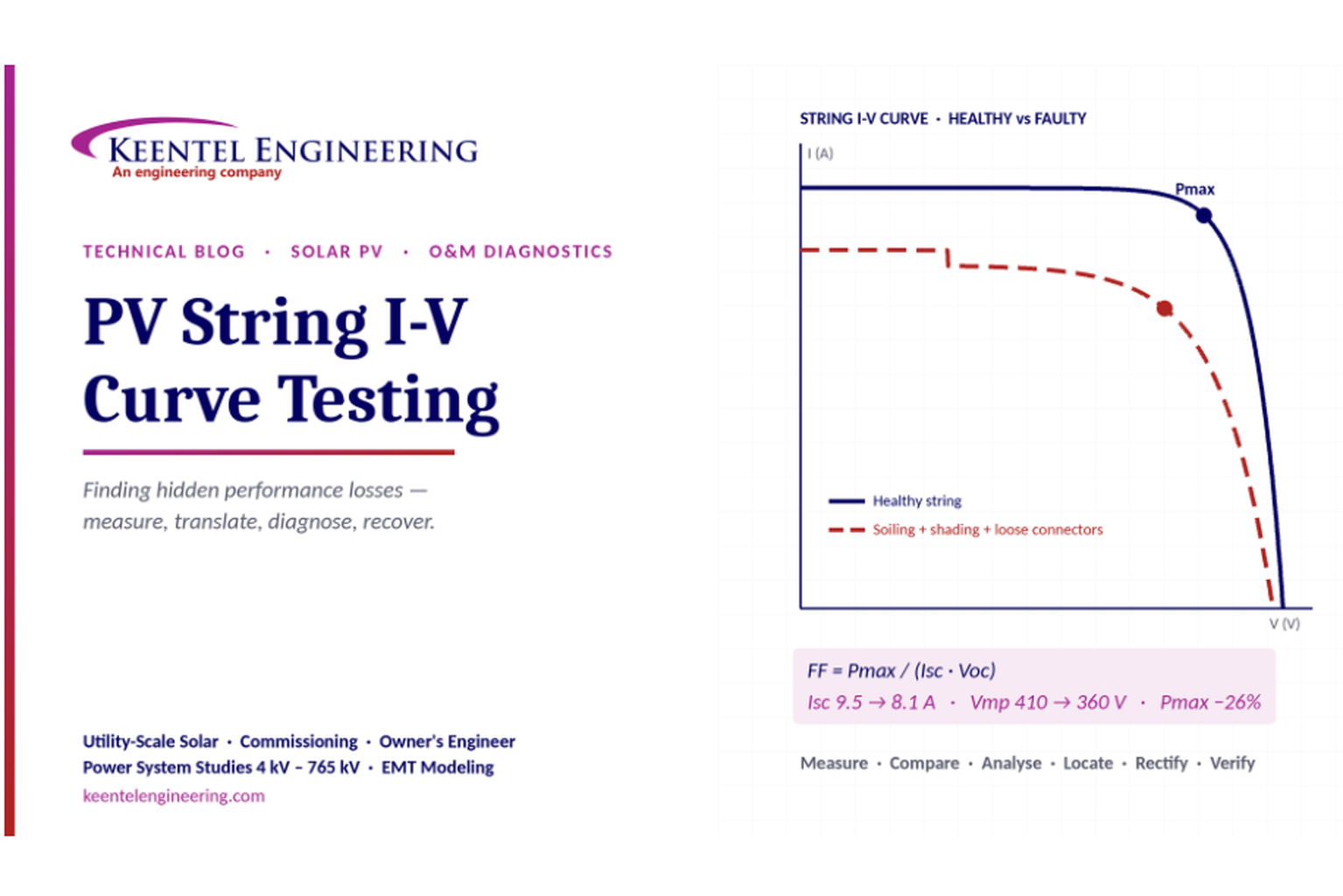
PV String I-V Curve Testing for Solar Performance Loss
By SANDIP R PATEL • October 3, 2026
Learn how PV string I-V curve testing identifies hidden solar performance losses, including soiling, shading, mismatch, degradation, and wiring faults.
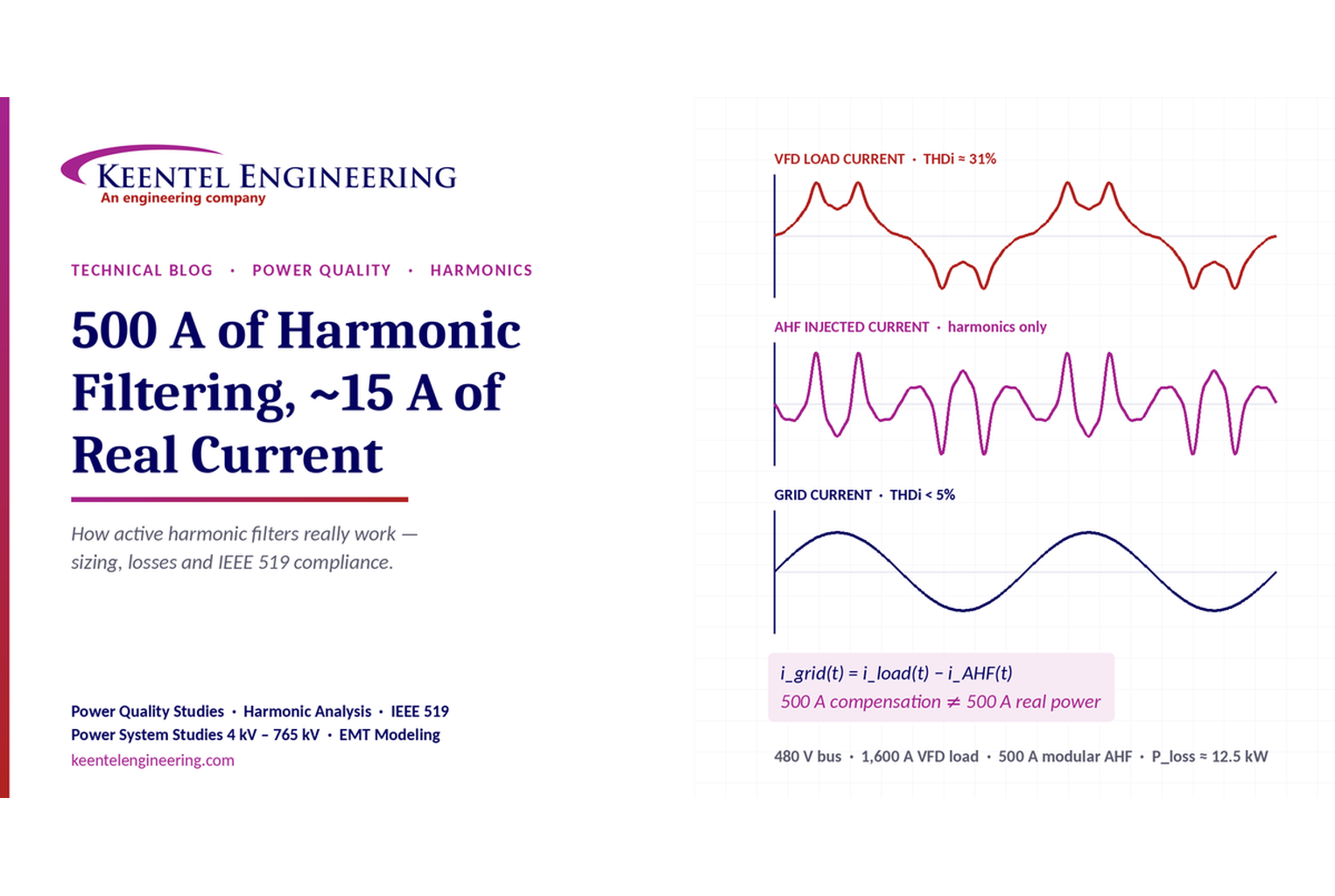
Active harmonic filter reducing VFD current harmonics and grid THDi.
By SANDIP R PATEL • October 3, 2026
Learn how active harmonic filters work, how to size AHF systems, reduce VFD harmonics, calculate losses, and meet IEEE 519 TDD limits at the PCC.
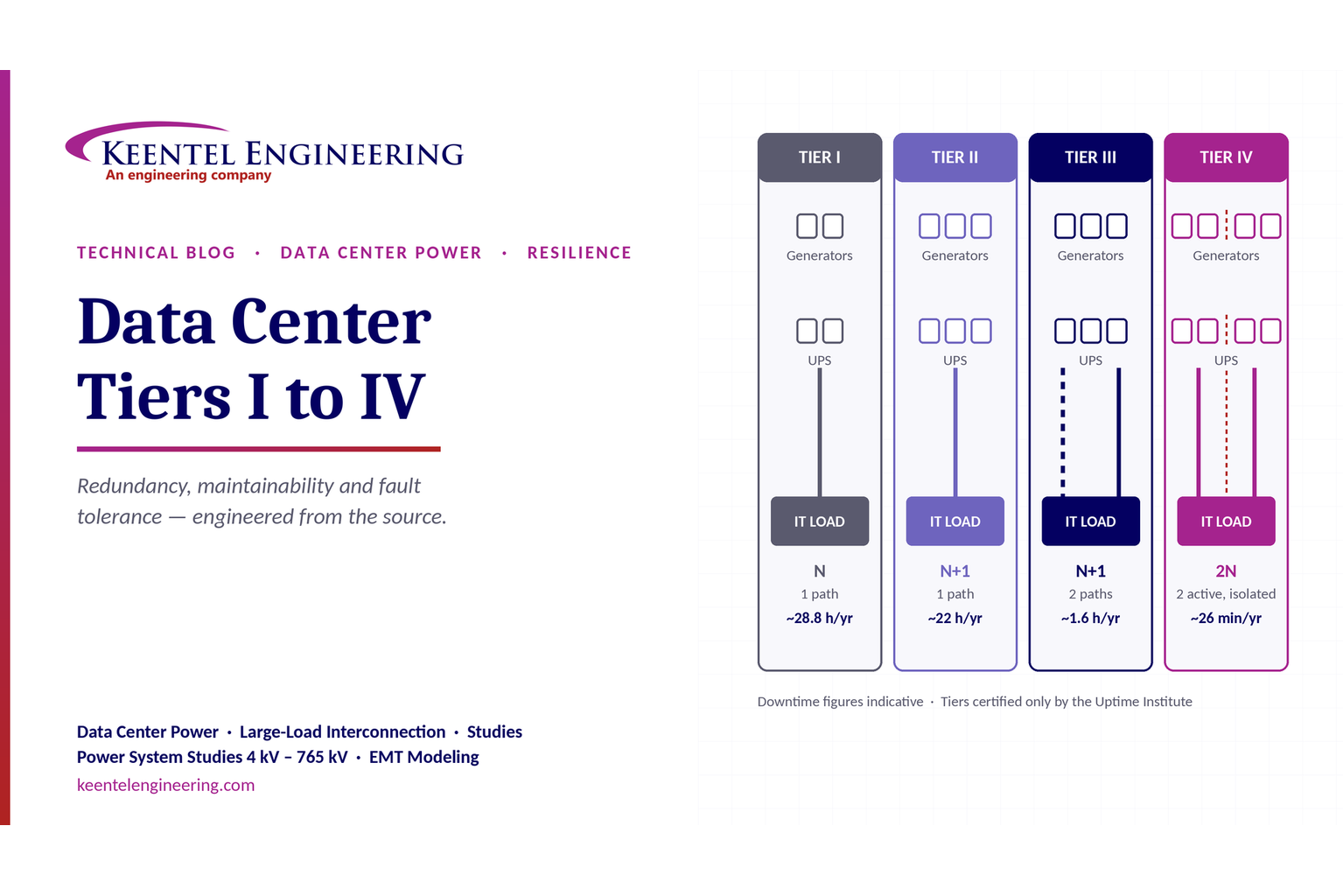
Data Center Tiers I to IV: An Electrical Engineer's Guide to Redundancy, Maintainability and Fault T
By SANDIP R PATEL • October 3, 2026
Compare Data Center Tiers I–IV, including redundancy, uptime, Tier III concurrent maintainability, Tier IV fault tolerance, UPS, generators and power design.
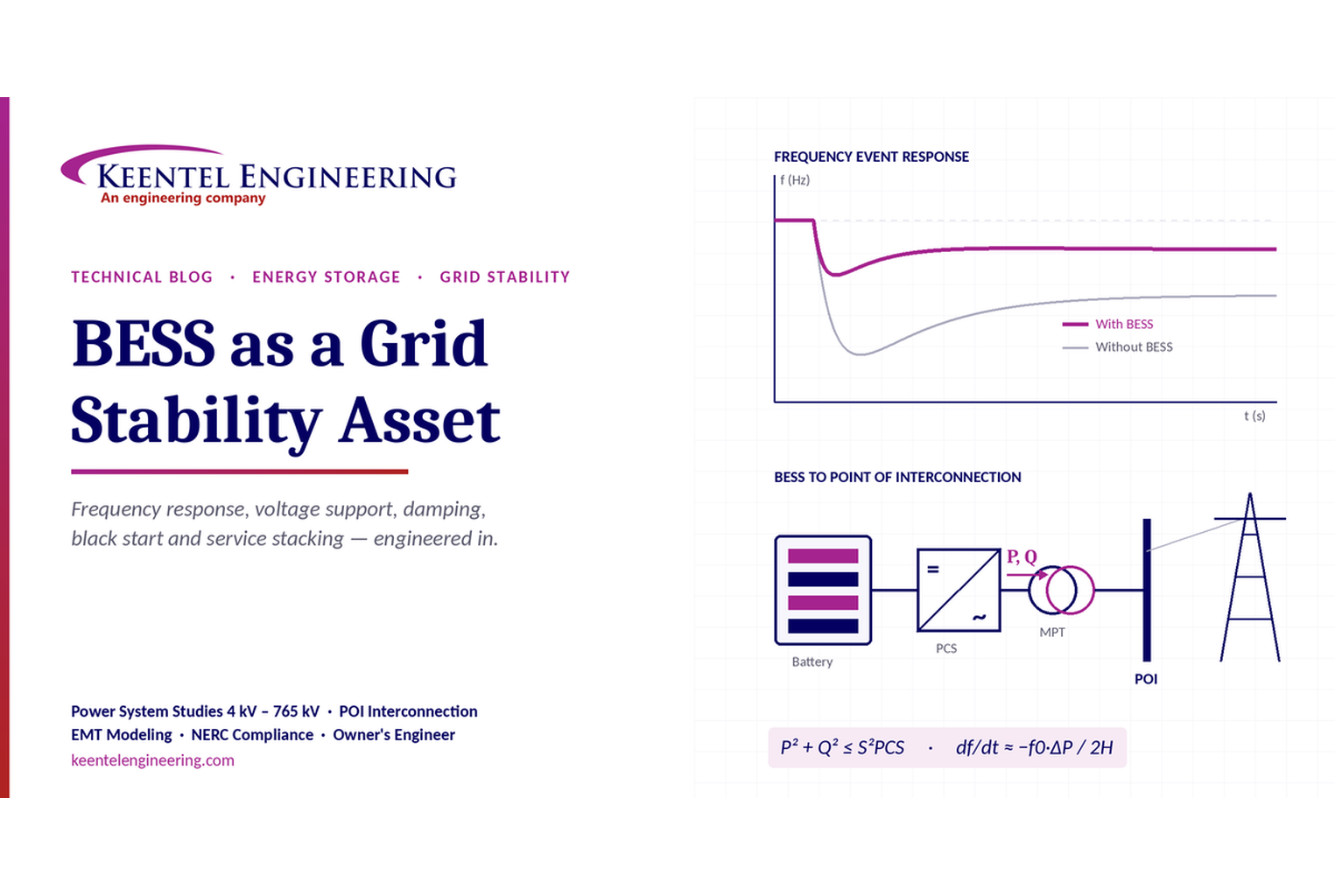
BESS grid stability with frequency response and POI interconnection.
By SANDIP R PATEL • October 3, 2026
Learn how BESS supports grid stability through fast frequency response, voltage support, oscillation damping, black start, grid-forming controls and EMT studies.
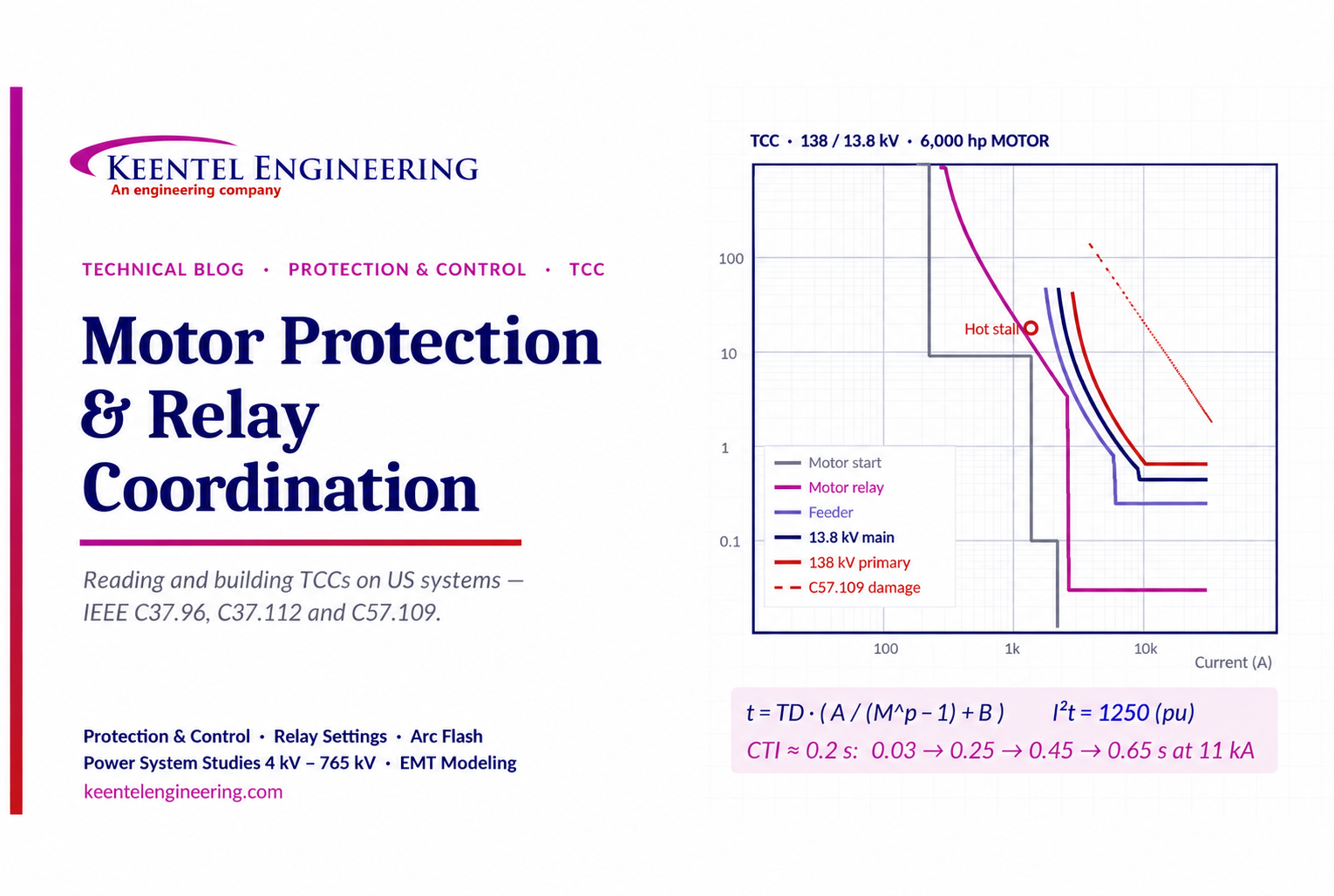
Motor Protection & Relay Coordination TCC Guide
By SANDIP R PATEL • October 3, 2026
Learn motor protection and relay coordination using TCC curves, IEEE standards, transformer damage limits, CTI settings and a 138/13.8 kV example.
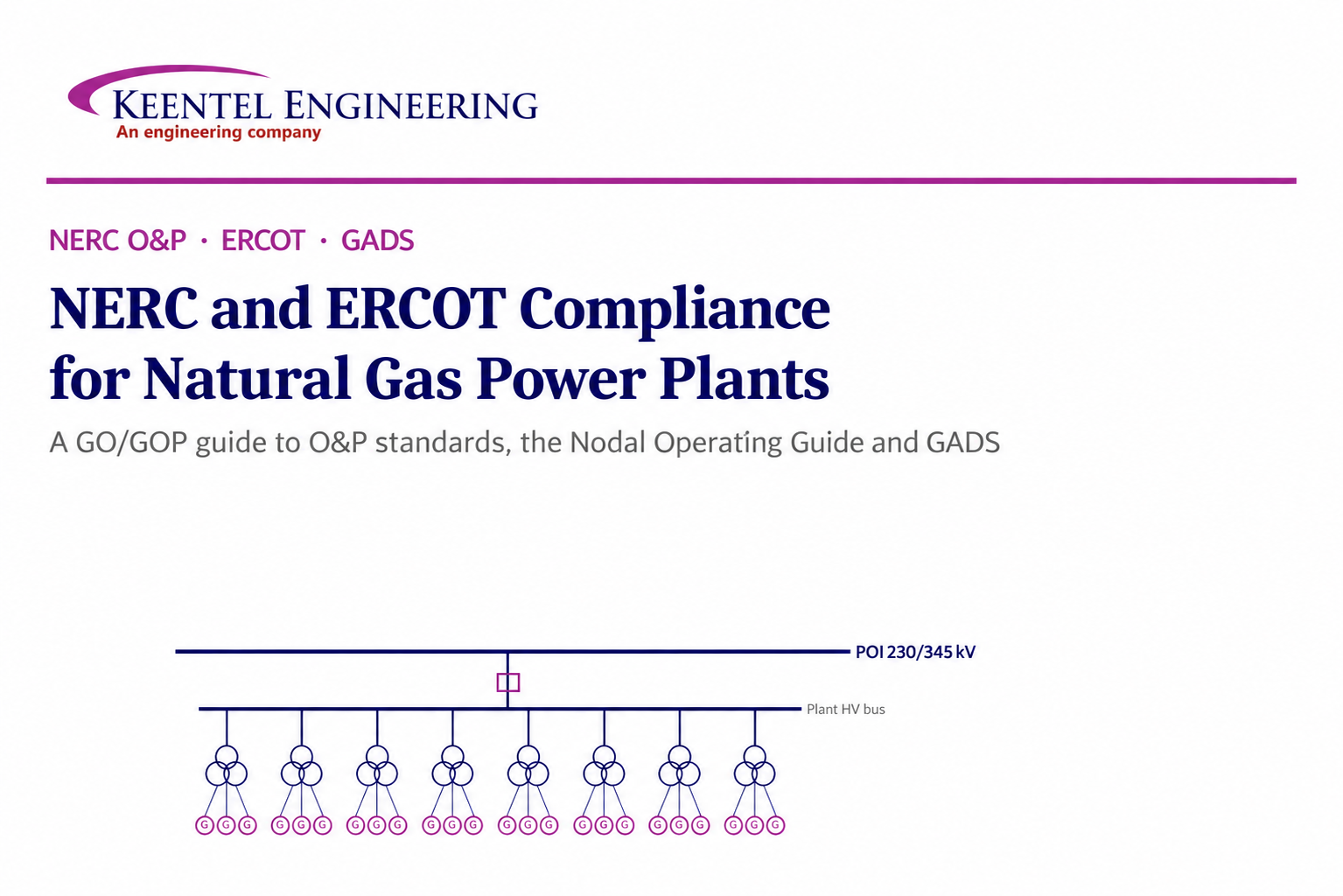
NERC and ERCOT compliance guide for natural gas power plants showing power system diagram and grid c
By SANDIP R PATEL • September 30, 2026
Learn NERC and ERCOT compliance requirements for natural gas power plants, including GO/GOP obligations, O&P standards, GADS reporting, and audits.
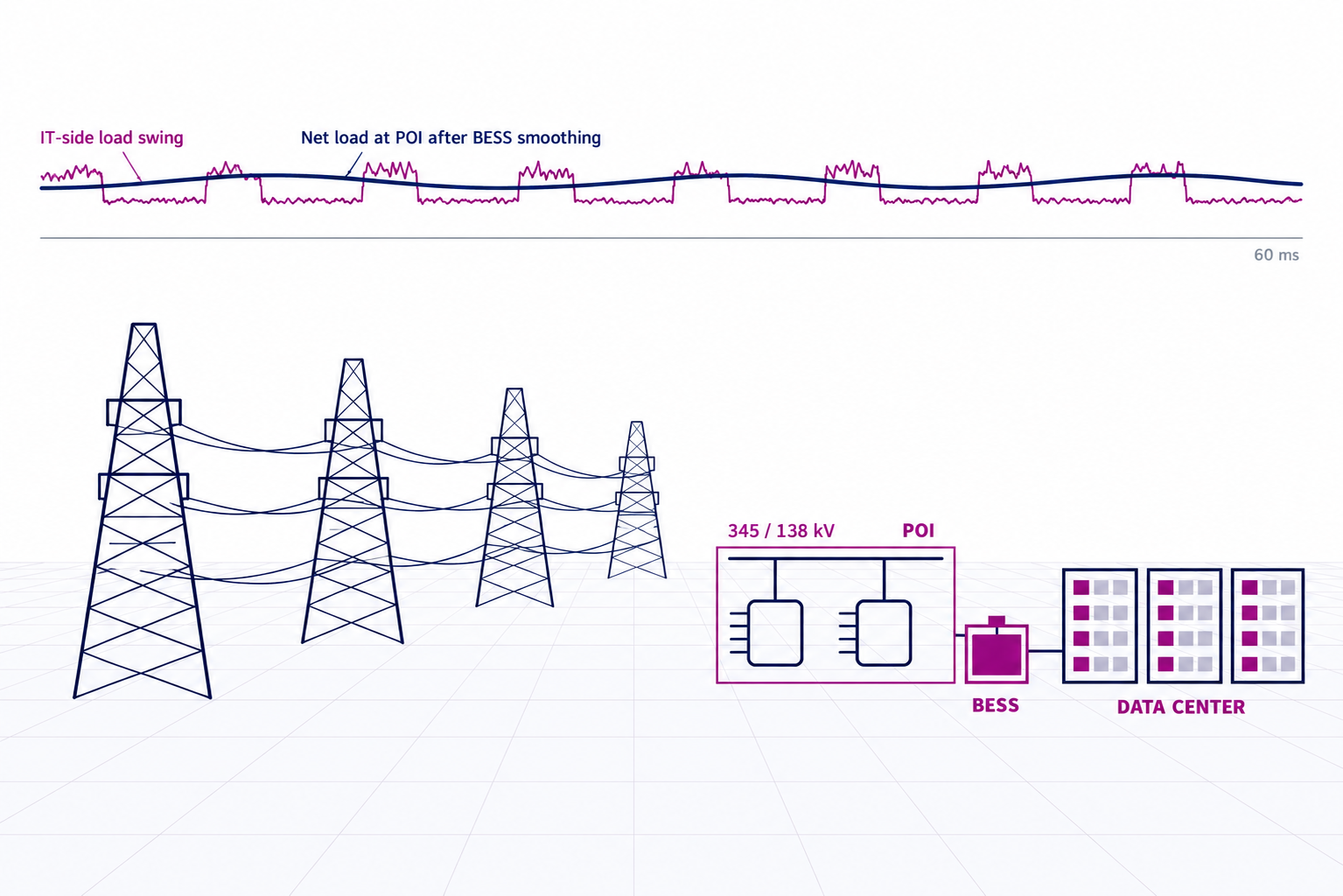
Data center and high-voltage transmission grid illustrating a large-load interconnection application
By SANDIP R PATEL • September 26, 2026
Learn how to prepare a MISO large-load interconnection package, including PSS®E models, BESS smoothing, harmonic data and transmission-owner requirements.