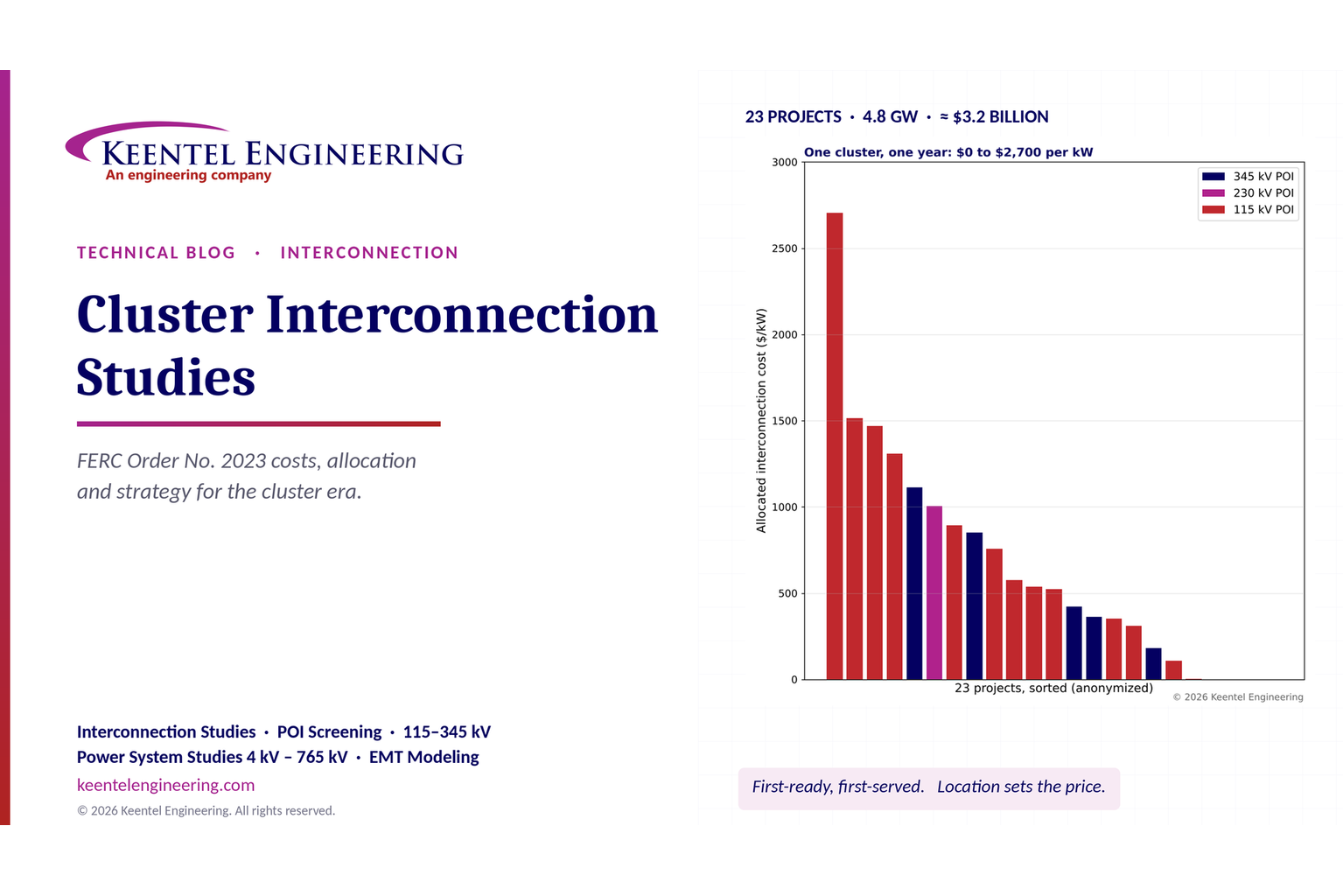

A Coordinated Electric System Interconnection Review—the utility’s deep-dive on technical and cost impacts of your project.

Challenge: Frequent false tripping using conventional electromechanical relays
Solution: SEL-487E integration with multi-terminal differential protection and dynamic inrush restraint
Result: 90% reduction in false trips, saving over $250,000 in downtime

Enhancing Grid Intelligence: Leveraging SEL Synchrophasor Technology for Real-Time Power System Monitoring and Control

Calendar icon. D

June 20, 2025 | Blog

Network diagram: computers, routers, and servers interconnected, displaying data flow between stations and a service center.

Introduction

Modern power systems demand high-resolution, time-synchronized data to ensure reliability, situational awareness, and real-time grid stability. SEL synchrophasor technology, enabled by Phasor Measurement Units (PMUs), has become essential for achieving these goals. At the forefront of this technological shift is Schweitzer Engineering Laboratories (SEL), offering a range of solutions such as the SEL-487E Station PMU and advanced synchrophasor data concentrators. This blog post explores the features, benefits, and practical applications of SEL synchrophasor technologies and how Keentel Engineering integrates them into next-generation smart grid systems.


Synchrophasor technology enables utilities to capture high-speed, time-synchronized measurements for accurate real-time grid monitoring.


Understanding SEL Synchrophasors and PMUs

Synchrophasors, or synchronized phasor measurements, are time-stamped voltage and current phasors recorded across the power grid using GPS-synchronized clocks. These measurements allow for the real-time monitoring of grid dynamics with millisecond precision.

The SEL-487E Station Phasor Measurement Unit is designed to capture high-fidelity synchrophasor data across multiple channels (18 current and 6 voltage sources) and supports streaming up to 60 messages per second in compliance with IEEE C37.118 synchrophasor standards.

SEL PMU devices play a critical role in capturing precise synchrophasor data for system visibility and disturbance analysis.


Key Features of SEL Synchrophasor Systems

Multichannel Capabilities

The SEL-487E PMU transmits synchrophasor data from up to 24 analog channels, enabling comprehensive coverage of electrical substations.

High-Speed Data Communications

Data transmission rates of up to 60 messages/second allow for effective disturbance recording, SCADA interfacing, and real-time control.

IEEE-Compliant Integration

The system supports IEEE C37.118-2005 Level 1 compliance, ensuring interoperability with industry-standard platforms.

Time-Synchronized Archiving

SEL solutions archive synchrophasor data with timestamps accurate to 1 microsecond—essential for grid fault analysis and event playback.

Hierarchical PDC Architecture

Phasor Data Concentrators (PDCs) aggregate and manage data across substations and control centers. Each PDC can filter and forward a subset of data to stakeholders like RTOs, ISOs, or utilities.

Scalable Storage Solutions

SEL systems can store 60–120 GB of synchrophasor data for 30 to 60 days for four PMUs, ensuring compliance with NERC PRC-002-2 compliance requirements.


Cybersecurity and Communication Infrastructure

SEL provides comprehensive security features for synchrophasor communication networks, such as:


  • Use of secure PDCs as data firewalls
  • UDP_S protocol for outbound-only data flow
  • Serial encryption and SEL Ethernet gateways (SEL-3620, SEL ICON)


These capabilities ensure secure grid communication across substations and wide-area networks.


Real-World Applications of Synchrophasor Technology

Grid Monitoring and State Estimation

Synchrophasors convert conventional state estimation into real-time state measurement, improving system visibility.

Special Protection Schemes

Data from multiple SEL-487E PMUs can be used in relay-to-relay communications for advanced protection logic.

Dynamic Grid Control

Live phasor data can automate actions in circuit breakers, SVCs, and stabilizers to support grid reliability.

SCADA System Integration

For SCADA systems supporting IEEE C37.118, direct phasor data integration is supported. Others can use SEL-3530 RTAC for protocol conversion.

A complete synchrophasor system using SEL hardware/software meets NERC PRC-002-2 requirements for generator and transmission operators.


Visualization and Diagnostic Tools

SEL’s SYNCHROWAVE® Central Software (SEL-5078-2) enhances operator awareness with:


  • Real-time phasor displays
  • Graphical diagnostics
  • Disturbance playback tools for post-event analysis


These tools support control rooms in maintaining situational grid awareness and timely interventions.


Advanced synchrophasor data analytics help utilities detect instability, improve response time, and enhance grid reliability.


Keentel Engineering: Synchrophasor Deployment and Integration

Keentel Engineering integrates SEL synchrophasor systems to build resilient and intelligent power systems. Services include:


  • Turnkey PMU deployment and commissioning
  • PDC hierarchy design
  • EMS/SCADA data integration
  • NERC compliance consulting for utilities


Learn more about our power system studies and how we support full-scale grid monitoring projects.


Conclusion

SEL synchrophasor technology is transforming how utilities manage grid operations, providing real-time, accurate, and synchronized electrical data. From the robust SEL-487E PMU to complete NERC-compliant synchrophasor systems, Keentel Engineering helps utilities modernize their infrastructure with precision and reliability.

Modern utilities are increasingly investing in synchrophasors market solutions to improve situational awareness and system resilience.

Ready to implement real-time grid monitoring solutions? Contact Keentel Engineering today to discuss your project.


FAQs on SEL Synchrophasor Technology

  • 1. What is a synchrophasor in power systems?

    A synchrophasor is a time-synchronized phasor of voltage or current used for real-time grid monitoring and stability analysis in power systems.

  • 2. What makes the SEL-487E PMU unique?

    The SEL-487E Phasor Measurement Unit supports 24 analog input channels and delivers high-speed synchrophasor data (up to 60 messages/sec), enabling advanced real-time control and monitoring.

  • 3. Is the SEL-487E IEEE C37.118 compliant?

    Yes, the SEL-487E complies with IEEE C37.118-2005 Level 1 standards for phasor measurement units (PMUs), ensuring interoperability across smart grid systems.

  • 4. Which communication protocols does SEL synchrophasor equipment support?

    SEL PMUs support Serial, Ethernet, and UDP multicast protocols for flexible, secure data transmission in substations and wide-area networks.

  • 5. Can SEL-487E PMUs archive synchrophasor data locally?

    Yes, each SEL-487E unit can archive up to 120 seconds of binary synchrophasor data per channel, aiding in disturbance playback and compliance with NERC PRC-002-2.

  • 6. How is synchrophasor data secured in SEL systems?

    Security is ensured via SEL’s secure PDC firewalls, outbound-only UDP_S communication, and encryption through devices like SEL-3620 and SEL ICON.

  • 7. Does Keentel Engineering provide full integration of SEL synchrophasor systems?

    Absolutely. Keentel offers turnkey PMU deployment, data concentrator planning, EMS/SCADA integration, and NERC PRC-002-2 compliance support.

  • 8. What is a Phasor Data Concentrator (PDC)?

    A PDC collects, filters, and routes synchrophasor data from multiple PMUs, enabling grid-wide visibility and real-time decision-making.

  • 9. How does SEL SYNCHROWAVE Central software support grid operators?

    SYNCHROWAVE® Central offers real-time data visualization, diagnostics, and event playback, improving control room situational awareness.

  • 10. Can SEL synchrophasors integrate with legacy SCADA systems?

    Yes, using the SEL-3530 RTAC protocol converter, PMU data can be integrated into older SCADA environments not natively supporting IEEE C37.118.

  • 11. What data storage is required for NERC compliance?

    Approximately 120 GB is needed to store 60 days of synchrophasor data for four PMUs operating at full capacity—meeting NERC PRC-002-2 standards.

  • 12. What happens if GPS timing is lost in PMUs?

    SEL clocks feature holdover stability, maintaining accurate timing for up to 18 seconds to ensure continuity in synchrophasor streams.

  • 13. How does the SEL-487E improve protection schemes?

    It enables relay-to-relay logic using synchrophasor inputs, supporting advanced protection coordination and faster fault response.

  • 14. Can multiple SEL-487E units operate together in a station?

    Yes. Multiple SEL PMUs can be used for station-wide phasor measurement, distributed control, and wide-area monitoring.

  • 15. What is SEL SELogic® technology?

    SELogic® is SEL’s programmable control logic platform, embedded in devices to support custom protection and automation functions.

  • 16. How does Keentel support NERC PRC-002-2 compliance?

    Keentel Engineering provides end-to-end services—from system design to documentation—ensuring compliance with PRC-002-2 standards for synchrophasor recording.

  • 18. Are both hardware and software-based PDCs available?

    Yes, SEL offers both hardware and software PDCs to suit utility-specific deployment and budget requirements.

  • 19. How accurate is time alignment in SEL PDCs?

    Time alignment in SEL PDCs is user-configurable and typically accounts for worst-case network delay for precise data synchronization.

  • 20. Is SEL synchrophasor technology scalable for larger grids?

    Absolutely. SEL synchrophasor systems are scalable from a single substation to regional or national-level wide-area monitoring applications.


A smiling man with glasses and a beard wearing a blue blazer stands in front of server racks in a data center.

About the Author:

Sonny Patel P.E. EC

IEEE Senior Member

In 1995, Sandip (Sonny) R. Patel earned his Electrical Engineering degree from the University of Illinois, specializing in Electrical Engineering . But degrees don’t build legacies—action does. For three decades, he’s been shaping the future of engineering, not just as a licensed Professional Engineer across multiple states (Florida, California, New York, West Virginia, and Minnesota), but as a doer. A builder. A leader. Not just an engineer. A Licensed Electrical Contractor in Florida with an Unlimited EC license. Not just an executive. The founder and CEO of KEENTEL LLC—where expertise meets execution. Three decades. Multiple states. Endless impact.

Four workers in safety vests and helmets stand with arms crossed near wind turbines.

Let's Discuss Your Project

Let's book a call to discuss your electrical engineering project that we can help you with.

Man in a blazer and open shirt, looking at the camera, against a blurred background.

About the Author:

Sonny Patel P.E. EC

IEEE Senior Member

In 1995, Sandip (Sonny) R. Patel earned his Electrical Engineering degree from the University of Illinois, specializing in Electrical Engineering . But degrees don’t build legacies—action does. For three decades, he’s been shaping the future of engineering, not just as a licensed Professional Engineer across multiple states (Florida, California, New York, West Virginia, and Minnesota), but as a doer. A builder. A leader. Not just an engineer. A Licensed Electrical Contractor in Florida with an Unlimited EC license. Not just an executive. The founder and CEO of KEENTEL LLC—where expertise meets execution. Three decades. Multiple states. Endless impact.

Leave a Comment

Related Posts

IEEE 2800 ride-through requirements guide for inverter-based resource voltage and frequency complian
By team gusto May 19, 2026
Learn IEEE 2800 ride-through requirements for IBR compliance, voltage ride-through, frequency response, and EMT modeling. Get practical guidance.
CDEGS grounding analysis software used for substation grounding, electromagnetic studies, and power
By SANDIP R PATEL May 17, 2026
Learn CDEGS grounding analysis, electromagnetic studies, and substation grounding design. Discover how Keentel delivers safer power systems.
DER hosting capacity guide showing flexible interconnection, power flow control, and grid planning
By SANDIP R PATEL May 17, 2026
DER hosting capacity guide covering flexible interconnection, power flow control, and 8760 simulation. Learn how to plan safer grid upgrades.
Power system resource adequacy planning for renewable grids, energy storage, LOLE modeling
By SANDIP R PATEL May 17, 2026
Learn how power system resource adequacy supports grid reliability, LOLE planning, energy storage, and interconnection risk in renewable grids.
Grid-forming control and VSG-PSS for oscillation damping, PMU monitoring, and renewable grid
By SANDIP R PATEL May 17, 2026
Learn how grid-forming control, VSG-PSS design, and PMU monitoring improve oscillation damping in renewable power systems.
Large load interconnection diagram for AI data centers, grid modeling, EMT studies, and power
By SANDIP R PATEL May 17, 2026
earn how large load interconnection, EMT studies, and power system modeling help AI data centers meet grid reliability requirements.
Category 2 IBR compliance flyer for renewable energy, BESS storage, grid code registration.
By SANDIP R PATEL May 16, 2026
Category 2 IBR compliance services for solar, wind, and BESS projects. Learn NERC registration, EMT modeling, and PRC readiness today.
Advanced ERCOT dynamics modeling for inverter-based resources, data centers, BESS, and grid
By SANDIP R PATEL May 16, 2026
ERCOT dynamics modeling guide covering PSS/E v36, MQT, SSR studies, and Large Electronic Loads. Learn how to prepare compliant grid models today.
ERCOT large load interconnection guide covering NPRR1234, PGRR115, and grid connection rules
By SANDIP R PATEL May 8, 2026
Learn ERCOT large load interconnection rules, LLIS requirements, and Texas grid compliance for data centers and industrial facilities.