A Coordinated Electric System Interconnection Review—the utility’s deep-dive on technical and cost impacts of your project.
Challenge: Frequent false tripping using conventional electromechanical relays
Solution: SEL-487E integration with multi-terminal differential protection and dynamic inrush restraint
Result: 90% reduction in false trips, saving over $250,000 in downtime
| Category | Metric |
|---|---|
| VPP capacity (Lunar Energy) | 650 MW |
| Lunar funding raised | US$232 million |
| Data center BESS example | 31 MW / 62 MWh |
| ERCOT grid-scale batteries | 15+ GW |
| LDES tenders (H1 2026) | Up to 9.3 GW |
| Lithium-ion share of LDES by 2030 | 77% |
| FEOC initial threshold | 55% |
| BESS tariff rate (2026) | ~55% |
| Capacity gain from analytics | 5–15% |
NERC PRC-012-2 Compliance for Solar, Wind and Battery Energy Storage Systems (BESS): What Generator Owners Must Know
March 7, 2026 | blog
Introduction
As renewable energy penetration increases across North America, the reliability of the Bulk Electric System (BES) depends more than ever on the coordinated operation of generation resources. Solar plants, wind farms, and large Battery Energy Storage Systems (BESS) are now critical contributors to grid stability. Because these resources can be automatically tripped or curtailed during system contingencies, they are often integrated into Remedial Action Schemes (RAS) designed to prevent cascading outages.
The North American Electric Reliability Corporation (NERC) developed Reliability Standard PRC-012-2 Remedial Action Schemes to ensure these schemes are properly designed, analyzed, tested, and maintained. The standard establishes compliance requirements for entities that own or operate RAS components within the BES.
For renewable generation developers and operators, the most important question is:
When does a solar plant, wind facility, or BESS become subject to PRC-012-2?
The answer depends on whether the Generator Owner (GO) is considered a RAS-entity.
This article provides a comprehensive technical overview of PRC-012-2 and explains:
- when renewable facilities become RAS-entities
- what obligations apply to Generator Owners
- how PRC-012-2 interacts with transmission-level RAS designs
- how solar, wind, and BESS facilities must maintain compliance
Understanding Remedial Action Schemes (RAS)
A Remedial Action Scheme is an automated system designed to detect predetermined power system conditions and execute corrective actions to maintain grid reliability.
Typical corrective actions may include:
- tripping generation
- shedding load
- opening transmission lines
- reconfiguring network topology
- reducing power flows
- curtailing renewable generation
RAS are typically implemented to address conditions such as:
- thermal overloads
- voltage instability
- angular instability
- cascading outages
- N-2 or N-x contingencies
Unlike protection systems that respond to faults, RAS operate based on system-level reliability conditions.
Examples of RAS actions involving renewable resources include:
- automatic tripping of solar plants when transmission paths overload
- wind generation curtailment during N-2 contingencies
- battery discharge limitations during voltage stability events
- generation rejection schemes triggered by line outages
These automated actions help prevent widespread grid disturbances.
Applicability of PRC-012-2 to Renewable Generator Owners
PRC-012-2 applies to three functional entities:
- Reliability Coordinators (RC)
- Planning Coordinators (PC)
- RAS-entities
For solar, wind, and BESS operators, the relevant category is RAS-entity.
A RAS-entity is defined as:
The Transmission Owner, Generator Owner, or Distribution Provider that owns all or part of a Remedial Action Scheme.
This means a renewable facility is not automatically subject to PRC-012-2 simply because it generates power.
Instead, the Generator Owner becomes applicable only when it owns part of a RAS
When Solar, Wind, or BESS Plants Become RAS-Entities
A renewable facility becomes a RAS-entity if it owns equipment that performs any part of a remedial action scheme.
Examples of GO-owned RAS components may include:
Protection and Control Equipment
- relays executing RAS commands
- PLC or RTU logic implementing scheme actions
- breaker control circuitry
Communications Infrastructure
- fiber optic channels used for RAS signals
- microwave or telecom circuits
- redundant communication paths
Control Systems
- inverter control interfaces receiving RAS commands
- plant controllers implementing curtailment
- SCADA control paths
- Physical Trip Equipment
Physical Trip Equipment
- collector system breakers
- point-of-interconnection breakers
- feeder trip circuits
Even if the transmission owner or utility designs the scheme, ownership of these components makes the GO a RAS-entity.
In many interconnection agreements, renewable facilities participate in RAS programs designed by transmission operators to mitigate contingency risks on constrained transmission corridors.
Examples include:
- generation rejection schemes
- centralized RAS systems
- curtailment schemes
- load-generation balancing schemes
Typical RAS Architecture for Renewable Plants
A simplified RAS architecture may include:
1. System monitoring system
- state estimator
- power flow monitors
- contingency detection
2. RAS logic processor
- evaluates system conditions
- selects resources for corrective action
3. Communication channels
- fiber or microwave
- redundant paths
4. Site-level relay or controller
- receives RAS signal
- executes plant trip or curtailment
5. Plant breaker or inverter control
- isolates generation
- reduces output
Renewable facilities commonly implement these functions using:
- GE Multilin relays (N60, L90)
- SEL protection relays
- plant SCADA controllers
- PLC automation systems
- communications gateways
PRC-012-2 Requirements for Generator Owners
If a solar, wind, or BESS facility becomes a RAS-entity, the Generator Owner must comply with the following PRC-012-2 requirements:
- R1
- R3
- R5
- R6
- R7
- R8
These requirements govern the full lifecycle of a remedial action scheme.
Requirement R1 – Notification Before RAS Changes
Generator Owners must provide documentation before:
- placing a new RAS in service
- functionally modifying a RAS
- retiring a RAS
The documentation must be submitted to the reviewing Reliability Coordinator.
The information package must include:
- RAS functional description
- system conditions that trigger the scheme
- actions performed by the scheme
- contingency studies supporting the design
- single-point failure analysis
- scheme diagrams and one-line drawings
- communications architecture
- protection coordination
- functional testing procedures
For renewable facilities, this requirement may be triggered when:
- modifying relay logic
- changing communication paths
- updating plant trip logic
- installing new RAS relays
- adding redundancy
Requirement R3 – Resolve Reliability Coordinator Issues
If the Reliability Coordinator identifies reliability concerns during review of a RAS design or modification, those issues must be resolved before the RAS is placed into service.
Examples of issues may include:
- inadequate redundancy
- insufficient communication reliability
- improper coordination with protection systems
- excessive response times
- security vulnerabilities
Generator Owners must coordinate with the Transmission Owner or utility to address these issues.
Requirement R5 – Analyze RAS Operations
One of the most significant operational requirements is post-operation analysis.
Within 120 calendar days of a RAS operation or failure to operate, the RAS-entity must participate in an analysis that determines:
- whether system conditions correctly triggered the scheme
- whether the scheme responded as designed
- whether the scheme mitigated the reliability issue
- whether unintended system responses occurred
Examples of events requiring analysis include:
- successful RAS generation trip
- failure of plant relays to trip when commanded
- communication failure preventing RAS operation
- inadvertent operation of plant trip circuits
If deficiencies are identified, they must be reported to the Reliability Coordinator.
Requirement R6 – Corrective Action Plan Development
If a deficiency is identified during:
- RAS operation analysis
- functional testing
- planning studies
the RAS-entity must develop a Corrective Action Plan (CAP) within six months.
The CAP must include:
- root cause analysis
- corrective measures
- implementation timeline
- responsible entities
For renewable plants, common CAP scenarios include:
- relay replacement
- communication system upgrades
- logic corrections
- SCADA interface improvements
Requirement R7 – Implement Corrective Actions
Generator Owners must implement the CAP and notify the Reliability Coordinator when corrective actions are completed.
Implementation activities may involve:
- relay firmware updates
- communications repairs
- breaker control wiring corrections
- SCADA configuration updates
- RAS logic improvements
All implementation steps must be documented for compliance evidence.
Requirement R8 – Functional Testing of RAS
RAS must undergo periodic functional testing to verify correct performance.
Testing intervals are:
- Every 6 years for non-limited impact RAS
- Every 12 years for limited-impact RAS
Testing must confirm:
- correct detection of system conditions
- proper processing of signals
- correct plant response
- communication integrity
- breaker or inverter response
Testing may include:
- end-to-end scheme simulation
- segmented subsystem testing
- relay injection testing
- SCADA control verification
Actual RAS operations can sometimes count as partial testing evidence.
Role of Planning Coordinators and Reliability Coordinators
While Generator Owners perform operational tasks, two other entities play major roles:
Unique Considerations for Renewable Plants
Renewable facilities introduce additional considerations for
RAS implementation.
Solar Plants
Solar RAS actions may include:
- inverter tripping
- plant curtailment
- feeder isolation
- POI breaker trip
Because solar plants use centralized plant controllers, RAS actions often interact with inverter control systems.
Wind Farms
Wind farms typically involve:
- turbine-level controls
- collector system breakers
- plant controller curtailment commands
RAS design must consider turbine ride-through capabilities and control delays.
Battery Energy Storage Systems (BESS)
BESS RAS actions may include:
- stopping discharge
- stopping charging
- inverter trip
- PCS shutdown
Because BESS can respond quickly, they are increasingly used as fast-acting RAS resources.
Compliance Best Practices for Renewable Generator Owners
Generator Owners should implement the following compliance practices:
- Maintain detailed documentation of RAS components.
- Track relay configuration and firmware updates.
- Maintain communication system reliability.
- Record all RAS operations and alarms.
- Conduct periodic functional testing.
- Maintain coordination with transmission operators.
- Preserve evidence of compliance activities.
How Keentel Engineering Supports PRC-012-2 Compliance
Keentel Engineering provides comprehensive support for RAS compliance and renewable integration.
Our services include:
- RAS engineering design
- RAS compliance assessments
- relay configuration and testing
- communication system design
- post-event analysis
- corrective action plan development
- functional testing programs
- NERC audit preparation
With deep expertise in renewable interconnection and NERC compliance, Keentel Engineering helps solar, wind, and BESS developers maintain full compliance while ensuring reliable grid integration.
Technical FAQ – PRC-012-2 and Renewable Generator Owners
What is the difference between protection systems and RAS?
Protection systems detect electrical faults and isolate equipment to prevent damage.
RAS detect system-level conditions and take corrective actions to preserve grid stability.
Protection acts locally, while RAS acts system-wide.
Does every solar plant have a RAS?
No. Many solar plants are not part of any remedial action scheme.
A solar plant becomes subject to PRC-012-2 only if it owns equipment used in a RAS.
Can a transmission owner operate a RAS without making the solar plant a RAS-entity?
Yes. If the transmission owner owns all RAS components and the plant only receives a command without owning any scheme equipment, the plant may not be a RAS-entity.
Ownership is the key factor.
What is a functional modification to a RAS?
A functional modification is a change that alters:
- triggering conditions
- corrective actions
- scheme logic
- communications architecture
- redundancy levels
Routine maintenance or in-kind equipment replacement does not normally constitute a functional modification.
What is a failure-to-operate event?
A failure-to-operate occurs when a RAS is expected to execute corrective action but does not.
Examples include:
- relay malfunction
- communication failure
- ogic error
- breaker failure
Can RAS testing be segmented instead of end-to-end?
Yes. PRC-012-2 allows segmented testing provided that all components of the scheme are verified.
Actual RAS operations may also count toward testing requirements.
What evidence must be retained for compliance?
Typical compliance evidence includes:
- relay settings
- communication diagrams
- functional test reports
- RAS operation analysis reports
- corrective action plans
- RC communications
How often must RAS be evaluated?
Planning Coordinators must evaluate RAS every five years to determine whether they remain necessary and properly coordinated.
Can battery storage be used as a RAS resource?
Yes. BESS can be highly effective RAS resources due to their fast response times.
They may be used to:
- absorb excess generation
- provide rapid power injection
- stabilize voltage and frequency
How can renewable developers prepare for PRC-012-2 compliance?
Developers should:
- review interconnection agreements
- identify RAS components at the facility
- document ownership of protection and control systems
- establish RAS operation monitoring procedures
- coordinate with transmission operators and RCs
Final Thoughts
Solar, wind, and battery storage facilities must understand their potential role within these schemes and ensure compliance with NERC PRC-012-2 whenever they own RAS components.
With careful design, testing, and coordination, renewable facilities can support grid stability while meeting regulatory obligations.

About the Author:
Sandip "Sonny" R. Patel, P.E.
IEEE Senior Member · Founder & CEO, Keentel Engineering
In 1995, Sonny Patel earned his Electrical Engineering degree from the University of Illinois. But degrees don't build legacies — action does.
For three decades, he has worked the power industry from every side of the table: 16 years as a utility engineer at Exelon/Commonwealth Edison; generation leadership across hydroelectric, industrial steam turbine, and a 9 GW renewable fleet; NERC Regional Entity Senior Compliance Engineer and Audit Team Lead, auditing some of the nation's largest utilities; and testing and commissioning lead on equipment up to 765 kV — the very top of the North American grid.Utility. Generator. Regulator. Consultant. Few engineers have seen all four seats. Fewer still have sat in them.
His experience spans nuclear, hydro, conventional generation, renewables, oil and gas, mining — and today's data centers, where he is authoring a three-book series on data center design. He is a Licensed Professional Engineer in six states and a Licensed Electrical Contractor in Florida (Unlimited EC) — he doesn't just design the work; he's qualified to stand behind its execution.Today, as Founder and CEO of Keentel Engineering, Sonny leads a nationwide team of engineers delivering substation design, power system studies, NERC compliance, and commissioning — done right, coast to coast.Three decades. Every side of the table. One standard: accountable engineering.
Services

Let's Discuss Your Project
Let's book a call to discuss your electrical engineering project that we can help you with.
About the Author:
Sandip "Sonny" R. Patel, P.E.
IEEE Senior Member · Founder & CEO, Keentel Engineering
In 1995, Sonny Patel earned his Electrical Engineering degree from the University of Illinois. But degrees don't build legacies — action does.
For three decades, he has worked the power industry from every side of the table: 16 years as a utility engineer at Exelon/Commonwealth Edison; generation leadership across hydroelectric, industrial steam turbine, and a 9 GW renewable fleet; NERC Regional Entity Senior Compliance Engineer and Audit Team Lead, auditing some of the nation's largest utilities; and testing and commissioning lead on equipment up to 765 kV — the very top of the North American grid.
Utility. Generator. Regulator. Consultant. Few engineers have seen all four seats. Fewer still have sat in them.
His experience spans nuclear, hydro, conventional generation, renewables, oil and gas, mining — and today's data centers, where he is authoring a three-book series on data center design. He is a Licensed Professional Engineer in six states and a Licensed Electrical Contractor in Florida (Unlimited EC) — he doesn't just design the work; he's qualified to stand behind its execution.
Today, as Founder and CEO of Keentel Engineering, Sonny leads a nationwide team of engineers delivering substation design, power system studies, NERC compliance, and commissioning — done right, coast to coast.Three decades. Every side of the table. One standard: accountable engineering.
Leave a Comment
Thank you for contacting us.
We will get back to you as soon as possible.
We will get back to you as soon as possible.
Oops, there was an error sending your message.
Please try again later.
Please try again later.
Related Posts
By SANDIP R PATEL
•
October 23, 2026
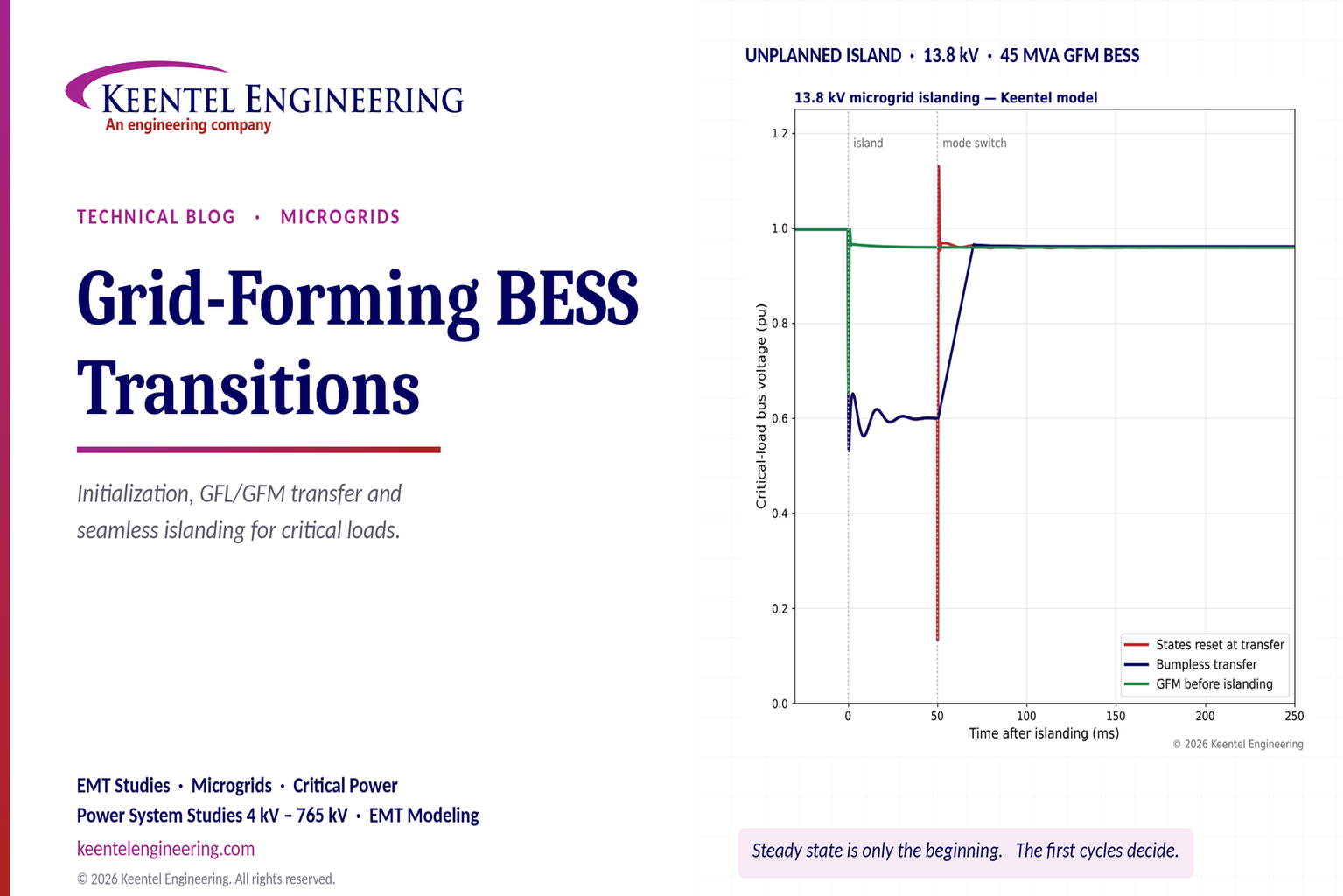
Explore grid-forming BESS initialization, GFL-to-GFM transitions, seamless islanding, EMT simulations, current limiting and microgrid protection.
By SANDIP R PATEL
•
October 23, 2026
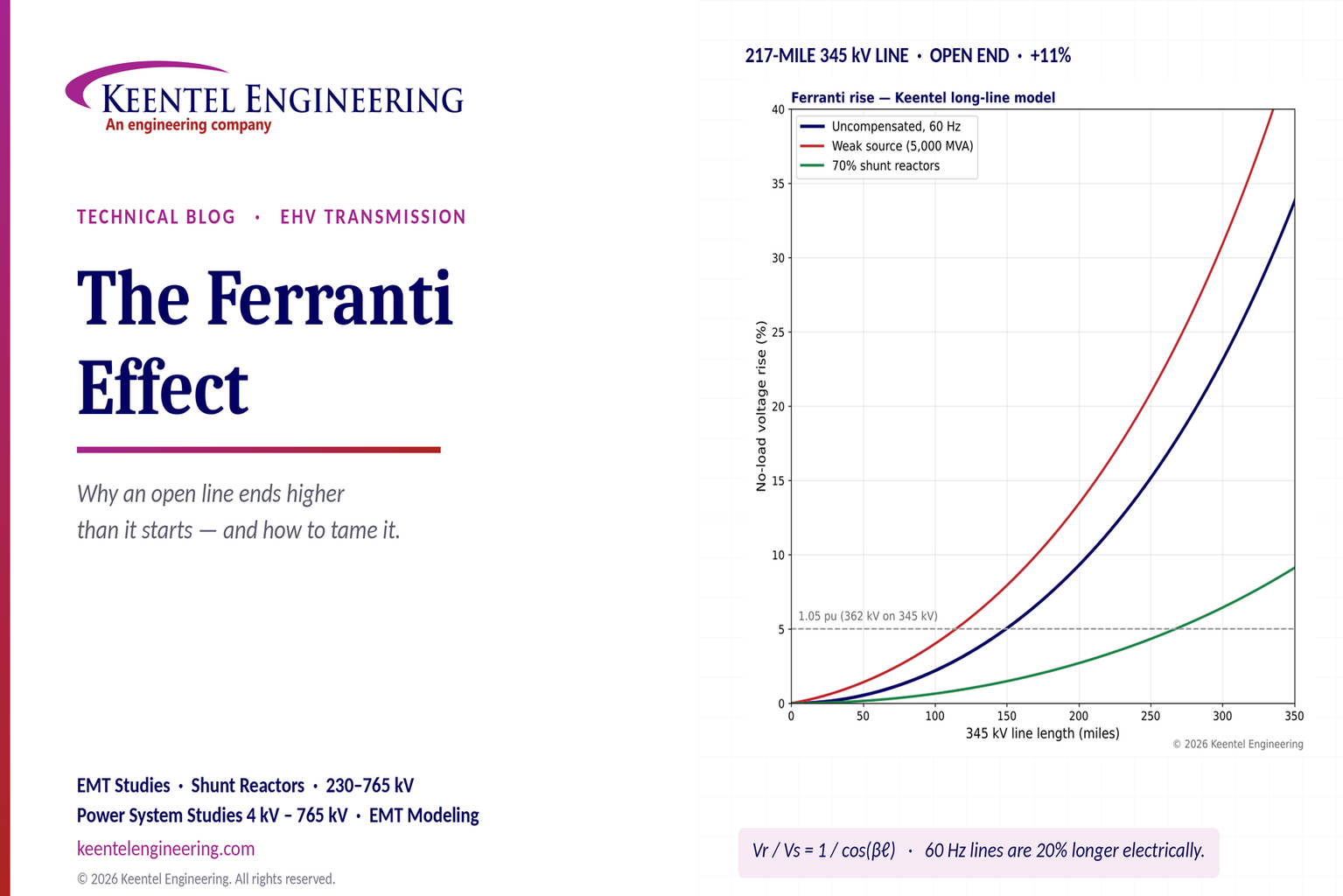
Explore the Ferranti effect in EHV transmission lines: voltage rise, 345 kV examples, switching overvoltages, shunt reactor sizing and mitigation.
By SANDIP R PATEL
•
October 23, 2026
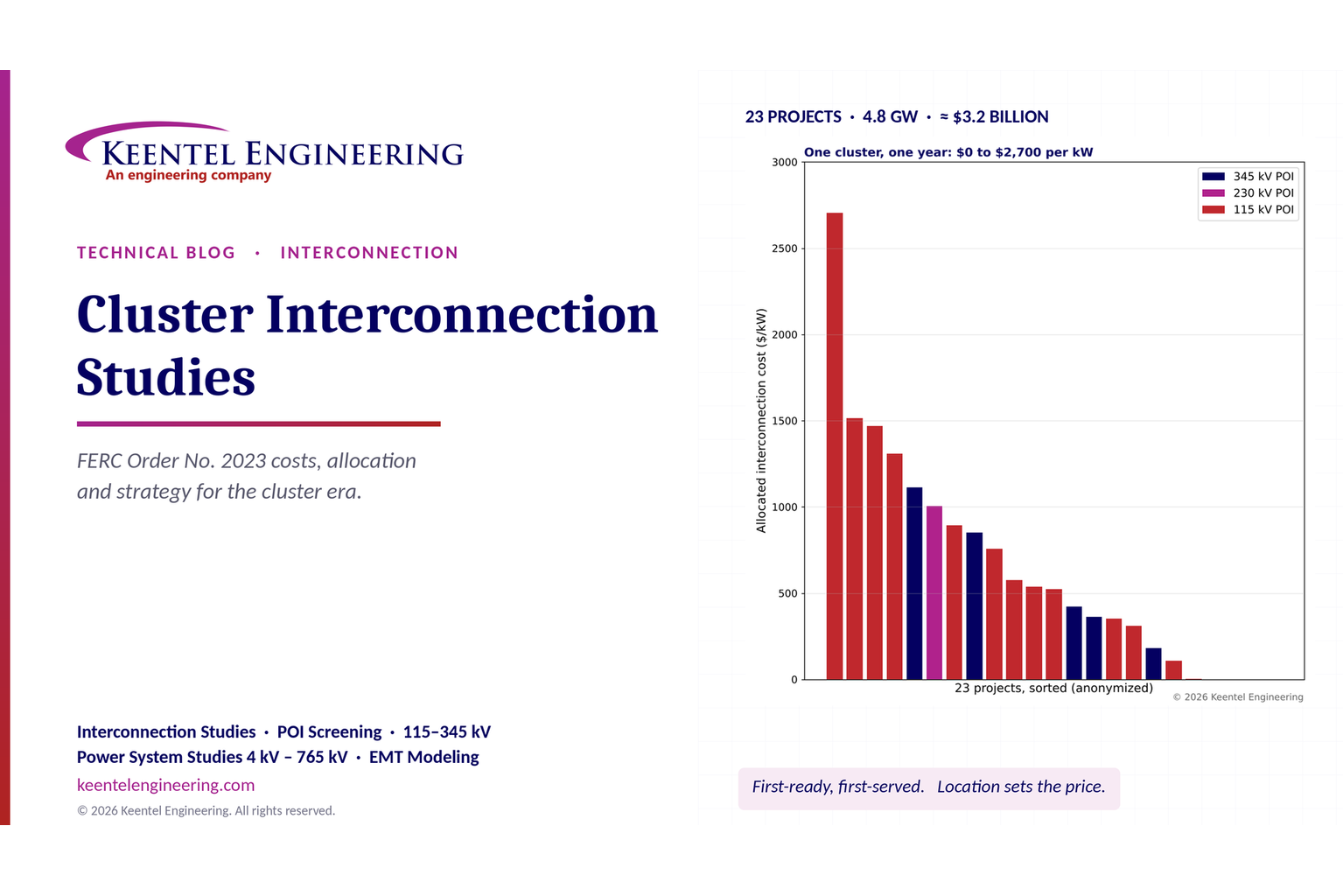
Explore cluster interconnection studies under FERC Order 2023, including network upgrades, cost allocation, withdrawal penalties and developer strategy.
By SANDIP R PATEL
•
October 21, 2026
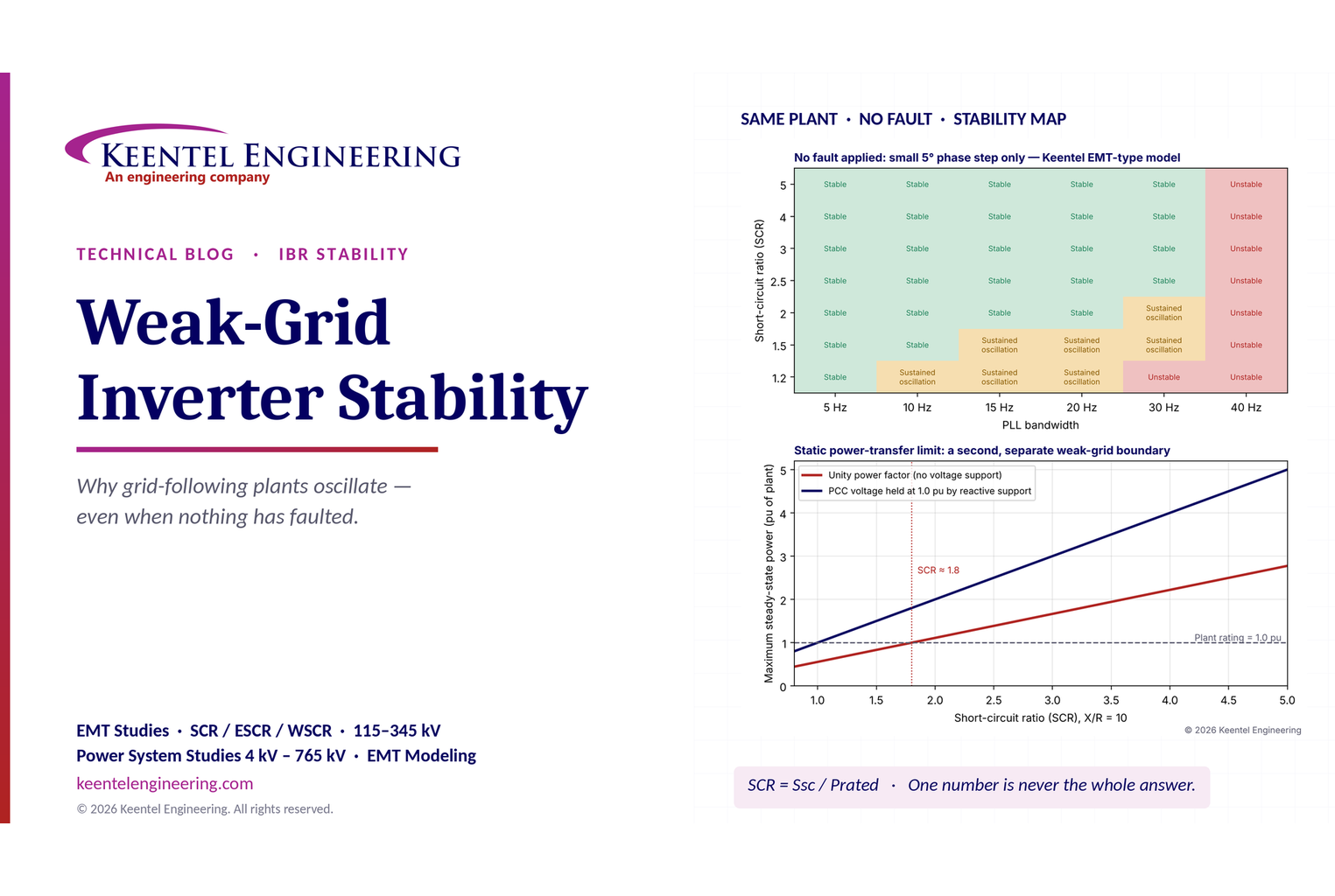
Learn why grid-following inverters become unstable without grid faults. Explore SCR, PLL interactions, EMT studies, grid strength, and mitigation.
By SANDIP R PATEL
•
October 21, 2026
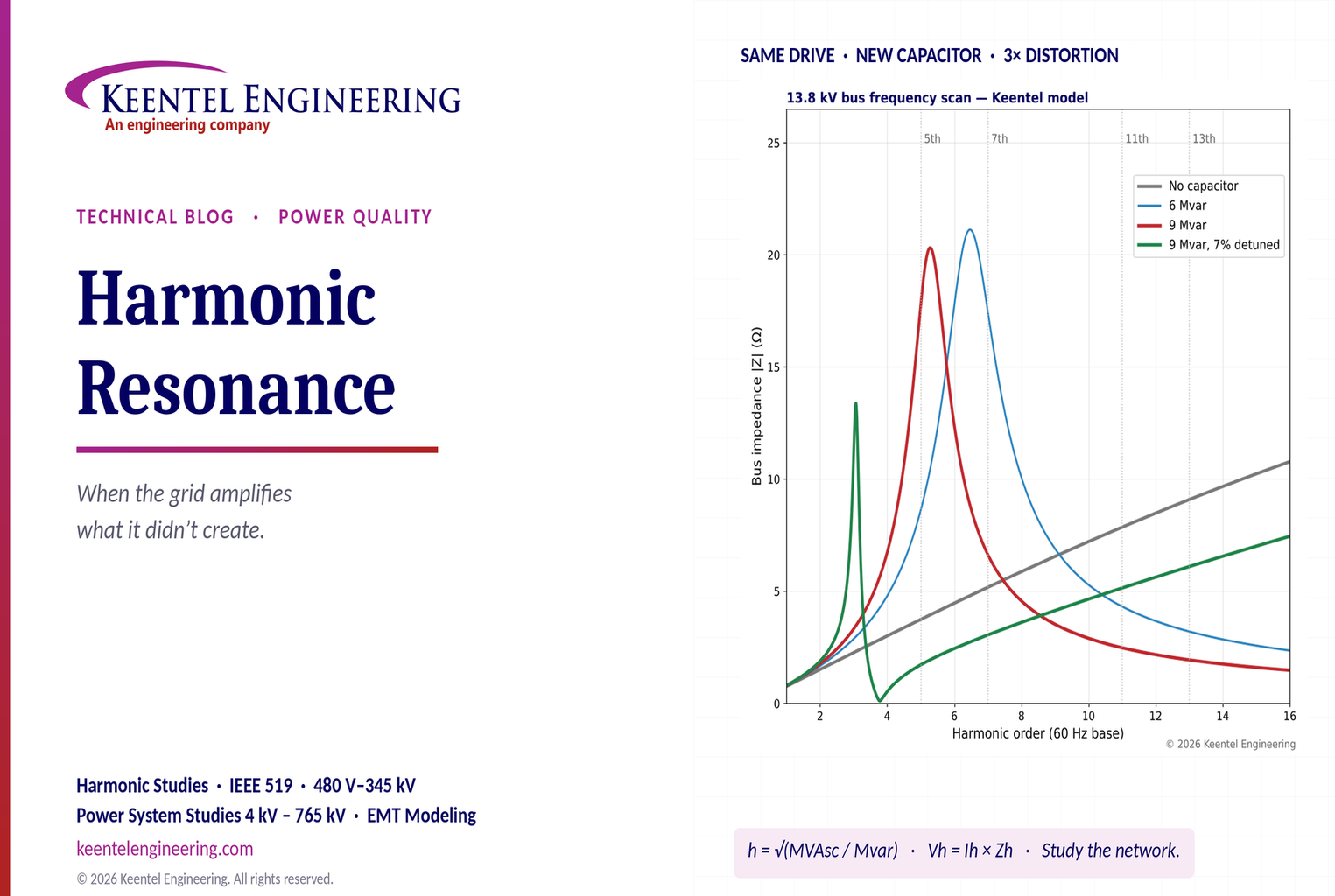
Learn how harmonic resonance amplifies distortion in power systems. Explore capacitor banks, detuned reactors, frequency scans, and IEEE 519 solutions.
By SANDIP R PATEL
•
October 20, 2026
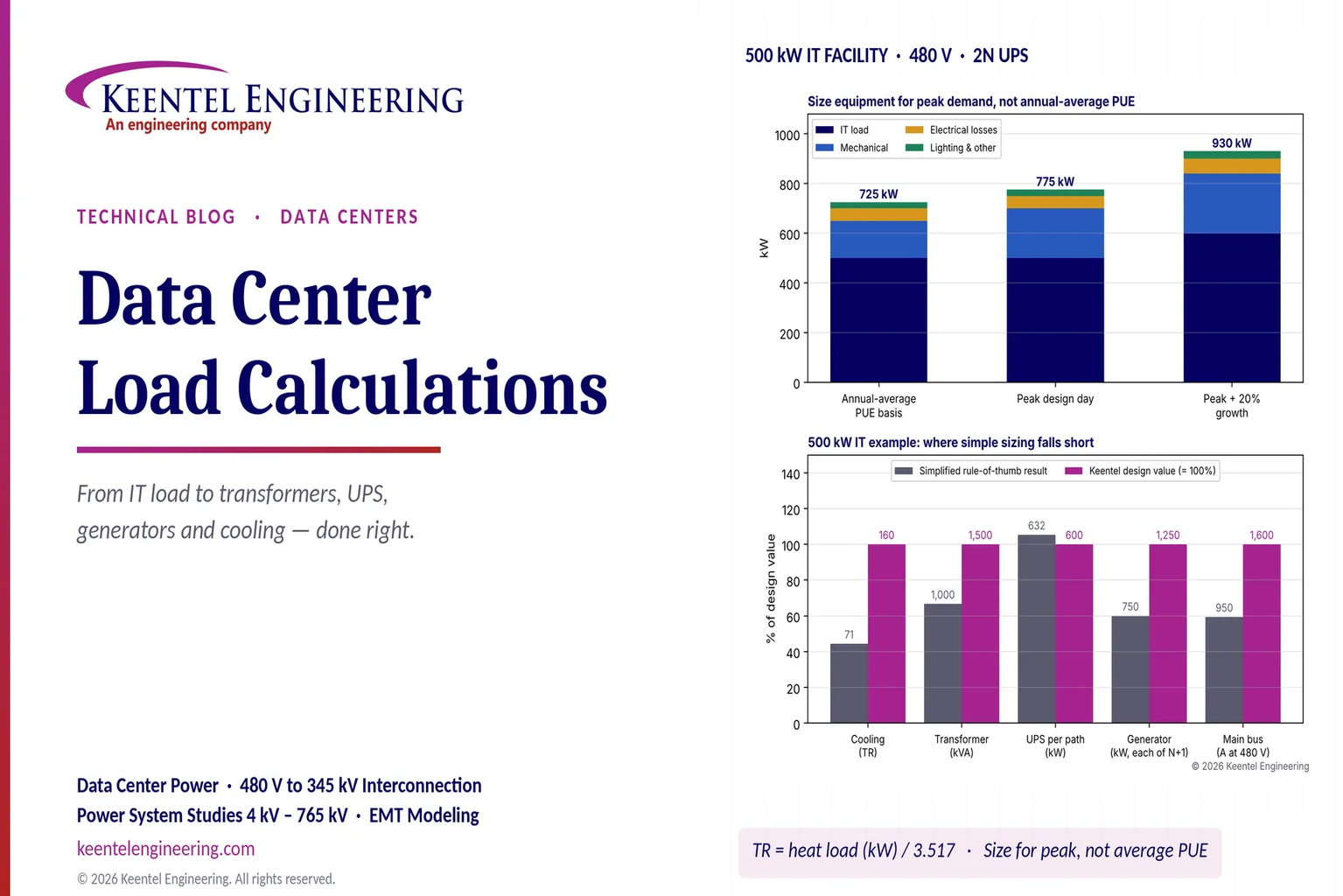
Learn data center electrical load calculations, including IT demand, PUE, UPS and generator sizing, cooling loads, redundancy, and worked US examples.
By SANDIP R PATEL
•
October 20, 2026
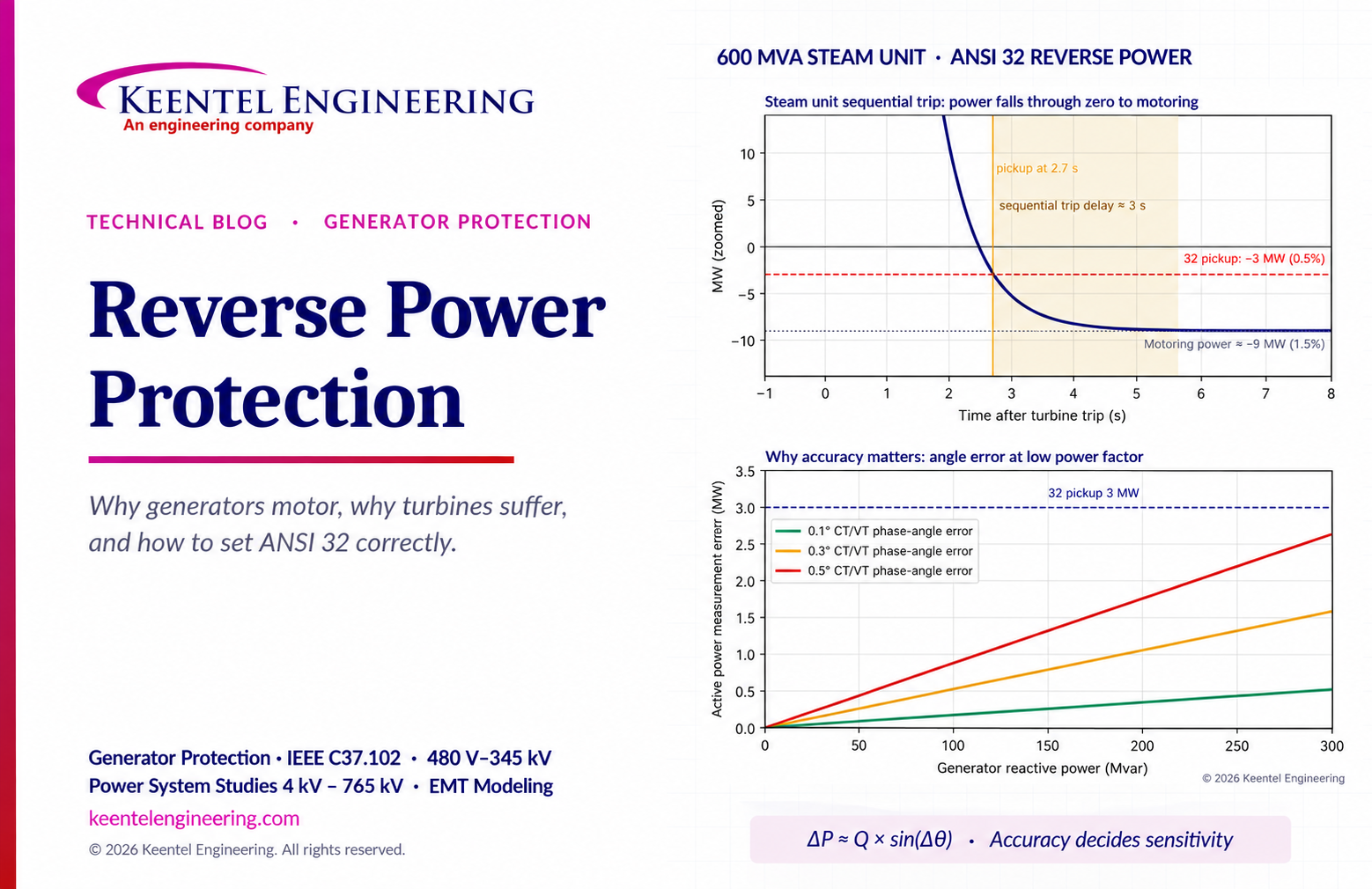
Learn reverse power protection (ANSI 32), generator motoring, relay pickup settings, time delays, sequential tripping and testing for US power plants.
By Team 2 Dexora
•
October 20, 2026
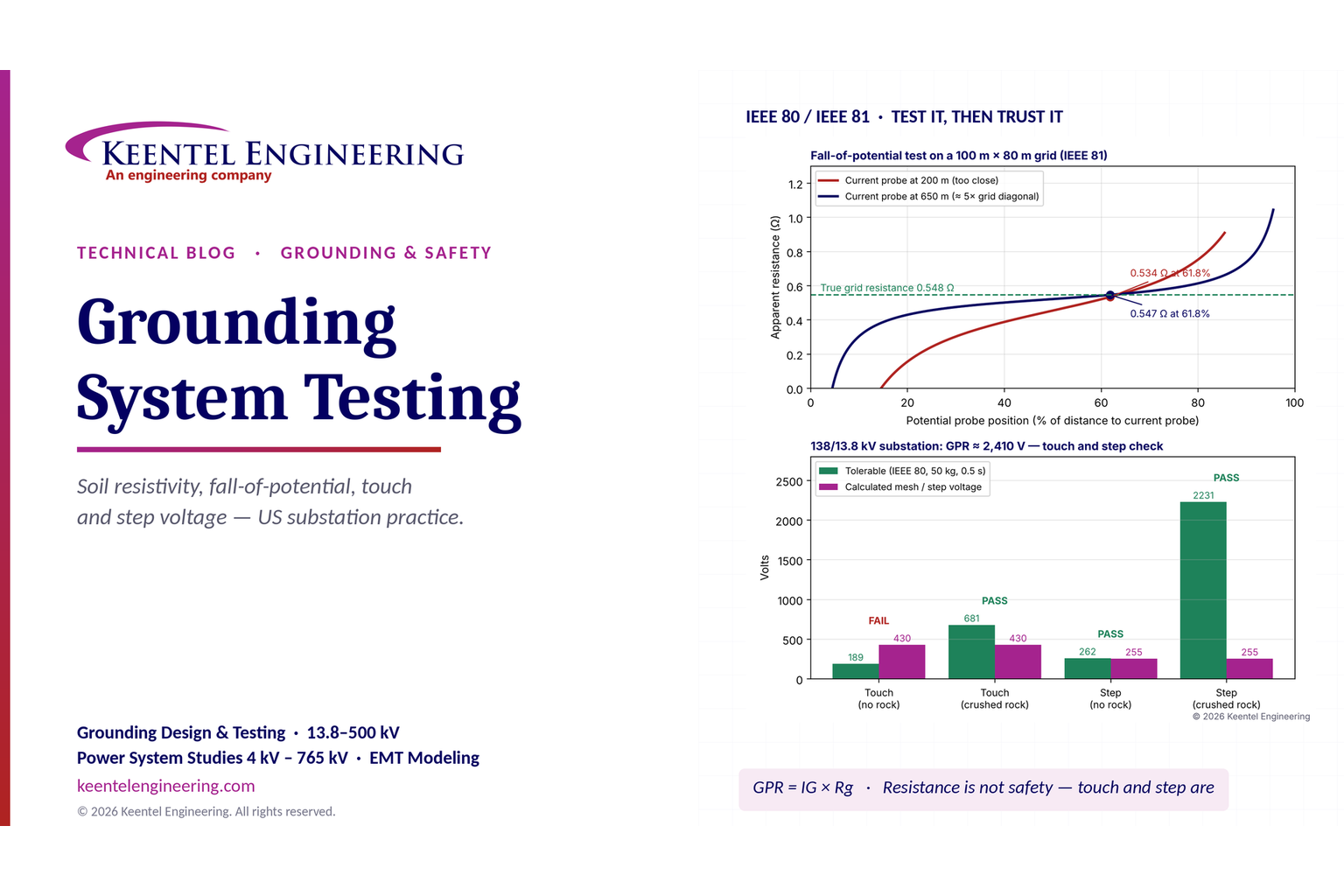
Explore grounding system testing with Keentel Engineering. Learn IEEE 80/81 methods, soil resistivity, ground resistance, and touch and step voltage safety.
By SANDIP R PATEL
•
October 13, 2026
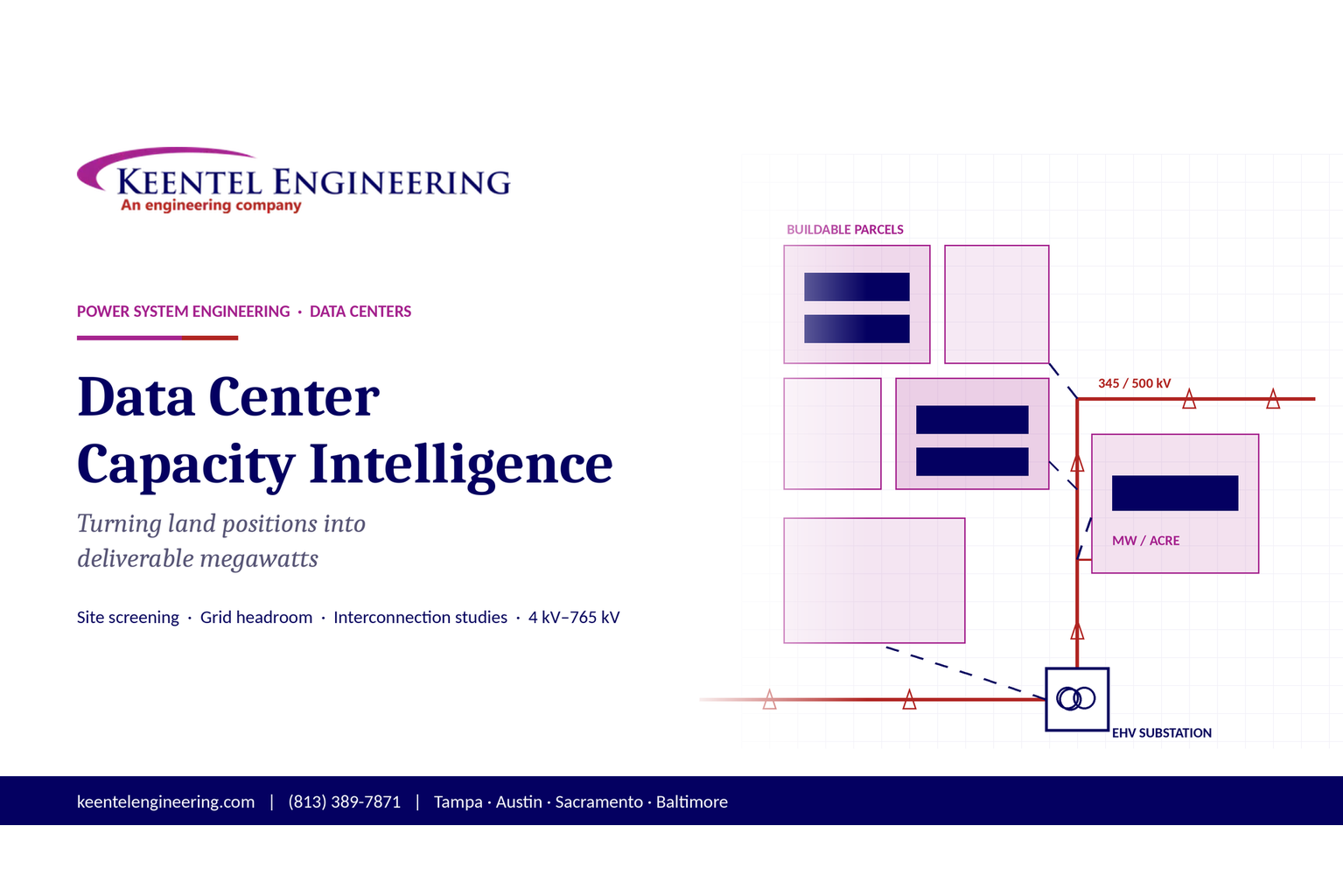
Plan data center capacity with land screening, MW-per-acre estimates, grid power availability and interconnection feasibility studies from Keentel Engineering.