Ride-Through
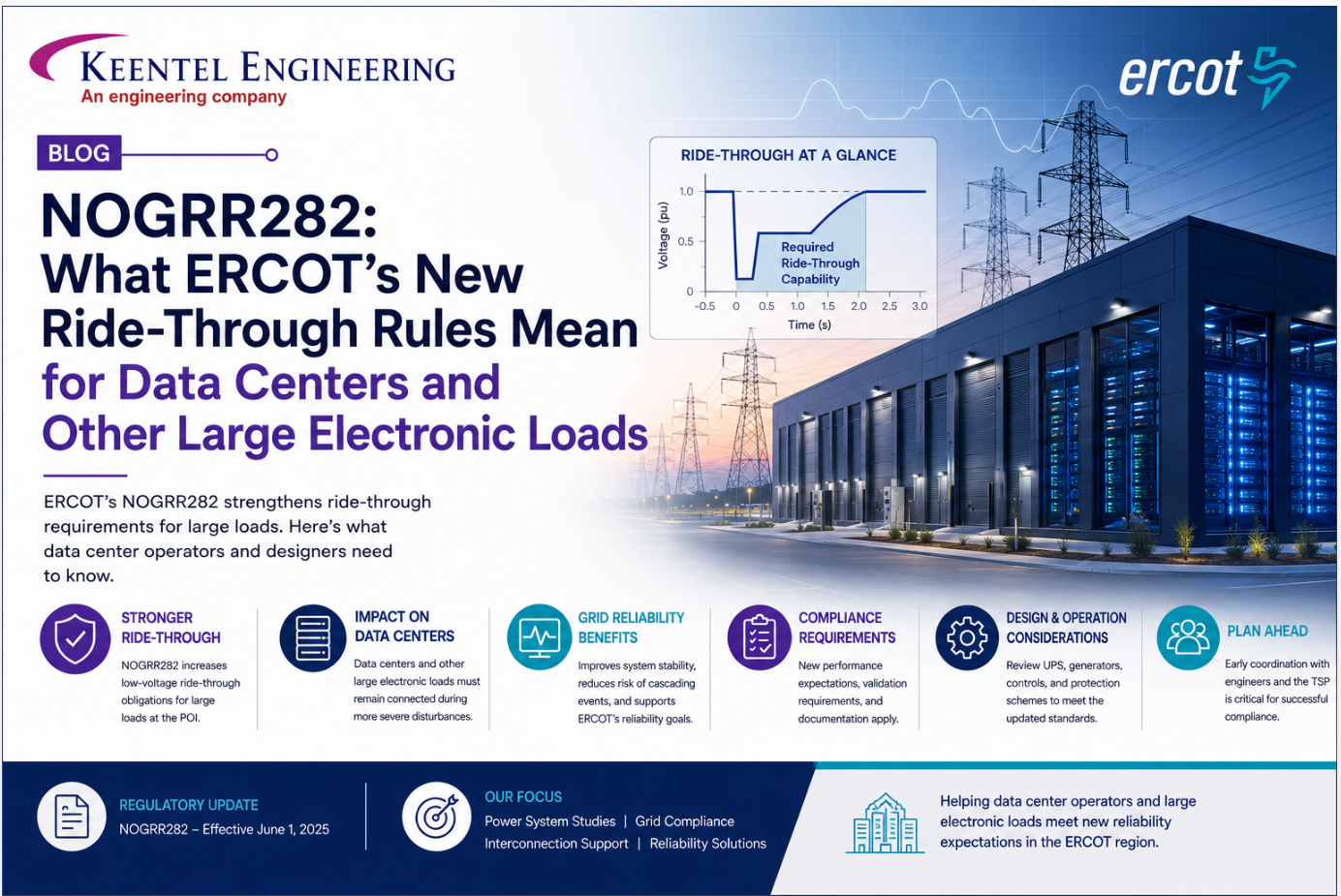
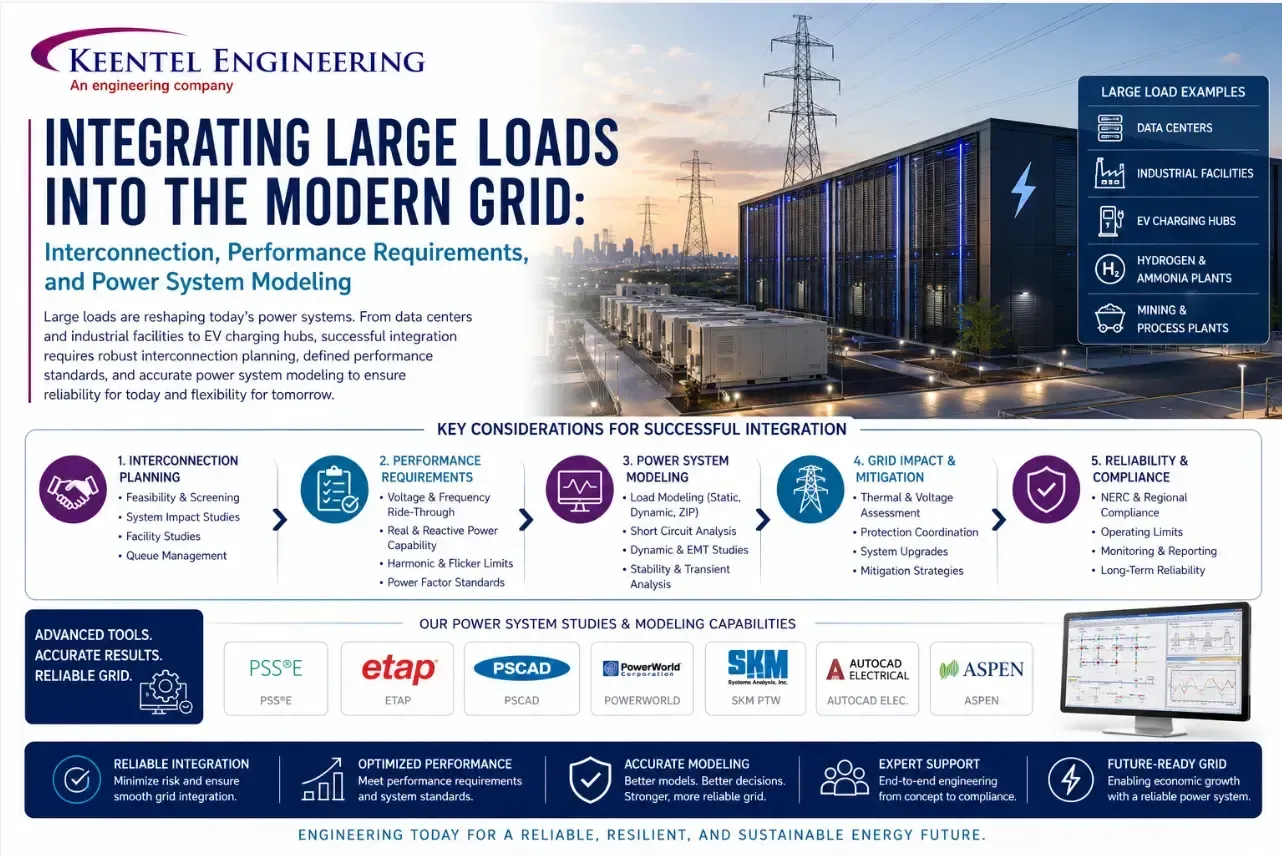
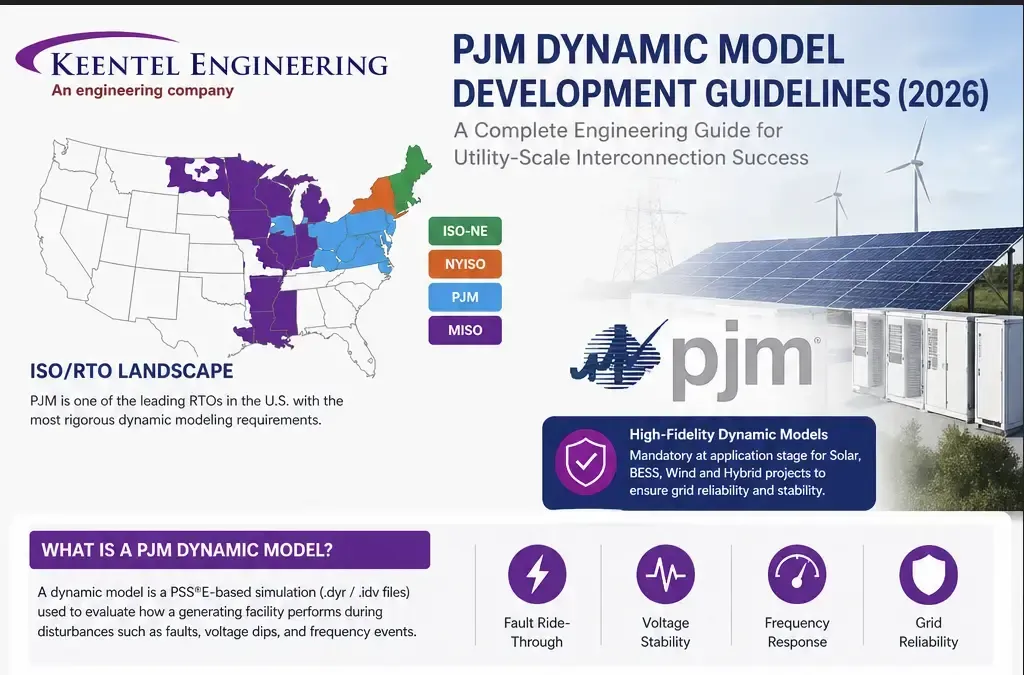
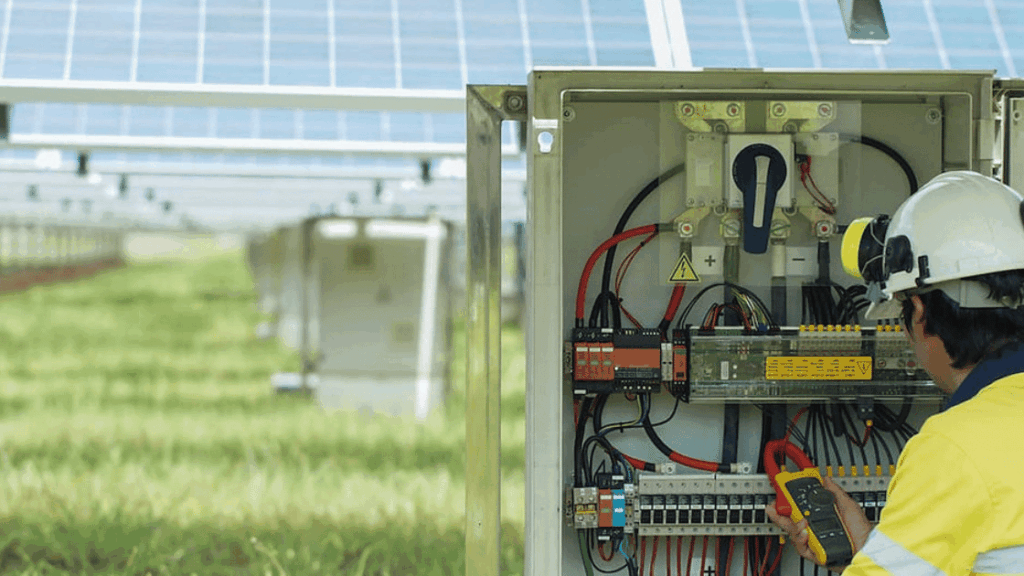
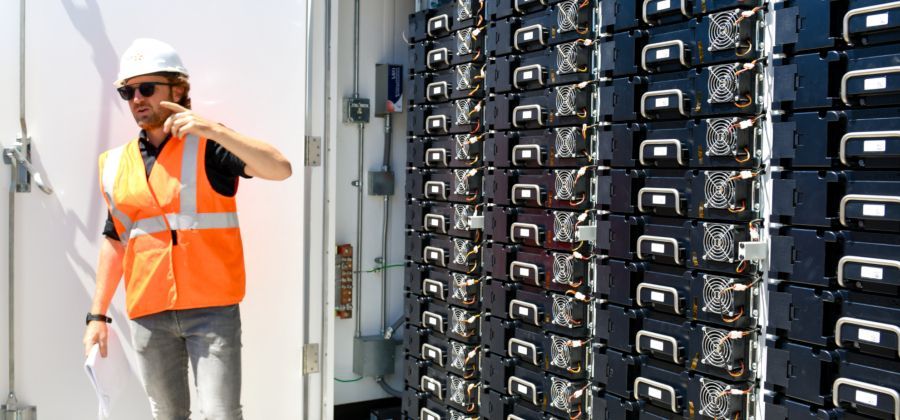
Voltage and frequency ride-through performance, inverter parameters, plant-controller behavior and protection settings are coordinated so the real facility matches the studied response.

Interconnection studies, EMT and RMS models, POI substation design, protection and settings, and NERC compliance — for generation, storage, hybrid and large-load projects in every ISO, RTO and vertically integrated utility footprint.
Your Trusted Partner in Electrical Engineering and Power Systems
At Keentel Engineering, we deliver electrical power engineering services built on 30 years of experience and a commitment to excellence. Our clients include utilities, developers, EPCs, and public agencies across the U.S.
Unlike firms that sacrifice technical depth to chase billable hours, we prioritize precision, compliance, and value engineering. From transmission services and relay modeling to winterization and SCADA planning, we never compromise on quality.

At Keentel Engineering, we take pride in being the go-to electrical power engineering firm for power and utility system planning, substation design, protection, control, and power system analysis. The following attributes distinguish our team in utility-grade substation engineering and compliance-driven project delivery.
With three decades of hands-on project delivery, we bring unmatched expertise in substation layout design, substation electrical and civil engineering, relay protection, and grid-tie solutions. Our experience includes projects in complex terrain, urban retrofit environments, and utility-scale renewable integrations.
Our engineering process applies AutoCAD 3D, BIM modeling, and system-level substation design practices to ensure accurate planning, reduced errors, and efficient coordination across all project stakeholders.
Our workflow includes 3D substation design, enabling clash-free coordination between structural, electrical, and civil disciplines.
From grounding grid studies to relay protection settings, we engineer every detail to improve system reliability, performance, and operational safety. Our rigorous QA/QC process ensures compliance with IEEE, NFPA, and ISO/TSO interconnection standards.
Among leading electrical substation design companies, Keentel Engineering stands out for 30+ years of proven high-voltage and utility-grade project delivery.




First name, email and what you're interested in are all we need to get moving. Everything else, including drawings or an RFP, is optional.
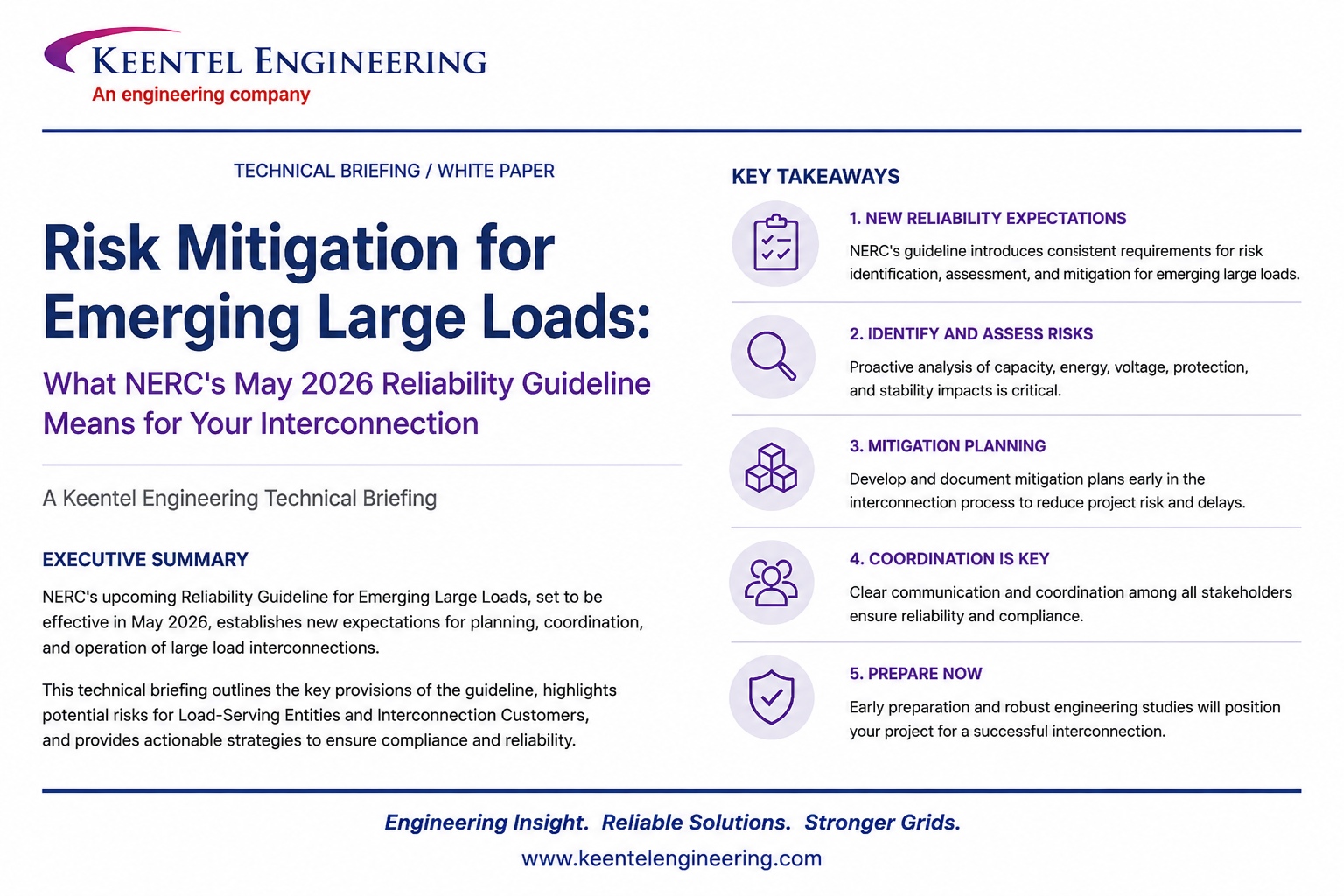
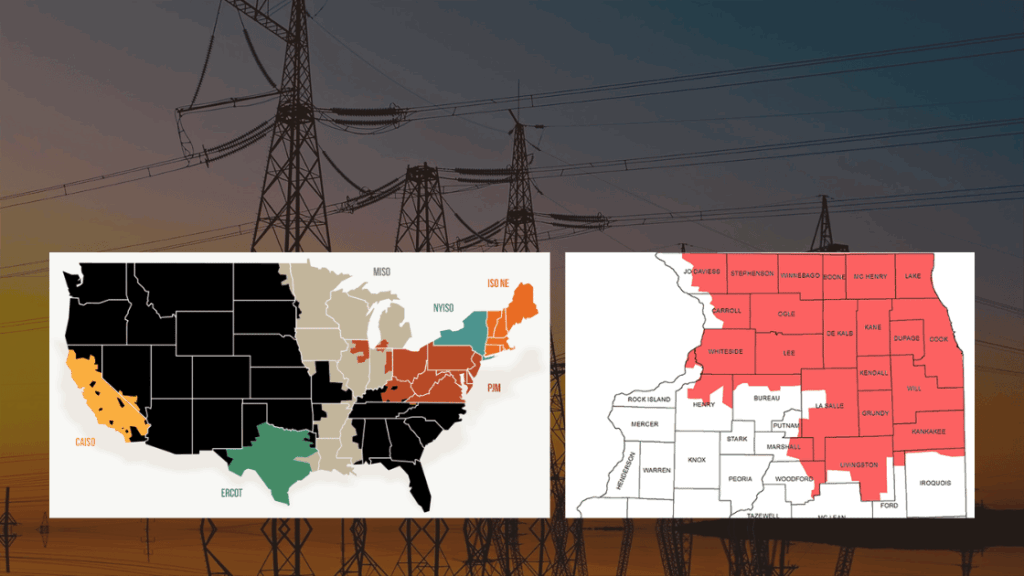
Every queue in the country changed between 2023 and 2026. First-ready, first-served clustering, tighter readiness requirements, model-quality gates and changing study processes now determine whether a project can enter, advance through and exit the queue on schedule.

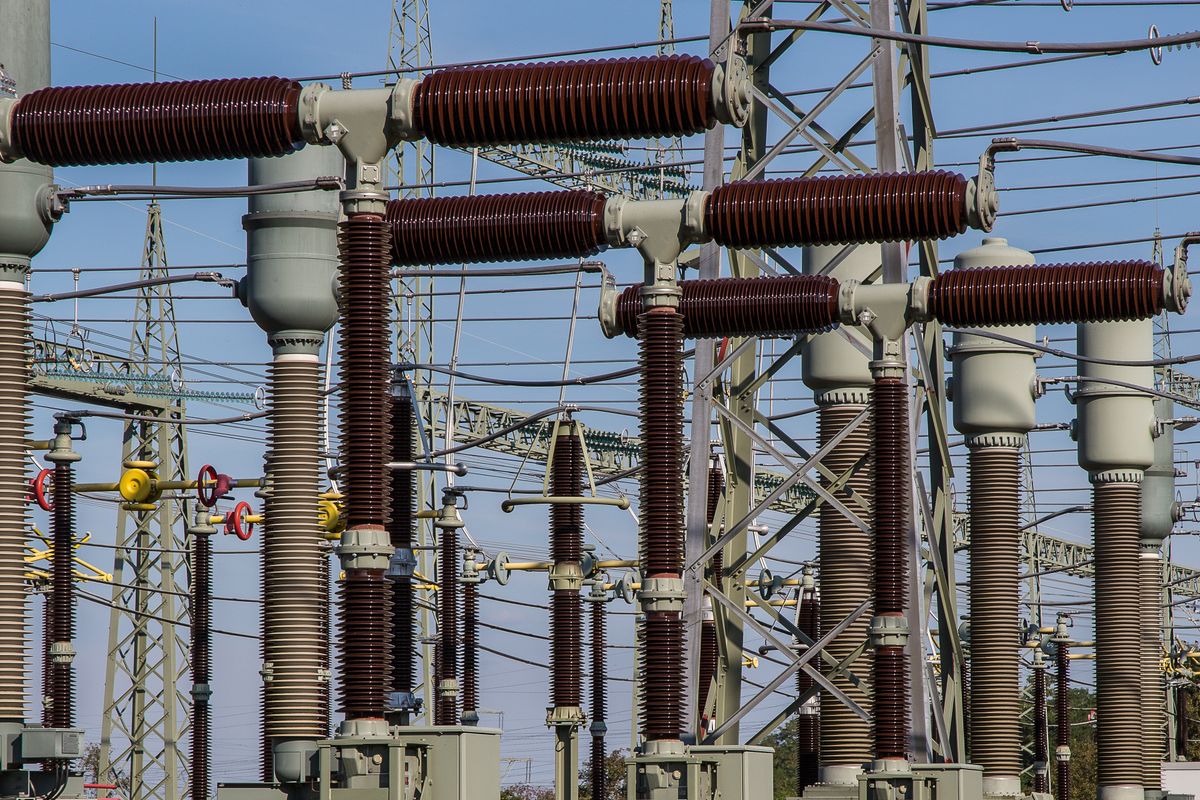
From the first capacity screen to the as-built model handover, Keentel provides the analysis, drawings, settings and compliance record needed to move an interconnection project from early development through energization.
Our work starts with POI selection and capacity screening, grid-strength pre-checks, application readiness and interconnection studies. We evaluate thermal and voltage headroom, short-circuit strength, N-1 and N-1-1 performance, stability, equipment duty, affected-system impacts and independent shadow or restudy results before major queue decisions are made.
The same team carries the project into POI substation design, protection and settings, EMT and RMS model validation, weak-grid and ride-through testing, NERC and grid-code compliance, commissioning, as-built model updates and final compliance handover — keeping the study, design, model and field settings aligned through energization.
From the first capacity screen to the as-built model handover — the analysis, drawings, settings and compliance record needed to move a project through interconnection and energization.
| Phase | What We Do | What You Receive | Project Focus |
|---|---|---|---|
| 01 | POI Selection & Capacity Screening
Candidate points of interconnection are screened for thermal and voltage headroom, short-circuit strength, grid strength and known constraint exposure before a deposit is committed. |
POI screening results, capacity assessment and early go/no-go technical guidance. | Identify viable interconnection locations before significant queue costs are at risk. |
| 02 | Application Readiness
Data forms, models, one-lines, equipment data and site-control evidence are assembled to the specific queue's checklist and readiness requirements. |
Application package, technical data, models, one-lines and readiness documentation. | Enter the queue with the required technical package and supporting evidence in place. |
| 03 | Interconnection Studies
Power flow, contingency, stability and short-circuit analysis are performed using ISO and transmission-owner models, including N-1 and N-1-1 thermal and voltage screening. |
Study results, identified constraints, equipment-duty information and independent technical review. | Understand system impacts before major queue and commercial decision points. |
| 04 | Shadow & Restudy Review
ISO study results are independently reproduced and reconciled, including affected-system impacts, changing cost allocations and restudy exposure. |
Independent shadow-study review and decision-point technical assessment. | Support project decisions with an independent view of study results and network-upgrade exposure. |
| 05 | POI Substation & Protection
POI substation configuration, equipment layout, protection elements, transfer trip, anti-islanding, relay settings, metering, SCADA and telemetry interfaces. |
Electrical design package, protection settings, coordination records and interface documentation. | Keep the physical POI design and protection settings aligned with the studied system conditions. |
| 06 | EMT & RMS Model Quality
EMT and RMS models are built and validated for initialization, weak-grid behavior, ride-through, model usability and cross-platform consistency. |
EMT and RMS model packages, usability test results, waveform evidence and reconciliation records. | Deliver models that meet the governing ISO or transmission-provider requirements. |
| 07 | NERC & Grid Code Compliance
Registration applicability, ride-through, model verification, modeling data, facility ratings, disturbance monitoring and applicable grid-code requirements are incorporated into the project. |
Compliance assessment, applicability matrix, supporting technical records and grid-code documentation. | Create compliance evidence during design, modeling and commissioning. |
| 08 | Commissioning & Handover
Test planning, commissioning support, final settings verification, measured-behavior reconciliation and as-built model updates complete the interconnection process. |
Commissioning records, final parameter and settings record, as-built models and compliance handover package. | Close the loop between what was studied, what was programmed and what operates in the field. |
Explore Keentel's approach to queue strategy, interconnection studies, POI substation design, EMT and RMS modeling, NERC compliance, commissioning and handover across ISO, RTO and non-RTO markets.
Interconnection ends at the agreement. Compliance obligations start at registration and continue through operation. Keentel helps identify applicability early so modeling, protection, monitoring and commissioning evidence is created as part of the project — not reconstructed later.
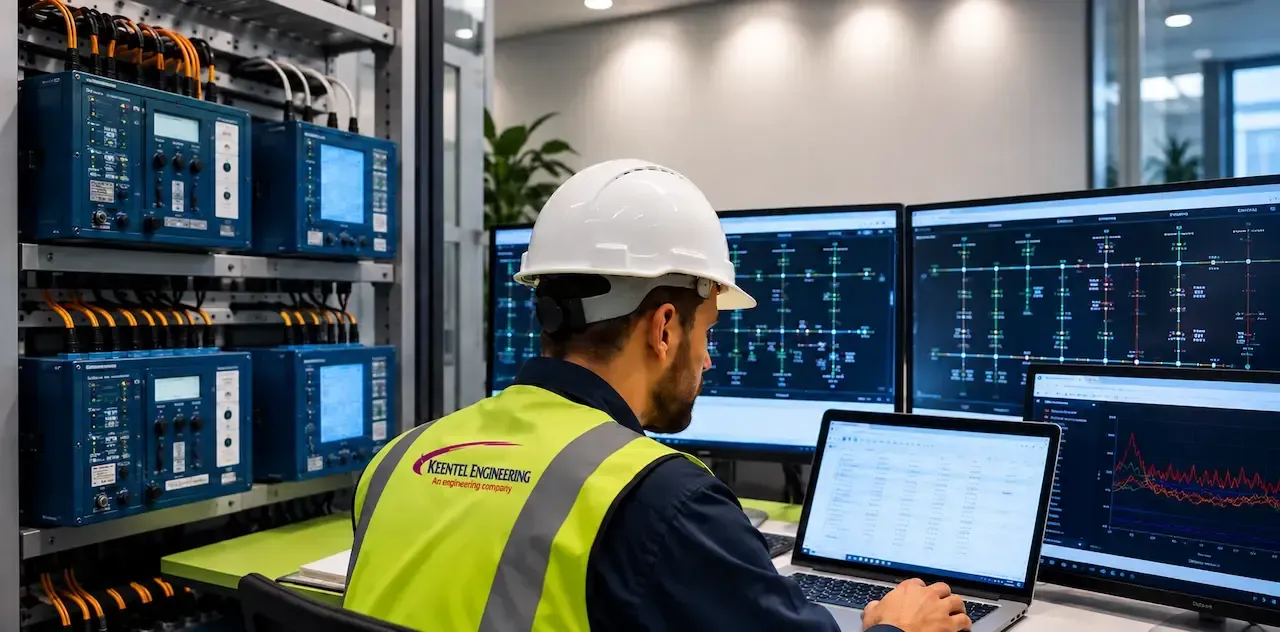
Interconnection does not end when the agreement is signed. Ride-through performance, model accuracy, disturbance monitoring and facility data become standing technical obligations that continue through commissioning and operation.

Voltage and frequency ride-through performance, inverter parameters, plant-controller behavior and protection settings are coordinated so the real facility matches the studied response.
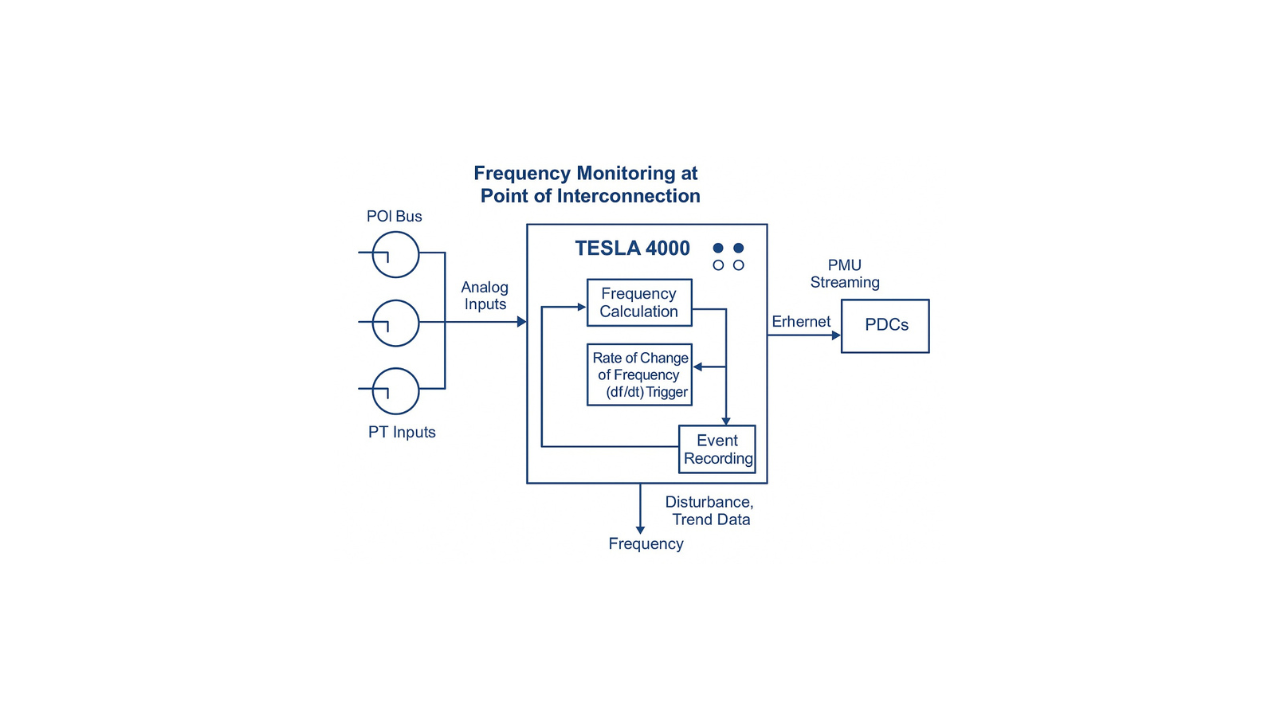
High-resolution recording, time synchronization, retention and reporting capability are designed into the POI rather than added after energization.
Dynamic and EMT models are validated against measured facility behavior, with tuned as-built models and periodic revalidation supporting ongoing compliance.
Steady-state, dynamic and short-circuit data, facility ratings and as-built equipment information are maintained for the Transmission Planner and Planning Coordinator.
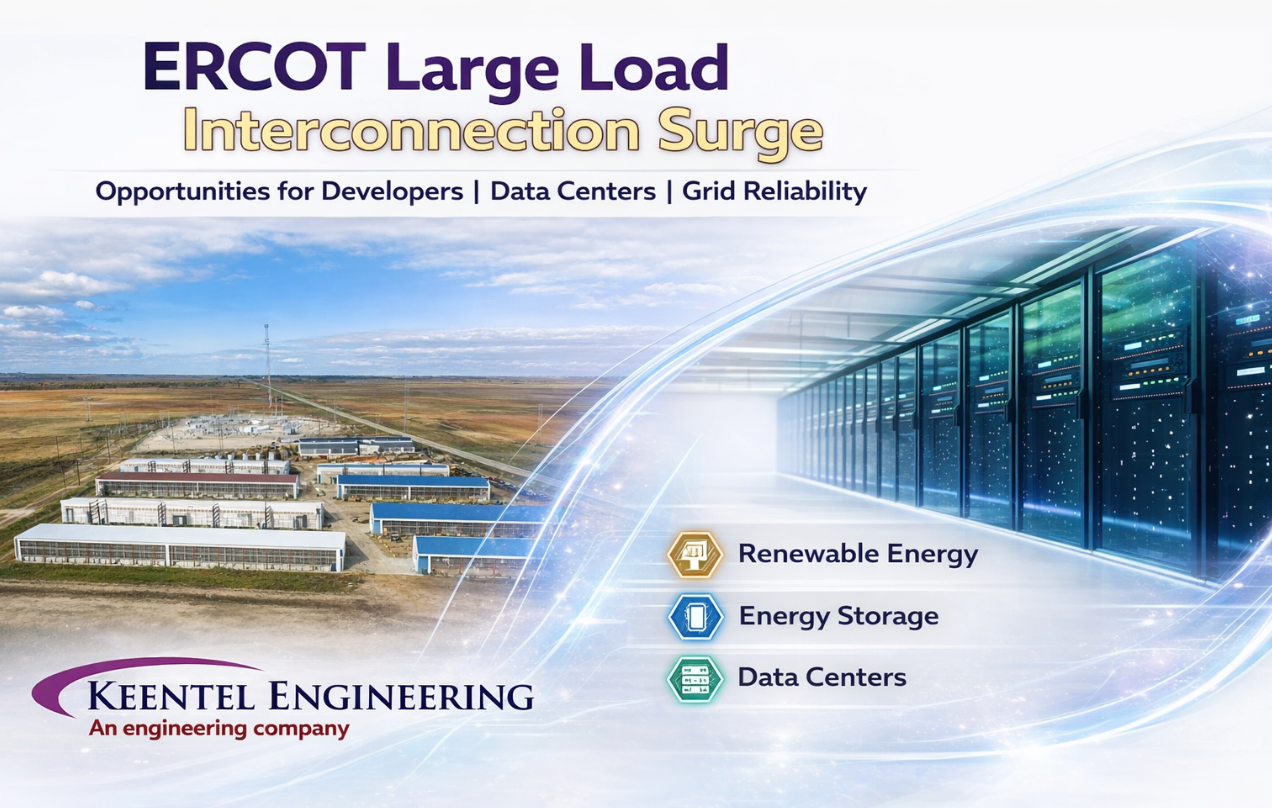
Data center interconnection is being written into the rules right now — by FERC, by NERC, by every RTO and by the states. The engineering requirements are moving with it.
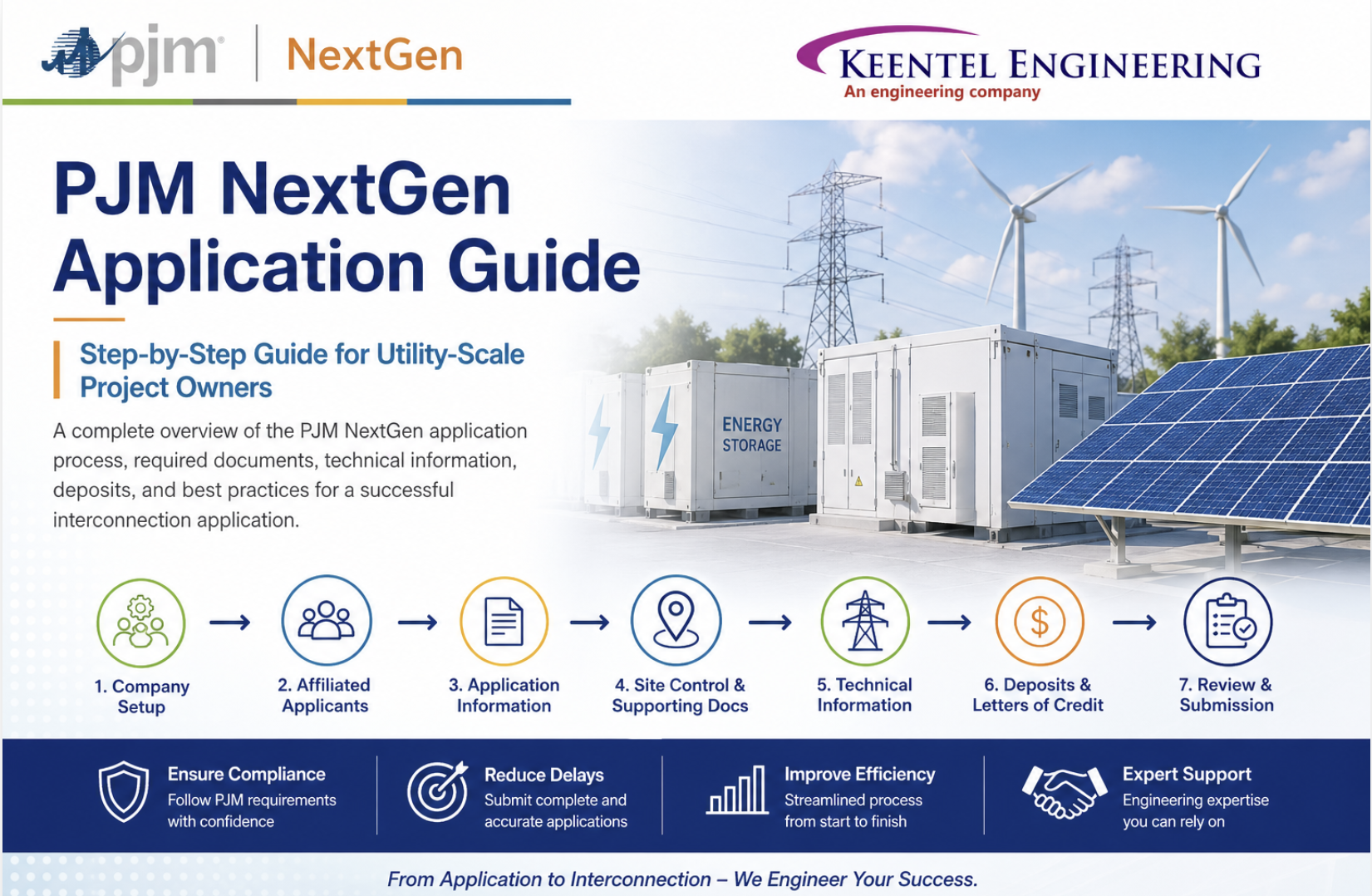
The interconnection process produces more than a study report. Keentel delivers the models, study files, technical records, settings and compliance documentation needed to carry the project from queue application through energization and handover.
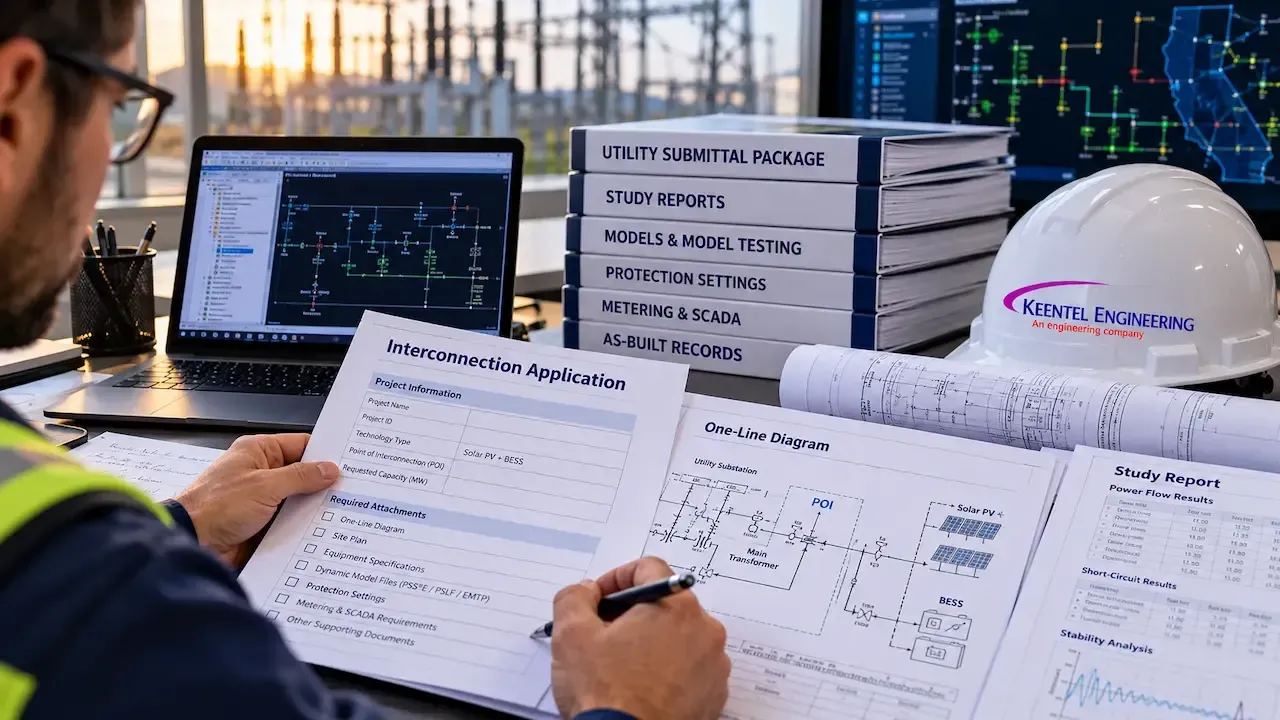
Queue-ready data forms, one-lines, equipment information, models and supporting readiness documentation assembled for the governing interconnection process.
Native power-flow, stability, short-circuit and other study files provided with the project record rather than only static report outputs.
Independent review of ISO or transmission-owner study results, including constraint exposure, restudy risk and technical reconciliation.
A technical record of study results, cost exposure and key engineering issues prepared to support major queue decision points.
EMT models together with the applicable model-usability test report and evidence required by the ISO or transmission provider.
Weak-grid, ride-through and control-interaction results supported by waveform evidence and documented against the applicable test requirements.
POI protection settings, native relay files, coordination records, metering requirements and SCADA or telemetry interface documentation.
Final settings and parameter records reconciled to the installed facility, updated as-built models and the compliance handover package.
Send the information below and Keentel can define the interconnection scope, fee and schedule — and can start from a partial data set.

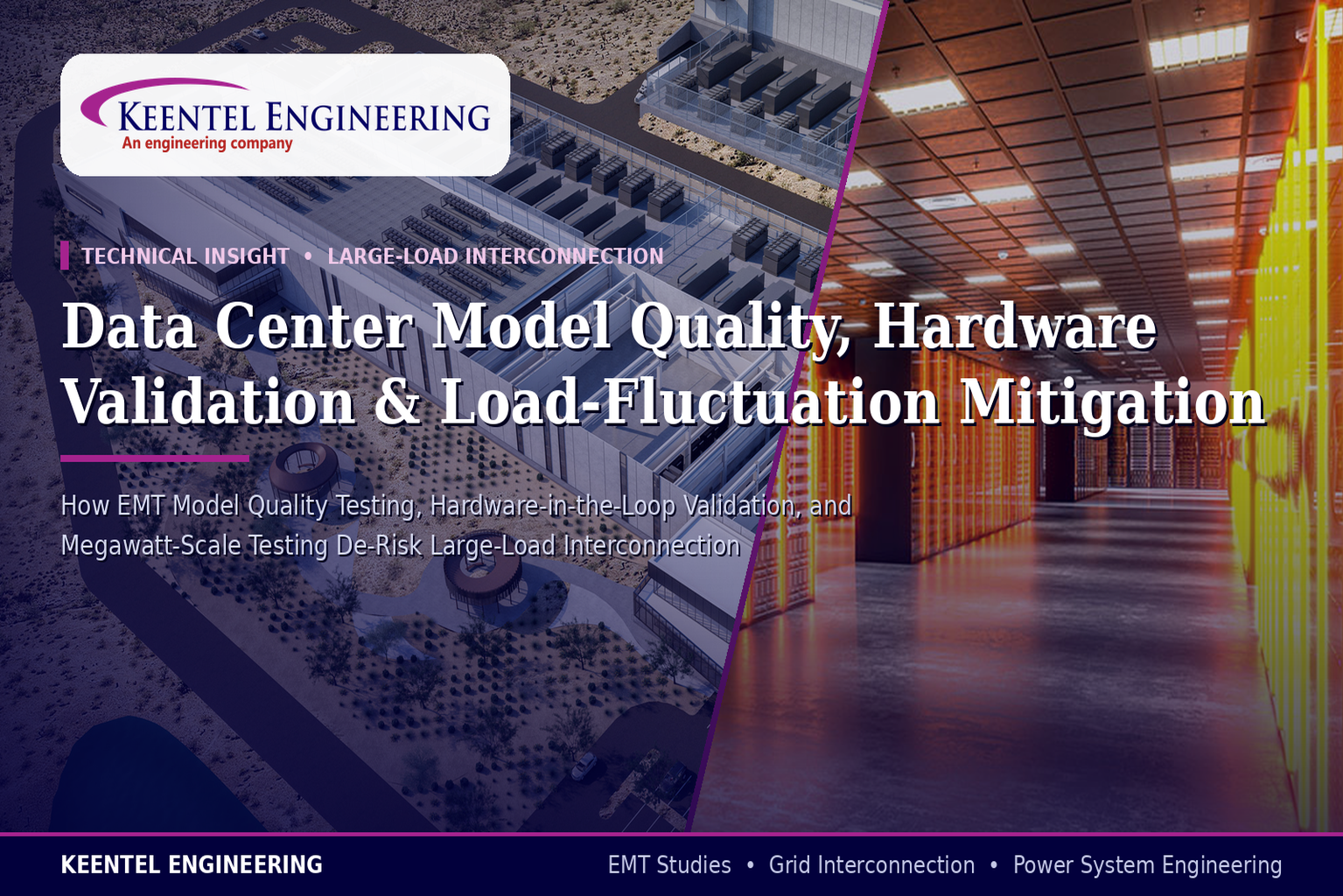
Model quality now controls schedule. The EMT submission has to initialize and perform correctly in the reviewer's environment, across the required operating conditions, disturbance cases and system-strength levels.
The model has to reach its setpoint and sit there in the reviewer's environment at the reviewer's time step.
Active power, reactive power, voltage and frequency steps are checked with the response damped and settling inside the stated window.
Balanced and unbalanced faults are applied at defined depth and duration, including recovery ramp and repeat-fault behavior.
Short-circuit ratio is reduced in steps to identify where the controller becomes unstable, not merely whether it survives one case.
Phase-locked-loop and control behavior are tested through the disturbances that expose converter interaction.
Plant and inverter protections are represented in detail so the model trips when the real plant would.
Model behavior is checked from minimum stable output through full installed capacity rather than only at rated output.
EMT behavior is reconciled against the positive-sequence model, with any divergence explained in the report.
The objective is the same — reach an executable interconnection agreement and energize the project — but the process, readiness requirements, EMT gate and commercial risk are different in every market.
First-ready, first-served Cycle Process with three study phases and three decision points. EMT models are required at Decision Point II for applicable bulk-system projects, with standardized usability testing.
Three-phase Definitive Planning Phase process with two decision points and annual regional volume limits. PSCAD models are required for inverter-based resources together with model-quality results and benchmark documentation.
The Consolidated Planning Process combines interconnection and transmission planning, uses Planned Interconnection Locations, requires full site control at application and carries a single project decision point.
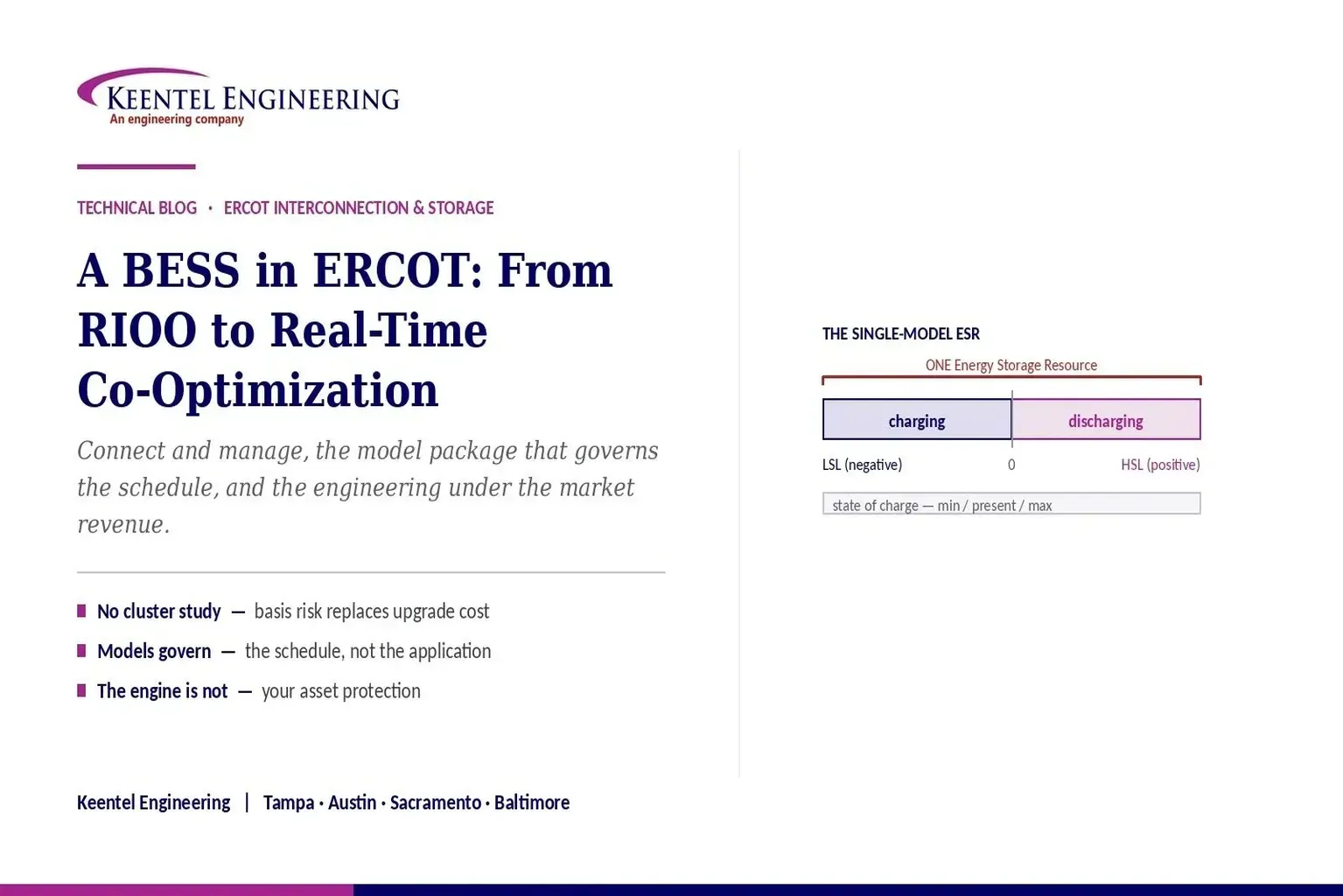
ERCOT performs the security screening while the lead Transmission Service Provider performs the full interconnection study. Connect-and-manage shifts much of the commercial exposure to congestion and curtailment risk.
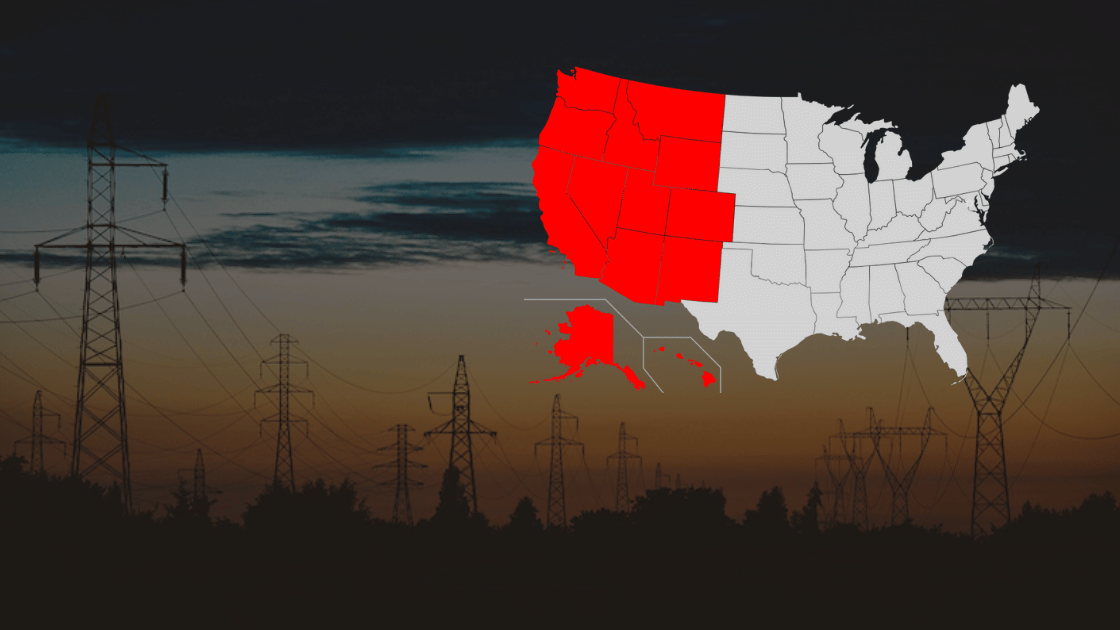
Keentel supports POI and grid interconnection projects across eight ISO and RTO markets plus the non-RTO footprint, bringing studies, design, model quality and compliance into one coordinated engineering scope.
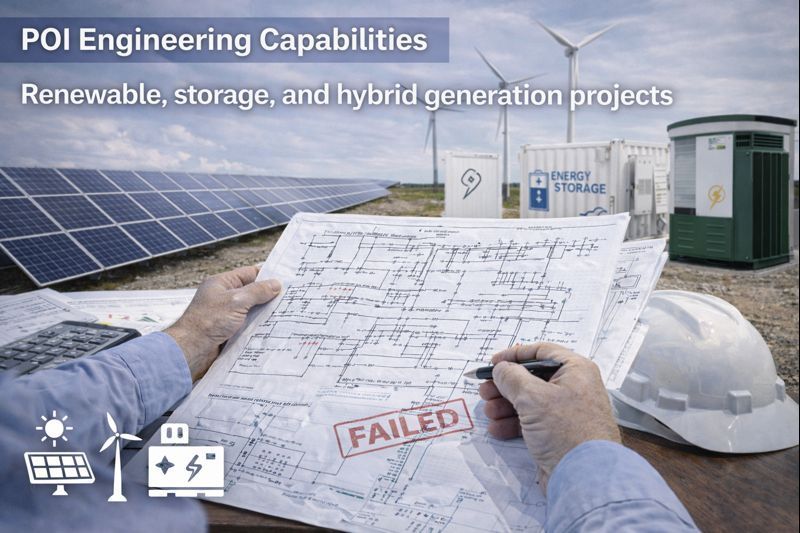
Eight ISO and RTO processes plus the non-RTO footprint, tracked as they change — so a portfolio spanning several markets is not several separate engagements.
The interconnection study, the POI substation design and the protection settings come from the same team, so the drawings reflect the study and the settings reflect the fault model.
EMT and RMS models built to survive someone else's environment and someone else's checklist, with cross-platform reconciliation documented for the reviewer.
Registration, ride-through, model verification, monitoring and data submittal designed into the project rather than reconstructed for an audit.
Send your interconnection point, project size and technology, queue position and current study or milestone driver. Keentel can define the POI and grid interconnection engineering scope around the project information you already have.
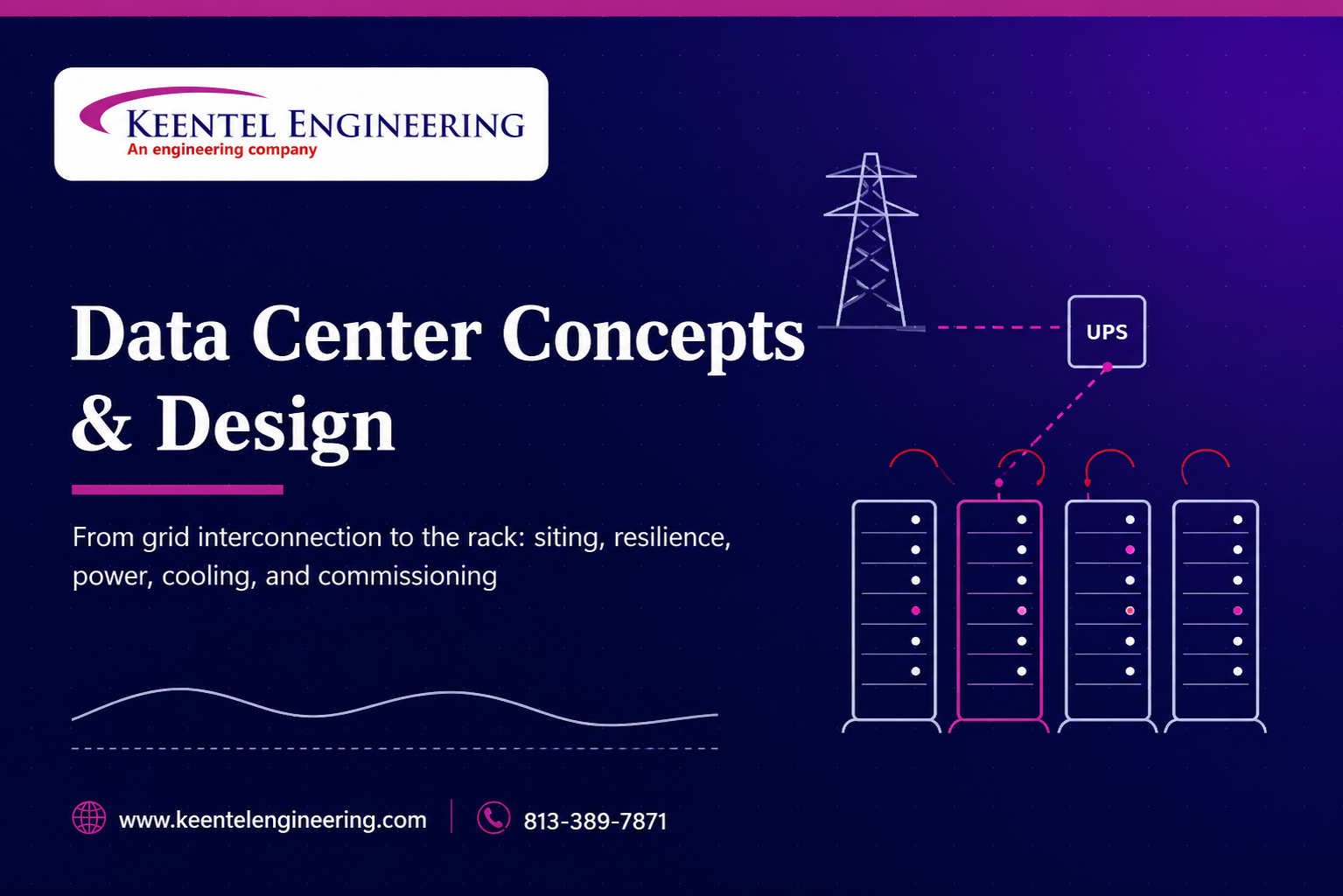
Schedule a discussion, review the POI & Grid Interconnection flyer, or send the Keentel team your project details directly.
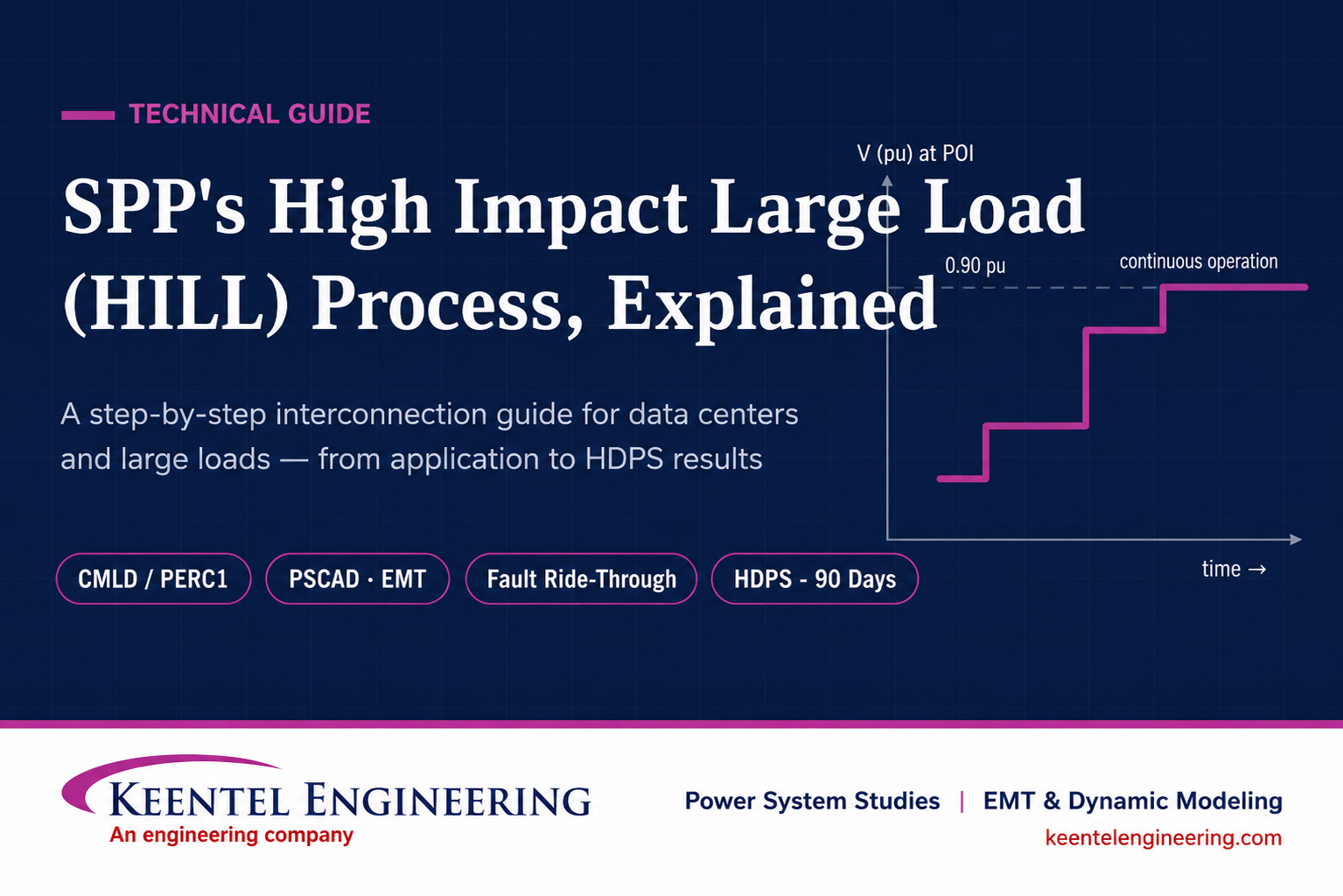
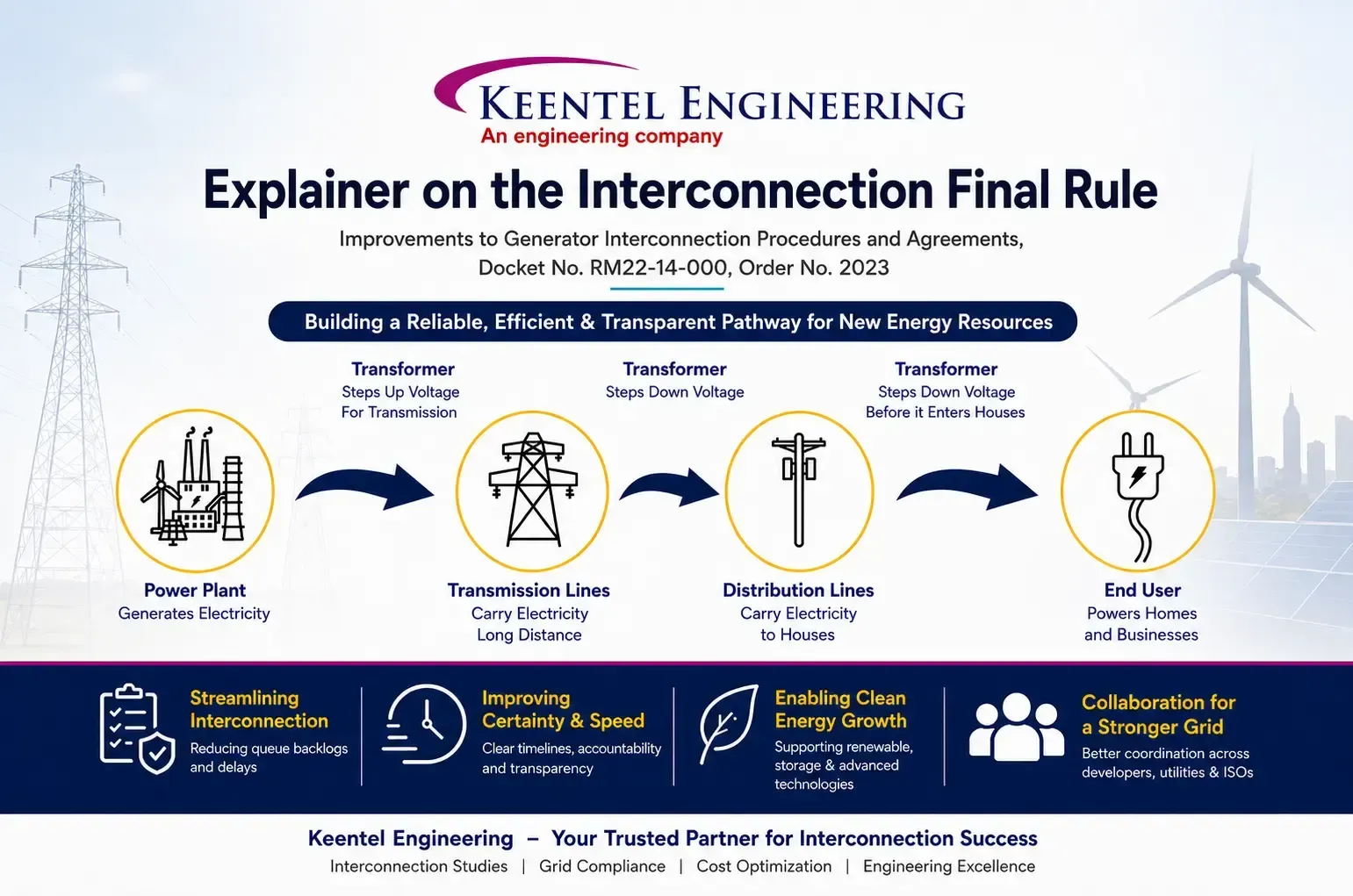
The Point of Interconnection (POI) is the location where a renewable energy project or power generation facility connects to the existing electrical grid. It is the physical or electrical point where the generated power is transferred from the plant to the transmission or distribution network. The POI is crucial for ensuring that the generated electricity is integrated seamlessly into the grid.
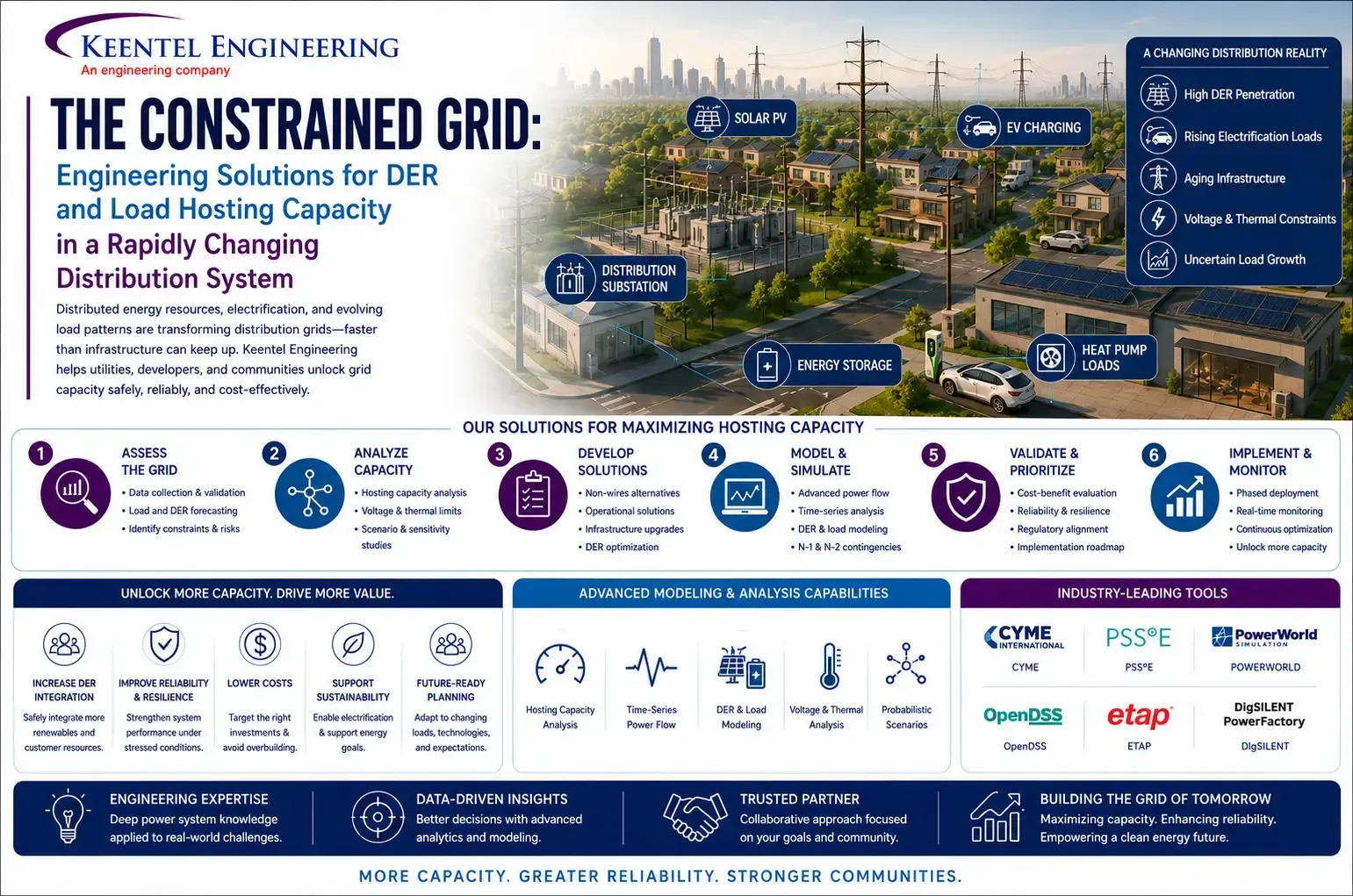
POI Interconnection Engineering Support Services involve the technical assistance required for the successful design, planning, analysis, and execution of the interconnection process between a power generation system and the electrical grid. These services ensure that the interconnection complies with grid codes, standards, and regulatory requirements while optimizing safety, efficiency, and reliability.
The interconnection process is a critical step in ensuring that power generated by renewable energy systems can be safely and efficiently delivered to the grid. These services help identify potential challenges in grid capacity, voltage stability, and protection schemes, while ensuring that the system meets local, regional, and national grid codes and standards.
Our POI Interconnection Engineering Support includes:
The selection of a POI depends on various factors, including the location of existing transmission lines, grid capacity, distance from the plant, and regulatory requirements. We assess these factors through feasibility studies and grid impact analyses to determine the most optimal POI that minimizes cost, risk, and technical challenges.
A Grid Impact Study analyzes how connecting a power generation system to the grid at the proposed POI will affect the performance of the transmission or distribution system. It includes evaluating power flow, voltage stability, fault conditions, and overall grid reliability. The study helps identify potential upgrades or modifications needed to accommodate the new generation capacity.
The interconnection process must adhere to grid codes and regulations set by local transmission system operators (TSOs), utility companies, and government bodies. These regulations may address issues such as voltage control, frequency stability, protection coordination, safety standards, and environmental considerations. Our team ensures that all interconnection procedures comply with these requirements, ensuring the project’s smooth approval and integration.
We follow a rigorous process that includes:
The timeline for POI interconnection engineering depends on the complexity of the project and the requirements of the grid operator. Typically, the feasibility study, grid impact analysis, and other studies can take several weeks to a few months. Additional time may be required for addressing any upgrades or modifications to the grid or plant systems. We work closely with all stakeholders to ensure timely delivery and efficient project execution.
Common challenges in the POI interconnection process include:
We assist in the preparation and negotiation of interconnection agreements with utility companies and transmission system operators. These agreements outline the terms, conditions, and responsibilities of both parties, including the technical requirements, financial arrangements, and timelines for the interconnection. We ensure that these agreements protect your interests and comply with industry standards.
We help manage costs by conducting detailed feasibility studies and grid impact analyses early in the process, allowing us to identify potential issues and recommend cost-effective solutions. Our team works closely with contractors, utilities, and regulatory bodies to streamline the process, avoid unnecessary expenses, and minimize delays.
Yes, we offer post-interconnection support to ensure that the integration of the power plant into the grid is smooth and operational. This can include:
The cost of our POI interconnection services varies depending on the complexity and scale of the project. We provide customized pricing based on the scope of the work, the type of studies required, and the level of support needed. We offer competitive rates and ensure that you receive high-value engineering expertise tailored to your project.
While both POI and PCC refer to physical connection points, they apply in different contexts. The Point of Interconnection (POI) is where your specific generation facility connects to the utility grid. The Point of Common Coupling (PCC) is a shared connection point used by multiple customers. POI is typically used in utility-scale projects, while PCC is more common in distributed generation or commercial setups under IEEE 1547.
Interconnections in power systems can be categorized as physical (e.g., transmission line tie-ins), network-based (between different grid zones), or system-level (between balancing authorities). In renewable energy, the most common interconnection is physical — connecting your solar, wind, or battery project to a specific POI on the transmission or distribution grid.
The Point of Interconnection (POI) is where the project connects to the utility grid. The Point of Delivery (POD) is where the power is officially handed off to the purchaser or utility for billing and metering purposes. In many projects, the POI and POD are the same, but in some cases they can be separate depending on the utility's metering infrastructure.
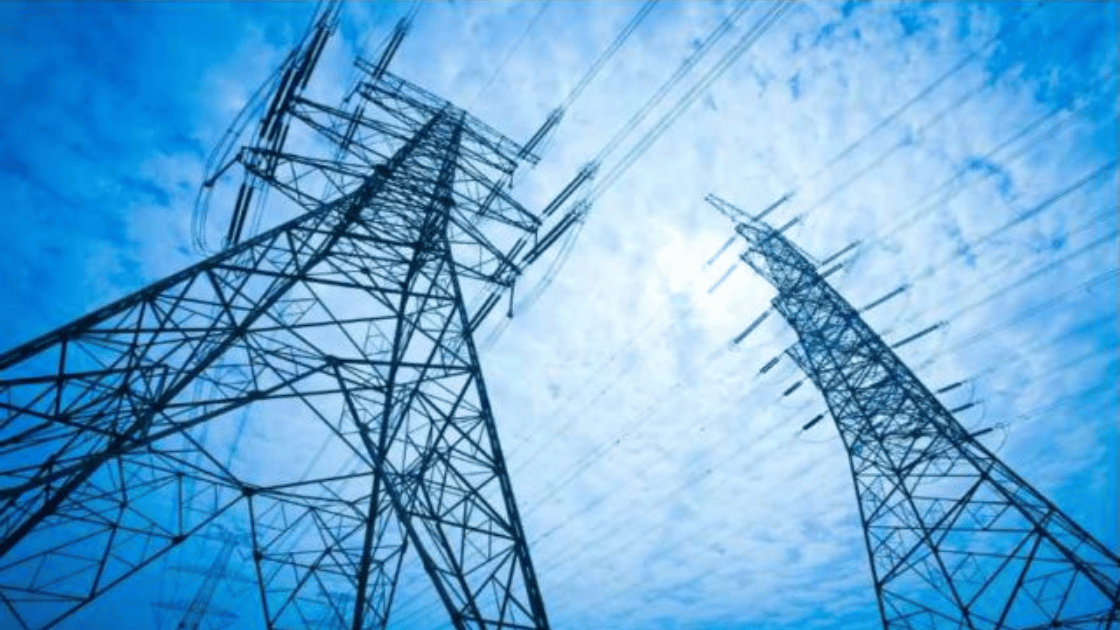
Sure. Imagine a solar farm in Texas that generates power and feeds it into the ERCOT grid. The interconnection point — or POI — might be a nearby 138kV substation owned by the utility. After conducting studies and submitting an interconnection application, the project gets approval to connect at that location. From there, the solar farm delivers power directly to the grid.

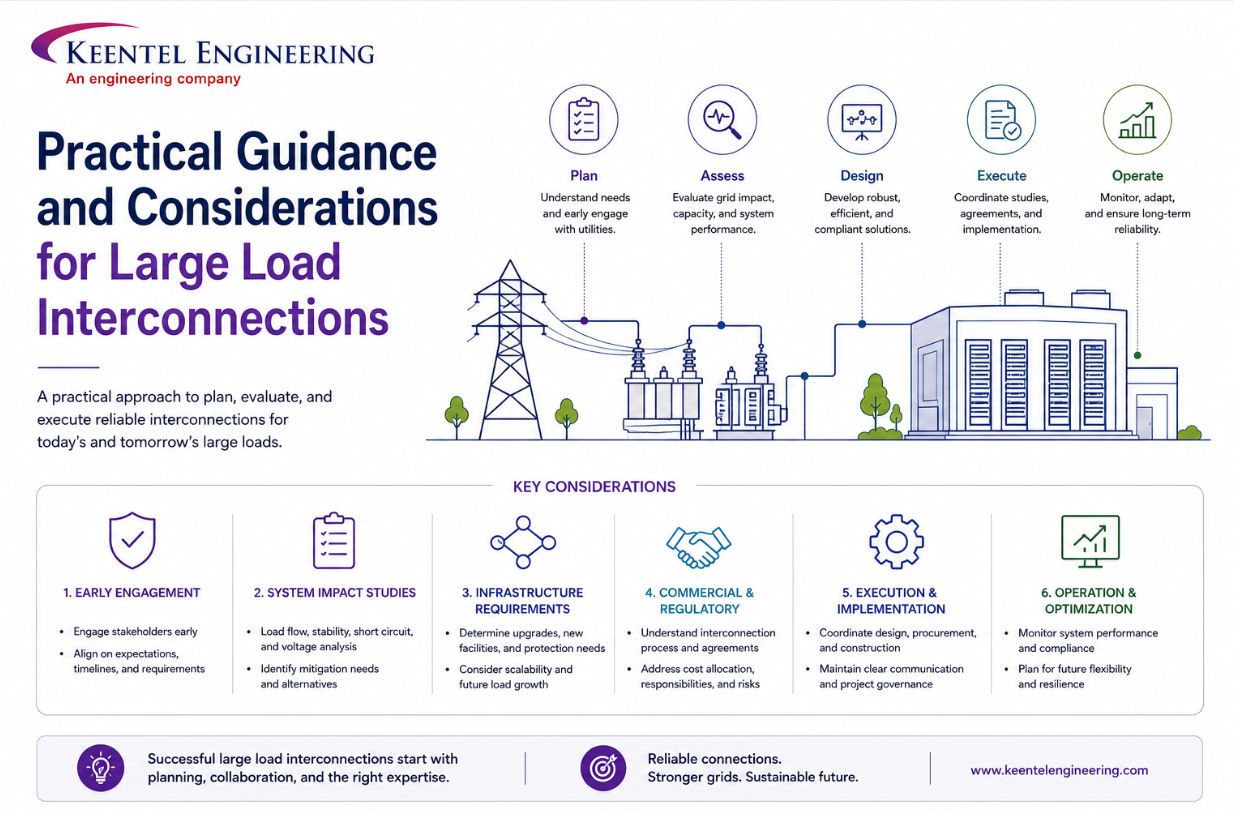
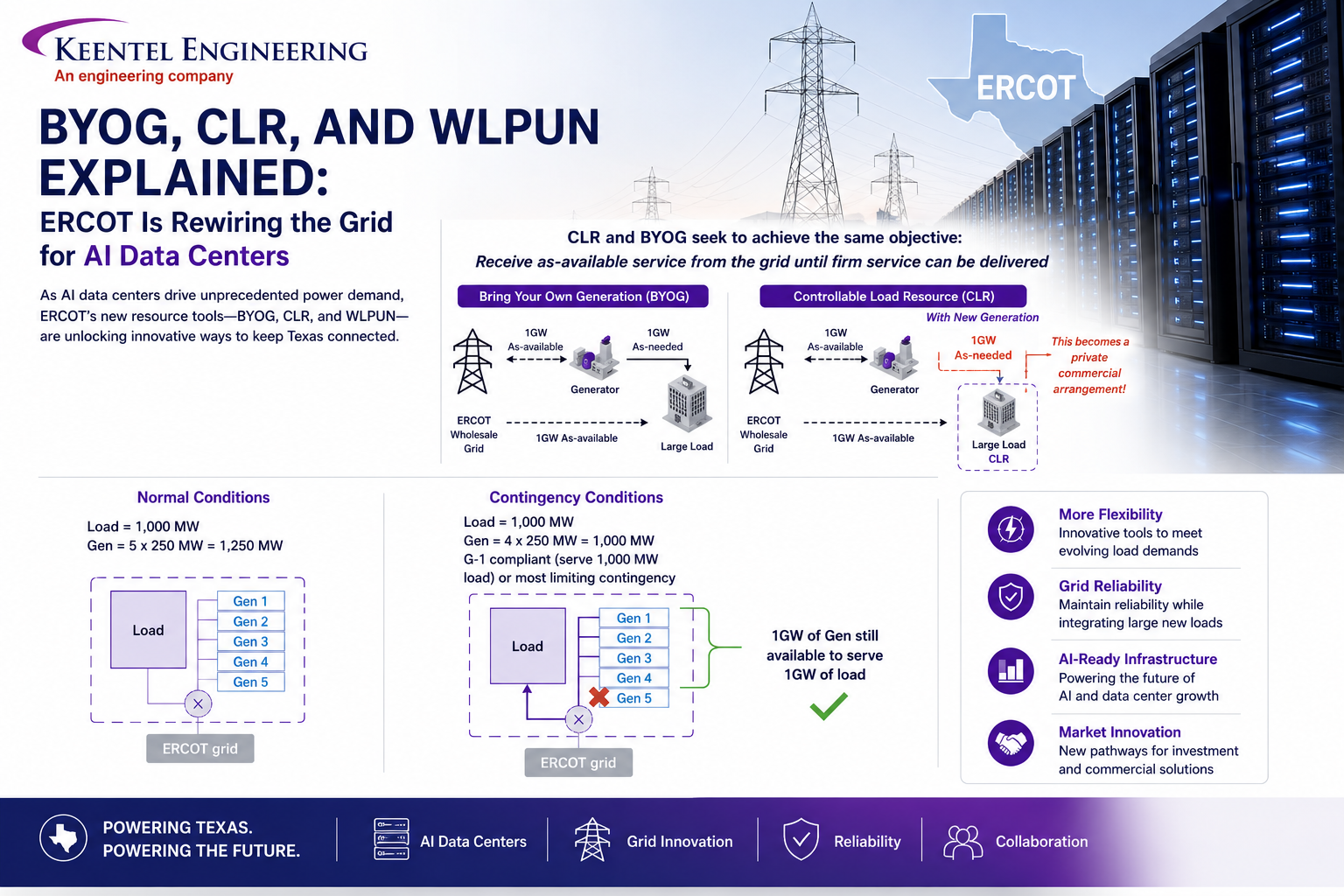
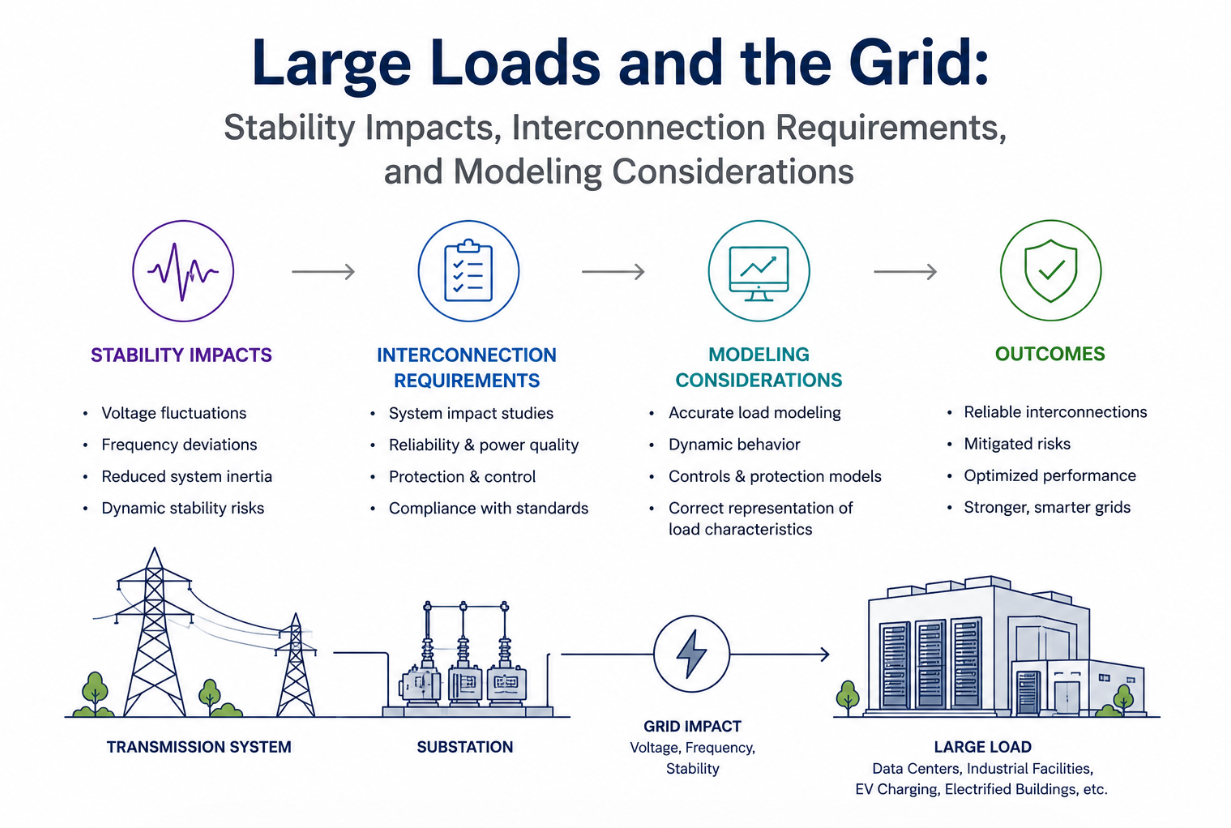
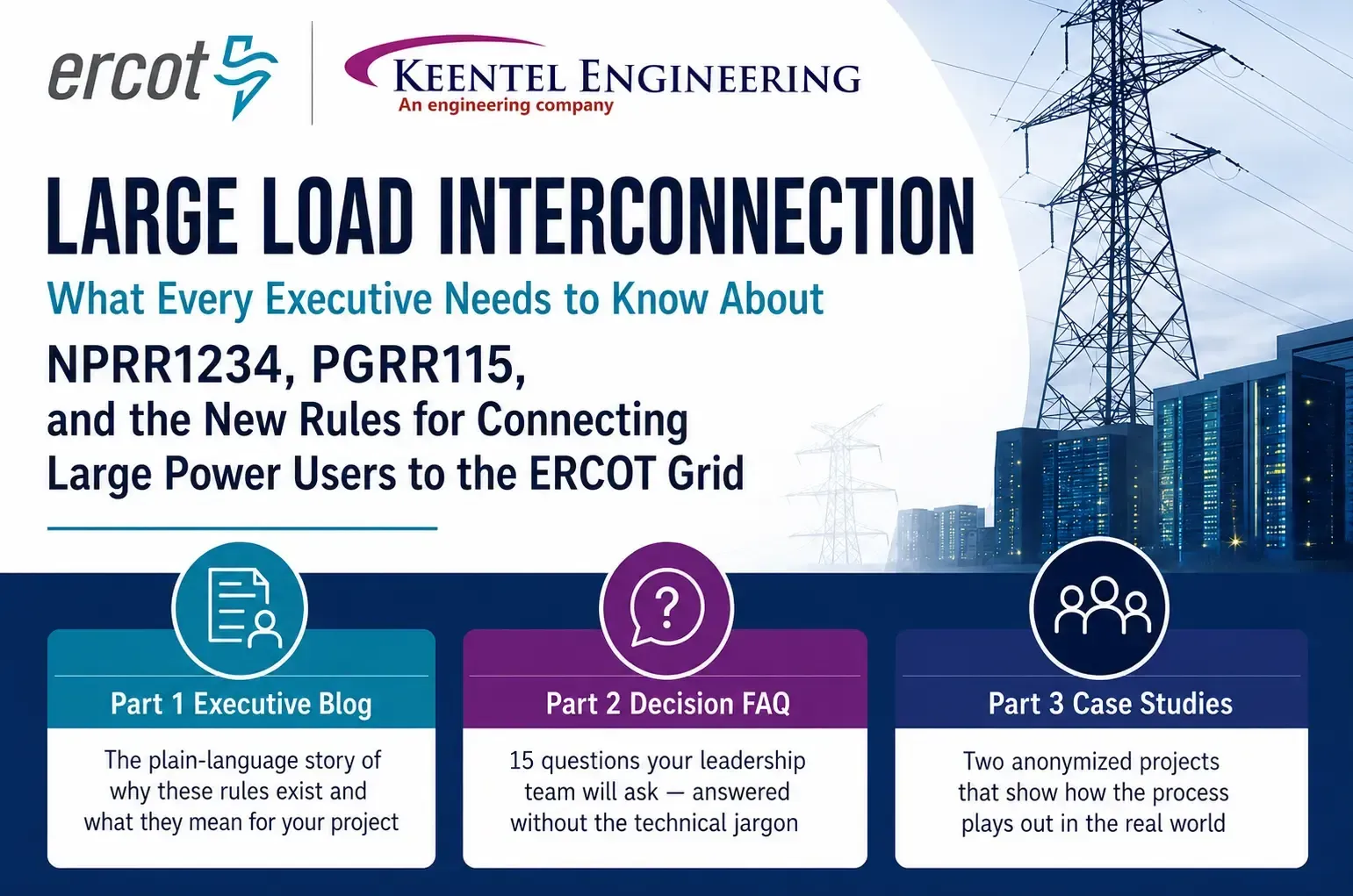
Technical guidance from Keentel Engineering covering generator and large-load interconnection, injection and withdrawal studies, ERCOT and SPP processes, BESS integration, grid modeling, ride-through requirements, and utility coordination.
Understand the ERCOT interconnection pathway, engineering studies and project milestones.
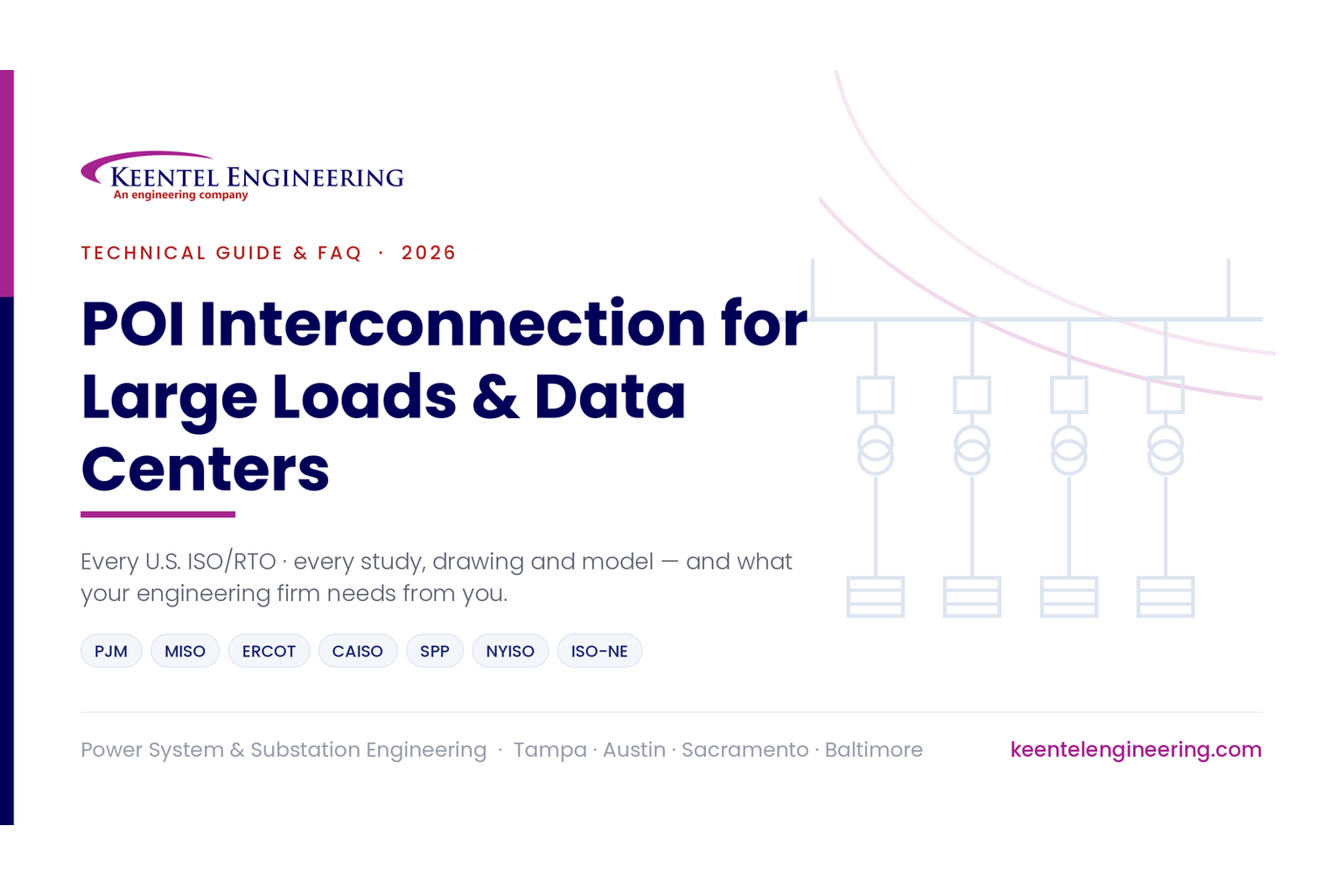
POI planning for high-demand facilities, utility coordination and grid impacts.
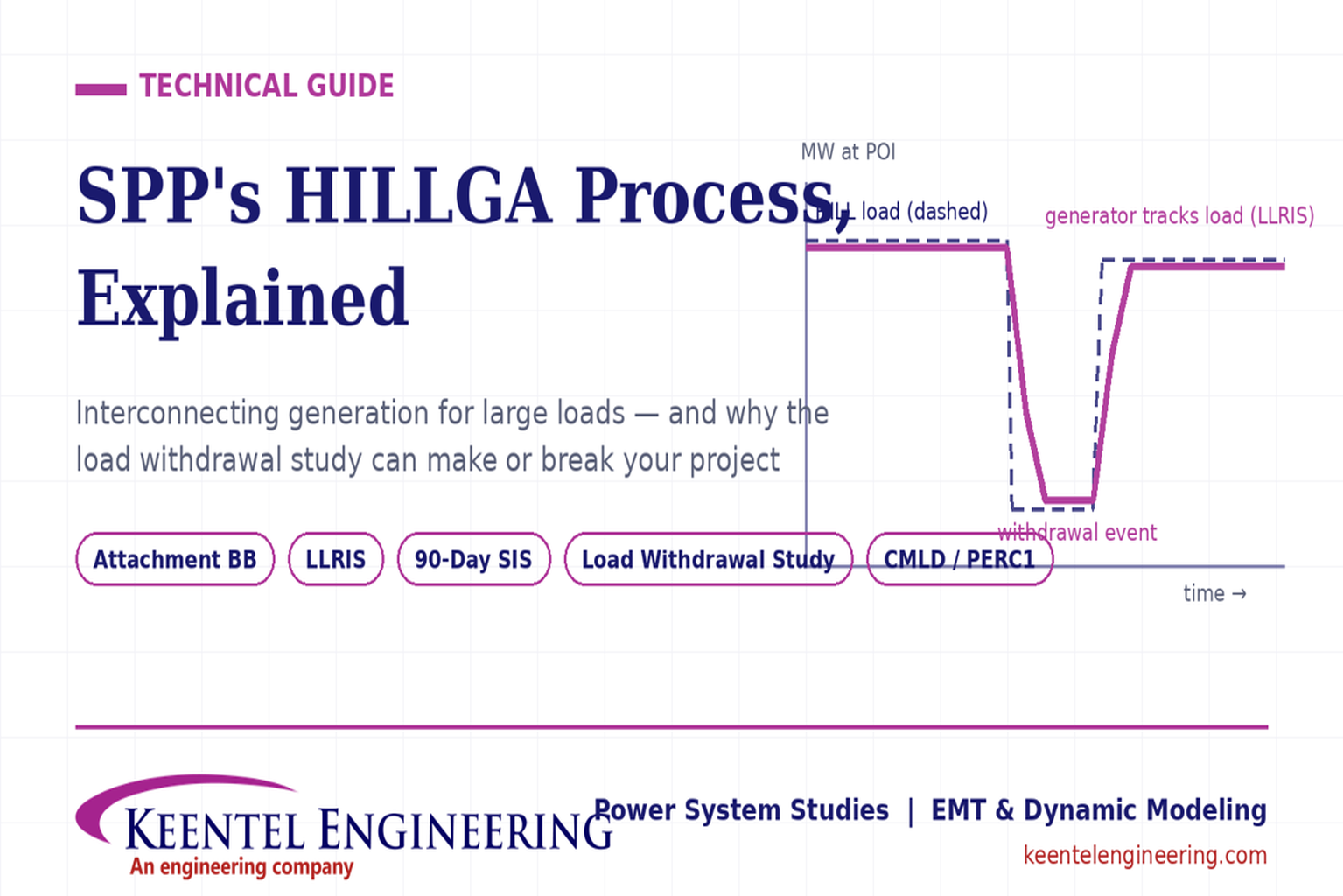
Understand SPP high-impact large-load study and interconnection requirements.
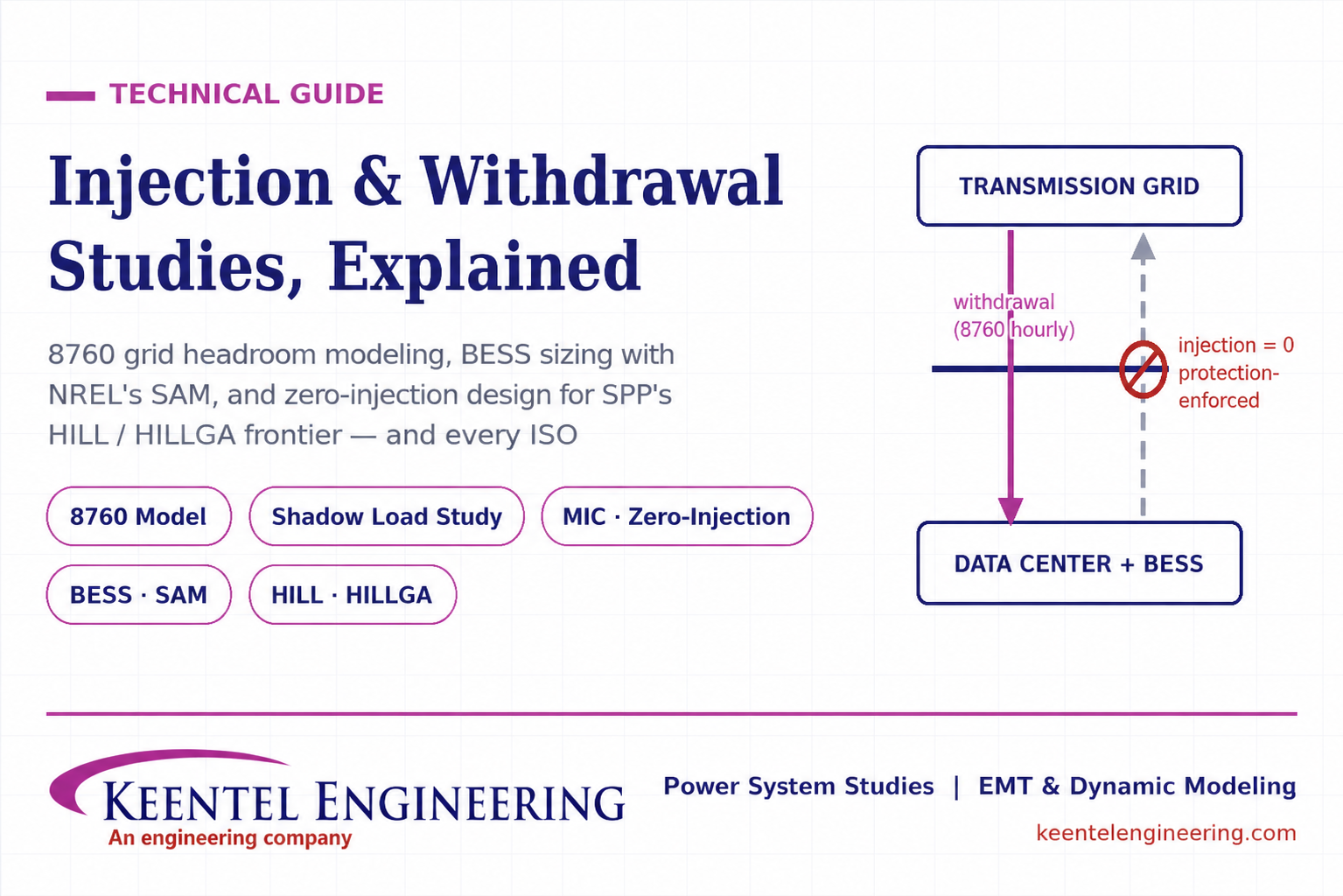
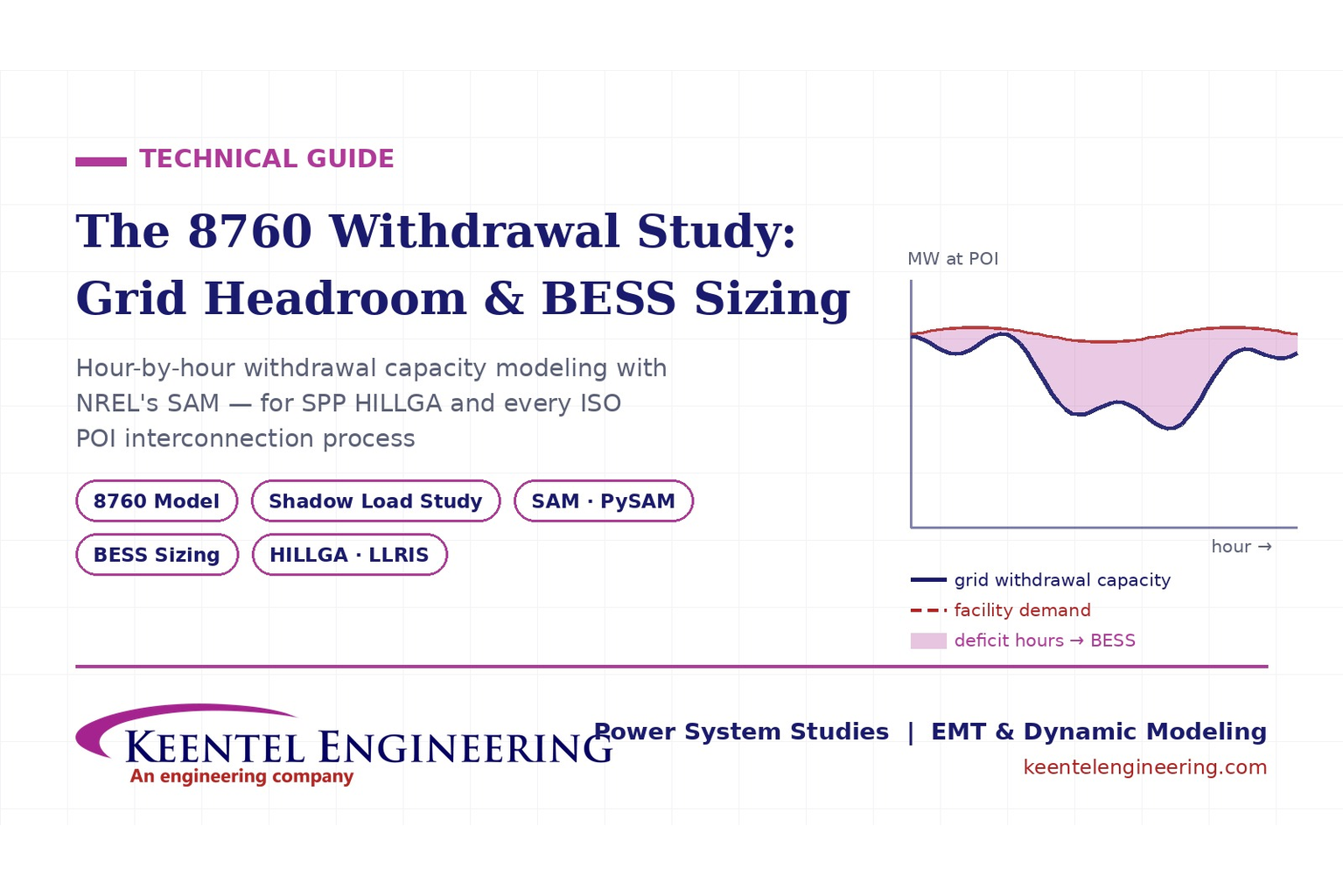
Evaluate hourly grid withdrawal capability, interconnection headroom and storage needs.
Evaluate power-transfer capability and POI constraints before interconnection.
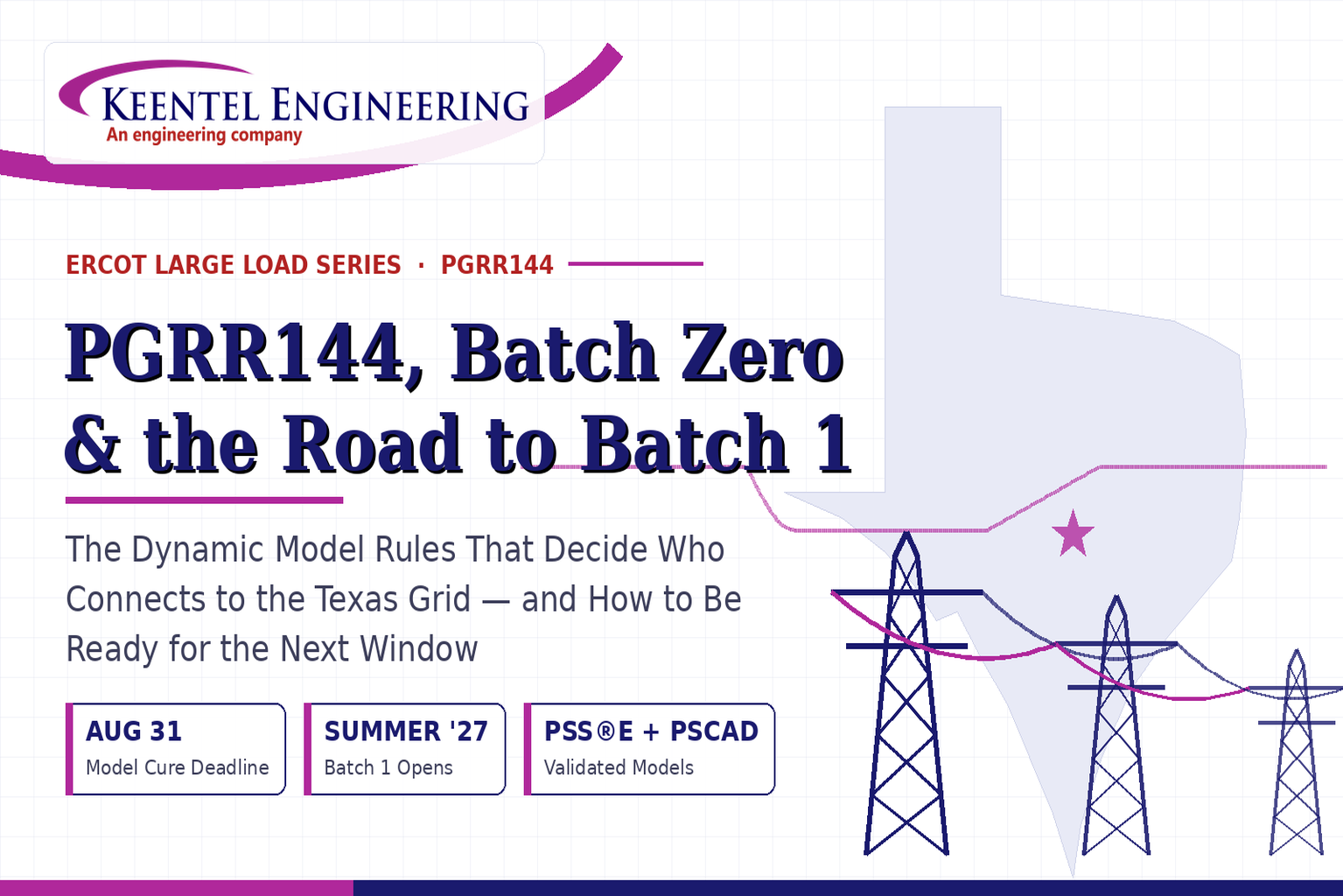
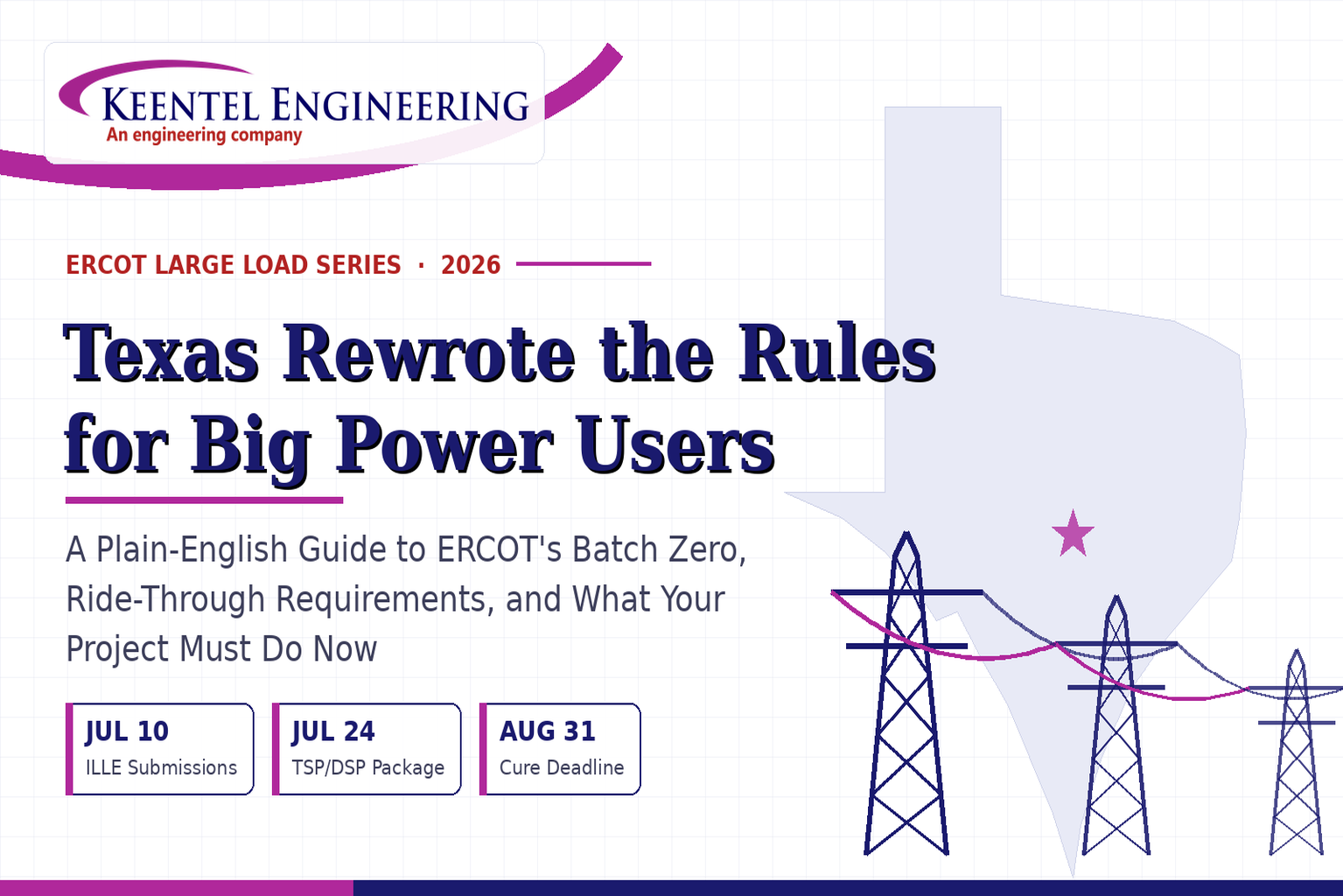
Key large-load registration and Batch Zero requirements for ERCOT projects.
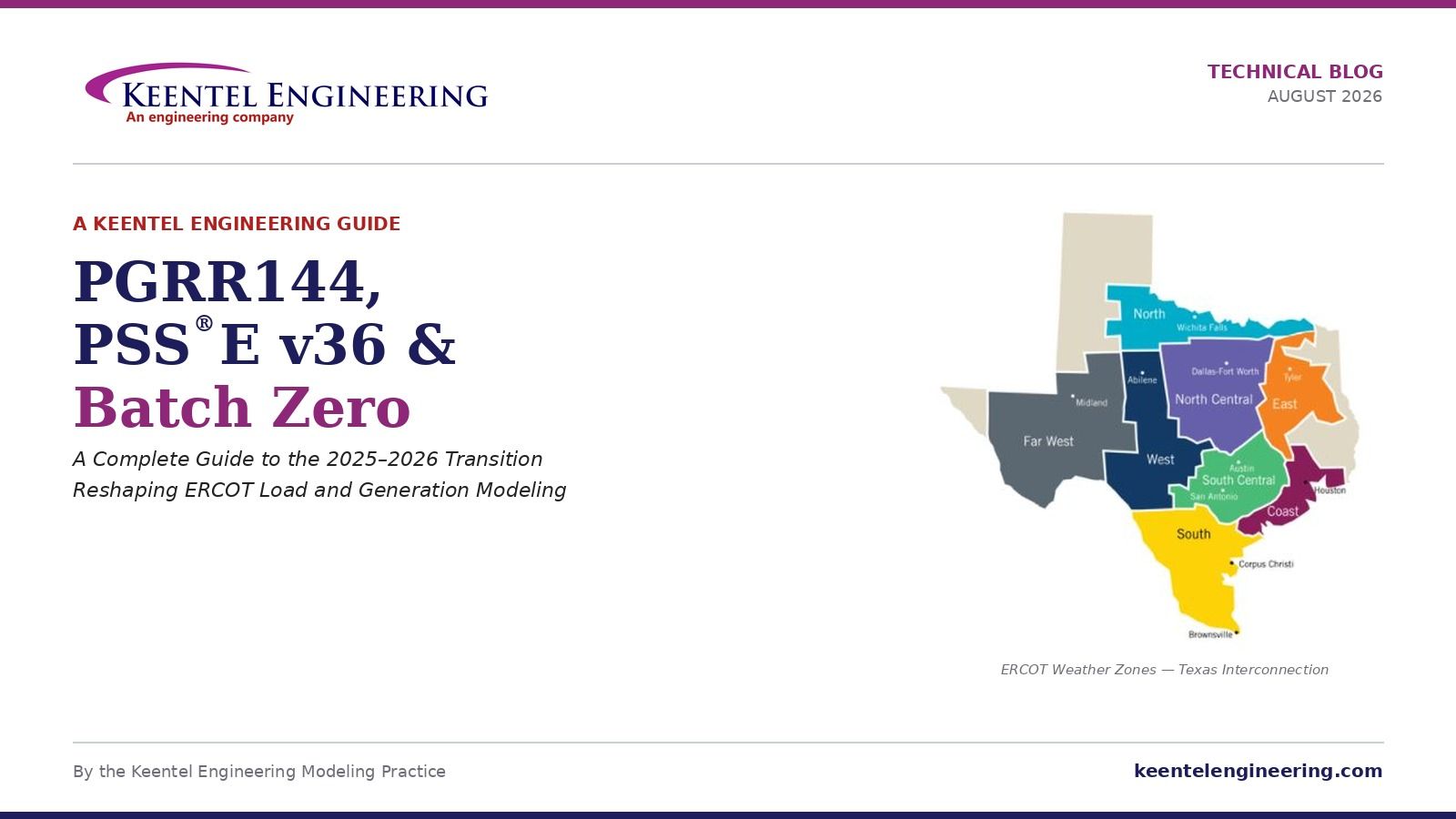
How PGRR144 affects large-load modeling, registration and grid connection.
Utility and grid requirements for data centers and other high-demand facilities.
Technical guidance on ERCOT model preparation and Batch Zero readiness.
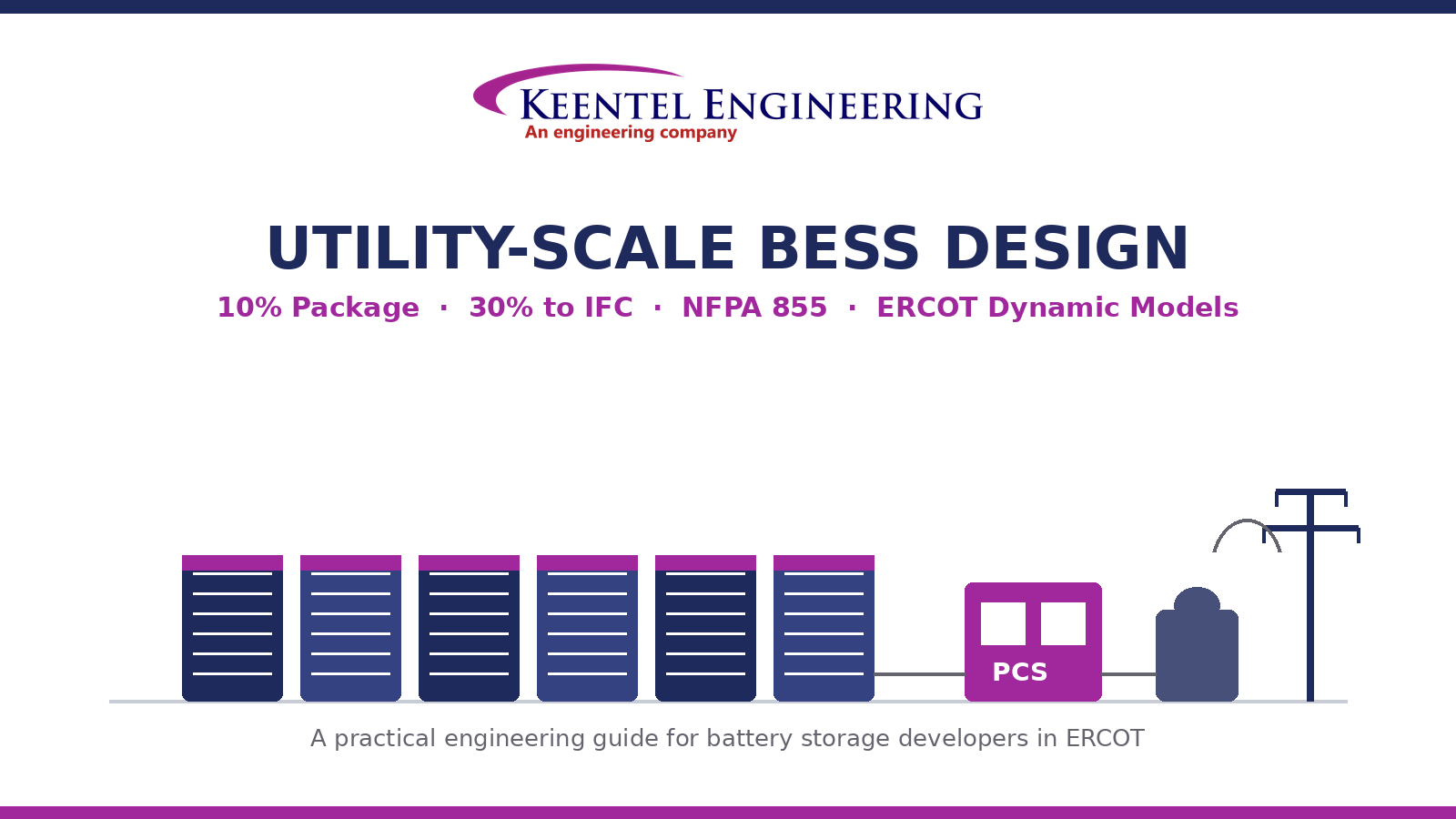
BESS interconnection, model packages, EMT studies, grid strength and compliance.
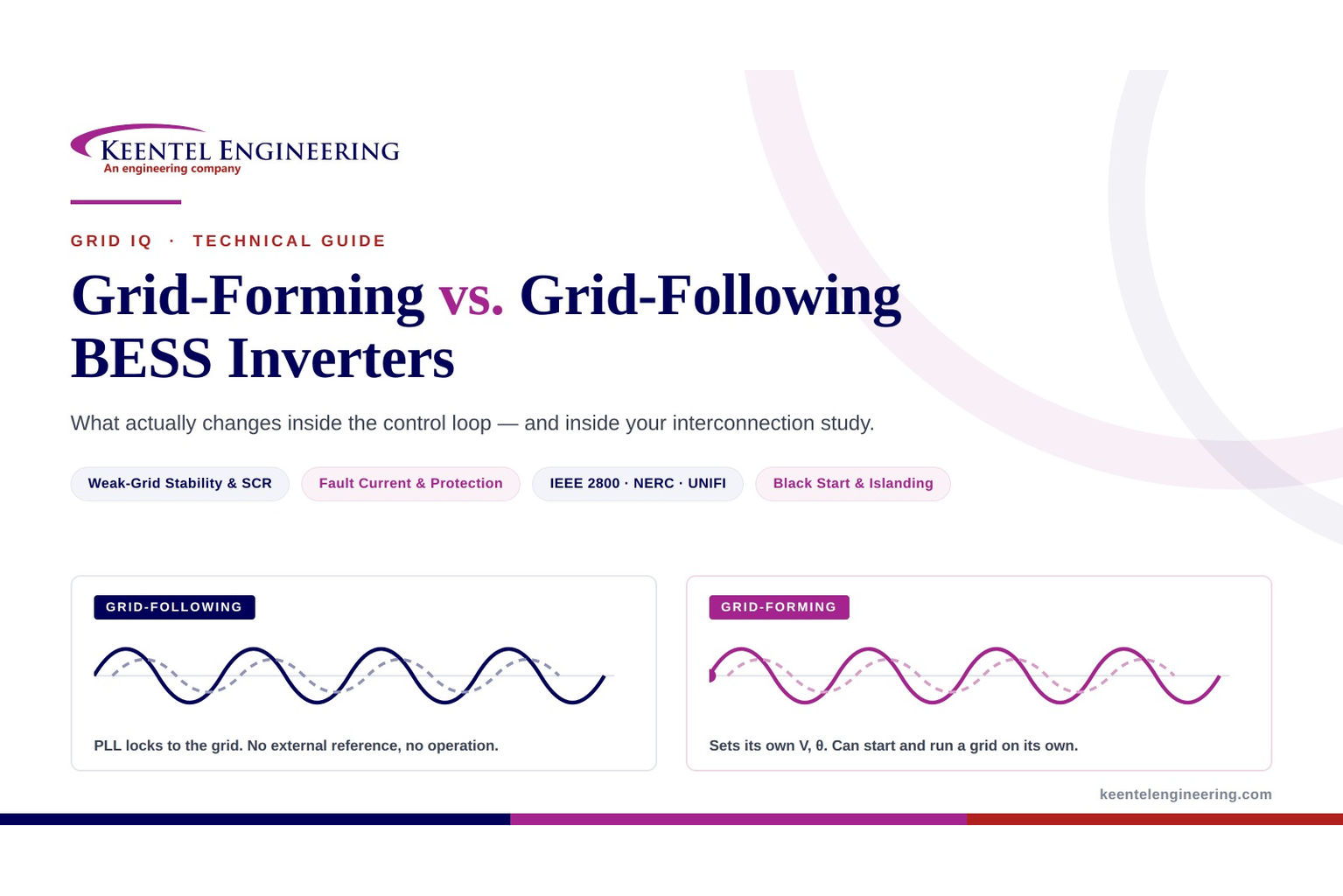
Voltage and frequency ride-through expectations for inverter-based interconnection.
EMT and PSCAD model requirements used in modern inverter-based interconnection studies.


Serving for more than two decades, we are a name you can trust and count on for your power system and engineering support needs. We can provide innovative solutions to take your business to greater heights.
State of Florida — Registry No. 36853, KEENTEL LLC, DBA: KEENTEL ENGINEERING
Copyright 1995-2026 Keentel Engineering All Rights Reserved