Transmission Line Design Services
Advanced Engineering Solutions for Reliable, Efficient, and Future-Ready Power Infrastructure, Specializing in Transmission Line Design, Sag-Tension Analysis, and High-Voltage System Optimization

Why Choose Us
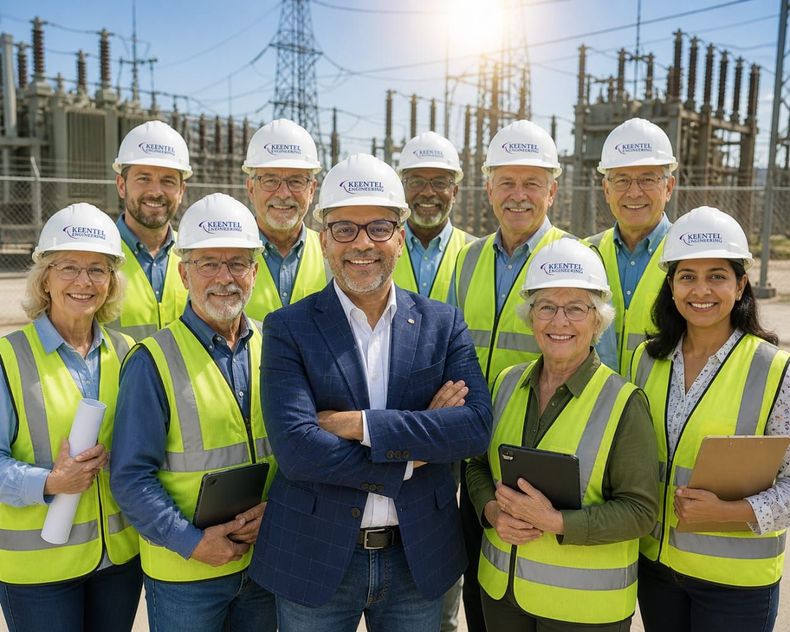
At Keentel Engineering, we take pride in being the go-to engineering firm for power and utility system planning, design, control, and analysis. Some of the many attributes of our company that set us apart are:
Client-Focused Work Approach
Our team works cohesively on every project and with every client. We first develop a solid understanding of your project goals, requirements, and needs. From concept to commissioning, we assist you in every step.
30 Years of Experience
We have over three decades of experience in design and interconnection. Rest assured, we have the knowledge, understanding, and expertise to handle and execute all types of projects with sheer perfection and superior workmanship.
Quality with Innovation
At Keentel Engineering, we have established our stellar market reputation on quality, work ethics, and innovation.
Attention-to-Detail
We work on every project with laser focus and attention to detail. This enables our team to deliver desired results with complete satisfaction.
Let's Discuss How to Optimize Your Next Project
Submit
We will get back to you as soon as possible.
Please try again later.
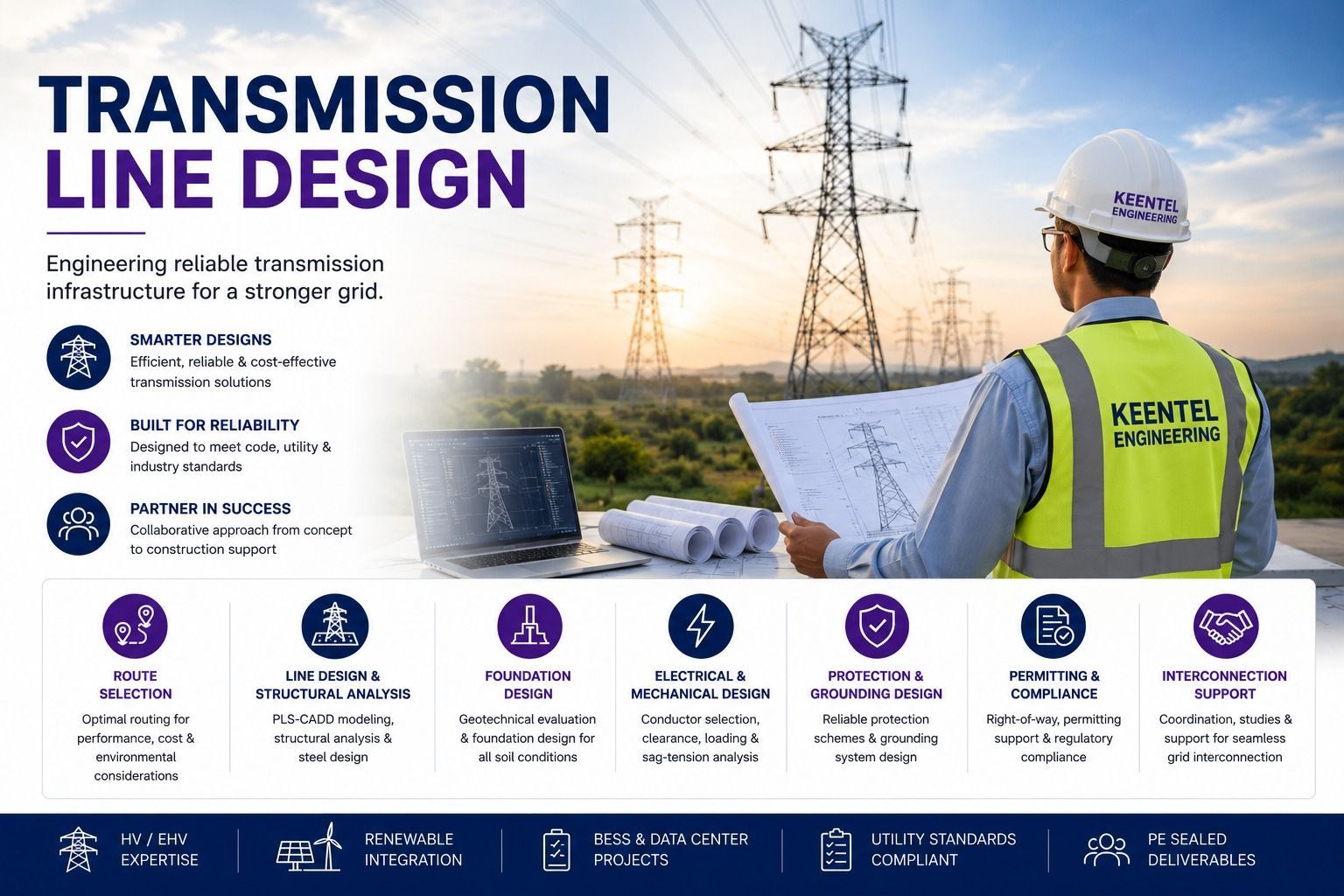
Our Core Transmission Line Design Capabilitie
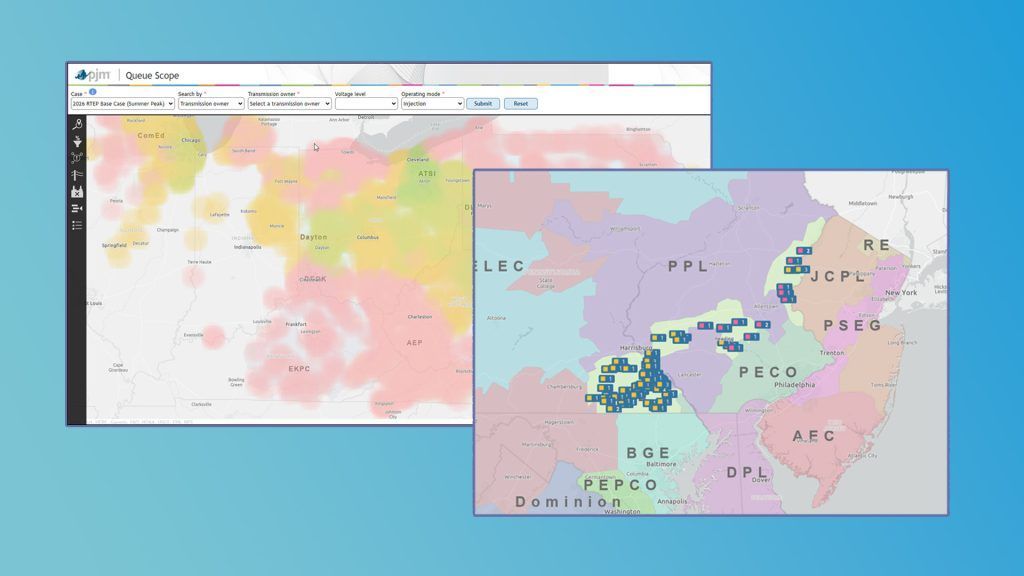
POI Interconnection Engineering Support

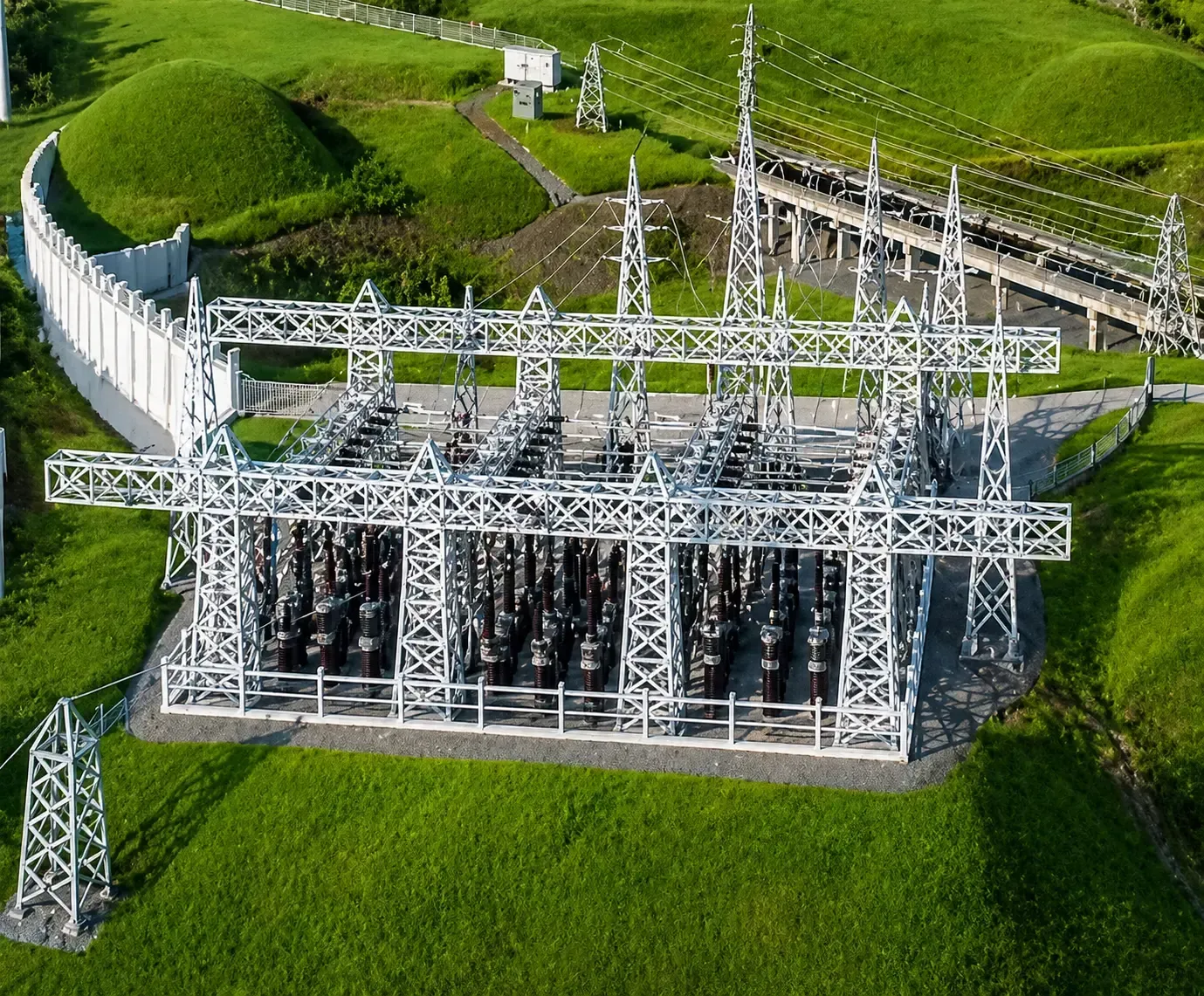
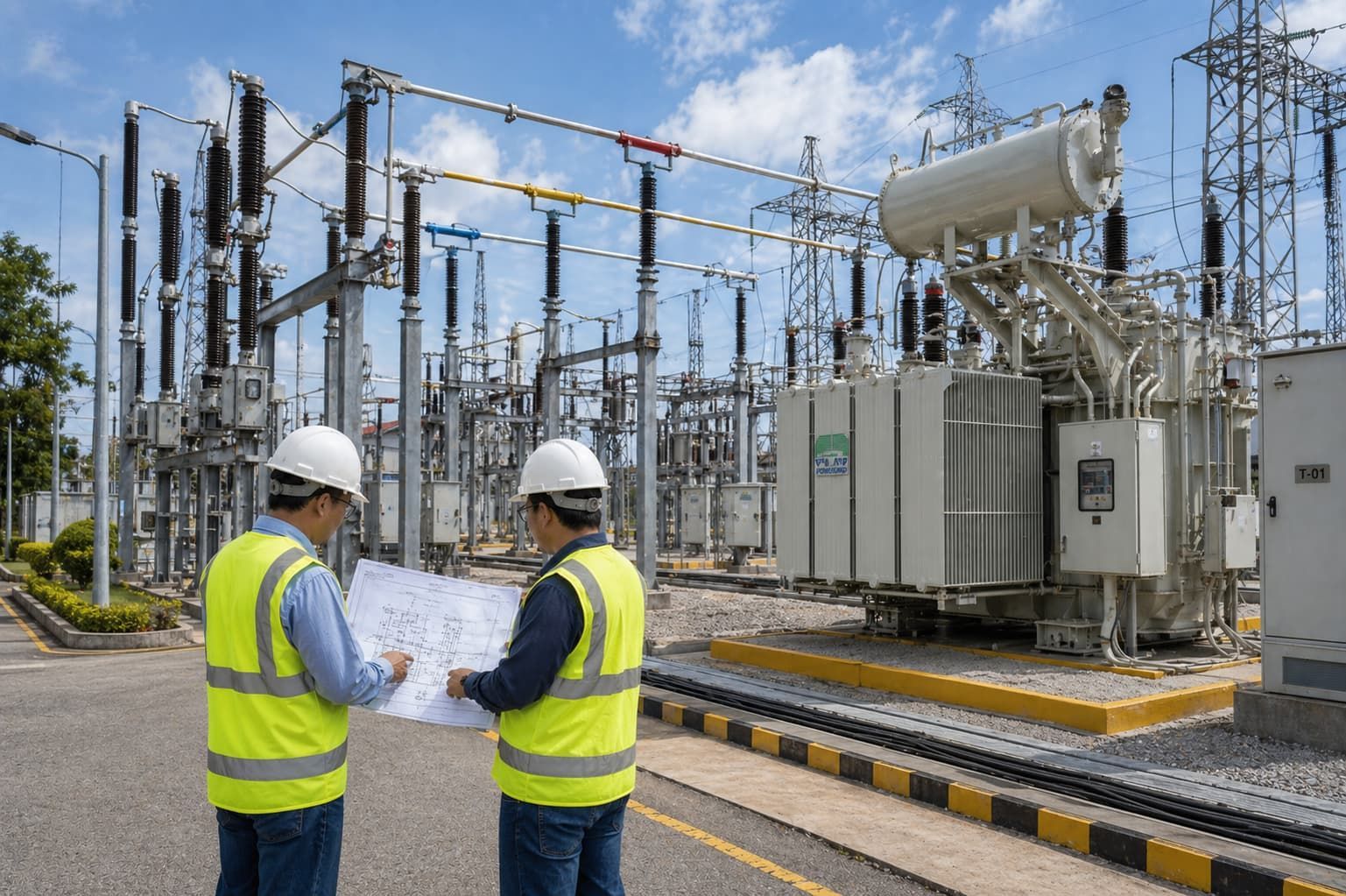
Our skilled and knowledgeable engineering team has a rich history in designing, developing and commissioning various substation and interconnection engineering support projects.

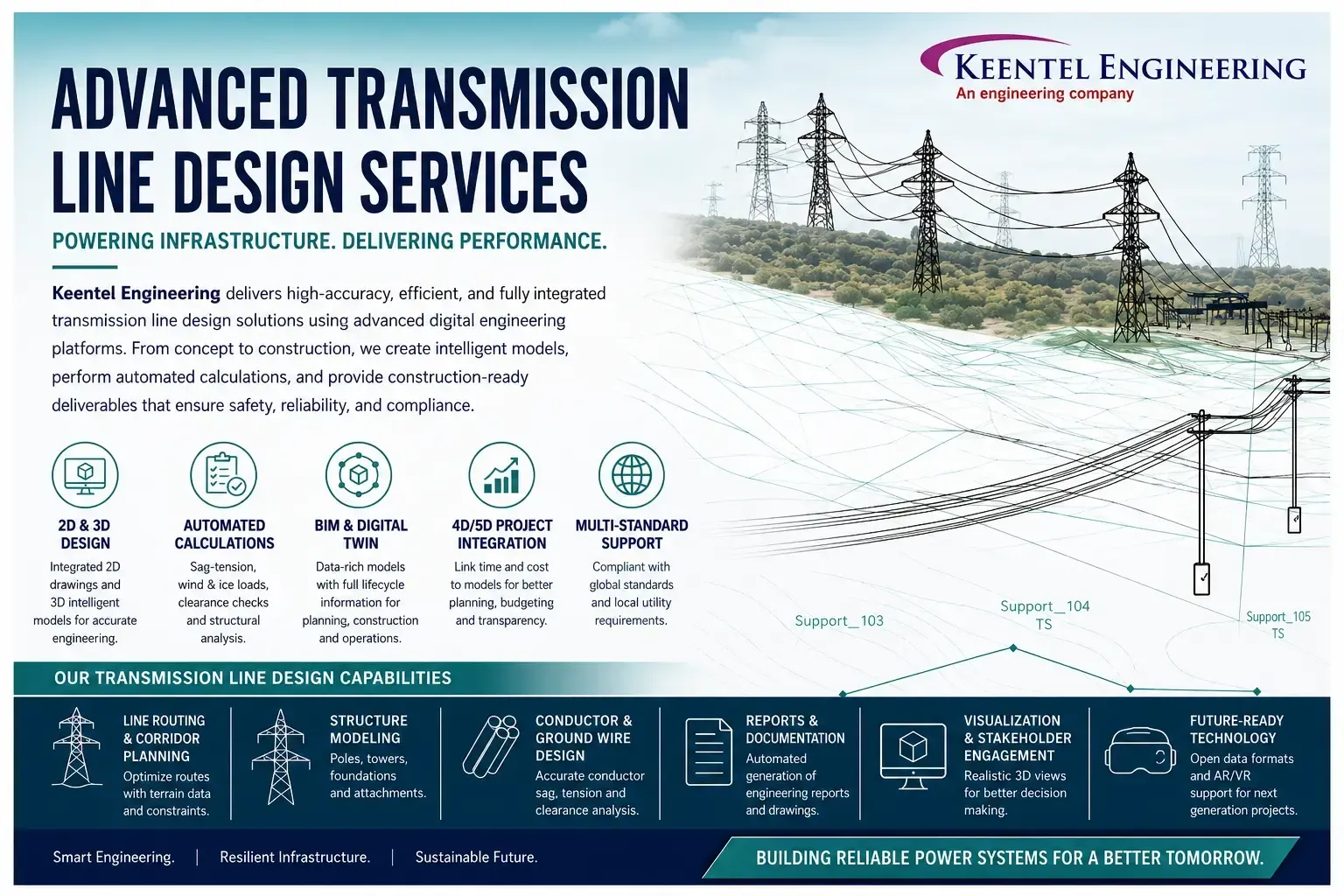
Line Routing & Corridor Optimization
Efficient routing is critical to project success. We perform:
- Terrain-based route optimization
- Environmental and right-of-way analysis
- Constraint mapping (roads, rivers, urban zones)
- GIS-integrated alignment studies
- Multi-route feasibility comparisons
Outcome: Optimized routing that minimizes cost, environmental impact, and construction complexity.

Structural Design & Modeling
We develop detailed structural designs for:
- Transmission towers (lattice, monopole, H-frame)
- Distribution poles (wood, steel, concrete)
- Foundations and anchoring systems
- Insulator assemblies and hardware
- Structural integrity and terrain compatibility validation
Outcome: Accurate, reliable structures optimized for loading conditions.

Conductor & Ground Wire Design
We design conductor systems considering:
- Ampacity and voltage requirements
- Thermal and mechanical limits
- Corona and interference considerations
- Conductor and OPGW selection studies
- Bundle configuration and clearance verification
Outcome: Efficient conductor systems aligned with performance and compliance needs.
POI Interconnection Engineering Support

Our skilled and knowledgeable engineering team has a rich history in designing, developing and commissioning various substation and interconnection engineering support projects.

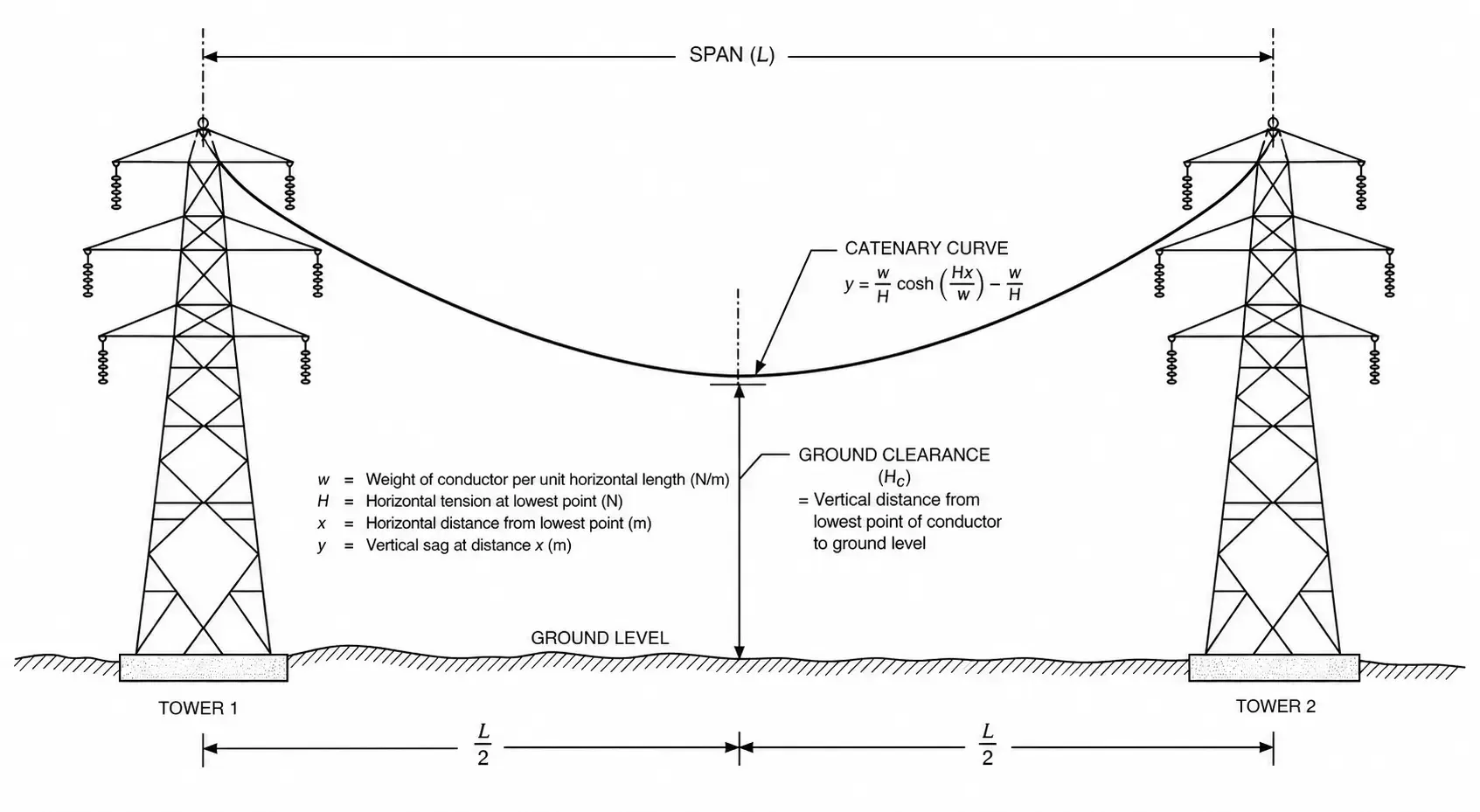
Sag-Tension & Mechanical Analysis
We perform advanced analysis for:
- Multi-loading sag and tension calculations
- Wind and ice loading conditions
- Temperature variation impacts
- Ground and crossing clearance checks
- Maximum span and standards compliance review
Outcome: Safe, compliant and mechanically robust line designs.

Electrical Design & System Integration
Our electrical design includes:
- Voltage profile and power flow studies
- Insulation coordination analysis
- Lightning protection design
- Grounding and bonding systems
- EMF studies and loss minimization strategies
Outcome: Reliable, efficient and secure electrical performance.

Digital Modeling & Intelligent Engineering
We utilize digital engineering tools for:
- 2D construction drawing development
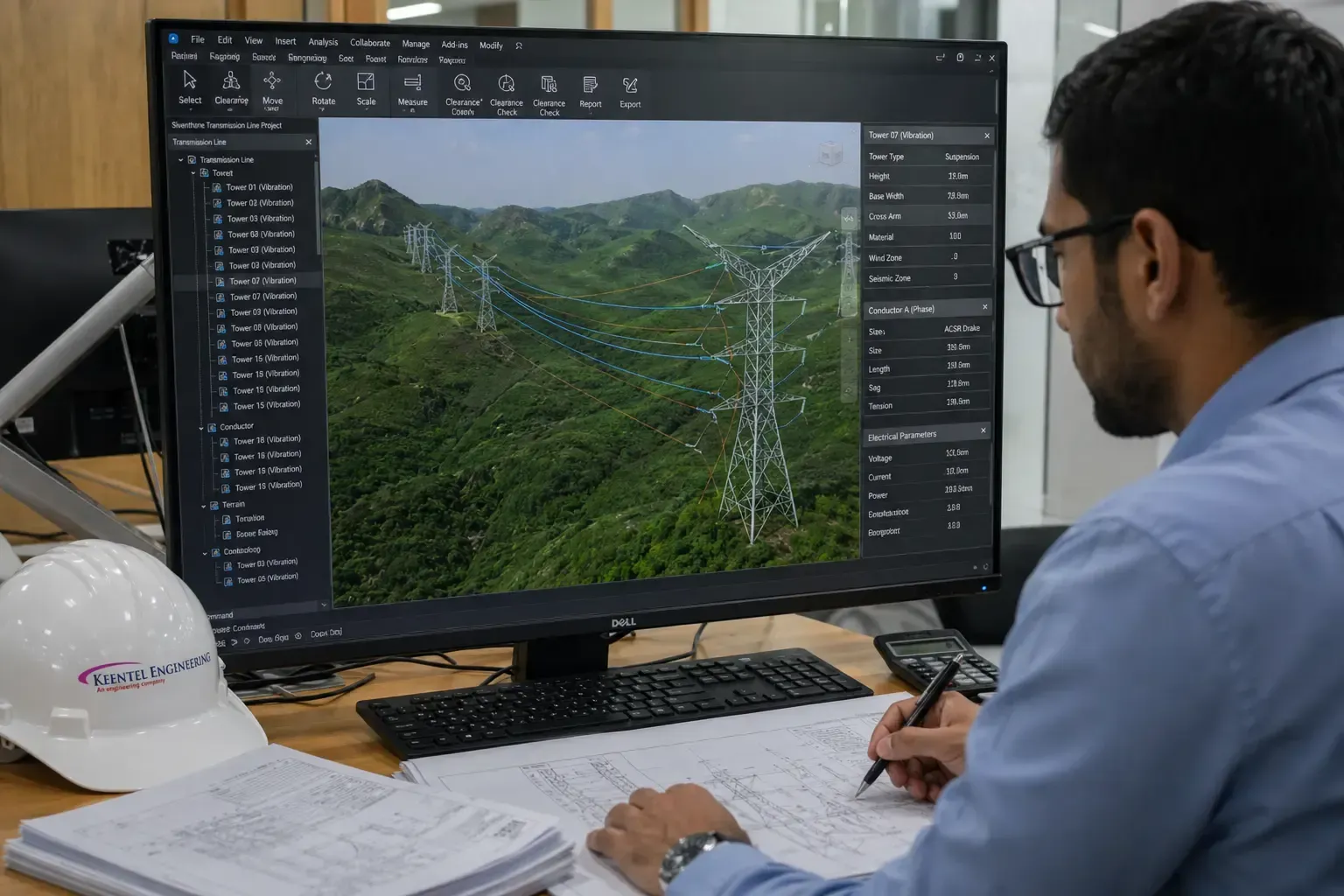
- 3D intelligent modeling
- Data-rich digital twin creation
- Material and construction sequence integration
- Clash detection and coordination reviews
Outcome: Improved accuracy, visualization and project coordination.
POI Interconnection Engineering Support

Our skilled and knowledgeable engineering team has a rich history in designing, developing and commissioning various substation and interconnection engineering support projects.
Automated Engineering
Calculations
Our automated workflow generates:
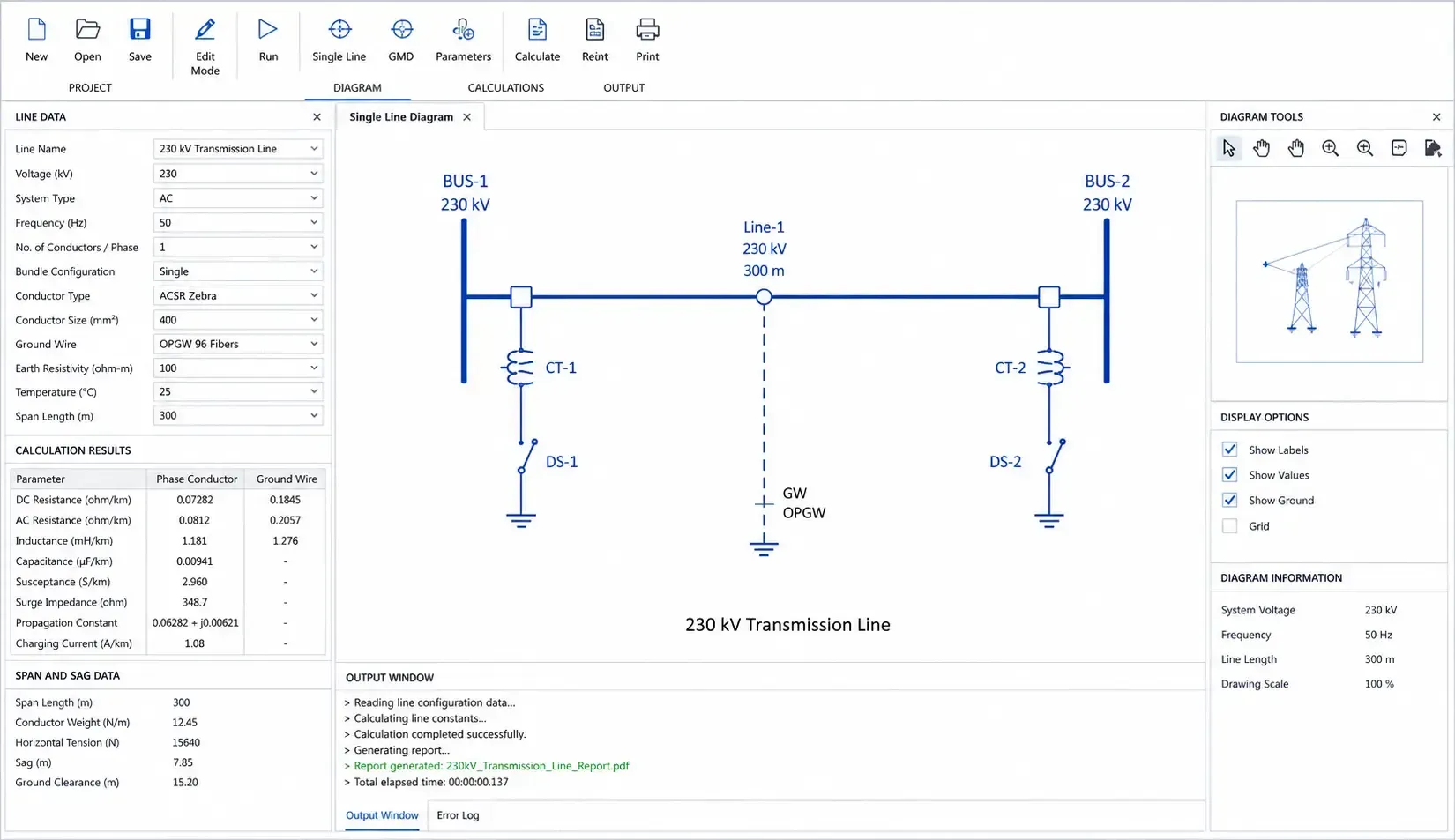
- Sag-tension reports
- Wind and structural load calculations
- Bill of materials development
- Design summaries and compliance reports
- Auditable engineering documentation
Outcome: Faster turnaround with reduced errors and consistent results.

Multi-Standard & Global Compliance
We design systems compliant with:
- NESC, NEC and IEEE standards
- IEC requirements
- Utility and ISO/RTO requirements
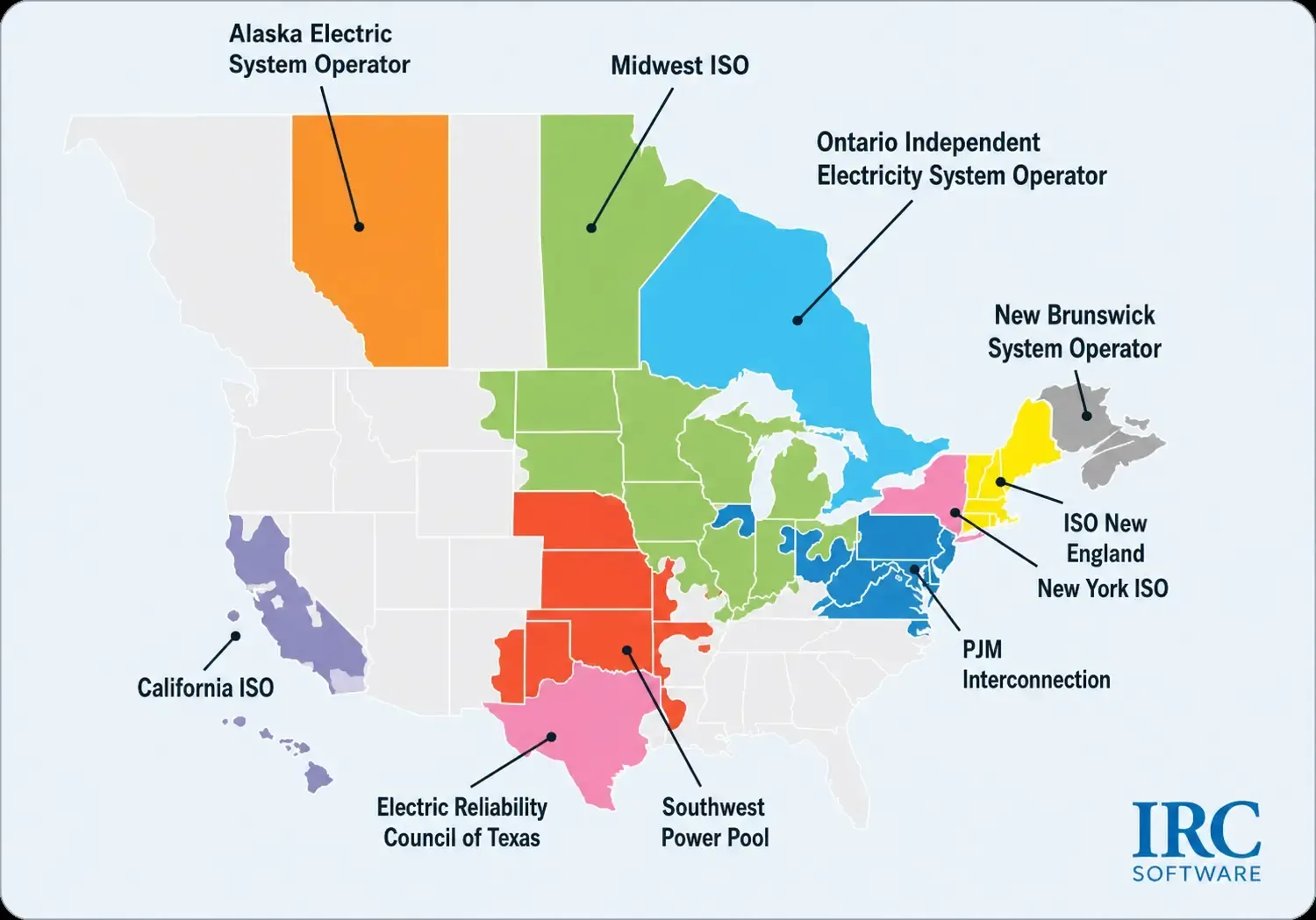
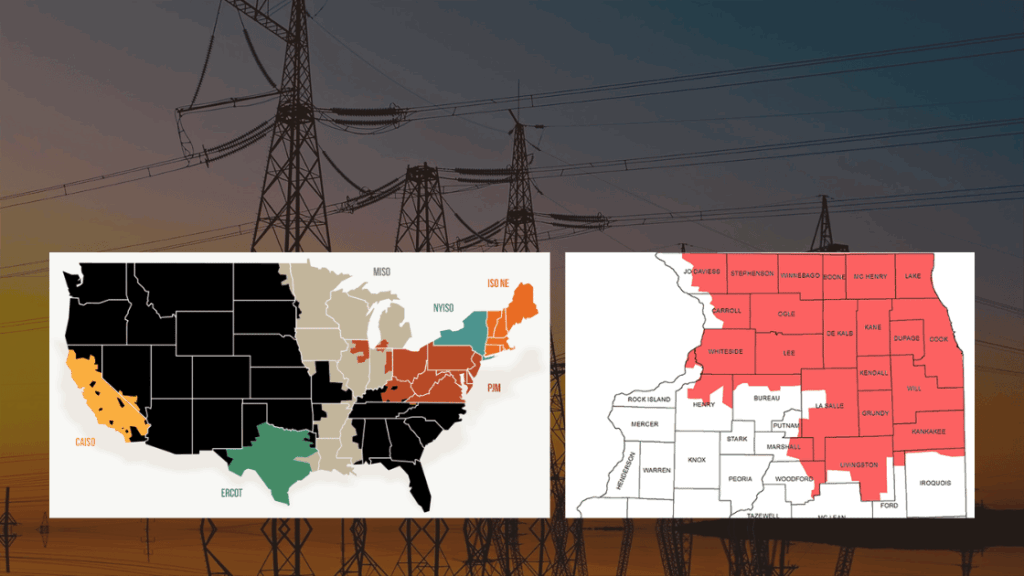
- Regional grid standards (ERCOT, PJM, CAISO)
- International project compliance needs
Outcome: Adaptable designs for regional and global applications.

Visualization&StakederEngagement
We provide advanced visualization through:
- 3D project views
- Terrain-integrated models
- Construction simulations
- Client presentation visuals
- Stakeholder review and approval
Outcome: Improved communication, faster approvals and reduced project risk.
Our Engineering Process
Step 1: Project Definition
- Scope development
- Load and system requirements
- Voltage and capacity analysis
Step 2: Conceptual Design
- Route selection
- Preliminary structure layout
- Feasibility studies
Step 3: Detailed Engineering
- Structural and electrical design
- Sag-tension analysis
- Grounding and protection design
Step 4: Digital Modeling
- 2D + 3D model development
- Design validation
- Coordination with other disciplines
Step 5: Construction Deliverables
- Issued-for-construction (IFC) drawings
- Material lists
- Engineering reports
Step 6: Project Support
- Engineering review during construction
- Field issue resolution
- Design updates

Industries We Serve
- Utility companies
- Renewable energy developers
- Transmission developers
- Industrial and manufacturing facilities
- EPC contractors
- Infrastructure developers
- Municipal and public-sector utilities
- Energy storage and grid modernization projects
Serving the evolving needs of power and infrastructure markets through responsive, high-quality engineering support.


Why Choose Keentel Engineering?
Engineering Expertise
Over 30 years of combined experience in power system design.
Advanced Digital Design
Integrated 2D/3D modeling and automated workflows.
Accuracy & Compliance
Designs aligned with global and utility standards.
Faster Project Delivery
Automation-driven efficiency.
Cost Optimization
Smart engineering decisions reduce capital and lifecycle costs.
End-to-End Solutions
From concept to
construction support .

Our Clients
Serving utilities, EPCs, developers, and infrastructure organizations supporting critical power systems nationwide.


Technical FAQs
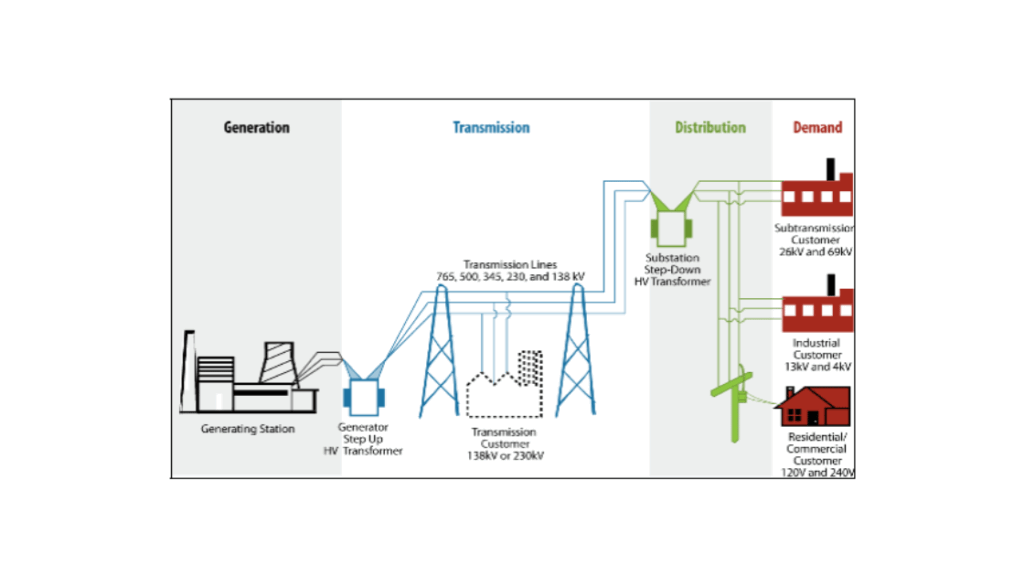
1. What is transmission line design?
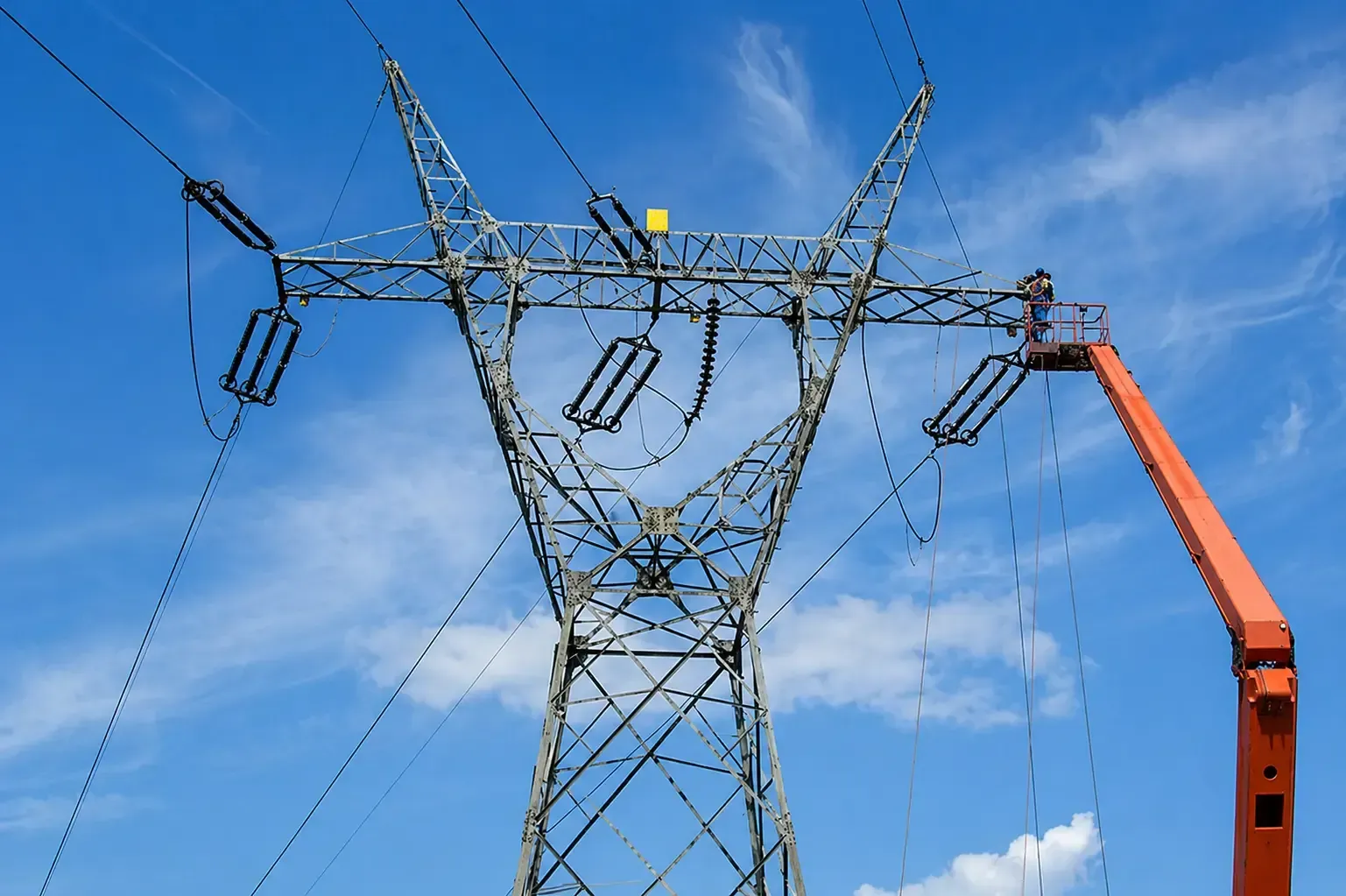
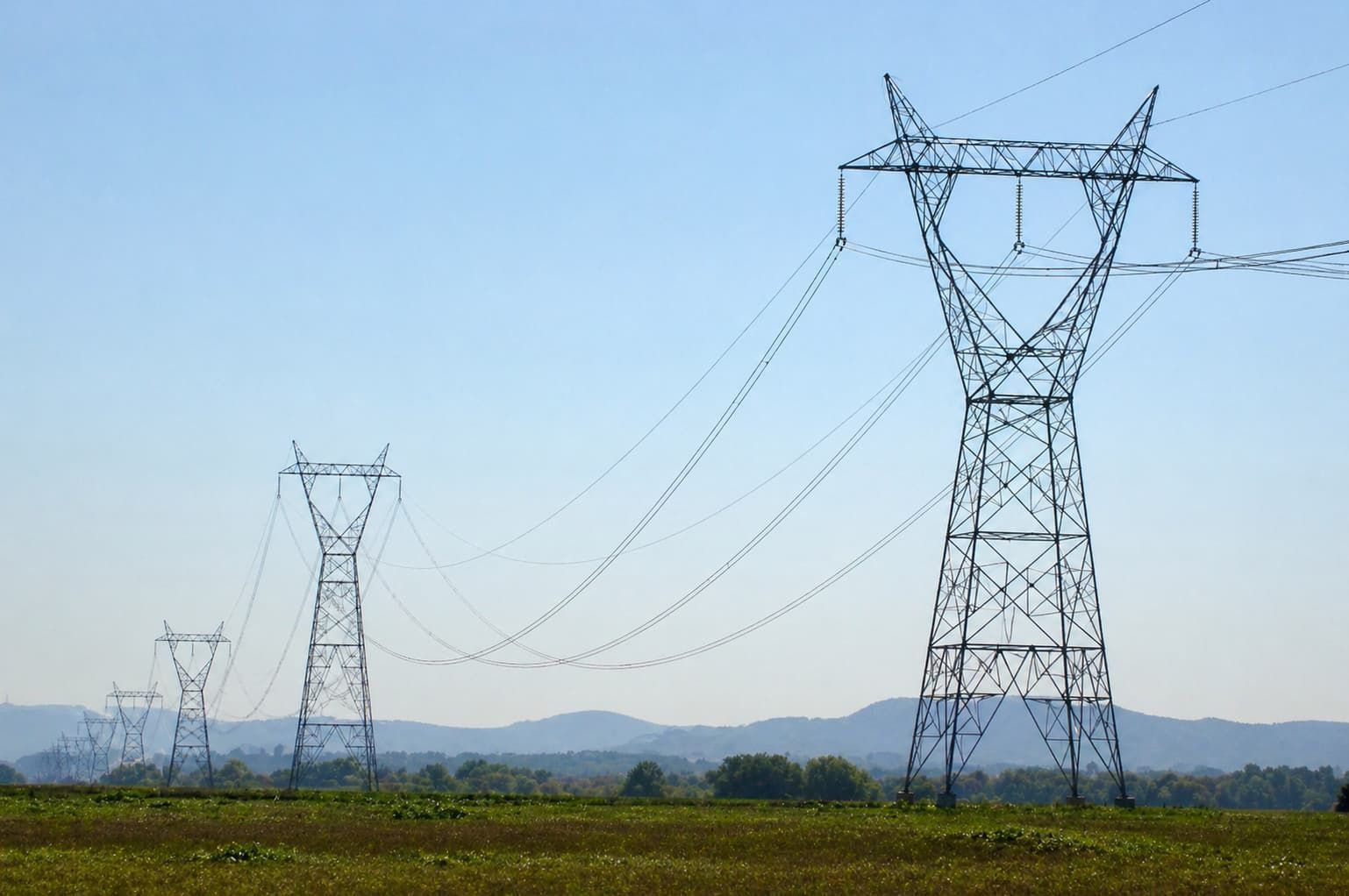
Transmission line design involves engineering the physical and electrical components required to transfer electrical power safely and efficiently from one location to another.
2. What factors influence transmission line design?
Key factors include voltage level, terrain, conductor type, environmental conditions, mechanical loading, and regulatory requirements.
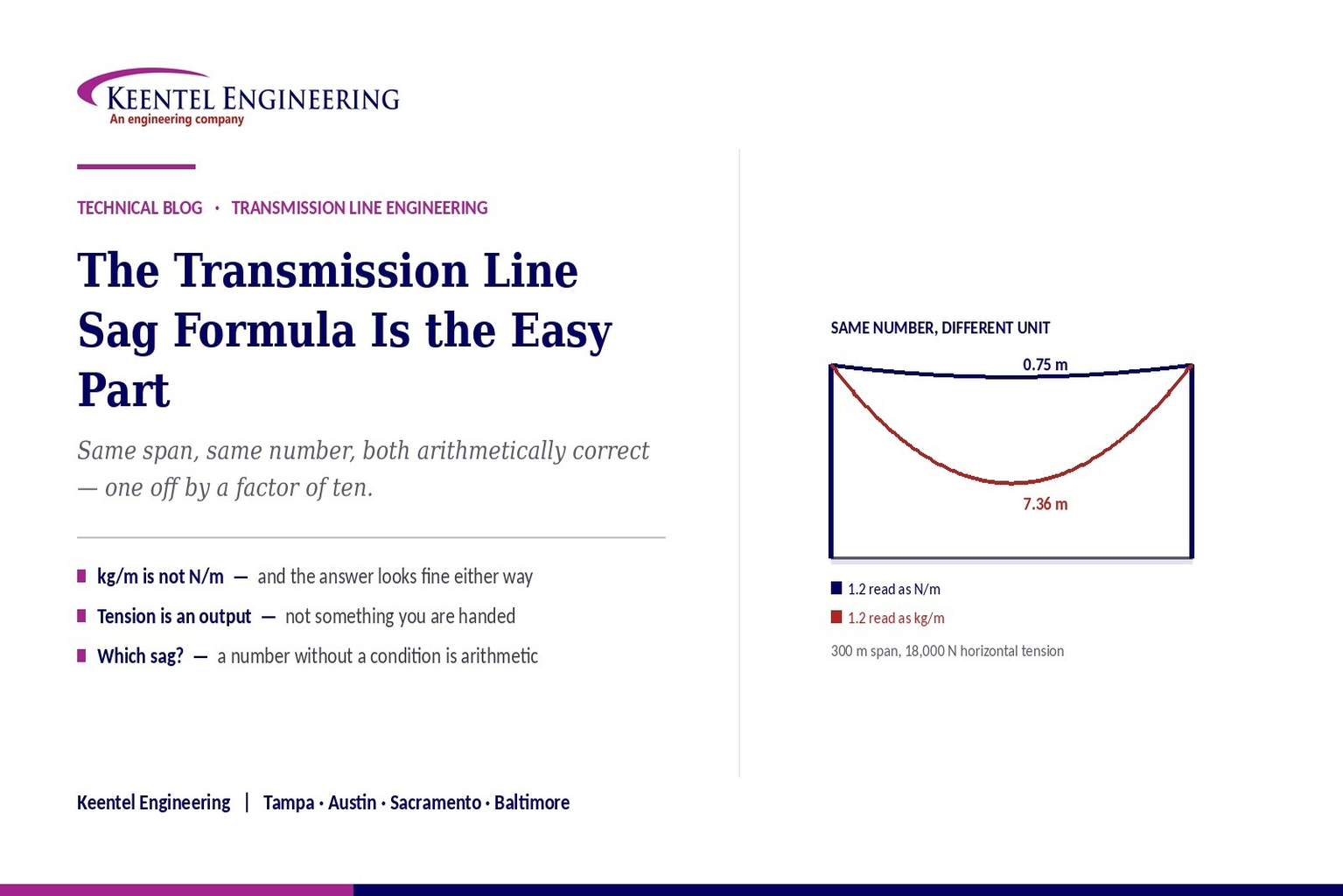
3. What is sag-tension analysis?
Sag-tension analysis determines how conductors behave under different loads such as temperature, wind, and ice, ensuring safe clearances and structural stability.
4. Why is 3D modeling important in transmission design?
3D modeling improves accuracy, enables clash detection, enhances visualization, and supports better coordination among engineering teams.
5. What standards are used in transmission line design?
Common standards include NESC, IEEE, IEC, NEC, and utility-specific requirements.
6. How does digital design improve project efficiency?
Digital tools automate calculations, integrate data, and reduce manual errors, significantly accelerating design and improving accuracy.
7. What is a digital twin in transmission projects?
A digital twin is a virtual model of the transmission system that includes engineering data for planning, construction, and lifecycle management.
8. How are transmission lines optimized for cost?
Through route optimization, material selection, efficient structure design, and minimizing losses and construction complexity.
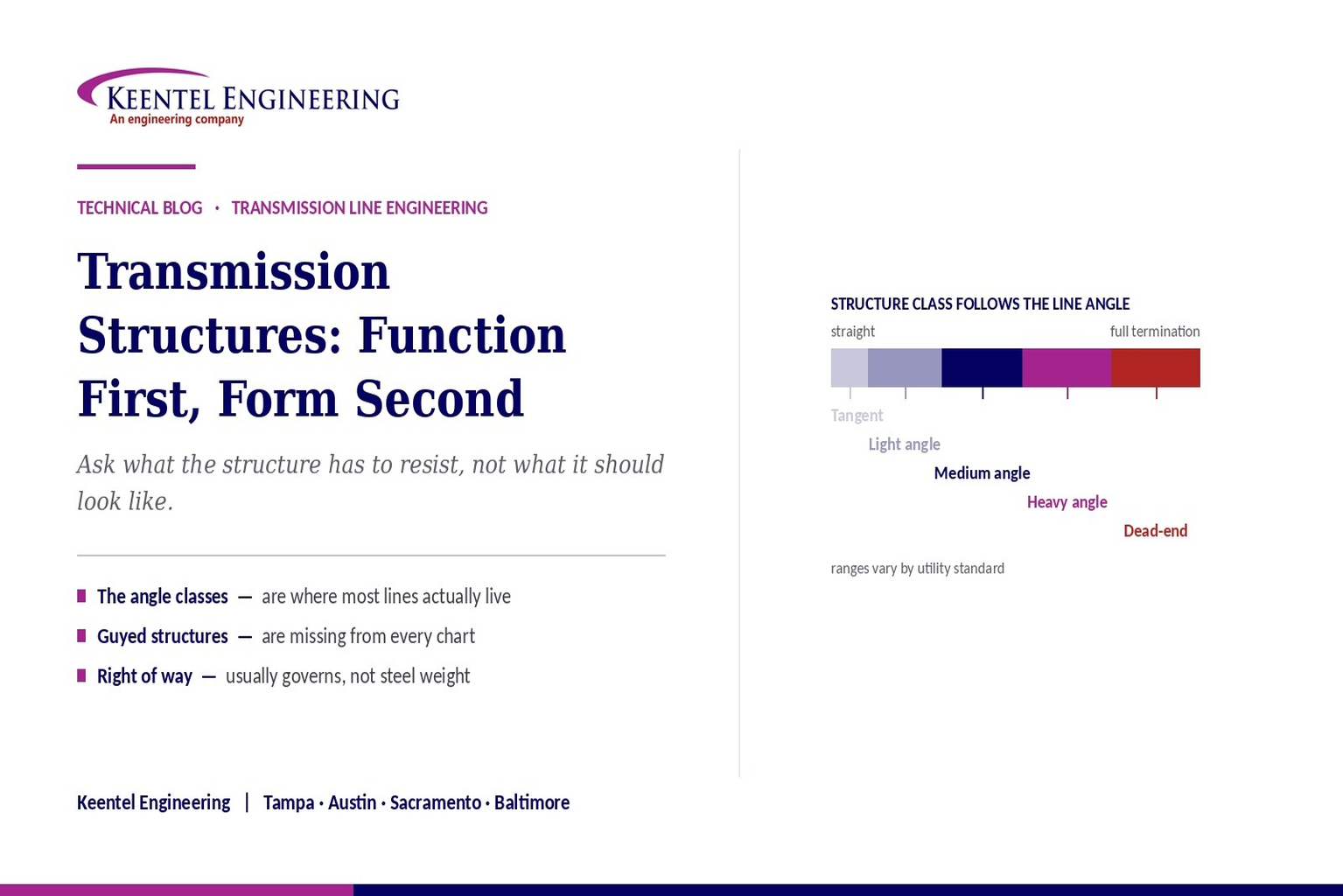
9. What types of transmission structures are used?
Common types include lattice towers, monopoles, H-frame structures, and wood or concrete poles.
10. Do you support renewable energy interconnections?
Yes. Keentel specializes in collector systems and interconnection design for solar, wind, and battery energy storage projects.
11. How do environmental factors affect design?
Wind, ice, temperature, and terrain significantly influence structural loading, conductor sag, and system reliability.
12. What deliverables are provided?
Typical deliverables include drawings, reports, calculations, models, and construction documentation.