



Keentel Engineering Deals with Various Industries.

At Keentel Engineering and its Consultants, our mission is to establish a sustainable business that delivers top-notch technical services to meet the unique needs of our valued clients.

A person in a white lab coat using a pipette to transfer liquid into a clear glass vial in a laboratory setting.
A black and white close-up shows a human eye, focusing intensely on the iris with distinct, radial patterns.
An aerial view of a white, heart-shaped island surrounded by a calm, turquoise ocean.
A golden-brown, crispy fried chicken breast fillet sandwich on a toasted bun with pickles and sauce.

Investor-Owned Utilities

Investor-Owned Utilities or IOUs are monopoly and private utilities that strive to distribute and generate power to you, the electric customer and over their defined service territory. In general, electricity from IOUs comes from a combination of producing their own power or purchasing electricity from private and public markets.


The IOU-owned power plants can include nuclear, coal, wind farms, solar arrays, and hydroelectric dams. Here it is important to understand that policies and laws on power purchased from regulated markets and private generators are variable from state to state.

At Keentel Engineering, we have helped clients on various projects, including new substation designs, testing, programming, distribution, system studies and cost of services. We help them with all. We have worked with numerous IOUs and their contractor partners to make the outcome of IOU projects a success.

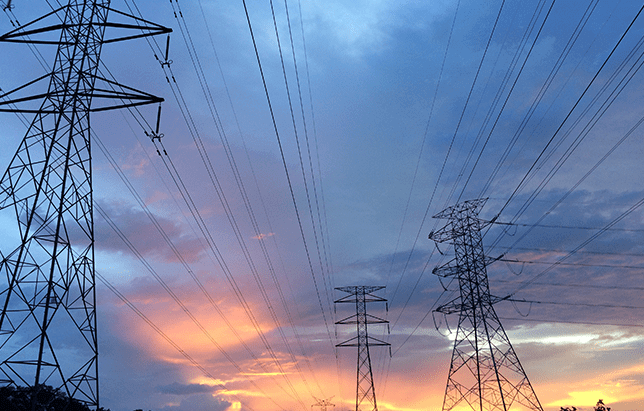
Three electrical transmission towers under a dramatic, colorful sunset sky with intersecting power lines.

Municipal Utilities

From electric departments to city halls, we work with municipal utilities to provide them with the best power engineering solutions for their T&D assets.


We have helped clients on projects to include new substation designs, programming, load shedding studies, cost of services, NERC services and system studies.

Renewable Power Plants

In the U.S., the fastest growing energy source is renewable energy. It has increased inextremely high rate from 2017 to 2022. In fact, the consumption of renewables is likely to grow extremely high in the next five years.


This rate is much higher than the overall growth rate in energy consumption. From wind farms to solar and BESS -battery storage, we provide clients with forward-thinking, reliable, compliant profitable solutions for engineering services needs.

Services include:

  • Technical and economic feasibility studies
  • Energy production and performance modeling
  • Site resource characterization analysis.
  • Interconnection application support and coordination
  • Power system integration studies
  • Detailed design and specifications
  • SCADA integration
  • NERC services during development phase

BESS Owners

As the number of distributed energy resources increase, the need for reliable, resilient and effective management and operation has become crucial too.


Energy storage technologies help independent users and power producers to identify and address the needs by balancing supply and demand and continuous supply during intermittent wind and solar resources.

At Keentel Engineering, we provide a rich experience in offering comprehensive battery energy storage solutions, such as:

  • Technical and economic feasibility studies
  • Performance modeling and cycle optimization
  • Power system integration studies
  • Program management
  • Detailed design and specifications
  • SCADA integration

Let’s Connect

Fill in the form below with the relevant information, and we’ll connect with you ASAP to discuss your project requirements.

Blog and Updates

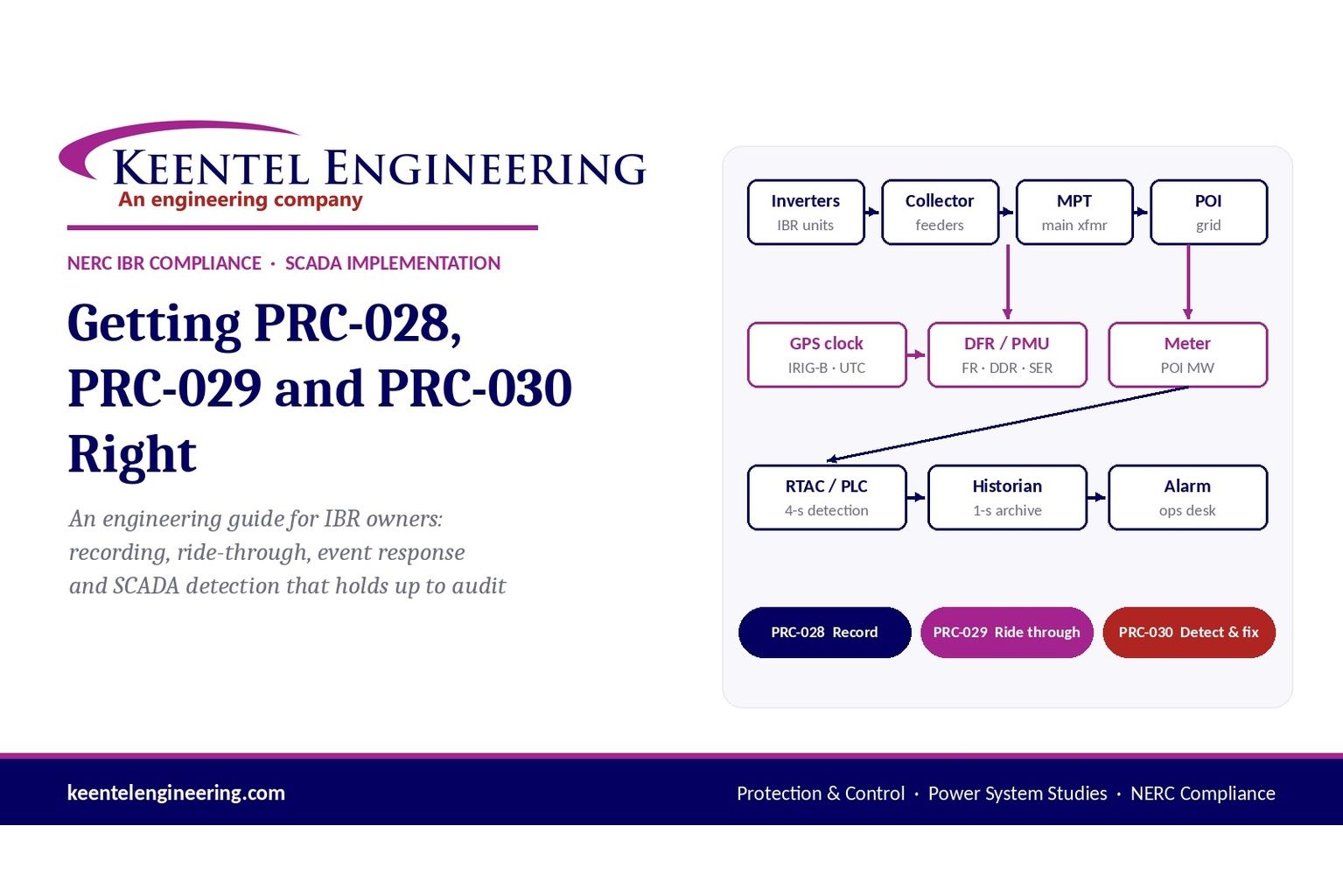
PRC-028 PRC-029 and PRC-030 NERC IBR compliance guide
By SANDIP R PATEL • October 3, 2026
Engineering guide to PRC-028 disturbance recording, PRC-029 ride-through and PRC-030 event detection for inverter-based resources.
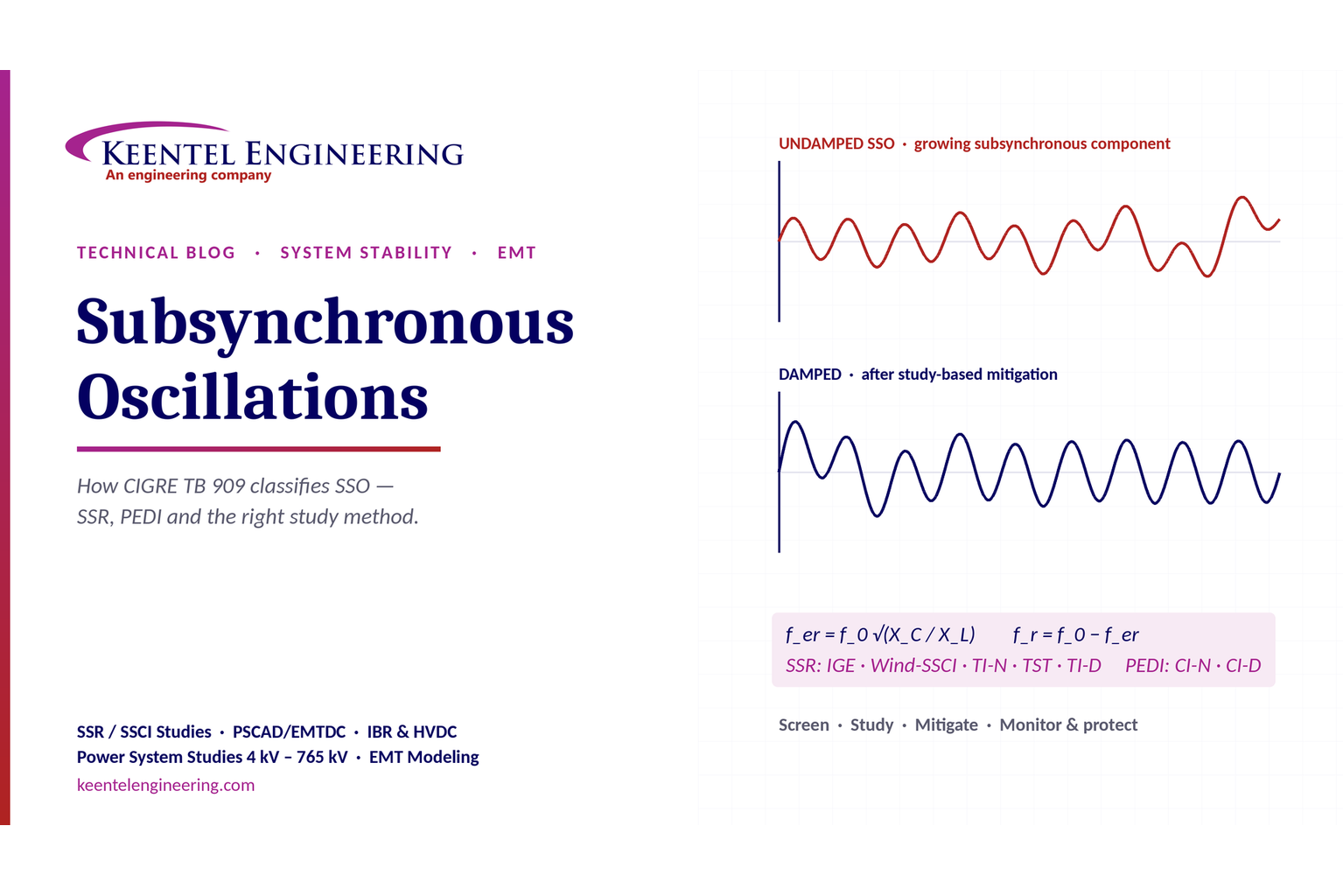
Keentel Engineering graphic showing damped and undamped subsynchronous oscillations.
By SANDIP R PATEL • October 3, 2026
A practical guide to SSO classification, SSR, PEDI, Wind-SSCI, EMT analysis, mitigation and protection based on CIGRE TB 909.
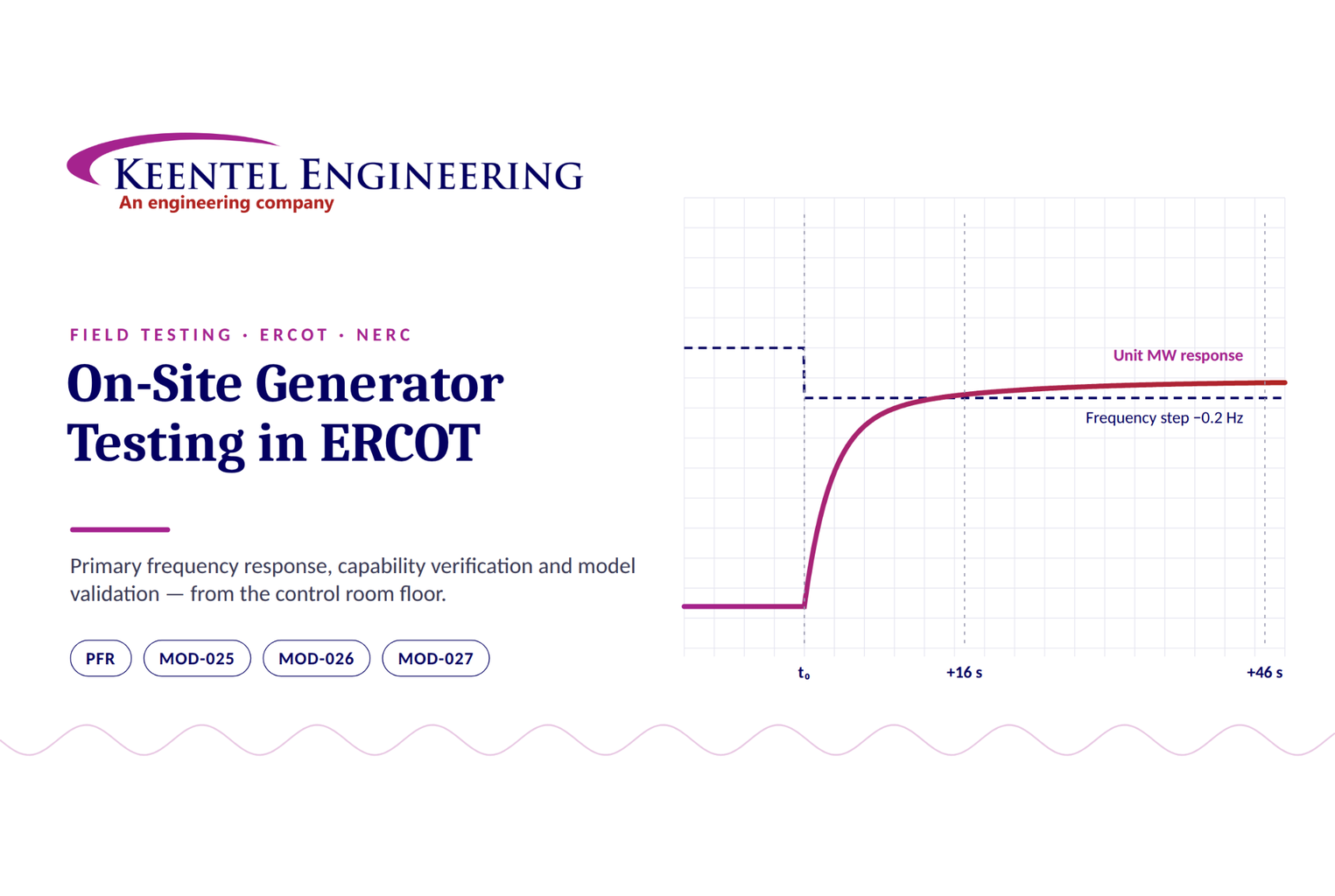
On-site generator testing in ERCOT
By SANDIP R PATEL • October 3, 2026
Learn ERCOT generator testing for PFR, MOD-025 and MOD-026/027, including staged tests, capability verification, dynamic models and field testing.
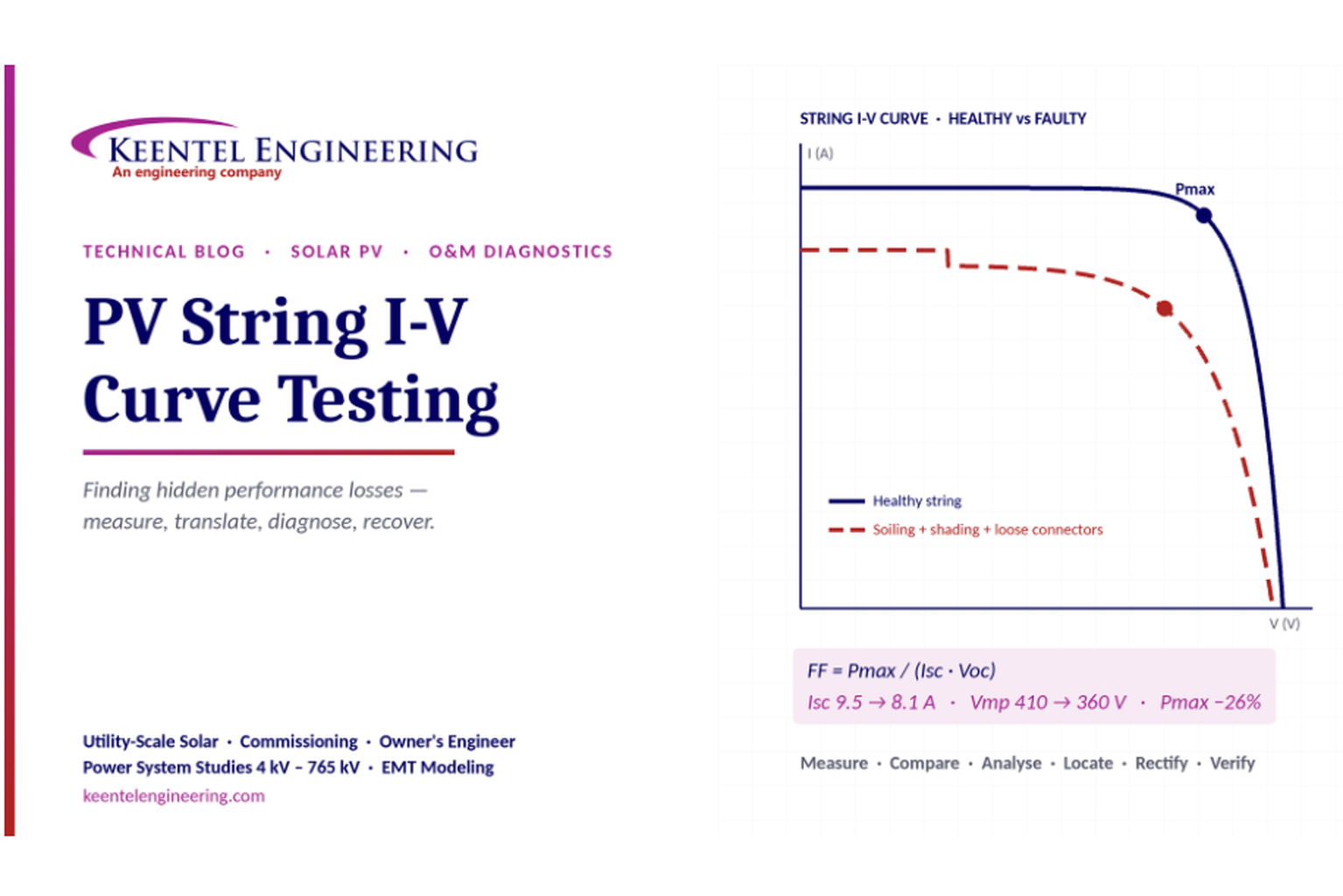
PV String I-V Curve Testing for Solar Performance Loss
By SANDIP R PATEL • October 3, 2026
Learn how PV string I-V curve testing identifies hidden solar performance losses, including soiling, shading, mismatch, degradation, and wiring faults.
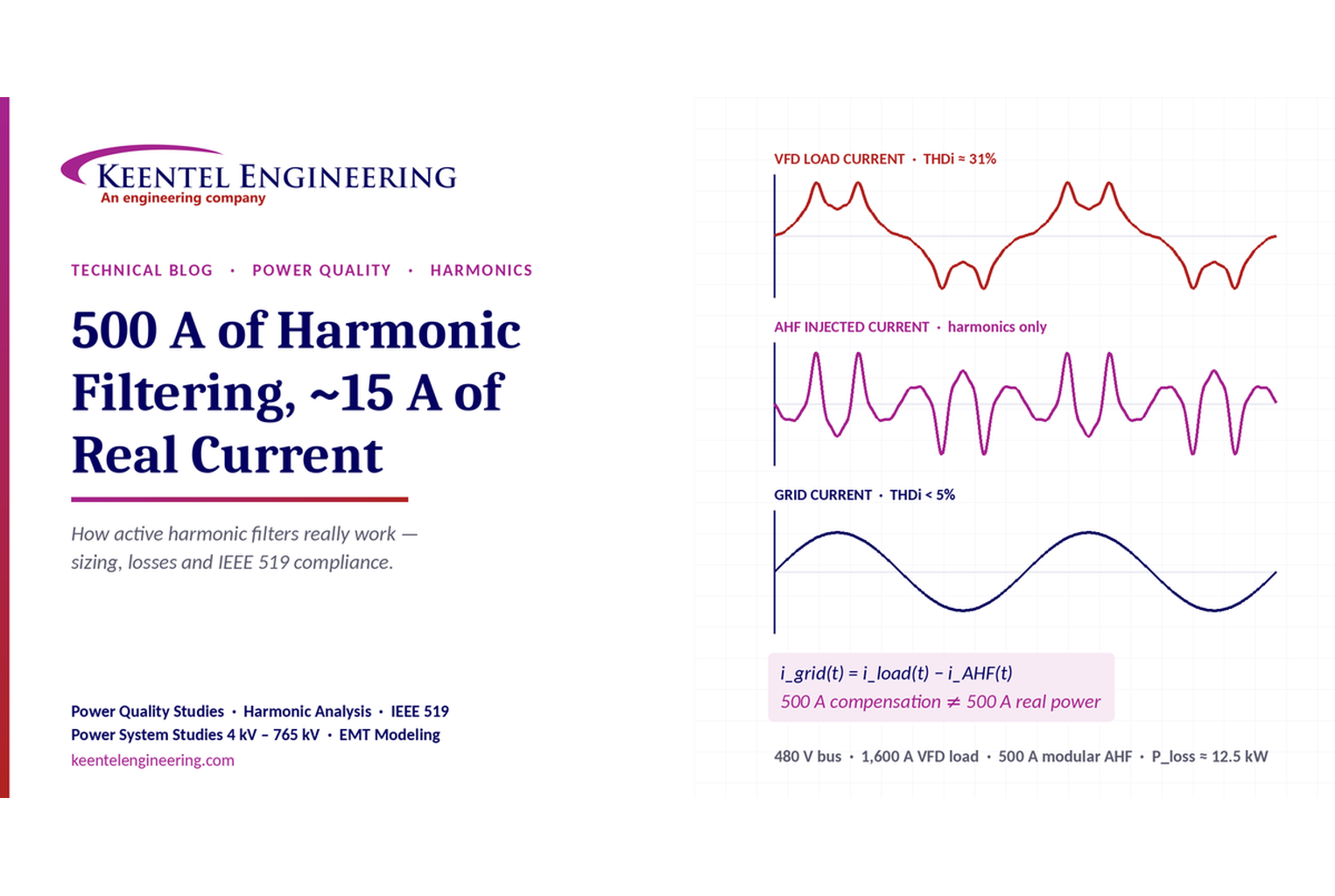
Active harmonic filter reducing VFD current harmonics and grid THDi.
By SANDIP R PATEL • October 3, 2026
Learn how active harmonic filters work, how to size AHF systems, reduce VFD harmonics, calculate losses, and meet IEEE 519 TDD limits at the PCC.
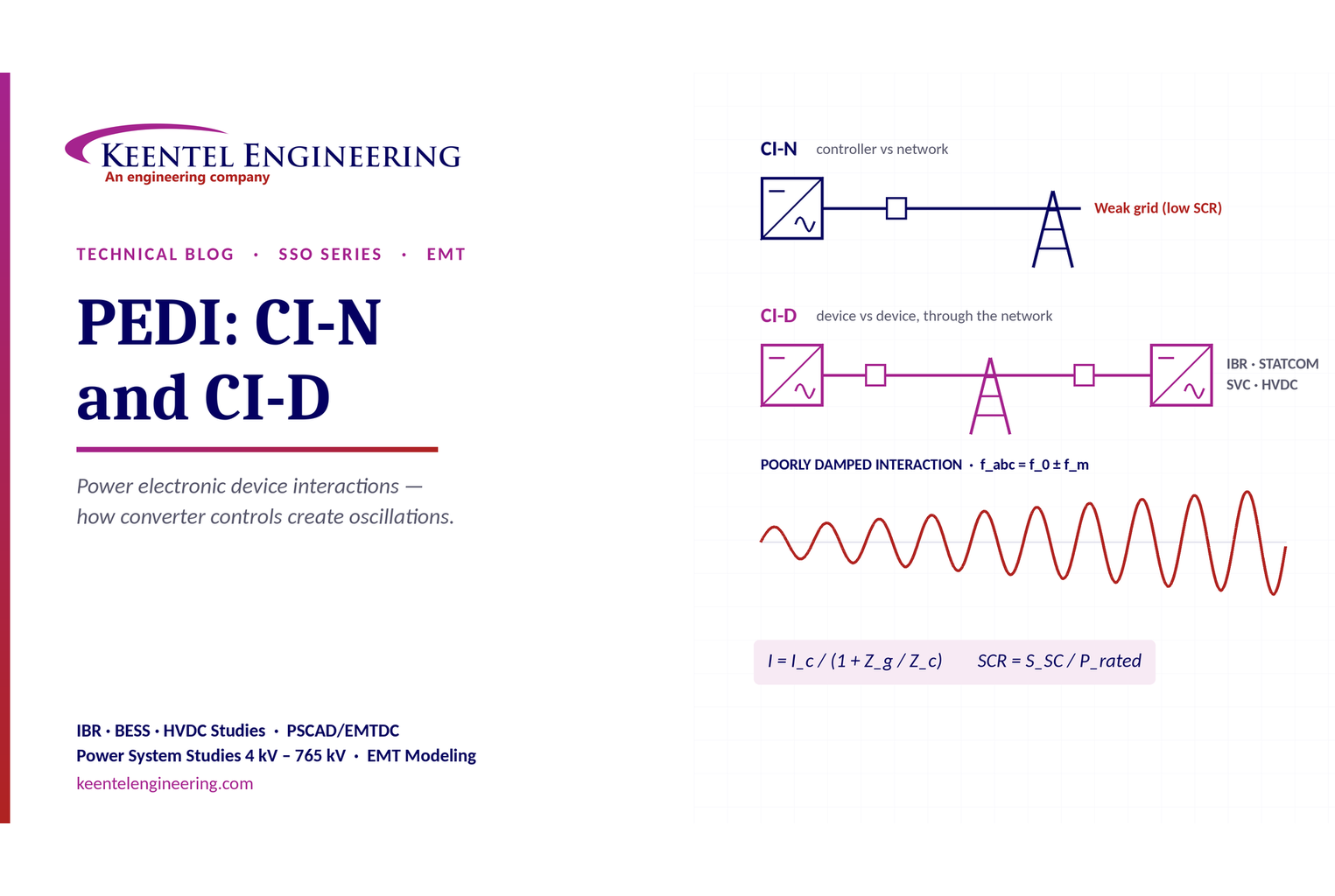
PEDI CI-N and CI-D power system interaction diagram
By SANDIP R PATEL • October 3, 2026
Learn power electronic device interactions (PEDI), including CI-N and CI-D, weak-grid stability, SCR, EMT studies, impedance analysis and mitigation for IBRs.
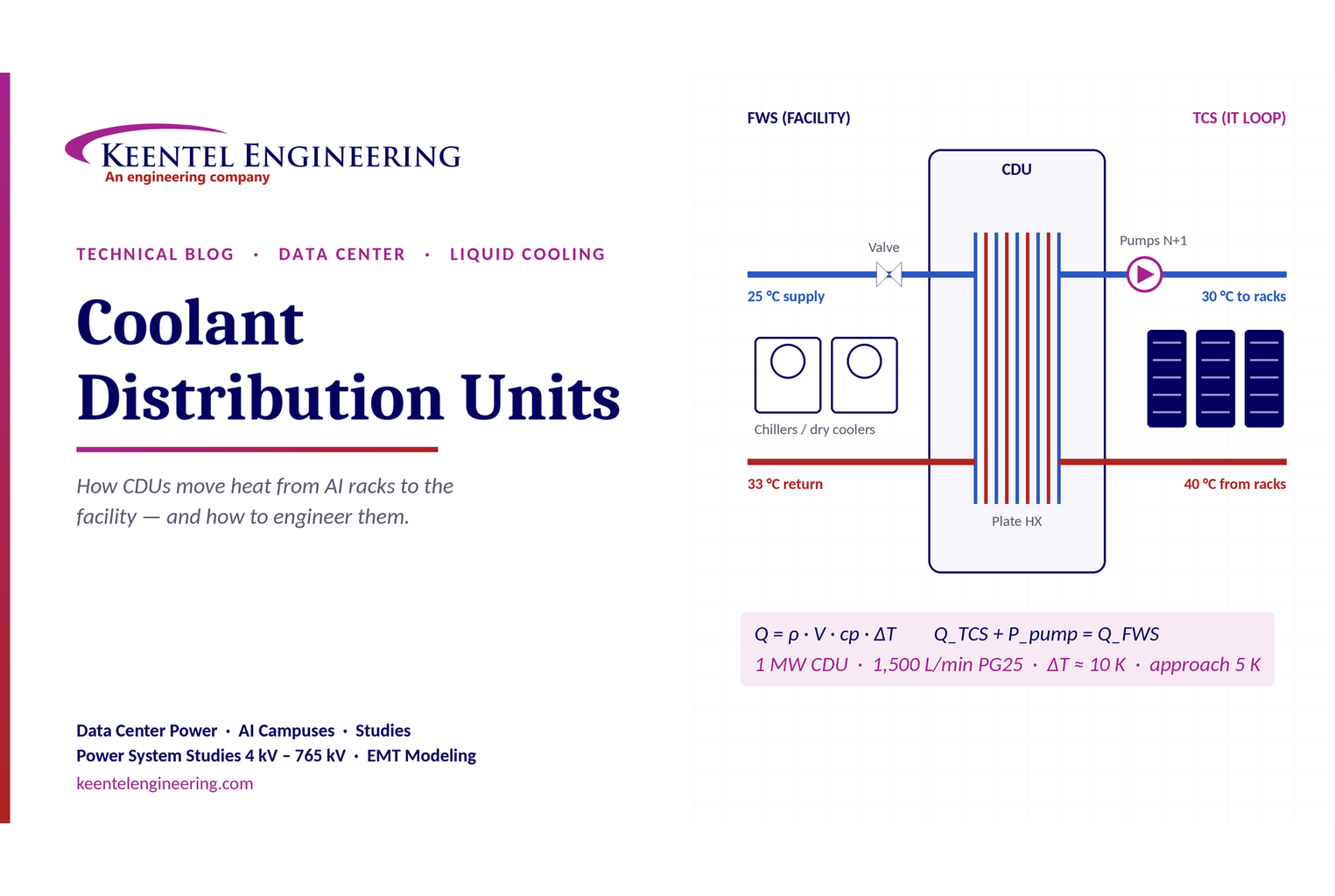
Coolant distribution unit for data center cooling
By SANDIP R PATEL • October 3, 2026
Learn how data center coolant distribution units (CDUs) work, including FWS and TCS loops, heat transfer, sizing, redundancy and liquid cooling for AI data centers.
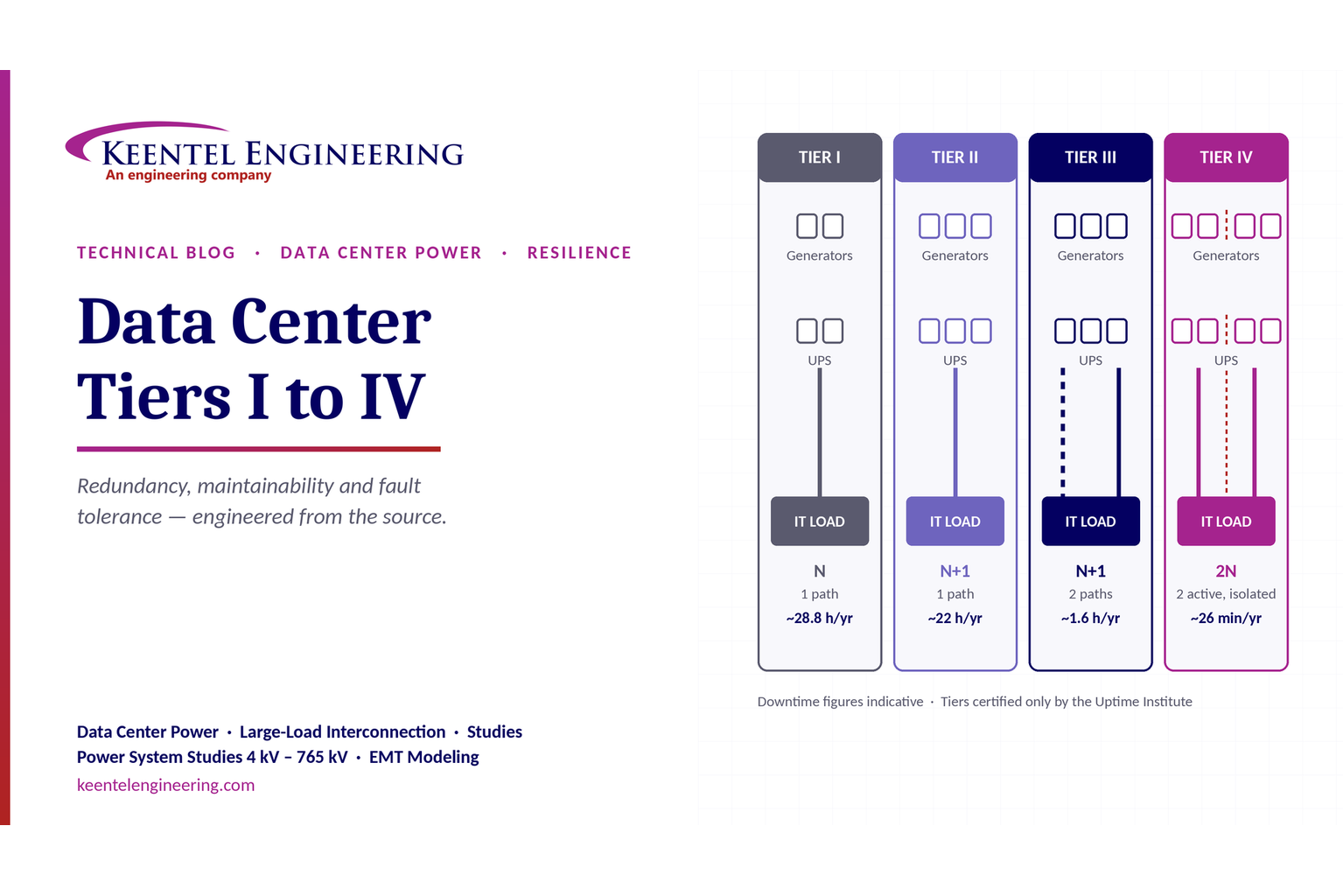
Data Center Tiers I to IV: An Electrical Engineer's Guide to Redundancy, Maintainability and Fault T
By SANDIP R PATEL • October 3, 2026
Compare Data Center Tiers I–IV, including redundancy, uptime, Tier III concurrent maintainability, Tier IV fault tolerance, UPS, generators and power design.
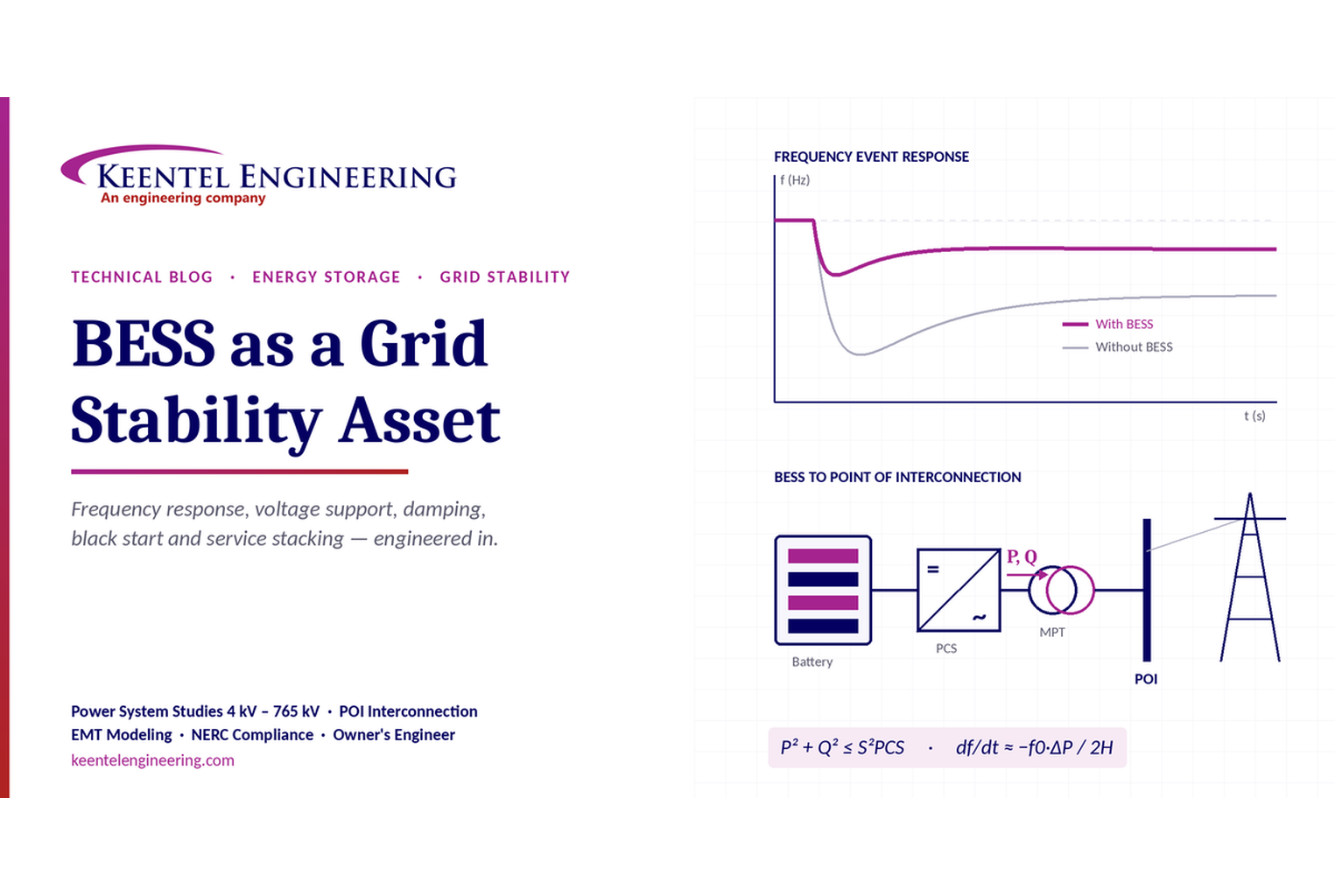
BESS grid stability with frequency response and POI interconnection.
By SANDIP R PATEL • October 3, 2026
Learn how BESS supports grid stability through fast frequency response, voltage support, oscillation damping, black start, grid-forming controls and EMT studies.


