
A Coordinated Electric System Interconnection Review—the utility’s deep-dive on technical and cost impacts of your project.
Challenge: Frequent false tripping using conventional electromechanical relays
Solution: SEL-487E integration with multi-terminal differential protection and dynamic inrush restraint
Result: 90% reduction in false trips, saving over $250,000 in downtime
PJM’s Expedited Interconnection Track (EIT)
A fast lane for large capacity resources
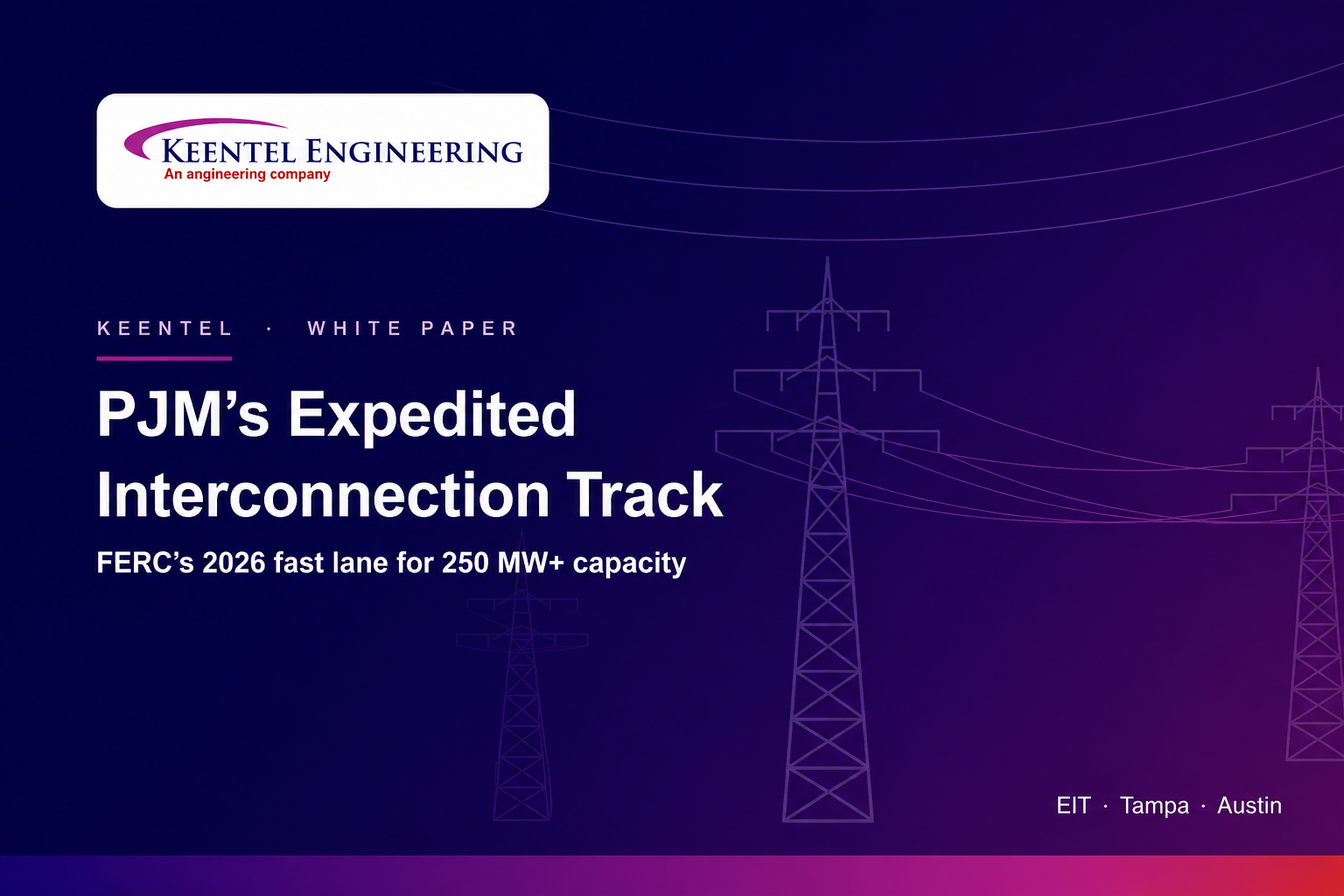
June 15, 2026 | White Paper
What FERC’s June 2026 approval means for 250 MW+ projects, the state siting partners that make them eligible, and the developers racing the 2027 sunset.
Executive Summary
Why PJM Built a Fast Lane
PJM Interconnection is absorbing the steepest near-term load growth in its history. Hyperscale data centers, electrification, and reshored manufacturing are arriving across the 13-state-plus-D.C. footprint faster than new supply can be studied, agreed, and energized. Even after PJM cleared a long-standing study backlog and reformed its queue into a cluster-based cycle process, the path from interconnection request to commercial operation is still measured in years — a pace that collides with a capacity market signaling tightening reserves.
On June 9, 2026, the Federal Energy Regulatory Commission accepted PJM's Expedited Interconnection Track (EIT)(Docket ER26-1563), a narrow, standalone process designed to move a handful of the largest, most construction-ready capacity projects onto the system quickly. The track is deliberately limited in scope and lifespan: it runs in parallel with the regular Cycle process, takes effect July 31, 2026, and sunsets at the end of 2027. It is not a redesign of the queue — it is a targeted relief valve for near-term resource adequacy.
The One-Paragraph Version
The EIT lets PJM review up to 10 large capacity projects per calendar year, each at least 250 MW of unforced capacity, on an accelerated schedule — roughly 10 months from filing to an executed interconnection agreement and commercial operation within three years. Eligibility hinges on deep readiness: full site control, a verified construction schedule, financial deposits, and a commitment from a relevant state authority to help expedite siting.
▶ Video — PJM Fast Track Interconnection Explained: FERC's New Rules for 250 MW+ Projects
What FERC Approved
What FERC Approved, in Brief
The EIT is defined by a tight set of parameters. Stripped of procedural detail, the mechanism works like this:
- Volume cap: up to 10 interconnection requests accepted per calendar year, on a rolling basis until the annual limit is reached.
- Eligible resources: large new or uprated capacity resources — technology-neutral ("of any kind").
- Size floor: a minimum of 250 MW of unforced capacity (UCAP).
- Speed target: approximately 10 months from a complete filing to an executed Generation Interconnection Agreement (GIA).
- In-service window: commercial operation within three years of application, backed by a verified construction schedule.
- Relationship to the queue: a separate, standalone track that runs alongside — not instead of — the standard Cycle process.
- Lifespan: effective July 31, 2026; the track sunsets December 31, 2027.
The EIT at a Glance
| Parameter | EIT Provision |
|---|---|
| Annual cap | Up to 10 requests per calendar year, accepted on a rolling basis |
| Minimum size | 250 MW unforced capacity (UCAP) |
| Eligible resources | Large new or uprated capacity resources — technology-neutral |
| Filing-to-GIA target | ~10 months |
| Commercial operation | Within three years of application |
| State requirement | Commitment from a relevant state authority to help expedite siting |
| Process type | Standalone, time-limited; parallel to the standard Cycle process |
| Effective date | July 31, 2026 |
| Sunset | December 31, 2027 |
| Docket | FERC Docket No. ER26-1563 (accepted June 9, 2026) |
How the EIT Differs
How the EIT Differs from the Standard Cycle Process
PJM's reformed queue studies projects in clusters — the Cycle process — where many requests are evaluated together so that shared network upgrades and cost responsibility can be allocated across the group. That approach is fairer and far more scalable than the old serial queue, but breadth comes at the cost of speed. The EIT makes the opposite trade. It pulls a small number of qualifying projects out of the cluster cadence and studies them on a compressed, project-specific schedule, accepting tighter eligibility and full cost responsibility in exchange for certainty and speed.
| Dimension | Standard Cycle Process | Expedited Interconnection Track |
|---|---|---|
| Structure | Cluster study; many projects evaluated together | Standalone, project-specific fast track |
| Eligibility | Open to qualifying generation broadly | Narrow: ≥250 MW UCAP, full readiness, state siting commitment |
| Throughput | Large volumes per cycle | Capped at 10 projects per year |
| Timeline | Study turnaround now ~1–2 years | ~10 months to executed GIA; COD within 3 years |
| Cost allocation | Shared/allocated across the cluster | Applicant funds 100% of required network upgrades |
| Duration | Ongoing program | Time-limited; sunsets end of 2027 |
Why "Standalone" Matters
Because EIT projects are studied outside the cluster, they do not wait for a cycle window to open and are not bound to the study clock of neighboring requests. The price of that independence is that the applicant carries the full network-upgrade cost and must clear a much higher readiness bar before the study even begins.
Eligibility Gate
The Eligibility Gate — Who Actually Qualifies
The EIT is intentionally hard to enter. The eligibility rules are engineered to admit only projects that can realistically energize on the promised schedule, and to keep speculative interconnection requests out of a scarce, fast-moving track. A qualifying applicant must satisfy each of the following at the time of application.
Threshold and Readiness Criteria
1
250 MW UCAP Minimum
The capacity floor ensures the track is reserved for resources that move the resource-adequacy needle materially.
2
100% Site Control
Full control of the project site must be demonstrated up front — no land still under negotiation.
3
Verified Construction Schedule
A credible, documented schedule showing commercial operation within three years.
4
State Siting Commitment
A commitment from a relevant state authority to help expedite siting and permitting — the real linchpin.
Financial Commitments
| Requirement | Detail |
|---|---|
| Study deposit | $500,000 |
| Readiness deposit | $15,000 per MW of capacity (~$3.75M for 250 MW; ~$7.5M for 500 MW) |
| Network upgrades | Applicant funds 100% of required upgrades — no cost sharing across a cluster |
What "Shovel-Ready" Really Means Here
PJM and FERC use "shovel-ready" as shorthand for a specific bundle of evidence: land locked down, a financed and scheduled build, a state willing to clear the permitting path, and deposits large enough that only serious developers apply. The EIT does not reward a good idea — it rewards a project that could break ground on short notice.
State Partnership
The State-Partnership Requirement — the Real Linchpin
Of every EIT criterion, the state siting commitment is the one most likely to decide whether a project is eligible at all. Siting and permitting authority over generation sits with the states, not with PJM or FERC, and that authority is frequently the longest pole in a development schedule. By requiring a state authority to commit to expediting siting before a project enters the track, PJM ensures it is not fast-tracking a resource that will then stall for years in a permitting queue.
In a concurring statement, a sitting FERC commissioner underscored the same point: state public utility commissions, governors' offices, and legislatures are necessary partners in building energy infrastructure at the pace demand now requires. In other words, the EIT is as much a coordination mechanism between PJM and the states as it is an engineering process.
Readiness, Money, and the "Discrimination" Debate
The EIT did not arrive unopposed. The proposal drew protests at FERC from a cross-section of stakeholders — clean-energy trade groups, a state commerce commission, a state board of public utilities, independent power interests, and community organizations among them. A central objection was that the readiness and deposit requirements could favor well-capitalized load-serving entities and incumbent utilities over independent developers.
FERC rejected that line of argument. The Commission found the requirements were tailored to attract genuinely shovel-ready projects and to limit a scarce, expedited track to resources most likely to deliver capacity on time — not to advantage any particular class of applicant. FERC also emphasized that the track is technology-neutral: any resource type that can meet the size, readiness, schedule, and siting tests may apply.
The Result: A High but Uniform Bar
The readiness bar is justified by the program's narrow purpose of meeting near-term resource adequacy needs. A well-capitalized independent developer who has locked down land, secured financing, and built a state relationship clears it just as easily as a utility affiliate — the bar is uniform, not selective.
Broader Context
Where the EIT Sits in PJM's Larger Large-Load Roadmap
The EIT is one piece of a broader response to a supply–demand imbalance driven largely by large-load customers, data centers in particular. PJM's Board of Managers laid out that response in a January 16, 2026 letter implementing a Critical Issues Fast Path (CIFP) process for large loads, and the EIT itself was effectively mandated on a deadline: a December 2025 FERC order addressing co-located load directed PJM to stand up an expedited interconnection process by August 2026.
Alongside the EIT, several companion initiatives are moving through the stakeholder process:
- Connect-and-manage framework. A pathway for new large loads that do not bring their own generation to connect subject to curtailment under defined emergency conditions.
- Long-term load-forecast improvements. Better visibility into where and how fast large loads will materialize.
- Backstop procurement. A mechanism to mitigate a capacity shortfall, including a supplemental backstop auction.
- Holistic market-design review. A wider re-examination of wholesale and capacity market design.
| Initiative | Purpose |
|---|---|
| Expedited Interconnection Track (EIT) | Accelerate a few large, shovel-ready generation projects onto the system |
| Connect-and-manage | Allow large loads without self-supply to connect, subject to emergency curtailment |
| Load-forecast improvements | Sharpen long-term forecasting of large-load growth |
| Backstop procurement / auction | Provide a fallback against near-term capacity shortfalls |
| Market-design review | Re-examine wholesale and capacity market structures holistically |
The Broader Interconnection-Reform Backdrop
The EIT layers on top of a substantial body of interconnection reform PJM has already implemented or secured:
- A reformed, backlog-cleared queue with roughly a one-to-two-year study turnaround.
- A completed transition cycle delivering on the order of 14 GW under signed agreements.
- A prior one-time fast track — the Reliability Resource Initiative — advancing several thousand megawatts across dozens of projects.
- A very large active pipeline: Cycle 1 drew applications on the order of 220 GW of generation.
- New FERC-approved tools: streamlined transfer of Capacity Interconnection Rights, Surplus Interconnection Service, and Provisional Interconnection Service.
- Process automation: AI applied to shorten study processing times.
Engineering Checklist
What a Developer Must Have Ready — the Engineering Checklist
A 10-month clock to an executed GIA is unforgiving. In a standard cycle, a developer can refine models and resolve study findings over a longer horizon; on the EIT, the technical package essentially has to be right when it is filed. From an interconnection-engineering standpoint, a credible EIT candidate should have the following in hand before entering the track:
1
Interconnection-Grade System Studies
▾
Power-flow, short-circuit, and stability analyses at the point of interconnection (POI), plus a deliverability assessment consistent with capacity accreditation. These studies must be completed and defensible before filing — there is no time to remediate fundamental findings on a 10-month clock.
2
Validated Dynamic and EMT Models
▾
For inverter-based resources and BESS, OEM-validated positive-sequence and electromagnetic-transient models, plant-controller representation, and ride-through behavior that will survive utility review. Model rejection is one of the fastest ways to lose months on a compressed track.
The fastest way to lose months on a compressed track is a model that fails utility validation. Inverter-based resources draw scrutiny on ride-through, control interactions, and EMT fidelity. Investing in OEM-validated, interconnection-grade models before filing is the cheapest insurance a 250 MW+ project can buy.
3
A Defensible POI and Upgrade Scope
▾
A realistic view of required network upgrades — because the applicant funds 100% of them — so the cost is not a surprise after the study. An unexpected upgrade scope can reshape project economics entirely.
4
Site Control and a Verified Build Schedule
▾
Documented 100% site control and an EPC-backed construction schedule that holds up to the three-year commercial-operation test. The schedule must be credible and documented at the time of application, not aspirational.
5
A State Siting Partner
▾
An identified state authority prepared to commit to expediting siting and permitting. This is the criterion that most often determines whether a project can enter the track at all — and it must be in place before filing, not in parallel.
▶ Video — Power Flow Analysis & Grid Interconnection Studies | Renewable Energy Integration Guide
Engineering Tip — Front-Load Model Fidelity
The fastest way to lose months on a compressed track is a model that fails utility validation. Inverter-based resources, in particular, draw scrutiny on ride-through, control interactions, and EMT fidelity. Investing in OEM-validated, interconnection-grade models before filing is the cheapest insurance a 250 MW+ project can buy.
Risks & Open Questions
Risks and Open Questions
Scarce Slots
With only 10 acceptances per calendar year on a rolling basis, the most prepared developers will claim the openings first.
Sunset Exposure
The track ends December 31, 2027. Projects must enter, execute a GIA, and remain on a schedule that supports the three-year in-service window before the window closes.
Full Upgrade-Cost Responsibility
Funding 100% of network upgrades concentrates cost risk on the applicant; an unexpected upgrade scope can reshape project economics.
Deliverability and Accreditation
Qualifying on size is not the same as delivering accredited capacity; deliverability findings can still constrain a project.
Evolving Large-Load Obligations
Ride-through, stability, and modeling requirements for large loads and IBRs continue to evolve in parallel, and EIT projects must track them.
How Keentel Helps
Speak to an Engineer →
How Keentel Supports EIT Candidates
Keentel Engineering is a power-systems and grid-interconnection consultancy built for exactly this kind of compressed, high-stakes interconnection work. For developers weighing or pursuing the EIT, our teams in Tampa and Austin assemble the technical package that a 10-month clock demands and that utility review will accept:
Power System Studies (EHV / HV / MV)
Load flow, short circuit, stability, and deliverability — built to interconnection grade before filing.
POI Interconnection Engineering
Point-of-interconnection design, network-upgrade scoping, and study support for the 10-month schedule.
Substation & Transmission-Line Design
From one-lines to construction-ready packages — 30%, 60%, and IFC design milestones.
Utility-Scale Renewables & BESS
OEM-validated dynamic and EMT modeling, plant-controller representation, and ride-through verification.
Owner's Engineer Services
Independent technical oversight across the project lifecycle, from feasibility through commissioning.
NERC O&P Compliance
Aligning the project with applicable reliability obligations — the EIT does not relax NERC requirements.
Ready to Scope Your EIT Filing?
If you are evaluating whether a project can realistically clear the EIT, Keentel can help you scope it.
Frequently Asked Questions
Get a Free Assessment →
Frequently Asked Questions
A quick-reference companion to the analysis above. The answers summarize the EIT as accepted by FERC in June 2026; program details are administered by PJM and remain subject to PJM's tariff and FERC orders.
Q1. What is PJM's Expedited Interconnection Track (EIT)?
+
The EIT is a temporary, standalone interconnection process that FERC accepted on June 9, 2026 (Docket ER26-1563). It lets PJM review a small number of large, construction-ready capacity projects on an accelerated schedule, in parallel with the standard Cycle process, to address near-term resource adequacy.
Q2. When does the EIT take effect, and when does it end?
+
The track takes effect July 31, 2026 and sunsets December 31, 2027. It is explicitly time-limited — a relief valve for the near-term gap, not a permanent feature of the queue.
Q3. How many projects can use the EIT each year?
+
Up to 10 interconnection requests per calendar year, accepted on a rolling basis until that annual cap is reached.
Q4. What is the minimum project size?
+
A minimum of 250 MW of unforced capacity (UCAP). The floor reserves the track for resources large enough to meaningfully improve resource adequacy.
Q5. What does "unforced capacity (UCAP)" mean?
+
UCAP is a capacity rating adjusted for a resource's expected forced-outage performance — the capacity PJM counts on for reliability. Measuring the threshold in UCAP rather than nameplate ties eligibility to dependable contribution.
Q6. How fast is the EIT compared with the standard queue?
+
PJM targets roughly 10 months from a complete filing to an executed Generation Interconnection Agreement, versus a standard study turnaround now on the order of one to two years. Commercial operation is expected within three years of application.
Q7. What are the core eligibility requirements?
+
At application: at least 250 MW UCAP; 100% site control; a verified construction schedule for COD within three years; a commitment from a relevant state authority to expedite siting; the required deposits; and a commitment to fund 100% of required network upgrades.
Q8. What deposits and financial commitments are required?
+
A $500,000 study deposit and a $15,000-per-MW readiness deposit — about $3.75 million for a 250 MW project. The applicant also funds 100% of the network upgrades the study identifies.
Q9. Why is a state siting commitment required?
+
Siting and permitting authority over generation rests with the states and is often the longest pole in a development schedule. Requiring a state commitment up front keeps PJM from fast-tracking a resource that would then stall in permitting, and it makes the EIT a coordination mechanism between PJM and the states.
Q10. Does the EIT favor utilities and load-serving entities over independent developers?
+
Several protesters argued it might, citing the readiness and deposit requirements. FERC rejected that view, finding the requirements were tailored to attract genuinely shovel-ready projects and to limit a scarce track to resources likely to deliver on time — not to advantage any class of applicant.
Q11. Is the EIT technology-specific?
+
No. The track is technology-neutral. Any resource type — conventional, renewable, storage, or hybrid — may apply if it meets the size, readiness, schedule, and siting tests.
Q12. How does the EIT relate to the standard Cycle process?
+
It is a separate, standalone track that runs alongside the Cycle process, not a replacement for it. Qualifying projects are pulled out of the cluster cadence and studied on a compressed, project-specific schedule.
Q13. Can data centers and other large loads use the EIT directly?
+
The EIT is a generation-interconnection track, so it is used by capacity-resource developers, not by loads. Large loads benefit indirectly: the track is meant to bring on the generation needed to serve them. Load-side connection is addressed through other roadmap initiatives, such as connect-and-manage.
Q14. What should a developer have ready before filing?
+
Interconnection-grade studies (power flow, short circuit, stability, deliverability); OEM-validated dynamic and EMT models for IBR/BESS; a defensible POI and network-upgrade scope; documented 100% site control and an EPC-backed schedule; and an identified state siting partner.
Q15. Does the EIT change NERC or modeling obligations?
+
The EIT does not relax underlying reliability, modeling, or NERC obligations — it compresses the timeline for meeting them. If anything, the short clock raises the premium on model quality and study rigor, because there is little time to remediate findings.
Q16. What is "connect-and-manage," and is it the same as the EIT?
+
No. Connect-and-manage is a separate proposal that would let new large loads without their own generation connect subject to curtailment in defined emergencies. The EIT, by contrast, is a generation-interconnection track.
Q17. What happens if a project misses the 10-month or three-year milestones?
+
The EIT is built around firm readiness and schedule commitments backed by deposits, and the program sunsets at the end of 2027. Projects that cannot hold to the schedule risk losing their place; developers should treat the milestones as binding, not indicative.
Q18. Where does the EIT fit in PJM's large-load roadmap?
+
It is one element of the Critical Issues Fast Path response outlined in PJM's January 16, 2026 Board letter, alongside a connect-and-manage framework for large loads, long-term load-forecast improvements, a backstop procurement mechanism and auction, and a holistic wholesale and capacity market-design review.
Q19. Why did FERC create the EIT now?
+
To address near-term resource adequacy as large-load demand — data centers especially — outpaces new supply. A December 2025 FERC order on co-located load also directed PJM to establish an expedited interconnection process by August 2026.
Q20. How can Keentel help with an EIT filing?
+
Keentel provides the power system studies, POI interconnection engineering, substation and transmission design, IBR/BESS modeling, owner's-engineer oversight, and NERC O&P compliance support needed to assemble an EIT-ready technical package and keep it on a 10-month schedule. Contact our team →
Start the Conversation
Keentel carries the technical weight alongside your EIT filing — from first study to executed GIA.
About Keentel Engineering
About Keentel Engineering & Non-Affiliation Notice
Who We Are
Keentel Engineering is a power-systems and grid-interconnection engineering firm serving developers, utilities, and large-load customers. Services span power system design and studies (EHV/HV/MV), POI interconnection engineering (30%, 60%, IFC design), substation and transmission-line design, utility-scale renewables and BESS engineering, owner's-engineer services, and NERC operations-and-planning compliance.
Our Offices
Tampa (HQ):
400 N Ashley Dr STE #2600, Tampa, FL 33602, USA
Austin Office:
5900 Balcones Drive STE 100, Austin, TX 78731, USA
Sacramento Office:
1401 21st St Ste R, Sacramento, CA 95811, USA
Baltimore Office:
306 W Redwood St, STE 200, Baltimore, MD 21201, USA
Non-Affiliation & Independence
Keentel Engineering is an independent engineering firm and is not affiliated with, endorsed by, or sponsored by PJM Interconnection, L.L.C., the Federal Energy Regulatory Commission (FERC), the U.S. Department of Energy, or any other regulatory body, regional transmission organization, utility, equipment manufacturer, or trade organization referenced in this document. All names, marks, programs, dockets, and standards referenced are the property of their respective owners and are used here for identification, commentary, and educational purposes only.
Informational only — not legal or engineering advice.
This document is provided for general informational and educational purposes and reflects publicly reported information as of June 2026. Program rules, dates, deposit amounts, dockets, and eligibility criteria are administered by PJM and FERC and are subject to change, interpretation, and tariff revision. Nothing here constitutes legal, regulatory, financial, or project-specific engineering advice, and it should not be relied upon as a substitute for the governing PJM tariff, FERC orders, or qualified professional counsel. Developers should confirm all current requirements directly with PJM and FERC and engage appropriate advisors before making decisions. Any examples or scenarios are illustrative and generalized; they do not reference identifiable clients, projects, locations, or proprietary information.
© 1995–2026 Keentel Engineering. All rights reserved.
© 1995–2026 Keentel Engineering. All rights reserved.
Sources & References
Sources & References
Core program facts — the 10-projects-per-year cap, the 250 MW unforced-capacity floor, the ~10-month interconnection-agreement target, the three-year operation window, the state siting commitment, the July 31 effective date and end-of-2027 sunset, and PJM's related large-load initiatives — are drawn from the source briefing provided. The public sources below informed the supplementary figures (docket number and approval date, the study and readiness deposits, the site-control and network-upgrade provisions, the protest record, and procedural background).
- PJM Interconnection, L.L.C. — Expedited Interconnection Track tariff filing, FERC Docket No. ER26-1563 (primary source: 100% site control, $500,000 study deposit, $15,000/MW readiness fee, eligibility criteria).
pjm.com — ER26-1563 Filing → - Federal Energy Regulatory Commission — Commissioner Rosner concurrence to the order accepting PJM's EIT, Docket ER26-1563 (state-siting emphasis).
ferc.gov — Commissioner Rosner Concurrence → - Utility Dive — "FERC approves PJM fast-track review for 'shovel-ready' power projects" (June 9, 2026 approval; protest roster; rejection of the discrimination concern).
utilitydive.com → - DataCenterDynamics — "FERC approves PJM fast-track interconnection for large power projects" (protest roster; program scope and timing).
datacenterdynamics.com → - PJM Inside Lines — "PJM Files Price Collar, Expedited Interconnection as Part of Large Load Plan" (study and readiness deposits; 100% of network upgrades).
insidelines.pjm.com → - Troutman Pepper — Washington Energy Report — "FERC Approves PJM's Tariff Revisions for an Expedited Interconnection Track" (June 2026: site control, verified construction schedule, deposits, docket).
troutmanenergyreport.com → - Troutman Pepper — Washington Energy Report — "PJM Proposes Expedited Generator Interconnection Track" (March 2026: Dec. 18, 2025 co-located-load order directing EIT implementation by August 2026).
troutmanenergyreport.com (March 2026) → - Renewable Energy World — "Can PJM's new 'fast track' process accelerate interconnection?" (deposits; site-control scope; capacity-deficiency context).
renewableenergyworld.com → - MLQ News — "FERC Approves PJM Expedited Interconnection Track for Large Power Projects Through 2027" (docket, deposits).
mlq.ai → - White & Case LLP — "PJM proposes to carve out new services for co-located data centers" (Dec. 18, 2025 Show Cause Order; Jan. 16, 2026 PJM Board CIFP letter).
whitecase.com →
* Links were active at the time of writing; URLs and program details may change as PJM and FERC update the record.

About the Author:
Sandip "Sonny" R. Patel, P.E.
IEEE Senior Member · Founder & CEO, Keentel Engineering
In 1995, Sonny Patel earned his Electrical Engineering degree from the University of Illinois. But degrees don't build legacies — action does.
For three decades, he has worked the power industry from every side of the table: 16 years as a utility engineer at Exelon/Commonwealth Edison; generation leadership across hydroelectric, industrial steam turbine, and a 9 GW renewable fleet; NERC Regional Entity Senior Compliance Engineer and Audit Team Lead, auditing some of the nation's largest utilities; and testing and commissioning lead on equipment up to 765 kV — the very top of the North American grid.Utility. Generator. Regulator. Consultant. Few engineers have seen all four seats. Fewer still have sat in them.
His experience spans nuclear, hydro, conventional generation, renewables, oil and gas, mining — and today's data centers, where he is authoring a three-book series on data center design. He is a Licensed Professional Engineer in six states and a Licensed Electrical Contractor in Florida (Unlimited EC) — he doesn't just design the work; he's qualified to stand behind its execution.Today, as Founder and CEO of Keentel Engineering, Sonny leads a nationwide team of engineers delivering substation design, power system studies, NERC compliance, and commissioning — done right, coast to coast.Three decades. Every side of the table. One standard: accountable engineering.
Services

Let's Discuss Your Project
Let's book a call to discuss your electrical engineering project that we can help you with.
About the Author:
Sandip "Sonny" R. Patel, P.E.
IEEE Senior Member · Founder & CEO, Keentel Engineering
In 1995, Sonny Patel earned his Electrical Engineering degree from the University of Illinois. But degrees don't build legacies — action does.
For three decades, he has worked the power industry from every side of the table: 16 years as a utility engineer at Exelon/Commonwealth Edison; generation leadership across hydroelectric, industrial steam turbine, and a 9 GW renewable fleet; NERC Regional Entity Senior Compliance Engineer and Audit Team Lead, auditing some of the nation's largest utilities; and testing and commissioning lead on equipment up to 765 kV — the very top of the North American grid.
Utility. Generator. Regulator. Consultant. Few engineers have seen all four seats. Fewer still have sat in them.
His experience spans nuclear, hydro, conventional generation, renewables, oil and gas, mining — and today's data centers, where he is authoring a three-book series on data center design. He is a Licensed Professional Engineer in six states and a Licensed Electrical Contractor in Florida (Unlimited EC) — he doesn't just design the work; he's qualified to stand behind its execution.
Today, as Founder and CEO of Keentel Engineering, Sonny leads a nationwide team of engineers delivering substation design, power system studies, NERC compliance, and commissioning — done right, coast to coast.Three decades. Every side of the table. One standard: accountable engineering.
Leave a Comment
Thank you for contacting us.
We will get back to you as soon as possible.
We will get back to you as soon as possible.
Oops, there was an error sending your message.
Please try again later.
Please try again later.
Related Posts
By SANDIP R PATEL
•
October 11, 2026
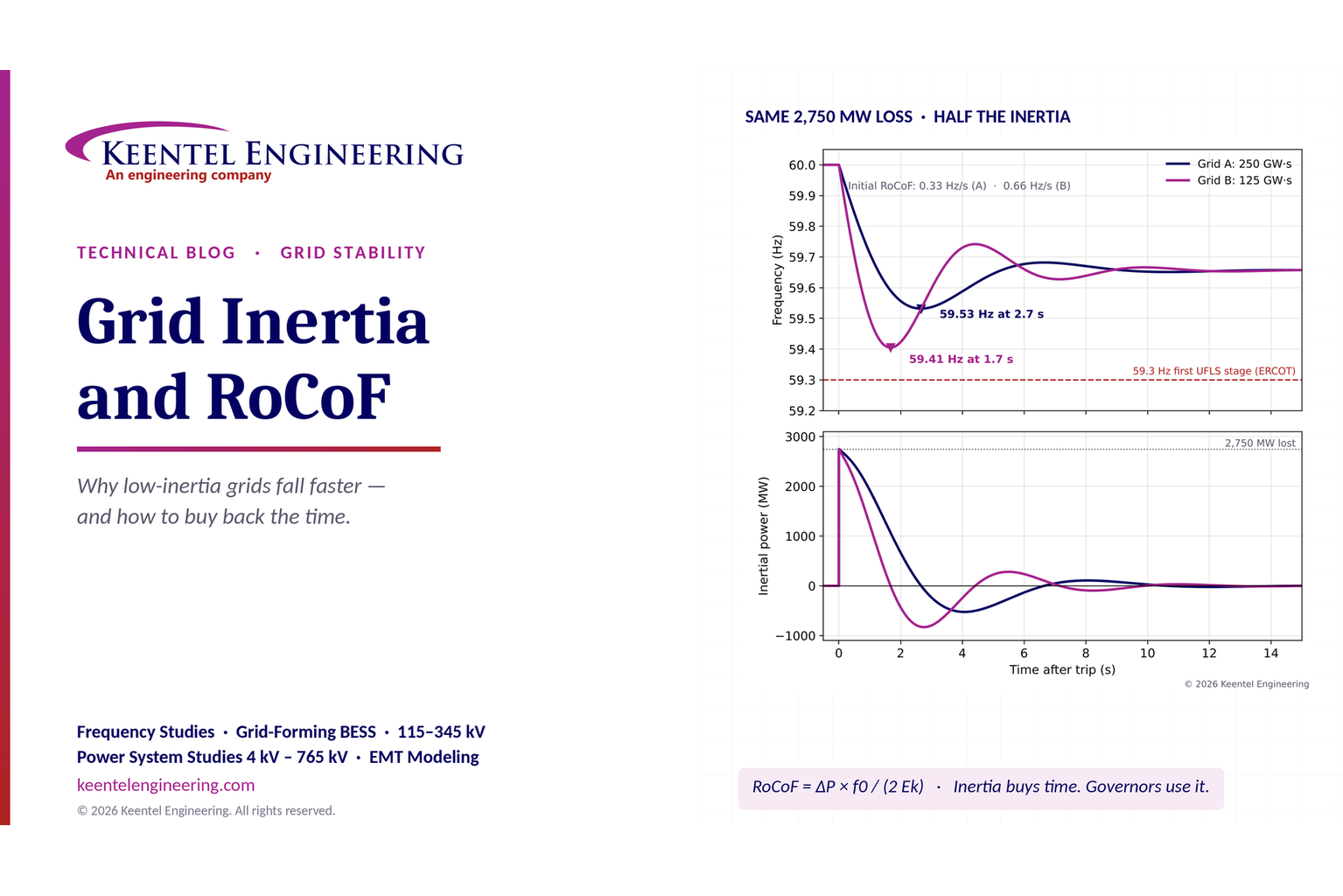
Explore grid inertia, RoCoF and frequency response, with swing equation calculations, frequency nadir analysis and US power system simulation examples.
By SANDIP R PATEL
•
October 11, 2026
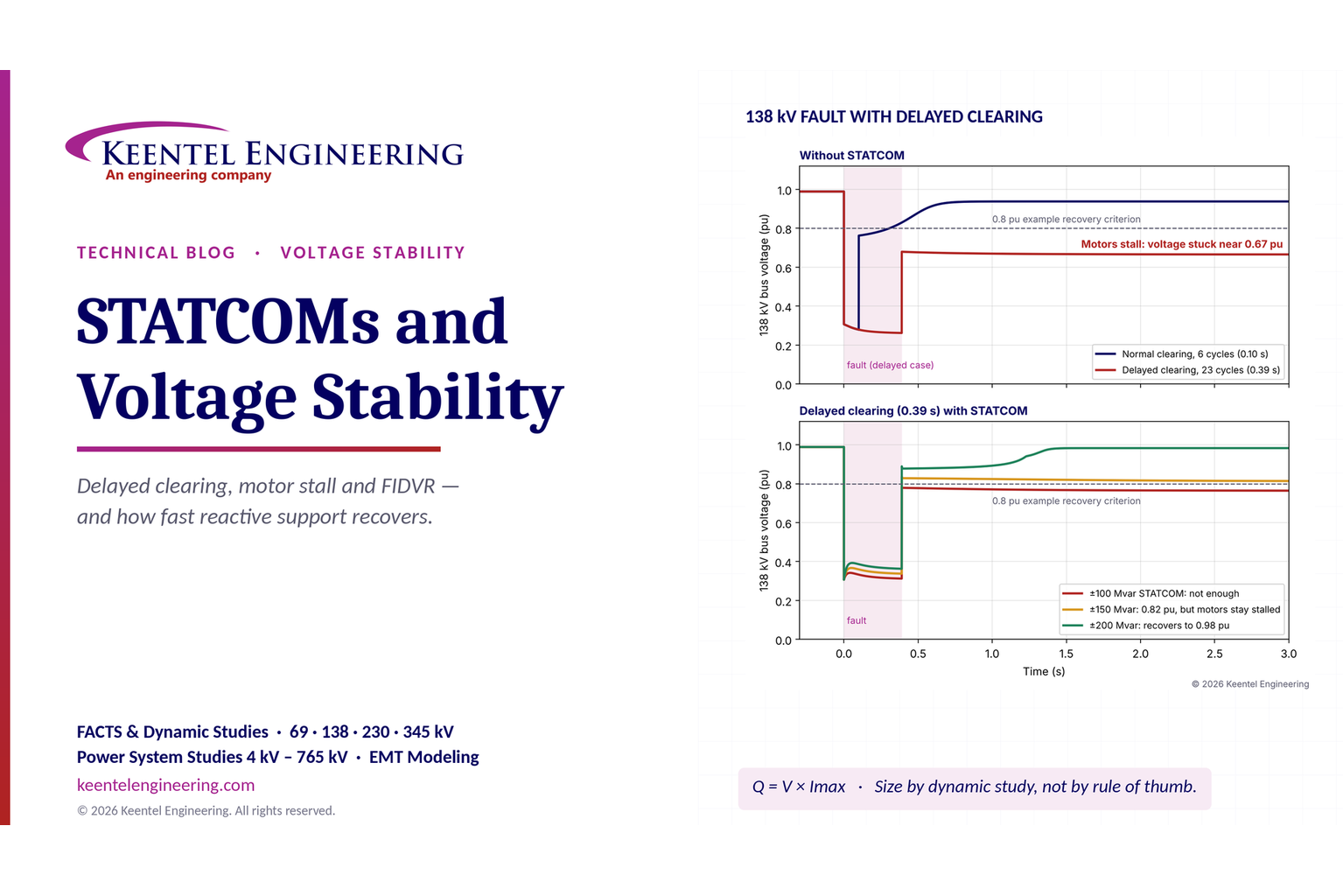
Learn how STATCOMs improve voltage stability and prevent FIDVR. Explore reactive power sizing, delayed fault clearing, NERC criteria and 138 kV simulation results.
By SANDIP R PATEL
•
October 10, 2026
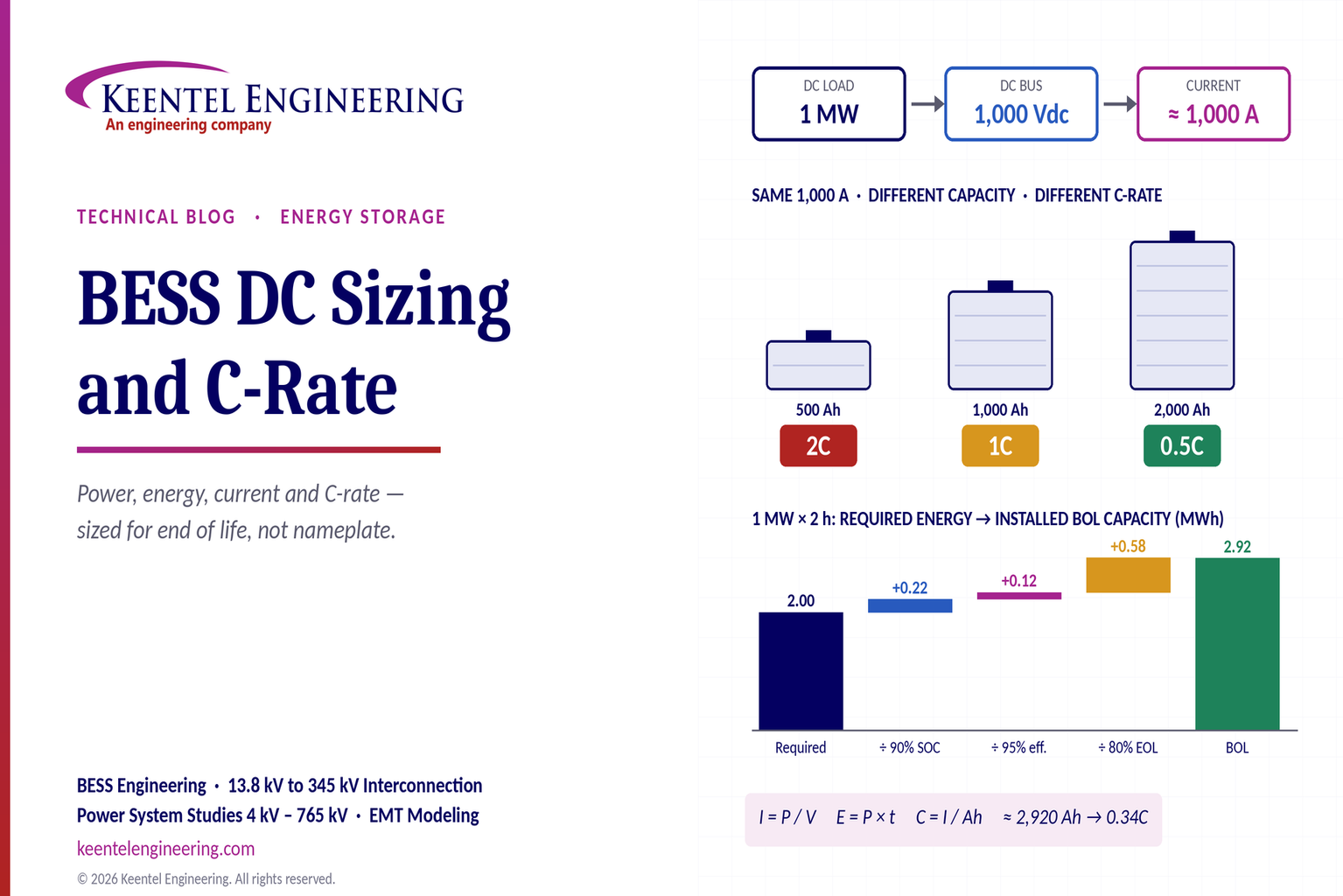
Learn BESS DC sizing with power, energy, current and C-rate calculations, battery losses, degradation and a 100 MW/400 MWh utility-scale example.
By SANDIP R PATEL
•
October 10, 2026
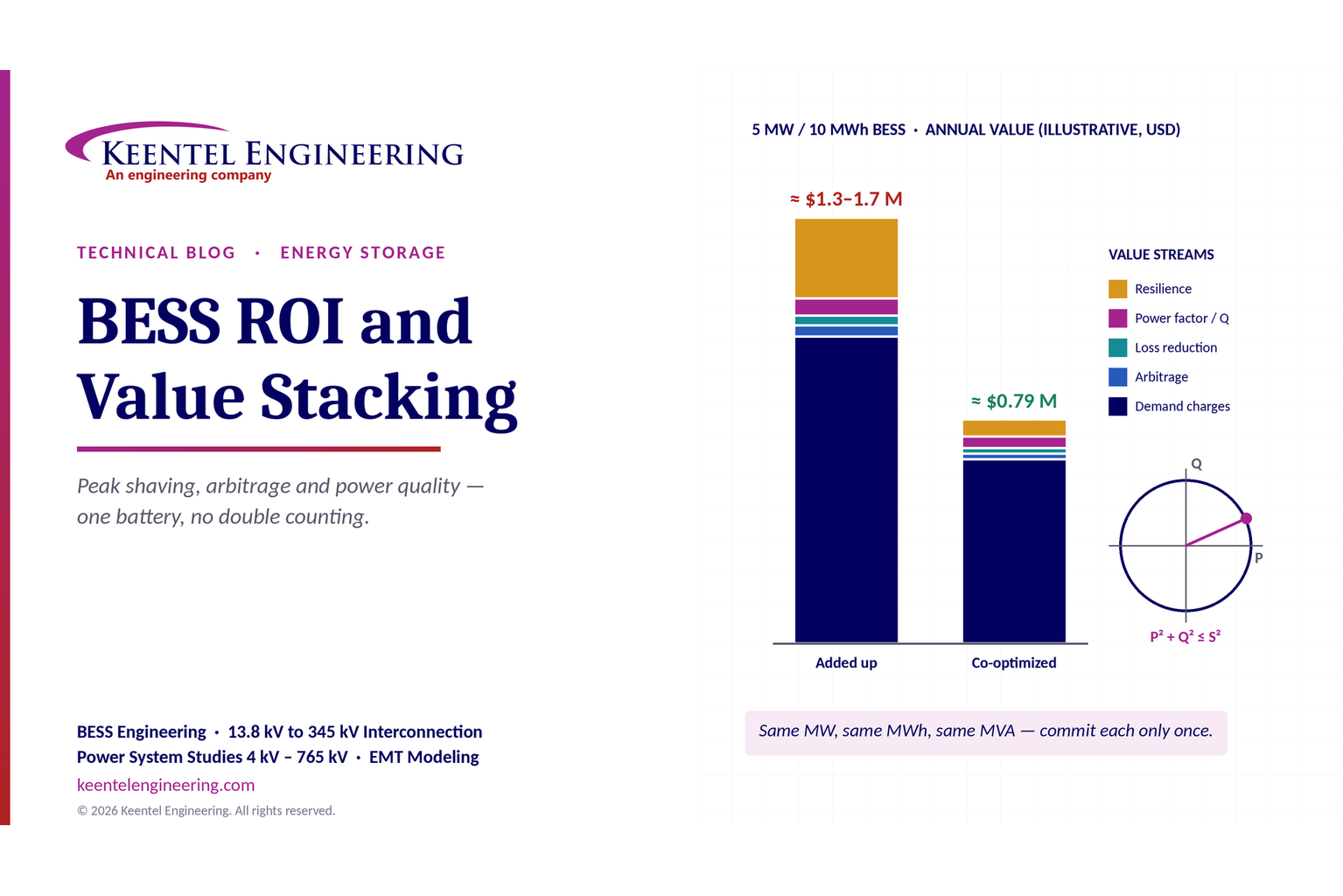
Learn how BESS ROI is calculated using peak shaving, energy arbitrage, power quality and battery storage economics, with a practical 5 MW/10 MWh example.
By SANDIP R PATEL
•
October 10, 2026
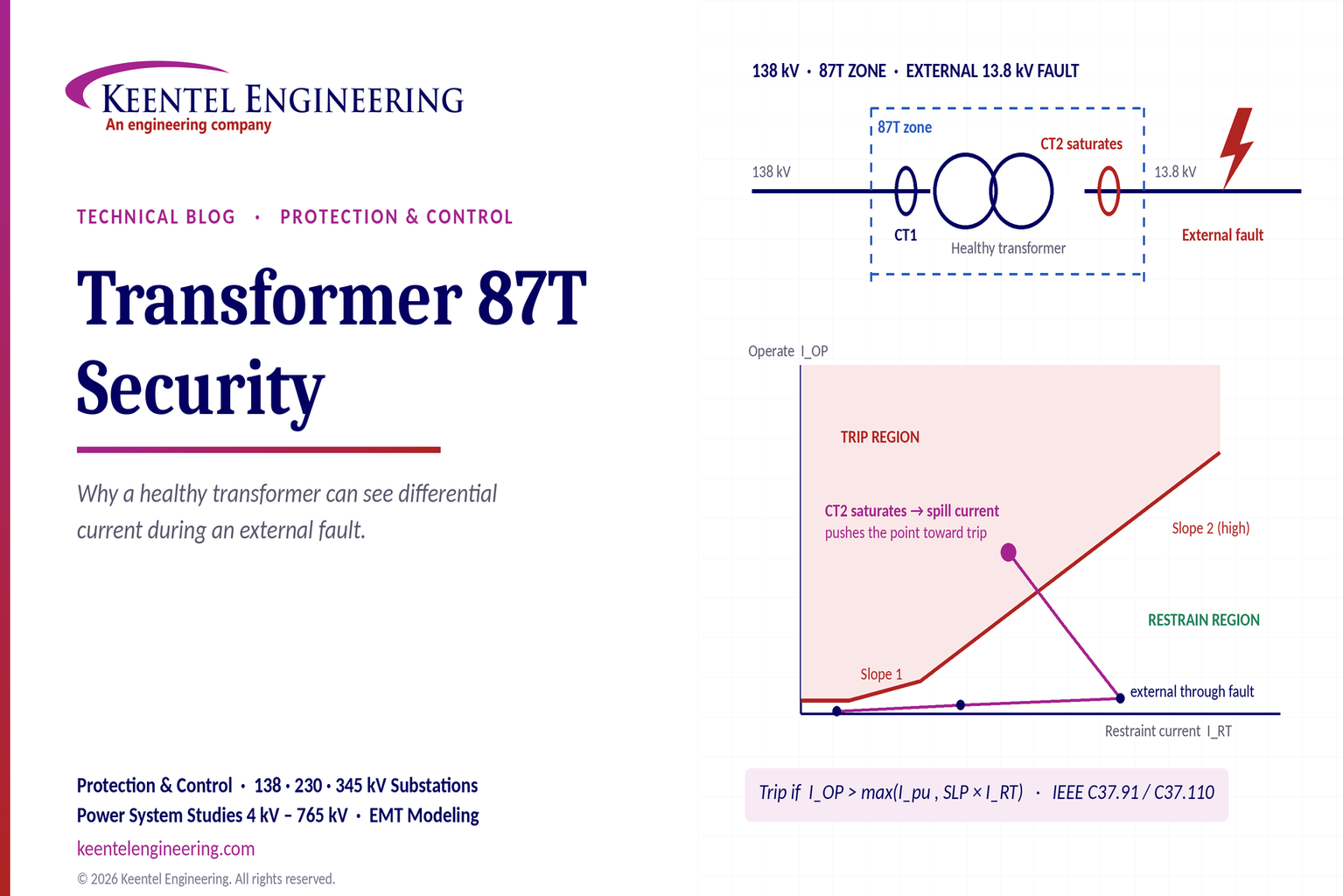
Learn why transformer differential relays detect current during external faults, how CT saturation causes spill current, and how secure 87T protection prevents trips.
By SANDIP R PATEL
•
October 10, 2026
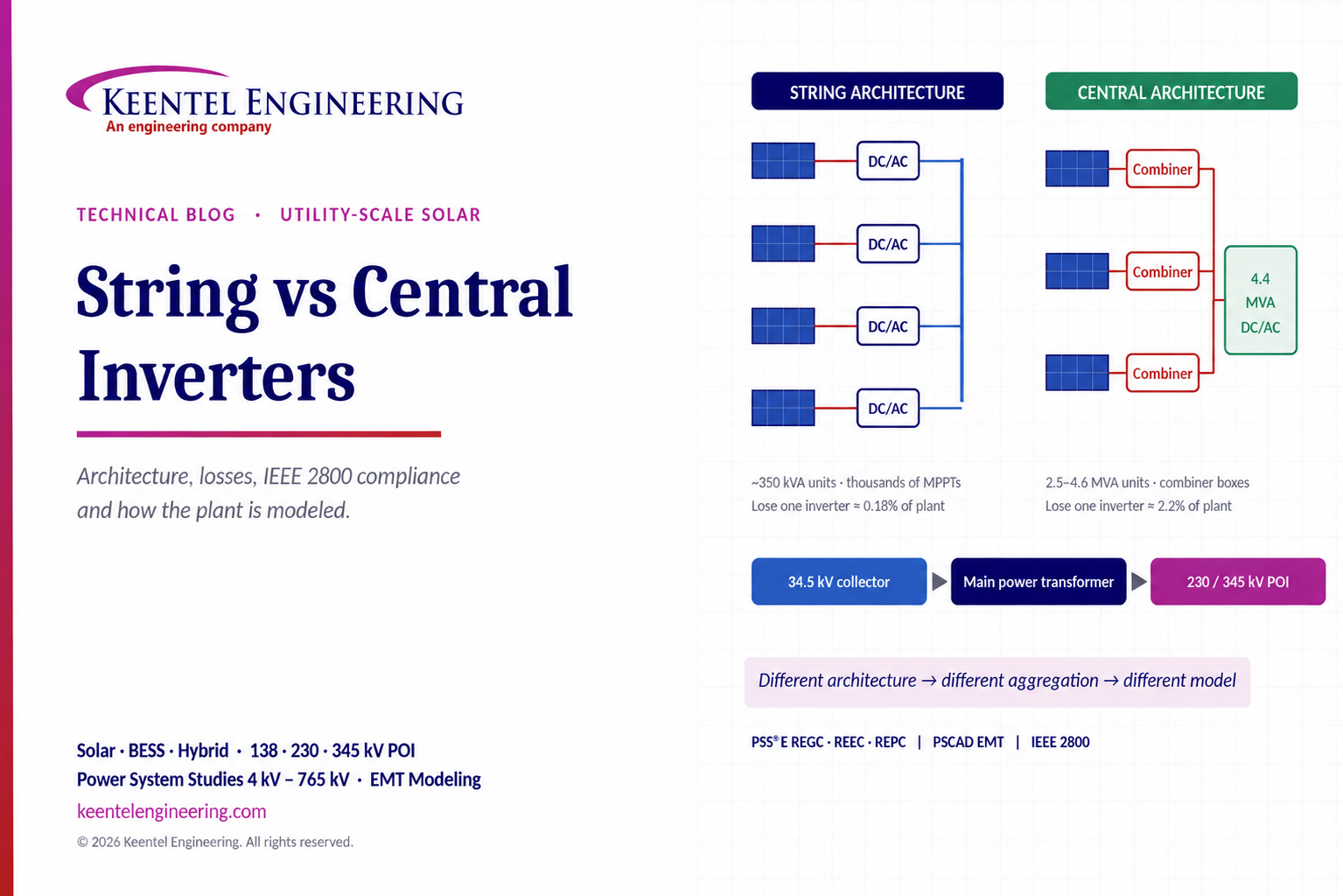
Compare string vs central inverters for utility-scale solar, including efficiency, maintenance, grid compliance, reactive power and interconnection studies.
By SANDIP R PATEL
•
October 9, 2026
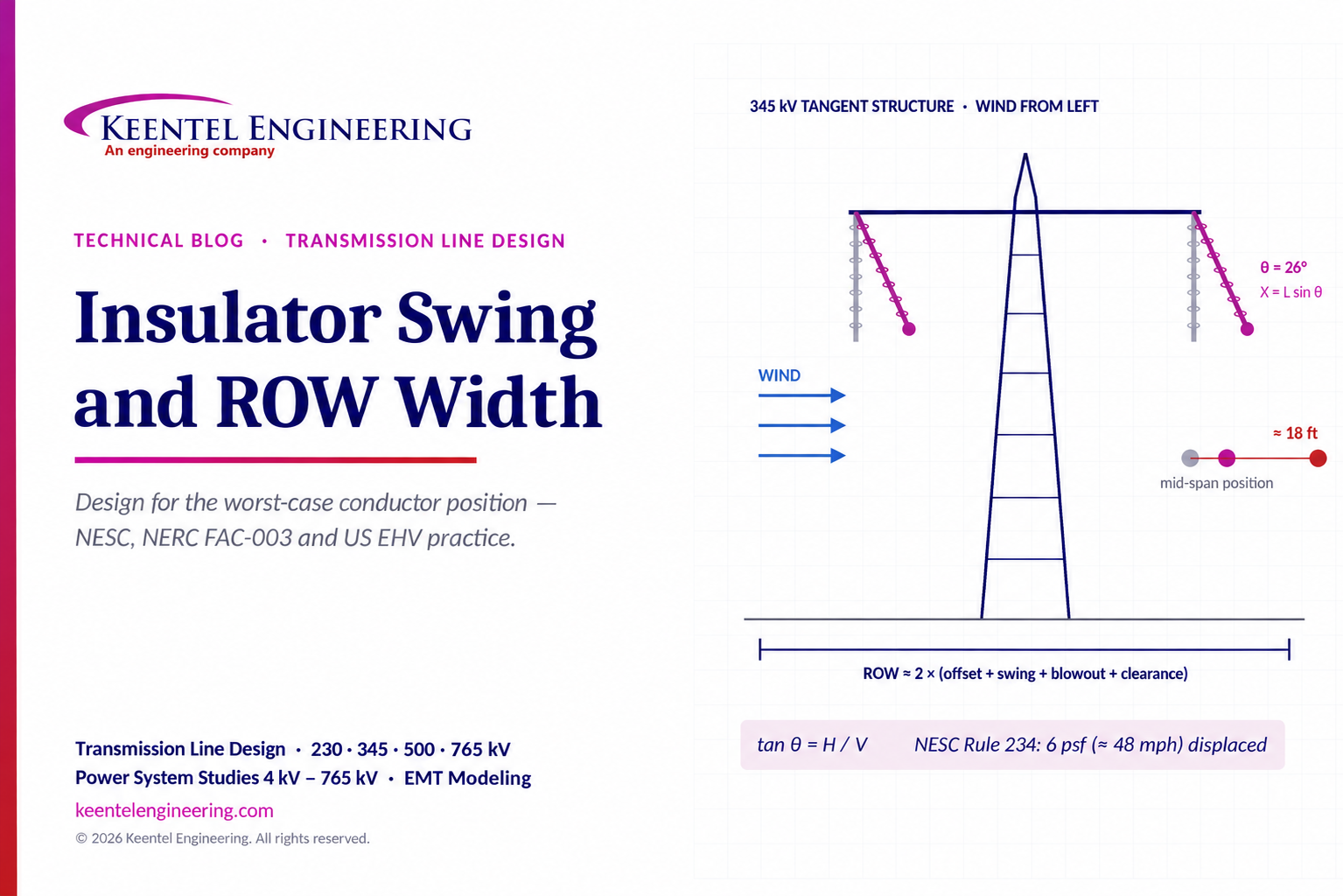
Learn how insulator swing angle and conductor blowout affect transmission line ROW width, with NESC clearances, NERC FAC-003 guidance, and a 345 kV example.
Copy
By SANDIP R PATEL
•
October 3, 2026
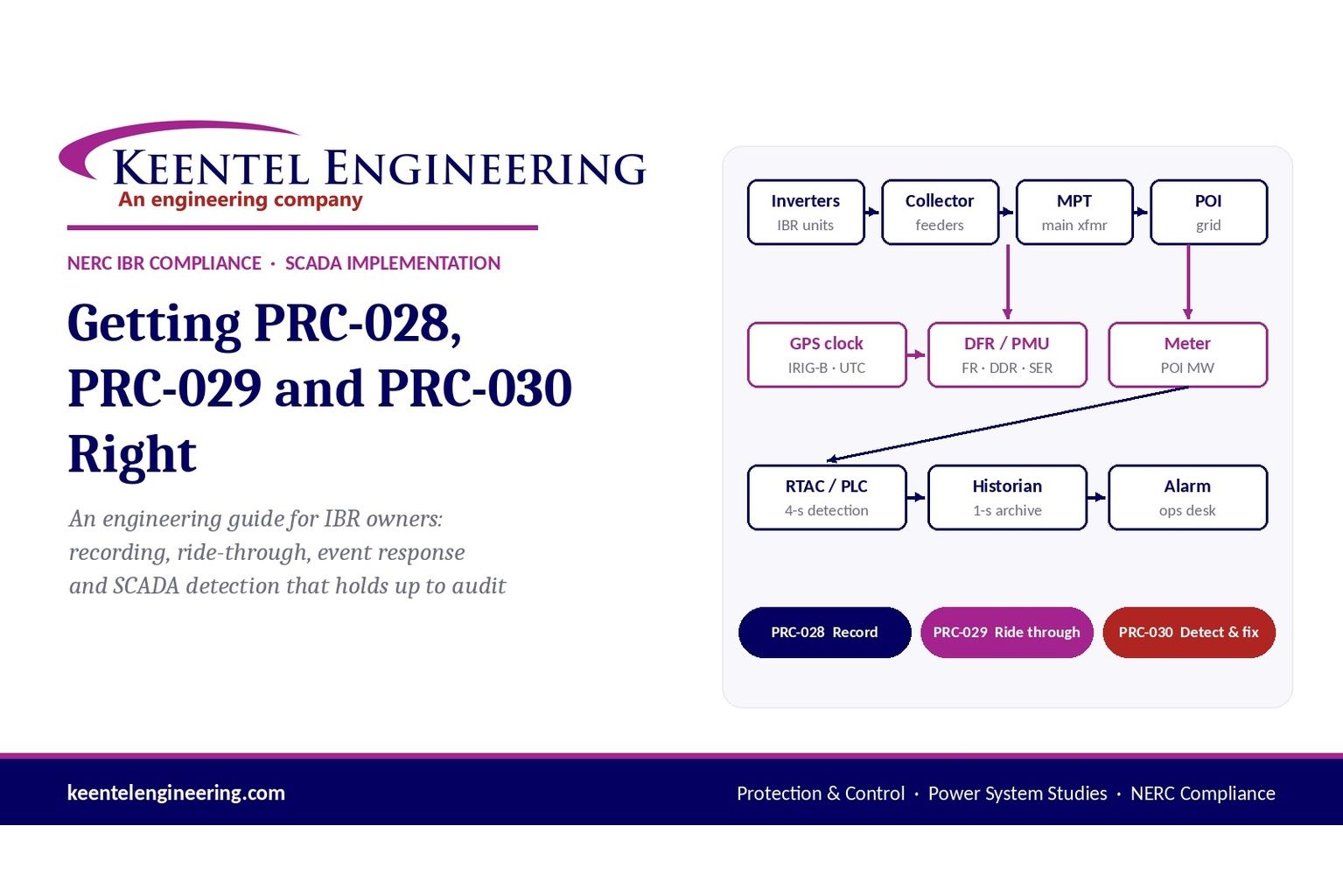
Engineering guide to PRC-028 disturbance recording, PRC-029 ride-through and PRC-030 event detection for inverter-based resources.
By SANDIP R PATEL
•
October 3, 2026
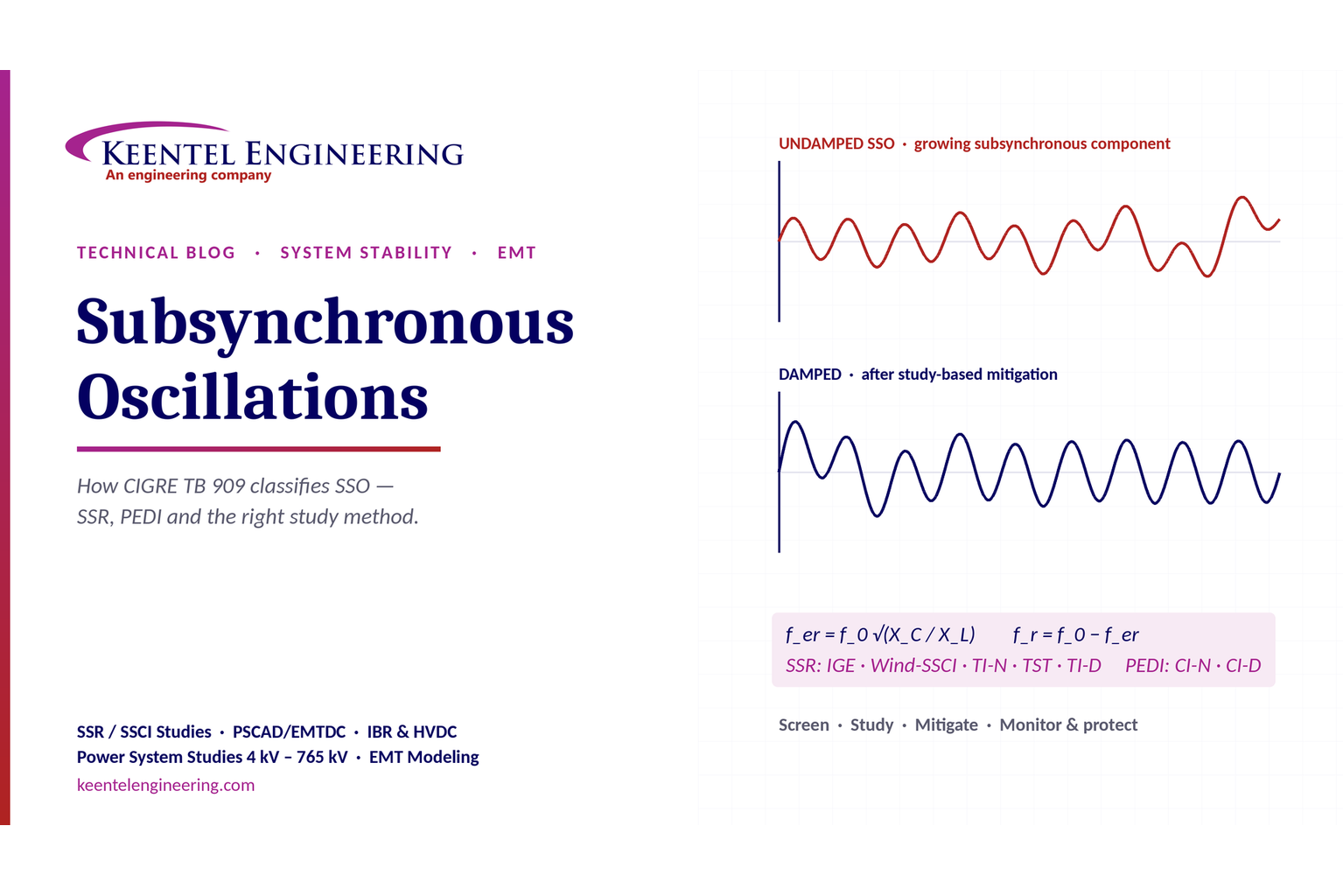
A practical guide to SSO classification, SSR, PEDI, Wind-SSCI, EMT analysis, mitigation and protection based on CIGRE TB 909.





