A Coordinated Electric System Interconnection Review—the utility’s deep-dive on technical and cost impacts of your project.
Challenge: Frequent false tripping using conventional electromechanical relays
Solution: SEL-487E integration with multi-terminal differential protection and dynamic inrush restraint
Result: 90% reduction in false trips, saving over $250,000 in downtime
ERCOT enforces all of the above through simulation, which means your model is your compliance case. The bar is now high:
- Whole-facility scope. The model must represent everything the IT load, the UPS and power conversion, the cooling plant, the protection and control systems in formats compatible with ERCOT's study platforms (PSS/E, PSCAD, TSAT).
- Real control loops, not approximations. Generic textbook representations are unacceptable. The model must capture the actual inner control behavior of your power electronics.
- Hardware-validated converter models. For electronic loads, the PSCAD model must be benchmarked against actual hardware testing including voltage ride-through and subsynchronous response. A model assembled from standard PSCAD library blocks fails by definition, because a generic block has never been tested against your vendor's hardware. The good news: validation is a hardware-type test, so results for a given converter product are reusable across every facility that uses it.
- Format migration. Facilities that previously submitted the older composite load model (CMLD) format must transition to EPRI's PERC1 format.
- Three checkpoints. Models are reviewed before the stability study begins (no model, no study), before each quarterly stability assessment, and for electronic loads one final time before energization, when you must submit as-built models with a documented comparison against the previously studied data and a sworn attestation that the model matches actual field settings. ERCOT's review takes 10 business days, extendable by 20 put it on your critical path.
- A living obligation. Change your technology, controls, or relay settings in a way that affects ride-through including converting a crypto mining site to an AI data center — and you've triggered a new interconnection study, even if your megawatts don't change.
| Parameter | Detail |
|---|---|
| System | 230 kV / 138 kV transmission corridors, wind and wet-snow icing exposure |
| Data basis | 15 years of minute-resolution forced-outage records + regional weather observations |
| Core methods | Event grouping, MVA performance curves, time-to-95%-restore, area outage rate curves, fragility modeling, rerun-history benefits, exceedance and log-domain risk metrics |
| Headline result | ≈85% of maximum resilience benefit at 60% of original capital; worst-event restoration window cut from 11 days to 5 in rerun-history terms |
| Decision supported | Capital portfolio selection; resilience plan filing; post-investment verification framework |
| System / Topic | Governing Standard(s) | What It Controls |
|---|---|---|
| Overall plant electrical distribution | IEEE 141 (Red Book); IEEE 666 | Distribution architecture, voltage selection, design of generating station auxiliary service systems |
| Power system studies | IEEE 399 (Brown Book); IEEE 551 | Load flow, symmetrical/asymmetrical short circuit, motor starting methodologies down to the lowest LV panelboard |
| Protection & coordination | IEEE 242 (Buff Book); IEEE 3004.5; IEEE C37 series | Generator relaying (21, 59N, 87G), time-current coordination, selective clearing between LV and MV tiers |
| GSU / UAT / SST transformers | IEEE C57.12.00 and C57 family | Transformer ratings, impedance, testing, loading |
| HV switchyard breakers | IEEE C37.06 | AC high-voltage circuit breaker preferred ratings |
| MV switchgear (13.8 kV) | IEEE C37.20.2; IEEE C37.20.7 | Metal-clad construction, compartmentalization, vacuum breakers; arc-resistant design with plenum venting |
| MV cable | UL 1072; ICEA S-93-639 (NEMA WC 74) | Type MV-105 shielded cable, 133% insulation level for HRG systems |
| LV switchgear (480 V) | IEEE C37.13; UL 1558 | Metal-enclosed LV power circuit breaker switchgear to 635 V, draw-out ACBs with electronic trip units |
| Motor control centers | UL 845; NEMA ICS 18 | LV-MCC construction, MCCB/MCP protection for motors under ~200 HP |
| Motors | NEMA MG-1 | Motor performance, starting characteristics, service factors |
| DC & battery systems | IEEE 485; IEEE 946 | Lead-acid battery sizing (125/250 VDC), DC auxiliary system design |
| Grounding | IEEE 80; IEEE 142 (Green Book) | Ground grid step/touch potential limits; system grounding including high-resistance grounding |
| Lightning protection | IEEE 998 | Direct-stroke shielding of switchyard and outdoor generator structures |
| Arc flash & electrical safety | IEEE 1584; NFPA 70E | Incident energy calculation; worker safety boundaries and PPE |
| Fire protection | NFPA 850 | Fire protection and risk management for combustion turbine generating plants |
| Installation code | NEC (NFPA 70); NESC | Wiring methods inside the plant fence; overhead/outdoor clearances at the switchyard |
| Interconnection & compliance | FERC LGIP; NERC MOD-025/026/027, PRC-019/024/029, FAC-008 | Interconnection process, model validation, protection/ride-through coordination, facility ratings |
| IFC / Construction Deliverable | Purpose |
|---|---|
| Stamped IFC packages | Legal basis for construction; P.E. responsible charge |
| Final relay settings & TCCs | Protection as-installed matches the coordination study |
| Calculation archive | Owner records; NERC audit evidence trail |
| Commissioning procedures | Safe, sequenced energization; MOD field testing |
| Construction support | RFIs, field changes, FAT/SAT witness |
| As-builts & model handoff | Operating baseline; future study currency |
| Metric | Outcome |
|---|---|
| Defects found pre-occupancy | Three topology defects and one settings-mismatch family corrected before load migration; the shared-switchboard defect alone would have invalidated the concurrently-maintainable claim on day one |
| IST findings | Fourteen additional discrepancies surfaced under scenario testing (control logic, alarm mapping, one generator sequencing fault) — all closed before handover instead of during operations |
| Black-building test | Passed on second execution; the first attempt exposed the generator sequencing fault under true block load, exactly the failure the compressed plan would never have found |
| Handover quality | Operations team certified on the actual failure scenarios; corrected EOPs and settings documentation delivered as controlled documents |
| Business outcome | Occupancy proceeded three weeks behind the original date — against an independent estimate that the uncorrected sequencing fault carried a high probability of a full facility outage within the first year |
Part 2 — Frequently Asked Questions: Large Load Interconnection
| Contact | Details |
|---|---|
| Headquarters | 400 N Ashley Dr STE 2600, Tampa, FL 33602 |
| Phone | (813) 389-7871 |
| contact@keentelengineering.com | |
| Florida Firm Registration | No. 36853 |
| Additional Offices | Austin, TX • Sacramento, CA • Baltimore, MD |
| Who | Acronym | Plain-English Role |
|---|---|---|
| ERCOT | — | The grid's air traffic controller. It doesn't own power lines or plants; it directs the flow of electricity across most of Texas and referees the admission process for new generators. |
| Interconnecting Entity | IE | You — the developer or owner trying to connect a new plant (or significantly modify an existing one). You file the application and drive the process. |
| Resource Entity | RE | The registered owner/operator of the generator once it becomes an official market participant. Often the same company as the IE, wearing a different hat. |
| Qualified Scheduling Entity | QSE | Your plant's voice on the grid. The QSE handles round-the-clock communications with ERCOT — telemetry, schedules, dispatch instructions. Every generator must have one. |
| Transmission Service Provider | TSP | The utility that owns the wires and substation you'll connect to. The TSP runs your detailed study, builds the connection facilities, and signs your interconnection contract. |
| RIOO-IS | — | ERCOT's online portal where the whole process lives — applications, documents, status tracking, and checklists all flow through it. |
| Who | Acronym | Plain-English Role |
|---|---|---|
| ERCOT | — | The grid's air traffic controller. It doesn't own power lines or plants; it directs the flow of electricity across most of Texas and referees the admission process for new generators. |
| Interconnecting Entity | IE | You — the developer or owner trying to connect a new plant (or significantly modify an existing one). You file the application and drive the process. |
| Resource Entity | RE | The registered owner/operator of the generator once it becomes an official market participant. Often the same company as the IE, wearing a different hat. |
| Qualified Scheduling Entity | QSE | Your plant's voice on the grid. The QSE handles round-the-clock communications with ERCOT — telemetry, schedules, dispatch instructions. Every generator must have one. |
| Transmission Service Provider | TSP | The utility that owns the wires and substation you'll connect to. The TSP runs your detailed study, builds the connection facilities, and signs your interconnection contract. |
| RIOO-IS | — | ERCOT's online portal where the whole process lives — applications, documents, status tracking, and checklists all flow through it. |
| Who | Acronym | Plain-English Role |
|---|---|---|
| ERCOT | — | The grid's air traffic controller. It doesn't own power lines or plants; it directs the flow of electricity across most of Texas and referees the admission process for new generators. |
| Interconnecting Entity | IE | You — the developer or owner trying to connect a new plant (or significantly modify an existing one). You file the application and drive the process. |
| Resource Entity | RE | The registered owner/operator of the generator once it becomes an official market participant. Often the same company as the IE, wearing a different hat. |
| Qualified Scheduling Entity | QSE | Your plant's voice on the grid. The QSE handles round-the-clock communications with ERCOT — telemetry, schedules, dispatch instructions. Every generator must have one. |
| Transmission Service Provider | TSP | The utility that owns the wires and substation you'll connect to. The TSP runs your detailed study, builds the connection facilities, and signs your interconnection contract. |
| RIOO-IS | — | ERCOT's online portal where the whole process lives — applications, documents, status tracking, and checklists all flow through it. |
| Who | Acronym | Plain-English Role |
|---|---|---|
| ERCOT | — | The grid's air traffic controller. It doesn't own power lines or plants; it directs the flow of electricity across most of Texas and referees the admission process for new generators. |
| Interconnecting Entity | IE | You — the developer or owner trying to connect a new plant (or significantly modify an existing one). You file the application and drive the process. |
| Resource Entity | RE | The registered owner/operator of the generator once it becomes an official market participant. Often the same company as the IE, wearing a different hat. |
| Qualified Scheduling Entity | QSE | Your plant's voice on the grid. The QSE handles round-the-clock communications with ERCOT — telemetry, schedules, dispatch instructions. Every generator must have one. |
| Transmission Service Provider | TSP | The utility that owns the wires and substation you'll connect to. The TSP runs your detailed study, builds the connection facilities, and signs your interconnection contract. |
| RIOO-IS | — | ERCOT's online portal where the whole process lives — applications, documents, status tracking, and checklists all flow through it. |
| Who | Acronym | Plain-English Role |
|---|---|---|
| ERCOT | — | The grid's air traffic controller. It doesn't own power lines or plants; it directs the flow of electricity across most of Texas and referees the admission process for new generators. |
| Interconnecting Entity | IE | You — the developer or owner trying to connect a new plant (or significantly modify an existing one). You file the application and drive the process. |
| Resource Entity | RE | The registered owner/operator of the generator once it becomes an official market participant. Often the same company as the IE, wearing a different hat. |
| Qualified Scheduling Entity | QSE | Your plant's voice on the grid. The QSE handles round-the-clock communications with ERCOT — telemetry, schedules, dispatch instructions. Every generator must have one. |
| Transmission Service Provider | TSP | The utility that owns the wires and substation you'll connect to. The TSP runs your detailed study, builds the connection facilities, and signs your interconnection contract. |
| RIOO-IS | — | ERCOT's online portal where the whole process lives — applications, documents, status tracking, and checklists all flow through it. |
| Who | Acronym | Plain-English Role |
|---|---|---|
| ERCOT | — | The grid's air traffic controller. It doesn't own power lines or plants; it directs the flow of electricity across most of Texas and referees the admission process for new generators. |
| Interconnecting Entity | IE | You — the developer or owner trying to connect a new plant (or significantly modify an existing one). You file the application and drive the process. |
| Resource Entity | RE | The registered owner/operator of the generator once it becomes an official market participant. Often the same company as the IE, wearing a different hat. |
| Qualified Scheduling Entity | QSE | Your plant's voice on the grid. The QSE handles round-the-clock communications with ERCOT — telemetry, schedules, dispatch instructions. Every generator must have one. |
| Transmission Service Provider | TSP | The utility that owns the wires and substation you'll connect to. The TSP runs your detailed study, builds the connection facilities, and signs your interconnection contract. |
| RIOO-IS | — | ERCOT's online portal where the whole process lives — applications, documents, status tracking, and checklists all flow through it. |
| Who | Acronym | Plain-English Role |
|---|---|---|
| ERCOT | — | The grid's air traffic controller. It doesn't own power lines or plants; it directs the flow of electricity across most of Texas and referees the admission process for new generators. |
| Interconnecting Entity | IE | You — the developer or owner trying to connect a new plant (or significantly modify an existing one). You file the application and drive the process. |
| Resource Entity | RE | The registered owner/operator of the generator once it becomes an official market participant. Often the same company as the IE, wearing a different hat. |
| Qualified Scheduling Entity | QSE | Your plant's voice on the grid. The QSE handles round-the-clock communications with ERCOT — telemetry, schedules, dispatch instructions. Every generator must have one. |
| Transmission Service Provider | TSP | The utility that owns the wires and substation you'll connect to. The TSP runs your detailed study, builds the connection facilities, and signs your interconnection contract. |
| RIOO-IS | — | ERCOT's online portal where the whole process lives — applications, documents, status tracking, and checklists all flow through it. |
Protection Design
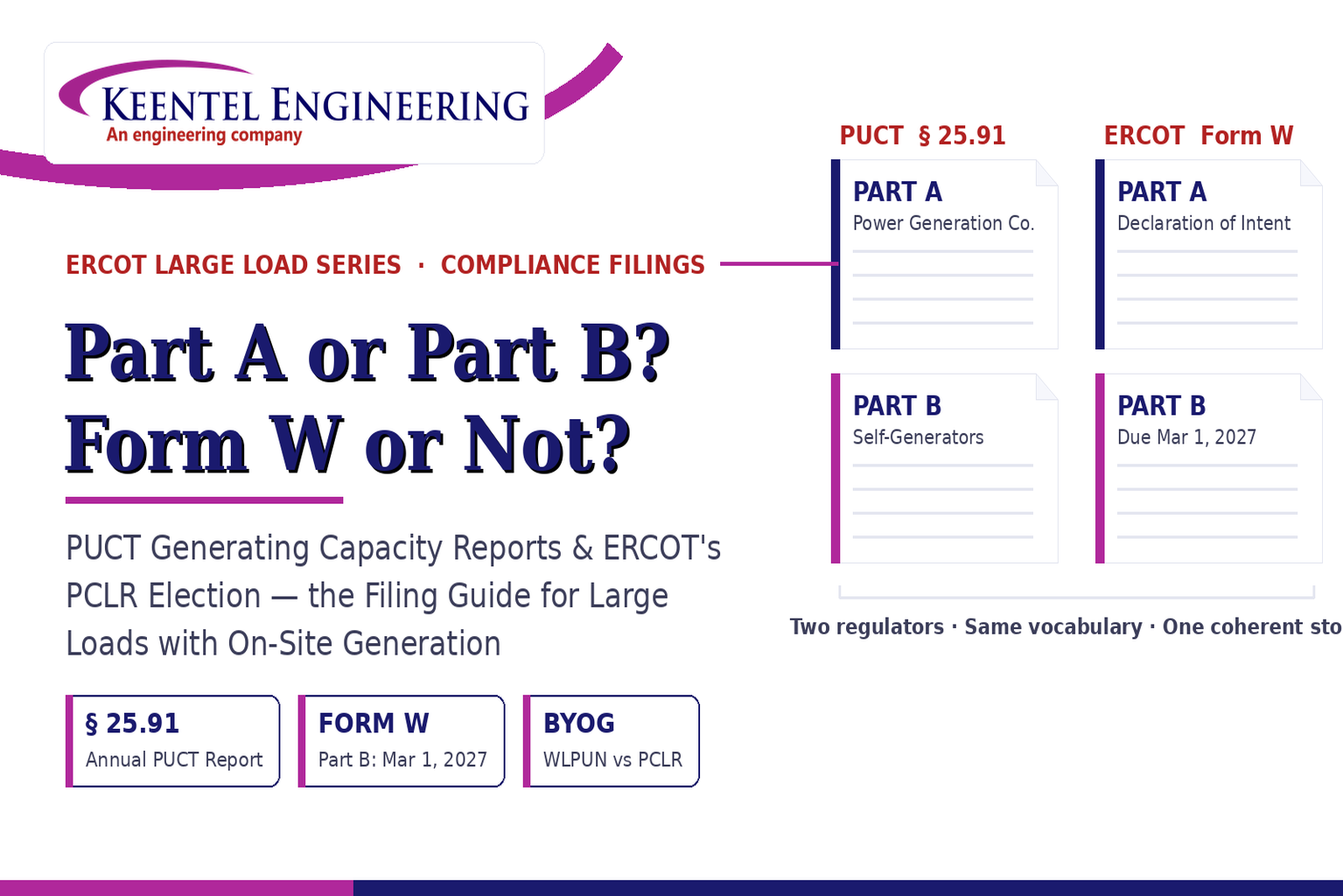
Part A or Part B? Form W or Not? The Keentel Guide to PUCT Generating Capacity Reporting and ERCOT's PCLR Election for Large Loads
Jul 28, 2026 | Blog
If you're developing a large load in Texas with on-site generation — a BYOG data center, a campus with gas turbines and batteries, a mining operation with solar behind the fence — you will eventually meet two documents with confusingly similar names:
The PUCT Generating Capacity Report, whose Part A and Part B decide how the state tracks your generation — as a commercial power producer or a self-generator.
ERCOT's Form W, whose Part A and Part B are the two acts of electing the Provisional Controllable Load Resource (PCLR) pathway in the batch interconnection process.
They come from different regulators, serve different purposes, and follow different calendars — and both carry consequences for getting them wrong. This guide explains each one, how they interact for combined generation-and-load projects, and answers the questions we hear most, in depth.
Part One: The PUCT Generating Capacity Report — Part A and Part B
What it is and where it comes from
The Generating Capacity Report (GCR) lives in PUC Substantive Rule § 25.91, adopted alongside the market-power rules (§ 25.90 and § 25.401) to implement PURA §§ 39.154–39.157 from Texas's electric restructuring era. Its original purpose is market surveillance: the Commission uses GCR data to calculate each owner's share of installed generation capacity in a power region, which feeds the statutory limits on generation market concentration. That heritage explains the form's structure — it is fundamentally asking who owns how much capacity, and how much of it reaches the market.
Part A versus Part B — the classification that frames your filing
Part A — Power Generation Companies (PGCs).
This is the lane for commercial entities whose business is generating and selling electricity: registered PGCs whose capacity participates in the wholesale market. The associated data tracks generation capacity connected to transmission or distribution systems and available for sale into ERCOT or other reliability regions. Part A filers sit inside the broader PGC regulatory framework — registration under § 25.109, which itself incorporates the § 25.91 reporting obligation.
Part B — Self-Generators.
This lane covers industrial, commercial, or private entities that own generating facilities primarily for their own consumption. The data focus flips: how much capacity serves on-site load, and how much excess might be available to the grid.
The data fields both lanes feed.
Regardless of part, the form's tables collect the metrics the Commission's market calculations need: connected capacity (total MW connected to transmission or distribution), self-consumption capacity (MW dedicated to the owner's internal use), future capacity (expansions or new facilities entering service within 12 months), and available-for-sale capacity (what's left for the market). The reports are filed annually, on the Commission's prescribed form with an affidavit.
The capacity rating rules (§ 25.91(f)).
The rule standardizes how hardware is valued so market-share math is consistent: conventional generators at summer net dependable capability; non-dispatchable renewables (wind, solar) at their actual peak-season contribution or nameplate treatment as the rule prescribes; and facilities entering service within 12 months at nameplate. For a BYOG campus, this matters practically — your two combined-cycle blocks, your BESS, and any on-site solar can each carry a different rating basis in the same filing.
The nuance most summaries miss: the "offer for sale" hinge
Here is where careful reading pays
When § 25.91 was adopted, the Commission fought through exactly the question BYOG developers ask today: must a pure self-generator file at all? Utilities argued the rule should reach all connected generation including self-generation and cogeneration; industrial consumers argued generation not offered for sale can't affect market power and shouldn't be reported. The Commission anchored the obligation to the statute: PURA § 39.155(a) requires entities that own generation facilities and offer electricity for sale in the state to file generating capacity reports. Historically, that made "do we offer power for sale?" the pivotal question — and made truly consumption-only generation arguably reportable differently than merchant capacity.
Why you cannot rely on the historical answer alone: the 2025 legislative session (SB6 and related PURA amendments on large loads and behind-the-meter generation) redrew parts of this boundary, and ERCOT's own June 2026 public statements note that even fully islanded facilities "may still be subject to registration requirements with the PUCT." The direction of travel is unmistakable — more visibility into self-supplied large loads, not less. Before classifying your project, pull the current § 25.91 text, the current GCR instructions, and any post-SB6 registration rules. This is precisely the kind of filing where a one-year-old memo is a liability.
Where a WLPUN/BYOG project usually lands
The classification question for a project like a 1,000 MW campus with 1,150 MW of on-site combined-cycle generation is rarely a clean "Part B self-generator." If the generation registers as an ERCOT resource, can export, and sells energy or ancillary services in any hour, it walks and talks like PGC territory — typically meaning PGC registration (§ 25.109) and Part A treatment, with large self-consumption reported in the fields built for exactly that hybrid.
A genuinely islanded or never-exporting configuration presents differently. The honest answer is that classification is a project-specific legal-and-engineering determination — generation registration status, export capability, market participation, and PUN structure all feed it — and it should be made deliberately, on the current rules, before the first filing is due, not after.
Part Two: ERCOT's Form W — the PCLR Election in Two Acts
Different regulator, different purpose, same "Part A / Part B" vocabulary — which is why we untangle it here.
Form W is how a Studied Load in ERCOT's batch interconnection process elects the PCLR pathway: permission to consume above its firm allocation (LPC) up to its full request (MPC), in exchange for placing that above-firm consumption under ERCOT's real-time dispatch — including the five-minute bid caps ERCOT uses to manage local transmission constraints — until a study-established Exit Date.
Form W Part A — the Declaration of Intent
Completed, signed, and notarized by the developer and submitted to the interconnecting utility with the batch eligibility package (July 10, 2026 for Batch Zero; the utility forwarded it to ERCOT by July 24). Part A is a binding commitment to the pathway and must specify the project's minimum LPC limits for each study year. One flexibility ERCOT confirmed: a project applying for base load classification could file Part A conditionally, as a fallback in case it was classified as studied load — if the project qualified as base load, ERCOT simply disregards the form.
Form W Part B — acceptance
Due by March 1, 2027: the developer accepts the study's actual LPC amounts and Exit Date and executes the interconnection agreement. The consequence of missing Part B is written without mercy — the project is deemed to have withdrawn, is dropped from the refinement study, and waits for a future batch.
The obligations the election buys
Registration as a Controllable Load Resource (telemetry, dispatch systems, a qualified scheduling entity), SCED dispatch compliance at all times, no ancillary services during the provisional period, and curtailment exposure on the above-LPC layer that is entirely locational — which is why a curtailment-risk study against your specific
point of interconnection belongs
before the notarized signature, not after.
Part Three: How the Two Regimes Interact for a BYOG Project
A combined generation-and-load campus can touch both regimes at once, and the interactions are worth mapping:
Different clocks
The GCR runs on an annual PUCT filing calendar; Form W ran on the batch process's one-time gates (with Batch 1's window expected to open Summer 2027 under the ongoing batch rule). Missing the annual report is a compliance problem; missing Form W Part B is a project-existence problem.
Different questions, shared facts
The GCR asks what generation do you own and who gets its output; Form W asks how flexible is your load. But both draw on the same project facts — generation registration, export capability, self-consumption levels, PUN structure — so inconsistency between filings is both easy to create and easy for regulators to spot. Your GCR's self-consumption figures, your ERCOT resource registration (RARF), your WLPUN or PCLR election, and your Load Commissioning Plan should tell one coherent story.
Pathway logic differs by project type
A BYOG project's natural batch election is usually WLPUN (Form X) — the generation offsets the transmission capacity the load needs — while PCLR (Form W) is the natural election for generation-light, flexibility-rich loads. Projects with both attributes should model both before signing either; both forms bind. And whichever ERCOT pathway you elect, the PUCT-side classification of your generation proceeds on its own logic — electing WLPUN does not answer the Part A/Part B question, and vice versa.
One team should own the whole map
The recurring failure mode we see is fragmentation: the market/regulatory group files the GCR, the development team handles ERCOT forms, and nobody reconciles them until a discrepancy surfaces in a review. A single compliance register — every filing, every classification position, every date — is cheap insurance.
Frequently Asked Questions
1. What is the PUCT Generating Capacity Report, in one paragraph?
It's the annual report generation owners file with the Public Utility Commission of Texas under Substantive Rule § 25.91, created during electric restructuring to let the Commission measure who owns how much generating capacity in each power region — the raw data behind Texas's market-power limits. The form collects connected capacity, self-consumption capacity, capacity entering service within 12 months, and capacity available for sale, valued under standardized rating rules, and is filed with an affidavit on the Commission's prescribed form.
2. What's the real difference between Part A and Part B?
Part A is the lane for Power Generation Companies — commercial entities in the business of generating and selling electricity, whose capacity participates in wholesale markets and who sit inside the PGC registration framework (§ 25.109). Part B is the lane for self-generators — entities whose facilities exist primarily to serve their own consumption, where the reporting focus is how much stays behind the fence versus what could reach the grid. The distinction isn't cosmetic: it reflects which statutory hook applies to you and shapes how your capacity counts (or doesn't) in market-concentration math.
3. Our generation only serves our own facility. Do we have to file at all?
Historically, this was the fought-over question, and the Commission's adopted answer anchored the filing duty to PURA § 39.155(a) — entities that own generation and offer electricity for sale file the report. A pure self-generator selling nothing had a genuine argument that it sat outside the mandate, and large industrial consumers made exactly that argument when the rule was adopted. But treat that history as background, not advice: the 2025 legislation on large loads and behind-the-meter generation, and the registration expectations regulators have signaled since (extending even to islanded facilities), mean the current rule text and forms — not the 2000-era boundary — must drive your answer. If your generation ever exports, sells ancillary services, or participates in any market construct, assume you're in; if it truly never does, get a current-rules determination before assuming you're out.
4. How is our capacity actually valued on the form?
Under § 25.91(f)'s rating rules: conventional dispatchable units at summer net dependable capability — the realistic summer output, not the nameplate sticker; non-dispatchable renewables at the peak-season value or nameplate treatment the rule prescribes; and new facilities entering service within 12 months at nameplate. A mixed BYOG fleet applies different bases to different assets in the same filing — two combined-cycle blocks at summer net dependable, a BESS and any solar per their applicable treatment, and next year's expansion phase at nameplate in the future-capacity table.
5. Our campus is a WLPUN with 1,150 MW of generation serving 1,000 MW of load. Part A or Part B?
Probably not the answer you'd guess from the labels. If your generation registers as an ERCOT resource, can export, and transacts in any market hour — which describes most WLPUN configurations, since the withdrawal-limited structure contemplates a grid relationship — it presents as PGC territory: § 25.109 registration and Part A treatment, with your substantial self-consumption reported in the fields designed for that hybrid. "We're mostly serving ourselves" describes your energy balance, not necessarily your regulatory classification. A never-exporting, truly islanded configuration is the cleaner Part B case — and even it faces the newer registration expectations. Make the determination deliberately, on current rules, with the generation registration and PUN structure documents in hand.
6. What is Form W, and why does it also have a Part A and Part B?
Form W is ERCOT's instrument for electing the PCLR pathway in the batch interconnection process — entirely unrelated to the PUCT report despite the matching vocabulary. Its Part A is the notarized Declaration of Intent filed with the batch eligibility package (July 10, 2026 for Batch Zero), binding the project to the pathway and stating minimum firm-consumption levels per study year. Its Part B, due March 1, 2027, accepts the study's actual allocations and Exit Date alongside the executed interconnection agreement. The two-part design mirrors the process's information flow: you commit to the pathway before the study, and to the numbers after the study reveals them.
7. What happens if we miss Form W Part B?
The rule's consequence is categorical: the project is considered to have withdrawn from the batch — removed from the refinement study, ineligible for energization until a future batch process. Not a late fee, not a cure window; withdrawal. The March 1, 2027 date belongs on the project's master calendar with board-level visibility, alongside the interconnection agreement execution it travels with.
8. Could we have filed Form W "just in case"?
Yes — ERCOT confirmed that a project seeking base load classification could conditionally submit Form W (or Form X) with its eligibility package as a fallback. If the project qualified as base load, ERCOT disregards the form; if it landed in studied load, the pathway election was preserved. Projects that used this insurance should verify their conditional election was captured in the utility's package to ERCOT — and Batch 1 candidates should watch whether the ongoing batch rule carries the same flexibility forward.
9. We're a BYOG project. Why would we choose Form X (WLPUN) over Form W (PCLR)?
Because the two pathways spend different currencies to close the same gap between firm allocation and full request. WLPUN spends capital you're deploying anyway: your on-site generation offsets the transmission capacity your load requires, and ERCOT allocates the incremental grid-served amount annually. PCLR spends operational flexibility: your above-firm consumption becomes dispatchable, curtailable whenever local constraints bind, with no ancillary-services revenue during the provisional years. A generation-rich campus usually finds WLPUN the natural fit; a generation-light, interruption-tolerant load finds PCLR natural. Projects with both attributes should run the side-by-side study — curtailment-risk-adjusted economics against generation capital and operating cost, at your specific POI — before executing either notarized form.
10. Do the ERCOT election and the PUCT classification affect each other?
Not formally — electing WLPUN doesn't make you a Part B self-generator, and PCLR status says nothing about PGC registration. But they share underlying facts, and consistency across filings is where projects get tripped. Your GCR self-consumption figures, your ERCOT resource registration data, your Load Commissioning Plan, and your pathway election all describe the same physical campus; a discrepancy between them (generation capacity that differs between filings, export capability asserted in one place and denied in another) invites questions from both regulators. Maintain one source of truth for project facts and derive every filing from it.
11. When are these filings actually due?
Two different calendars. The GCR is an annual PUCT filing on the Commission's schedule (filings in the record cluster in early spring) — a recurring compliance-calendar item for the life of the generation. Form W ran on the batch process's gates: Part A on July 10, 2026, and Part B on March 1, 2027 for Batch Zero, with Batch 1's window expected to open Summer 2027 under a rule ERCOT will establish. Add both to a single regulatory calendar with named owners; the failure mode is never the deadline nobody knew about — it's the deadline everyone assumed someone else owned.
12. What changed recently that we might be missing?
Three things, all pointing the same direction. The 2025 legislative session (SB6 and related PURA amendments) expanded the state's visibility into large loads and behind-the-meter generation, including new interconnection standards and registration expectations. The Batch Zero framework (approved June 18, 2026) created the pathway elections and their binding forms. And regulators have signaled that even islanded, never-connected facilities may face PUCT registration requirements. The historical intuitions — "self-generators don't file," "behind-the-meter is invisible," "queue positions are free" — are all obsolete. If your compliance positions predate 2025, they're due for re-derivation on current rules.
How Keentel Engineering Can Help
Keentel Engineering works both sides of this map for large load and BYOG projects: PGC-versus-self-generator classification support and GCR filing preparation with defensible capacity ratings; ERCOT resource registration (RARF) built consistent with your PUCT filings; WLPUN and PCLR election analysis including locational curtailment-risk studies; Form W/Form X preparation support; and the single compliance register that keeps every filing telling the same story. One engineering team, one set of project facts, every regulator satisfied.

About the Author:
Sandip "Sonny" R. Patel, P.E.
IEEE Senior Member · Founder & CEO, Keentel Engineering
In 1995, Sonny Patel earned his Electrical Engineering degree from the University of Illinois. But degrees don't build legacies — action does.
For three decades, he has worked the power industry from every side of the table: 16 years as a utility engineer at Exelon/Commonwealth Edison; generation leadership across hydroelectric, industrial steam turbine, and a 9 GW renewable fleet; NERC Regional Entity Senior Compliance Engineer and Audit Team Lead, auditing some of the nation's largest utilities; and testing and commissioning lead on equipment up to 765 kV — the very top of the North American grid.Utility. Generator. Regulator. Consultant. Few engineers have seen all four seats. Fewer still have sat in them.
His experience spans nuclear, hydro, conventional generation, renewables, oil and gas, mining — and today's data centers, where he is authoring a three-book series on data center design. He is a Licensed Professional Engineer in six states and a Licensed Electrical Contractor in Florida (Unlimited EC) — he doesn't just design the work; he's qualified to stand behind its execution.Today, as Founder and CEO of Keentel Engineering, Sonny leads a nationwide team of engineers delivering substation design, power system studies, NERC compliance, and commissioning — done right, coast to coast.Three decades. Every side of the table. One standard: accountable engineering.
Services

Let's Discuss Your Project
Let's book a call to discuss your electrical engineering project that we can help you with.
About the Author:
Sandip "Sonny" R. Patel, P.E.
IEEE Senior Member · Founder & CEO, Keentel Engineering
In 1995, Sonny Patel earned his Electrical Engineering degree from the University of Illinois. But degrees don't build legacies — action does.
For three decades, he has worked the power industry from every side of the table: 16 years as a utility engineer at Exelon/Commonwealth Edison; generation leadership across hydroelectric, industrial steam turbine, and a 9 GW renewable fleet; NERC Regional Entity Senior Compliance Engineer and Audit Team Lead, auditing some of the nation's largest utilities; and testing and commissioning lead on equipment up to 765 kV — the very top of the North American grid.
Utility. Generator. Regulator. Consultant. Few engineers have seen all four seats. Fewer still have sat in them.
His experience spans nuclear, hydro, conventional generation, renewables, oil and gas, mining — and today's data centers, where he is authoring a three-book series on data center design. He is a Licensed Professional Engineer in six states and a Licensed Electrical Contractor in Florida (Unlimited EC) — he doesn't just design the work; he's qualified to stand behind its execution.
Today, as Founder and CEO of Keentel Engineering, Sonny leads a nationwide team of engineers delivering substation design, power system studies, NERC compliance, and commissioning — done right, coast to coast.Three decades. Every side of the table. One standard: accountable engineering.
Leave a Comment
Thank you for contacting us.
We will get back to you as soon as possible.
We will get back to you as soon as possible.
Oops, there was an error sending your message.
Please try again later.
Please try again later.
Related Posts
By SANDIP R PATEL
•
October 24, 2026
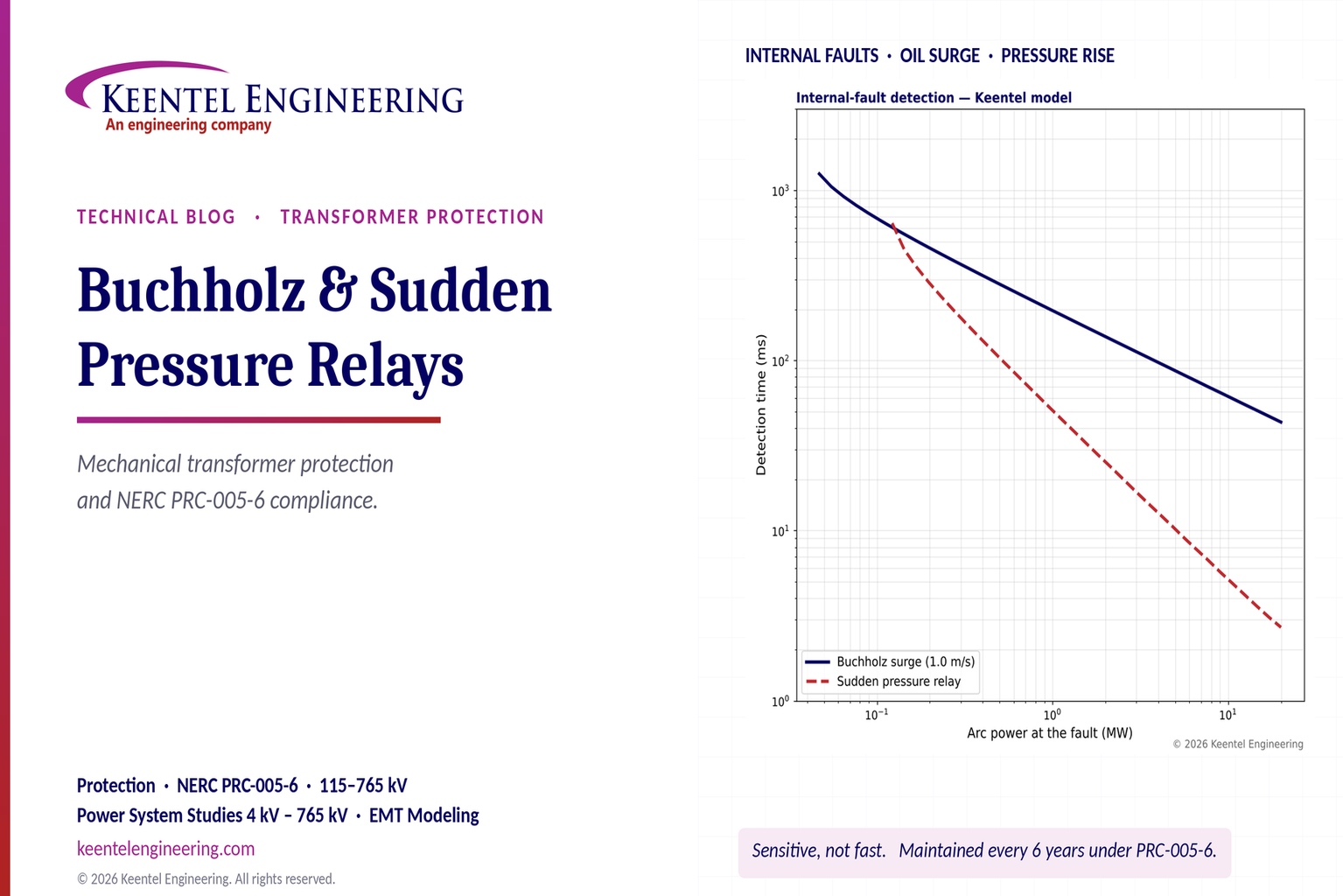
Learn how Buchholz and sudden pressure relays protect transformers, detect internal faults, and meet NERC PRC-005-6 maintenance requirements.
October 24, 2026
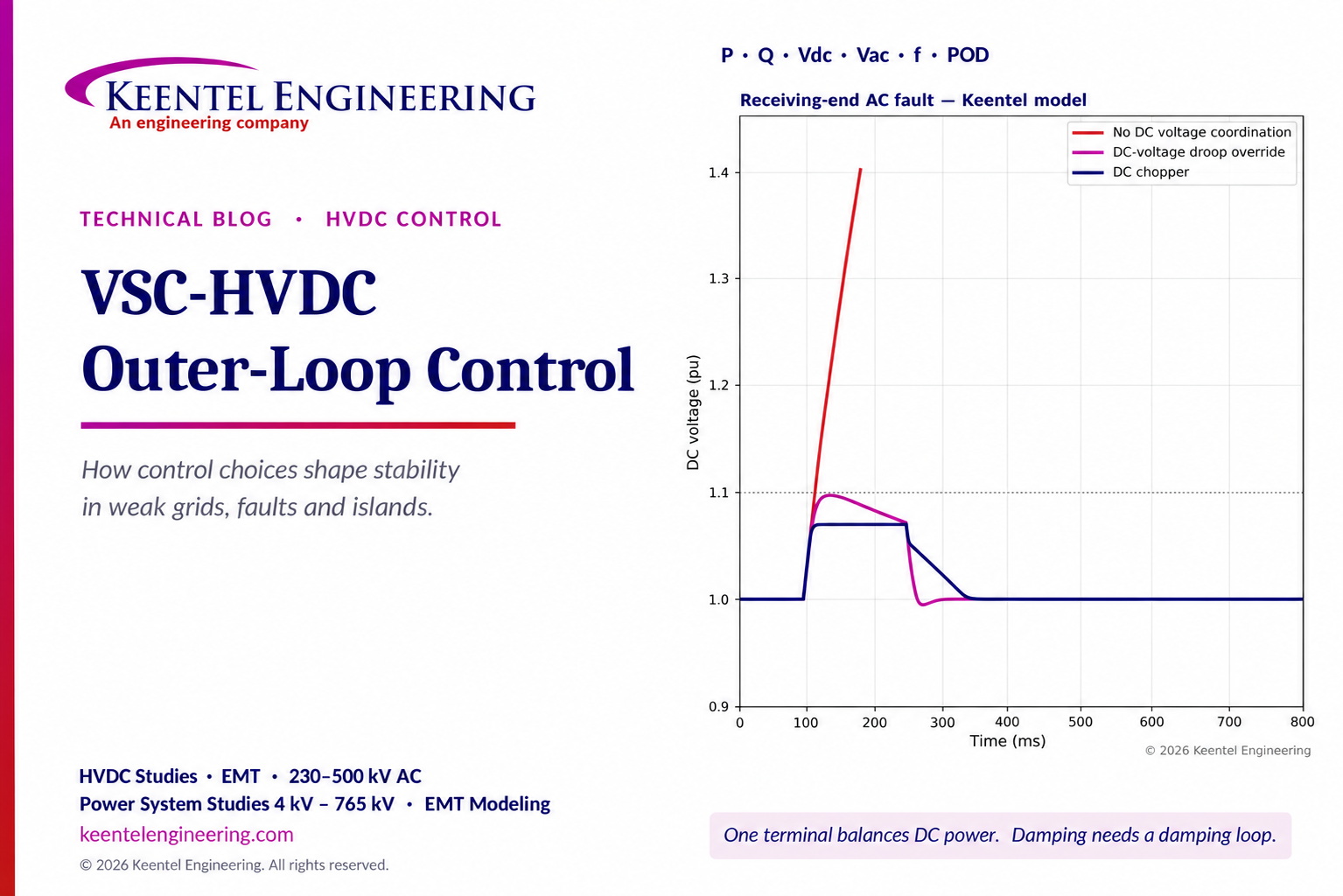
Explore VSC-HVDC outer-loop control for P, Q, DC voltage, weak-grid stability, fault ride-through and power oscillation damping with engineering models.
By SANDIP R PATEL
•
October 23, 2026
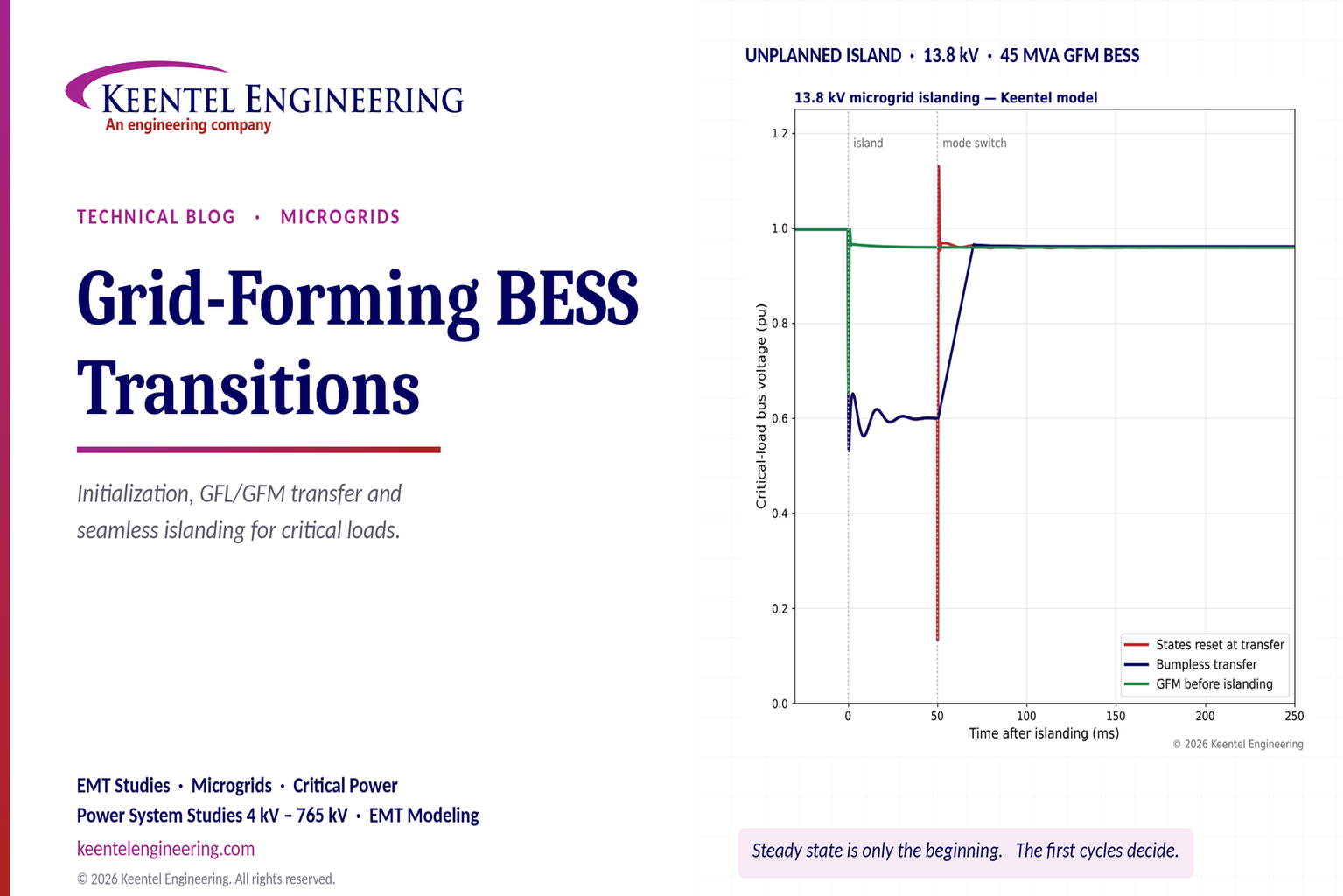
Explore grid-forming BESS initialization, GFL-to-GFM transitions, seamless islanding, EMT simulations, current limiting and microgrid protection.
By SANDIP R PATEL
•
October 23, 2026
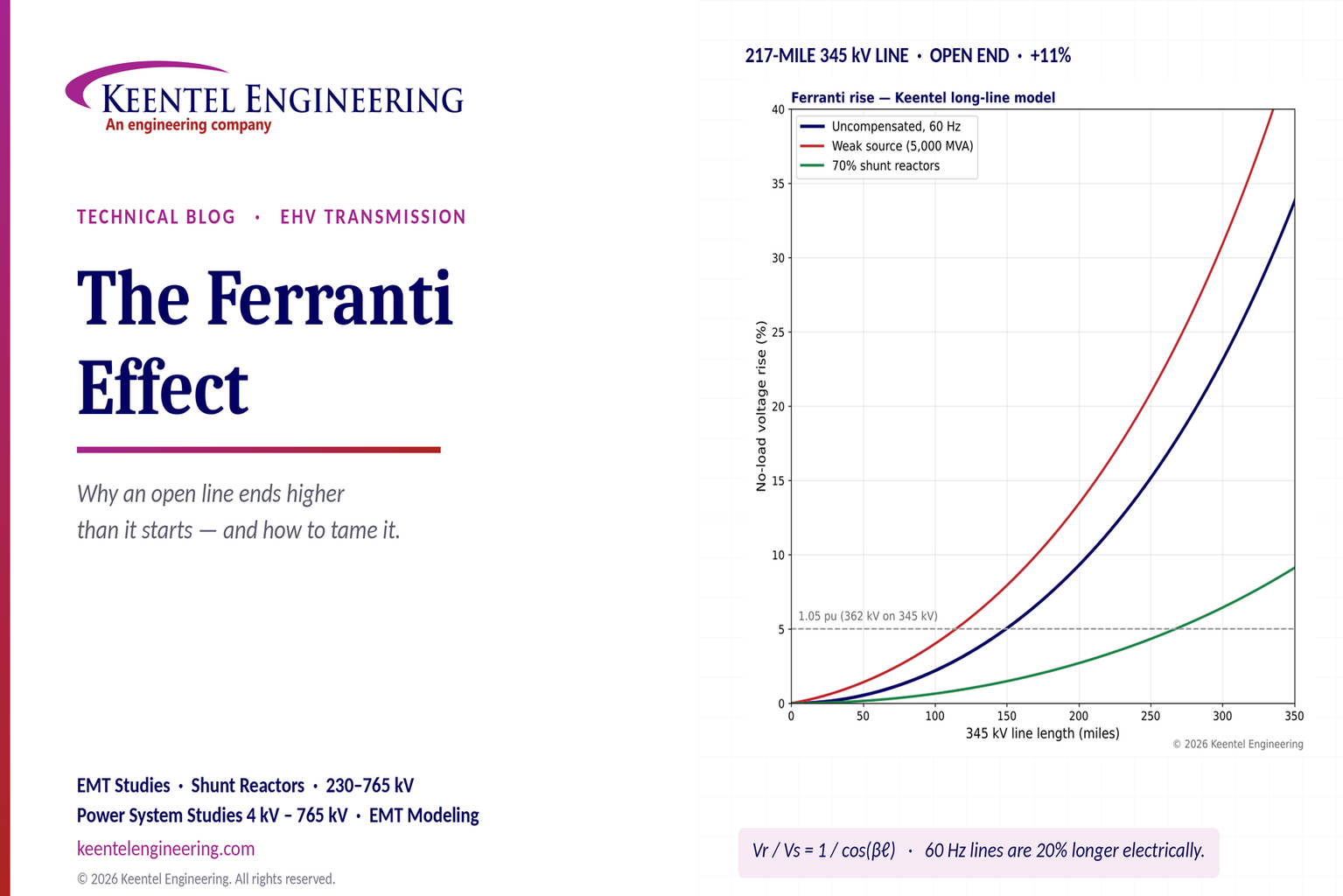
Explore the Ferranti effect in EHV transmission lines: voltage rise, 345 kV examples, switching overvoltages, shunt reactor sizing and mitigation.
By SANDIP R PATEL
•
October 23, 2026
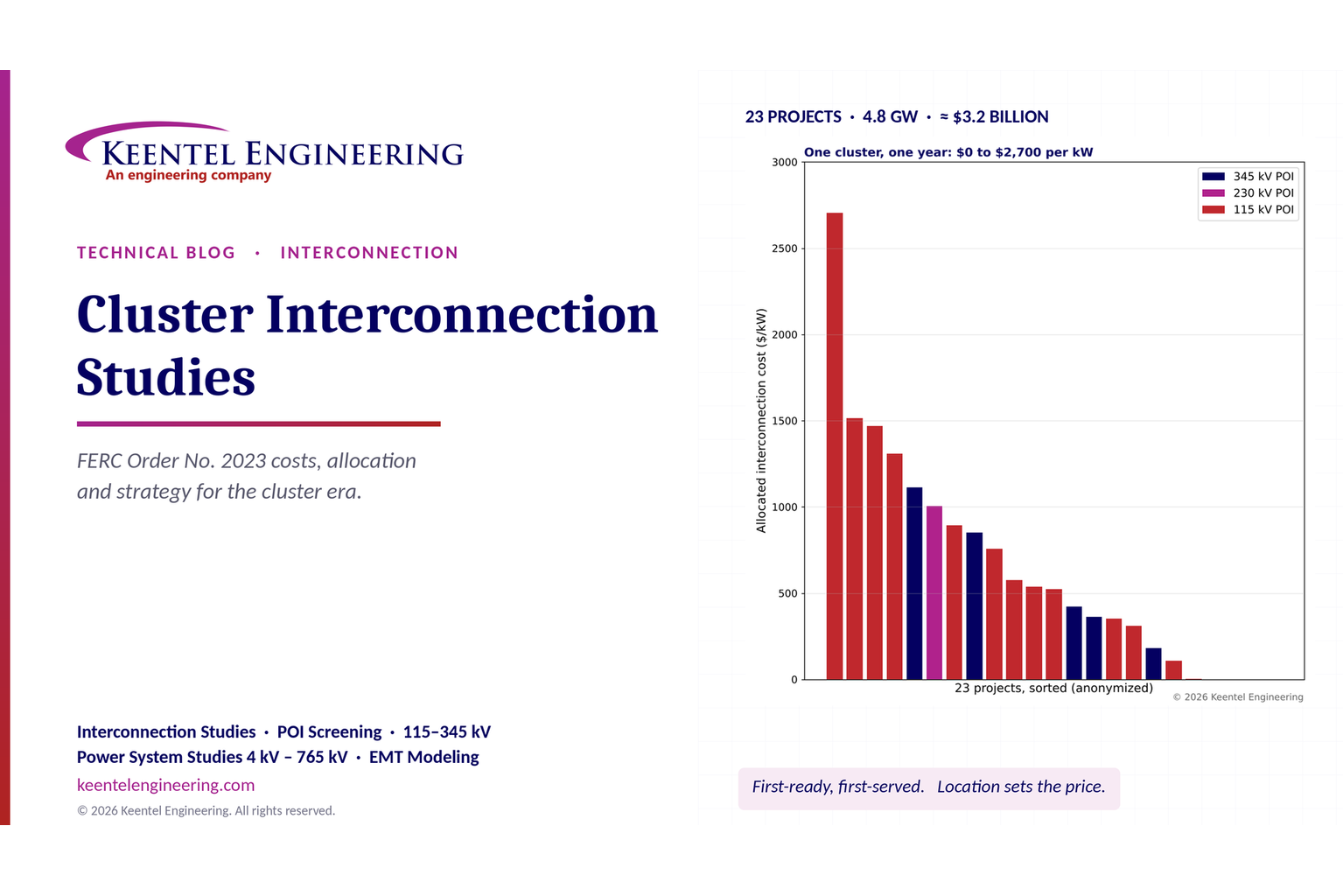
Explore cluster interconnection studies under FERC Order 2023, including network upgrades, cost allocation, withdrawal penalties and developer strategy.
By SANDIP R PATEL
•
October 21, 2026
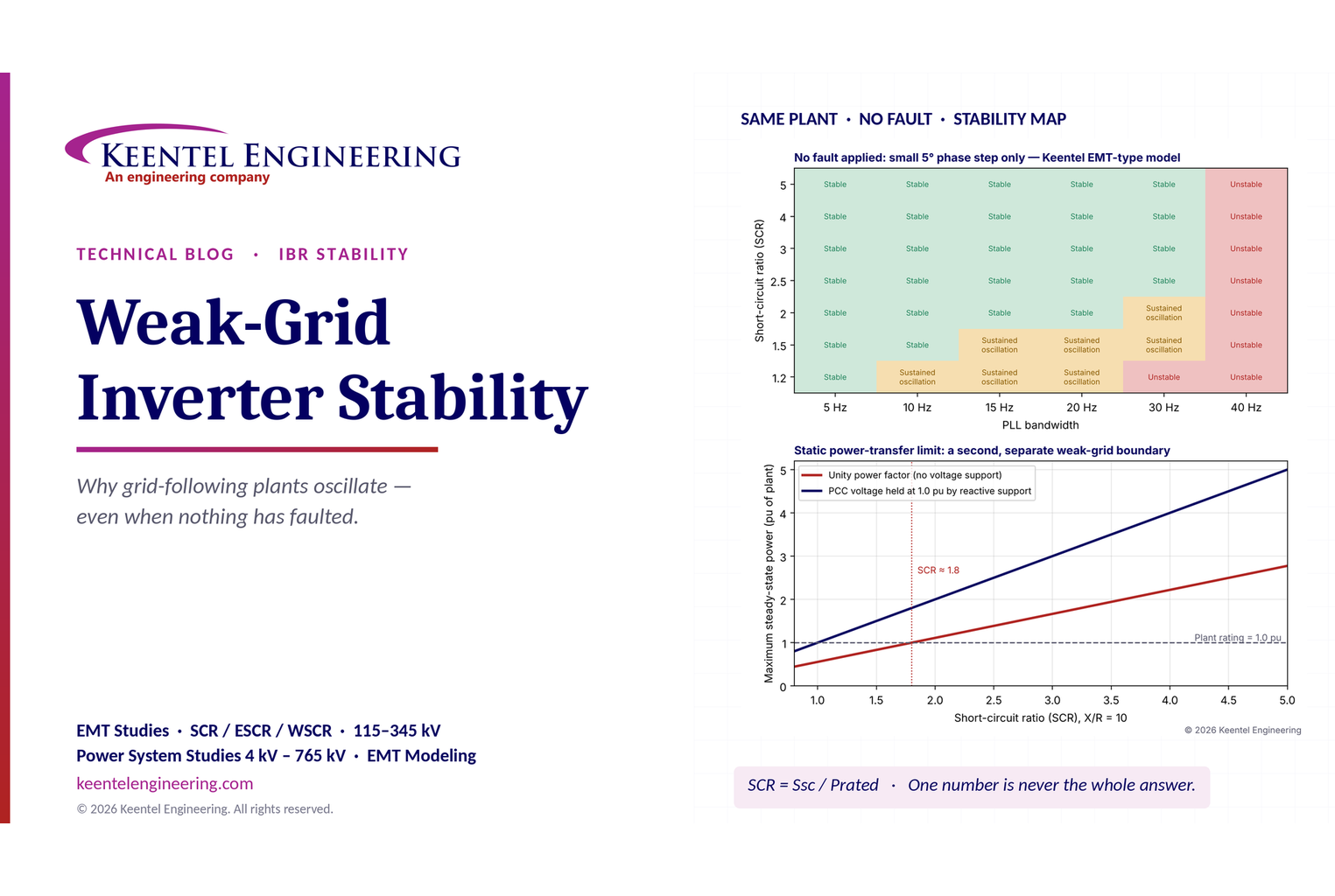
Learn why grid-following inverters become unstable without grid faults. Explore SCR, PLL interactions, EMT studies, grid strength, and mitigation.
By SANDIP R PATEL
•
October 21, 2026
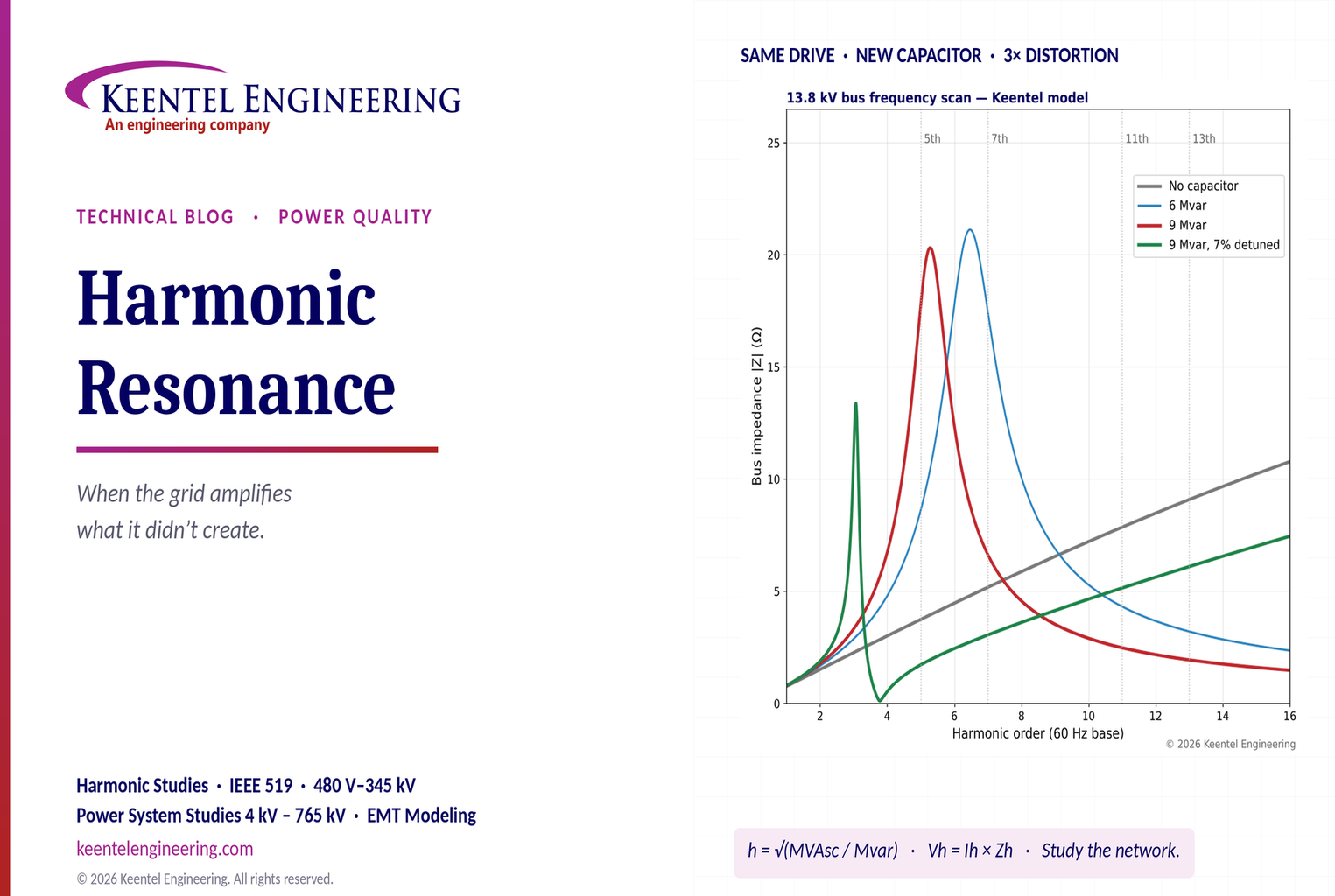
Learn how harmonic resonance amplifies distortion in power systems. Explore capacitor banks, detuned reactors, frequency scans, and IEEE 519 solutions.
By SANDIP R PATEL
•
October 20, 2026
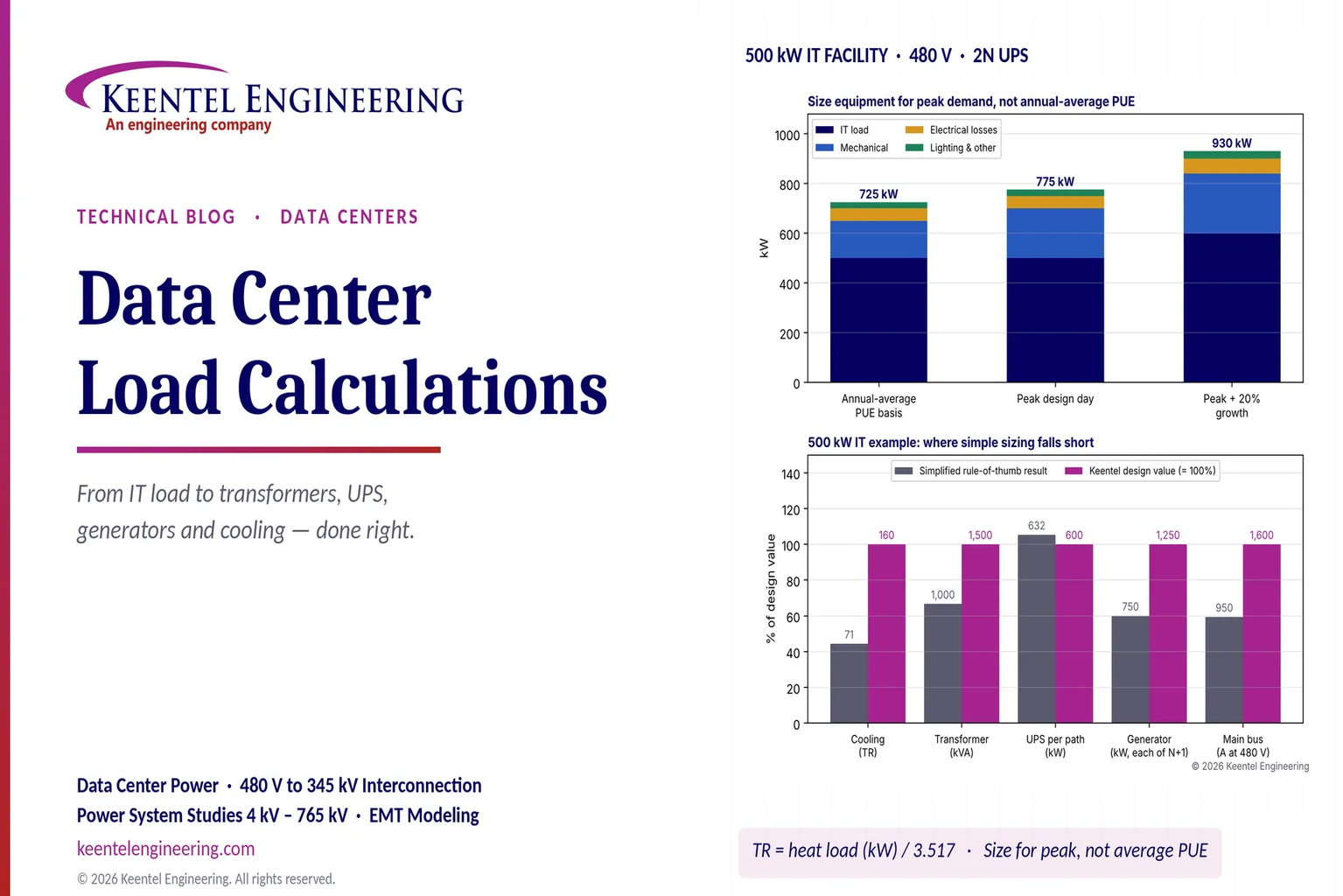
Learn data center electrical load calculations, including IT demand, PUE, UPS and generator sizing, cooling loads, redundancy, and worked US examples.
By SANDIP R PATEL
•
October 20, 2026
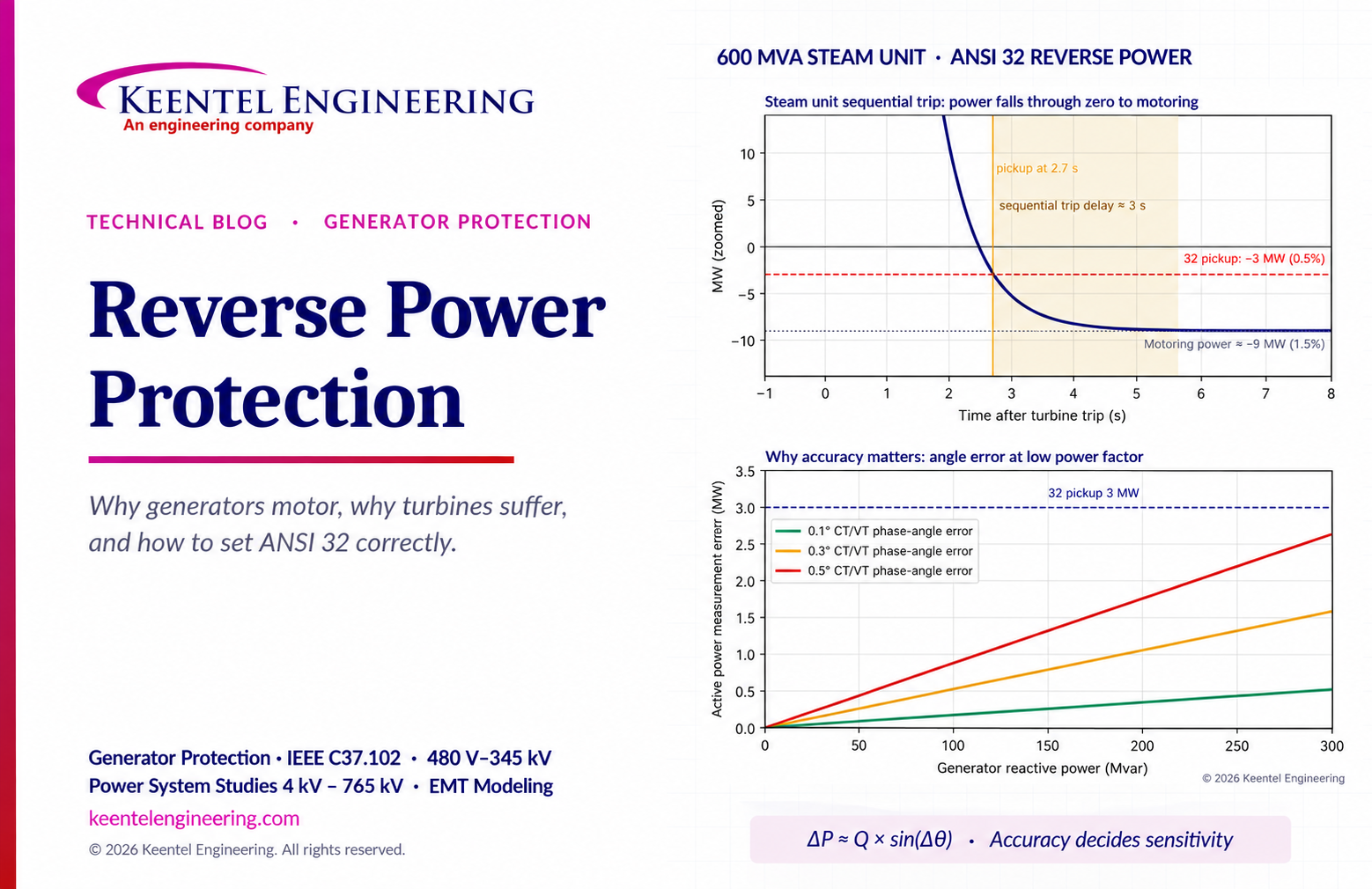
Learn reverse power protection (ANSI 32), generator motoring, relay pickup settings, time delays, sequential tripping and testing for US power plants.