A Coordinated Electric System Interconnection Review—the utility’s deep-dive on technical and cost impacts of your project.
Challenge: Frequent false tripping using conventional electromechanical relays
Solution: SEL-487E integration with multi-terminal differential protection and dynamic inrush restraint
Result: 90% reduction in false trips, saving over $250,000 in downtime
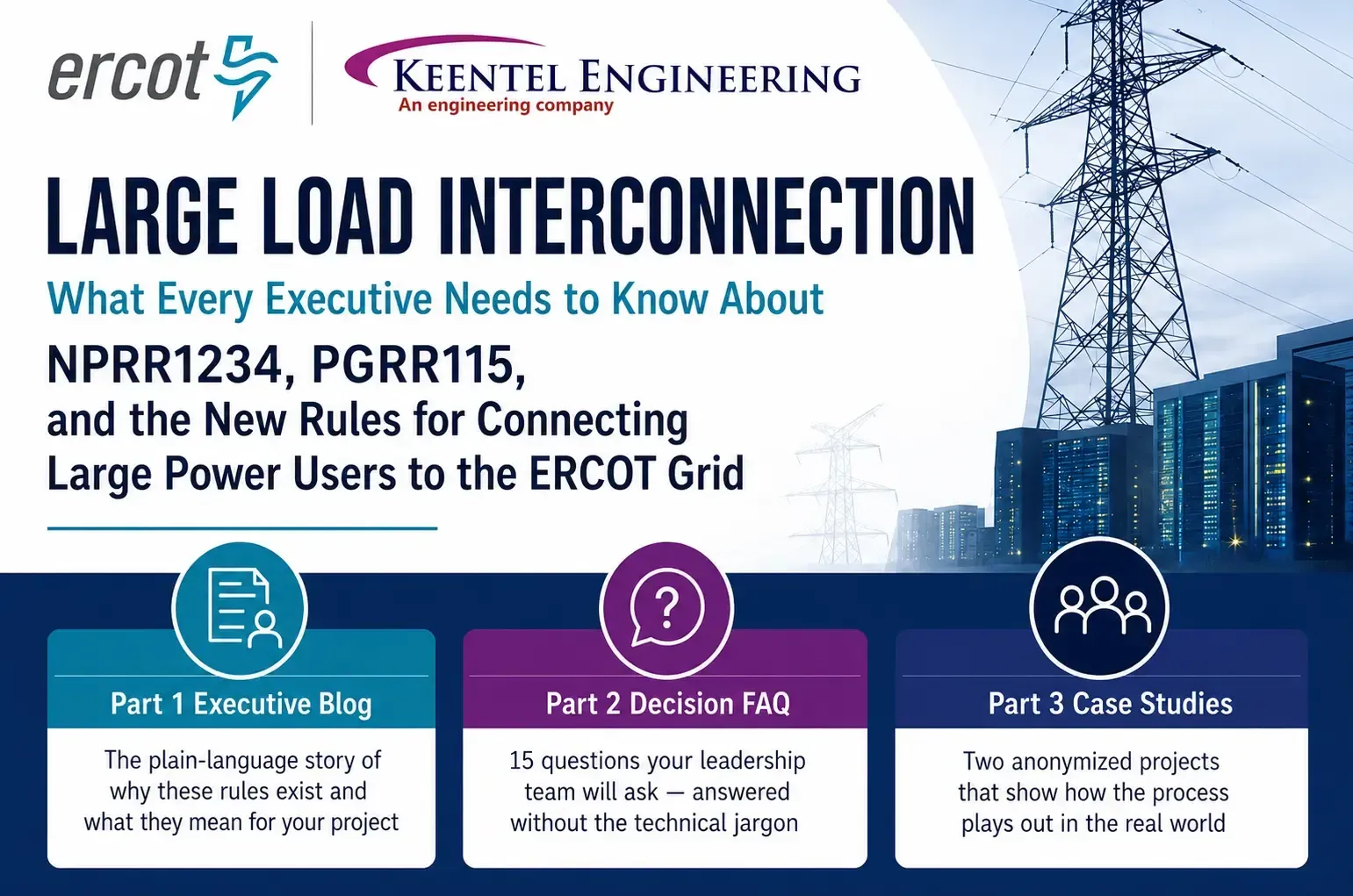
Texas Just Changed the Rules for Large Power Users
May 8, 2026 | Blog
The New Reality: Connecting Big Power in Texas Now Requires a Real Process
A plain-language briefing for business and executive decision-makers at companies planning to use 75 MW or more of electricity in Texas.
The Scale of the Problem
Texas is in the middle of an electricity demand surge unlike anything it has ever seen. Data centers, semiconductor plants, hydrogen facilities, and advanced manufacturing are all racing to connect to the ERCOT grid — and the grid was simply not designed to absorb this much new demand this fast.
| 4,479 MW | 19,754 MW | ¼ |
| of large loads (75 MW+) approved since January 2022 | of additional projects queued as of May 2024 | of ERCOT's record peak demand those queued projects represent |
To put those numbers in context: 4,479 megawatts is several times the total electricity consumption of a major mid-sized Texas city. The 19,754 MW pipeline represents nearly one quarter of ERCOT's all-time peak demand record of 85,508 MW, set on August 10, 2023.
ERCOT has been managing this surge through emergency interim procedures since March 2022 — essentially making it up as it went. The new rules approved on May 15, 2025 replace that improvised process with a permanent, formal framework. If your company is building or expanding a large power-consuming facility in Texas, these rules now govern how — and whether — you can connect to the grid.
The Bottom Line in Plain Terms
Think of it this way. For decades, large power generators in Texas have had to go through a rigorous interconnection study before plugging into the grid. Engineers study the local transmission system, identify any upgrades needed, and agree on a construction timeline before the first watt flows. Until now, large power consumers — data centers, factories, electrolyzers — faced no equivalent requirement.
NPRR1234 and PGRR115 change that. For the first time, large electricity consumers in Texas face the same fundamental obligation as generators: get studied first, build what needs to be built, and follow a defined process.
What "Large Load" Means
One or more facilities at a single site with a combined peak demand of 75 megawatts (MW) or more. The 75 MW threshold applies to the combined demand of all your operations at a site — not each building or meter separately. If you are at 75 MW or above, you are in scope.
Five Things These Rules Actually Require
1. You Must Get a Formal Study Done Before You Can Connect
Any new facility at 75 MW or more must go through a Large Load Interconnection Study (LLIS) before it can energize. Your Transmission Service Provider (TSP — think Oncor, AEP, CenterPoint) conducts the study on your behalf. It evaluates whether the local grid can handle your load and what upgrades, if any, are required. You cannot simply agree to pay for upgrades and skip the study
2. You Must Submit a Phased Commissioning Plan
You cannot ask for 500 MW by next year with no further detail. You must submit a Load Commissioning Plan (LCP) — a formal schedule showing how you plan to ramp up demand in stages, which transmission upgrades must be complete at each stage, and when each milestone is targeted. Every demand increase above your current approved level requires ERCOT's written sign-off after the required upgrade is operational.
3. You Must Pass a Stability Assessment on a Fixed Calendar
Before your facility can energize, it must be included in ERCOT's quarterly stability assessment — a grid-wide analysis run four times a year. The catch: you must meet all prerequisites roughly six months before your target energization date. Miss that deadline and you lose that quarter's window, pushing energization out by three months at minimum.
4. Your Interconnection Configuration Has a Hard Size Limit
For projects submitting a study request on or after June 1, 2025, your interconnection cannot be designed so that a single grid event — losing one transmission line or one generator — could knock out more than 1,000 MW of load. If your facility shares a substation connection with other large loads that push the total above 1,000 MW, you may need to redesign your interconnection. This is an engineering constraint with real cost implications.
5. Even at 25 75 MW, You Must Be Identified
Even if your facility falls below the 75 MW LLIS threshold, your TSP must now identify your load in ERCOT's system model and classify its industry type. Your data is treated as confidential — ERCOT does not publicly disclose it. But the identification is mandatory and has specific deadlines.
What Is Driving This? The Forecasting Crisis
Behind all of these rules is a practical operational problem that ERCOT is increasingly frank about: it is losing the ability to accurately predict how much electricity will flow on a given day.
Historically, Texas electricity demand correlated tightly with weather. Hot day, high demand. Cool night, low demand. ERCOT's models were built on that relationship. But a 200 MW data center can spin up or throttle back in minutes for reasons that have nothing to do with temperature — server load, cooling cycles, maintenance windows. A hydrogen electrolyzer may run at full blast during low-price hours and cut to zero when prices spike. ERCOT has no visibility into these patterns unless it knows where the loads are and what they do.
This is why the 25 MW identification requirement matters so much to grid operators. Better data means better forecasts. Better forecasts mean fewer close calls on hot August afternoons when accurate prediction is a matter of grid stability.
The Safety Dimension Most Executives Have Never Heard Of
Large electricity consumers introduce a technical risk called Subsynchronous Oscillation (SSO). Without getting deep into the engineering, SSO is a phenomenon where your facility's electrical equipment can interact with certain components of the transmission system in ways that create damaging resonance — potentially tripping other generators off the grid.
If your facility is located near certain types of transmission equipment called series capacitors, your TSP may be required to conduct a specialized SSO study. If the study finds vulnerability, your project must implement specific countermeasures before it can energize. This is not a formality — it has caused real delays for projects that did not anticipate it.
Similarly, if you are adding 20 MW or more of load to a site that already has a generator on it, a new
Reactive Power study is required. Generators provide voltage stabilization services to the grid; a large co-located load can affect that capability and must be formally re-evaluated.
The Deadlines That Cannot Be Missed
| Deadline | What It Means for Your Project |
|---|---|
| 1 | Anne |
| 2 | Bill |
| 3 | Candice |
| 4 | Dave |
What Is Still Unresolved
ERCOT and regulators are explicit that NPRR1234 and PGRR115 are the beginning of a process, not the end. Two significant issues were deliberately deferred:
- How fast large loads can ramp up or down (ramping limitations)
- How large load equipment must behave during a grid disturbance (Voltage Ride Through requirements)
More rules are coming. If you are planning a facility with a multi-decade operating horizon, you should assume the regulatory requirements will evolve further. Engage early with ERCOT stakeholder processes — the companies that helped shape NPRR1234 got more favorable outcomes than those that showed up late.
The Executive Summary
If you are at 75 MW or more in Texas
You now have a mandatory
interconnection study process that mirrors what power generators have faced for years. Budget 12–24+ months for the process. Engage your TSP early. Structure your Load Commissioning Plan around transmission reality, not just commercial ambition.
If you are at 25–75 MW in Texas
You are not subject to the study process, but you will be modeled and classified in ERCOT's system. Ensure your TSP has your current peak demand figures and accurate facility information. This is low-burden compliance that matters for ERCOT's overall grid management.
If you are planning to expand
An expansion that pushes your site above 75 MW, or that adds 75 MW or more to an existing large facility, triggers the full LLIS process. This is not a threshold you can gradually approach — it activates the moment you cross it with a new interconnection request.
How the Process Plays Out in Practice
The following two case studies are anonymized but realistic. They are drawn from the types of projects most active in the ERCOT queue and are designed to show how NPRR1234 and PGRR115 affect real business decisions — what went well, what created delays, and what executives wish they had known earlier.
CASE STUDY 1
Project 450 MW Hyperscale Data Center Campus
A technology company had secured a large site in the ERCOT service territory for a hyperscale data center campus. The development plan called for four buildings, each capable of 100–120 MW of IT load. Total campus demand at full build-out: approximately 450 MW. The company's commercial team had committed to a first-building go-live date of Q1 2027 in agreements with enterprise anchor customers.
The project was large enough to require the LLIS process. Its LLIS submission date was October 2025 — after the June 1, 2025 trigger date for the 1,000 MW limit.
What Went Well: The Early Engagement Decision
- The company's infrastructure team engaged their TSP eight months before the formal LLIS submission. During that pre-filing period, they made three decisions that proved critical.
- They discovered that two other large data center projects were already approved at a nearby 345 kV substation, and that their combined peak demand plus those two projects would exceed 1,000 MW behind the same transformer bank. They redesigned their interconnection to use a dedicated transformer position — adding engineering cost but avoiding a study rejection and redesign cycle after submission.
- They worked with a power systems consultant to develop their dynamic load model well before filing. Large data center UPS systems and cooling infrastructure have complex electrical signatures; getting the model accepted by the TSP on first submission rather than through multiple revision rounds saved approximately two months.
- They structured a four-phase Load Commissioning Plan — 120 MW, 220 MW, 330 MW, 450 MW — that aligned Phase 1 energization with infrastructure that the TSP confirmed was already in place, while acknowledging that a new 138 kV line would be needed before Phase 3.
The Study Process
The kickoff meeting took place in November 2025 and included the lead TSP and one directly affected TSP whose 138 kV facilities would be impacted by Phase 2 and 3 loads. ERCOT assigned a separate study agreement requirement between the company and that second TSP — a negotiation that took six weeks longer than the team anticipated.
Study findings for the first three elements were manageable: no short-circuit issues, no SSO vulnerability (the site was far from series-capacitor infrastructure), and no stability concerns for Phases 1 and 2. Phase 3 and 4 loads identified thermal overloads on two transmission segments — both addressable through the new 138 kV line already in the regional plan.
ERCOT granted conditional approval in May 2026, structured around the phased LCP.
The Close Call: The 180-Day Agreement Window
Near-Miss on Project Cancellation
After ERCOT's conditional approval in May 2026, the company had 180 days — until November 2026 — to execute all required interconnection agreements. The primary agreement with the lead TSP was signed in August. But the required agreement with the second directly affected TSP involved a disputed cost allocation for protective relay upgrades. That negotiation stretched to mid-November 2026 — 174 days after conditional approval. Two weeks of additional delay would have triggered ERCOT's cancellation notice process.
Energization Outcome
Phase 1 (120 MW) achieved Initial Energization in February 2027 — six weeks later than the originally committed Q1 date, but within the quarter. The delay was caused by a weather event that pushed the new substation equipment installation back. ERCOT's written energization approval came in January 2027 after the quarterly stability assessment was completed in October 2026.
Phases 2 through 4 remain on track per the LCP, with Phase 2 energization targeted in 2028 following completion of the 138 kV line.
Key Executive Takeaways
1. Check the 1,000 MW limit against neighboring projects before you file — not after. A redesign during scoping is recoverable. A redesign after study completion is expensive.
2. The 180-day agreement window sounds generous. It is not, if you have multiple TSPs involved. Start agreement negotiations before ERCOT issues conditional approval.
3. Phase your LCP to align at least your first phase with infrastructure that already exists or has a firm completion date. This is the single biggest lever on your energization timeline.
4. Budget 6–9 months from LLIS submission to conditional approval for a straightforward project in a well-served area. Add 6–12 months for projects requiring new transmission construction.
CASE STUDY 2
Project 200 MW Advanced Manufacturing Facility
ERCOT service territory | New standalone load | First-time ERCOT interconnection for this company
The Business Situation
A manufacturer of advanced semiconductor components selected a site within the ERCOT service territory for a new 200 MW fabrication complex. The company had never previously connected directly to the ERCOT transmission grid — their existing domestic facilities all used utility retail service far below 75 MW. This was their first experience with a transmission-level interconnection process anywhere.
The company's board had approved the project on a five-year development timeline with a commercial production start target of Q4 2027. The real estate and permitting teams moved quickly, but the power infrastructure track was managed as a secondary workstream — a decision that would later create significant pressure.
The First Mistake: Starting the Power Process Late
Power Infrastructure Is the Critical Path
The company's project team initially treated power as a "later stage" item — something to address after the site was secured and building permits were in hand. They engaged their TSP for the first time in March 2026, nearly 18 months into the overall project. By that point, the building construction schedule was locked. The LLIS had not been filed. And the quarterly stability assessment prerequisite deadline for Q4 2027 energization — August 1, 2026 — was only five months away.
The TSP scoping meeting happened in April 2026. The study findings delivered in August 2026 identified a significant challenge: the site was within a transmission zone where series capacitors are common, and the topology check flagged the facility for a full SSO study. No one on the project team had anticipated this, and the company had no power systems engineers on staff or on retainer who understood SSO analysis.
Navigating the SSO Study
The SSO study was conducted by the TSP over approximately three months, running in parallel with the LLIS. The facility's manufacturing equipment — particularly the large motor-driven vacuum and gas-handling systems and the power conditioning equipment for the fab tools — included components with known SSO interaction risks in series-capacitor environments.
The SSO study confirmed vulnerability under a specific three-transmission-outage scenario. The ILLE was required to develop SSO Countermeasures — in this case, modifications to the power conditioning controller software and the installation of protective relay monitoring equipment. The engineering work to specify, procure, and validate those countermeasures took four months.
SSO Added 4 Months and $3.2M in Unbudgeted Costs
The SSO study itself, the engineering analysis to develop countermeasures, equipment procurement, and validation testing added approximately four months to the overall schedule and approximately $3.2 million in costs that were not in the original project budget. This was not a regulatory failure — the requirement exists for good reason. But it was entirely foreseeable and would have been identified much earlier with appropriate pre-filing engagement.
The Stability Assessment Miss
The August 1, 2026 prerequisite deadline for Q4 2027 energization was not met. The SSO study was still in progress, and the SSO countermeasure plan had not yet received ERCOT approval — both required for stability assessment inclusion. As a result, the facility could not be included in the October 2026 stability assessment.
The next available window for a Q1–Q2 2028 energization required prerequisites to be met by November 1, 2026. The SSO countermeasure plan was approved by ERCOT in December 2026 — one month too late for that window as well.
The facility was finally included in the February 2027 stability assessment cycle, with a resulting Initial Energization window of Q3–Q4 2028 — approximately one full year later than the original commercial production target.
Recovery and Lessons
To the company's credit, once the delay became clear, the leadership team moved decisively. They accelerated building construction schedules to ensure the physical facility would be ready before the new energization date. They brought on a dedicated power systems engineering firm with ERCOT experience as a standing resource. And they began pre-filing engagement with their TSP for two additional manufacturing facilities already in the pipeline — ensuring the mistakes of Project Meridian would not repeat.
The facility ultimately energized in September 2028, approximately 11 months behind the original schedule. Commercial production launched in Q4 2028.
Key Executive Takeaways
1. Power infrastructure is always on the critical path for a large facility, even if it does not feel that way at the beginning. Start TSP engagement the day your site decision is made, not after building permits are in hand.
2. Certain ERCOT transmission zones carry elevated SSO risk due to series-capacitor infrastructure. Any facility with large motors, variable frequency drives, or power electronics should commission an independent SSO pre-assessment before filing the LLIS — not after.
3. The quarterly stability assessment calendar is unforgiving. You need to map your target energization date backward through the assessment cycle and ensure every prerequisite has buffer against slippage.
4. Every month of energization delay is a month of revenue or production delayed. At 200 MW of manufacturing load, even a modest power cost of $50/MWh at 70% capacity factor represents roughly $61M of energy cost per year — and the opportunity cost of delayed production is typically a multiple of that.
Quick Reference: Deadlines, Thresholds & Key Terms
Regulatory Deadlines at a Glance
| Deadline / Window | What It Covers |
|---|---|
| September 1, 2025 | TSPs must have modeled all customers with historical 25+ MW peak demand in ERCOT's system model |
| June 1, 2025 onward | New LLIS submissions must comply with the 1,000 MW single-event load loss design limit |
| 180 days | Window to execute interconnection agreements after ERCOT grants conditional LLIS approval |
| 365 days | Maximum time from LLIS target energization date before ERCOT may require study updates |
| ~6 months prior | Prerequisite deadline for quarterly stability assessment (varies by target energization quarter) |
| April 1 (annual) | New load points that crossed 25 MW in the prior year must be modeled by this date |
| 3 months | Time limit for co-located load Resource Registration updates after crossing 25 MW threshold |
Key Thresholds
| Threshold | Rule Triggered |
|---|---|
| 75 MW | Triggers full LLIS process for new load or modification |
| 75 MW | Modification threshold — increasing any site by 75+ MW triggers LLIS |
| 25 MW | Identification threshold — TSP must model and classify all customers above this level |
| 1,000 MW | Maximum consequential load loss allowed from a single grid event (LLIS submissions after June 1, 2025) |
| 20 MW | Load addition to a generator site that triggers a new Reactive Power study |
| $14,000 | ERCOT LLIS application fee (separate from TSP study costs) |
Industry Classifications (Confidential Not Publicly Disclosed)
| Code | Category |
|---|---|
| 1 | Oil and Gas Production, Processing, and Transmission |
| 2 | Oil and Chemical Refining |
| 3 | Steel Manufacturing |
| 4 | Cryptocurrency Mining |
| 5 | Data Center (non-Cryptocurrency) |
| 6 | Hydrogen and Electrofuel Production |
| 7 |
Glossary of Key Terms
| Term | Plain-Language Definition |
|---|---|
| ERCOT | Electric Reliability Council of Texas — the grid operator that manages electricity flow across most of Texas |
| NPRR1234 | Nodal Protocol Revision Request 1234 — the rule change establishing Large Load definitions, modeling requirements, SSO obligations, and the LLIS fee |
| PGRR115 | Planning Guide Revision Request 115 — the companion rule that creates the detailed LLIS study process and all associated timelines |
| LLIS | Large Load Interconnection Study — the mandatory engineering study required before any 75+ MW facility can connect to the ERCOT grid |
| LCP | Load Commissioning Plan — the phased demand ramp-up schedule that governs how and when a facility can increase its draw on the grid |
| TSP | Transmission Service Provider — the entity (Oncor, AEP Texas, CenterPoint, etc.) that owns the transmission lines and conducts the LLIS on your behalf |
| ILLE | Interconnecting Large Load Entity — the company or developer connecting the large load (that's you) |
| SSO | Subsynchronous Oscillation — an electrical resonance risk that affects certain large loads near series-capacitor transmission equipment |
| PUCT | Public Utility Commission of Texas — the state regulator that approved NPRR1234 and PGRR115 on May 15, 2025 |
The Questions Your Leadership Team Will Ask Answered
These are the questions most frequently raised by business leaders, project developers, and general counsel when reviewing the new large load interconnection rules. Answers are written in plain business language.
Strategy & Scope
Q We are developing a 300 MW campus. Do these rules apply to us?
Yes, fully. Any new facility with 75 MW or more at a single site is subject to the Large Load Interconnection Study (LLIS) process. At 300 MW, you would also need to ensure your interconnection design does not create a situation where a single grid event could knock out more than 1,000 MW of load — which may affect how you share substation infrastructure with neighboring facilities.
Q We already have an operating facility at 120 MW. Are we affected?
Your existing facility is grandfathered into operations — it does not need to go back through the LLIS process unless you make a significant change. Specifically, if you increase your peak demand by 75 MW or more, or if you modify your connection to a different electrical bus or circuit, the LLIS process is triggered for that modification. You are also required to be identified and classified in ERCOT's system model by September 1, 2025 — your TSP handles that, but you should confirm it is done.
Q We are expanding from 50 MW to 130 MW. Does that trigger the full study?
Yes. The expansion adds 80 MW to your site, which is above the 75 MW modification threshold. You will need to go through the LLIS process for the incremental capacity. The study will focus on the impact of adding that 80 MW to the existing connection — not a full re-study of your entire facility from scratch.
Q Our facility is co-located with a solar farm we own. Does that change anything?
Yes, materially. When a large load is at the same site as a generator, additional requirements apply. Your LLIS will be coordinated with your generator's registration. You will also need a new Reactive Power study if your load is adding 20 MW or more to that site. Importantly, the generator's reactive capability is NOT required to compensate for your load's reactive consumption — your load must address its own reactive needs independently. That clarification was hard-won during the regulatory process and is now locked into the approved rules.
Process & Timeline
Q How long does this entire process take?
There is no single guaranteed timeline — it depends on the complexity of your interconnection and what transmission upgrades are needed. A well-prepared project in a relatively uncongested area might move from study submission to conditional approval in six to nine months. A complex project requiring significant transmission upgrades in a congested area could take 18 to 24 months or longer. The quarterly stability assessment adds another layer: you must complete all prerequisites approximately six months before your target energization window, and that assessment only runs four times a year. Missing a prerequisite deadline by even one day can push your energization by a full quarter.
Q What does it cost to go through this process?
The formal ERCOT application fee is $14,000. That is a rounding error. The real costs are your TSP's study fees — which can run from tens of thousands to several hundred thousand dollars depending on scope — plus the cost of any transmission upgrades identified in the study, which you will be responsible for funding. Engineering consultants to help prepare your dynamic load model and navigate the process are an additional expense. And the most significant "cost" is time: delays in energization that push your revenue or operational start date translate directly to business impact.
Q What is a Load Commissioning Plan and how much flexibility does it give us?
The Load Commissioning Plan (LCP) is a formal schedule you file with your TSP showing how you will ramp up demand in stages. It is not a rigid prison — you can update it as your project evolves. However, you cannot exceed the demand levels in your current approved LCP without ERCOT's written approval, and that approval only comes after the associated transmission upgrade is operational. Think of the LCP as a contract between your facility and the grid: you commit to a ramp-up schedule, and ERCOT commits to having the infrastructure ready to support it. The most strategic companies build in conservative buffers between LCP stages to absorb construction delays.
Q Can we submit our LLIS application before we have all our equipment finalized?
You can — and for a 400 MW data center campus, waiting for full equipment specs before filing would add years to your timeline. The rules require a dynamic load model sufficient for stability studies, but acknowledge that large campus projects evolve over time. If your equipment technology or operating parameters change materially after you submit, you have an obligation to notify your TSP, and the TSP will determine whether a restudy is needed. This is a judgment call made collaboratively between you, the TSP, and ERCOT. The practical advice: get in line early with your best available data, and maintain a close communication channel with your TSP as your design matures.
Risk & Compliance
Q What is the 1,000 MW limit and how does it affect campus design?
For LLIS submissions on or after June 1, 2025, your interconnection cannot be configured such that a single major grid event — losing one transmission line or one generator — could cause more than 1,000 MW of total load loss. This applies to everything behind that connection point: your facility plus any other facilities sharing that interconnection. If your campus is in a cluster of data centers all connecting to the same substation, and the combined demand exceeds 1,000 MW, you may need your own dedicated transformer bank or connection point. Discovering this requirement late in the design process is expensive — it is worth checking early.
ERCOT can formally notify your TSP that your project is subject to cancellation. From that point, you have 30 days to submit a project status update requesting an extension. If nothing is filed within 30 days, ERCOT may consider the project canceled. A canceled project is not automatically dead — but you would need to restart the LLIS process, which means going back to the beginning of the queue. This deadline is often underestimated: executing interconnection agreements involves legal review, negotiation, and financial security arrangements that take time even when everyone is motivated.
Q What is the SSO risk, and how do we know if our project faces it?
SSO (Subsynchronous Oscillation) is an electrical resonance phenomenon that can occur when large electrical loads interact with certain types of transmission equipment called series capacitors. Certain ERCOT transmission zones have significant series-capacitor infrastructure. If your project is in or near those areas, ERCOT will conduct a topology check as part of your study process. If it flags potential vulnerability, a detailed analysis follows. The equipment most commonly associated with SSO risk in large loads includes variable frequency drives (VFDs), large motor banks, and power electronics — common in electrolyzer plants, industrial compressors, and some data center cooling systems. If SSO vulnerability is confirmed, your project must implement countermeasures before it can energize. Engage your TSP and an independent power systems engineer early to assess your risk.
Q Are there more rules coming that we should prepare for?
Yes. ERCOT and regulators explicitly stated that NPRR1234 and PGRR115 are a first step. Two significant issues were deferred: rules on how fast large loads can ramp up or down, and requirements for how large load equipment must behave during grid disturbances (Voltage Ride Through). Both issues remain under active discussion. Additionally, the $14,000 LLIS fee is widely expected to be revised upward. Companies building long-lived infrastructure should model scenarios in which additional compliance requirements are added over the next two to five years.
Q Can we submit our LLIS application before we have all our equipment finalized?
You can — and for a 400 MW data center campus, waiting for full equipment specs before filing would add years to your timeline. The rules require a dynamic load model sufficient for stability studies, but acknowledge that large campus projects evolve over time. If your equipment technology or operating parameters change materially after you submit, you have an obligation to notify your TSP, and the TSP will determine whether a restudy is needed. This is a judgment call made collaboratively between you, the TSP, and ERCOT. The practical advice: get in line early with your best available data, and maintain a close communication channel with your TSP as your design matures.
Practical Guidance
Q What is the single most important thing we can do to protect our energization timeline?
Engage your TSP at least six months before you plan to file the LLIS — ideally earlier for large or complex projects. The study process cannot begin until your TSP submits a complete package to ERCOT, and building that package takes time: dynamic load models, preliminary commissioning plans, technical data collection. Companies that show up fully prepared compress the overall timeline significantly. Companies that file incomplete packages experience delays that compound throughout the process.
Q How should we think about phasing our project under these rules?
Phasing is your friend. A large campus project with a phased Load Commissioning Plan — say, 150 MW in Year 1, 250 MW in Year 2, 400 MW in Year 3 — has several advantages over a single all-or-nothing 400 MW interconnection request. You can energize the first phase while transmission upgrades for later phases are still under construction. Your stability assessment risk is lower for smaller initial loads. And if something changes in your business plans, you have more flexibility to adjust later phases without losing the ground you have already covered. The rules specifically anticipate and accommodate phased commissioning.

About the Author:
Sandip "Sonny" R. Patel, P.E.
IEEE Senior Member · Founder & CEO, Keentel Engineering
In 1995, Sonny Patel earned his Electrical Engineering degree from the University of Illinois. But degrees don't build legacies — action does.
For three decades, he has worked the power industry from every side of the table: 16 years as a utility engineer at Exelon/Commonwealth Edison; generation leadership across hydroelectric, industrial steam turbine, and a 9 GW renewable fleet; NERC Regional Entity Senior Compliance Engineer and Audit Team Lead, auditing some of the nation's largest utilities; and testing and commissioning lead on equipment up to 765 kV — the very top of the North American grid.Utility. Generator. Regulator. Consultant. Few engineers have seen all four seats. Fewer still have sat in them.
His experience spans nuclear, hydro, conventional generation, renewables, oil and gas, mining — and today's data centers, where he is authoring a three-book series on data center design. He is a Licensed Professional Engineer in six states and a Licensed Electrical Contractor in Florida (Unlimited EC) — he doesn't just design the work; he's qualified to stand behind its execution.Today, as Founder and CEO of Keentel Engineering, Sonny leads a nationwide team of engineers delivering substation design, power system studies, NERC compliance, and commissioning — done right, coast to coast.Three decades. Every side of the table. One standard: accountable engineering.
Services

Let's Discuss Your Project
Let's book a call to discuss your electrical engineering project that we can help you with.
About the Author:
Sandip "Sonny" R. Patel, P.E.
IEEE Senior Member · Founder & CEO, Keentel Engineering
In 1995, Sonny Patel earned his Electrical Engineering degree from the University of Illinois. But degrees don't build legacies — action does.
For three decades, he has worked the power industry from every side of the table: 16 years as a utility engineer at Exelon/Commonwealth Edison; generation leadership across hydroelectric, industrial steam turbine, and a 9 GW renewable fleet; NERC Regional Entity Senior Compliance Engineer and Audit Team Lead, auditing some of the nation's largest utilities; and testing and commissioning lead on equipment up to 765 kV — the very top of the North American grid.
Utility. Generator. Regulator. Consultant. Few engineers have seen all four seats. Fewer still have sat in them.
His experience spans nuclear, hydro, conventional generation, renewables, oil and gas, mining — and today's data centers, where he is authoring a three-book series on data center design. He is a Licensed Professional Engineer in six states and a Licensed Electrical Contractor in Florida (Unlimited EC) — he doesn't just design the work; he's qualified to stand behind its execution.
Today, as Founder and CEO of Keentel Engineering, Sonny leads a nationwide team of engineers delivering substation design, power system studies, NERC compliance, and commissioning — done right, coast to coast.Three decades. Every side of the table. One standard: accountable engineering.
Leave a Comment
Thank you for contacting us.
We will get back to you as soon as possible.
We will get back to you as soon as possible.
Oops, there was an error sending your message.
Please try again later.
Please try again later.
Related Posts
By SANDIP R PATEL
•
October 11, 2026
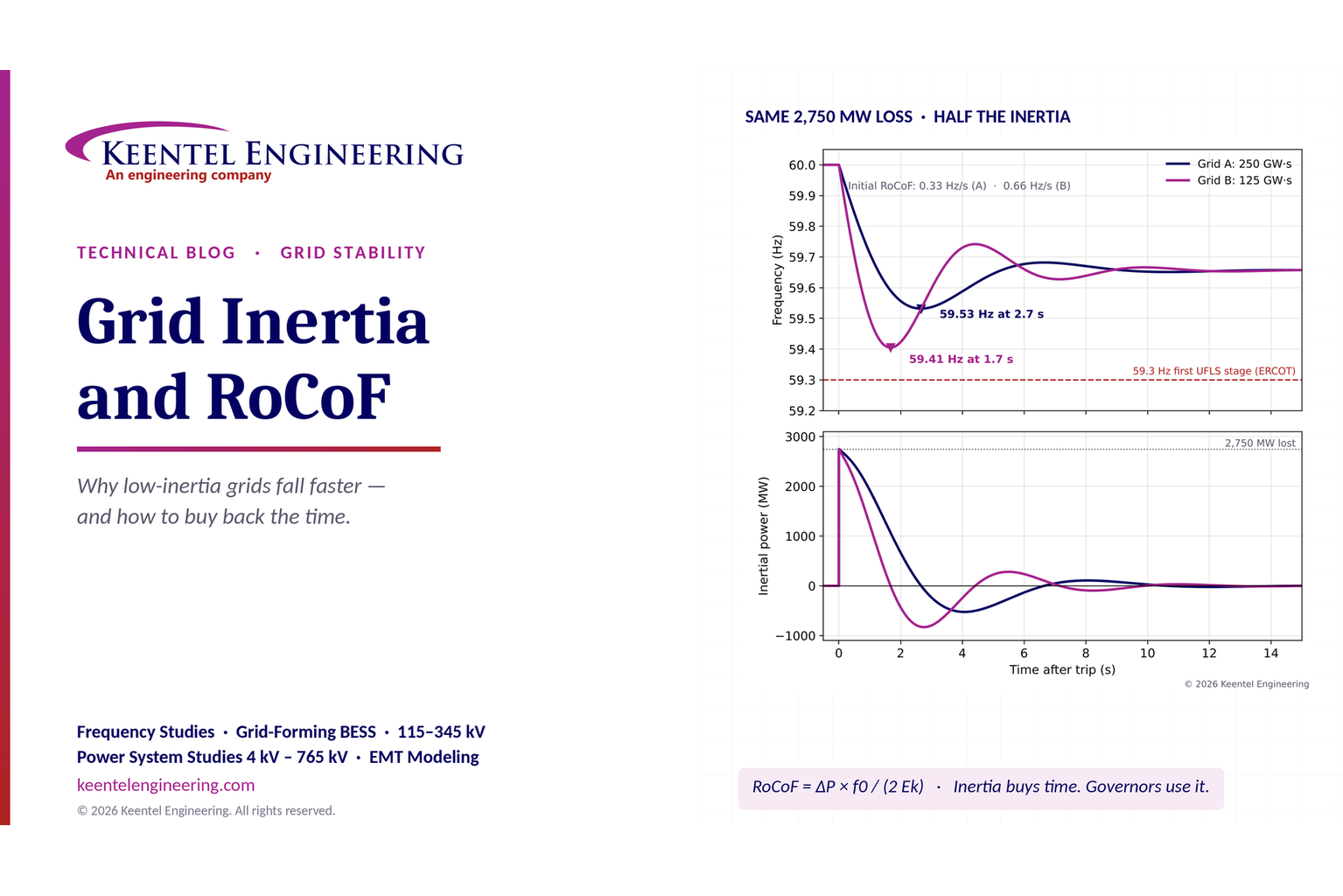
Explore grid inertia, RoCoF and frequency response, with swing equation calculations, frequency nadir analysis and US power system simulation examples.
By SANDIP R PATEL
•
October 11, 2026
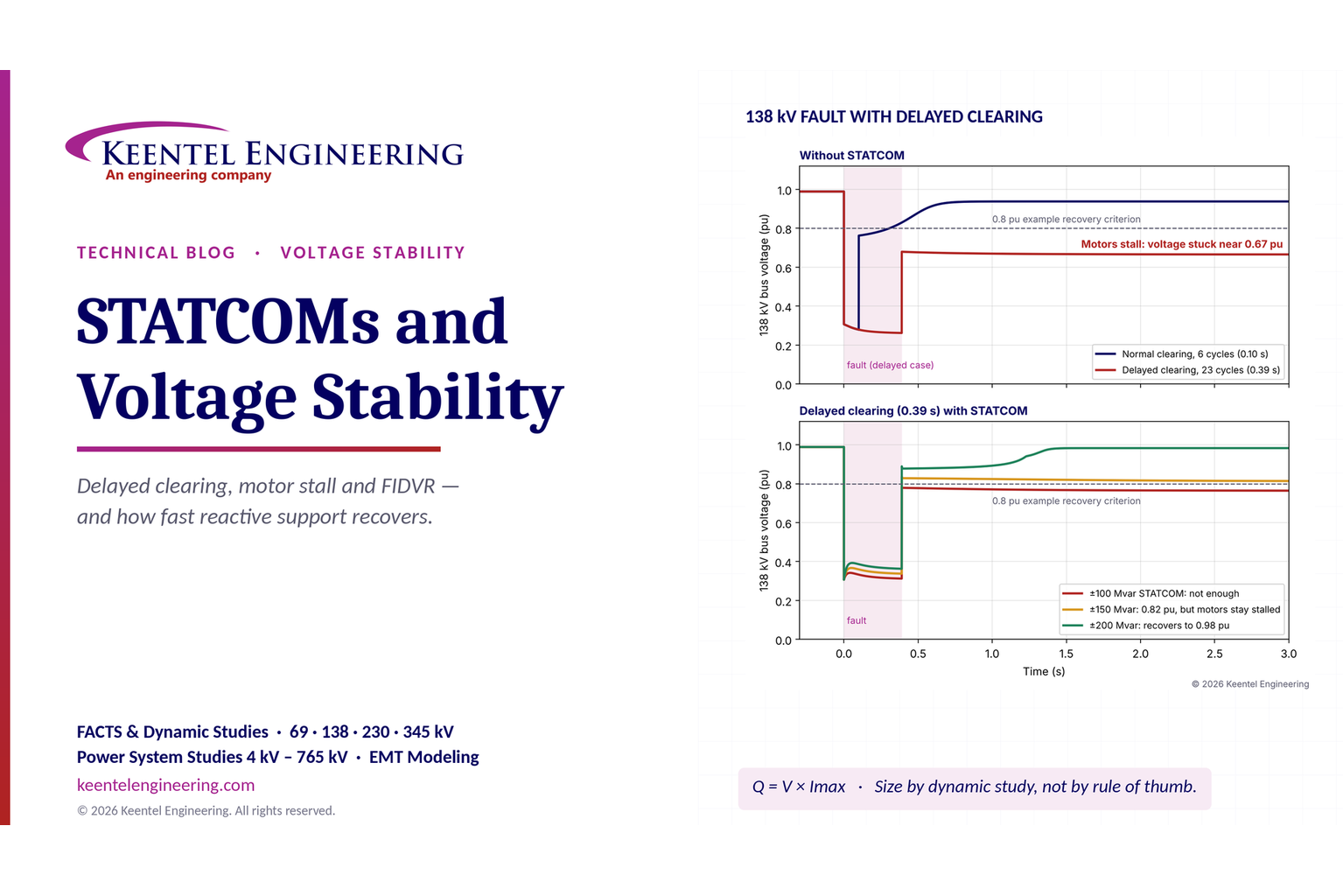
Learn how STATCOMs improve voltage stability and prevent FIDVR. Explore reactive power sizing, delayed fault clearing, NERC criteria and 138 kV simulation results.
By SANDIP R PATEL
•
October 10, 2026
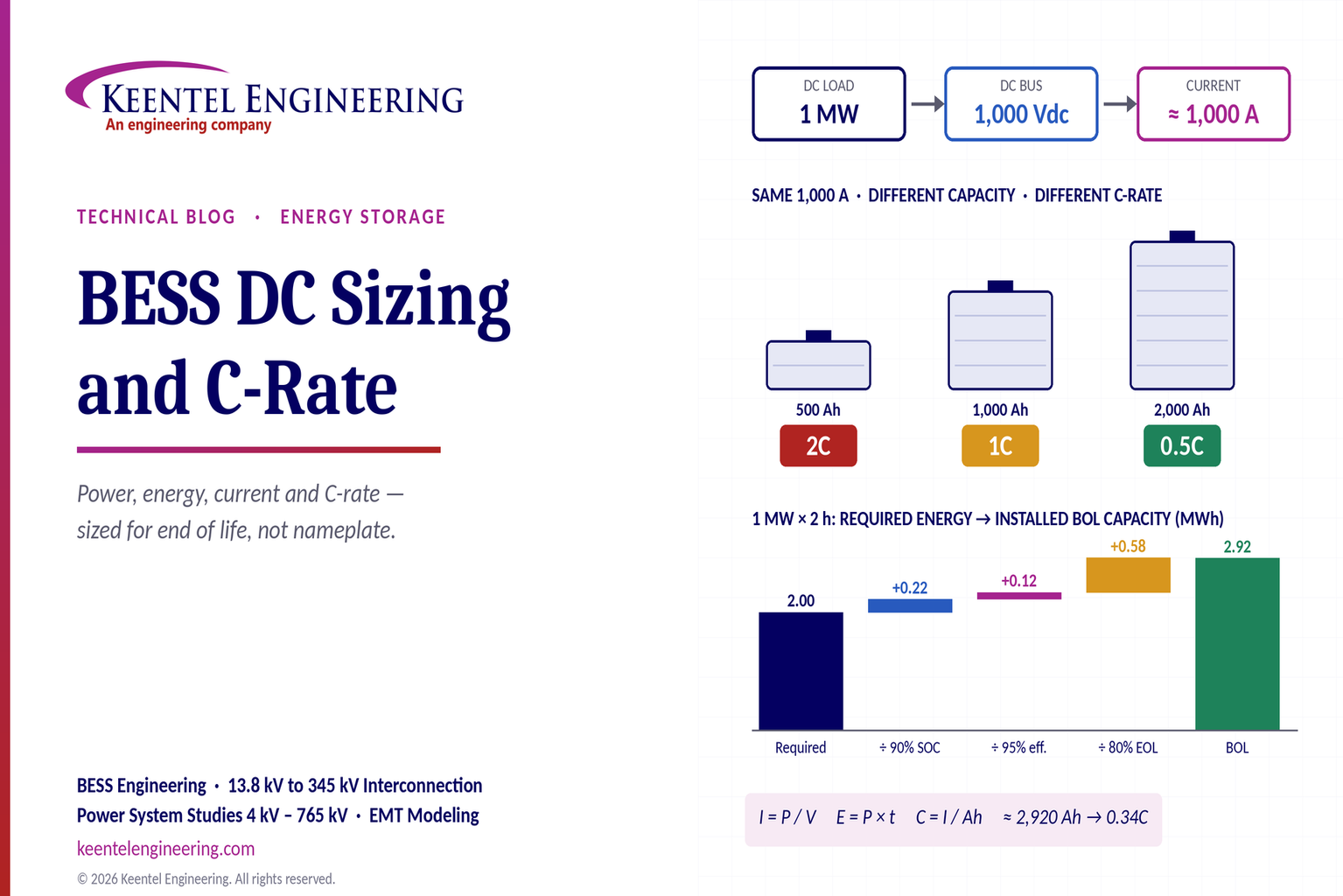
Learn BESS DC sizing with power, energy, current and C-rate calculations, battery losses, degradation and a 100 MW/400 MWh utility-scale example.
By SANDIP R PATEL
•
October 10, 2026
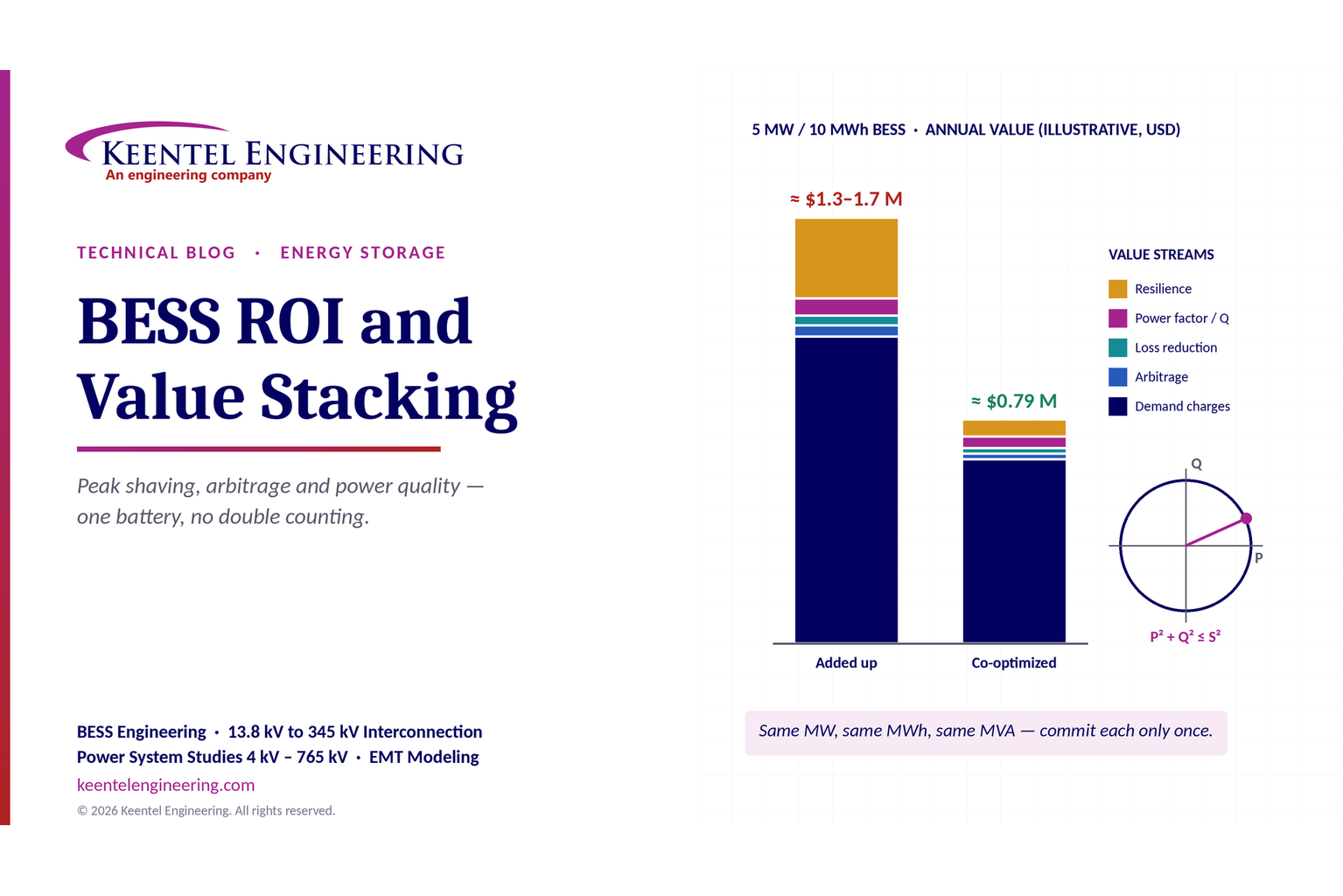
Learn how BESS ROI is calculated using peak shaving, energy arbitrage, power quality and battery storage economics, with a practical 5 MW/10 MWh example.
By SANDIP R PATEL
•
October 10, 2026
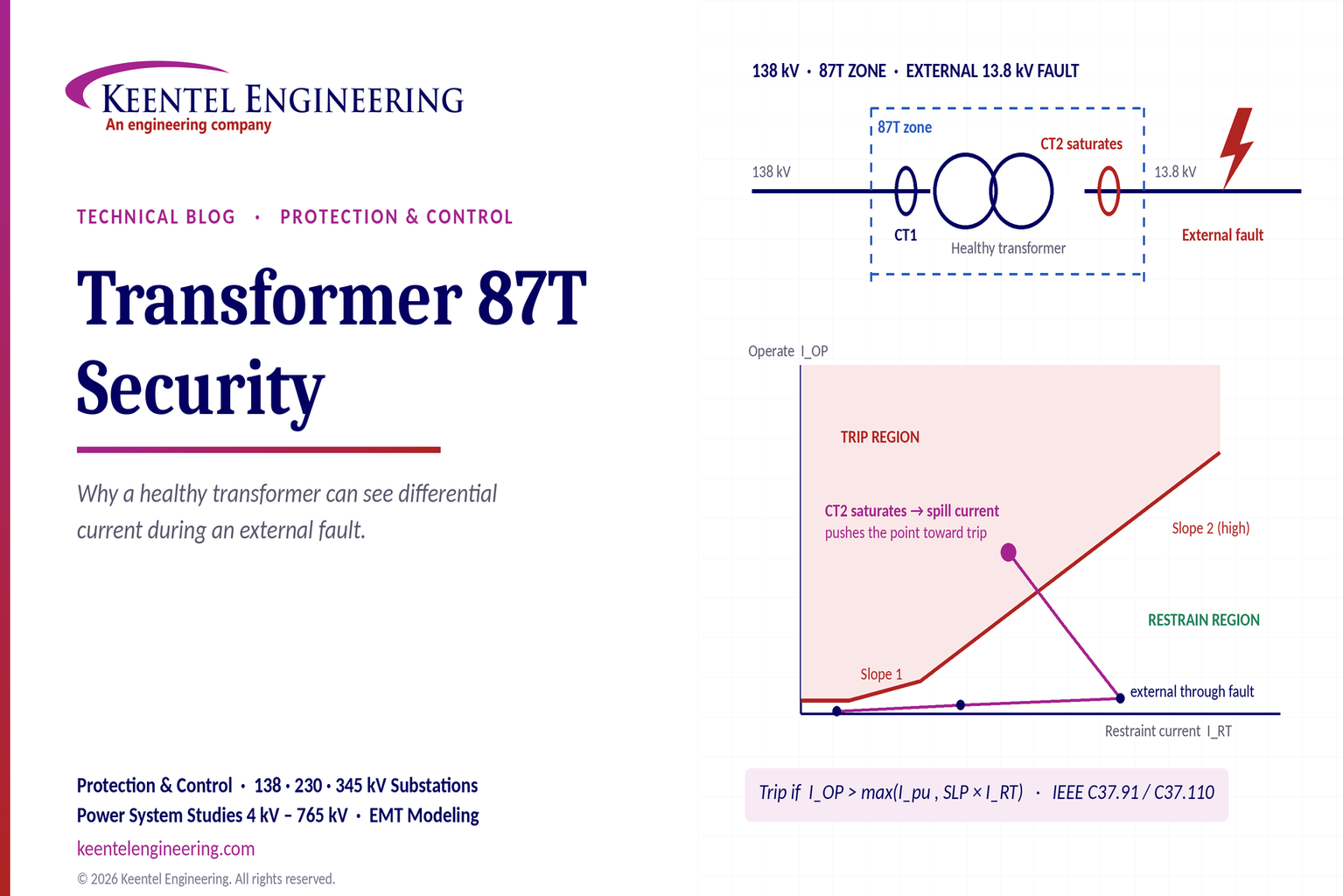
Learn why transformer differential relays detect current during external faults, how CT saturation causes spill current, and how secure 87T protection prevents trips.
By SANDIP R PATEL
•
October 10, 2026
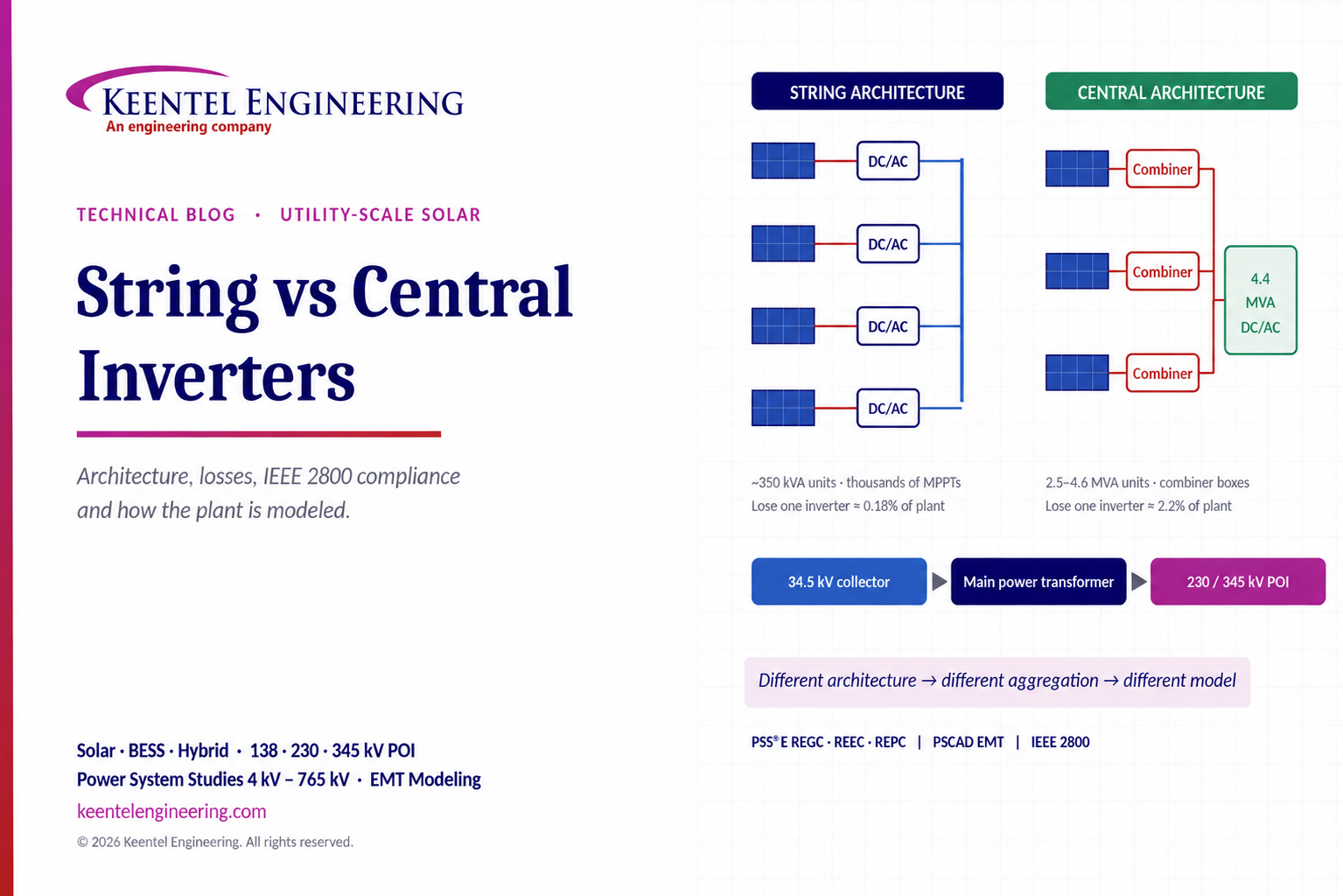
Compare string vs central inverters for utility-scale solar, including efficiency, maintenance, grid compliance, reactive power and interconnection studies.
By SANDIP R PATEL
•
October 9, 2026
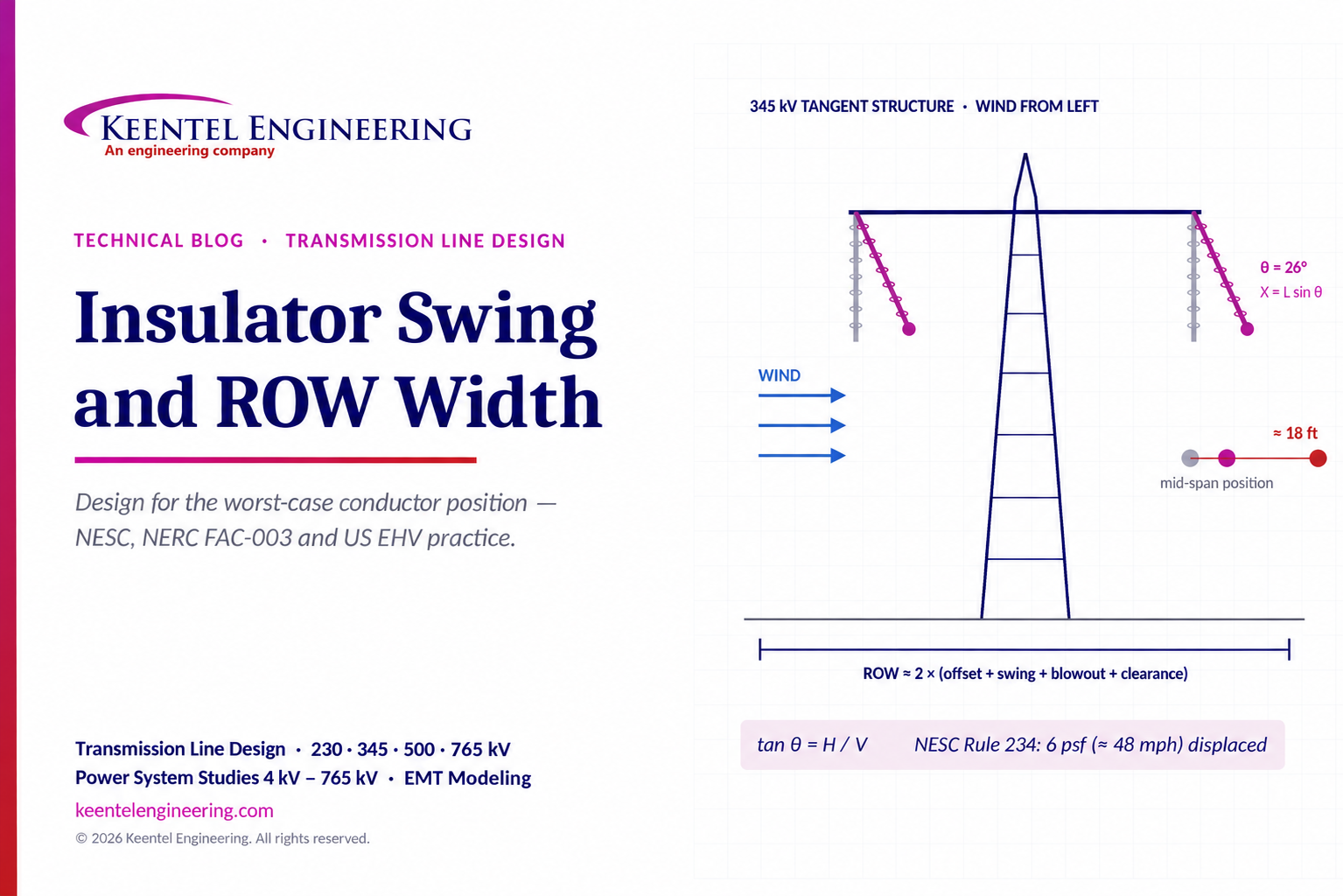
Learn how insulator swing angle and conductor blowout affect transmission line ROW width, with NESC clearances, NERC FAC-003 guidance, and a 345 kV example.
Copy
By SANDIP R PATEL
•
October 3, 2026
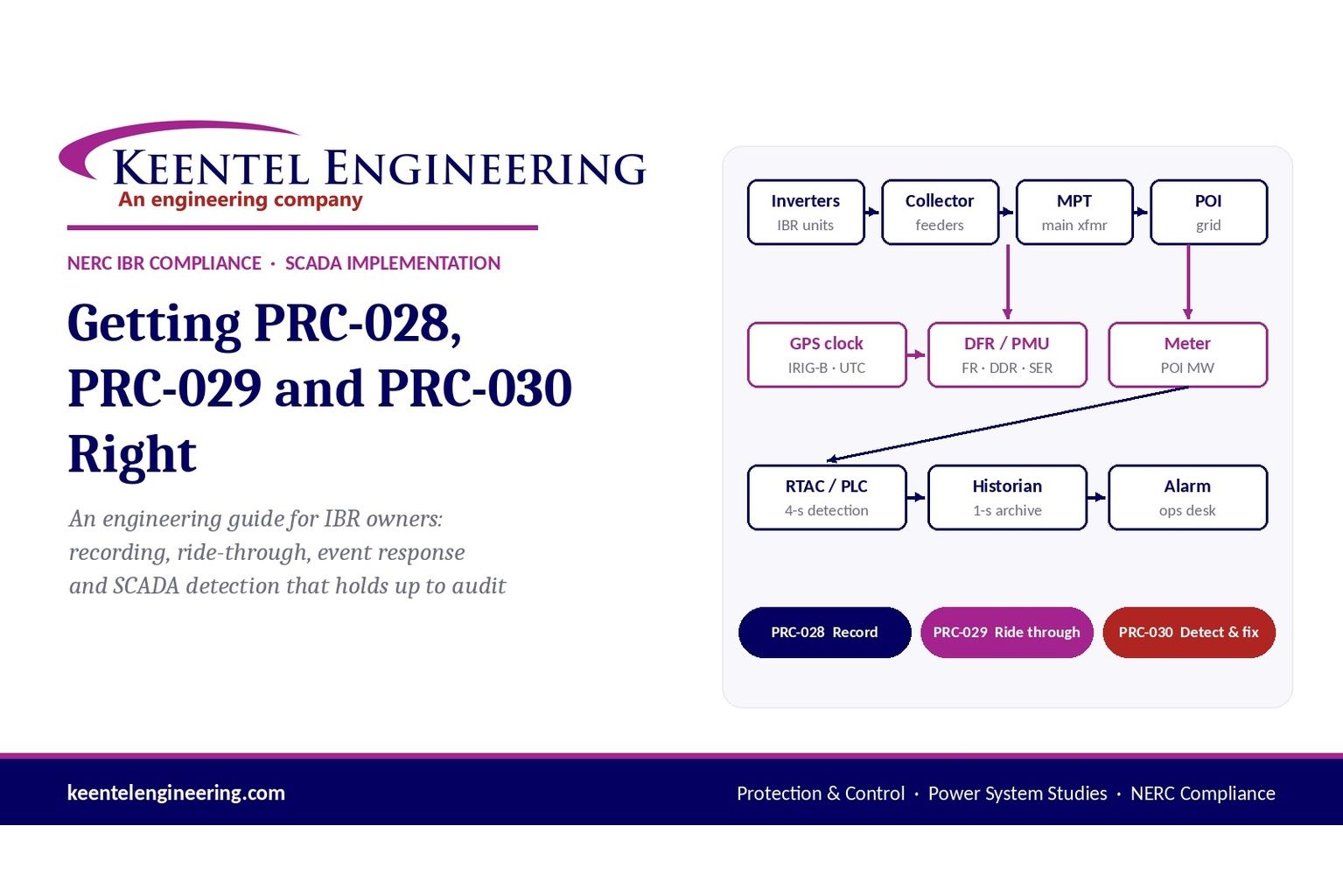
Engineering guide to PRC-028 disturbance recording, PRC-029 ride-through and PRC-030 event detection for inverter-based resources.
By SANDIP R PATEL
•
October 3, 2026
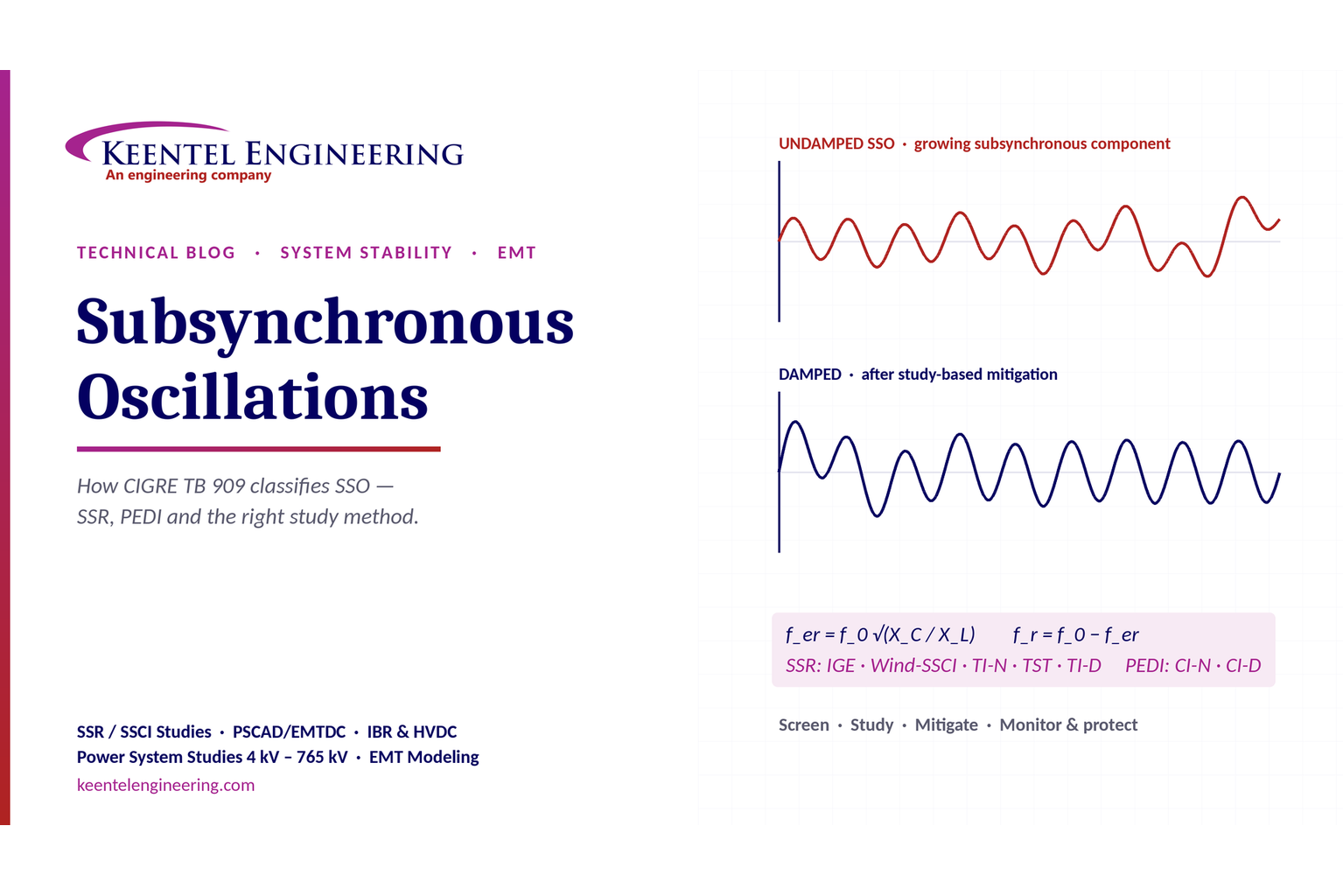
A practical guide to SSO classification, SSR, PEDI, Wind-SSCI, EMT analysis, mitigation and protection based on CIGRE TB 909.