A Coordinated Electric System Interconnection Review—the utility’s deep-dive on technical and cost impacts of your project.
Challenge: Frequent false tripping using conventional electromechanical relays
Solution: SEL-487E integration with multi-terminal differential protection and dynamic inrush restraint
Result: 90% reduction in false trips, saving over $250,000 in downtime
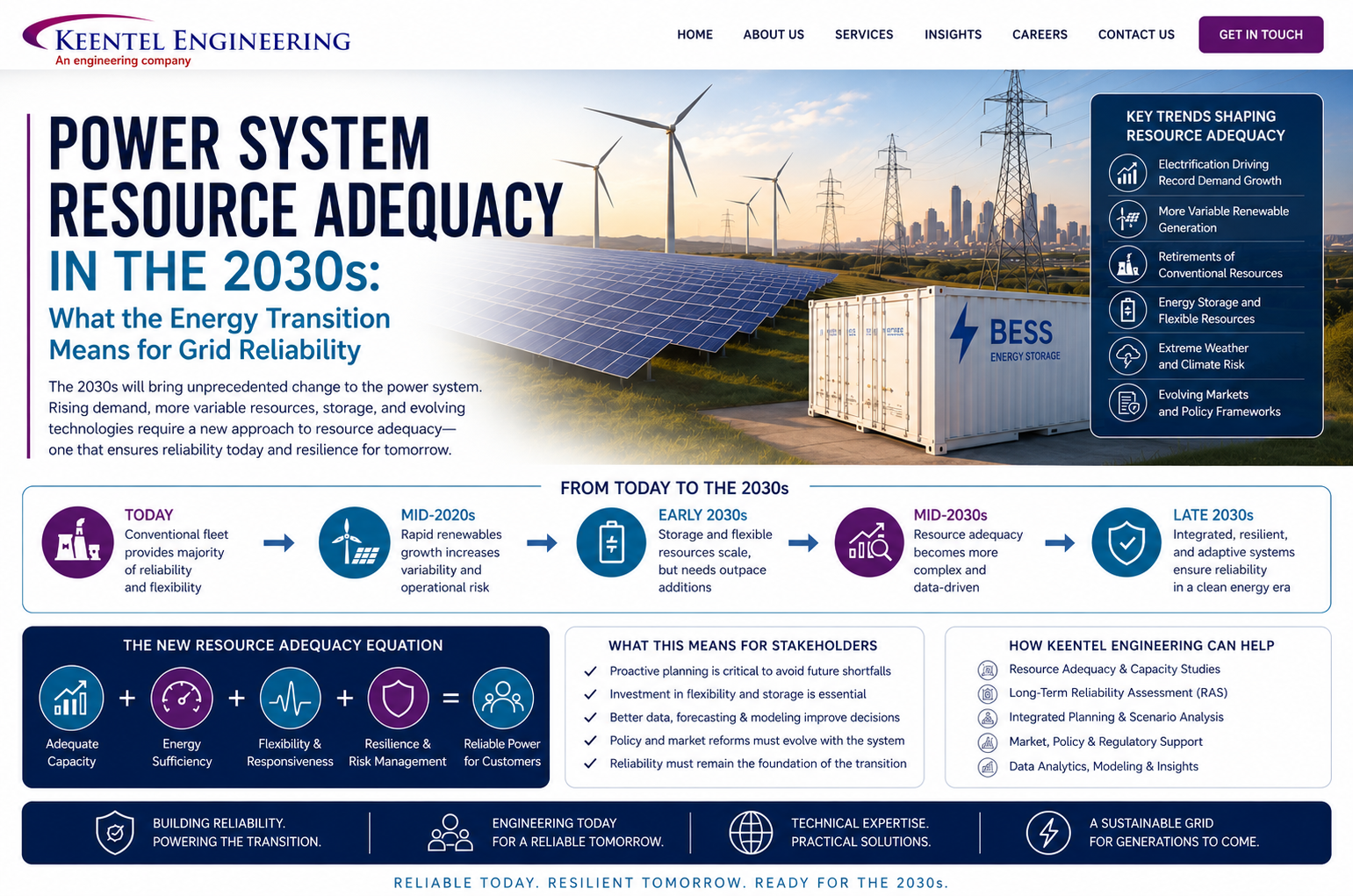
Power System Resource Adequacy in the 2030s: What the Energy Transition Means for Grid Reliability
May 17, 2026 | Blog
Securing the Grid of Tomorrow: What Resource Adequacy Looks Like in a Decarbonized Power System
Introduction: A Reliability Challenge Like No Other
The global energy transition is reshaping electricity systems at a speed and scale that has no historical precedent. Wind and solar now supply growing shares of generation across many regions, coal plants are retiring, and the concept of 'firm' baseload power is evolving. As the grid shifts, so does the nature of the reliability challenge.
At Keentel Engineering we work at the intersection of power system planning, grid analysis, and energy transition strategy. In this brief, we draw on insights from a detailed technical webinar analyzing resource adequacy in Great Britain through the 2030s — a study particularly relevant for any power system undergoing deep decarbonization.
The questions raised are not unique to Britain. They are the same questions grid planners, utilities, regulators, and engineering firms are grappling with across North America, Europe, and beyond: How do you keep the lights on when weather drives your generation? What role does storage play during prolonged scarcity events? How do you model correlated risk across interconnected regions? And what does a reliable, decarbonized power system actually require?
Understanding the New Stress Event
Traditionally, power system stress meant one thing: peak demand on a cold winter evening with a generator unexpectedly offline. That single-axis framing is no longer sufficient.
In a highly renewable system, stress is multi-dimensional. The detailed modeling analysis we examined identified a vivid example: a stress event in mid-to-late February, driven simultaneously by:
- High electricity demand during a cold spell
- A collapse in wind and solar output — what German-speaking grid operators call 'Dunkelflaute' (dark, windless days)
- Constrained imports from neighboring regions experiencing the same weather conditions
Within roughly 48 hours, available renewable generation dropped from around 60 gigawatts to near zero. At the same time, interconnector imports from continental Europe fell sharply because the cold spell extended across northwestern Europe simultaneously. The system was stressed from three directions at once.
Keentel Engineering Perspective
This is the central challenge for grid planners in the 2030s: stress events are no longer single-cause, short-duration spikes. They are multi-factor, correlated, and potentially lasting days to weeks. Planning frameworks must evolve accordingly.
The Role of Energy Storage: Not Just How Much, But How It's Used
Energy storage both short-duration batteries and longer-duration technologies such as pumped hydro and hydrogen — plays a critical role in managing these multi-day stress events. The modeling examined in the webinar revealed something important that is often overlooked in high-level storage discussions: the dispatch strategy matters as much as the installed capacity.
Three storage dispatch strategies were modeled and compared:
- Immediate action — deploy maximum capacity as soon as stress is detected
- Shortfall depth minimization — hold back reserves to smooth the depth of any shortfalls across the event
- Mixed approaches — combinations of the above depending on foresight horizon
The striking finding: all three strategies produced the same total expected unserved energy across the year. But the hours of loss of load and the depth of individual shortfall events varied significantly depending on the strategy chosen. In other words, how you operate your storage fleet determines not whether customers experience outages, but how long those outages last and how severe they are.
This has direct implications for
storage operations
market design, and system operator protocols. It also reinforces that storage is not a passive resource it is an active, strategic tool that must be carefully integrated into grid operations frameworks.
Modeling Methodology: The Science Behind the Insights
The resource adequacy analysis covered in the webinar is built on a sophisticated hourly dispatch model. Understanding the methodology is important because it directly shapes the confidence one can have in the outputs.
Key methodological features:
- Hourly time resolution: The model simulates dispatch on an hour-by-hour basis across a full modeled year, starting April 1 rather than January 1 — a deliberate choice to keep winter periods intact and avoid splitting the highest-stress season across two modeling years.
- 34 years of historical weather data: Rather than relying on synthetic peak events, the model runs across 34 years of observed weather patterns. This captures a realistic range of Dunkelflaute events, cold spells, and other stress drivers.
- 100 random outage patterns per weather year: Plant outages are modeled probabilistically. For each weather year, 100 different outage patterns are simulated, giving 3,400 total simulation runs per portfolio — a computationally intensive but statistically robust approach.
- Imperfect foresight for storage: Unlike many models that assume perfect knowledge of future conditions, this model assigns storage a two-day perfect foresight window and a longer-term probabilistic outlook — more realistic and more conservative than full-foresight assumptions.
- Simplified but detailed European import modeling: Rather than re-running a full pan-European model for every simulation, the team developed an upfront import availability time series that captures correlated continental weather risk. Europe is modeled as constrained to a Loss of Load Expectation (LOLE) of three hours — a conservative assumption that limits the import surplus available to GB during stress.
Loss of Load Expectation, LOLE, Defined
LOLE measures the average number of hours per year in which available generation is expected to be insufficient to meet demand. A LOLE target of 0.1–0.3 hours per year is considered a high-reliability standard and represents what many advanced
power systems target today.
Three Key Findings Every Grid Engineer Should Know
1. Decarbonization and adequacy are not in conflict
One of the most important findings from the analysis is that a highly decarbonized power system can be built to meet reliability targets. Across six portfolio scenarios — all featuring significantly increased renewable capacity, with offshore wind, onshore wind, and solar as the dominant generation sources — systems were designed to meet a LOLE target of 0.1 to 0.3 hours per year.
This directly challenges the assumption that decarbonization inherently degrades reliability. It is technically achievable to have both. The question is not whether to pursue decarbonization, but how to plan, design, and operate the resulting system.
2. Dispatchable capacity remains essential through 2040
Even in portfolios that aggressively add renewables, storage, and interconnection, dispatchable generation — capacity that can be called upon reliably regardless of weather — remained necessary through the 2040 modeling horizon.
In most scenarios, around 10 gigawatts of unabated gas generation remained on the system by 2040, operating at very low annual running hours but providing essential backup during stress events. This raises two important engineering and policy questions:
- What is the economic viability of low-utilization gas plants? Market design and capacity remuneration mechanisms may need to be restructured.
- What does the aging generation fleet look like? Much of the existing gas fleet was commissioned before 2000, meaning by the 2030s many units will be approaching end-of-life. Decisions about refurbishment, life extension, or new-build replacements are approaching.
Crucially, the analysis notes that this dispatchable requirement does not have to be met by gas. Long-duration energy storage — if it can maintain sufficient charge across a multi-day stress event — could serve the same function. This is an active area of exploration.
3. Weather is now the dominant driver of reliability risk
In the scenarios modeled, weather — specifically the occurrence of Dunkelflaute conditions emerged as the dominant driver of loss of load events. Just two or three historical weather years (out of 34 modeled) accounted for the vast majority of system stress.
A fascinating secondary finding: within a single stressed weather year, plant outage management had a significant impact on outcomes. Simulations with better outage coordination during the February 1986 stress event showed no loss of load at all — a powerful demonstration that operational excellence during stress periods matters enormously.
This also highlights a gap in current planning practice: if historical weather data from 30–40 years ago is used without adjustment, it may not capture the full range of stress events relevant under current and future climate conditions. Expanding weather datasets potentially to thousands of synthetic or climate-adjusted years — is a priority research direction.
Interconnection: A Critical but Double-Edged Asset
Great Britain's interconnectors — DC links to France, Belgium, the Netherlands, Norway, Denmark, Germany, and Ireland — play a significant role in system adequacy. Sensitivity analysis removing all imports showed a substantial increase in loss of load hours, with the effect growing more pronounced toward 2040.
However, interconnection is a double-edged asset. The same cold weather that stresses the British system also stresses continental European systems. During the simulated February stress event, available imports fell sharply precisely when they were most needed. The correlated nature of weather risk across interconnected regions means that import availability cannot be assumed with confidence during system stress.
This has direct implications for grid planning:
- Interconnection capacity should be counted conservatively in reliability assessments, with explicit weather-correlation adjustments
- Stress testing should model worst-case import availability — not average availability — during peak scarcity
- Bilateral and multilateral arrangements for emergency sharing must account for the possibility that all parties are under stress simultaneously
The Future of Resource Adequacy Modeling: What Comes Next
The methodology described here represents current best practice, but the field is advancing rapidly.
Key areas being actively developed include:
- Expanded weather datasets: Moving from 34 historical weather years to thousands of synthetic years, potentially using climate modeling outputs to better capture the tails of the weather distribution — where the most severe stress events live.
- Probabilistic stress event framing: Beyond asking 'how much loss of load do we expect,' the field is moving toward 'what is the probability of a specific type of stress event?' This enables more precise risk communication to policymakers and regulators.
- Transmission constraint integration: Current models often treat the system as a single copper plate. Modeling internal transmission constraints adds another layer of geographic risk — some areas may face more acute stress than system-level averages suggest.
- Large load and electrification impacts: Data center loads, EV charging, heat pump adoption, and industrial electrification all add new demand patterns that may alter the timing and nature of stress events. Explicit modeling of these loads is becoming essential.
- Long-duration storage operation: Hydrogen storage, compressed air, pumped hydro across seasons — modeling these technologies' behavior across multi-week or seasonal timescales requires new approaches to foresight and dispatch optimization.
Implications for Engineering Practice
At Keentel Engineering, we translate findings like these into practical guidance for clients in project development, system planning and policy support. The key engineering implications from this analysis include:
- Storage sizing should account for multi-day stress durations, not just daily arbitrage — the storage envelope matters as much as the power rating
- Portfolio design should include diverse resource types that perform differently under the same weather conditions — portfolio diversification reduces correlated risk
- Reliability modeling for planning applications should move toward probabilistic, weather-conditional frameworks rather than deterministic single-point peak analysis
- Aging thermal fleet decisions — retirement, refurbishment, replacement — need to account for the dispatchable reserve role these assets play in a future high-renewable system
- Interconnection agreements and cross-border planning should be structured to account for simultaneous stress and not assume import availability during high-demand, low-renewable periods
CASE STUDY
Demand-Side Flexibility Valuation and Program Design for an Industrial Utility District
Quantifying and structuring demand response contributions to system adequacy in a decarbonizing grid
Background
An industrial utility district serving a mix of manufacturing, data center, and commercial customers retained Keentel Engineering to redesign its demand-side flexibility program. The existing program had been designed primarily around summer peak demand reduction — a legacy of the district's historical reliability challenges during hot weather. As the regional grid decarbonized, however, stress events were increasingly occurring in winter during extended low-renewable periods, not summer peak days.
The district's reliability coordinator had observed that existing demand response contracts were largely ineffective during winter stress events, because most enrolled customers had interruptibility clauses that excluded cold-weather operational periods. The district needed a fundamentally redesigned program aligned with the reliability challenges of a decarbonized grid.
Challenge
The challenge had two dimensions. The first was analytical: quantifying what demand-side flexibility actually contributes to system reliability during multi-day winter stress events, using a framework that captured its impact on unserved energy depth rather than just outage hours avoided. Standard demand response valuation models — built around avoided peak demand — did not accurately represent the value in this context.
The second dimension was contractual and operational: many of the district's largest industrial customers had specific operational constraints that made blanket interruptibility impractical. A more sophisticated program structure was needed — one that could extract partial flexibility from a larger base of customers rather than requiring full curtailment from a small group.
Approach
Keentel Engineering structured the engagement in three phases:
Phase 1: Reliability Value Quantification
Using an hourly probabilistic dispatch model calibrated to the district's system, Keentel Engineering modeled the impact of demand-side flexibility on unserved energy during simulated Dunkelflaute events. Consistent with advanced resource adequacy research, the analysis confirmed that DSF has its largest impact on reducing unserved energy depth — the total megawatt-hours of demand not met — rather than on eliminating outage hours entirely. A valuation framework was developed based on this finding, providing a cost-per-MWh-of-unserved-energy-avoided metric that supported program design and contract pricing.
Phase 2: Customer Segmentation and Tiered Program Design
Keentel Engineering segmented the district's industrial customer base by flexibility profile — availability window, response speed, minimum curtailment duration, and seasonal availability. Four tiers were defined:
- Tier 1 — Full winter interruptibility: Customers able to reduce load by 50% or more on 2-hour notice, available October through March. Highest compensation rate.
- Tier 2 — Partial winter interruptibility: Customers able to reduce non-essential loads (HVAC set-point adjustment, non-critical process loads) by 15–30%, available during identified high-risk weather windows.
- Tier 3 — Data center demand shifting: Data center customers enrolled in managed UPS and cooling pre-cooling protocols, providing 10–20% load reduction capability with 4-hour lead time.
- Tier 4 — EV fleet managed charging: Fleet operators enrolled in overnight charging management protocols, providing demand reduction through charging deferral during evening stress hours.
Phase 3: Protocol Development and Activation Framework
Keentel Engineering developed activation protocols linked to the district's reliability coordinator's weather-conditional LOLE monitoring system. Tier 1 activations are triggered when 48-hour loss-of-load probability exceeds a defined threshold. Tier 2 and below activations are triggered on a staggered basis based on event severity and duration projections. Post-event settlement protocols were developed to handle partial curtailment verification across the tiered customer base.
Results
| Program Scope | Approximately 340 MW of enrolled demand-side flexibility across all tiers |
|---|---|
| Customer Participation | Tier 1: 18 industrial customers (42 MW), Tier 2: 67 customers (148 MW), Tier 3: 12 data centers (89 MW), Tier 4: 8 EV fleet operators (61 MW) |
| Reliability Contribution | Modeled reduction in expected unserved energy during winter stress events of 38% |
| LOLE Impact | Marginal improvement in annual LOLE (0.06 hours), consistent with research findings that DSF reduces depth more than frequency |
| Program Cost | 22% lower cost per MWh of reliability value compared to prior peak-summer program structure |
| Customer Satisfaction | Tiered structure enabled 4x more customers to participate vs. prior all-or-nothing curtailment program |
Outcome
The redesigned program launched ahead of the winter heating season. During its first winter, a three-day low-wind event triggered Tier 1 and Tier 2 activations. Enrolled customers delivered 87% of their contracted curtailment — above the 80% performance threshold in the program contracts. The district's reliability coordinator reported that the activation meaningfully reduced the severity of the supply shortfall during the event's peak hours.
The tiered program structure has since been adopted as a model by two neighboring utility districts in the region, and Keentel Engineering is working with the district to expand Tier 4 enrollment as EV fleet adoption accelerates among industrial customers in the service territory.
FREQUENTLY ASKED QUESTIONS
Resource Adequacy in Decarbonizing Power Systems: Your Questions Answered
Keentel Engineering's engineering and planning specialists address the most common questions from clients, project developers, and policy stakeholders about resource adequacy in the energy transition.
Q: What is resource adequacy and why does it matter more now than ever?
A: Resource adequacy refers to a power system's ability to meet electricity demand at all times, including during stress events. It matters more now because decarbonization is shifting generation from dispatchable fossil fuels to weather-dependent renewables. When the wind stops blowing and the sun isn't shining — particularly during extended cold, calm winter periods — systems need sufficient backup resources. The planning challenge has grown significantly more complex as a result.
Q: What is Loss of Load Expectation (LOLE) and how is it used in planning?
A: Loss of Load Expectation (LOLE) is the standard reliability metric in many jurisdictions. It measures the average number of hours per year in which available generation supply is expected to fall short of demand. A typical reliability standard is 0.1 to 0.3 hours per year — meaning, on average, less than one hour of supply shortfall is expected annually. LOLE is calculated across thousands of simulations combining different weather years and plant outage patterns. Planning to a LOLE target ensures that adequate generation and storage capacity is in place.
Q: What is Dunkelflaute and why does it matter for grid reliability?
A: Dunkelflaute is a German term meaning 'dark doldrums' — periods of low wind, low solar output, and typically cold weather. These events can last days or even weeks and represent the most severe stress periods for renewable-heavy power systems. During Dunkelflaute, solar generation is minimal, wind generation collapses, and demand may be elevated due to cold temperatures. What makes them especially challenging is that they often affect large geographic areas simultaneously — meaning neighboring countries may all be short on generation at the same time, limiting the ability to import power.
Q: How should energy storage be sized for a high-renewable power system?
A: Storage sizing in a high-renewable system must go beyond daily arbitrage. Short-duration batteries (2–4 hours) are effective for managing intra-day variability but cannot bridge multi-day Dunkelflaute events. Longer-duration storage — pumped hydro, compressed air, hydrogen — becomes essential for week-long stress periods. Keentel Engineering recommends that storage sizing analysis explicitly model multi-day scarcity events, evaluate how the dispatch strategy affects stress event outcomes, and consider the full seasonal cycle of charging and discharging, not just daily peak shaving.
Q: Does building a low-carbon power system inevitably reduce reliability?
A: No — this is one of the most important findings from recent advanced resource adequacy modeling. Multiple generation portfolio scenarios, all with high penetrations of offshore wind, onshore wind, and solar, plus batteries and long-duration storage, were built to meet a reliability target of 0.1–0.3 hours of LOLE per year. Decarbonization and reliability are not mutually exclusive. What is required is careful portfolio design that accounts for weather-correlated risk, appropriate levels of dispatchable backup capacity, and smart integration of storage and demand flexibility.
Q: Will gas plants still be needed in a decarbonized power system?
A: Based on current modeling, dispatchable generation — potentially including some unabated gas — is likely to remain part of the mix through 2040, operating at very low annual run hours but providing critical backup during extended low-renewable, high-demand events. However, the dispatchable role does not have to be filled by gas specifically. Long-duration energy storage capable of sustaining output across a multi-day stress event could serve the same function. The key engineering questions are: what is the minimum dispatchable capacity required, what technologies can reliably provide it, and what market structures make low-utilization dispatchable assets financially viable?
Q: How should interconnection be counted in reliability assessments?
A: Interconnection should be valued conservatively in reliability assessments. The critical issue is correlated risk: when a cold, calm weather period stresses one region, the same weather conditions often affect neighboring regions simultaneously. This means that during the periods when imports are most needed, neighboring systems may also be short on generation and unable to export. Keentel Engineering recommends using weather-conditional import availability assumptions — specifically calculating how much import capacity is likely available during peak stress periods — rather than using average import figures that overstate true availability during critical events.
Q: What is weather-conditional LOLE and why is it useful?
A: Standard LOLE is an average across all weather years modeled. Weather-conditional LOLE disaggregates this by calculating LOLE separately for each historical weather year. This reveals which weather patterns are most dangerous for system reliability. In advanced modeling, it was found that just two or three out of 34 historical weather years accounted for the vast majority of system stress. Weather-conditional analysis allows planners to understand which weather risk profiles are most consequential and to design stress tests that reflect those specific conditions.
Q: How does demand-side flexibility contribute to reliability?c
A: Demand-side flexibility (DSF) — the ability of consumers to reduce or shift electricity use in response to grid conditions — contributes to reliability primarily by reducing the severity of outage events, not their frequency. Modeling shows that constraining DSF growth has a limited effect on the total hours of supply shortfall, but significantly increases the total unserved energy during those events. In practical terms, DSF helps limit how bad a shortage gets, which has real implications for consumer impact and economic cost even if it doesn't prevent all outage hours.
Q: What are the limitations of using historical weather data for resource adequacy modeling?
A: Historical weather data captures real variability but may not fully represent the stress events relevant to future power systems. There are two key limitations. First, historical datasets of 30–40 years may simply not contain examples of the most extreme weather combinations possible. Second, climate change is altering weather patterns — the frequency, duration, and geographic extent of Dunkelflaute events may be different in the 2030s and 2040s compared to historical observations. Leading practice is moving toward expanding weather datasets using climate model outputs and synthetic weather generation to capture a broader, more forward-looking range of scenarios.
Q: How should engineering firms approach resource adequacy in project planning?
A: Keentel Engineering recommends a multi-step approach: First, use probabilistic, weather-conditional modeling frameworks rather than deterministic peak analysis. Second, model storage dispatch strategies explicitly — not just capacity — because how storage is operated during stress events determines the severity of supply shortfalls. Third, account for correlated risk between interconnected systems when valuing imports. Fourth, incorporate demand flexibility in reliability assessments with metrics that capture unserved energy depth, not just outage hours. Fifth, stress-test portfolios against a range of weather scenarios, including extended low-renewable periods, rather than relying solely on historical single-year peak events.
Q: What technologies are most uncertain in future resource adequacy planning?
A: Several technologies carry significant uncertainty in resource adequacy planning for the 2030s. Hydrogen storage and generation represents one of the largest uncertainties — the scale at which green hydrogen infrastructure will be deployed and available for power system use is still unclear. Carbon capture and storage applied to gas generation is another. Long-duration storage technologies beyond pumped hydro, including compressed air and flow batteries, are scaling but their deployment trajectories are uncertain. Additionally, the extent to which large, flexible loads — data centers, EV fleets, industrial electrolyzers — can provide
About Keentel Engineering
Keentel Engineering provides power system planning, grid analysis, and energy transition engineering services to utilities, grid operators, developers, and policy stakeholders. Our work spans resource adequacy modeling, storage dispatch optimization, interconnection analysis, and demand-side program design — with a focus on the reliability challenges of decarbonizing power systems.

About the Author:
Sandip "Sonny" R. Patel, P.E.
IEEE Senior Member · Founder & CEO, Keentel Engineering
In 1995, Sonny Patel earned his Electrical Engineering degree from the University of Illinois. But degrees don't build legacies — action does.
For three decades, he has worked the power industry from every side of the table: 16 years as a utility engineer at Exelon/Commonwealth Edison; generation leadership across hydroelectric, industrial steam turbine, and a 9 GW renewable fleet; NERC Regional Entity Senior Compliance Engineer and Audit Team Lead, auditing some of the nation's largest utilities; and testing and commissioning lead on equipment up to 765 kV — the very top of the North American grid.Utility. Generator. Regulator. Consultant. Few engineers have seen all four seats. Fewer still have sat in them.
His experience spans nuclear, hydro, conventional generation, renewables, oil and gas, mining — and today's data centers, where he is authoring a three-book series on data center design. He is a Licensed Professional Engineer in six states and a Licensed Electrical Contractor in Florida (Unlimited EC) — he doesn't just design the work; he's qualified to stand behind its execution.Today, as Founder and CEO of Keentel Engineering, Sonny leads a nationwide team of engineers delivering substation design, power system studies, NERC compliance, and commissioning — done right, coast to coast.Three decades. Every side of the table. One standard: accountable engineering.
Services

Let's Discuss Your Project
Let's book a call to discuss your electrical engineering project that we can help you with.
About the Author:
Sandip "Sonny" R. Patel, P.E.
IEEE Senior Member · Founder & CEO, Keentel Engineering
In 1995, Sonny Patel earned his Electrical Engineering degree from the University of Illinois. But degrees don't build legacies — action does.
For three decades, he has worked the power industry from every side of the table: 16 years as a utility engineer at Exelon/Commonwealth Edison; generation leadership across hydroelectric, industrial steam turbine, and a 9 GW renewable fleet; NERC Regional Entity Senior Compliance Engineer and Audit Team Lead, auditing some of the nation's largest utilities; and testing and commissioning lead on equipment up to 765 kV — the very top of the North American grid.
Utility. Generator. Regulator. Consultant. Few engineers have seen all four seats. Fewer still have sat in them.
His experience spans nuclear, hydro, conventional generation, renewables, oil and gas, mining — and today's data centers, where he is authoring a three-book series on data center design. He is a Licensed Professional Engineer in six states and a Licensed Electrical Contractor in Florida (Unlimited EC) — he doesn't just design the work; he's qualified to stand behind its execution.
Today, as Founder and CEO of Keentel Engineering, Sonny leads a nationwide team of engineers delivering substation design, power system studies, NERC compliance, and commissioning — done right, coast to coast.Three decades. Every side of the table. One standard: accountable engineering.
Leave a Comment
Thank you for contacting us.
We will get back to you as soon as possible.
We will get back to you as soon as possible.
Oops, there was an error sending your message.
Please try again later.
Please try again later.
Related Posts
By SANDIP R PATEL
•
October 23, 2026
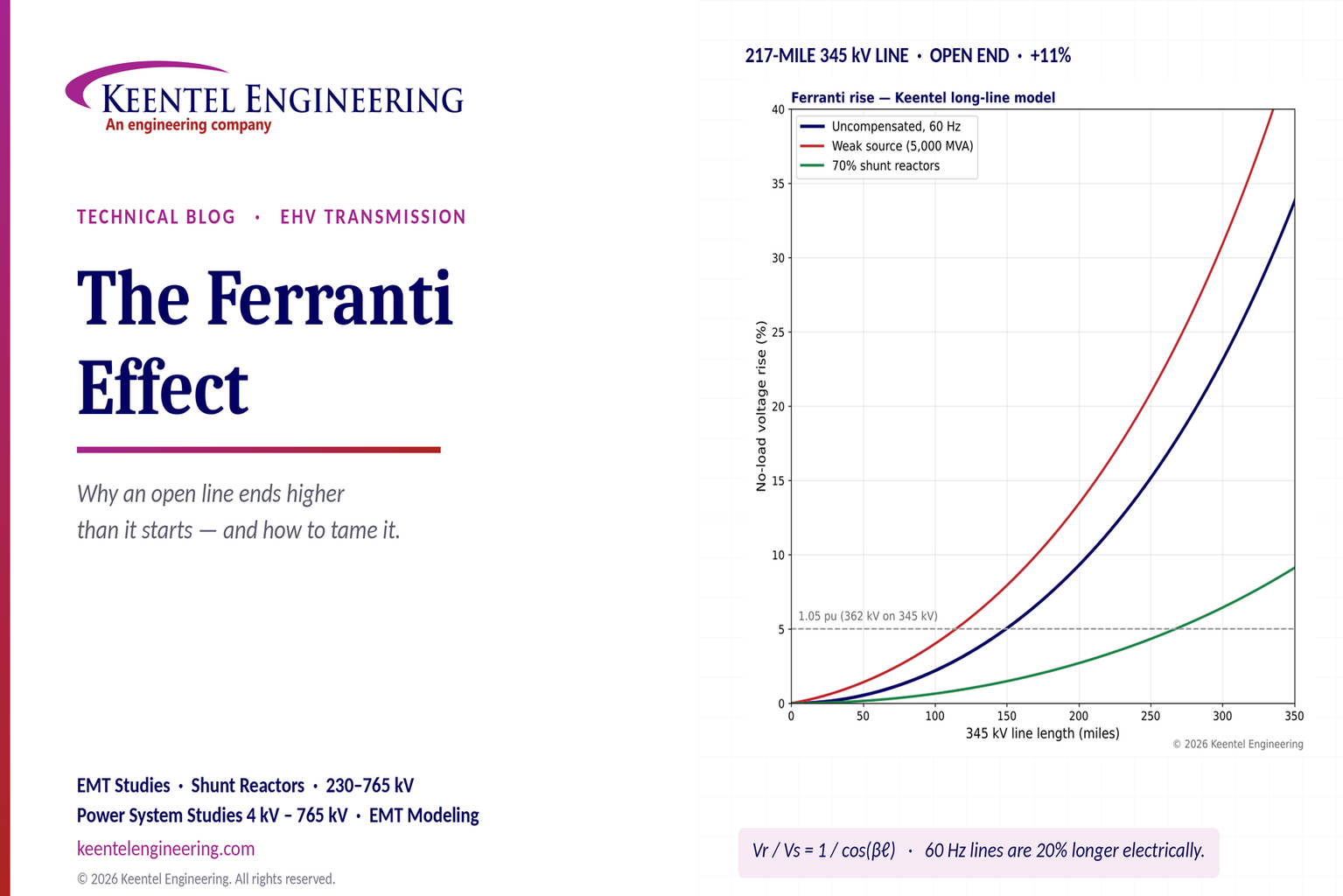
Explore the Ferranti effect in EHV transmission lines: voltage rise, 345 kV examples, switching overvoltages, shunt reactor sizing and mitigation.
By SANDIP R PATEL
•
October 21, 2026
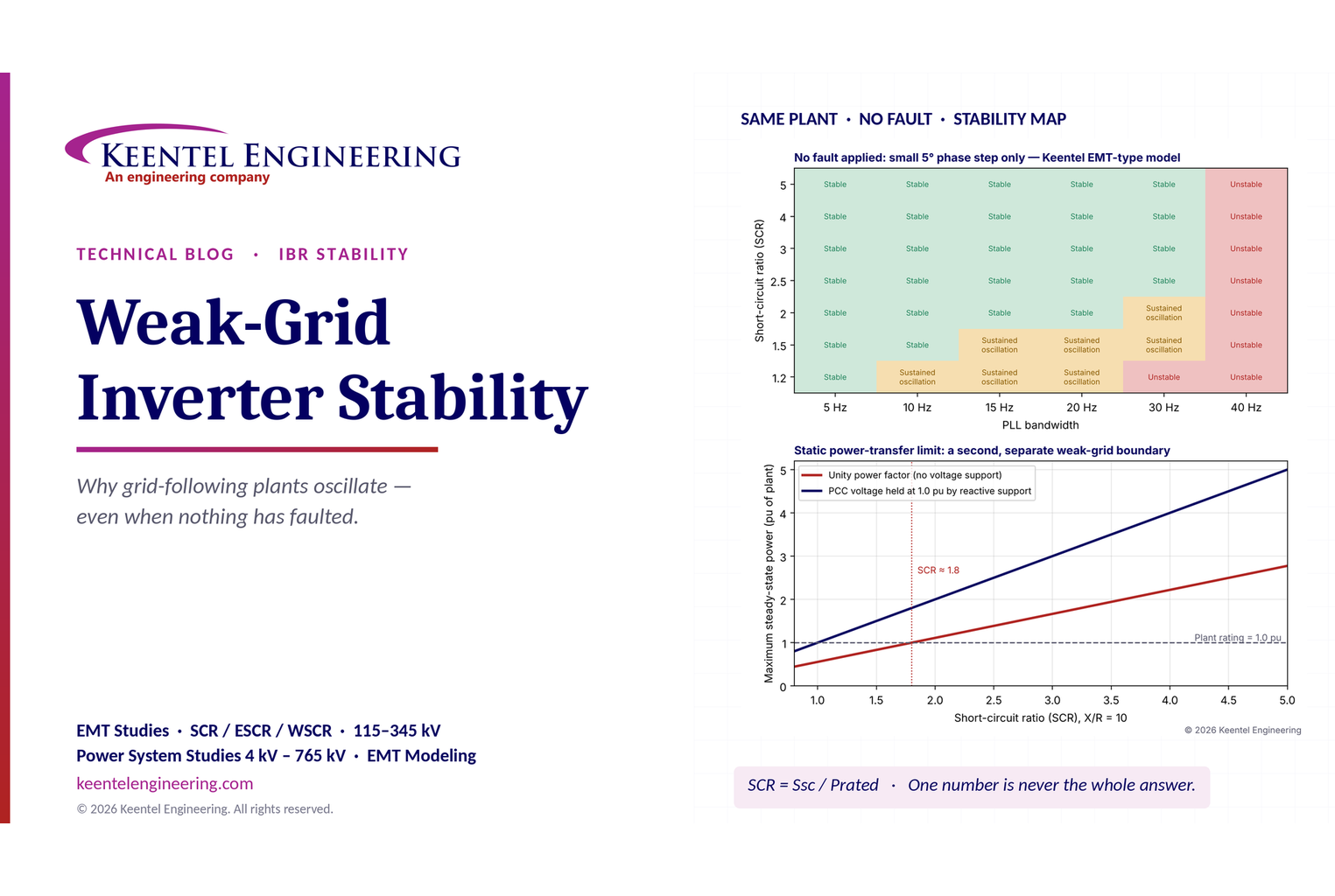
Learn why grid-following inverters become unstable without grid faults. Explore SCR, PLL interactions, EMT studies, grid strength, and mitigation.
By SANDIP R PATEL
•
October 21, 2026
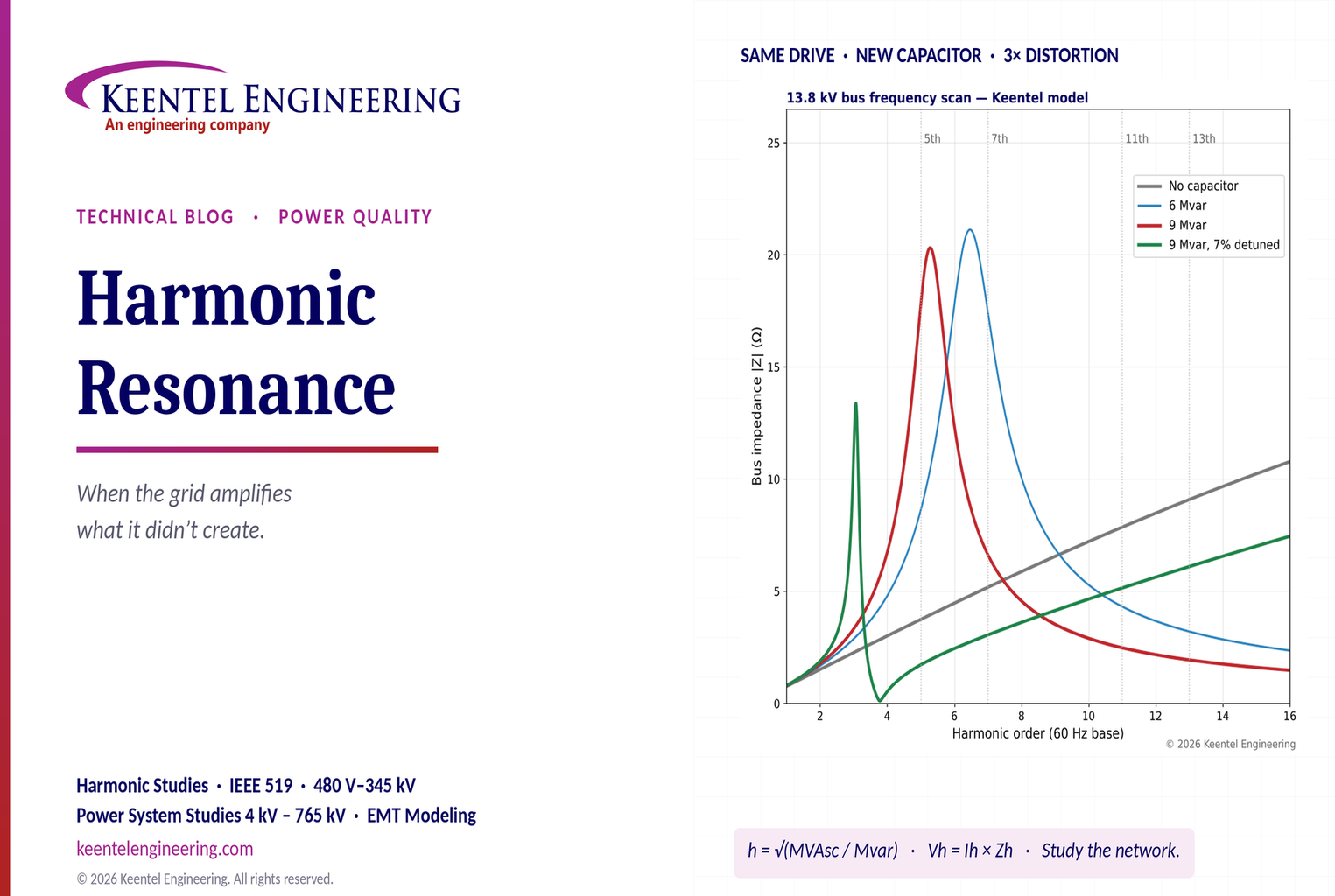
Learn how harmonic resonance amplifies distortion in power systems. Explore capacitor banks, detuned reactors, frequency scans, and IEEE 519 solutions.
By SANDIP R PATEL
•
October 20, 2026
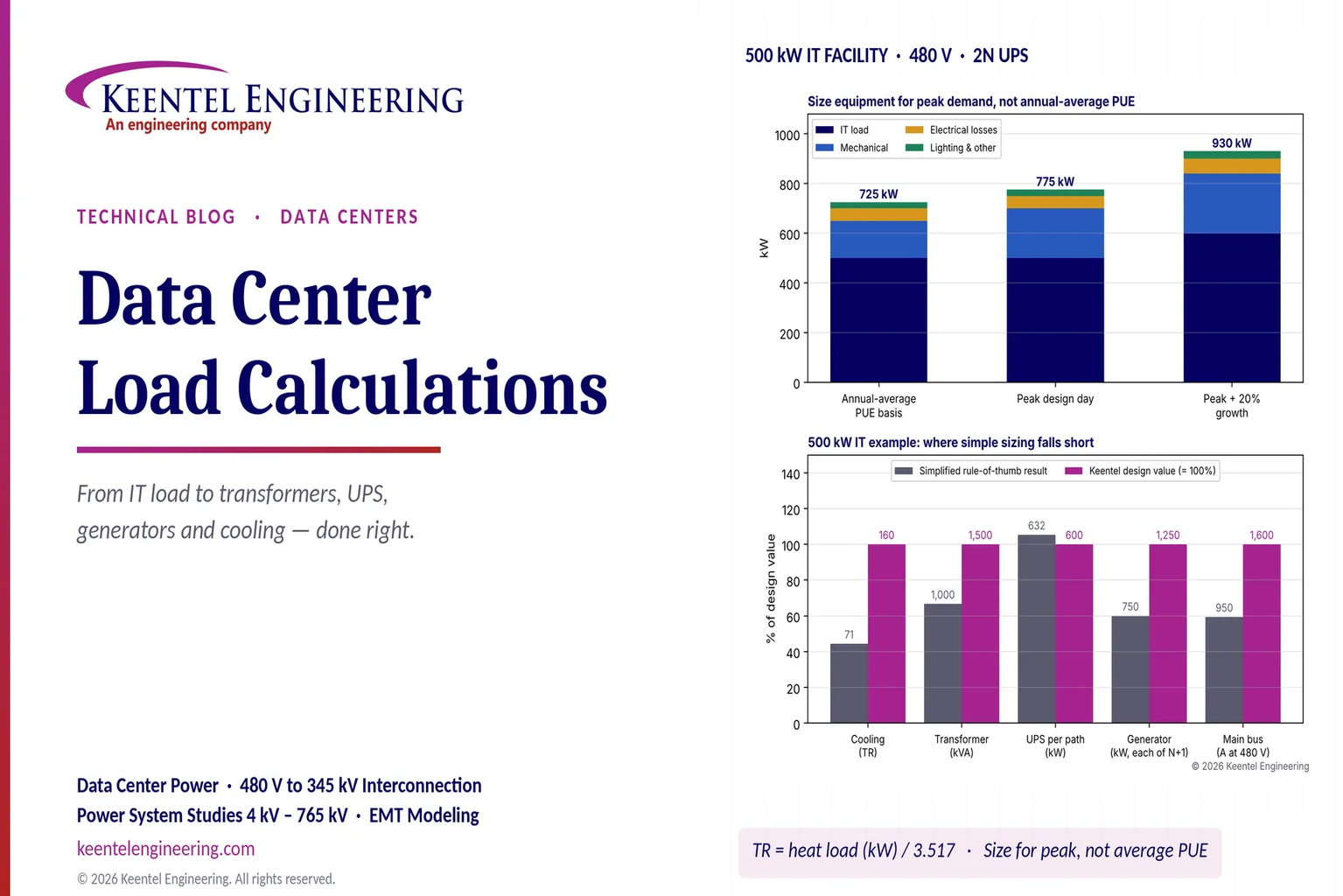
Learn data center electrical load calculations, including IT demand, PUE, UPS and generator sizing, cooling loads, redundancy, and worked US examples.
By SANDIP R PATEL
•
October 20, 2026
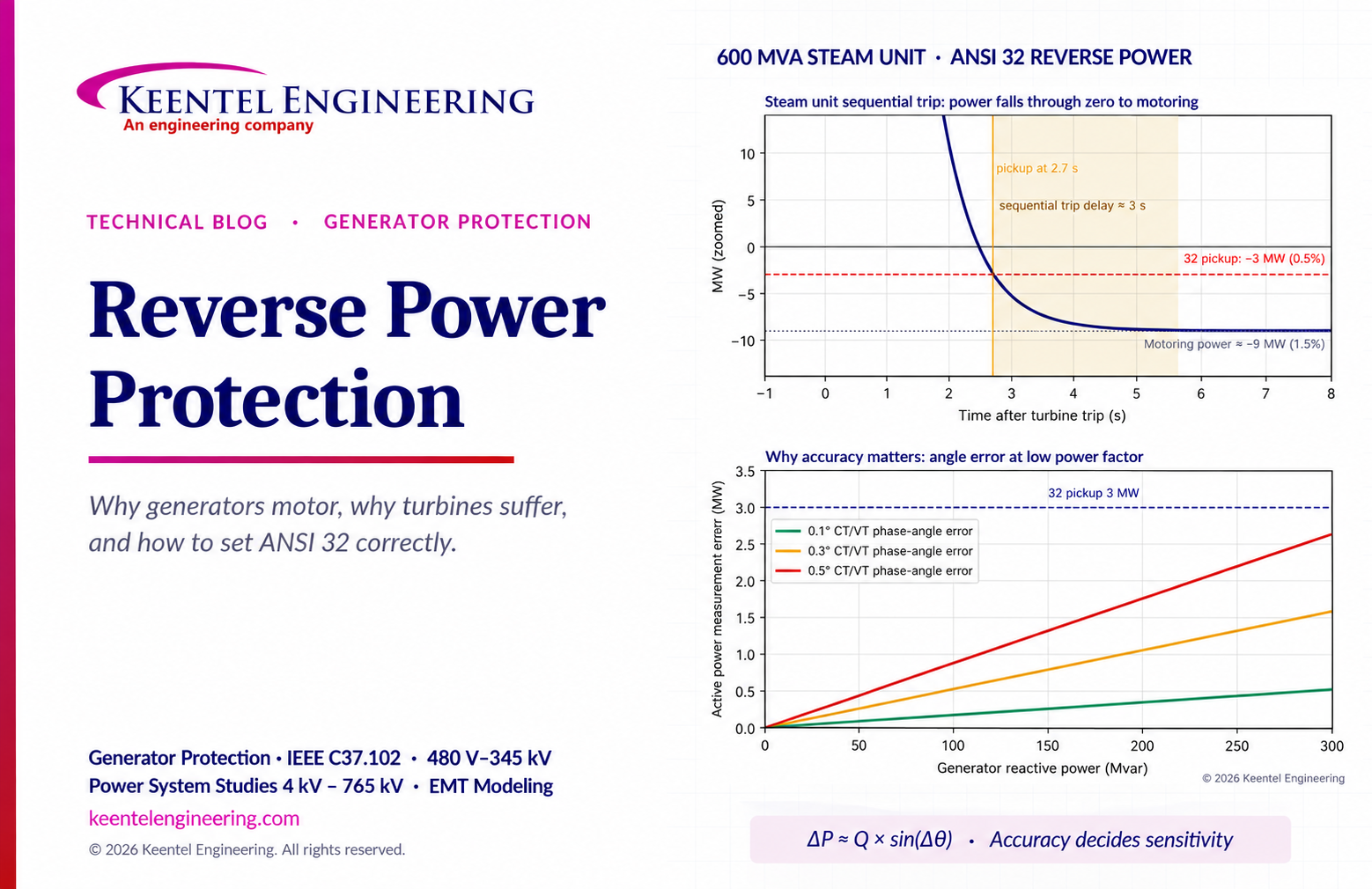
Learn reverse power protection (ANSI 32), generator motoring, relay pickup settings, time delays, sequential tripping and testing for US power plants.
Copy
By Team 2 Dexora
•
October 20, 2026
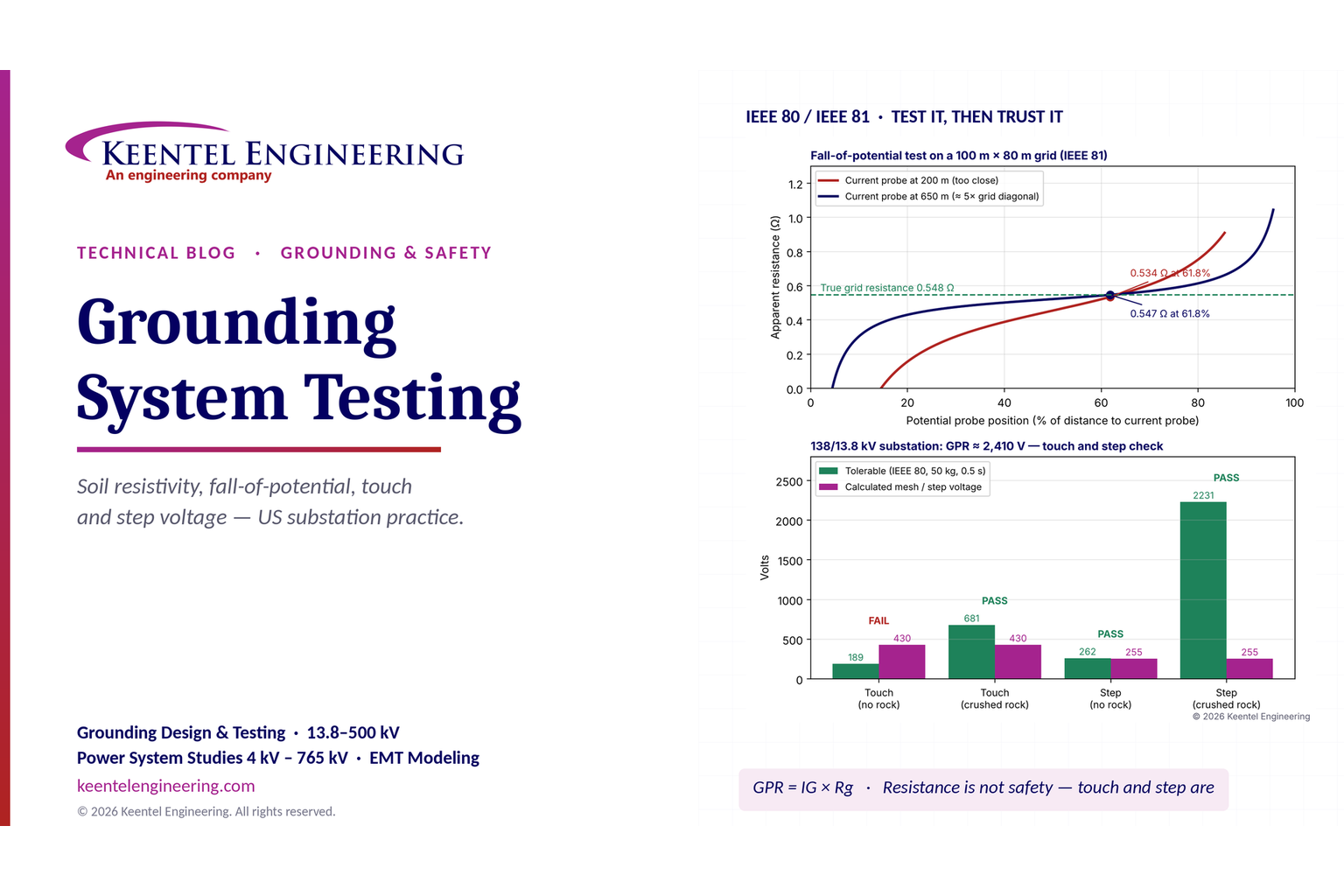
Explore grounding system testing with Keentel Engineering. Learn IEEE 80/81 methods, soil resistivity, ground resistance, and touch and step voltage safety.
By SANDIP R PATEL
•
October 13, 2026
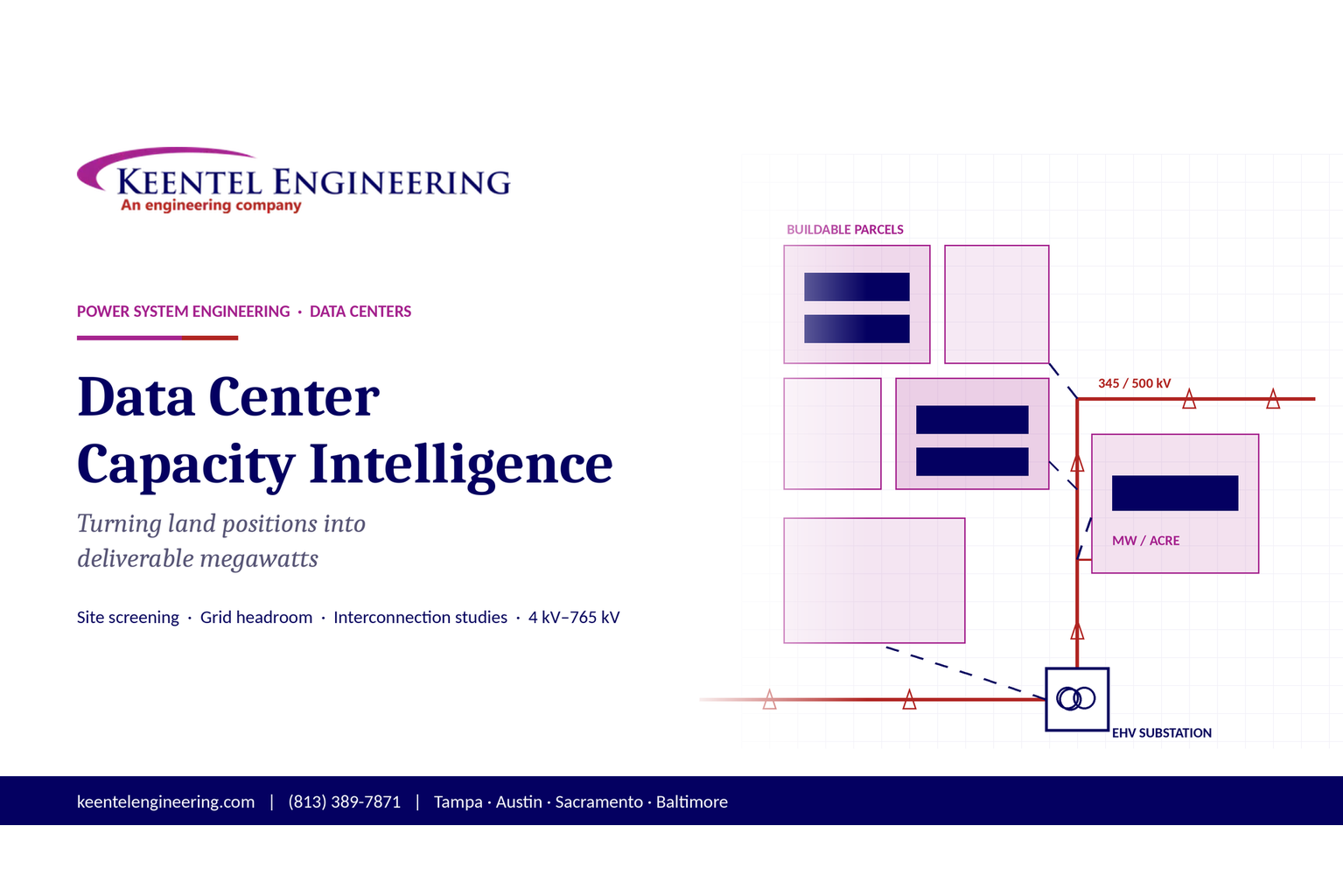
Plan data center capacity with land screening, MW-per-acre estimates, grid power availability and interconnection feasibility studies from Keentel Engineering.
By SANDIP R PATEL
•
October 11, 2026
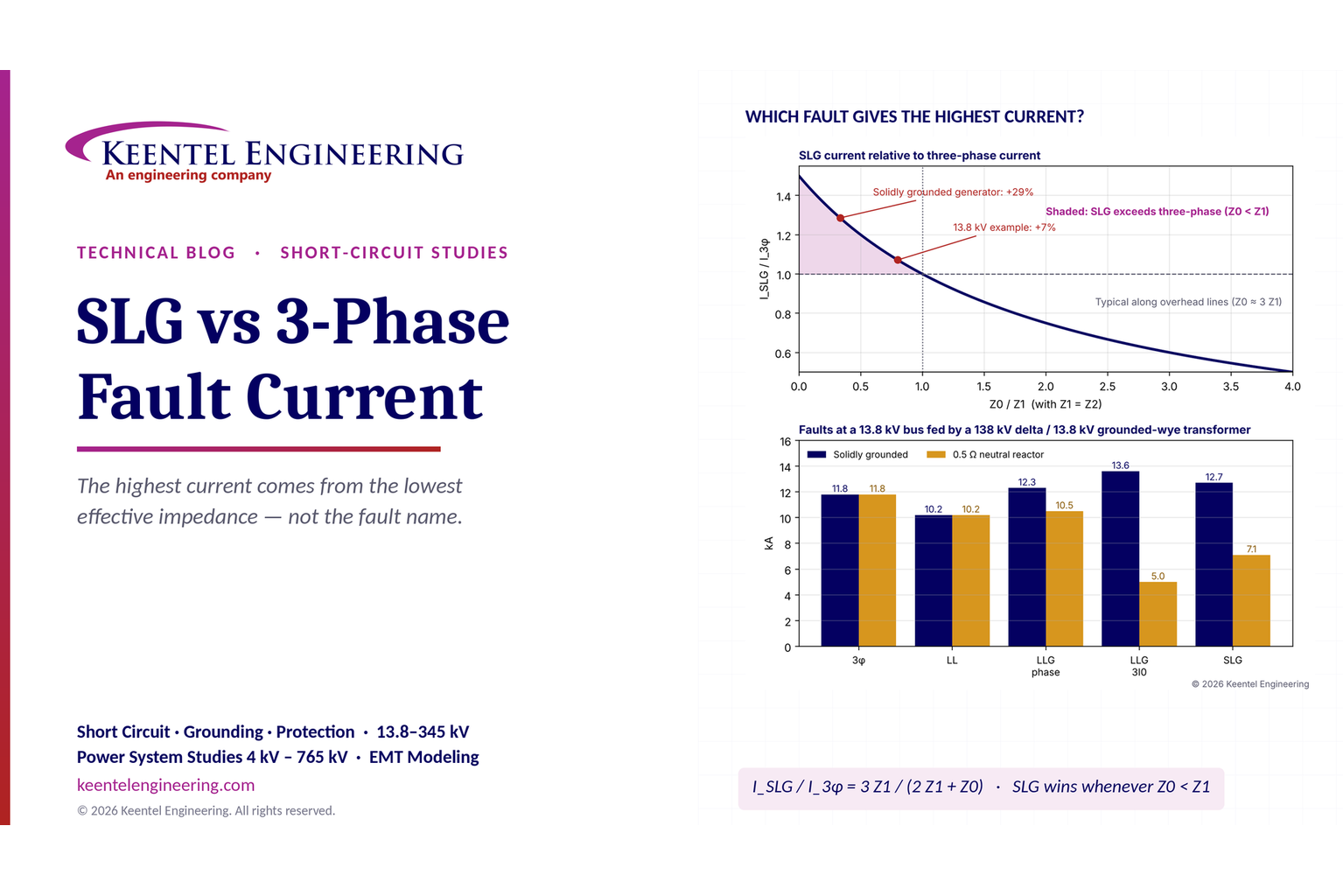
Learn which fault produces the highest current at a bus, why SLG faults can exceed three-phase faults, and how symmetrical components determine fault duty.
By SANDIP R PATEL
•
October 11, 2026
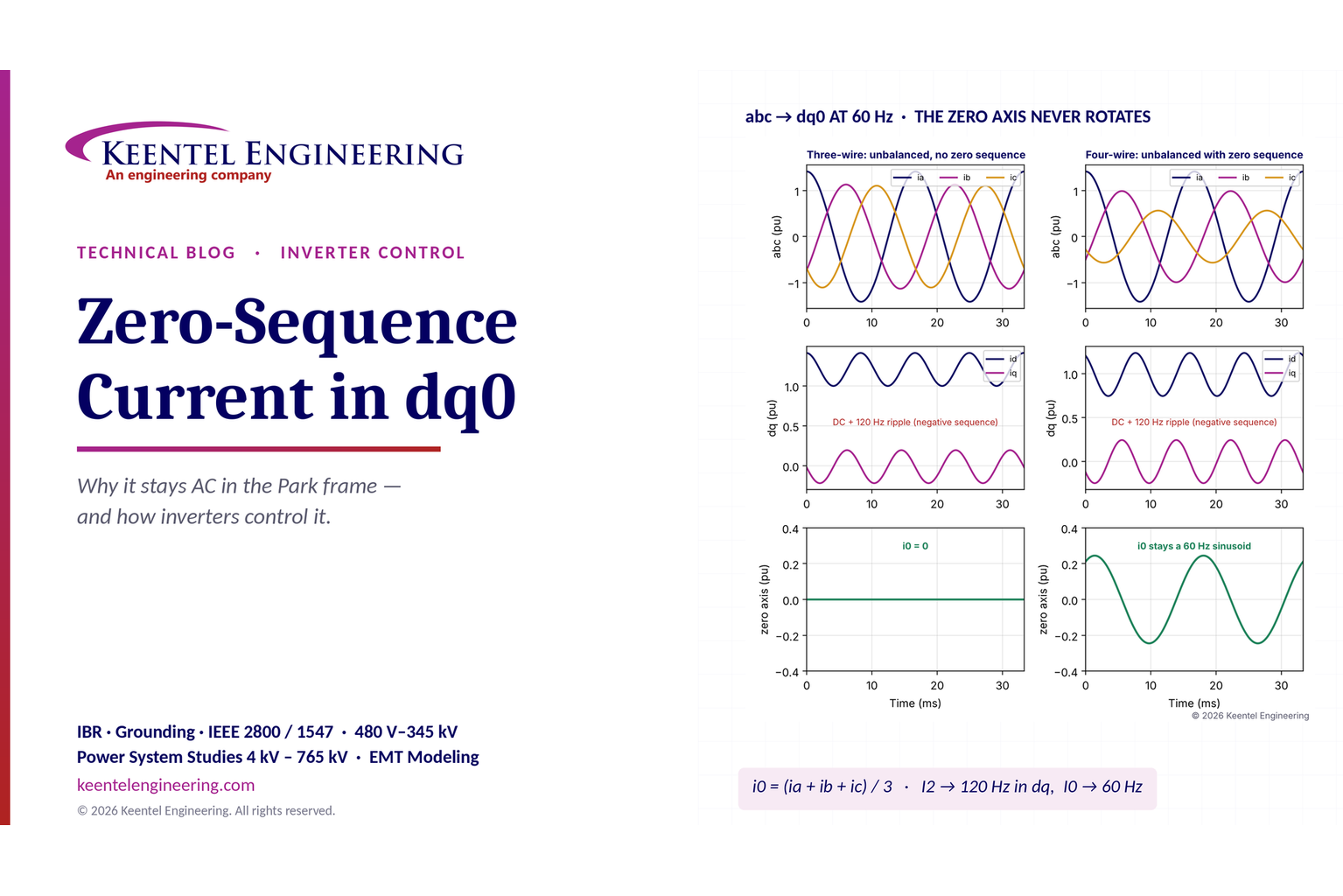
Learn why zero-sequence current pulsates in the dq0 frame, how Park's transformation works, and how inverter controls handle unbalance and ground faults.