A Coordinated Electric System Interconnection Review—the utility’s deep-dive on technical and cost impacts of your project.
Challenge: Frequent false tripping using conventional electromechanical relays
Solution: SEL-487E integration with multi-terminal differential protection and dynamic inrush restraint
Result: 90% reduction in false trips, saving over $250,000 in downtime
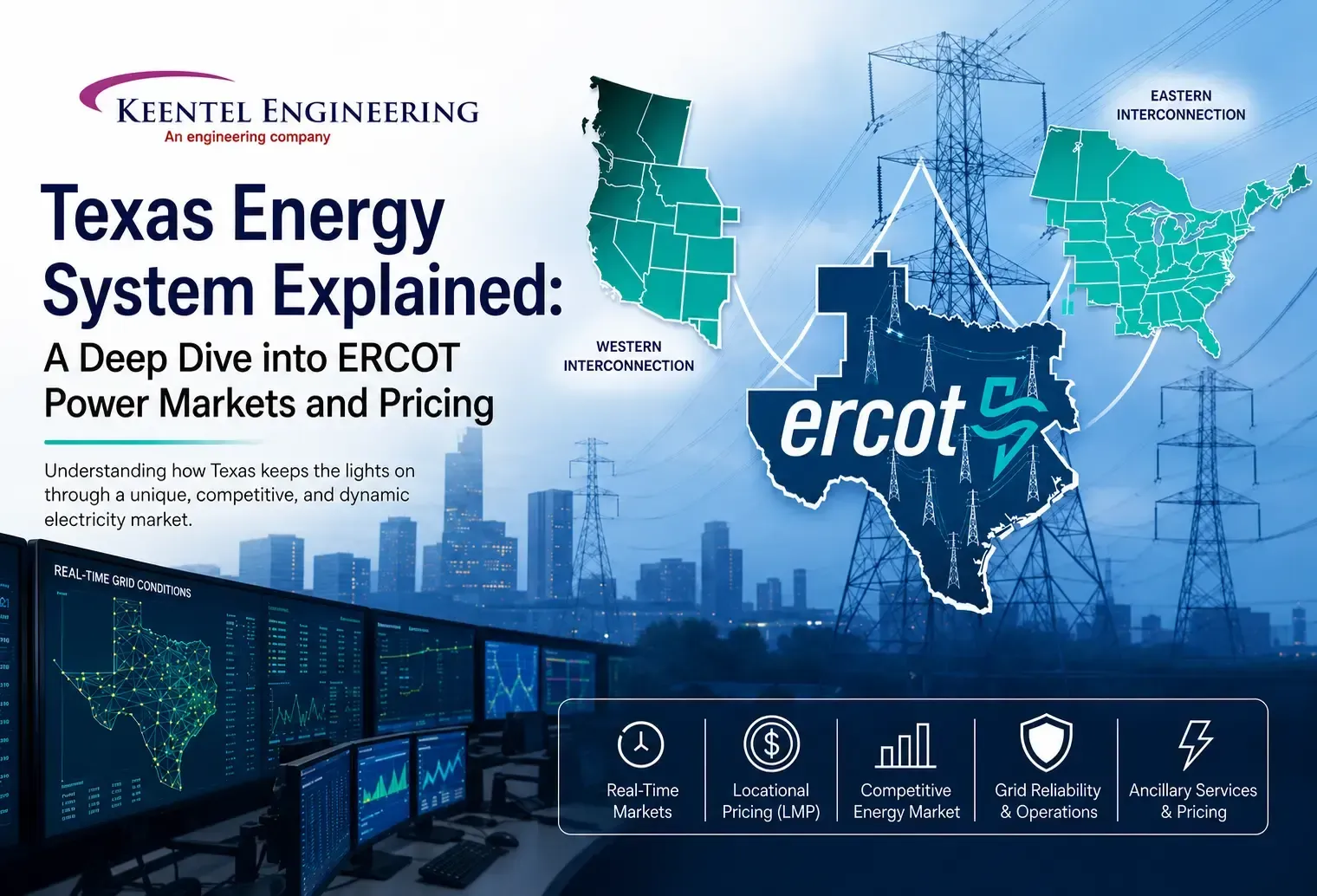
Texas Energy System Explained: A Deep Dive into ERCOT Power Markets and Pricing
May 3, 2026 | Blog
How the Lone Star State Keeps the Lights On
Texas is unlike any other state when it comes to electricity. It runs its own grid, makes its own rules, and has built one of the most sophisticated competitive power markets in the world. Whether you're a renewable energy developer, an industrial power buyer, or just someone who wants to understand why your electricity bill spikes in summer, understanding ERCOT is essential.
This post breaks down everything you need to know about how Texas's electricity system works from the big-picture structure all the way down to five-minute dispatch intervals.
What Is ERCOT, and Why Does Texas Have Its Own Grid?
The Electric Reliability Council of Texas (ERCOT) is an independent, non-profit organization that manages the flow of electricity for roughly 90% of Texas. It serves over 26 million customers across a geographically enormous and diverse territory — from the wind-swept plains of West Texas to the dense urban centers of Houston, Dallas, and Austin.
But here's what makes Texas truly unique: ERCOT is the only U.S.-based grid operator that does not fall under the jurisdiction of the Federal Energy Regulatory Commission (FERC).
Every other ISO (Independent System Operator) or RTO (Regional Transmission Organization) in the continental United States answers to FERC, the federal agency responsible for overseeing interstate electricity and natural gas transmission. ERCOT sidesteps this entirely because it has no synchronous AC connections to the Eastern or Western Interconnections — the two massive grids that cover the rest of the country.
Instead, ERCOT is overseen by the Public Utility Commission of Texas (PUCT), which has final say on ERCOT's rules and protocols. Both ERCOT and the PUCT, in turn, operate within the frameworks set by the Texas state legislature.
The result? Texas has enormous autonomy in designing and running its power market for better and for worse, as events like Winter Storm Uri in 2021 dramatically illustrated.
The Structure of North America's Power System
To appreciate ERCOT's uniqueness, it helps to zoom out. North America's electricity system is not one giant unified grid. It's a patchwork of regional markets, each managed by an ISO or RTO. As of early 2024, there are nine ISOs and RTOs across North America.
- ISOs tend to cover single states or smaller regions
- RTOs tend to cover larger multi-state or multi-province areas
Some regions still aren't covered by ISOs or RTOs at all. But for those that are, FERC is the federal referee — except, of course, in Texas.
Who Does What: The Key Players in ERCOT's Market
ERCOT doesn't own any physical infrastructure. It's a market operator and grid coordinator. The actual assets — wires, towers, generators — are owned and operated by a variety of distinct entities. Here's who's who:
Transmission Service Providers (TSPs)
TSPs own and operate the high-voltage wires and towers that carry electricity long distances across the state. They are the physical backbone of the system.
Resource Entities (REs)
These are the companies that own generation assets wind farms solar plants, gas generators, nuclear plants , batteries — as well as load resources that can import power. They're the producers (and sometimes consumers) of electricity.
Qualified Scheduling Entities (QSEs)
QSEs are the critical middlemen. Because ERCOT's markets are complex, resource entities don't interact with ERCOT directly. Instead, QSEs:
- Submit bids and offers on behalf of resources
- Keep ERCOT informed of a resource's planned operations
- Handle financial settlement with both ERCOT and the resource entity
Think of QSEs as the brokers or agents of the power market.
Load Serving Entities (LSEs)
LSEs supply electricity to end consumers — homes, businesses, industrial facilities. In many parts of Texas, consumers can choose their electricity provider (the famous Texas deregulated retail market). In other parts of the state, a non-opt-in entity serves as the default provider with no competitive choice.
LSEs purchase power either through ERCOT's day-ahead and real-time wholesale markets (via QSEs) or through longer-term bilateral contracts with generators.
Long-Term Contracts: The Foundation of the Market
Before any electricity flows in real time, the vast majority of power in ERCOT is contracted through long-term bilateral agreements.
Why Long-Term Contracts Matter So Much in ERCOT
This is where ERCOT's most distinctive feature comes into play: ERCOT has no capacity market.
In many other power markets, generators receive payments simply for being available — for their capacity to generate, even when they're not running. These capacity payments help ensure that enough generation is built to meet future demand.
ERCOT operates differently. Here, generators are only paid for the energy they actually produce (with some exceptions for ancillary services). This "energy-only" design means generators must recover all their costs through market revenues — which can be highly volatile.
This is why long-term Power Purchase Agreements (PPAs) are so critical:
- For generators: PPAs provide a predictable revenue stream that makes financing new projects possible
- For buyers (LSEs): PPAs lock in stable, predictable power prices over multi-year periods
- For the system: PPAs encourage new generation to be built
In a PPA, a generator agrees to sell a specified amount of electricity to a buyer at an agreed price for a defined duration. Importantly, the buyer doesn't necessarily receive the physical electrons from that specific plant — the complexity of grid flows makes that impractical. What's being agreed is the financial arrangement.
Congestion Revenue Rights (CRRs)
Because power prices can vary dramatically by location and time, parties with long-term contracts face basis risk — the risk that the price at their specific location diverges from what they contracted for. ERCOT addresses this with Congestion Revenue Rights (CRRs), financial instruments that hedge against location-specific price volatility caused by transmission congestion. CRRs can also be used speculatively by market participants looking to profit from anticipated price spreads.
How Prices Are Set: Locational Marginal Pricing (LMP)
ERCOT is a nodal market, which means electricity prices differ from location to location across the grid. These location-specific prices are called Locational Marginal Prices (LMPs).
As of early 2024, ERCOT has around 17,000 nodes, of which just under 900 have unique LMPs — these are called settlement points. Settlement points can be:
- Resource nodes: Individual generators (a wind farm, a battery, a gas plant)
- Load zones: Geographic aggregations of nodes representing demand areas
- Trading hubs: Aggregated price reference points used for trading
Every five minutes, ERCOT produces a unique LMP for each settlement point. LMP has three components:
1. System Lambda
System Lambda is the cost of dispatching the next cheapest available unit of energy across the entire ERCOT system — think of it as the "floor" price for electricity statewide at any given moment.
When demand is low and renewables are abundant, System Lambda is low. As demand rises or cheap generation drops off (say, the sun sets), more expensive generators are called upon, and System Lambda rises. Factors that influence System Lambda include resource ramp rates, system frequency, and the bid/offer curves of individual resources.
2. Transmission Congestion
Congestion occurs when more power is trying to flow through a part of the transmission network than it can physically handle. When this happens, ERCOT must redispatch generation — ramping down generators on one side of the bottleneck and ramping up generators on the other side.
Each generator has a shift factor for each congestion constraint — a measure of how much its output affects the power flow across that constraint. Generators on the export side of a constraint (contributing to the congestion) have positive shift factors; generators on the import side have negative shift factors.
ERCOT calculates a shadow price for each active constraint — the per-megawatt cost of resolving it. This shadow price, combined with each resource's shift factor, produces the congestion component of each LMP.
Example:
- System Lambda = $200/MWh
- Shadow price of a constraint = $100/MW
- Generator A (export side, shift factor = +0.5): LMP = $200 − ($100 × 0.5) = $150/MWh
- Generator B (import side, shift factor = −0.5): LMP = $200 − ($100 × −0.5) = $250/MWh
This elegant pricing mechanism means generators on the congested side of a constraint earn less,
while generators on the scarce side earn more — creating natural market incentives to build generation where it's most needed.
3. Price Adders
Price adders are an additional layer that kicks in under specific conditions (more on this below).
The Wholesale Markets: Day-Ahead and Real-Time
The Day-Ahead Market (DAM)
The day-ahead market allows generators and load resources to financially commit to producing or consuming power the following day. Here's how it works:
- Submission window: 6:00 AM – 10:00 AM the day before the operating day
- Granularity: Hourly — resources commit for full one-hour blocks
- Participants: QSEs submit offer curves (generators) and bid curves (load)
After the 10 AM cutoff, ERCOT runs its clearing algorithm. For each hour of the next operating day, it determines:
- An LMP at each settlement point
- A system-wide clearing price for each ancillary service
Crucially, energy and ancillary service awards are co-optimized — meaning ERCOT finds the least-cost combination of both simultaneously.
Once awards are made, QSEs update their operating plans accordingly.
Reliability Unit Commitment (RUC)
Starting at approximately 2:30 PM, ERCOT runs RUC hourly. If ERCOT's forecasts suggest it may not have enough supply for the next operating day — accounting for potential errors in demand or generation forecasts — it can instruct specific generators to be online during hours they weren't planning to operate, compensating them for doing so. These are typically large thermal generators (coal or gas) with long startup times.
The Real-Time Market
The real-time market is where physical dispatch actually happens. Generators can update their bid and offer curves up to one hour before each operating hour.
Dispatch occurs every five minutes through an algorithm called Security Constrained Economic Dispatch (SCED). SCED evaluates:
- Real-time bids and offers
- Grid constraints
- System frequency
- Forecasted changes in generation and demand
SCED then issues dispatch instructions (base points) to each resource — essentially telling them to ramp up or down to specific output levels.
Although dispatch happens every five minutes, financial settlement occurs every 15 minutes. Each 15-minute settlement period covers three five-minute SCED intervals, and the settlement price is the average of those three interval prices.
What Happens Inside Each Five-Minute Interval
Every five minutes, ERCOT runs:
- State Estimation: Collecting real-time data on power flows across every piece of transmission and generation infrastructure to build a complete picture of the grid (the "base case")
- Contingency Analysis: Modeling potential events (like a generator tripping offline) that could cause future congestion
- SCED Dispatch: Issuing updated base points to all resources to balance supply and demand while managing constraints
Ancillary Services: Keeping the Lights Reliably O
Beyond energy, ERCOT procures ancillary services — specialized products that maintain grid stability and reliability. ERCOT uses four main ancillary services:
1. Regulation (Reg Up / Reg Down)
Manages small, continuous deviations in grid frequency (the target is always 60 Hz). Regulation Up responds when frequency drops slightly; Regulation Down responds when frequency rises slightly. This service is automatically deployed and is particularly well-suited to fast-responding resources like battery energty storage systems.
2. Responsive Reserve Service (RRS)
Activated when frequency drops below certain thresholds due to a significant event, like a large generator suddenly tripping offline. RRS resources must be able to respond very quickly.
3. ERCOT Contingency Reserve Service (ECRS)
Similar to RRS, ECRS provides fast-responding capacity to help recover system frequency during significant disturbances. It can also be manually deployed during scarcity conditions.
4. Non-Spinning Reserve (Non-Spin)
Resources that are offline but can come online quickly (within a defined timeframe). Non-Spin can be manually deployed to provide additional capacity when the system is tight.
All four services can be manually deployed by ERCOT before declaring emergency conditions, giving the grid operator multiple layers of defense before resorting to more drastic measures.
Price Adders: The Final Layer of Price Formation
Price adders represent the third component of LMP formation and apply system-wide when conditions are stressed.
1. The Operating Reserve Demand Curve (ORDC) Adder
ERCOT continuously monitors its system reserves — the available generation capacity that isn't currently being used. When reserves fall below 7 gigawatts, ERCOT adds a price adder to every LMP across the system, calculated from the Operating Reserve Demand Curve. The lower the reserves, the higher the adder.
When reserves hit 3 gigawatts or below — emergency territory — all prices are set to the system-wide offer cap of $5,000/MWh, established by the PUCT as the maximum any generator can be paid.
2. The Reliability Deployment Price Adder (RDPA)
This adder activates when ERCOT takes out-of-market reliability actions — most commonly, Reliability Unit Commitment. By committing extra generators that weren't needed by the market, ERCOT can inadvertently suppress prices (there's more supply than the market needs). The RDPA compensates for this by calculating what system lambda would have been without those reliability actions, and paying generators the difference.
Under normal conditions, both price adders equal $0/MWh and have no effect on prices.
The Big Picture: Why ERCOT's Design Matters
ERCOT's energy-only, nodal market design creates a system that is theoretically highly efficient — prices signal where power is needed, new investment flows to where it's most valuable, and competition keeps costs down for consumers.
But it also creates volatility. Without a capacity market backstop, tight supply conditions can send prices soaring to $5,000/MWh almost instantly. This creates enormous incentives for generators to be available when the system needs them most — but it also means consumers (and LSEs) face significant financial risk during extreme events.
Texas has the most utility-scale renewable generation of any U.S. state, which adds both opportunity and complexity. Managing the intermittency of wind and solar at scale — while maintaining reliability across a geographically vast
isolated grid is one of the defining challenges of ERCOT's operation.
Frequently Asked Questions: ERCOT and the Texas Energy Market
Q: What does ERCOT actually do, and does it own the power lines?
No — ERCOT does not own any physical infrastructure. It is an independent, non-profit market operator and grid coordinator. ERCOT's job is to coordinate the flow of electricity, run the wholesale markets through which power is bought and sold, manage transmission planning, and ensure that supply and demand are balanced in real time. The actual wires are owned by Transmission Service Providers (TSPs), and the generators are owned by Resource Entities (REs).
Q: Why doesn't FERC regulate ERCOT like every other grid?
ERCOT has no synchronous alternating current (AC) connections to the Eastern or Western Interconnections — the two large grids that cover the rest of the continental U.S. Because electricity doesn't flow across state lines through ERCOT, it falls outside FERC's jurisdiction over interstate commerce. Instead, ERCOT is regulated by the Public Utility Commission of Texas (PUCT), and both operate within the framework set by the Texas Legislature.
Q: What is a "nodal" market, and why does it matter?
A nodal market is one where electricity prices vary by location across the grid. Rather than having one price for the whole state, ERCOT assigns a unique Locational Marginal Price (LMP) to roughly 900 settlement points every five minutes. This matters because the cost of delivering electricity genuinely differs by location — a generator right next to a city faces different economics than one hundreds of miles away on a congested transmission corridor. Nodal pricing also sends powerful investment signals: generators that build in locations where electricity is most valuable earn higher prices, and those that exacerbate congestion earn less.
Q: How does transmission congestion affect prices?
Congestion occurs when more power is trying to flow through a transmission line or corridor than it can safely handle. When this happens, ERCOT must redispatch generation — turning down generators on the oversupplied side and turning up generators on the undersupplied side. This redispatch has a cost, and ERCOT quantifies this as a "shadow price" for each active constraint. Each generator has a "shift factor" reflecting how much its output impacts each constraint. These shadow prices and shift factors are used to adjust LMPs up or down from System Lambda — so generators on the congested (export) side earn less, and generators on the scarce (import) side earn more.
Q: What is a shift factor, and can you give a real-world example?
A shift factor quantifies how much a given generator's output affects the power flow across a specific transmission constraint. A shift factor of +0.5 means that if the generator increases output by 10 MW, the flow across that constraint increases by 5 MW. A shift factor of −0.5 means that a 10 MW increase in output reduces the flow across the constraint by 5 MW — which helps relieve the congestion. Generators with higher positive shift factors on a congested constraint earn lower LMPs; those with higher negative shift factors earn higher LMPs. Resources far from a constraint tend to have shift factors near zero and simply receive the System Lambda price.
Q: Why doesn't ERCOT have a capacity market?
This is a deliberate policy choice, not an oversight. Texas legislators and regulators chose an "energy-only" market design, believing that high prices during scarcity events would provide sufficient incentive for generators to build and maintain capacity. The $5,000/MWh offer cap — activated when reserves fall critically low — is intended to replicate the scarcity signal that capacity payments would otherwise provide. Critics argue the energy-only design creates under-investment risk; proponents argue it's more efficient and avoids the complexity and cost of capacity markets seen in other ISOs.
Q: What is a Power Purchase Agreement (PPA), and how does it work in ERCOT?
A PPA is a bilateral contract between a generator (usually a wind or solar project) and a buyer (usually an LSE or a large corporate energy buyer). The generator agrees to sell a specified volume of electricity at a fixed price for a defined term — often 10 to 20 years. The buyer benefits from price certainty; the generator benefits from the revenue predictability needed to secure project financing. Critically, in ERCOT, the buyer doesn't necessarily receive the physical electrons from that specific generator — they receive the financial settlement. The actual physical power flows through the grid in the most efficient way ERCOT determines.
Q: What are Congestion Revenue Rights (CRRs), and who uses them?
CRRs are financial instruments that provide their holders with a stream of revenue based on the price differences between two locations on the grid. If you hold a CRR between point A and point B, you receive (or pay) the difference in LMPs between those two points over the term of the CRR. For parties with long-term contracts, CRRs serve as a hedge against basis risk — the risk that prices at their specific delivery node diverge from the contract price due to congestion. CRRs can also be purchased speculatively by traders who anticipate price spreads between locations.
Q: How does the day-ahead market work, step by step?
Between 6 AM and 10 AM on the day before the operating day, QSEs submit offer curves (for generators) and bid curves (for load) into the day-ahead market. At 10 AM, ERCOT closes the submission window and runs its market-clearing algorithm, which simultaneously optimizes energy and ancillary service awards to minimize total system cost. For each hour of the next operating day, ERCOT publishes an LMP at each settlement point and clearing prices for each ancillary service. Accepted resources are financially committed to those positions. Resources that need to adjust their positions can do so in the real-time market up to one hour before each operating hour.
Q: What is SCED, and how often does it run?
Security Constrained Economic Dispatch (SCED) is the algorithm ERCOT uses to dispatch generation resources in real time. It runs every five minutes, 24 hours a day, 365 days a year. SCED evaluates real-time bids and offers from all resources, along with grid constraints, system frequency, and forecasted changes in generation and demand, to determine the most cost-effective dispatch of every resource on the system. It then sends "base points" — specific output targets — to each resource via their QSE. Financial settlement, however, occurs every 15 minutes, with the settlement price being the average of the three five-minute SCED interval prices within each settlement period.
Q: What happens when ERCOT's reserves fall critically low?
ERCOT monitors reserves — available but unused generation capacity — continuously. The response is tiered:
- Below 7 GW of reserves: ERCOT activates the Operating Reserve Demand Curve (ORDC) price adder, which adds a dollar value to every LMP across the system. The lower the reserves, the higher the adder.
- At or below 3 GW of reserves: Emergency conditions are declared, and all prices across the system are set to the system-wide offer cap of $5,000/MWh, as established by the PUCT.
This price cap creates an extremely strong financial signal for every available generator to run at full output and for large industrial consumers to reduce demand — which is exactly what the system needs in those moments.
Q: What is the Reliability Deployment Price Adder, and why does it exist?
When ERCOT uses Reliability Unit Commitment (RUC) to commit generators that the market didn't select, it can inadvertently create excess supply, pushing System Lambda lower than it would otherwise be. This suppresses prices and could discourage generator investment over time. The Reliability Deployment Price Adder (RDPA) corrects for this by calculating what System Lambda would have been without the RUC action, and paying generators the difference. Under normal conditions, this adder is $0/MWh. It only activates when ERCOT's out-of-market reliability actions materially suppress prices.
Q: Can Texas consumers really choose their electricity provider?
In most of Texas — the parts of the state served by ERCOT — yes. Texas deregulated its retail electricity market in the early 2000s, allowing most residential and commercial customers to choose from dozens of competing Retail Electric Providers (REPs, a type of LSE). These providers compete on price, contract terms, renewable content, and other features. However, some parts of Texas are served by municipal utilities or electric cooperatives that chose not to participate in deregulation (called "non-opt-in entities"), and customers in those areas have no competitive choice.
Q: How does renewable energy affect ERCOT's market operation?
Texas leads the nation in utility-scale renewable generation — primarily wind in West Texas and solar increasingly across the state. Renewables have near-zero marginal costs, meaning they push System Lambda lower when they're generating. However, they're intermittent — they can't be counted on 24/7 — which creates both operational challenges and price volatility. When the sun sets or wind drops unexpectedly, ERCOT must rapidly dispatch more expensive thermal generation, causing prices to spike. Managing this variability is one of the central operational challenges for ERCOT, and it's why ancillary services, state estimation, and real-time SCED are so critical to the system's functioning

About the Author:
Sandip "Sonny" R. Patel, P.E.
IEEE Senior Member · Founder & CEO, Keentel Engineering
In 1995, Sonny Patel earned his Electrical Engineering degree from the University of Illinois. But degrees don't build legacies — action does.
For three decades, he has worked the power industry from every side of the table: 16 years as a utility engineer at Exelon/Commonwealth Edison; generation leadership across hydroelectric, industrial steam turbine, and a 9 GW renewable fleet; NERC Regional Entity Senior Compliance Engineer and Audit Team Lead, auditing some of the nation's largest utilities; and testing and commissioning lead on equipment up to 765 kV — the very top of the North American grid.Utility. Generator. Regulator. Consultant. Few engineers have seen all four seats. Fewer still have sat in them.
His experience spans nuclear, hydro, conventional generation, renewables, oil and gas, mining — and today's data centers, where he is authoring a three-book series on data center design. He is a Licensed Professional Engineer in six states and a Licensed Electrical Contractor in Florida (Unlimited EC) — he doesn't just design the work; he's qualified to stand behind its execution.Today, as Founder and CEO of Keentel Engineering, Sonny leads a nationwide team of engineers delivering substation design, power system studies, NERC compliance, and commissioning — done right, coast to coast.Three decades. Every side of the table. One standard: accountable engineering.
Services

Let's Discuss Your Project
Let's book a call to discuss your electrical engineering project that we can help you with.
About the Author:
Sandip "Sonny" R. Patel, P.E.
IEEE Senior Member · Founder & CEO, Keentel Engineering
In 1995, Sonny Patel earned his Electrical Engineering degree from the University of Illinois. But degrees don't build legacies — action does.
For three decades, he has worked the power industry from every side of the table: 16 years as a utility engineer at Exelon/Commonwealth Edison; generation leadership across hydroelectric, industrial steam turbine, and a 9 GW renewable fleet; NERC Regional Entity Senior Compliance Engineer and Audit Team Lead, auditing some of the nation's largest utilities; and testing and commissioning lead on equipment up to 765 kV — the very top of the North American grid.
Utility. Generator. Regulator. Consultant. Few engineers have seen all four seats. Fewer still have sat in them.
His experience spans nuclear, hydro, conventional generation, renewables, oil and gas, mining — and today's data centers, where he is authoring a three-book series on data center design. He is a Licensed Professional Engineer in six states and a Licensed Electrical Contractor in Florida (Unlimited EC) — he doesn't just design the work; he's qualified to stand behind its execution.
Today, as Founder and CEO of Keentel Engineering, Sonny leads a nationwide team of engineers delivering substation design, power system studies, NERC compliance, and commissioning — done right, coast to coast.Three decades. Every side of the table. One standard: accountable engineering.
Leave a Comment
Thank you for contacting us.
We will get back to you as soon as possible.
We will get back to you as soon as possible.
Oops, there was an error sending your message.
Please try again later.
Please try again later.
Related Posts
By SANDIP R PATEL
•
October 3, 2026
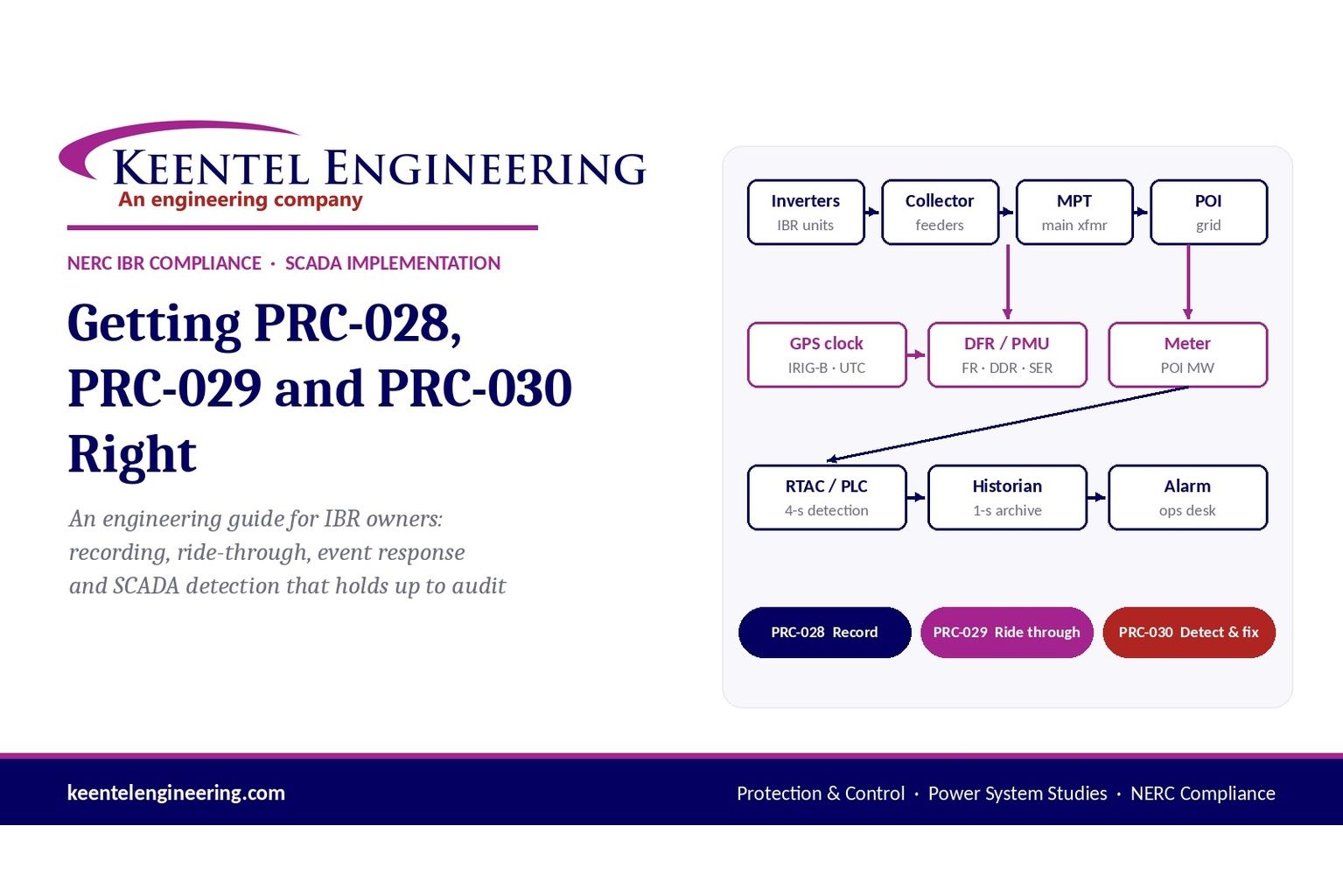
Engineering guide to PRC-028 disturbance recording, PRC-029 ride-through and PRC-030 event detection for inverter-based resources.
By SANDIP R PATEL
•
October 3, 2026
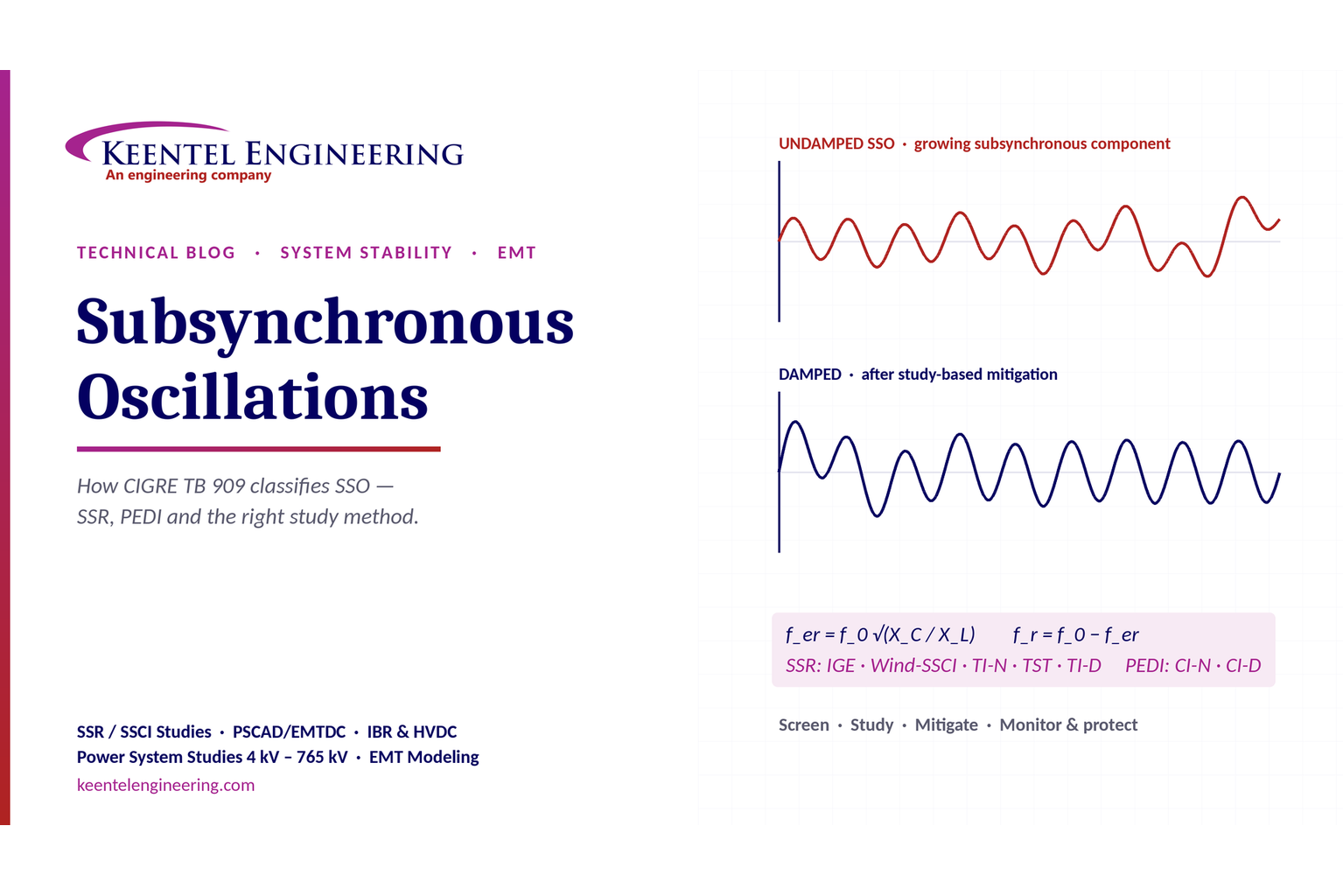
A practical guide to SSO classification, SSR, PEDI, Wind-SSCI, EMT analysis, mitigation and protection based on CIGRE TB 909.
By SANDIP R PATEL
•
October 6, 2026
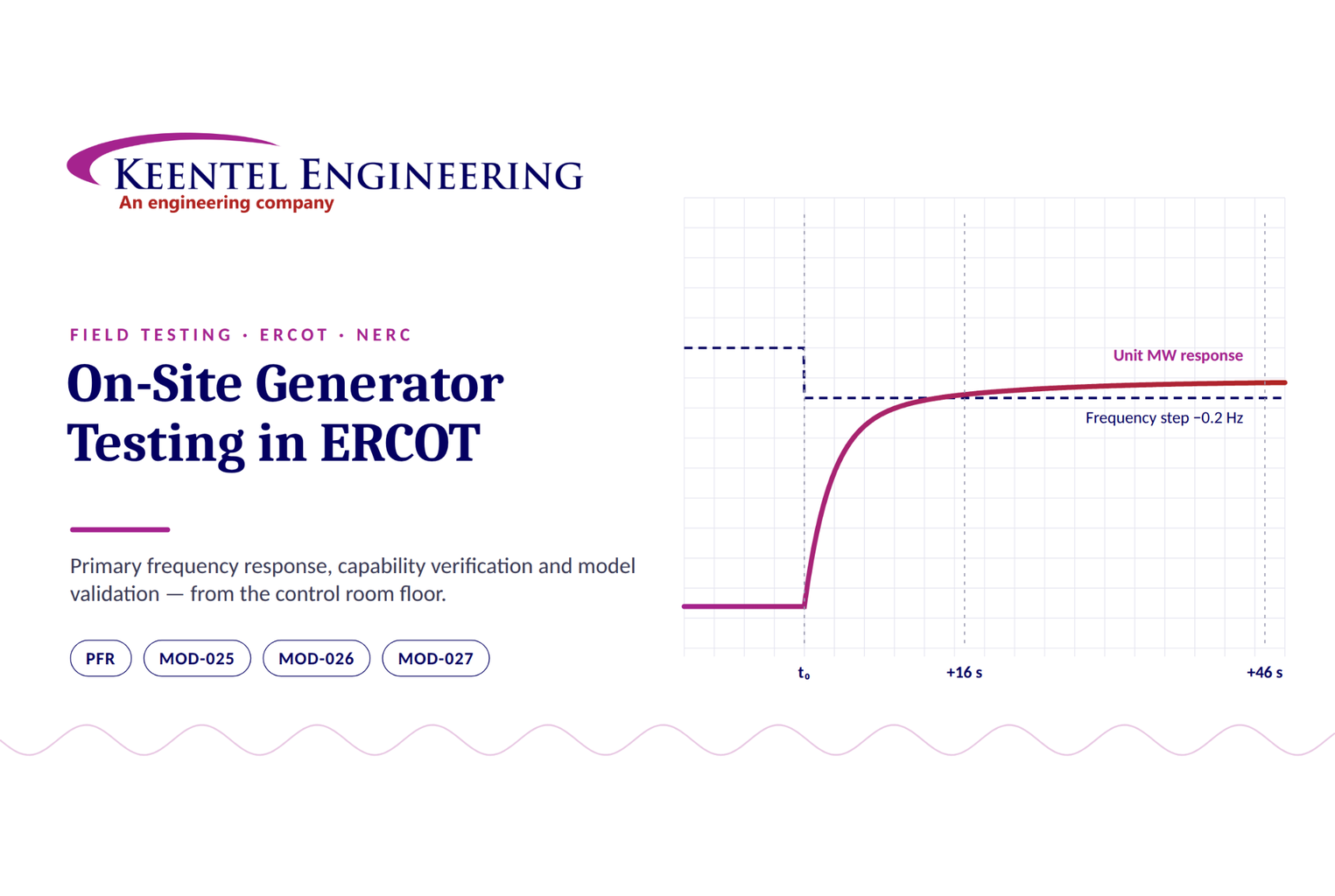
Learn ERCOT generator testing for PFR, MOD-025 and MOD-026/027, including staged tests, capability verification, dynamic models and field testing.
By SANDIP R PATEL
•
October 3, 2026
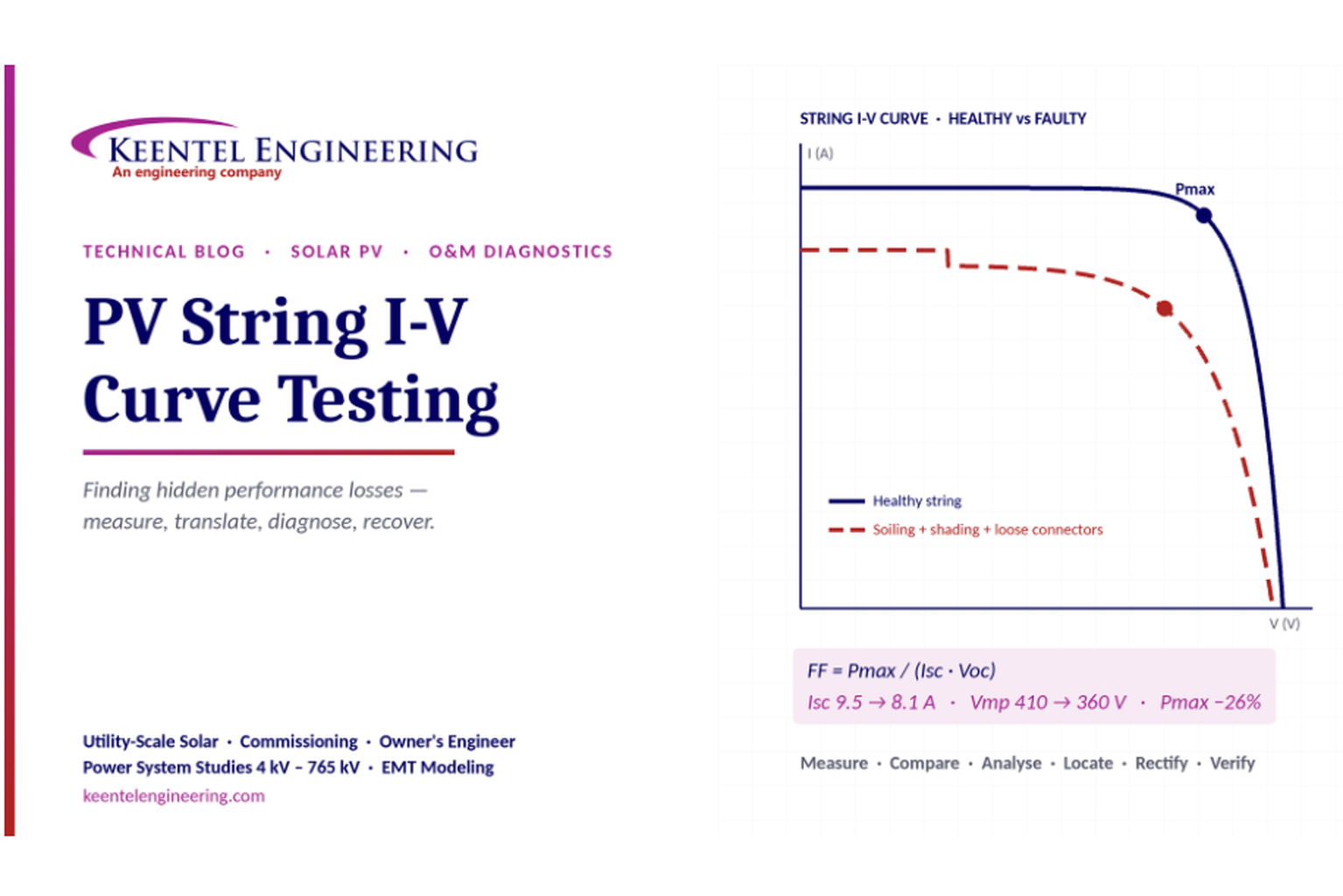
Learn how PV string I-V curve testing identifies hidden solar performance losses, including soiling, shading, mismatch, degradation, and wiring faults.
By SANDIP R PATEL
•
October 3, 2026
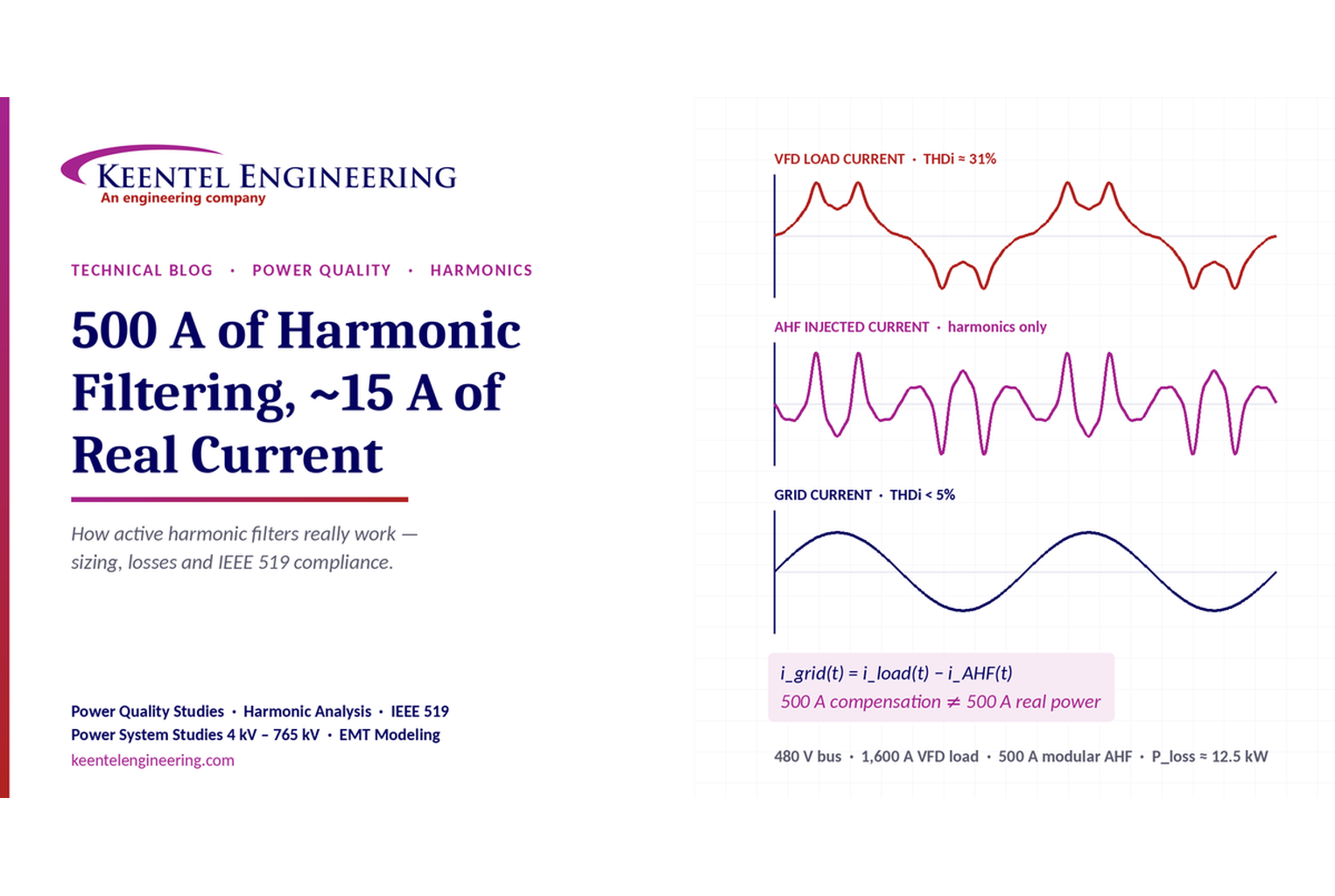
Learn how active harmonic filters work, how to size AHF systems, reduce VFD harmonics, calculate losses, and meet IEEE 519 TDD limits at the PCC.
By SANDIP R PATEL
•
October 3, 2026
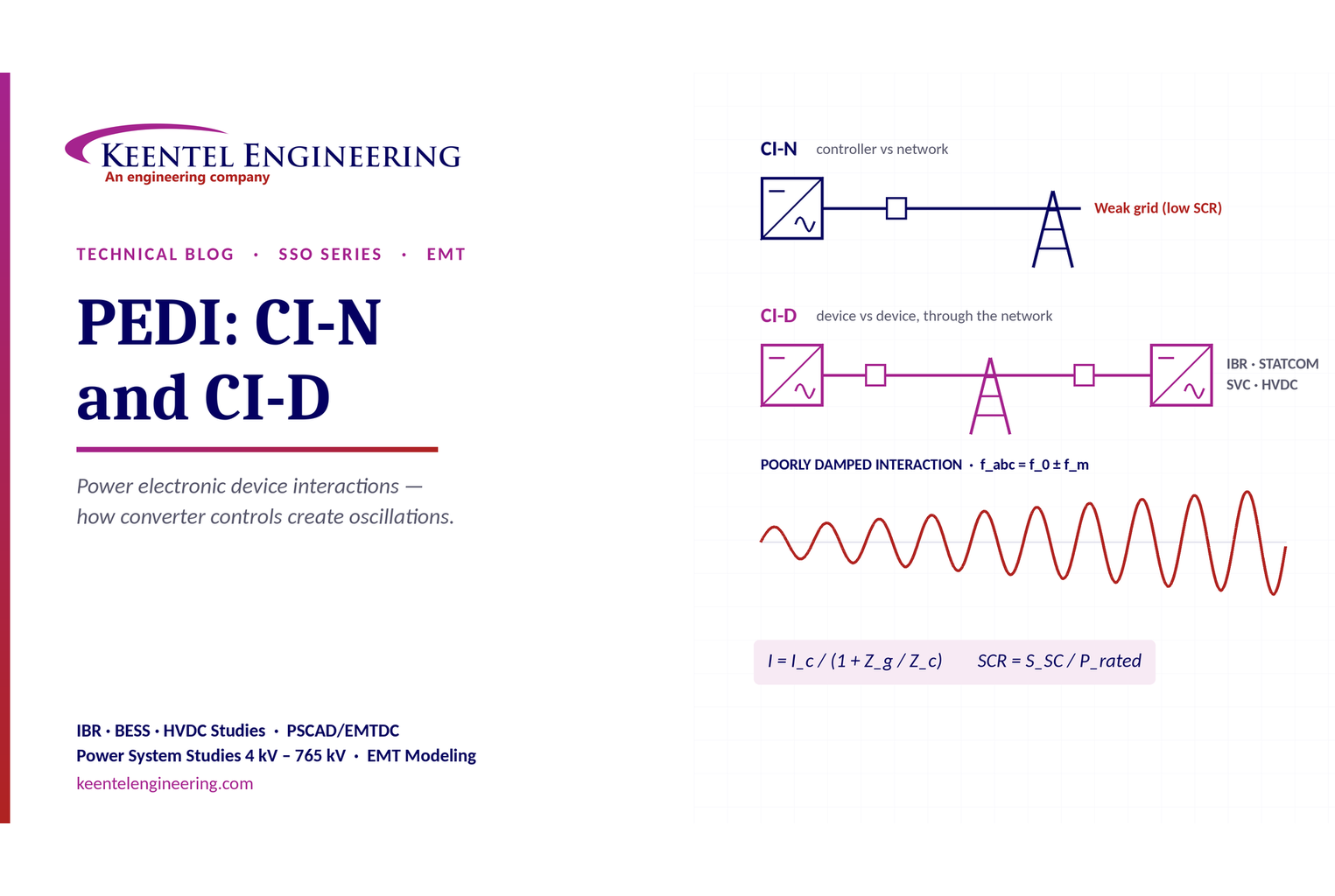
Learn power electronic device interactions (PEDI), including CI-N and CI-D, weak-grid stability, SCR, EMT studies, impedance analysis and mitigation for IBRs.
By SANDIP R PATEL
•
October 3, 2026
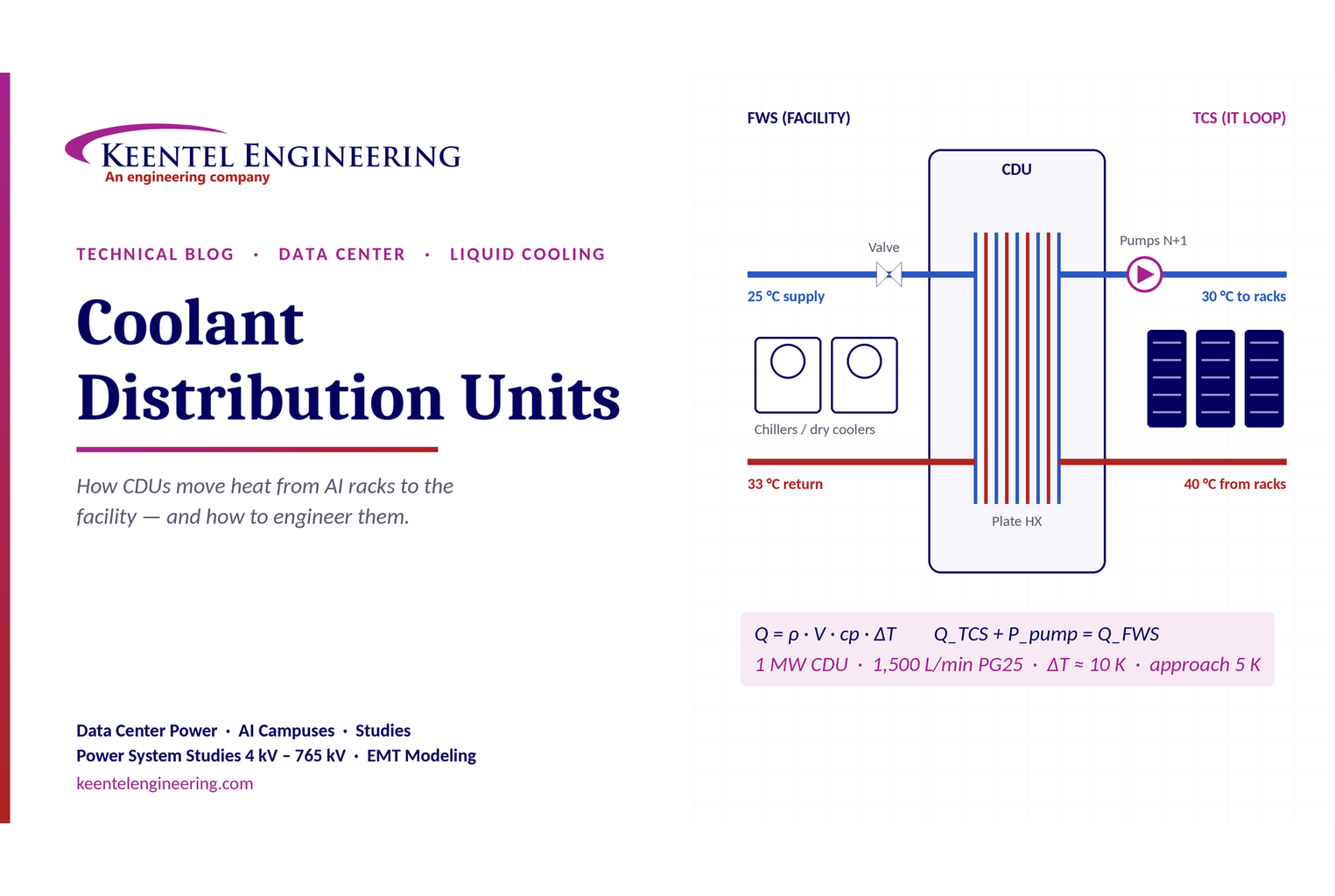
Learn how data center coolant distribution units (CDUs) work, including FWS and TCS loops, heat transfer, sizing, redundancy and liquid cooling for AI data centers.
By SANDIP R PATEL
•
October 3, 2026
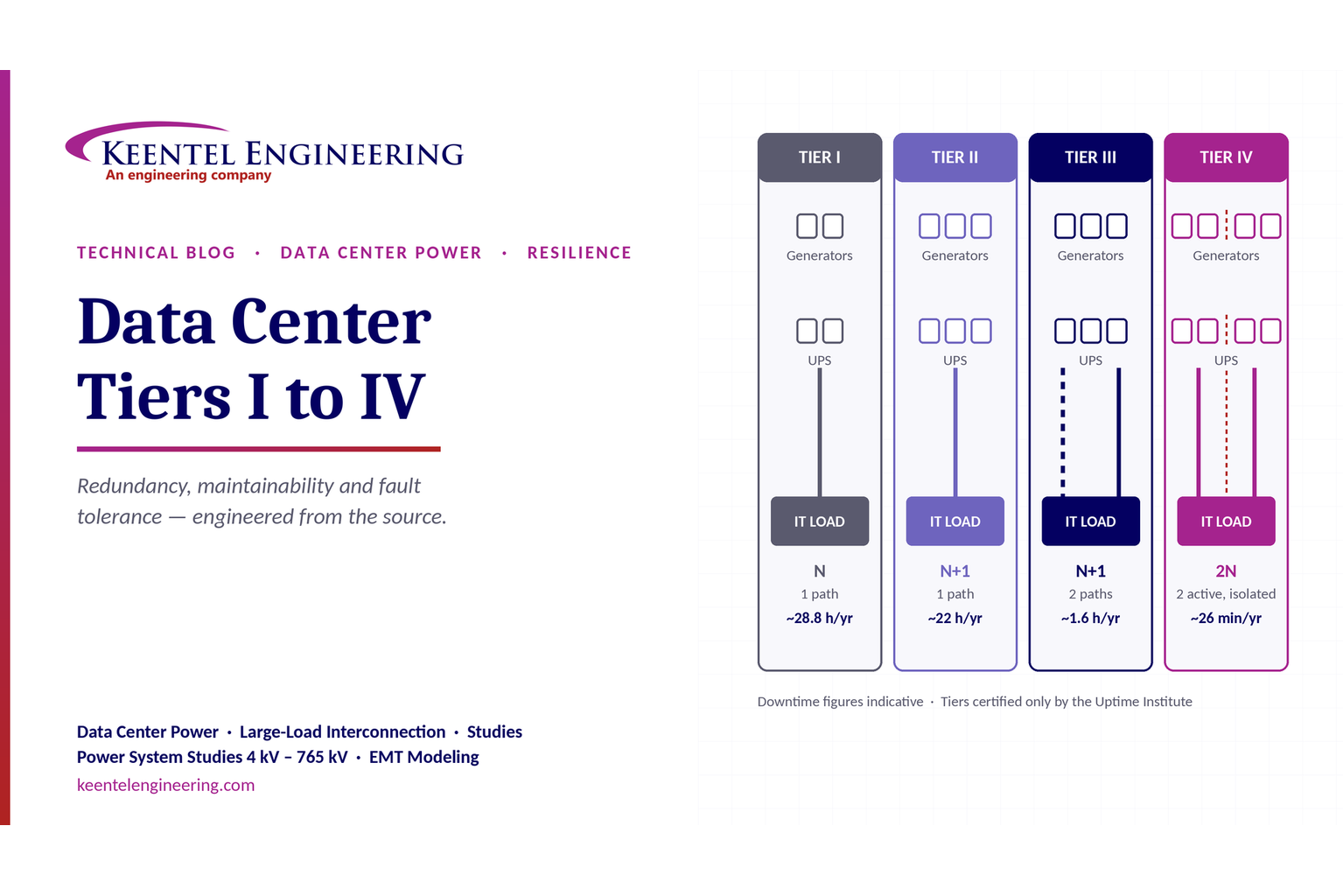
Compare Data Center Tiers I–IV, including redundancy, uptime, Tier III concurrent maintainability, Tier IV fault tolerance, UPS, generators and power design.
By SANDIP R PATEL
•
October 3, 2026
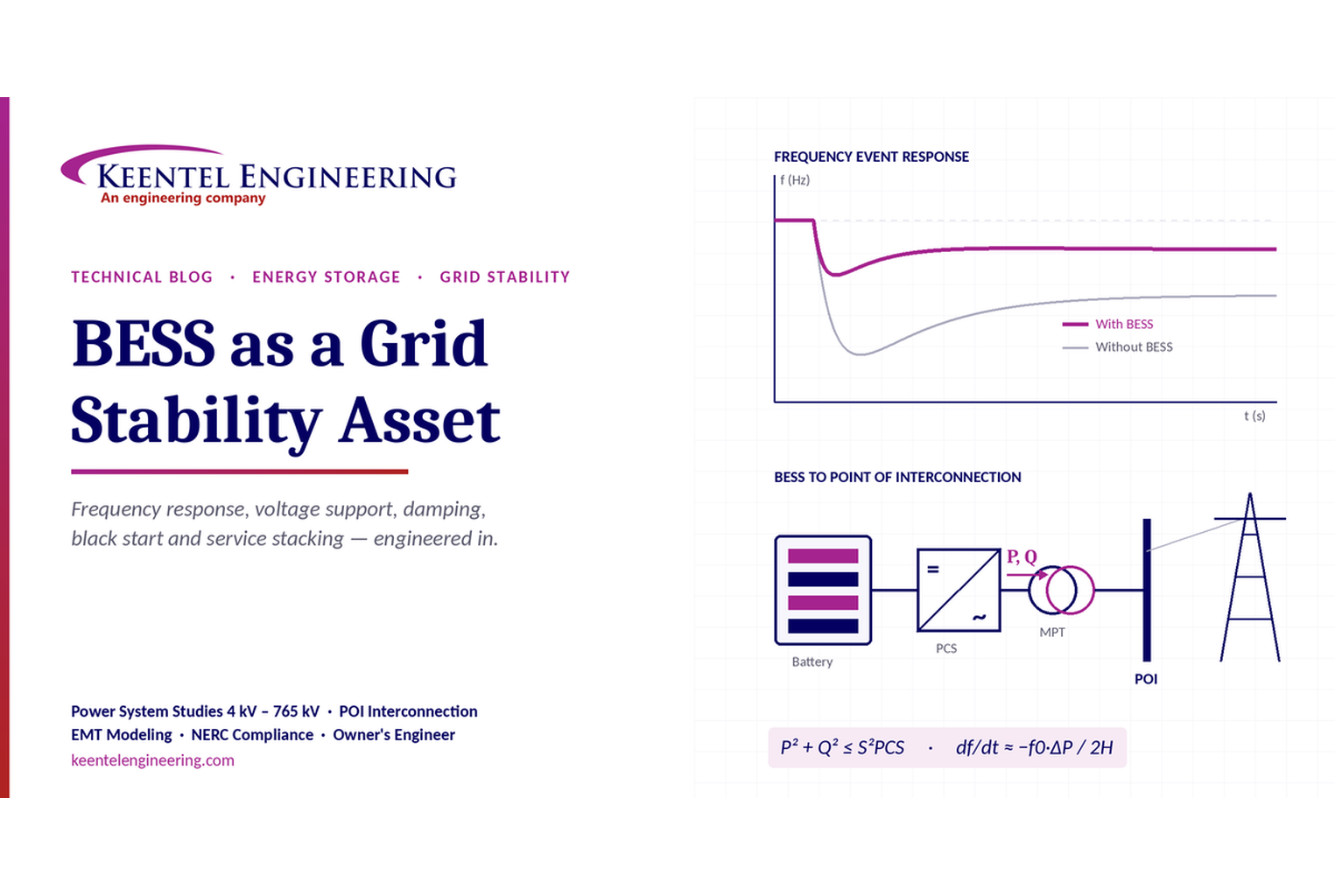
Learn how BESS supports grid stability through fast frequency response, voltage support, oscillation damping, black start, grid-forming controls and EMT studies.