A Coordinated Electric System Interconnection Review—the utility’s deep-dive on technical and cost impacts of your project.
Challenge: Frequent false tripping using conventional electromechanical relays
Solution: SEL-487E integration with multi-terminal differential protection and dynamic inrush restraint
Result: 90% reduction in false trips, saving over $250,000 in downtime
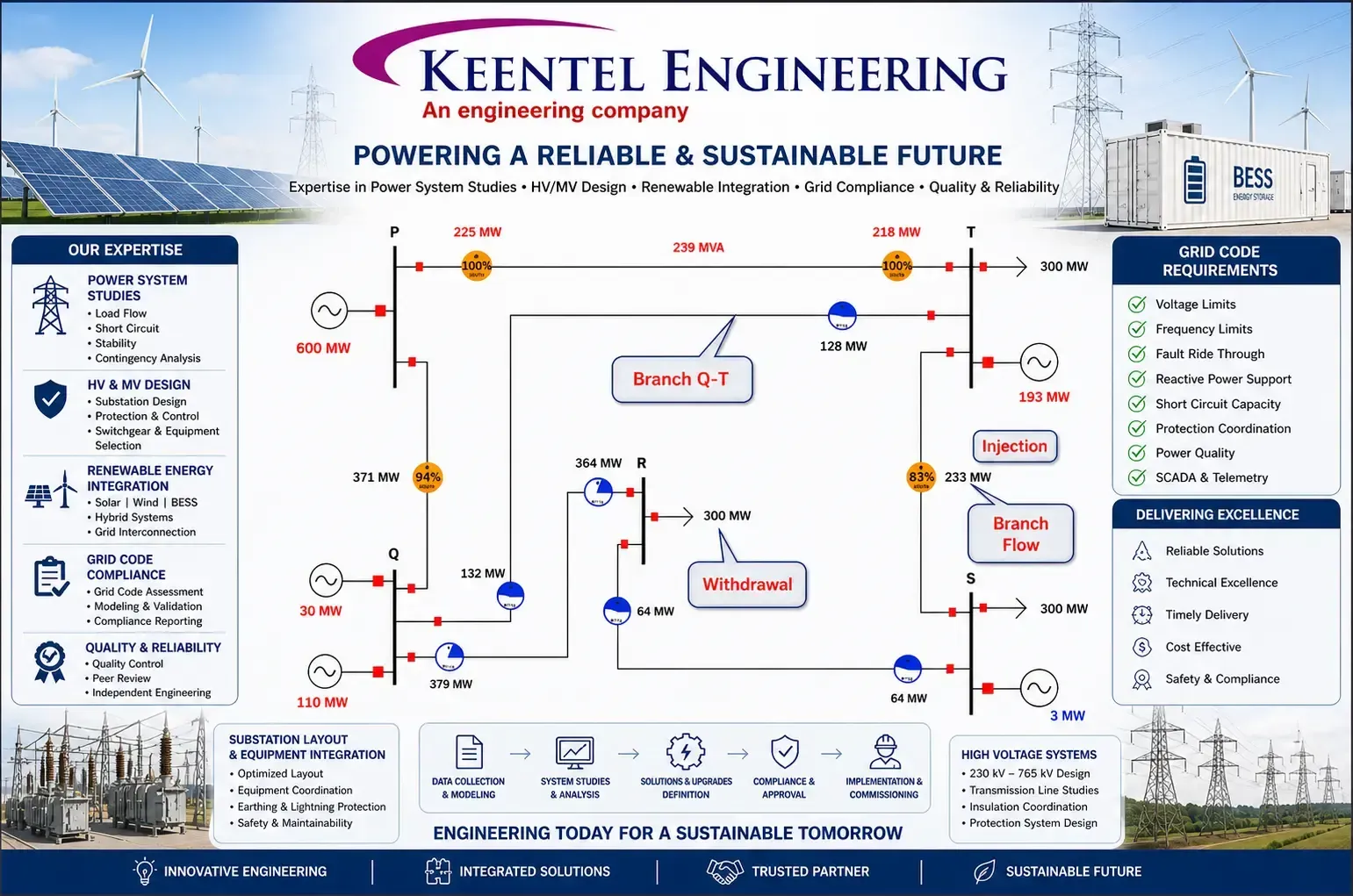
Transmission Injection and Withdrawal Studies in Power Systems (TIR & TWR Guide)
May 4, 2026 | Blog
1. Introduction: Why Injection & Withdrawal Studies Matter More Than Ever
As power systems transition toward renewables, storage, and electrification, the ability to inject and withdraw power reliably from the grid has become one of the most critical technical challenges in modern energy infrastructure.
Transmission systems are no longer passive carriers of electricity—they are actively managed, constrained, and optimized networks. Every new project—whether it is a solar farm, battery energy storage system (BESS), or HVDC transmission line—must prove its compatibility with the grid through detailed engineering studies.
At the core of this evaluation are two fundamental concepts:
- Transmission Injection Rights (TIR) – the ability to inject power into the grid
- Transmission Withdrawal Rights (TWR) – the ability to withdraw power from the grid
These rights are not simply contractual—they are earned through rigorous system impact studies, governed by ISO interconnection procedures such as those outlined in PJM Manual 14H.
2. Understanding Transmission Injection and Withdrawal Rights
2.1 Transmission Injection Rights (TIR)
TIR defines how much power a facility can safely inject into the transmission system. It is primarily associated with:
- Utility-scale solar and wind plants
- Battery discharge from BESS
- Merchant transmission imports
- Conventional generation
Injection capability is not equal to plant capacity. It is constrained by:
- Transmission line ratings
- System stability
- Voltage limits
- Congestion conditions
2.2 Transmission Withdrawal Rights (TWR)
TWR defines how much power can be withdrawn from the grid at a specific location. It applies to:
- Industrial loads
- Data centers
- Export facilities
- Storage charging
Withdrawal rights are increasingly critical due to:
- Growth of large load centers
- Electrification of industry
- AI/data center expansion
2.3 Firm vs Non-Firm Rights
Both TIR and TWR are categorized as:
- Firm Rights → Guaranteed delivery under normal conditions
- Non-Firm Rights → Subject to curtailment during congestion
PJM requires developers to explicitly define these MW values during application submission.
3. The Interconnection Study Process: Where Engineering Meets Market Rules
The PJM interconnection process is structured as a Cycle Process, which ensures that all projects are evaluated consistently and fairly.
3.1 Key Phases
- Application Phase
- Phase I System Impact Study
- Decision Point I
- Phase II System Impact Study
- Decision Point II
- Phase III System Impact Study
- Decision Point III
- Final Agreement Negotiation
Each phase progressively refines:
- Injection capability
- Withdrawal limits
- Required upgrades
- Cost allocation
4. System Impact Studies: The Backbone of Injection & Withdrawal Analysis
Transmission rights are determined through multi-stage engineering studies.
4.1 Phase I Study (Screening Level)
- load flow analysis
- Identifies:
- Thermal overloads
- Initial congestion
- Establishes feasibility
No stability or short circuit analysis at this stage.
4.2 Phase II Study (Detailed Engineering Analysis)
Includes:
- Voltage analysis
- Short circuit analysis
- Stability analysis
- Interconnection facilities study
This is where inverter-based resources (IBRs) such as solar and BESS face the most scrutiny.
4.3 Phase III Study (Final Validation)
- Confirms all system upgrades
- Finalizes injection/withdrawal limits
- Determines cost responsibility
At this stage, results become binding for interconnection agreements.
5. Key Technical Analyses for Injection & Withdrawal
5.1 Load Flow Analysis
Evaluates steady-state conditions:
- Line loading
- Transformer capacity
- Power transfer limits
Used to determine:
- Maximum injection capability
- Feasible withdrawal levels
5.2 Short Circuit Analysis
Ensures system protection:
- Evaluates fault current contribution
- Prevents equipment damage
Critical for:
- HVDC converters
- Large BESS installations
5.3 Stability Analysis
Examines dynamic behavior:
- Rotor angle stability
- Voltage recovery
- Frequency response
Mandatory for:
- Solar PV plants
- Wind farms
- Battery systems
5.4 Deliverability Analysis
Determines whether injected power can reach load centers without violating constraints.
Key criteria:
- Flowgate loading < 100%
- Contribution < threshold limits
6. Network Upgrades and Cost Allocation
Injection and withdrawal often require system upgrades such as:
- Transmission line
- Transformer additions
- Reactive compensation
- Substation expansion
Key Rules:
- Developers pay 100% of interconnection facilities
- Network upgrades are:
- Shared among projects
- Allocated based on impact
Cost allocation is determined using:
- DFAX (Distribution Factor)
- Contribution to violations
7. Merchant Transmission and HVDC Considerations
The Breaker Rating Module is designed to streamline checking circuit breaker ratings against the short-circuit currents they must interrupt. The material states that the module has been merged into the main OneLiner executable since Version 11 and is enabled through licensing under the Check → Circuit Breaker Short Circuit Rating command.
For Keentel Engineering this is important because breaker adequacy is a fundamental part of protection engineering. A relay may detect and clear a fault correctly, but if the breaker interrupting rating is inadequate, the protection system is not acceptable.
A breaker rating study typically evaluates:
- Symmetrical interrupting current
- Momentary current
- Close-and-latch capability
- X/R ratio impact
- Fault current contribution from generation
- System changes that increase available short-circuit current
- Replacement or mitigation requirements
In renewable interconnection work, breaker duty can become an issue when new generation is added to an existing substation. Even inverter-based resources may affect fault levels and system topology in ways that require verification. A breaker rating module integrated with the short-circuit model reduces manual checking and improves consistency.
8. Risks in Injection & Withdrawal Studies
8.1 Technical Risks
- Stability failures
- Voltage violations
- Thermal overloads
8.2 Financial Risks
- High upgrade costs
- Deposit forfeiture
- Re-study expenses
8.3 Schedule Risks
- Delays in study phases
- Queue congestion
- Dependency on other projects
8.4 Withdrawal Risks
Projects may be withdrawn if:
- Requirements are not met
- Deposits are not submitted
- Study results are unfavorable
9. Engineering Best Practices (Keentel Insights)
Early Feasibility Studies
Perform pre-application modeling to:
- Estimate injection limits
- Identify congestion
High-Fidelity Modeling
Use tools like:
- PSSE + TSAT
- PSCAD
- PowerFactory
Dynamic Model Compliance
Ensure models meet:
- Grid operator requirements
- Stability guidelines
Strategic POI Selection
Choosing the right Point of Interconnection can:
- Reduce upgrade costs
- Improve injection capability
10. Case Studies
Case Study 1: 200 MW Solar PV Plant
Project Overview
- Capacity: 200 MW
- Technology: Utility-scale solar PV
- POI: 230 kV substation
Challenge
- Limited transmission capacity
- High congestion in the region
Study Findings
- Phase I:
- Thermal overload on 230 kV line
- Phase II:
- Voltage instability during low-load conditions
- Phase III:
- Required:
- New transformer
- Reactive compensation
Outcome
- Injection limited to 170 MW initially
- Network upgrades increased cost by $25M
Keentel Insight
Early reactive power modeling could have reduced costs significantly.
Case Study 2: 150 MW / 600 MWh BESS Project
Project Overview
- Discharge: 150 MW
- Charging: 120 MW
- Location: Near load center
Challenge
- Bidirectional power flow
- High fault current contribution
Study Findings
- Load Flow:
- Charging caused reverse congestion
- Short Circuit:
- Exceeded breaker ratings
- Stability:
- Required inverter tuning
Outcome
- Reduced charging capacity to 100 MW
- Installed fault current limiting controls
Keentel Insight
BESS projects must model both:
- Injection (discharge)
- Withdrawal (charging)
Case Study 3: HVDC Project
Project Overview
- 500 MW HVDC link
- Interconnecting two regions
Challenge
- Cross-border system impacts
- Dynamic stability concerns
Study Findings
- Phase I:
- Minimal thermal issues
- Phase II:
- Stability concerns due to control interactions
- Additional Studies:
- Harmonics
- SSR (Sub-Synchronous Resonance)
Outcome
- Required advanced control systems
- Granted both TIR and TWR rights
Keentel Insight
HVDC projects require significantly more dynamic modeling and validation.
11. Future Trends in Injection & Withdrawal Studies
Growth of Large Loads
- Data centers driving TWR demand
Increased IBR Penetration
- Stability becoming dominant constraint
Hybrid Projects
- Solar + BESS requiring complex modeling
Grid Congestion
- Injection rights becoming more limited
12. Why Choose Keentel Engineering
At Keentel Engineering, we specialize in:
- Interconnection studies (PJM, ERCOT, CAISO, SPP)
- Load flow, short circuit, and stability analysis
- High-fidelity modeling (PSSE, PSCAD, TSAT)
- NERC compliance and grid code support
We help clients:
- Maximize injection capacity
- Minimize upgrade costs
- Navigate interconnection processes
- Achieve faster project approvals
13. Conclusion
Transmission Injection and Withdrawal studies are the gateway to grid access.
They determine:
- Whether your project is viable
- How much power you can deliver
- How much it will cost
As grids become more constrained and complex, engineering excellence is no longer optional it is critical
Technical FAQ (Engineering-Focused)
1. What is the difference between TIR and TWR?
TIR represents the ability to inject power into the grid, while TWR represents the ability to withdraw power from it.
2. How are injection limits determined?
Through system impact studies evaluating thermal, voltage, and stability constraints.
3. What is firm vs non-firm injection?
- Firm: Guaranteed delivery capability
- Non-firm: Subject to curtailment
4. Which study phase determines final injection rights?
Phase III System Impact Study confirms final capabilities and constraints.
5. Do all projects require stability studies?
No, but most large or inverter-based resources do, especially in Phase II.
6. What triggers network upgrades?
Injection or withdrawal that causes:
- Overloads
- Voltage violations
- Stability issues
7. Who pays for network upgrades?
Costs are allocated to projects based on their contribution to system impacts.
8. Can injection rights change during the process?
Yes, based on study results and project modifications.
9. What happens if a project fails at a decision point?
It is withdrawn from the interconnection cycle.
10. How are multiple projects handled at the same POI?
They may be studied as a cluster, and costs are shared proportionally.
11. What is DFAX?
Distribution Factor used to measure how much a project contributes to a constraint.
12. What is deliverability?
The ability of injected power to reach load without violating system limits.
13. Are storage systems treated differently?
Yes, especially for charging behavior and dynamic response modeling.
14. What role does short circuit analysis play?
Ensures system equipment ratings are not exceeded due to fault currents.
15. What is an Affected System Study?
Study required when a project impacts neighboring grids.
16. Can injection exceed nameplate capacity?
No—actual injection is limited by system constraints and study results.
17. What are contingent facilities?
Upgrades that must be completed for the project to operate reliably.
18. What is the biggest risk in TIR/TWR approval?
High upgrade costs or failure to meet reliability criteria.
19. Can rights be transferred?
Yes, under certain PJM procedures (e.g., CIR transfers).
20. Why is modeling accuracy critical?
Incorrect models can lead to:
- Re-study delays
- Rejection
- Financial loss

About the Author:
Sandip "Sonny" R. Patel, P.E.
IEEE Senior Member · Founder & CEO, Keentel Engineering
In 1995, Sonny Patel earned his Electrical Engineering degree from the University of Illinois. But degrees don't build legacies — action does.
For three decades, he has worked the power industry from every side of the table: 16 years as a utility engineer at Exelon/Commonwealth Edison; generation leadership across hydroelectric, industrial steam turbine, and a 9 GW renewable fleet; NERC Regional Entity Senior Compliance Engineer and Audit Team Lead, auditing some of the nation's largest utilities; and testing and commissioning lead on equipment up to 765 kV — the very top of the North American grid.Utility. Generator. Regulator. Consultant. Few engineers have seen all four seats. Fewer still have sat in them.
His experience spans nuclear, hydro, conventional generation, renewables, oil and gas, mining — and today's data centers, where he is authoring a three-book series on data center design. He is a Licensed Professional Engineer in six states and a Licensed Electrical Contractor in Florida (Unlimited EC) — he doesn't just design the work; he's qualified to stand behind its execution.Today, as Founder and CEO of Keentel Engineering, Sonny leads a nationwide team of engineers delivering substation design, power system studies, NERC compliance, and commissioning — done right, coast to coast.Three decades. Every side of the table. One standard: accountable engineering.
Services

Let's Discuss Your Project
Let's book a call to discuss your electrical engineering project that we can help you with.
About the Author:
Sandip "Sonny" R. Patel, P.E.
IEEE Senior Member · Founder & CEO, Keentel Engineering
In 1995, Sonny Patel earned his Electrical Engineering degree from the University of Illinois. But degrees don't build legacies — action does.
For three decades, he has worked the power industry from every side of the table: 16 years as a utility engineer at Exelon/Commonwealth Edison; generation leadership across hydroelectric, industrial steam turbine, and a 9 GW renewable fleet; NERC Regional Entity Senior Compliance Engineer and Audit Team Lead, auditing some of the nation's largest utilities; and testing and commissioning lead on equipment up to 765 kV — the very top of the North American grid.
Utility. Generator. Regulator. Consultant. Few engineers have seen all four seats. Fewer still have sat in them.
His experience spans nuclear, hydro, conventional generation, renewables, oil and gas, mining — and today's data centers, where he is authoring a three-book series on data center design. He is a Licensed Professional Engineer in six states and a Licensed Electrical Contractor in Florida (Unlimited EC) — he doesn't just design the work; he's qualified to stand behind its execution.
Today, as Founder and CEO of Keentel Engineering, Sonny leads a nationwide team of engineers delivering substation design, power system studies, NERC compliance, and commissioning — done right, coast to coast.Three decades. Every side of the table. One standard: accountable engineering.
Leave a Comment
Thank you for contacting us.
We will get back to you as soon as possible.
We will get back to you as soon as possible.
Oops, there was an error sending your message.
Please try again later.
Please try again later.
Related Posts
By SANDIP R PATEL
•
September 18, 2026
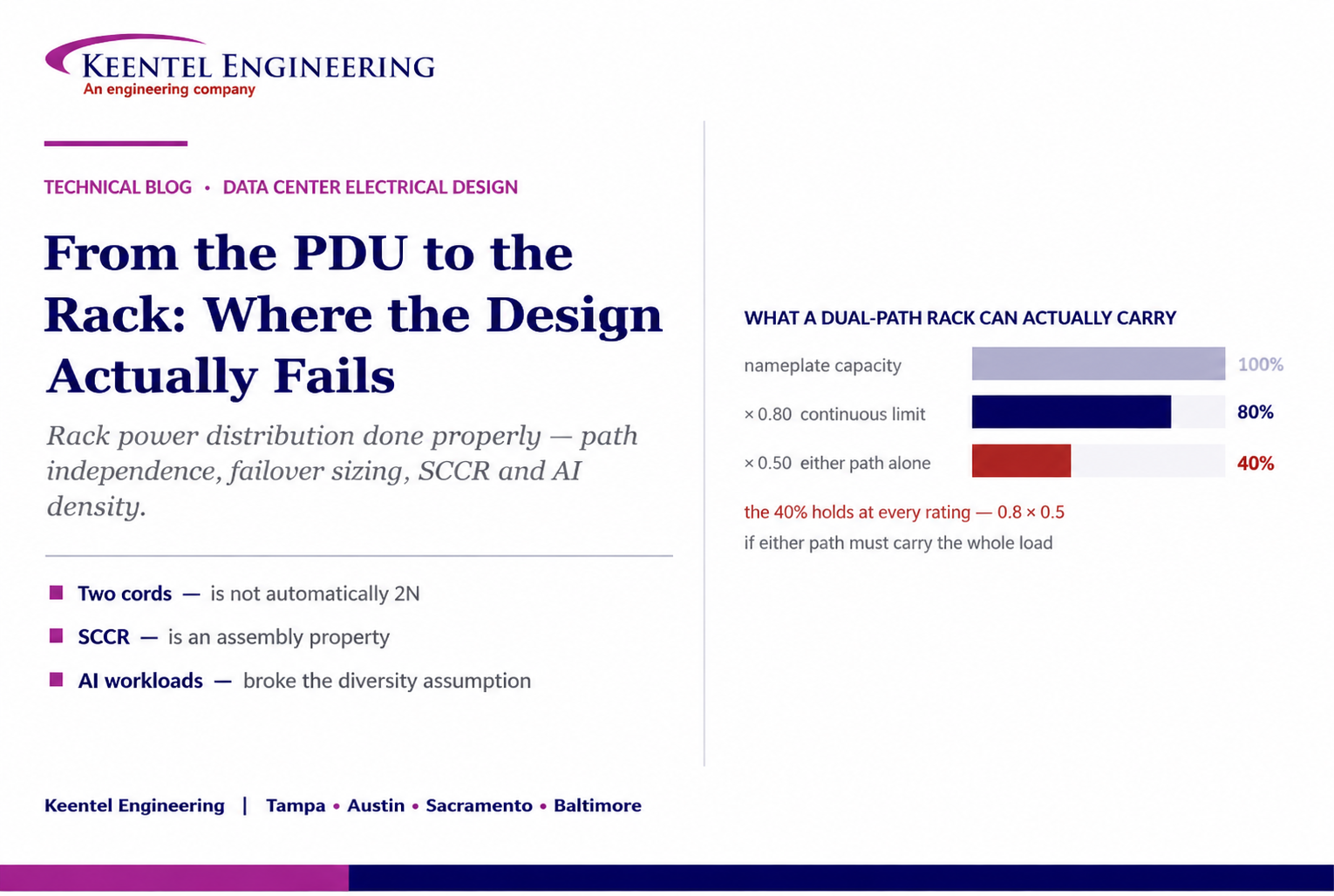
Learn how to size rack power distribution, PDU and RPP systems for continuous loads, A/B redundancy, failover capacity, SCCR and high-density AI data centers.
By team gusto
•
September 18, 2026
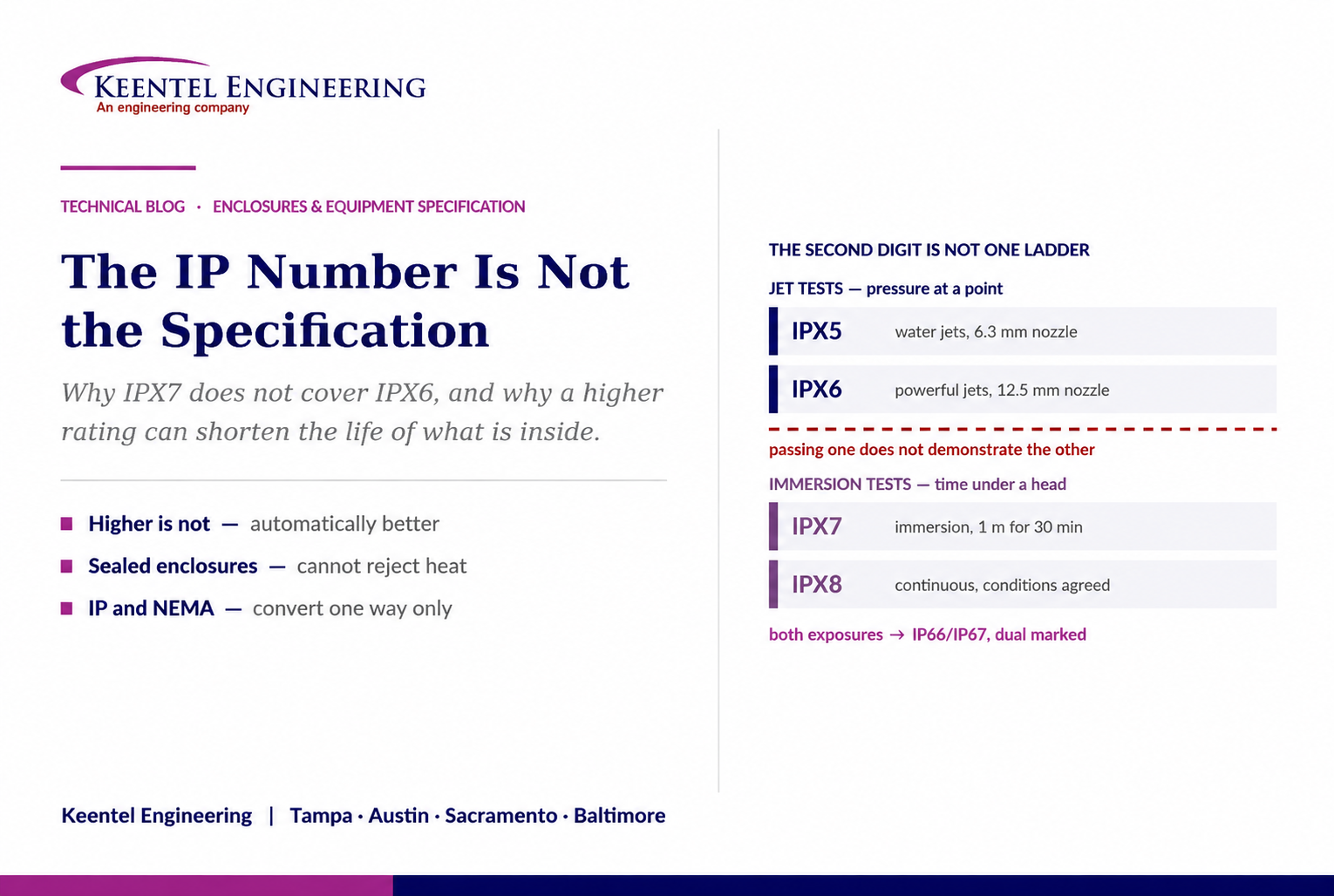
Learn why IP ratings like IP66, IP67, and IP68 do not tell the full story. Understand enclosure selection, NEMA differences, heat, corrosion, and protection.
By SANDIP R PATEL
•
September 9, 2026
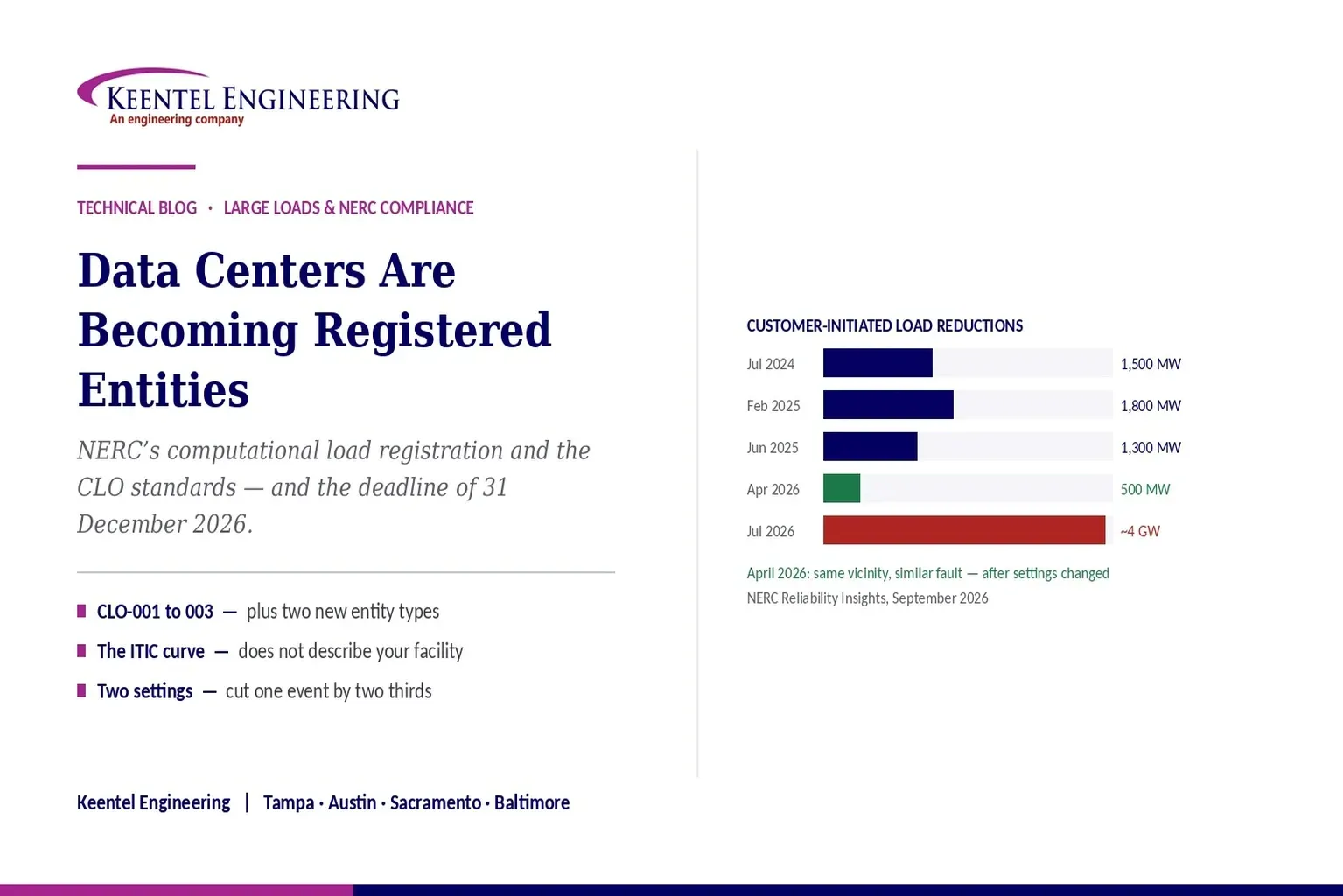
Learn how NERC computational load registration impacts data centers, CLO standards, ride-through requirements, modeling, and grid reliability compliance.
By SANDIP R PATEL
•
September 7, 2026
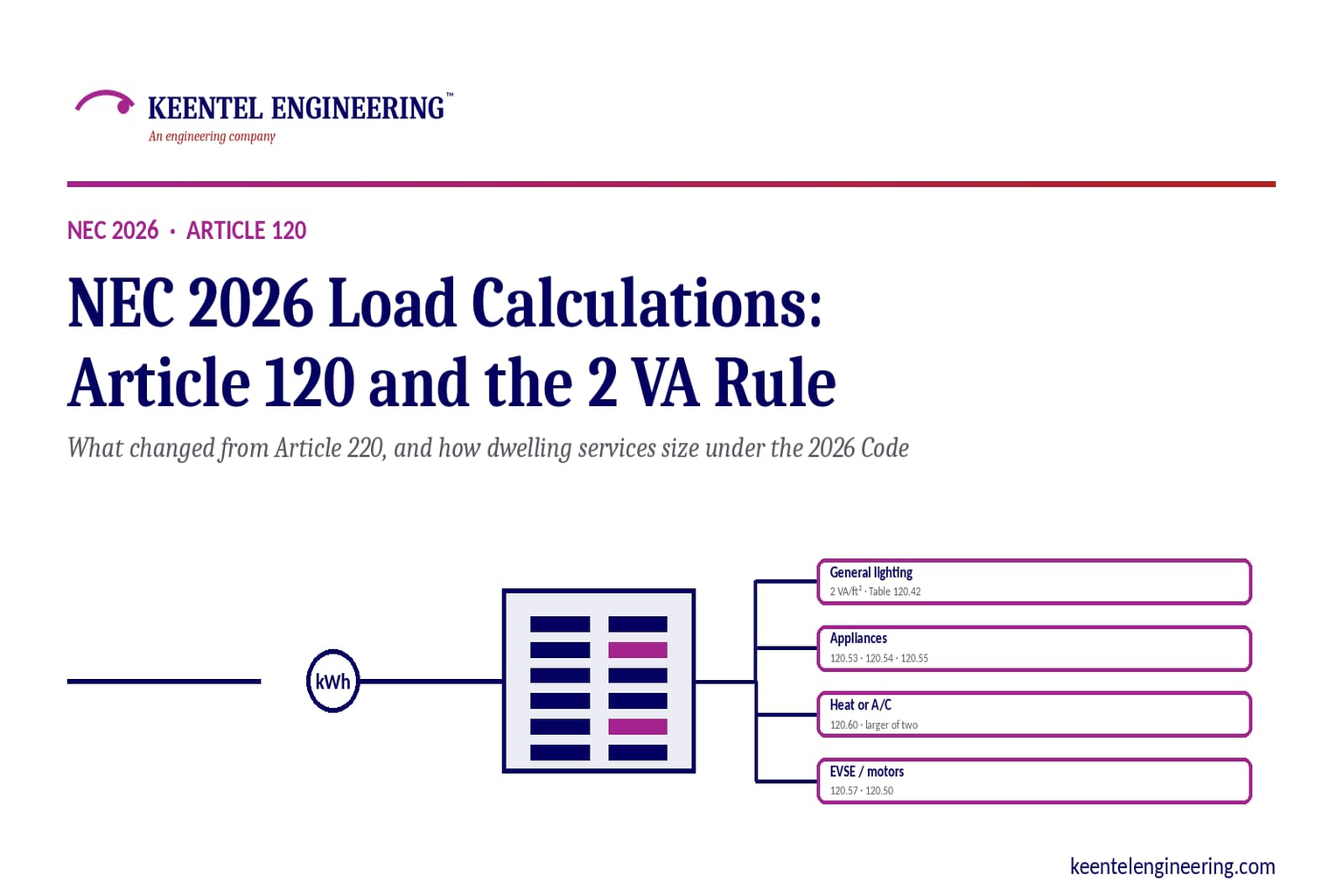
Learn NEC 2026 load calculations, Article 120 changes, the 2 VA rule, EV charging requirements, service sizing, and dwelling calculation methods.
By SANDIP R PATEL
•
September 7, 2026
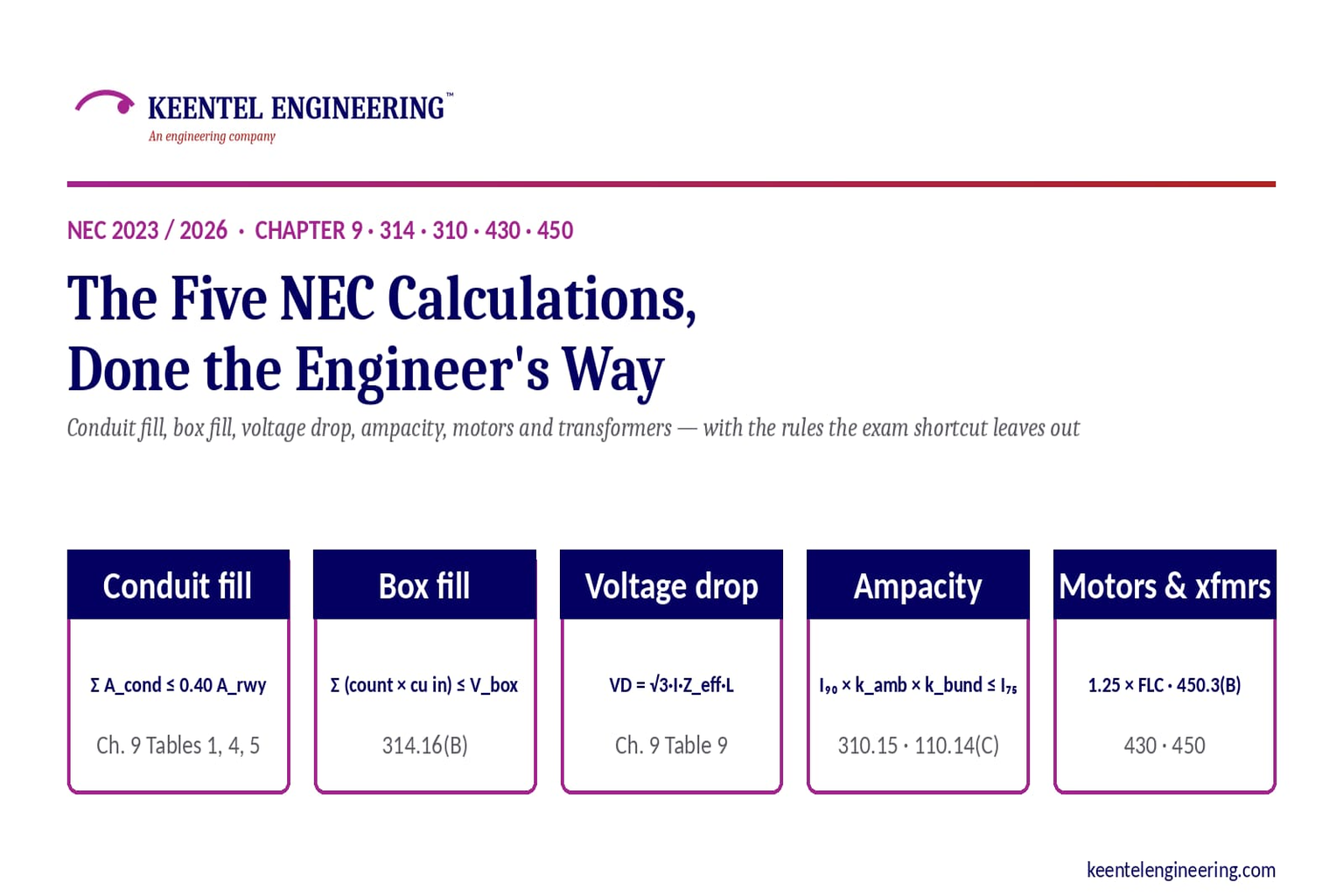
Learn five essential NEC calculations covering conduit fill, voltage drop, ampacity, motor circuits, and transformer protection with engineering examples.
By SANDIP R PATEL
•
September 7, 2026
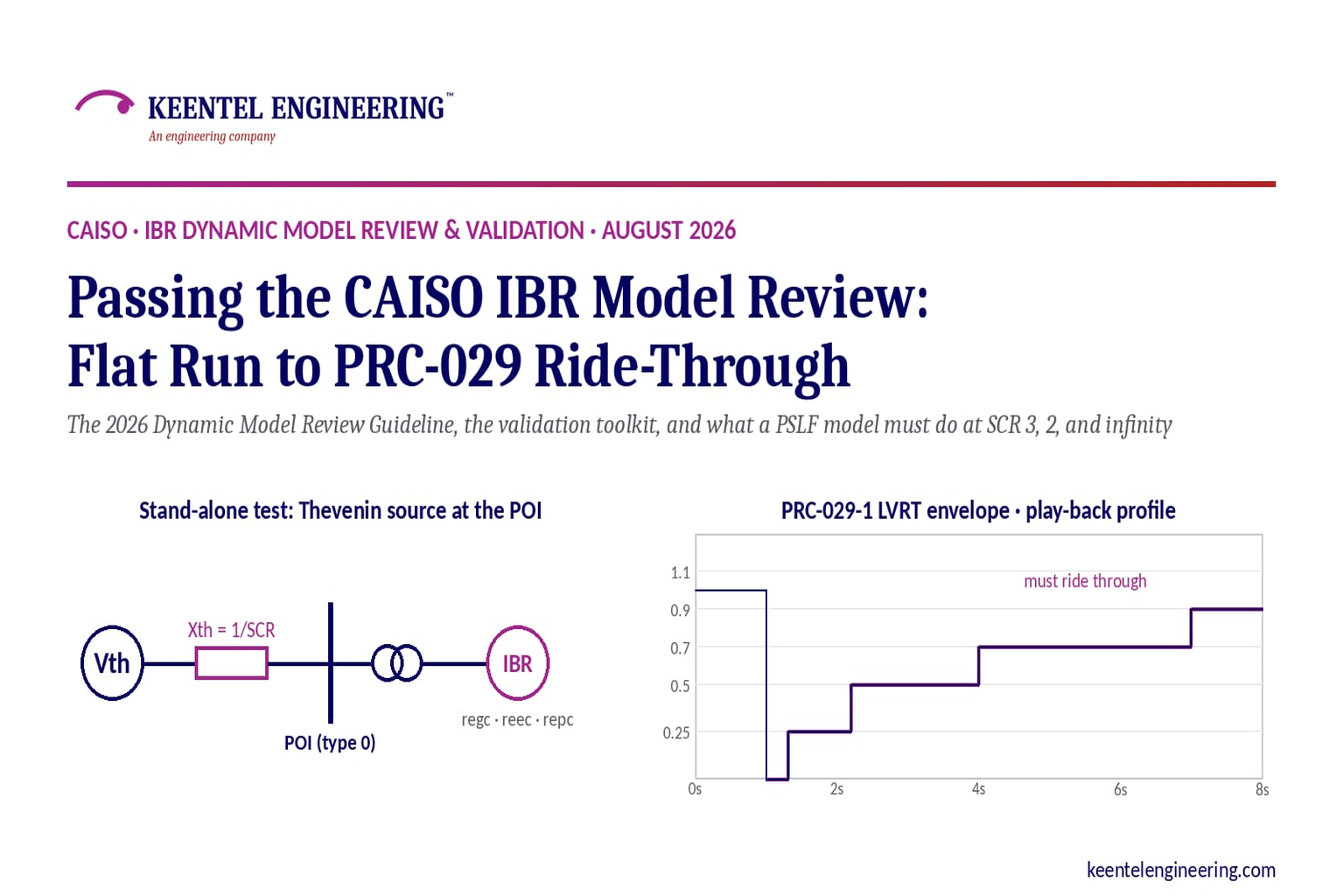
Learn how CAISO reviews IBR models using PSLF validation, PRC-029-1 ride-through requirements, WECC models, and inverter resource compliance testing.
By SANDIP R PATEL
•
September 7, 2026
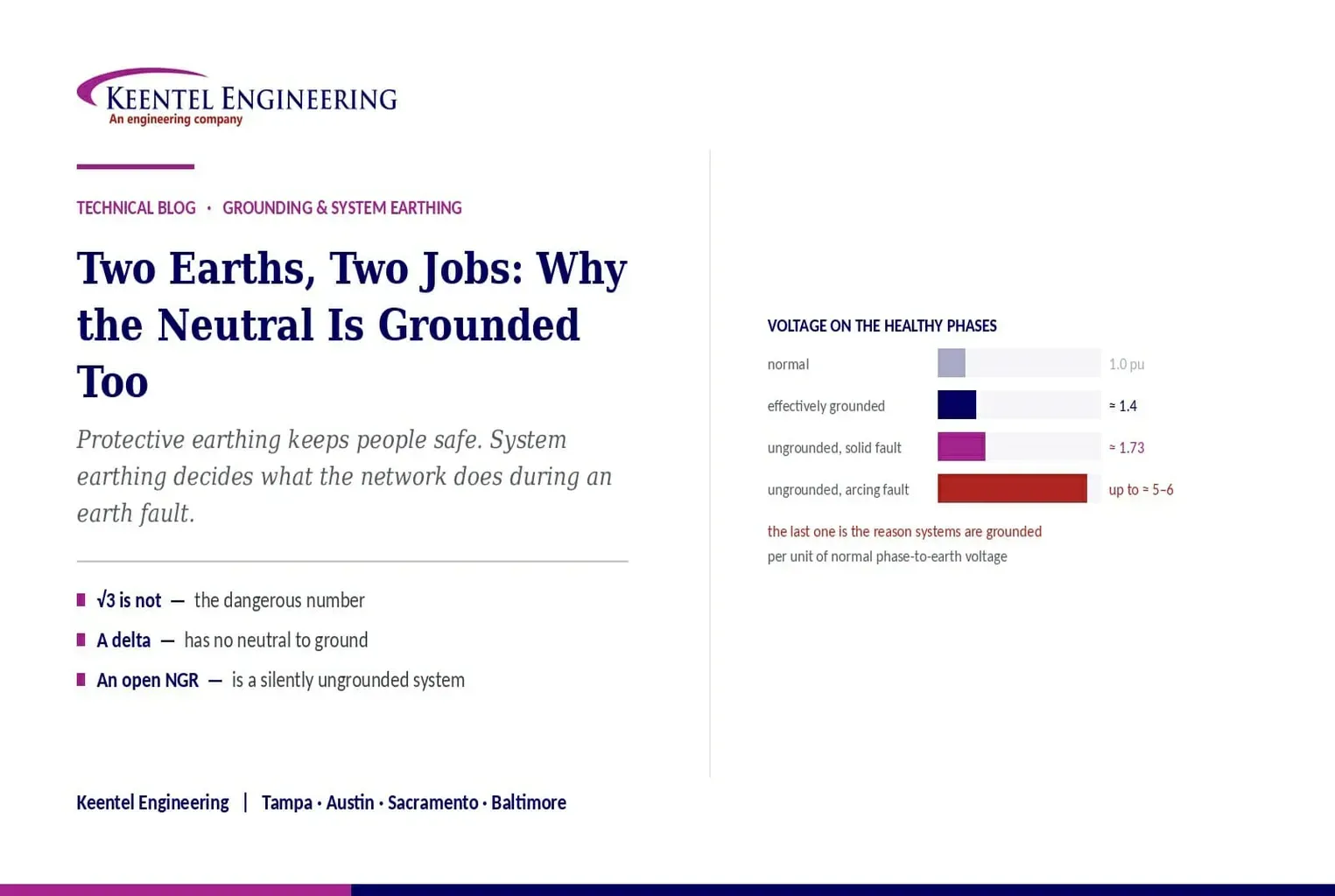
Understand system earthing and protective earthing, neutral grounding methods, effective grounding, ground grids, and insulation coordination for power systems
By SANDIP R PATEL
•
September 6, 2026
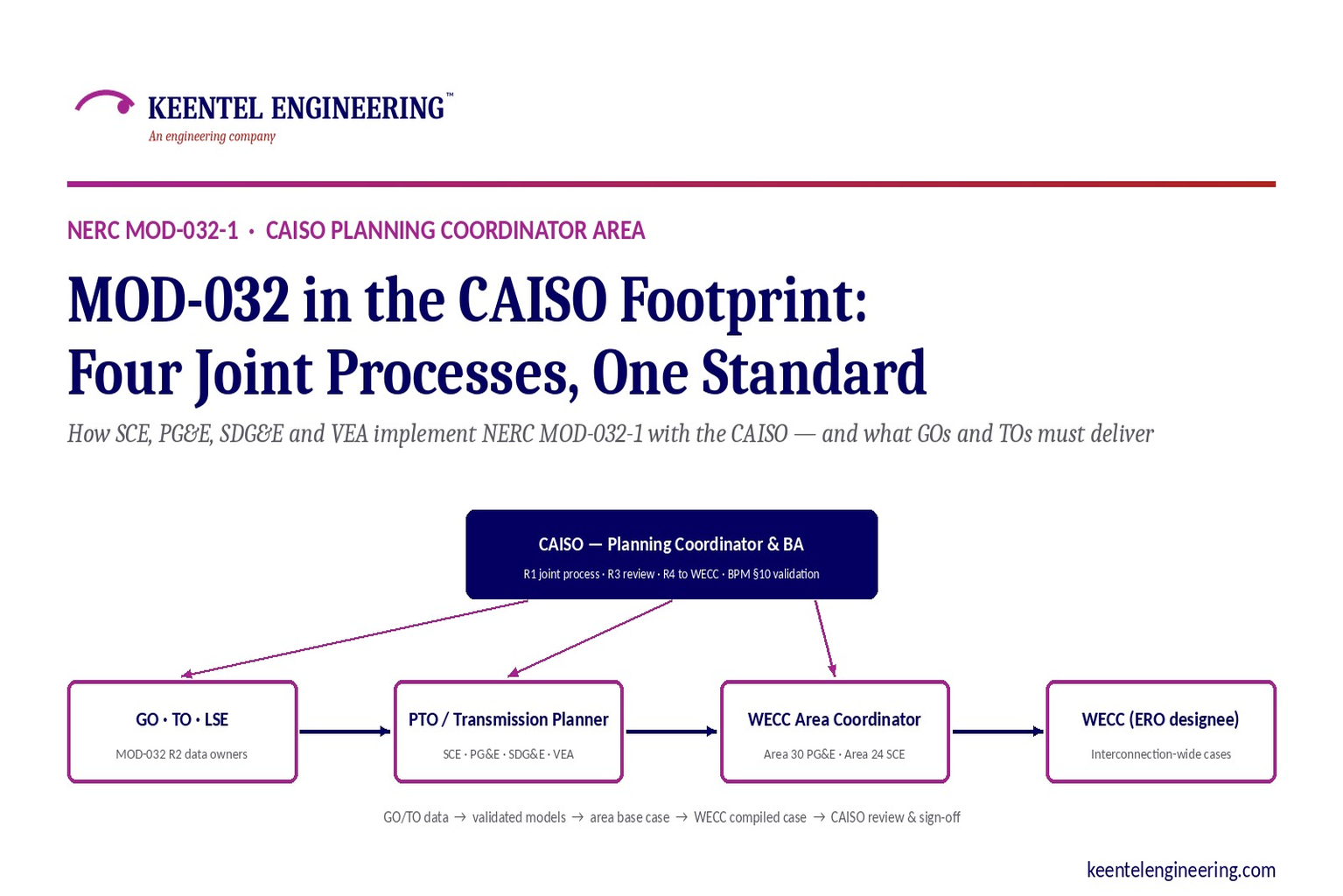
Learn how NERC MOD-032-1 applies across CAISO, SCE, PG&E, VEA and SDG&E, including generator data, PSLF models, EMT requirements and WECC submissions.
By SANDIP R PATEL
•
September 6, 2026
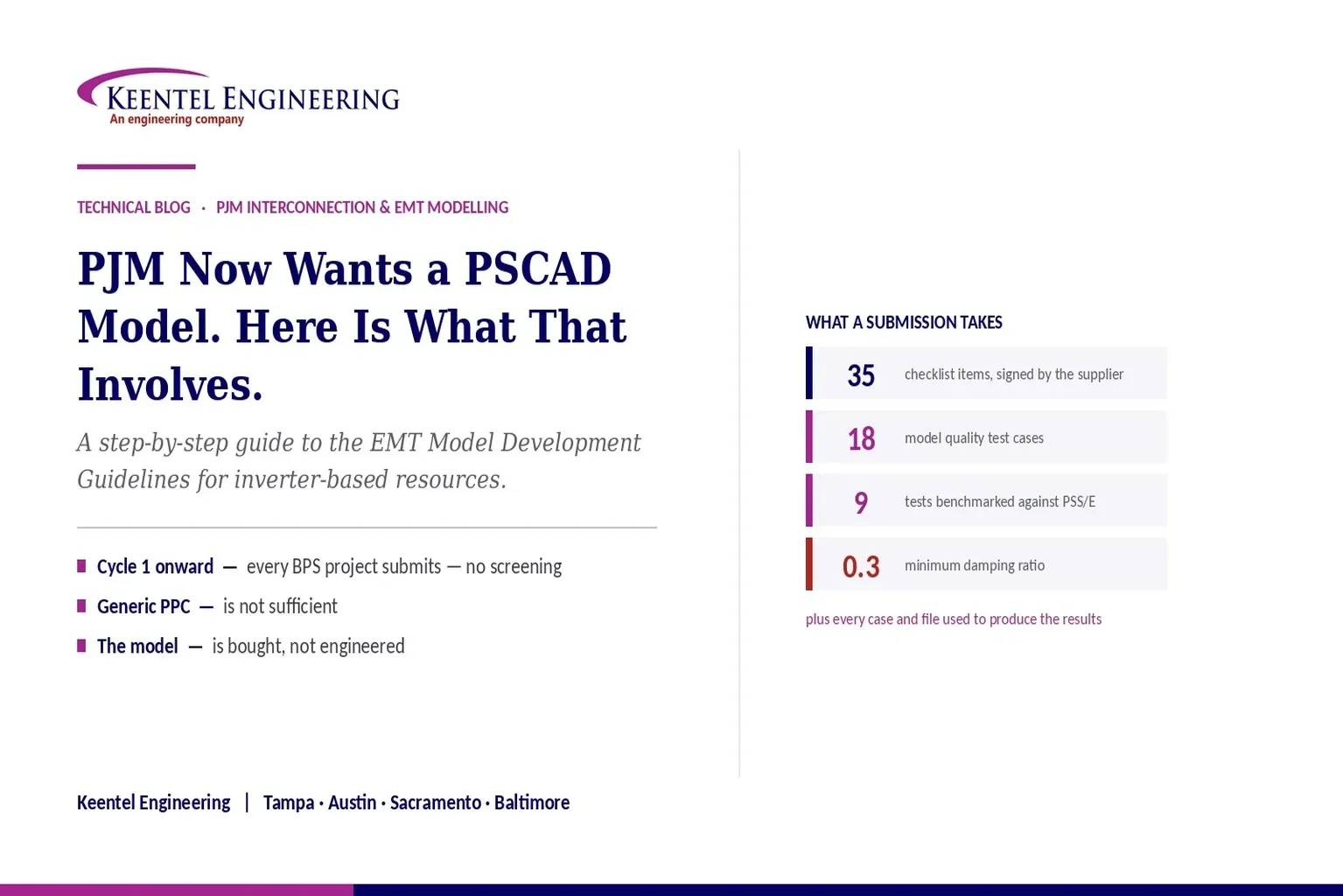
Learn PJM PSCAD model requirements for inverter-based resources, EMT testing, PSS/E benchmarking, ride-through studies, and compliance submissions