A Coordinated Electric System Interconnection Review—the utility’s deep-dive on technical and cost impacts of your project.
Challenge: Frequent false tripping using conventional electromechanical relays
Solution: SEL-487E integration with multi-terminal differential protection and dynamic inrush restraint
Result: 90% reduction in false trips, saving over $250,000 in downtime
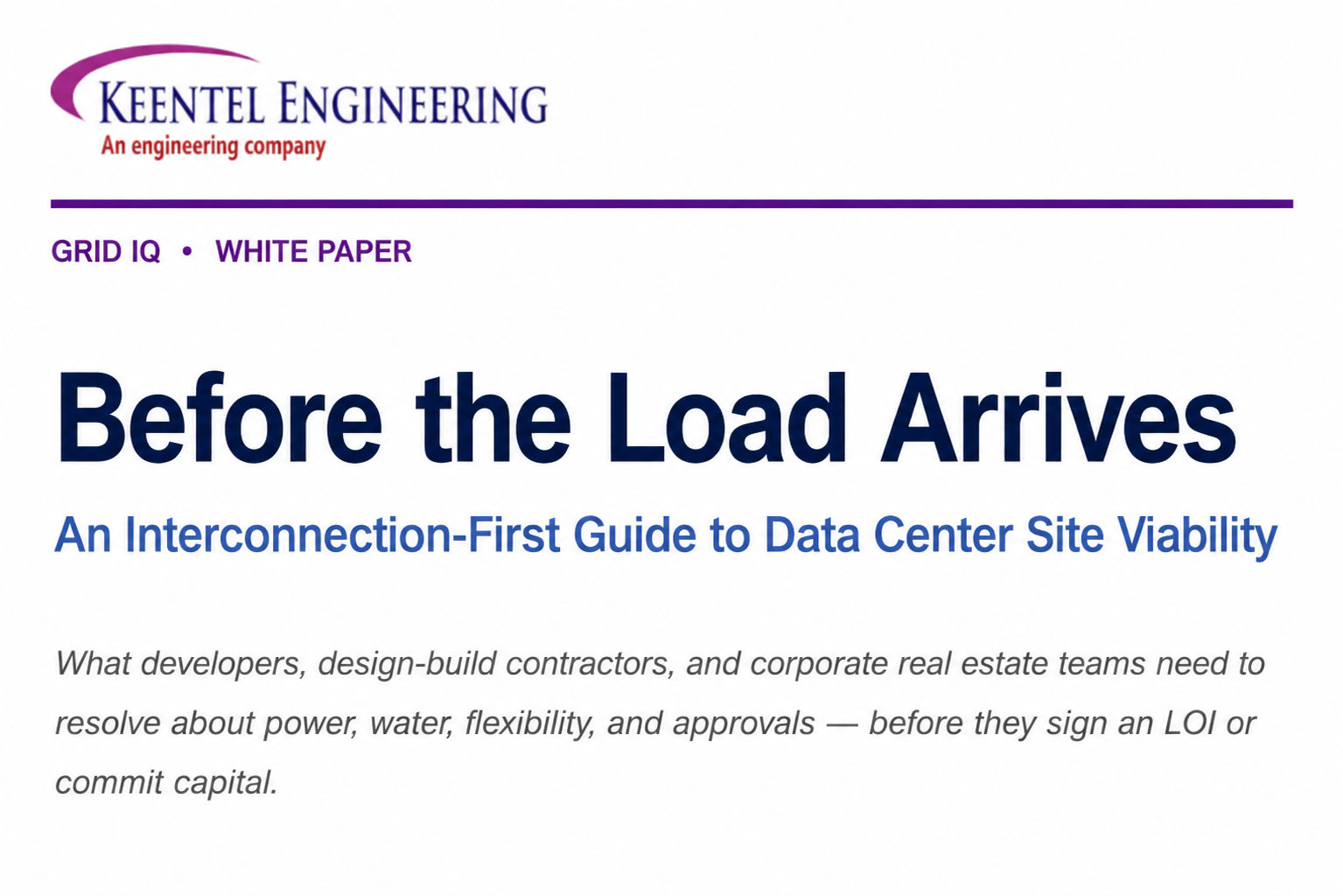
Before the Load Arrives
May 15, 2026 | Blog
Why this matters now
The grid is in the middle of the largest load-growth event in its modern history. Hyperscale data centers, AI training campuses, cryptocurrency facilities, and newly electrified industrial sites are arriving at the interconnection door in volumes the planning machinery was never built to absorb in a single cycle. The clearest window into what that means for a developer is ERCOT, where the active large-load interconnection queue reached roughly 226 GW by late 2025 — nearly four times the level reported a year earlier — with about three-quarters of it tied to data centers targeting energization by 2030. By early 2026, counting requests not yet reflected in the published queue, the figure was pushing past 380 GW. For perspective, that is several times the system's existing generation, and over the same window only on the order of a couple thousand megawatts of new large load were actually approved to energize. The queue is enormous; the throughput is not.
That gap — between what developers are requesting and what the system can physically deliver and reliably study — is the single most important fact for anyone evaluating a site. It is why a parcel with the right zoning, the right price, and good access can still be an unbuildable data center. The factors that decide viability mostly sit upstream of the property line: in the transmission system, in the water utility, and in a regulatory framework being rewritten in real time. ERCOT is the most advanced proving ground, but the same pressures are now shaping PJM, CAISO, NYISO, and every other high-demand region. The rules differ; the underlying engineering, and the discipline required to get ahead of it, do not.
This paper is written for the developers, design-build contractors, and corporate real estate teams entering this space who need a clear, engineering-grounded picture of what a site actually requires before they commit. The consequences scale with project size — from a 5–10 MW enterprise deployment to a gigawatt-class campus — but the questions do not change.
The site-viability equation
Site viability turns on four interacting variables, and they have to be assessed together, early, before money is committed:
- Power and interconnection — whether the grid can serve the load, on the developer's timeline, at a known and bounded cost.
- Water and cooling — whether a reliable, permittable water supply exists for the cooling architecture the compute actually requires.
- Flexibility and ride-through posture — whether the load is willing and engineered to be partially curtailable, which increasingly determines how fast and how much it can connect.
- Community and approvals — whether the local and political environment will permit the project without turning a routine entitlement into a multi-year fight.
Most first-time entrants underestimate at least two of these. The teams that move projects forward on schedule treat all four as day-one priorities — and they treat the first three as engineering problems with quantifiable answers, not line items to resolve later.
Power: interconnection is an engineering problem, not a utility formality
A data center draws power that dwarfs almost any other single facility on a transmission system. Getting that power to the site means navigating an interconnection process that is multi-year, capital-intensive, and carries no guaranteed outcome — and the entity you negotiate with shapes everything. In ERCOT you deal with the grid operator plus a transmission service provider such as Oncor or AEP, or, in Austin and San Antonio, a municipally owned utility on its own timeline. In PJM, CAISO, NYISO, MISO, and SPP the cast and the procedures change. Knowing which environment you are entering — and what its large-load rules actually say — before the first conversation is the difference between leading the process and reacting to it.
Texas put the large-load question on a statutory footing with Senate Bill 6, enacted in 2025, which directed the PUCT and ERCOT to build interconnection standards for loads of 75 MW or greater. The implementing rule, 16 TAC §25.194, was still in draft as of spring 2026 and must be finalized by year-end. Two features of that draft hit a developer's pro forma immediately. First, the financial commitment is real: the published draft contemplates per-megawatt obligations on the order of $50,000/MW, on top of study fees that SB 6 floors at $100,000, carried through a study process measured in years. A 400 MW request can therefore tie up tens of millions of dollars in non-deployable capital while the study runs. Second, the framework is built to expose speculative demand: developers must disclose duplicate or concurrent requests, and fragmenting a project across parcels to hedge — long a common tactic — now works against you administratively and slows the entire queue.
The mechanism ERCOT is using to bring order to that queue is the coordinated batch study — “Batch Zero,” established through PGRR145 and NPRR1325 — which studies eligible large loads simultaneously against a shared 2032 system case rather than one at a time against a moving target. Keentel has published a separate, detailed engineering walk-through of Batch Zero, PCLR, and BYOG; this paper does not repeat it. The point for site selection is simpler: there is now a hard eligibility cutoff that determines who is studied in this cycle and who waits, and the validity of an earlier study can be overturned when the loads around it change. A large-load study that passed in February can require re-study months later, and a load that assumed firm service can be reclassified to partial-firm. Early-stage assumptions about “we'll get our megawatts” are exactly the assumptions this framework is designed to test.
What actually determines whether a site's interconnection cost is manageable or ruinous is the study stack beneath the process — the part most non-engineering site evaluations skip entirely:
- Steady-state (power-flow) analysis establishes whether the surrounding network can carry the load under normal and contingency conditions, and where thermal or voltage limits cap how much can be served.
- Short-circuit / fault-duty analysis determines whether existing breakers and protection can handle the fault current the new connection introduces, and what must be replaced.
- Dynamic and transient stability analysis examines how the system — and increasingly the load itself — behaves through faults and disturbances. With large electronic loads this is no longer a generator-only concern.
- Reactive and voltage studies size the reactive support the point of interconnection requires to hold voltage within limits.
- Ride-through compliance — in ERCOT, the large-electronic-load requirements advanced through NOGRR282 — governs how the facility must behave during grid disturbances rather than tripping offline and turning a local event into a system event.
Each of these can swing required upgrades from a modest local scope to material backbone work hundreds of miles upstream, with the cost assigned to the developer. A site sitting near a constrained corridor, or downstream of a path that needs reinforcement, can carry an interconnection cost that dwarfs the land. None of that is visible from a plat map. It is visible from a power-flow case — which is why the most reliable thing a developer can do before committing is have the interconnection studied, not assumed.
Flexibility is now a viability lever, not a footnote
The old model treated a data center as an inflexible, must-serve block of firm load. The grid can no longer absorb hundreds of gigawatts of that on demand, so the rules — and the economics — now reward loads that can flex. For a developer, a flexible posture is increasingly the difference between energizing in two years and waiting for backbone transmission that is five to seven years out. Three levers matter:
- Provisional Controllable Load Resources (PCLR) split a load into a firm portion that can always be served (Low Power Consumption, LPC) and a flexible portion up to the studied ceiling (Maximum Power Consumption, MPC) that is dispatched as transmission headroom allows. A campus can begin ramping on its firm allocation immediately while the flexible megawatts come online as upgrades complete, rather than waiting for the full upgrade plan before consuming anything above firm.
- Bring Your Own Generation (BYOG) co-locates on-site generation — gas, solar, storage, or a combination — with the load, letting the facility energize on the generator's schedule and reducing dependence on constrained transmission. It is studied through a coordinated, multi-workstream framework, because a co-located facility looks different to the load study, the generation interconnection study, and the integrated transmission study.
- Behind-the-meter generation more broadly — on-site gas, solar, battery storage, or a microgrid — can offset the grid interconnection request and meaningfully change the financial exposure that follows. The trade-off: any generation that injects to the grid pulls the generator-side process (in ERCOT, the Generator Interconnection or Modification process and its Full Interconnection Study under Planning Guide Section 5) into scope, with its own steady-state, short-circuit, stability, and reactive studies, its own dynamic-model and commissioning requirements, and — for thermal generation — its own water-supply obligations.
The strategic implication is that flexibility should be designed in at site selection, not bolted on after a study comes back unfavorable. A load engineered from the outset to ride through disturbances, to curtail a defined flexible portion, and potentially to lean on co-located generation is a fundamentally more interconnectable — and more financeable — project than an identical load presented as rigid firm demand.
Water: the constraint you cannot engineer around as easily
Power capacity can be added — built behind the meter, contracted, flexed. Water supply cannot be manufactured. It has to be secured from existing infrastructure, and many municipalities simply do not have the volume a large facility requires. This is the constraint that surprises developers most, and the one that compounds: most conventional on-site power generation at scale also consumes water, so a site with a water problem cannot always solve it by generating its own power. The two constraints are linked, and the linkage only becomes obvious after the fact unless someone is looking for it early.
Cooling architecture drives the number. Traditional evaporative and air-cooled systems are the most water-intensive; direct-to-chip liquid cooling and immersion cooling sharply reduce consumption and, for current high-density AI hardware, are increasingly a design requirement rather than an option. A facility built around high-density compute has to account for that from the first cooling concept, because it changes both the water demand and the mechanical and electrical design around it.
Groundwater is rarely available at the volumes a major facility needs; conservation districts govern most significant aquifers and permitted extraction usually falls well short. In many markets the most viable path is reclaimed water: a site positioned near both adequate transmission and a municipal wastewater treatment plant can partner with the utility to produce reclaimed water at industrial quality under a long-term purchase agreement — turning a likely objection into a durable community benefit and a new revenue stream for the city. Reclaimed-water infrastructure is still uncommon, which means in most markets this conversation has not happened yet, and the developer who initiates it holds the advantage. Like interconnection, a reclaimed-water arrangement is measured in years from first conversation through engineering, permitting, and offsite infrastructure — which is why water has to run in parallel with power from the outset, not as a second phase.
Community, permitting, and the risks no study can resolve
A developer can complete every interconnection study, secure every water agreement, and still lose the project at a public hearing. Communities are markedly more informed than they were a few years ago, more organized when they feel bypassed, and increasingly willing to use the entitlement process to demand answers about water, infrastructure, and quality of life. Several patterns recur:
- Water use draws the most direct policy attention. Arriving at the first community conversation with a reclaimed-water solution already structured is a fundamentally stronger position than promising to address sourcing later in the engineering phase.
- Noise now surfaces on nearly every project. Generators, cooling towers, and continuous mechanical systems at data center scale carry into surrounding neighborhoods. The mitigations — acoustic design, sound walls, exhaust routing, building-envelope choices — are well understood and inexpensive when designed into the site plan, and expensive and adversarial when first raised at a hearing.
- Economic framing matters because data centers create limited permanent employment but transformational tax base. A facility placed on land that generated little property tax can be structured, through mechanisms such as tax increment financing, to direct new revenue toward local priorities — a far better story to tell early than to defend late.
- Precedent can stall an otherwise-supportive official who realizes their approval sets the terms for every similar request that follows. This dynamic is now playing out beyond Texas, and it turns routine entitlements into policy deliberations.
These are not Keentel's engineering disciplines, and this paper does not pretend they are. But they decide outcomes, and they have to be coordinated with the technical work from day one — because a project that handles the engineering flawlessly and the politics poorly does not get built.
Before you commit: a pre-commitment diligence checklist
Everything in this paper rewards early engagement. The developers who achieve the best timelines are, almost without exception, the ones who answered these questions before they were financially committed to a site.
- Have you confirmed, in a real conversation with the grid operator and transmission or utility provider, that they can serve your load estimate on your timeline — not just that a line runs nearby?
- Do you know whether your project triggers a formal large-load study (the LLIS/Batch process in ERCOT, or its analog in your target region), and have you modeled the financial-security and study-fee exposure under current — and draft — rules?
- Has the interconnection actually been studied — steady-state, short-circuit, stability, and reactive — far enough to bound the upgrade cost, including potential upstream backbone work, rather than assuming it?
- Is the load engineered for ride-through compliance (e.g., NOGRR282 in ERCOT), and have you evaluated a flexible posture — a PCLR-style firm/flexible split, BYOG co-location, or behind-the-meter generation — as a way to connect faster and cheaper?
- What is the complete water picture — municipal capacity, groundwater limits, and reclaimed-water feasibility — and is there a wastewater treatment plant within viable distance?
- Does the cooling architecture match the compute? Has liquid or immersion cooling been evaluated as both a water-reduction strategy and a hardware requirement for the systems being deployed?
- Has a noise analysis been completed against surrounding land uses, with mitigation built into the site plan rather than deferred to a later design phase?
- Have the local and state stakeholders been identified and engaged informally before the formal entitlement clock starts — and is the tax-base story structured before opposition forms around a different one?
How Keentel Engineering helps
Keentel Engineering is a power-systems and grid-interconnection engineering firm. The challenges in this paper are the work we do every day, across ERCOT, CAISO, NYISO, and other ISO/RTO regions, and we stay current with frameworks — Batch Zero, NOGRR282, and the evolving ride-through and modeling standards — that change faster than any static reference can capture. We help developers and their partners de-risk a site before commitment and carry it through energization:
- Power system studies (EHV/HV/MV): load flow, short-circuit and fault duty, dynamic and transient stability, reactive/voltage, harmonics, and arc-flash — the analyses that turn an assumed interconnection cost into a known one.
- POI interconnection engineering support: study coordination with the grid operator and transmission provider, model development and quality, and management of the large-load (and, where generation is involved, generator) interconnection process.
- Substation and transmission line design: the physical interconnection from the point of interconnection to the site.
- Utility-scale renewables and storage engineering (solar and BESS): the engineering behind behind-the-meter and BYOG strategies that change a project's interconnection profile.
- Owner's engineer services: independent design review, commissioning support, and bankability assurance across the project.
- NERC O&P (693) compliance: keeping interconnected facilities audit-ready.
Our value is integration. When interconnection engineering, study management, substation design, and generation strategy share a table from the start, the expensive problems get identified before they become commitments. Wherever you are — initial site screening, a stalled project, or a study that came back worse than expected — we engage from there.
Representative scenarios
The following are illustrative composites, not specific projects, intended to show how the variables interact. Detailed engineering case studies are available in Keentel's Batch Zero analysis.
Scenario A — A hyperscale campus that flexes to connect
A developer plans an 800 MW campus ramping over several years in a zone with moderate transmission and no committed backbone upgrades on its timeline. An early study indicates the full load cannot be served as firm without major upgrades — but a firm allocation supports the early phases, and the balance can be carried as a flexible (PCLR-style) portion that ramps as headroom appears. Designing for that split at site selection, rather than discovering it after a study, preserves the path to full capacity and lets construction begin years sooner than a firm-only assumption would allow.
Scenario B — A load that brings its own generation
A site needing several hundred megawatts sits four to five years from the transmission required to serve it as firm load. By co-locating solar plus storage (and, where appropriate, gas) under a BYOG configuration — studied as grid-supplied for withdrawal, with the generation interconnected separately and the integrated facility assessed for full system impact — the load energizes on the generator's schedule under self-limited withdrawal, then transitions to standard service once upgrades complete. The trade-off is real operational-technology investment to schedule load against generation availability, which has to be planned, not assumed.
Conclusion
The buildout will reshape the energy and land-use landscape of every high-growth market in the country. The question for a developer entering it is not whether the opportunity is real — it is whether the site can actually be powered, cooled, flexed, and approved on a timeline and at a cost that works. Power, water, flexibility, and approvals are not problems to solve after site selection. They are the criteria by which a site should be judged in the first place, and every one of them rewards early, engineering-grounded attention and punishes the developer who meets it for the first time during entitlement. The teams that bring that seriousness early are the ones that move fastest. The rest spend the next several years finding out what they committed to.
Technical FAQ
What does “Before the Load Arrives” mean in data center planning?
It refers to evaluating all critical site factors—power, water, cooling, and interconnection—before committing to a data center project, instead of solving issues after construction begins.
Why is grid interconnection so critical for data center sites?
Because interconnection determines whether the electrical grid can actually supply the required load. Without confirmed transmission capacity and study results, even well-located sites can become non-viable.
What is a large-load interconnection study?
It is a technical evaluation performed by grid operators to assess whether a high-demand facility can be connected safely. It includes steady-state, fault, stability, and voltage impact analysis.
How does ERCOT handle large data center loads?
ERCOT uses structured processes like batch studies and evolving large-load rules to manage increasing demand. These frameworks evaluate multiple projects together to determine grid impact and feasibility.
What is PCLR in grid interconnection?
PCLR (Provisional Controllable Load Resource) allows a project to connect a portion of its load as firm demand while the remaining load operates flexibly based on grid availability.
What is BYOG in data center development?
BYOG (Bring Your Own Generation) refers to on-site power generation such as gas, solar, or battery storage that supports the data center and reduces reliance on constrained grid infrastructure.
Why is water a major constraint for data centers?
Data centers require large volumes of water for cooling systems. Many regions lack sufficient supply, making water availability a key factor in determining whether a site is feasible.
Can cooling design impact site viability?
Yes. Cooling systems like liquid cooling or immersion cooling can significantly reduce water demand and improve overall feasibility for high-density computing environments.
Can a site fail even after passing engineering studies?
Yes. A project can still fail due to permitting delays, community opposition, noise concerns, or infrastructure limitations not captured in technical studies.
What should developers check before selecting a site?
They should validate grid capacity, interconnection feasibility, water availability, cooling strategy, regulatory requirements, and local approval risks before making financial commitments.
What's typically excluded?
Utility/host application fees and deposits, geotechnical investigation and topographic survey (we write the specs; field data is by others), permitting, equipment procurement, and construction/CM.

About the Author:
Sandip "Sonny" R. Patel, P.E.
IEEE Senior Member · Founder & CEO, Keentel Engineering
In 1995, Sonny Patel earned his Electrical Engineering degree from the University of Illinois. But degrees don't build legacies — action does.
For three decades, he has worked the power industry from every side of the table: 16 years as a utility engineer at Exelon/Commonwealth Edison; generation leadership across hydroelectric, industrial steam turbine, and a 9 GW renewable fleet; NERC Regional Entity Senior Compliance Engineer and Audit Team Lead, auditing some of the nation's largest utilities; and testing and commissioning lead on equipment up to 765 kV — the very top of the North American grid.Utility. Generator. Regulator. Consultant. Few engineers have seen all four seats. Fewer still have sat in them.
His experience spans nuclear, hydro, conventional generation, renewables, oil and gas, mining — and today's data centers, where he is authoring a three-book series on data center design. He is a Licensed Professional Engineer in six states and a Licensed Electrical Contractor in Florida (Unlimited EC) — he doesn't just design the work; he's qualified to stand behind its execution.Today, as Founder and CEO of Keentel Engineering, Sonny leads a nationwide team of engineers delivering substation design, power system studies, NERC compliance, and commissioning — done right, coast to coast.Three decades. Every side of the table. One standard: accountable engineering.
Services

Let's Discuss Your Project
Let's book a call to discuss your electrical engineering project that we can help you with.
About the Author:
Sandip "Sonny" R. Patel, P.E.
IEEE Senior Member · Founder & CEO, Keentel Engineering
In 1995, Sonny Patel earned his Electrical Engineering degree from the University of Illinois. But degrees don't build legacies — action does.
For three decades, he has worked the power industry from every side of the table: 16 years as a utility engineer at Exelon/Commonwealth Edison; generation leadership across hydroelectric, industrial steam turbine, and a 9 GW renewable fleet; NERC Regional Entity Senior Compliance Engineer and Audit Team Lead, auditing some of the nation's largest utilities; and testing and commissioning lead on equipment up to 765 kV — the very top of the North American grid.
Utility. Generator. Regulator. Consultant. Few engineers have seen all four seats. Fewer still have sat in them.
His experience spans nuclear, hydro, conventional generation, renewables, oil and gas, mining — and today's data centers, where he is authoring a three-book series on data center design. He is a Licensed Professional Engineer in six states and a Licensed Electrical Contractor in Florida (Unlimited EC) — he doesn't just design the work; he's qualified to stand behind its execution.
Today, as Founder and CEO of Keentel Engineering, Sonny leads a nationwide team of engineers delivering substation design, power system studies, NERC compliance, and commissioning — done right, coast to coast.Three decades. Every side of the table. One standard: accountable engineering.
Leave a Comment
Thank you for contacting us.
We will get back to you as soon as possible.
We will get back to you as soon as possible.
Oops, there was an error sending your message.
Please try again later.
Please try again later.
Related Posts
By SANDIP R PATEL
•
October 11, 2026
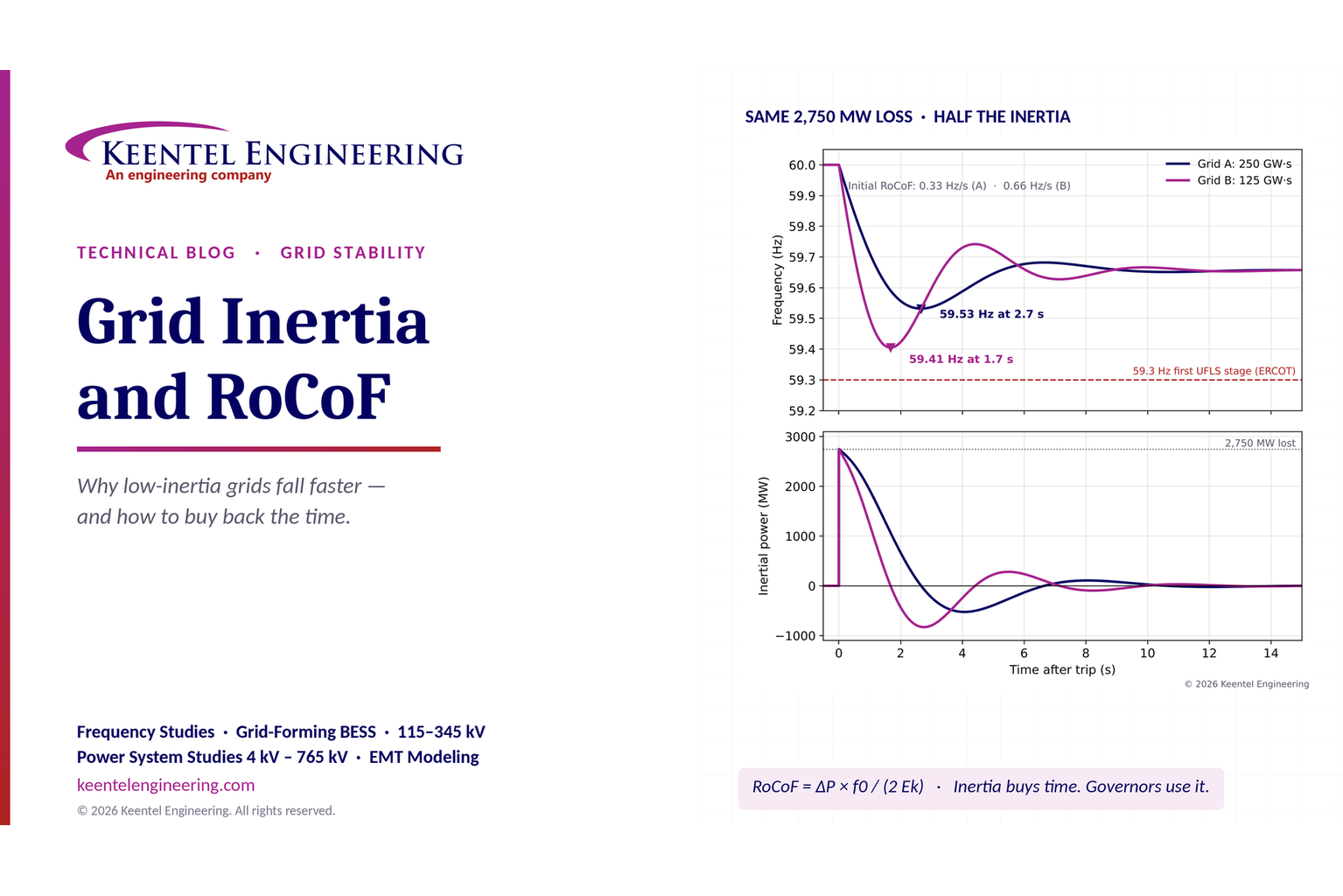
Explore grid inertia, RoCoF and frequency response, with swing equation calculations, frequency nadir analysis and US power system simulation examples.
By SANDIP R PATEL
•
October 11, 2026
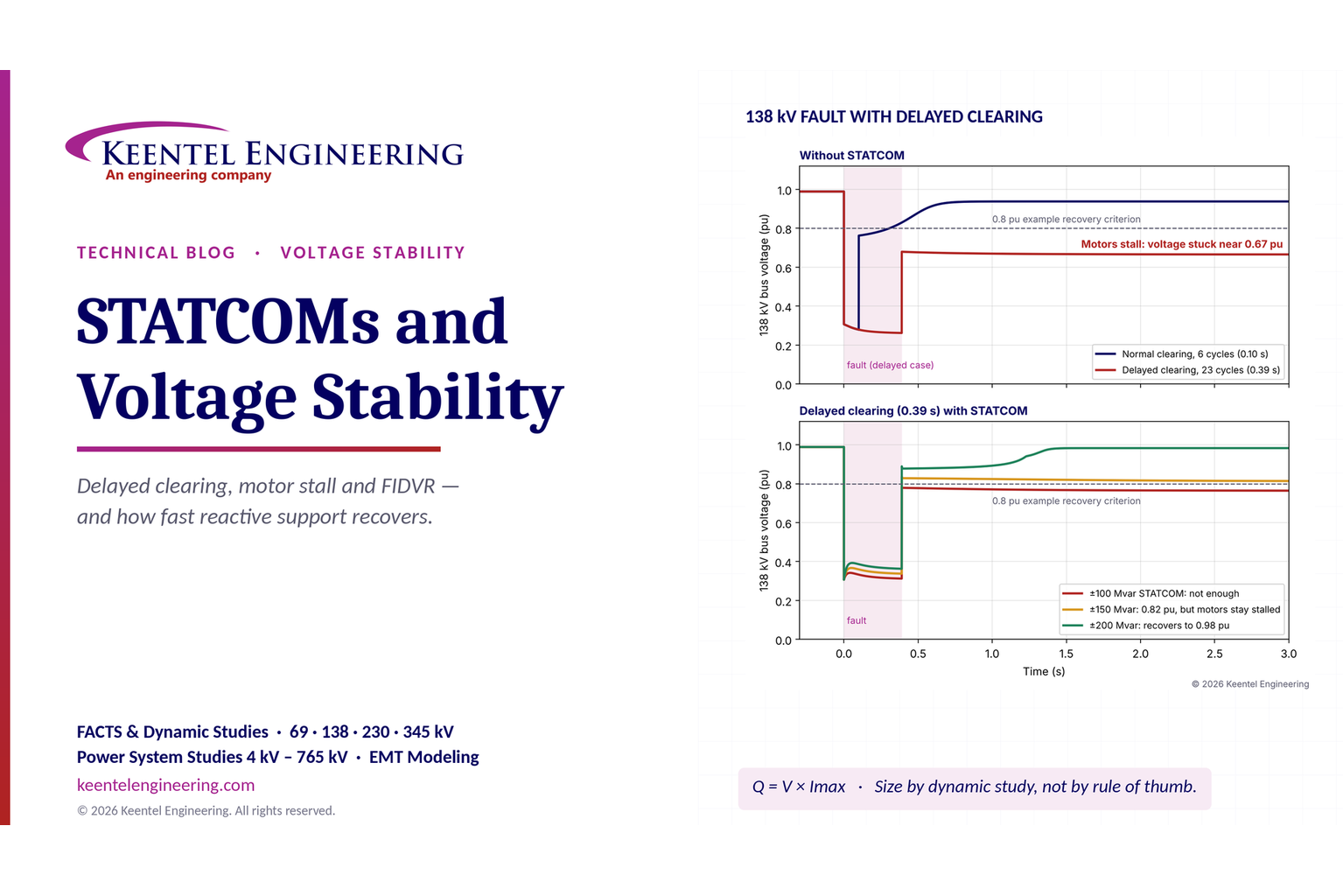
Learn how STATCOMs improve voltage stability and prevent FIDVR. Explore reactive power sizing, delayed fault clearing, NERC criteria and 138 kV simulation results.
By SANDIP R PATEL
•
October 10, 2026
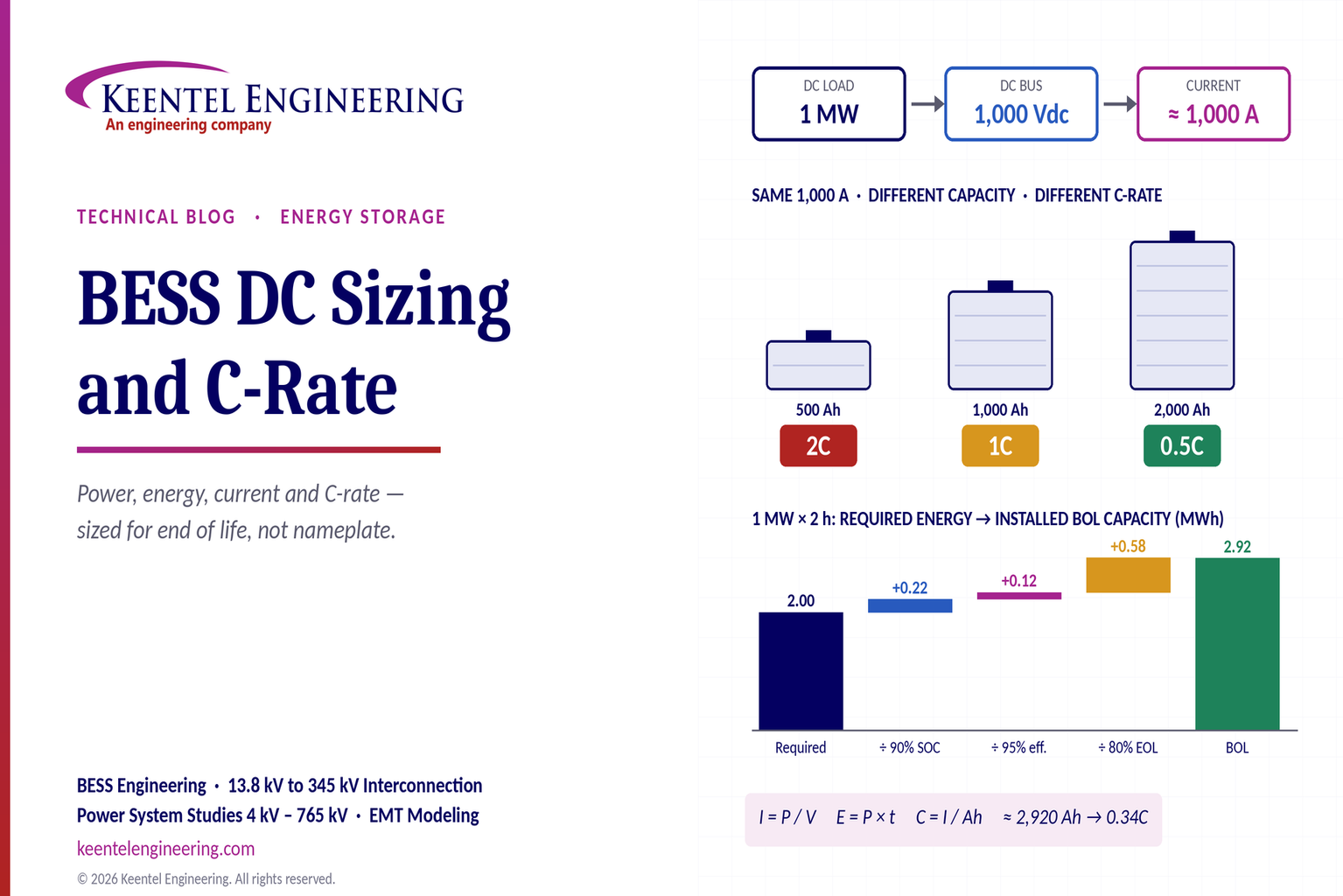
Learn BESS DC sizing with power, energy, current and C-rate calculations, battery losses, degradation and a 100 MW/400 MWh utility-scale example.
By SANDIP R PATEL
•
October 10, 2026
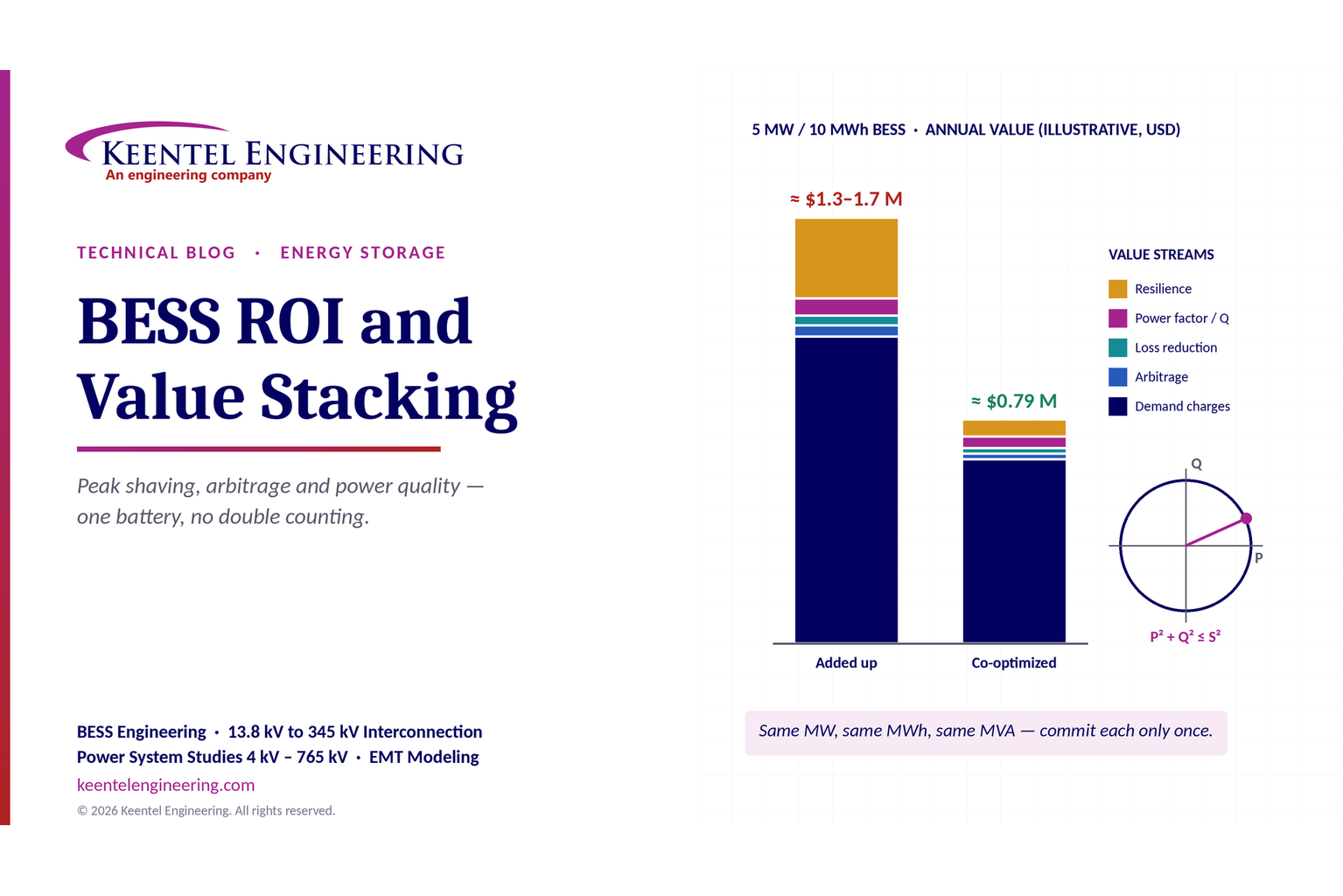
Learn how BESS ROI is calculated using peak shaving, energy arbitrage, power quality and battery storage economics, with a practical 5 MW/10 MWh example.
By SANDIP R PATEL
•
October 10, 2026
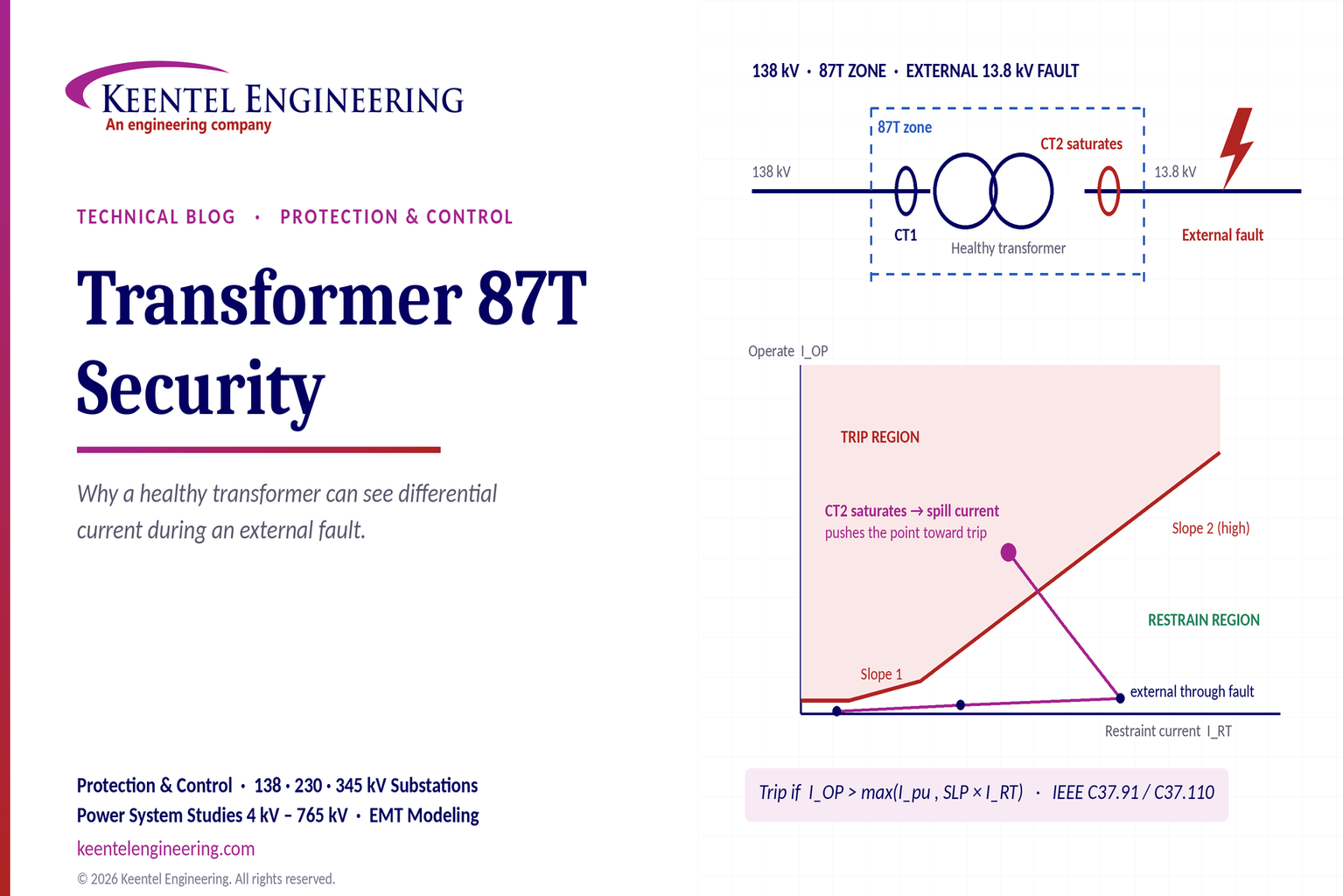
Learn why transformer differential relays detect current during external faults, how CT saturation causes spill current, and how secure 87T protection prevents trips.
By SANDIP R PATEL
•
October 10, 2026
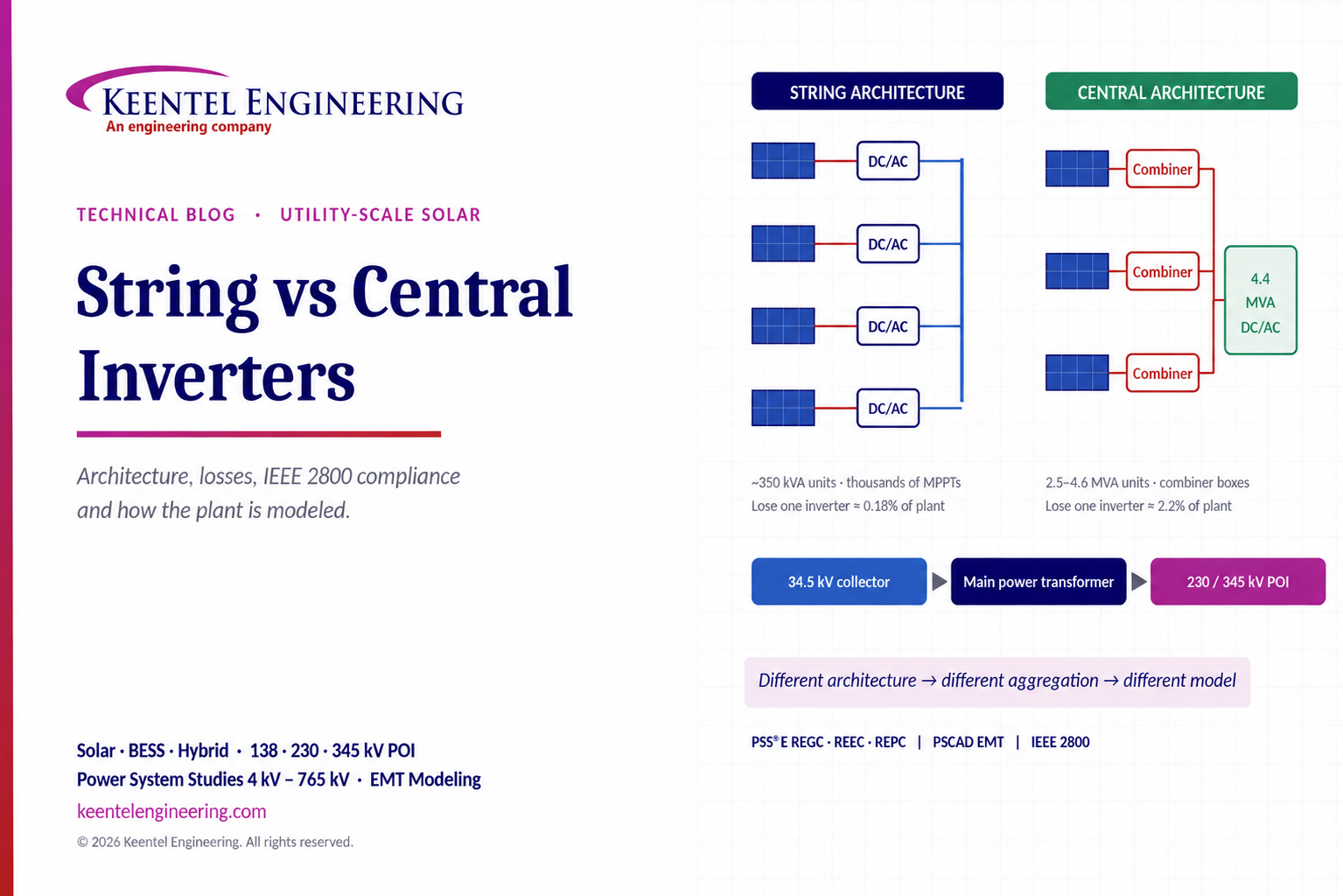
Compare string vs central inverters for utility-scale solar, including efficiency, maintenance, grid compliance, reactive power and interconnection studies.
By SANDIP R PATEL
•
October 9, 2026
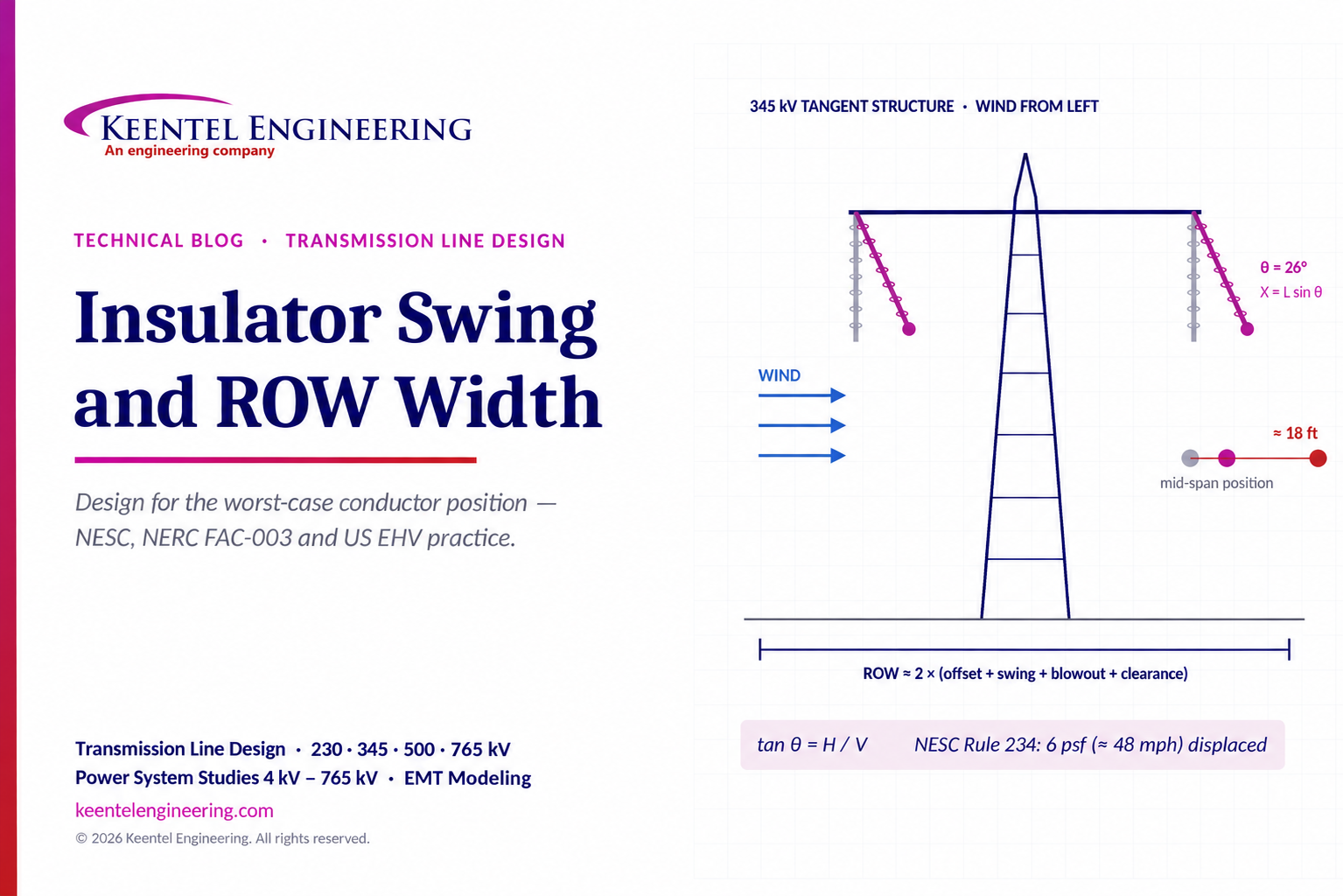
Learn how insulator swing angle and conductor blowout affect transmission line ROW width, with NESC clearances, NERC FAC-003 guidance, and a 345 kV example.
Copy
By SANDIP R PATEL
•
October 3, 2026
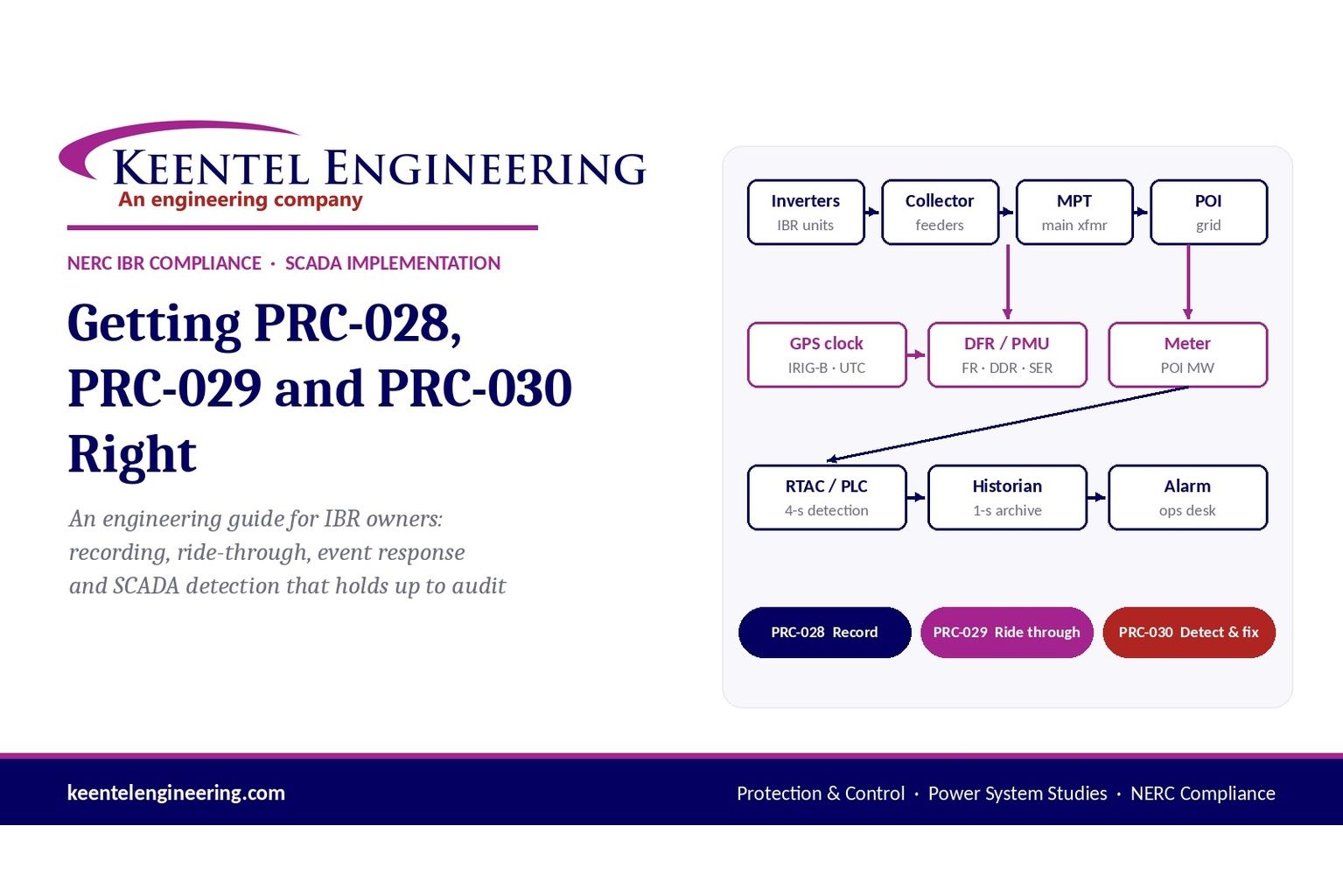
Engineering guide to PRC-028 disturbance recording, PRC-029 ride-through and PRC-030 event detection for inverter-based resources.
By SANDIP R PATEL
•
October 3, 2026
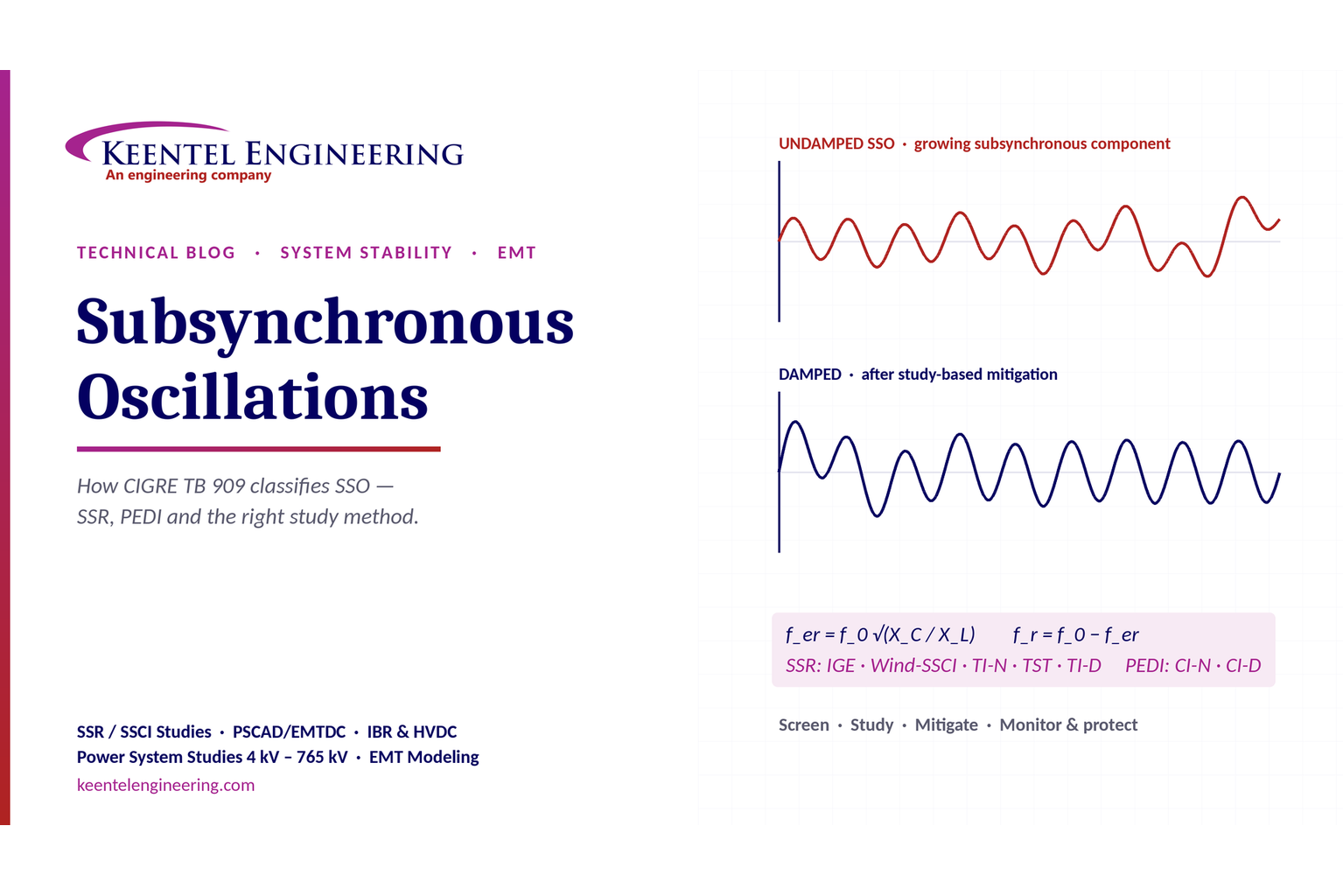
A practical guide to SSO classification, SSR, PEDI, Wind-SSCI, EMT analysis, mitigation and protection based on CIGRE TB 909.