A Coordinated Electric System Interconnection Review—the utility’s deep-dive on technical and cost impacts of your project.
Challenge: Frequent false tripping using conventional electromechanical relays
Solution: SEL-487E integration with multi-terminal differential protection and dynamic inrush restraint
Result: 90% reduction in false trips, saving over $250,000 in downtime
| Category | Metric |
|---|---|
| VPP capacity (Lunar Energy) | 650 MW |
| Lunar funding raised | US$232 million |
| Data center BESS example | 31 MW / 62 MWh |
| ERCOT grid-scale batteries | 15+ GW |
| LDES tenders (H1 2026) | Up to 9.3 GW |
| Lithium-ion share of LDES by 2030 | 77% |
| FEOC initial threshold | 55% |
| BESS tariff rate (2026) | ~55% |
| Capacity gain from analytics | 5–15% |
Emerging Large Loads: Engineering Implications, Grid Risks and Advanced Mitigation Strategies
Mar 19, 2026 | blog
Introduction: A Structural Shift in Grid Behavior
The modern electric grid is undergoing a non-linear transformation driven by the rapid deployment of power-electronics-dominated, high-density loads such as AI data centers, cryptocurrency mining, hydrogen electrolysis plants, and electrified industrial systems.
Unlike traditional load growth, which was:
- Gradual
- Predictable
- Passive
Emerging large loads are:
- Highly dynamic (sub-second ramping capability)
- Nonlinear (converter-based behavior)
- Massive in scale (100 MW to >1 GW per site)
- Digitally controlled (software-driven demand profiles)
This creates a paradigm shift where load begins to behave like a controllable grid asset, introducing new classes of reliability challenges that were historically associated only with generation.
Fundamental Problem: Misalignment Between Grid Design and Load Evolution
Existing grid frameworks were built on assumptions that:
- Loads are passive and voltage-dependent
- Load growth is slow and forecastable
- Disturbances primarily originate from generation or transmission
These assumptions no longer hold.
Emerging large loads introduce:
- Fast ramp rates comparable to generator trips
- Voltage-sensitive tripping behavior
- High dependency on internal control systems (UPS, converters, drives)
- Opaque operational characteristics due to proprietary systems
As a result, current planning, operations, and protection philosophies are increasingly insufficient.
Deep Technical Breakdown of Key Challenges
1. Interconnection Engineering Deficiencies
Problem
Traditional interconnection processes are designed for:
- Generators (well-defined performance requirements)
- Conventional loads (minimal system interaction)
Large loads fall in between but with generator-like impact and load-like regulatory treatment.
Engineering Gaps
- No standardized dynamic performance requirements
- Lack of ride-through criteria (voltage/frequency)
- No mandatory post-commissioning validation
- Inadequate pre-energization testing protocols
Impact
- Incorrect system modeling assumptions
- Hidden instability risks
- Inadequate mitigation planning
2. Load Modeling and Simulation Limitations
Core Issue
Existing load models (ZIP, composite load models) are not designed for converter-dominated systems.
Technical Gaps
- Inability to represent:
- Rectifier dynamics
- UPS control behavior
- Voltage-dependent disconnection logic
- Fast reconnection dynamics
- Lack of:
- EMT-compatible standardized models
- Model validation frameworks
- Parameter transparency
Result
- Significant model-to-reality mismatch
- Incorrect stability study outcomes
- Underestimation of system risk
3. Dynamic Stability Challenges
A. Frequency Stability
- Rapid load loss or addition acts like negative generation trip
- Can lead to:
- Over-frequency events (load rejection)
- Under-frequency (rapid load pickup)
B. Voltage Stability
- High reactive power demand during disturbances
- Load tripping may:
- Improve voltage temporarily
- Cause instability upon reconnection
C. Rotor-Angle Stability
- Sudden load changes alter power flow paths
- Can trigger generator instability
D. Converter-Driven Stability
- Interaction between:
- Grid impedance
- Converter control loops
- Can result in:
- Sub-synchronous oscillations
- Control interaction failures
4. Operational Visibility and Control Gaps
Current Limitation
System operators lack:
- Real-time visibility of individual large load behavior
- Forecasted ramp profiles
- Control over load response
Engineering Consequences
- Ineffective unit commitment decisions
- Increased ACE volatility
- Delayed response to disturbances
5. Power Quality and Harmonic Impacts
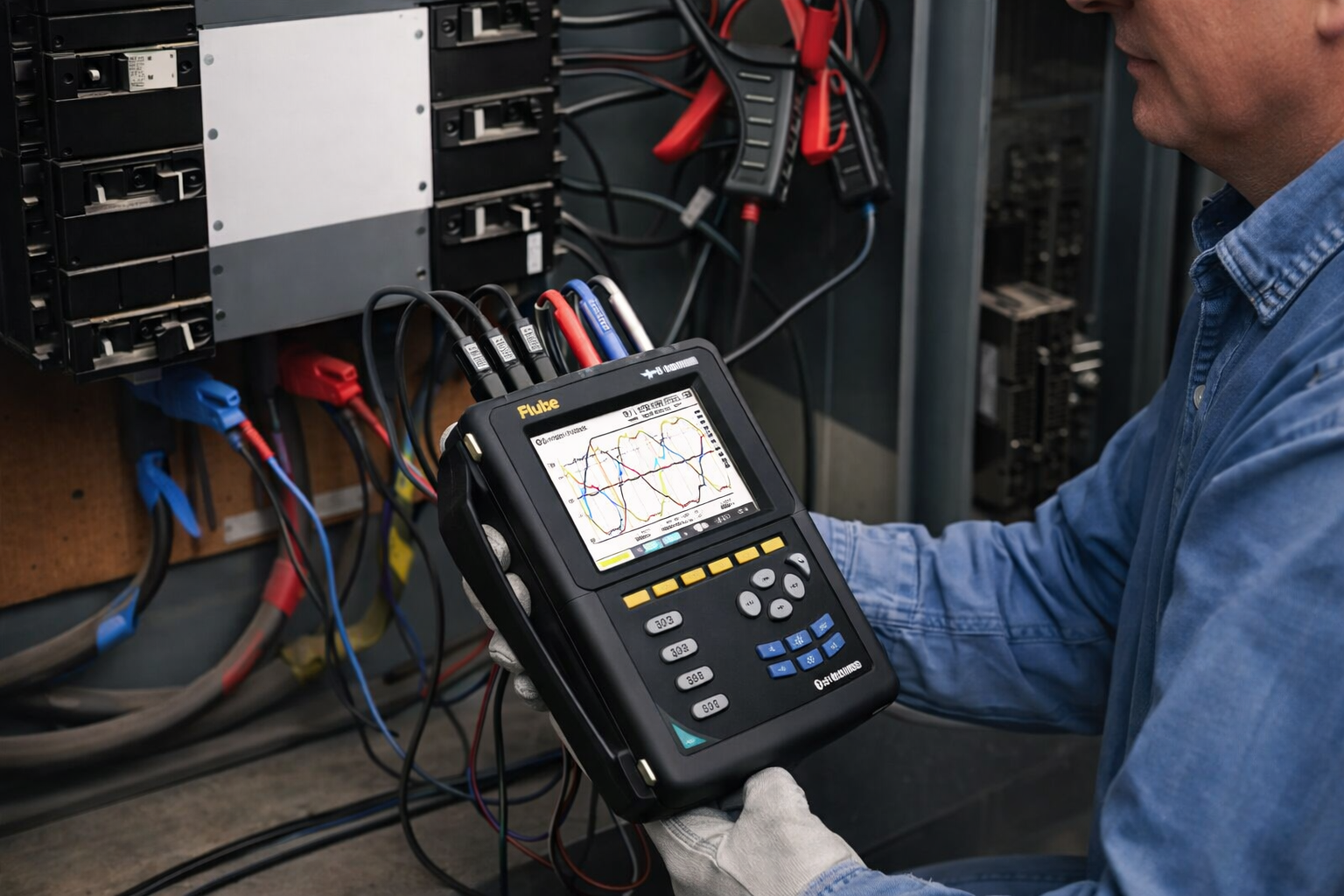
Large loads are dominated by:
- Rectifiers
- Variable frequency drives
- Switching power supplies
These introduce:
- Harmonics
- Interharmonics
- Subharmonics
Advanced Issue
Even if individual facilities meet harmonic limits:
- System-wide resonance may still occur
- Aggregated impact can exceed thresholds elsewhere in the grid
6. Protection and Coordination Issues
Key Problem
Mismatch between:
- Utility protection schemes
- Load-side protection (UPS, drives, converters)
Result
- Unnecessary load tripping during cleared faults
- Cascading disturbances
- Loss of coordination between systems
7. Planning and Resource Adequacy Risks
Key Challenge
Large loads:
- Develop faster than infrastructure
- Are uncertain in:
- Timing
- Final capacity
- Operational profile
Impact
- Transmission congestion
- Generation shortfall
- Misaligned infrastructure investment
Advanced Engineering Solutions
1. High-Fidelity Modeling Frameworks
- EMT + RMS hybrid simulations
- Standardized load model libraries
- Mandatory model validation procedures
2. Enhanced Interconnection Requirements
- Mandatory ride-through capability
- Defined ramp rate limits
- Dynamic performance testing
3. Real-Time Data Integration
- SCADA + PMU integration for large loads
- Mandatory telemetry requirements
- Predictive load analytics
4. Protection Coordination Standards
- Sharing of protection curves between utility and load
- Coordinated relay and UPS settings
- System-wide disturbance response alignment
5. Advanced Planning Methodologies
- Scenario-based planning
- Probabilistic forecasting
- Inclusion of worst-case load behavior
6. Regulatory Evolution
- Potential classification of large loads as grid-impacting entities
- Enforceable performance standards
- Mandatory data reporting
The Grid Has Changed Engineering Must Catch Up
The rapid expansion of AI data centers, crypto mining, hydrogen production, and electrified industrial loads is placing unprecedented stress on the power grid.
These are not conventional loads.
They are:
- 100 MW to GW-scale facilities
- Converter-dominated systems
- Capable of sub-second demand swings
- Highly sensitive to voltage and frequency disturbances
Yet, most interconnection processes, planning studies, and protection schemes were never designed for this type of load behavior.
The result:
- Hidden risks, failed interconnection studies, delayed projects, and grid reliability concerns.
The Real Engineering Challenge
Emerging large loads introduce challenges across every layer of the power system:
Planning
- Unpredictable load growth and ramp behavior
- Incomplete forecasting data
- Transmission and generation misalignment
Interconnection
- Lack of standardized requirements
- Missing dynamic performance criteria
- Insufficient modeling and validation
Operations
- Limited real-time visibility
- Increased frequency and voltage instability
- Higher ACE variability
Stability & Protection
- Converter-driven instability
- Harmonics and resonance
- Protection miscoordination
Why Most Projects Are at Risk
Many developers assume that:
- Load is just load.
But in reality:
- Large loads behave like controllable grid assets
- They can trigger grid events equivalent to generator trips
- They require advanced modeling and compliance strategies
Without proper engineering:
- Interconnection studies may fail
- Utility approvals may be delayed
- Unexpected system upgrades may arise
- Projects may face operational restrictions
How Keentel Engineering Solves This
At Keentel Engineering we specialize in high-fidelity power system studies and grid integration for emerging large loads.
We don’t just run studies we engineer solutions that get projects approved and operational.
Our Core Capabilities
Advanced Power System Studies
- Steady-State (Load Flow, Short Circuit)
- Dynamic Stability (PSSE / TSAT)
- EMT Studies (PSCAD, RTDS, HYPERSIM)
- Harmonic & Power Quality Analysis
Large Load Modeling & Validation
- Converter-based load modeling
- UPS and rectifier system representation
- Model validation against real-world behavior
- Utility-compliant model development
Interconnection & Grid Compliance
- Utility / ISO / RTO coordination
- Interconnection application support
- NERC compliance alignment
- Ride-through and performance requirement design
Protection & Control Engineering
- Protection coordination studies
- Relay settings and system integration
- Disturbance response optimization
- Grid-code compliance verification
Real-Time & Operational Support
- SCADA / EMS integration
- PMU-based monitoring strategies
- Load forecasting and ramp analysis
- Operational risk assessment
What Makes Keentel Different
- 30+ Years of Power System Expertise
- Deep experience in renewables, BESS, and IBR modeling
- Strong understanding of NERC, ERCOT, PJM, CAISO, SPP requirements
- Proven track record in complex interconnection projects
- Expertise in both RMS and EMT domains
Who We Help
We support:
- Data Center Developers & Operators
- Hydrogen & Industrial Electrification Projects
- Cryptocurrency Mining Facilities
- Utilities and Transmission Developers
- Independent Power Producers (IPPs)
- EPC Contractors & Engineering Firms
Typical Engagement Scenarios
- Our interconnection study failed due to instability concerns
- The utility is asking for dynamic models we don’t have
- We need EMT studies for approval
- Our load behavior is not being accepted by the ISO
- We are seeing unexpected harmonic or oscillation issues
If any of these apply you need specialized
engineering support .
Conclusion
Emerging large loads are not just a new category of demand they represent a fundamental shift in grid physics and control philosophy.
Without engineering intervention:
- Stability margins will shrink
- Operational complexity will increase
- Reliability risks will escalate
However, with the right combination of:
- Advanced modeling
- Enhanced standards
- Coordinated engineering practices
The grid can evolve into a more adaptive, resilient, and intelligent system.
25 Advanced Technical FAQs
1. Why do traditional load models fail for large loads?
Traditional models (ZIP, composite load) assume passive, voltage-dependent behavior. Large loads are dominated by power electronics with active control systems, fast dynamics, and nonlinear responses, making these models inadequate.
2. What is the significance of EMT modeling for large loads?
EMT models capture high-frequency dynamics, control interactions, and switching behavior that RMS models cannot. This is essential for analyzing converter-driven instability and harmonic interactions.
3. How do large loads impact frequency response?
They can act as sudden negative or positive generation changes. Rapid disconnection causes over-frequency, while reconnection can cause under-frequency, stressing system frequency control mechanisms.
4. What is converter-driven instability?
It arises from interactions between converter control systems and grid impedance, leading to oscillations or instability that cannot be predicted using traditional stability analysis.
5. Why is disturbance ride-through critical for large loads?
Without ride-through capability, loads may trip during minor disturbances, causing large-scale demand loss and destabilizing the grid.
6. How do large loads affect Area Control Error (ACE)?
Rapid and uncoordinated load changes introduce significant deviations in generation-load balance, increasing ACE variability and challenging system control.
7. What are the challenges in forecasting large load demand?
Uncertainty in:
- Project timelines
- Ramp rates
- Final capacity
- Operational behavior
- makes accurate forecasting extremely difficult.
8. Why is harmonic interaction more complex with large loads?
Due to high penetration of power electronics, harmonics can interact with system impedance and other loads, causing resonance and system-wide distortion.
9. What is the role of UPS systems in large load behavior?
UPS systems can:
- Isolate loads from grid disturbances
- Introduce sudden load transfer events
- Affect ride-through characteristics
10. Why is protection coordination difficult?
Utility and load protections operate independently, leading to mismatched responses during faults and unnecessary load disconnection.
11. How do large loads impact voltage stability?
They can draw large reactive power during disturbances, worsening voltage dips or causing instability during recovery.
12. What is the risk of simultaneous load tripping?
Large-scale simultaneous tripping can cause:
- Over-frequency events
- Generation imbalance
- Cascading system instability
13. Why is data sharing limited for large loads?
Due to:
- Commercial confidentiality
- Cybersecurity concerns
- Competitive business models
14. What is the impact of load ramp rates on operations?
High ramp rates can exceed system flexibility, causing:
- Dispatch challenges
- Frequency excursions
- Reliability violations
15. Why are large loads difficult to include in resource adequacy studies?
Lack of reliable data and uncertainty in load behavior make it difficult to model their contribution to peak demand and system stress.
16. What are interharmonics and why are they important?
Interharmonics are non-integer frequency components that can cause:
- Equipment overheating
- Control system interference
- Resonance issues
17. How do large loads affect transmission planning?
They can create localized demand clusters that exceed transmission capacity and require significant infrastructure upgrades.
18. What is the role of PMUs in managing large loads?
Phasor Measurement Units provide high-resolution data to monitor dynamic behavior and detect oscillations or instability.
19. Why is model validation critical?
Without validation, models may not reflect actual behavior, leading to incorrect study results and poor engineering decisions.
20. What is forced oscillation risk?
Large loads can introduce periodic power fluctuations that excite system modes and potentially lead to instability.
21. Why is coordination between stakeholders essential?
Multiple entities (utilities, operators, developers) must align to ensure safe interconnection and operation.
22. How do large loads impact contingency analysis?
They introduce new scenarios not traditionally studied, such as simultaneous load changes or rapid demand swings.
23. What is the role of grid-forming technologies?
They can help stabilize voltage and frequency but require advanced control coordination.
24. Why are regulatory changes necessary?
Current frameworks do not impose sufficient requirements on large loads despite their significant grid impact.
25. How can engineering firms mitigate these risks?
By providing:
- Advanced simulation studies
- Interconnection design
- Protection coordination
- Compliance support
- Real-time monitoring solutions

About the Author:
Sandip "Sonny" R. Patel, P.E.
IEEE Senior Member · Founder & CEO, Keentel Engineering
In 1995, Sonny Patel earned his Electrical Engineering degree from the University of Illinois. But degrees don't build legacies — action does.
For three decades, he has worked the power industry from every side of the table: 16 years as a utility engineer at Exelon/Commonwealth Edison; generation leadership across hydroelectric, industrial steam turbine, and a 9 GW renewable fleet; NERC Regional Entity Senior Compliance Engineer and Audit Team Lead, auditing some of the nation's largest utilities; and testing and commissioning lead on equipment up to 765 kV — the very top of the North American grid.Utility. Generator. Regulator. Consultant. Few engineers have seen all four seats. Fewer still have sat in them.
His experience spans nuclear, hydro, conventional generation, renewables, oil and gas, mining — and today's data centers, where he is authoring a three-book series on data center design. He is a Licensed Professional Engineer in six states and a Licensed Electrical Contractor in Florida (Unlimited EC) — he doesn't just design the work; he's qualified to stand behind its execution.Today, as Founder and CEO of Keentel Engineering, Sonny leads a nationwide team of engineers delivering substation design, power system studies, NERC compliance, and commissioning — done right, coast to coast.Three decades. Every side of the table. One standard: accountable engineering.
Services

Let's Discuss Your Project
Let's book a call to discuss your electrical engineering project that we can help you with.
About the Author:
Sandip "Sonny" R. Patel, P.E.
IEEE Senior Member · Founder & CEO, Keentel Engineering
In 1995, Sonny Patel earned his Electrical Engineering degree from the University of Illinois. But degrees don't build legacies — action does.
For three decades, he has worked the power industry from every side of the table: 16 years as a utility engineer at Exelon/Commonwealth Edison; generation leadership across hydroelectric, industrial steam turbine, and a 9 GW renewable fleet; NERC Regional Entity Senior Compliance Engineer and Audit Team Lead, auditing some of the nation's largest utilities; and testing and commissioning lead on equipment up to 765 kV — the very top of the North American grid.
Utility. Generator. Regulator. Consultant. Few engineers have seen all four seats. Fewer still have sat in them.
His experience spans nuclear, hydro, conventional generation, renewables, oil and gas, mining — and today's data centers, where he is authoring a three-book series on data center design. He is a Licensed Professional Engineer in six states and a Licensed Electrical Contractor in Florida (Unlimited EC) — he doesn't just design the work; he's qualified to stand behind its execution.
Today, as Founder and CEO of Keentel Engineering, Sonny leads a nationwide team of engineers delivering substation design, power system studies, NERC compliance, and commissioning — done right, coast to coast.Three decades. Every side of the table. One standard: accountable engineering.
Leave a Comment
Thank you for contacting us.
We will get back to you as soon as possible.
We will get back to you as soon as possible.
Oops, there was an error sending your message.
Please try again later.
Please try again later.
Related Posts
By SANDIP R PATEL
•
October 3, 2026
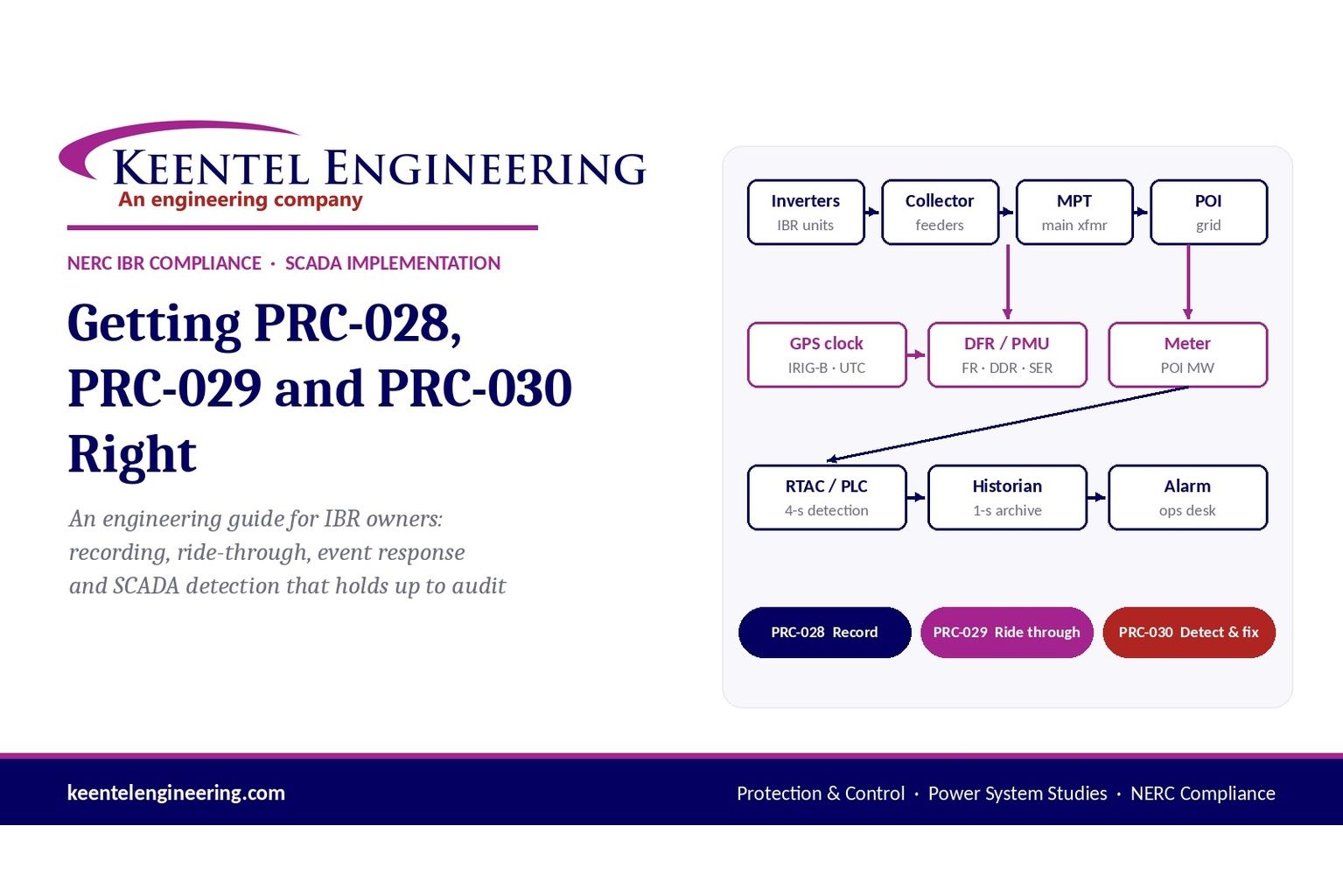
Engineering guide to PRC-028 disturbance recording, PRC-029 ride-through and PRC-030 event detection for inverter-based resources.
By SANDIP R PATEL
•
October 3, 2026
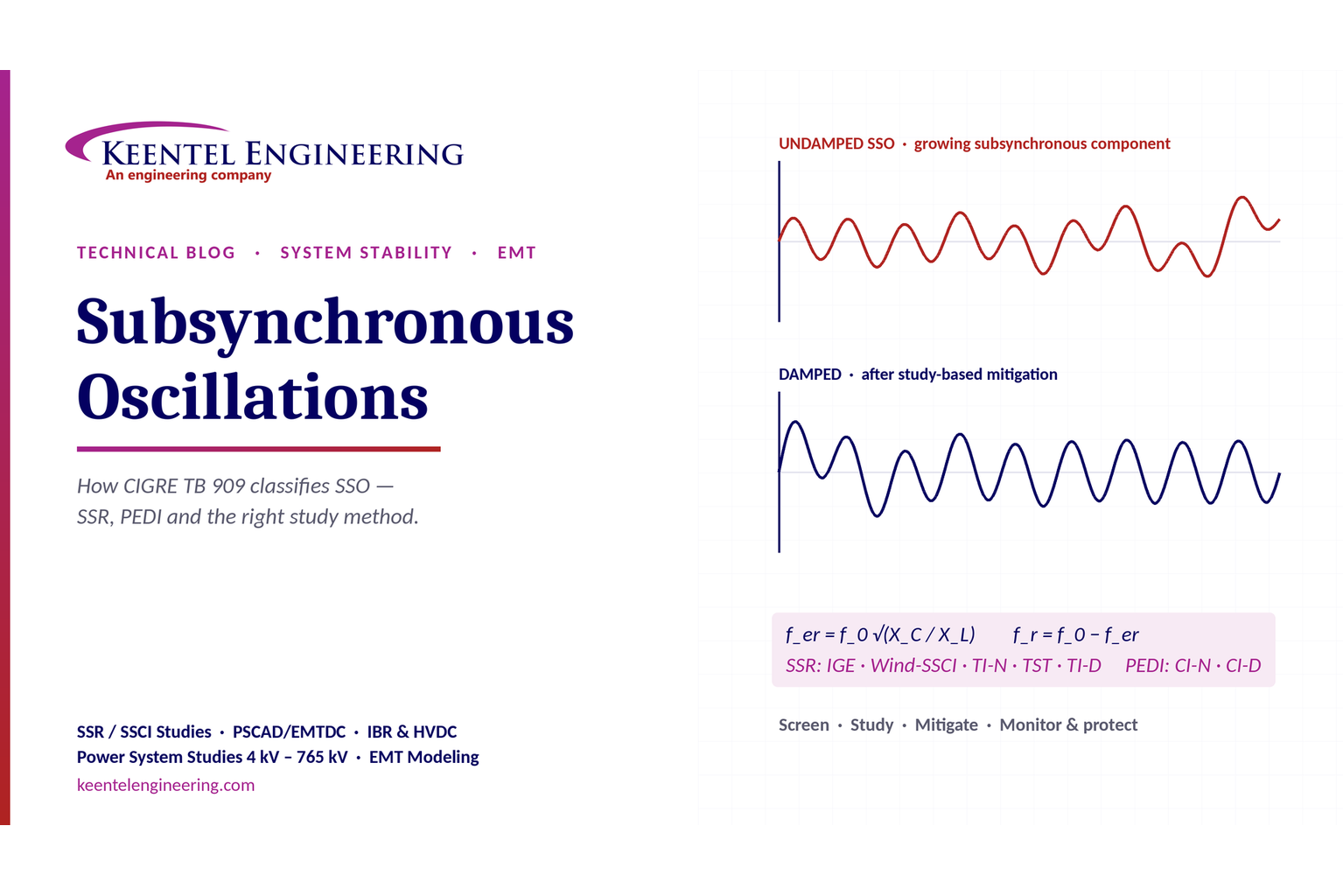
A practical guide to SSO classification, SSR, PEDI, Wind-SSCI, EMT analysis, mitigation and protection based on CIGRE TB 909.
By SANDIP R PATEL
•
October 6, 2026
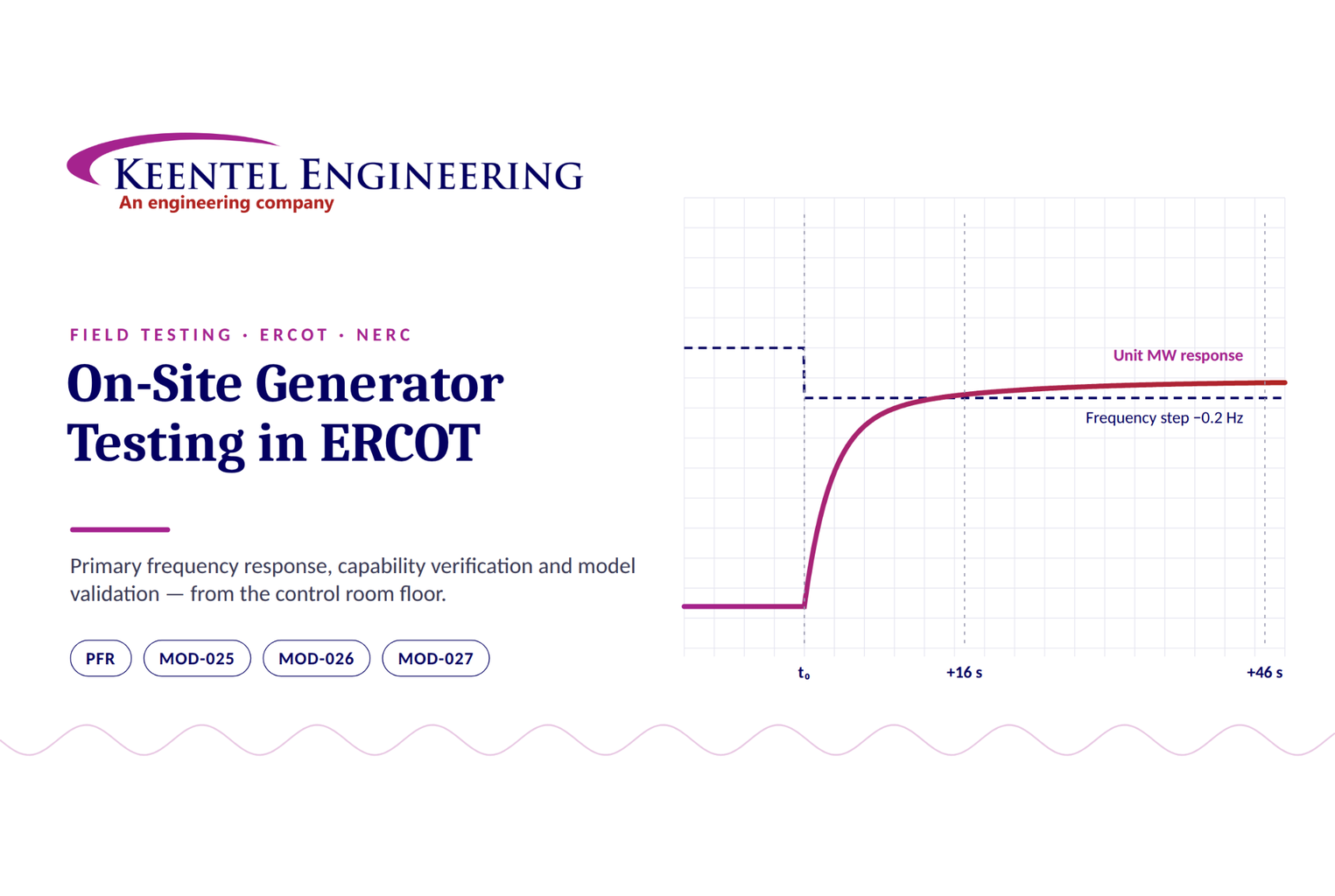
Learn ERCOT generator testing for PFR, MOD-025 and MOD-026/027, including staged tests, capability verification, dynamic models and field testing.
By SANDIP R PATEL
•
October 3, 2026
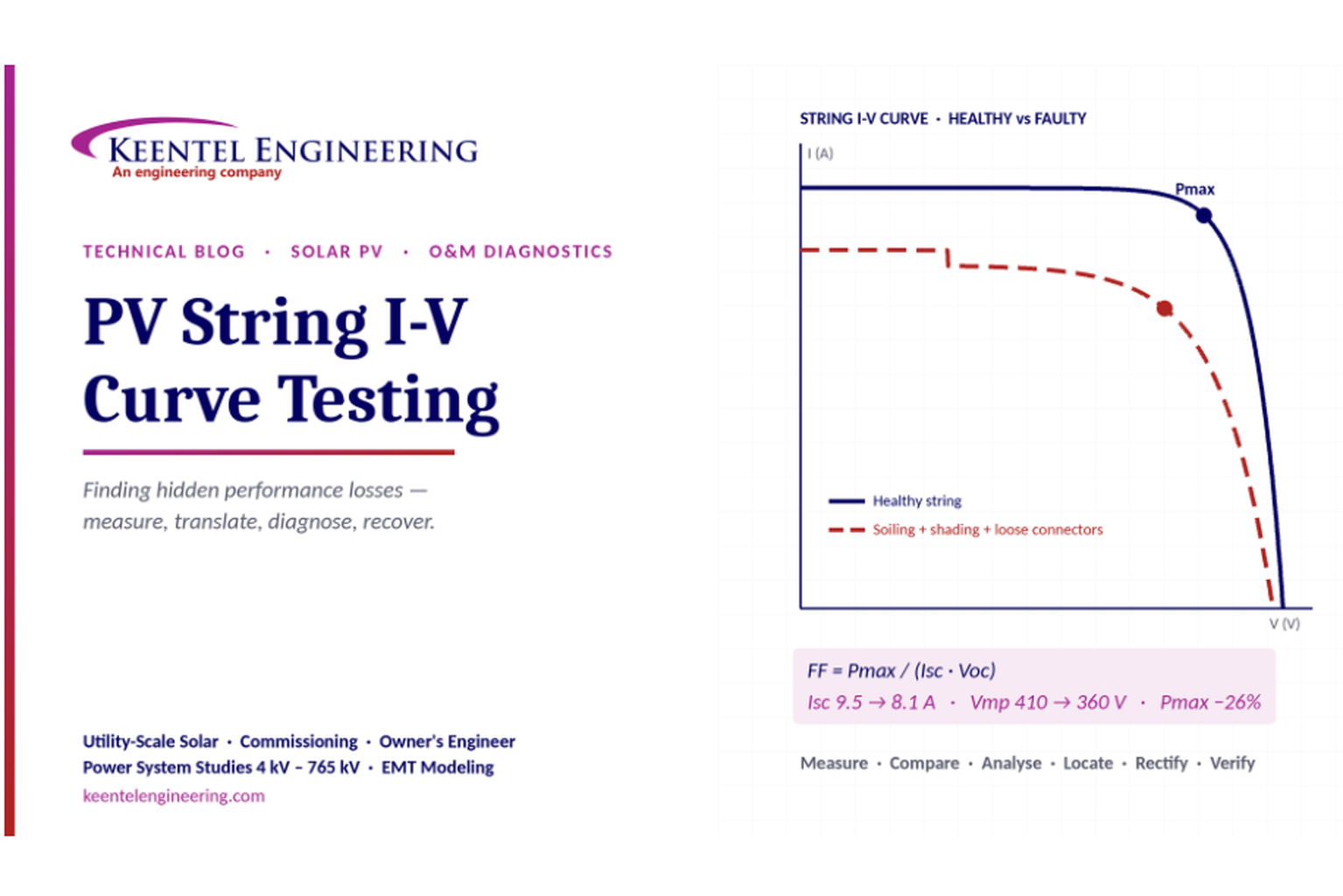
Learn how PV string I-V curve testing identifies hidden solar performance losses, including soiling, shading, mismatch, degradation, and wiring faults.
By SANDIP R PATEL
•
October 3, 2026
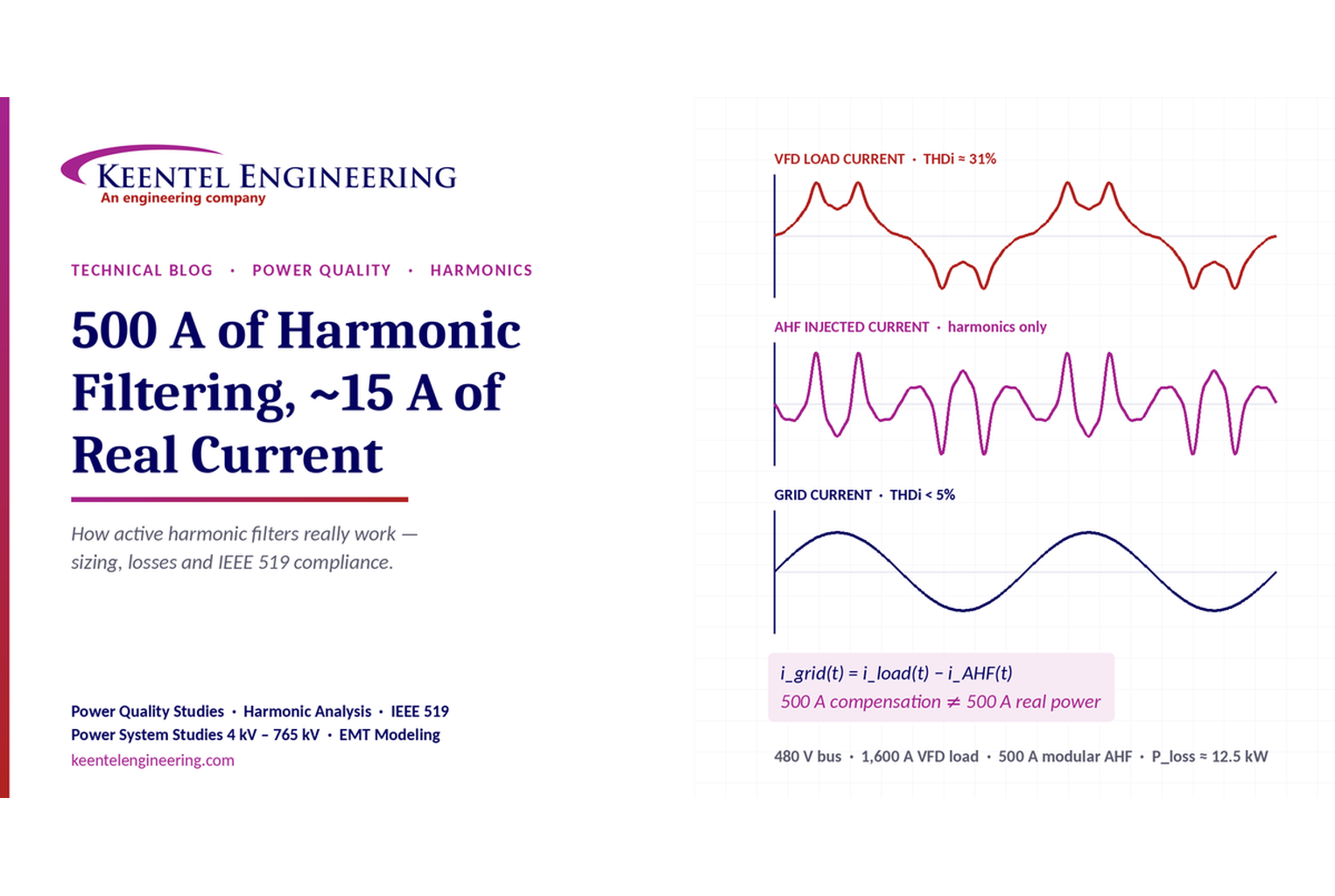
Learn how active harmonic filters work, how to size AHF systems, reduce VFD harmonics, calculate losses, and meet IEEE 519 TDD limits at the PCC.
By SANDIP R PATEL
•
October 3, 2026
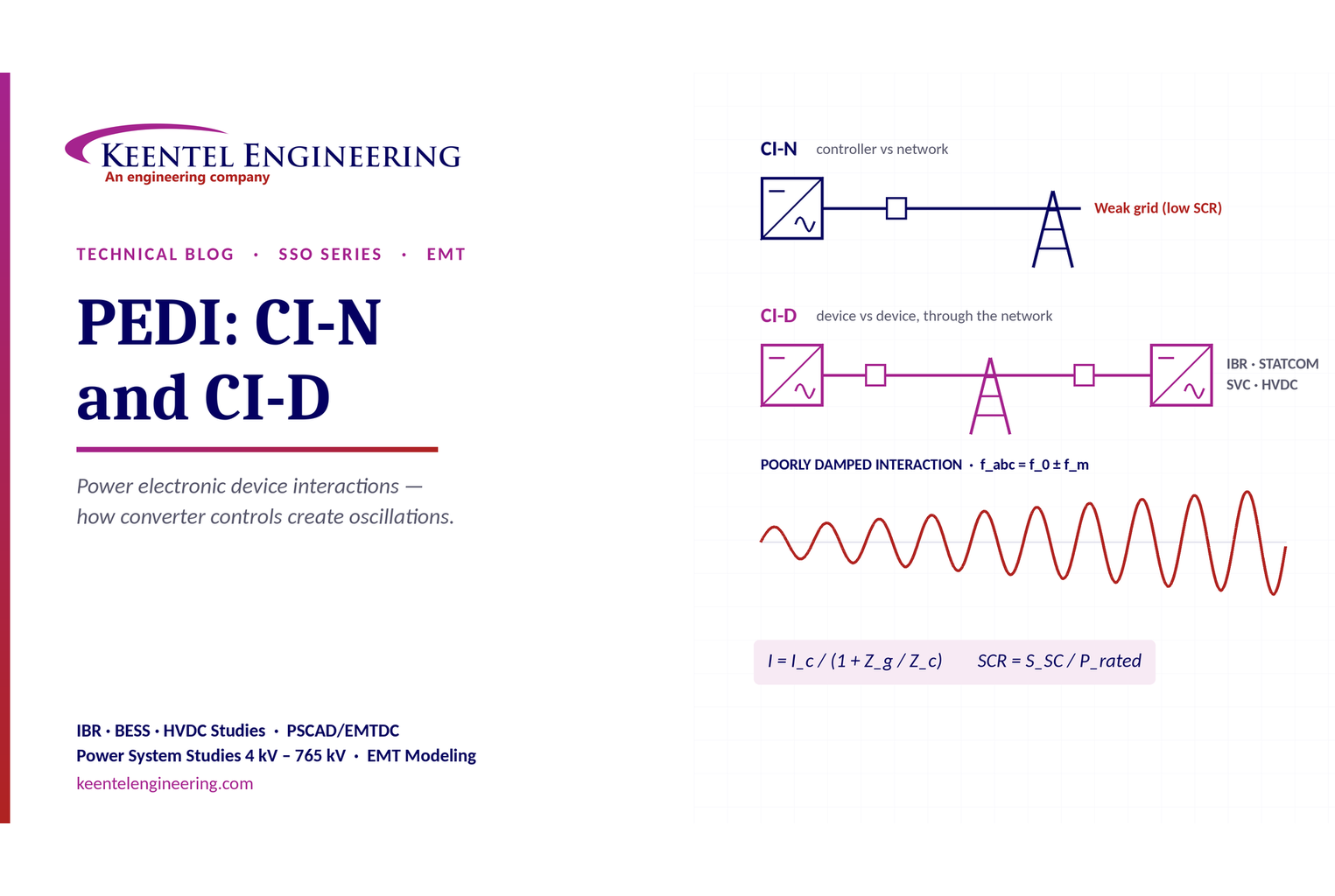
Learn power electronic device interactions (PEDI), including CI-N and CI-D, weak-grid stability, SCR, EMT studies, impedance analysis and mitigation for IBRs.
By SANDIP R PATEL
•
October 3, 2026
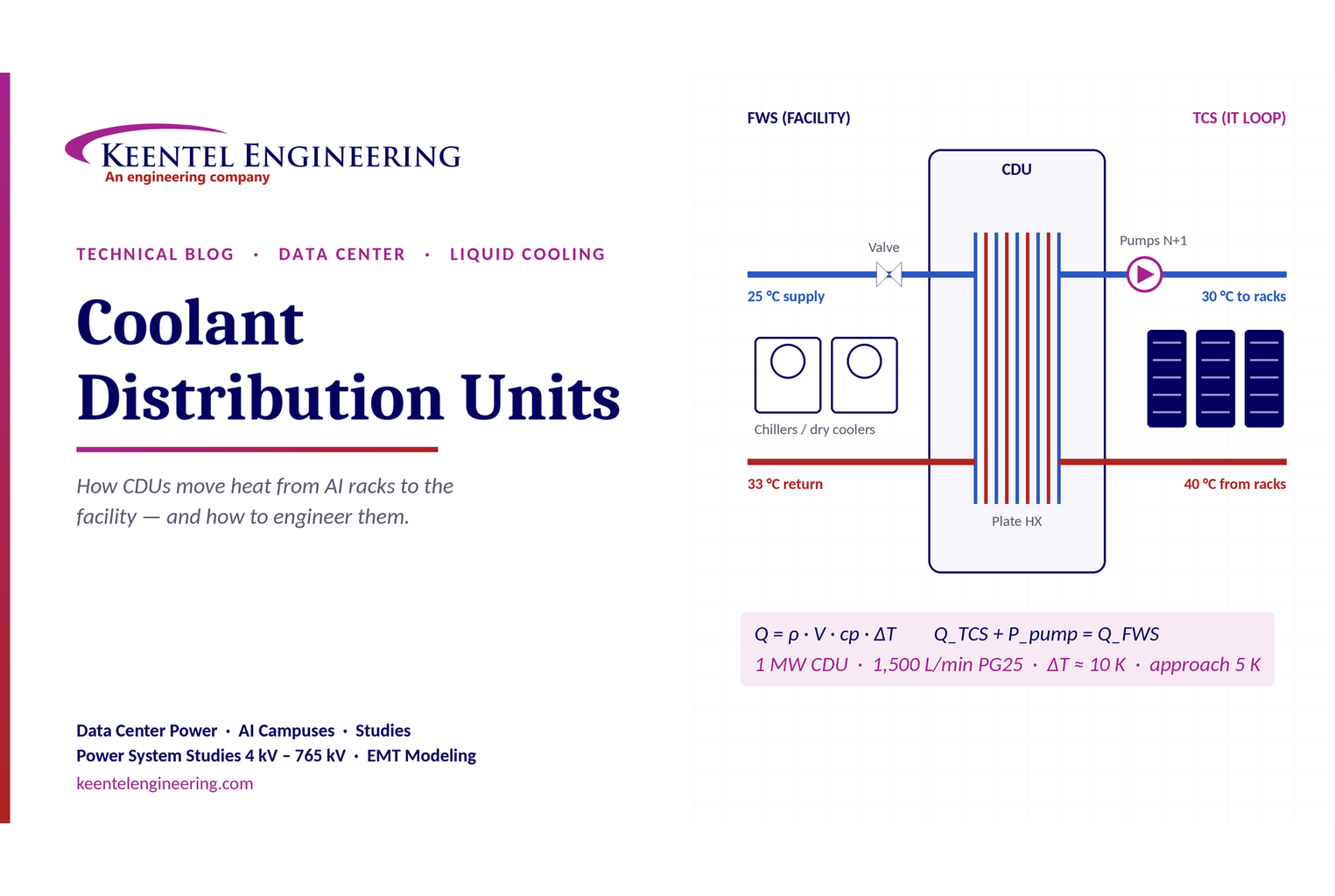
Learn how data center coolant distribution units (CDUs) work, including FWS and TCS loops, heat transfer, sizing, redundancy and liquid cooling for AI data centers.
By SANDIP R PATEL
•
October 3, 2026
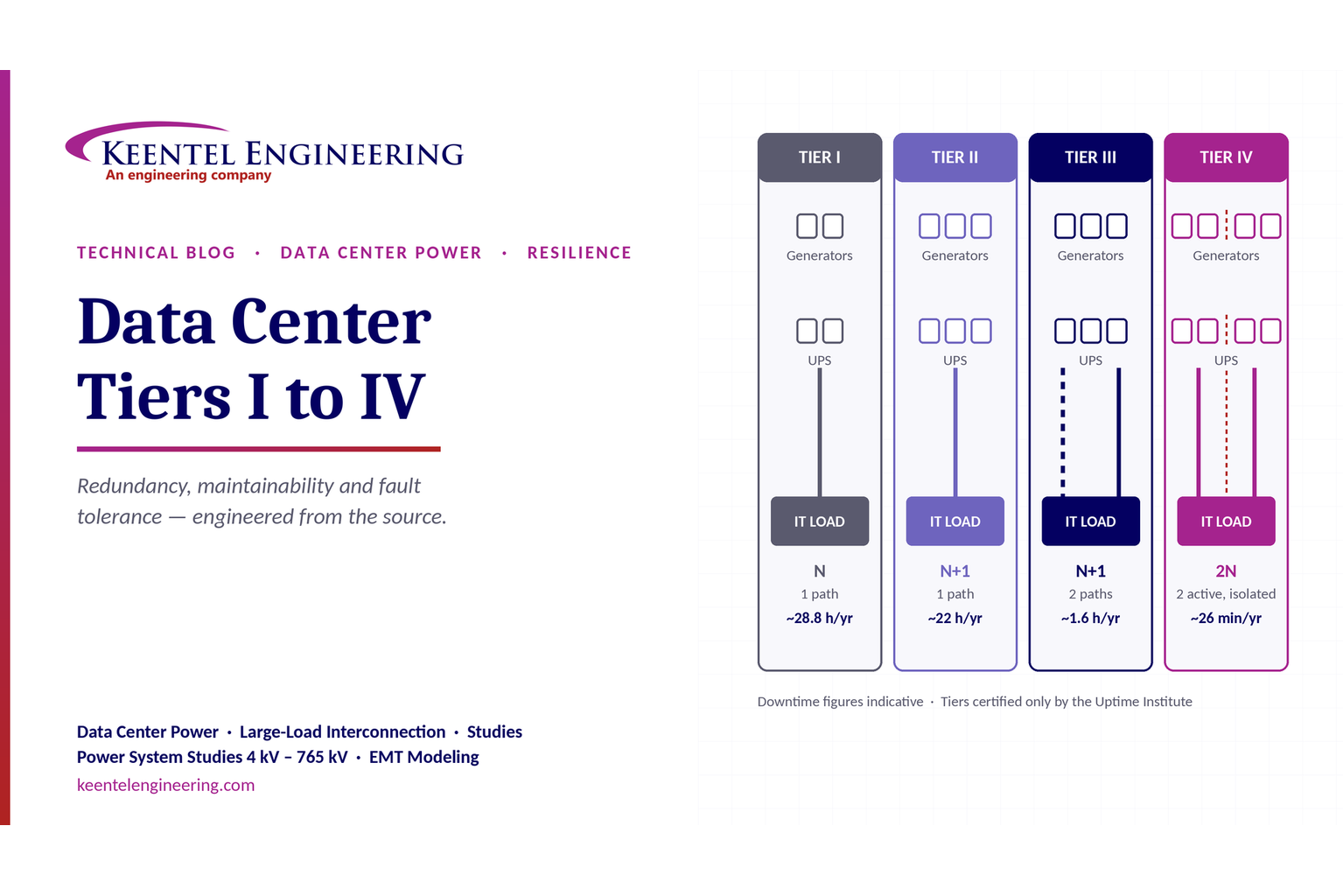
Compare Data Center Tiers I–IV, including redundancy, uptime, Tier III concurrent maintainability, Tier IV fault tolerance, UPS, generators and power design.
By SANDIP R PATEL
•
October 3, 2026
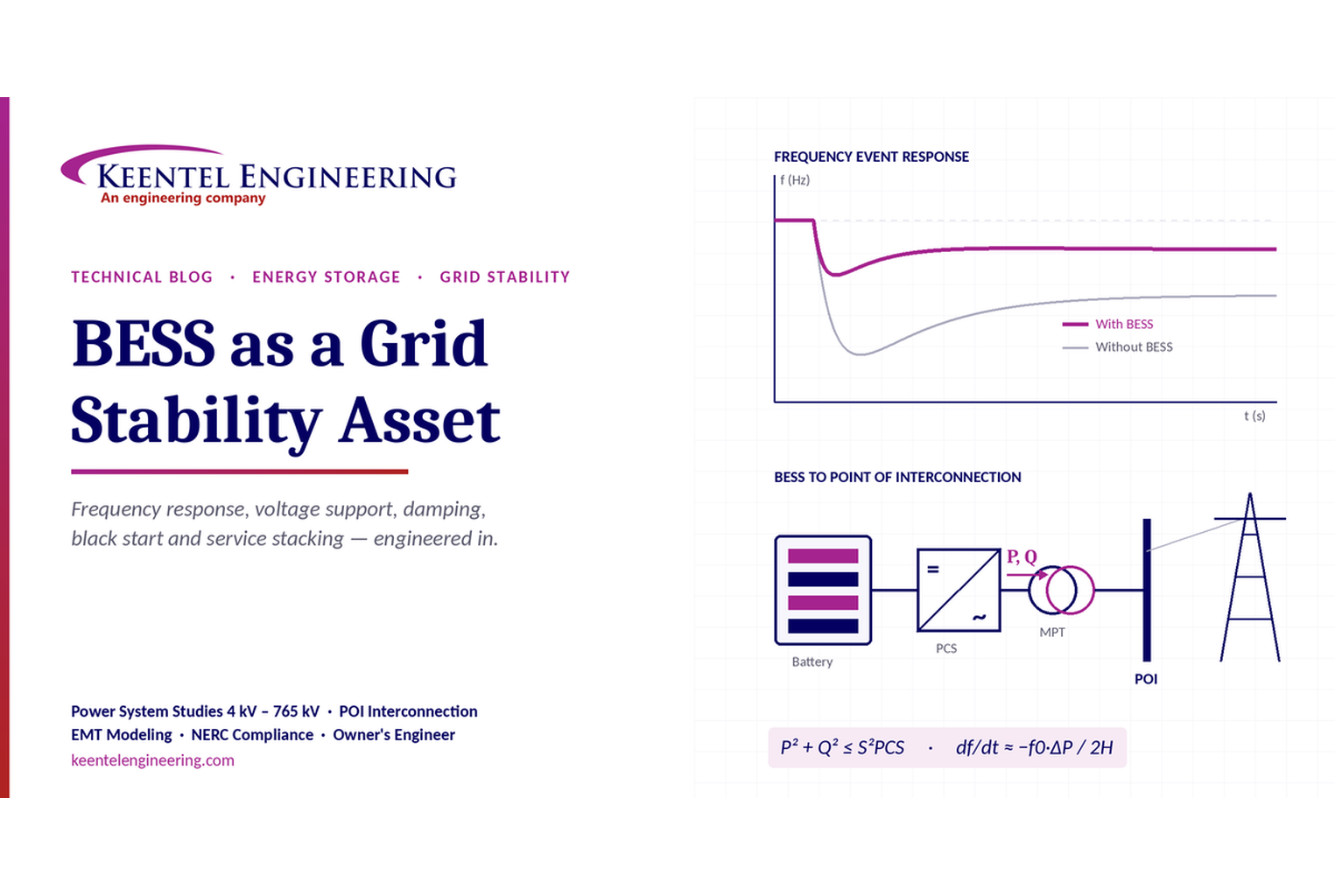
Learn how BESS supports grid stability through fast frequency response, voltage support, oscillation damping, black start, grid-forming controls and EMT studies.