A Coordinated Electric System Interconnection Review—the utility’s deep-dive on technical and cost impacts of your project.
Challenge: Frequent false tripping using conventional electromechanical relays
Solution: SEL-487E integration with multi-terminal differential protection and dynamic inrush restraint
Result: 90% reduction in false trips, saving over $250,000 in downtime
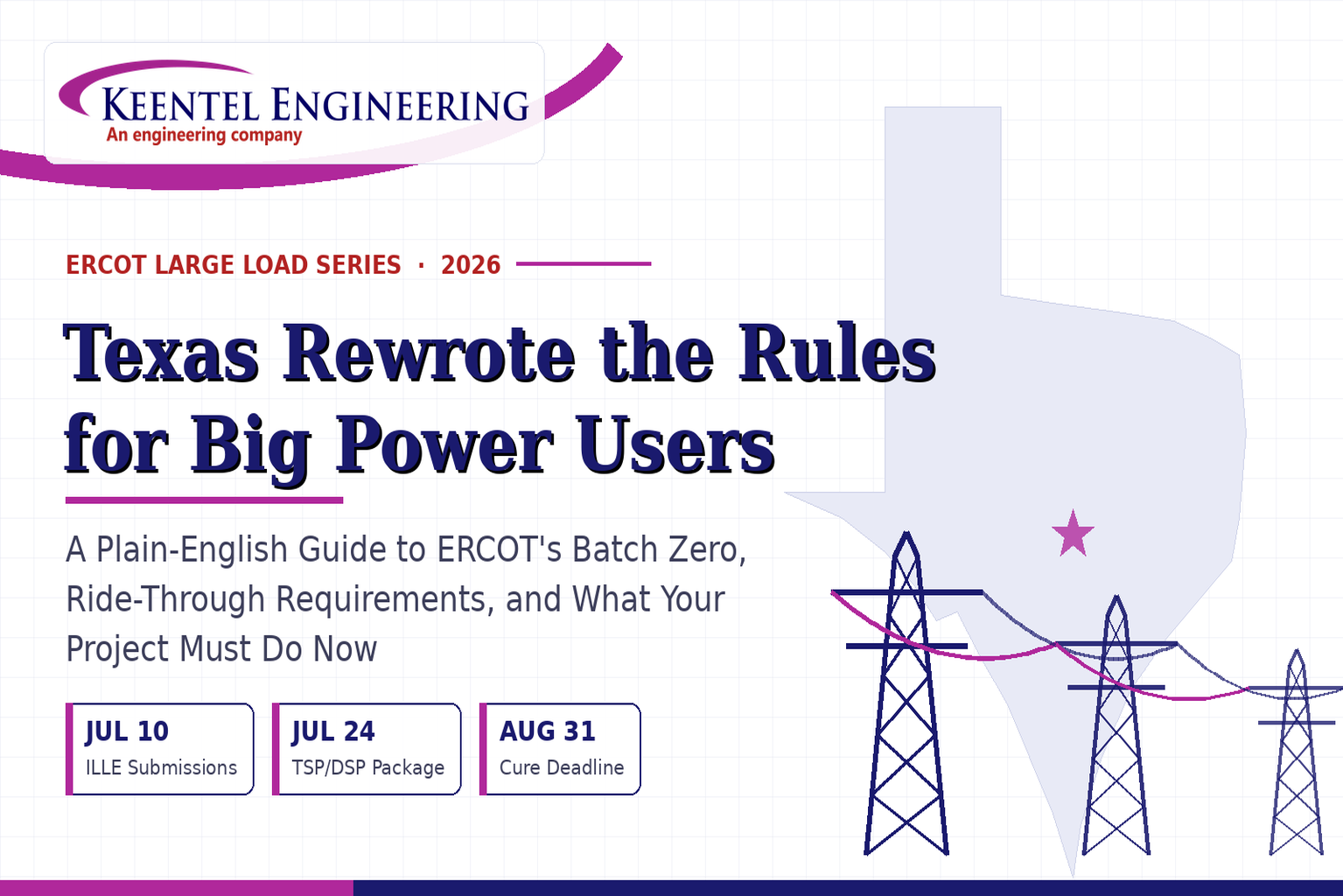
Texas/ERCOT Rewrote the Rules for Big Power Users: A Plain-English Guide to ERCOT's Batch Zero, Ride-Through Requirements, and What Your Project Must Do Now
Jul 05, 2026 | Blog
ERCOT compliance rules evolve quickly. This article reflects the framework approved by the Public Utility Commission of Texas on June 18, 2026. Always verify current requirements against official ERCOT postings before making filing or design decisions or contact our team and we'll do it with you.
The Short Version
If you are building a data center, crypto mining facility, hydrogen plant, or any other project in Texas that will draw 75 MW or more from the grid, the rules of the game changed in mid-2026. ERCOT the operator of the Texas power grid replaced its one-project-at-a-time interconnection study process with a system-wide "batch" process. The first batch is called Batch Zero, and the door to get into it is nearly closed: key submissions were due July 10, 2026, with the utility-side package due July 24, 2026, and a final deficiency-cure deadline of August 31, 2026.
At the same time, ERCOT imposed brand-new technical performance rules on large electronic loads requirements to "ride through" grid disturbances instead of tripping offline and dramatically raised the bar for the computer models developers must submit to prove their facilities will behave.
This guide explains the whole framework in plain English: why it happened, what the five interlocking rule changes actually say, what it costs, and what your project team needs to do. At the end, we answer the 20 questions we hear most often.
Why Did ERCOT Do This?
Two numbers tell the story. By mid-2026, large power users had asked to connect more than 438,000 MW of new demand to the Texas grid — roughly ninety percent of it data centers. ERCOT's all-time record for the entire state's peak demand is about 85,500 MW. In other words, the request queue was more than five times the size of everything Texas has ever consumed at once.
The old process studied each project individually. With thousands of megawatts arriving every month, that meant endless restudies, multi-utility coordination headaches, and a growing backlog. Nobody not developers, not utilities, not ERCOT could get a straight answer about what the grid could actually support.
There was a second, quieter problem. Since October 2022, ERCOT has documented repeated incidents where large electronic facilities tripped offline during routine voltage dips — the kind of momentary disturbance the grid experiences whenever lightning strikes a line and protection equipment clears the fault correctly. A data center's uninterruptible power supply (UPS) is designed to protect servers by instantly switching to batteries or generators at the first sign of trouble. That's great for the servers. But when several gigawatts of load vanish from the grid in a fraction of a second, the sudden imbalance can destabilize the entire system. ERCOT identified clusters of large loads capable of dropping more than 3,200 MW simultaneously during a severe disturbance — a genuine reliability threat.
So ERCOT built a package of five interlocking rules to fix both problems at once.
The Five Rules, and What Each One Does
Think of the package as a cascade. Each rule answers one question:
1. NPRR1308 Who is covered?
It defines a Large Load as one or more facilities at a single site with combined peak demand of 75 MW or more. It then defines a subset originally called a Large Electronic Load (LEL), later renamed Large Computational Load (LCL) as a Large Load where at least half the demand is power-electronic, computational equipment. That's the data center and crypto mining profile. The extra technical rules attach to this subset, because it's the power-electronics interface, not the megawatt-hours, that creates the trip risk.
2. NOGRR282 What performance is required?
This rule creates formal frequency and voltage ride-through requirements. Covered facilities must stay connected and keep consuming power through defined grid disturbances instead of instantly jumping to backup power. We break down the actual numbers below.
3. PGRR144 How do you prove your facility can do it?
ERCOT can't physically test every facility, so it requires a high-fidelity dynamic model essentially a digital twin of your facility's electrical behavior validated against real hardware tests, checked at three checkpoints: before your stability study, before your quarterly assessment, and (for electronic loads) before you're allowed to energize.
4. PGRR145 When and under what commitment do you connect?
This is Batch Zero itself: the eligibility criteria, the system-wide study, the classifications, the deadlines, and the financial commitments.
5. NPRR1325 The market-rules companion.
It carries the definitions into the ERCOT Protocols and, in its final form, the two optional operating pathways (PCLR and WLPUN, explained below) that let projects access more capacity sooner in exchange for flexibility.
Batch Zero: The Three Buckets
Every large load project seeking to connect lands in one of three categories:
Base Load
Projects that were already far along energized, or with completed and valid studies, an executed interconnection agreement, and hard evidence of commitment such as purchased high-voltage transformers and breakers and construction underway. Base Load projects keep the capacity their prior work supports. They're modeled in the study but not re-evaluated, and they can keep moving toward energization while the batch study runs.
Studied Load
Projects with real momentum site control, posted financial security, notarized attestations but without the full Base Load paper trail. These projects go into the system-wide study, and ERCOT determines how many megawatts each can draw, year by year, based on what the transmission grid can reliably support once everyone is assessed together.
Excluded
Projects that missed deadlines or eligibility criteria. Excluded projects cannot receive approval to energize until a future batch study — there is no individual-study side door anymore.
One detail that surprises people: a project can be excluded because its utility missed a submission deadline, not just because the developer did. Smart developers actively project-manage their transmission or distribution service provider's paperwork rather than assuming it's handled.
The Timeline
| Date | What Happens |
|---|---|
| July 10, 2026 | Developer (ILLE) deadline: dynamic models, data surveys, eligibility forms, and pathway elections to the interconnecting utility. Also the last day legacy individual studies could be approved. Projects with no model submitted are out. |
| July 24, 2026 | Utility deadline: the complete eligibility package — Load Information Form, attestations, stability study form, election forms — goes to ERCOT. |
| August 7, 2026 | ERCOT tells every project its classification and lists any deficiencies. |
| August 31, 2026 | Last day to cure deficiencies. Unresolved items mean removal from Batch Zero. |
| March 1, 2027 | Commitment deadline: execute the interconnection agreement (and, for PCLR electors, sign Form W Part B). Missing it means withdrawal. |
| April 9, 2027 (expected) | Phase 1 study results: each Studied Load receives its megawatt allocations for Years 1 through 6. |
| June 1, 2027 | ERCOT delivers the refined transmission plan to the Regional Planning Group. |
| Fall 2027 (expected) | Final transmission plan. |
Two Numbers Every Studied Load Gets: LPC and MPC
The study produces two figures for each project. The Low Power Consumption (LPC) is the firm amount megawatts you can draw with no curtailment obligation. The Maximum Power Consumption (MPC) is your full desired peak. A project that makes no special election is capped at its LPC. To access the capacity between LPC and MPC, you choose one of two pathways:
PCLR the flexibility path (Form W)
A Provisional Controllable Load Resource can consume above its LPC, all the way to its MPC, in exchange for following ERCOT's real-time dispatch instructions including instructions to reduce consumption when the grid is constrained. Think of it as: you get the power sooner, but ERCOT holds a dimmer switch on the portion above your firm allocation. PCLRs also can't sell ancillary services while in provisional status.
WLPUN the bring-your-own-generation path (Form X)
A Withdrawal-Limited Private Use Network pairs the load with co-located on-site generation. The generation carries part of the load, and ERCOT allocates an annual megawatt amount for the incremental portion served from the grid. To qualify, the generation project needed its own ERCOT approval by the July 10 deadline.
Both elections were due to the utility by July 10, 2026, on notarized forms.
The Money: What Commitment Actually Costs
Batch Zero was designed to separate real projects from speculative queue positions, and it does that with dollars:
- $100,000 per MW of financial security at the intermediate-agreement stage (cash, an investment-grade parent guaranty, or a letter of credit from a highly rated bank). On a 500 MW project, that's $50 million posted before you have a study result.
- Another $100,000 per MW as a non-refundable interconnection fee when you execute the interconnection agreement paid to the transmission utility and credited against its rate base, so it ultimately benefits ratepayers.
- Full cash payment (CIAC) for all direct interconnection costs the radial lines and substation work built specifically for you with no allowance and no rate recovery, trued up to actual costs.
- Clawbacks with teeth. Withdraw your request, or miss a phased-energization milestone by six months, and the utility draws your security against its sunk costs, refunds only 20% of what remains, and sends the other 80% to the transmission rate base. CIAC is never refundable. ERCOT reallocates your freed-up capacity to someone else.
- Even a fully successful project gets its security back slowly: 20% of the balance at energization, further amounts as milestones are hit, and the remainder only after five years of sustained operation at contracted peak demand.
Add the required disclosures site control via deed or five-year lease, sworn officer attestations on permits and site studies, and mandatory disclosure of any "substantially similar" interconnection request you're pursuing elsewhere (the anti-queue-shopping provision) and the message is clear: reserving grid capacity in Texas is now a binding, expensive act.
Ride-Through: Your Facility's New Job During Grid Disturbances
Here is the concept in one sentence: when the grid stumbles, your facility must stay on the grid and keep consuming, within defined limits, instead of instantly fleeing to batteries and generators.
Frequency
The grid normally runs at 60 Hz. Covered facilities must operate continuously anywhere between 58.8 and 61.2 Hz, and must hang on for about five minutes (299 seconds) in the bands just outside that. Only beyond roughly 57.0 Hz or 61.8 Hz may the facility choose to trip. Protection systems may not trip on an instantaneous frequency reading they must use filtered measurements or time delays, because momentary sensor blips shouldn't take a gigawatt offline.
Voltage
The requirements form a ladder. Between 90% and 110% of nominal voltage, operate continuously. For deeper sags, the facility must remain connected for a defined time two seconds down to 80% of nominal, half a second down to 50%, a quarter second down to 20%, and 0.15 seconds even below that. Two performance duties ride along:
- The one-second recovery rule. If the facility reduced consumption during a deep sag, it must return to at least 90% of its pre-disturbance consumption within one second of voltage recovering. The grid needs the load back promptly, or the recovery itself becomes a disturbance.
- The 125% current cap. During any disturbance outside the normal band, the facility may not draw more than 125% of its maximum normal operating current.
Three provisions catch facilities off guard. First, sag-counting trip schemes are banned your controls can't trip because they saw, say, five sags in an hour if each individual sag was within the ride-through envelope. That directly targets common industrial power-quality relay logic. Second, protection must be set to the equipment's maximum capability, not just the minimums in the tables. Third, there's a vintage split: projects qualifying after January 1, 2028 face a stricter duty to keep consuming during moderate sags (down to 50% voltage), with no "if capable" escape hatch so anyone specifying power electronics today for a 2028+ energization should buy to the stricter standard.
Enforcement
Enforcement is real. After a ride-through failure, the owner must investigate root cause within 90 days of ERCOT's request, submit a corrective plan within 90 days after that, and implement it within 180 days of approval. And if ERCOT finds that continued operation poses an imminent reliability risk, it can order the facility disconnected until compliance is demonstrated. For a revenue-generating data center, that provision deserves board-level attention.
Who's Exempt?
Facilities that received approval to energize by November 14, 2025, or that had completed studies and utility confirmation by that date, are grandfathered. Everyone else in the queue is covered.
The Digital Twin: Why Dynamic Models Became the Hardest Deliverable
ERCOT enforces all of the above through simulation, which means your model is your compliance case. The bar is now high:
- Whole-facility scope. The model must represent everything the IT load, the UPS and power conversion, the cooling plant, the protection and control systems in formats compatible with ERCOT's study platforms (PSS/E, PSCAD, TSAT).
- Real control loops, not approximations. Generic textbook representations are unacceptable. The model must capture the actual inner control behavior of your power electronics.
- Hardware-validated converter models. For electronic loads, the PSCAD model must be benchmarked against actual hardware testing including voltage ride-through and subsynchronous response. A model assembled from standard PSCAD library blocks fails by definition, because a generic block has never been tested against your vendor's hardware. The good news: validation is a hardware-type test, so results for a given converter product are reusable across every facility that uses it.
- Format migration. Facilities that previously submitted the older composite load model (CMLD) format must transition to EPRI's PERC1 format.
- Three checkpoints. Models are reviewed before the stability study begins (no model, no study), before each quarterly stability assessment, and for electronic loads one final time before energization, when you must submit as-built models with a documented comparison against the previously studied data and a sworn attestation that the model matches actual field settings. ERCOT's review takes 10 business days, extendable by 20 put it on your critical path.
- A living obligation. Change your technology, controls, or relay settings in a way that affects ride-through including converting a crypto mining site to an AI data center — and you've triggered a new interconnection study, even if your megawatts don't change.
What Your Team Should Be Doing Right Now
Confirm your classification. Did your submissions land by July 10? Did your utility's package go in by July 24? Watch for ERCOT's August 7 notice and be ready to cure any deficiency before August 31 — that window is short and unforgiving.
Audit your ride-through posture. Review UPS transfer settings, protection relay logic, sag-response behavior, and the one-second recovery capability against the envelopes above — before ERCOT's simulations do it for you.
Get your model house in order. Inventory what was submitted, verify PERC1 conversion status, chase vendors for hardware-validated converter models, and confirm your DWG survey still matches the current design.
Plan the as-built gate. Build the pre-energization model submission and ERCOT's 10–30 business day review into your commissioning schedule.
Treat design changes as regulatory events. Any protection setting change or technology conversion now needs a compliance check first.
If you're a PCLR elector, calendar March 1, 2027 for Form W Part B and the interconnection agreement — missing it means withdrawal.
Frequently Asked Questions
1. What exactly is Batch Zero?
It's the first group of large power-user projects evaluated under ERCOT's new system-wide interconnection study process, approved by the PUCT on June 18, 2026. Instead of studying each project individually, ERCOT studies all qualifying projects together, determines what the transmission grid can support, allocates megawatts to each project for Years 1–6, and produces a transmission construction plan. It's a one-time transitional process; an ongoing batch process for future projects will follow under a separate rule.
2. Does my project count as a "Large Load"?
If one or more facilities at a single site will have a combined peak demand of 75 MW or more — behind one or more common interconnection points — yes. You can't avoid the threshold by splitting a campus across multiple meters; the rule aggregates them. For scale, 75 MW is roughly the electricity used by about 18,750 Texas homes at peak.
3. What's a Large Electronic Load or Large Computational Load, and why does it matter?
It's a Large Load where at least 50% of the site's demand is power-electronic, computational equipment — data centers, crypto mining, AI clusters, HPC. (The term started as "Large Electronic Load" and was renamed "Large Computational Load" during the rulemaking.) It matters because this subset carries the extra obligations: ride-through requirements, hardware-validated converter models, and the pre-energization as-built model gate.
4. My facility is power-electronics-heavy but not computational — say, a hydrogen electrolyzer. Am I covered by the ride-through rules?
Under the current definition, no — the test requires computational load. But don't get comfortable: ERCOT has stated it intends to propose ride-through requirements for other types of large loads, tailored to their technology. You're still fully covered by Batch Zero's process, deadlines, and financial requirements.
5. What happened if a project missed the July 10, 2026 deadline?
Projects that failed to submit required dynamic models by July 10 are excluded from Batch Zero and cannot receive approval to energize until a future batch study — likely a delay measured in years. For already-operating loads that didn't submit updated models, ERCOT uses the previously provided model or assumes minimum ride-through capability, which tends to produce worse study outcomes.
6. What's the difference between Base Load and Studied Load?
Base Load projects proved deep commitment — completed valid studies, executed interconnection agreements, purchased transformers and breakers, construction underway — so their capacity is preserved without further evaluation. Studied Load projects showed real momentum (site control, financial security, notarized attestations) but get their capacity determined by the system-wide study, year by year.
7. What are LPC and MPC?
Every Studied Load receives a Low Power Consumption (LPC) — the firm megawatts it can draw with no curtailment obligation — and a Maximum Power Consumption (MPC), its full requested peak. Without a special election, you're capped at LPC. The PCLR and WLPUN pathways are how you access the range between the two.
8. What is a PCLR, in plain terms?
A Provisional Controllable Load Resource. You get to consume above your firm allocation, up to your full request, in exchange for following ERCOT's real-time dispatch — meaning ERCOT can instruct you to reduce consumption when transmission is constrained. You must stay registered as a controllable load until an exit date set by the study, and you can't sell ancillary services in the meantime. The election was made on notarized Form W Part A by July 10, 2026; Part B (accepting your allocated amounts) is due March 1, 2027.
9. What is a WLPUN?
A Withdrawal-Limited Private Use Network — the "bring your own generation" pathway. You pair the load with co-located on-site generation that carries part of the demand, and ERCOT allocates an annual megawatt amount for the incremental grid-served portion. It requires notarized Form X, and the associated generation project needed its own ERCOT approval by July 10, 2026.
10. What does "ride-through" actually mean for my facility?
When grid voltage or frequency briefly deviates — as happens during ordinary events like lightning-caused faults — your facility must stay electrically connected and keep consuming power within defined envelopes, rather than instantly transferring to UPS batteries or backup generators. The deeper the disturbance, the shorter the required hold time, down to fractions of a second for severe voltage dips.
11. Do the rules force me to trip during extreme events?
No. Beyond the required ride-through envelope, tripping is allowed but never mandated — nothing in the rule requires you to trip or transfer to backup for conditions outside the defined ranges. And two legitimate exceptions exist: responding to your utility's under-frequency load shedding program, or performing an ancillary service that requires you to reduce consumption.
12. Can I still use my backup generators at all?
Absolutely — for outages, maintenance, and events beyond the ride-through envelope. What you can't do is configure your controls to jump to backup at the first minor sag that the rules require you to ride through, or use a scheme that trips after counting several individually-compliant sags. Your backup fleet also must be disclosed in detail during interconnection: unit counts, capacity, fuel, permit run-hour limits, and start-up speed.
13. What is a dynamic model, and why does ERCOT keep asking for one?
It's a mathematical simulation — a digital twin — of how your facility's electrical systems behave during disturbances: how the UPS responds to a voltage dip, how fast consumption recovers, how protection reacts. ERCOT runs these models in its grid simulations to predict whether the system stays stable. Since ERCOT can't physically test your site against a grid fault, the model is your proof of compliance — which is why model quality is now enforced as strictly as physical requirements.
14. What is PERC1, and why can't I keep my old CMLD model?
PERC1 is EPRI's newer model format for power-electronic loads. The older composite load model (CMLD) was built for traditional load mixes — motors, lighting, resistive heating — and can't faithfully represent the fast control dynamics of converter-dominated facilities. ERCOT requires electronic loads that previously submitted CMLDs to transition to PERC1 so simulations reflect how these facilities actually behave.
15. Why won't ERCOT accept a model built from standard PSCAD library blocks?
Because a generic library block represents a textbook converter, not your vendor's hardware. The rules require converter models to be benchmarked against actual hardware testing — including voltage ride-through and subsynchronous response tests — so the simulation provably matches reality. The silver lining: validation is per hardware type, so once a specific converter product is validated, those results are reusable at every facility using it.
16. What's the "as-built" requirement before energization?
Before an electronic load can energize, it must submit updated dynamic models reflecting the facility as actually built, a written statement documenting every difference from the previously studied data, overlaid test results comparing the two, and a sworn attestation that the model matches real field settings. The utility assesses whether the differences require a new stability study, and ERCOT reviews within 10 business days (extendable by 20). Build that window into your commissioning schedule.
17. I'm converting a crypto mining site to an AI data center. Same megawatts — do I need to do anything?
Yes. A modification that materially changes dynamic characteristics or ride-through behavior — and the rules name crypto-to-data-center conversion as the example — triggers a new interconnection study even with zero change in demand. The same applies to protection scheme or relay setting changes that affect ride-through. Treat these as regulatory events, not just engineering decisions.
18. How much financial commitment does Batch Zero require?
Plan on $100,000 per MW in financial security at the intermediate-agreement stage, another $100,000 per MW as a non-refundable interconnection fee at the interconnection agreement, and full upfront cash payment (CIAC) for all direct interconnection facilities built for your project — with no allowance and no rate recovery. Acceptable security forms are cash, an investment-grade corporate guaranty, or a letter of credit from a highly rated bank.
19. What happens if my project falls behind schedule after committing?
Miss a phased-energization milestone by six months and the "non-utilized capacity" process kicks in: the utility draws your financial security against its sunk costs, refunds only 20% of the remaining balance, sends 80% to the transmission rate base, and ERCOT reallocates your unused capacity to other projects. CIAC is never refunded. Even on-schedule projects recover security gradually — the final balance only after five years of sustained operation at contracted peak demand.
20. My project isn't in Batch Zero. What now?
Your project waits for the next batch, under an ongoing batch study process ERCOT will establish through a future rule revision. Use the time well: line up site control, financial security capacity, vendor-validated dynamic models, and a ride-through-compliant electrical design. The projects that cleared Batch Zero were the ones whose paperwork, models, and hardware commitments were ready before the window opened — the next window will reward the same preparation.
How Keentel Engineering Can Help
This framework merges three disciplines that rarely live in one team: interconnection process management, power-electronics dynamic modeling, and protection engineering. That intersection is where we work. Keentel Engineering supports large load developers with applicability and grandfathering assessments, PERC1 model development and conversion, hardware-benchmarked PSCAD converter validation, ride-through and stability studies, protection coordination that meets the new measurement-window and filtering rules without sacrificing equipment protection, DWG survey preparation, and as-built model packages for the pre-energization gate.
If your project is in Batch Zero or aiming for the next batch the time to engineer compliance is before ERCOT's checkpoint, not after a deficiency notice. [Contact our team] for a readiness review.

About the Author:
Sandip "Sonny" R. Patel, P.E.
IEEE Senior Member · Founder & CEO, Keentel Engineering
In 1995, Sonny Patel earned his Electrical Engineering degree from the University of Illinois. But degrees don't build legacies — action does.
For three decades, he has worked the power industry from every side of the table: 16 years as a utility engineer at Exelon/Commonwealth Edison; generation leadership across hydroelectric, industrial steam turbine, and a 9 GW renewable fleet; NERC Regional Entity Senior Compliance Engineer and Audit Team Lead, auditing some of the nation's largest utilities; and testing and commissioning lead on equipment up to 765 kV — the very top of the North American grid.Utility. Generator. Regulator. Consultant. Few engineers have seen all four seats. Fewer still have sat in them.
His experience spans nuclear, hydro, conventional generation, renewables, oil and gas, mining — and today's data centers, where he is authoring a three-book series on data center design. He is a Licensed Professional Engineer in six states and a Licensed Electrical Contractor in Florida (Unlimited EC) — he doesn't just design the work; he's qualified to stand behind its execution.Today, as Founder and CEO of Keentel Engineering, Sonny leads a nationwide team of engineers delivering substation design, power system studies, NERC compliance, and commissioning — done right, coast to coast.Three decades. Every side of the table. One standard: accountable engineering.
Services

Let's Discuss Your Project
Let's book a call to discuss your electrical engineering project that we can help you with.
About the Author:
Sandip "Sonny" R. Patel, P.E.
IEEE Senior Member · Founder & CEO, Keentel Engineering
In 1995, Sonny Patel earned his Electrical Engineering degree from the University of Illinois. But degrees don't build legacies — action does.
For three decades, he has worked the power industry from every side of the table: 16 years as a utility engineer at Exelon/Commonwealth Edison; generation leadership across hydroelectric, industrial steam turbine, and a 9 GW renewable fleet; NERC Regional Entity Senior Compliance Engineer and Audit Team Lead, auditing some of the nation's largest utilities; and testing and commissioning lead on equipment up to 765 kV — the very top of the North American grid.
Utility. Generator. Regulator. Consultant. Few engineers have seen all four seats. Fewer still have sat in them.
His experience spans nuclear, hydro, conventional generation, renewables, oil and gas, mining — and today's data centers, where he is authoring a three-book series on data center design. He is a Licensed Professional Engineer in six states and a Licensed Electrical Contractor in Florida (Unlimited EC) — he doesn't just design the work; he's qualified to stand behind its execution.
Today, as Founder and CEO of Keentel Engineering, Sonny leads a nationwide team of engineers delivering substation design, power system studies, NERC compliance, and commissioning — done right, coast to coast.Three decades. Every side of the table. One standard: accountable engineering.
Leave a Comment
Thank you for contacting us.
We will get back to you as soon as possible.
We will get back to you as soon as possible.
Oops, there was an error sending your message.
Please try again later.
Please try again later.
Related Posts
By Team 2 Dexora
•
October 20, 2026
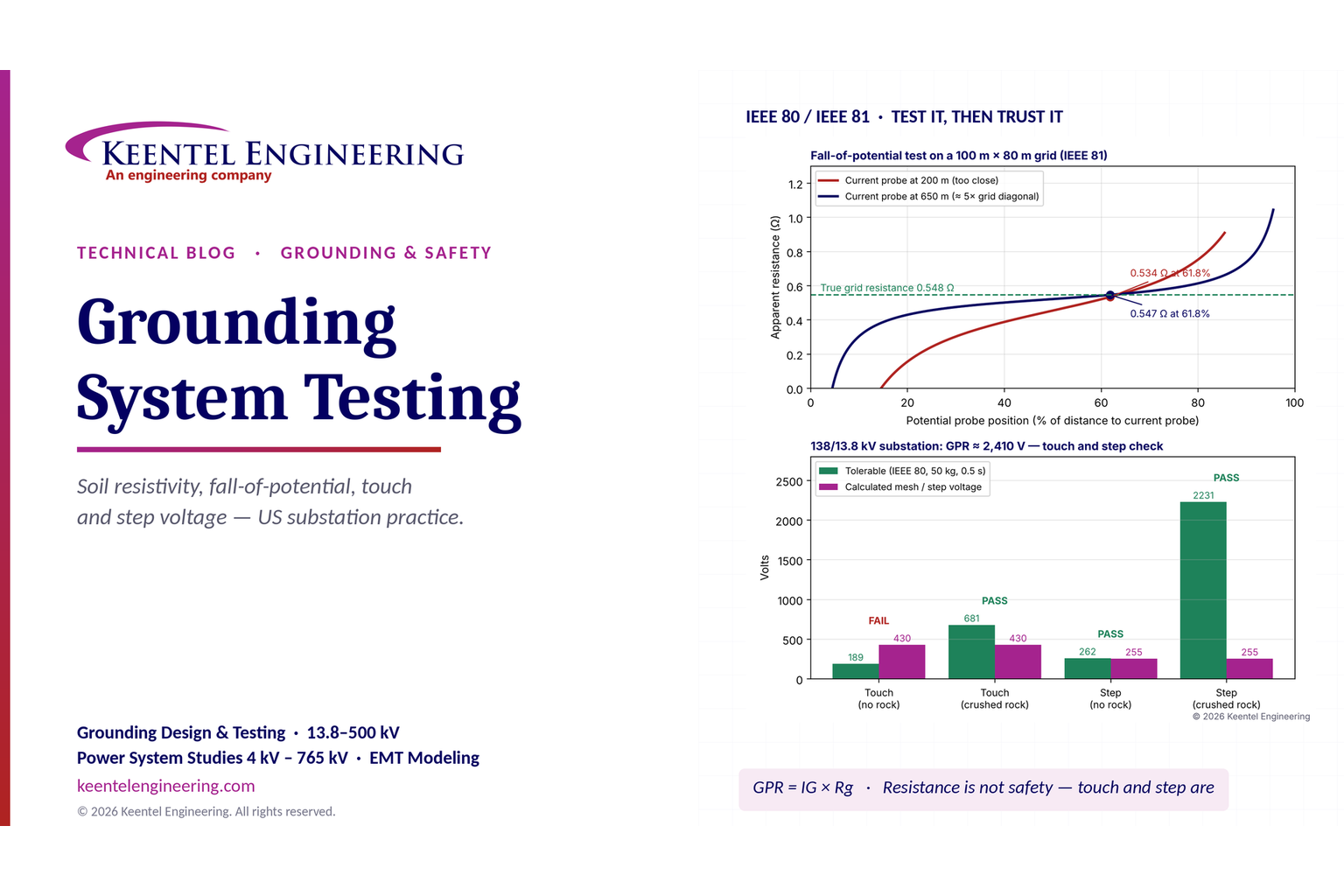
Explore grounding system testing with Keentel Engineering. Learn IEEE 80/81 methods, soil resistivity, ground resistance, and touch and step voltage safety.
By SANDIP R PATEL
•
October 13, 2026
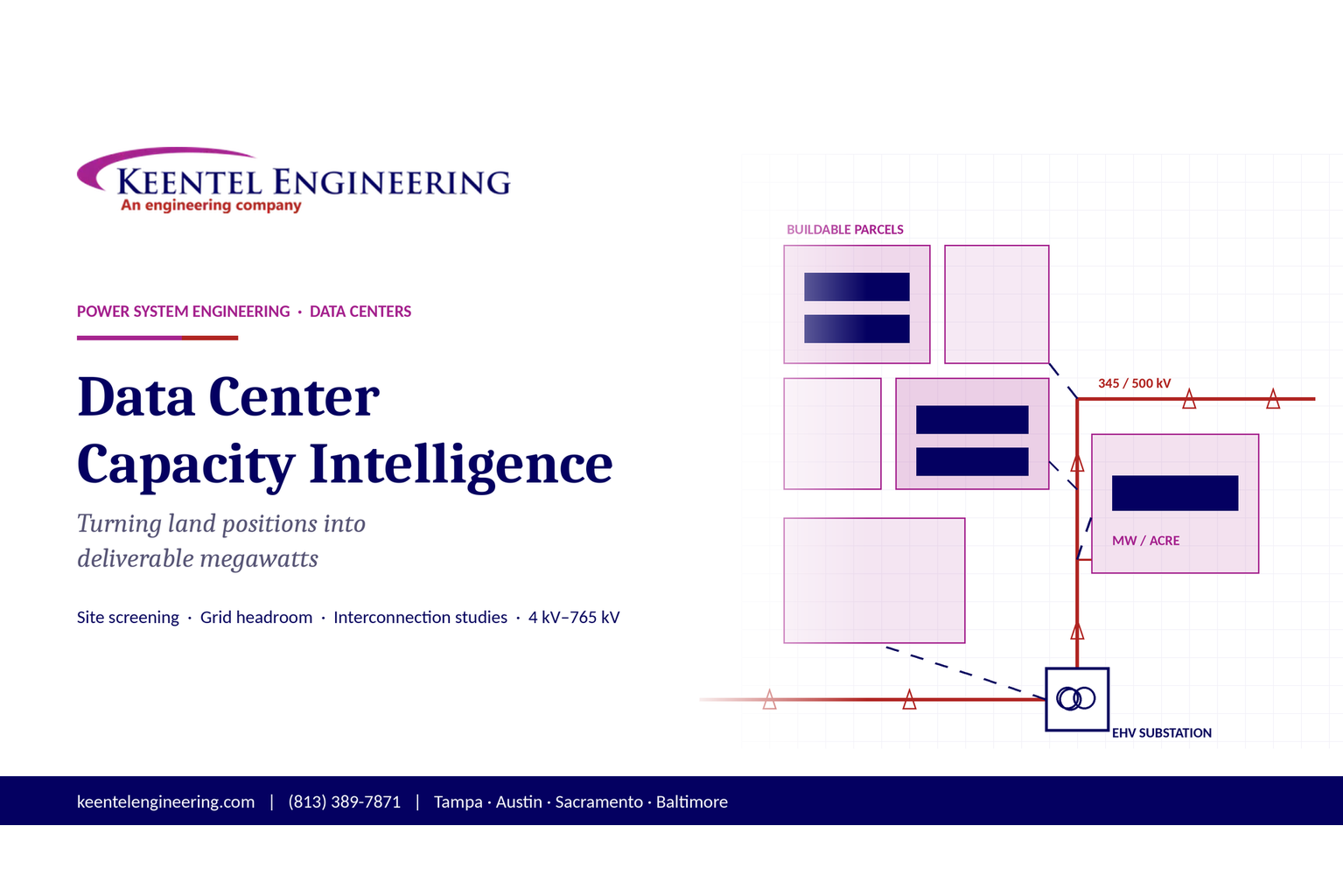
Plan data center capacity with land screening, MW-per-acre estimates, grid power availability and interconnection feasibility studies from Keentel Engineering.
By SANDIP R PATEL
•
October 11, 2026
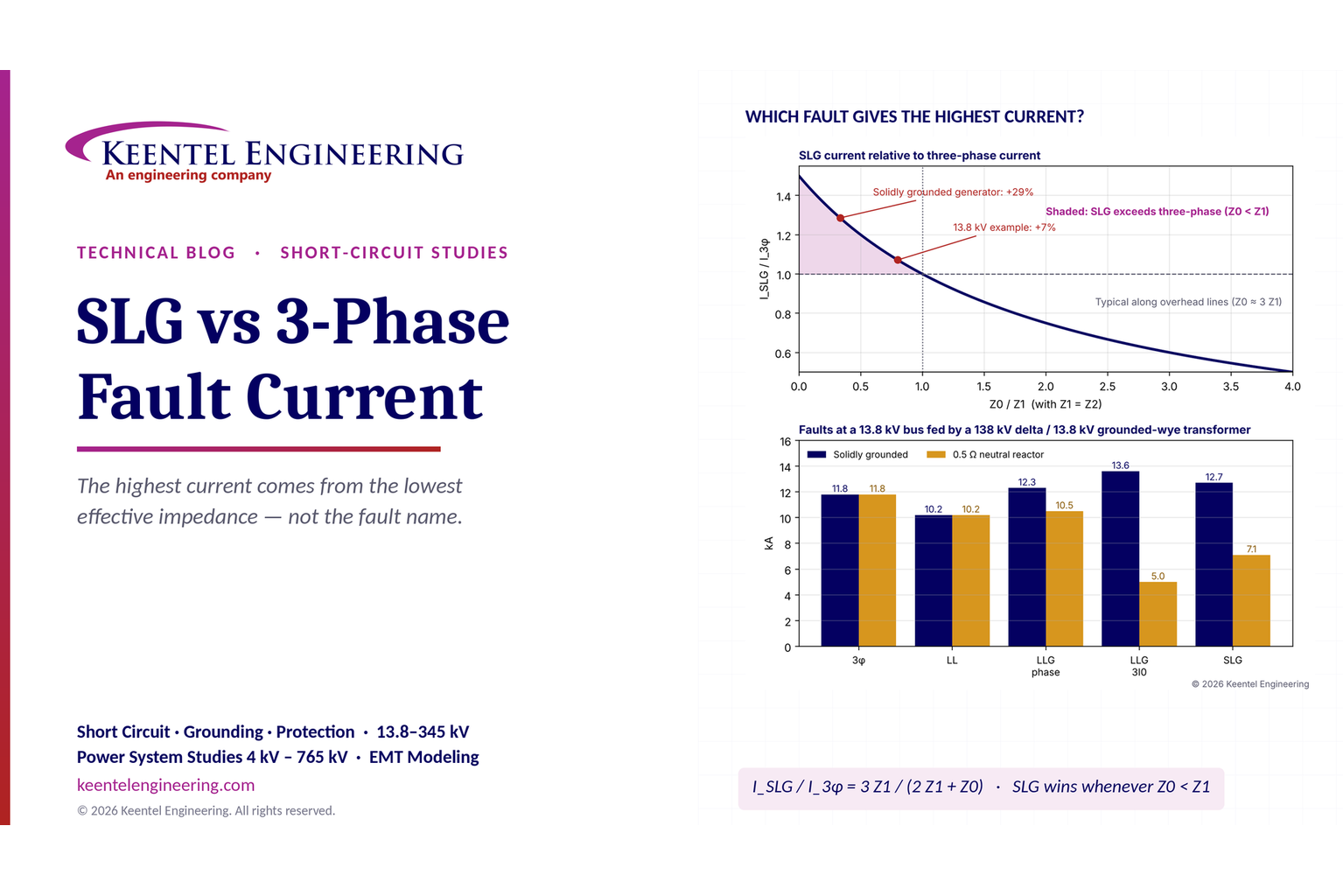
Learn which fault produces the highest current at a bus, why SLG faults can exceed three-phase faults, and how symmetrical components determine fault duty.
By SANDIP R PATEL
•
October 11, 2026
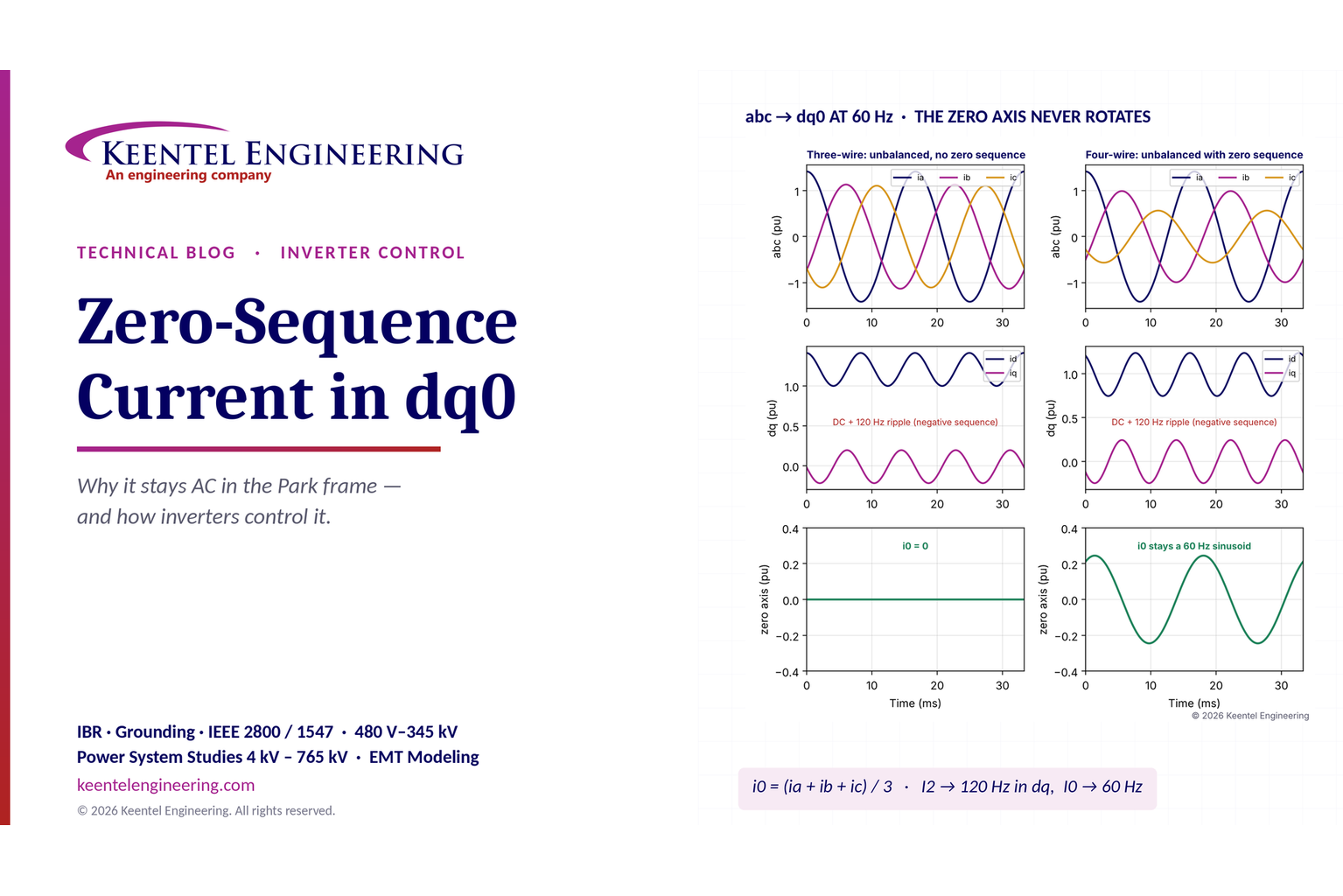
Learn why zero-sequence current pulsates in the dq0 frame, how Park's transformation works, and how inverter controls handle unbalance and ground faults.
By SANDIP R PATEL
•
October 11, 2026
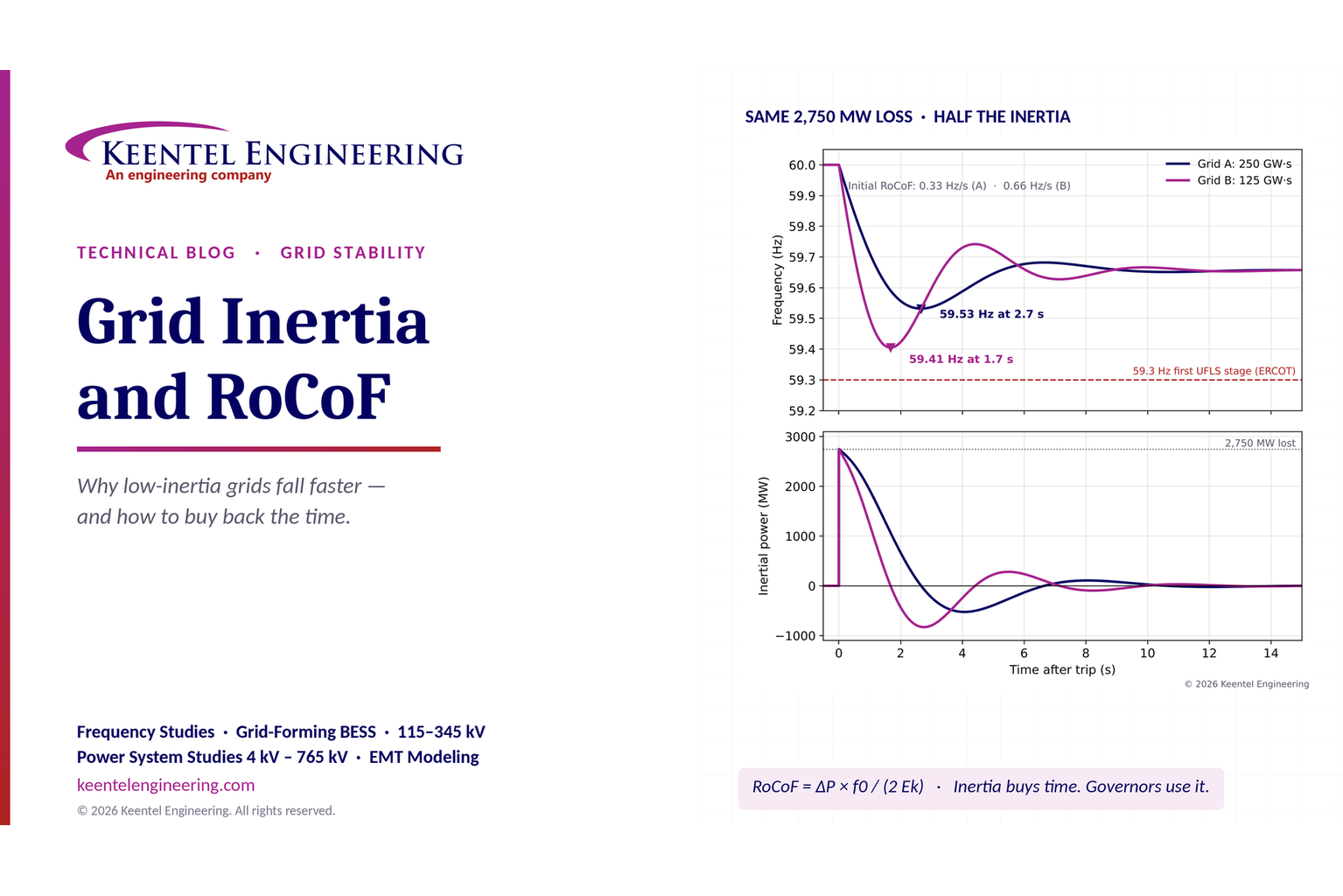
Explore grid inertia, RoCoF and frequency response, with swing equation calculations, frequency nadir analysis and US power system simulation examples.
By SANDIP R PATEL
•
October 11, 2026
Learn transient stability analysis, swing equation, equal-area criterion and critical clearing time with a 345 kV worked example and NERC TPL-001 guidance.
By SANDIP R PATEL
•
October 11, 2026
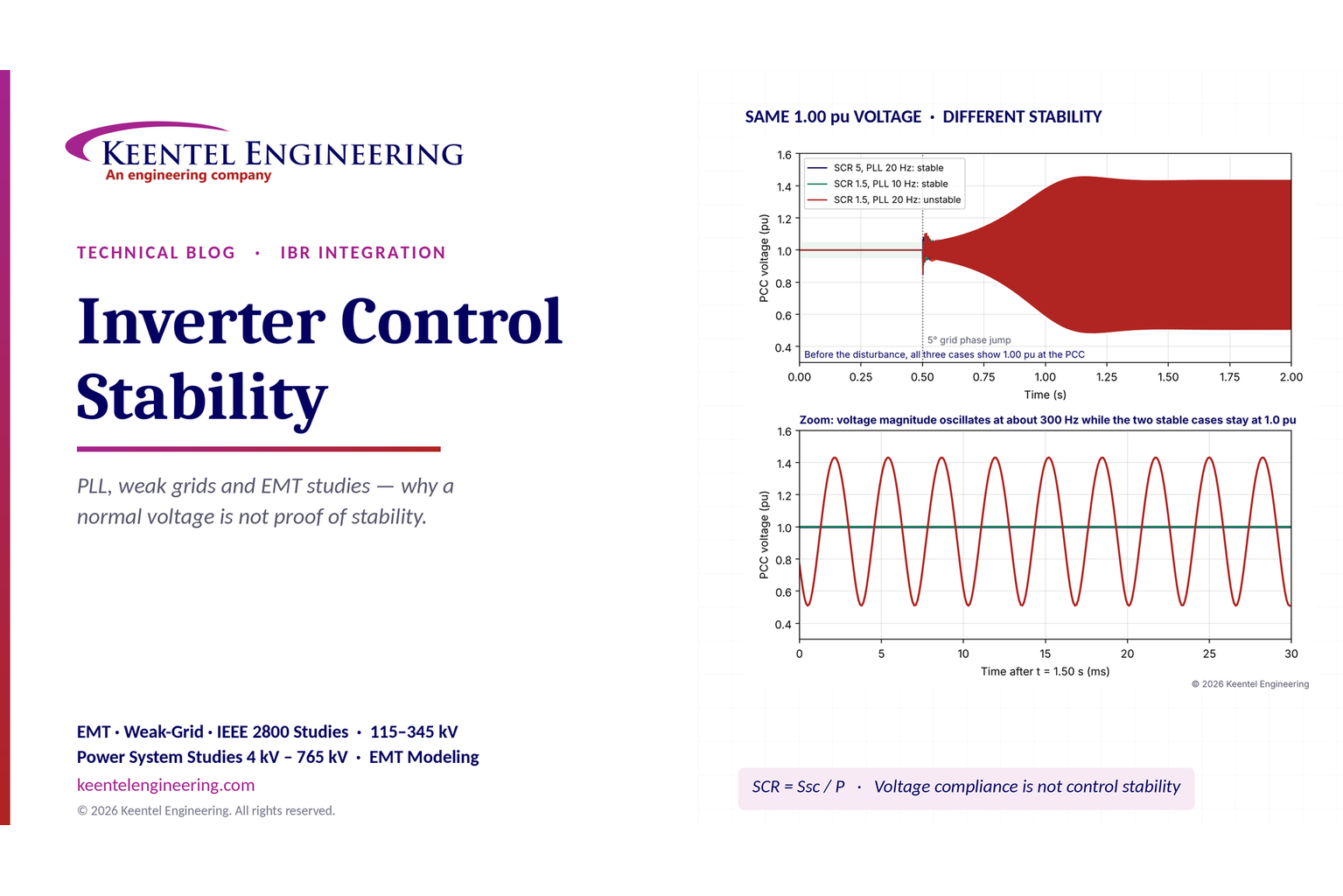
Learn why inverter controls become unstable in weak grids, how PLL bandwidth and SCR affect stability, and how PSCAD EMT studies identify and mitigate oscillations.
By SANDIP R PATEL
•
October 11, 2026
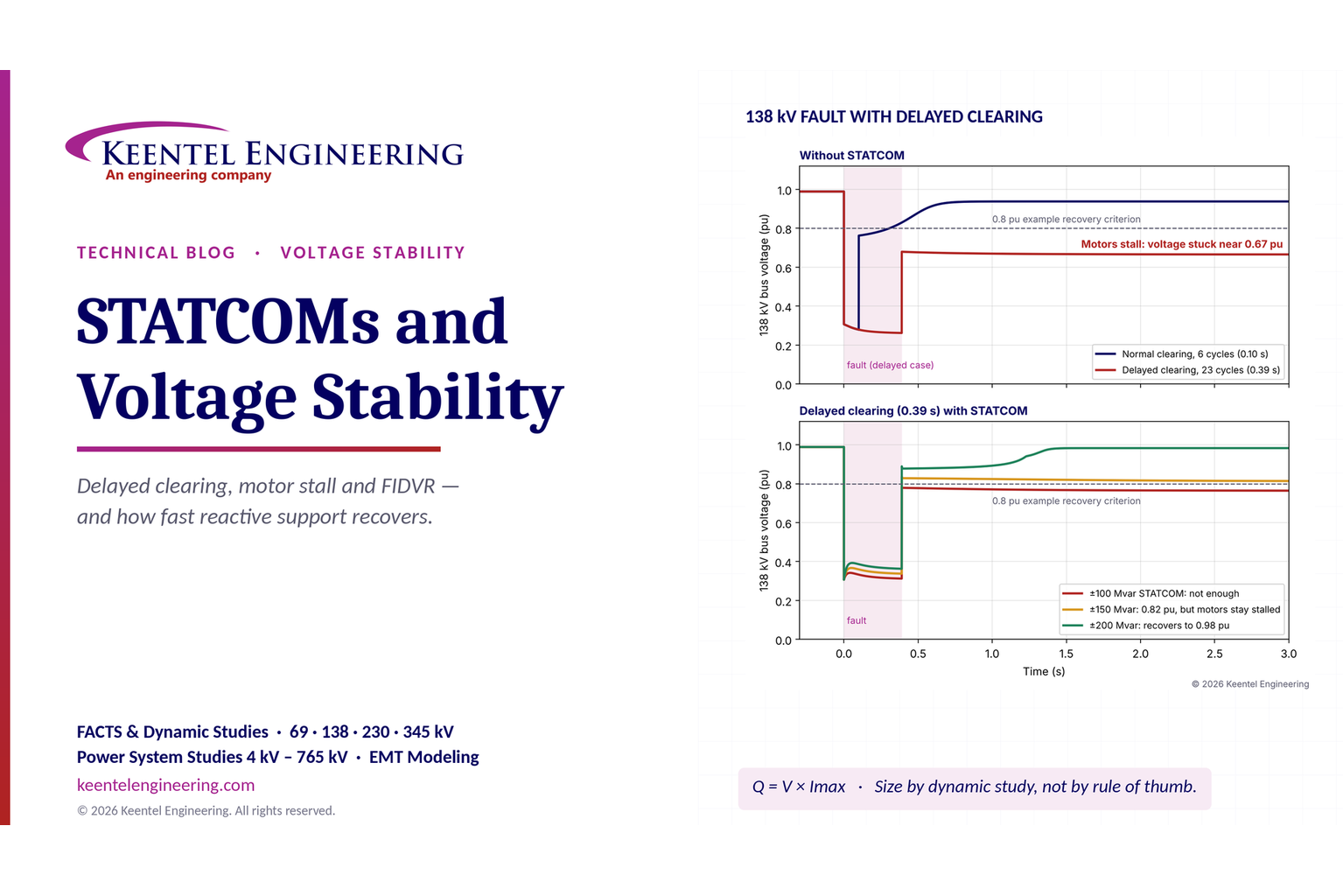
Learn how STATCOMs improve voltage stability and prevent FIDVR. Explore reactive power sizing, delayed fault clearing, NERC criteria and 138 kV simulation results.
By SANDIP R PATEL
•
October 10, 2026
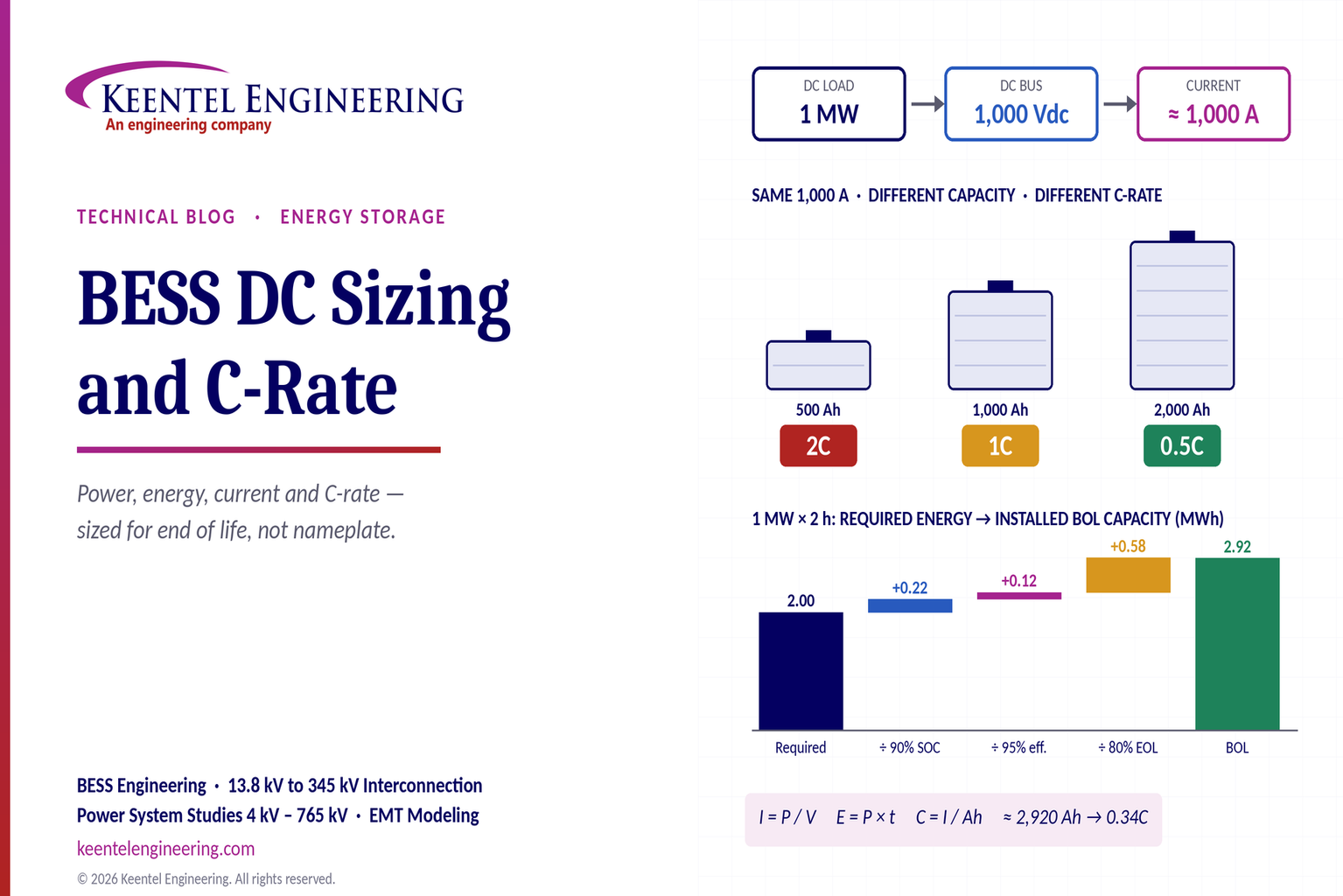
Learn BESS DC sizing with power, energy, current and C-rate calculations, battery losses, degradation and a 100 MW/400 MWh utility-scale example.