A Coordinated Electric System Interconnection Review—the utility’s deep-dive on technical and cost impacts of your project.
Challenge: Frequent false tripping using conventional electromechanical relays
Solution: SEL-487E integration with multi-terminal differential protection and dynamic inrush restraint
Result: 90% reduction in false trips, saving over $250,000 in downtime
| Category | Metric |
|---|---|
| VPP capacity (Lunar Energy) | 650 MW |
| Lunar funding raised | US$232 million |
| Data center BESS example | 31 MW / 62 MWh |
| ERCOT grid-scale batteries | 15+ GW |
| LDES tenders (H1 2026) | Up to 9.3 GW |
| Lithium-ion share of LDES by 2030 | 77% |
| FEOC initial threshold | 55% |
| BESS tariff rate (2026) | ~55% |
| Capacity gain from analytics | 5–15% |
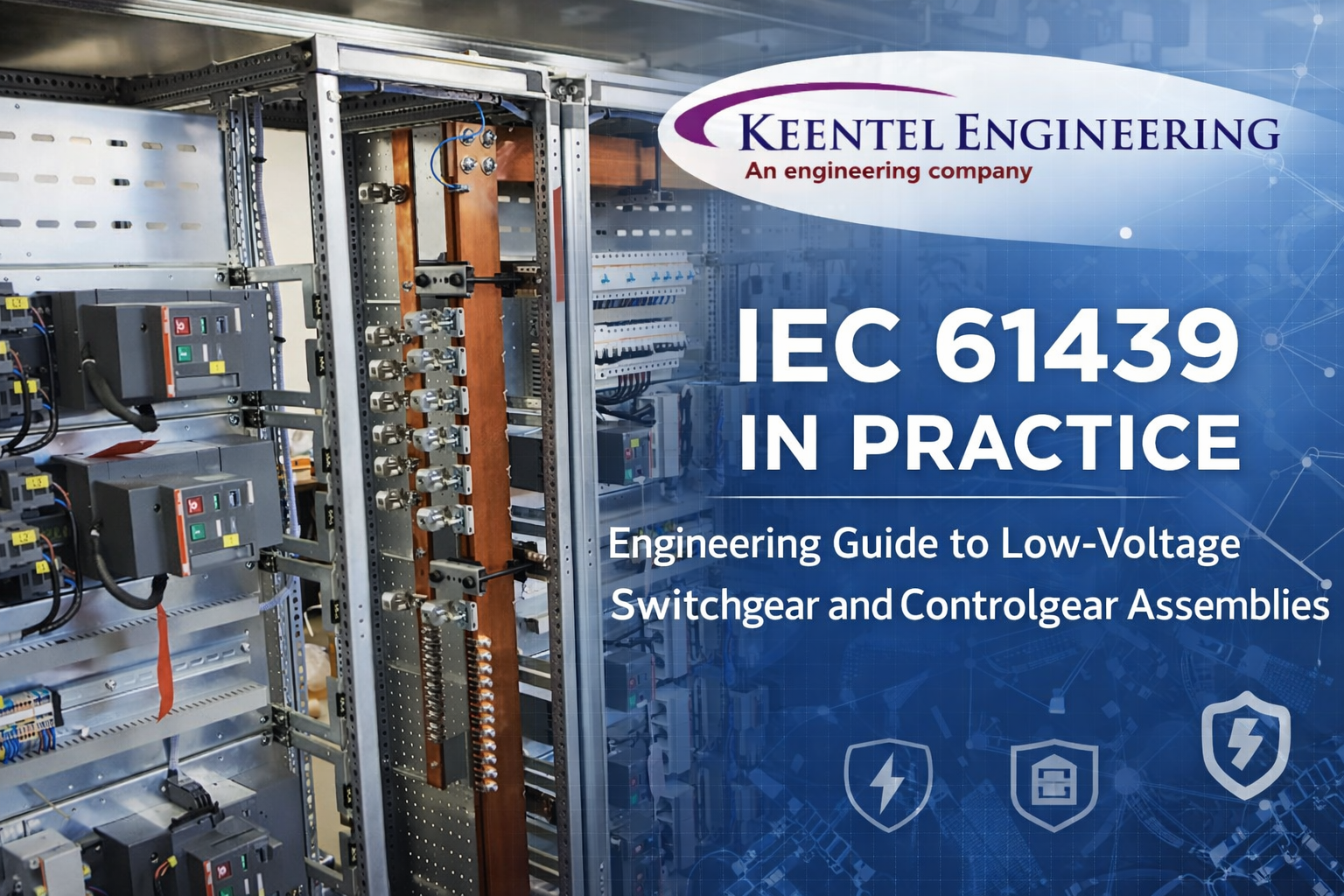
IEC 61439 in Practice :Engineering Guide to Low Voltage Switchgear and Controlgear Assemblies
March 11, 2026 | blog
A Technical Perspective from Keentel Engineering
Modern electrical infrastructure relies heavily on low-voltage switchgear and controlgear assemblies to distribute power safely and efficiently. Whether used in industrial plants, commercial facilities, renewable energy plants, or data centers, these assemblies form the backbone of electrical distribution systems.
The IEC 61439 standard defines the requirements for the design, verification, construction, and operation of low-voltage switchgear assemblies. It ensures that these systems operate safely, withstand electrical and thermal stresses, and protect personnel and equipment.
At Keentel Engineering, we provide comprehensive engineering services including:
- LV switchgear design
- power system studies
- protection coordination
- compliance verification
- electrical distribution system engineering
This article explains the core concepts, engineering methodology, and compliance requirements for IEC 61439 assemblies.
Understanding IEC 61439 Standard
IEC 61439 is the international standard governing low-voltage switchgear and controlgear assemblies used in electrical installations.
The standard consists of multiple parts that address different applications.
Standard-IEC-61439-workbook-in...
Key parts include:
| Standard | Description |
|---|---|
| IEC 61439-1 | General rules for assemblies |
| IEC 61439-2 | Power switchgear and controlgear assemblies |
| IEC 61439-3 | Distribution boards operated by ordinary persons |
| IEC 61439-4 | Assemblies for construction sites |
| IEC 61439-5 | Assemblies for public distribution networks |
| IEC 61439-6 | Busbar trunking systems |
| IEC 61439-7 | Special applications |
These standards define requirements related to:
- electrical safety
- thermal performance
- short-circuit capability
- insulation coordination
- mechanical strength
- environmental protection
The primary goal is protecting people, property, and electrical infrastructure.
Role of Distribution Boards in Power Systems
Distribution boards are the interface between electrical supply sources and loads. They distribute power to different circuits and protect the system against faults.
They must satisfy several critical performance requirements:
- Personnel safety
- Property protection
- Reliable operation
- Ease of maintenance
- Adaptability to different loads
Distribution boards represent the visible part of an electrical installation and reflect the quality of engineering design.
Proper design prevents:
- overheating
- short circuits
- equipment failure
- operational downtime
Manufacturer Responsibilities Under IEC 61439
IEC 61439 clearly defines responsibilities between different stakeholders.
Two key roles exist:
Original Manufacturer
The original manufacturer is responsible for:
- design verification
- reference designs
- testing and validation
- documentation
Assembly Manufacturer
The assembly manufacturer is responsible for:
- assembling equipment according to the design
- performing routine verification
- ensuring installation complies with the standard
If the assembly manufacturer modifies the original design, they assume the responsibilities of the original manufacturer.
Standard-IEC-61439-workbook-in...
Engineering Inputs Required for LV Switchgear Design
Designing compliant LV switchgear requires several input parameters.
These include:
Electrical System Parameters
- nominal voltage
- system earthing type
- rated current
- short-circuit current
- overvoltage category
These parameters define the electrical stress levels the switchgear must withstand.
Standard-IEC-61439-workbook-in-…
Earthing Systems Used in Low Voltage Assemblies
Earthing systems play a critical role in electrical safety.
Common systems include:
TN System
Advantages:
- fast fault clearance
- low risk to people and equipment
Disadvantages:
- higher cabling requirements
- faults may cause shutdowns
Typical applications:
- power plants
- utility networks
TT System
Advantages:
- reduced cabling requirements
Disadvantages:
- complex grounding system
Typical applications:
- agricultural installations
IT System
Advantages:
- high power supply availability
Disadvantages:
- requires continuous insulation monitoring
Typical applications:
- hospitals
- industrial plants
Protection Against Electric Shock
Electrical systems must implement two independent protection methods:
- Basic protection
- Fault protection
Common protection techniques include:
- automatic disconnection of supply
- double insulation
- protective separation
- extra-low voltage systems (SELV/PELV)
These protection methods reduce risks associated with:
- direct contact
- indirect contact
- equipment faults
Overvoltage Protection in Distribution Systems
Overvoltage can occur due to:
- switching operations
- lightning strikes
- transient disturbances
Electrical installations typically use multiple layers of surge protection:
- Lightning protection systems
- Type 1 surge protection devices
- Type 2 distribution board surge protectors
- Equipment protection devices
Overvoltage categories define equipment insulation levels.
Typical categories include:
| Category | Application |
|---|---|
| I | electronic devices |
| II | appliances |
| III | distribution equipment |
| IV | service entrance equipment |
Environmental Conditions for LV Assemblies
Environmental conditions significantly affect switchgear performance.
Typical conditions include:
Indoor Installations
Typical design limits:
- temperature range: –5°C to +40°C
- humidity: up to 90%
- pollution degree: industrial level
- altitude: below 2000 meters
Standard-IEC-61439-workbook-in-…
Outdoor Installations
Additional considerations include:
- UV exposure
- rain and humidity
- temperature extremes
- corrosion resistance
Outdoor installations require:
- higher IP protection
- weather-resistant enclosures
- corrosion-resistant materials
Ingress Protection (IP Code)
The IP code defines the degree of protection against dust, objects, and water.
Example:
| IP Rating | Protection |
|---|---|
| IP20 | finger protection |
| IP54 | dust and splash protectionill |
| IP65 | dust tight and water jet protection |
IP ratings follow IEC 60529 classification.
Standard-IEC-61439-workbook-in-…
Mechanical Impact Protection (IK Code)
The IK rating defines resistance to mechanical impacts.
Examples include:
| IK Rating | Impact Energy |
|---|---|
| IK05 | 0.7 Joules |
| IK08 | 5 Joules |
| IK10 | 20 Joules |
This rating ensures that enclosures can withstand physical shocks during operation or maintenance.
Internal Separation of Switchgear Assemblies
IEC 61439 defines internal separation levels to improve safety and maintainability.
Common forms include:
Form 1
No internal separation.
Form 2
Busbars separated from functional units.
Form 3
Functional units separated from each other.
Form 4
Complete separation including terminals.
Higher separation forms provide:
- better safety
- easier maintenance
- reduced arc fault propagation
Design Verification Methods
IEC 61439 requires design verification through three methods:
1 Testing
Includes:
- thermal testing
- electrical testing
- mechanical testing
2 Calculation or Measurement
Used to determine:
- temperature rise
- short-circuit forces
- creepage distances
3 Application of Design Rules
- Uses validated reference designs and standardized construction rules
- Each assembly must also undergo routine verification before delivery
Standard-IEC-61439-workbook-in-…
Temperature Rise Verification
Temperature rise is a critical parameter in switchgear design.
IEC 61439 provides several verification methods.
Up to 630 A
Verification may be performed using:
- power loss calculations
- enclosure heat dissipation analysis
Up to 1600 A
More advanced thermal modeling is required using:
- analytical calculations
- validated design methods
Above 1600 A
- Full testing is typically required
- Temperature rise verification ensures components do not exceed their allowable temperature limits
Short-Circuit Withstand Strength
Switchgear must withstand short-circuit currents without damage.
Important parameters include:
| Parameter | Meaning |
|---|---|
| Ipk | Peak short-circuit current |
| Icw | Short-time withstand current |
| Icp | Prospective short-circuit current |
| Icc |
Assemblies must be designed so that system short-circuit current does not exceed these limits.
Standard-IEC-61439-workbook-in-…
Short-Circuit Current Calculation
Short-circuit current depends on:
- transformer rating
- system impedance
- cable impedance
- upstream protection devices
Engineering studies often use software tools to calculate these parameters accurately.
Proper coordination ensures that:
- protective devices operate correctly
- equipment damage is minimized
- safety is maintained.
Engineering Services for IEC 61439 Compliance
At Keentel Engineering , we provide comprehensive services for LV switchgear systems including:
Engineering Design
- electrical distribution design
- switchgear layout
- busbar sizing
Power System Studies
- short circuit studies
- load flow analysis
- arc flash studies
Compliance Verification
- IEC compliance reviews
- thermal verification
- protection coordination
Documentation
- single line diagrams
- protection philosophy
- commissioning procedures
Our engineering approach ensures systems meet international standards while maintaining reliability and safety.
Conclusion
IEC 61439 provides a comprehensive framework for the design and verification of low-voltage switchgear assemblies.
Compliance requires careful consideration of:
- electrical design
- thermal performance
- short-circuit strength
- environmental conditions
- protection coordination
Proper engineering ensures electrical systems operate safely, efficiently, and reliably.
Organizations that follow IEC 61439 benefit from:
- improved safety
- better reliability
- reduced downtime
- regulatory compliance
Frequently Asked Questions (FAQ)
1 What is IEC 61439?
IEC 61439 is an international standard that defines requirements for low-voltage switchgear and controlgear assemblies used in power distribution systems.
2 Why is IEC 61439 important?
It ensures electrical assemblies meet strict safety and performance requirements to protect people and equipment.
3 What replaced IEC 60439?
IEC 61439 replaced IEC 60439 to introduce improved design verification and clearer manufacturer responsibilities.
4 What is design verification?
Design verification confirms that a switchgear assembly meets standard requirements through testing, calculation, or validated design rules.
5 What is routine verification?
Routine verification is testing performed on every assembly before delivery to ensure it meets design specifications.
6 What is temperature rise verification?
It confirms that switchgear components do not exceed allowable temperature limits during operation.
7 What is rated diversity factor?
Rated Diversity Factor (RDF) represents the percentage of rated current that outgoing circuits can carry simultaneously.
8 What is the difference between Ipk and Icw?
- Ipk represents peak short-circuit current.
- Icw represents short-time withstand current.
9 What is an IP rating?
An IP rating defines protection against solid objects and water ingress.
10 What is an IK rating?
An IK rating indicates the mechanical impact resistance of equipment enclosures.
11 What are forms of separation?
Forms of separation define how internal components are physically separated to improve safety and maintenance.
12 What is short-circuit withstand strength?
It is the maximum fault current that equipment can safely withstand.
13 What is the importance of earthing systems?
Earthing systems protect people and equipment by ensuring fault currents safely flow to ground.
14 What is the maximum temperature allowed in switchgear rooms?
Typical operating conditions range from –5°C to +40°C depending on installation conditions.
15 What are typical applications of IEC 61439 assemblies?
Applications include:
- industrial plants
- data centers
- commercial buildings
- renewable energy plants
- power distribution systems

About the Author:
Sandip "Sonny" R. Patel, P.E.
IEEE Senior Member · Founder & CEO, Keentel Engineering
In 1995, Sonny Patel earned his Electrical Engineering degree from the University of Illinois. But degrees don't build legacies — action does.
For three decades, he has worked the power industry from every side of the table: 16 years as a utility engineer at Exelon/Commonwealth Edison; generation leadership across hydroelectric, industrial steam turbine, and a 9 GW renewable fleet; NERC Regional Entity Senior Compliance Engineer and Audit Team Lead, auditing some of the nation's largest utilities; and testing and commissioning lead on equipment up to 765 kV — the very top of the North American grid.Utility. Generator. Regulator. Consultant. Few engineers have seen all four seats. Fewer still have sat in them.
His experience spans nuclear, hydro, conventional generation, renewables, oil and gas, mining — and today's data centers, where he is authoring a three-book series on data center design. He is a Licensed Professional Engineer in six states and a Licensed Electrical Contractor in Florida (Unlimited EC) — he doesn't just design the work; he's qualified to stand behind its execution.Today, as Founder and CEO of Keentel Engineering, Sonny leads a nationwide team of engineers delivering substation design, power system studies, NERC compliance, and commissioning — done right, coast to coast.Three decades. Every side of the table. One standard: accountable engineering.
Services

Let's Discuss Your Project
Let's book a call to discuss your electrical engineering project that we can help you with.
About the Author:
Sandip "Sonny" R. Patel, P.E.
IEEE Senior Member · Founder & CEO, Keentel Engineering
In 1995, Sonny Patel earned his Electrical Engineering degree from the University of Illinois. But degrees don't build legacies — action does.
For three decades, he has worked the power industry from every side of the table: 16 years as a utility engineer at Exelon/Commonwealth Edison; generation leadership across hydroelectric, industrial steam turbine, and a 9 GW renewable fleet; NERC Regional Entity Senior Compliance Engineer and Audit Team Lead, auditing some of the nation's largest utilities; and testing and commissioning lead on equipment up to 765 kV — the very top of the North American grid.
Utility. Generator. Regulator. Consultant. Few engineers have seen all four seats. Fewer still have sat in them.
His experience spans nuclear, hydro, conventional generation, renewables, oil and gas, mining — and today's data centers, where he is authoring a three-book series on data center design. He is a Licensed Professional Engineer in six states and a Licensed Electrical Contractor in Florida (Unlimited EC) — he doesn't just design the work; he's qualified to stand behind its execution.
Today, as Founder and CEO of Keentel Engineering, Sonny leads a nationwide team of engineers delivering substation design, power system studies, NERC compliance, and commissioning — done right, coast to coast.Three decades. Every side of the table. One standard: accountable engineering.
Leave a Comment
Thank you for contacting us.
We will get back to you as soon as possible.
We will get back to you as soon as possible.
Oops, there was an error sending your message.
Please try again later.
Please try again later.
Related Posts
By SANDIP R PATEL
•
October 21, 2026
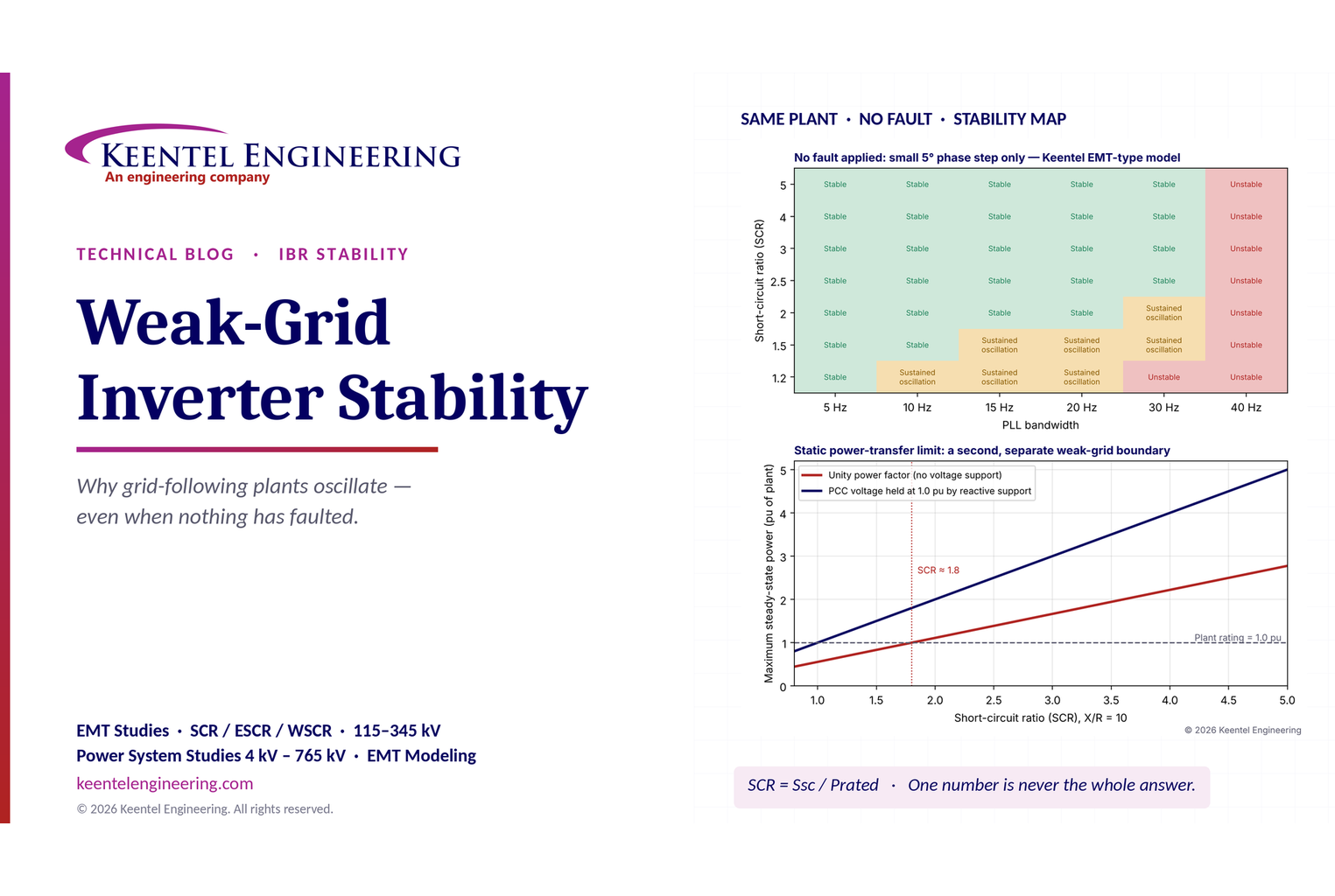
Learn why grid-following inverters become unstable without grid faults. Explore SCR, PLL interactions, EMT studies, grid strength, and mitigation.
By SANDIP R PATEL
•
October 20, 2026
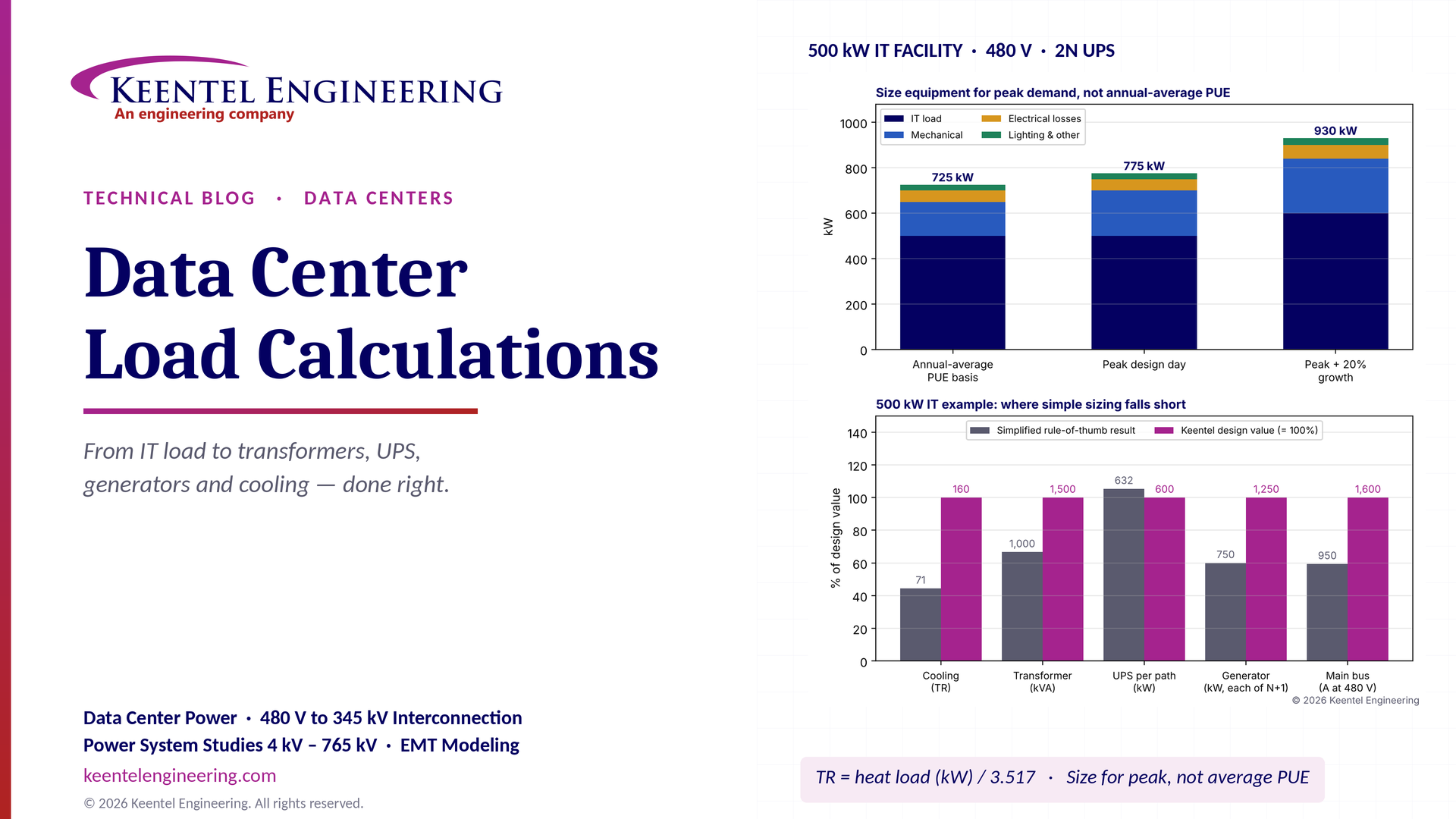
Learn data center electrical load calculations, including IT demand, PUE, UPS and generator sizing, cooling loads, redundancy, and worked US examples.
By SANDIP R PATEL
•
October 20, 2026
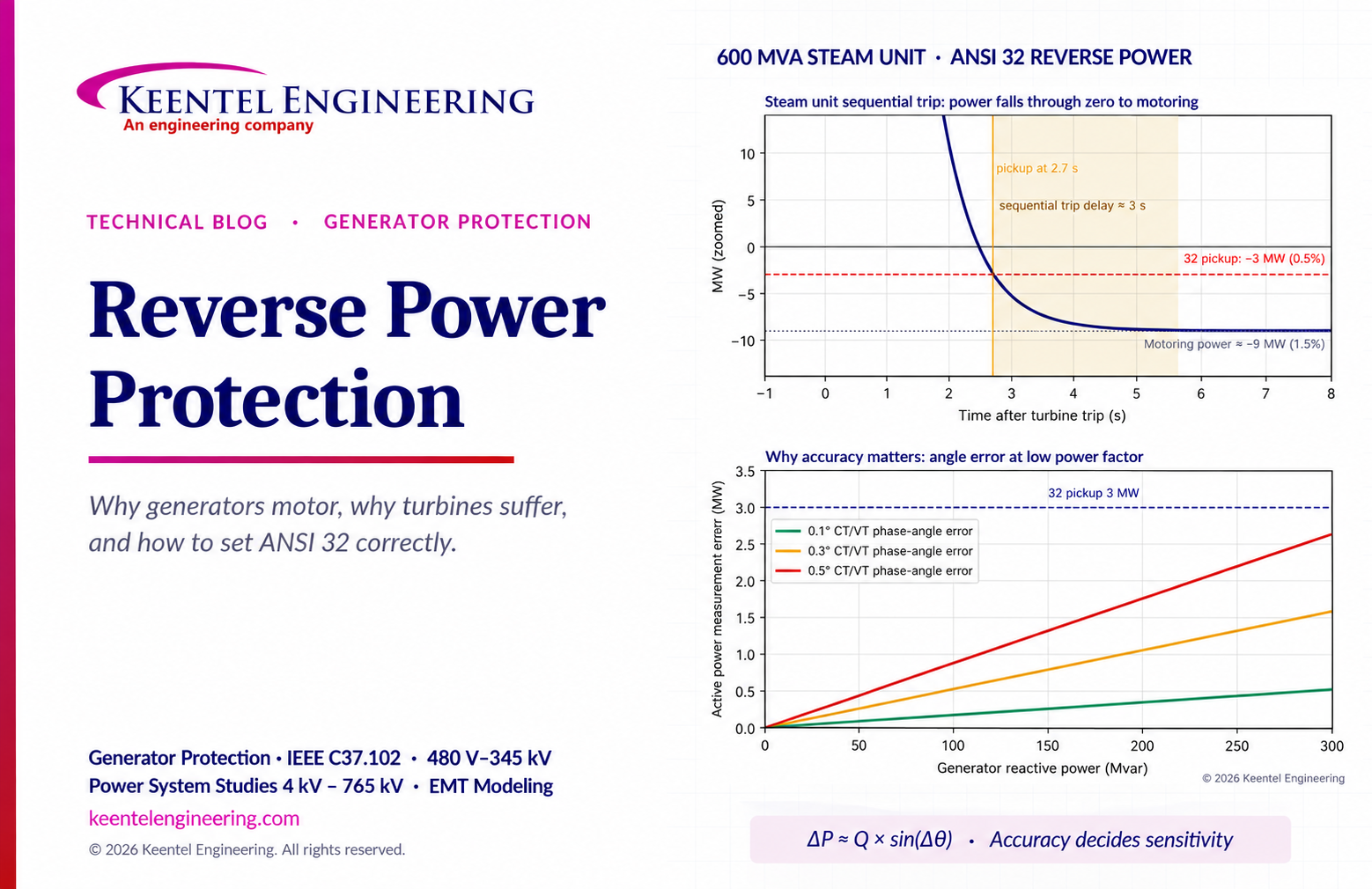
Learn reverse power protection (ANSI 32), generator motoring, relay pickup settings, time delays, sequential tripping and testing for US power plants.
Copy
By Team 2 Dexora
•
October 20, 2026
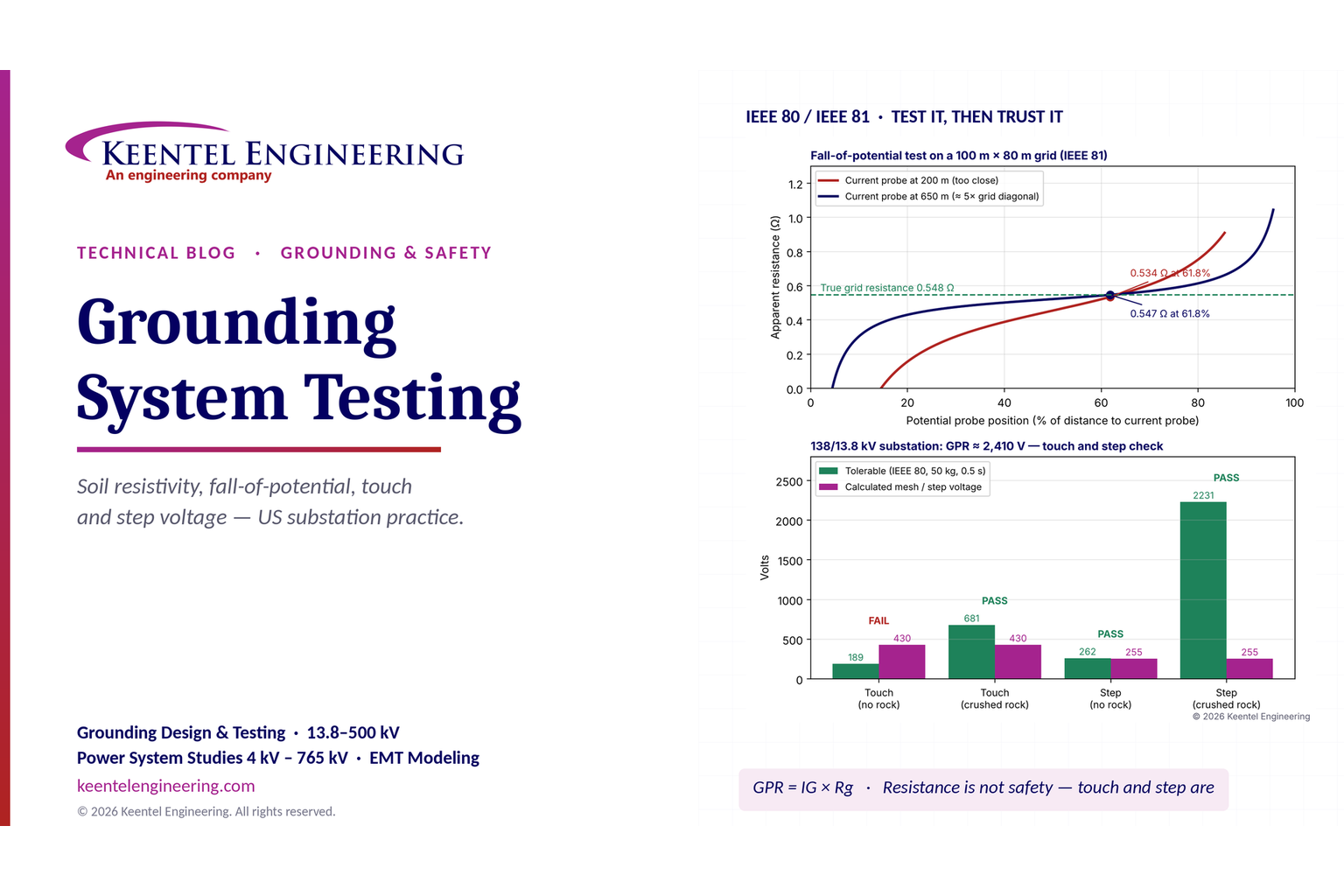
Explore grounding system testing with Keentel Engineering. Learn IEEE 80/81 methods, soil resistivity, ground resistance, and touch and step voltage safety.
By SANDIP R PATEL
•
October 13, 2026
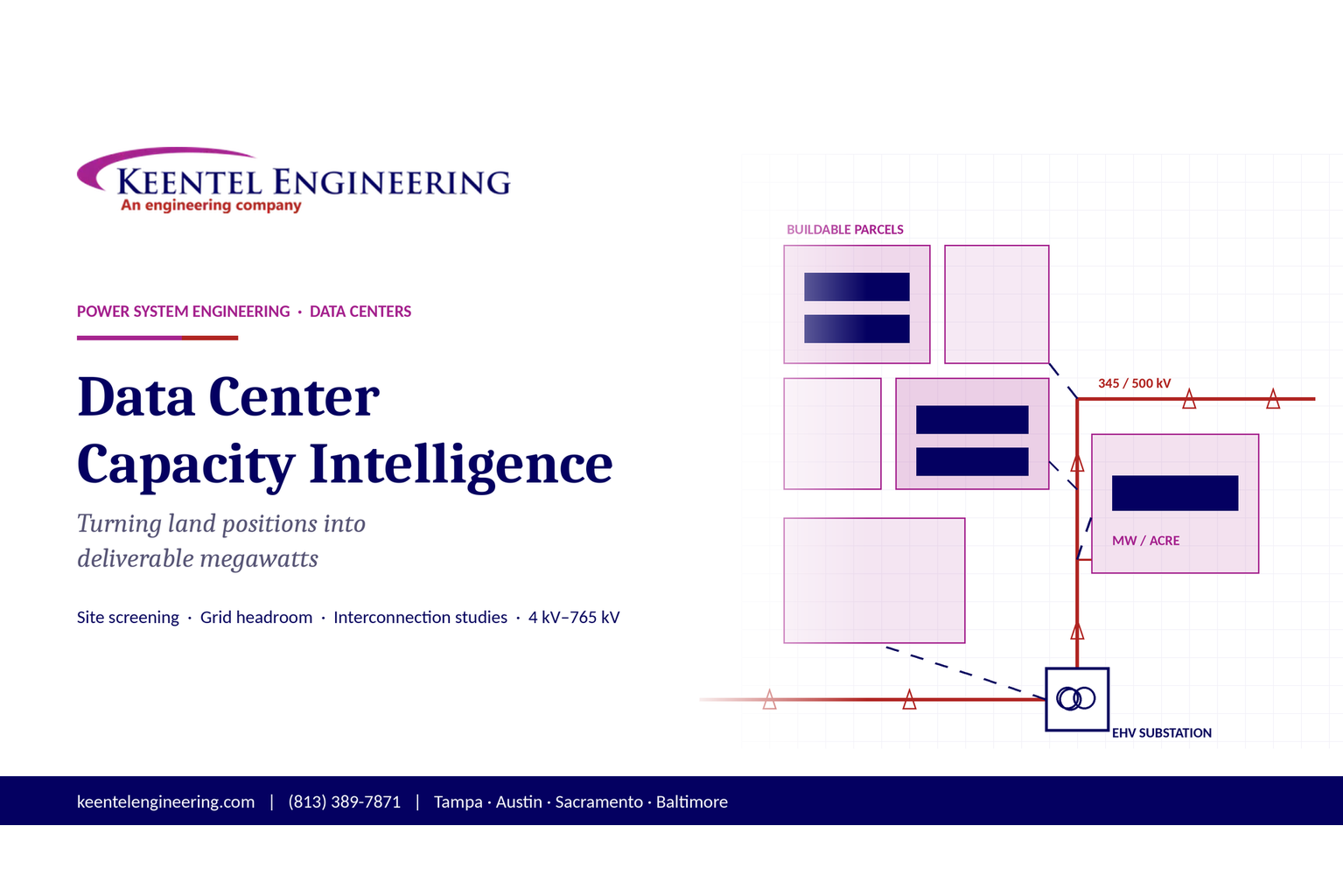
Plan data center capacity with land screening, MW-per-acre estimates, grid power availability and interconnection feasibility studies from Keentel Engineering.
By SANDIP R PATEL
•
October 11, 2026
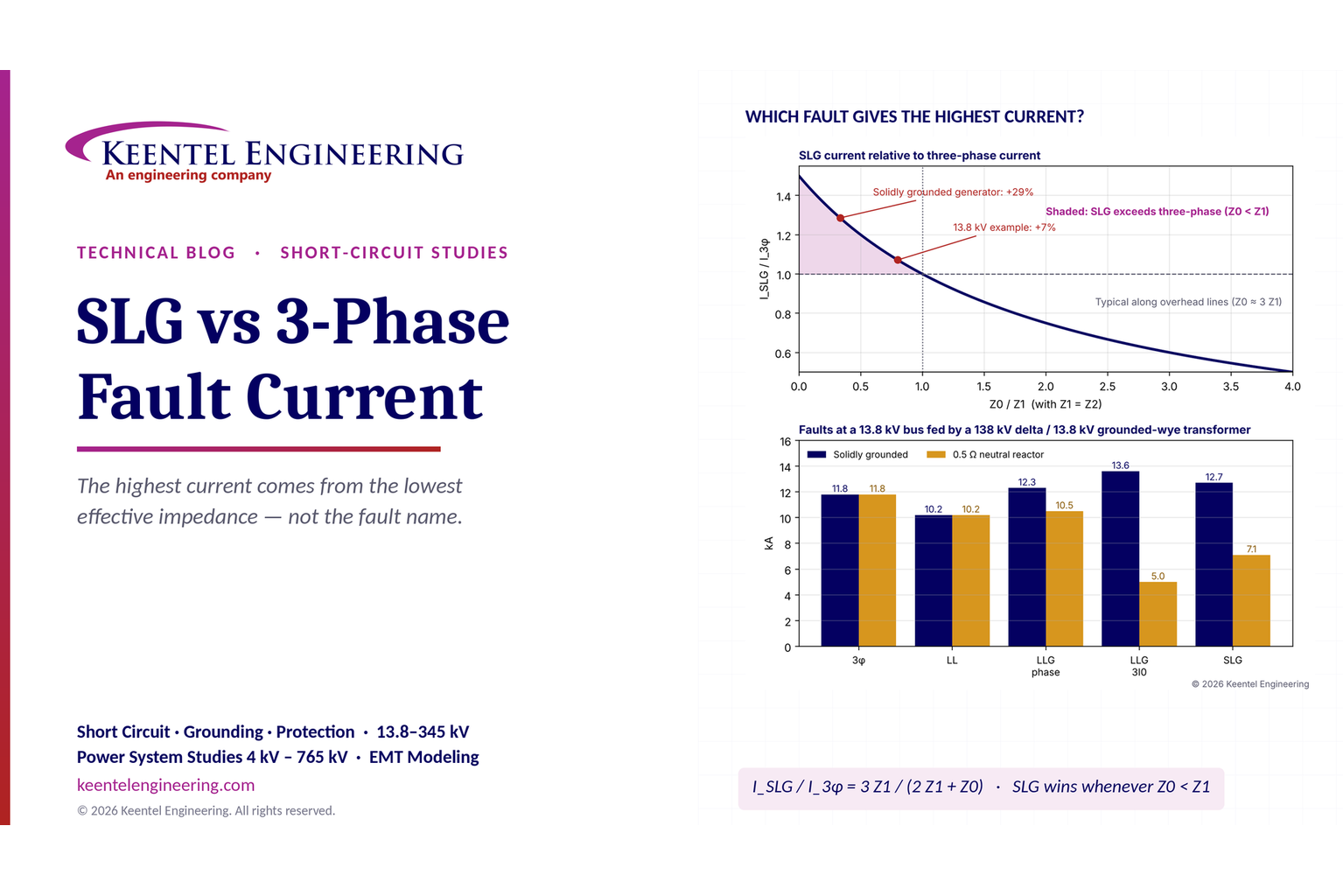
Learn which fault produces the highest current at a bus, why SLG faults can exceed three-phase faults, and how symmetrical components determine fault duty.
By SANDIP R PATEL
•
October 11, 2026
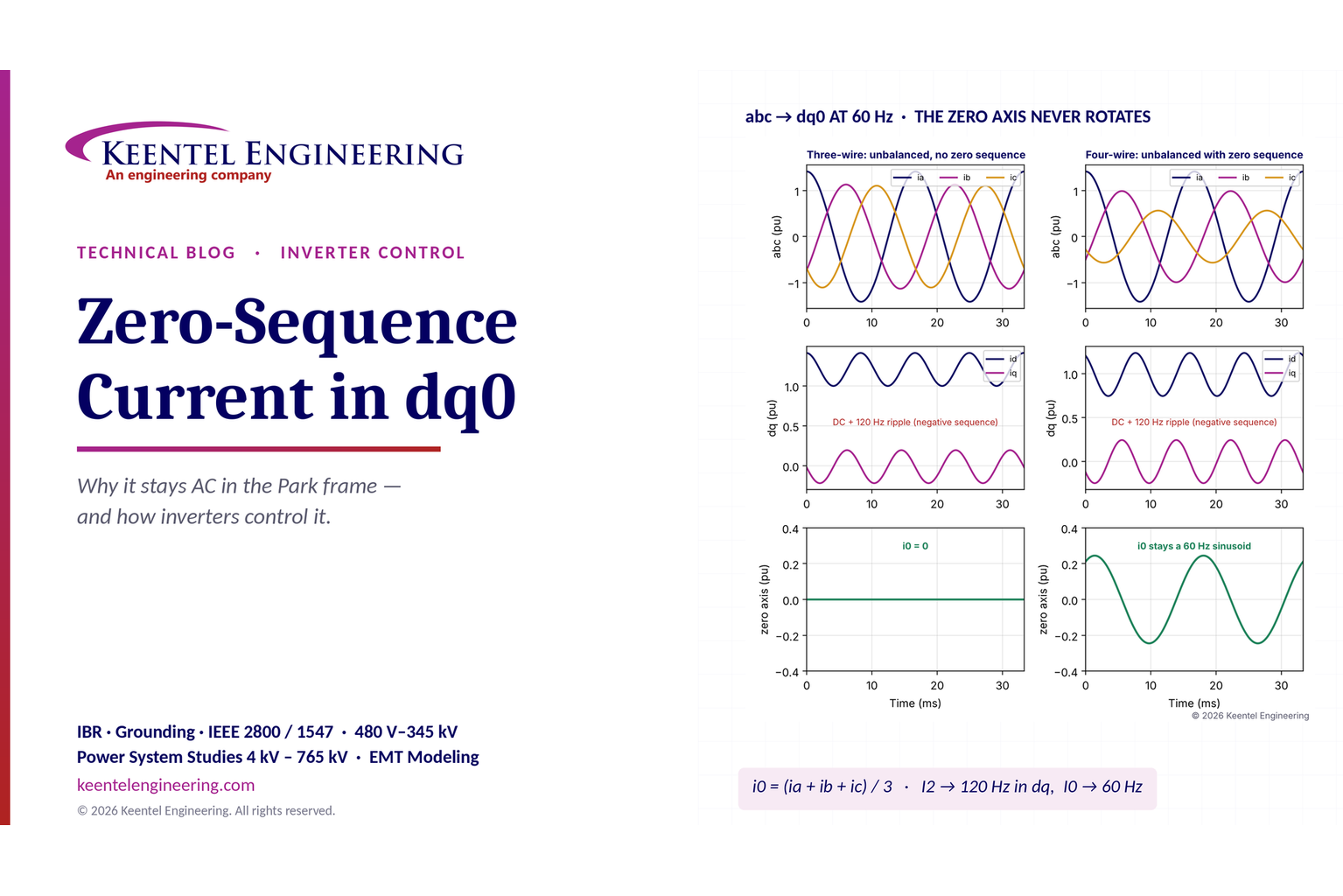
Learn why zero-sequence current pulsates in the dq0 frame, how Park's transformation works, and how inverter controls handle unbalance and ground faults.
By SANDIP R PATEL
•
October 11, 2026
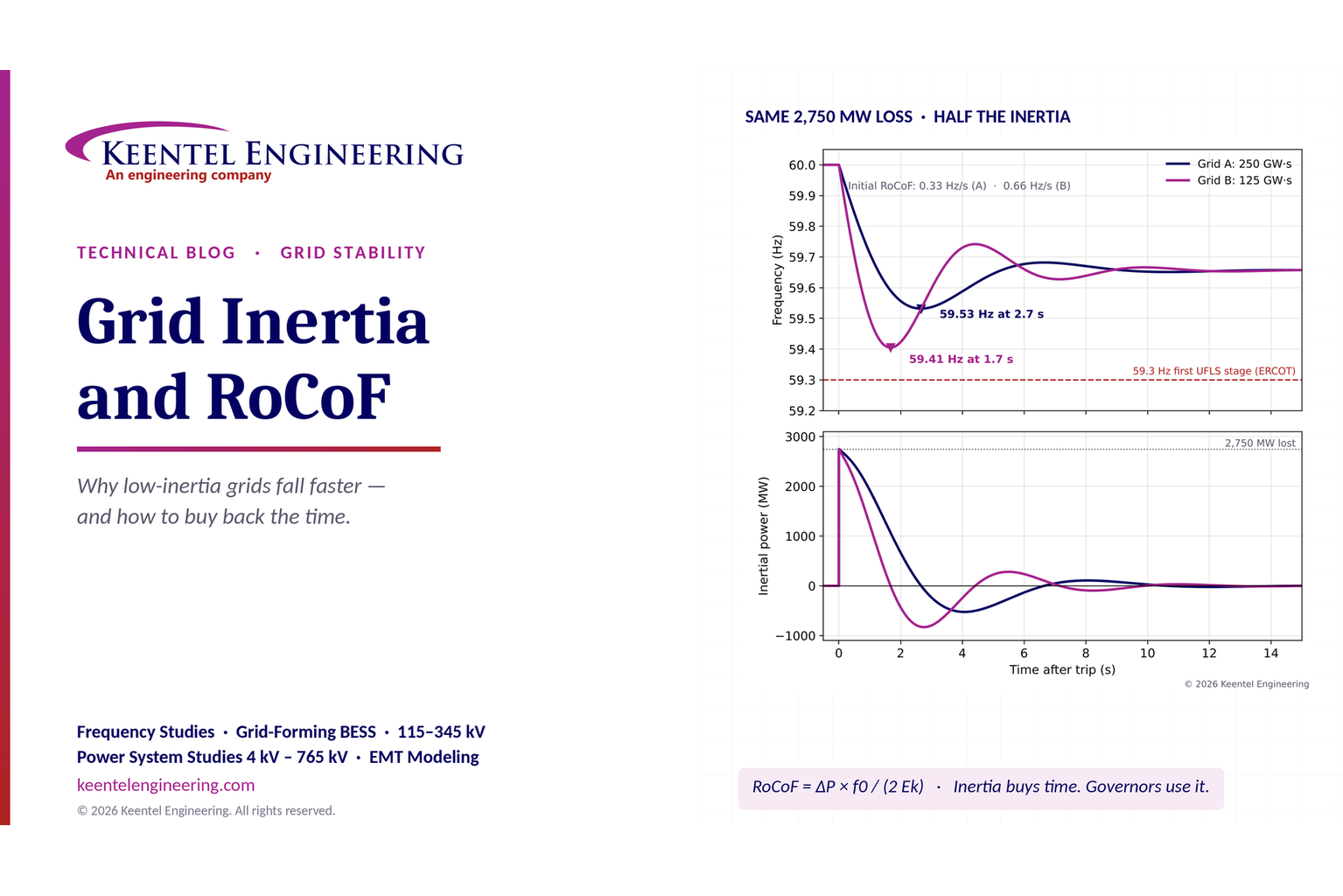
Explore grid inertia, RoCoF and frequency response, with swing equation calculations, frequency nadir analysis and US power system simulation examples.
By SANDIP R PATEL
•
October 11, 2026
Learn transient stability analysis, swing equation, equal-area criterion and critical clearing time with a 345 kV worked example and NERC TPL-001 guidance.