A Coordinated Electric System Interconnection Review—the utility’s deep-dive on technical and cost impacts of your project.
Challenge: Frequent false tripping using conventional electromechanical relays
Solution: SEL-487E integration with multi-terminal differential protection and dynamic inrush restraint
Result: 90% reduction in false trips, saving over $250,000 in downtime
| Category | Metric |
|---|---|
| VPP capacity (Lunar Energy) | 650 MW |
| Lunar funding raised | US$232 million |
| Data center BESS example | 31 MW / 62 MWh |
| ERCOT grid-scale batteries | 15+ GW |
| LDES tenders (H1 2026) | Up to 9.3 GW |
| Lithium-ion share of LDES by 2030 | 77% |
| FEOC initial threshold | 55% |
| BESS tariff rate (2026) | ~55% |
| Capacity gain from analytics | 5–15% |
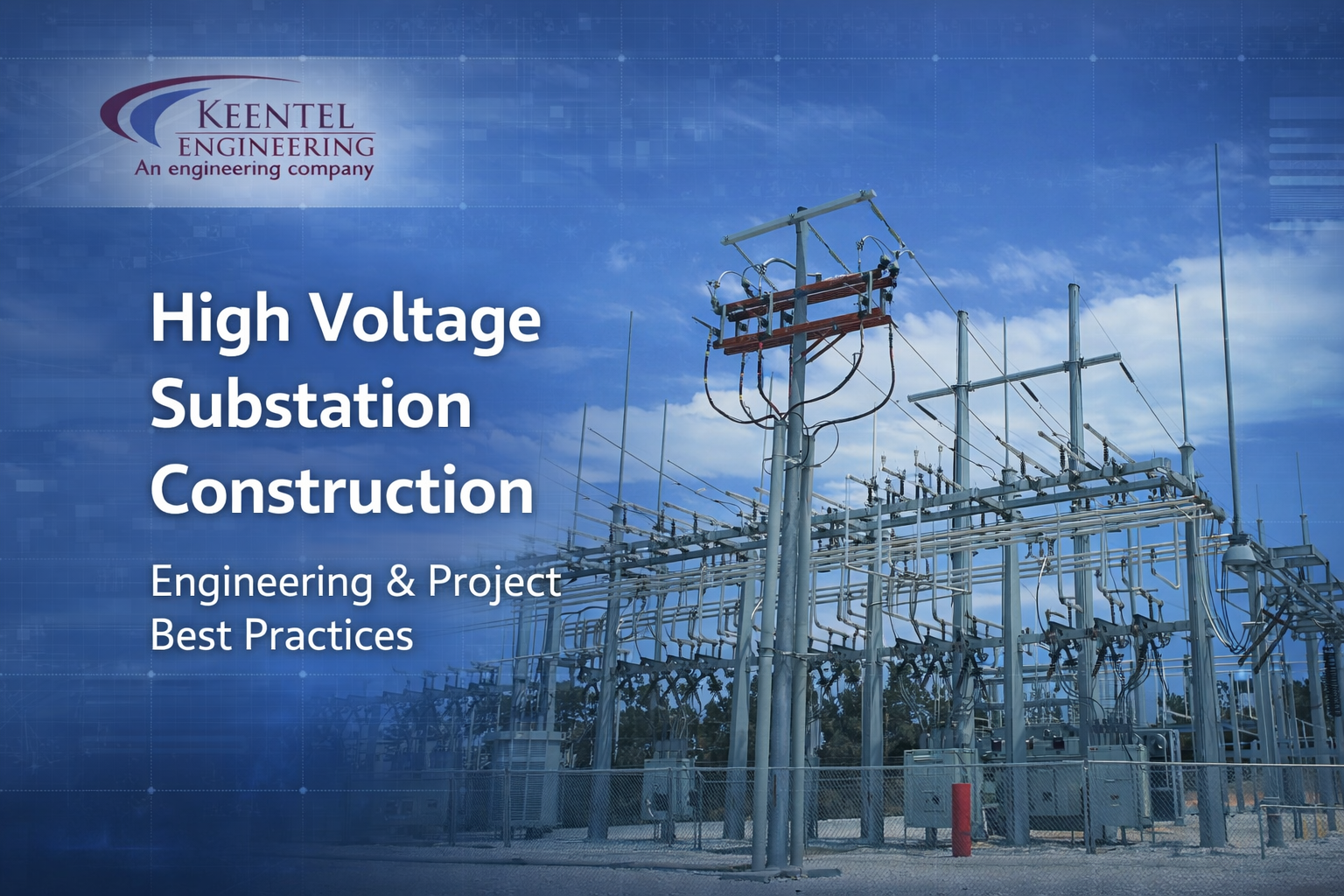
Best Practices for High-Voltage Substation Construction Projects
March 11, 2026 | blog
Engineering Planning, Labor Optimization, and Project Control Strategies
High-voltage substations are essential infrastructure within modern electrical power systems. They serve as the connection points between power generation, transmission networks, and distribution systems. Substations regulate voltage levels, provide switching capability, and enable safe and reliable electricity delivery across the grid.
The construction of high-voltage substations is a complex engineering process that involves electrical design, structural installation, control systems integration, and strict project management. Because these projects require large capital investment and extensive labor resources, careful planning and productivity monitoring are critical.
At Keentel Engineering, our team provides comprehensive engineering services that support utilities, developers, and EPC contractors in the design, construction, and commissioning of high-voltage substations.
This article explores key best practices for high-voltage substation construction, focusing on project planning, labor productivity, construction activities, and engineering management strategies.
Role of High-Voltage Substations in the Power Grid
High-voltage substations act as vital nodes within electrical transmission networks. They perform several essential functions including:
- Transforming voltage levels between transmission and distribution systems
- Switching transmission lines and routing power flows
- Providing protection and control functions
- Improving grid reliability and flexibility
Substations are typically located at strategic points within the transmission system where voltage transformation or network interconnection is required.
Common substation types include:
Step-Down Substations
These facilities reduce high transmission voltages to lower levels suitable for regional distribution networks.
Switching Substations
These stations provide switching capability between transmission lines, enabling operators to control power flows and improve grid reliability.
Distribution Substations
Distribution substations reduce transmission voltage further so electricity can be delivered to residential, commercial, and industrial customers.
Each type requires specific engineering design approaches and construction practices.
Challenges in High-Voltage Substation Construction
High-voltage substation construction projects involve numerous challenges due to the complexity of electrical equipment and the scale of infrastructure required.
Key challenges include:
- High capital investment
- Complex electrical equipment installation
- Coordination between multiple contractors
- Strict safety requirements
- Labor-intensive construction activities
Construction activities often represent a large portion of total project costs. Therefore, managing labor productivity and project efficiency becomes a critical factor in project success.
Without effective project planning and monitoring systems, projects can easily experience schedule delays or cost overruns.
Importance of Labor Productivity Benchmarking
Labor productivity is a primary metric used to measure construction efficiency.
In infrastructure construction, productivity is typically defined as the amount of work completed per labor hour. Monitoring this metric allows project managers to evaluate performance and identify areas where improvements can be made.
Establishing productivity benchmarks based on previous projects allows construction teams to:
- estimate labor requirements more accurately
- monitor project progress effectively
- detect schedule deviations early
- control construction costs
Using benchmarking tools and productivity tracking systems is one of the most effective ways to improve project outcomes.
Major Construction Activities in High-Voltage Substations
High-voltage substation construction typically involves several key installation activities. These activities represent the majority of electrical construction work performed on the project.
Grounding System Installation
Grounding systems provide electrical safety by directing fault currents safely into the earth. Grounding connections are installed between electrical equipment, structural steel supports, and the substation grounding grid.
A properly designed grounding system protects personnel from electrical shock and reduces the risk of equipment damage during lightning strikes or system faults.
Conduit and Junction Box Installation
Electrical conduits and junction boxes protect cables and provide routing paths for control and power wiring throughout the substation.
These installations ensure reliable communication between field equipment and control systems.
Control Cable Installation
Control cables carry signals that operate and monitor substation equipment. These cables connect devices such as protection relays, meters, circuit breakers, and supervisory control systems.
Proper cable routing and termination are essential for reliable system operation.
Structural Steel Installation
Substation equipment must be mounted on structural steel supports that provide proper electrical clearances and mechanical stability.
Structural steel structures support equipment such as:
- circuit breakers
- disconnect switches
- instrument transformers
- bus structures
These structures must withstand environmental loads such as wind, ice accumulation, and seismic forces.
Major Equipment Installation
High-voltage substations contain several critical electrical components including:
- power transformers
- circuit breakers
- disconnect switches
- surge arresters
- instrument transformers
Installing and aligning this equipment requires precise engineering coordination and specialized construction expertise.
Bus System Installation
Bus systems are used to distribute electrical power between substation equipment and transmission lines.
Common bus configurations include:
- rigid bus systems
- strain bus systems
- tubular bus structures
Proper bus design ensures reliable power flow and safe electrical clearances within the substation yard.
Work Breakdown Structures for Project Management
One of the most effective project management tools used in infrastructure construction is the Work Breakdown Structure (WBS).
A WBS divides the overall project into smaller, manageable components that can be planned, scheduled, and monitored more effectively.
Benefits of a Work Breakdown Structure include:
- improved task organization
- clearer project scope definition
- better resource allocation
- enhanced cost tracking
This structure enables project managers to monitor progress and control construction activities more efficiently.
Project Scheduling Using S-Curves
Construction progress is often monitored using S-curve analysis.
An S-curve represents cumulative project progress over time and typically follows three phases:
- Early project mobilization with slower progress
- Rapid progress during peak construction
- Gradual completion during final stages
Project managers compare planned progress against actual progress to determine whether the project is ahead or behind schedule.
This method allows teams to identify issues early and implement corrective actions.
Labor Distribution During Substation Construction
Construction labor usage typically follows predictable patterns during the project lifecycle.
In many projects:
- early construction stages involve mobilization and site preparation
- labor demand increases significantly during equipment installation
- manpower peaks near the midpoint of the project schedule
- labor requirements decrease as construction nears completion
Understanding these patterns helps project managers allocate resources efficiently and avoid workforce shortages or inefficiencies.
Project Progress Monitoring
Consistent project monitoring is essential to ensure that construction activities remain aligned with the project schedule and budget.
Effective progress tracking typically includes:
- planned labor hours
- actual labor hours
- completed installation quantities
- schedule milestones
- production rates
Weekly reporting systems are often used to summarize construction progress and provide transparency to project stakeholders.
Productivity Metrics and Performance Monitoring
Advanced project control systems use productivity indicators to measure performance during construction.
One commonly used metric compares expected labor hours with actual labor hours used for each activity.
If actual productivity exceeds expectations, the project may complete ahead of schedule. If productivity falls below expectations, corrective actions such as additional resources or schedule adjustments may be necessary.
Tracking these indicators helps prevent small issues from becoming major project delays.
Engineering Support for Substation Construction Projects
Successful high-voltage substation construction requires collaboration between multiple engineering disciplines.
Engineering support typically includes:
- electrical system design
- protection and control engineering
- grounding and lightning protection design
- structural engineering
- construction engineering support
- commissioning and testing
Engineering firms such as Keentel Engineering provide these services to ensure projects are designed correctly and constructed safely.
Proper engineering oversight improves construction efficiency and reduces operational risks.
Conclusion
High-voltage substation construction projects require detailed planning, advanced engineering expertise, and strong project management practices.
Successful projects rely on:
- well-defined project planning
- accurate labor productivity benchmarks
- structured project tracking systems
- continuous monitoring of construction progress
- coordination between engineering and construction teams
By applying these best practices, utilities and developers can successfully deliver reliable and efficient electrical infrastructure.
Keentel Engineering provides specialized electrical engineering services for high-voltage substation design, construction support, and grid infrastructure development.
Frequently Asked Questions (FAQ)
What is a high-voltage substation?
A high-voltage substation is a facility used to transform voltage levels, switch electrical circuits, and control power flow within the transmission network.
What equipment is typically installed in a substation?
Common equipment includes power transformers, circuit breakers, disconnect switches, surge arresters, instrument transformers, and bus structures.
Why is grounding important in substations?
Grounding systems protect personnel and equipment by safely directing fault currents into the earth. They also reduce damage from lightning and electrical faults.
What is a Work Breakdown Structure in construction projects?
A Work Breakdown Structure divides the project into smaller tasks so that resources, schedules, and costs can be managed effectively.
What is an S-curve in construction management?
An S-curve is a graphical representation of cumulative project progress over time. It helps track whether construction is progressing as planned.
What are the major construction activities in substations?
Major activities include grounding installation, conduit installation, control cable installation, structural steel erection, equipment installation, and bus installation.
How is productivity measured during substation construction?
Productivity is measured by comparing the amount of work completed with the labor hours required to complete that work.
Why is labor productivity important?
Labor productivity affects both project schedule and construction cost. Monitoring productivity helps ensure projects remain on track.
What engineering services are required for substation projects?
Typical services include electrical design, protection and control engineering, grounding design, equipment specification, construction support, and commissioning.
How does Keentel Engineering support substation construction projects?
Keentel Engineering provides engineering design, power system studies, protection and control engineering, and construction support services for high-voltage substation projects.

About the Author:
Sandip "Sonny" R. Patel, P.E.
IEEE Senior Member · Founder & CEO, Keentel Engineering
In 1995, Sonny Patel earned his Electrical Engineering degree from the University of Illinois. But degrees don't build legacies — action does.
For three decades, he has worked the power industry from every side of the table: 16 years as a utility engineer at Exelon/Commonwealth Edison; generation leadership across hydroelectric, industrial steam turbine, and a 9 GW renewable fleet; NERC Regional Entity Senior Compliance Engineer and Audit Team Lead, auditing some of the nation's largest utilities; and testing and commissioning lead on equipment up to 765 kV — the very top of the North American grid.Utility. Generator. Regulator. Consultant. Few engineers have seen all four seats. Fewer still have sat in them.
His experience spans nuclear, hydro, conventional generation, renewables, oil and gas, mining — and today's data centers, where he is authoring a three-book series on data center design. He is a Licensed Professional Engineer in six states and a Licensed Electrical Contractor in Florida (Unlimited EC) — he doesn't just design the work; he's qualified to stand behind its execution.Today, as Founder and CEO of Keentel Engineering, Sonny leads a nationwide team of engineers delivering substation design, power system studies, NERC compliance, and commissioning — done right, coast to coast.Three decades. Every side of the table. One standard: accountable engineering.
Services

Let's Discuss Your Project
Let's book a call to discuss your electrical engineering project that we can help you with.
About the Author:
Sandip "Sonny" R. Patel, P.E.
IEEE Senior Member · Founder & CEO, Keentel Engineering
In 1995, Sonny Patel earned his Electrical Engineering degree from the University of Illinois. But degrees don't build legacies — action does.
For three decades, he has worked the power industry from every side of the table: 16 years as a utility engineer at Exelon/Commonwealth Edison; generation leadership across hydroelectric, industrial steam turbine, and a 9 GW renewable fleet; NERC Regional Entity Senior Compliance Engineer and Audit Team Lead, auditing some of the nation's largest utilities; and testing and commissioning lead on equipment up to 765 kV — the very top of the North American grid.
Utility. Generator. Regulator. Consultant. Few engineers have seen all four seats. Fewer still have sat in them.
His experience spans nuclear, hydro, conventional generation, renewables, oil and gas, mining — and today's data centers, where he is authoring a three-book series on data center design. He is a Licensed Professional Engineer in six states and a Licensed Electrical Contractor in Florida (Unlimited EC) — he doesn't just design the work; he's qualified to stand behind its execution.
Today, as Founder and CEO of Keentel Engineering, Sonny leads a nationwide team of engineers delivering substation design, power system studies, NERC compliance, and commissioning — done right, coast to coast.Three decades. Every side of the table. One standard: accountable engineering.
Leave a Comment
Thank you for contacting us.
We will get back to you as soon as possible.
We will get back to you as soon as possible.
Oops, there was an error sending your message.
Please try again later.
Please try again later.
Related Posts
By SANDIP R PATEL
•
October 13, 2026
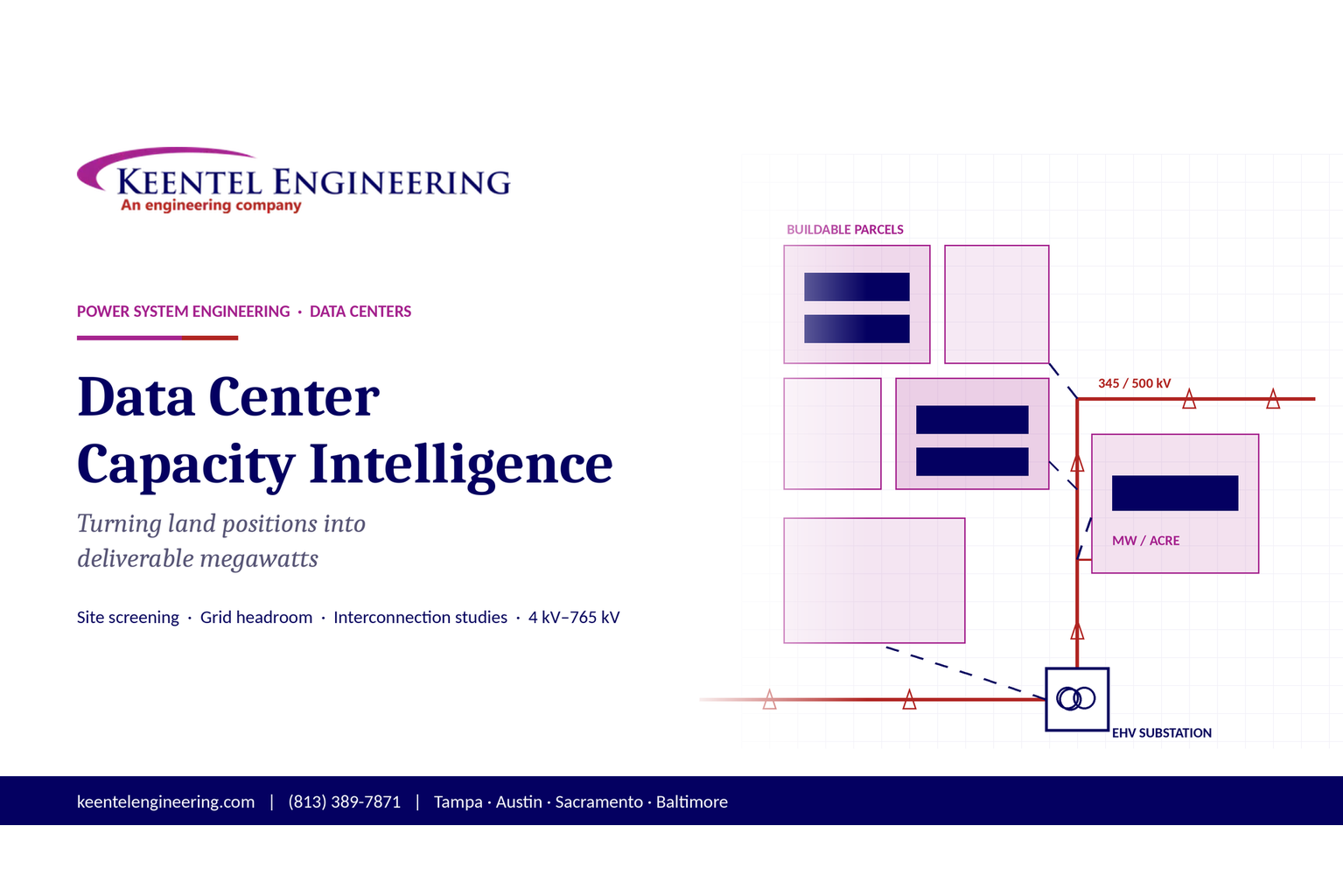
Plan data center capacity with land screening, MW-per-acre estimates, grid power availability and interconnection feasibility studies from Keentel Engineering.
By SANDIP R PATEL
•
October 11, 2026
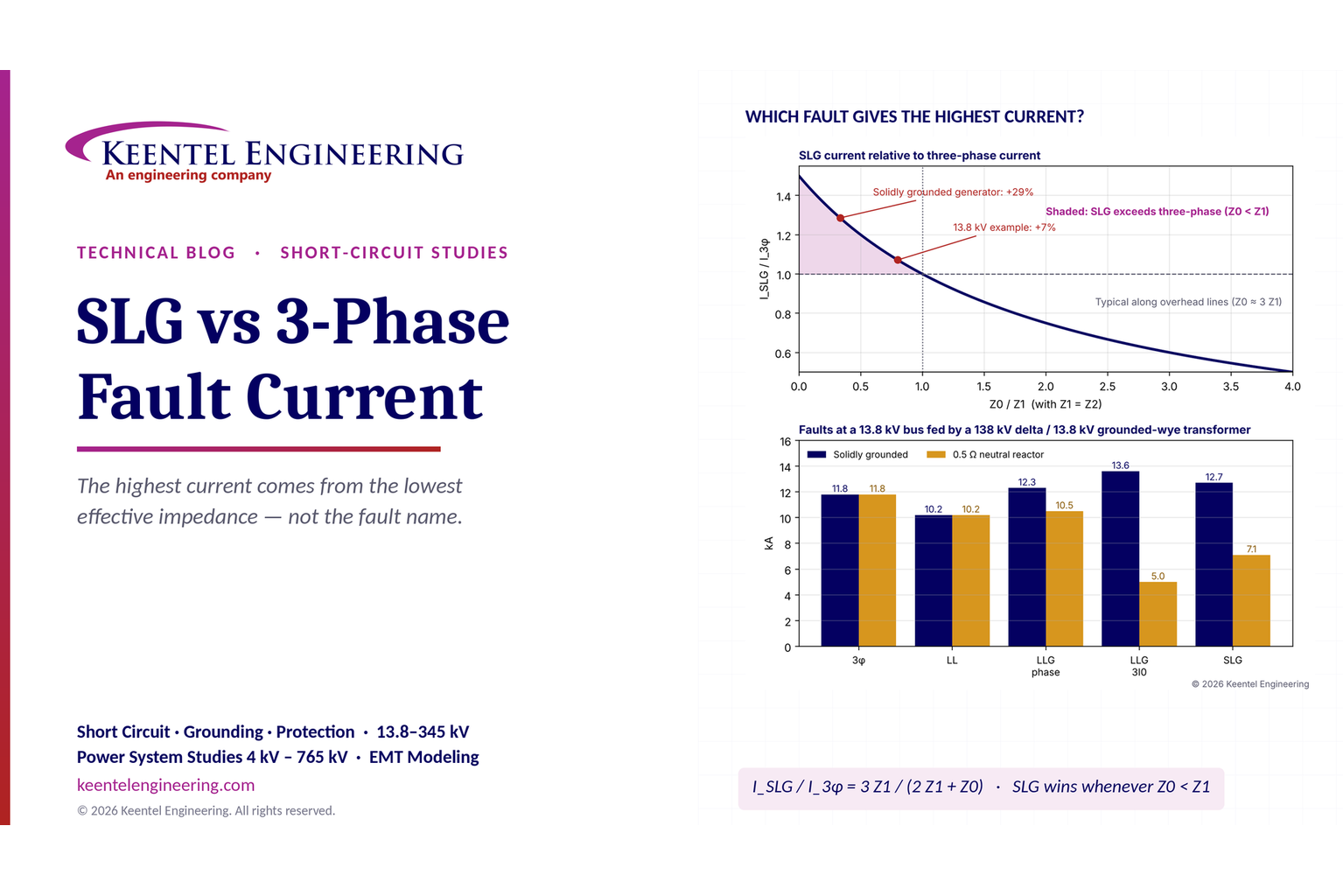
Learn which fault produces the highest current at a bus, why SLG faults can exceed three-phase faults, and how symmetrical components determine fault duty.
By SANDIP R PATEL
•
October 11, 2026
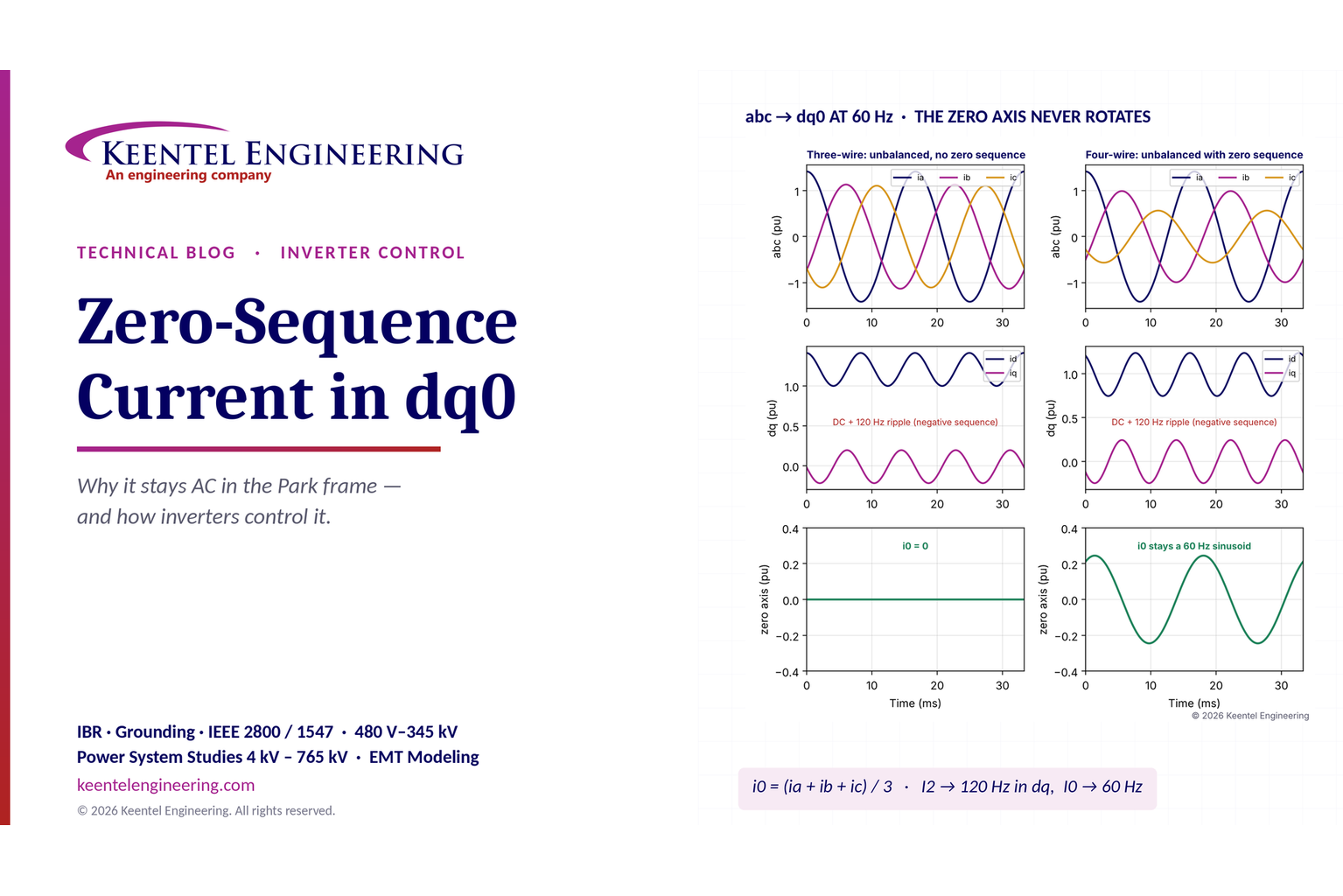
Learn why zero-sequence current pulsates in the dq0 frame, how Park's transformation works, and how inverter controls handle unbalance and ground faults.
By SANDIP R PATEL
•
October 11, 2026
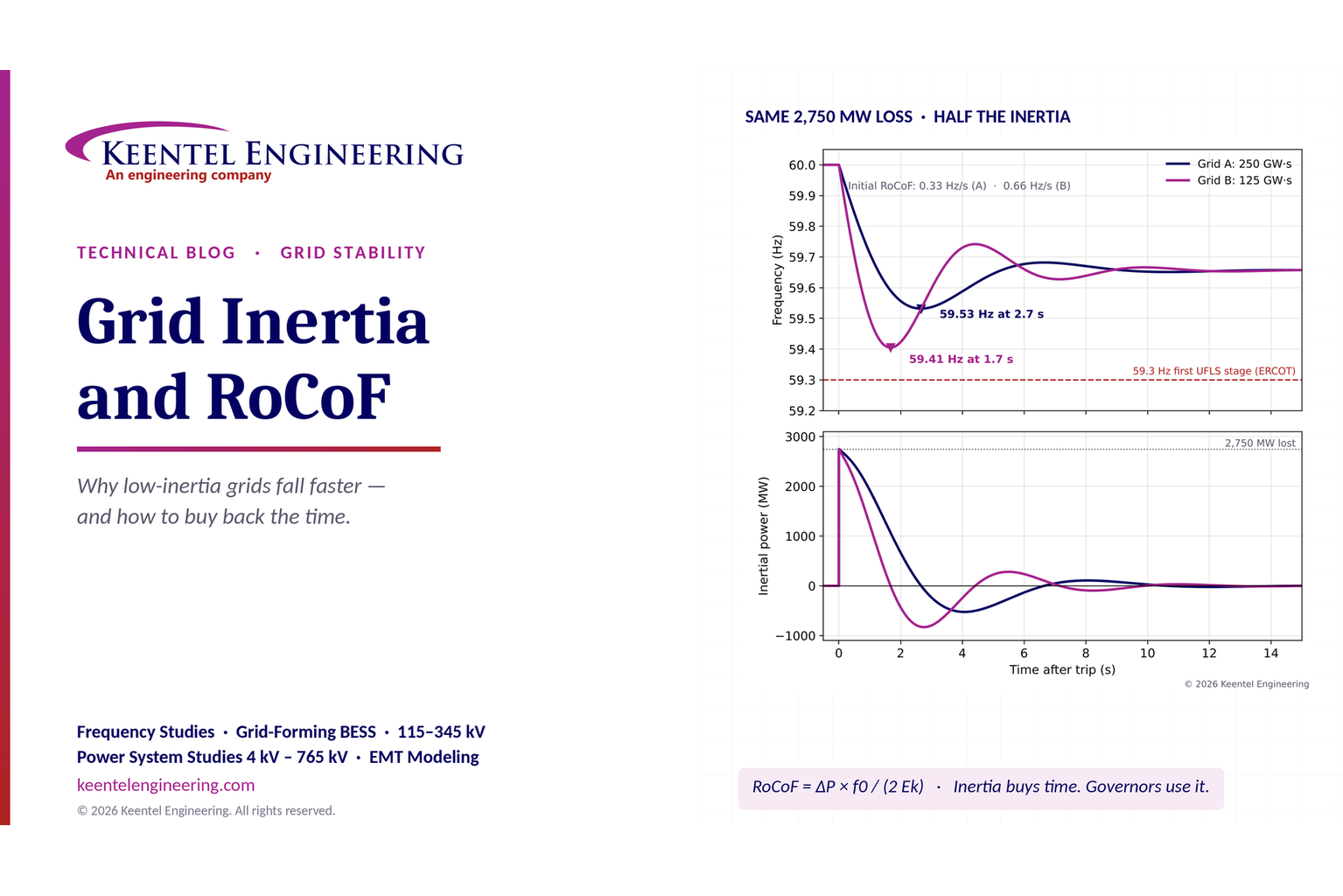
Explore grid inertia, RoCoF and frequency response, with swing equation calculations, frequency nadir analysis and US power system simulation examples.
By SANDIP R PATEL
•
October 11, 2026
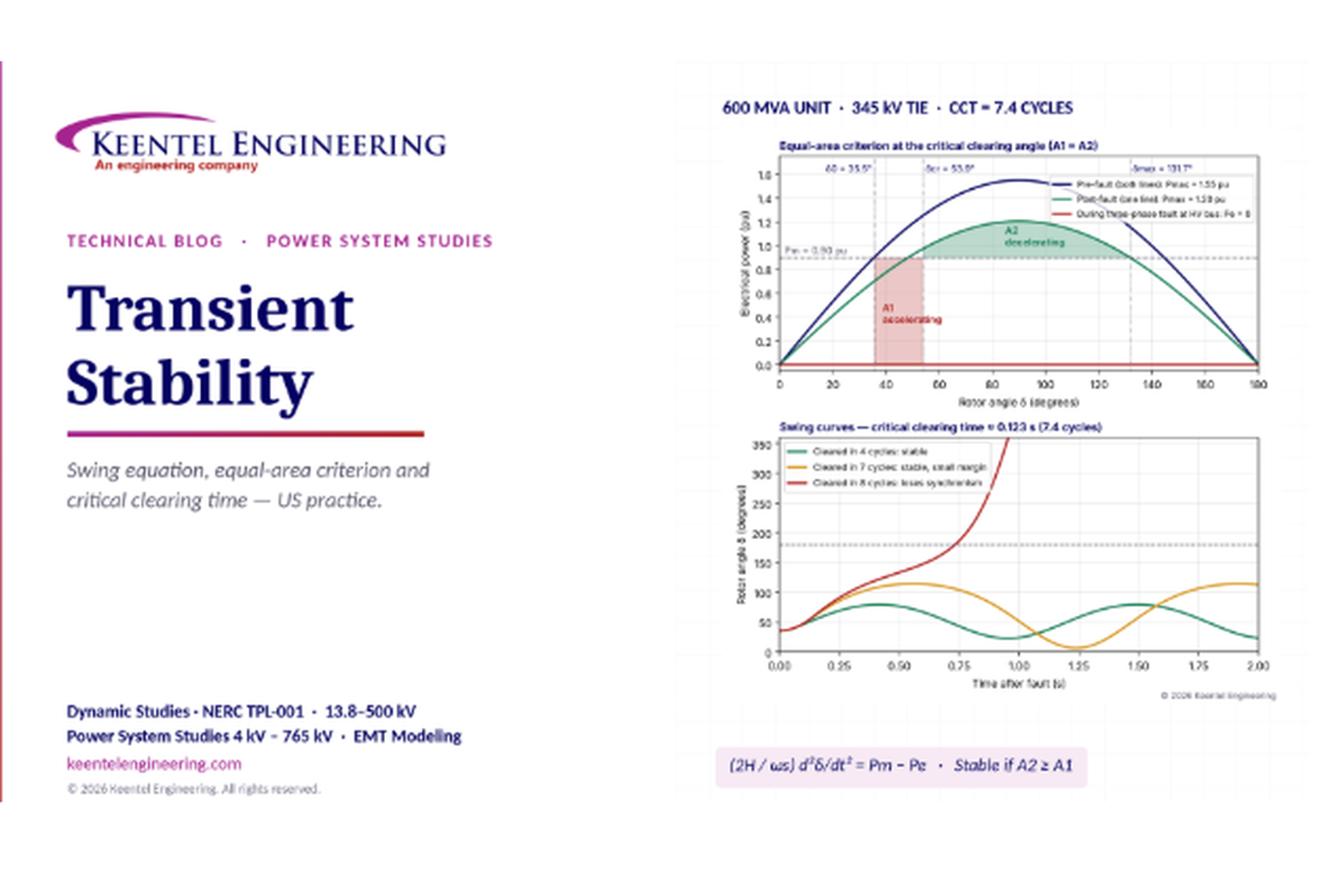
Learn transient stability analysis, swing equation, equal-area criterion and critical clearing time with a 345 kV worked example and NERC TPL-001 guidance.
By SANDIP R PATEL
•
October 11, 2026
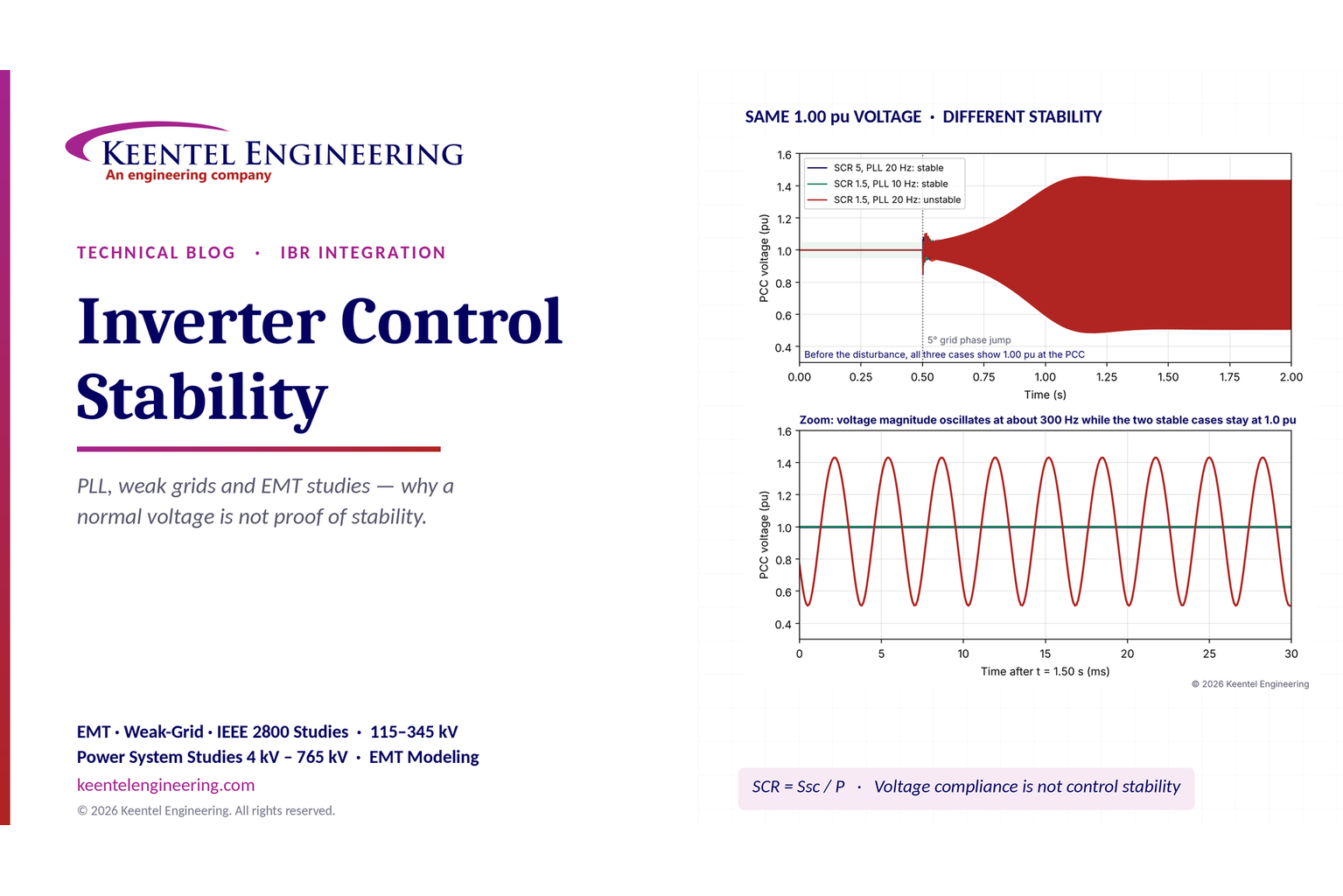
Learn why inverter controls become unstable in weak grids, how PLL bandwidth and SCR affect stability, and how PSCAD EMT studies identify and mitigate oscillations.
By SANDIP R PATEL
•
October 11, 2026
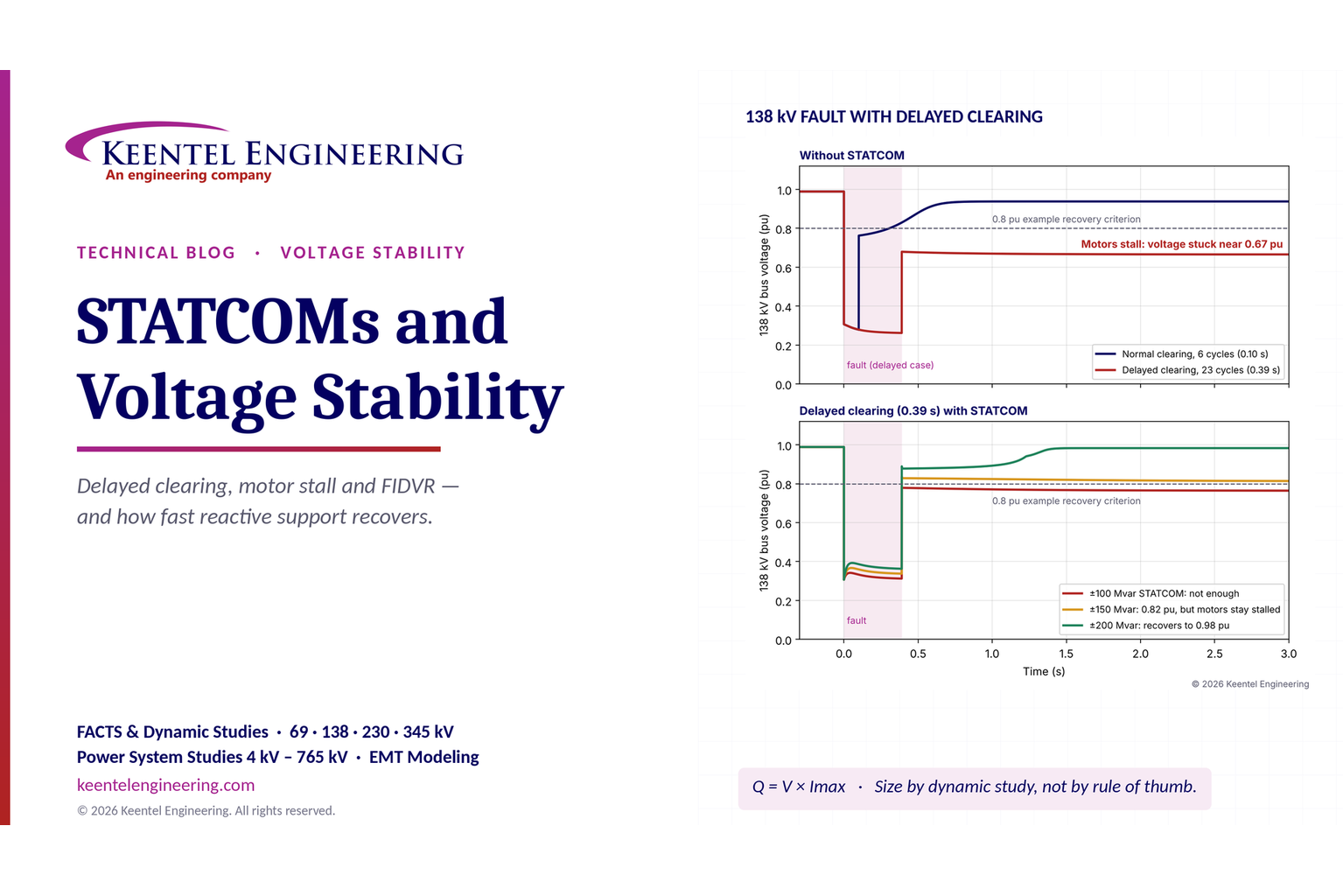
Learn how STATCOMs improve voltage stability and prevent FIDVR. Explore reactive power sizing, delayed fault clearing, NERC criteria and 138 kV simulation results.
By SANDIP R PATEL
•
October 10, 2026
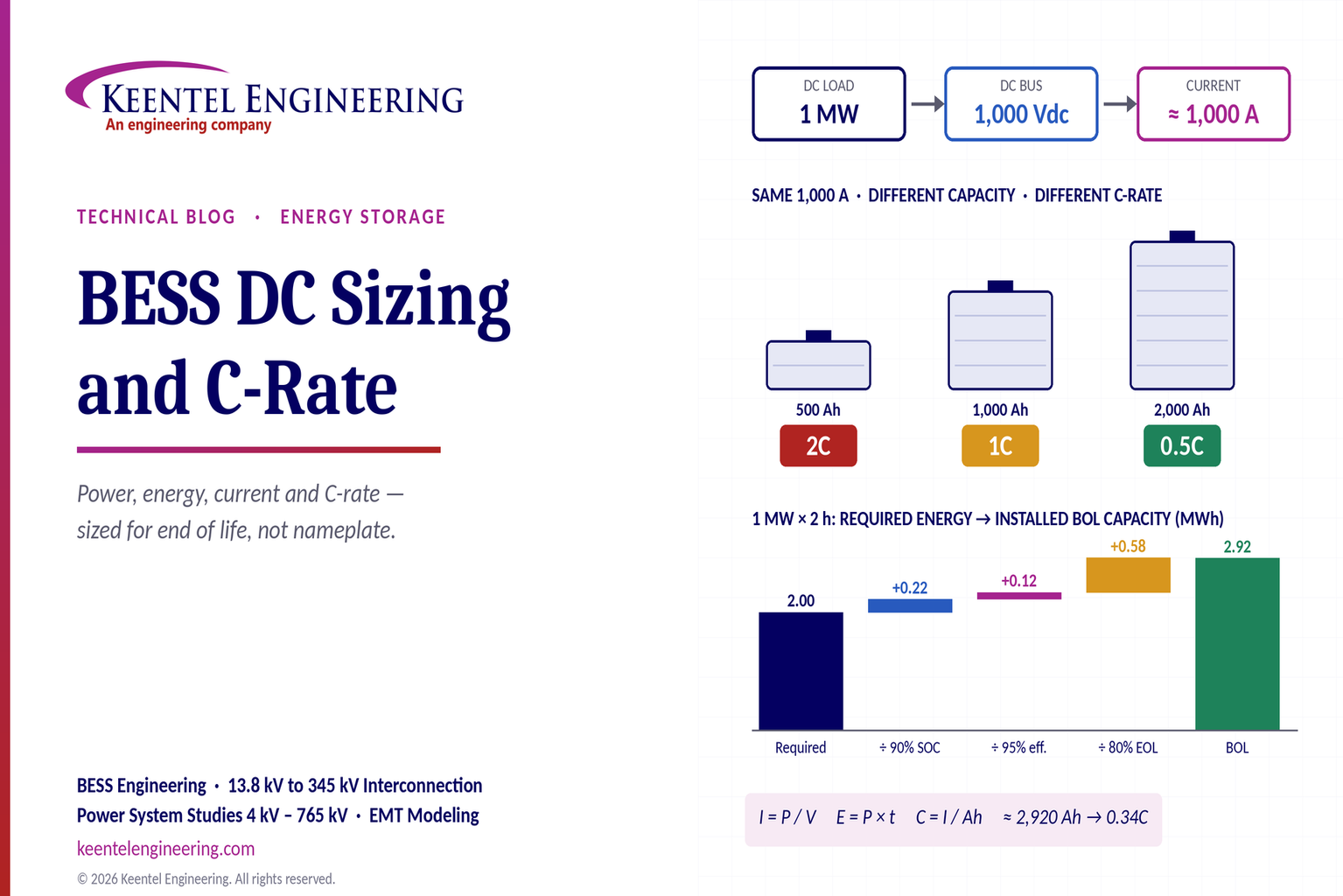
Learn BESS DC sizing with power, energy, current and C-rate calculations, battery losses, degradation and a 100 MW/400 MWh utility-scale example.
By SANDIP R PATEL
•
October 10, 2026
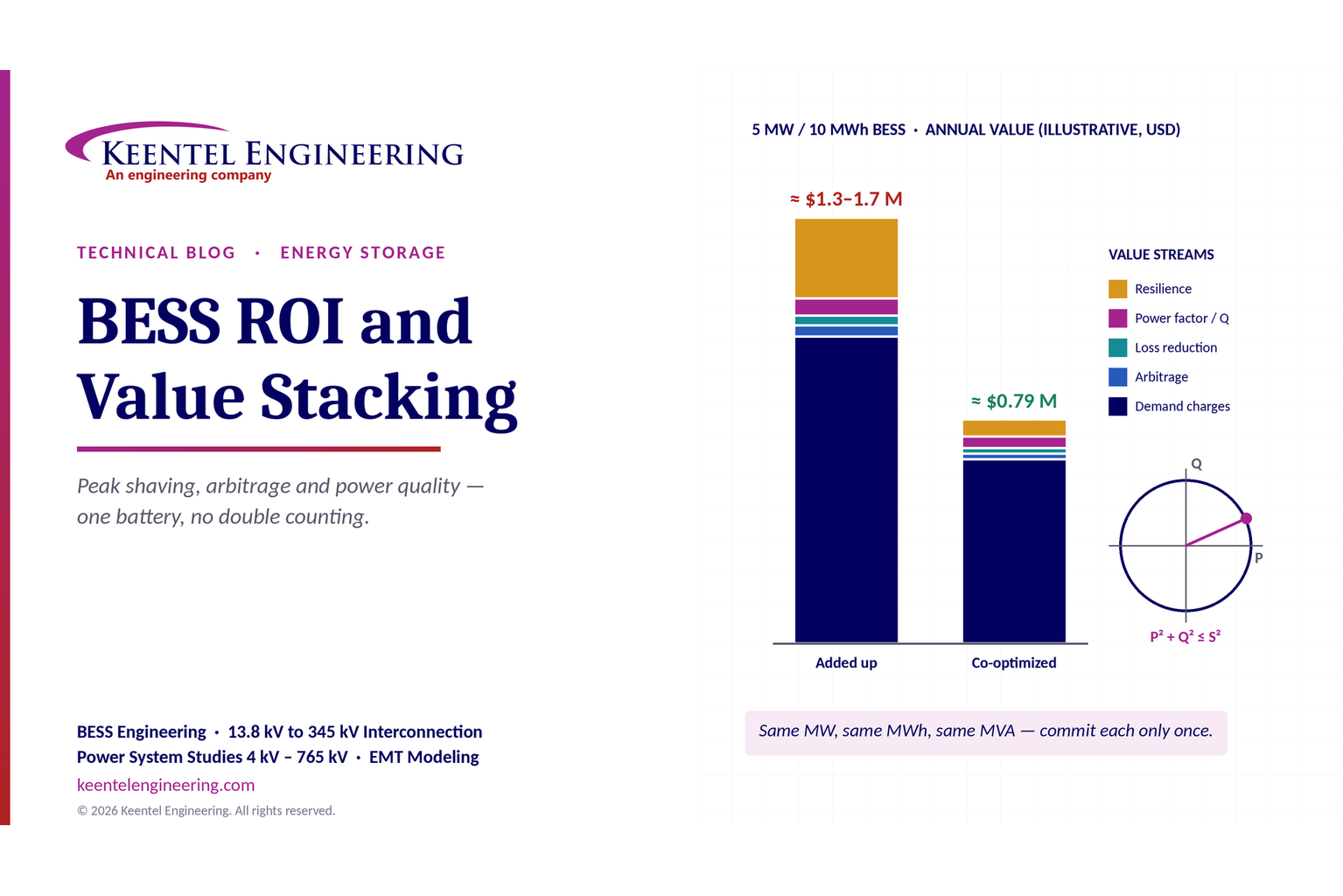
Learn how BESS ROI is calculated using peak shaving, energy arbitrage, power quality and battery storage economics, with a practical 5 MW/10 MWh example.