






















Comprehensive Electrical Safety and Power Quality Assessment
Electrical systems must maintain both
operational safety and power quality. Fault clearing times, harmonic distortion, and grounding system performance all influence how safely and efficiently a power system operates.
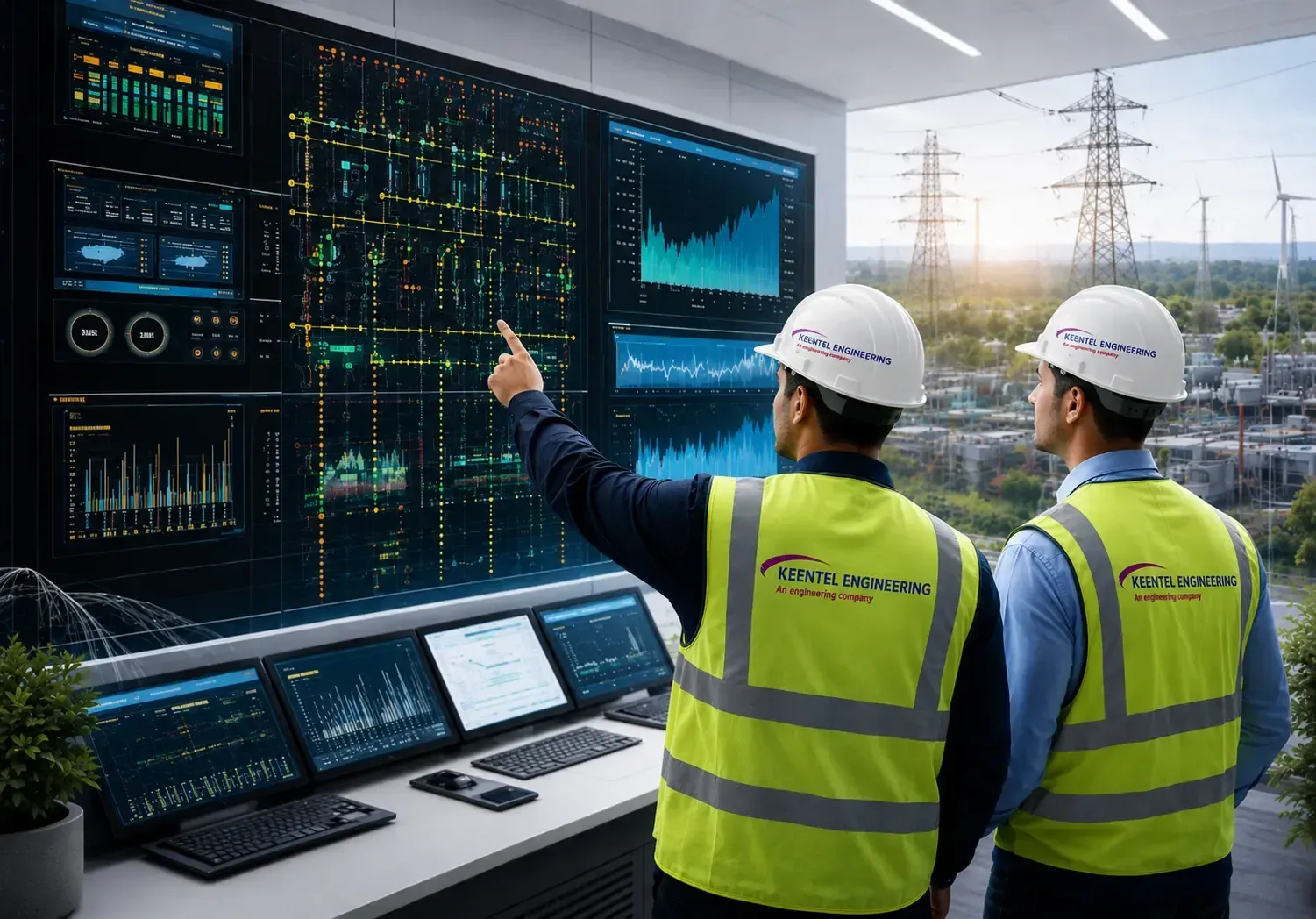
At Keentel Engineering, we perform integrated Arc Flash, Harmonic, and Grounding Analysis to evaluate electrical safety hazards and power quality performance under real operating conditions.
These studies help organizations comply with electrical safety standards, protect personnel, and maintain reliable system performance.
Arc Flash, Harmonics & Grounding Analysis
Arc Flash Hazard Analysis (IEEE 1584)
Arc flash events can produce extremely high temperatures and energy levels.
Keentel Engineering performs arc flash analysis in accordance with IEEE 1584 to determine:
- Incident energy levels
- Arc flash boundaries
- Equipment hazard levels
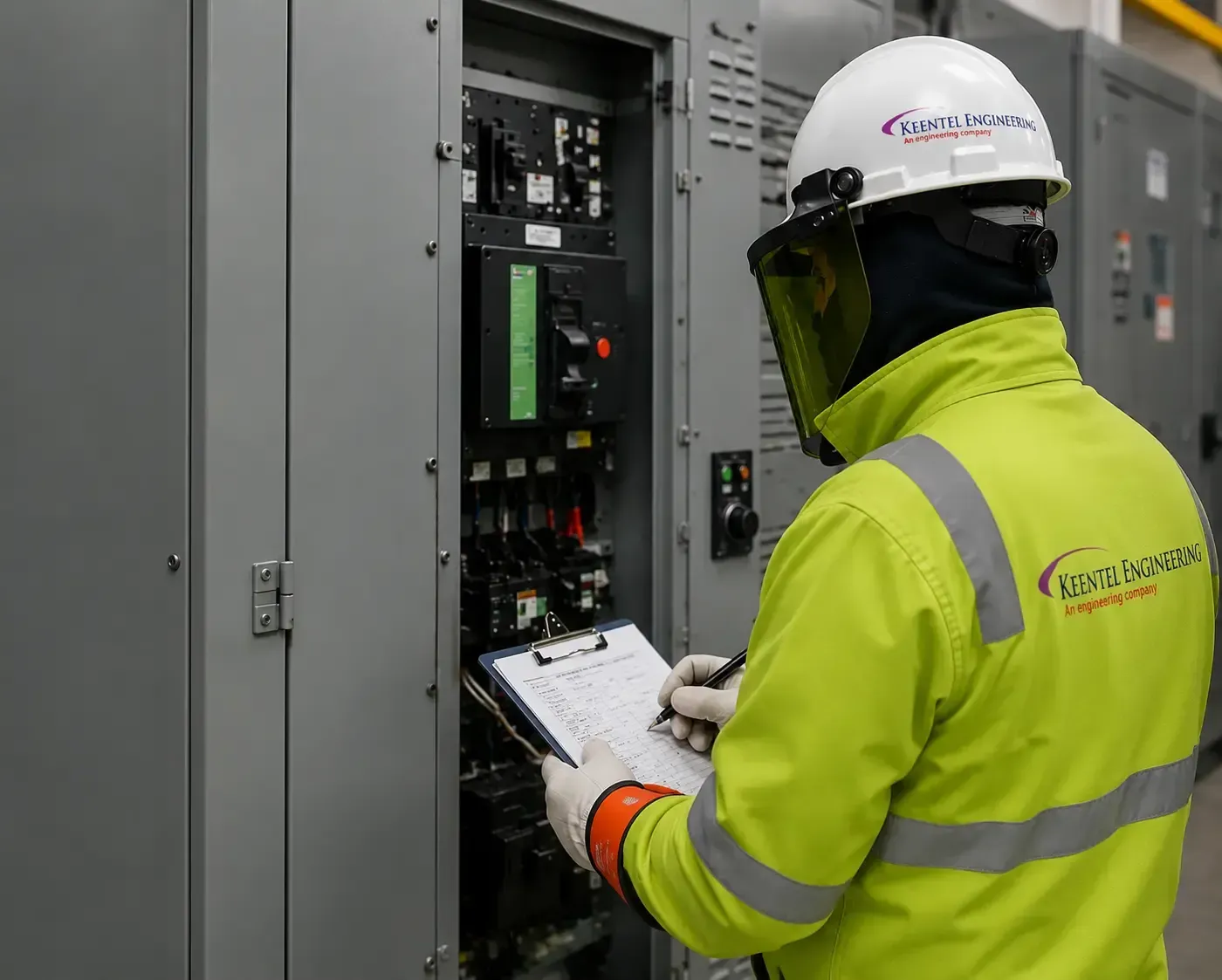
- Required personal protective equipment (PPE)
This information is used to develop proper safety labeling and operating procedures.


Incident Energy and PPE Category Determination
Arc flash studies determine the energy released during an arc event.
Our engineers evaluate:
- Incident energy levels at equipment locations
- Required PPE categories
- Safe working distances
- Protective device clearing times
This ensures compliance with workplace electrical safety regulations.

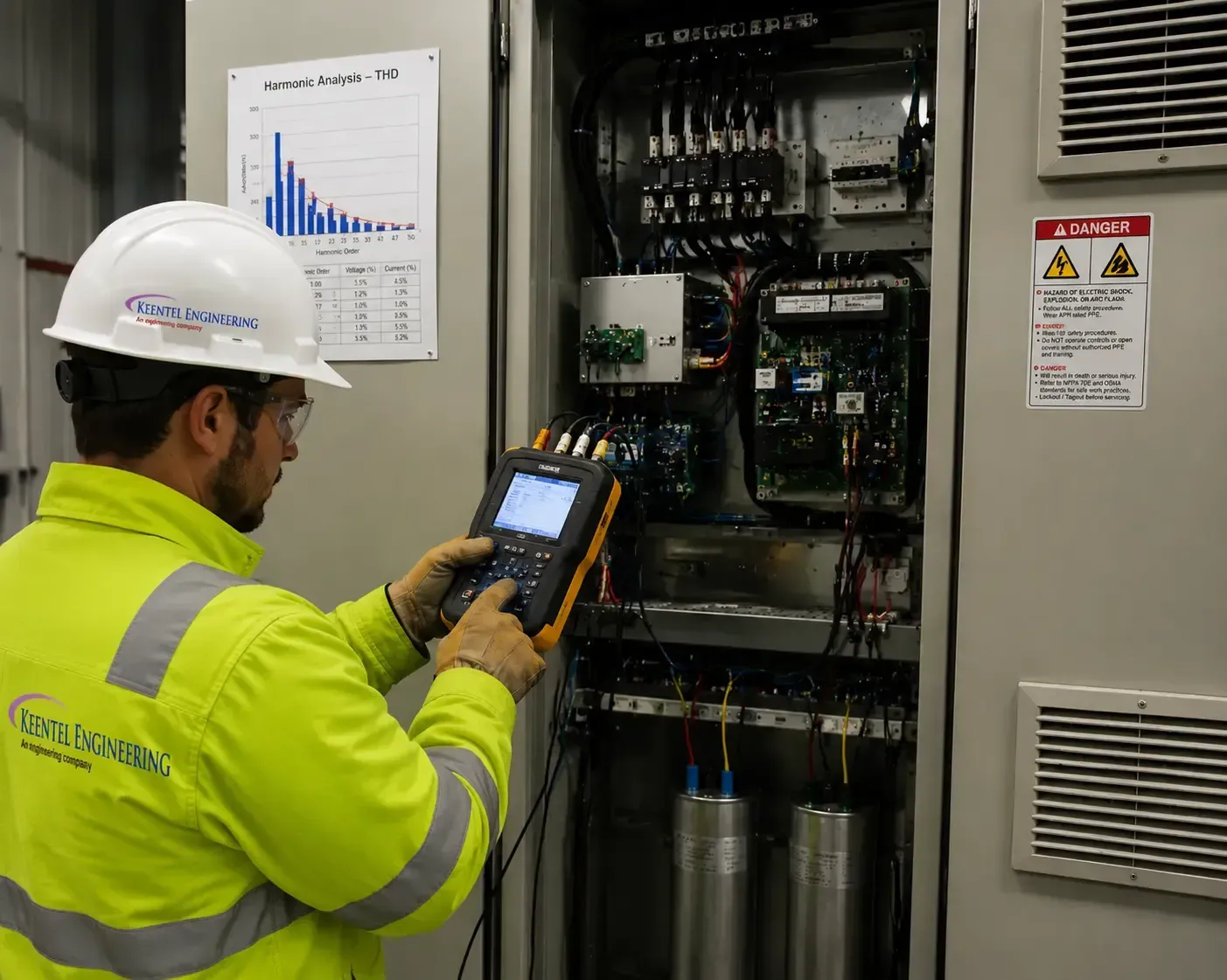
Harmonic Distortion and Resonance Analysis
Power electronic devices such as inverters and drives introduce harmonics into the power system.
Our harmonic analysis evaluates:
- Total harmonic distortion (THD)
- Individual harmonic components
- Resonance conditions
- Impact on transformers and cables
Studies are performed in accordance with IEEE 519 power quality guidelines.

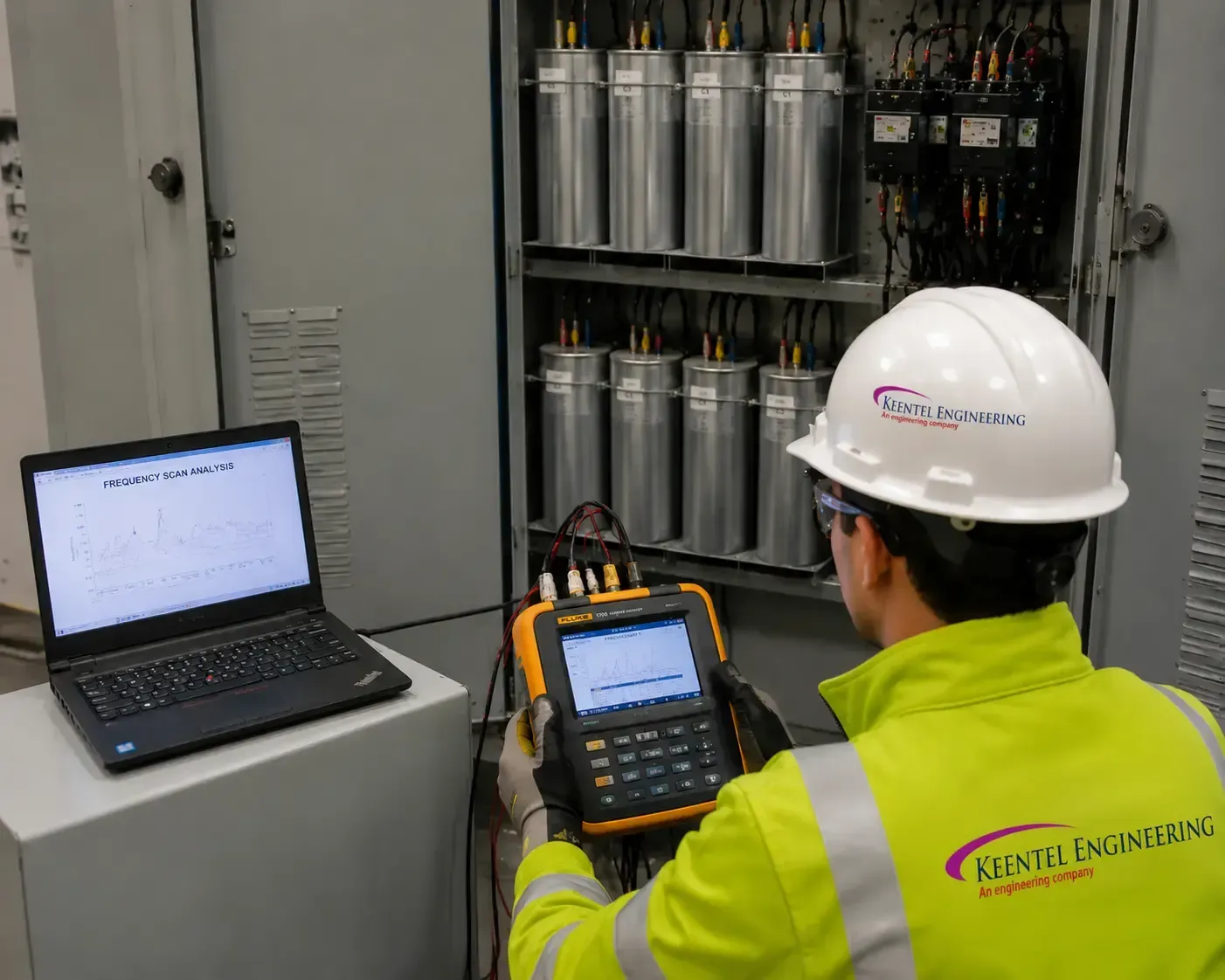
Frequency Scan and Filter Adequacy Review
Frequency scan analysis evaluates system impedance across a range of frequencies.
This helps engineers identify:
- Harmonic resonance conditions
- Harmonic amplification risks
- Filter performance requirements
Where necessary, harmonic mitigation strategies are recommended.

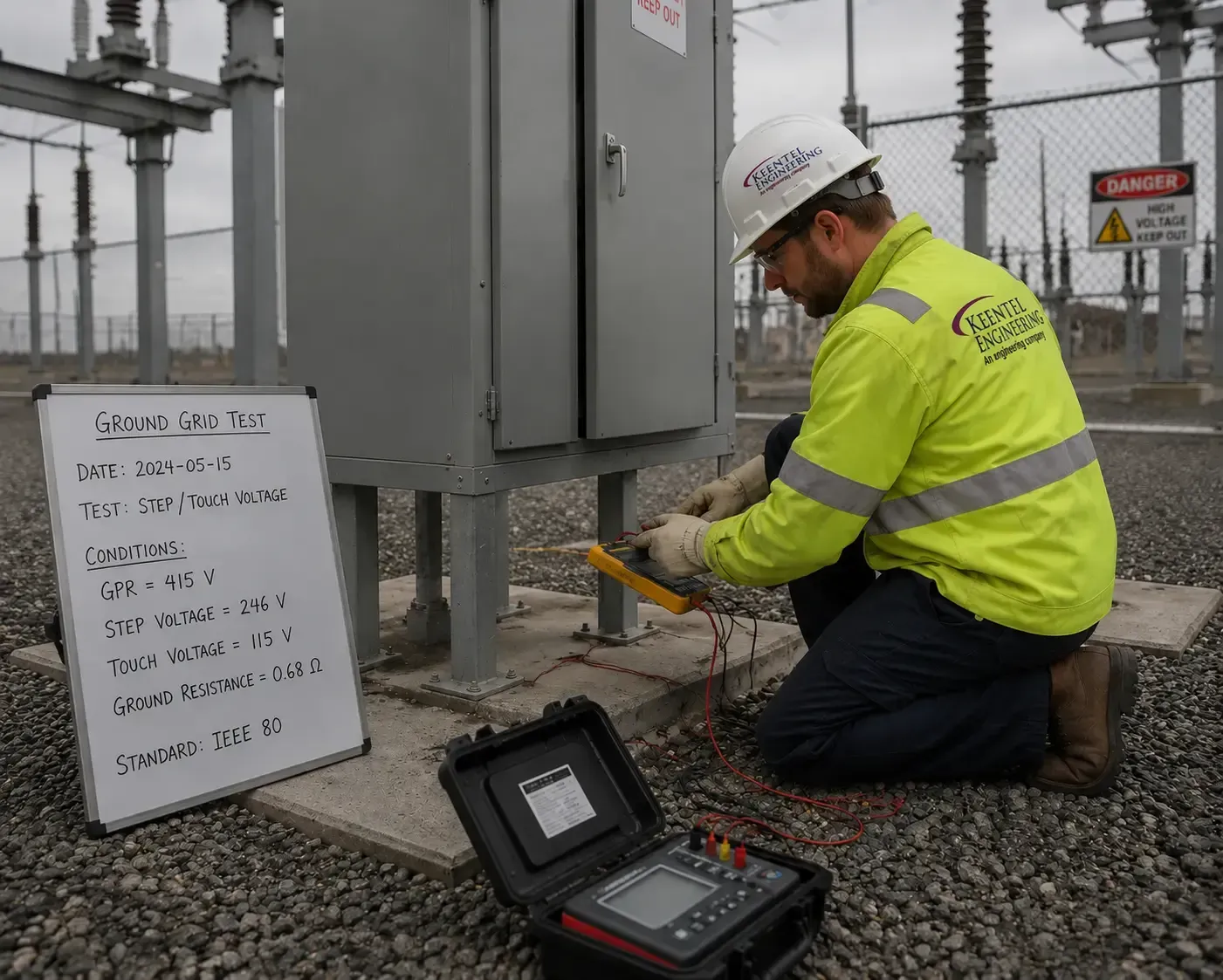
Ground Grid Step and Touch Voltage Verification
Grounding systems must safely dissipate fault currents.
Grounding studies evaluate:
- Ground potential rise (GPR)
- Step voltage levels
- Touch voltage limits
- Ground grid resistance
These calculations follow IEEE 80 grounding design standards to ensure personnel safety.
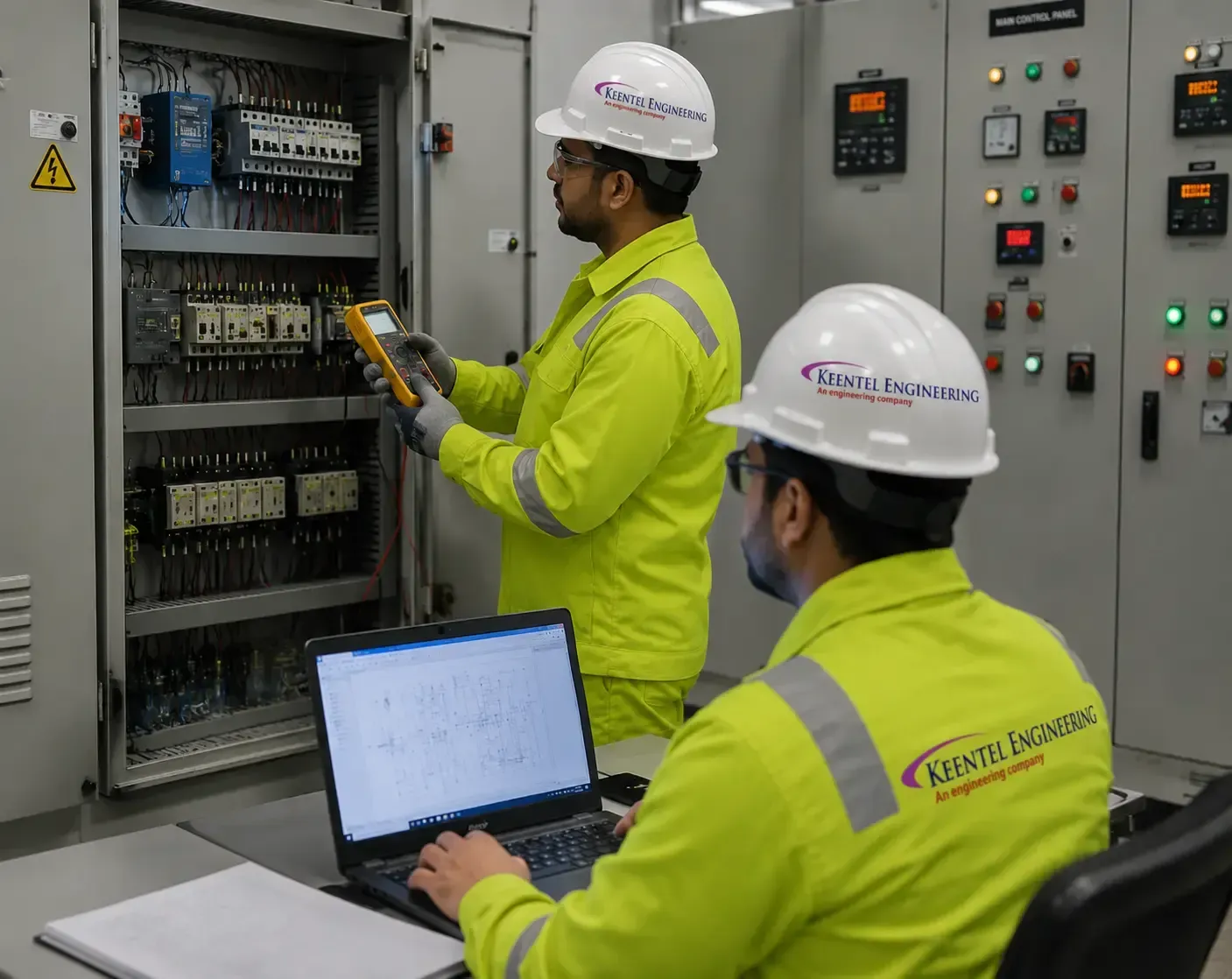
Field Inspection & Equipment Verification
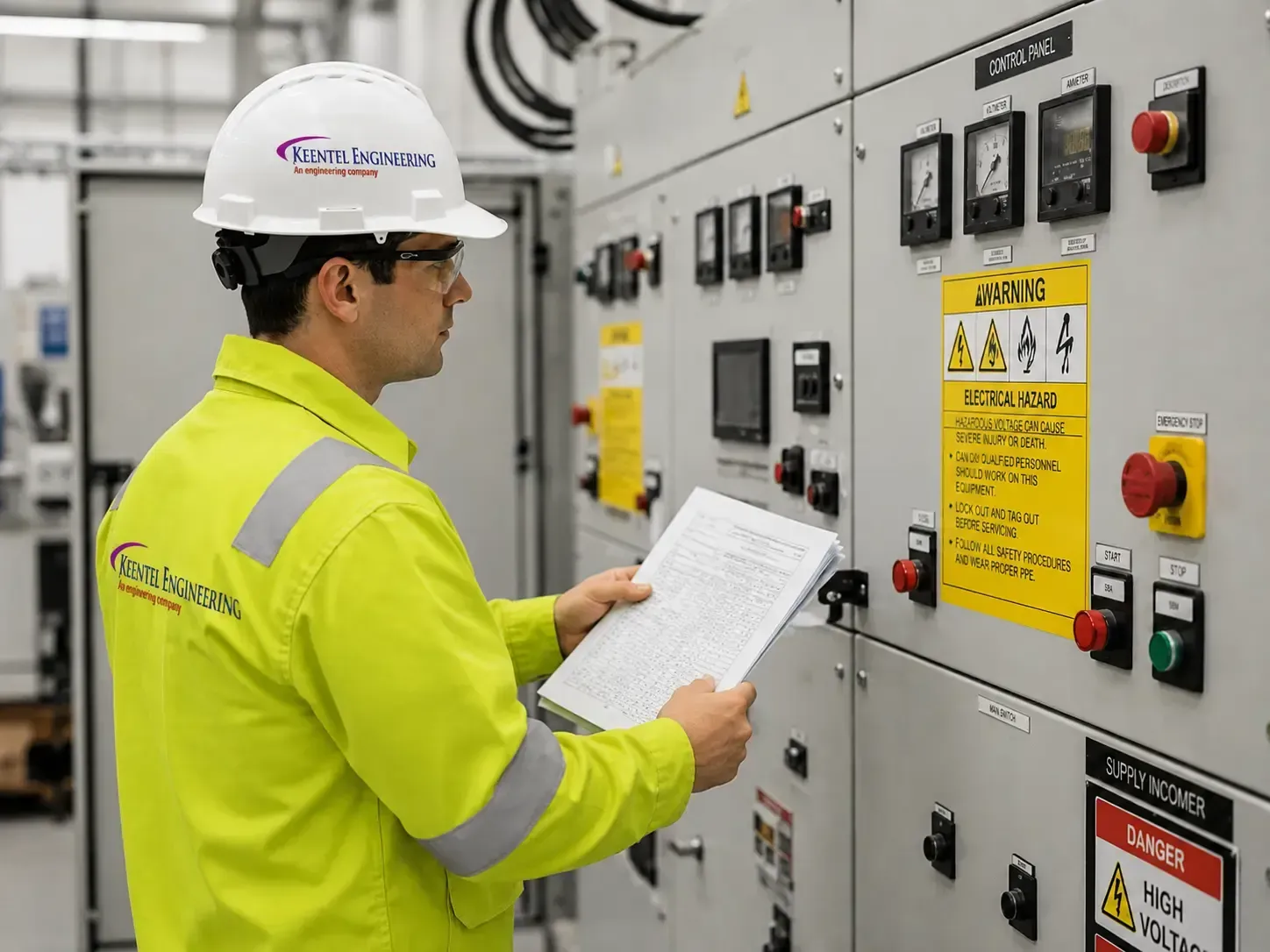
Field inspection is performed to validate real-world electrical system conditions and ensure accurate implementation of engineering studies.
What is verified during field inspection:
- Electrical panel and equipment condition checks
-
Protection system and relay setting verification
- Comparison of installed system with design models

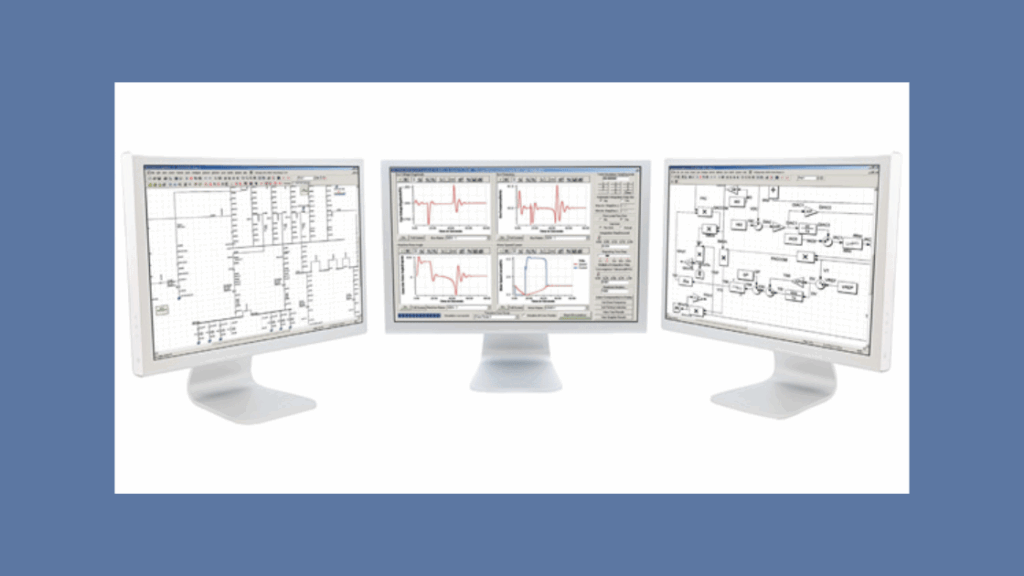
PSS®E
ETAP
PSCAD
PowerWorld
SKM PTW
Why Choose Keentel Engineering
Keentel Engineering delivers advanced electrical power system studies and engineering solutions for transmission networks, substations and grid reliability.
We help utilities, industrial clients and energy developers improve system performance and reduce operational risks in complex electrical environments.
Our engineers offer:
Expertise in HV, MV, and EHV power systems
Advanced power system modeling capabilities
Experience with utility and ISO planning requirements
Deep understanding of NERC reliability standards
Practical engineering solutions for complex power system challenges
Let's Discuss How to Optimize Your Next Project
Submit
We will get back to you as soon as possible.
Please try again later.
Contact Keentel Engineering
Whether you are planning industrial power system upgrades, designing electrical distribution for manufacturing plants, or ensuring reliable operation of mining and processing facilities, Keentel Engineering provides the technical expertise needed to support critical industrial operations.
Our team works closely with industrial and manufacturing facility teams, mining operations, and plant engineers to deliver practical electrical engineering solutions that improve system performance, reliability, and operational efficiency.

Frequently Asked Questions (FAQ)
1. What is an arc flash hazard?
An arc flash is a dangerous electrical explosion caused by a fault between energized conductors.
2. Why is IEEE 1584 used for arc flash studies?
It provides standardized methods for calculating incident energy levels.
3. What is Total Harmonic Distortion (THD)?
THD measures waveform distortion caused by harmonic frequencies.
4. What devices create harmonics?
Inverters, variable frequency drives, rectifiers, and power electronic converters.
5. Why are grounding studies important?
They ensure that fault currents safely dissipate into the earth without creating dangerous voltages.
Blogs