

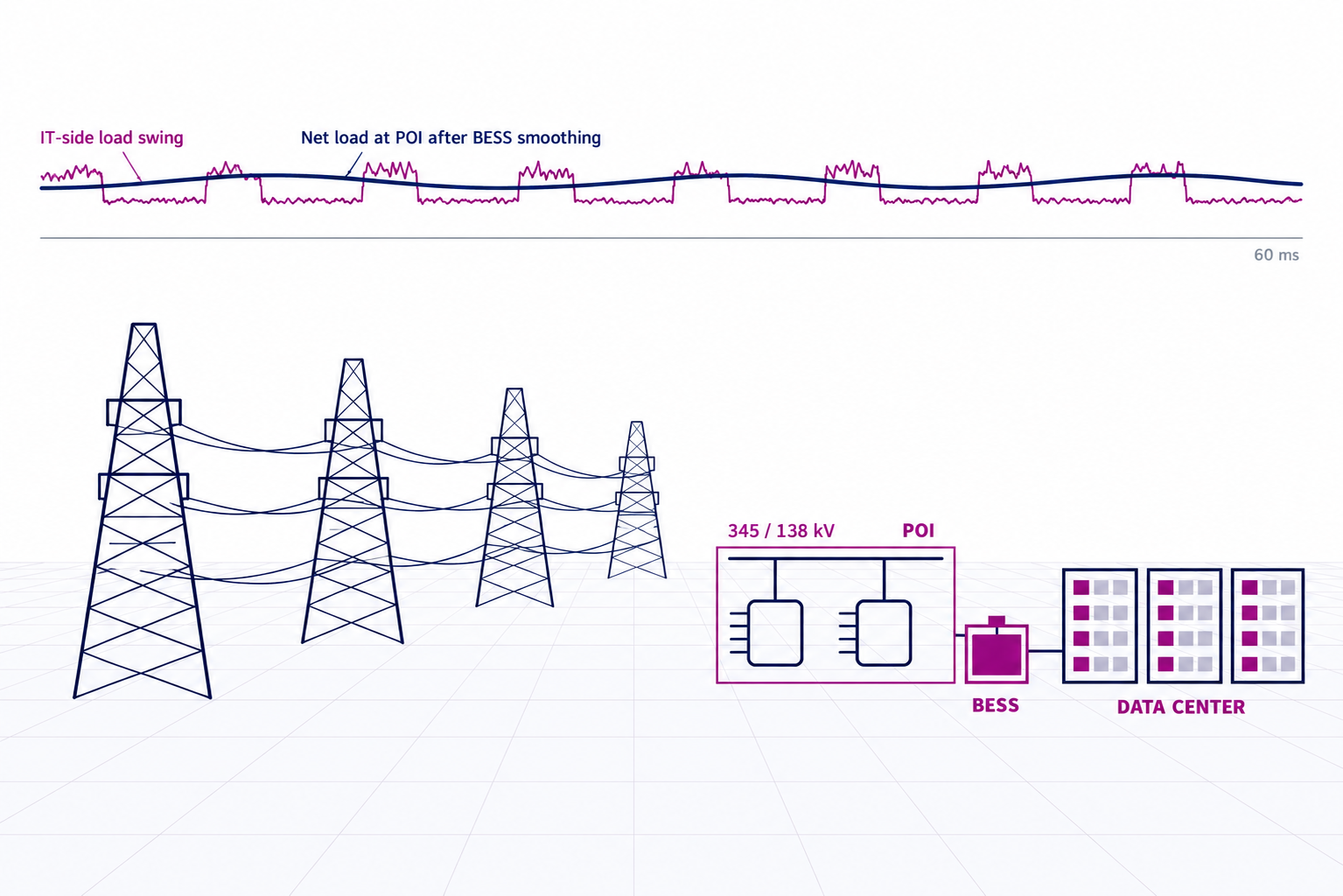
A Coordinated Electric System Interconnection Review—the utility’s deep-dive on technical and cost impacts of your project.

Challenge: Frequent false tripping using conventional electromechanical relays
Solution: SEL-487E integration with multi-terminal differential protection and dynamic inrush restraint
Result: 90% reduction in false trips, saving over $250,000 in downtime

Electromagnetic Transient (EMT) Analysis for Modern Power Systems

Calendar icon. D

September 13, 2025 | Blog

Power substation with electrical lines against a blue sky, Kentel Engineering logo at the bottom.

Introduction

As modern power systems become increasingly complex—with renewable energy integration, advanced control systems, and new reliability standards—the need for precise and reliable Electromagnetic Transient (EMT) Studies has never been greater. 

This article explores the importance of EMT studies, their applications, and how KEENTEL’s expertise and tools are shaping the future of grid reliability, renewable integration, and power system resilience.

Many engineers search for topics like fast event transient analysis, transient study analysis service provider, and transient study analysis services to understand how EMT simulations capture rapid disturbances in modern power networks.

We combine industry experience with advanced EMT tools to deliver accurate, real-world power system insights.

In modern EMT power engineering, we rely on high-fidelity simulations to evaluate system performance under fast transient conditions and ensure grid reliability.


Why EMT Studies Are Essential

EMT studies focus on analyzing the dynamic electrical behavior of power systems under fast, transient conditions. Unlike steady-state analysis, EMT simulations capture rapid events such as lightning strikes, switching surges, and inverter-based resource interactions. These studies ensure:

  • Equipment protection against over-voltages and surges.
  • Grid stability under renewable penetration.
  • Compliance with grid codes and international standards.
  • Resilience during black start and emergency restoration events.

EMT analysis, also known as an electromagnetic transient study, allows us to capture high-speed system behavior that traditional steady-state methods cannot accurately represent.

These studies often require specialized expertise in emt model validation services and other advanced modeling methods that help engineers evaluate equipment behavior during fast disturbances.

Learn about: Power system modeling services


Applicability

MOD-033-1 applies to:

  • Planning Coordinators (responsible for overseeing planning areas),
  • Reliability Coordinators, and
  • Transmission Operators.

These entities must collaborate to ensure the accuracy of power flow and dynamics models across interconnected transmission systems mod-033-1.


Key Capabilities of KEENTEL in EMT Studies

KEENTEL offers a comprehensive range of EMT study services

  • Insulation Coordination – Evaluating switching, lightning, and temporary over-voltages.
  • Breaker Transient Recovery Voltage (TRV) – Ensuring circuit breakers withstand fast recovery stresses.
  • Very Fast Transients (VFT) – Studying switching surges in Gas-Insulated Switchgear (GIS).
  • Custom Model Development – Tailoring simulations to specific client needs.
  • Power Quality Studies – Including harmonics, flicker, and capacitor switching.
  • Renewable Integration – Assessing solar and wind interconnection feasibility.
  • Advanced Controls – Analyzing sub-synchronous resonance and HVDC/FACTS device interactions.
  • System Restoration – Validating black start and fast bus transfer procedures.
  • Training – Introductory to advanced PSCAD courses for engineers worldwide.

Many utilities and consultants also request switching transients analysis services and broader emt electromagnetic transient evaluations to ensure their systems meet performance and protection criteria.


Real-World Applications: Case Studies

We often get asked what applications use EMT simulation—these include renewable integration, switching surge analysis, HVDC systems, and protection coordination across modern power networks.

1. TRV and Insulation Coordination Studies

KEENTEL assessed transformer and equipment exposure to severe over-voltages, verifying protection adequacy and improving reliability.


2. Harmonic Resonance in a 100 MW Solar Plant (Texas, USA)

By identifying resonance risks caused by inverter-grid interactions, KEENTEL helped ensure seamless renewable integration without compromising power quality.


3. Black Start Studies (Australia’s NEM)

In collaboration with operators, KEENTEL validated System Restart Ancillary Services (SRAS) using EMT-based black start simulations, leading to optimized system restoration and reduced service requirements.


4. Sub-Synchronous Control Interaction (SSCI) in a 160 MW Solar Plant

KEENTEL applied advanced screening to identify potential inverter instabilities under sub-synchronous frequencies, ensuring grid code compliance.


5. Wind Integration for 400 MW Project

Through PSCAD simulations, KEENTEL recommended optimized control settings that allowed the wind farm to ride through faults and meet performance standards


For deeper insights into system disturbances, read our guide on power system fault analysis and disturbance recording


Keentel’s Engagement Process

Keentel supports clients at every stage of project development, as outlined in the three-phase workflow (page 1 diagram):

  1. Stage 1 – Bid/Tender Evaluation & Data Preparation.
  2. Stage 2 – Model Testing, Validation & Simulation Runs.
  3. Stage 3 – Results Analysis, Recommendations & Implementation Plans.

This structured approach ensures transparent decision-making, practical solutions, and smooth project execution.


Conclusions

In today’s rapidly evolving power sector, EMT studies are not just optional—they are critical for safe, reliable, and future-ready power systems. KEENTEL’s decades of experience, coupled with PSCAD/EMTDC expertise, makes them a trusted partner for utilities, developers, and system operators worldwide.

If you're planning an EMT study or need expert support, feel free to reach out through our contact us page.


Frequently Asked Questions – EMT Analysis

  • 1. What is the purpose of Electromagnetic Transient (EMT) Studies?

    They analyze fast-changing electrical phenomena such as lightning strikes, switching surges, and inverter interactions, ensuring equipment protection and grid stability.


  • 2. Who benefits from EMT studies?

    Utilities, renewable developers, system operators, equipment manufacturers, and large industrial power users.


  • 3. How do EMT studies differ from steady-state studies?

    Steady-state studies analyze long-term stable conditions, while EMT focuses on milliseconds to seconds of transient phenomena that could damage equipment or destabilize the grid.


  • 4. What simulation platform does KEENTEL use?

    KEENTEL developed and uses the world-renowned PSCAD™/EMTDC™ platform.


  • 5. Can EMT studies help with renewable integration?

    Yes, EMT studies identify harmonic resonance, sub-synchronous control interactions, and ride-through capabilities for wind and solar plants.


  • 6. What are TRV studies?

    Breaker Transient Recovery Voltage (TRV) studies ensure circuit breakers can withstand voltage stresses after interrupting faults.


  • 7. What is Sub-Synchronous Control Interaction (SSCI)?

    SSCI occurs when inverter controls in renewable plants interact with grid resonance at sub-synchronous frequencies, potentially causing instability.


  • 8. How does KEENTEL support black start restoration?

    By modeling weak grid conditions and verifying black start strategies with EMT simulations to ensure system recovery after outages.


  • 9. Can KEENTEL develop custom models?

    Yes, KEENTEL creates tailored models to simulate unique equipment, system configurations, or advanced controls.


  • 10. How does EMT analysis support capacitor bank switching?

    By simulating switching events, it helps prevent over-voltages, harmonics, and flicker issues.


  • 11. Why are harmonics a concern in solar plants?

    Inverter-grid interactions can cause resonance, leading to equipment overheating or malfunction without proper mitigation.


  • 12. What industries use EMT studies the most?

    Power utilities, renewable developers, transmission operators, and heavy industries.


  • 13. How long does a typical EMT study take?

    Timelines vary but usually follow the three-stage approach: preparation, validation, and analysis before implementation.


  • 14. Does KEENTEL assist in regulatory compliance?

    Yes, EMT studies help ensure compliance with grid codes and international standards.


  • 15. Can EMT studies reduce costs?

    Yes, by preventing equipment failure, optimizing protection settings, and reducing unnecessary services such as redundant black start contracts.


  • 16. What is a Very Fast Transient (VFT)?

    A type of high-frequency surge that occurs mainly in Gas-Insulated Switchgear (GIS), which EMT studies help mitigate.


  • 17. Are EMT studies necessary for HVDC and FACTS projects?

    Yes, they help assess dynamic interactions, resonance issues, and control stability.


  • 18. What happens if discrepancies cannot be resolved locally?

    They should be reported to the Electric Reliability Organization (ERO).


EMT Analysis in the Context of MOD-033-1

By combining traditional validation methods with advanced EMT analysis, stakeholders gain a clearer understanding of how their systems perform under both normal and extreme conditions. This not only ensures regulatory compliance but also reflects the true complexity of modern grid operations.

With decades of experience and expertise in PSCAD™/EMTDC™, KEENTEL Engineering equips clients with the modeling and validation support needed to future-proof transmission planning, protect assets, and ensure reliable integration of renewable energy resources.

Explore how our Power System Studies and NERC Compliance Services support advanced EMT analysis.


A smiling man with glasses and a beard wearing a blue blazer stands in front of server racks in a data center.

About the Author:

Sandip "Sonny" R. Patel, P.E.

IEEE Senior Member · Founder & CEO, Keentel Engineering

In 1995, Sonny Patel earned his Electrical Engineering degree from the University of Illinois. But degrees don't build legacies — action does.

For three decades, he has worked the power industry from every side of the table: 16 years as a utility engineer at Exelon/Commonwealth Edison; generation leadership across hydroelectric, industrial steam turbine, and a 9 GW renewable fleet; NERC Regional Entity Senior Compliance Engineer and Audit Team Lead, auditing some of the nation's largest utilities; and testing and commissioning lead on equipment up to 765 kV — the very top of the North American grid.Utility. Generator. Regulator. Consultant. Few engineers have seen all four seats. Fewer still have sat in them.

His experience spans nuclear, hydro, conventional generation, renewables, oil and gas, mining — and today's data centers, where he is authoring a three-book series on data center design. He is a Licensed Professional Engineer in six states and a Licensed Electrical Contractor in Florida (Unlimited EC) — he doesn't just design the work; he's qualified to stand behind its execution.Today, as Founder and CEO of Keentel Engineering, Sonny leads a nationwide team of engineers delivering substation design, power system studies, NERC compliance, and commissioning — done right, coast to coast.Three decades. Every side of the table. One standard: accountable engineering.

Four workers in safety vests and helmets stand with arms crossed near wind turbines.

Let's Discuss Your Project

Let's book a call to discuss your electrical engineering project that we can help you with.

Man in a blazer and open shirt, looking at the camera, against a blurred background.

About the Author:

Sandip "Sonny" R. Patel, P.E.

IEEE Senior Member · Founder & CEO, Keentel Engineering

In 1995, Sonny Patel earned his Electrical Engineering degree from the University of Illinois. But degrees don't build legacies — action does.

For three decades, he has worked the power industry from every side of the table: 16 years as a utility engineer at Exelon/Commonwealth Edison; generation leadership across hydroelectric, industrial steam turbine, and a 9 GW renewable fleet; NERC Regional Entity Senior Compliance Engineer and Audit Team Lead, auditing some of the nation's largest utilities; and testing and commissioning lead on equipment up to 765 kV — the very top of the North American grid.

Utility. Generator. Regulator. Consultant. Few engineers have seen all four seats. Fewer still have sat in them.

His experience spans nuclear, hydro, conventional generation, renewables, oil and gas, mining — and today's data centers, where he is authoring a three-book series on data center design. He is a Licensed Professional Engineer in six states and a Licensed Electrical Contractor in Florida (Unlimited EC) — he doesn't just design the work; he's qualified to stand behind its execution.

Today, as Founder and CEO of Keentel Engineering, Sonny leads a nationwide team of engineers delivering substation design, power system studies, NERC compliance, and commissioning — done right, coast to coast.Three decades. Every side of the table. One standard: accountable engineering.

Leave a Comment

Related Posts

Data center and high-voltage transmission grid illustrating a large-load interconnection application
By SANDIP R PATEL • September 26, 2026
Learn how to prepare a MISO large-load interconnection package, including PSS®E models, BESS smoothing, harmonic data and transmission-owner requirements.
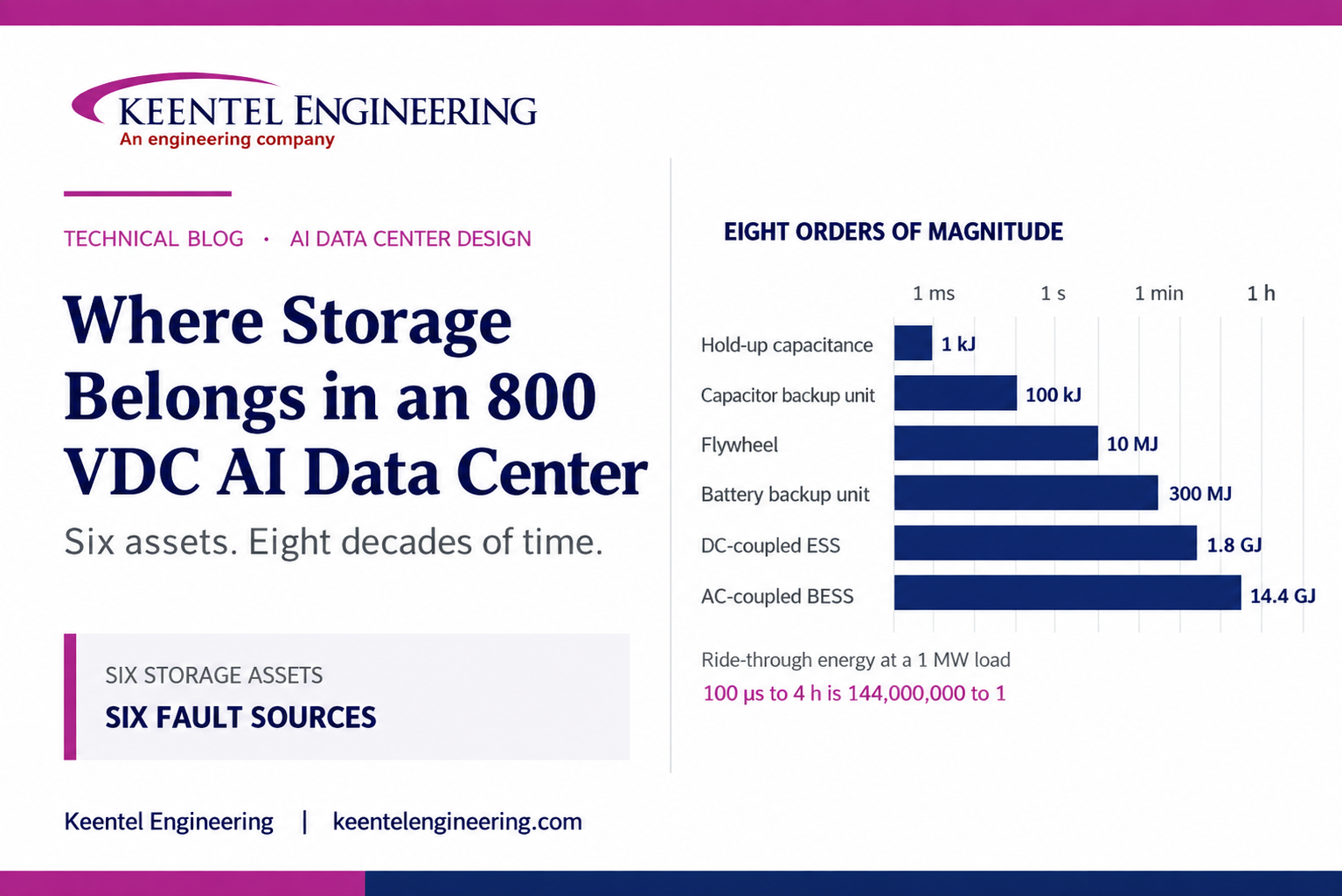
800 VDC AI data center storage architecture with battery systems, DC power distribution, and electri
By SANDIP R PATEL • September 26, 2026
Learn where storage belongs in an 800 VDC AI data center, including capacitors, flywheels, BESS, fault current, protection, grounding, and EMT design.
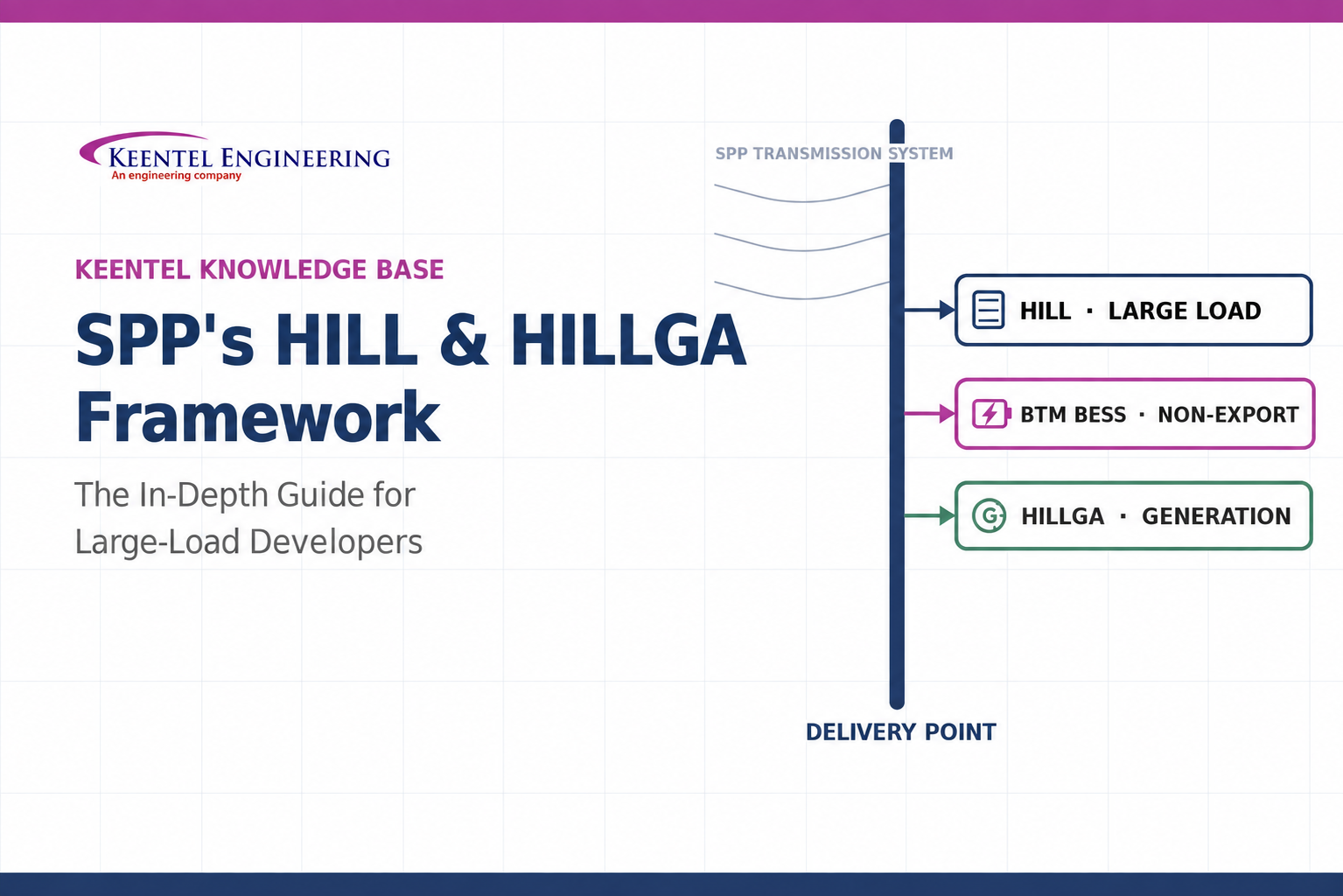
SPP HILL and HILLGA framework for large-load developers
By SANDIP R PATEL • September 26, 2026
Learn how SPP’s HILL and HILLGA framework works for large-load projects, including studies, BTM generation, modeling, EMT requirements, and firm service.

IBR time synchronization and IEEE 2800 compliance for disturbance monitoring systems
By SANDIP R PATEL • September 25, 2026
Learn how IBR time synchronization, IEEE 2800, IRIG-B verification, and PTP solutions help meet disturbance monitoring compliance requirements.
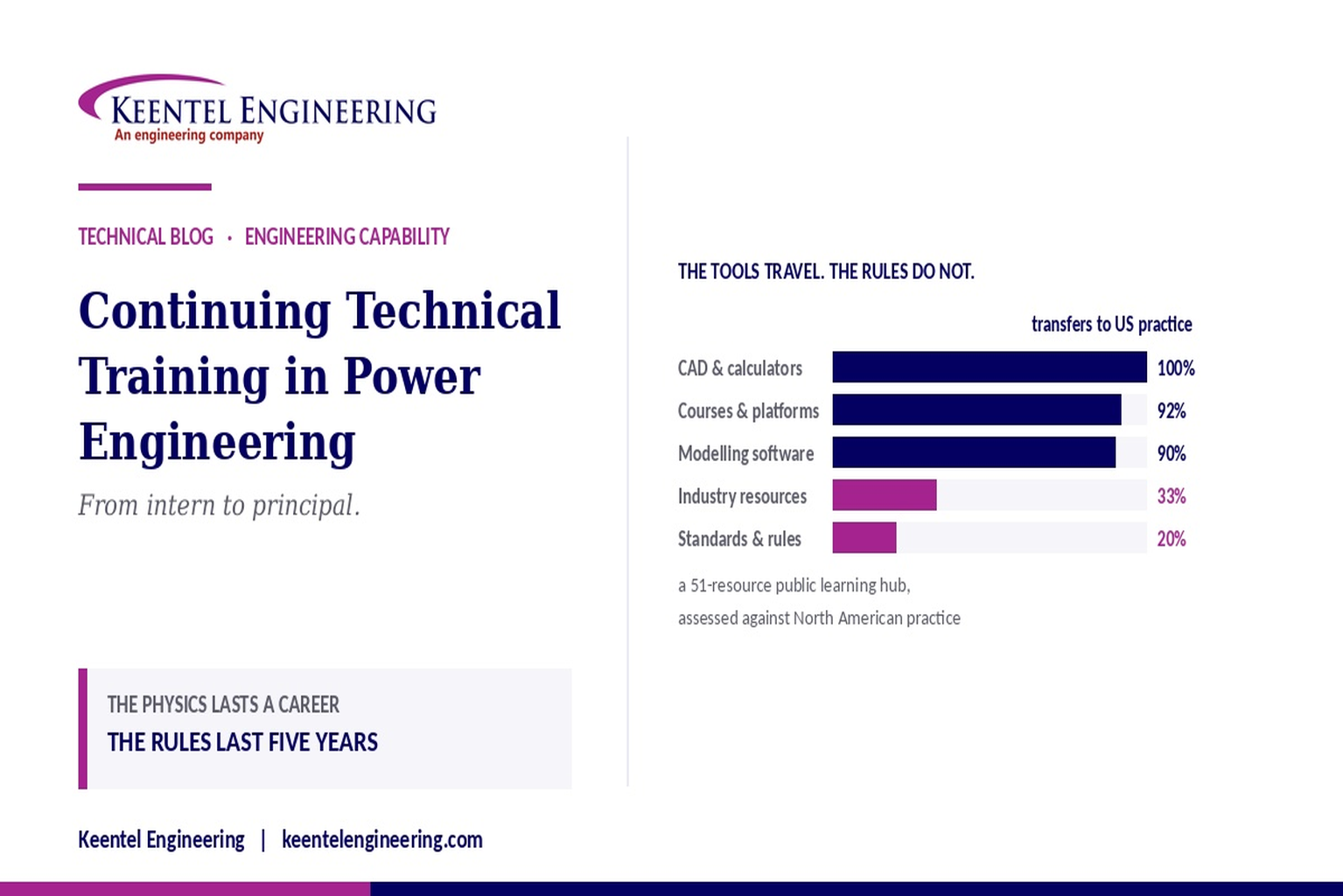
Power engineering technical training and professional development for electrical engineers
By SANDIP R PATEL • September 24, 2026
Learn why continuing technical training matters in power engineering, including standards, software skills, PDH requirements, and career growth.
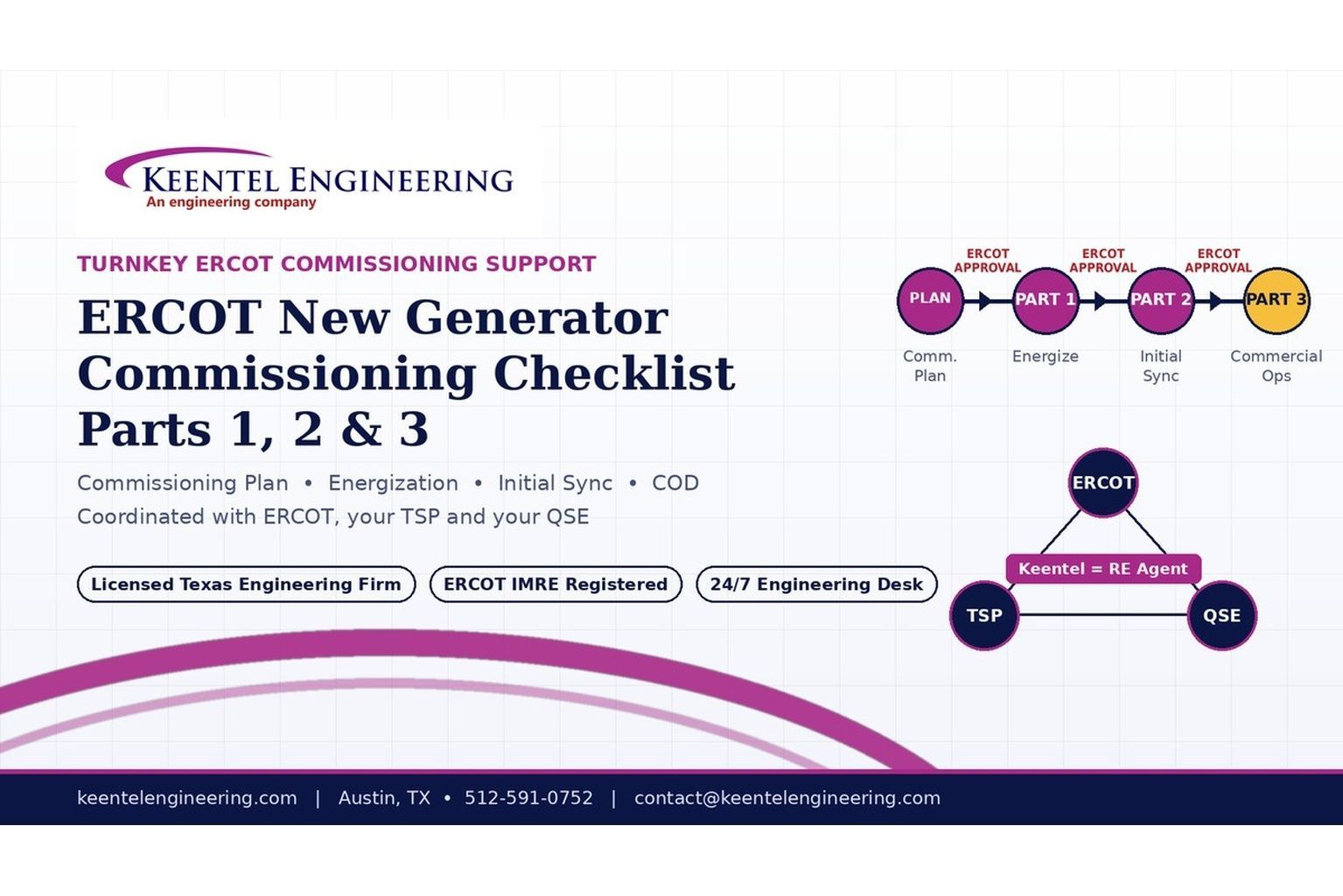
ERCOT new generator commissioning checklist parts 1, 2 and 3
By SANDIP R PATEL • September 22, 2026
2026 ERCOT commissioning guide covering the Commissioning Plan, Checklist Parts 1–3, BESS requirements, TSP/QSE coordination, field testing and COD.
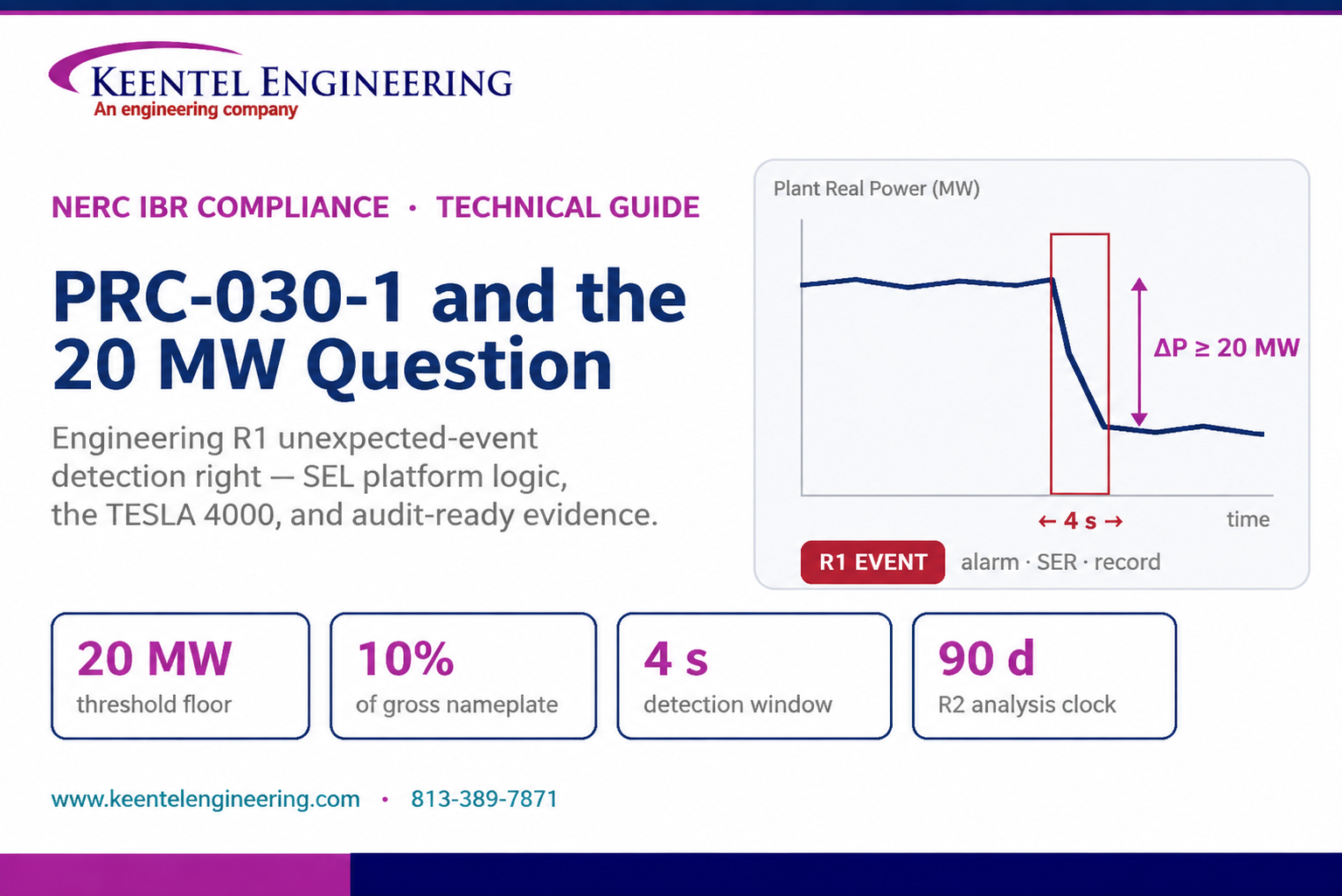
PRC-030-1 NERC IBR compliance guide showing 20 MW event detection threshold and R1 monitoring timeli
By SANDIP R PATEL • September 22, 2026
Learn PRC-030-1 R1 event detection requirements for inverter-based resources, SEL platforms, disturbance monitoring, and audit-ready compliance.
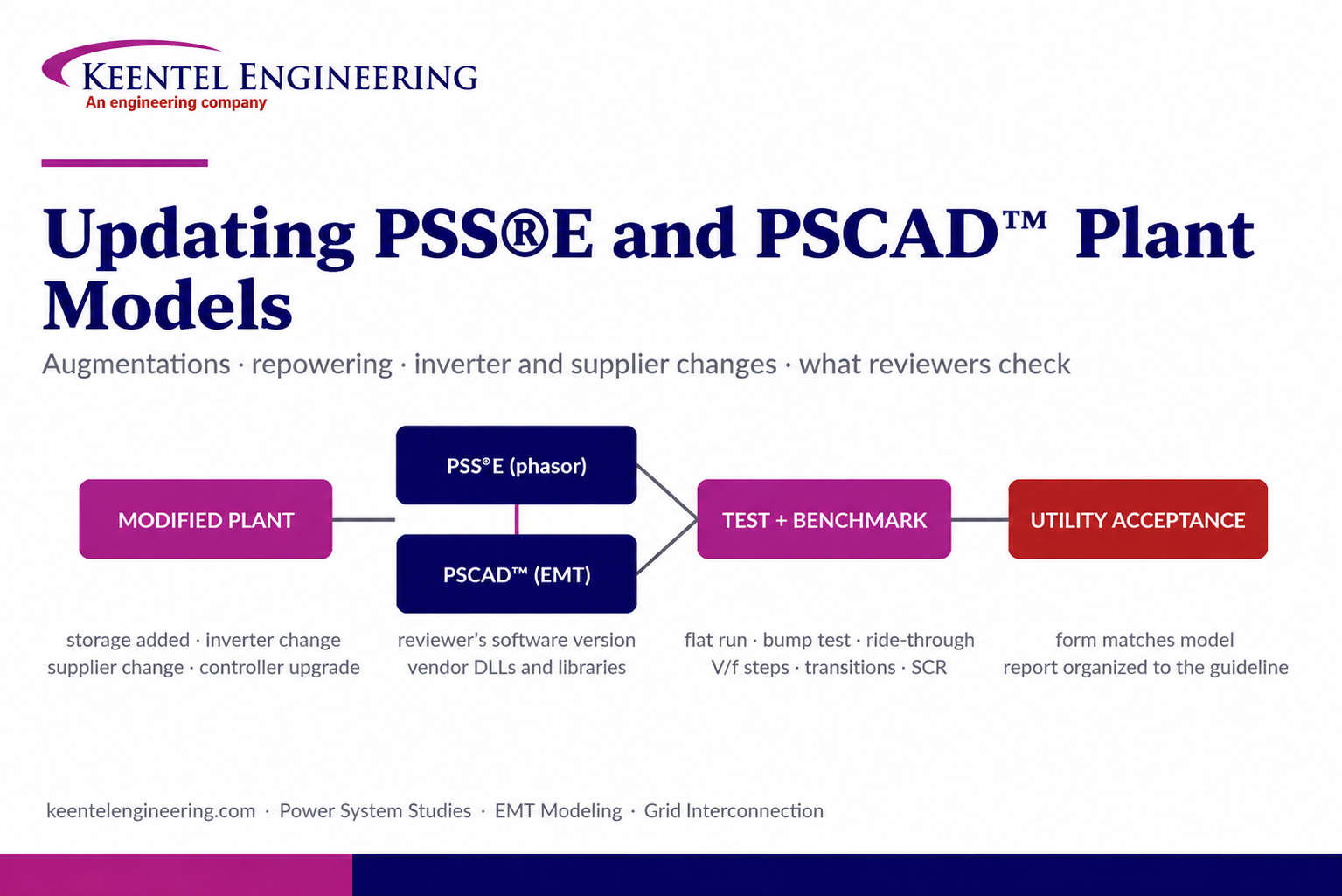
PSS®E and PSCAD™ plant model update workflow showing modified plant testing, benchmark validation, a
By SANDIP R PATEL • September 22, 2026
Learn how PSS®E and PSCAD™ model updates support plant augmentations, repowering, equipment changes, testing, benchmarking, and grid compliance.
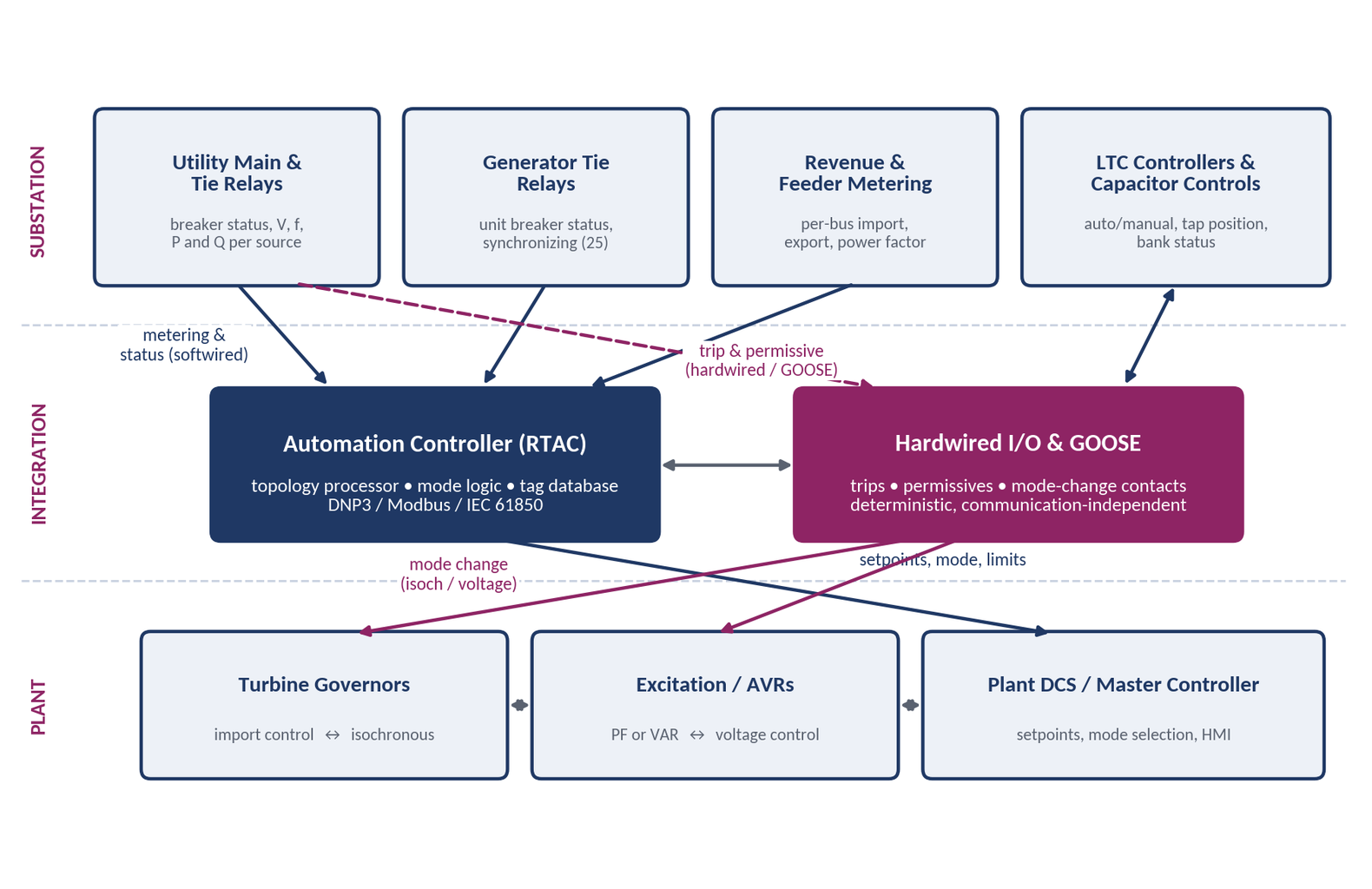
Automation controller architecture showing substation relays, hardwired I/O, GOOSE communication and
By SANDIP R PATEL • September 20, 2026
Learn CHP load following and island detection engineering for campus plants, including protection, controls, power studies, and grid transition design.