

A Coordinated Electric System Interconnection Review—the utility’s deep-dive on technical and cost impacts of your project.

PJM Manual 14G and Generation Interconnection Services by Keentel Engineering

Calendar icon. D

May 15, 2025 | Blog

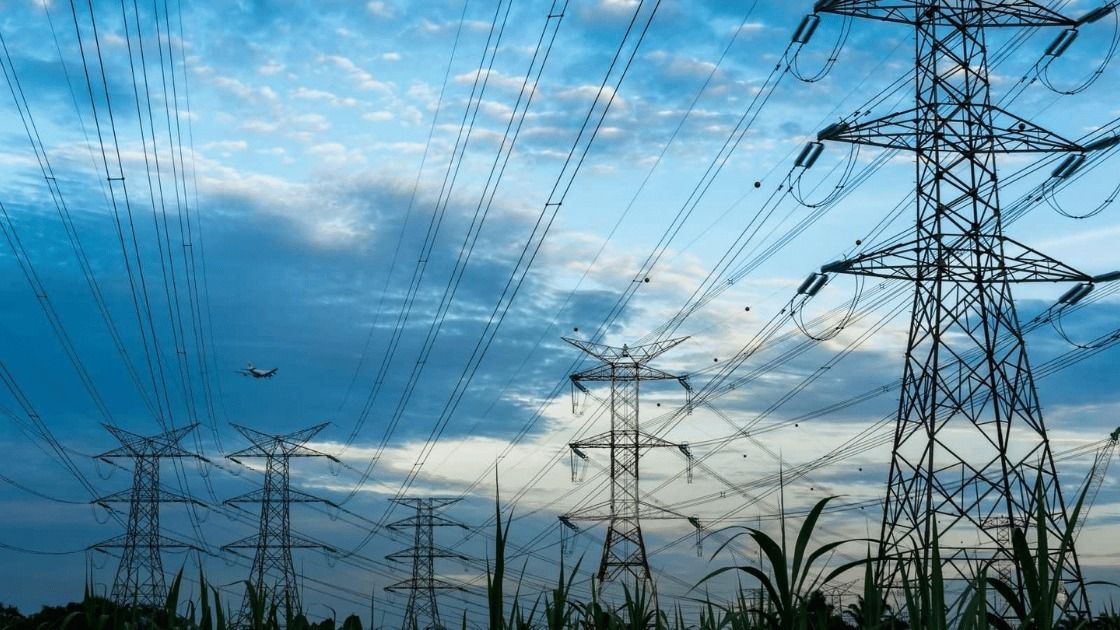
Power lines against a cloudy blue sky, silhouetted pylons in a field.

Empowering the Grid with Expert Interconnection Solutions

As PJM continues to lead grid reliability and market efficiency in the Eastern Interconnection, developers and generator owners must align their projects with the protocols outlined in PJM Manual 14G. Keentel Engineering is at the forefront of generation interconnection services, offering a complete suite of engineering and compliance solutions tailored for small and large generator projects within PJM territory.

Whether you’re working on utility-scale renewable energy interconnection, combined-cycle plants, or behind-the-meter (BTM) resources, our deep expertise in queue management, feasibility studies, and dynamic system impact assessments ensures seamless integration into the PJM grid.


Our PJM Generation Interconnection Services

We guide you through every stage of the interconnection process, ensuring compliance and technical readiness.

1. Queue Point Application Support

  • Navigate Attachment N, Attachment Y, or Attachment BB based on project size and jurisdiction (FERC or state-regulated).
  • Strategically align queue submissions with study timelines and milestones.

2. Feasibility & System Impact Studies

  • Perform power flow, short-circuit, and dynamic stability studies using:
  • PSCAD
  • PSSE
  • ASPEN OneLiner
  • Evaluate grid constraints, upgrade needs, and impact on existing infrastructure.

3. Engineering Design & Site Control Review

  • Deliver PE-stamped one-line diagrams, GSU transformer specs, and collector system designs.
  • Confirm site control per PJM submission rules, including GIS mapping.

4. CIRs and Resource Type Optimization

  • Advise on Capacity Interconnection Rights (CIRs) transfer and interconnection service type:
  • Energy Resource Interconnection Service (ERIS)
  • Capacity Resource Interconnection Service (CRIS)
  • Ensure alignment with market participation goals.

5. SCADA & Metering Compliance

  • Implement PJM-compatible telemetry, RTUs, and revenue-grade metering per Manual 14D and 14G standards.
  • Coordinate with TOs and EDCs on data sharing and real-time monitoring readiness.

Why Keentel Engineering?

We combine deep regulatory knowledge with hands-on utility experience, helping generators streamline PJM interconnection while mitigating delays and cost risks.

Our Advantage:

  • Proven results in renewable energy interconnection
  • Seamless coordination with PJM, EDCs, and Transmission Owners
  • Fast turnaround for feasibility modeling, impact studies, and compliance packages

FAQs – PJM Interconnection Services

  • What is PJM Manual 14G?

    PJM Manual 14G outlines the requirements and procedures for submitting and managing generation interconnection requests within the PJM region.

  • Who must submit a Generation Interconnection Request?

    Any party planning to connect new generation, upgrade capacity, or change fuel type in PJM territory.

  • What are Attachments N, Y, and BB?

    These are forms required based on generation size and certification level—Attachment N for standard projects, Y for screened small projects, BB for certified inverter-based facilities.

  • What constitutes “site control” under PJM rules?

    Documented rights (deed, lease, or option) for the property with exclusivity, minimum term, and conveyance.

  • What is the Queue Point system?

    PJM’s online portal for submitting and managing New Services Requests.

  • How does PJM define Behind-the-Meter Generation (BtMG)?

    Generation that serves on-site load without participating in the PJM wholesale market.

  • When is BtMG subject to interconnection studies?

    When any portion of BtMG seeks Capacity or Energy Resource designation in PJM markets.

  • What metering is required for BtMG projects ≥10 MW?

    Revenue-quality metering and telemetry equipment are mandatory.

  • Can CIRs be transferred?

    Yes, under PJM guidelines—transfers depend on operational status and study validations.

  • What’s the difference between Capacity and Energy Resource status?

    Capacity Resources support regional reliability and participate in capacity markets; Energy Resources only sell into energy markets.

  • How are small generators (<20 MW) processed?

    Through an expedited process using Attachments Y or BB, with lower deposits and timelines.

  • What is Attachment A used for?

    Feasibility Study data submission.

  • How does Keentel assist in the System Impact Study?

    By preparing Attachment B-2 forms, short-circuit models, and dynamic simulation data.

  • What is the role of a Project Manager in PJM interconnection?

    To guide developers through each study and agreement milestone.

  • Can multiple projects share the same Point of Interconnection (POI)?

    Yes, but PJM aggregates their impact and studies them as one.

  • What happens if CIR milestones aren’t met?

    The WMPA may be terminated and queue position withdrawn.

  • Is fuel switching considered a new interconnection request?

    Yes, PJM requires a new request for any fuel type change.

  • What are the requirements for SCADA compliance?

    Each TO has specific telemetry and SCADA data needs outlined in Manual 14G Attachment F.

  • How long must site control documents be valid?

    3 years for large generation projects, 2 years for small ones.

  • What tools does Keentel use for modeling and study support?

    PSCAD, PSSE, ETAP, and DigSILENT for dynamic, steady-state, and fault studies.


Case Studies

Case Study 1: 120 MW Solar + Storage Project in ComEd Zone

Issue: Developer needed expedited interconnection process, CIR acquisition, and storage modeling for dual-use application.
Action: Managed Attachment N submission, performed combined feasibility/system impact study, and ensured POI compliance with SCADA requirements.
Result: PJM approved CIRs and executed ISA within 6 months.


Case Study 2: 18 MW BTM Wind Facility in AEP Zone

Issue: BTM project required market participation for partial output and site control clarification.
Action: Provided PE-stamped site drawings, conducted BtMG compliance review, and helped secure WMPA.

Result: Project interconnected without delays and now offsets 60% of industrial load.


Case Study 3: Fuel Change for 25 MW Biomass Plant in PECO

Issue: Biomass facility sought to convert to RNG, triggering fuel type reclassification.
Action: Advised on revised Attachment N filing and studied MVAR implications under power factor rules.
Result: PJM accepted changes with minimal re-studies; plant now classified under RNG fuel.


Case Study 4: CIR Transfer for 50 MW Peaker Unit Retirement in PSEG

Issue: Owner sought to transfer CIRs to a new battery storage facility.
Action: Modeled impacts using PSSE and validated transfer under PJM Tariff Sec. 230.
Result: CIRs transferred successfully; no additional upgrades required.


Ready to Simplify Your PJM Interconnection Process?

Keentel Engineering provides expert support from queue submission to compliance-ready design—ensuring your generation project meets all PJM Manual 14G requirements with confidence.

📩 Let’s talk about your project today.
👉 
Schedule a Consultation to get started.


A smiling man with glasses and a beard wearing a blue blazer stands in front of server racks in a data center.

About the Author:

Sandip "Sonny" R. Patel, P.E.

IEEE Senior Member · Founder & CEO, Keentel Engineering

In 1995, Sonny Patel earned his Electrical Engineering degree from the University of Illinois. But degrees don't build legacies — action does.

For three decades, he has worked the power industry from every side of the table: 16 years as a utility engineer at Exelon/Commonwealth Edison; generation leadership across hydroelectric, industrial steam turbine, and a 9 GW renewable fleet; NERC Regional Entity Senior Compliance Engineer and Audit Team Lead, auditing some of the nation's largest utilities; and testing and commissioning lead on equipment up to 765 kV — the very top of the North American grid.Utility. Generator. Regulator. Consultant. Few engineers have seen all four seats. Fewer still have sat in them.

His experience spans nuclear, hydro, conventional generation, renewables, oil and gas, mining — and today's data centers, where he is authoring a three-book series on data center design. He is a Licensed Professional Engineer in six states and a Licensed Electrical Contractor in Florida (Unlimited EC) — he doesn't just design the work; he's qualified to stand behind its execution.Today, as Founder and CEO of Keentel Engineering, Sonny leads a nationwide team of engineers delivering substation design, power system studies, NERC compliance, and commissioning — done right, coast to coast.Three decades. Every side of the table. One standard: accountable engineering.

Four workers in safety vests and helmets stand with arms crossed near wind turbines.

Let's Discuss Your Project

Let's book a call to discuss your electrical engineering project that we can help you with.

Man in a blazer and open shirt, looking at the camera, against a blurred background.

About the Author:

Sandip "Sonny" R. Patel, P.E.

IEEE Senior Member · Founder & CEO, Keentel Engineering

In 1995, Sonny Patel earned his Electrical Engineering degree from the University of Illinois. But degrees don't build legacies — action does.

For three decades, he has worked the power industry from every side of the table: 16 years as a utility engineer at Exelon/Commonwealth Edison; generation leadership across hydroelectric, industrial steam turbine, and a 9 GW renewable fleet; NERC Regional Entity Senior Compliance Engineer and Audit Team Lead, auditing some of the nation's largest utilities; and testing and commissioning lead on equipment up to 765 kV — the very top of the North American grid.

Utility. Generator. Regulator. Consultant. Few engineers have seen all four seats. Fewer still have sat in them.

His experience spans nuclear, hydro, conventional generation, renewables, oil and gas, mining — and today's data centers, where he is authoring a three-book series on data center design. He is a Licensed Professional Engineer in six states and a Licensed Electrical Contractor in Florida (Unlimited EC) — he doesn't just design the work; he's qualified to stand behind its execution.

Today, as Founder and CEO of Keentel Engineering, Sonny leads a nationwide team of engineers delivering substation design, power system studies, NERC compliance, and commissioning — done right, coast to coast.Three decades. Every side of the table. One standard: accountable engineering.

Leave a Comment

Related Posts

NERC large load registration guide showing data center grid reliability and computational load compl
By SANDIP R PATEL September 9, 2026
Learn how NERC computational load registration impacts data centers, CLO standards, ride-through requirements, modeling, and grid reliability compliance.
NEC 2026 load calculation guide showing Article 120 rules, 2 VA changes, EV charging and service siz
By SANDIP R PATEL September 7, 2026
Learn NEC 2026 load calculations, Article 120 changes, the 2 VA rule, EV charging requirements, service sizing, and dwelling calculation methods.
NEC calculations guide showing conduit fill, voltage drop, ampacity, motor circuits and transformer
By SANDIP R PATEL September 7, 2026
Learn five essential NEC calculations covering conduit fill, voltage drop, ampacity, motor circuits, and transformer protection with engineering examples.
CAISO IBR model review showing inverter-based resource validation and PRC-029-1 ride-through complia
By SANDIP R PATEL September 7, 2026
Learn how CAISO reviews IBR models using PSLF validation, PRC-029-1 ride-through requirements, WECC models, and inverter resource compliance testing.
Protective earthing and system grounding during earth faults
By SANDIP R PATEL September 7, 2026
Understand system earthing and protective earthing, neutral grounding methods, effective grounding, ground grids, and insulation coordination for power systems
NERC MOD-032-1 CAISO generator data modeling and WECC compliance requirements
By SANDIP R PATEL September 6, 2026
Learn how NERC MOD-032-1 applies across CAISO, SCE, PG&E, VEA and SDG&E, including generator data, PSLF models, EMT requirements and WECC submissions.
PJM PSCAD model submission requirements for EMT model development
By SANDIP R PATEL September 6, 2026
Learn PJM PSCAD model requirements for inverter-based resources, EMT testing, PSS/E benchmarking, ride-through studies, and compliance submissions
Data center power plant turbine sizing and unit configuration comparison.
By SANDIP R PATEL September 6, 2026
Learn why data center power plants use multiple smaller gas turbines, covering 624 MW capacity, redundancy, grid connection, system strength, and engineering.
Station battery sizing design for substation DC auxiliary power system
By SANDIP R PATEL September 5, 2026
Understand ERCOT BESS interconnection requirements, including model packages, EMT studies, ride-through compliance, telemetry, and real-time co-optimization.