


Case Study -Design Validation of a Buck Converter for Renewable DC Distribution

Calendar icon.

May 27, 2025 | Blog

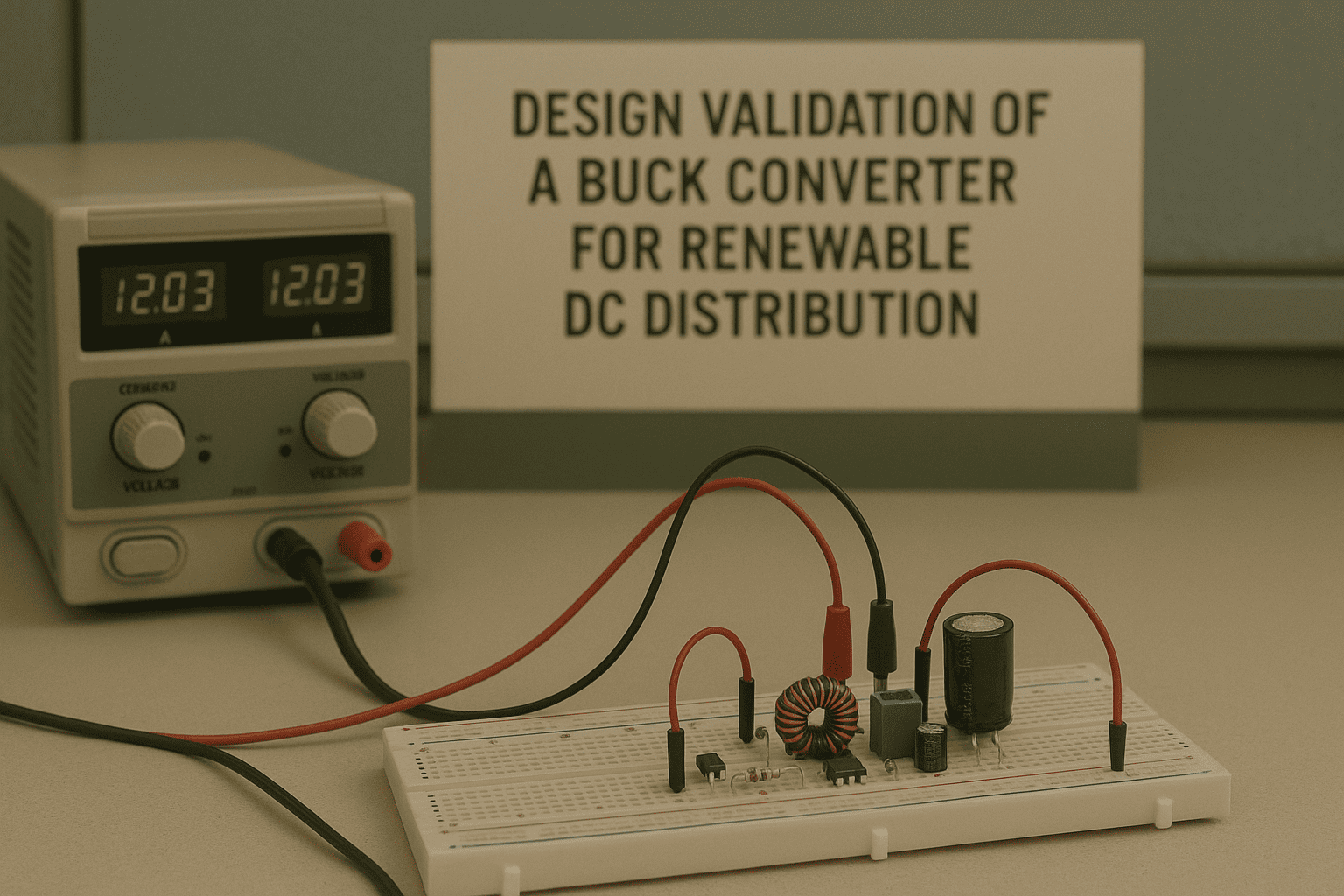
A breadboard circuit with a buck converter, connected to a power supply, with a sign:

Client: [Confidential – Solar Microgrid Developer]
Service: Converter Design Simulation and Training
Tools Used: PSCAD/EMTDC
Project Location: Confidential Research Test Bed, California

Background

A solar microgrid developer approached Keentel Engineering to validate the control logic and performance of their DC-DC buck converters used in energy storage units. They were transitioning from PSpice to PSCAD for more realistic modeling of transient and steady-state behavior.

Challenge

The client needed to:

  • Train their team in PSCAD-based converter simulation.
  • Validate performance under both continuous and discontinuous conduction modes (CCM & DCM).
  • Ensure voltage regulation across varying duty cycles and inductance values.

Solution Approach

Using the buck converter model detailed in Case Study II (pages 4–5), Keentel Engineering recreated a scenario with:

  • Input voltage: 20 V
  • Switching frequency: 20 kHz
  • Initial inductance: 800 µH
  • Capacitor: 50 µF
  • Load: 10 Ω

Simulation runs were executed for:

  • 60% duty cycle (CCM) showing a steady output voltage of 12V.
  • 40% duty cycle, confirming reduced average output voltage.
  • Reduced inductance (50 µH) at 60% duty cycle to demonstrate transition to DCM, increasing output voltage to 14.4V as observed in Figure 6.

Outcome

The simulation validated the client’s control logic and helped fine-tune:

  • Inductor sizing for maintaining desired conduction mode.
  • PWM duty cycle strategies for output voltage stabilization.

Through Keentel's expertise and custom-built simulation tutorials:

  • The client’s team gained hands-on proficiency in PSCAD.
  • Converter ripple was reduced by 18%.
  • Response time to load changes improved by 22%.

A smiling man with glasses and a beard wearing a blue blazer stands in front of server racks in a data center.

About the Author:

Sandip "Sonny" R. Patel, P.E.

IEEE Senior Member · Founder & CEO, Keentel Engineering

In 1995, Sonny Patel earned his Electrical Engineering degree from the University of Illinois. But degrees don't build legacies — action does.

For three decades, he has worked the power industry from every side of the table: 16 years as a utility engineer at Exelon/Commonwealth Edison; generation leadership across hydroelectric, industrial steam turbine, and a 9 GW renewable fleet; NERC Regional Entity Senior Compliance Engineer and Audit Team Lead, auditing some of the nation's largest utilities; and testing and commissioning lead on equipment up to 765 kV — the very top of the North American grid.Utility. Generator. Regulator. Consultant. Few engineers have seen all four seats. Fewer still have sat in them.

His experience spans nuclear, hydro, conventional generation, renewables, oil and gas, mining — and today's data centers, where he is authoring a three-book series on data center design. He is a Licensed Professional Engineer in six states and a Licensed Electrical Contractor in Florida (Unlimited EC) — he doesn't just design the work; he's qualified to stand behind its execution.Today, as Founder and CEO of Keentel Engineering, Sonny leads a nationwide team of engineers delivering substation design, power system studies, NERC compliance, and commissioning — done right, coast to coast.Three decades. Every side of the table. One standard: accountable engineering.

Four workers in safety vests and helmets stand with arms crossed near wind turbines.

Let's Discuss Your Project

Let's book a call to discuss your electrical engineering project that we can help you with.

Man in a blazer and open shirt, looking at the camera, against a blurred background.

About the Author:

Sandip "Sonny" R. Patel, P.E.

IEEE Senior Member · Founder & CEO, Keentel Engineering

In 1995, Sonny Patel earned his Electrical Engineering degree from the University of Illinois. But degrees don't build legacies — action does.

For three decades, he has worked the power industry from every side of the table: 16 years as a utility engineer at Exelon/Commonwealth Edison; generation leadership across hydroelectric, industrial steam turbine, and a 9 GW renewable fleet; NERC Regional Entity Senior Compliance Engineer and Audit Team Lead, auditing some of the nation's largest utilities; and testing and commissioning lead on equipment up to 765 kV — the very top of the North American grid.

Utility. Generator. Regulator. Consultant. Few engineers have seen all four seats. Fewer still have sat in them.

His experience spans nuclear, hydro, conventional generation, renewables, oil and gas, mining — and today's data centers, where he is authoring a three-book series on data center design. He is a Licensed Professional Engineer in six states and a Licensed Electrical Contractor in Florida (Unlimited EC) — he doesn't just design the work; he's qualified to stand behind its execution.

Today, as Founder and CEO of Keentel Engineering, Sonny leads a nationwide team of engineers delivering substation design, power system studies, NERC compliance, and commissioning — done right, coast to coast.Three decades. Every side of the table. One standard: accountable engineering.

Leave a Comment

Related Posts

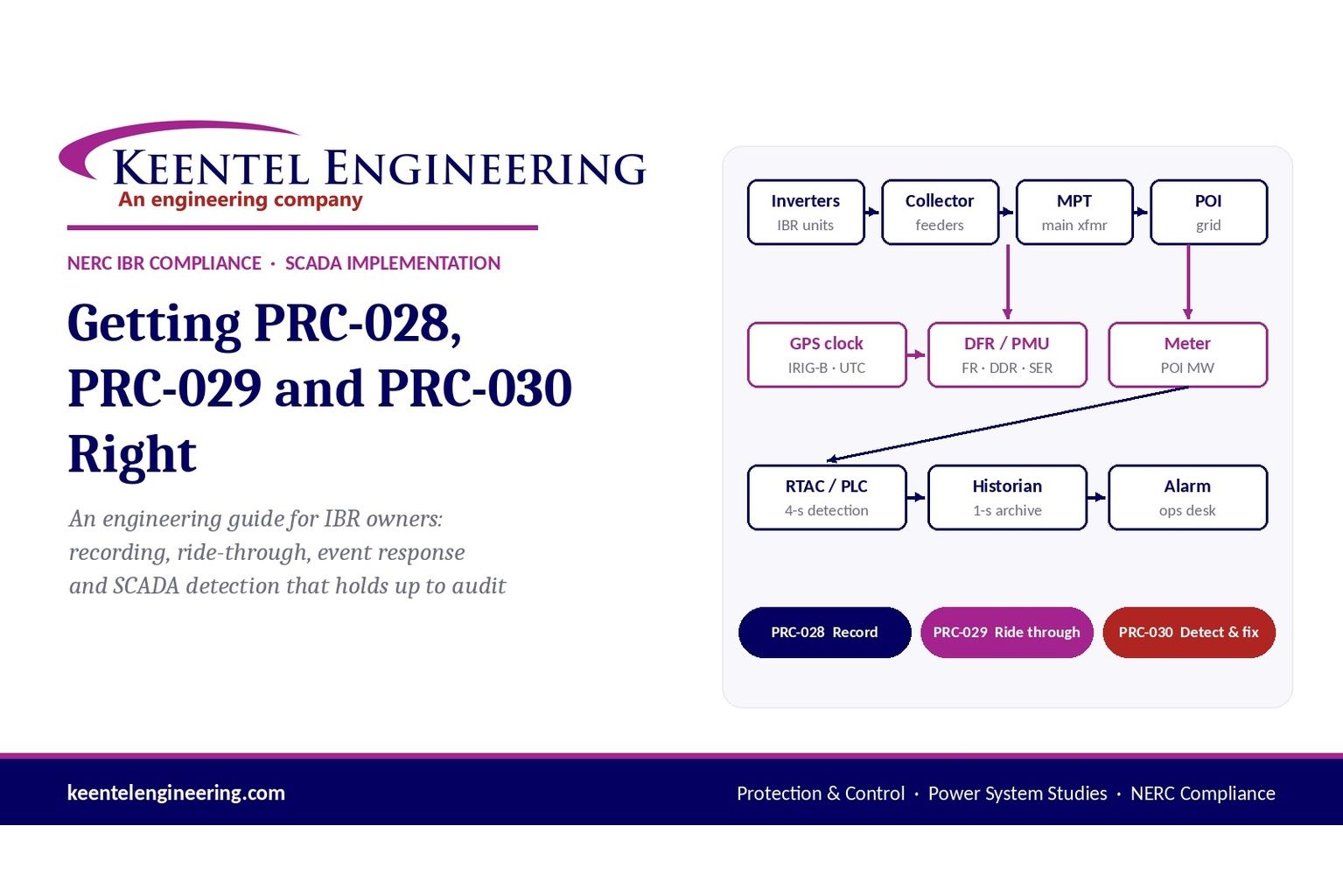
PRC-028 PRC-029 and PRC-030 NERC IBR compliance guide
By Team 2 Dexora • October 3, 2026
Engineering guide to PRC-028 disturbance recording, PRC-029 ride-through and PRC-030 event detection for inverter-based resources.
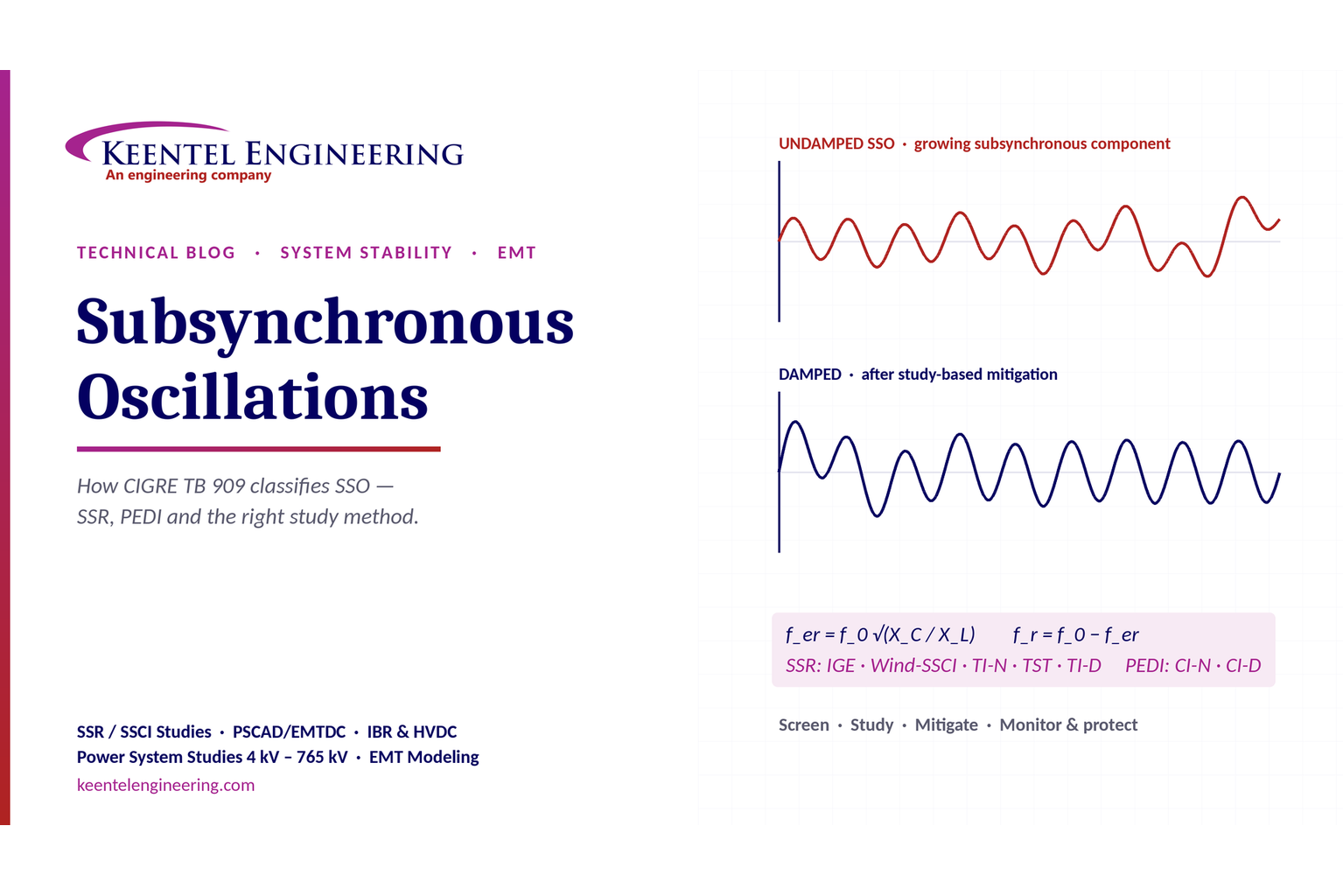
Keentel Engineering graphic showing damped and undamped subsynchronous oscillations.
By SANDIP R PATEL • October 3, 2026
A practical guide to SSO classification, SSR, PEDI, Wind-SSCI, EMT analysis, mitigation and protection based on CIGRE TB 909.
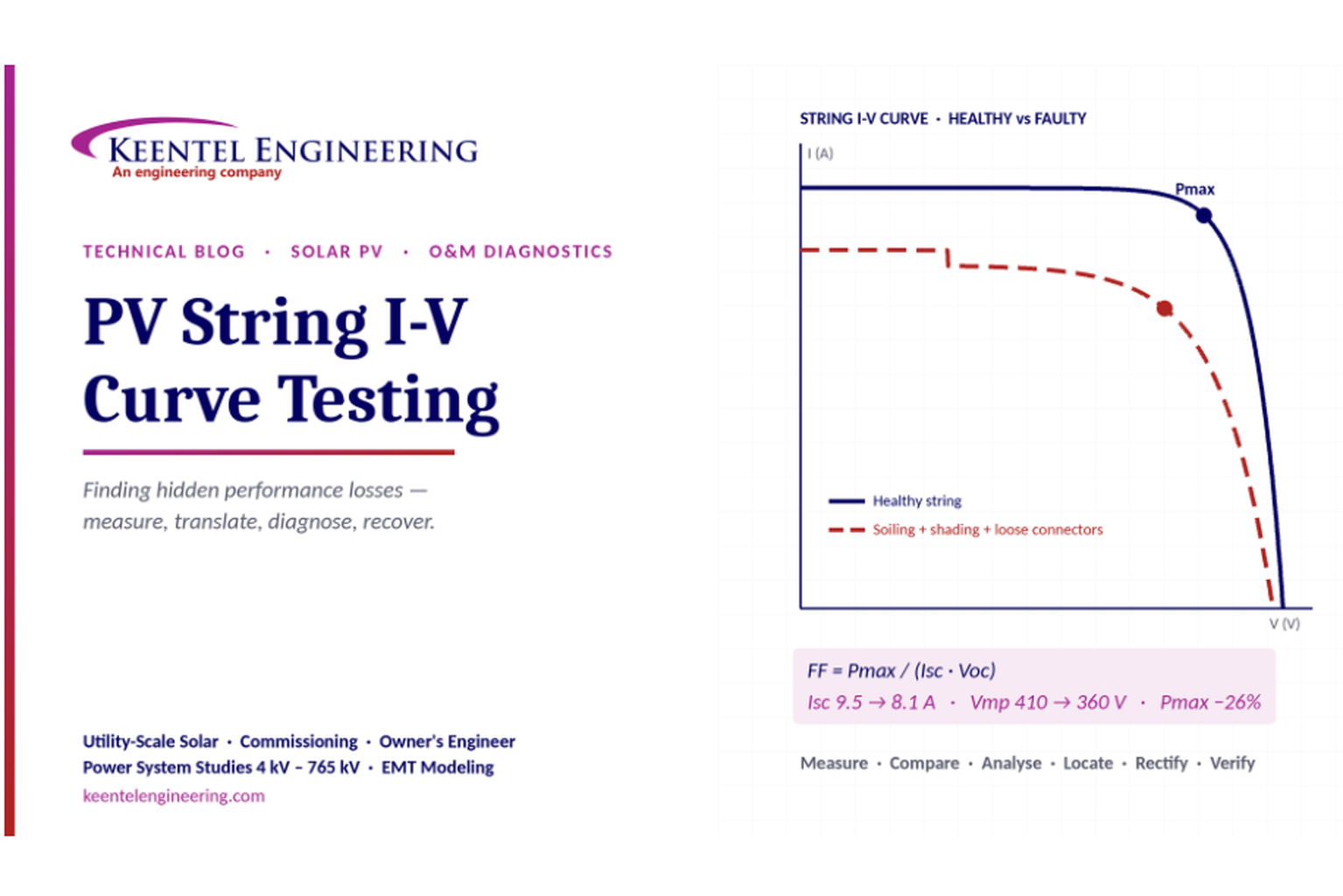
PV String I-V Curve Testing for Solar Performance Loss
By SANDIP R PATEL • October 3, 2026
Learn how PV string I-V curve testing identifies hidden solar performance losses, including soiling, shading, mismatch, degradation, and wiring faults.
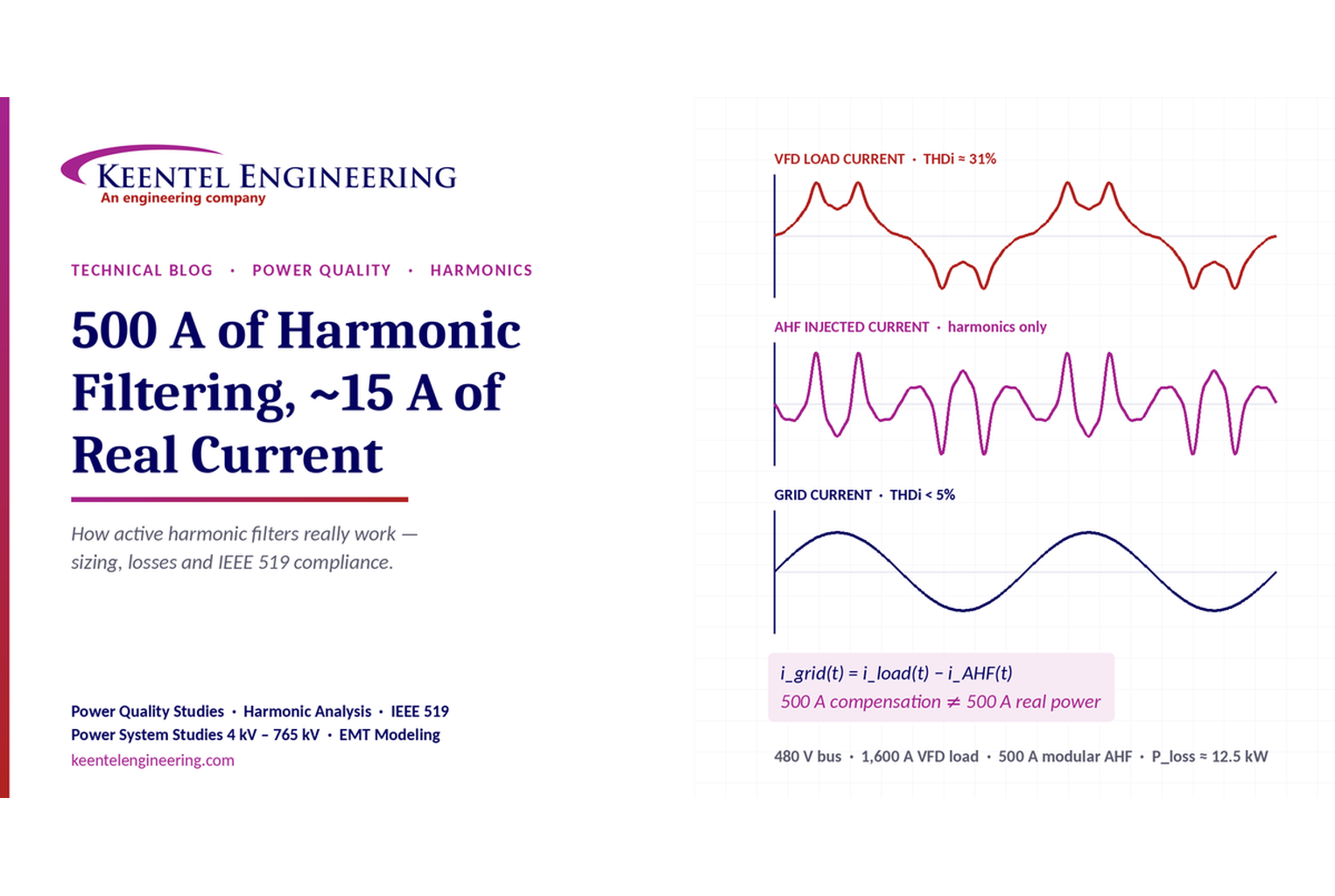
Active harmonic filter reducing VFD current harmonics and grid THDi.
By SANDIP R PATEL • October 3, 2026
Learn how active harmonic filters work, how to size AHF systems, reduce VFD harmonics, calculate losses, and meet IEEE 519 TDD limits at the PCC.
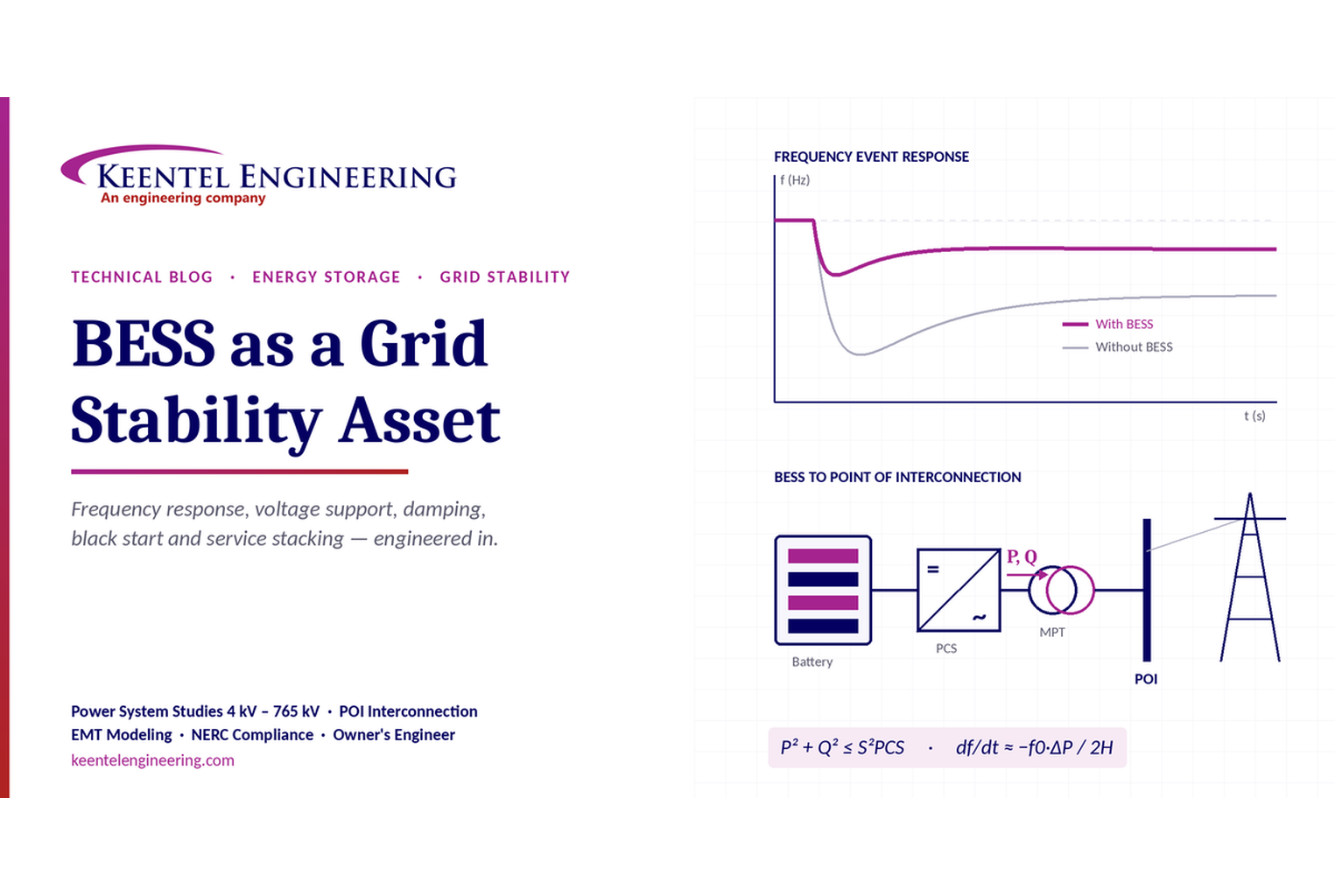
BESS grid stability with frequency response and POI interconnection.
By SANDIP R PATEL • October 3, 2026
Learn how BESS supports grid stability through fast frequency response, voltage support, oscillation damping, black start, grid-forming controls and EMT studies.
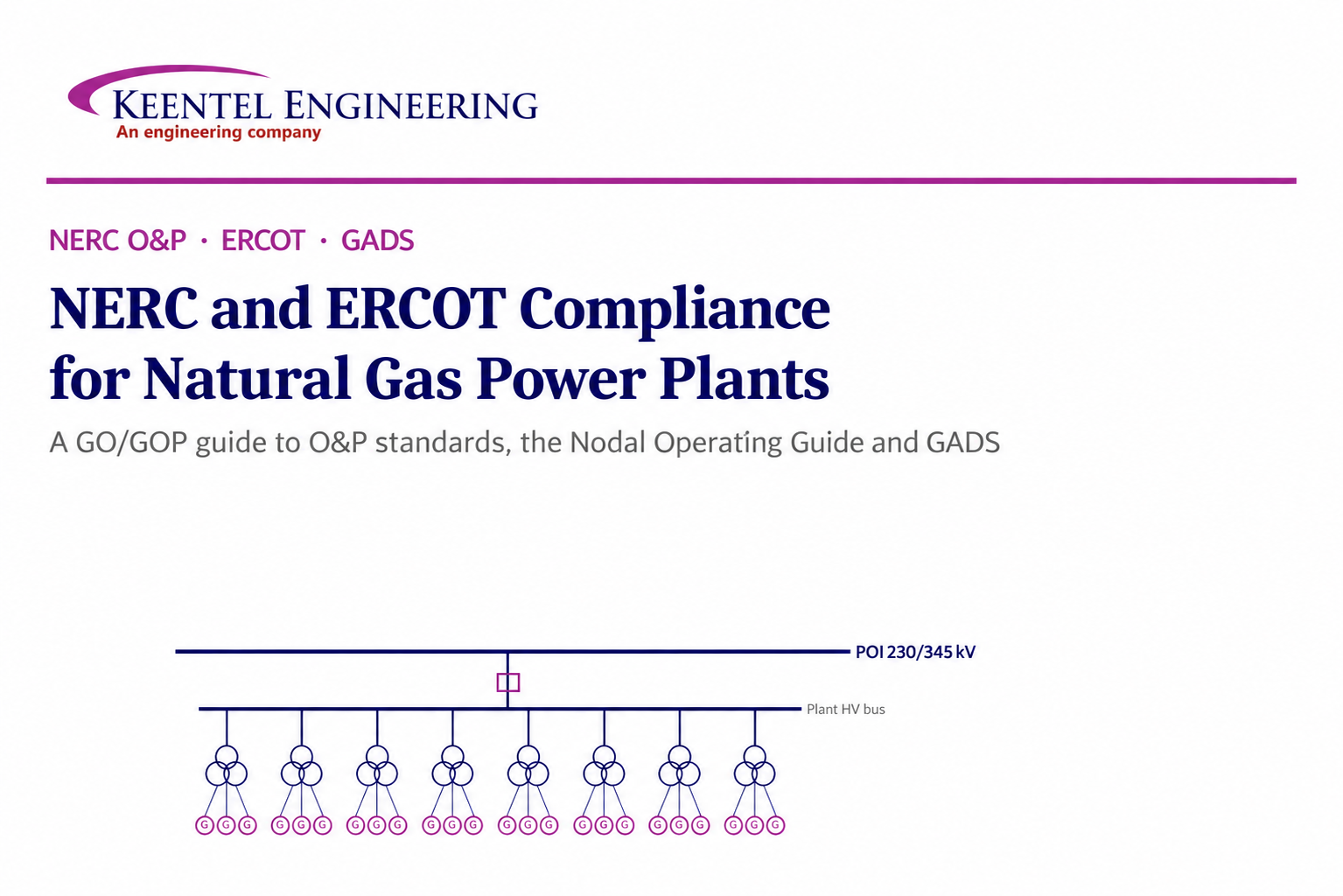
NERC and ERCOT compliance guide for natural gas power plants showing power system diagram and grid c
By SANDIP R PATEL • September 30, 2026
Learn NERC and ERCOT compliance requirements for natural gas power plants, including GO/GOP obligations, O&P standards, GADS reporting, and audits.
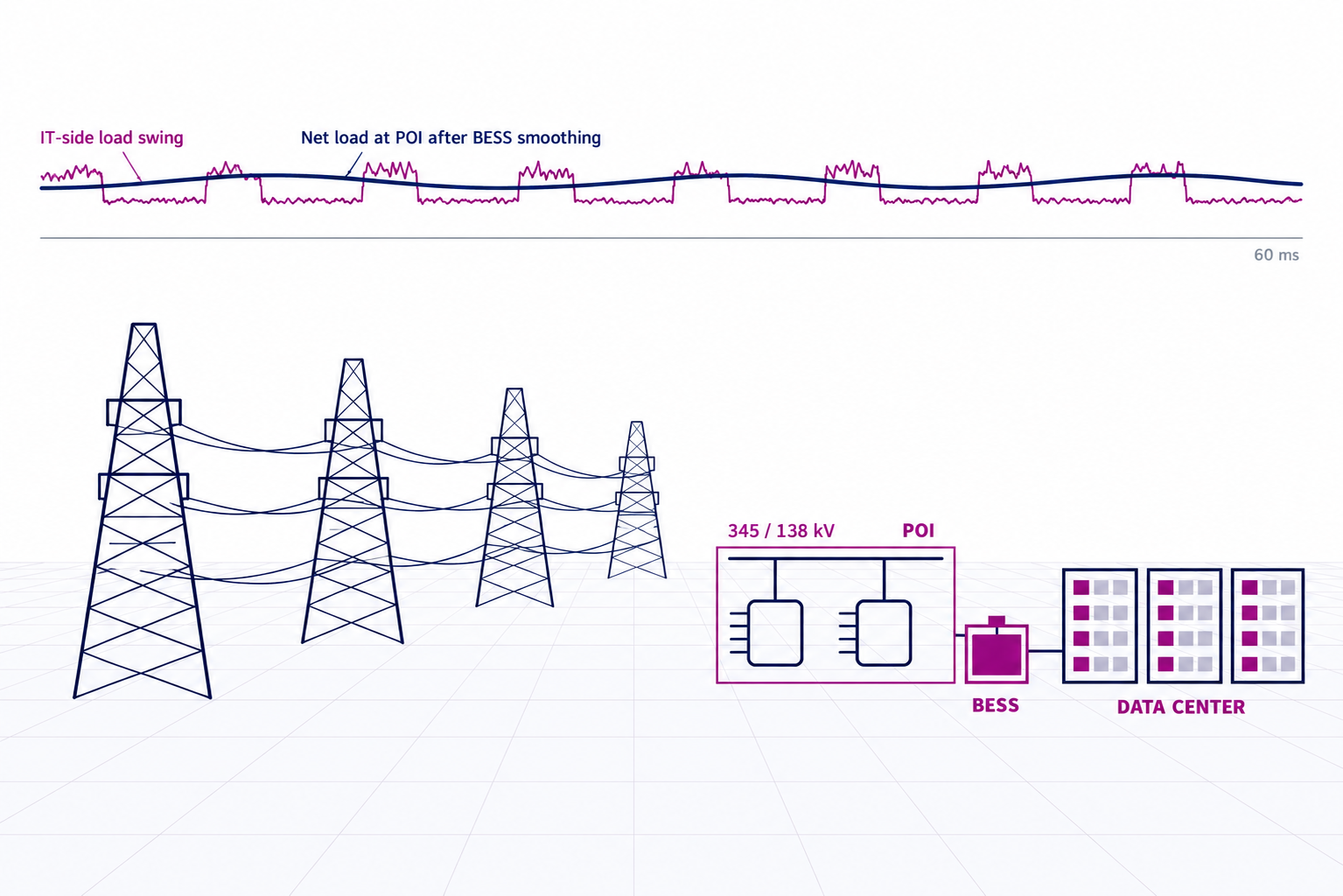
Data center and high-voltage transmission grid illustrating a large-load interconnection application
By SANDIP R PATEL • September 26, 2026
Learn how to prepare a MISO large-load interconnection package, including PSS®E models, BESS smoothing, harmonic data and transmission-owner requirements.
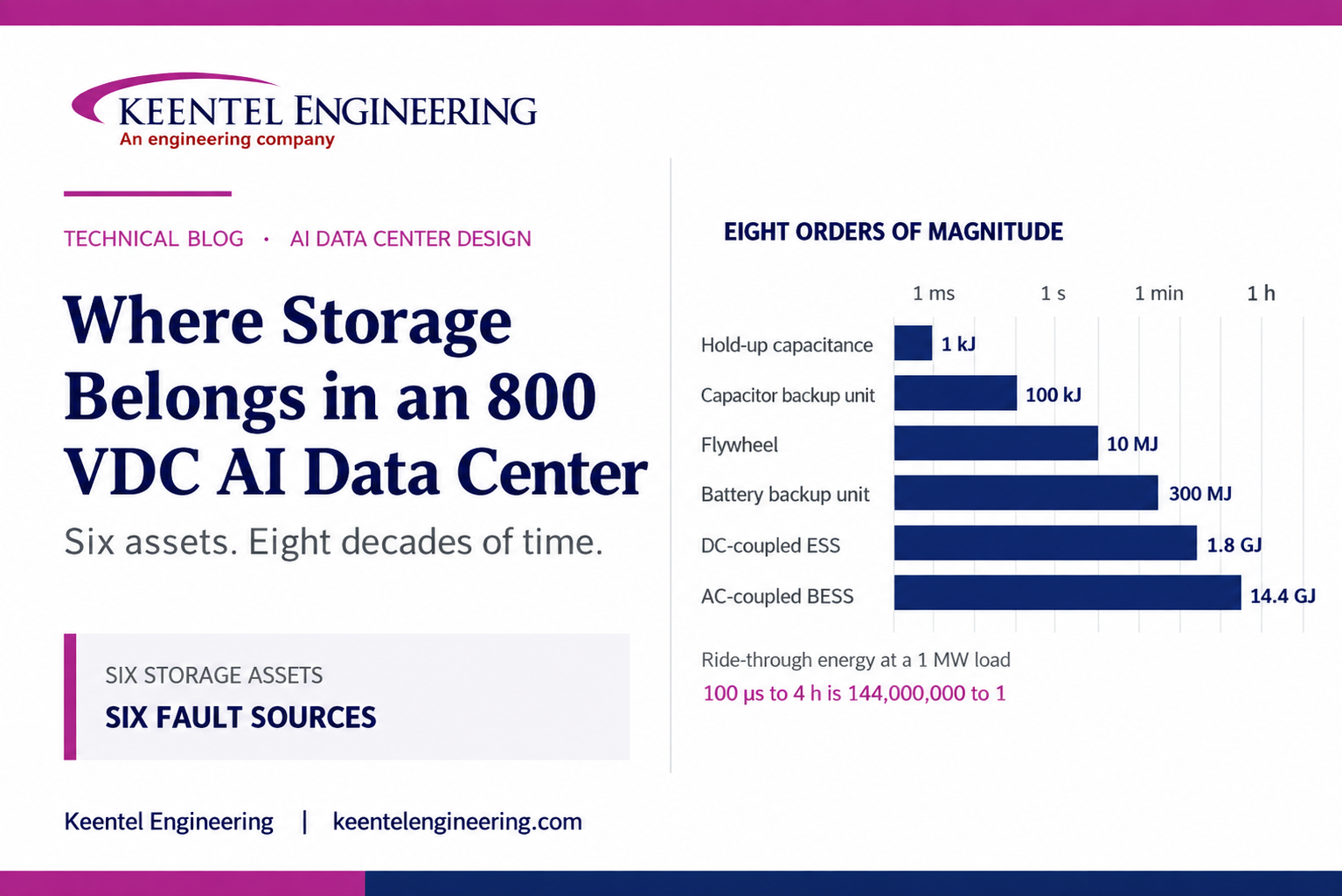
800 VDC AI data center storage architecture with battery systems, DC power distribution, and electri
By SANDIP R PATEL • September 26, 2026
Learn where storage belongs in an 800 VDC AI data center, including capacitors, flywheels, BESS, fault current, protection, grounding, and EMT design.
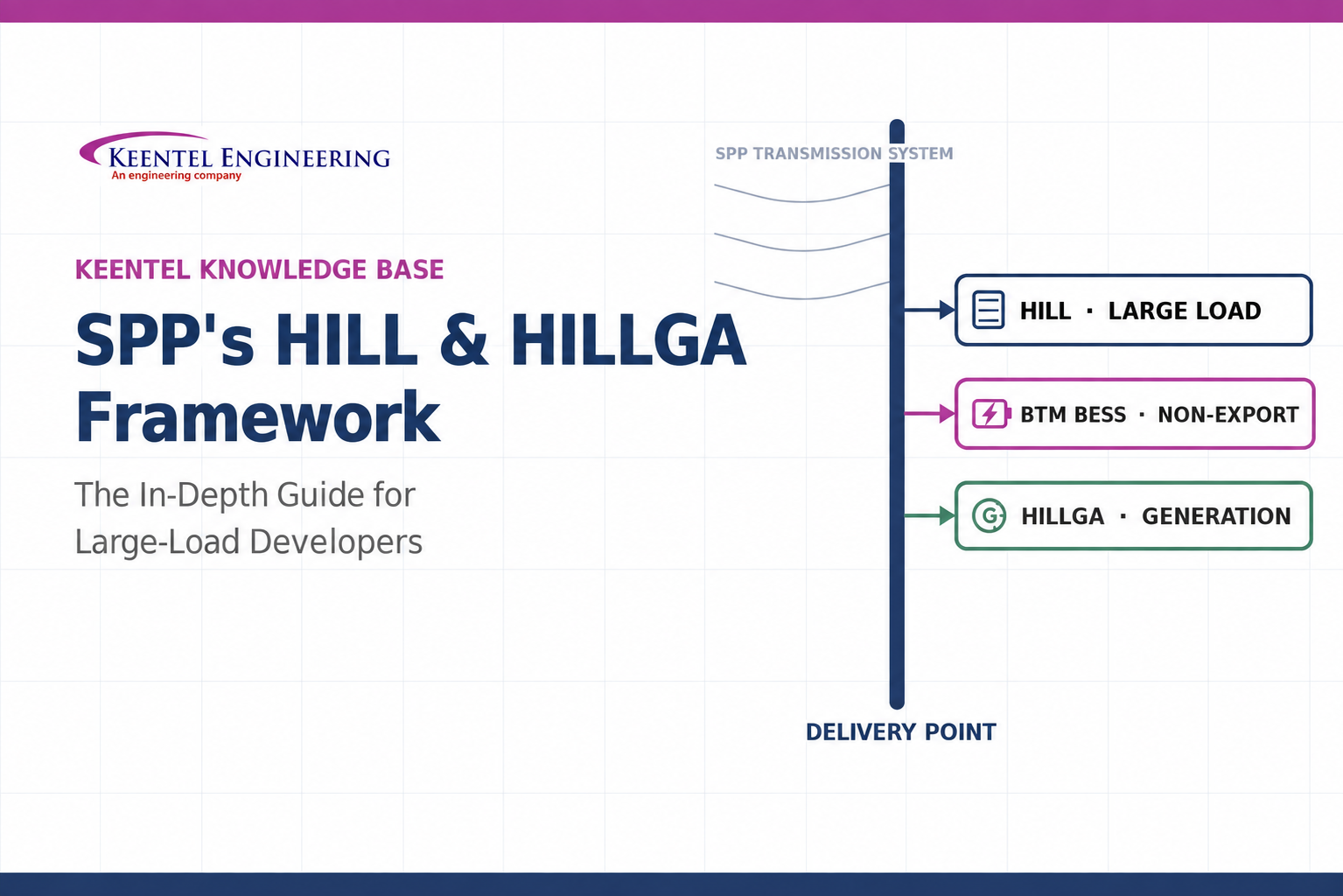
SPP HILL and HILLGA framework for large-load developers
By SANDIP R PATEL • September 26, 2026
Learn how SPP’s HILL and HILLGA framework works for large-load projects, including studies, BTM generation, modeling, EMT requirements, and firm service.





