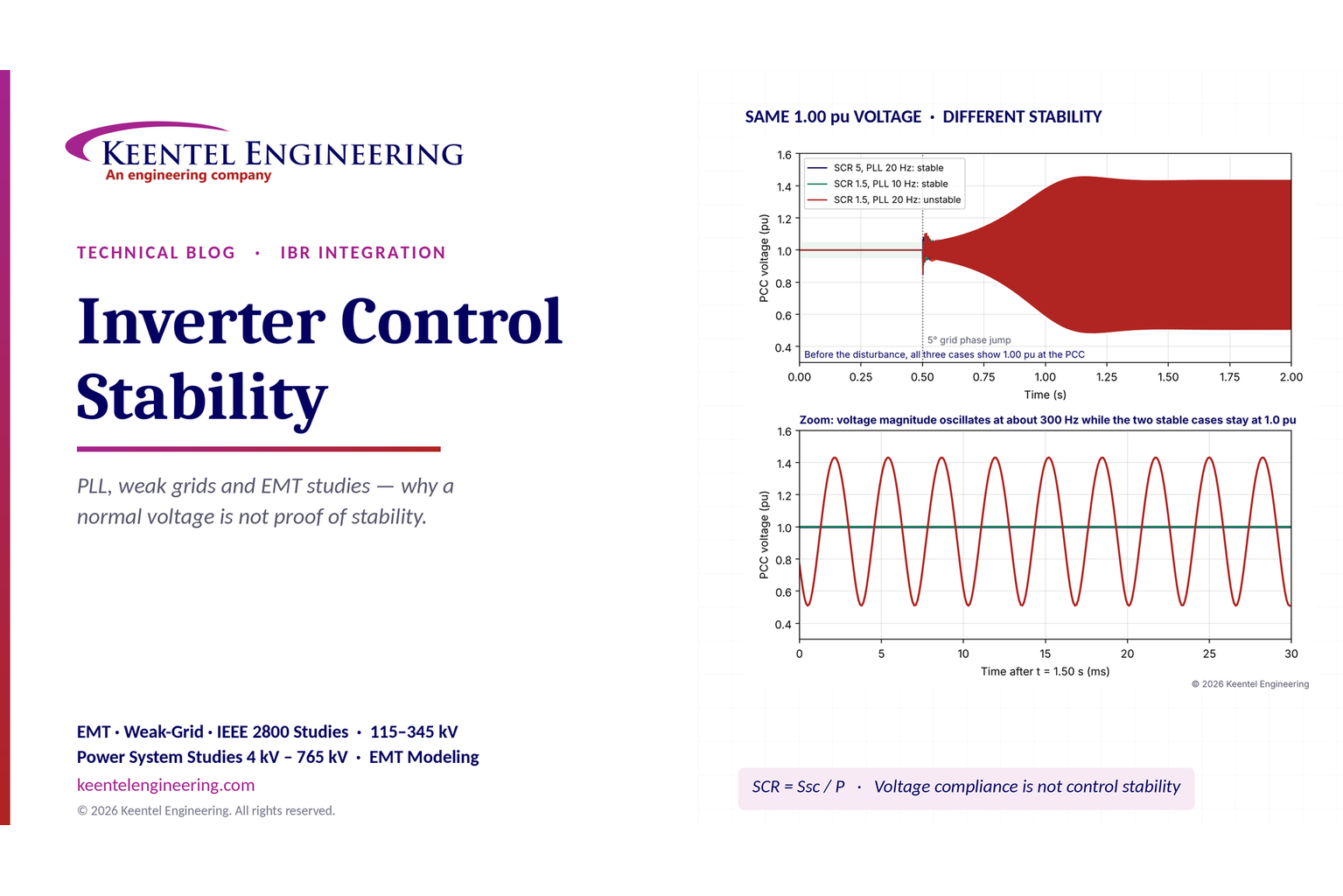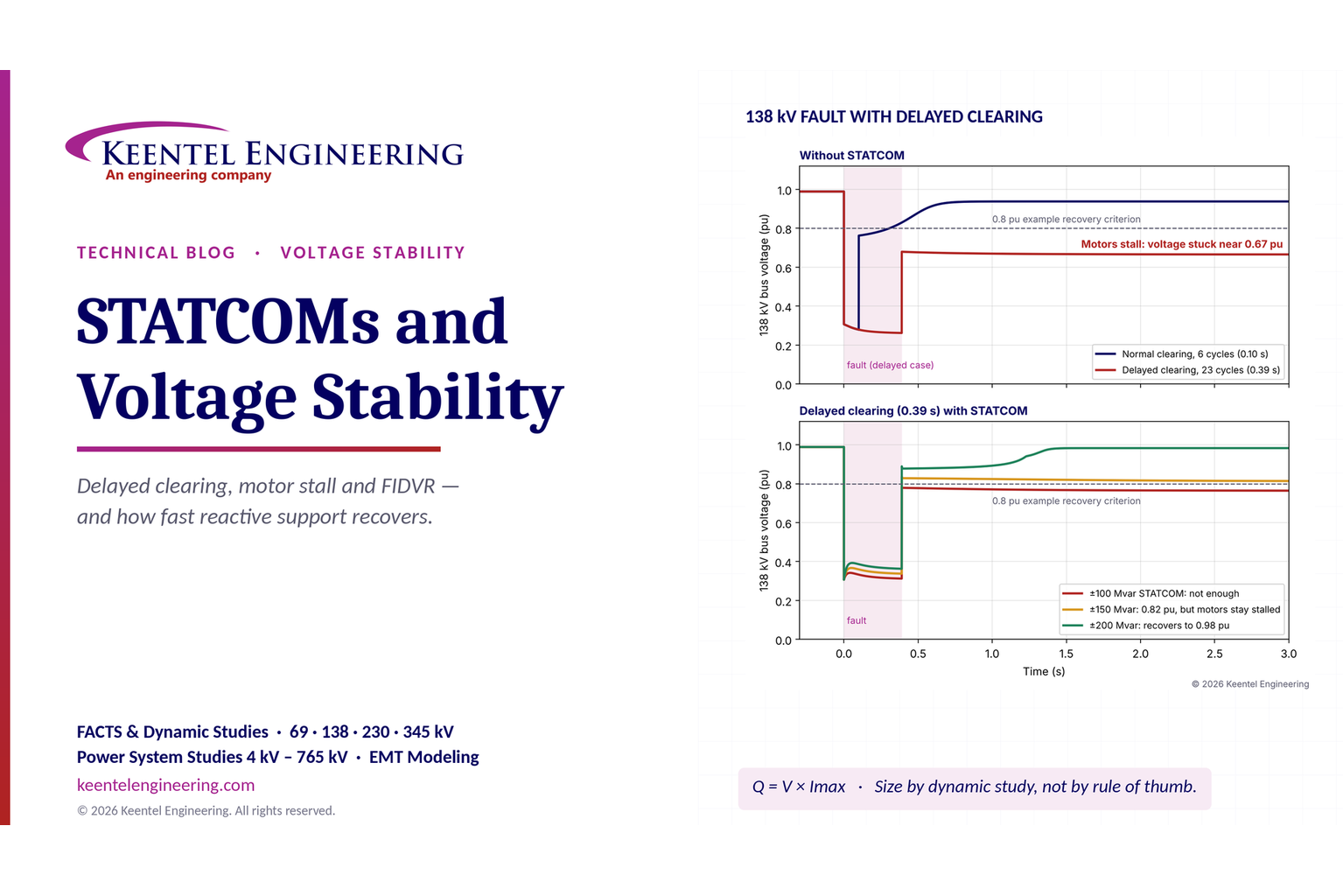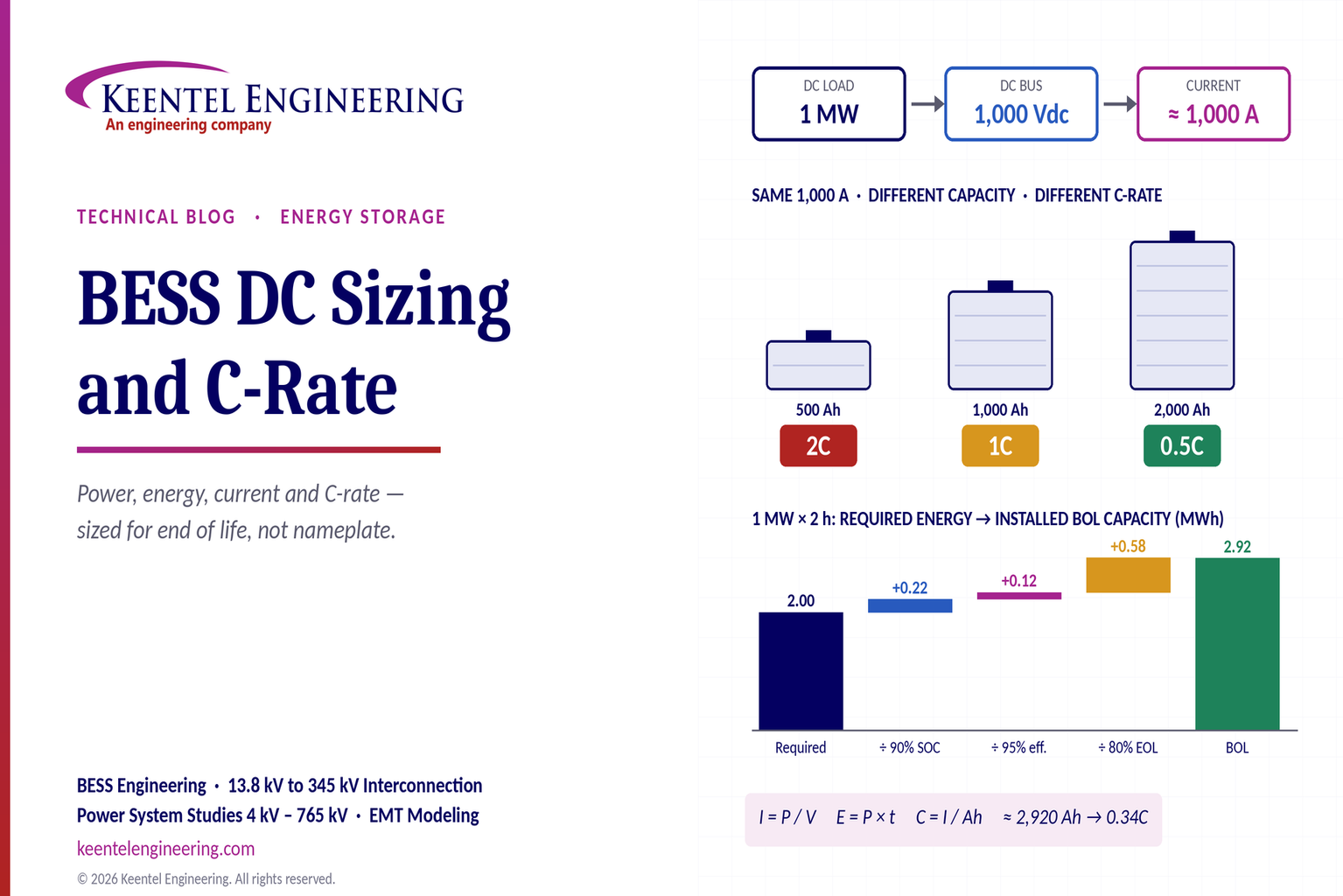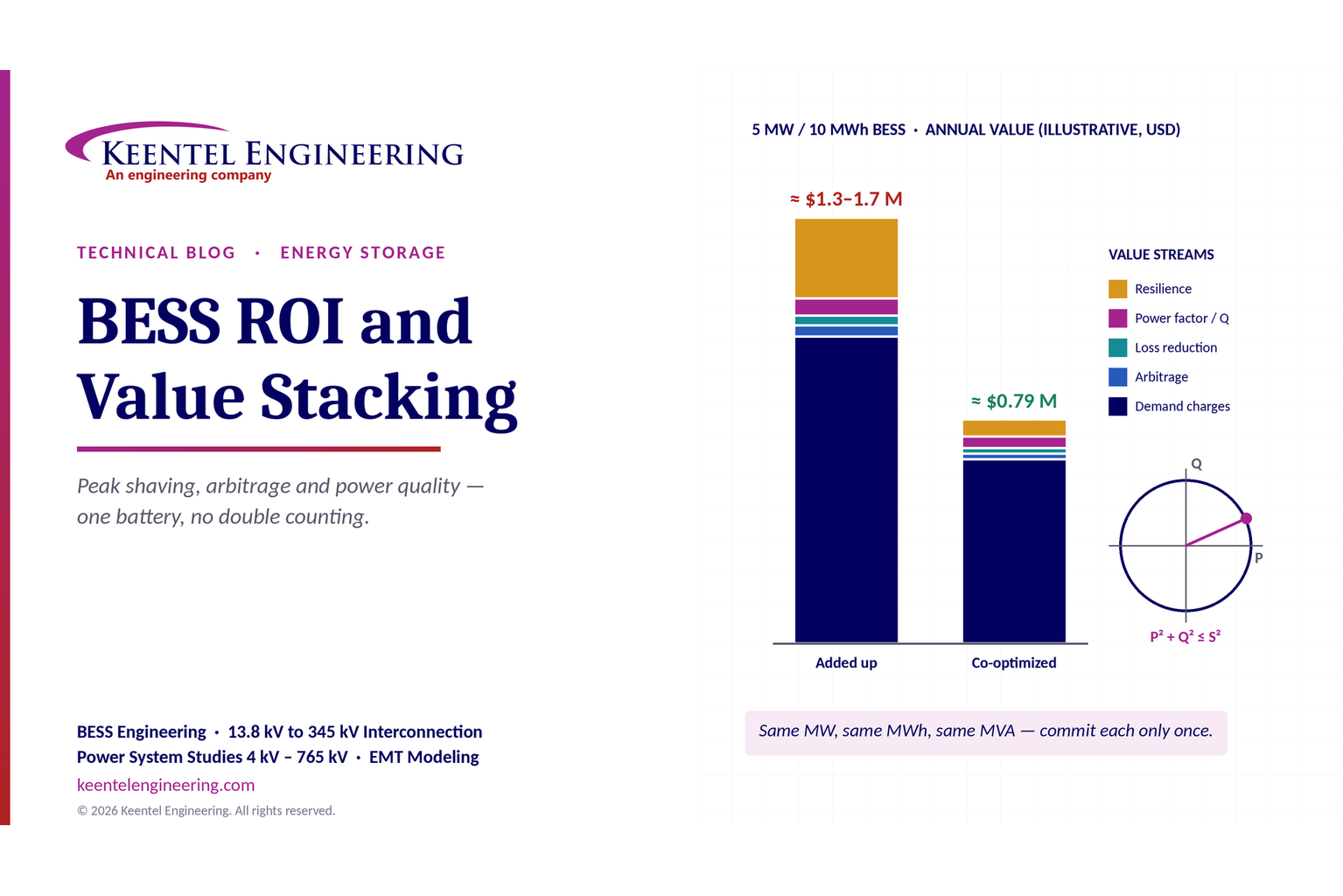


A Coordinated Electric System Interconnection Review—the utility’s deep-dive on technical and cost impacts of your project.

Optimized O&M for PV Power Plants in All Climates: Keentel Engineering Leads with Global Best Practices

Calendar icon. D

May 10, 2025 | Blog

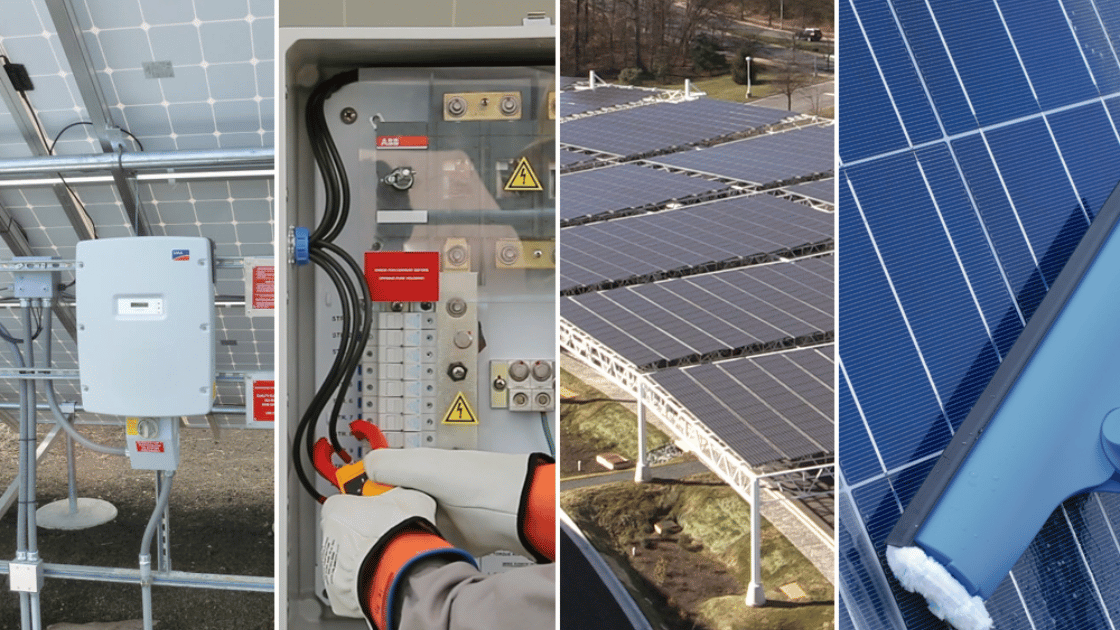
Solar panel installation: wiring, electrical box, array, and cleaning tool.

As solar photovoltaic (PV) installations grow in capacity and global coverage, effective operation and maintenance (O&M) becomes essential for reliability, safety, and performance. Keentel Engineering embraces the climate-specific O&M best practices outlined by the International Energy Agency’s (IEA) PVPS Task 13, ensuring solar assets operate efficiently regardless of location.

Why Climate-Specific PV O&M Matters

The performance of PV systems varies dramatically across seven key climate zones: temperate, hot and dry, hot and humid, high-altitude desert, flood-prone, cyclonic, and snowy regions. Keentel integrates O&M strategies tailored to these zones, recognizing unique challenges like:

  • Soiling and thermal stress in deserts.
  • Corrosion and vegetation overgrowth in humid areas.
  • Structural threats from snow loads or high winds.
  • Water damage and debris in flood-prone sites. Each condition requires proactive planning—from cleaning protocols to structural reinforcements and emergency procedures.

Key O&M Elements Delivered by Keentel

1. Monitoring and Performance Analytics

Using IEC 61724-1 Class A monitoring standards, Keentel offers:

  • Real-time performance dashboards.
  • Alarm notifications for rapid response.
  • Predictive analytics using AI and digital twins.
  • Satellite and sensor-based irradiance modeling.

2. Preventive and Corrective Maintenance

Keentel tailors PM and CM schedules based on:

  • Temperature variations and rainfall trends.
  • Soiling loss indexes.
  • Vegetation growth rates.
  • Manufacturer-specific component guidelines. Specialized tools like aerial IR thermography, EL imaging, and IV curve tracing allow precise diagnostics with minimal disruption.

3. Forecasting and Grid Compliance

Our O&M services include:

  • PV power generation forecasts (short, medium, long-term).
  • Grid-compliant control strategies (voltage/frequency support, PF management).
  • Integration with utilities and energy traders using NWP, satellite, and machine learning models.

4. Safety and Risk Management

Keentel ensures:

  • Full adherence to ISO 45001, ISO 9001, and IEC 63049.
  • Lockout-tagout (LOTO) and PPE protocols.
  • Site-specific emergency response plans.
  • Fire, flood, and wildlife safety measures.

Customized O&M for All Climate Zones

Moderate (Temperate)

  • Emphasis on vegetation and wildlife control.
  • Selective cleaning based on industrial fallout or bird droppings.

Hot & Dry

  • Wildlife safety, anti-venom kits, and hydration strategies.
  • Frequent inspection for UV and sand damage.

High-Altitude Desert

  • Wind-blown dust and thermal stress mitigation.
  • High-durability cabling and racking.

Hot & Humid

  • Rodent and termite-proof cabling.
  • Enhanced ventilation for inverters.

Flood-Prone

  • Elevating electrical components.
  • Procedures for preemptive shutdown and post-flood inspections.

Cyclonic

  • Wind tunnel-tested racking, reinforced mounts.
  • Storage of spare modules and connectors.

Snowy

  • Steel racking preferred over aluminum.
  • Controlled heating and manual snow removal protocols.

Why Choose Keentel Engineering?

With 30 years of power system experience and global best practices, Keentel:

  • Enhances PV plant performance with contract-defined KPIs.
  • Ensures 99%+ uptime through preventive strategies.
  • Guarantees bankability by reducing investment risk.
  • Supports regulatory compliance across ISO, IEC, and utility codes.

FAQs About PV O&M

  • What is the Performance Ratio (PR) in PV systems?

    PR is the ratio of actual AC energy output to theoretical output under STC. It accounts for all system losses including modules, inverters, and wiring.

  • How does Keentel correct PR for temperature?

    We apply a linear temperature correction using module temperature coefficients to ensure accurate, climate-adjusted performance tracking.

  • What is Soiling Ratio (SR)?

    SR measures power loss due to dirt accumulation. Keentel calculates SR using both power output and short-circuit current comparisons.

  • Does Keentel offer predictive maintenance?

    Yes, leveraging AI and digital twin technologies, we detect early-stage failures and optimize component replacement timelines.

  • What are the most common climate-specific O&M actions?

    From anti-corrosion in humid zones to snow load mitigation and wind-load inspections, O&M varies by location and weather profile.

  • What safety standards does Keentel follow?

    Our operations comply with ISO 45001 (safety), ISO 9001 (quality), and IEC 63049 (PV system O&M standards).

  • How is plant availability measured?

    We use both time-based and energy-based KPIs, targeting availability thresholds of 99% or higher.

  • How do you handle plant shutdowns in flood zones?

    We initiate preemptive shutdowns and post-event inspections for insulation failures, structural damage, and water ingress.

  • What monitoring class is used for large PV plants?

    IEC 61724-1 Class A monitoring ensures high-accuracy diagnostics and real-time performance visibility.

  • Are sky imagers used for forecasts?

    Yes. We utilize sky imagers for highly localized short-term forecasts (10–30 minutes) during rapidly shifting weather.

  • How is vegetation managed in moderate climates?

    Routine grass trimming combined with module inspections helps prevent shading, soiling, and pest interference.

  • What are the typical costs of O&M?

    Base O&M: €6.5–€16.5/kWp/year. Advanced diagnostics (e.g., thermal scans): €0.5–€3/module.

  • What forecasting models are used?

    We use NWP models (e.g., ECMWF), satellite motion tracking, and hybrid AI algorithms such as ANN and SVM.


    Do you ensure grid code compliance?


    Yes. Our plant control systems (PPCs) deliver voltage, frequency, and reactive power support per utility standards.

  • Is your data SCADA-integrated?

    All inverter, sensor, and alarm data streams are integrated into SCADA platforms with web and mobile dashboards.

  • What kind of spares management is offered?

    We stock critical onsite spares and coordinate with OEM vendors to enable rapid part replacement.

  • How is snow load managed?

    We use structural reinforcements, manual brushing, and electrical heating via reverse current methods.

  • Do you manage warranties?

    Yes. We manage OEM coordination and warranty claims for modules, inverters, and balance-of-system components.

  • What kind of training do your staff receive?

    Our electricians are certified in PV-specific safety, high-voltage handling, and emergency response protocols.

  • Can you retrofit older plants to meet new grid codes?

    Yes. We offer PPC upgrades, firmware installations, and hardware replacements for compliance.

  • How is real-time fault detection achieved?

    Using Class A monitoring with AI-powered analytics and threshold-based alarms for quick diagnostics.


    How is energy yield loss calculated during outages?


    We calculate MWh lost based on irradiance-adjusted performance models during each downtime event.

  • What is the Energy Performance Index (EPI)?

    EPI benchmarks actual energy yield against a contractual baseline, often used with PR for performance assurance.

  • Can I monitor my plant performance remotely?

    Yes. Our secure web and mobile platforms allow 24/7 access to real-time analytics and alarms.

  • What support do you offer during cyclones?

    We perform pre-storm inspections, reinforce mounts, stock critical spares, and conduct full post-event assessments.

Keentel Engineering offers advanced solar operation and maintenance services tailored for all climates, ensuring high performance, safety, and grid code compliance.

Explore the IEA PVPS Task 13 O&M Guidelines for international best practices in climate-specific solar maintenance.


Contact Us to discuss a tailored PV O&M strategy for your region.


A smiling man with glasses and a beard wearing a blue blazer stands in front of server racks in a data center.

About the Author:

Sonny Patel P.E. EC

IEEE Senior Member

In 1995, Sandip (Sonny) R. Patel earned his Electrical Engineering degree from the University of Illinois, specializing in Electrical Engineering . But degrees don’t build legacies—action does. For three decades, he’s been shaping the future of engineering, not just as a licensed Professional Engineer across multiple states (Florida, California, New York, West Virginia, and Minnesota), but as a doer. A builder. A leader. Not just an engineer. A Licensed Electrical Contractor in Florida with an Unlimited EC license. Not just an executive. The founder and CEO of KEENTEL LLC—where expertise meets execution. Three decades. Multiple states. Endless impact.

Four workers in safety vests and helmets stand with arms crossed near wind turbines.

Let's Discuss Your Project

Let's book a call to discuss your electrical engineering project that we can help you with.

Man in a blazer and open shirt, looking at the camera, against a blurred background.

About the Author:

Sonny Patel P.E. EC

IEEE Senior Member

In 1995, Sandip (Sonny) R. Patel earned his Electrical Engineering degree from the University of Illinois, specializing in Electrical Engineering . But degrees don’t build legacies—action does. For three decades, he’s been shaping the future of engineering, not just as a licensed Professional Engineer across multiple states (Florida, California, New York, West Virginia, and Minnesota), but as a doer. A builder. A leader. Not just an engineer. A Licensed Electrical Contractor in Florida with an Unlimited EC license. Not just an executive. The founder and CEO of KEENTEL LLC—where expertise meets execution. Three decades. Multiple states. Endless impact.

Leave a Comment

Related Posts

Substation grounding design with IEEE Std 80 earthing grid schematic.
By SANDIP R PATEL July 31, 2026
Learn substation grounding design using IEEE Std 80, CDEGS, soil resistivity modeling, touch and step voltage analysis, GPR, and earthing best practices.
Capacitor Banks & Power Factor Correction Design Guide
By SANDIP R PATEL July 29, 2026
Learn capacitor bank sizing, power factor correction, NEC Article 460 requirements, harmonic mitigation, protection, and installation for industrial power systems.
On-Load vs Off-Circuit Transformer Tap Changer comparison showing OLTC and OCTC voltage regulation p
By SANDIP R PATEL July 29, 2026
Learn the differences between On-Load and Off-Circuit Tap Changers, including OLTC vs OCTC operation, voltage regulation, IEEE standards, maintenance, and transformer selection.
ERCOT Form W and PUCT Part A & Part B filing guide for large load interconnection
By SANDIP R PATEL July 28, 2026
Learn the differences between the PUCT Generating Capacity Report and ERCOT Form W, including Part A vs Part B, PCLR, WLPUN, BYOG projects, and Batch Zero compliance.
PGRR144 Batch Zero and Batch 1 ERCOT grid interconnection guide with Texas transmission modeling
By SANDIP R PATEL July 28, 2026
Learn how PGRR144, Batch Zero, and Batch 1 affect ERCOT large-load interconnections, dynamic model requirements, MQT testing, PERC1, and project readiness.
ERCOT PCLR pathway showing LPC-to-MPC power access, SCED bid-cap control, large-load curtailment, an
By SANDIP R PATEL July 28, 2026
ERCOT PCLR Batch Zero large-load interconnection pathway
Delta-Star Transformer Earth Fault & Zero-Sequence Guide
By SANDIP R PATEL July 27, 2026
Learn why LV earth-fault current cannot cross a Delta-Star transformer, how zero-sequence current behaves, and what it means for protection design.
138 kV gas-insulated substation (GIS) design for compact high-voltage power systems.
By SANDIP R PATEL July 27, 2026
Learn how gas-insulated substations (GIS) improve safety, reliability, and space efficiency with 138 kV design, protection, insulation coordination, and real-world case studies.
Nuclear power plant electrical safety systems and Class I–IV power distribution architecture
By SANDIP R PATEL July 25, 2026
Learn how Class I–IV electrical systems, defence-in-depth, standby and emergency power, DC systems, protection, and load transfer ensure nuclear power plant safety.