


A Coordinated Electric System Interconnection Review—the utility’s deep-dive on technical and cost impacts of your project.

Challenge: Frequent false tripping using conventional electromechanical relays
Solution: SEL-487E integration with multi-terminal differential protection and dynamic inrush restraint
Result: 90% reduction in false trips, saving over $250,000 in downtime

IEEE Std 2800-2022 Compliance for Inverter-Based Resources: A Practical Guide for GOs

Calendar icon. D

April 25, 2025 | Blog

Wind turbines and solar panels generate electricity, beneath a bright blue sky.

Transforming Grid Compliance with IBRs – A Keentel Engineering Perspective


The rise of inverter-based resources (IBRs)—including solar, wind, and battery energy storage systems (BESS)—has transformed the electric power industry. As utilities and independent power producers (IPPs) seek reliable and standards-based grid integration, IEEE Std 2800-2022 emerges as a foundational benchmark.

At Keentel Engineering, we guide clients through every step of IEEE 2800 compliance, providing engineering, modeling, and verification services tailored for solar, BESS, and hybrid power systems.

As a trusted partner to utilities, developers, and independent power producers (IPPs), Keentel Engineering offers full-spectrum support for IEEE 2800 compliance, spanning modeling, testing, protection design, and performance verification. Whether you’re advancing a new solar project or designing an innovative battery energy storage system, we ensure your assets are future-ready.


What Is IEEE Std 2800-2022?

Formally titled Standard for Interconnection and Interoperability of Inverter-Based Resources Interconnecting with Associated Transmission Electric Power Systems, IEEE 2800-2022 establishes uniform technical performance criteria for IBRs connecting to transmission and sub-transmission systems.

Core Focus Areas:

1. Voltage and frequency ride-through
2. Reactive and active power control
3. Dynamic grid support during disturbances
4. Power quality, harmonics, and flicker mitigation
5. Coordinated protection system performance

Unlike fragmented regional standards, IEEE 2800 streamlines national grid integration and future-proofs IBR deployments.

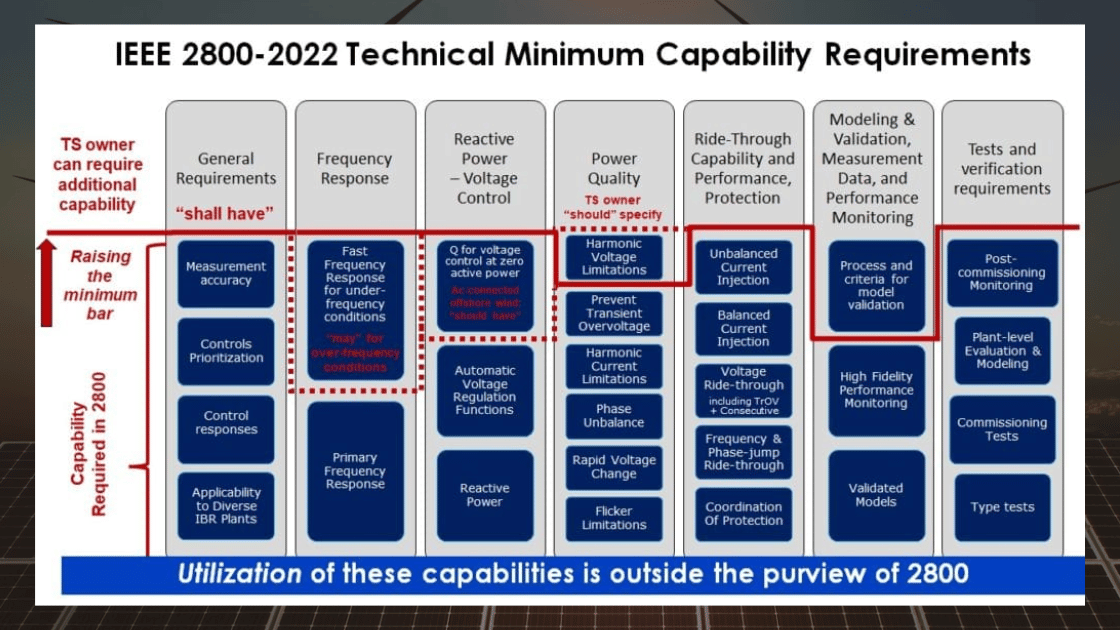
Infographic outlining IEEE 2800-2022 technical capability requirements, organized by function with blue and red boxes.

Why IEEE 2800-2022 Is Vital for Generator Owners

Historic events like the Blue Cut Fire Disturbance exposed the vulnerability of inverter-based plants to grid faults. IEEE 2800 addresses these gaps by:

  • Mandating resilient ride-through capabilities
  • Enhancing fault response with real and reactive power support
  • Aligning interconnection practices with modern reliability standards

For Generator Owners, achieving compliance avoids costly delays, reduces curtailment risks, and strengthens grid resilience.


How Keentel Engineering Supports IEEE 2800 Compliance

Our interconnection studies and dynamic modeling services deliver a seamless path to compliance through:

  • Preliminary feasibility studies and Authority Governing Interconnection Requirements (AGIR) engagement
  • PSCAD™, PSS®E®, EMT, and ETAP dynamic modeling
  • Fast Frequency Response (FFR) and Primary Frequency Response (PFR) system design
  • Power quality assessments and harmonic mitigation aligned with grid modernization goals
  • Protection coordination studies including ROCOF and anti-islanding design

Key Technical Areas for IEEE 2800 Compliance

1. Voltage and Frequency Ride-Through (VRT/FRT)

IBRs must withstand temporary voltage or frequency disturbances without disconnecting unnecessarily. We validate performance against detailed ride-through curves.

2. Active Power Controls

Autonomous control of real power output for grid frequency stability is mandatory. Keentel engineers FFR and PFR settings tailored for utility-scale renewables.

3. Reactive Power and Voltage Support

Dynamic reactive power delivery—through constant voltage, droop control, or power factor regulation—is essential to maintain transmission voltage stability.

4. Grid Abnormal Condition Support

Inverter systems must assist during faults by dynamically boosting voltage or shedding active power smoothly.

5. Power Quality and Harmonic Control

Through detailed harmonic analysis, Keentel ensures that systems comply with IEEE 519 and IEC 61000 standards, minimizing distortion and flicker.

6. Protection Scheme Engineering

Anti-islanding features, over/under voltage and frequency relays, and ROCOF detection are critical to grid protection and must be modeled accurately.


Application of IEEE 2800 Across Project Life Cycles

At Keentel Engineering, we incorporate IEEE 2800 compliance from project conception to commissioning:

➤ During Development:

We assist clients with AGIR (Authority Governing Interconnection Requirements) engagement, identifying applicable RPA (Reference Points of Applicability), and configuring plant capabilities accordingly.

➤ During Design:

We help model inverter behavior, verify test plans, and design custom controls to meet both standard and site-specific TS (Transmission System) owner requirements.

➤ During Commissioning:

We oversee performance testing, ensure settings align with POM (Point of Measurement) or POI (Point of Interconnection) requirements, and document verification.


Supporting Innovation: IEEE 2800 and Emerging Technologies

IEEE 2800 recognizes that innovation must not be constrained. The standard includes:

  • Flexibility for grid-forming inverters
  • Consideration for hybrid plants (e.g., solar + storage)
  • Guidelines for VSC-HVDC connected offshore wind

Our engineers are actively involved in projects that test the limits of this standard and offer insights to grid operators seeking stability from unconventional configurations.


Why Partner with Keentel Engineering?

  • Over 30 years of power system engineering excellence
  • Certified experts in CAISO, ERCOT, PJM, and NERC standards
  • Proven success in helping renewable developers avoid compliance delays
  • Advanced modeling platforms like PSCAD™, ETAP, EMTP-RV, and PSSE®
  • Field-validated, regulator-accepted models and studies

FAQ on IEEE Std 2800-2022 for Developers, Utilities, and Engineers

  • 1. What is the purpose of IEEE 2800-2022?

    It establishes uniform technical minimum interconnection and performance requirements for IBRs connected to transmission systems.

  • 2. Who must follow this standard?

    Developers, owners, and operators of inverter-based generation projects connecting to the transmission grid.

  • 3. Is IEEE 2800 legally binding?

    No. It must be adopted by a local authority (AGIR) to be enforced.

  • 4. What types of systems are covered under IEEE 2800?

    Solar PV, wind, and battery storage systems using inverters.

  • 5. Does IEEE 2800 apply to distribution systems?

    No, IEEE 2800 is for transmission and sub-transmission. IEEE 1547 applies to distribution-level IBRs.

  • 6. What is the RPA (Reference Point of Applicability)?

    The location where compliance with IEEE 2800 must be demonstrated, typically near the POI or POM.

  • 7. What is ride-through capability?

    The ability of an IBR to remain online during short-term disturbances in voltage or frequency.

  • 8. How is active power managed under this standard?

    Inverters must support primary frequency response and optionally FFR (Fast Frequency Response).

  • 9. Is reactive power control mandatory?

    Yes, IBRs must provide voltage-dependent reactive power control capabilities.

  • 10. What is Fast Frequency Response (FFR)?

    Rapid power output adjustment (within 1 second) to stabilize frequency deviations.

  • 11. Are harmonic limits addressed?

    Yes, the standard mandates limits and verification of harmonic current and voltage per IEC 61000.

  • 12. What type of modeling is required?

    Steady-state, dynamic (PSSE/PSCAD), and electromagnetic transient (EMT) models for interconnection studies.

  • 13. Does the standard address testing?

    Yes, verification methods are outlined including type testing, modeling validation, and plant performance testing.

  • 14. Are hybrid plants included?

    Yes, but only the inverter-based portions are subject to IEEE 2800 compliance.

  • 15. Does IEEE 2800 cover HVDC systems?

    It applies to IBRs connected via VSC-HVDC links but not to standalone HVDC systems.

  • 16. How does IEEE 2800 relate to NERC standards?

    It complements reliability standards like PRC-024, VAR-002, and MOD-026, helping close identified gaps.

  • 17. What about plant protection schemes?

    Inverter-based protection must be coordinated with TS protection (e.g., anti-islanding, ROCOF).

  • 18. What happens if AGIR adopts a different standard?

    AGIR has authority to enforce different or additional requirements beyond IEEE 2800.

  • 19. Can Keentel help retrofit existing plants for compliance?

    Yes, we assess existing configurations and offer upgrade designs for partial or full compliance.

  • 20. What support does Keentel Engineering offer?

    We offer full-service engineering, modeling, compliance analysis, testing, and interconnection documentation.


Secure IEEE 2800 Compliance with Keentel Today

Grid codes are evolving, and IEEE 2800 sets the new bar. Ensure your IBR plant not only connects but thrives within the modern electric system.


A smiling man with glasses and a beard wearing a blue blazer stands in front of server racks in a data center.

About the Author:

Sandip "Sonny" R. Patel, P.E.

IEEE Senior Member · Founder & CEO, Keentel Engineering

In 1995, Sonny Patel earned his Electrical Engineering degree from the University of Illinois. But degrees don't build legacies — action does.

For three decades, he has worked the power industry from every side of the table: 16 years as a utility engineer at Exelon/Commonwealth Edison; generation leadership across hydroelectric, industrial steam turbine, and a 9 GW renewable fleet; NERC Regional Entity Senior Compliance Engineer and Audit Team Lead, auditing some of the nation's largest utilities; and testing and commissioning lead on equipment up to 765 kV — the very top of the North American grid.Utility. Generator. Regulator. Consultant. Few engineers have seen all four seats. Fewer still have sat in them.

His experience spans nuclear, hydro, conventional generation, renewables, oil and gas, mining — and today's data centers, where he is authoring a three-book series on data center design. He is a Licensed Professional Engineer in six states and a Licensed Electrical Contractor in Florida (Unlimited EC) — he doesn't just design the work; he's qualified to stand behind its execution.Today, as Founder and CEO of Keentel Engineering, Sonny leads a nationwide team of engineers delivering substation design, power system studies, NERC compliance, and commissioning — done right, coast to coast.Three decades. Every side of the table. One standard: accountable engineering.

Four workers in safety vests and helmets stand with arms crossed near wind turbines.

Let's Discuss Your Project

Let's book a call to discuss your electrical engineering project that we can help you with.

Man in a blazer and open shirt, looking at the camera, against a blurred background.

About the Author:

Sandip "Sonny" R. Patel, P.E.

IEEE Senior Member · Founder & CEO, Keentel Engineering

In 1995, Sonny Patel earned his Electrical Engineering degree from the University of Illinois. But degrees don't build legacies — action does.

For three decades, he has worked the power industry from every side of the table: 16 years as a utility engineer at Exelon/Commonwealth Edison; generation leadership across hydroelectric, industrial steam turbine, and a 9 GW renewable fleet; NERC Regional Entity Senior Compliance Engineer and Audit Team Lead, auditing some of the nation's largest utilities; and testing and commissioning lead on equipment up to 765 kV — the very top of the North American grid.

Utility. Generator. Regulator. Consultant. Few engineers have seen all four seats. Fewer still have sat in them.

His experience spans nuclear, hydro, conventional generation, renewables, oil and gas, mining — and today's data centers, where he is authoring a three-book series on data center design. He is a Licensed Professional Engineer in six states and a Licensed Electrical Contractor in Florida (Unlimited EC) — he doesn't just design the work; he's qualified to stand behind its execution.

Today, as Founder and CEO of Keentel Engineering, Sonny leads a nationwide team of engineers delivering substation design, power system studies, NERC compliance, and commissioning — done right, coast to coast.Three decades. Every side of the table. One standard: accountable engineering.

Leave a Comment

Related Posts

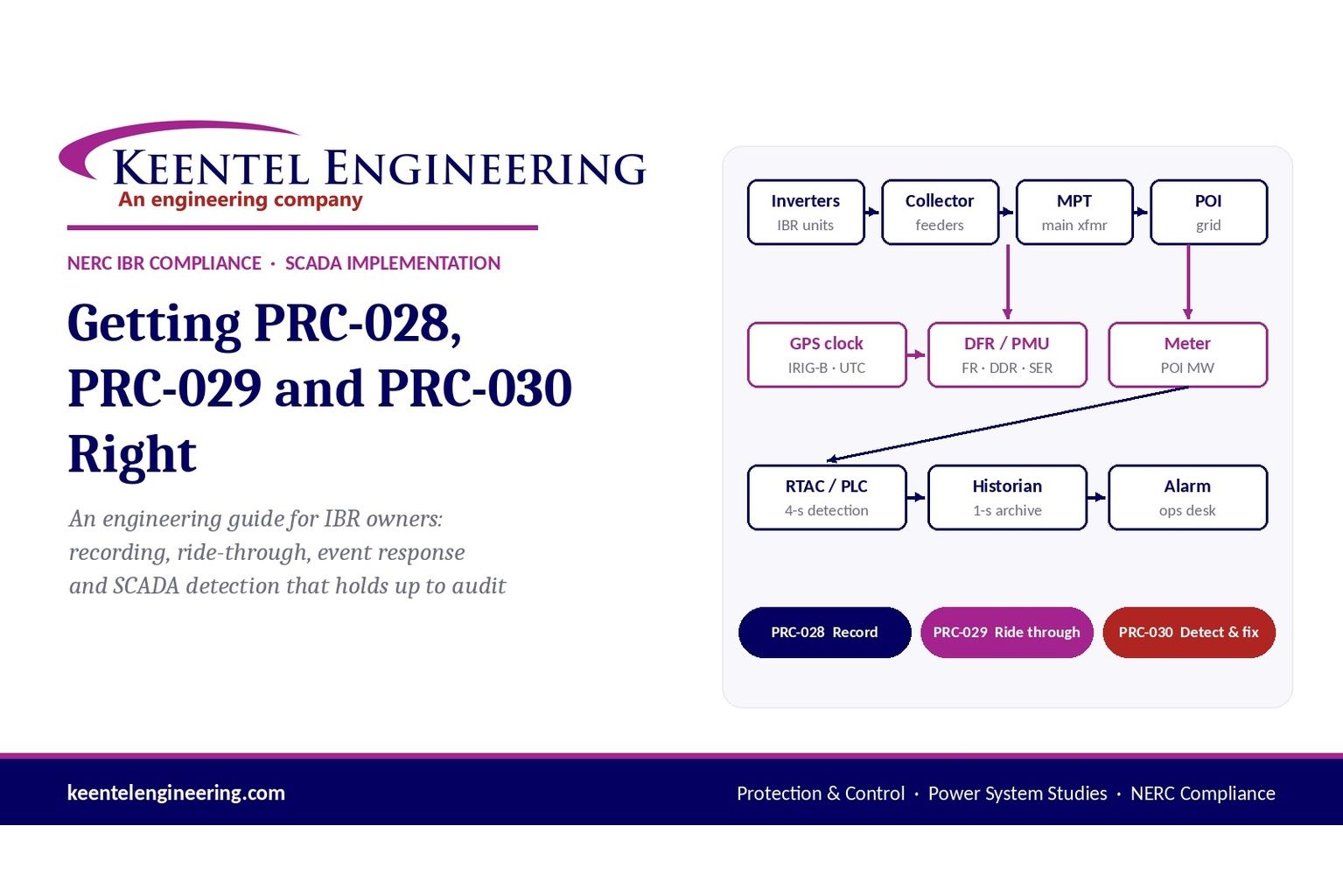
PRC-028 PRC-029 and PRC-030 NERC IBR compliance guide
By SANDIP R PATEL • October 3, 2026
Engineering guide to PRC-028 disturbance recording, PRC-029 ride-through and PRC-030 event detection for inverter-based resources.
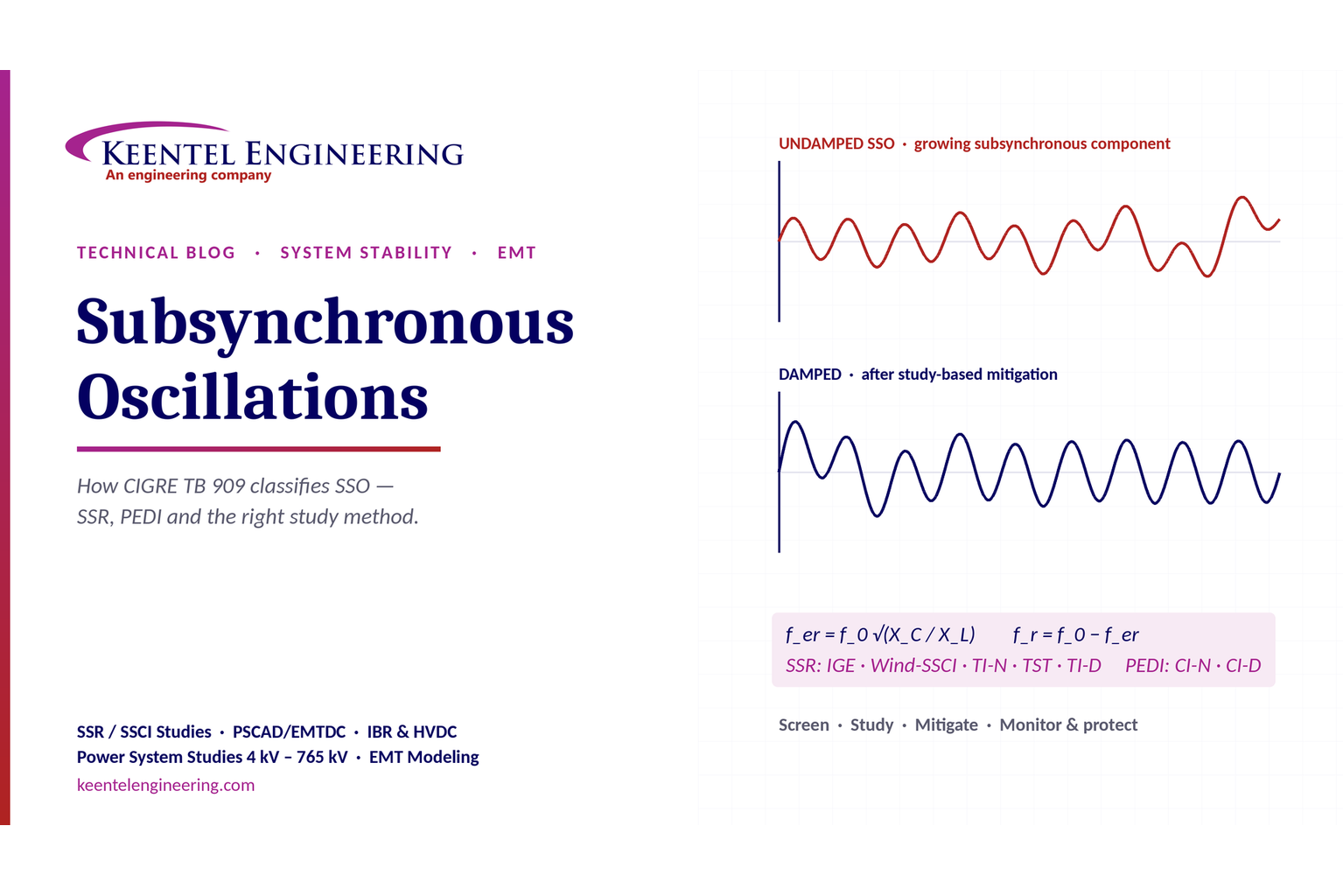
Keentel Engineering graphic showing damped and undamped subsynchronous oscillations.
By SANDIP R PATEL • October 3, 2026
A practical guide to SSO classification, SSR, PEDI, Wind-SSCI, EMT analysis, mitigation and protection based on CIGRE TB 909.
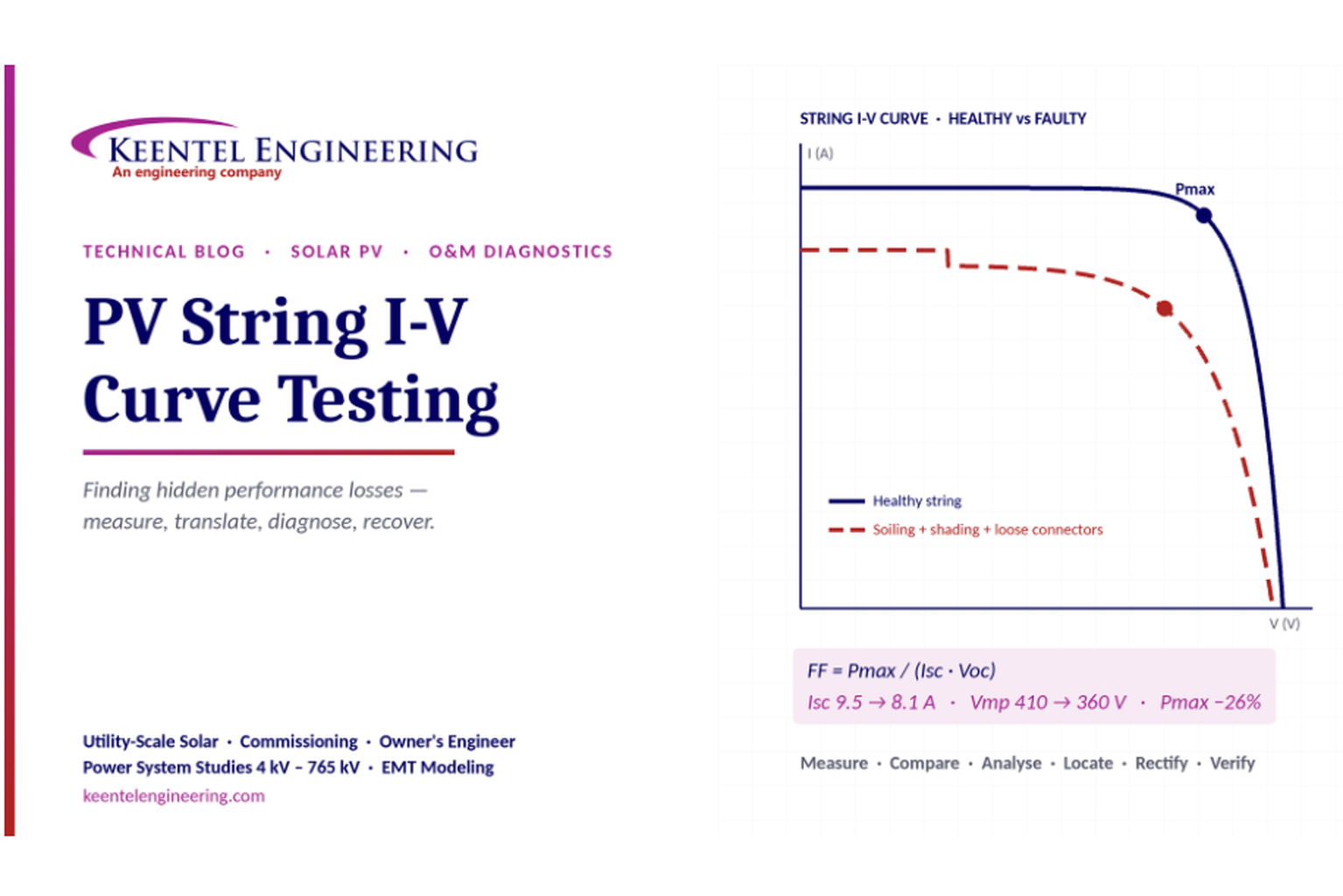
PV String I-V Curve Testing for Solar Performance Loss
By SANDIP R PATEL • October 3, 2026
Learn how PV string I-V curve testing identifies hidden solar performance losses, including soiling, shading, mismatch, degradation, and wiring faults.
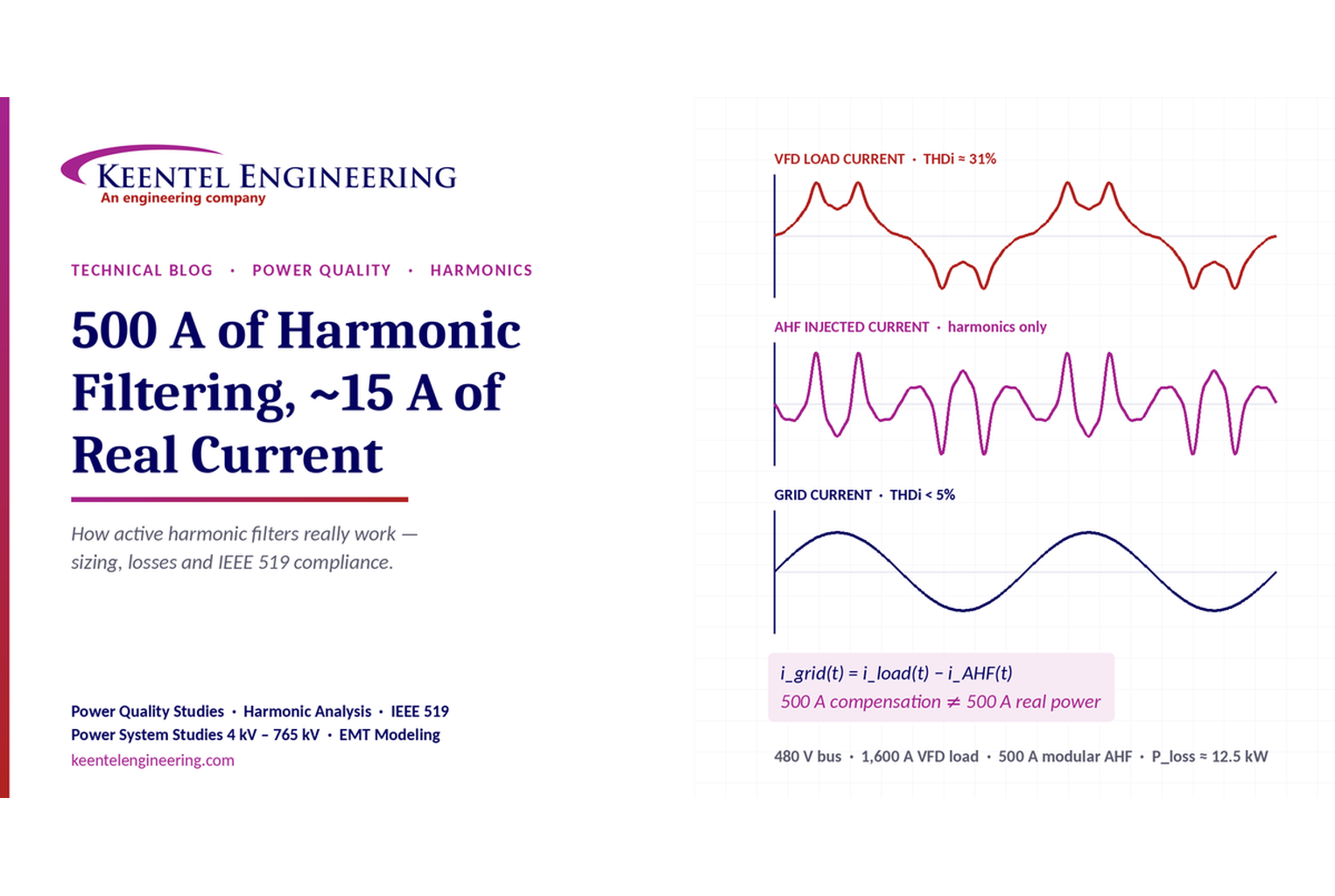
Active harmonic filter reducing VFD current harmonics and grid THDi.
By SANDIP R PATEL • October 3, 2026
Learn how active harmonic filters work, how to size AHF systems, reduce VFD harmonics, calculate losses, and meet IEEE 519 TDD limits at the PCC.
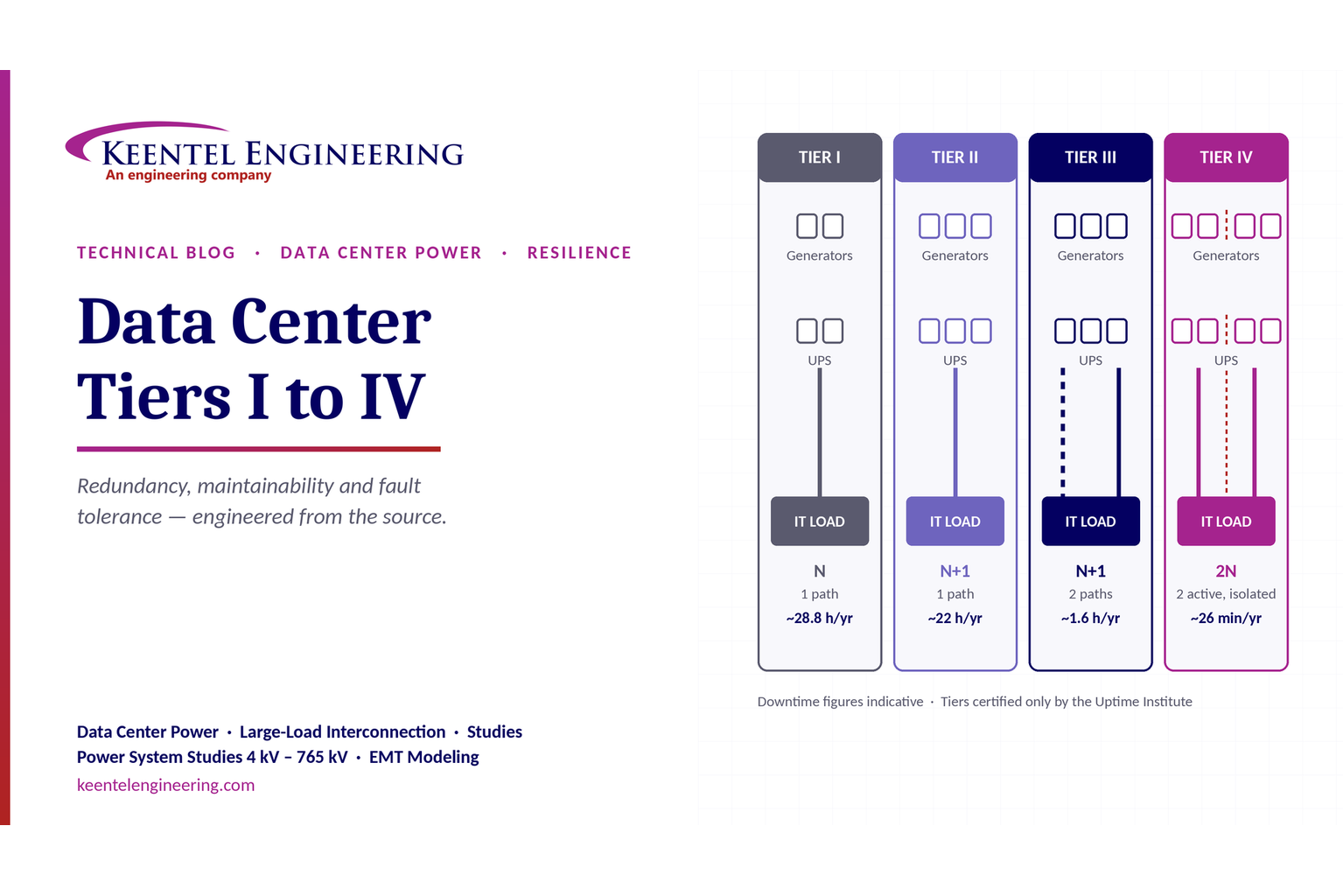
Data Center Tiers I to IV: An Electrical Engineer's Guide to Redundancy, Maintainability and Fault T
By SANDIP R PATEL • October 3, 2026
Compare Data Center Tiers I–IV, including redundancy, uptime, Tier III concurrent maintainability, Tier IV fault tolerance, UPS, generators and power design.
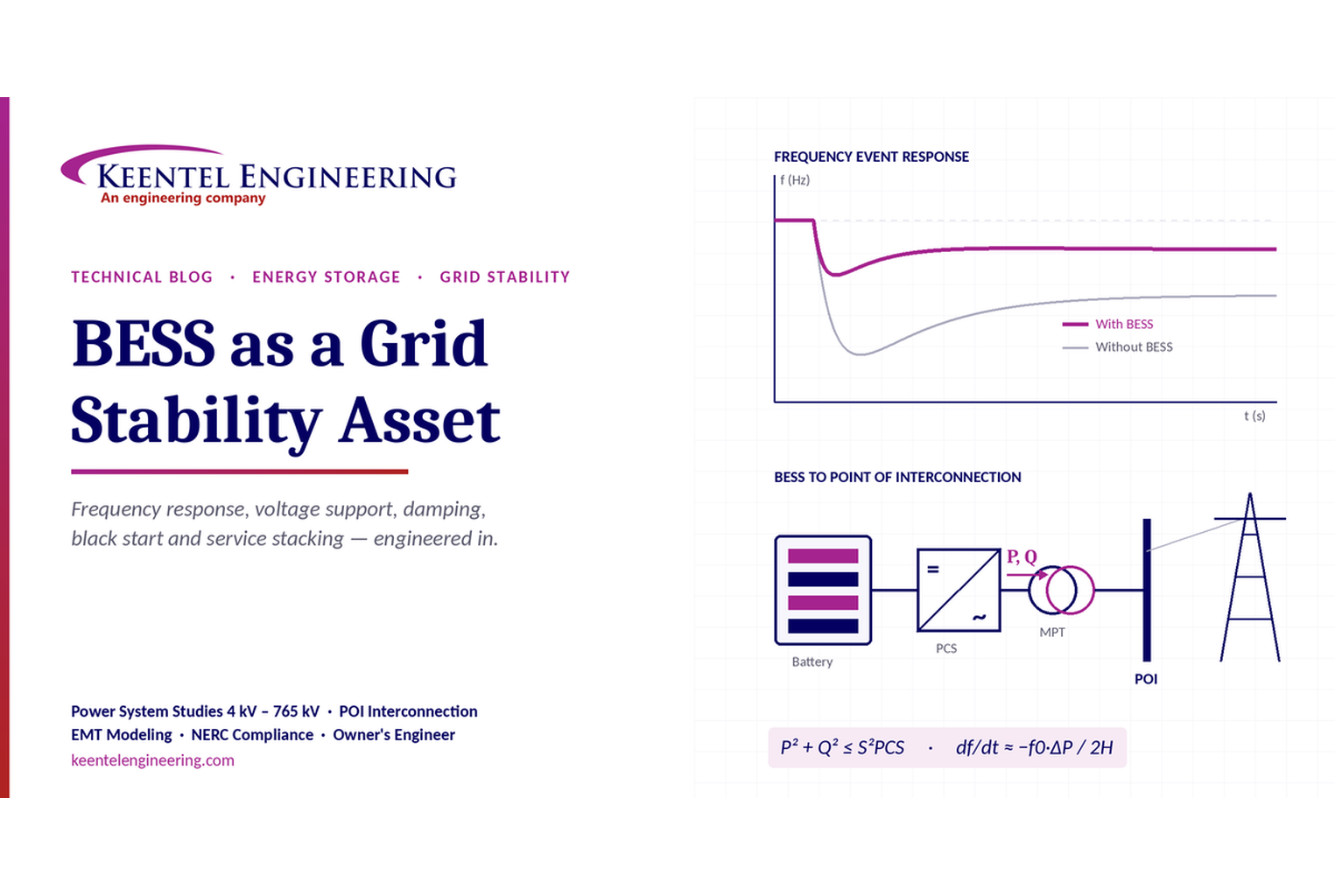
BESS grid stability with frequency response and POI interconnection.
By SANDIP R PATEL • October 3, 2026
Learn how BESS supports grid stability through fast frequency response, voltage support, oscillation damping, black start, grid-forming controls and EMT studies.
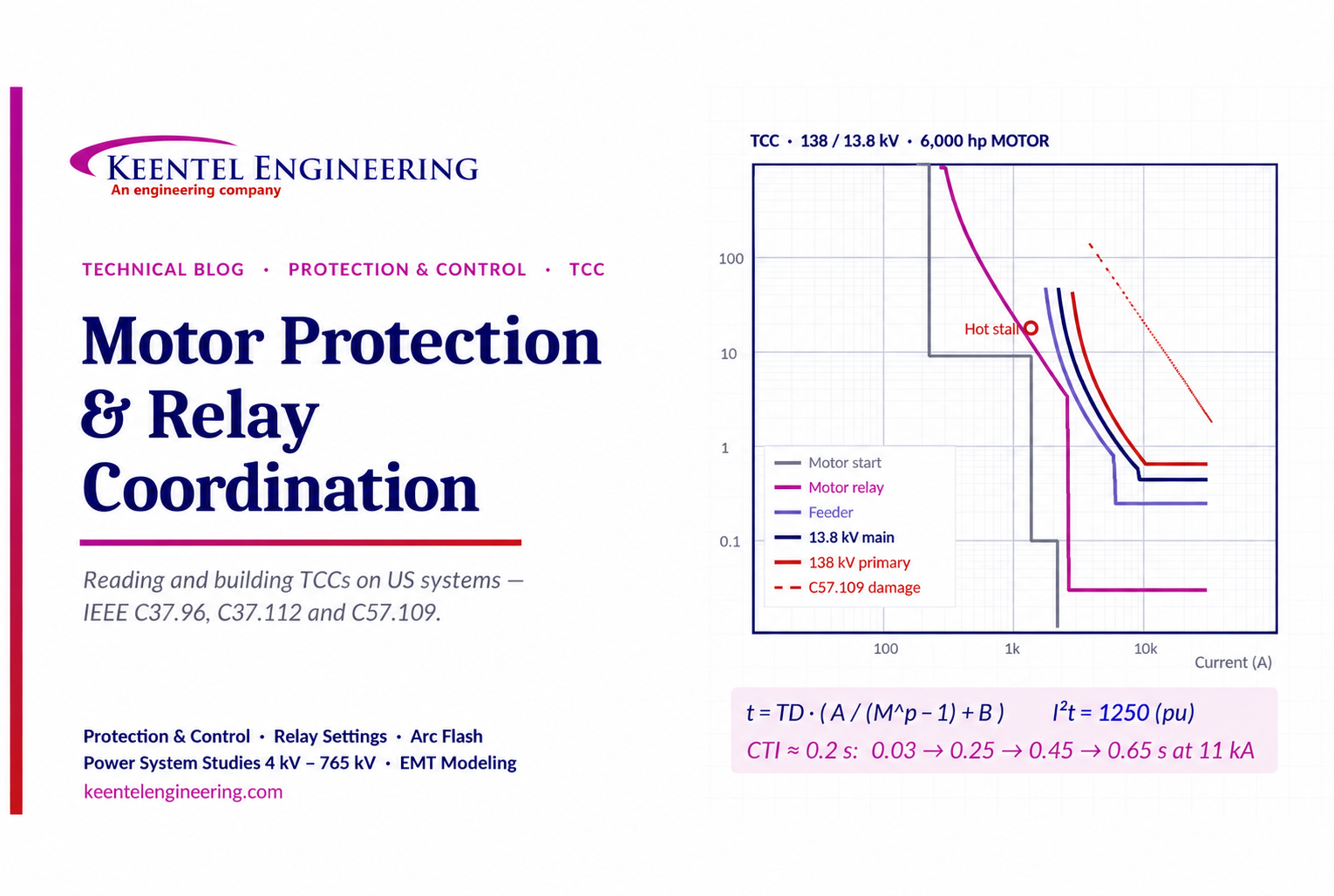
Motor Protection & Relay Coordination TCC Guide
By SANDIP R PATEL • October 3, 2026
Learn motor protection and relay coordination using TCC curves, IEEE standards, transformer damage limits, CTI settings and a 138/13.8 kV example.
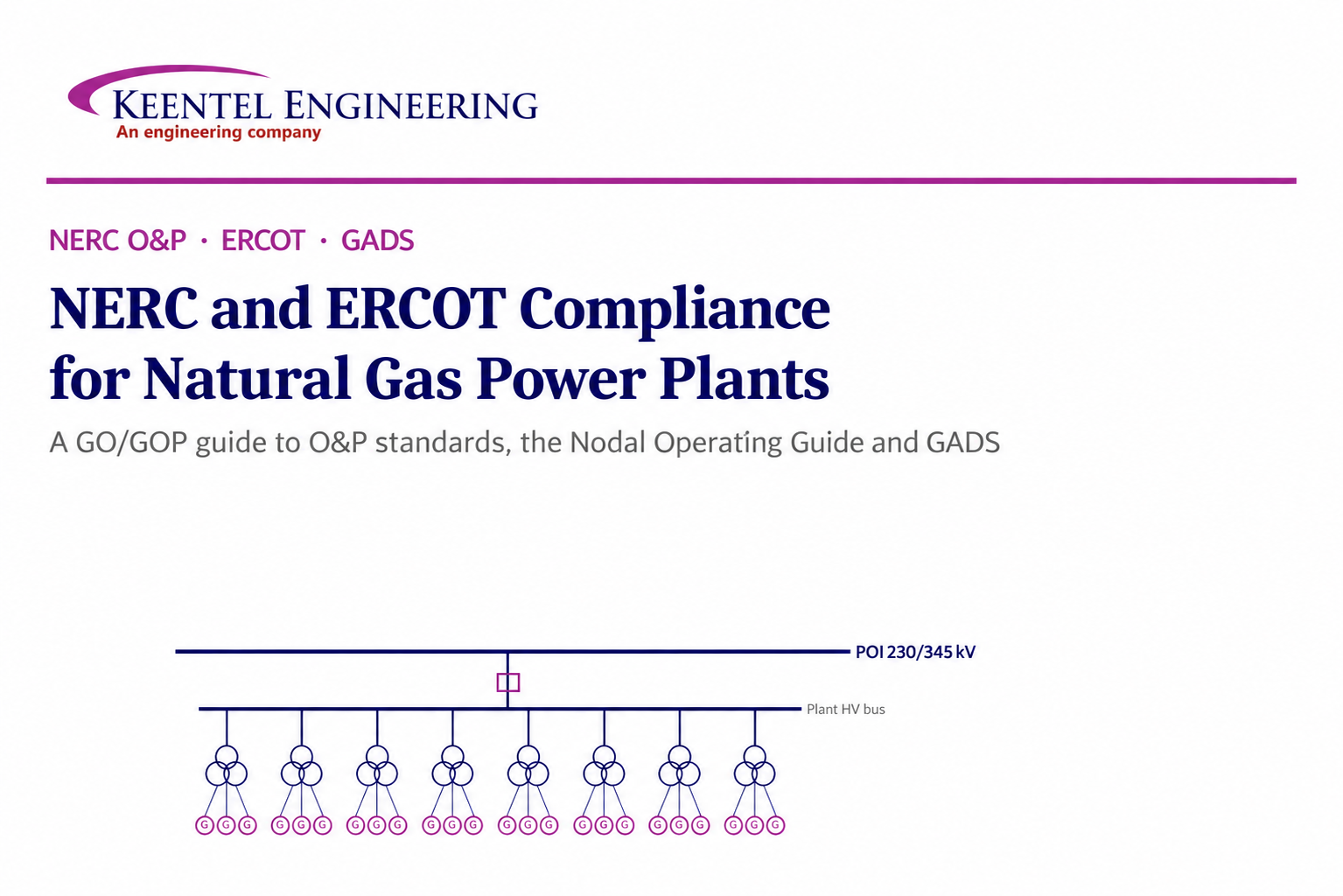
NERC and ERCOT compliance guide for natural gas power plants showing power system diagram and grid c
By SANDIP R PATEL • September 30, 2026
Learn NERC and ERCOT compliance requirements for natural gas power plants, including GO/GOP obligations, O&P standards, GADS reporting, and audits.
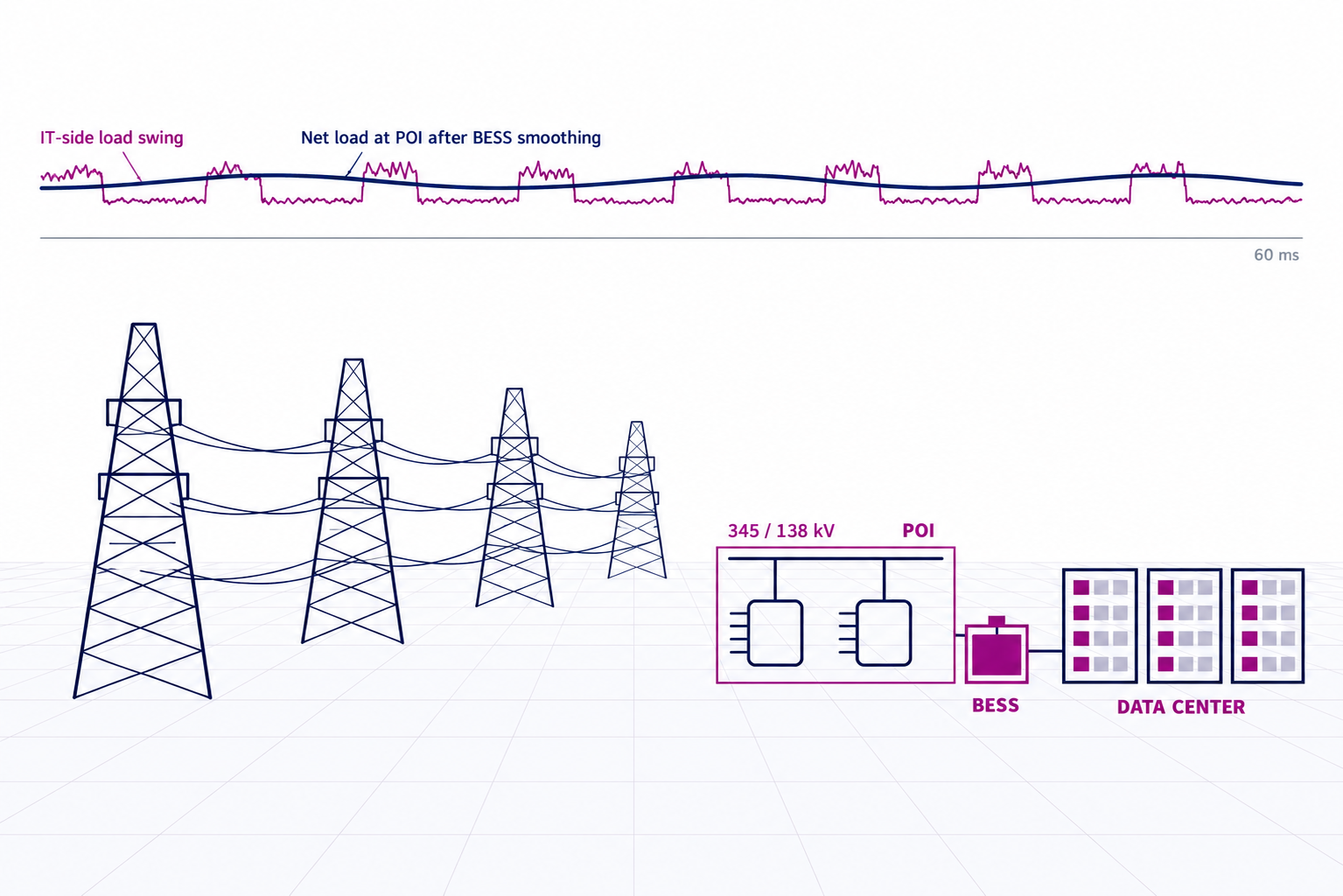
Data center and high-voltage transmission grid illustrating a large-load interconnection application
By SANDIP R PATEL • September 26, 2026
Learn how to prepare a MISO large-load interconnection package, including PSS®E models, BESS smoothing, harmonic data and transmission-owner requirements.