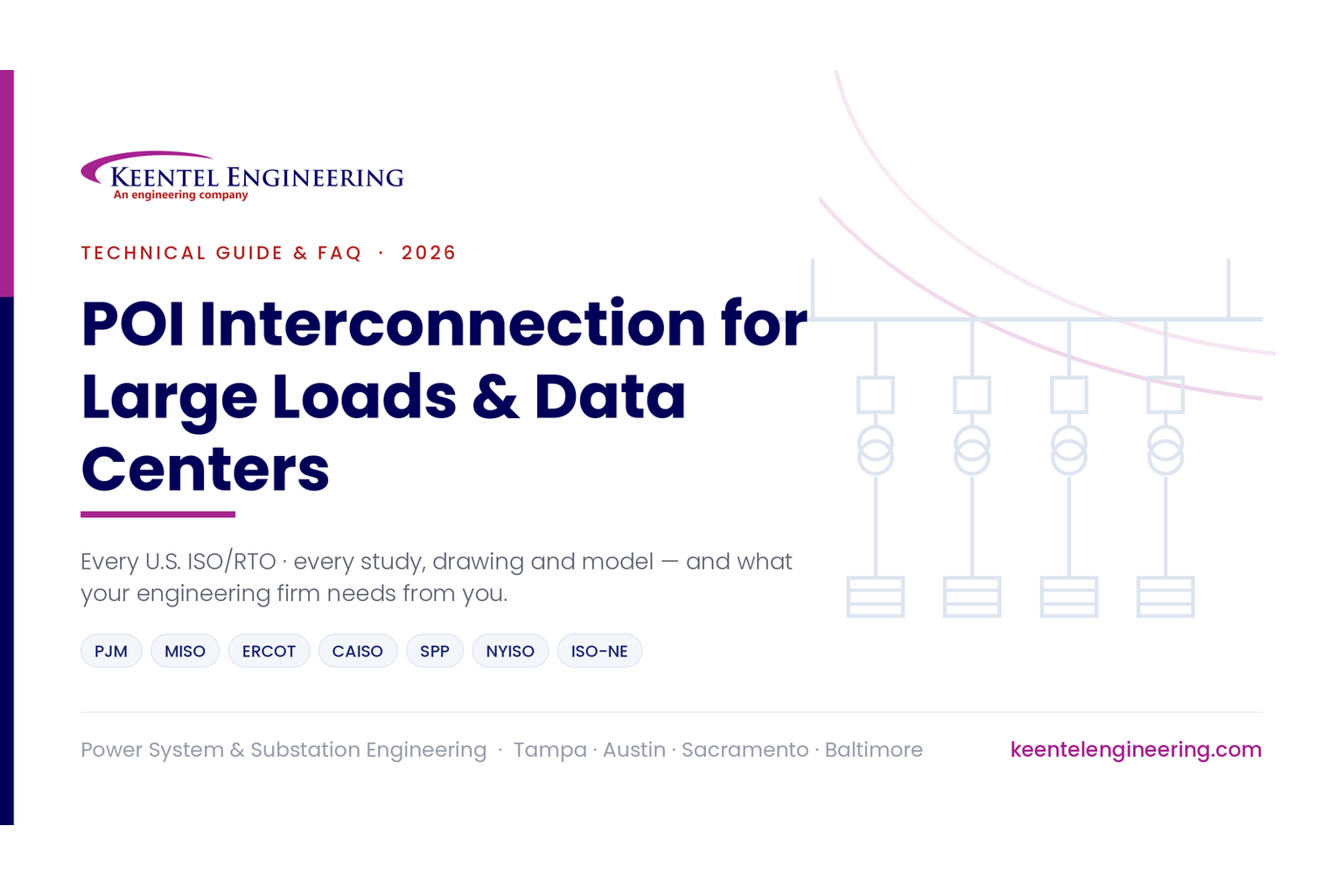
POI Interconnection Engineering Support for Utility Approved Grid Connections

Engineering, documentation, and utility coordination designed to reduce interconnection risk, prevent redesigns, and accelerate project approvals.

Supporting renewable developers, EPC contractors, IPPs, and utilities across North America.

Blank white square.

POI Interconnection Engineering Support 

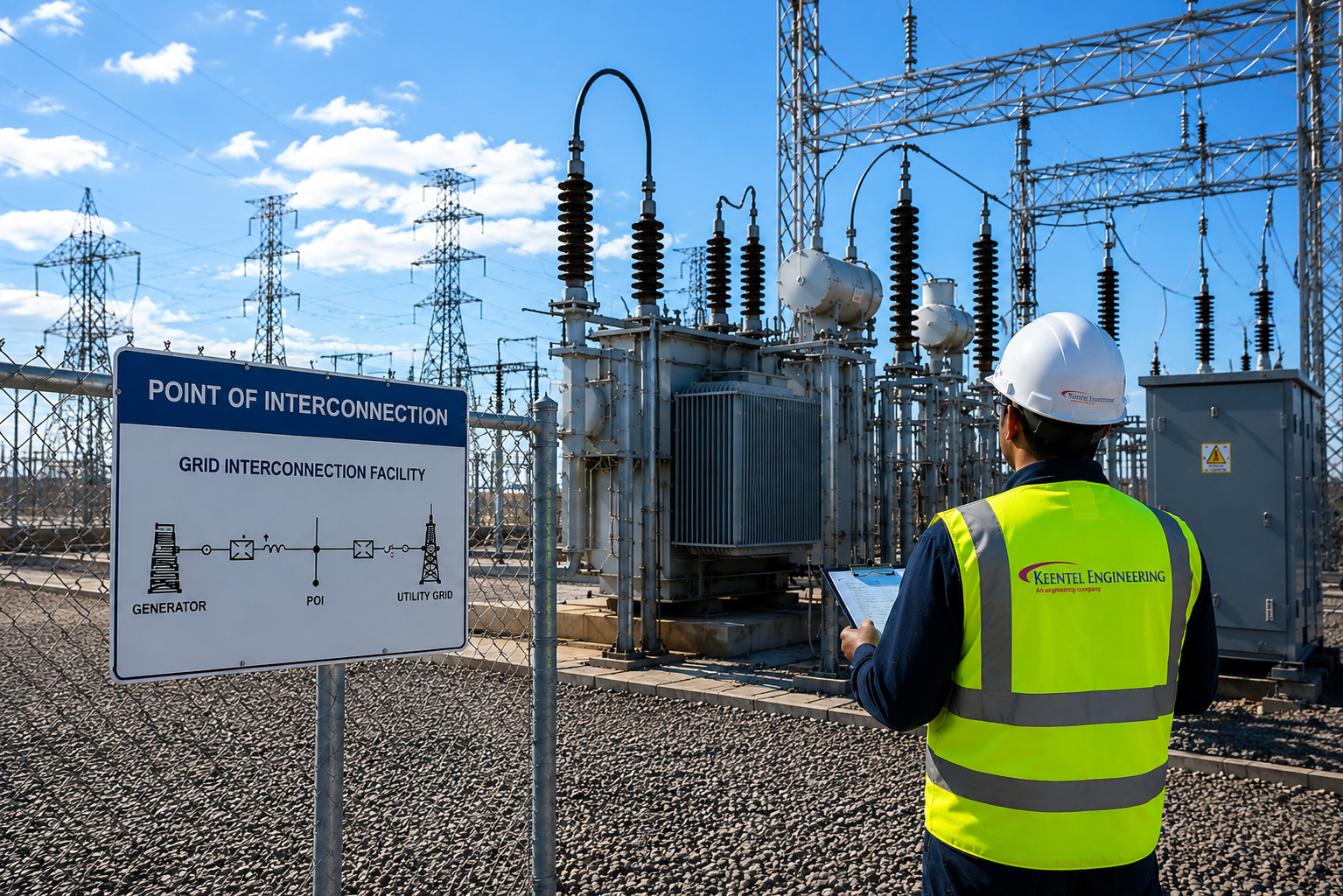
POI interconnection engineering support provides the technical design, documentation, and utility coordination required to successfully connect generation facilities to the electrical grid at the point of interconnection (POI).


This service helps developers, EPCs, and owners:

  • Meet utility-specific interconnection requirements
  • Align POI design with approved study assumptions
  • Reduce utility rejections and redesign cycles
  • Accelerate interconnection approvals and energization

POI engineering is typically required during interconnection applications, study phases, and detailed design for renewable, storage, and conventional generation projects.

Who This Service Is For

Our POI interconnection engineering support is designed for projects where utility acceptance, schedule certainty, and compliance matter.

This service is best suited for utility-scale and complex interconnections, not template-driven or low-risk projects.

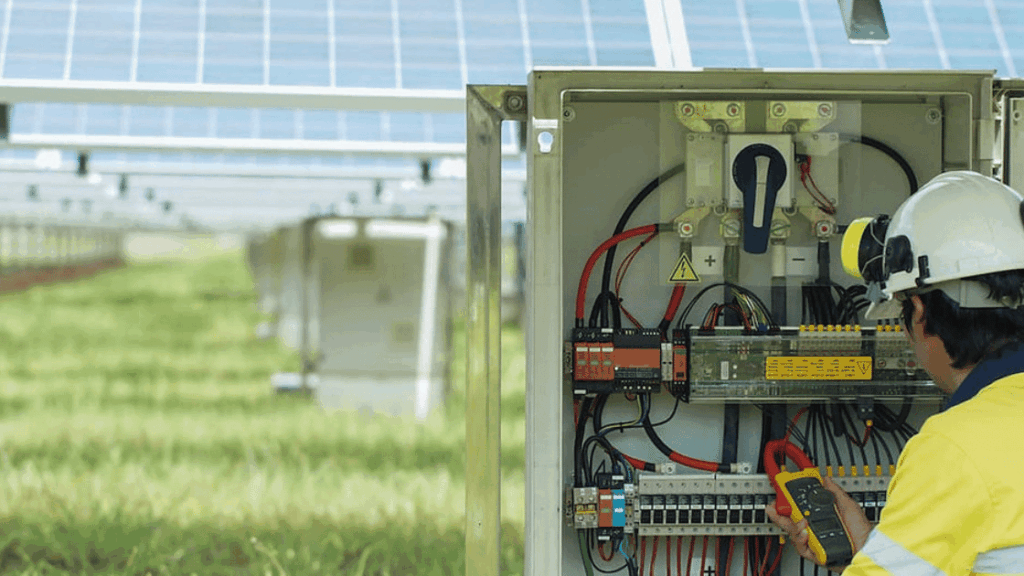
Two technicians in hard hats inspect electrical panel, one using a laptop in a control room.

Renewable energy developers (solar, wind, BESS, hybrid projects)

Two technicians in hard hats inspect electrical panel, one using a laptop in a control room.

EPC contractors managing interconnection scope

Two technicians in hard hats inspect electrical panel, one using a laptop in a control room.

Independent power producers (IPPs)

Two technicians in hard hats inspect electrical panel, one using a laptop in a control room.

Industrial and utility-scale generation owners

Why POI Interconnection Is One of the Highest-Risk Phases of a Power Project

Many power projects don’t fail during construction — they fail during interconnection review.

POI interconnection engineering is not just about drawings. It requires a clear understanding of utility standards, review processes, ownership boundaries, and approval expectations. Our role is to reduce this risk before it becomes a schedule or cost problem.

Common POI-related issues include:

Two technicians in hard hats inspect electrical panel, one using a laptop in a control room.

Utility rejection due to incomplete or non-compliant POI designs

Two technicians in hard hats inspect electrical panel, one using a laptop in a control room.

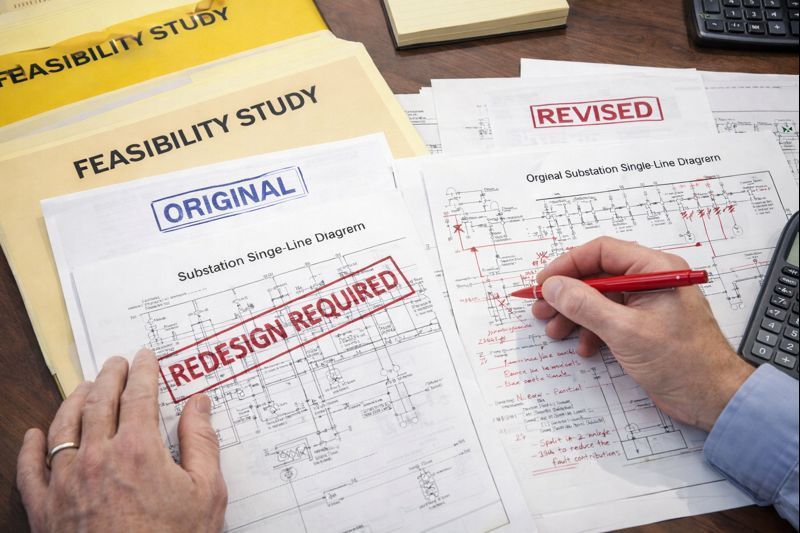
Redesigns after feasibility, system impact, or facilities studie

Two technicians in hard hats inspect electrical panel, one using a laptop in a control room.

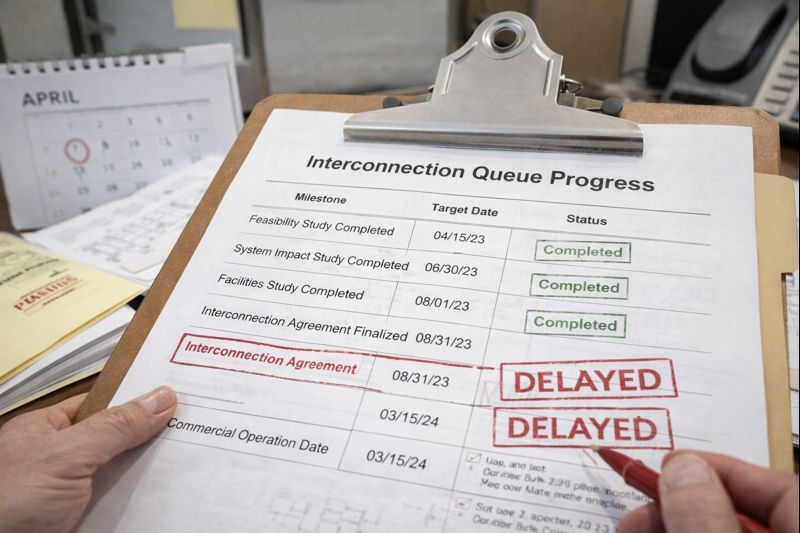
Missed queue milestones and delayed commercial operation

Two technicians in hard hats inspect electrical panel, one using a laptop in a control room.

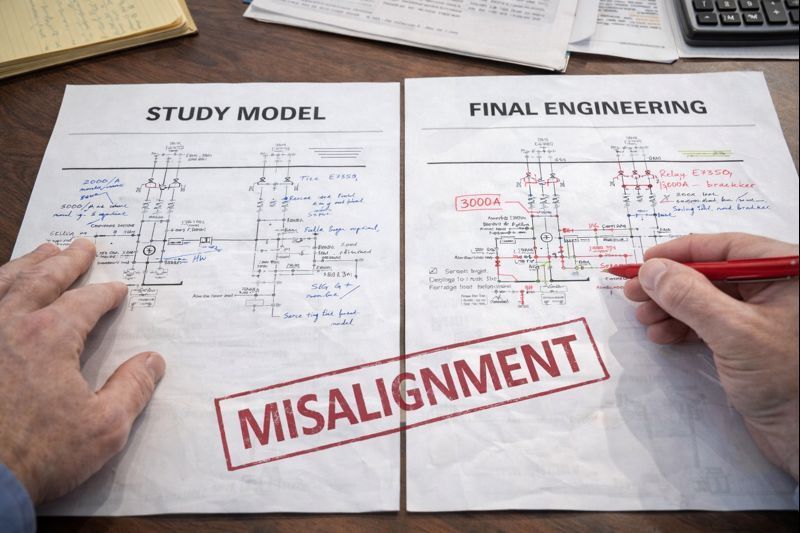
Misalignment between study assumptions and final engineering

Two technicians in hard hats inspect electrical panel, one using a laptop in a control room.

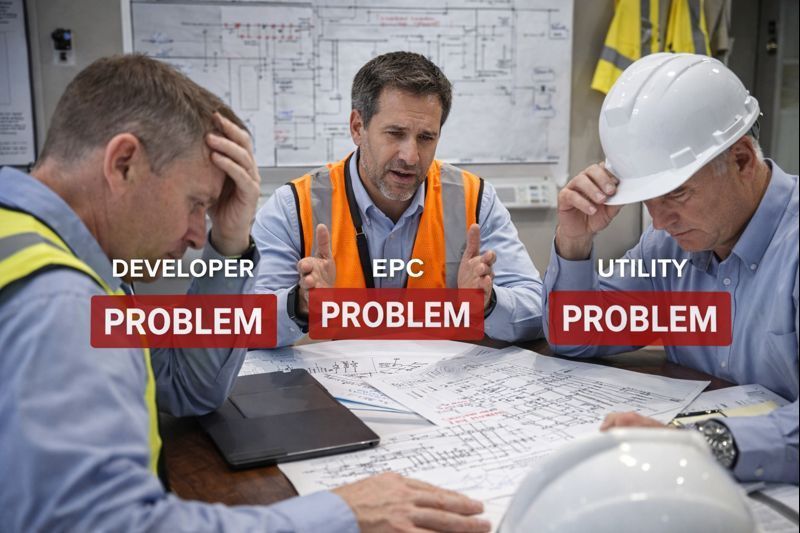
Poor coordination between developers, EPCs, and utilities

What We Deliver

POI Interconnection Engineering Support

Power lines silhouetted against a sunset with orange, yellow, and blue hues.

Our skilled and knowledgeable engineering team has a rich history in designing, developing and commissioning various substation and interconnection engineering support projects.
LEARN MORE
Two technicians in hard hats inspect electrical panel, one using a laptop in a control room.

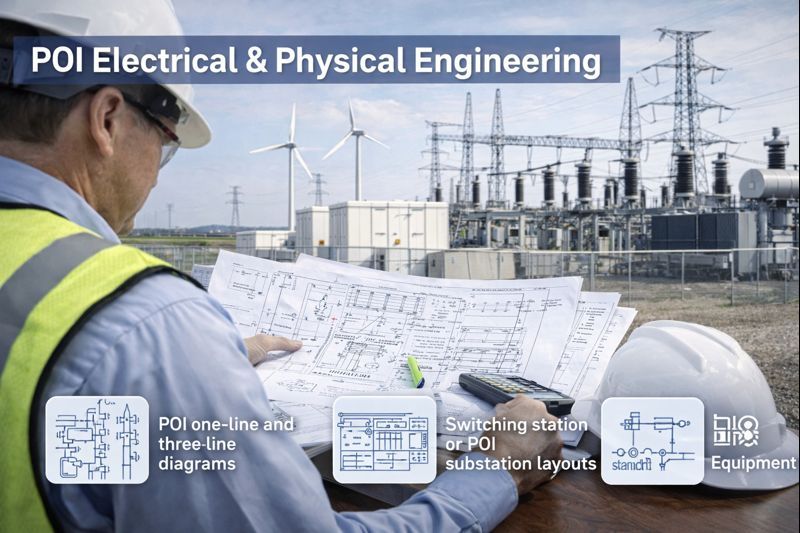
POI Electrical & Physical Engineering

  • POI one-line and three-line diagrams
  • Switching station or POI substation layouts
  • Equipment sizing and configuration aligned with utility standards
  • Protection and control concepts at the POI
  • Revenue and utility metering design support
  • Ownership demarcation and interface definition
Woman in beige blazer holding purple file folder, reviewing papers.

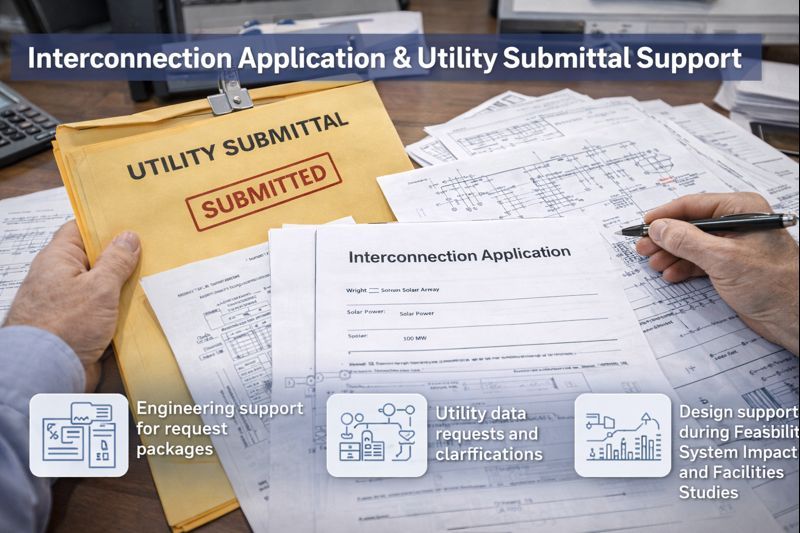
Interconnection Application & Utility Submittal Support

  • Engineering support for interconnection request packages
  • Utility data requests and technical clarifications
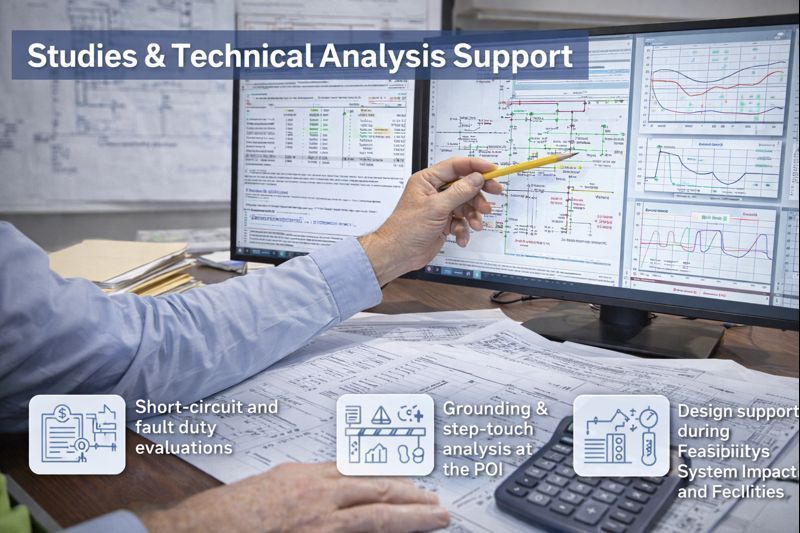
  • Design support during Feasibility, System Impact, and Facilities Studies
  • Alignment of POI design with approved study assumptions
  • Utility comment resolution and resubmittals


POI Interconnection Engineering Support

Power lines silhouetted against a sunset with orange, yellow, and blue hues.

Our skilled and knowledgeable engineering team has a rich history in designing, developing and commissioning various substation and interconnection engineering support projects.
LEARN MORE
Two technicians in hard hats inspect electrical panel, one using a laptop in a control room.

Studies & Technical Analysis Support

  • Short-circuit and fault duty evaluations
  • Grounding and step-touch analysis at the POI
  • Reactive power and voltage control support
  • Protection coordination inputs and assumptions
  • Equipment duty and thermal checks
Woman in beige blazer holding purple file folder, reviewing papers.

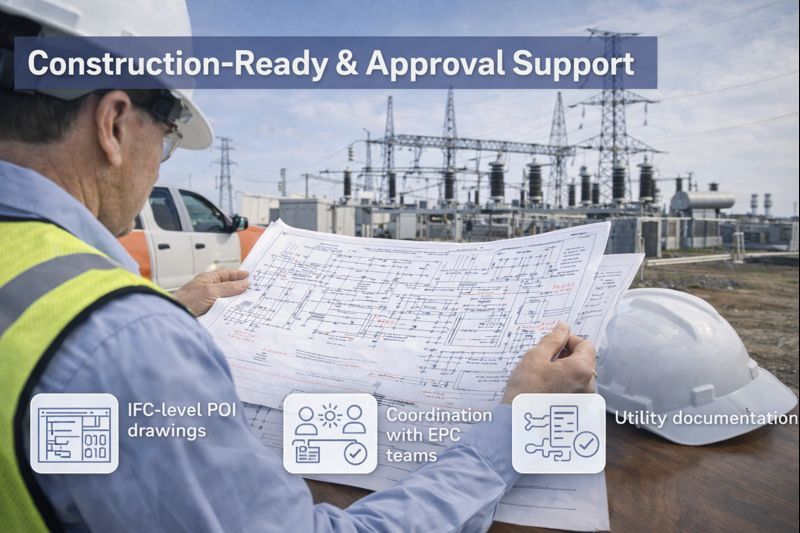
Construction-Ready & Approval Support

  • IFC-level POI drawings and documentation
  • Coordination with EPC detailed engineering teams
  • Utility review responses and design revisions
  • As-built documentation and closeout support (as required)

Download Our POI Interconnection Engineering Support Flyer

Please click the Download button to get our POI Interconnection Engineering Support flyer.

When to Engage POI Interconnection Engineering Support

Engaging POI engineering at the right time can prevent months of delay later.

This service is typically engaged:

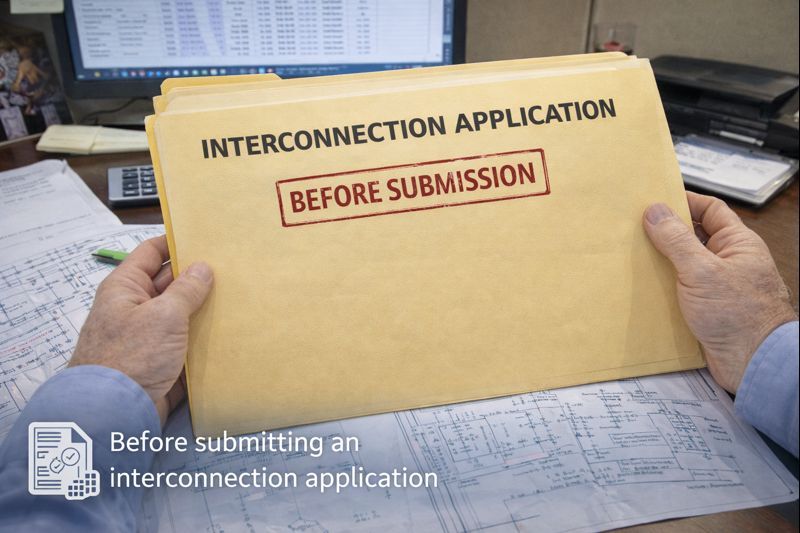
Before submitting an interconnection application

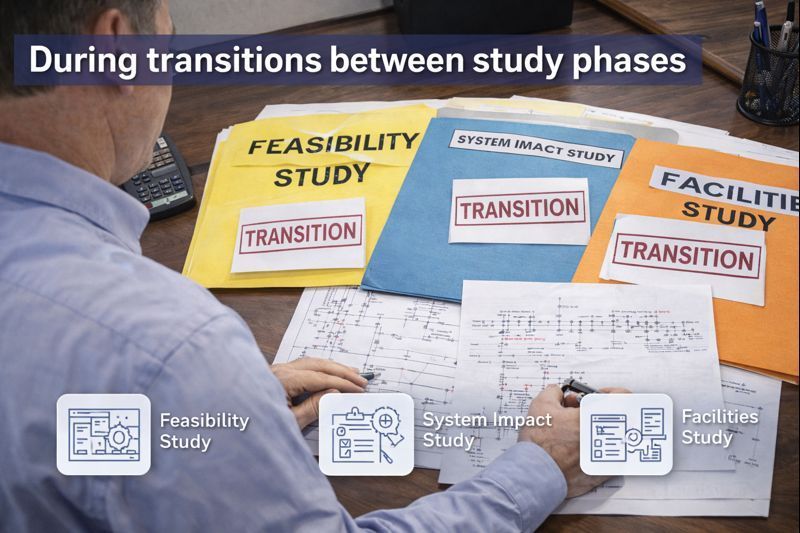
During transitions between study phases

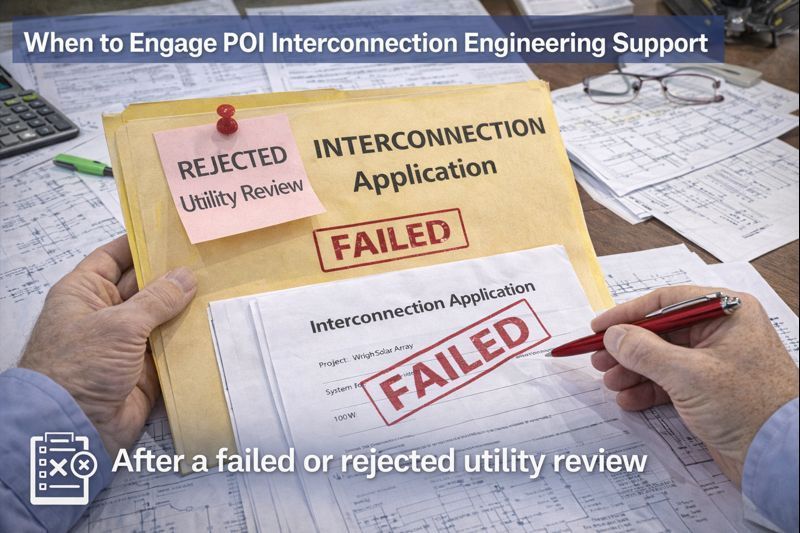
After a failed or rejected utility review

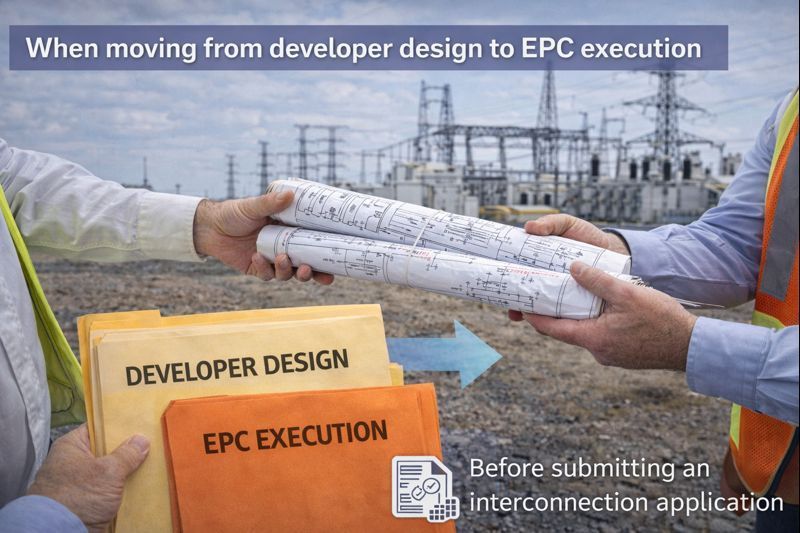
When moving from developer design to EPC execution

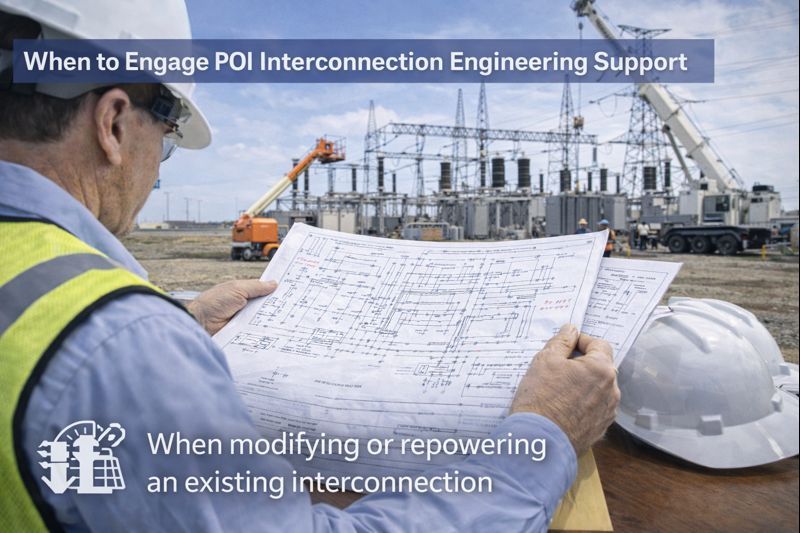
When modifying or repowering an existing interconnection

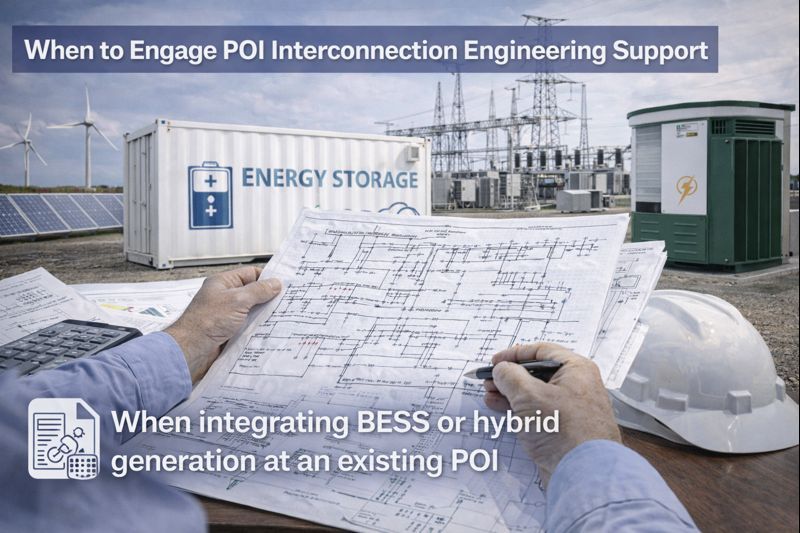
When integrating BESS or hybrid generation at an existing POI

Keentel Engineering POI Engineering Capabilities

We design POIs to meet utility-specific requirements, not generic assumptions.

Our experience includes:

Two technicians in hard hats inspect electrical panel, one using a laptop in a control room.

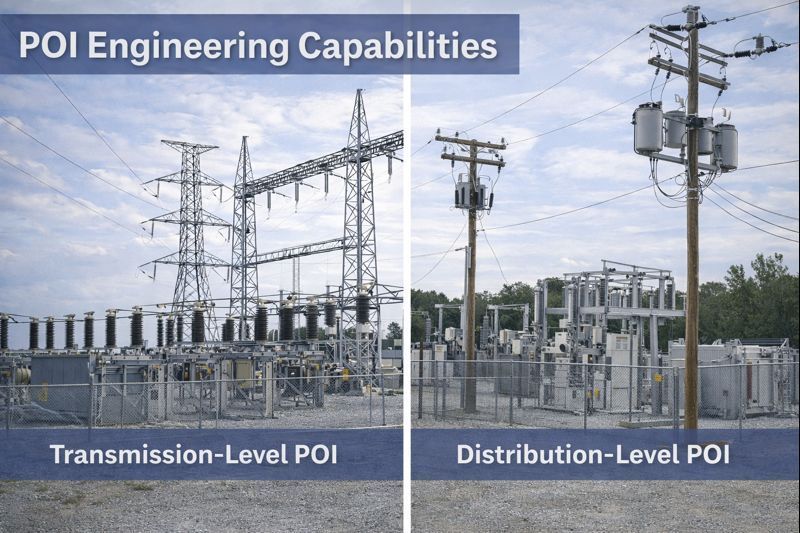
Transmission-level and distribution-level POIs

Two technicians in hard hats inspect electrical panel, one using a laptop in a control room.

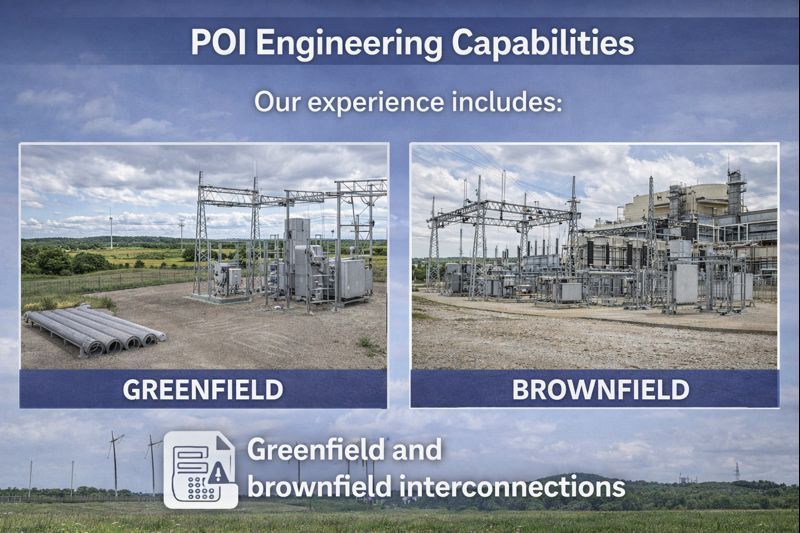
Greenfield and brownfield interconnections

Two technicians in hard hats inspect electrical panel, one using a laptop in a control room.

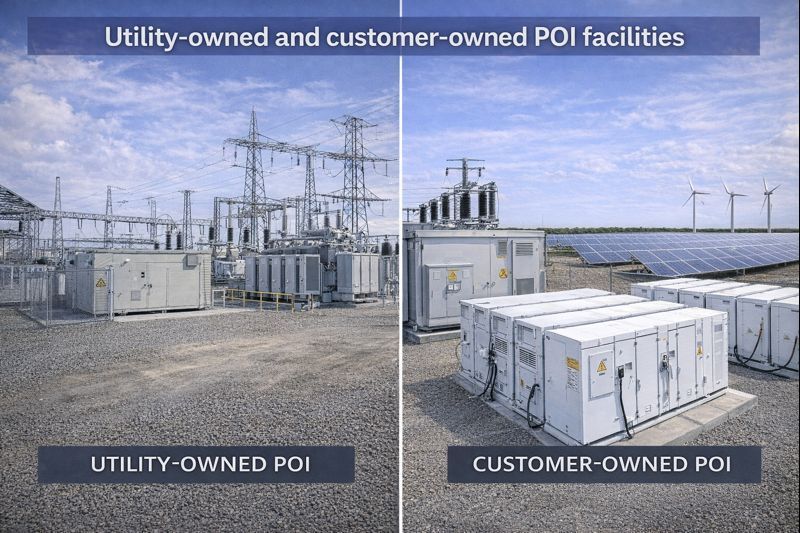
Utility-owned and customer-owned POI facilities

Two technicians in hard hats inspect electrical panel, one using a laptop in a control room.

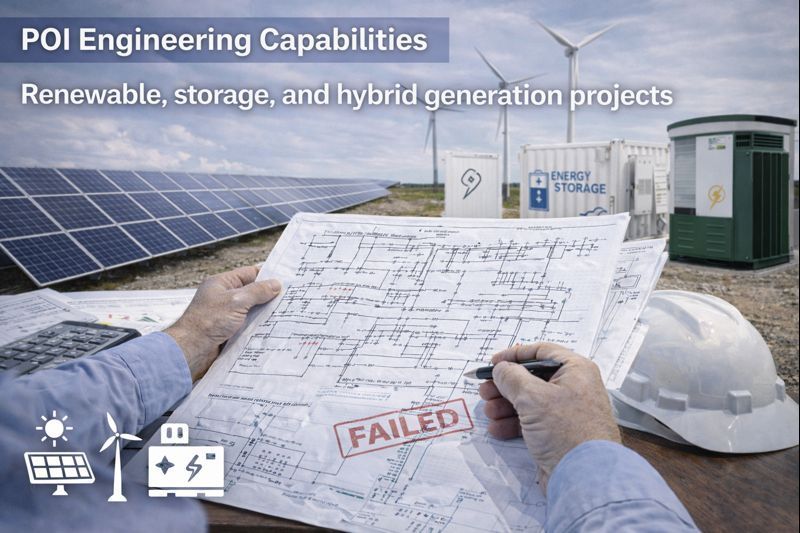
Renewable, storage, and hybrid generation projects

Two technicians in hard hats inspect electrical panel, one using a laptop in a control room.

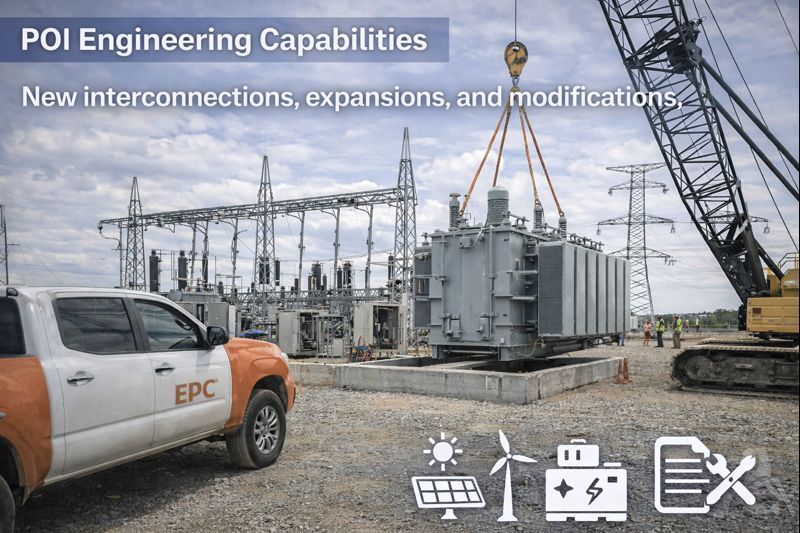
New interconnections, expansions, and modifications

Audit-Ready, Utility-Compliant POI Engineering

Our POI engineering is developed to align with:

Utility interconnection standards and guidelines

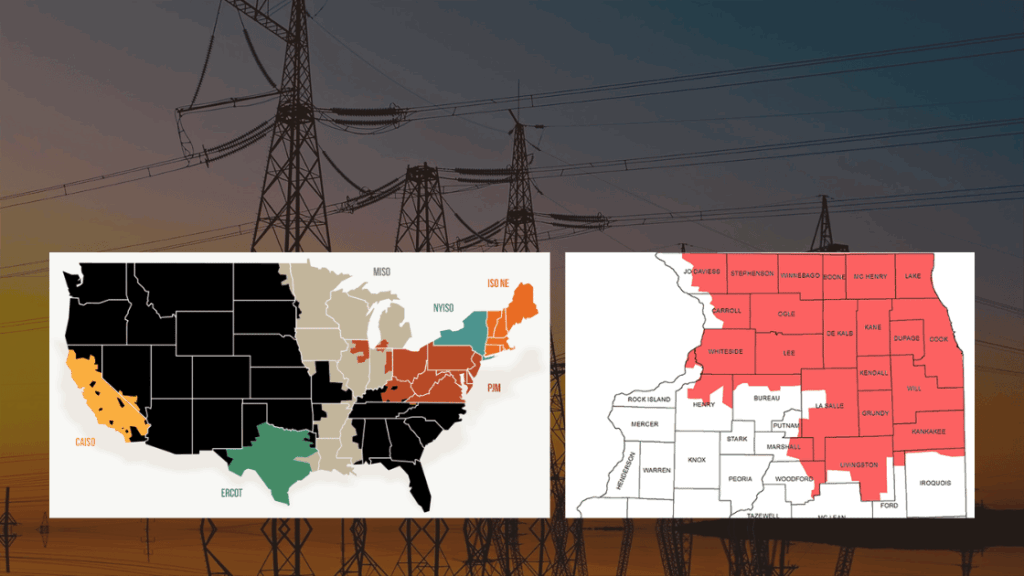
ISO/RTO requirements (where applicable)

Protection, grounding, and metering criteria

Approved study assumptions and operating envelopes

This approach reduces the risk of:

Utility rejection or extended review cycles

Study invalidation due to design mismatches

Late-stage redesign and cost escalation

Commissioning and energization delays

Download Our POI Interconnection Engineering Support Flyer

Please click the Download button to get our POI Interconnection Engineering Support flyer.

Our POI Interconnection Engineering Process

Step 1

Utility & Queue Review

Review interconnection requirements, queue position, voltage level, and ownership boundaries.

Step 2

Conceptual POI Engineering

Develop compliant preliminary layouts, schematics, and technical assumptions.

Step 3

Study & Application Support

Support feasibility, system impact, and facilities studies with aligned engineering inputs.

Step 4

Detailed POI Design

Advance engineering to permit- and construction-ready documentation.

Step 5

Utility Review & Resolution

Address utility comments, revisions, and final approvals efficiently.

Why Choose Us for POI Interconnection Engineering

Person in crosshairs. Fo F

Fewer Utility Rejections

We design POIs specifically to utility standards and reviewer expectations.

Person icon with a badge of honor. Expe Exp E Ex

Faster Interconnection Timelines

Clear, complete documentation reduces review cycles and resubmittals.

Black and white starburst icon with a star in the center. Qual Q

Strong Developer & EPC Coordination

We bridge the gap between studies, engineering, and construction teams.

Magnifying glass with a diamond, circle, triangle, and hexagon.

Engineering That Scales

Our POI designs support future expansion, repowering, and hybridization.

30 Years of Experience

We have over three decades of experience in interconnect engineering, from basic POI siting to advanced system impact studies and compliance documentation. Rest assured, we have the knowledge, understanding, and expertise to handle and execute all types of projects with precision and regulatory alignment.

Quality with Innovation

Our strong reputation is built on detailed engineering, modern design tools, and strict quality control. Whether you're working on battery storage, utility-scale solar, or hybrid systems, we ensure your interconnection design and engineering meets both utility and ISO standards.

Let's Discuss How to Optimize Your Next Project

Submit

Power lines silhouetted against a sunset with orange, yellow, and blue hues.

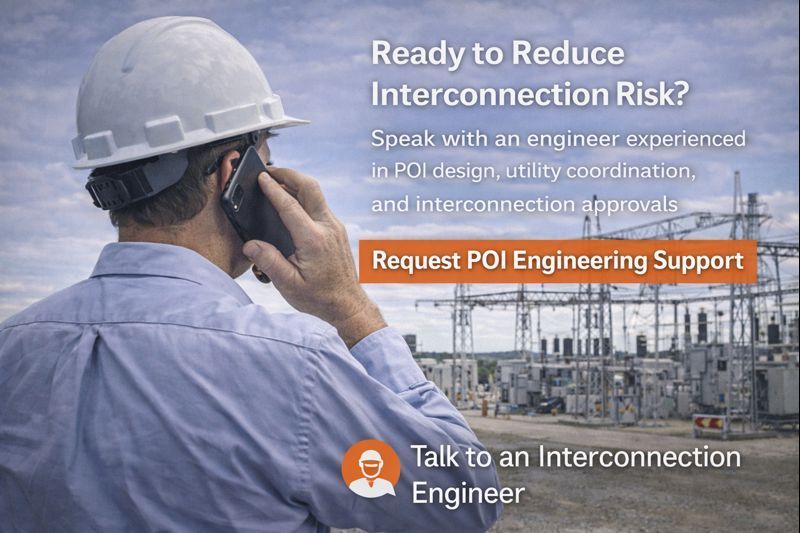
Ready to Reduce Interconnection Risk?

Speak with an engineer experienced in POI design, utility coordination, and interconnection approvals.

Two technicians in yellow hardhats working on electrical equipment, one using a laptop.

Download Our POI Interconnection Engineering Support Flyer

Please click the Download button to get our POI Interconnection Engineering Support flyer.

FAQ for POI Interconnection Engineering Support

  • 1. What is a Point of Interconnection (POI)?

    The Point of Interconnection (POI) is the location where a renewable energy project or power generation facility connects to the existing electrical grid. It is the physical or electrical point where the generated power is transferred from the plant to the transmission or distribution network. The POI is crucial for ensuring that the generated electricity is integrated seamlessly into the grid.

  • 2. What are POI Interconnection Engineering Support Services?

    POI Interconnection Engineering Support Services involve the technical assistance required for the successful design, planning, analysis, and execution of the interconnection process between a power generation system and the electrical grid. These services ensure that the interconnection complies with grid codes, standards, and regulatory requirements while optimizing safety, efficiency, and reliability.

  • 3. Why are POI Interconnection Services important?

    The interconnection process is a critical step in ensuring that power generated by renewable energy systems can be safely and efficiently delivered to the grid. These services help identify potential challenges in grid capacity, voltage stability, and protection schemes, while ensuring that the system meets local, regional, and national grid codes and standards.

  • 4. What specific services are included in POI Interconnection Engineering Support?

    Our POI Interconnection Engineering Support includes:


    • Feasibility Studies: Analyzing the technical feasibility of connecting your power plant to the grid at the proposed POI.
    • Grid Impact Studies: Evaluating how the interconnection will affect the existing grid in terms of voltage, stability, and reliability.
    • Transmission System Studies: Assessing the capability of the transmission
    • network to accommodate additional power generation from the plant.
    • Power Flow Analysis: Ensuring that the power flow from the plant to the grid remains balanced and stable.
    • Short Circuit Analysis: Determining fault levels at the POI and ensuring the proper sizing of protective equipment.
    • Protection Coordination: Designing protection schemes to prevent system damage and minimize the impact of faults.
    • Regulatory Compliance: Ensuring that the interconnection adheres to grid codes, local regulations, and industry standards.
    • Interconnection Agreement Support: Assisting with the negotiation and preparation of interconnection agreements with utility companies or transmission system operators.
    • System Upgrade Recommendations: Identifying any necessary upgrades to the grid or plant equipment to ensure a safe and reliable interconnection.
  • 5. How do you determine the best Point of Interconnection for my project?

    The selection of a POI depends on various factors, including the location of existing transmission lines, grid capacity, distance from the plant, and regulatory requirements. We assess these factors through feasibility studies and grid impact analyses to determine the most optimal POI that minimizes cost, risk, and technical challenges.

  • 6. What is involved in a Grid Impact Study?

    A Grid Impact Study analyzes how connecting a power generation system to the grid at the proposed POI will affect the performance of the transmission or distribution system. It includes evaluating power flow, voltage stability, fault conditions, and overall grid reliability. The study helps identify potential upgrades or modifications needed to accommodate the new generation capacity.

  • 7. What regulatory requirements must be considered during the POI interconnection process?

    The interconnection process must adhere to grid codes and regulations set by local transmission system operators (TSOs), utility companies, and government bodies. These regulations may address issues such as voltage control, frequency stability, protection coordination, safety standards, and environmental considerations. Our team ensures that all interconnection procedures comply with these requirements, ensuring the project’s smooth approval and integration.

  • 8. How do you ensure that the interconnection design is safe and reliable?

    We follow a rigorous process that includes:


    • Detailed design reviews and simulations to ensure the interconnection is robust and fault-tolerant.
    • Comprehensive protection system design that includes proper settings for relays, circuit breakers, and other protective devices.
    • Short-circuit analysis to verify that protective devices will respond correctly during fault conditions.
    • Continuous collaboration with grid operators to ensure compliance with operational standards and that the system remains stable and secure after interconnection.
  • 9. What is a typical timeline for completing the POI interconnection engineering process?

    The timeline for POI interconnection engineering depends on the complexity of the project and the requirements of the grid operator. Typically, the feasibility study, grid impact analysis, and other studies can take several weeks to a few months. Additional time may be required for addressing any upgrades or modifications to the grid or plant systems. We work closely with all stakeholders to ensure timely delivery and efficient project execution.

  • 10. What are the potential challenges in the POI interconnection process?

    Common challenges in the POI interconnection process include:


    • Grid capacity limitations: The grid may need upgrades to accommodate additional generation capacity.
    • Regulatory hurdles: Complying with complex regulatory requirements can delay the process.
    • Protection and safety concerns: Ensuring that the interconnection does not cause safety issues or grid instability.
    • Cost considerations: The need for infrastructure upgrades, transmission line expansions, or additional protective equipment can increase project costs. Our team helps mitigate these challenges by conducting thorough studies, coordinating with utilities, and providing tailored solutions to overcome obstacles.
  • 11. How can you help with the interconnection agreement process?

    We assist in the preparation and negotiation of interconnection agreements with utility companies and transmission system operators. These agreements outline the terms, conditions, and responsibilities of both parties, including the technical requirements, financial arrangements, and timelines for the interconnection. We ensure that these agreements protect your interests and comply with industry standards.

  • 12. How do you manage costs during the POI interconnection process?

    We help manage costs by conducting detailed feasibility studies and grid impact analyses early in the process, allowing us to identify potential issues and recommend cost-effective solutions. Our team works closely with contractors, utilities, and regulatory bodies to streamline the process, avoid unnecessary expenses, and minimize delays.

  • 13. Do you provide support after the interconnection is completed?

    Yes, we offer post-interconnection support to ensure that the integration of the power plant into the grid is smooth and operational. This can include:


    • Performance monitoring and troubleshooting.
    • Addressing any operational issues that arise.
    • Supporting with any ongoing regulatory or compliance requirements.
  • 14. How much do your POI Interconnection Engineering Support Services cost?

    The cost of our POI interconnection services varies depending on the complexity and scale of the project. We provide customized pricing based on the scope of the work, the type of studies required, and the level of support needed. We offer competitive rates and ensure that you receive high-value engineering expertise tailored to your project.

  • 15. What is the difference between Point of Interconnection (POI) and Point of Common Coupling (PCC)?

    While both POI and PCC refer to physical connection points, they apply in different contexts. The Point of Interconnection (POI) is where your specific generation facility connects to the utility grid. The Point of Common Coupling (PCC) is a shared connection point used by multiple customers. POI is typically used in utility-scale projects, while PCC is more common in distributed generation or commercial setups under IEEE 1547.

  • 16. What are the different types of interconnections in power systems?

    Interconnections in power systems can be categorized as physical (e.g., transmission line tie-ins), network-based (between different grid zones), or system-level (between balancing authorities). In renewable energy, the most common interconnection is physical — connecting your solar, wind, or battery project to a specific POI on the transmission or distribution grid.

  • 17. What is the difference between the Point of Delivery (POD) and the Point of Interconnection (POI)?

    The Point of Interconnection (POI) is where the project connects to the utility grid. The Point of Delivery (POD) is where the power is officially handed off to the purchaser or utility for billing and metering purposes. In many projects, the POI and POD are the same, but in some cases they can be separate depending on the utility's metering infrastructure.

  • 18.Can you give a simple example of interconnection in the energy industry?

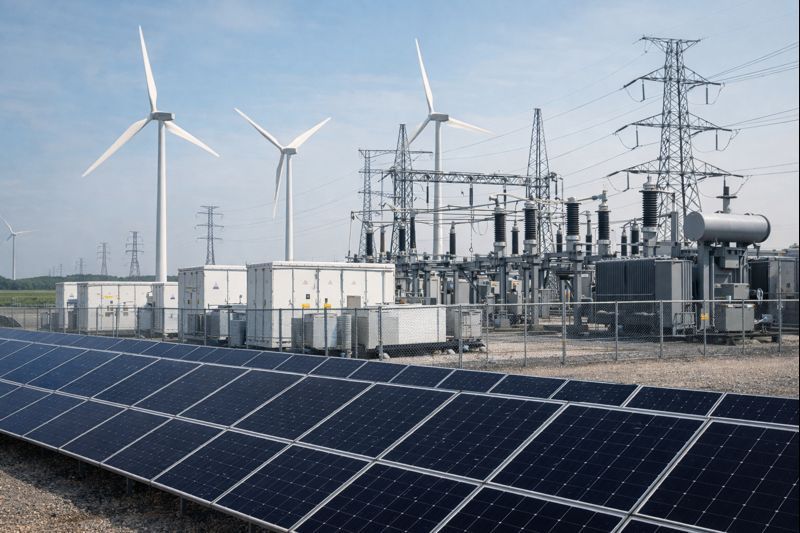
    Sure. Imagine a solar farm in Texas that generates power and feeds it into the ERCOT grid. The interconnection point — or POI — might be a nearby 138kV substation owned by the utility. After conducting studies and submitting an interconnection application, the project gets approval to connect at that location. From there, the solar farm delivers power directly to the grid.

Blog and Updates

Learn how PJM D-Curve reactive capability testing is performed for wind farms and inverter-based res
By SANDIP R PATEL January 15, 2026
Learn how PJM D-Curve reactive capability testing is performed for wind farms and inverter-based resources, including testing requirements, measurement basis, and eDART submission support.
Energy sector integration showing power grids, wind turbines, solar energy, and multi-energy system
By SANDIP R PATEL January 1, 2026
Explore how energy sector integration reshapes modern power grids, improving decarbonization, resilience, and system planning based on CIGRE TB 973 insights.
Diagram illustrating real-code EMT modeling for HVDC, FACTS, and inverter-based resources in power s
By SANDIP R PATEL January 1, 2026
Learn how IEEE/CIGRE real-code EMT modeling improves HVDC, FACTS, and inverter-based resource studies with higher fidelity, compliance accuracy, and tool-independent simulation.
A practical guide to upcoming NERC Reliability Standards (2026–2028), key effective dates, and compl
By SANDIP R PATEL December 29, 2025
A practical guide to upcoming NERC Reliability Standards (2026–2028), key effective dates, and compliance readiness for inverter-based resource owners.
By SANDIP R PATEL December 26, 2025
Complete technical guide to ERCOT Model Quality Tests (MQT) for inverter-based resources. Covers PRC-029-1, IEEE 2800-2022, PSCAD, SCR testing, and pass/fail criteria.
Graphic for PRC-030-1, event analysis for inverter-based resources. Solar farm, technicians monitoring data, equipment.
By SANDIP R PATEL December 26, 2025
PRC-030-1 compliance guide for Generator Owners covering IBR event analysis, corrective action plans, audit requirements, and post-disturbance obligations.
Power lines against a twilight sky with digital network lines overlayed, spanning an open field.
By SANDIP R PATEL December 19, 2025
A practical guide to NERC PRC-029-1 for inverter-based resource owners. Learn ride-through requirements, compliance timelines, exemptions, and how Keentel Engineering supports PRC-029-1 readiness.
Electrical substation with high-voltage equipment, wires, and insulators against a blue sky.
By SANDIP R PATEL November 26, 2025
Learn how to stay compliant with NERC PRC-004-6 and MIDAS reporting. Keentel Engineering provides misoperation analysis, CAP support, and audit-ready documentation.
ISO-NE DDMS Guide
By SANDIP R PATEL November 26, 2025
Technical guide to ISO-NE’s DDMS for power system engineers — model submissions, file formats (RAW/DYR), certification workflow, and annual recertification for MOD-032, MOD-026, MOD-027.
Learn how PRC-004-6 misoperations and MIDAS reporting work.
By SANDIP R PATEL November 15, 2025
Learn how PRC-004-6 misoperations and MIDAS reporting work. A complete NERC compliance guide from Keentel Engineering for utilities and power entities.
Solar panels field and power plant with smokestacks on a cloudy day.
By SANDIP R PATEL October 30, 2025
Learn how Generator and Transmission Owners meet PJM MOD-032 data submission requirements using Gen Model, Model on Demand, and ASPEN tools for NERC compliance.
An aerial view of a large battery storage facility with numerous white shipping container-like units. Wind turbines in background.
By SANDIP R PATEL October 27, 2025
Learn how utility-scale BESS meet IEEE 2800 voltage and frequency ride-through requirements with simulation, validation, and compliance reporting.