A Coordinated Electric System Interconnection Review—the utility’s deep-dive on technical and cost impacts of your project.
Challenge: Frequent false tripping using conventional electromechanical relays
Solution: SEL-487E integration with multi-terminal differential protection and dynamic inrush restraint
Result: 90% reduction in false trips, saving over $250,000 in downtime
Upcoming NERC Reliability Standards (2026–2028): Key Effective Dates and Compliance Readiness for IBR Owners
December 29, 2025 | Blog
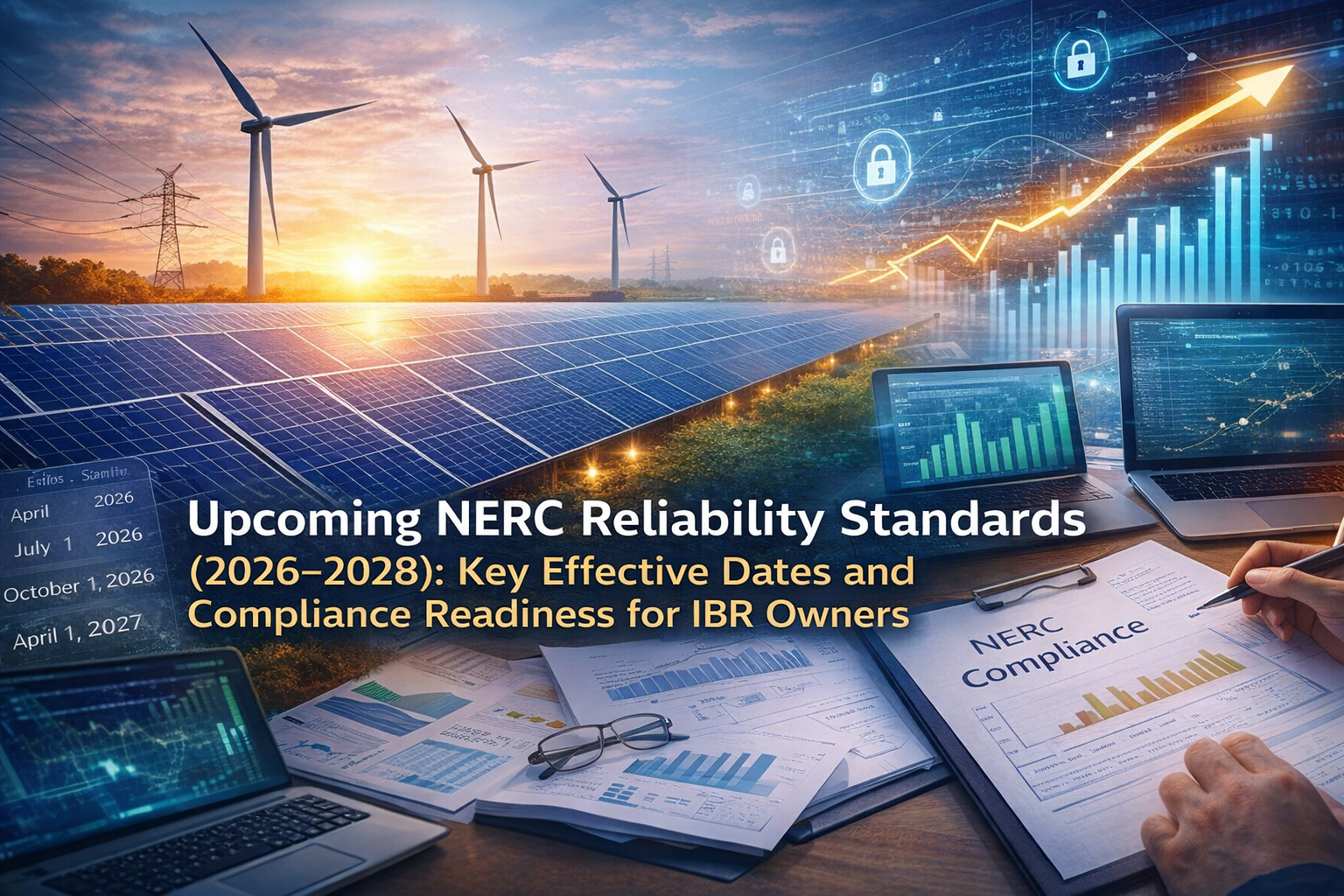
The North American Electric Reliability Corporation (NERC) has released a series of upcoming Reliability Standards scheduled to become effective between 2026 and 2028. These standards reflect the rapid evolution of the bulk electric system (BES), particularly driven by the growth of inverter-based resources (IBRs) such as solar, wind, and battery energy storage systems (BESS), as well as increasing cyber security risks and climate-driven planning challenges.
For asset owners, operators, developers, and newly registered Generator Owners (GOs) and Generator Operators (GOPs), early compliance planning is no longer optional—it is essential. Many of these standards require engineering studies, protection setting changes, EMT modeling, cyber architecture updates, and extensive documentation, all of which take time to implement correctly.
This article provides a clear overview of upcoming NERC standards, explains why they matter, and outlines practical steps entities should begin taking now.
Upcoming NERC Reliability Standards – Overview and Effective Dates
The following standards are scheduled to become enforceable over the next several years:
| Standard | Title | Effective Date |
|---|---|---|
| BAL-007-1 | Near-term Energy Reliability Assessments | April 1, 2027 |
| CIP-003-9 | Cyber Security — Security Management Controls | April 1, 2026 |
| CIP-012-2 | Cyber Security – Communications Between Control Centers | July 1, 2026 |
| CIP-015-1 | Cyber Security – Internal Network Security Monitoring | October 1, 2028 |
| PRC-024-4 | Frequency and Voltage Protection Settings for Synchronous Generators, Type 1 & Type 2 Wind Resources, and Synchronous Condensers | October 1, 2026 |
| PRC-029-1 | Frequency and Voltage Ride-through Requirements for Inverter-Based Resources | October 1, 2026 |
| PRC-030-1 | Unexpected Inverter-Based Resource Event Mitigation | October 1, 2026 |
| TOP-003-7 | Transmission Operator and Balancing Authority Data and Information Specification and Collection | October 1, 2026 |
| TPL-008-1 | Transmission System Planning Performance Requirements for Extreme Temperature Events | April 1, 2026 |
Why These Standards Matter
1. IBR-Focused Reliability Standards
Several of the upcoming standards directly address performance risks introduced by inverter-based technologies, especially under abnormal system conditions.
See Keentel Engineering Perspective on
NERC’s IBR Activities.
PRC-029-1 – Frequency and Voltage Ride-Through for IBR
This standard establishes mandatory ride-through requirements for IBRs, requiring:
- Verified frequency and voltage ride-through capability
- High-fidelity EMT modeling
- Coordination between plant-level controls and protection systems
This standard is foundational to NERC’s IBR Registration Initiative, expanding compliance obligations to many previously unregistered solar, wind, and BESS facilities.
PRC-030-1 – Unexpected IBR Event Mitigation
PRC-030-1 addresses large-scale, unexpected IBR tripping events and requires:
- Event analysis
- Root cause identification
- Corrective action plans
- Evidence of mitigation implementation
This shifts expectations from reactive reporting to proactive risk mitigation.
See more about
PRC-030-1 Event Analysis and Corrective Actions IBRs.
PRC-024-4 – Updated Protection Settings
This revision updates voltage and frequency protection requirements for:
- Synchronous generators
- Type 1 and Type 2 wind turbines
- Synchronous condensers
Entities must re-evaluate protection settings to ensure they do not contribute to unnecessary generator tripping during system disturbances.
Keentel Enginering Article about
NERC PRC-029-1 & PRC-024-4 Compliance.
2. Expansion of Cyber Security Obligations
As more IBRs become registered BES assets, CIP compliance exposure increases, particularly for entities that have never been subject to NERC CIP standards.
CIP-003-9 – Security Management Controls
Introduces enhanced governance expectations, including:
- Policy management
- Risk assessments
- Vendor and asset oversight
CIP-012-2 – Control Center Communications
Expands encryption, authentication, and monitoring requirements for:
- Control center-to-control center communications
- Data exchange pathways impacting BES reliability
CIP-015-1 – Internal Network Security Monitoring
Establishes new requirements for:
- East-west traffic monitoring
- Detection of anomalous behavior within trusted networks
- Long-term cyber visibility strategies
These standards significantly raise the bar for cyber architecture design, documentation, and evidence retention.
See more about
NERC CIP compliance services.
3. Planning and Operational Reliability Enhancements
TPL-008-1 – Extreme Temperature Planning
This standard introduces new transmission planning performance requirements tied to:
- Extreme cold and heat events
- Load stress scenarios
- Climate-driven system vulnerabilities
Planning coordinators and transmission planners must integrate temperature-driven scenarios into long-term studies. See
Transmission Planning Guide.
BAL-007-1 – Near-Term Energy Reliability Assessments
Enhances obligations related to:
- Energy adequacy forecasting
- Seasonal and near-term risk assessments
- Data coordination between BAs and reliability coordinators
TOP-003-7 – Data and Information Exchange
Strengthens requirements for:
- Data accuracy
- Timeliness
- Inter-entity coordination
These changes increase expectations for operational transparency and coordination across the bulk electric system.
Keentel Engineering Insight: Why Early Action Is Critical
With multiple high-impact standards becoming effective between 2026 and 2028, delaying preparation significantly increases compliance risk. Many requirements cannot be addressed quickly because they involve:
- EMT and dynamic model validation (See our recent article about it)
- Protection and control setting reviews
- IBR performance verification
- Cyber asset identification and network monitoring
- Procedure development and evidence generation
Waiting until the effective date often results in:
- Incomplete studies
- Inadequate documentation
- Increased audit findings
- Enforcement exposure and mitigation plans
How Keentel Engineering Helps
Keentel Engineering supports asset owners, developers, and operators by providing:
- IBR EMT modeling and validation (PSSE, PSCAD, TSAT)
- PRC-024, PRC-029, and PRC-030 compliance assessments
- Protection and control coordination reviews
- CIP gap assessments and cyber architecture support
- Evidence development and audit readiness preparation
Our approach focuses on engineering-driven compliance, ensuring reliability objectives are met without unnecessary operational or financial risk.
See keentel engineering
EHV, HV, and MV Power System Studies.
Final Thought
The upcoming NERC Reliability Standards represent a fundamental shift in how reliability, cyber security, and IBR performance are regulated. Entities that begin planning now will not only reduce compliance risk but also improve system performance and operational confidence.
Frequently Asked Questions (FAQs): Upcoming NERC Reliability Standards (2026–2028)
General NERC Compliance FAQs
NERC is responding to rapid changes in the bulk electric system, including high penetrations of inverter-based resources (IBRs), increasing cyber threats, extreme weather events, and observed system disturbances. These standards are designed to address emerging reliability gaps that traditional planning and protection frameworks did not fully anticipate.
The most impacted entities include:
- Generator Owners (GOs) and Generator Operators (GOPs) with IBRs
- Transmission Owners (TOs) and Transmission Operators (TOPs)
- Balancing Authorities (BAs)
- Entities newly registered under the IBR Registration Initiative
- Organizations newly subject to NERC CIP compliance
Most of these standards apply to both existing and new assets, depending on applicability criteria. Existing facilities may require:
- Protection setting updates
- Model validation
- Cyber architecture modifications
- New procedures and documentation
Failure to comply by the effective date may result in:
- Compliance violations
- Enforcement actions
- Mandatory mitigation plans
- Increased audit scrutiny
- Financial penalties in severe cases
Many requirements involve activities that take months or years, such as EMT modeling, protection coordination studies, cyber system upgrades, and data validation. Waiting until the enforcement date significantly increases compliance risk and cost.
IBR-Focused Standards FAQs (PRC-024-4, PRC-029-1, PRC-030-1)
PRC-029-1 establishes mandatory frequency and voltage ride-through requirements for inverter-based resources. It ensures IBRs remain connected during grid disturbances and do not contribute to cascading outages.
Yes. PRC-029-1 relies heavily on high-fidelity EMT modeling to validate IBR dynamic performance, control behavior, and ride-through capability under abnormal grid conditions.
Covered resources include:
- Utility-scale solar PV
- Wind generation
- Battery energy storage systems (BESS)
- Hybrid generating facilities using inverter technology
PRC-030-1 focuses on unexpected IBR events, requiring entities to:
- Analyze disturbances
- Identify root causes
- Implement mitigation actions
An unexpected IBR event typically includes:
- Large-scale IBR tripping
- Inverter control interactions causing instability
- System disturbances amplified by IBR behavior
PRC-024-4 updates voltage and frequency protection requirements, requiring entities to:
- Review relay settings
- Adjust protection coordination
- Prevent unnecessary tripping during system disturbances
Yes. PRC-024-4 applies to:
- Synchronous generators
- Type 1 and Type 2 wind turbines
- Synchronous condensers
Cyber Security Standards FAQs (CIP-003-9, CIP-012-2, CIP-015-1)
As IBRs become registered BES assets, their control systems and communications introduce new cyber risks. NERC is expanding CIP requirements to ensure secure operation of digitally controlled generation.
CIP-003-9 strengthens:
- Security governance
- Policy enforcement
- Risk assessment processes
- Management accountability for cyber security controls
CIP-012-2 mandates enhanced protections for:
- Data confidentiality
- Authentication
- Encryption
- Secure communication pathways between control centers
CIP-015-1 requires continuous monitoring of internal network traffic to:
- Detect malicious or anomalous activity
- Identify lateral movement within trusted networks
- Improve cyber situational awareness
Yes. Newly registered entities with applicable BES Cyber Systems may be subject to CIP-015-1, even if they previously had no CIP obligations.
Planning and Operations Standards FAQs (TPL-008-1, BAL-007-1, TOP-003-7)
TPL-008-1 introduces extreme temperature performance requirements, requiring planners to evaluate transmission system performance during extreme heat and cold events.
Unlike earlier planning standards, TPL-008-1 explicitly addresses:
- Climate-driven risks
- Temperature-based load and equipment stress
- Long-duration extreme weather scenarios
BAL-007-1 enhances near-term energy reliability assessments by requiring:
- Improved energy adequacy forecasting
- Data sharing among BAs and reliability coordinators
- Seasonal and short-term risk identification
TOP-003-7 strengthens requirements for:
- Data accuracy
- Timeliness of information exchange
- Coordination during both normal and abnormal operating conditions
Compliance Strategy and Keentel Engineering FAQs
Common challenges include:
- Inadequate EMT models
- Outdated protection settings
- Limited cyber visibility
- Insufficient documentation
- Lack of internal NERC expertise
Preparation can take 12–24 months, depending on:
- System complexity
- Availability of accurate models
- Required mitigation measures
- Coordination with OEMs and utilities
Key documentation includes:
- Study reports
- Model validation records
- Protection setting files
- Cyber asset inventories
- Procedures and evidence logs
Keentel Engineering provides:
- EMT and dynamic modeling (PSSE, PSCAD, TSAT)
- PRC-024, PRC-029, and PRC-030 compliance assessments
- Protection and control coordination reviews
- CIP gap assessments and cyber support
- Audit-ready documentation and evidence development
Contact us

About the Author:
Sandip "Sonny" R. Patel, P.E.
IEEE Senior Member · Founder & CEO, Keentel Engineering
In 1995, Sonny Patel earned his Electrical Engineering degree from the University of Illinois. But degrees don't build legacies — action does.
For three decades, he has worked the power industry from every side of the table: 16 years as a utility engineer at Exelon/Commonwealth Edison; generation leadership across hydroelectric, industrial steam turbine, and a 9 GW renewable fleet; NERC Regional Entity Senior Compliance Engineer and Audit Team Lead, auditing some of the nation's largest utilities; and testing and commissioning lead on equipment up to 765 kV — the very top of the North American grid.Utility. Generator. Regulator. Consultant. Few engineers have seen all four seats. Fewer still have sat in them.
His experience spans nuclear, hydro, conventional generation, renewables, oil and gas, mining — and today's data centers, where he is authoring a three-book series on data center design. He is a Licensed Professional Engineer in six states and a Licensed Electrical Contractor in Florida (Unlimited EC) — he doesn't just design the work; he's qualified to stand behind its execution.Today, as Founder and CEO of Keentel Engineering, Sonny leads a nationwide team of engineers delivering substation design, power system studies, NERC compliance, and commissioning — done right, coast to coast.Three decades. Every side of the table. One standard: accountable engineering.
Services

Let's Discuss Your Project
Let's book a call to discuss your electrical engineering project that we can help you with.
About the Author:
Sandip "Sonny" R. Patel, P.E.
IEEE Senior Member · Founder & CEO, Keentel Engineering
In 1995, Sonny Patel earned his Electrical Engineering degree from the University of Illinois. But degrees don't build legacies — action does.
For three decades, he has worked the power industry from every side of the table: 16 years as a utility engineer at Exelon/Commonwealth Edison; generation leadership across hydroelectric, industrial steam turbine, and a 9 GW renewable fleet; NERC Regional Entity Senior Compliance Engineer and Audit Team Lead, auditing some of the nation's largest utilities; and testing and commissioning lead on equipment up to 765 kV — the very top of the North American grid.
Utility. Generator. Regulator. Consultant. Few engineers have seen all four seats. Fewer still have sat in them.
His experience spans nuclear, hydro, conventional generation, renewables, oil and gas, mining — and today's data centers, where he is authoring a three-book series on data center design. He is a Licensed Professional Engineer in six states and a Licensed Electrical Contractor in Florida (Unlimited EC) — he doesn't just design the work; he's qualified to stand behind its execution.
Today, as Founder and CEO of Keentel Engineering, Sonny leads a nationwide team of engineers delivering substation design, power system studies, NERC compliance, and commissioning — done right, coast to coast.Three decades. Every side of the table. One standard: accountable engineering.
Leave a Comment
Thank you for contacting us.
We will get back to you as soon as possible.
We will get back to you as soon as possible.
Oops, there was an error sending your message.
Please try again later.
Please try again later.
Related Posts
By SANDIP R PATEL
•
October 23, 2026
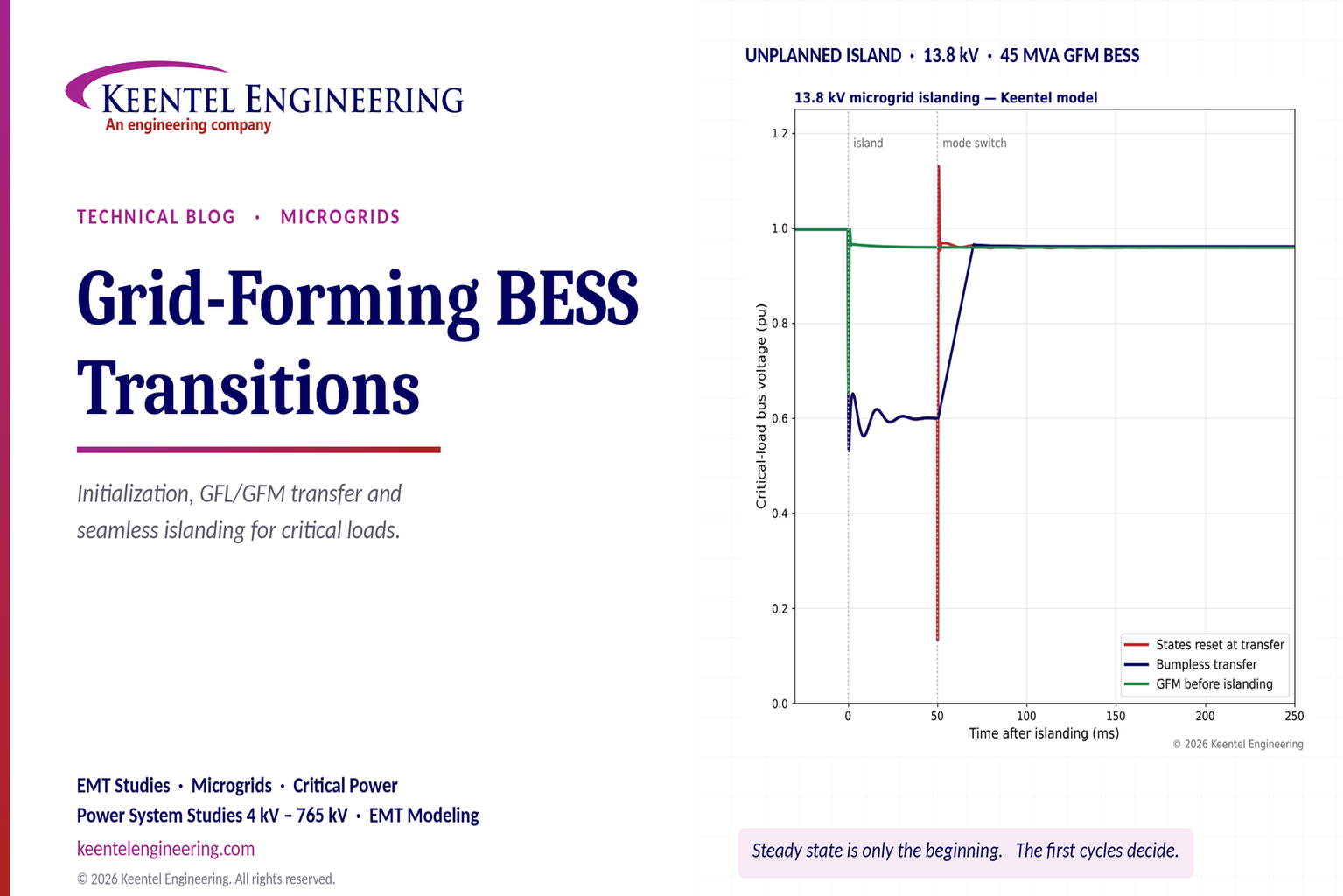
Explore grid-forming BESS initialization, GFL-to-GFM transitions, seamless islanding, EMT simulations, current limiting and microgrid protection.
By SANDIP R PATEL
•
October 23, 2026
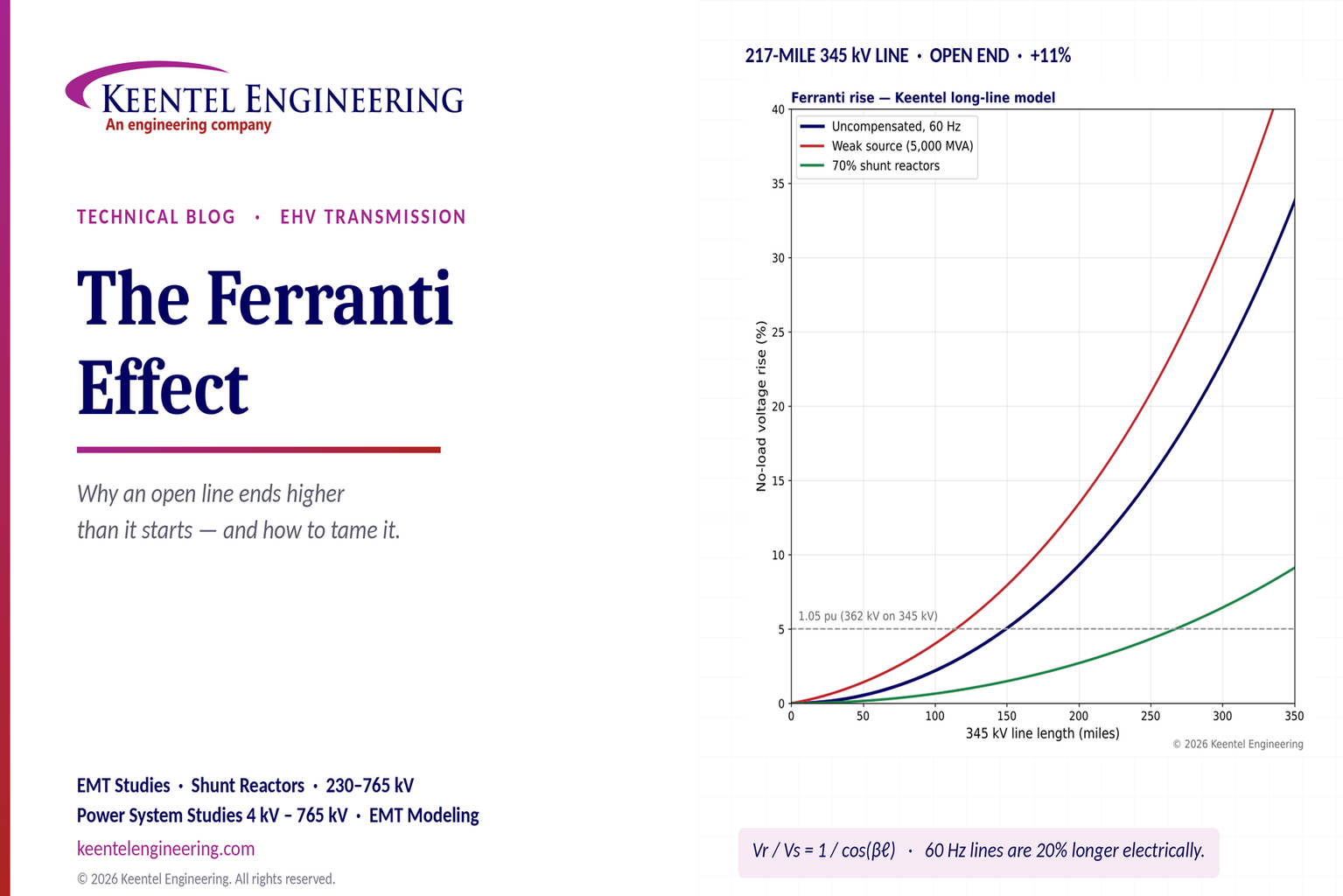
Explore the Ferranti effect in EHV transmission lines: voltage rise, 345 kV examples, switching overvoltages, shunt reactor sizing and mitigation.
By SANDIP R PATEL
•
October 23, 2026
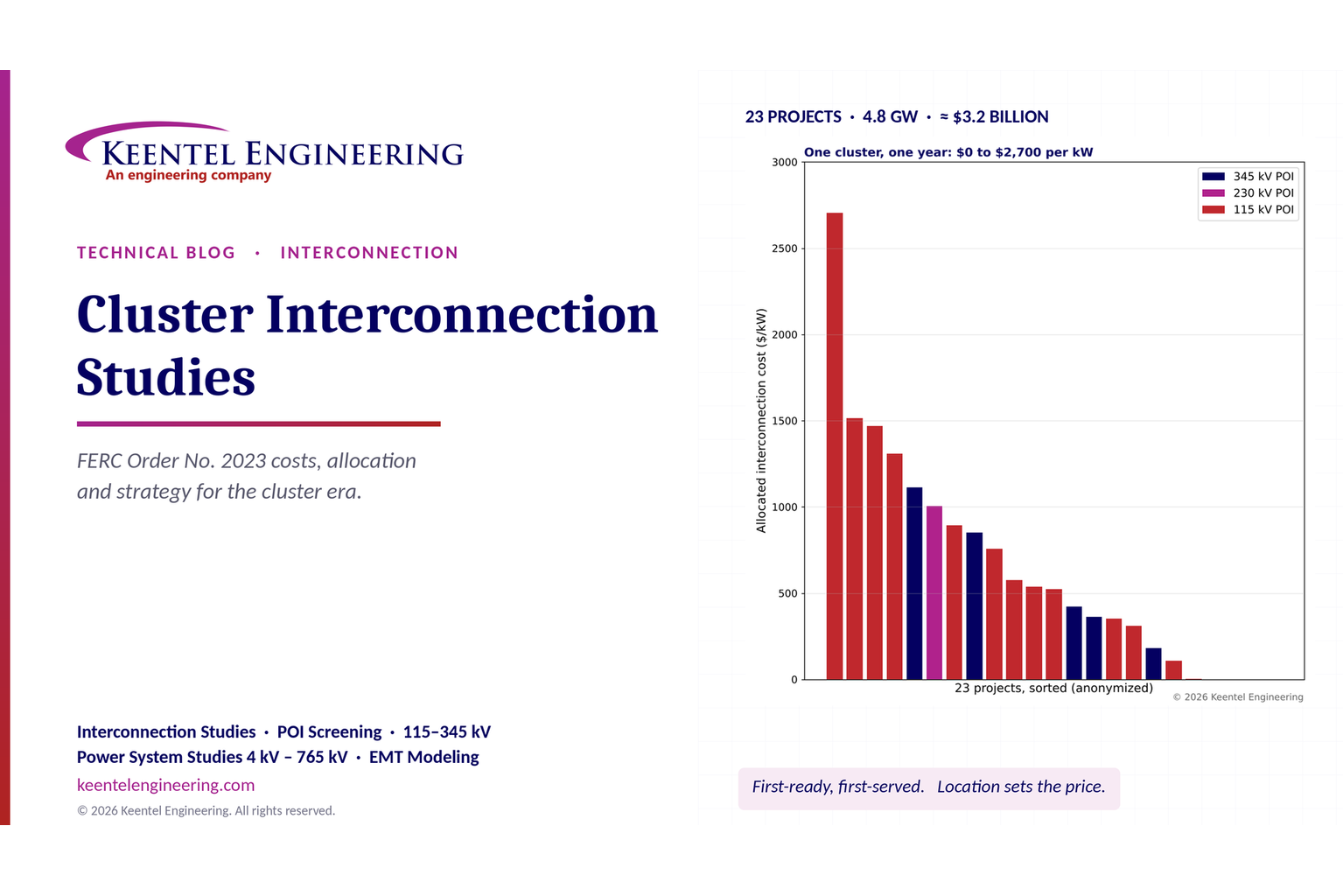
Explore cluster interconnection studies under FERC Order 2023, including network upgrades, cost allocation, withdrawal penalties and developer strategy.
By SANDIP R PATEL
•
October 21, 2026
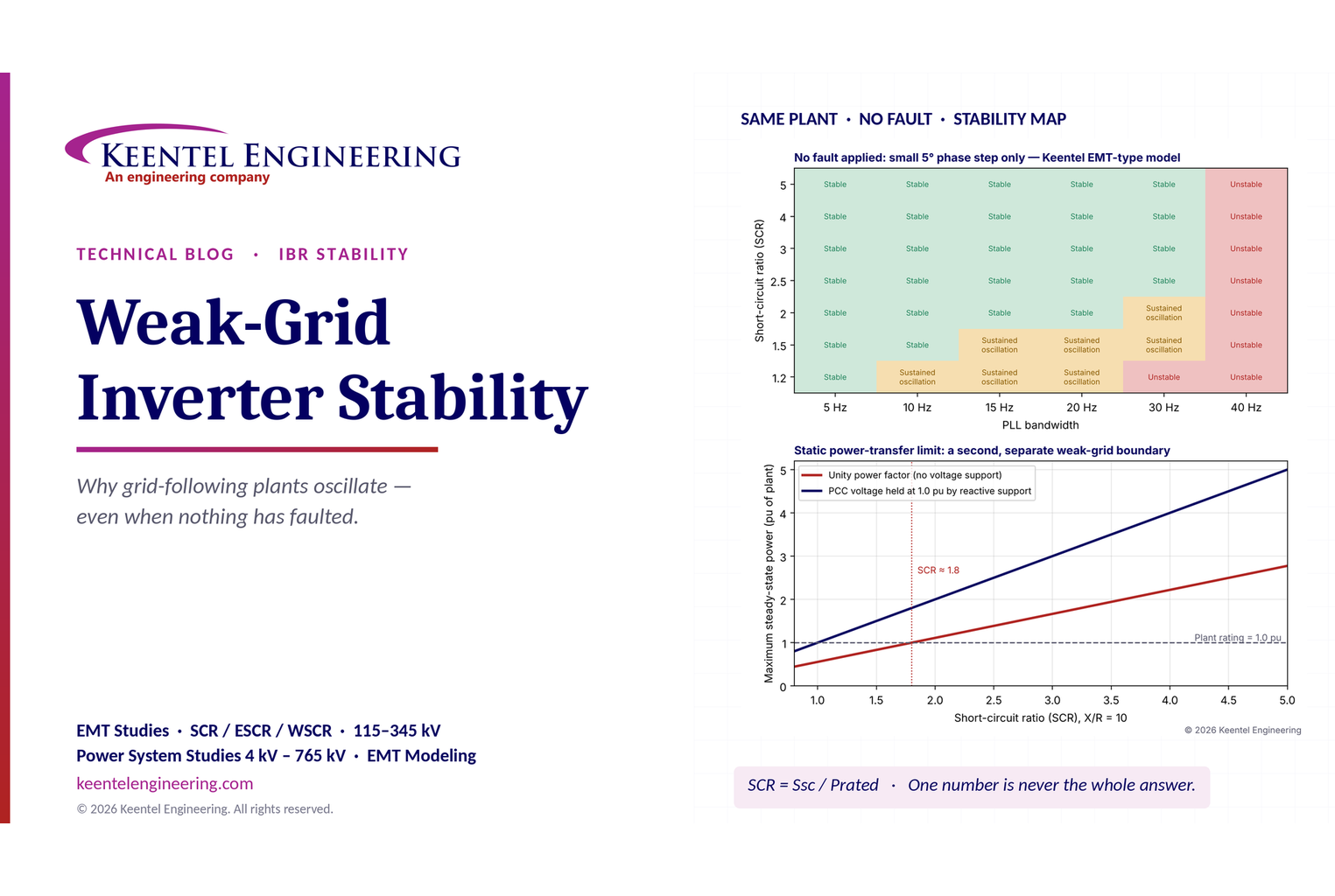
Learn why grid-following inverters become unstable without grid faults. Explore SCR, PLL interactions, EMT studies, grid strength, and mitigation.
By SANDIP R PATEL
•
October 21, 2026
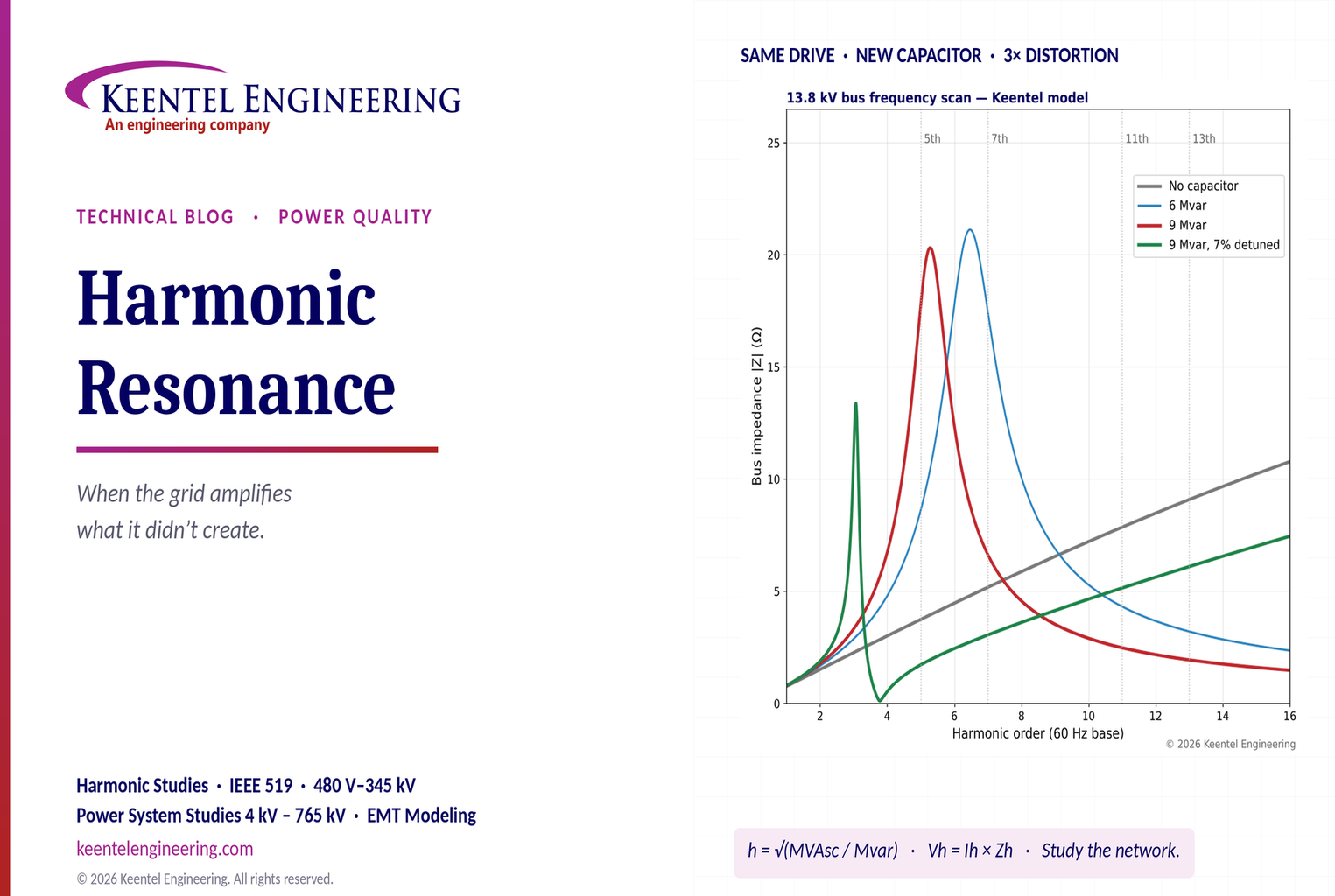
Learn how harmonic resonance amplifies distortion in power systems. Explore capacitor banks, detuned reactors, frequency scans, and IEEE 519 solutions.
By SANDIP R PATEL
•
October 20, 2026
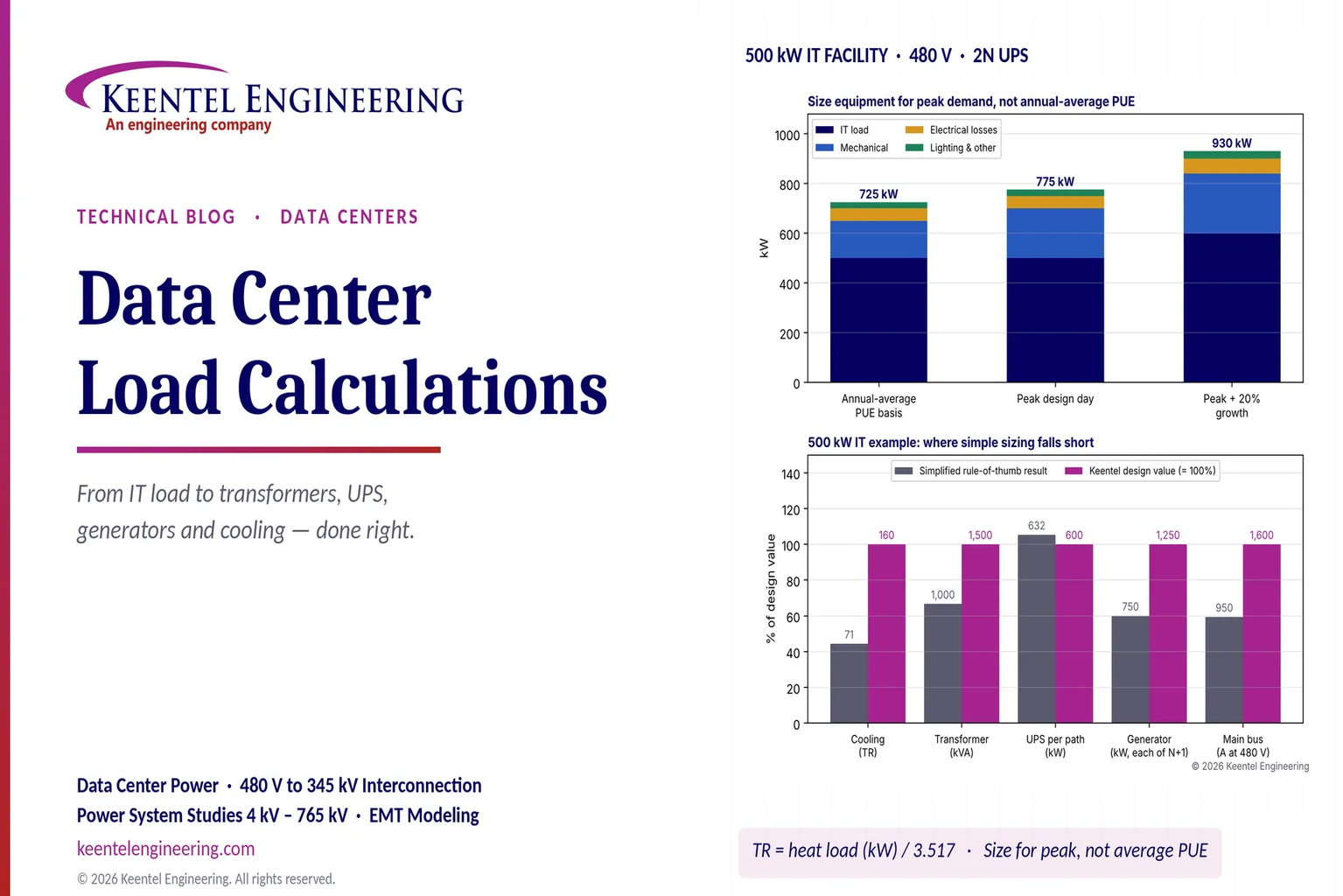
Learn data center electrical load calculations, including IT demand, PUE, UPS and generator sizing, cooling loads, redundancy, and worked US examples.
By SANDIP R PATEL
•
October 20, 2026
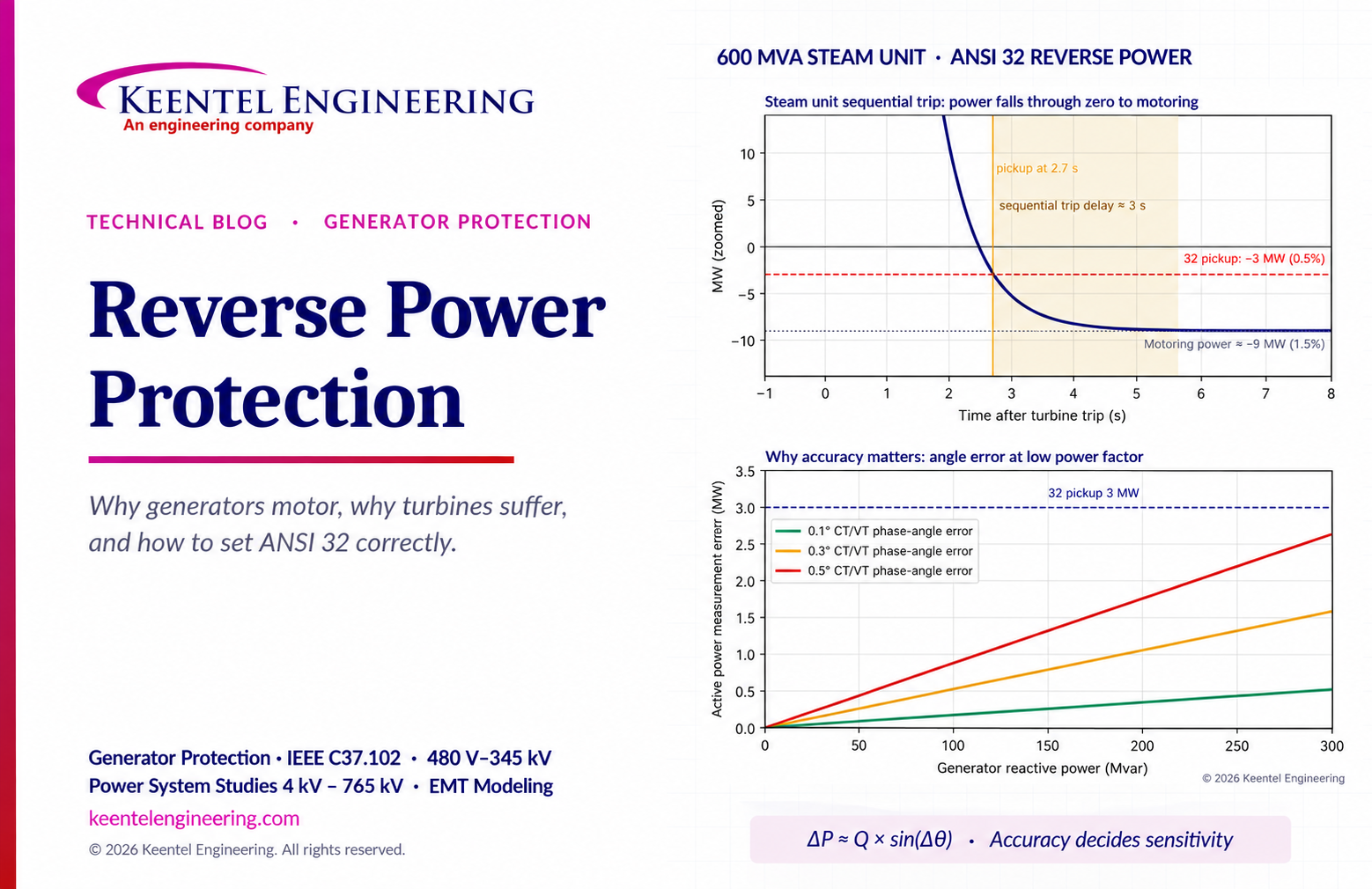
Learn reverse power protection (ANSI 32), generator motoring, relay pickup settings, time delays, sequential tripping and testing for US power plants.
By Team 2 Dexora
•
October 20, 2026
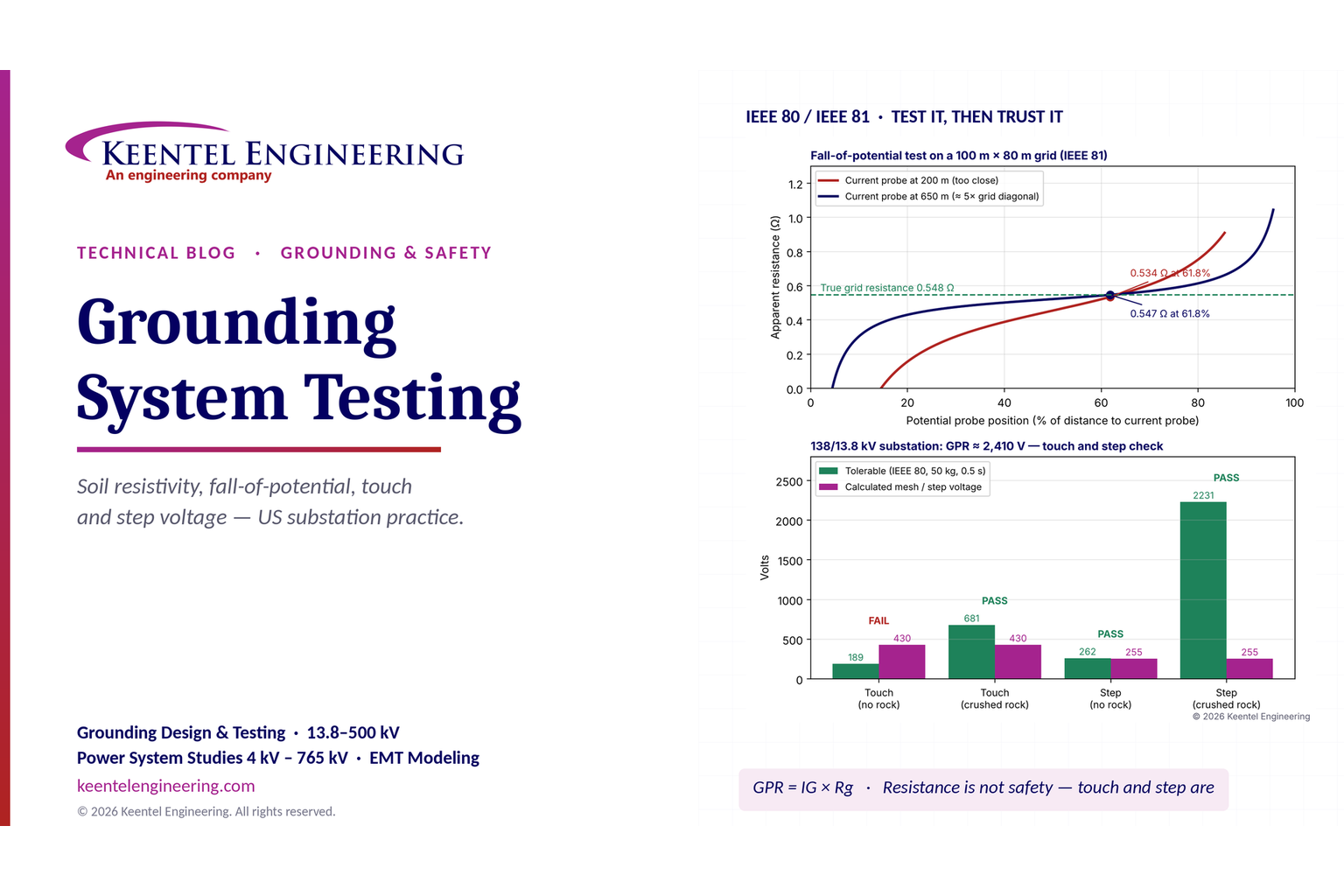
Explore grounding system testing with Keentel Engineering. Learn IEEE 80/81 methods, soil resistivity, ground resistance, and touch and step voltage safety.
By SANDIP R PATEL
•
October 13, 2026
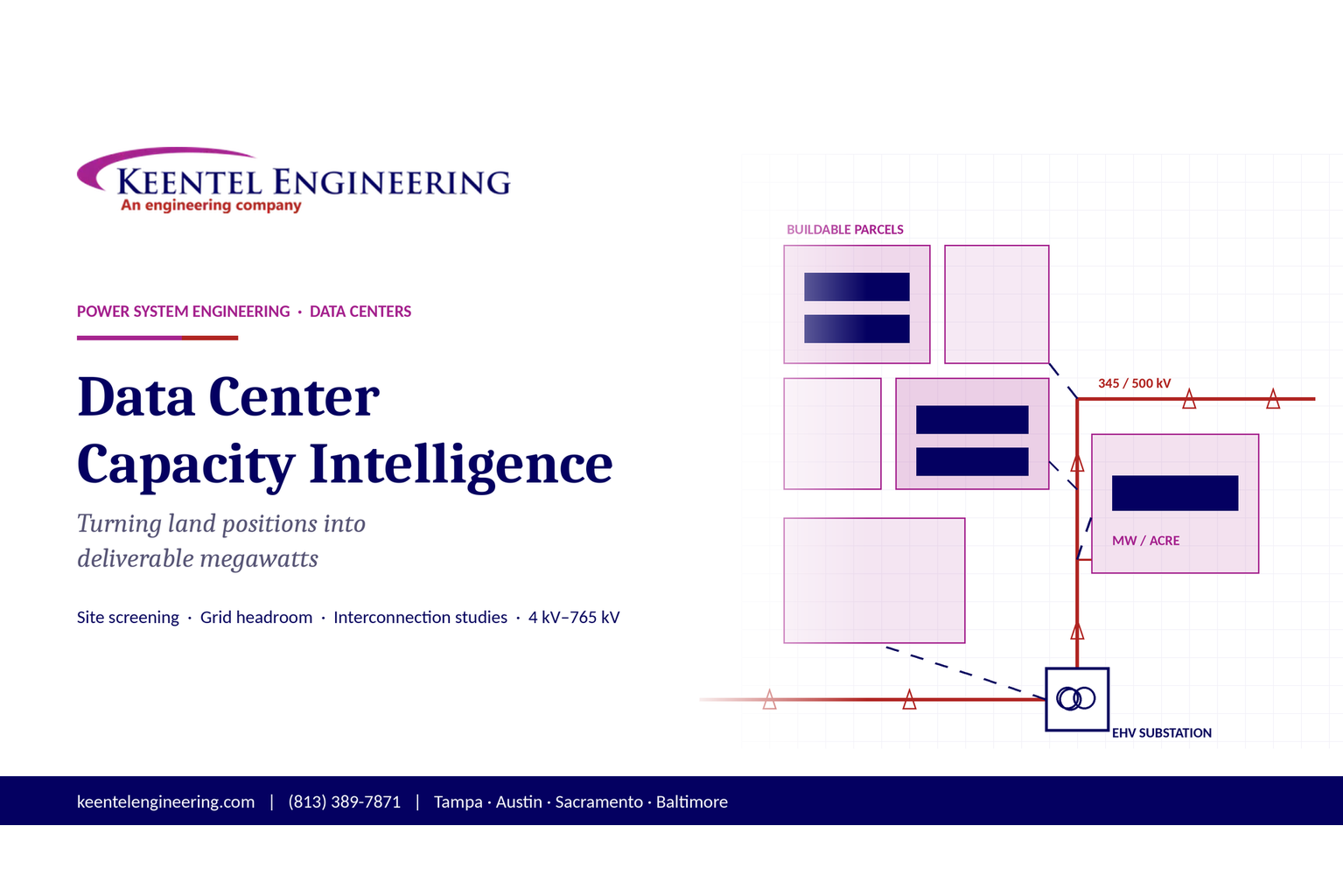
Plan data center capacity with land screening, MW-per-acre estimates, grid power availability and interconnection feasibility studies from Keentel Engineering.