

A Coordinated Electric System Interconnection Review—the utility’s deep-dive on technical and cost impacts of your project.

Navigating the IBR Transformation: Our Perspective on NERC’s IBR Activities

Calendar icon. D

May 12, 2025 | Blog

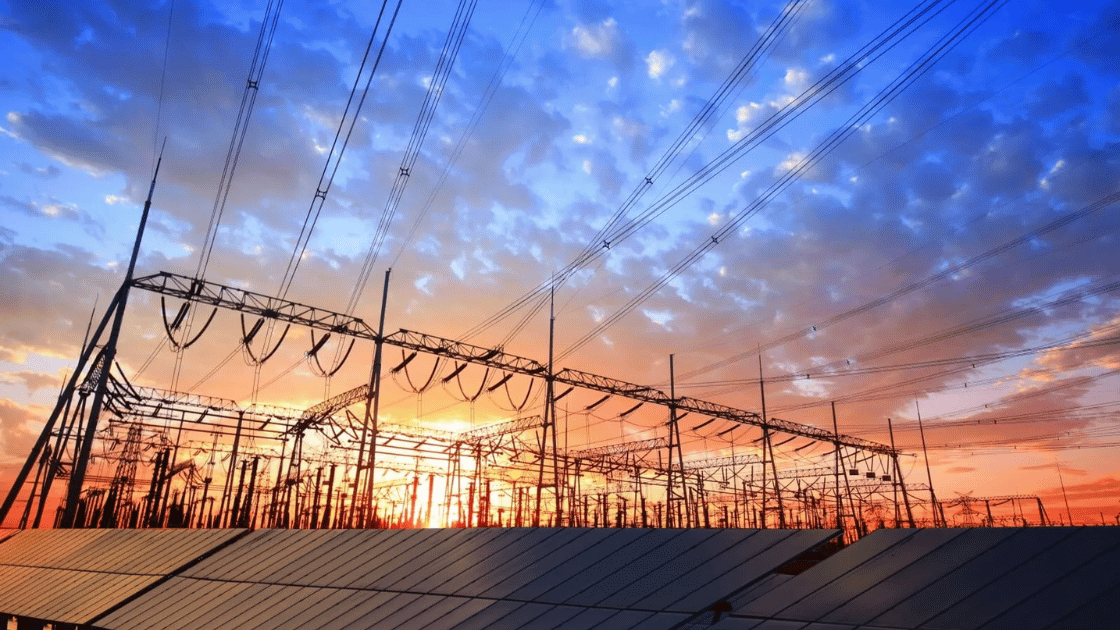
Power lines over a substation at sunset with colorful clouds.

Explore Keentel Engineering’s in-depth take on NERC’s IBR transformation guide, disturbance reports, compliance standards, and integration strategies to ensure bulk power system reliability.

Introduction

The transformation of North America’s bulk power system (BPS) is accelerating, driven largely by the proliferation of inverter-based resources (IBRs) such as solar PV, wind turbines, and battery energy storage systems. Recognizing the complexity and reliability implications of this shift, the North American Electric Reliability Corporation (NERC) released a comprehensive “Quick Reference Guide” in June 2023 outlining seven years of focused activities on IBRs. This guide serves as a cornerstone for industry stakeholders looking to align with best practices, understand emerging challenges, and strengthen grid reliability.

Keentel Engineering presents a summarized perspective on NERC’s initiatives and offers insights on how utilities, grid operators, and project developers can strategically engage with the evolving IBR ecosystem.


NERC’s Inverter-Based Resource Strategy: Four Pillars of Reliability

NERC’s IBR strategy targets four key areas:

  1. Risk Analysis: Evaluating the reliability impacts of increasing IBR penetration.
  2. Interconnection Process Enhancements: Updating technical requirements for seamless BPS integration.
  3. Best Practice Sharing and Education: Disseminating knowledge through webinars, guidelines, and outreach.
  4. Regulatory Improvements: Supporting FERC-driven standard updates and compliance alignment.

This strategic roadmap ensures a coordinated industry response to mitigate IBR-related reliability risks.


Webinars, Outreach, and Educational Resources

In 2023, NERC hosted a landmark 11-part webinar series focused on IBRs. The sessions covered:

  • IBR fundamentals and grid impact
  • Emerging performance issues
  • Model validation and compliance obligations

Supplementary materials such as FAQs, expert interviews, and guidebooks (e.g., An Introductory Guide to Inverter-Based Resources) empower stakeholders with practical knowledge to improve integration and performance.


Additionally, cybersecurity is spotlighted in the brochure Recommendations for Solar Energy Cybersecurity, recognizing threats posed by both utility-scale and behind-the-meter DERs.


Disturbance Reports: Lessons from Real-World Events

NERC has analyzed numerous disturbances over the past decade to derive lessons and mitigation strategies. Significant reports include:

  • Odessa Events (2021–2022, Texas): Revealed systemic faults in solar PV inverters.
  • Southwest Utah Disturbance (2023): Led to a 921 MW solar generation loss.
  • San Fernando & Blue Cut Fires (2020 & 2016): Highlighted PV tripping during transmission faults.

These reports illustrate the criticality of robust ride-through capabilities, voltage support functions, and standardized responses during system disturbances.


Industry Alerts and Reliability Guidelines

Several NERC alerts have been issued, such as:

  • March 2022 Alert: Urged mitigation of systemic performance deficiencies in BES solar PVs.
  • May 2018 Alert: Focused on inverter settings affecting fault ride-through.

Complementing these are reliability guidelines on EMT modeling, BESS and hybrid plant simulations, and low short circuit strength adaptation. These documents help Transmission Planners (TPs) and Planning Coordinators (PCs) perform more accurate simulations and identify weaknesses proactively.


White Papers and Technical Reports

NERC’s white papers explore high-level concepts with technical depth:

  • Grid Forming vs Grid Following Technologies: Evaluates control strategies and recommends GFM deployment.
  • Primary Frequency Response (PFR) & Fast Frequency Response (FFR): Encourages leveraging IBR flexibility for grid support.
  • WECC Base Case Reviews: Improve base case model accuracy for system studies.

These publications are instrumental in informing future planning and operational strategies.


Reliability Standards and Regulatory Alignment

NERC has spearheaded multiple standards projects, including:

  • PRC-024 (Ride-through requirements)
  • FAC-001 & FAC-002 (Interconnection requirements)
  • MOD-025 & PRC-019 (Model and data verifications)

FERC’s 2022 Notice of Proposed Rulemaking (NOPR) further emphasizes the need for regulatory support in areas like modeling, validation, and performance requirements.


Stakeholder Engagement and Future Outlook

Stakeholder working groups such as the Inverter-Based Resource Subcommittee (IRPS) and the Electromagnetic Transient Task Force (EMTTF) foster collaborative advancement. Their efforts include modeling guidance, white paper development, and input to NERC’s Reliability and Security Technical Committee (RSTC).

NERC’s commitment to stakeholder education is evident in events like the 2023 Grid Forming Webinar and ESIG-NERC joint workshops, where industry practitioners discuss challenges and innovations.


Keentel Engineering’s Role in IBR Integration

At Keentel Engineering, we support developers, utilities, and ISOs with:

  • IBR model validations
  • EMT and dynamic stability studies
  • Ride-through setting optimization
  • NERC PRC, MOD, and FAC compliance services

Our experienced team ensures clients are not only meeting compliance benchmarks but also building resilient, forward-thinking renewable portfolios.

Interested For more Information? Visit: Keentel Engineering compliance services


Conclusion

The NERC “Quick Reference Guide” is more than a catalog of activities—it’s a strategic blueprint for the future of power system reliability in a world dominated by inverter-based technologies. Keentel Engineering stands ready to assist stakeholders in adopting these practices, closing reliability gaps, and leading the charge toward a sustainable grid.

Need Expert Help Navigating NERC Compliance?

Keentel Engineering offers advanced modeling, validation, and compliance support for IBRs.
Contact us today to schedule a consultation.


Frequently Asked Questions (FAQs)

  • ❓ What are Inverter-Based Resources (IBRs)?

    IBRs refer to generation technologies that interface with the grid via power electronic inverters rather than synchronous machines. Common examples include solar PV systems, wind turbines (Type 3 and 4), battery energy storage systems, STATCOMs, SVCs, and HVDC terminals.

  • ❓ Why are IBRs a reliability concern for the Bulk Power System (BPS)?

    IBRs respond differently to faults and grid disturbances compared to traditional synchronous generators. If not properly configured, they may trip offline or fail to provide essential grid services, potentially leading to cascading outages.

  • ❓ What is NERC’s IBR Strategy?

    NERC’s IBR strategy focuses on:


    Risk analysis

    Enhancing interconnection processes

    Sharing best practices and education

    Regulatory and standards improvements


    It aims to align stakeholders and mitigate emerging reliability threats from IBRs.

  • ❓ What is the significance of recent NERC webinars on IBRs?

    NERC’s 11-part webinar series in 2023 covered key issues such as IBR modeling, disturbance events, and mitigation strategies. It featured insights from 20 industry organizations and produced FAQs, slides, and a summary video.

  • ❓ What are common IBR-related grid disturbances?

    Major disturbances include:


    • 2022 & 2023 Odessa events (Texas)
    • 2023 Southwest Utah solar PV event
    • San Fernando and Blue Cut Fire solar PV reductions

    These events involved widespread IBR tripping due to faults or misconfigured settings.

  • ❓ What NERC alerts have been issued related to IBRs?

    NERC issued alerts in 2017, 2018, and 2022 emphasizing:


    • Performance deficiencies in solar PVs
    • Misconfigured fault ride-through settings
    • Urgent need for compliance and configuration reviews
  • ❓ How do white papers help stakeholders?

    NERC’s white papers provide in-depth guidance on:


    • Grid-forming vs. grid-following inverters
    • Primary and fast frequency response from IBRs
    • Technical bases for disturbance response actions

    They serve as foundational resources for engineering studies and regulatory planning.

  • ❓ What is the importance of EMT modeling for IBRs?

    Electromagnetic transient (EMT) modeling helps accurately simulate IBR behavior under fast-switching and low short-circuit strength conditions. EMT studies are critical for planning and interconnection evaluations involving IBRs.


  • ❓ What standards are being modified for IBR reliability?

    Standards under modification include:


    • PRC-024 (ride-through)
    • MOD-025 & PRC-019 (model/data verification)
    • FAC-001 & FAC-002 (interconnection requirements)
    • EOP-004 (event reporting)
  • ❓ What is PRC-024, and why is it important for IBRs?

    PRC-024 specifies generator voltage and frequency protection settings. Gaps in the standard may allow IBRs to trip during normal faults. NERC is revising the standard to better reflect IBR capabilities and prevent unnecessary disconnections.

  • ❓ What cybersecurity risks are associated with IBRs?

    As IBR deployments grow, they become potential targets for cyberattacks. NERC’s guide on solar energy cybersecurity emphasizes threat awareness for DER aggregators, IBR vendors, and grid operators.

  • ❓ What is the role of the IRPS and EMT Task Force?

    The Inverter-Based Resource Subcommittee (IRPS) develops technical resources for IBR planning and operations. The Electromagnetic Transient Task Force (EMTTF) supports EMT modeling adoption and studies for BPS planners and operators.

  • ❓ What are IEEE 2800-2022 requirements for IBRs?

    IEEE 2800-2022 establishes performance minimums for transmission-connected IBRs, covering:


    • Voltage and frequency ride-through
    • Active/reactive power control
    • Power quality and protection integration

    It is a key reference for utility engineers and developers.

  • ❓ How can Keentel Engineering assist with IBR compliance?

    Keentel Engineering offers:


    • Dynamic and EMT modeling support
    • Ride-through settings validation
    • Compliance gap assessments for PRC/FAC/MOD standards
    • Technical training and study documentation
  • ❓ What should project developers do to prepare for NERC compliance?

    Developers should:


    • Ensure accurate IBR modeling and validation
    • Review and update protection settings
    • Participate in compliance training
    • Work with firms like Keentel Engineering for consulting and studies


A smiling man with glasses and a beard wearing a blue blazer stands in front of server racks in a data center.

About the Author:

Sonny Patel P.E. EC

IEEE Senior Member

In 1995, Sandip (Sonny) R. Patel earned his Electrical Engineering degree from the University of Illinois, specializing in Electrical Engineering . But degrees don’t build legacies—action does. For three decades, he’s been shaping the future of engineering, not just as a licensed Professional Engineer across multiple states (Florida, California, New York, West Virginia, and Minnesota), but as a doer. A builder. A leader. Not just an engineer. A Licensed Electrical Contractor in Florida with an Unlimited EC license. Not just an executive. The founder and CEO of KEENTEL LLC—where expertise meets execution. Three decades. Multiple states. Endless impact.

Four workers in safety vests and helmets stand with arms crossed near wind turbines.

Let's Discuss Your Project

Let's book a call to discuss your electrical engineering project that we can help you with.

Man in a blazer and open shirt, looking at the camera, against a blurred background.

About the Author:

Sonny Patel P.E. EC

IEEE Senior Member

In 1995, Sandip (Sonny) R. Patel earned his Electrical Engineering degree from the University of Illinois, specializing in Electrical Engineering . But degrees don’t build legacies—action does. For three decades, he’s been shaping the future of engineering, not just as a licensed Professional Engineer across multiple states (Florida, California, New York, West Virginia, and Minnesota), but as a doer. A builder. A leader. Not just an engineer. A Licensed Electrical Contractor in Florida with an Unlimited EC license. Not just an executive. The founder and CEO of KEENTEL LLC—where expertise meets execution. Three decades. Multiple states. Endless impact.

Leave a Comment

Related Posts

Advanced large load modeling for grid reliability with data center power systems.
By SANDIP R PATEL April 10, 2026
Learn how large load modeling improves grid reliability for data centers and modern power systems using advanced EMT, dynamic studies, and compliance strategies.
ERCOT large load interconnection surge with data centers, renewable energy, and grid reliability
By SANDIP R PATEL April 10, 2026
ERCOT faces a surge in large load interconnections driven by AI data centers. Explore grid challenges, batch studies, and developer strategies
Data center power diagram with MVDC, UPS, transformers, generators, and IT load.
By SANDIP R PATEL April 10, 2026
Learn how EMT modeling improves data center grid stability, AI load integration, and power quality. Expert insights by Keentel Engineering.
Advanced power system diagram with five buses, generator, transformer, and protection system
By SANDIP R PATEL April 7, 2026
Advanced power system studies for DER, EMT modeling, and grid stability. Expert T&D co-simulation by Keentel Engineering.
MOD-026-2 compliance diagram for dynamic model validation of inverter-based resources in power
By SANDIP R PATEL April 7, 2026
Learn MOD-026-2 compliance requirements for dynamic model verification and validation of inverter-based resources, ensuring power system reliability and NERC compliance.
PJM First Use rule elimination for DER interconnection under FERC Order 2222
By SANDIP R PATEL April 7, 2026
Explore PJM’s First Use rule reform, DER interconnection changes, and FERC Order 2222 impacts on solar, BESS, and distribution-level grid integration.
Advanced PSSE and PSCAD modeling services for solid-state transformers in data center power systems
By SANDIP R PATEL April 7, 2026
Advanced PSSE and PSCAD modeling for solid-state transformers in data centers. Ensure grid compliance, stability, and high-performance power systems.
FlexGEB smart building with solar, HVAC, battery storage, and grid-connected energy systems.
By SANDIP R PATEL April 6, 2026
Explore FlexGEB smart buildings using solar, storage, HVAC, and IoT to boost energy efficiency, demand flexibility, and grid resilience.
Keentel Engineering data center design services banner highlighting uptime, grid reliability
By SANDIP R PATEL April 6, 2026
Keentel Engineering delivers data center electrical design for uptime, grid stability, AI workloads, and utility-ready interconnection planning.