

A Coordinated Electric System Interconnection Review—the utility’s deep-dive on technical and cost impacts of your project.

Transmission Line Design Engineering: Precision, Reliability, and Innovation at Keentel Engineering

Calendar icon. D

May 9, 2025 | Blog

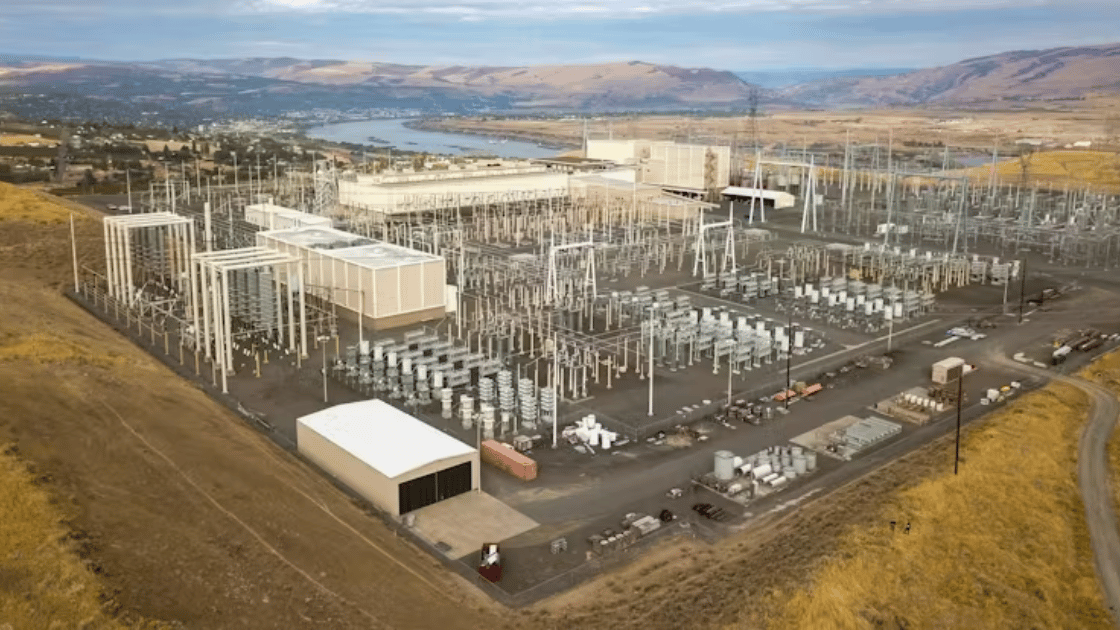
High-angle view of a large electrical substation on a hillside, with a river and hills in the background.

At Keentel Engineering, we specialize in comprehensive transmission line design engineering solutions that ensure safe, cost-effective, and environmentally compliant high-voltage (HV) and medium-voltage (MV) infrastructure. Drawing from industry standards such as the National Electrical Safety Code (NESC) and informed by resources like the USDA Design Manual for High Voltage Transmission Lines, our expertise covers every facet of transmission line development—from siting and planning to structural loading and PLS-CADD modeling.


Why Transmission Line Design Matters

A robust transmission line system ensures uninterrupted electrical service, minimizes maintenance, and upholds environmental standards. Whether designing lines for 69 kV or 230 kV systems, success lies in comprehensive planning, technical accuracy, and adaptable solutions for diverse terrains and regulatory requirements.


Our Core Transmission Line Engineering Services

Route Siting and Environmental Analysis

Keentel integrates GIS-based analysis, aerial imagery, and local environmental criteria to select optimal, low-impact routes.

We factor in:

  • Federal/state regulatory constraints
  • Land use, terrain, and topography
  • Historic/archeological preservation
  • Biological considerations like wetlands and endangered species

Plan and Profile Drawings

Our engineers produce precise CAD-based plan and profile drawings utilizing data from LiDAR and GPS-based surveys. These drawings include:

  • Topographic contours
  • Landowner boundary mapping
  • Existing utilities and obstacles
  • Conductor elevation and structure spotting

Structure Spotting & Sag-Tension Analysis

Using advanced PLS-CADD software, we optimize structure locations and conductor sag under various loading conditions. We ensure compliance with:

  • Clearance regulations
  • Insulator swing limits
  • Vertical and horizontal span constraints
  • Uplift mitigation strategies

Loading and Mechanical Design

We design structures to withstand heavy ice, wind, and broken conductor conditions based on NESC Zone-specific data. This includes:

  • Wind pressure coefficients (kz, GRF)
  • Ice thickness per region
  • Deadend intervals for cascading prevention
  • Load balancing and contingency planning

Industry-Leading Software: PLS-CADD

Keentel leverages PLS-CADD to:

  • Import LiDAR terrain data and build 3D models
  • Generate sag templates, conductor swing analysis, and structure load cases
  • Spot structures automatically or manually based on design tension and clearance
  • Prepare final construction documents with bill of materials and staking tables

FAQs: Transmission Line Design Engineering

  • What is transmission line design engineering?

    It involves planning, analyzing, and constructing high-voltage lines for safe and reliable power delivery.

  • Which codes govern transmission line design?

    The National Electrical Safety Code (NESC) and local utility standards.

  • What role does PLS-CADD play in transmission line design?

    It provides 3D modeling, sag-tension analysis, structure spotting, and bill of material generation.


  • How do you determine a transmission line route?

    Using GIS data, aerial photography, and environmental, land use, and regulatory constraints.

  • What is a sag template?

    A graphical tool or software-generated curve used to ensure conductor clearances under hot/cold conditions.

  • How are plan and profile drawings prepared?

    Based on GPS, aerial surveys, and LiDAR, combined with CAD tools to produce engineering-grade layouts.

  • What is structure spotting?

    The process of determining the optimal location and height of poles to maintain clearances and efficiency.

  • How do environmental factors affect routing?

    Areas like wetlands, floodplains, and historic zones must be avoided or mitigated.

  • What is the ruling span in transmission design?

    It’s the weighted average span used for sag-tension calculations.

  • How do you prevent cascading failures?

    By placing deadend or guyed structures at set intervals and designing for longitudinal loading.

  • What wind and ice loading zones are used?

    NESC classifies them into Heavy, Medium, Light, and Extreme Wind/Ice regions.

  • What are conductor swing and uplift?

    Lateral/vertical movements of conductors due to wind or terrain that affect structure selection and design.

  • How is right-of-way acquired?

    Through easements, permits, and stakeholder engagement, with support from survey and legal teams.

  • What clearances are maintained over highways and railroads?

    Higher than standard clearances, and broken conductor conditions are considered in some states like California.

  • How is quality ensured in line construction?

    Through field inspections, CAD design reviews, and as-built plan/profile drawings for future maintenance.


Case Studies

Case Study 1: 230 kV Line over Mountainous Terrain – PLS-CADD-Driven Optimization

Challenge: A 12-mile line through rugged, forested terrain with multiple elevation changes.
Solution: PLS-CADD enabled 3D modeling of terrain to optimize tower heights and limit environmental disturbance.
Outcome: Reduced structure count by 15%, minimized clearing, and achieved regulatory approval with zero public objections.

Case Study 2: Rebuild of Aging 115 kV Line in Flood-Prone Area

Challenge: Existing poles in a floodplain were subject to foundation instability.
Solution: LiDAR-based profile data and PLS-CADD were used to raise conductor elevation and increase structure spacing.
Outcome: Improved line resilience, reduced outage frequency, and extended infrastructure life by 30 years.

Case Study 3: Utility Interconnect 69 kV Expansion – Urban Corridor

Challenge: Tight corridor with multiple crossings: rail, highways, and existing distribution underbuild.
Solution: PLS-CADD used for conductor swing analysis, sag templates, and structural stress testing.
Outcome: Achieved NESC clearance compliance across 11 crossings while maintaining aesthetic and public safety requirements.


For expert transmission line design engineering and comprehensive electrical engineering services, trust Keentel Engineering—your partner in high-performance grid infrastructure.


A smiling man with glasses and a beard wearing a blue blazer stands in front of server racks in a data center.

About the Author:

Sonny Patel P.E. EC

IEEE Senior Member

In 1995, Sandip (Sonny) R. Patel earned his Electrical Engineering degree from the University of Illinois, specializing in Electrical Engineering . But degrees don’t build legacies—action does. For three decades, he’s been shaping the future of engineering, not just as a licensed Professional Engineer across multiple states (Florida, California, New York, West Virginia, and Minnesota), but as a doer. A builder. A leader. Not just an engineer. A Licensed Electrical Contractor in Florida with an Unlimited EC license. Not just an executive. The founder and CEO of KEENTEL LLC—where expertise meets execution. Three decades. Multiple states. Endless impact.

Four workers in safety vests and helmets stand with arms crossed near wind turbines.

Let's Discuss Your Project

Let's book a call to discuss your electrical engineering project that we can help you with.

Man in a blazer and open shirt, looking at the camera, against a blurred background.

About the Author:

Sonny Patel P.E. EC

IEEE Senior Member

In 1995, Sandip (Sonny) R. Patel earned his Electrical Engineering degree from the University of Illinois, specializing in Electrical Engineering . But degrees don’t build legacies—action does. For three decades, he’s been shaping the future of engineering, not just as a licensed Professional Engineer across multiple states (Florida, California, New York, West Virginia, and Minnesota), but as a doer. A builder. A leader. Not just an engineer. A Licensed Electrical Contractor in Florida with an Unlimited EC license. Not just an executive. The founder and CEO of KEENTEL LLC—where expertise meets execution. Three decades. Multiple states. Endless impact.

Leave a Comment

Related Posts

ERCOT large load interconnection guide covering NPRR1234, PGRR115, and grid connection rules
By SANDIP R PATEL May 8, 2026
Learn ERCOT large load interconnection rules, LLIS requirements, and Texas grid compliance for data centers and industrial facilities.
NERC computational load risk infographic for AI data centers, grid reliability, and Level 3 complian
By SANDIP R PATEL May 8, 2026
Understand NERC large load compliance, EMT studies, and computational load modeling for AI data center reliability.
By SANDIP R PATEL May 4, 2026
Learn transmission injection and withdrawal studies, TIR & TWR, system impact studies, and grid analysis for solar, BESS, and HVDC. Discover more.
US Grid Code Requirements – Droop Control & Fast Frequency Response (FFR) | BESS IEEE 2800
By SANDIP R PATEL May 4, 2026
Learn how droop control and fast frequency response (FFR) enable IEEE 2800 compliance for BESS, solar, and wind in US grid interconnections.
ASPEN OneLiner V15 advanced protection system modeling white paper cover for relay coordination
By SANDIP R PATEL May 3, 2026
Master ASPEN OneLiner V15 for protection system modeling, relay coordination, and fault analysis. Learn advanced power system workflows today.
Texas Energy System Explained infographic showing ERCOT power market, Texas grid operations,
By SANDIP R PATEL May 3, 2026
Learn how ERCOT manages the Texas electricity grid, including LMP pricing, SCED dispatch, ancillary services, congestion, and wholesale power markets.
PJM Cycle 1 Interconnection Infographic: 220 GW Storage & Grid Update
By SANDIP R PATEL May 2, 2026
PJM's Cycle 1 reform brings a 220 GW storage-led pipeline. See how BESS and new modeling impact grid reliability.
Battery storage financing project with utility-scale BESS and solar farm infrastructure
By SANDIP R PATEL May 2, 2026
Explore battery storage financing strategies, tax credits, tariffs, and BESS revenue models. Learn how to optimize projects and maximize returns.
CAISO IPE 5.0 Cluster 16 deliverability and queue management infographic
By SANDIP R PATEL May 2, 2026
Discover CAISO IPE 5.0 interconnection updates, including queue reforms, deliverability changes, and Cluster 16 impacts. Learn how it affects your projects.