

A Coordinated Electric System Interconnection Review—the utility’s deep-dive on technical and cost impacts of your project.

Challenge: Frequent false tripping using conventional electromechanical relays
Solution: SEL-487E integration with multi-terminal differential protection and dynamic inrush restraint
Result: 90% reduction in false trips, saving over $250,000 in downtime

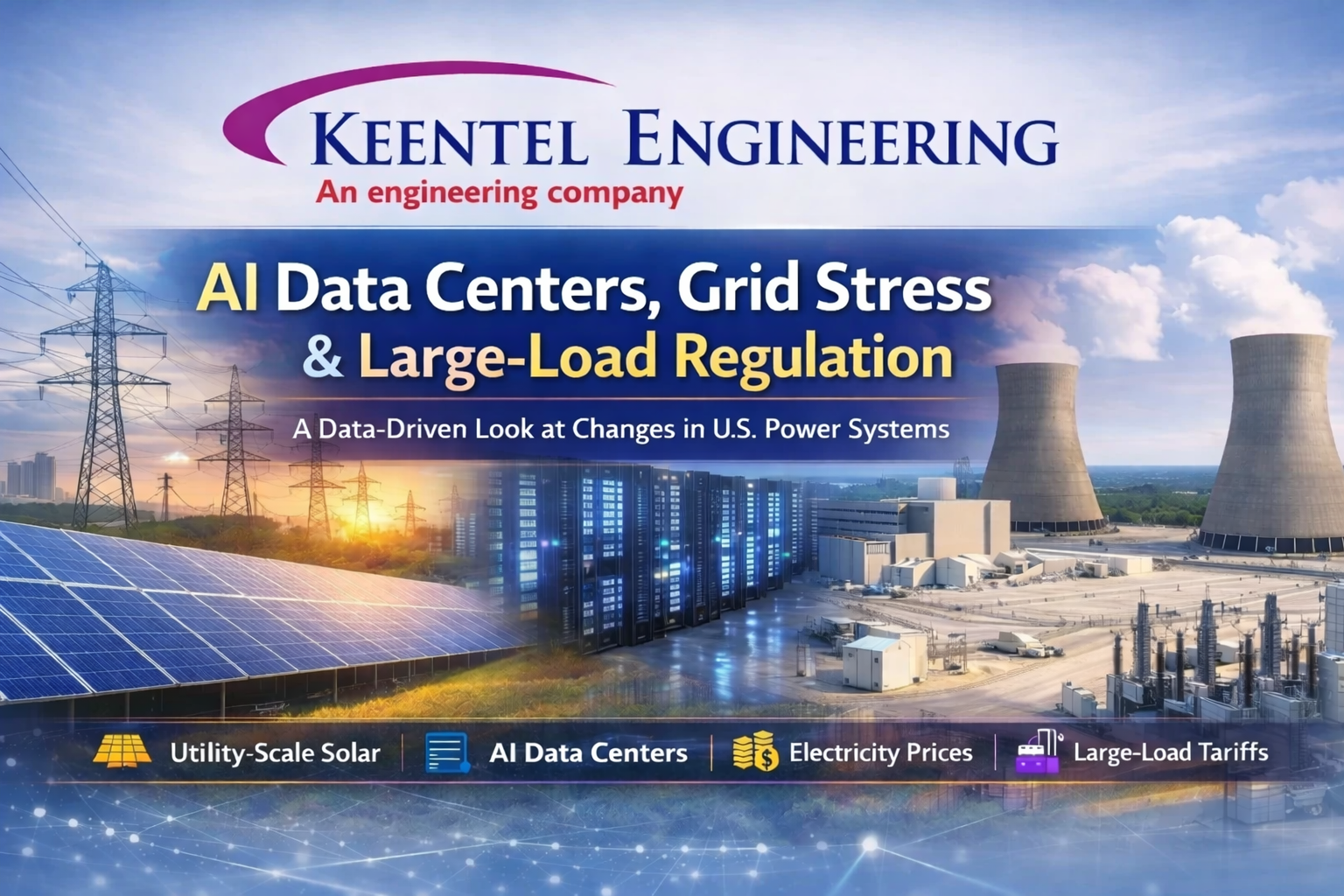
AI Data Centers, Grid Stress, and the Rise of Large-Load Regulation: A Data-Driven Look at What’s Changing in U.S. Power Systems

Keentel Engineering featured image illustrating AI data centers, grid stress, and large-load regulation in U.S. power systems with visuals of solar panels, transmission lines, data center infrastructure, and power plants.
Calendar icon. D

February 07, 2026 | Blog

Executive Summary

Artificial intelligence–driven data center growth is reshaping the U.S. electric grid faster than traditional planning, permitting, and regulatory frameworks were designed to handle. New statistical evidence shows rising bipartisan support for utility-scale solar, unprecedented capital investment in hyperscale data centers, increasing electricity price volatility, and a nationwide shift toward large-load tariffs and cost-causation regulation.


Together, these trends signal a fundamental change in how generation, transmission, and interconnection planning must be executed to protect grid reliability and ratepayer affordability.

This article synthesizes recent polling data, infrastructure case studies, tariff adoption statistics, and state-level legislation to quantify the scale of the challenge and why engineering execution has become the limiting factor.


1. Political and Market Signals: Utility-Scale Solar Support Is Broader Than Assumed

Recent polling commissioned by a major U.S. solar manufacturer surveyed 800 Republican, Republican-leaning independent, and Trump-aligned voters, revealing statistically significant support for utility-scale solar and market-based energy development.


Key findings include:


  • 79% agree that all forms of electricity generation, including utility-scale solar, should be allowed to compete fairly without political interference
  • 68% agree that utility-scale solar is necessary to lower electricity costs
  • 51% express net support for utility-scale solar (vs. 30% opposed)
  • Support rises to 70% when panels are American-made with no China ties
  • “Strongly in favor” responses more than double (17% → 36%) when domestic manufacturing is emphasized
  • 52% are more likely to support candidates backing an all-of-the-above energy strategy


These results suggest that utility-scale solar often perceived as politically divisive is increasingly viewed through the lens of cost reduction, reliability, and energy independence, not ideology.


From a grid-planning standpoint, this matters because policy resistance to new generation is increasingly shifting away from the resource itself and toward infrastructure readiness and cost allocation.


2. AI Data Centers: Capital Investment Is Outpacing Grid Capacity

Nowhere is the infrastructure challenge clearer than in regions targeted for hyperscale data center development.

Imperial Valley, California: A Quantified Case Study

In California’s Imperial Valley alone, developers have proposed over $15 billion in data center investments:


  • $5.5 billion project on 315 acres, including a 200,000 sq ft first phase
  • $10 billion project totaling 950,000 sq ft, roughly six times the size of an average Costco
  • Planned 330 MW substation occupying 16 acres
  • Projected annual electricity consumption exceeding the county’s total 2024 energy use
  • ~6 million gallons of water per day required for cooling
  • Land acquisitions exceeding $27 million already completed


Socioeconomic context amplifies the pressure:


  • 18.6% unemployment, the highest in California
  • County declaration of an “economic emergency”
  • Promised benefits of:
  • 1,600+ construction jobs
  • ~100 permanent jobs
  • $28.75 million in annual tax revenue


These projects highlight a recurring national pattern: load is arriving faster than transmission, substations, and regulatory review processes can scale.


3. Electricity Prices and Load Growth: The Statistical Warning Signs

The affordability implications are no longer theoretical.


  • Average U.S. electricity prices have increased more than 30% since 2020
  • A Bloomberg analysis found that in regions with significant data center concentration, wholesale electricity prices spiked up to 267% for a single month compared to five years earlier


Utilities are increasingly caught between:


  • Obligations to serve new large loads
  • Aging transmission infrastructure
  • Public pressure to prevent cost shifts to residential and small commercial customers


This tension is driving a nationwide pivot toward large-load tariffs.


4. Large-Load Tariffs: From Niche Tool to National Trend

Large-load tariffs define pricing, cost responsibility, and service conditions for high-energy users such as AI data centers and hyperscalers.


As of November 2025:


  • 66 large-load tariffs were approved or pending across the U.S.


These tariffs increasingly specify:


  • Responsibility for interconnection studies
  • Payment for transmission and distribution upgrades
  • Requirements for clean energy sourcing
  • Conditions for demand flexibility or curtailment


Notably:


  • 20% of these tariffs (14 of 66) require or incentivize demand flexibility
  • Studies show demand flexibility can:
  • Defer costly grid upgrades
  • Improve system resilience
  • Reduce long-term ratepayer costs


A prominent example includes a 115 MW geothermal power agreement in Nevada, where a hyperscaler funded clean, firm generation without passing costs onto ratepayers illustrating how tariffs can shape infrastructure outcomes.


5. California SB 978 and the Shift Toward Cost-Causation Regulation

In early 2026, California introduced Senate Bill 978, targeting large-scale energy users with capacities of 75 MW or greater.


Key provisions include:


  • Mandatory special rate structures for large loads
  • Explicit prohibition of cost shifting to other customers
  • Requirement that large-load users pay upfront for transmission and distribution upgrades
  • Ban on diesel backup generators
  • Mandate for clean backup technologies
  • State-directed study on impacts to decarbonization goals, water use, and pollution


California’s move mirrors a broader national pattern:


  • Ohio: New data center rate class requiring payment for reserved capacity
  • Oregon: Cost allocation based on primary beneficiaries
  • Virginia: Proposed rate class for loads >25 MW with high load factors
  • Wisconsin: Legislation preventing data centers from shifting infrastructure costs to ratepayers


The regulatory direction is clear: cost causation, not socialization.


6. Why Engineering Execution Is Now the Bottleneck

Across all four data sets, a consistent conclusion emerges:


The constraint is no longer generation technology or political support it is engineering execution.

Utilities, regulators, and developers are increasingly aligned on:


  • Protecting ratepayers
  • Enabling economic development
  • Maintaining grid reliability
  • Advancing decarbonization


What determines success is the quality of:


  • Interconnection studies
  • Transmission and substation design
  • Load forecasting and scenario analysis
  • Protection, control, and system modeling
  • Compliance with evolving tariff and regulatory frameworks


As AI-driven load growth accelerates, engineering rigor becomes the difference between scalable growth and systemic risk.


Closing Thought

The rapid convergence of AI demand, utility-scale renewables, rising electricity prices, and large-load regulation marks a structural shift in the U.S. power system.


Data centers are no longer just customers they are grid-defining assets.
How they are integrated will shape affordability, reliability, and public trust for decades.


The numbers make one thing clear: the future of large-load integration will be decided not by rhetoric, but by engineering discipline, statistical analysis, and infrastructure planning done right.


A smiling man with glasses and a beard wearing a blue blazer stands in front of server racks in a data center.

About the Author:

Sandip "Sonny" R. Patel, P.E.

IEEE Senior Member · Founder & CEO, Keentel Engineering

In 1995, Sonny Patel earned his Electrical Engineering degree from the University of Illinois. But degrees don't build legacies — action does.

For three decades, he has worked the power industry from every side of the table: 16 years as a utility engineer at Exelon/Commonwealth Edison; generation leadership across hydroelectric, industrial steam turbine, and a 9 GW renewable fleet; NERC Regional Entity Senior Compliance Engineer and Audit Team Lead, auditing some of the nation's largest utilities; and testing and commissioning lead on equipment up to 765 kV — the very top of the North American grid.Utility. Generator. Regulator. Consultant. Few engineers have seen all four seats. Fewer still have sat in them.

His experience spans nuclear, hydro, conventional generation, renewables, oil and gas, mining — and today's data centers, where he is authoring a three-book series on data center design. He is a Licensed Professional Engineer in six states and a Licensed Electrical Contractor in Florida (Unlimited EC) — he doesn't just design the work; he's qualified to stand behind its execution.Today, as Founder and CEO of Keentel Engineering, Sonny leads a nationwide team of engineers delivering substation design, power system studies, NERC compliance, and commissioning — done right, coast to coast.Three decades. Every side of the table. One standard: accountable engineering.

Four workers in safety vests and helmets stand with arms crossed near wind turbines.

Let's Discuss Your Project

Let's book a call to discuss your electrical engineering project that we can help you with.

Man in a blazer and open shirt, looking at the camera, against a blurred background.

About the Author:

Sandip "Sonny" R. Patel, P.E.

IEEE Senior Member · Founder & CEO, Keentel Engineering

In 1995, Sonny Patel earned his Electrical Engineering degree from the University of Illinois. But degrees don't build legacies — action does.

For three decades, he has worked the power industry from every side of the table: 16 years as a utility engineer at Exelon/Commonwealth Edison; generation leadership across hydroelectric, industrial steam turbine, and a 9 GW renewable fleet; NERC Regional Entity Senior Compliance Engineer and Audit Team Lead, auditing some of the nation's largest utilities; and testing and commissioning lead on equipment up to 765 kV — the very top of the North American grid.

Utility. Generator. Regulator. Consultant. Few engineers have seen all four seats. Fewer still have sat in them.

His experience spans nuclear, hydro, conventional generation, renewables, oil and gas, mining — and today's data centers, where he is authoring a three-book series on data center design. He is a Licensed Professional Engineer in six states and a Licensed Electrical Contractor in Florida (Unlimited EC) — he doesn't just design the work; he's qualified to stand behind its execution.

Today, as Founder and CEO of Keentel Engineering, Sonny leads a nationwide team of engineers delivering substation design, power system studies, NERC compliance, and commissioning — done right, coast to coast.Three decades. Every side of the table. One standard: accountable engineering.

Leave a Comment

Related Posts

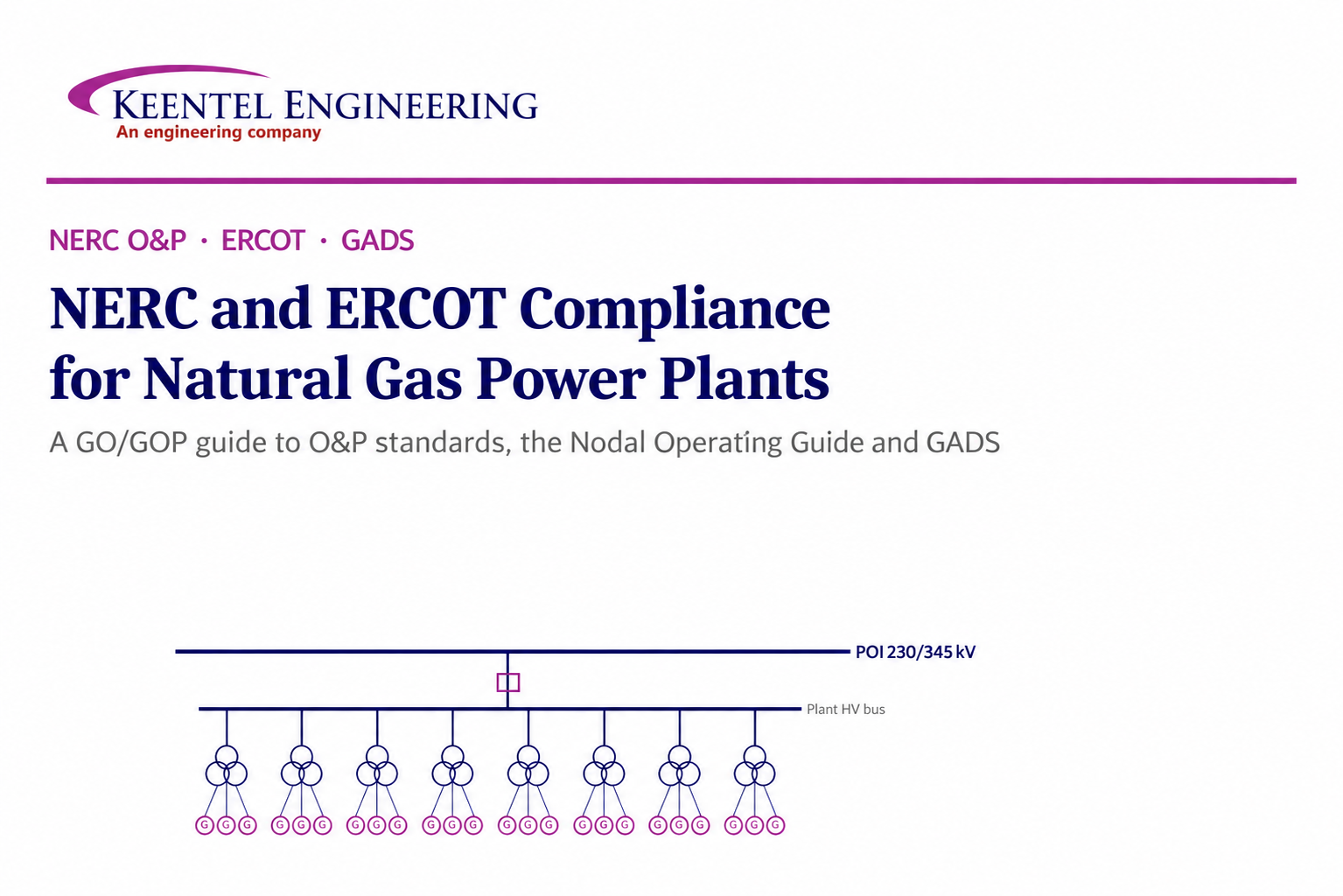
NERC and ERCOT compliance guide for natural gas power plants showing power system diagram and grid c
By SANDIP R PATEL • September 30, 2026
Learn NERC and ERCOT compliance requirements for natural gas power plants, including GO/GOP obligations, O&P standards, GADS reporting, and audits.
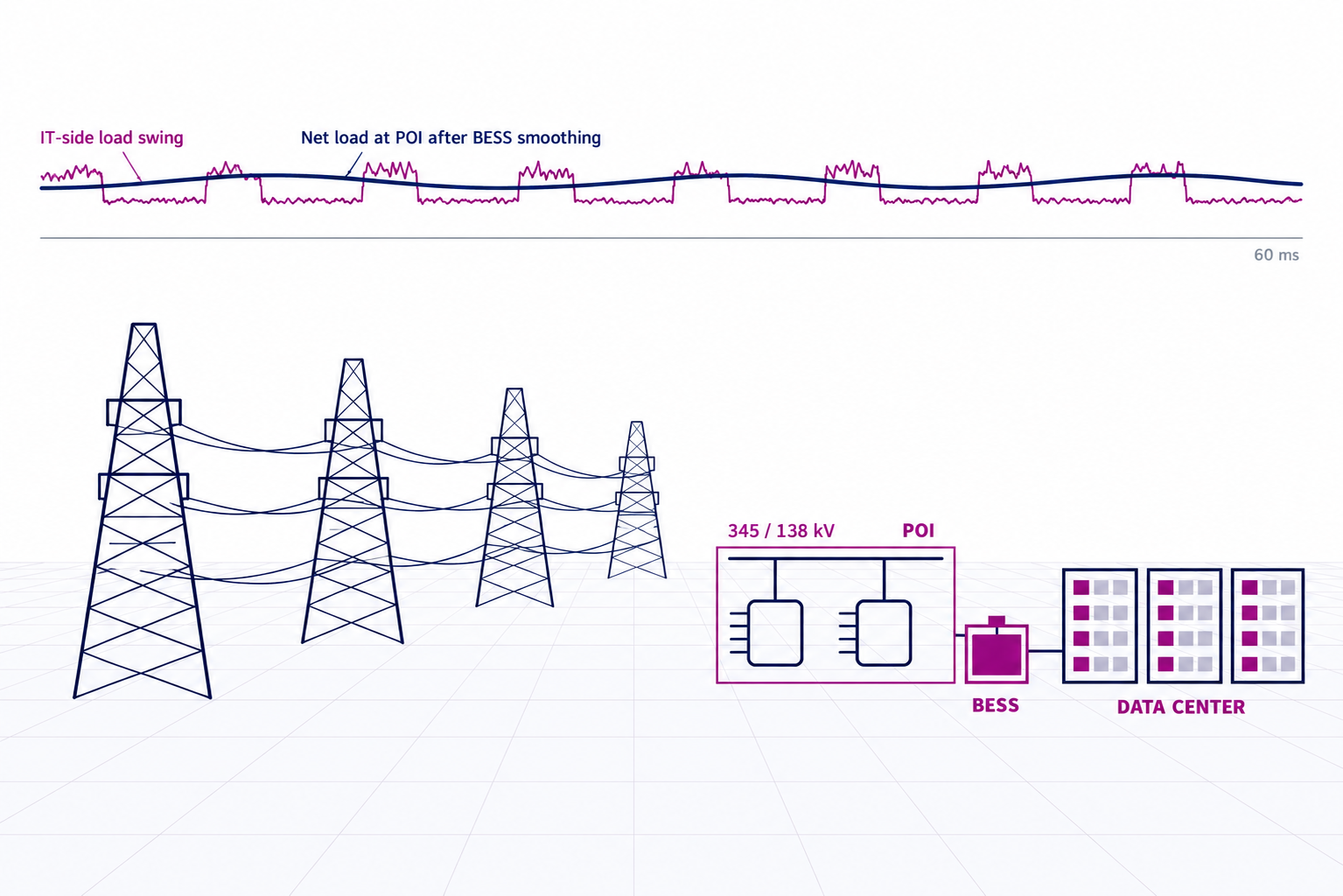
Data center and high-voltage transmission grid illustrating a large-load interconnection application
By SANDIP R PATEL • September 26, 2026
Learn how to prepare a MISO large-load interconnection package, including PSS®E models, BESS smoothing, harmonic data and transmission-owner requirements.
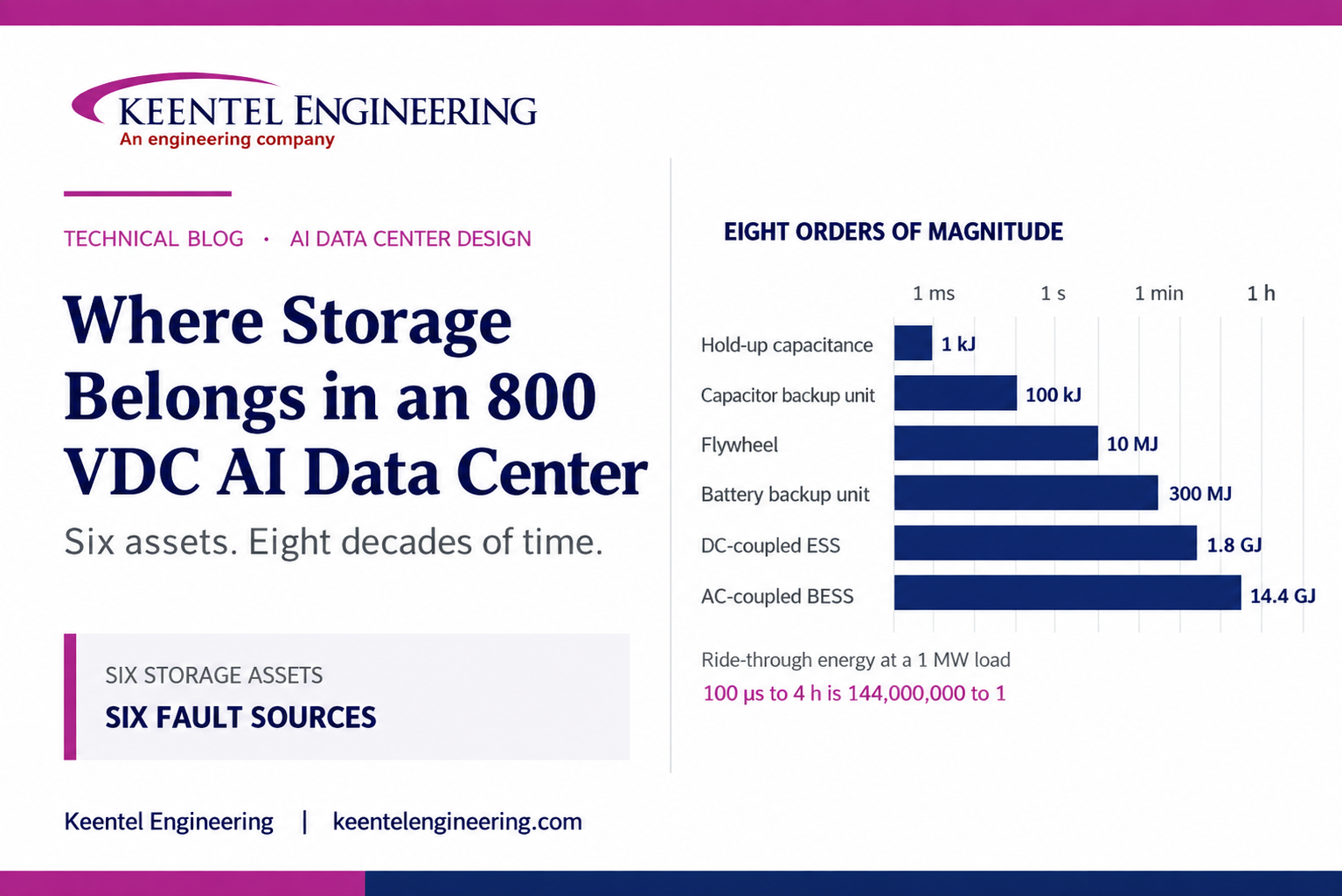
800 VDC AI data center storage architecture with battery systems, DC power distribution, and electri
By SANDIP R PATEL • September 26, 2026
Learn where storage belongs in an 800 VDC AI data center, including capacitors, flywheels, BESS, fault current, protection, grounding, and EMT design.
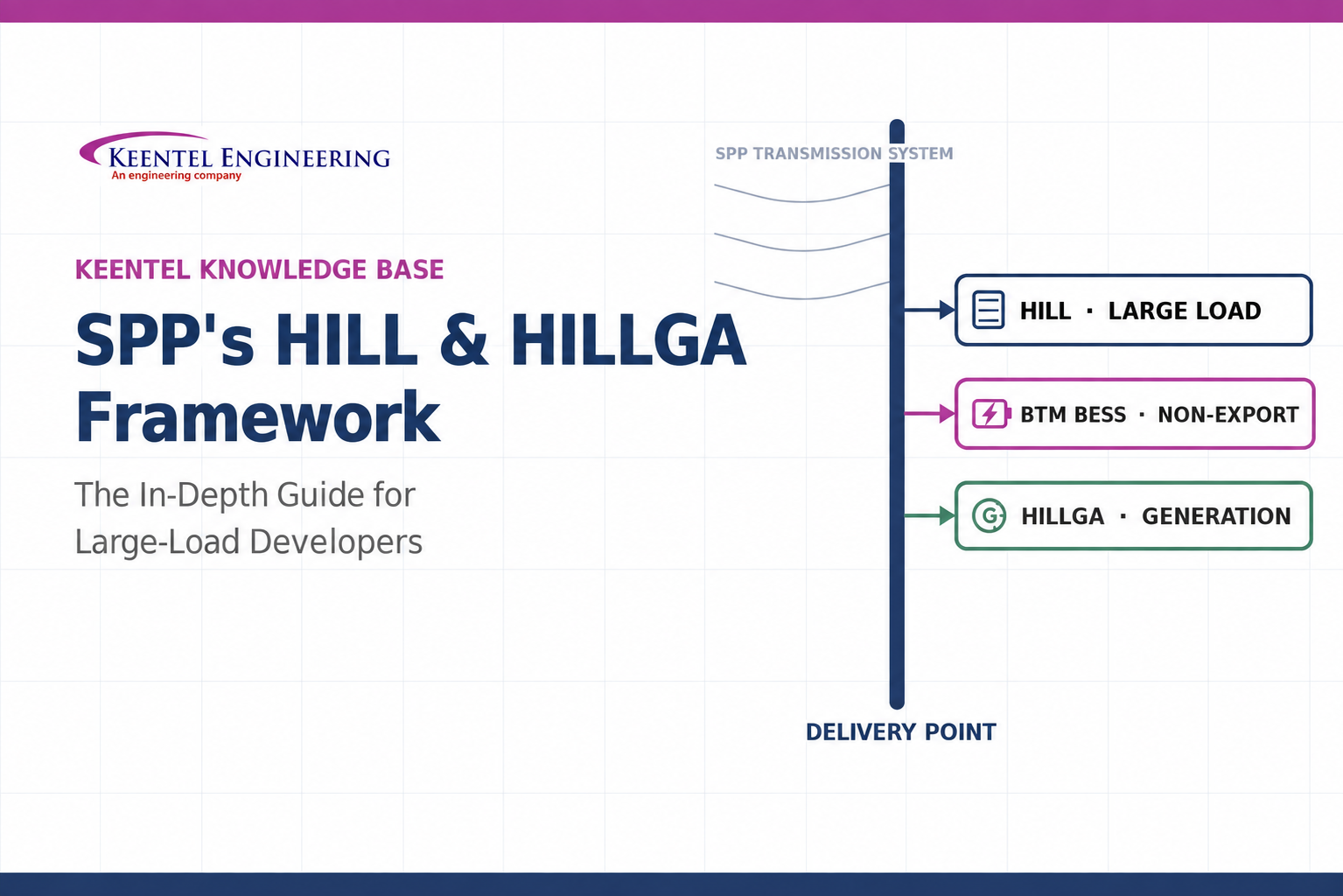
SPP HILL and HILLGA framework for large-load developers
By SANDIP R PATEL • September 26, 2026
Learn how SPP’s HILL and HILLGA framework works for large-load projects, including studies, BTM generation, modeling, EMT requirements, and firm service.

IBR time synchronization and IEEE 2800 compliance for disturbance monitoring systems
By SANDIP R PATEL • September 25, 2026
Learn how IBR time synchronization, IEEE 2800, IRIG-B verification, and PTP solutions help meet disturbance monitoring compliance requirements.
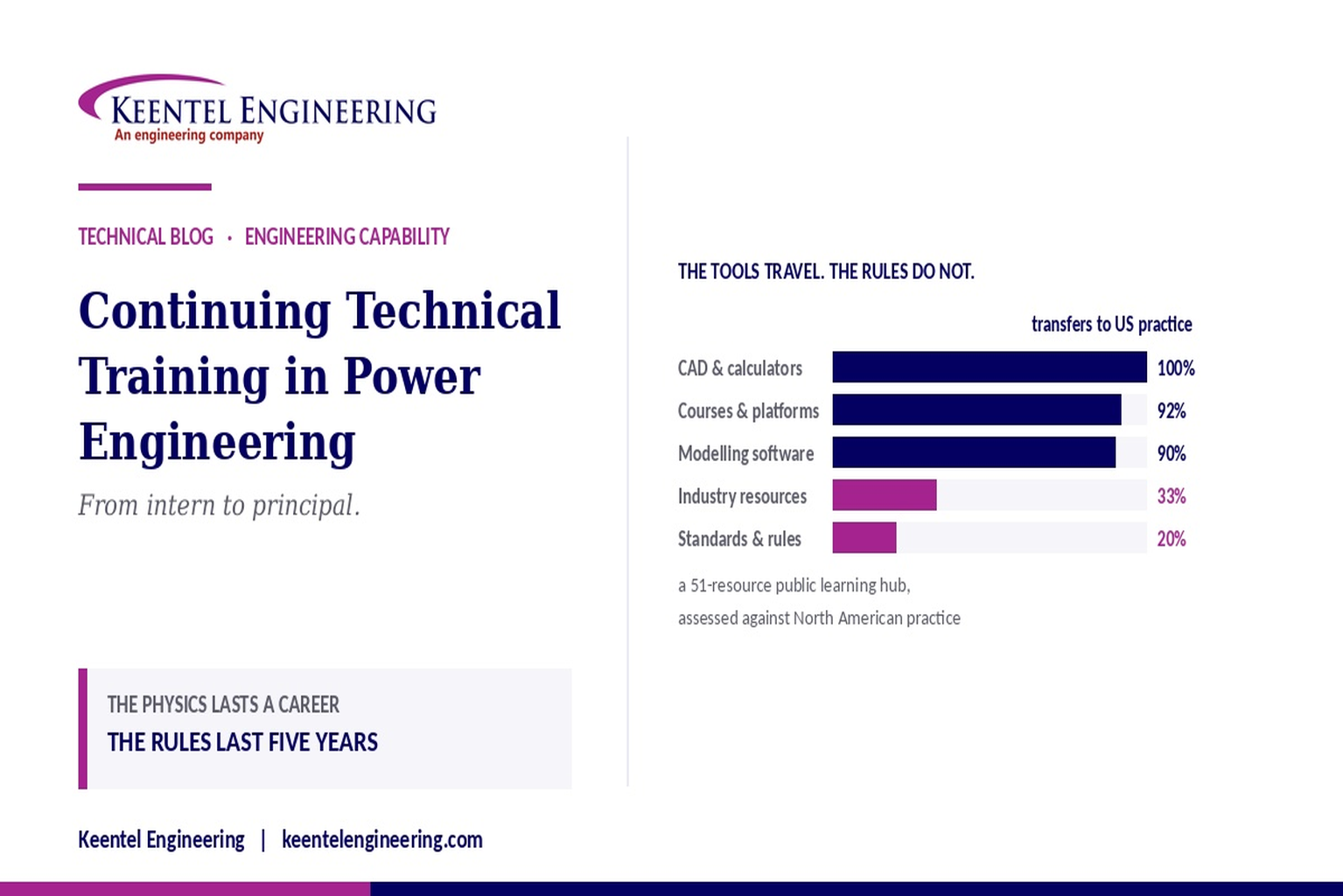
Power engineering technical training and professional development for electrical engineers
By SANDIP R PATEL • September 24, 2026
Learn why continuing technical training matters in power engineering, including standards, software skills, PDH requirements, and career growth.
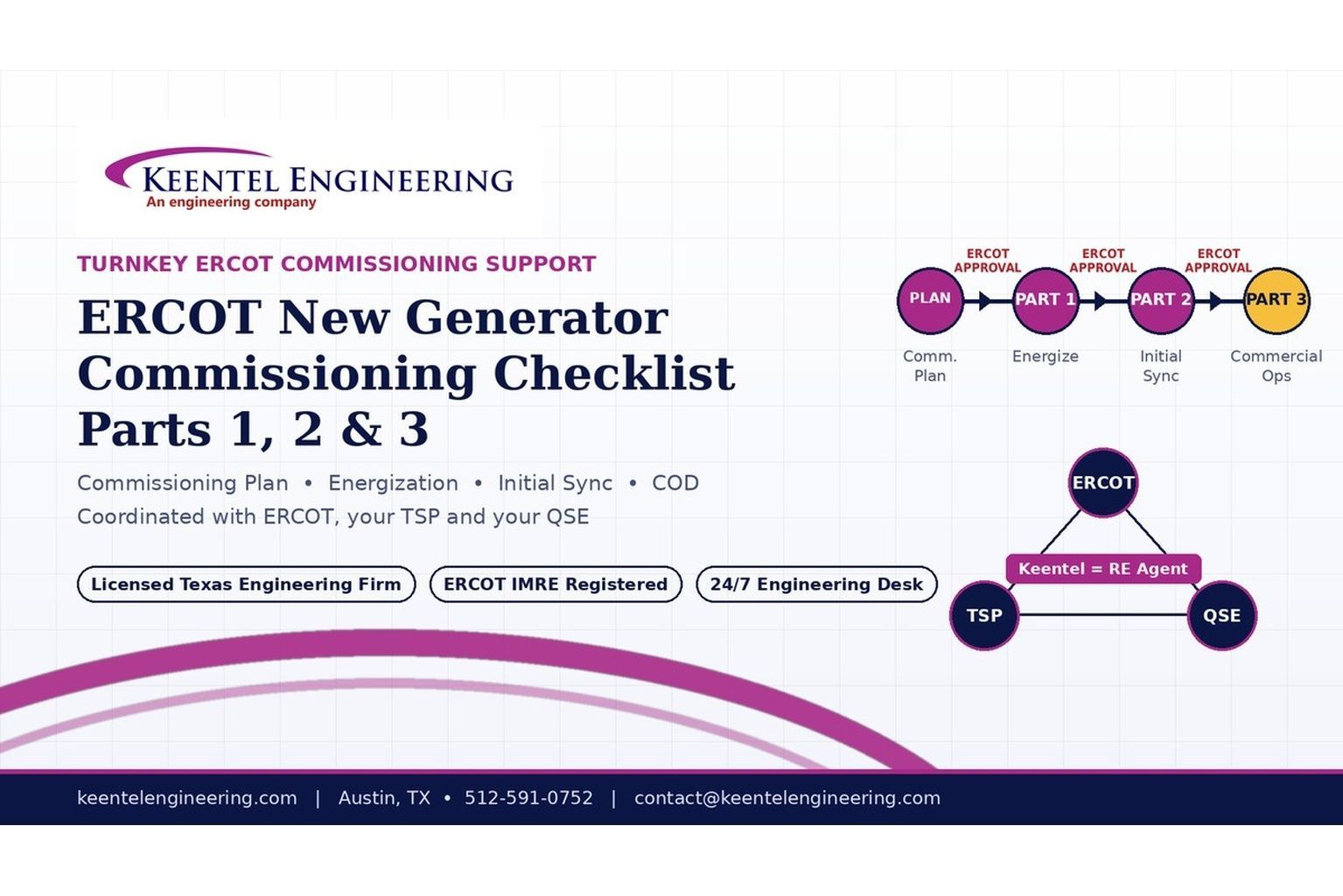
ERCOT new generator commissioning checklist parts 1, 2 and 3
By SANDIP R PATEL • September 22, 2026
2026 ERCOT commissioning guide covering the Commissioning Plan, Checklist Parts 1–3, BESS requirements, TSP/QSE coordination, field testing and COD.
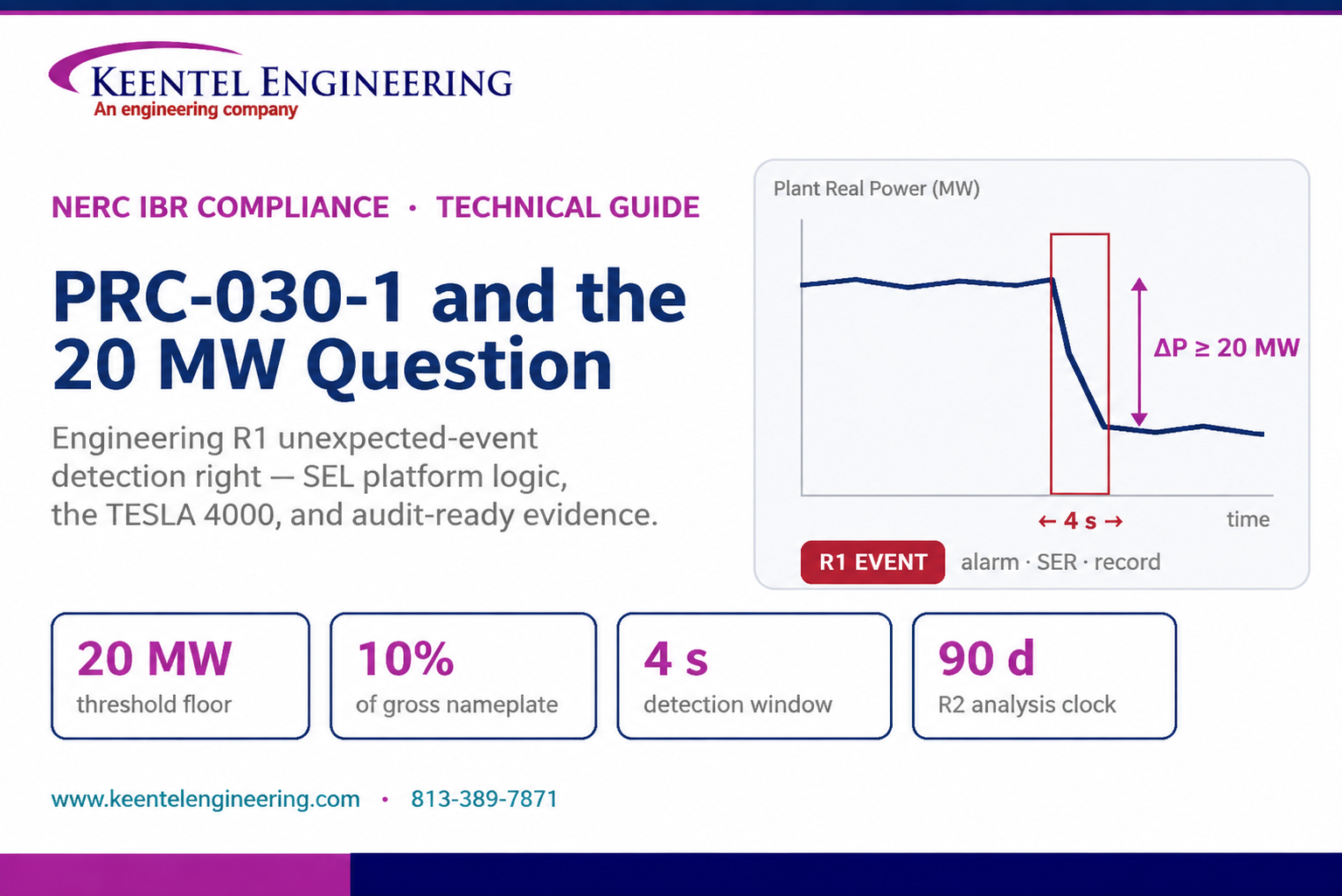
PRC-030-1 NERC IBR compliance guide showing 20 MW event detection threshold and R1 monitoring timeli
By SANDIP R PATEL • September 22, 2026
Learn PRC-030-1 R1 event detection requirements for inverter-based resources, SEL platforms, disturbance monitoring, and audit-ready compliance.
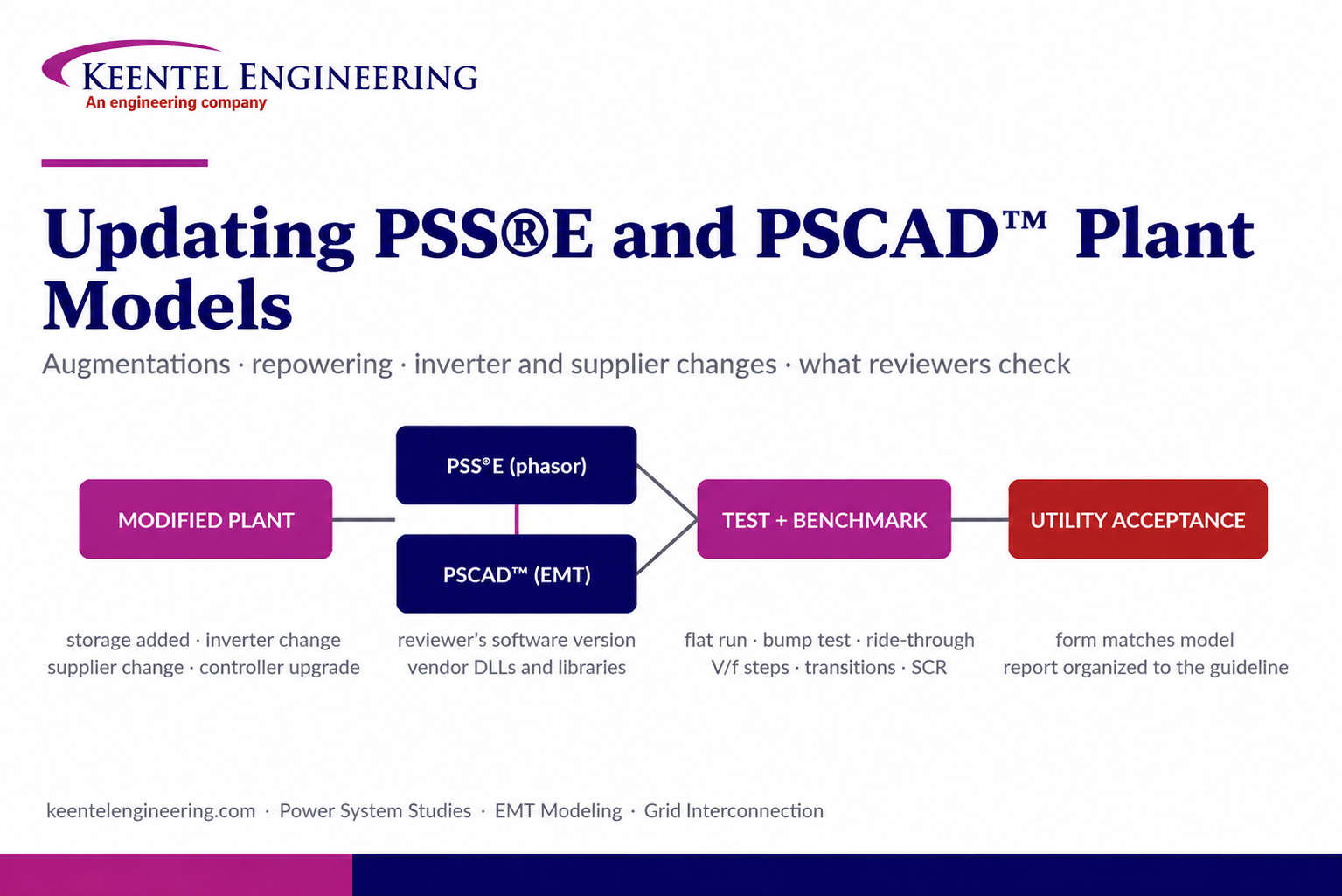
PSS®E and PSCAD™ plant model update workflow showing modified plant testing, benchmark validation, a
By SANDIP R PATEL • September 22, 2026
Learn how PSS®E and PSCAD™ model updates support plant augmentations, repowering, equipment changes, testing, benchmarking, and grid compliance.