


Fire and Electrical Safety Around High Voltage Power Lines: Engineering Risks and Mitigation Measures

Calendar icon.

May 27, 2025 | Blog

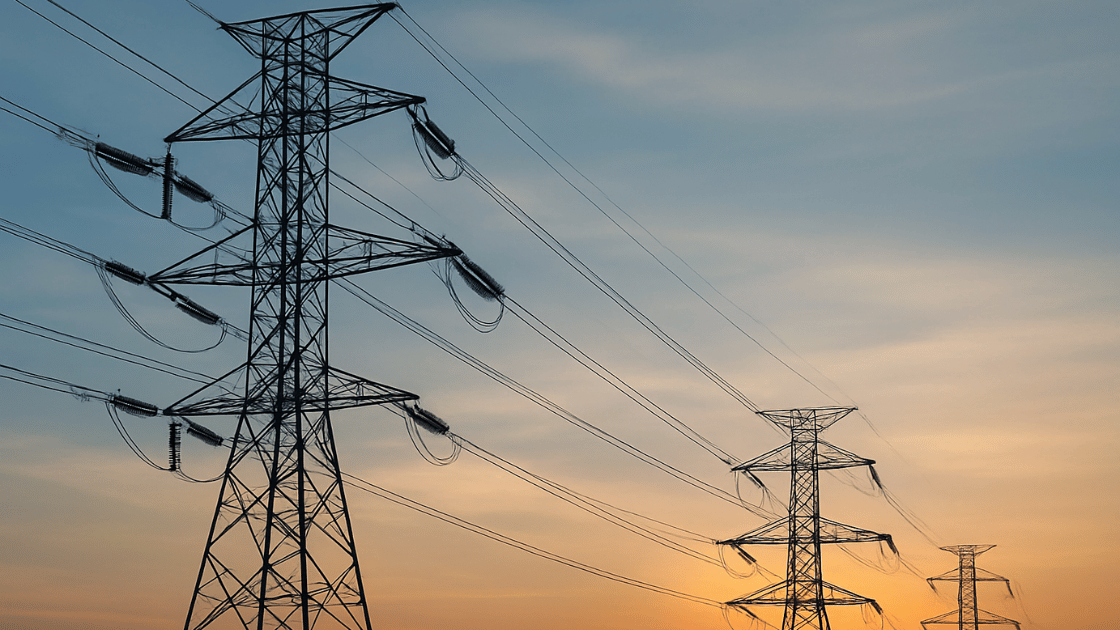
Power lines silhouetted against a colorful sunset sky.

High voltage power lines are critical to modern energy infrastructure, but they also introduce serious risks, especially during wildfires or when structures or activities encroach upon transmission corridors. Ensuring safety around these installations requires a comprehensive understanding of both electrical principles and environmental factors. This article explores the multifaceted dangers posed by fires, arc flashes, induced voltages, and physical interactions with high-voltage infrastructure—and offers engineering insights for prevention and mitigation.


Fire-Induced Threats to Transmission Systems

Flashovers and Reduced Dielectric Strength

Fires under high voltage lines significantly lower the dielectric strength of air, which increases the probability of flashovers. Intense heat, conductive flames, and smoke reduce breakdown voltages in air gaps, even in the absence of direct contact between conductors and grounded structures. For example, a flame in a 3 cm air gap can reduce a 61 kV breakdown voltage by up to 90%. These conditions increase the likelihood of arcing faults, especially during high-load seasons when line sag increases.

Ground Faults and Step Voltage Hazards

Ground faults resulting from fires can generate dangerous step voltages near towers and substations. Even without flame contact, smoke-induced moisture during fire suppression can contaminate insulators and initiate flashovers. Step voltages caused by fault currents can exceed human tolerance, especially when ground resistivity is high. Engineering models predict safe distances based on voltage and soil characteristics—for a 400 kV line, this distance can be over 20 meters.


Mechanical and Material Degradation

Conductor Deterioration

Aluminum Conductor Steel Reinforced (ACSR) cables exposed to fire may lose tensile integrity due to thermal degradation. The protective zinc coating on steel cores can burn off, exposing the core to galvanic corrosion. This degradation, while often invisible, reduces the conductor’s lifespan and load-bearing capability. Post-fire inspections should include tensile testing and corrosion assessment to determine continued suitability for operation.


Preventive Design and Maintenance Practices

Vegetation Management and Clearance

Proper clearance is a foundational safety measure. Trees, buildings, and irrigation systems must not encroach within specified buffer zones. High-voltage lines, especially those above 115 kV, require at least 15–20 feet of clearance from trees or structures due to potential line sag and arc risks. This ensures safe operation even in high ambient temperature conditions.

Equipment Operation and Grounding

Machinery operating near power lines must maintain safe vertical clearance—generally, any equipment over 14 feet in height requires prior utility consultation. Electrical grounding of metal structures and irrigation equipment is essential to prevent charge accumulation or arc formation. During refueling or maintenance under or near transmission lines, both the vehicle and container should be properly grounded.


EMF Awareness and Public Safety

Managing Public Concerns

Although electric and magnetic fields (EMFs) surrounding power lines are often misunderstood, decades of research indicate no direct cause-effect relationship between typical EMF exposure and adverse health outcomes. Nevertheless, engineering protocols should ensure EMF exposure remains within regulatory thresholds, especially in residential zones and near schools.

Responding to Downed Lines

In the event of vehicle contact with power lines or observed downed conductors, the safest action is to remain in the vehicle unless fire necessitates evacuation. If evacuation is unavoidable, the recommended method is to jump clear of the vehicle with feet together and move away by hopping to avoid step voltage exposure.


Fire Mitigation and Detection Technologies

Early Detection via Radio Frequency Monitoring

Fires generate significant corona discharge activity under energized lines, releasing detectable RF noise. Advanced systems can monitor these emissions to alert operators before a catastrophic flashover occurs. This is particularly effective in dry weather conditions, though less so during heavy rain, when signal interference limits detection range.


Conclusion: Engineering-Driven Safety Protocols

Engineering professionals must consider not only structural and thermal performance of power lines but also dynamic environmental threats such as wildfires, induced voltages, and public interactions. By integrating predictive modeling, robust material selection, and proactive maintenance strategies, the risks associated with high voltage lines can be significantly minimized. Collaboration between utilities, engineers, and local authorities ensures compliance with safety codes while protecting lives, equipment, and infrastructure


Frequently Asked Questions (FAQs) on Fire and Safety Around High Voltage Power Lines

  • 1. What are the primary risks of fires occurring near high voltage power lines?

    Fires can reduce the dielectric strength of air, increase ionization, and release conductive smoke particles. These conditions may lead to flashovers between conductors and ground or nearby structures, posing serious electrical and safety hazards.

  • 2. Can smoke alone cause flashovers?

    Dense smoke alone does not typically cause mid-span flashovers. However, smoke combined with high humidity or moisture from firefighting can lead to insulator contamination and surface flashover events.

  • 3. What is step voltage and why is it dangerous?

    Step voltage is the voltage difference between two points on the ground that a person’s feet may span during a fault. During a flashover, it can cause lethal current to pass through a person. Safe distances should be maintained to avoid exposure to hazardous step voltages.

  • 4. How far should people stay away from transmission towers during a fire event?

    It is recommended to maintain a distance of at least 10 meters from towers to avoid risks associated with step voltage and insulator flashover during fires or suppression activities.

  • 5. What safe distance is required between flames and conductors to prevent flashovers?

    For 400 kV lines, flames should be at least 3 meters below the phase conductors. This clearance may increase with combined presence of flame and dense smoke.

  • 6. How do fires affect ACSR conductors?

    Exposure to fire can weaken the mechanical properties of Aluminum Conductor Steel Reinforced (ACSR) cables. Zinc layers may be burned off, increasing susceptibility to galvanic corrosion and reducing conductor lifespan.

  • 7. Is it safe to fly drones or kites near power lines?

    No. Flying objects can interfere with line operations and create a path for arc flash. They should be kept far from any electrical infrastructure.

  • 8. Can irrigation systems pose a threat near high voltage lines?

    Yes. Solid water streams contacting energized conductors can cause flashovers. Irrigation systems should be grounded, and spray nozzles must be positioned at least 150 feet away from power lines.

  • 9. Can electric fences build up charge near transmission lines?

    Yes. Electric fences insulated from ground can accumulate induced charges. These can be dissipated using grounding methods or line filters during maintenance or charger disconnection.

  • 10. What should be done if a vehicle contacts a power line?

    Stay inside unless there’s fire. If evacuation is necessary, jump away with both feet together and hop away without touching the vehicle and ground simultaneously. Call emergency services immediately.

  • 11. How does arc flash occur and how dangerous is it?

    Arc flash is a high-temperature electrical discharge between conductors through air. It can occur without contact and causes burns up to 10 feet away. Safe operation distances of at least 25 feet from energized lines are advised.

  • 12. Are buildings allowed beneath high voltage transmission lines?

    Generally not. Buildings can interfere with maintenance, pose fire risks, and may violate electrical clearance regulations.

  • 13. Is it safe to fuel equipment near power lines?

    Fueling near lines is discouraged. If unavoidable, both fuel container and machinery must be grounded to avoid sparking from induced charges.

  • 14. Do EMFs from power lines pose health risks?

    Scientific consensus has found no conclusive evidence linking typical EMF exposure from power lines to health issues. Field strength diminishes with distance and is generally low at ground level.

  • 15. Can fires under power lines be detected early?

    Yes. Fires under energized lines often emit radio frequency noise due to corona discharges. Advanced monitoring systems can use this noise for early fire detection in dry conditions

A smiling man with glasses and a beard wearing a blue blazer stands in front of server racks in a data center.

About the Author:

Sonny Patel P.E. EC

IEEE Senior Member

In 1995, Sandip (Sonny) R. Patel earned his Electrical Engineering degree from the University of Illinois, specializing in Electrical Engineering . But degrees don’t build legacies—action does. For three decades, he’s been shaping the future of engineering, not just as a licensed Professional Engineer across multiple states (Florida, California, New York, West Virginia, and Minnesota), but as a doer. A builder. A leader. Not just an engineer. A Licensed Electrical Contractor in Florida with an Unlimited EC license. Not just an executive. The founder and CEO of KEENTEL LLC—where expertise meets execution. Three decades. Multiple states. Endless impact.

Four workers in safety vests and helmets stand with arms crossed near wind turbines.

Let's Discuss Your Project

Let's book a call to discuss your electrical engineering project that we can help you with.

Man in a blazer and open shirt, looking at the camera, against a blurred background.

About the Author:

Sonny Patel P.E. EC

IEEE Senior Member

In 1995, Sandip (Sonny) R. Patel earned his Electrical Engineering degree from the University of Illinois, specializing in Electrical Engineering . But degrees don’t build legacies—action does. For three decades, he’s been shaping the future of engineering, not just as a licensed Professional Engineer across multiple states (Florida, California, New York, West Virginia, and Minnesota), but as a doer. A builder. A leader. Not just an engineer. A Licensed Electrical Contractor in Florida with an Unlimited EC license. Not just an executive. The founder and CEO of KEENTEL LLC—where expertise meets execution. Three decades. Multiple states. Endless impact.

Leave a Comment

Related Posts

Substation grounding design with IEEE Std 80 earthing grid schematic.
By SANDIP R PATEL July 31, 2026
Learn substation grounding design using IEEE Std 80, CDEGS, soil resistivity modeling, touch and step voltage analysis, GPR, and earthing best practices.
Capacitor Banks & Power Factor Correction Design Guide
By SANDIP R PATEL July 29, 2026
Learn capacitor bank sizing, power factor correction, NEC Article 460 requirements, harmonic mitigation, protection, and installation for industrial power systems.
On-Load vs Off-Circuit Transformer Tap Changer comparison showing OLTC and OCTC voltage regulation p
By SANDIP R PATEL July 29, 2026
Learn the differences between On-Load and Off-Circuit Tap Changers, including OLTC vs OCTC operation, voltage regulation, IEEE standards, maintenance, and transformer selection.
ERCOT Form W and PUCT Part A & Part B filing guide for large load interconnection
By SANDIP R PATEL July 28, 2026
Learn the differences between the PUCT Generating Capacity Report and ERCOT Form W, including Part A vs Part B, PCLR, WLPUN, BYOG projects, and Batch Zero compliance.
PGRR144 Batch Zero and Batch 1 ERCOT grid interconnection guide with Texas transmission modeling
By SANDIP R PATEL July 28, 2026
Learn how PGRR144, Batch Zero, and Batch 1 affect ERCOT large-load interconnections, dynamic model requirements, MQT testing, PERC1, and project readiness.
ERCOT PCLR pathway showing LPC-to-MPC power access, SCED bid-cap control, large-load curtailment, an
By SANDIP R PATEL July 28, 2026
ERCOT PCLR Batch Zero large-load interconnection pathway
Delta-Star Transformer Earth Fault & Zero-Sequence Guide
By SANDIP R PATEL July 27, 2026
Learn why LV earth-fault current cannot cross a Delta-Star transformer, how zero-sequence current behaves, and what it means for protection design.
138 kV gas-insulated substation (GIS) design for compact high-voltage power systems.
By SANDIP R PATEL July 27, 2026
Learn how gas-insulated substations (GIS) improve safety, reliability, and space efficiency with 138 kV design, protection, insulation coordination, and real-world case studies.
Nuclear power plant electrical safety systems and Class I–IV power distribution architecture
By SANDIP R PATEL July 25, 2026
Learn how Class I–IV electrical systems, defence-in-depth, standby and emergency power, DC systems, protection, and load transfer ensure nuclear power plant safety.