A Coordinated Electric System Interconnection Review—the utility’s deep-dive on technical and cost impacts of your project.
Challenge: Frequent false tripping using conventional electromechanical relays
Solution: SEL-487E integration with multi-terminal differential protection and dynamic inrush restraint
Result: 90% reduction in false trips, saving over $250,000 in downtime
| Category | Metric |
|---|---|
| VPP capacity (Lunar Energy) | 650 MW |
| Lunar funding raised | US$232 million |
| Data center BESS example | 31 MW / 62 MWh |
| ERCOT grid-scale batteries | 15+ GW |
| LDES tenders (H1 2026) | Up to 9.3 GW |
| Lithium-ion share of LDES by 2030 | 77% |
| FEOC initial threshold | 55% |
| BESS tariff rate (2026) | ~55% |
| Capacity gain from analytics | 5–15% |
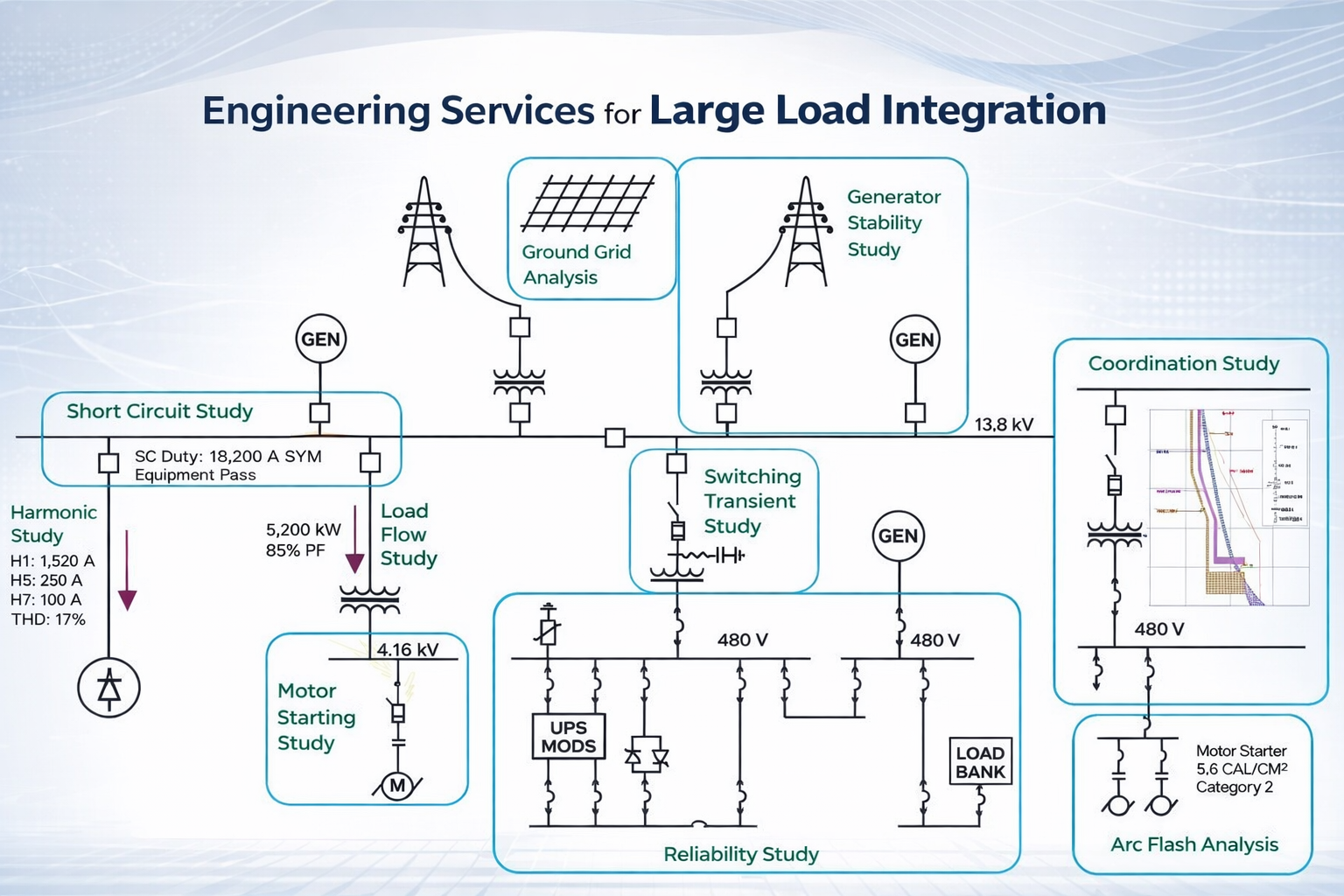
The Future of Large Load Integration: Engineering Solutions for Grid Reliability, Data Centers and Industrial Power Systems
Mar 19, 2026 | blog
By Keentel Engineering – Powering the Next Generation Grid
The global energy landscape is undergoing a fundamental transformation. One of the most disruptive forces driving this change is the rapid rise of large electrical loads, particularly data centers, AI infrastructure, advanced manufacturing, and electrified industrial processes.
Across North America, system operators are witnessing unprecedented load growth, driven by hyperscale data centers, electrification trends, and digital infrastructure expansion. This surge presents both an opportunity and a challenge an opportunity for economic growth and innovation, and a challenge for maintaining grid reliability, resource adequacy, and operational stability.
At Keentel Engineering, we specialize in delivering advanced engineering solutions to support this transition helping developers, utilities, and investors successfully integrate large loads while ensuring compliance, reliability, and performance.
Understanding Large Load Growth and Its Impact
Why Large Loads Are Increasing Rapidly
The next decade will see exponential growth in electrical demand due to:
- Hyperscale data centers (AI, cloud computing)
- Electrification of transportation and industry
- Hydrogen production facilities
- Advanced manufacturing and semiconductor plants
This growth is not incremental it is step-change demand, often requiring hundreds of megawatts per site.
Forecast trends indicate that demand growth may outpace available supply, especially when combined with generator retirements and delays in new capacity additions.
Key Benefits of Large Load Development
Large load integration provides significant advantages:
1. Economic Growth
- Job creation
- Capital investment inflows
- Regional economic development
2. Technological Leadership
- Strengthens national competitiveness in AI and digital infrastructure
- Enables innovation ecosystems
3. Infrastructure Development
- Drives transmission upgrades
- Accelerates modernization of grid systems
4. National Security
- Supports critical infrastructure such as data and communications networks
The Engineering Challenges of Large Load Integration
Despite its benefits, large load growth introduces complex technical challenges.
1. Resource Adequacy Risk
One of the biggest concerns is ensuring enough generation capacity to meet demand.
- Load growth may exceed generation additions
- Capacity markets may tighten
- Reliability margins may shrink
2. Transmission Constraints
Large loads require:
- New substations
- High-capacity transmission lines
- Grid reinforcement
Without proper planning, congestion and voltage instability can occur.
3. Operational Complexity
Large loads:
- Operate continuously (especially data centers)
- Have low tolerance for interruptions
- Require high reliability (N+1 or 2N redundancy)
4. Limited Demand Response Participation
Traditional demand response programs are not well suited for hyperscale loads.
- Data centers cannot easily curtail load
- Backup generation has environmental limitations
- Market incentives are often insufficient
Grid Integration Models for Large Loads
1. Network Load Model (Preferred Approach)
Large loads are directly connected to the grid and treated as standard system demand.
Advantages:
- Higher reliability
- Better system planning integration
- Access to demand response mechanisms
- Simplified operations
This is the most robust and preferred engineering solution for long-term reliability.
2. Co-Located Load with Generation
Large loads are paired with generation resources (e.g., gas plants, renewables).
Engineering Considerations:
- Protection coordination
- Stability impacts
- Power flow management
- Islanding risks
Improper implementation can lead to:
- Voltage instability
- Frequency disturbances
- Complex relay schemes
3. Behind-the-Meter Generation (BTM)
Load is served by on-site generation.
Challenges:
- Not always visible to system operators
- Can degrade system reliability if not properly modeled
- Limited scalability
4. Non-Capacity Backed Load (Transitional Model)
A newer concept where loads connect without full capacity backing but accept curtailment risk.
Benefits:
- Faster interconnection
- Reduced upfront cost
Risks:
- Load curtailment before emergencies
- Lower reliability compared to network load
- Requires careful coordination
Engineering Pathways for Large Load Integration
Path 1: Bring Your Own Generation (BYOG)
Large load developers can pair their project with new generation capacity.
Key Features:
- Must meet or exceed load demand
- Can be co-located or remote
- Requires interconnection studies and compliance
Engineering Scope:
- Power system studies (load flow, short circuit, dynamic)
- Interconnection design
- Protection and control systems
- Compliance modeling
Path 2: Demand Response Integration
Enhancing load flexibility through:
- Load shedding strategies
- Backup generation operation
- Curtailment programs
Engineering Challenges:
- Control system design
- Reliability constraints
- Environmental compliance
Path 3: Provisional Interconnection
Allows projects to connect faster before full studies are completed.
Benefits:
- Reduces project timeline by 6–12 months
- Enables faster market entry
Risks:
- Potential system upgrades later
- Developer assumes technical risk
Why Engineering Design Is Critical
Large load integration is not just a planning issue it is an engineering execution challenge.
Critical areas include:
- Substation design (HV/MV)
- Protection and control systems
- Dynamic modeling (PSSE, PSCAD)
- Grid compliance (NERC, ISO requirements)
- Power quality and stability studies
Without proper engineering, projects risk:
- Delays
- Non-compliance
- Reliability issues
- Cost overruns
How Keentel Engineering Supports Large Load Projects
At Keentel Engineering we provide end-to-end engineering services for large load integration.
Our Core Services:
1. Power System Studies
- Load flow analysis
- Short circuit studies
- Dynamic stability analysis
- EMT modeling (PSCAD)
2. Interconnection Support
- ISO/RTO compliance
- Interconnection applications
- Model validation (PSSE/TSAT)
3. Substation Design
- HV/EHV substation engineering
- Protection and control design
- Relay coordination
4. Renewable + Data Center Integration
- Co-located generation design
- BESS integration
- Hybrid system modeling
5. NERC Compliance
- PRC, TPL, MOD standards
- Model validation and documentation
25 Technical FAQs
1. What defines a “large load” in power systems?
A large load typically refers to electrical demand exceeding tens or hundreds of megawatts, such as data centers or industrial facilities requiring dedicated substations and transmission infrastructure.
2. Why are data centers challenging for grid operators?
They operate continuously with minimal tolerance for outages, making demand response participation difficult and requiring extremely high reliability.
3. What is resource adequacy?
It is the ability of the power system to meet demand reliably, including reserve margins for contingencies.
4. Why is resource adequacy at risk?
Rapid load growth combined with generator retirements can result in insufficient supply to meet demand.
5. What is network load?
A load directly connected to the grid and fully integrated into system planning, paying for transmission and energy services.
6. What are the advantages of network load configuration?
It provides higher reliability, better planning integration, and simplified system operation.
7. What is co-located load?
A load connected near or with a generation source, potentially sharing infrastructure.
8. What are the risks of co-located load?
Protection complexity, voltage instability, and lack of system visibility.
9. What is behind-the-meter generation?
Generation located on-site that serves local load without full grid participation.
10. Why is BTM generation limited?
It can degrade system reliability if not properly coordinated and modeled.
11. What is demand response?
A mechanism where loads reduce consumption during peak conditions to support grid stability.
12. Why don’t data centers participate heavily in demand response?
Because service interruptions can impact critical operations and revenue.
13. What is provisional interconnection?
A process allowing early connection before full system studies are complete.
14. What are the risks of provisional interconnection?
Potential future upgrades and uncertain system impacts.
15. What is “bring your own generation”?
A model where load developers provide their own generation capacity to offset demand.
16. How is generation matched to load?
Typically using UCAP (Unforced Capacity) metrics to ensure reliability.
17. What is non-capacity backed load?
Load that connects without full capacity support but agrees to curtailment under certain conditions.
18. When is non-capacity backed load used?
As a transitional solution when resource adequacy is insufficient.
19. What studies are required for large load integration?
Load flow, short circuit, stability, EMT, and protection coordination studies.
20. What is dynamic modeling?
Simulation of system behavior under disturbances using tools like PSSE and PSCAD.
21. Why is protection coordination critical?
Improper coordination can lead to cascading outages and equipment damage.
22. What role does transmission planning play?
Ensures infrastructure upgrades are available to support new load reliably.
23. What is ELCC in capacity markets?
Effective Load Carrying Capability measures how much capacity a resource contributes to reliability.
24. What are the biggest barriers to large load integration?
Transmission constraints, regulatory delays, and insufficient generation.
25. How can Keentel Engineering help?
By providing complete engineering solutions from studies and compliance to detailed design and project execution.

About the Author:
Sandip "Sonny" R. Patel, P.E.
IEEE Senior Member · Founder & CEO, Keentel Engineering
In 1995, Sonny Patel earned his Electrical Engineering degree from the University of Illinois. But degrees don't build legacies — action does.
For three decades, he has worked the power industry from every side of the table: 16 years as a utility engineer at Exelon/Commonwealth Edison; generation leadership across hydroelectric, industrial steam turbine, and a 9 GW renewable fleet; NERC Regional Entity Senior Compliance Engineer and Audit Team Lead, auditing some of the nation's largest utilities; and testing and commissioning lead on equipment up to 765 kV — the very top of the North American grid.Utility. Generator. Regulator. Consultant. Few engineers have seen all four seats. Fewer still have sat in them.
His experience spans nuclear, hydro, conventional generation, renewables, oil and gas, mining — and today's data centers, where he is authoring a three-book series on data center design. He is a Licensed Professional Engineer in six states and a Licensed Electrical Contractor in Florida (Unlimited EC) — he doesn't just design the work; he's qualified to stand behind its execution.Today, as Founder and CEO of Keentel Engineering, Sonny leads a nationwide team of engineers delivering substation design, power system studies, NERC compliance, and commissioning — done right, coast to coast.Three decades. Every side of the table. One standard: accountable engineering.
Services

Let's Discuss Your Project
Let's book a call to discuss your electrical engineering project that we can help you with.
About the Author:
Sandip "Sonny" R. Patel, P.E.
IEEE Senior Member · Founder & CEO, Keentel Engineering
In 1995, Sonny Patel earned his Electrical Engineering degree from the University of Illinois. But degrees don't build legacies — action does.
For three decades, he has worked the power industry from every side of the table: 16 years as a utility engineer at Exelon/Commonwealth Edison; generation leadership across hydroelectric, industrial steam turbine, and a 9 GW renewable fleet; NERC Regional Entity Senior Compliance Engineer and Audit Team Lead, auditing some of the nation's largest utilities; and testing and commissioning lead on equipment up to 765 kV — the very top of the North American grid.
Utility. Generator. Regulator. Consultant. Few engineers have seen all four seats. Fewer still have sat in them.
His experience spans nuclear, hydro, conventional generation, renewables, oil and gas, mining — and today's data centers, where he is authoring a three-book series on data center design. He is a Licensed Professional Engineer in six states and a Licensed Electrical Contractor in Florida (Unlimited EC) — he doesn't just design the work; he's qualified to stand behind its execution.
Today, as Founder and CEO of Keentel Engineering, Sonny leads a nationwide team of engineers delivering substation design, power system studies, NERC compliance, and commissioning — done right, coast to coast.Three decades. Every side of the table. One standard: accountable engineering.
Leave a Comment
Thank you for contacting us.
We will get back to you as soon as possible.
We will get back to you as soon as possible.
Oops, there was an error sending your message.
Please try again later.
Please try again later.
Related Posts
By SANDIP R PATEL
•
October 11, 2026
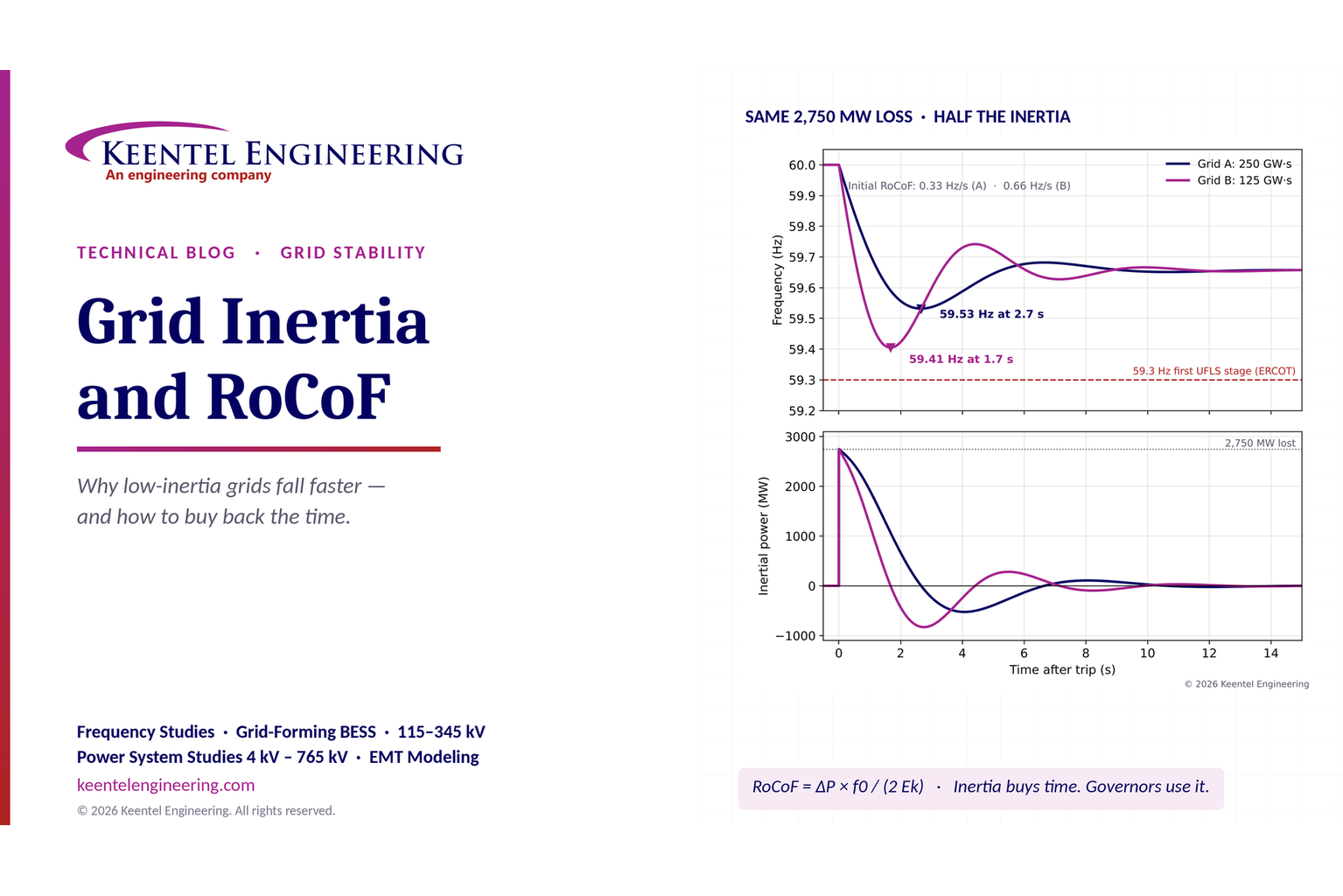
Explore grid inertia, RoCoF and frequency response, with swing equation calculations, frequency nadir analysis and US power system simulation examples.
By SANDIP R PATEL
•
October 10, 2026
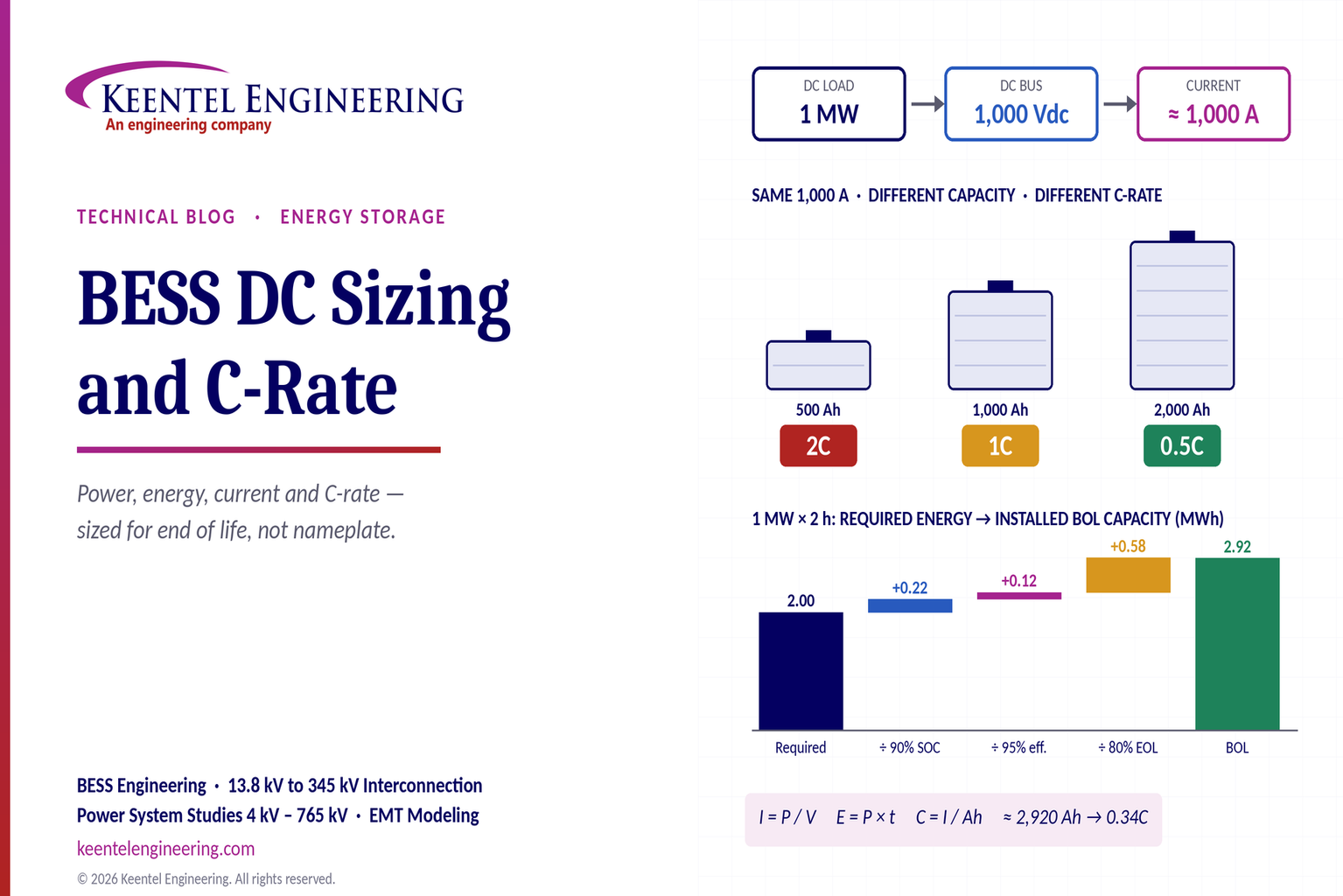
Learn BESS DC sizing with power, energy, current and C-rate calculations, battery losses, degradation and a 100 MW/400 MWh utility-scale example.
By SANDIP R PATEL
•
October 10, 2026
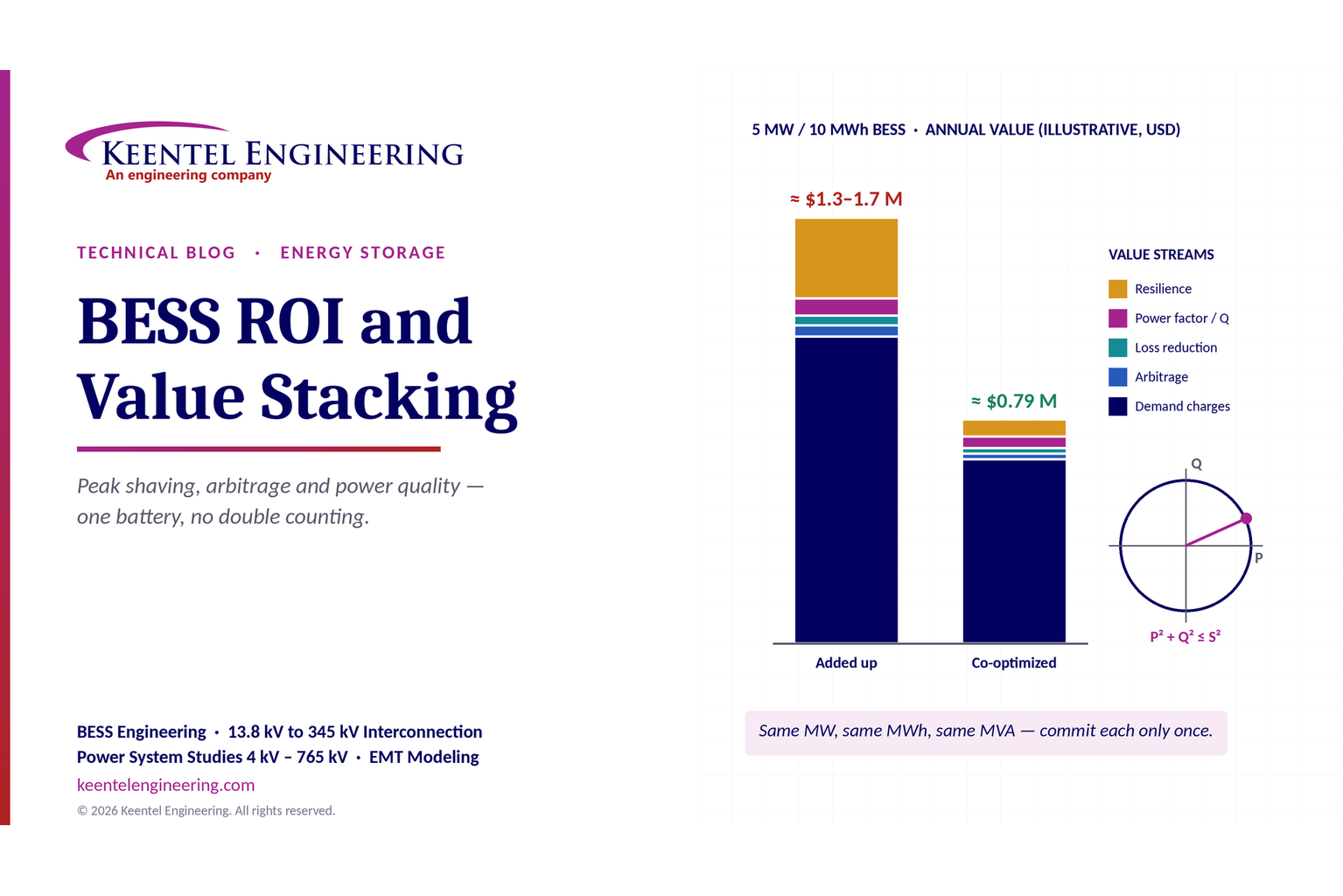
Learn how BESS ROI is calculated using peak shaving, energy arbitrage, power quality and battery storage economics, with a practical 5 MW/10 MWh example.
By SANDIP R PATEL
•
October 10, 2026
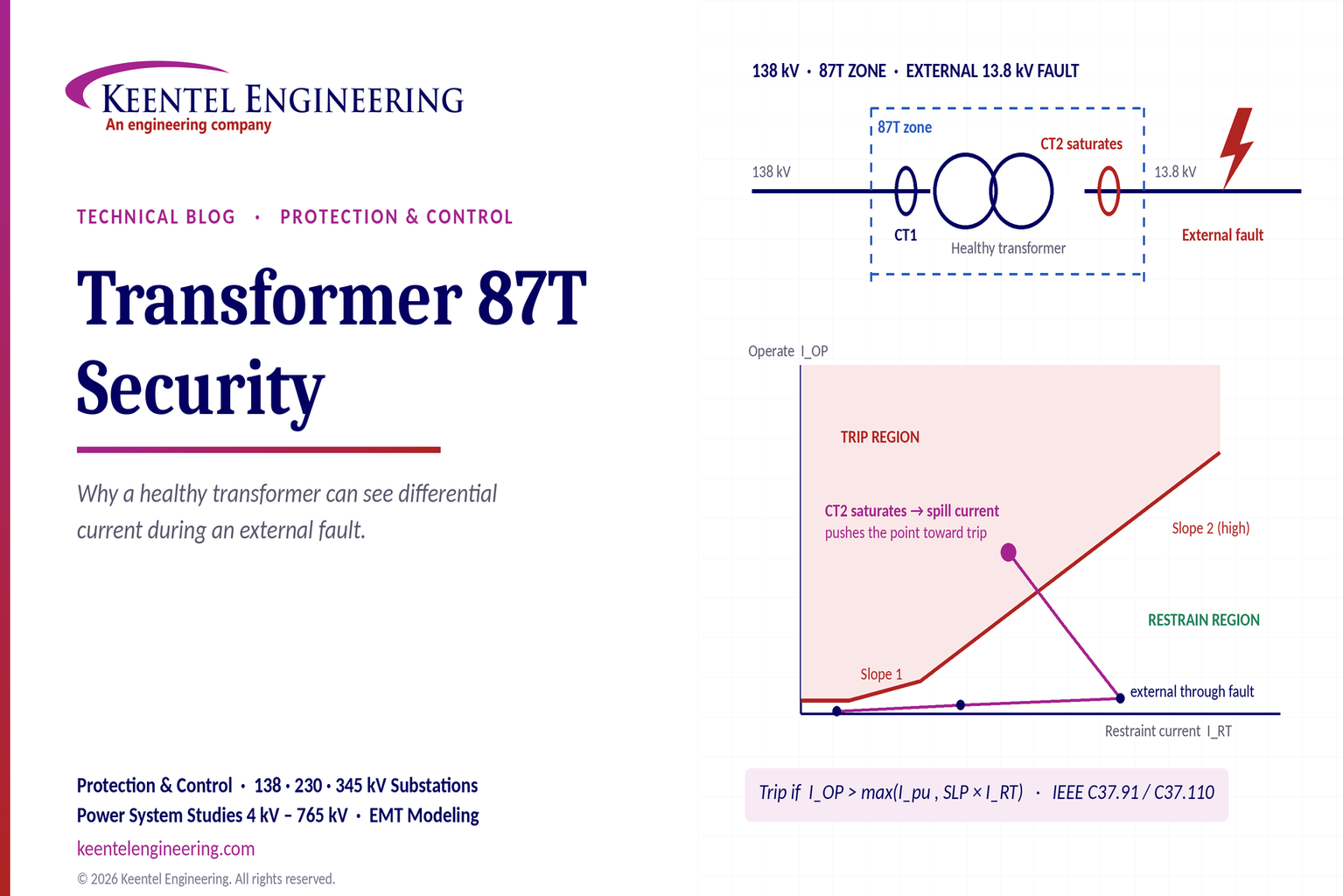
Learn why transformer differential relays detect current during external faults, how CT saturation causes spill current, and how secure 87T protection prevents trips.
By SANDIP R PATEL
•
October 10, 2026
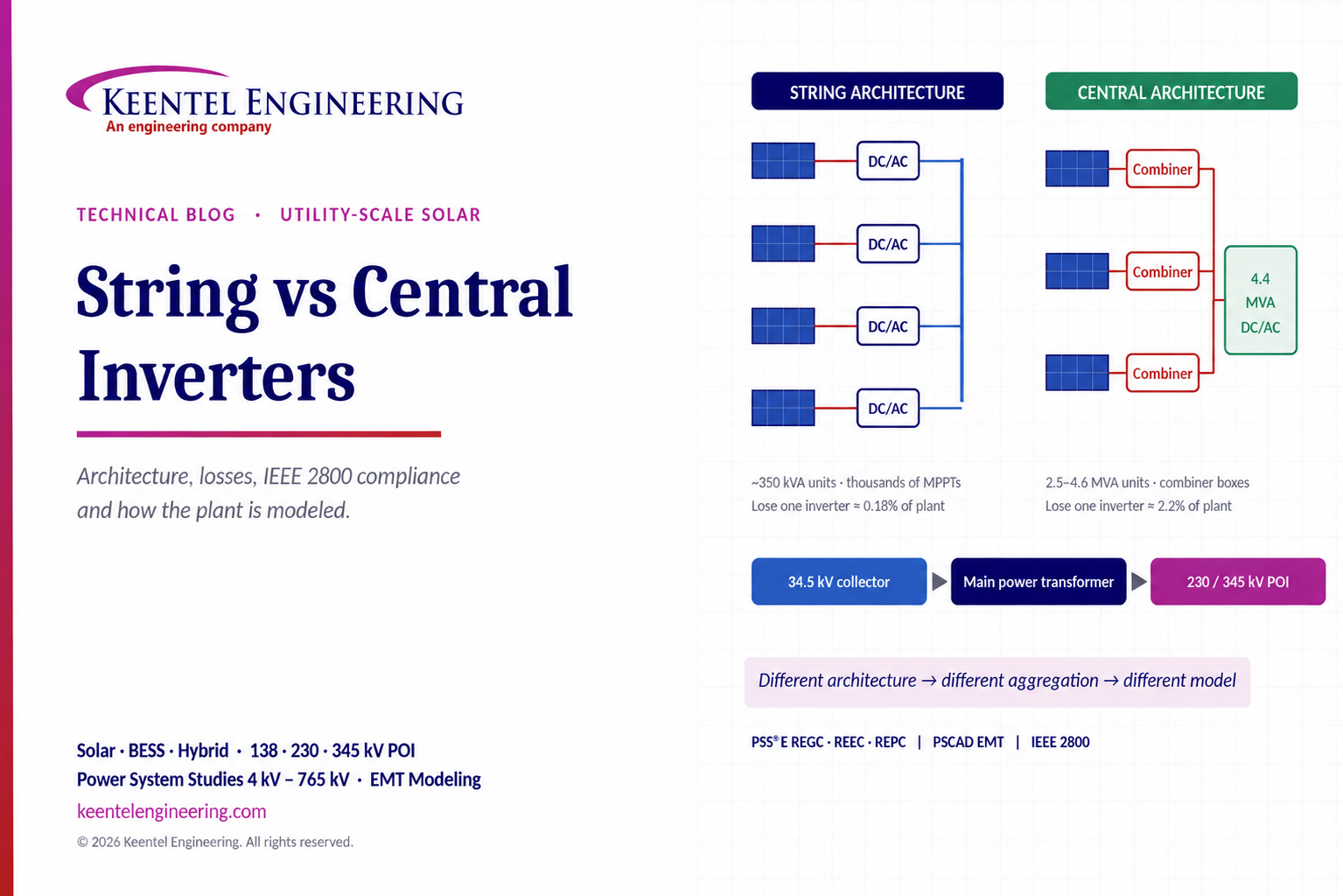
Compare string vs central inverters for utility-scale solar, including efficiency, maintenance, grid compliance, reactive power and interconnection studies.
By SANDIP R PATEL
•
October 9, 2026
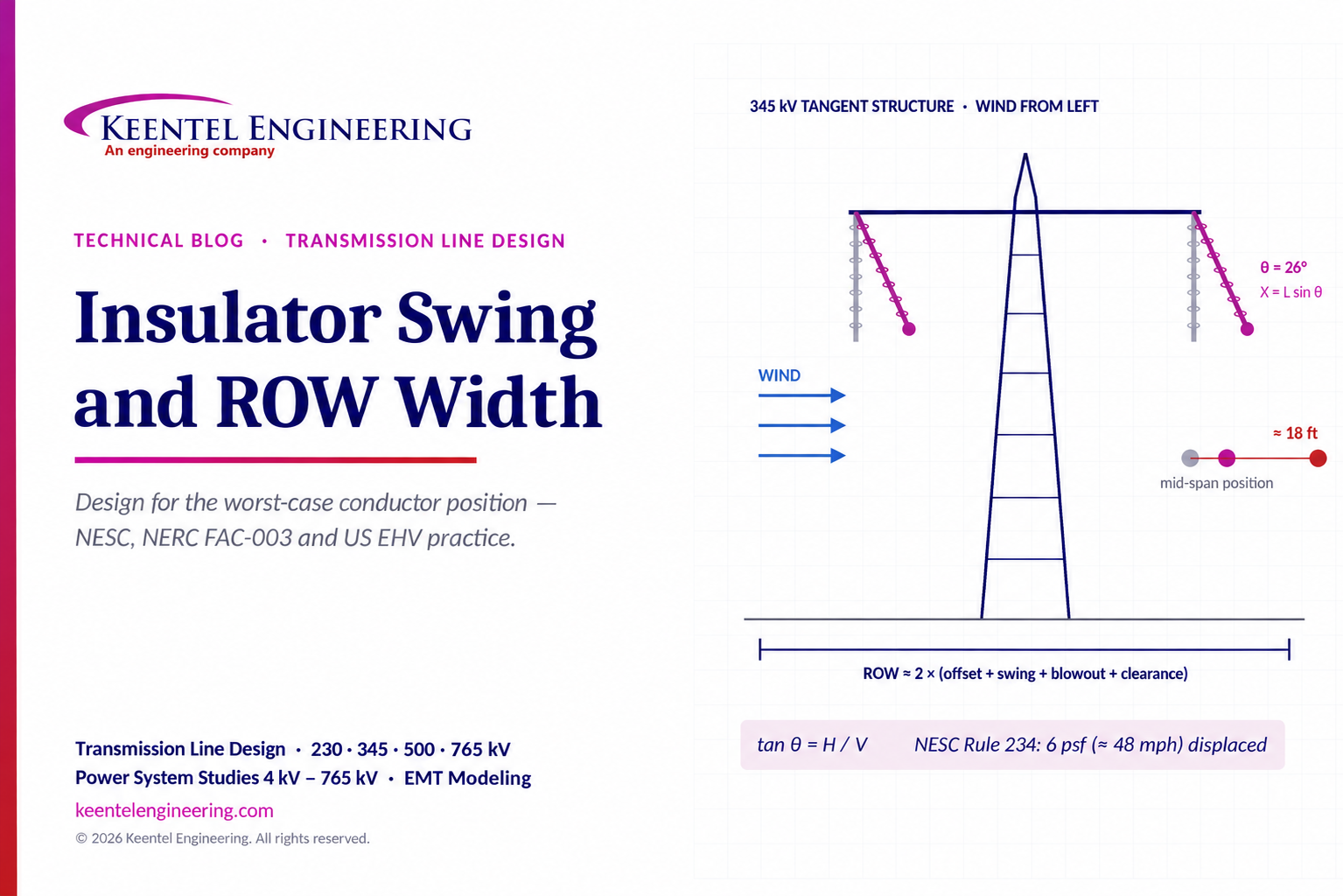
Learn how insulator swing angle and conductor blowout affect transmission line ROW width, with NESC clearances, NERC FAC-003 guidance, and a 345 kV example.
Copy
By SANDIP R PATEL
•
October 3, 2026
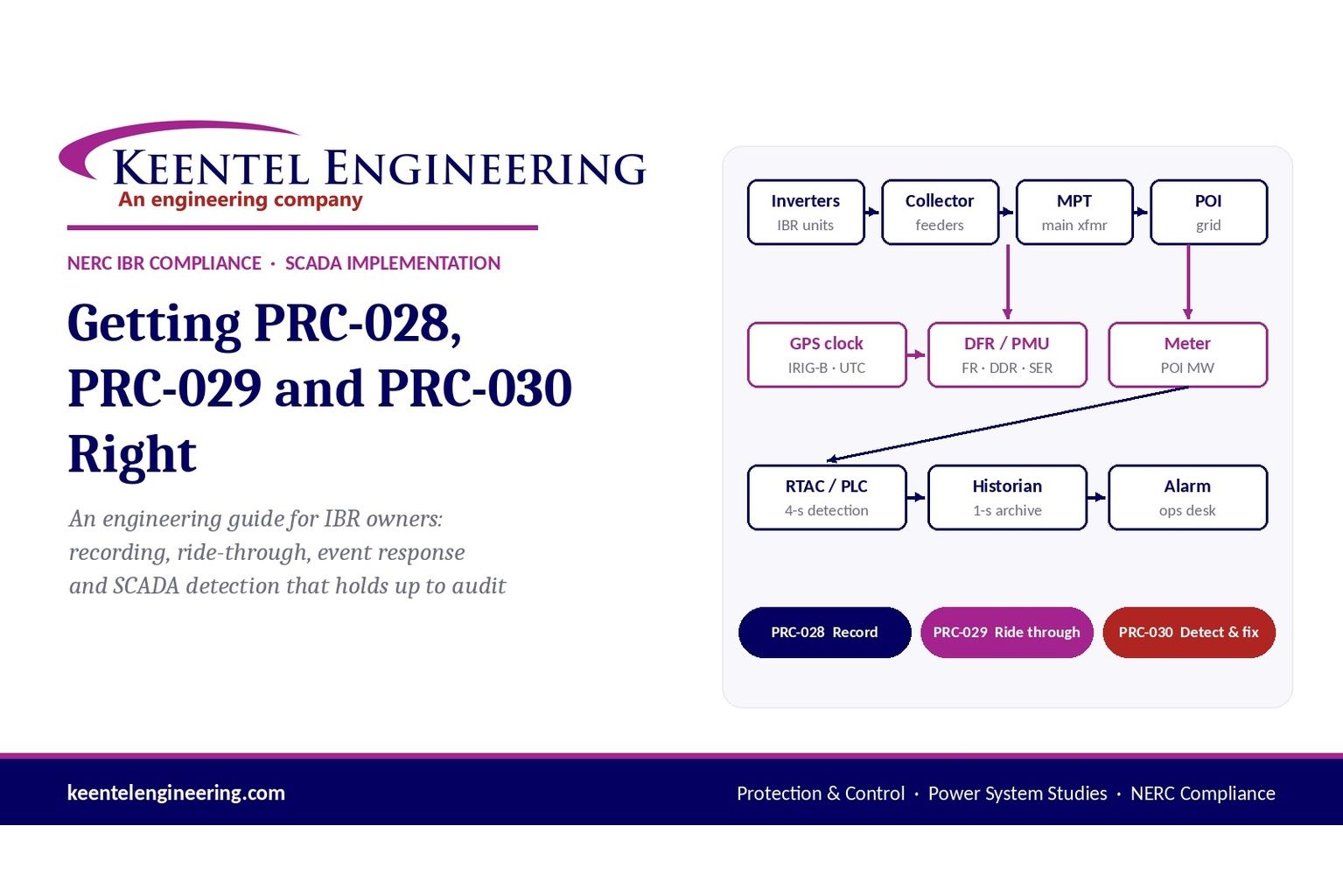
Engineering guide to PRC-028 disturbance recording, PRC-029 ride-through and PRC-030 event detection for inverter-based resources.
By SANDIP R PATEL
•
October 3, 2026
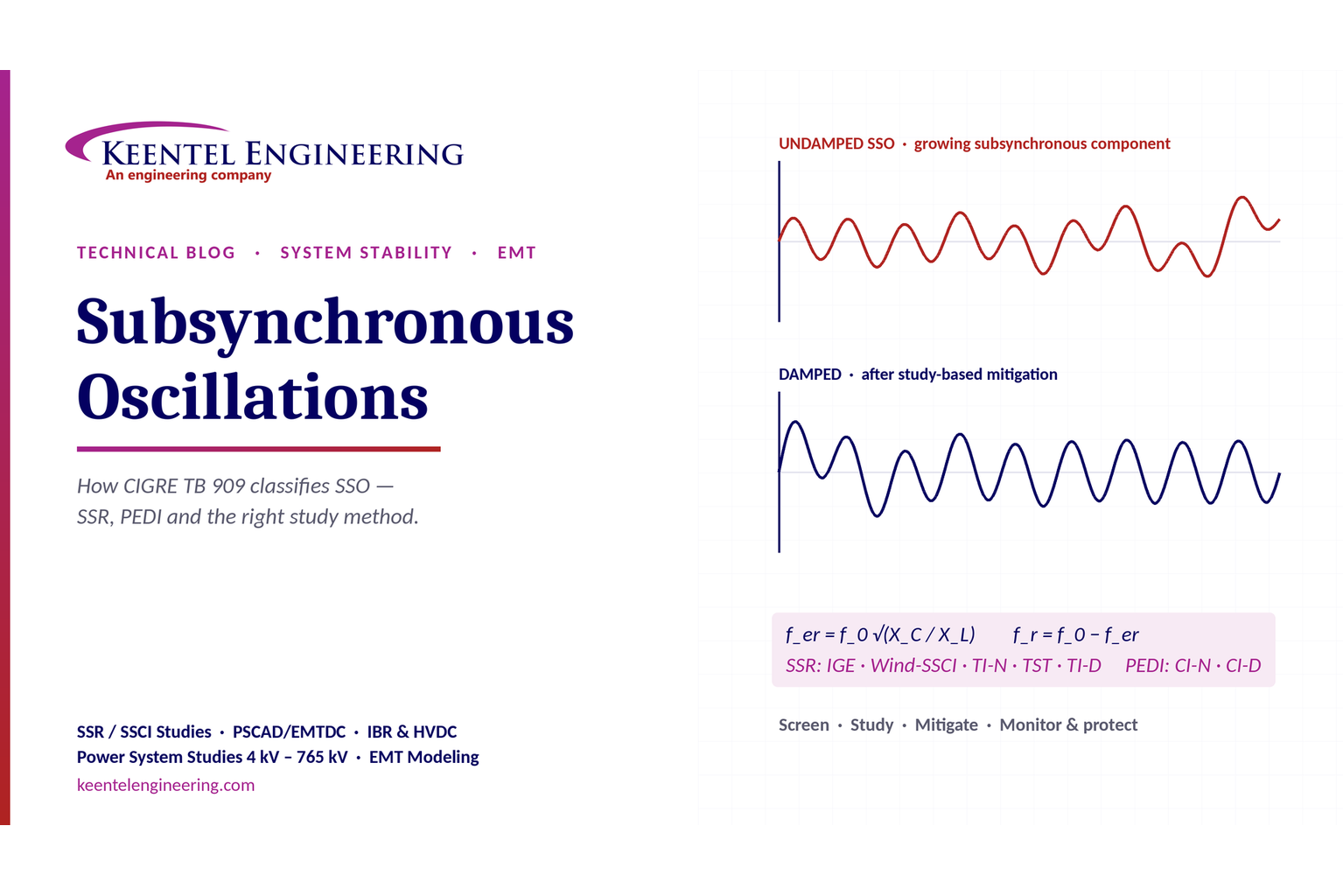
A practical guide to SSO classification, SSR, PEDI, Wind-SSCI, EMT analysis, mitigation and protection based on CIGRE TB 909.
By SANDIP R PATEL
•
October 3, 2026
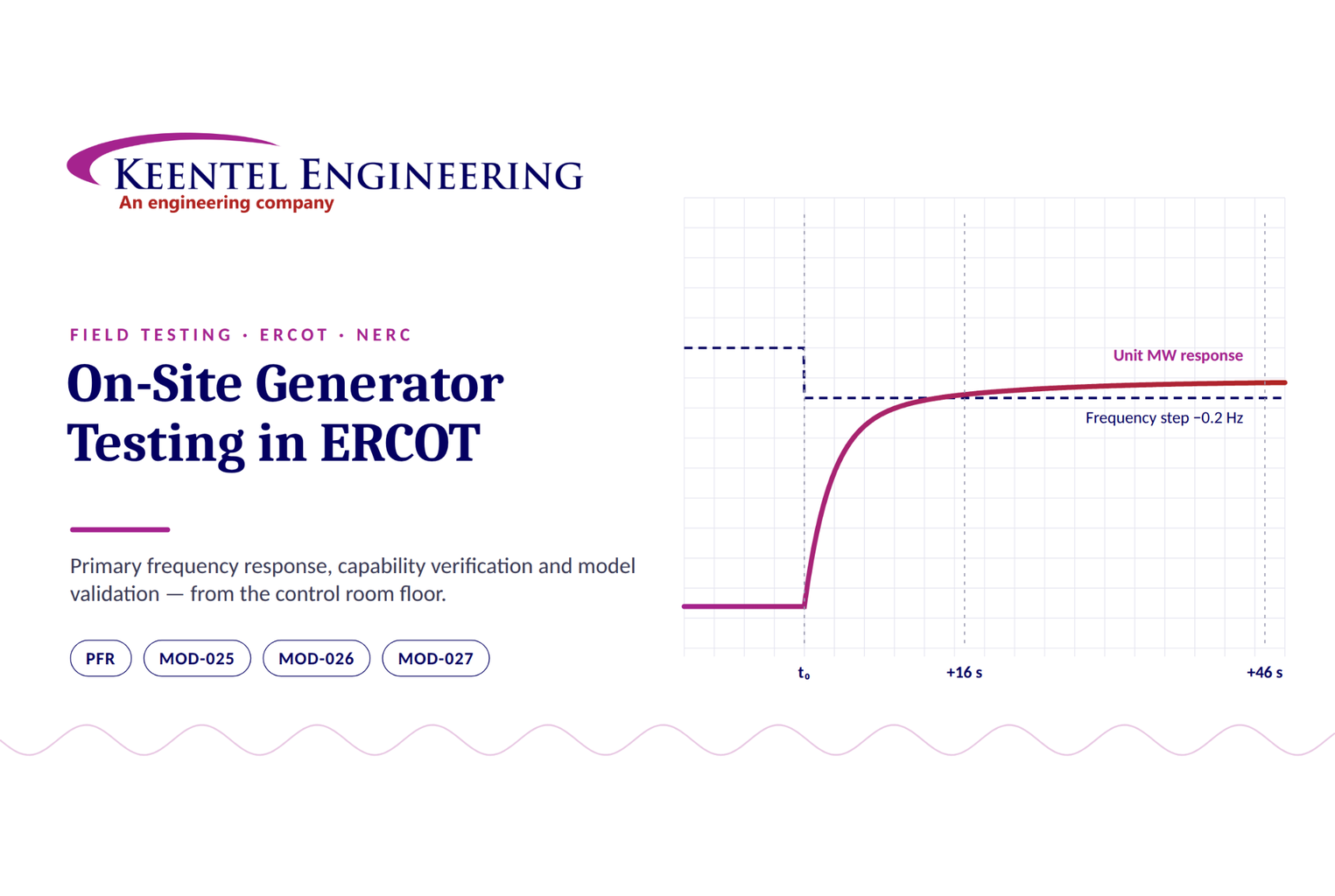
Learn ERCOT generator testing for PFR, MOD-025 and MOD-026/027, including staged tests, capability verification, dynamic models and field testing.