A Coordinated Electric System Interconnection Review—the utility’s deep-dive on technical and cost impacts of your project.
Challenge: Frequent false tripping using conventional electromechanical relays
Solution: SEL-487E integration with multi-terminal differential protection and dynamic inrush restraint
Result: 90% reduction in false trips, saving over $250,000 in downtime
| Category | Metric |
|---|---|
| VPP capacity (Lunar Energy) | 650 MW |
| Lunar funding raised | US$232 million |
| Data center BESS example | 31 MW / 62 MWh |
| ERCOT grid-scale batteries | 15+ GW |
| LDES tenders (H1 2026) | Up to 9.3 GW |
| Lithium-ion share of LDES by 2030 | 77% |
| FEOC initial threshold | 55% |
| BESS tariff rate (2026) | ~55% |
| Capacity gain from analytics | 5–15% |
NERC Compliance Service for Substations
february 27, 2026 | blog
Why Proper Programming of RTACs, DFRs, Clocks, and Protection Devices Is Critical And Why Experience Matters
As renewable generation and Battery Energy Storage Systems (BESS) continue to expand across North America, so does regulatory scrutiny under NERC Reliability Standards. Among the most technically demanding standards is PRC-028-1 Disturbance Monitoring and Reporting Requirements for Inverter-Based Resources (IBRs).
Many developers assume compliance is achieved once hardware is installed. In reality, compliance is determined not by equipment presence but by configuration, integration, validation, and documentation.
Devices such as:
- SEL-3555 RTAC
- SEL-2440 DPAC
- Tesla 4000 DFR
- SEL-2488 GPS Grandmaster Clock
play a critical role in disturbance monitoring compliance. However, improper programming or incomplete configuration can leave a project exposed during audit or post-disturbance investigation.
This article explains how these devices relate to NERC compliance — and why hiring an experienced engineering firm like Keentel Engineering is essential.
Understanding the Compliance Landscape
For IBR facilities (solar, wind, BESS), PRC-028-1 requires:
- Identification of disturbance monitoring points (R1)
- Installation of monitoring equipment (R2)
- Proper trigger criteria (R3)
- SER recording (R4)
- Dynamic Disturbance Recording ≥30 samples/sec (R5)
- UTC time synchronization (R6)
- Data retention (R7)
- Data retrieval and reporting (R8)
These requirements are not theoretical. They are enforceable reliability standards.
If a disturbance occurs at your POI and your system cannot provide synchronized, complete, and high-resolution data, you are exposed.
Let’s examine the key devices and their compliance role.
1. SEL-3555 RTAC Programming (Offline Development)
The SEL-3555 Real-Time Automation Controller (RTAC) is the brain of modern
substation automation.
Compliance Role
The RTAC supports PRC-028 compliance by:
- Aggregating protection relay data
- Acting as a Phasor Data Concentrator (PDC)
- Consolidating SER logs
- Routing DFR data
- Acting as SCADA gateway
- Interfacing PCS telemetry
If improperly programmed:
- Protection asserts may not reach the DFR
- Breaker states may not be timestamped correctly
- Phasor alignment may drift
- Critical disturbance signals may be missed
Why Offline Programming Matters
At Keentel Engineering, RTAC programming is performed offline in a controlled development environment before deployment.
We design:
- Deterministic logic flow
- Redundant communication paths
- Alarm management structures
- PRC-028 traceability mapping
- Event forwarding architecture
This eliminates field rework and ensures deterministic compliance behavior.
Improper RTAC logic is one of the most common hidden compliance risks.
2. SEL-2440 DPAC Programming (Offline Development)
The SEL-2440 DPAC (Digital Process Automation Controller) provides high-speed digital I/O expansion.
Compliance Role
DPAC devices support:
- Breaker 52a/52b monitoring
- Lockout relay status
- Protection asserts
- Trip coil monitoring
- Digital event capture
These signals are critical for:
- PRC-028 R1 monitoring point identification
- PRC-028 R4 SER recording
- Trigger logic under R3
If DPAC mapping is incomplete:
- Breaker status may not be captured
- Lockout signals may not be logged
- Relay asserts may not trigger DDR
Why Programming Discipline Matters
DPAC logic must be:
- Deterministic
- Fail-safe
- Timestamp-aligned
- Integrated with RTAC and DFR triggers
At Keentel, DPAC configurations are:
- Developed offline
- Verified via I/O simulation
- Mapped against compliance matrices
- Validated against disturbance reconstruction scenarios
This is not simple wiring this is compliance engineering.
3. Tesla 4000 DFR Programming (Offline Development)
The Tesla 4000 Digital Fault Recorder is the cornerstone of PRC-028 dynamic disturbance compliance.
Compliance Role
Under PRC-028-1:
- DDR must record ≥30 samples/sec
- Trigger logic must capture disturbances
- Voltage/frequency excursions must initiate recording
- Breaker and protection asserts must be logged
- Data must be time synchronized
The Tesla 4000 must be configured to:
- Record POI Vabc/Iabc
- Record MPT HV/LV currents
- Capture 34.5 kV bus activity
- Capture protection and breaker signals
- Execute voltage/frequency triggers
- Execute protection assert triggers
- Archive COMTRADE files
Hardware alone does not ensure compliance.
Default configuration does not ensure compliance.
Why Offline Programming Is Critical
At Keentel Engineering, Tesla 4000 configuration includes:
- Channel verification against one-line diagrams
- Trigger matrix engineering
- Pre/post-fault recording windows
- DDR sample rate verification
- Time sync validation
- Storage capacity validation
- Retention validation
- Audit defensibility mapping
A DFR improperly configured at 10 samples/sec instead of 60 samples/sec may technically exist but it is not compliant.
We engineer the configuration, not just install it.
4. SEL-2488 Clock Configuration Design
Time synchronization is the invisible backbone of compliance.
The SEL-2488 GPS Grandmaster Clock distributes:
- IRIG-B
- PTP
- NTP
Compliance Role
PRC-028-1 R6 requires:
- Synchronization to UTC
- Device clock accuracy within required thresholds
- Coordinated timestamps across SER, FR, and DDR
If time alignment is off:
- Disturbance reconstruction becomes unreliable
- Relay and DFR timestamps will not align
- Audit findings may result
- Root cause analysis becomes impossible
Why Clock Design Is Engineering Not Installation
Clock systems must be designed for:
- IRIG-B distribution integrity
- Proper termination and impedance
- Network NTP hierarchy
- Redundancy considerations
- Time source failover
- PTP architecture where applicable
At Keentel, we validate:
- IRIG signal strength
- Relay timestamp alignment
- DFR timestamp alignment
- Sub-millisecond consistency
Time synchronization is often underestimated until a disturbance occurs.
Why Experience Matters in NERC Compliance
NERC compliance is not:
- Just relay settings
- Just hardware installation
- Just documentation
It is system integration engineering.
A compliant facility requires:
- Protection design knowledge
- Automation architecture expertise
- Communications engineering
- Regulatory interpretation
- Commissioning validation
- Audit defensibility preparation
Many EPC firms install hardware correctly.
Few firms engineer compliance correctly.
The Keentel Engineering Difference
Keentel Engineering specializes in:
- PRC-028-1 disturbance monitoring engineering
- BESS substation protection design
- RTAC & DPAC programming
- DFR configuration engineering
- GPS time synchronization validation
- NERC audit preparation support
- Commissioning addendum development
- Disturbance reporting SOP development
- Full traceability matrix documentation
We approach every project with one guiding principle:
- Design it as if it will be audited tomorrow.
- Because eventually it will be.
Risk of Non-Compliant Programming
Improper configuration can result in:
- Failure to provide disturbance data
- Regulatory findings
- Monetary penalties
- Project delays
- Grid interconnection disputes
- Reputation damage
- Inability to reconstruct system events
For BESS facilities at 250 MW and above, the operational and financial risk is significant.
Conclusion
evices such as:
- SEL-3555 RTAC
- SEL-2440 DPAC
- Tesla 4000 DFR
- SEL-2488 GPS Clock
are not simply pieces of hardware they are the backbone of NERC disturbance compliance architecture.
Their proper programming, configuration, validation, and documentation determine whether a facility is truly compliant under PRC-028-1.
Hiring an experienced engineering firm like Keentel Engineering ensures:
- Deterministic configuration
- Complete monitoring coverage
- Verified trigger logic
- Time synchronization accuracy
- Audit-ready documentation
- Commissioning defensibility
- Reduced regulatory risk
In today’s regulatory environment, compliance cannot be improvised.
It must be engineered.
Case Study Examples
Case Study 1 – DDR Sample Rate Misconfiguration
Project Type: 200 MW Solar + BESS
Issue: Tesla 4000 configured at 10 samples/sec
Risk: Non-compliant with PRC-028 R5
Solution by Keentel:
- Reviewed .tls configuration
- Identified incorrect DDR rate
- Reconfigured to 60 sps
- Conducted validation test
- Updated commissioning documentation
Outcome: Compliance exposure eliminated before audit.
Case Study 2 – Missing Breaker Status Monitoring
Project Type: 300 MW BESS
Issue: Breaker 52a/52b not wired to DFR
Risk: Incomplete event reconstruction
Solution:
- Conducted channel review
- Identified missing digital inputs
- Updated DPAC mapping
- Validated via breaker open/close test
Outcome: Full disturbance reconstruction capability restored.
Case Study 3 – Unsynchronized Time Sources
Project Type: Transmission-connected solar plant
Issue: Relays using local clock instead of IRIG-B
Risk: Timestamp misalignment
Solution:
- Installed SEL-2488 GPS clock
- Distributed IRIG-B
- Validated alignment within 1 ms
Outcome: Coordinated disturbance analysis achieved.
Case Study 4 – Incomplete Trigger Matrix
Project Type: 250 MW BESS
Issue: DFR triggered only on protection asserts
Risk: Missed voltage/frequency disturbances
Solution:
- Engineered full trigger matrix
- Added UV/OV/UF/OF triggers
- Validated via injection testing
Outcome: Complete event coverage achieved.
Frequently Asked Questions (FAQ)
NERC PRC-028-1 Compliance, Disturbance Monitoring & Substation Automation
1. What is NERC PRC-028-1?
PRC-028-1 is a NERC Reliability Standard that requires inverter-based resources (IBRs), including BESS and solar facilities, to install and maintain disturbance monitoring equipment capable of recording system events. The standard ensures that utilities and reliability coordinators can analyze faults, voltage excursions, frequency deviations, and protection operations using high resolution, time-synchronized data.
It mandates:
- Monitoring point identification
- Fault recording
- Dynamic disturbance recording (≥30 samples/sec)
- Time synchronization to UTC
- Data retention and retrieval capability
PRC-028-1 is enforceable and subject to audit.
2. Does PRC-028-1 apply to battery energy storage systems (BESS)?
Yes. Any inverter-based resource connected to the Bulk Electric System (BES) may fall under PRC-028-1 requirements. Large BESS facilities (e.g., 100 MW+) connected at transmission voltage (e.g., 230 kV or higher) are typically subject to the standard.
3. What is Dynamic Disturbance Recording (DDR)?
DDR is high resolution, time-synchronized recording of system quantities such as voltage, current, frequency, and ROCOF. PRC-028-1 requires recording at 30 samples per second or greater.
This data allows post-event reconstruction of grid disturbances.
4. Is a Tesla 4000 required for PRC-028 compliance?
Not specifically but a device capable of:
- ≥30 samples/sec recording
- Time synchronization
- Trigger-based fault capture
- COMTRADE export
- is required.
Tesla 4000 is commonly used because it supports:
- 60 samples/sec DDR
- Flexible trigger logic
- Extensive channel inputs
- Time synchronization via IRIG-B
5. What is the role of an RTAC in PRC-028 compliance?
The SEL-3555 RTAC aggregates data from protection relays, acts as a data concentrator, and manages communications. While not explicitly mandated by PRC-028, RTAC systems
support compliance by:
- Centralizing SER logs
- Forwarding triggers
- Coordinating DFR activation
- Supporting data retrieval
Improper RTAC programming can undermine compliance.
6. Why is time synchronization so important?
PRC-028 requires synchronized timestamps across:
- Protection relays
- DFR devices
- SER logs
Without proper synchronization:
- Fault reconstruction becomes unreliable
- Device data cannot be correlated
- Audit findings may occur
The SEL-2488 GPS clock is commonly used to distribute IRIG-B and NTP signals.
7. What happens if DDR is configured below 30 samples/sec?
The facility is non-compliant with PRC-028-1 Requirement R5.
Even if the hardware exists, improper configuration can result in audit exposure.
8. What is the difference between FR and DDR?
- Fault Recording (FR): High-speed waveform capture during fault events.
- Dynamic Disturbance Recording (DDR): Continuous or event-triggered lower-speed recording of system quantities.
Both are required under PRC-028.
9. Does PRC-028 require PMU (synchrophasor) streaming?
Not necessarily. PRC-028 focuses on disturbance monitoring and recording. PMU streaming requirements may come from ISO or regional transmission operators.
10. How long must disturbance data be retained?
PRC-028 requires sufficient retention to retrieve disturbance records. Many operators maintain 20+ days of retrievable data, depending on internal policies or regional requirements.
11. Can relay oscillography alone satisfy PRC-028?
Possibly but often insufficient.
Relay oscillography may not:
- Capture enough channels
- Provide required DDR resolution
- Provide centralized retrieval
- Cover all monitoring points
A dedicated DFR like Tesla 4000 is often necessary.
12. What is SER and why is it required?
Sequence of Events Recording (SER) logs:
- Breaker status changes
- Protection asserts
- Lockout relay operations
- Trip signals
SER supports event sequencing and root cause analysis
13. What is the most common PRC-028 compliance mistake?
The most common mistakes include:
- DDR sample rate set too low
- Missing breaker status inputs
- Improper trigger configuration
- Unsynchronized clocks
- Incomplete documentation
14. Does PRC-028 apply only during audits?
No. It applies continuously. If a disturbance occurs and data cannot be provided, compliance risk exists regardless of audit timing.
15. Why is offline programming recommended for RTAC and DFR?
Offline programming:
- Reduces field errors
- Enables simulation testing
- Allows deterministic logic validation
- Prevents live system disruption
- Professional engineering firms develop and test logic prior to site deployment.
16. What is IRIG-B?
IRIG-B is a time synchronization protocol used to distribute precise time signals from GPS clocks to relays and DFR devices.
17. How does Keentel Engineering reduce compliance risk?
Keentel:
- Engineers trigger matrices
- Validates sampling rates
- Verifies time alignment
- Conducts commissioning addendums
- Develops reporting SOPs
- Builds traceability matrices
Compliance is engineered, not assumed.
18. What documentation should be maintained for PRC-028?
- DFR configuration file (.tls)
- Relay settings (.rdb)
- Commissioning test sheets
- Time sync validation
- Data retention policy
- Disturbance-reporting SOP
19. What is the penalty for non-compliance?
NERC violations can result in:
- Monetary penalties
- Mitigation plans
- Reputational risk
- Operational scrutiny
20. When should PRC-028 compliance engineering begin?
During detailed design not after commissioning.
Retrofitting compliance is significantly more expensive.
Final Thought
NERC compliance is not a checkbox exercise.
It is a system engineering discipline involving:
- Protection
- Automation
- Communications
- Data architecture
- Time synchronization
- Regulatory interpretation
Keentel Engineering brings all of these disciplines together to deliver defensible, audit-ready compliance systems.
About the Author:
Sandip "Sonny" R. Patel, P.E.
IEEE Senior Member · Founder & CEO, Keentel Engineering
In 1995, Sonny Patel earned his Electrical Engineering degree from the University of Illinois. But degrees don't build legacies — action does.
For three decades, he has worked the power industry from every side of the table: 16 years as a utility engineer at Exelon/Commonwealth Edison; generation leadership across hydroelectric, industrial steam turbine, and a 9 GW renewable fleet; NERC Regional Entity Senior Compliance Engineer and Audit Team Lead, auditing some of the nation's largest utilities; and testing and commissioning lead on equipment up to 765 kV — the very top of the North American grid.Utility. Generator. Regulator. Consultant. Few engineers have seen all four seats. Fewer still have sat in them.
His experience spans nuclear, hydro, conventional generation, renewables, oil and gas, mining — and today's data centers, where he is authoring a three-book series on data center design. He is a Licensed Professional Engineer in six states and a Licensed Electrical Contractor in Florida (Unlimited EC) — he doesn't just design the work; he's qualified to stand behind its execution.Today, as Founder and CEO of Keentel Engineering, Sonny leads a nationwide team of engineers delivering substation design, power system studies, NERC compliance, and commissioning — done right, coast to coast.Three decades. Every side of the table. One standard: accountable engineering.
Services

Let's Discuss Your Project
Let's book a call to discuss your electrical engineering project that we can help you with.
About the Author:
Sandip "Sonny" R. Patel, P.E.
IEEE Senior Member · Founder & CEO, Keentel Engineering
In 1995, Sonny Patel earned his Electrical Engineering degree from the University of Illinois. But degrees don't build legacies — action does.
For three decades, he has worked the power industry from every side of the table: 16 years as a utility engineer at Exelon/Commonwealth Edison; generation leadership across hydroelectric, industrial steam turbine, and a 9 GW renewable fleet; NERC Regional Entity Senior Compliance Engineer and Audit Team Lead, auditing some of the nation's largest utilities; and testing and commissioning lead on equipment up to 765 kV — the very top of the North American grid.
Utility. Generator. Regulator. Consultant. Few engineers have seen all four seats. Fewer still have sat in them.
His experience spans nuclear, hydro, conventional generation, renewables, oil and gas, mining — and today's data centers, where he is authoring a three-book series on data center design. He is a Licensed Professional Engineer in six states and a Licensed Electrical Contractor in Florida (Unlimited EC) — he doesn't just design the work; he's qualified to stand behind its execution.
Today, as Founder and CEO of Keentel Engineering, Sonny leads a nationwide team of engineers delivering substation design, power system studies, NERC compliance, and commissioning — done right, coast to coast.Three decades. Every side of the table. One standard: accountable engineering.
Leave a Comment
Thank you for contacting us.
We will get back to you as soon as possible.
We will get back to you as soon as possible.
Oops, there was an error sending your message.
Please try again later.
Please try again later.
Related Posts
By SANDIP R PATEL
•
October 3, 2026
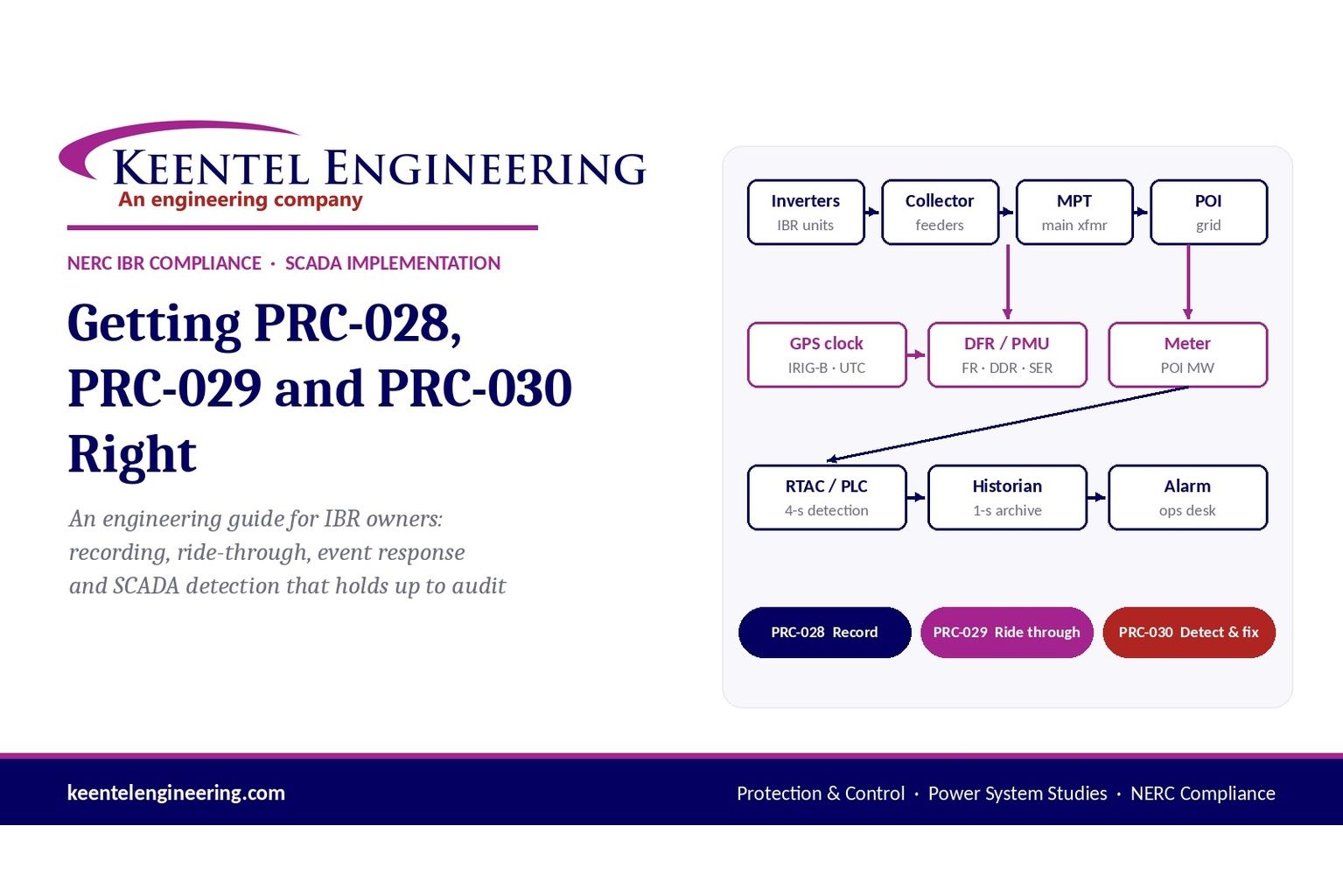
Engineering guide to PRC-028 disturbance recording, PRC-029 ride-through and PRC-030 event detection for inverter-based resources.
By SANDIP R PATEL
•
October 3, 2026
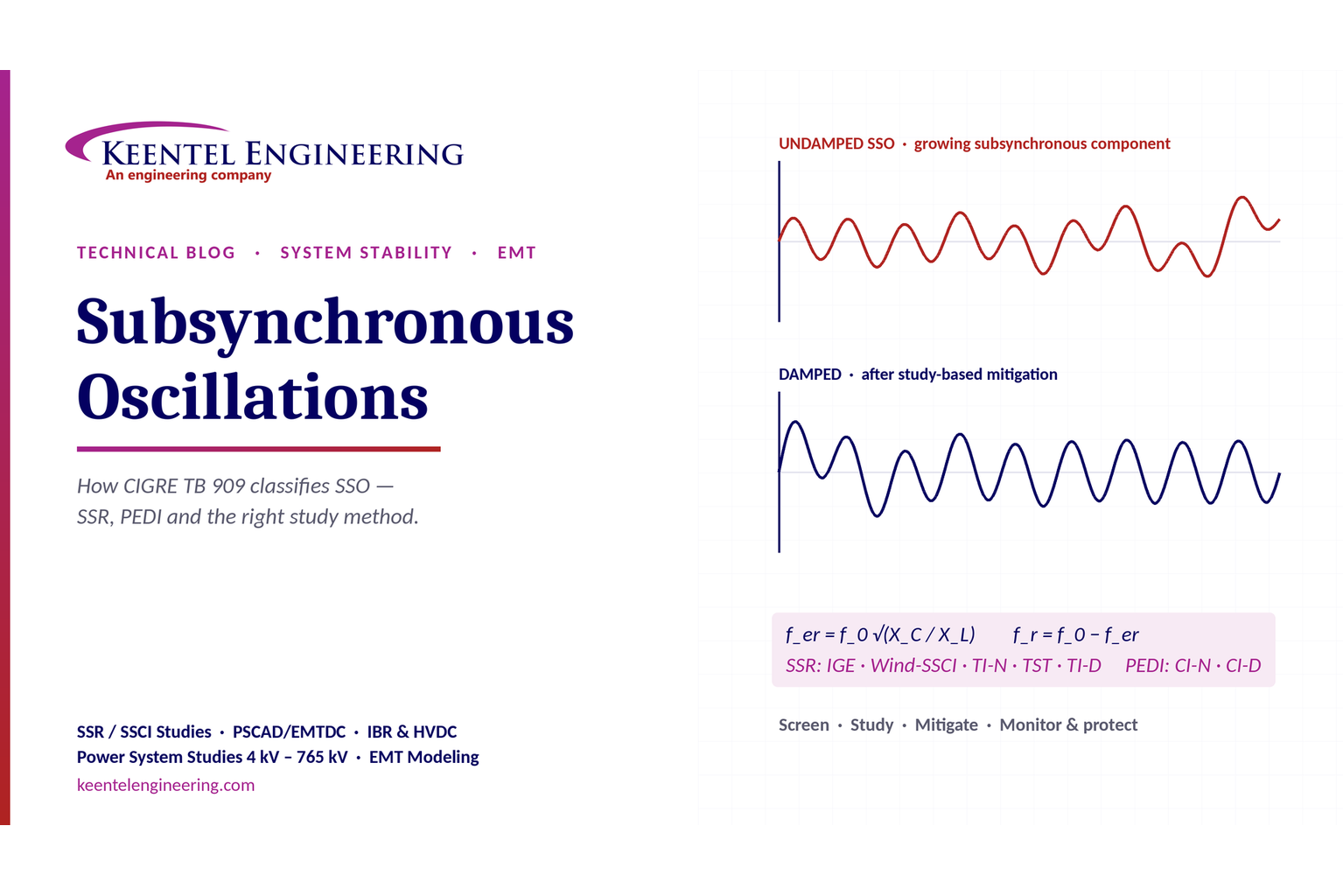
A practical guide to SSO classification, SSR, PEDI, Wind-SSCI, EMT analysis, mitigation and protection based on CIGRE TB 909.
By SANDIP R PATEL
•
October 3, 2026
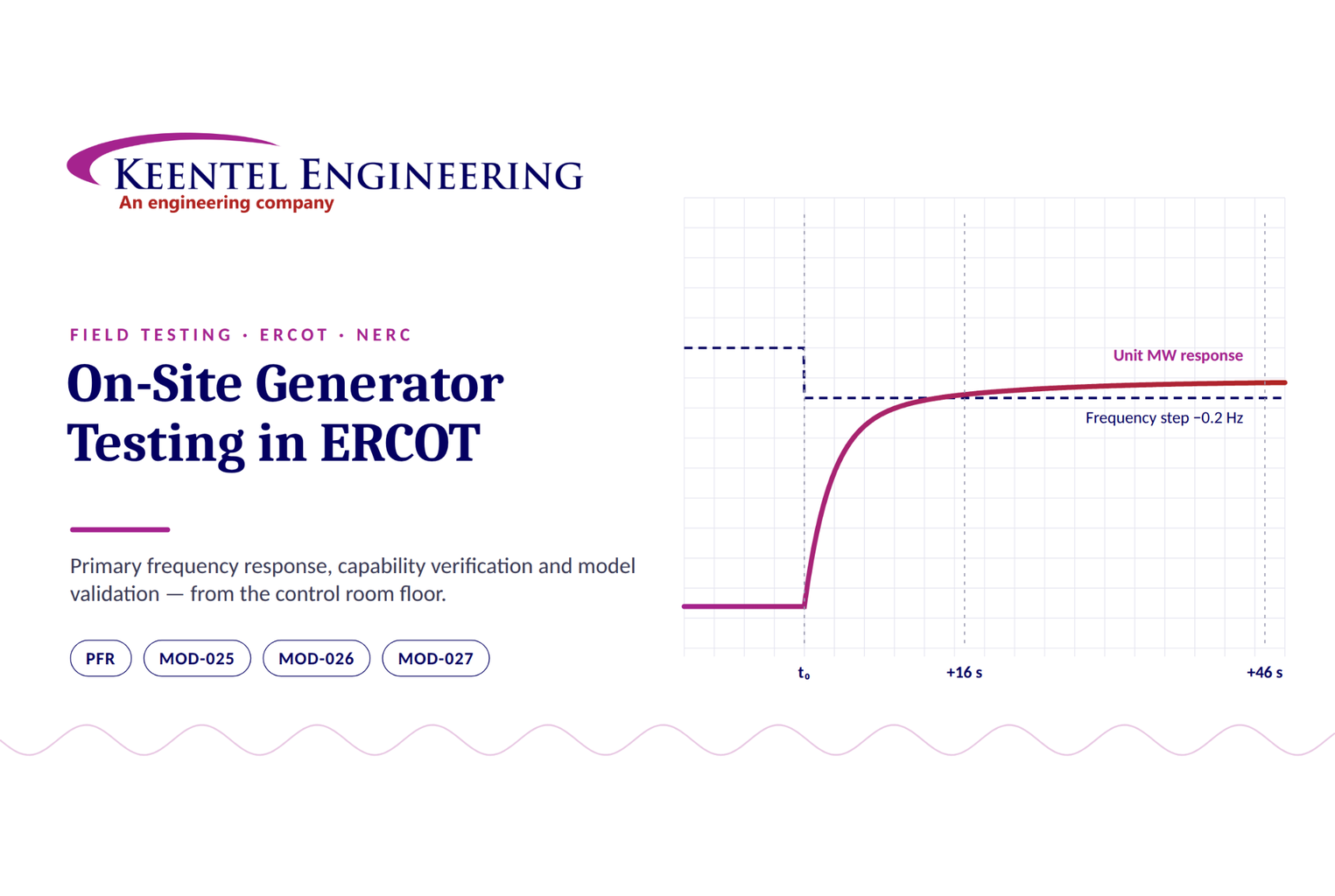
Learn ERCOT generator testing for PFR, MOD-025 and MOD-026/027, including staged tests, capability verification, dynamic models and field testing.
By SANDIP R PATEL
•
October 3, 2026
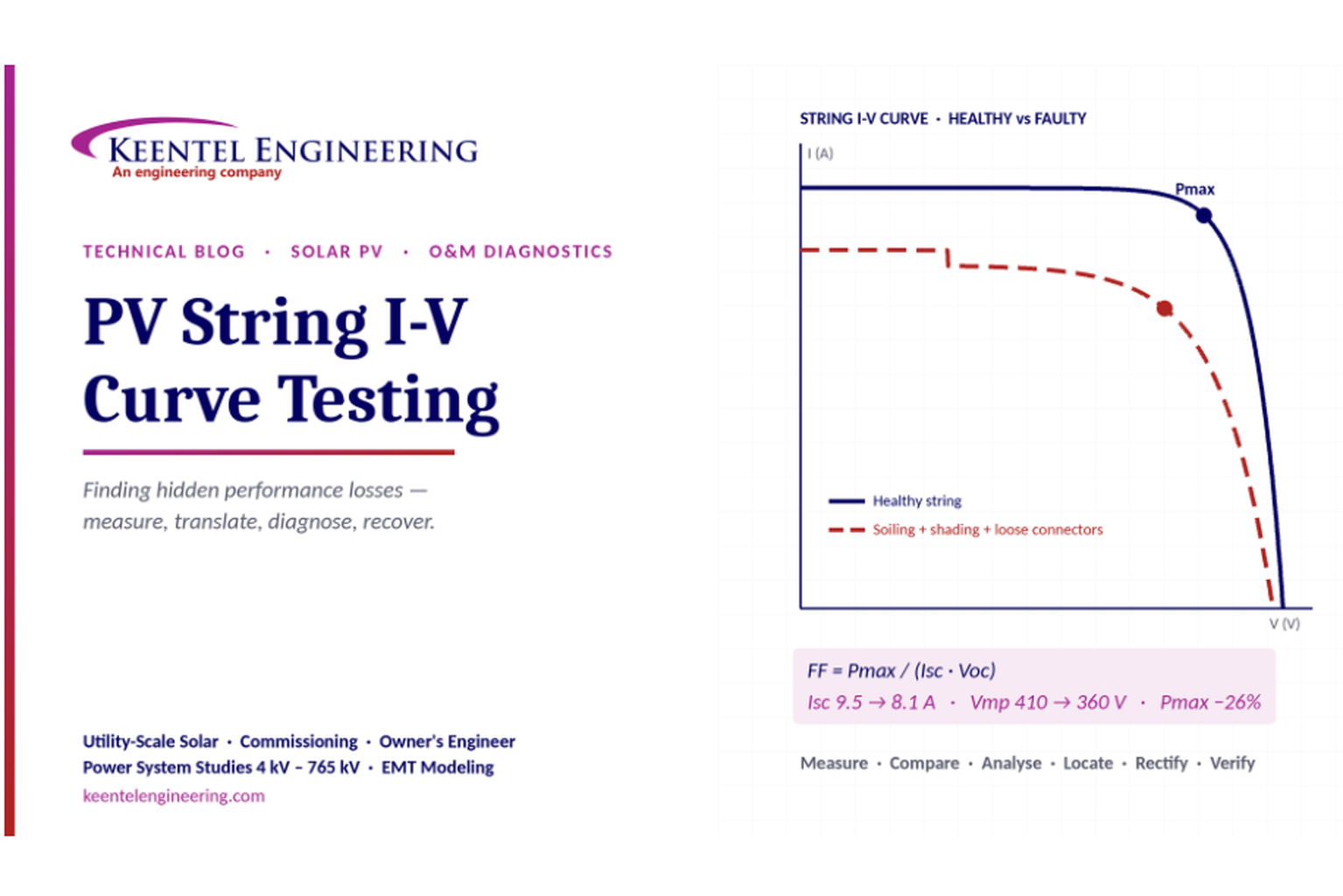
Learn how PV string I-V curve testing identifies hidden solar performance losses, including soiling, shading, mismatch, degradation, and wiring faults.
By SANDIP R PATEL
•
October 3, 2026
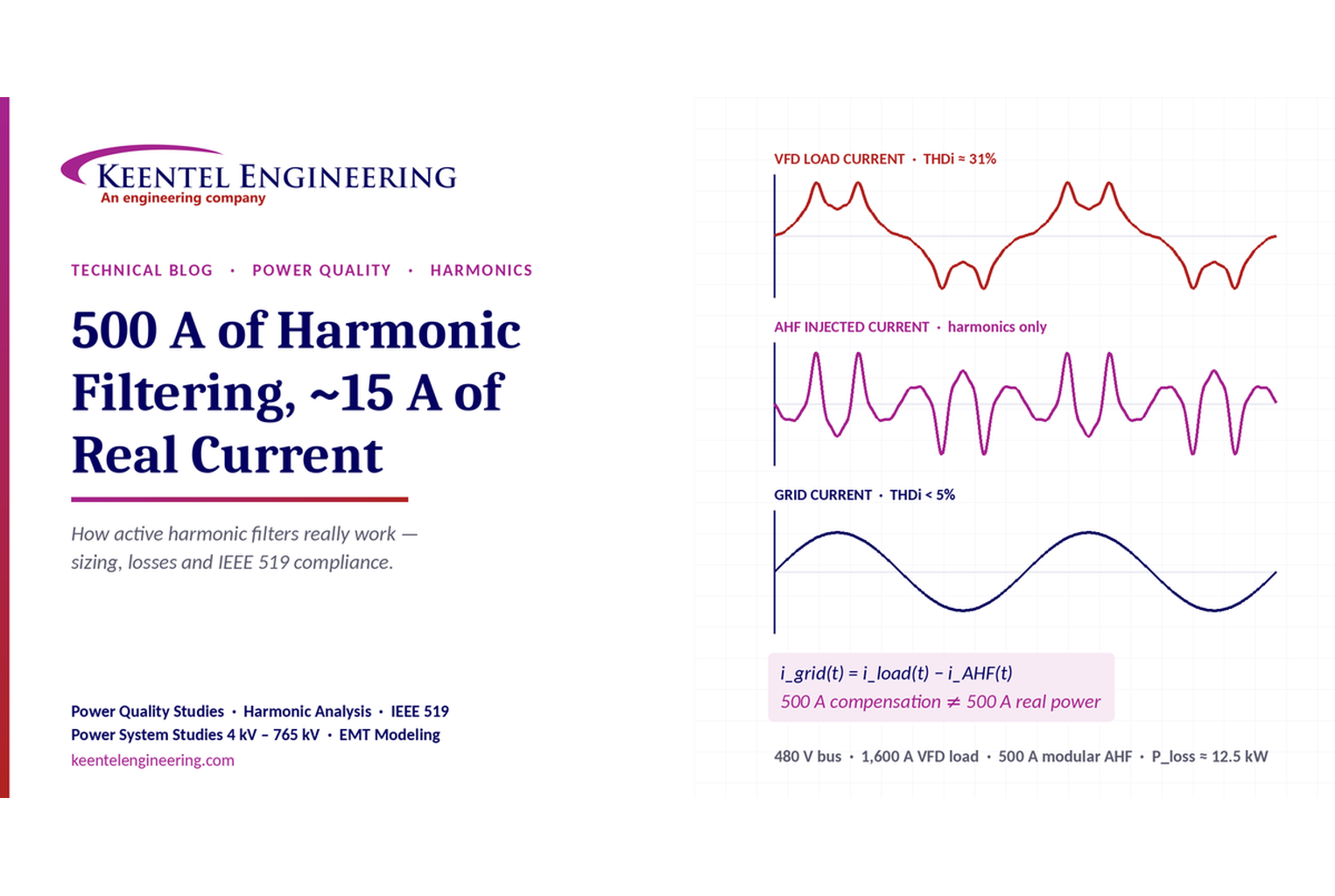
Learn how active harmonic filters work, how to size AHF systems, reduce VFD harmonics, calculate losses, and meet IEEE 519 TDD limits at the PCC.
By SANDIP R PATEL
•
October 3, 2026
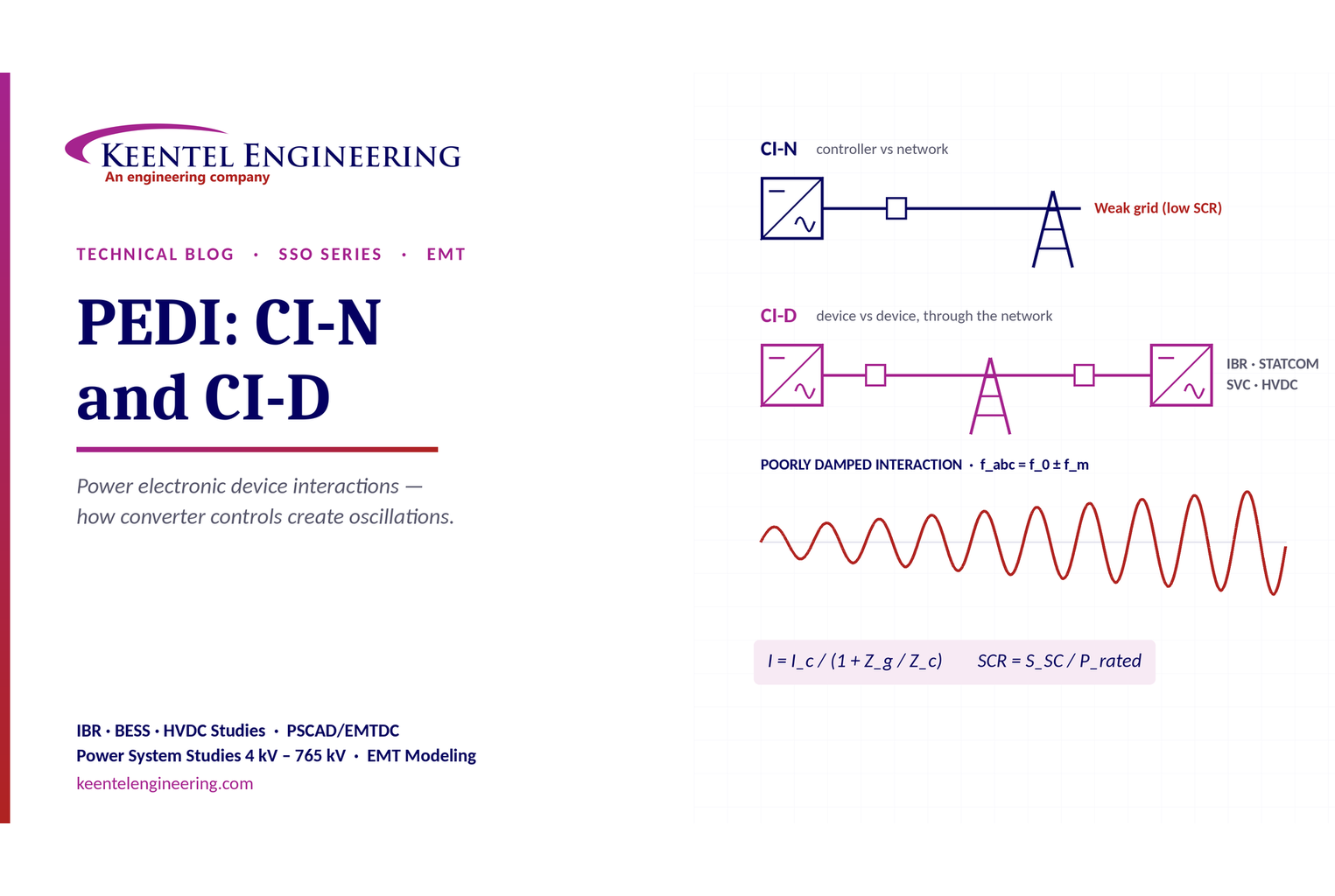
Learn power electronic device interactions (PEDI), including CI-N and CI-D, weak-grid stability, SCR, EMT studies, impedance analysis and mitigation for IBRs.
By SANDIP R PATEL
•
October 3, 2026
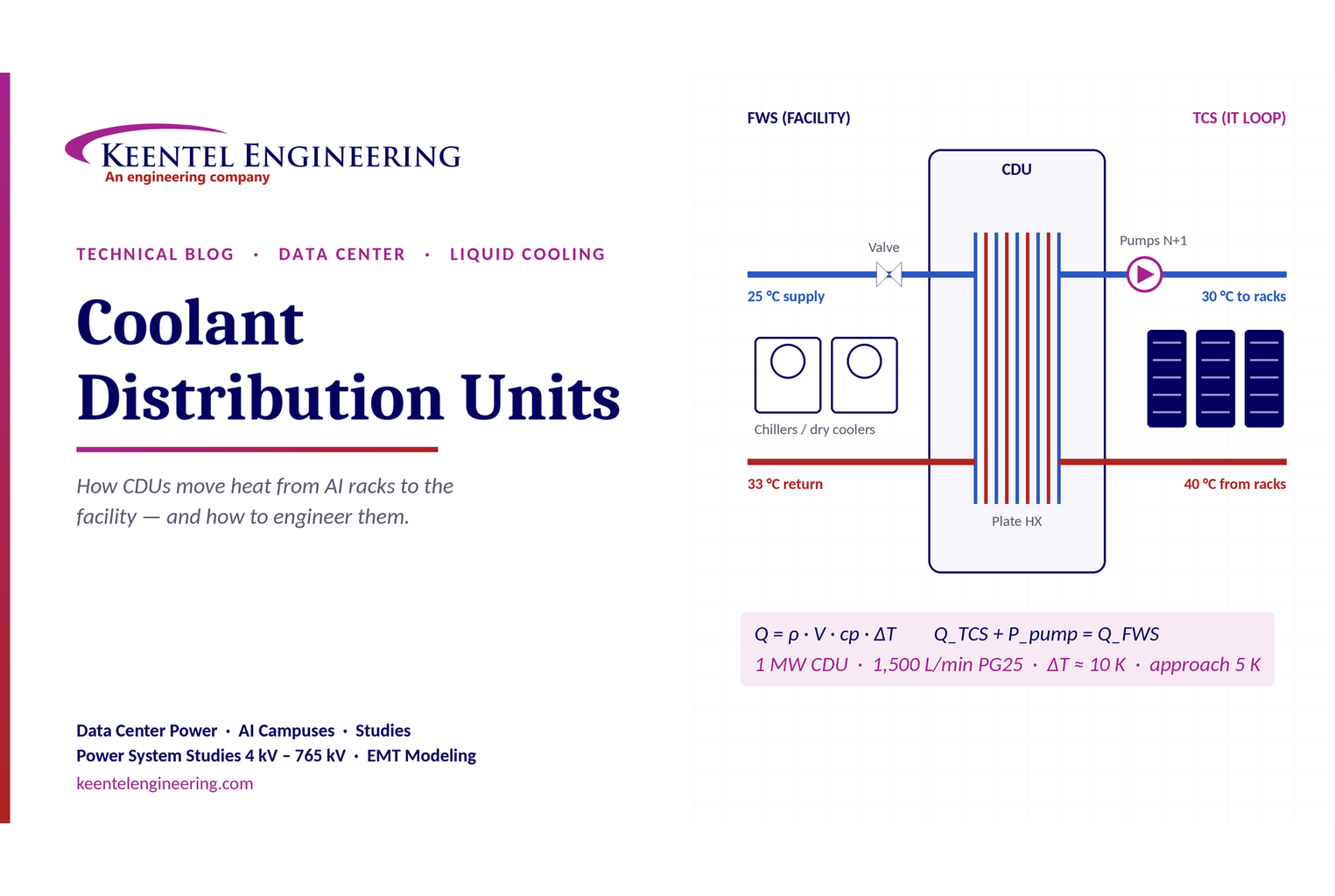
Learn how data center coolant distribution units (CDUs) work, including FWS and TCS loops, heat transfer, sizing, redundancy and liquid cooling for AI data centers.
By SANDIP R PATEL
•
October 3, 2026
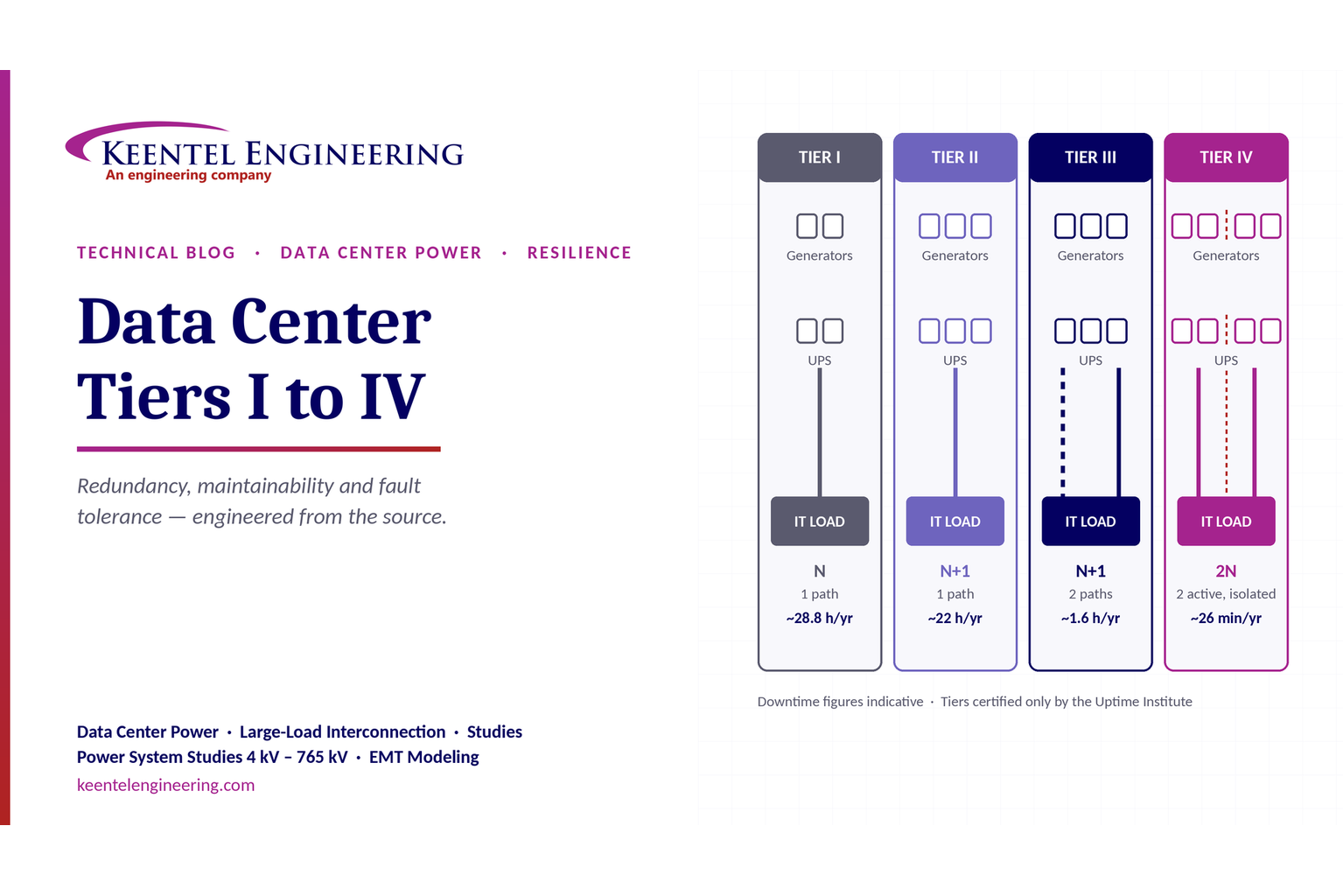
Compare Data Center Tiers I–IV, including redundancy, uptime, Tier III concurrent maintainability, Tier IV fault tolerance, UPS, generators and power design.
By SANDIP R PATEL
•
October 3, 2026
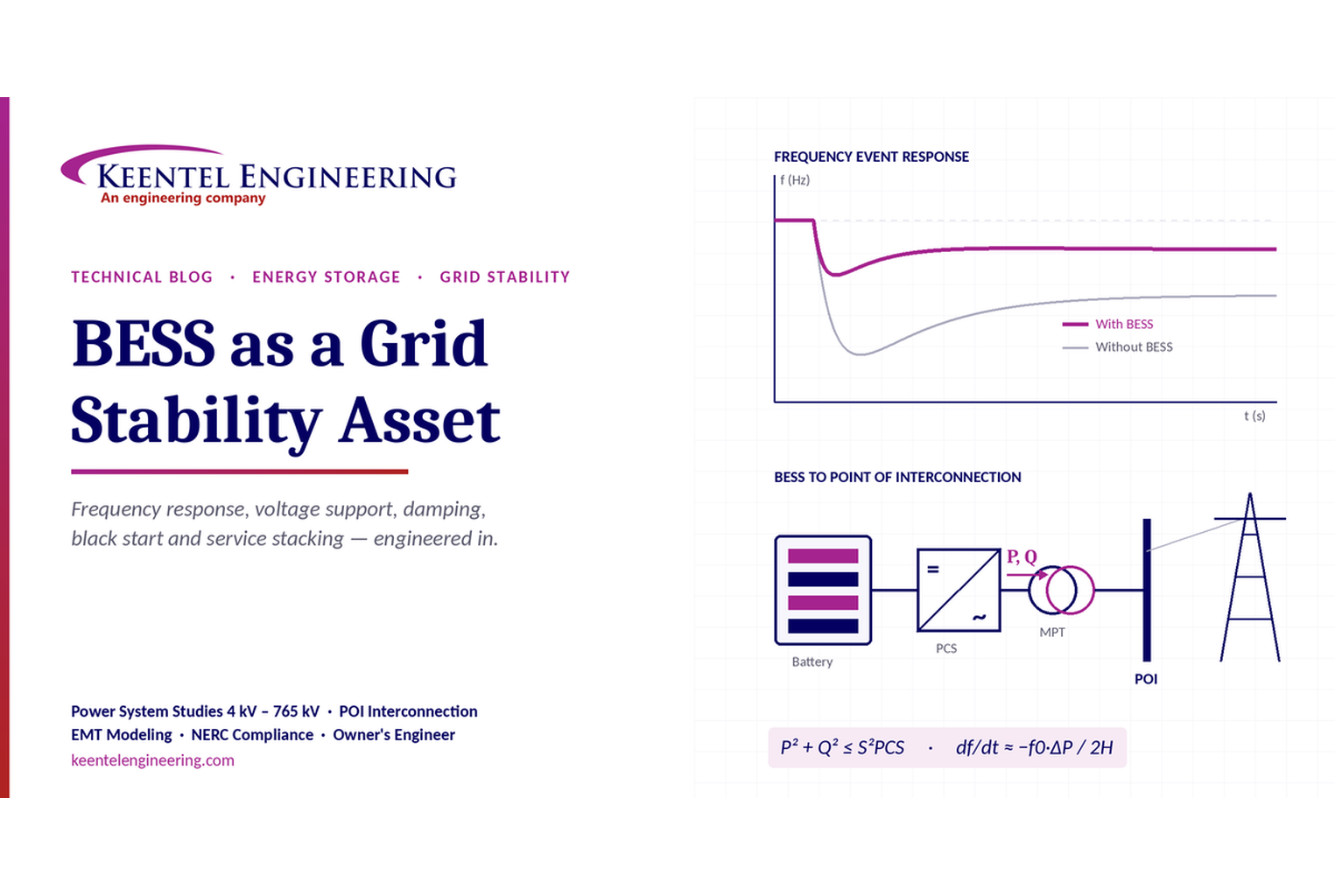
Learn how BESS supports grid stability through fast frequency response, voltage support, oscillation damping, black start, grid-forming controls and EMT studies.