

A Coordinated Electric System Interconnection Review—the utility’s deep-dive on technical and cost impacts of your project.

Challenge: Frequent false tripping using conventional electromechanical relays
Solution: SEL-487E integration with multi-terminal differential protection and dynamic inrush restraint
Result: 90% reduction in false trips, saving over $250,000 in downtime

PJM Manual 14G Interconnection Services By Keental Engineering

Calendar icon. D

April 28, 2025 | Blog

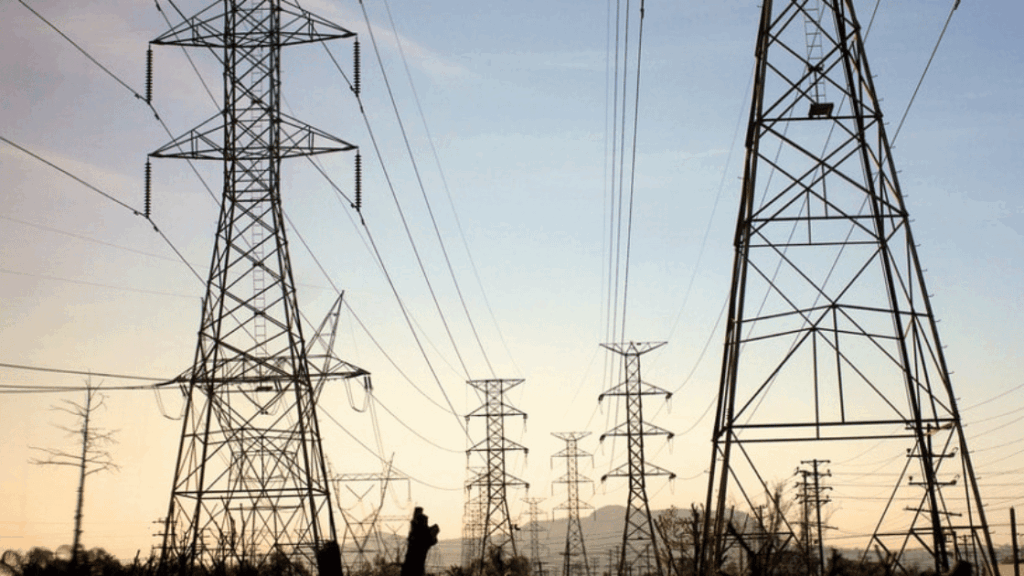
Power lines and towers against a light blue and yellow sky.

Power seamless PJM Manual 14G interconnections with Keentel Engineering


PJM’s Eastern Interconnection sets the gold-standard for grid reliability and market efficiency—but every generation owner must pass Manual 14G’s strict queue, study, and site-control rules before a single megawatt can flow. Keentel Engineering delivers turnkey PJM interconnection services that keep your project compliant and on schedule, whether you’re launching a utility-scale solar farm, combined-cycle plant, BTM resource, or battery-energy-storage system.

Our specialists handle the entire generation-interconnection life-cycle—queue-point applications, feasibility and system-impact studies, PE-stamped design packages, and SCADA / metering integration—so your asset plugs safely into PJM’s transmission grid without costly re-studies or delays.

PJM Manual 14G

Manual 14G is PJM’s rulebook for connecting new or modified generation resources. It governs queue procedures, study requirements, site-control proofs, resource classifications, and telemetry standards.


Our Generation-Interconnection Services: End-to-End Support You Can Rely On

Services Key modules / outputs
Queue Point Application Assistance Correct Attachment N, Y, or BB selection, data prep, and milestone tracking.
Feasibility and System Impact Studies Dynamic, steady-state, and fault analysis in PSSE, PSCAD, ETAP, DigSILENT—plus mitigation options.
Engineering Design & Site Control Review PE-stamped one-line diagrams, grounding and SCADA plans, deed/lease vetting (meets 3-year rule).
CIR & Resource-Type Strategy Capacity vs Energy Resource modelling, CIR transfer evaluations under Tariff §230.
SCADA & Metering Compliance Telemetry specs, RTAC configs, Attachment F testing for each Transmission Owner.

PJM Manual 14 G – FAQ (PJM Interconnection Services)

What is PJM Manual 14 G?

It is PJM’s official generation-interconnection manual that sets queue procedures, study requirements, site-control rules and SCADA standards for projects connecting to the PJM grid.

Who must file a Generation Interconnection Request (GIR)?

Any developer planning to add new generation, increase capacity, or change fuel type inside PJM territory.

What are Attachments N, Y and BB?

PJM queue forms matched to project size: N = standard, Y = screened < 20 MW, BB = certified inverter-based facility.

What counts as “site control” under PJM?

Exclusive deed, lease, or option agreement that meets the minimum term (3 yrs large / 2 yrs small) and conveys access + construction rights.

What is Queue Point?

PJM’s online portal for submitting, paying for and tracking all New Services Requests and study milestones.

How does PJM define Behind-the-Meter Generation (BtMG)?

A resource that primarily serves on-site load and is not required to sell into the PJM wholesale energy market.

When does BtMG need interconnection studies?

Whenever any exported energy seeks Capacity Resource or Energy Resource status.

What metering is required for BtMG ≥ 10 MW?

Revenue-quality meters plus real-time telemetry per Manual 14 G, Attachment F.

Can Capacity Injection Rights (CIRs) be transferred?

Yes—if PJM validates the transfer through impact analysis and Tariff §230 rules.

Capacity Resource vs Energy Resource—what’s the difference?

Capacity Resources clear capacity auctions and support reliability; Energy Resources sell energy only.

How are small generators (< 20 MW) processed?

Via the expedited “Fast-Track” path using Attachments Y or BB, with lower deposits and shorter timelines.

What is Attachment A used for?

Providing project technical data for the Feasibility Study phase.

How does Keentel help in the System-Impact Study (SIS)?

We prepare Attachment B-2, build PSSE/PSCAD short-circuit and dynamic models, and supply mitigation options.

Project Manager’s role in a PJM interconnection?

Coordinates all study submissions, agreements and TO/ISO calls to keep milestones on schedule.

Can multiple projects share one Point of Interconnection (POI)?

Yes; PJM aggregates their impacts and studies them together.

What happens if CIR milestones are missed?

The WMPA can be terminated and the queue position withdrawn.

Is a fuel switch considered a new GIR?

Yes—any fuel-type change requires a fresh Generation Interconnection Request.

Key SCADA / telemetry requirements?

Data points, polling rates and RTAC specs defined in Manual 14 G, Attachment F, plus each TO’s local standards.

Required term for site-control documents?

3 years (large gen) or 2 years (small gen) from GIR submittal date.

What study software does Keentel use?

PSSE, PSCAD, ETAP and DigSILENT for load-flow, short-circuit, stability and protection modelling.

Official PJM Manual 14G PDF (External Reference to PJM Source)


Proven PJM Interconnection Results | Keental Engineering Case Studies

Project Challenge Keentel Engineering Solution Result
120 MW Solar + BESS – ComEd Zone Fast-track CIR acquisition and dual-use storage modelling Filed Attachment N, ran combined feasibility + system-impact study, aligned SCADA tags with POI specs ISA executed in 6 months; CIRs granted—project shovel-ready
18 MW BtM Wind – AEP Zone Market-participation rules & site-control validation PE-stamped one-lines, BtMG compliance memo, secured WMPA Interconnected on first attempt; offsets 60 % onsite load
25 MW Biomass Fuel-Switch – PECO Fuel change to RNG triggered new generation-interconnection filing Revised Attachment N, analysed reactive-power (MVAR) per Manual 14 G PJM approved without full re-study; plant re-classified as RNG
50 MW CIR Transfer – PSEG Zone Move legacy peaker Capacity Injection Rights to new BESS PSSE impact model; transfer application under Tariff §230 CIRs reassigned, no network upgrades—battery project advanced

Why Choose Keentel Engineering for PJM Interconnection?

  • 30+ years of electrical transmission and interconnection engineering experience
  • Expertise with PJM Manual 14G, ISA/WMPA agreements, and Capacity Rights optimization
  • Proven record of successful Feasibility, SIS, and Facilities Study support
  • Trusted partner for developers, utilities, and independent power producers

Frequently Asked Questions – Behind-the-Meter DER Load Forecasting & Anomaly Detection


Ready to Power Your Project Forward?


A smiling man with glasses and a beard wearing a blue blazer stands in front of server racks in a data center.

About the Author:

Sandip "Sonny" R. Patel, P.E.

IEEE Senior Member · Founder & CEO, Keentel Engineering

In 1995, Sonny Patel earned his Electrical Engineering degree from the University of Illinois. But degrees don't build legacies — action does.

For three decades, he has worked the power industry from every side of the table: 16 years as a utility engineer at Exelon/Commonwealth Edison; generation leadership across hydroelectric, industrial steam turbine, and a 9 GW renewable fleet; NERC Regional Entity Senior Compliance Engineer and Audit Team Lead, auditing some of the nation's largest utilities; and testing and commissioning lead on equipment up to 765 kV — the very top of the North American grid.

Utility. Generator. Regulator. Consultant. Few engineers have seen all four seats. Fewer still have sat in them.His experience spans nuclear, hydro, conventional generation, renewables, oil and gas, mining — and today's data centers, where he is authoring a three-book series on data center design. He is a Licensed Professional Engineer in six states and a Licensed Electrical Contractor in Florida (Unlimited EC) — he doesn't just design the work; he's qualified to stand behind its execution.Today, as Founder and CEO of Keentel Engineering, Sonny leads 51 engineers delivering substation design, power system studies, NERC compliance, and commissioning — done right, coast to coast.Three decades. Every side of the table. One standard: accountable engineering

Four workers in safety vests and helmets stand with arms crossed near wind turbines.

Let's Discuss Your Project

Let's book a call to discuss your electrical engineering project that we can help you with.

Man in a blazer and open shirt, looking at the camera, against a blurred background.

About the Author:

Sandip "Sonny" R. Patel, P.E.

IEEE Senior Member · Founder & CEO, Keentel Engineering

In 1995, Sonny Patel earned his Electrical Engineering degree from the University of Illinois. But degrees don't build legacies — action does.

For three decades, he has worked the power industry from every side of the table: 16 years as a utility engineer at Exelon/Commonwealth Edison; generation leadership across hydroelectric, industrial steam turbine, and a 9 GW renewable fleet; NERC Regional Entity Senior Compliance Engineer and Audit Team Lead, auditing some of the nation's largest utilities; and testing and commissioning lead on equipment up to 765 kV — the very top of the North American grid.Utility. Generator. Regulator. Consultant. Few engineers have seen all four seats. Fewer still have sat in them.His experience spans nuclear, hydro, conventional generation, renewables, oil and gas, mining — and today's data centers, where he is authoring a three-book series on data center design. He is a Licensed Professional Engineer in six states and a Licensed Electrical Contractor in Florida (Unlimited EC) — he doesn't just design the work; he's qualified to stand behind its execution.Today, as Founder and CEO of Keentel Engineering, Sonny leads 51 engineers delivering substation design, power system studies, NERC compliance, and commissioning — done right, coast to coast.Three decades. Every side of the table. One standard: accountable engineering

Leave a Comment

Related Posts

12.47 kV pole-mounted distribution transformer assembly designed for U.S. IEEE and NESC utility stan
By SANDIP R PATEL August 20, 2026
Learn U.S. pole-mounted transformer design requirements, including IEEE, ANSI, and NESC standards, voltage classes, grounding, protection, and DER considerations.
Neutral grounding resistor sizing guide for HRG and LRG power system grounding applications
By SANDIP R PATEL August 20, 2026
Learn how to size neutral grounding resistors using IEEE and NEC practices, including HRG/LRG selection, fault current calculations, duty ratings, and examples.
PRC-023-6 BESS relay loadability compliance guide
By SANDIP R PATEL August 19, 2026
Understand PRC-023-6 for utility-scale BESS: applicability, the 39-month rule, relay loadability, setting criteria, Category 2 IBRs, and audit evidence.
PRC-029-1 voltage ride-through envelope for inverter-based resources.
By SANDIP R PATEL August 18, 2026
Learn PRC-029-1 compliance requirements for inverter-based resources, including voltage and frequency ride-through, EMT studies, protection settings, and testing.
Solar plant electrical testing and commissioning for utility-scale PV systems
By SANDIP R PATEL August 17, 2026
A technical guide to solar plant electrical testing, commissioning, I-V curves, thermography, insulation testing, cable tests and performance acceptance.
Alt Text: Gas-insulated substation engineering guide covering GIS safety, reliability, VFTO, partial
By SANDIP R PATEL August 16, 2026
Explore GIS substation engineering, including design, SF6 safety, VFTO, grounding, commissioning, testing, GIS vs AIS, and IEEE/IEC standards.
Cable testing before energization engineering guide
By SANDIP R PATEL August 16, 2026
Learn the correct cable testing sequence before energization, including VLF, AC/DC withstand, sheath testing, partial discharge, tan delta, and standards.
substation drawing sets
By SANDIP R PATEL August 16, 2026
Explore how substation drawing sets are developed, reviewed and controlled through engineering studies, design milestones, QA/QC and final construction release.
Grid-forming vs grid-following BESS inverters
By SANDIP R PATEL August 15, 2026
Compare grid-forming vs grid-following BESS inverters, control loops, weak-grid stability, protection, compliance, and interconnection study impacts.