A Coordinated Electric System Interconnection Review—the utility’s deep-dive on technical and cost impacts of your project.
Challenge: Frequent false tripping using conventional electromechanical relays
Solution: SEL-487E integration with multi-terminal differential protection and dynamic inrush restraint
Result: 90% reduction in false trips, saving over $250,000 in downtime
| Category | Metric |
|---|---|
| VPP capacity (Lunar Energy) | 650 MW |
| Lunar funding raised | US$232 million |
| Data center BESS example | 31 MW / 62 MWh |
| ERCOT grid-scale batteries | 15+ GW |
| LDES tenders (H1 2026) | Up to 9.3 GW |
| Lithium-ion share of LDES by 2030 | 77% |
| FEOC initial threshold | 55% |
| BESS tariff rate (2026) | ~55% |
| Capacity gain from analytics | 5–15% |
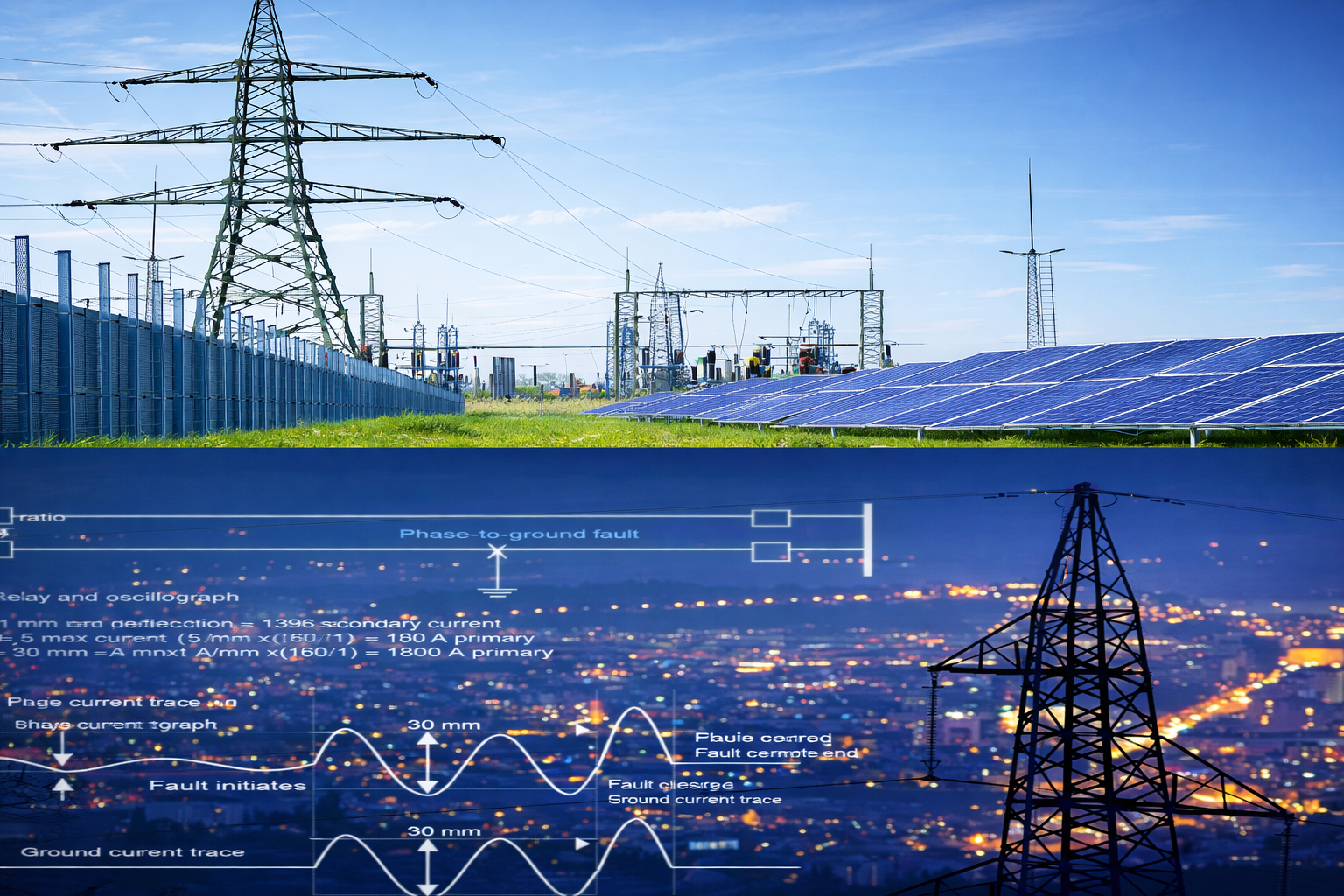
Power System Studies and Grid Interconnection Modeling
March 5, 2026 | blog
Advanced Engineering Services by Keentel Engineering
The modern electric power grid is evolving at an unprecedented pace. Renewable energy integration, electrification of transportation, battery energy storage systems, and rapidly growing energy demand are transforming how power systems are designed, analyzed, and operated. As utilities and developers work to connect new generation resources to the transmission network, the need for accurate power system studies and grid interconnection modeling has become more critical than ever.
Power system studies ensure that new generation projects—such as solar farms, wind plants, energy storage facilities, and conventional power plants—can connect safely to the bulk electric system without compromising reliability, stability, or equipment ratings.
At Keentel Engineering, we specialize in providing advanced power system analysis and grid integration services that support utilities, renewable developers, independent power producers, and transmission owners throughout the entire project lifecycle. Our engineering team provides comprehensive modeling, simulation, and interconnection support to ensure that projects comply with regional grid operator requirements and meet industry reliability standards.
Through sophisticated engineering tools, deep technical expertise, and extensive industry experience, Keentel Engineering helps clients successfully navigate complex grid interconnection processes while minimizing project risk and development delays.
Choosing the right partner for power delivery, grid interconnection, and utility coordination can significantly reduce project delays and improve approval timelines.
The Importance of Power System Studies in Modern Grid Development
Electric power systems operate as highly interconnected networks where the performance of one component can influence the behavior of the entire system. When new generation resources are added to the grid, planners must evaluate how the system will respond under a wide range of operating conditions.
Power system studies are essential to determine:
- Whether transmission lines will become overloaded
- Whether system voltage levels remain within acceptable limits
- Whether protection systems will operate correctly during faults
- Whether the system remains stable following disturbances
- Whether new generation resources comply with grid code requirements
Without detailed engineering analysis, integrating new generation resources could introduce significant risks to grid reliability and system security.
Power system studies therefore form a critical component of the interconnection process, enabling system operators and utilities to verify that new resources can be integrated safely and efficiently.
Keentel Engineering provides the technical expertise required to perform these complex analyses using advanced power system simulation tools and industry best practices.
In practice, every
power system interconnection study must evaluate grid constraints, system strength, and compliance requirements before utility approval.
Comprehensive Power System Study Services
Keentel Engineering provides a full suite of power system study services designed to support generation developers, utilities, and infrastructure investors across all phases of project development.
Our power system study capabilities include:
- Power flow analysis
- Short circuit studies
- Dynamic stability simulations
- Interconnection modeling
- Grid integration studies
- Renewable energy system studies
- Transmission planning studies
- Substation electrical analysis
- Protection coordination studies
- NERC compliance support
These studies ensure that electrical infrastructure operates safely, efficiently, and in compliance with regulatory and reliability standards.
Power Flow Analysis
Power flow analysis is one of the most fundamental studies in power system engineering. It evaluates how electrical power flows through the transmission network under normal operating conditions.
The study calculates important system parameters including:
- Voltage magnitude at each bus
- Real and reactive power flows on transmission lines
- Transformer loading levels
- Generator operating points
- System losses
Power flow studies are essential for evaluating whether transmission lines, transformers, and substations can accommodate new generation resources.
For renewable energy projects, power flow studies also determine whether additional equipment such as reactive power support devices or transmission upgrades are required.
Keentel Engineering develops high-fidelity power flow models that accurately represent project electrical configurations, including generator units, step-up transformers, collector systems, and transmission interconnection facilities.
These models allow engineers to simulate system performance across multiple operating scenarios and ensure that projects meet system planning criteria.
Short Circuit Analysis
Short circuit studies evaluate how the power system behaves during electrical faults. Faults can occur due to lightning strikes, equipment failures, insulation breakdowns, or external disturbances such as falling trees.
When a fault occurs, large currents flow through the system for a short period of time. These fault currents must remain within the interrupting capability of circuit breakers and other protection equipment.
Short circuit analysis determines:
- Maximum fault current levels
- Equipment interrupting duty
- Protection relay coordination
- System grounding performance
- Generator fault contributions
For renewable energy facilities, accurate short circuit modeling is especially important because inverter-based resources behave differently from traditional synchronous generators during fault conditions.
Keentel Engineering performs detailed short circuit studies to ensure that electrical equipment is properly rated and that protection systems operate correctly during system disturbances.
Dynamic Stability Studies
Dynamic stability studies analyze the behavior of the power system following disturbances such as faults, sudden generation loss, or transmission outages.
These simulations examine how the system responds over time and whether generators remain synchronized with the grid after disturbances occur.
Dynamic stability studies evaluate:
- Rotor angle stability
- Frequency response
- Voltage recovery performance
- Generator ride-through capability
- System oscillations
Renewable generation and battery storage systems introduce new dynamic characteristics to the grid due to their power electronic interfaces. These resources must be carefully modeled to ensure they provide appropriate system support during disturbances.
Keentel Engineering performs advanced dynamic simulations that help utilities and developers understand how renewable resources interact with the transmission system and whether additional control strategies are required.
Renewable Energy Grid Integration Studies
Renewable energy integration has become one of the most significant challenges facing modern power systems. Wind, solar, and battery storage resources behave differently from traditional generation technologies and require specialized modeling techniques.
Renewable resources are typically connected to the grid through power electronic inverters rather than synchronous machines. As a result, their dynamic behavior during disturbances, voltage fluctuations, and frequency deviations must be carefully analyzed.
Keentel Engineering provides specialized renewable integration studies that evaluate:
- Inverter-based resource modeling
- Solar photovoltaic plant interconnection studies
- Wind farm grid impact analysis
- Battery energy storage system modeling
- Hybrid renewable plant studies
- Grid-forming inverter analysis
Our engineers ensure that renewable projects meet grid code requirements for voltage regulation, frequency response, and fault ride-through capability.
Accurate grid interconnection modeling for renewable energy systems ensures seamless integration of solar, wind, and battery energy storage projects into utility networks.
Interconnection Modeling Services
One of the most critical phases in energy project development is the grid interconnection process. Developers must submit detailed electrical models that represent their proposed facilities so that system operators can evaluate the project’s impact on the grid.
These models typically include representations of:
- Generator units
- Power electronic inverters
- Step-up transformers
- Collector systems
- Reactive power compensation devices
- Transmission interconnection facilities
The modeling package must accurately represent the electrical behavior of the project during both steady-state and transient conditions.
Keentel Engineering develops complete interconnection modeling packages that support project applications across multiple regional transmission organizations and independent system operators.
Our team works closely with project developers to ensure that models meet the specific requirements of each grid operator and that simulation results accurately reflect the expected performance of the facility.
Reactive Power and Voltage Control Studies
Maintaining voltage stability is a critical requirement for power system reliability. As generation resources and loads fluctuate, reactive power must be carefully managed to maintain system voltage levels within acceptable limits.
Many modern generation facilities include reactive power support equipment such as:
- Static VAR Compensators (SVC)
- Static Synchronous Compensators (STATCOM)
- Capacitor banks
- Reactor banks
- Inverter-based voltage control systems
Keentel Engineering performs detailed voltage stability studies and reactive power planning analyses to ensure that generation facilities meet grid operator voltage regulation requirements.
These studies help determine whether additional reactive power devices are required and how voltage control systems should be configured.
Explore our Reactive Power Studies to improve voltage stability and grid compliance.
Transmission Planning and System Impact Studies
As new generation resources are added to the grid, transmission networks must often be expanded or upgraded to accommodate increased power flows.
Transmission planning studies evaluate how proposed projects affect the broader transmission system and determine whether system upgrades are necessary.
These studies analyze:
- Thermal loading of transmission lines
- Voltage stability across the network
- Transmission congestion
- System reliability during contingency conditions
Keentel Engineering performs comprehensive transmission planning studies that support utilities, transmission developers, and energy investors in evaluating future grid infrastructure needs.
Substation Electrical Engineering and Integration
Substations play a central role in connecting generation resources to the transmission system. Proper substation design and modeling are essential for ensuring safe and reliable system operation.
Keentel Engineering provides detailed substation electrical analysis including:
- Generator step-up transformer modeling
- Substation bus configuration studies
- Equipment rating verification
- Grounding system analysis
- Protection coordination studies
Our engineers support both new substation development and upgrades to existing facilities.
Protection System Coordination Studies
Protection systems are responsible for detecting faults and isolating affected portions of the electrical system to prevent equipment damage and maintain system stability.
Protection coordination studies ensure that relays and circuit breakers operate in the correct sequence during fault events.
Keentel Engineering performs detailed protection system studies including:
- Relay coordination analysis
- Overcurrent protection studies
- Differential protection verification
- Breaker interrupting duty evaluation
- Fault clearing time analysis
These studies help ensure that electrical protection systems comply with industry standards and reliability requirements.
Advanced Power System Simulation Tools
Keentel Engineering uses industry-leading simulation tools to perform advanced power system analysis.
Our engineering team works with software platforms including:
- PSSE (Power System Simulator for Engineering)
- PSCAD electromagnetic transient simulation software
- ASPEN OneLiner short circuit analysis software
- DigSILENT PowerFactory power system modeling platform
- MATLAB / Simulink for control system modeling
- Real-time simulation tools for advanced grid studies
These tools allow our engineers to perform high-fidelity simulations that accurately represent system behavior under a wide range of operating conditions.
NERC Compliance and Reliability Studies
Electric utilities and generation owners must comply with reliability standards established by the North American Electric Reliability Corporation (NERC).
These standards require utilities to perform regular system studies and maintain accurate system models.
Keentel Engineering provides engineering support for NERC compliance including:
- Protection system verification
- Modeling validation
- reliability standard compliance analysis
- disturbance performance studies
Our expertise ensures that clients meet regulatory requirements while maintaining reliable system operations.
Why Choose Keentel Engineering for Power System Studies
Keentel Engineering brings decades of experience in power system analysis, renewable energy integration, and transmission planning.
Our team understands the technical, regulatory, and operational challenges involved in integrating new generation resources into the electric grid.
Clients choose Keentel Engineering because we provide:
- Deep expertise in transmission and distribution engineering
- Advanced power system simulation capabilities
- Experience with renewable and inverter-based technologies
- Proven support for grid interconnection processes
- Comprehensive engineering solutions across the project lifecycle
Our mission is to help energy developers and utilities successfully integrate new technologies into the grid while maintaining the highest standards of reliability and safety.
Keentel Engineering Power System Study Services
Keentel Engineering provides specialized engineering services including:
- Power Flow Studies
- Short Circuit Analysis
- Dynamic Stability Studies
- Renewable Integration Studies
- Interconnection Modeling
- Transmission Planning Studies
- Substation Electrical Analysis
- Protection Coordination Studies
- Reactive Power Planning
- Grid Impact Analysis
These services support renewable developers, utilities, independent power producers, and infrastructure investors across North America and international markets.
Frequently Asked Questions (FAQ)
What are power system studies?
Power system studies are engineering analyses used to evaluate how electrical power systems operate under normal and abnormal conditions. These studies help ensure system reliability and determine whether new generation resources can safely connect to the grid.
Why are power system studies required for renewable projects?
Renewable generation facilities must demonstrate that they will not negatively impact grid reliability, voltage stability, or protection system performance before they can be connected to the transmission network.
What is power flow analysis?
Power flow analysis calculates voltage levels, power flows, and equipment loading throughout the electrical network under normal operating conditions.
What is a short circuit study?
A short circuit study evaluates fault current levels that occur during electrical faults and verifies that protection equipment can safely interrupt these currents.
What are dynamic stability studies?
Dynamic stability studies simulate how the power system responds to disturbances such as faults, generator outages, and transmission failures.
Why is renewable integration analysis important?
Renewable resources use power electronic interfaces and have different dynamic characteristics compared to conventional generators. Specialized studies ensure these resources operate reliably within the grid.
What is interconnection modeling?
Interconnection modeling involves creating detailed electrical models of generation facilities so that system operators can analyze their impact on the transmission system.
What are reactive power studies?
Reactive power studies evaluate voltage stability and determine whether additional voltage support equipment is required.
What software is used for power system studies?
Engineers commonly use advanced simulation software such as PSSE, PSCAD, DigSILENT PowerFactory, ASPEN, and MATLAB.
What industries require power system studies?
Utilities, renewable energy developers, industrial facilities, independent power producers, and transmission developers all rely on power system studies.
Does Keentel Engineering support renewable energy projects?
Yes. Keentel Engineering specializes in solar, wind, and battery energy storage grid integration studies.
Can Keentel Engineering support transmission planning projects?
Yes. Our engineers perform transmission planning and system impact studies for utilities and infrastructure developers.
Does Keentel Engineering provide substation engineering services?
Yes. We provide electrical design and analysis for high-voltage and medium-voltage substations.
What regions does Keentel Engineering support?
Keentel Engineering supports projects across North America and international markets.
How can developers start a power system study with Keentel Engineering?
Developers can contact Keentel Engineering to schedule a technical consultation and discuss project modeling requirements.

About the Author:
Sandip "Sonny" R. Patel, P.E.
IEEE Senior Member · Founder & CEO, Keentel Engineering
In 1995, Sonny Patel earned his Electrical Engineering degree from the University of Illinois. But degrees don't build legacies — action does.
For three decades, he has worked the power industry from every side of the table: 16 years as a utility engineer at Exelon/Commonwealth Edison; generation leadership across hydroelectric, industrial steam turbine, and a 9 GW renewable fleet; NERC Regional Entity Senior Compliance Engineer and Audit Team Lead, auditing some of the nation's largest utilities; and testing and commissioning lead on equipment up to 765 kV — the very top of the North American grid.Utility. Generator. Regulator. Consultant. Few engineers have seen all four seats. Fewer still have sat in them.
His experience spans nuclear, hydro, conventional generation, renewables, oil and gas, mining — and today's data centers, where he is authoring a three-book series on data center design. He is a Licensed Professional Engineer in six states and a Licensed Electrical Contractor in Florida (Unlimited EC) — he doesn't just design the work; he's qualified to stand behind its execution.Today, as Founder and CEO of Keentel Engineering, Sonny leads a nationwide team of engineers delivering substation design, power system studies, NERC compliance, and commissioning — done right, coast to coast.Three decades. Every side of the table. One standard: accountable engineering.
Services

Let's Discuss Your Project
Let's book a call to discuss your electrical engineering project that we can help you with.
About the Author:
Sandip "Sonny" R. Patel, P.E.
IEEE Senior Member · Founder & CEO, Keentel Engineering
In 1995, Sonny Patel earned his Electrical Engineering degree from the University of Illinois. But degrees don't build legacies — action does.
For three decades, he has worked the power industry from every side of the table: 16 years as a utility engineer at Exelon/Commonwealth Edison; generation leadership across hydroelectric, industrial steam turbine, and a 9 GW renewable fleet; NERC Regional Entity Senior Compliance Engineer and Audit Team Lead, auditing some of the nation's largest utilities; and testing and commissioning lead on equipment up to 765 kV — the very top of the North American grid.
Utility. Generator. Regulator. Consultant. Few engineers have seen all four seats. Fewer still have sat in them.
His experience spans nuclear, hydro, conventional generation, renewables, oil and gas, mining — and today's data centers, where he is authoring a three-book series on data center design. He is a Licensed Professional Engineer in six states and a Licensed Electrical Contractor in Florida (Unlimited EC) — he doesn't just design the work; he's qualified to stand behind its execution.
Today, as Founder and CEO of Keentel Engineering, Sonny leads a nationwide team of engineers delivering substation design, power system studies, NERC compliance, and commissioning — done right, coast to coast.Three decades. Every side of the table. One standard: accountable engineering.
Leave a Comment
Thank you for contacting us.
We will get back to you as soon as possible.
We will get back to you as soon as possible.
Oops, there was an error sending your message.
Please try again later.
Please try again later.
Related Posts
By SANDIP R PATEL
•
October 20, 2026
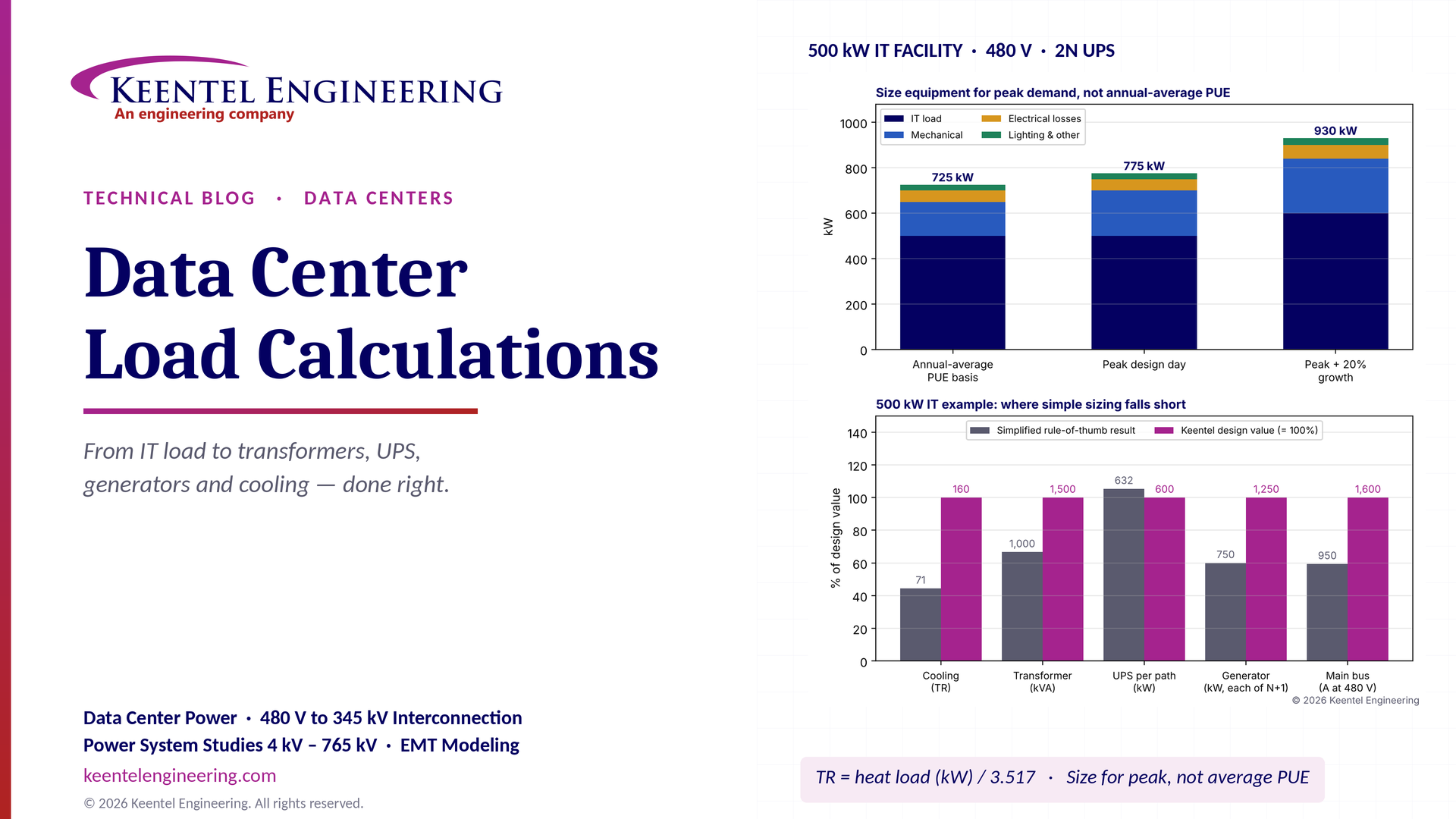
Learn data center electrical load calculations, including IT demand, PUE, UPS and generator sizing, cooling loads, redundancy, and worked US examples.
By SANDIP R PATEL
•
October 20, 2026
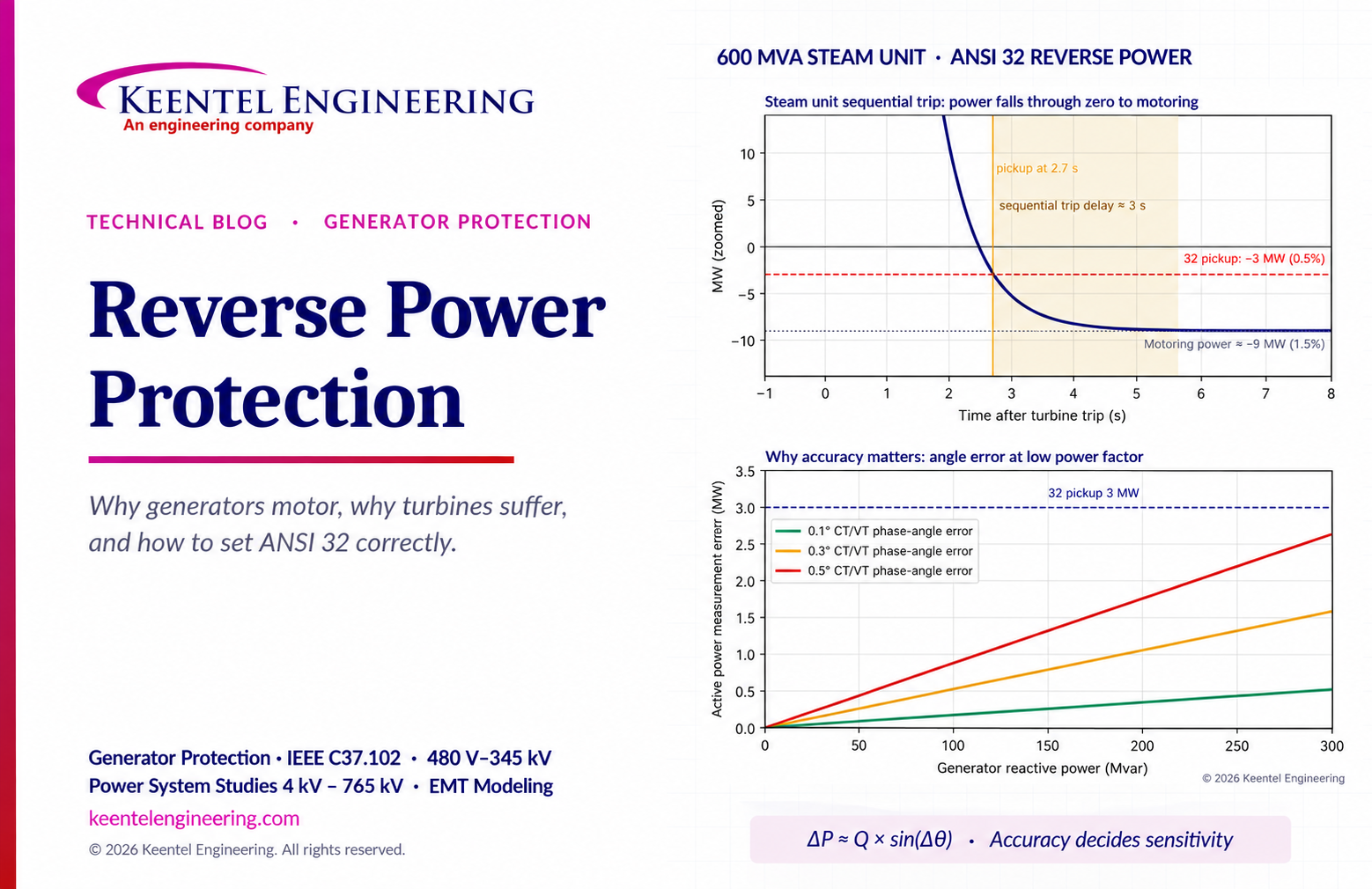
Learn reverse power protection (ANSI 32), generator motoring, relay pickup settings, time delays, sequential tripping and testing for US power plants.
Copy
By Team 2 Dexora
•
October 20, 2026
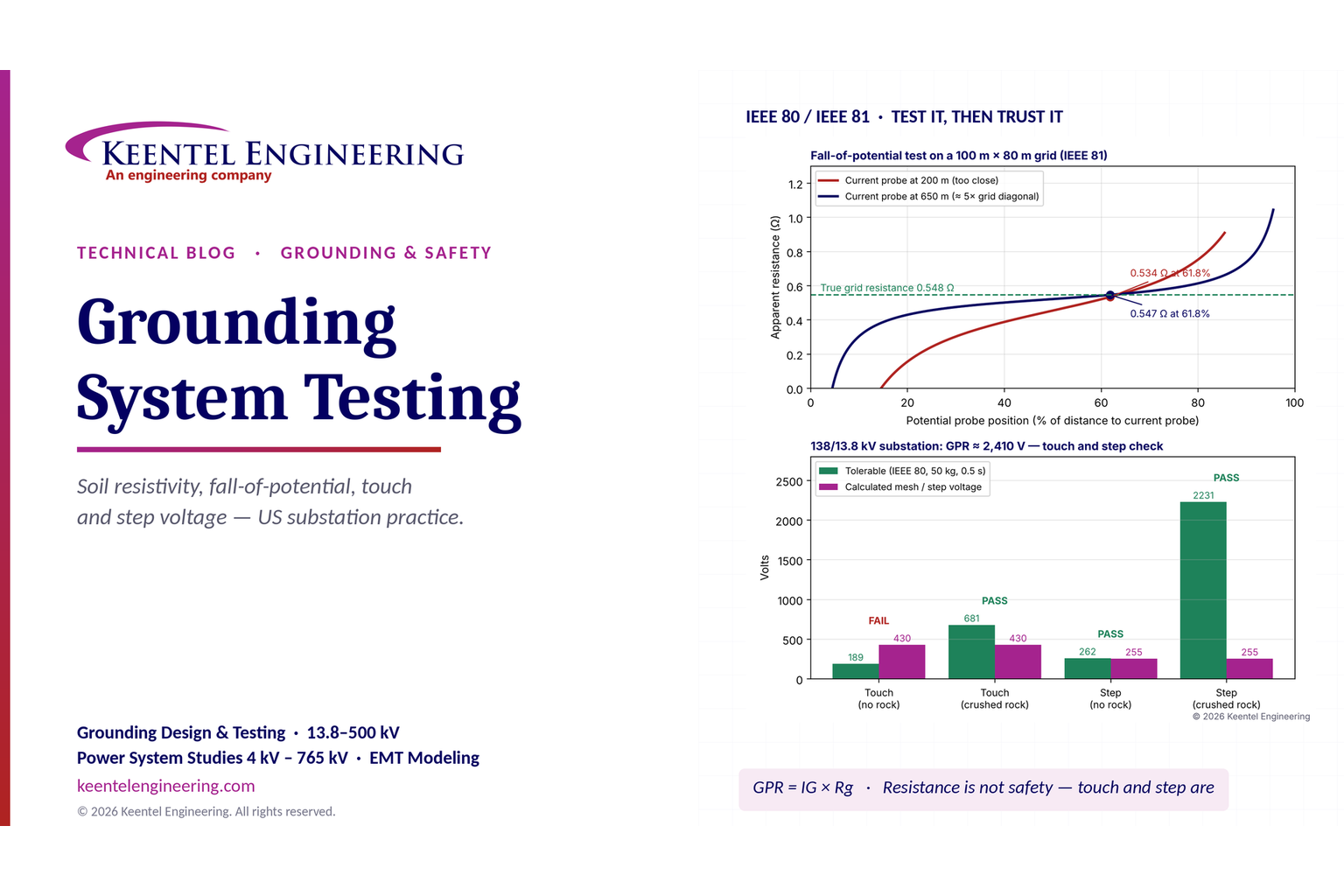
Explore grounding system testing with Keentel Engineering. Learn IEEE 80/81 methods, soil resistivity, ground resistance, and touch and step voltage safety.
By SANDIP R PATEL
•
October 13, 2026
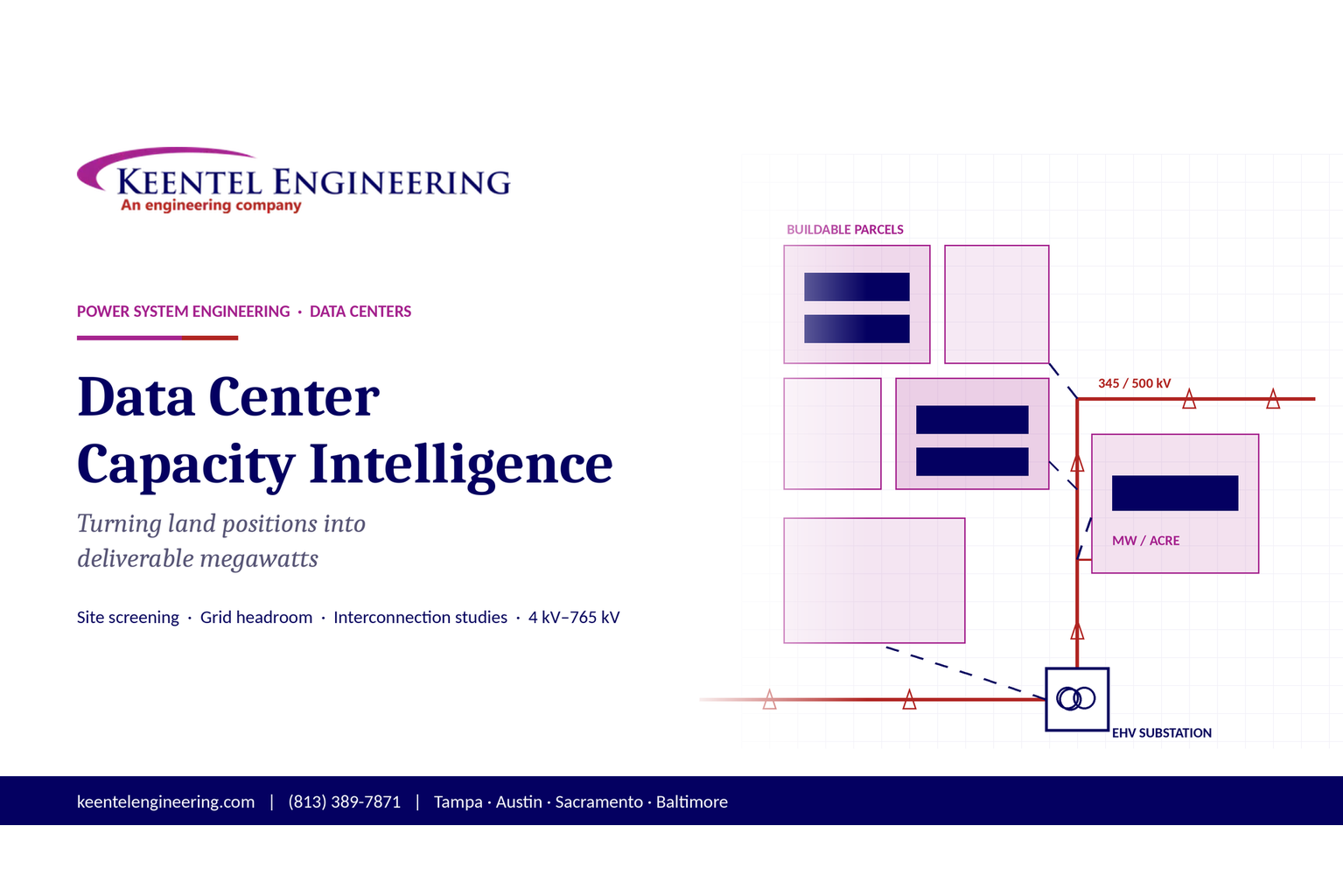
Plan data center capacity with land screening, MW-per-acre estimates, grid power availability and interconnection feasibility studies from Keentel Engineering.
By SANDIP R PATEL
•
October 11, 2026
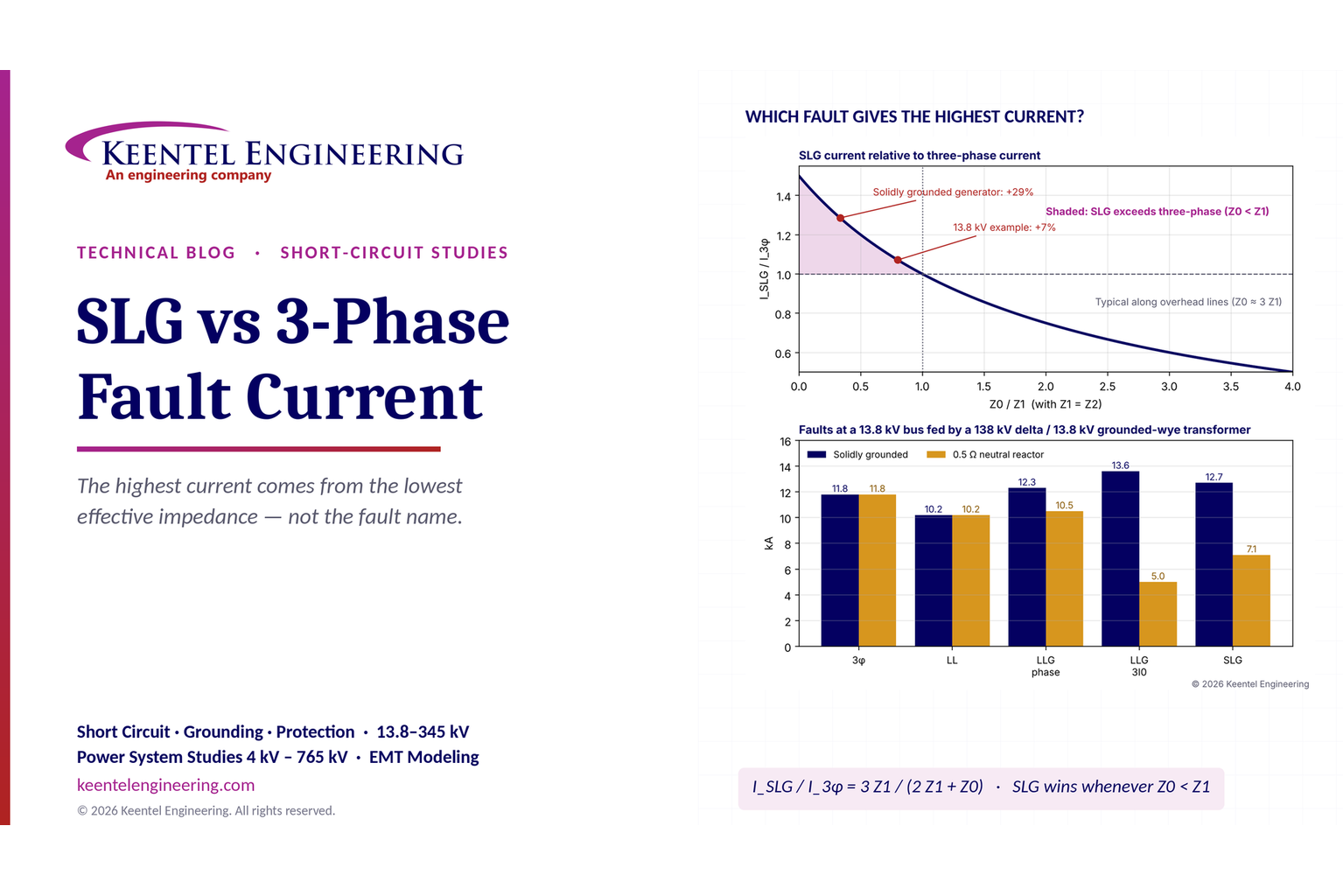
Learn which fault produces the highest current at a bus, why SLG faults can exceed three-phase faults, and how symmetrical components determine fault duty.
By SANDIP R PATEL
•
October 11, 2026
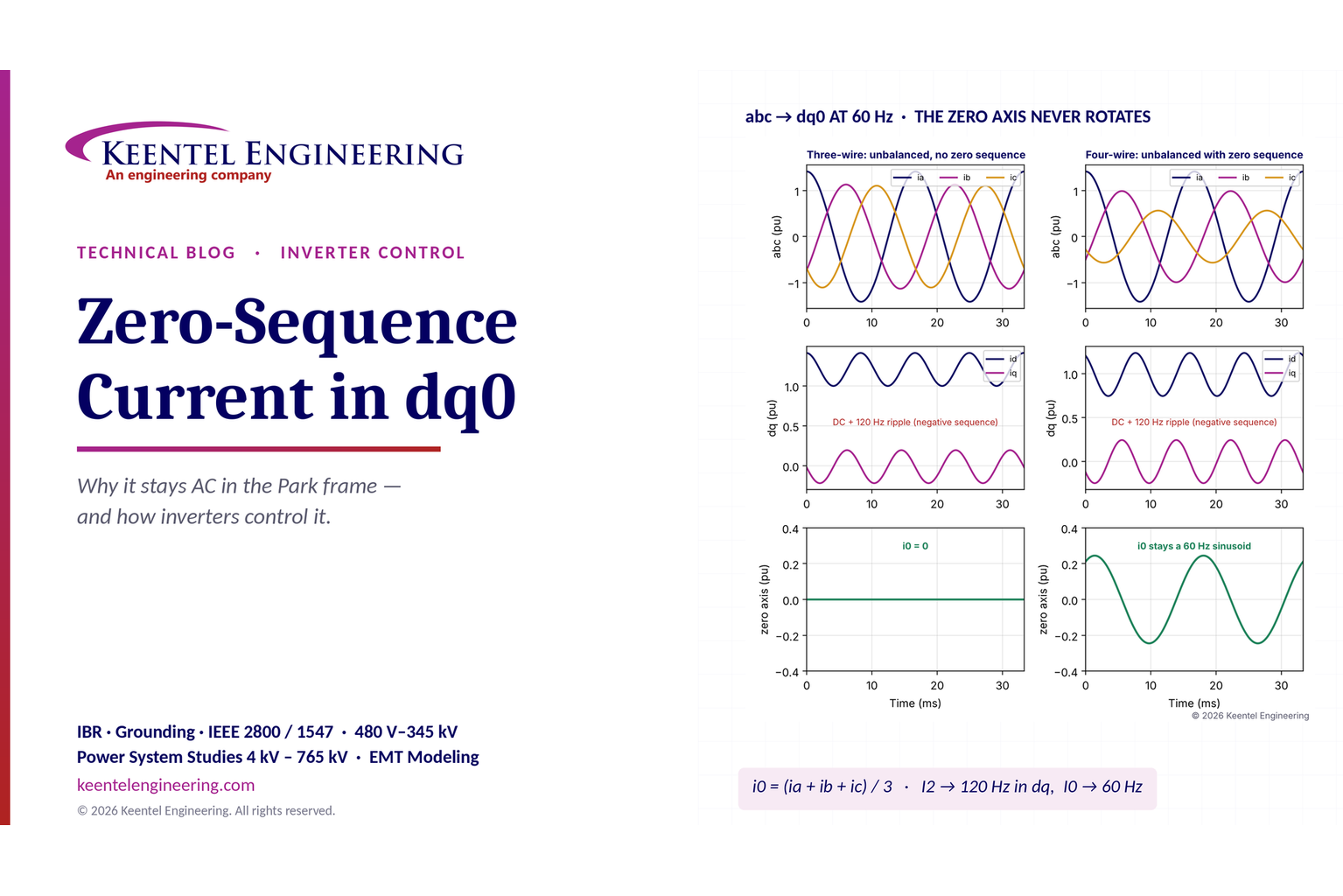
Learn why zero-sequence current pulsates in the dq0 frame, how Park's transformation works, and how inverter controls handle unbalance and ground faults.
By SANDIP R PATEL
•
October 11, 2026
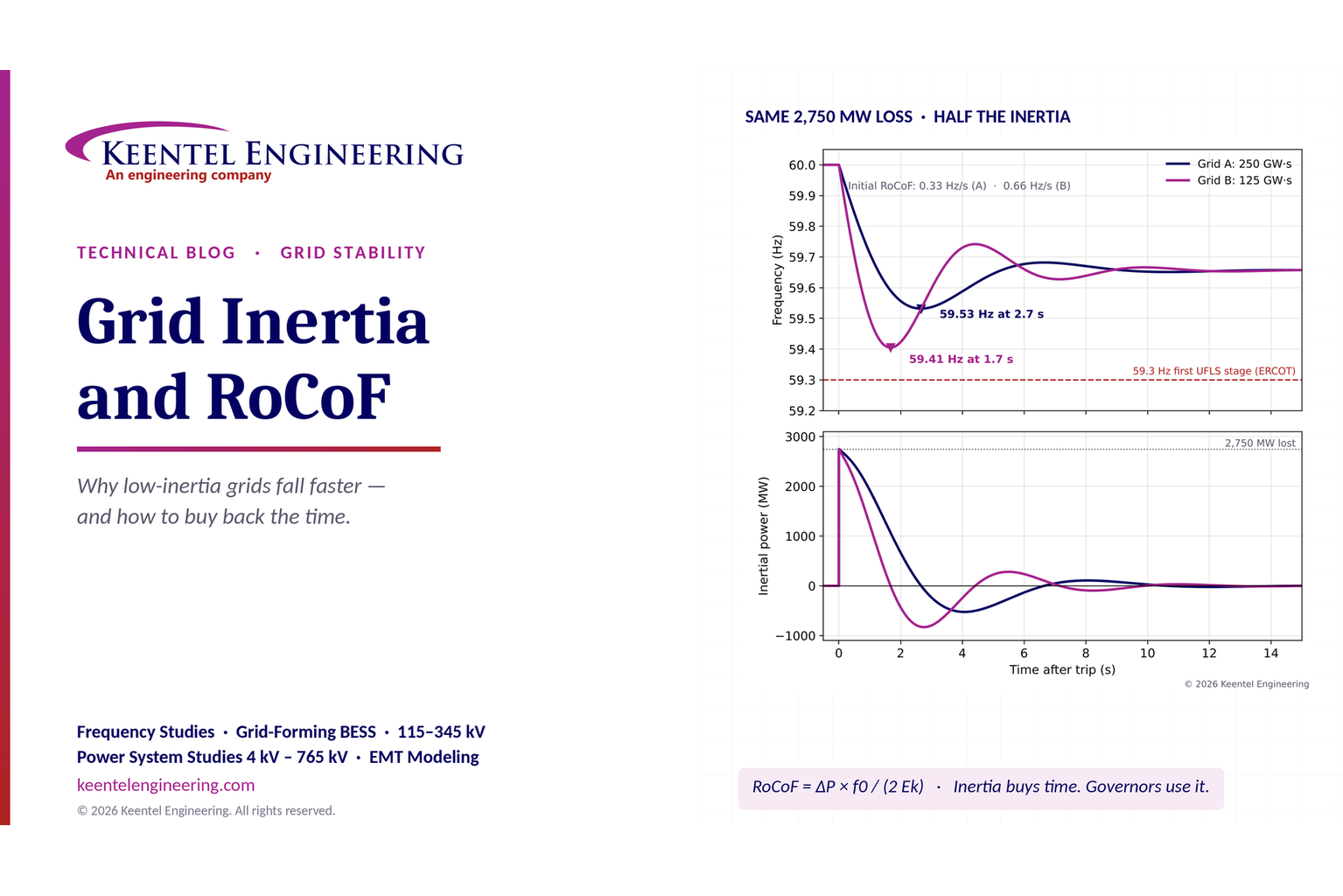
Explore grid inertia, RoCoF and frequency response, with swing equation calculations, frequency nadir analysis and US power system simulation examples.
By SANDIP R PATEL
•
October 11, 2026
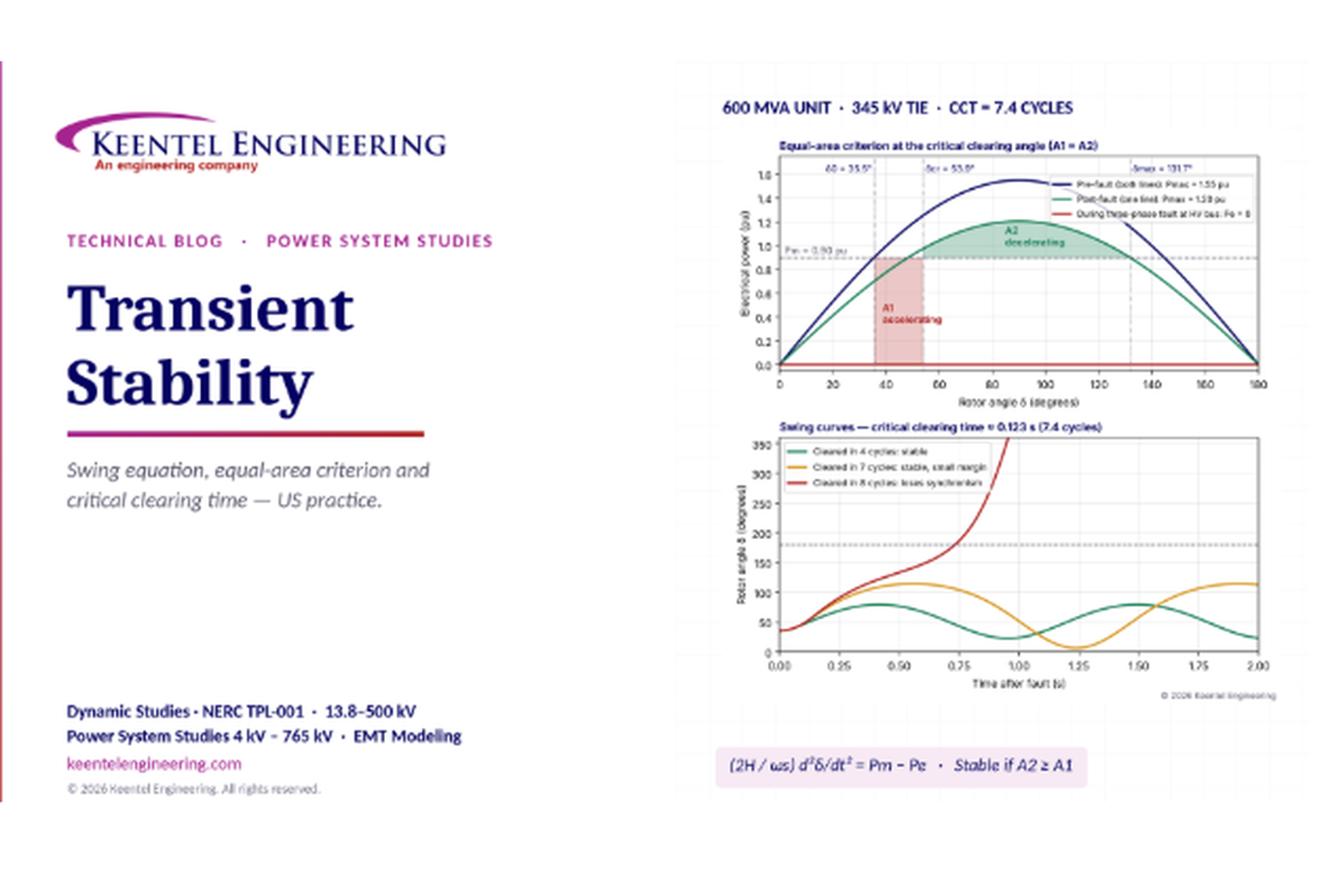
Learn transient stability analysis, swing equation, equal-area criterion and critical clearing time with a 345 kV worked example and NERC TPL-001 guidance.
By SANDIP R PATEL
•
October 11, 2026
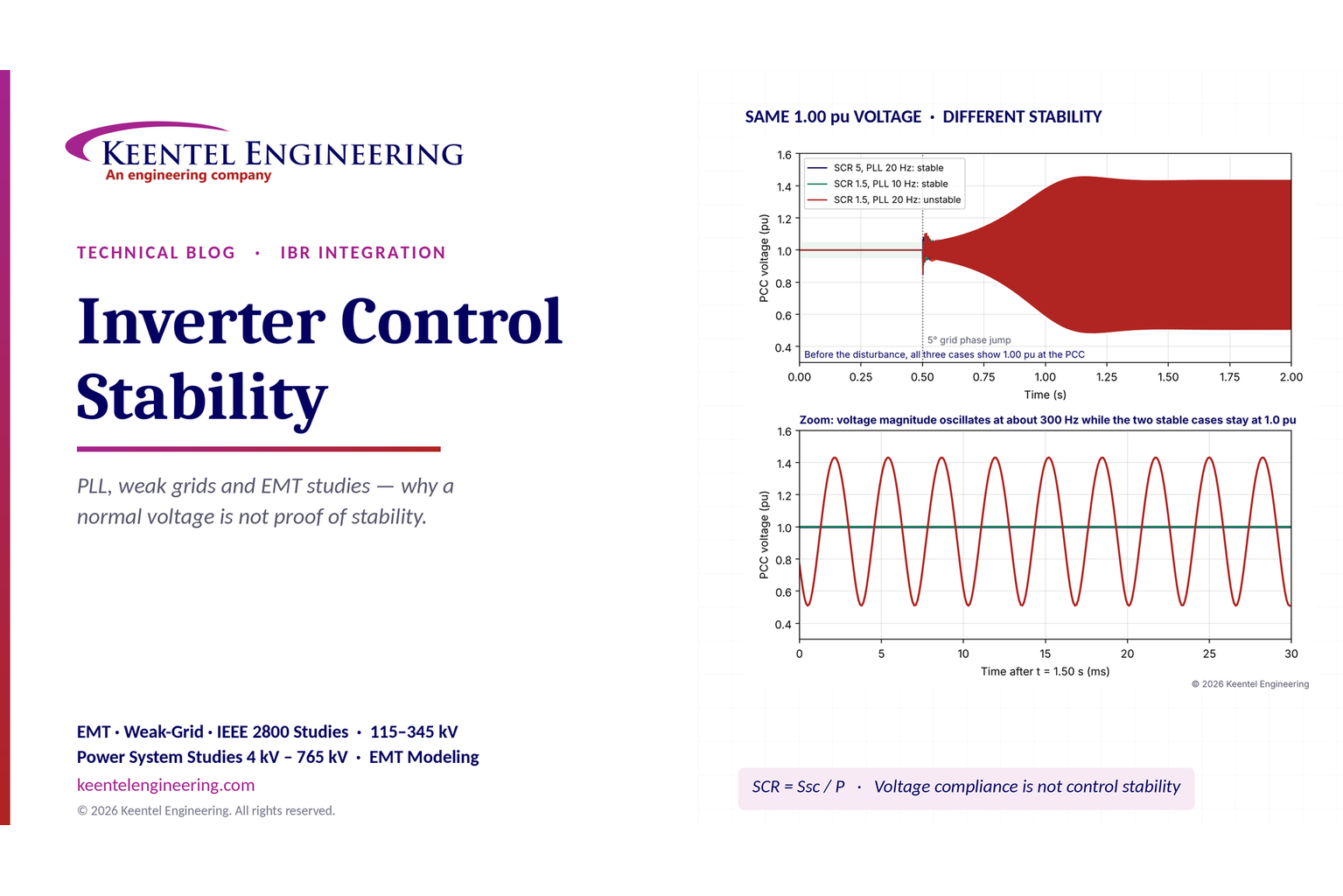
Learn why inverter controls become unstable in weak grids, how PLL bandwidth and SCR affect stability, and how PSCAD EMT studies identify and mitigate oscillations.