
A Coordinated Electric System Interconnection Review—the utility’s deep-dive on technical and cost impacts of your project.

Challenge: Frequent false tripping using conventional electromechanical relays
Solution: SEL-487E integration with multi-terminal differential protection and dynamic inrush restraint
Result: 90% reduction in false trips, saving over $250,000 in downtime

Category Metric
VPP capacity (Lunar Energy) 650 MW
Lunar funding raised US$232 million
Data center BESS example 31 MW / 62 MWh
ERCOT grid-scale batteries 15+ GW
LDES tenders (H1 2026) Up to 9.3 GW
Lithium-ion share of LDES by 2030 77%
FEOC initial threshold 55%
BESS tariff rate (2026) ~55%
Capacity gain from analytics 5–15%

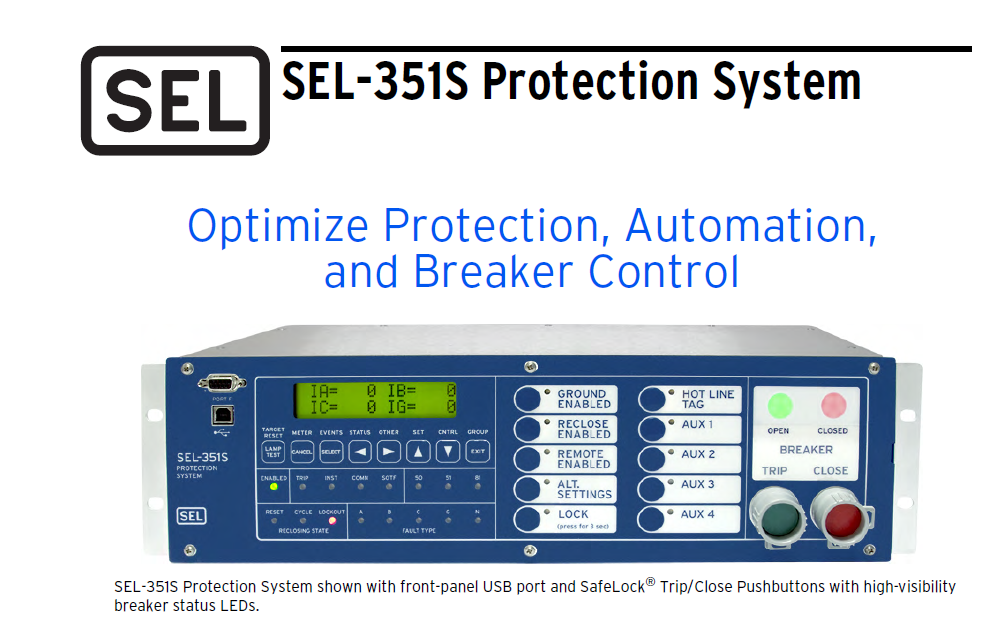
SEL-351S Feeder Protection Relay: Advanced Protection, Automation, and Breaker Control for Modern Substation design

SEL-351S Protection System relay for feeder protection, automation, and breaker control in power system substations.
Calendar icon. D

Feb 20,2026  | blog

Introduction

Modern distribution and subtransmission systems demand more than simple overcurrent protection.


Utilities, industrial facilities, renewable energy plants, data centers, and mission-critical infrastructure require:


  • High-speed fault detection
  • Secure directional protection
  • Integrated automation
  • Power quality monitoring
  • Synchrophasor visibility
  • Breaker condition monitoring
  • IEC 61850 digital substation integration


The SEL-351S Protection System is a comprehensive feeder protection relay engineered to meet these demands in radial, looped, grounded, ungrounded, and impedance-grounded systems.


At Keentel Engineering, we provide advanced protection coordination studies, detailed relay setting development, NERC-compliant protection design, IEC 61850 integration, and commissioning support for SEL relays including the SEL-351S.


1. Core Protection Capabilities of the SEL-351S

The SEL-351S combines protection, automation, control, monitoring, and fault location in a single platform. Its protection suite includes:


  • Phase overcurrent (50/51P)
  • Negative-sequence overcurrent (50/51Q)
  • Residual-ground and neutral overcurrent (50/51G, 50/51N)
  • Directional overcurrent (67P, 67N)
  • Breaker failure protection (50BF)
  • Voltage protection (27, 59)
  • Frequency protection (81O, 81U)
  • Rate-of-change-of-frequency (ROCOF)
  • Autoreclosing (79)
  • Synchronism check (25)
  • Directional power elements (SEL-351S-7 model)
  • Load encroachment logic
  • Second-harmonic blocking


This makes the relay suitable for feeders, transformer banks, capacitor banks, generators, industrial distribution systems, and utility interconnection points.


2. Advanced Overcurrent Protection Architecture

The relay includes:


  • 2 inverse-time phase elements
  • 6 instantaneous phase elements
  • Multiple negative-sequence and residual-ground elements
  • Neutral overcurrent with optional sensitive earth fault inputs


It supports both IEEE and IEC inverse curves including:


  • Moderately Inverse
  • Very Inverse
  • Extremely Inverse
  • Short-Time Inverse
  • Long-Time Inverse


Additionally, 38 standard recloser curves allow precise coordination with downstream reclosers and fuses.


Keentel Engineering Application


We perform full Time-Current Coordination (TCC) studies using SKM, ETAP, CYME, or DigSILENT to optimize:


  • Pickup settings
  • Time-dial coordination
  • Fast/slow curve logic
  • Fuse-saving vs. trip-saving schemes

3. Load Encroachment Logic for Heavily Loaded Feeders

Heavily loaded feeders present coordination challenges. The SEL-351S addresses this using positive-sequence impedance-based load encroachment logic.


The relay blocks phase overcurrent elements when measured impedance resides within a predefined load region. This:


  • Prevents nuisance tripping during peak load
  • Improves security without sacrificing sensitivity
  • Allows detection of end-of-line faults under high loading


This is especially valuable in industrial plants and high-demand distribution feeders.


4. Best Choice Ground Directional Element™

The SEL-351S includes patented ground directional logic that selects the optimal polarization method:


  • Negative-sequence impedance
  • Zero-sequence impedance
  • Zero-sequence current


It supports:


  • Ungrounded systems
  • High-impedance grounded systems
  • Petersen coil grounded systems
  • Low-impedance grounded systems


Keentel Engineering performs detailed ground fault sensitivity studies to optimize pickup levels and directional thresholds for complex grounding configurations.


5. High-Speed Breaker Failure Protection (50BF)

Breaker failure detection is critical for bus stability and fault clearing.


The SEL-351S includes:


  • High-speed 50BF detection
  • Dropout in less than one cycle after successful breaker opening
  • Dedicated breaker failure logic


Applications include:


  • Transmission/subtransmission bus protection
  • Fast bus transfer schemes
  • Industrial bus systems

6. Voltage Input Flexibility

The relay supports:


  • Single-phase voltage input with phantom phase calculation
  • Three-phase wye connection
  • Three-phase delta connection
  • Broken-delta (3V0) input for ground directional polarization


This flexibility allows application in traditional substations, distributed generation sites, and industrial power systems.


7. Automatic Reclosing and Synchronism Check

The SEL-351S supports up to four-shot autoreclosing with:


  • Fuse-saving schemes
  • Trip-saving schemes
  • Conditional reclose logic
  • Synch-check supervision
  • Autosynchronizing capability


Applications include:


  • Utility feeders
  • Subtransmission lines
  • Renewable interconnections
  • Utility–customer interface protection

8. Directional Power Elements (SEL-351S-7)

The SEL-351S-7 model includes four independent directional power elements.


Applications include:


  • Reverse power protection
  • Underpower detection
  • VAR control for capacitor banks
  • Anti-islanding schemes


Keentel Engineering frequently applies these in industrial cogeneration and renewable interconnections.


9. Frequency and ROCOF Protection

The relay includes:


  • Six levels of under/overfrequency protection
  • Four rate-of-change-of-frequency (ROCOF) elements


These are used for:


  • Load shedding schemes
  • Microgrid decoupling
  • Generator protection
  • Distributed energy resource control

10. Synchrophasor Capability

The SEL-351S provides IEEE C37.118 Level 1 synchrophasor measurements at up to 60 messages per second.


Benefits include:


  • Real-time system state measurement
  • Oscillation detection
  • Wide-area monitoring
  • Improved situational awareness
  • Elimination of state estimation in some systems

11. Metering, Harmonics, and Power Quality

The relay includes high-accuracy metering of:


  • Phase currents and voltages
  • Sequence components
  • MW, MVAR, MWh
  • Power factor
  • Frequency
  • Harmonics up to the 16th
  • Total Harmonic Distortion (THD)


The SEL-351S-7 adds:


  • Voltage Sag
  • Voltage Swell
  • Interruption recording

12. Breaker Wear Monitoring

The relay tracks:


  • Close-to-open operations
  • Interrupted current magnitude
  • Electrical and mechanical operating times
  • Minimum DC voltage during operation


Breaker maintenance curves can be entered to trigger predictive maintenance alarms.


13. Event Reports and Sequential Events Recorder

The SEL-351S provides:


  • 15-, 30-, or 60-cycle oscillography
  • Up to 128 samples per cycle
  • 11 seconds total storage
  • 1024-entry Sequential Events Recorder


Keentel Engineering performs post-fault forensic analysis using relay event files and COMTRADE exports.


14. Communications and Digital Integration

Supported protocols include:


  • IEC 61850 MMS and GOOSE
  • DNP3 (serial and Ethernet)
  • Modbus
  • IEEE C37.118
  • SEL MIRRORED BITS
  • Fast SER Protocol


Dual Ethernet ports support ring and failover network architectures for enhanced reliability.


15. Environmental Performance and Compliance

The SEL-351S is designed for harsh environments:


  • Operating temperature: –40°C to +85°C
  • UL listed
  • IEEE C37.90 compliant
  • IEC 60255 compliant
  • Surge withstand capability
  • Seismic and vibration tested

How Keentel Engineering Supports SEL-351S Projects

We provide:


  • Complete protection coordination studies
  • Ground fault sensitivity modeling
  • Distributed generation interconnection studies
  • NERC PRC compliance validation
  • IEC 61850 engineering and GOOSE configuration
  • Synchrophasor integration
  • Breaker wear monitoring configuration
  • Commissioning and testing support

25 Detailed FAQs – SEL-351S Feeder Protection Relay

  • 1. What protection functions are included in the SEL-351S?

    Phase, negative-sequence, residual-ground, neutral overcurrent, directional elements, breaker failure, voltage, frequency, reclosing, and synch-check functions.


  • 2. How many instantaneous phase elements are available?

    Six instantaneous phase overcurrent elements.


  • 3. What inverse curves are supported?

    IEEE and IEC curve families including Moderately Inverse, Very Inverse, and Extremely Inverse.


  • 4. What is load encroachment?

    A positive-sequence impedance-based blocking function that prevents nuisance trips under heavy load.


  • 5. Can it be used on ungrounded systems?

    Yes, with appropriate directional ground configuration.


  • 6. Does the relay support high-speed breaker failure?

    Yes, with sub-cycle dropout performance.


  • 7. How many reclosing shots are supported?

    Up to four shots.


  • 8. Does it support synchronism check?

    Yes, ANSI 25 function.


  • 9. What frequency elements are included?

    Six levels of 81U/81O and four ROCOF elements.


  • 10. Does it support synchrophasors?

    Yes, IEEE C37.118 Level 1 compliant.

  • 11. What is the maximum synchrophasor rate?

    Up to 60 messages per second.


  • 12. How much oscillography is stored?

    Up to 11 seconds total.


  • 13. Does it support IEC 61850?

    Yes, including MMS and GOOSE.


  • 14. What is MIRRORED BITS?

    High-speed digital relay-to-relay signaling technology.


  • 15. Does it monitor breaker wear?

    Yes, using interruption current integration and manufacturer curves.


  • 16. Does it measure harmonics?

    Yes, up to the 16th harmonic with THD.


  • 17. What is the operating temperature range?

    –40°C to +85°C.


  • 18. How many setting groups are available?

    Six setting groups.


  • 19. Can it operate with single-phase voltage?

    Yes, with phantom phase voltage calculation.


  • 20. Does it support broken-delta voltage?

    Yes, configurable for 3V0 applications.


  • 21. What CT ratings are available?

    5 A, 1 A, 0.2 A, and 0.05 A neutral options.


  • 22. How many programmable LEDs are available?

    Sixteen status and trip LEDs.


  • 23. What power supply options exist?

    High-, medium-, and low-voltage DC/AC supply options.


  • 24. What accuracy level does synchrophasor measurement meet?

    IEEE C37.118 Level 1 (≤1% TVE).


  • 25. Does it support load profile recording?

    Yes, on SEL-351S-6 and SEL-351S-7 models.


A smiling man with glasses and a beard wearing a blue blazer stands in front of server racks in a data center.

About the Author:

Sandip "Sonny" R. Patel, P.E.

IEEE Senior Member · Founder & CEO, Keentel Engineering

In 1995, Sonny Patel earned his Electrical Engineering degree from the University of Illinois. But degrees don't build legacies — action does.

For three decades, he has worked the power industry from every side of the table: 16 years as a utility engineer at Exelon/Commonwealth Edison; generation leadership across hydroelectric, industrial steam turbine, and a 9 GW renewable fleet; NERC Regional Entity Senior Compliance Engineer and Audit Team Lead, auditing some of the nation's largest utilities; and testing and commissioning lead on equipment up to 765 kV — the very top of the North American grid.Utility. Generator. Regulator. Consultant. Few engineers have seen all four seats. Fewer still have sat in them.

His experience spans nuclear, hydro, conventional generation, renewables, oil and gas, mining — and today's data centers, where he is authoring a three-book series on data center design. He is a Licensed Professional Engineer in six states and a Licensed Electrical Contractor in Florida (Unlimited EC) — he doesn't just design the work; he's qualified to stand behind its execution.Today, as Founder and CEO of Keentel Engineering, Sonny leads a nationwide team of engineers delivering substation design, power system studies, NERC compliance, and commissioning — done right, coast to coast.Three decades. Every side of the table. One standard: accountable engineering.

Four workers in safety vests and helmets stand with arms crossed near wind turbines.

Let's Discuss Your Project

Let's book a call to discuss your electrical engineering project that we can help you with.

Man in a blazer and open shirt, looking at the camera, against a blurred background.

About the Author:

Sandip "Sonny" R. Patel, P.E.

IEEE Senior Member · Founder & CEO, Keentel Engineering

In 1995, Sonny Patel earned his Electrical Engineering degree from the University of Illinois. But degrees don't build legacies — action does.

For three decades, he has worked the power industry from every side of the table: 16 years as a utility engineer at Exelon/Commonwealth Edison; generation leadership across hydroelectric, industrial steam turbine, and a 9 GW renewable fleet; NERC Regional Entity Senior Compliance Engineer and Audit Team Lead, auditing some of the nation's largest utilities; and testing and commissioning lead on equipment up to 765 kV — the very top of the North American grid.

Utility. Generator. Regulator. Consultant. Few engineers have seen all four seats. Fewer still have sat in them.

His experience spans nuclear, hydro, conventional generation, renewables, oil and gas, mining — and today's data centers, where he is authoring a three-book series on data center design. He is a Licensed Professional Engineer in six states and a Licensed Electrical Contractor in Florida (Unlimited EC) — he doesn't just design the work; he's qualified to stand behind its execution.

Today, as Founder and CEO of Keentel Engineering, Sonny leads a nationwide team of engineers delivering substation design, power system studies, NERC compliance, and commissioning — done right, coast to coast.Three decades. Every side of the table. One standard: accountable engineering.

Leave a Comment

Related Posts

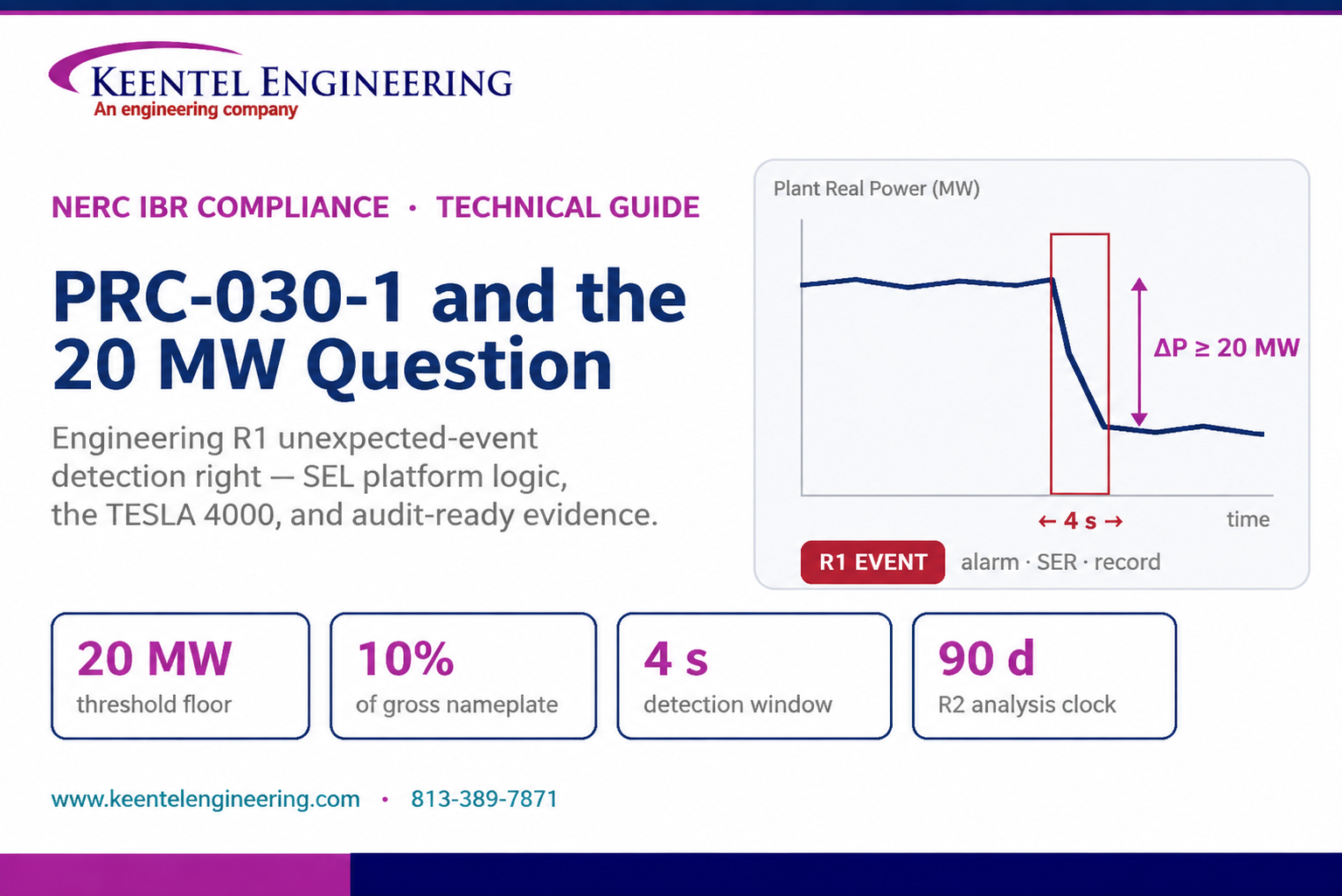
PRC-030-1 NERC IBR compliance guide showing 20 MW event detection threshold and R1 monitoring timeli
By SANDIP R PATEL September 22, 2026
Learn PRC-030-1 R1 event detection requirements for inverter-based resources, SEL platforms, disturbance monitoring, and audit-ready compliance.
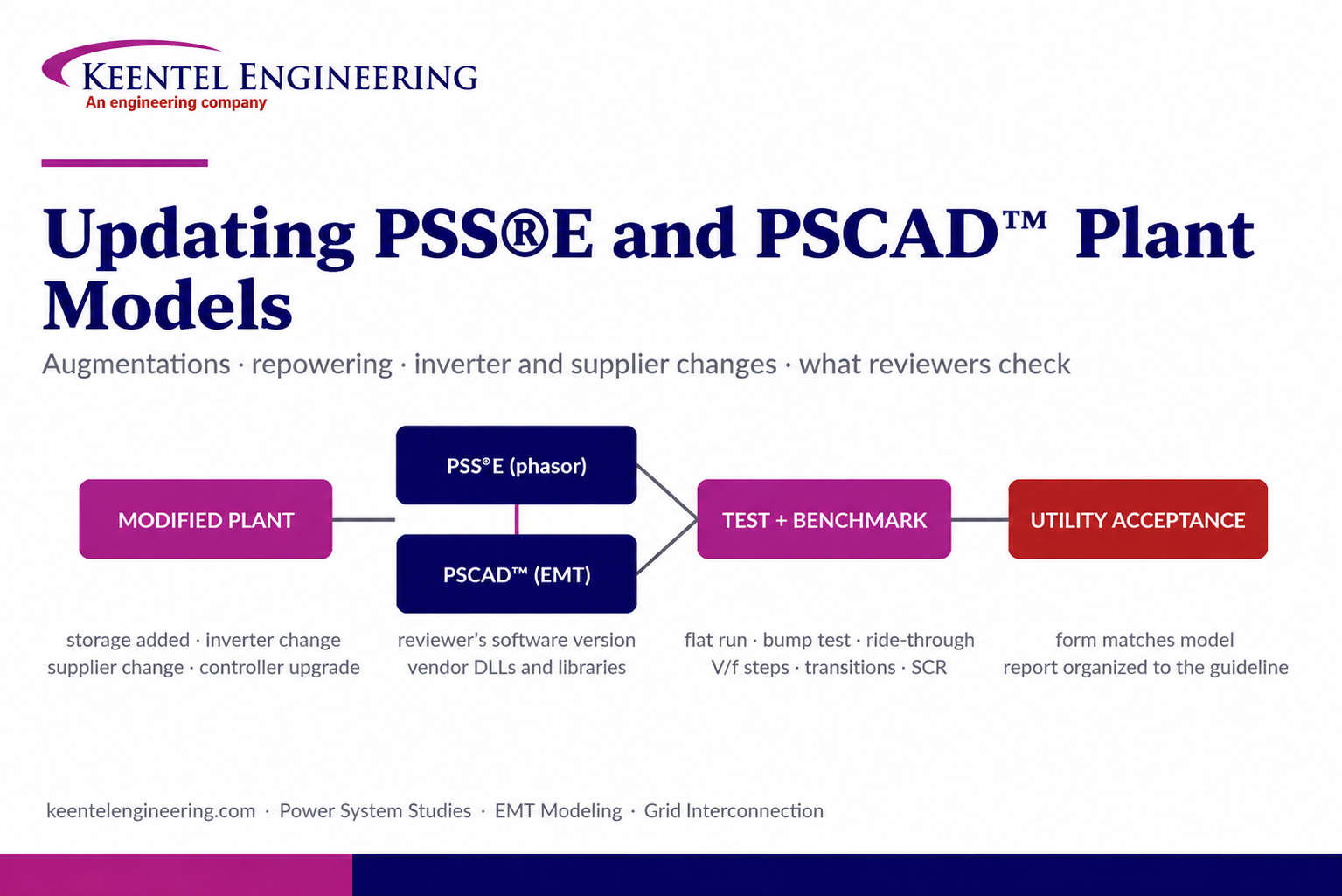
PSS®E and PSCAD™ plant model update workflow showing modified plant testing, benchmark validation, a
By SANDIP R PATEL September 22, 2026
Learn how PSS®E and PSCAD™ model updates support plant augmentations, repowering, equipment changes, testing, benchmarking, and grid compliance.
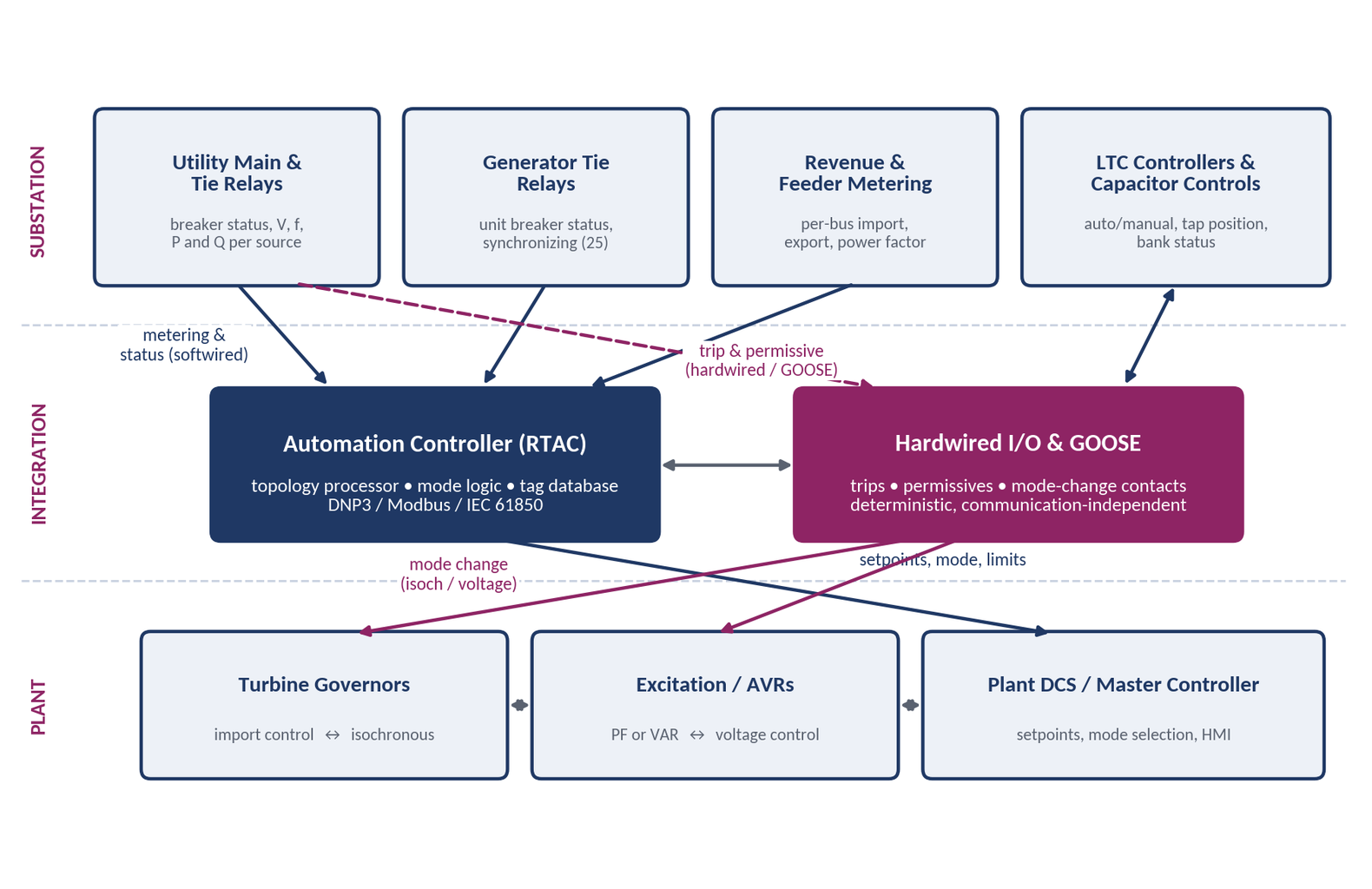
Automation controller architecture showing substation relays, hardwired I/O, GOOSE communication and
By SANDIP R PATEL September 20, 2026
Learn CHP load following and island detection engineering for campus plants, including protection, controls, power studies, and grid transition design.
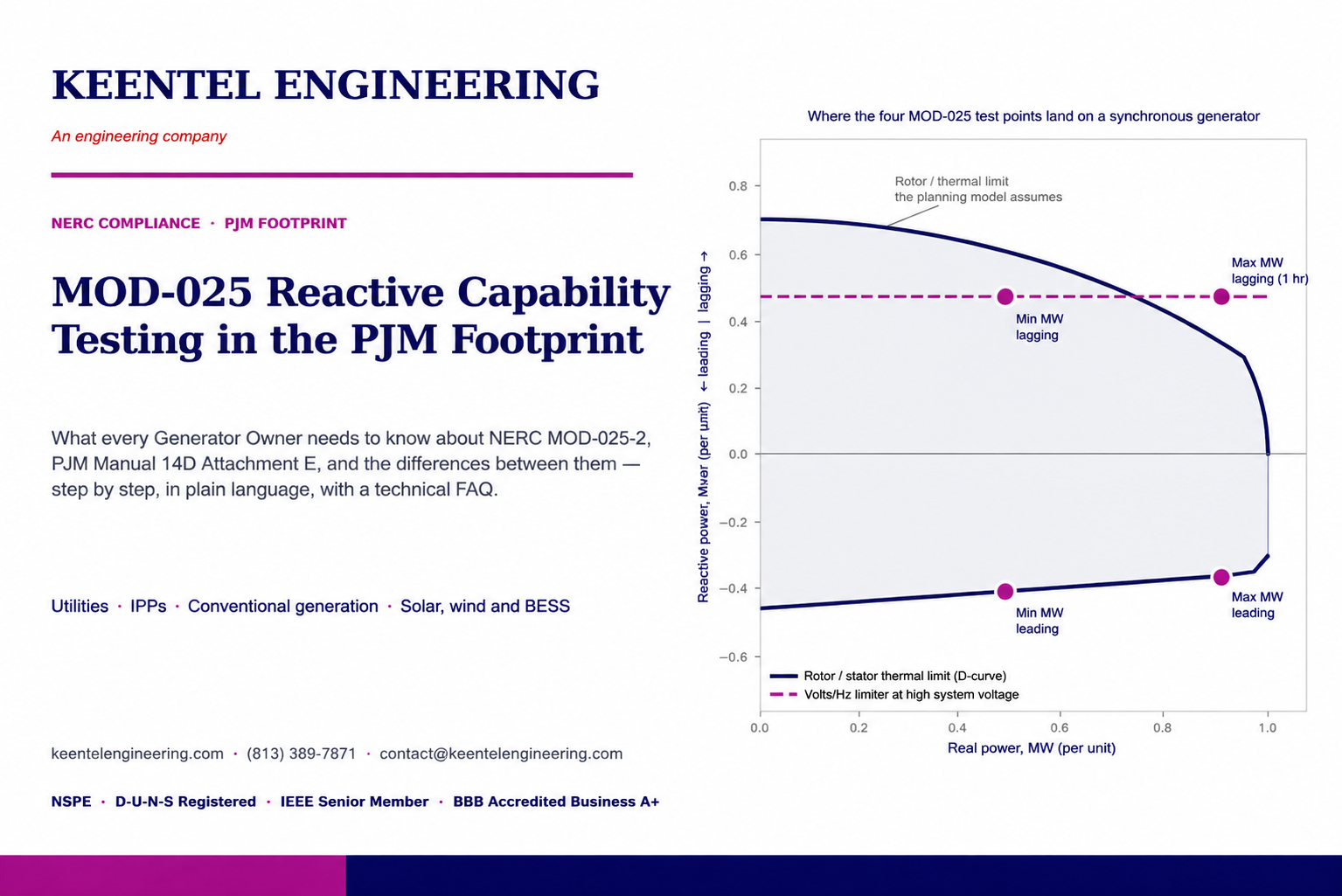
plant models with testing, benchmarking, and utility acceptance workflow.
By SANDIP R PATEL September 20, 2026
NERC MOD-025-2 Generator Owners, MOD-025-2 reactive power testing, generator capability verification, NERC Attachment 1, MOD-025 compliance testing
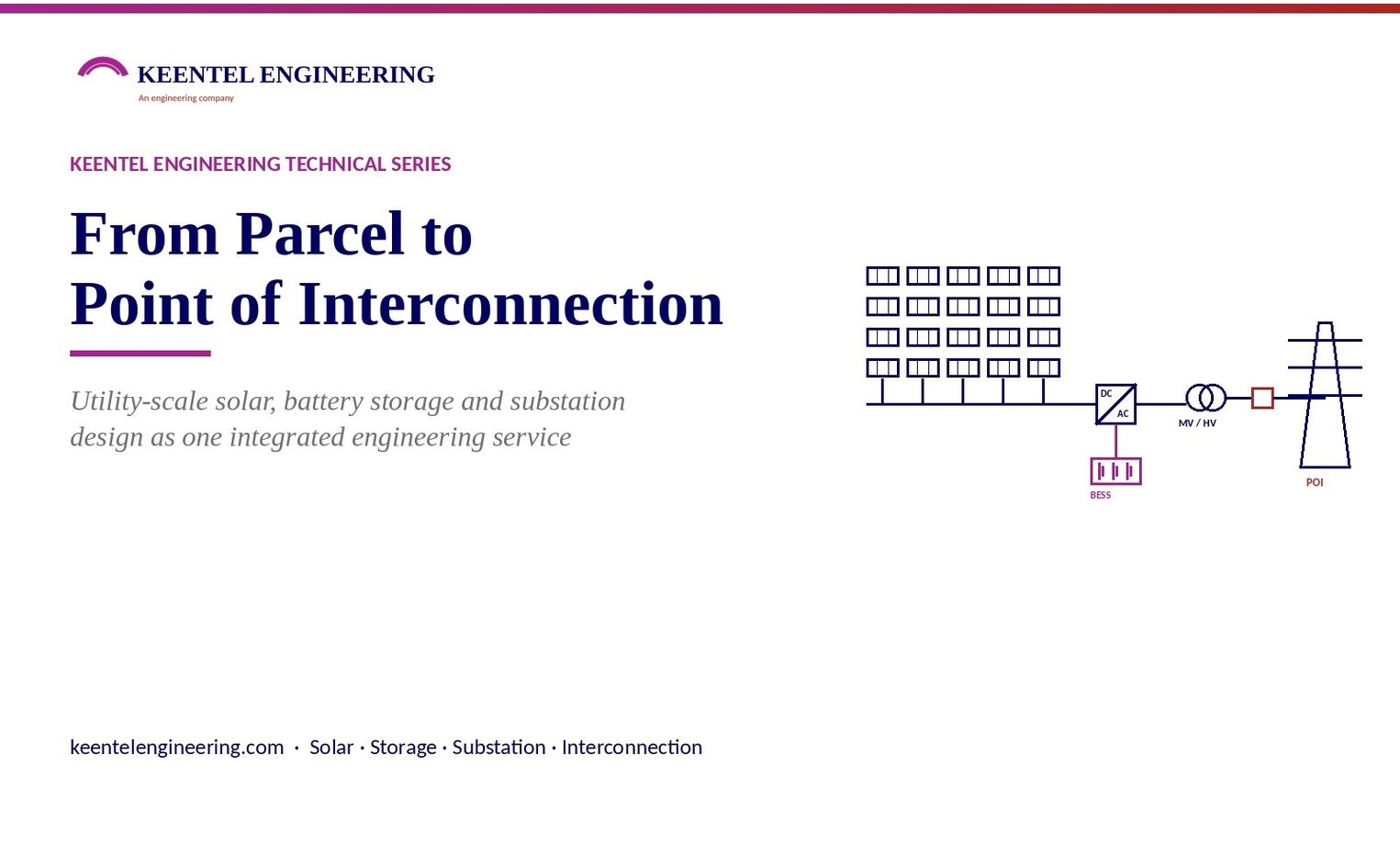
Utility scale solar engineering design showing solar panels, battery storage and grid interconnectio
By SANDIP R PATEL September 19, 2026
Explore utility scale solar engineering from site assessment to POI interconnection, including PV design, BESS, substation and grid studies.
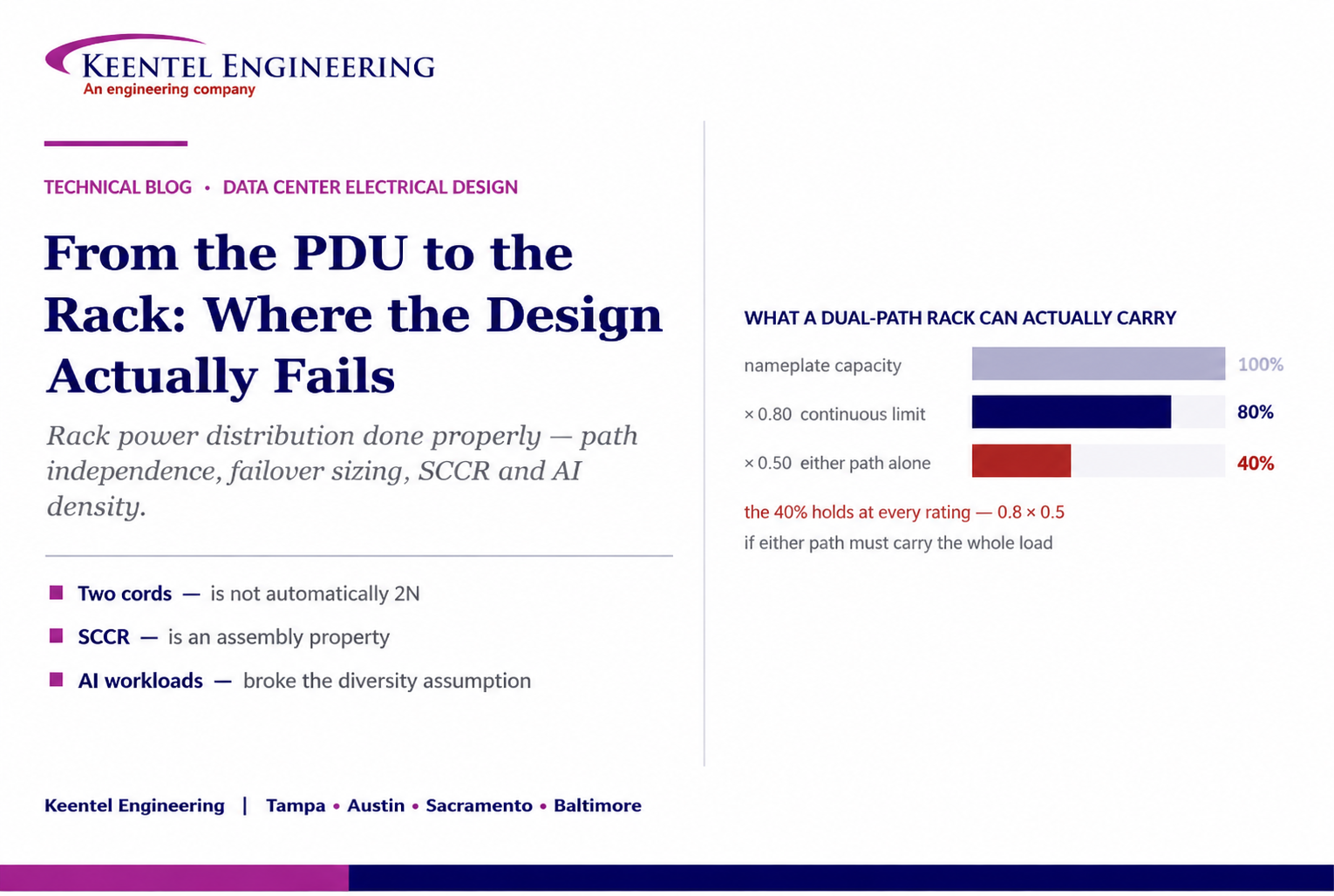
Rack power distribution from PDU to rack showing dual-path capacity limits for data center electrica
By SANDIP R PATEL September 18, 2026
Learn how to size rack power distribution, PDU and RPP systems for continuous loads, A/B redundancy, failover capacity, SCCR and high-density AI data centers.
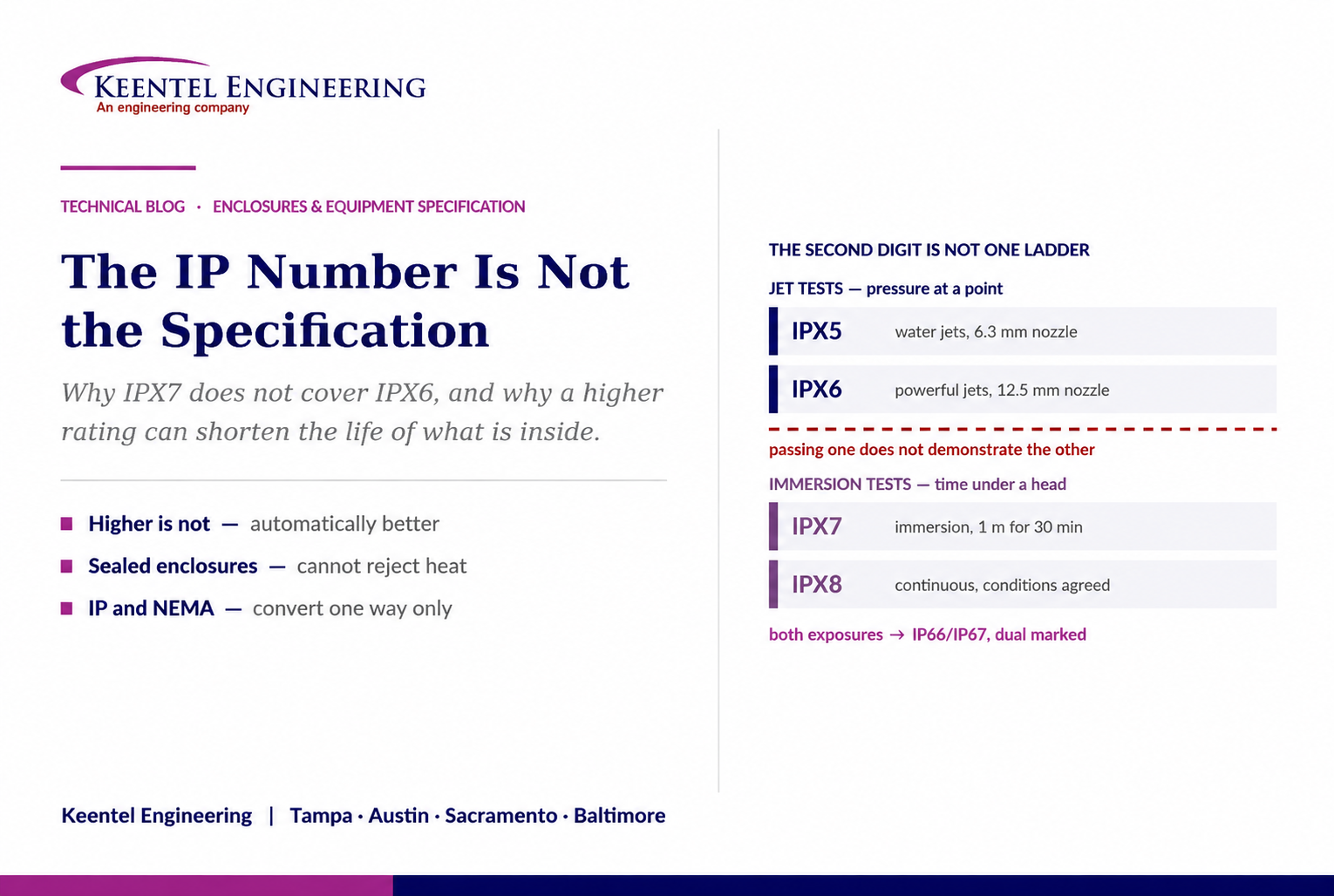
IP rating enclosure protection levels showing IP66, IP67, and IP68 differences for electrical equipm
By SANDIP R PATEL September 18, 2026
Learn why IP ratings like IP66, IP67, and IP68 do not tell the full story. Understand enclosure selection, NEMA differences, heat, corrosion, and protection.
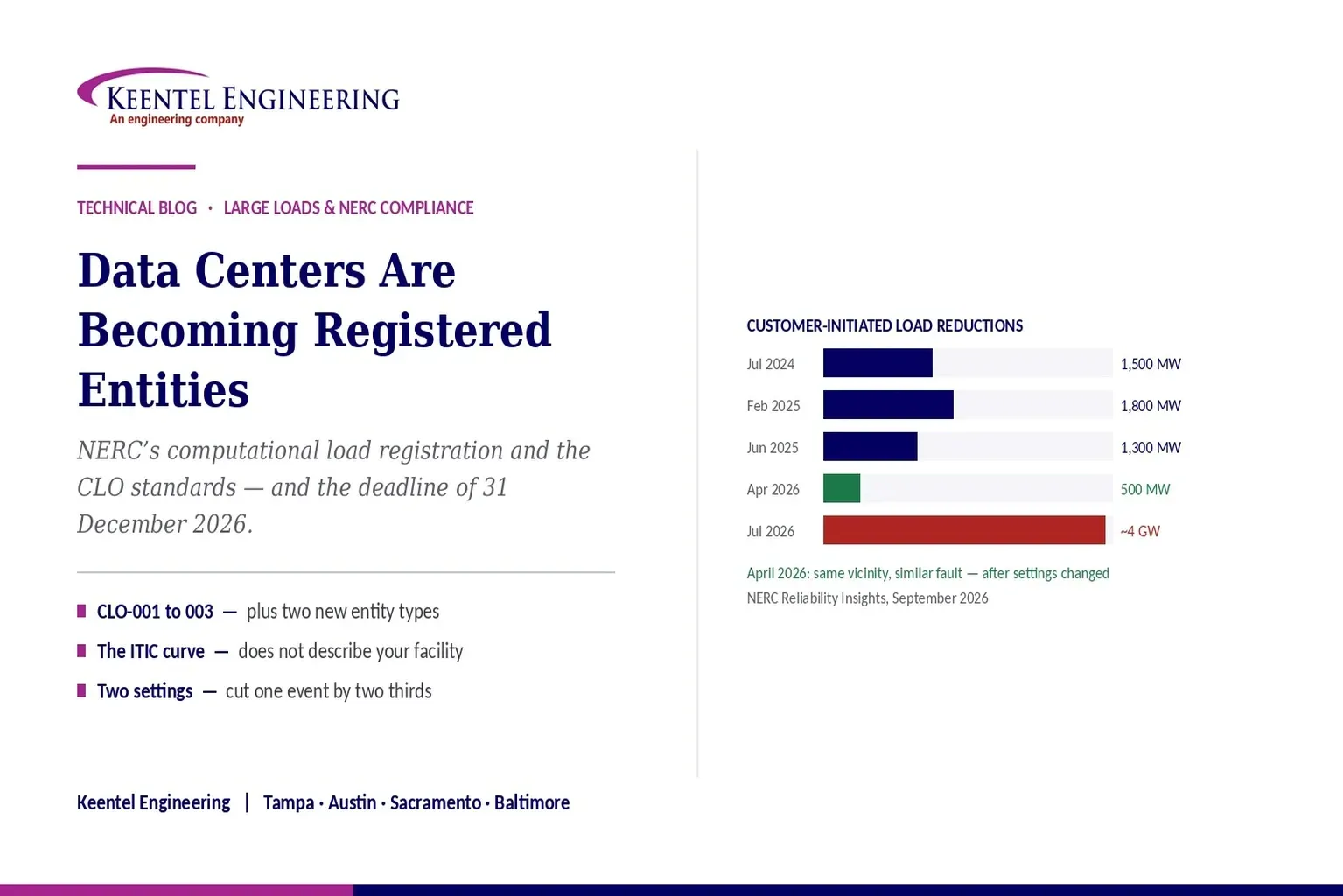
NERC large load registration guide showing data center grid reliability and computational load compl
By SANDIP R PATEL September 9, 2026
Learn how NERC computational load registration impacts data centers, CLO standards, ride-through requirements, modeling, and grid reliability compliance.
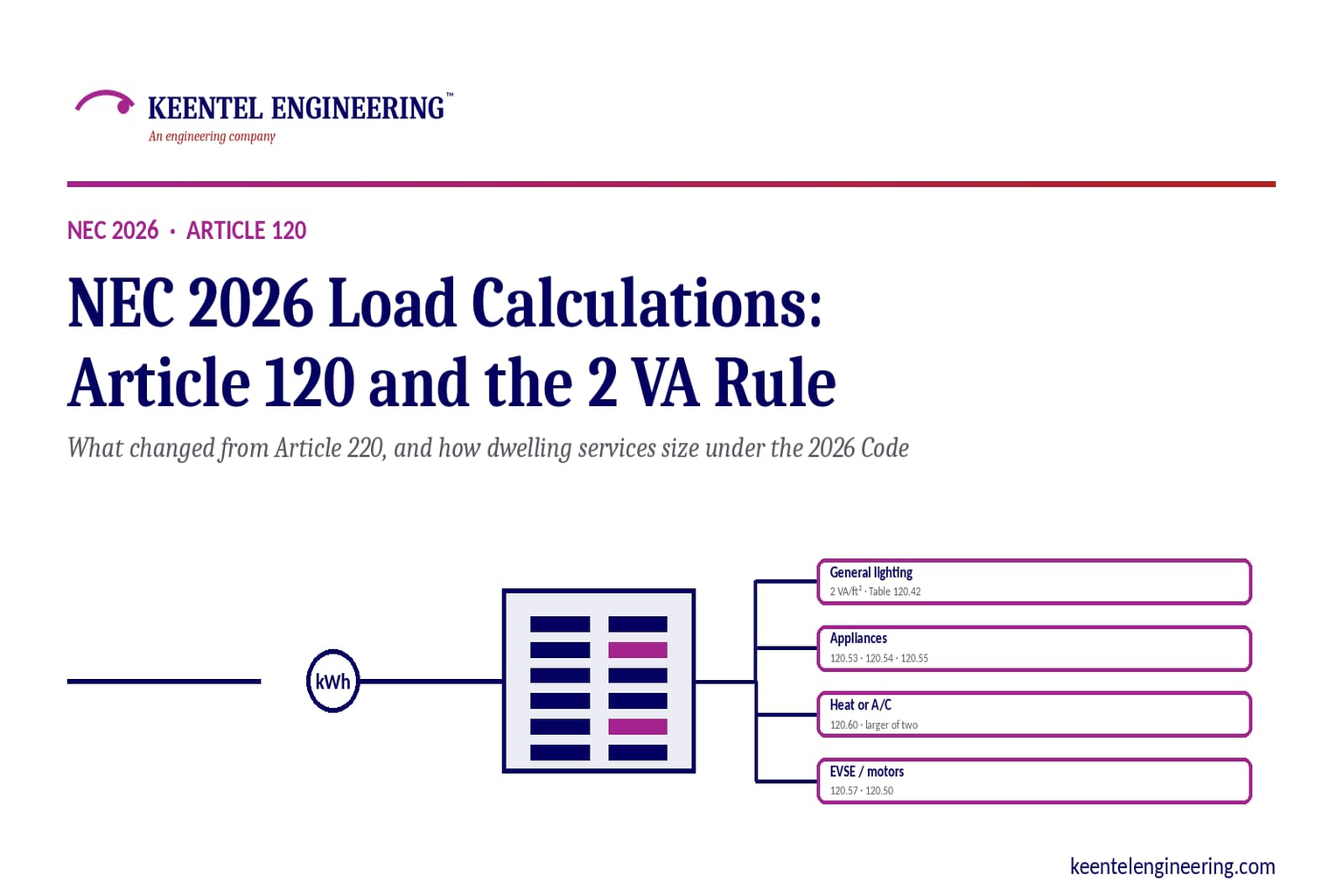
NEC 2026 load calculation guide showing Article 120 rules, 2 VA changes, EV charging and service siz
By SANDIP R PATEL September 7, 2026
Learn NEC 2026 load calculations, Article 120 changes, the 2 VA rule, EV charging requirements, service sizing, and dwelling calculation methods.