

A Coordinated Electric System Interconnection Review—the utility’s deep-dive on technical and cost impacts of your project.

A Guide to the Electrical Substation Design Process

Calendar icon. D

January 24, 2022 | Blog

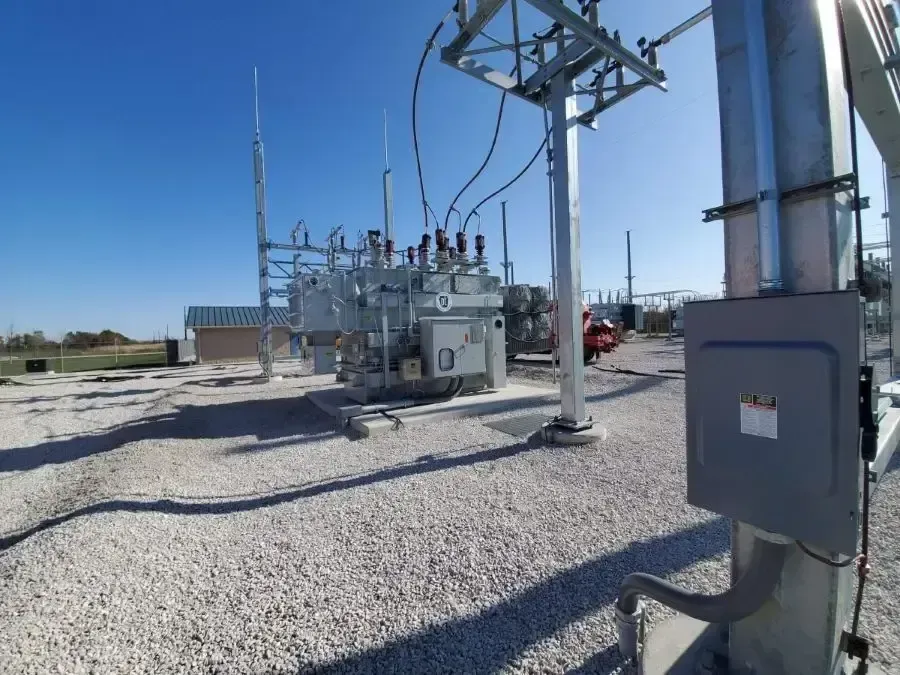
Electrical substation with transformers and equipment against a clear blue sky. Gravel ground and metal structures.

Whether you're retrofitting or building a substation, following a well-defined process is essential to ensure electrical and operational integrity. The substation design process involves engineering, planning, and construction elements that directly impact system reliability, safety, and future scalability.


You need experts like Keentel Engineering by your side. We bring over 30 years of experience in electrical substation design and layout for utilities, developers, and IPPs. Our team ensures every project aligns with best practices in substation planning, energy efficiency, and regulatory compliance.


Step-by-Step Substation Design Workflow

1. Switching Station Selection

The first step in substation engineering design is identifying the appropriate switching station configuration. While switching stations do not transform voltage, they are crucial for routing power safely and enabling grid flexibility.

At this stage, our engineers assess the best type of bus (e.g., ring bus or breaker-and-a-half), control systems, and disconnect switches. Choosing the right switching station directly influences future substation expansion design and maintenance capability.

2. Preliminary Layout and Site Planning

Next, we create a substation layout plan showing all critical infrastructure components—equipment pads, buswork, fencing, driveway access, and grounding. This layout is the foundation of successful substation construction and future-proof scalability.

Our planning phase includes:

  • Evaluating transmission voltage class (e.g., 69kV, 138kV, or 230kV)
  • Aligning with substation civil design standards
  • Planning space for a substation control building
  • Integrating paths for future feeder bays or transformer additions

3. Detailed Substation Planning

This stage formalizes:

  • Component placement and interconnection
  • Site-specific milestones and substation project development
  • Budget allocation for electrical substation building design
  • Real estate acquisition and permitting requirements
  • Power flow studies to size transformers and protection systems

We also conduct load flow studies and analyze protective device coordination to ensure the electrical engineering design process supports operational safety and future demands.


Explore our Power System Studies →

4. Procurement & Equipment Selection

Keentel advises clients during the equipment procurement stage. From high-voltage transformers to SCADA-ready relays, each component must meet project specs, withstand environmental stress, and comply with IEEE/NESC standards.

We focus on:

  • Smart grid compatibility
  • Interoperability for substation design build projects
  • Efficient electrical substation construction timelines

5. Design Execution & Construction Management

Our engineers develop detailed schematics, 3D models, and site-specific construction packages. Keentel also assists with:

  • Routing of electrical cabling and conduit
  • Ground grid modeling
  • Control house configuration
  • NERC compliance review

The entire substation design and construction process is managed under QA/QC protocols to ensure alignment with substation design standards and operational safety.


Why Keentel Engineering?

We specialize in:

  • Utility substation design
  • Primary substation design
  • SCADA system integration
  • Substation building layout optimization
  • EPC-level substation projects

We are trusted partners for substation design engineers, utility developers, and grid planners across North America.

📩 Contact us today for help with substation projects—greenfield or brownfield.


FAQ: Substation Design Process

  • Q1: What is the first step in substation design?

    Selecting the switching station and defining bus configuration based on transmission system needs.

  • Q2: What are the key components in substation planning?

    Layout plan, protection coordination, SCADA integration, civil permits, and budget alignment.

  • Q3: How long does substation design take?

    Typically 4–9 months depending on complexity, permitting, and grid interconnection needs.

  • Q4: What’s included in the electrical substation construction package?

    Schematics, grounding plan, control house layout, equipment specs, compliance documentation.

  • Q5: Does Keentel offer substation EPC support?

    Yes—we support end-to-end substation EPC design build projects with in-house design and QA/QC.


Man in a blazer and open shirt, looking at the camera, against a blurred background.

About the Author:

Sonny Patel P.E. EC

IEEE Senior Member

In 1995, Sandip (Sonny) R. Patel earned his Electrical Engineering degree from the University of Illinois, specializing in Electrical Engineering . But degrees don’t build legacies—action does. For three decades, he’s been shaping the future of engineering, not just as a licensed Professional Engineer across multiple states (Florida, California, New York, West Virginia, and Minnesota), but as a doer. A builder. A leader. Not just an engineer. A Licensed Electrical Contractor in Florida with an Unlimited EC license. Not just an executive. The founder and CEO of KEENTEL LLC—where expertise meets execution. Three decades. Multiple states. Endless impact.

Four workers in safety vests and helmets stand with arms crossed near wind turbines.

Let's Discuss Your Project

Let's book a call to discuss your electrical engineering project that we can help you with.

Man in a blazer and open shirt, looking at the camera, against a blurred background.

About the Author:

Sonny Patel P.E. EC

IEEE Senior Member

In 1995, Sandip (Sonny) R. Patel earned his Electrical Engineering degree from the University of Illinois, specializing in Electrical Engineering . But degrees don’t build legacies—action does. For three decades, he’s been shaping the future of engineering, not just as a licensed Professional Engineer across multiple states (Florida, California, New York, West Virginia, and Minnesota), but as a doer. A builder. A leader. Not just an engineer. A Licensed Electrical Contractor in Florida with an Unlimited EC license. Not just an executive. The founder and CEO of KEENTEL LLC—where expertise meets execution. Three decades. Multiple states. Endless impact.

Leave a Comment

Related Posts

Keentel Engineering banner featuring a panoramic view of a nuclear power plant overlaid with a detai
By SANDIP R PATEL February 3, 2026
Explore the critical design of Class 1E electrical systems in nuclear plants. Learn about safety compliance, redundancy, emergency power, and grid interfaces.
Keentel Engineering overview graphic explaining FERC RM22-12-000 Order No. 901 and its engineering,
By SANDIP R PATEL February 1, 2026
Understand FERC RM22-12-000 Order 901 and its impact on power system modeling, NERC compliance, generator data, and protection standards.
IBR Registration Initiative for Category 2 Generator Owners and Operators
By SANDIP R PATEL January 31, 2026
Learn what the IBR Registration Initiative means for Category 2 Generator Owners and Operators, key deadlines through May 2026, required documentation, and how Keentel Engineering supports NERC compliance readiness.
IBR Registration Initiative for Category 2 Generator Owners and Operators
By SANDIP R PATEL January 31, 2026
Understand NERC PRC-029-1 ride-through requirements for IBRs, key compliance dates through 2026, applicability to BES and non-BES assets, and what Generator Owners must do now.
Understanding Category 2 IBR Registration and Compliance white paper cover by Keentel Engineering fe
By SANDIP R PATEL January 31, 2026
Complete guide to Category 2 IBR registration and compliance, including NERC requirements, FERC Order 901, CMEP enforcement, applicable standards, and preparation steps.
Map of 2025-2026 Winter Reliability Risks for the power grid with Keentel Engineering logo.
By SANDIP R PATEL January 29, 2026
The 2025–2026 Winter Reliability Assessment highlights rising winter demand, resource mix shifts, and NERC compliance changes, impacting grid reliability and engineering.
Lifecycle management of T&D switchgear using condition monitoring data, showing engineers analyzing
By SANDIP R PATEL January 24, 2026
Learn how utilities use condition monitoring data to manage T&D switchgear lifecycles, reduce failure risk, extend asset life, and enable condition-based maintenance.
Frequency response characteristics of voltage measurement systems illustrated with substation and wa
By SANDIP R PATEL January 21, 2026
Explore frequency response characteristics of voltage measurement systems used in power substations and grid analysis by Keentel Engineering.
Keentel Engineering white paper cover on reevaluating IEEE and IEC substation standards for increase
By SANDIP R PATEL January 21, 2026
Professional white paper cover by Keentel Engineering on reevaluating IEEE and IEC substation standards, featuring an electrical substation under fault conditions.