A Coordinated Electric System Interconnection Review—the utility’s deep-dive on technical and cost impacts of your project.
Challenge: Frequent false tripping using conventional electromechanical relays
Solution: SEL-487E integration with multi-terminal differential protection and dynamic inrush restraint
Result: 90% reduction in false trips, saving over $250,000 in downtime
| Category | Metric |
|---|---|
| VPP capacity (Lunar Energy) | 650 MW |
| Lunar funding raised | US$232 million |
| Data center BESS example | 31 MW / 62 MWh |
| ERCOT grid-scale batteries | 15+ GW |
| LDES tenders (H1 2026) | Up to 9.3 GW |
| Lithium-ion share of LDES by 2030 | 77% |
| FEOC initial threshold | 55% |
| BESS tariff rate (2026) | ~55% |
| Capacity gain from analytics | 5–15% |
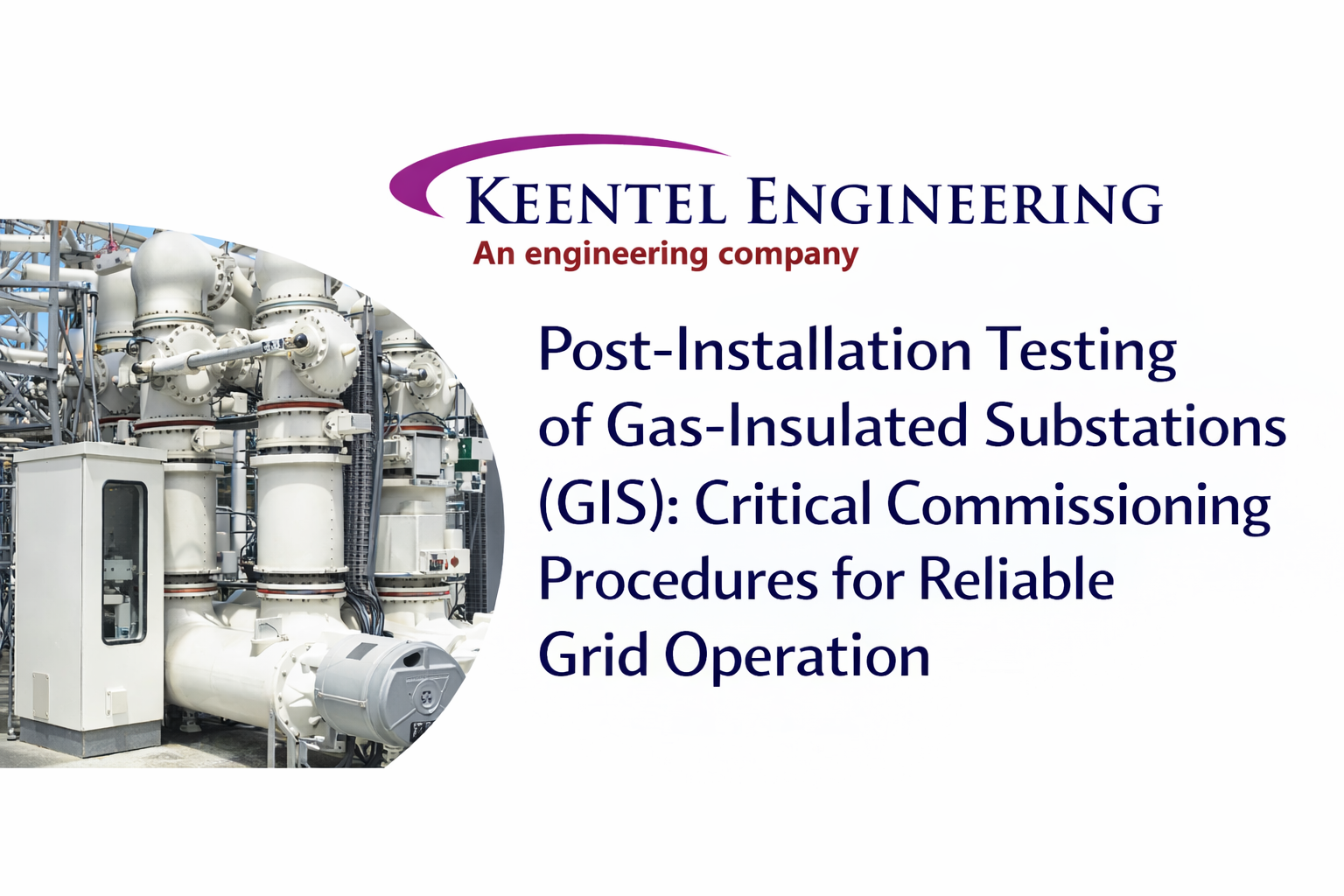
Post-Installation Testing of Gas-Insulated Substations (GIS): Critical Commissioning Procedures for Reliable Grid Operation
Mar 7,2026 | blog
Gas-Insulated Substations (GIS) play a vital role in modern transmission and distribution networks where space constraints, environmental conditions, and reliability requirements demand compact and highly reliable substation designs. GIS technology uses SF₆ gas insulation within sealed metal enclosures, allowing high-voltage equipment such as circuit breakers, disconnectors, and busbars to operate safely in a controlled environment.
However, before a GIS facility is placed into service, comprehensive post-installation testing and commissioning procedures must be performed to ensure the integrity, safety, and operational readiness of the installation. These tests verify the mechanical, electrical, and gas-insulation systems that form the core of GIS technology.
Typical GIS commissioning tests include:
- Construction and visual inspections
- Control cable verification
- Gas leak detection
- Circuit breaker functional testing
- Primary circuit resistance measurements
- SF₆ gas quality testing
- Interlocking verification
- High-voltage conditioning tests
- Instrument transformer testing
These procedures ensure that the GIS installation meets design specifications and can safely operate within the high-voltage power grid.
electrical-engineering-portal.c…
At Keentel Engineering, we provide specialized engineering services for substation commissioning, GIS testing, protection and control verification, and grid reliability assessments to support utilities, renewable energy developers, and transmission operators.
Importance of Post-Installation GIS Testing
Gas-insulated substations operate at voltage levels ranging from 72 kV to over 800 kV, making proper testing and commissioning critical for safe operation.
Post-installation testing serves several purposes:
1. Verify proper installation of equipment
2. Detect mechanical or electrical defects
3. Confirm protection and control functionality
4. Validate gas insulation quality
5. Ensure system safety before energization
Commissioning procedures must be conducted carefully because testing activities often occur under high-risk conditions with multiple contractors working simultaneously. Strict coordination and safety protocols are essential to avoid accidents during energization procedures.
1. Construction and Visual Inspection
The first step in GIS commissioning is a detailed visual inspection of the installation.
Engineers verify:
- Grounding and bonding conductor installation
- Structural integrity of GIS enclosures
- Correct installation of gas valves
- Equipment nameplates and labeling
- Cleanliness of cabinets and compartments
- Absence of foreign objects or debris
Proper housekeeping and equipment identification are critical to avoid operational mistakes during energization.
Inspection also includes verifying safety equipment such as fire extinguishers and emergency response systems before testing begins.
2. Control Cable and Wiring Verification
Control and protection wiring must be thoroughly tested to ensure reliable operation of the GIS control system.
Two primary tests are performed.
Insulation Resistance Testing
Insulation integrity is tested using a 1000-V Megger insulation tester to confirm that conductors are properly insulated from:
- Other conductors
- Cable shields
- Ground
High resistance readings indicate acceptable insulation integrity.
Point-to-Point Continuity Testing
Continuity tests verify that wiring connections match design drawings.
Technicians confirm:
- Correct terminal connections
- Proper routing of protection circuits
- Correct interlocking wiring
- Proper control signal transmission
Electrical schematics are often marked or “yellow-lined” during testing to document completed checks.
3. GIS Bus Gas Leakage Testing
Gas leakage testing is one of the most critical procedures for GIS installations because SF₆ gas provides the primary insulation for high-voltage equipment.
Manufacturers recommend leak detection procedures after gas filling.
One common method includes:
1. Sealing GIS flanges with plastic covers
2. Creating a temporary enclosure
3. Placing a small weight inside the plastic bag
4. Monitoring gas accumulation for 12–24 hours
Since SF₆ gas is heavier than air, any leakage accumulates inside the enclosure and can be detected using specialized gas sensors.
Leak detection ensures that gas compartments maintain proper insulation performance over the long term.
4. Gas Density Monitor and Alarm Testing
GIS equipment includes gas density monitors that provide alarm signals when SF₆ pressure drops below acceptable levels.
Testing involves:
- Slowly releasing gas
- Monitoring alarm activation points
- Recording density switch trip values
- Verifying reset points during pressure recovery
These tests confirm that alarm signals are correctly wired and calibrated.
5. Primary Circuit Resistance Measurement
Primary circuit resistance testing ensures proper electrical continuity within GIS components.
Engineers use 100-ampere DC micro-ohmmeters to measure resistance across:
- Busbars
- Circuit breaker contacts
- Disconnect switches
Measured values are compared with design calculations and manufacturer specifications.
Abnormal resistance readings may indicate:
- Loose connections
- Poor contact surfaces
- Installation defects
6. SF₆ Gas Quality Testing
SF₆ gas quality plays a critical role in GIS insulation performance.
Gas quality tests measure:
- Moisture content
- Gas purity
- Contamination levels
For new GIS installations, typical acceptable values include:
- Moisture content: 150–300 ppm
- Gas purity: approximately 99.5%
Water vapor contamination may lead to chemical reactions that produce corrosive byproducts such as sulfur dioxide and hydrofluoric acid, which can damage internal components.
Maintaining low moisture levels helps preserve long-term insulation reliability.
7. Circuit Breaker Operational Testing
Circuit breakers are key protection devices in GIS systems.
Several tests are performed to verify their performance.
Mechanism Stroke Measurement
Breaker mechanism movement is measured to confirm proper contact travel distance.
This ensures the breaker mechanism was not damaged during transportation or installation.
Open-Close Operation Testing
Circuit breakers are operated repeatedly to verify:
- Proper opening and closing performance
- Correct indication lights
- Reliable control system operation
Anti-Pumping Verification
Anti-pumping circuits prevent continuous closing attempts if the close signal remains active.
Testing ensures the breaker does not repeatedly close while a continuous signal is present.
Breaker Timing and Travel Analysis
Timing tests measure:
- Contact opening time
- Contact closing time
- Phase synchronization
These measurements confirm the dynamic operating performance of the breaker.
Low Gas Interlocking Tests
If gas pressure drops below safe limits, circuit breakers must automatically block closing operations.
Testing verifies this safety feature.
8. Interlock Verification for Disconnectors and Ground Switches
GIS equipment includes electrical and mechanical interlocks to prevent unsafe switching operations.
Examples include:
- Preventing grounding switch closure when circuit breakers are closed
- Preventing disconnectors from opening under load conditions
Engineers verify the interlock logic to ensure that incorrect operations are automatically blocked.
9. High-Voltage Conditioning Tests
Before energizing the GIS system, high-voltage conditioning tests are performed.
These tests apply voltages higher than normal operating levels to detect potential insulation problems.
The objectives include:
- Identifying loose hardware inside the enclosure
- Detecting contamination or particles
- Verifying insulation clearance distances
These tests are typically conducted using resonant test systems operating between 50–100 Hz.
Resonant testing allows high voltage testing with lower power requirements and reduced fault energy.
10. Instrument Transformer Testing
Current transformers (CTs) and voltage transformers (VTs) are tested to ensure measurement accuracy.
Typical tests include:
- Polarity testing
- Ratio verification
- Saturation curve testing
- Secondary injection testing
Results are compared with manufacturer specifications.
11. Auxiliary System Testing
Additional commissioning tests include verification of:
- AC station service power systems
- Heater circuits in control cabinets
- Lighting systems
- ower receptacles
- Thermostatic control settings
Heaters are especially important in cold climates to prevent SF₆ gas liquefaction, which can reduce gas pressure and insulation performance.
12. Final Commissioning Records
Before handing over the installation to operations personnel, several baseline measurements must be recorded:
- Circuit breaker operation counters
- Gas density readings for each compartment
- Bus temperature measurements
- Gas pressure readings
These baseline values serve as references for future maintenance and performance monitoring.
How Keentel Engineering Supports GIS Commissioning Projects
Keentel Engineering provides advanced engineering services for GIS substations and high-voltage switchyards, including:
- GIS design review and engineering consulting
- Substation commissioning support
- Protection and control testing
- High-voltage testing coordination
- Relay coordination studies
- Grid interconnection studies
- Substation reliability assessments
Our engineering team works with utilities, renewable energy developers, and industrial clients to ensure safe and reliable operation of high-voltage substations.
Frequently Asked Questions (FAQs)
1. What is a Gas-Insulated Substation (GIS)?
A Gas-Insulated Substation is a high-voltage substation where electrical equipment is enclosed within metal compartments filled with SF₆ gas, providing insulation and arc-quenching capability.
2. Why is GIS testing required after installation?
Post-installation testing verifies that all electrical, mechanical, and gas systems are installed correctly and operate safely before energization.
3. What is SF₆ gas used for in GIS systems?
SF₆ gas provides high dielectric strength and excellent arc-quenching properties, making it ideal for high-voltage insulation.
4. What is gas density monitoring in GIS?
Gas density monitoring measures SF₆ pressure to ensure insulation performance remains within safe limits.
5. What is a primary circuit resistance test?
This test measures electrical resistance across GIS conductors and contacts to ensure proper connections and minimal energy loss.
6. Why is gas leak testing important in GIS?
Gas leaks reduce insulation performance and may cause equipment failure if not detected early.
7. What is circuit breaker timing analysis?
Circuit breaker timing analysis measures opening and closing times to verify proper dynamic performance.
8. What are interlock systems in substations?
Interlock systems prevent unsafe switching operations by blocking incorrect equipment operations.
9. What is high-voltage conditioning testing?
High-voltage conditioning tests expose equipment to elevated voltages to detect insulation defects before commissioning.
10. Why is moisture measurement important for SF₆ gas?
Moisture contamination may cause chemical reactions that damage internal GIS components.
11. What are CT and VT tests used for?
These tests verify measurement accuracy for protection relays and metering systems.
12. Why are baseline commissioning records important?
Baseline data allows engineers to monitor equipment performance over time and detect deterioration.
13. What safety risks exist during GIS commissioning?
Testing often involves high voltages and energized equipment, making strict safety procedures essential.
14. What tools are used for GIS testing?
Common tools include:
- Micro-ohmmeters
- Gas analyzers
- Circuit breaker analyzers
- Insulation resistance testers
- High-voltage resonance test sets
15. How can Keentel Engineering support GIS projects?
Keentel Engineering provides commissioning support, testing coordination, system studies, and engineering consulting for high-voltage substations.

About the Author:
Sandip "Sonny" R. Patel, P.E.
IEEE Senior Member · Founder & CEO, Keentel Engineering
In 1995, Sonny Patel earned his Electrical Engineering degree from the University of Illinois. But degrees don't build legacies — action does.
For three decades, he has worked the power industry from every side of the table: 16 years as a utility engineer at Exelon/Commonwealth Edison; generation leadership across hydroelectric, industrial steam turbine, and a 9 GW renewable fleet; NERC Regional Entity Senior Compliance Engineer and Audit Team Lead, auditing some of the nation's largest utilities; and testing and commissioning lead on equipment up to 765 kV — the very top of the North American grid.Utility. Generator. Regulator. Consultant. Few engineers have seen all four seats. Fewer still have sat in them.
His experience spans nuclear, hydro, conventional generation, renewables, oil and gas, mining — and today's data centers, where he is authoring a three-book series on data center design. He is a Licensed Professional Engineer in six states and a Licensed Electrical Contractor in Florida (Unlimited EC) — he doesn't just design the work; he's qualified to stand behind its execution.Today, as Founder and CEO of Keentel Engineering, Sonny leads a nationwide team of engineers delivering substation design, power system studies, NERC compliance, and commissioning — done right, coast to coast.Three decades. Every side of the table. One standard: accountable engineering.
Services

Let's Discuss Your Project
Let's book a call to discuss your electrical engineering project that we can help you with.
About the Author:
Sandip "Sonny" R. Patel, P.E.
IEEE Senior Member · Founder & CEO, Keentel Engineering
In 1995, Sonny Patel earned his Electrical Engineering degree from the University of Illinois. But degrees don't build legacies — action does.
For three decades, he has worked the power industry from every side of the table: 16 years as a utility engineer at Exelon/Commonwealth Edison; generation leadership across hydroelectric, industrial steam turbine, and a 9 GW renewable fleet; NERC Regional Entity Senior Compliance Engineer and Audit Team Lead, auditing some of the nation's largest utilities; and testing and commissioning lead on equipment up to 765 kV — the very top of the North American grid.
Utility. Generator. Regulator. Consultant. Few engineers have seen all four seats. Fewer still have sat in them.
His experience spans nuclear, hydro, conventional generation, renewables, oil and gas, mining — and today's data centers, where he is authoring a three-book series on data center design. He is a Licensed Professional Engineer in six states and a Licensed Electrical Contractor in Florida (Unlimited EC) — he doesn't just design the work; he's qualified to stand behind its execution.
Today, as Founder and CEO of Keentel Engineering, Sonny leads a nationwide team of engineers delivering substation design, power system studies, NERC compliance, and commissioning — done right, coast to coast.Three decades. Every side of the table. One standard: accountable engineering.
Leave a Comment
Thank you for contacting us.
We will get back to you as soon as possible.
We will get back to you as soon as possible.
Oops, there was an error sending your message.
Please try again later.
Please try again later.
Related Posts
By SANDIP R PATEL
•
October 20, 2026
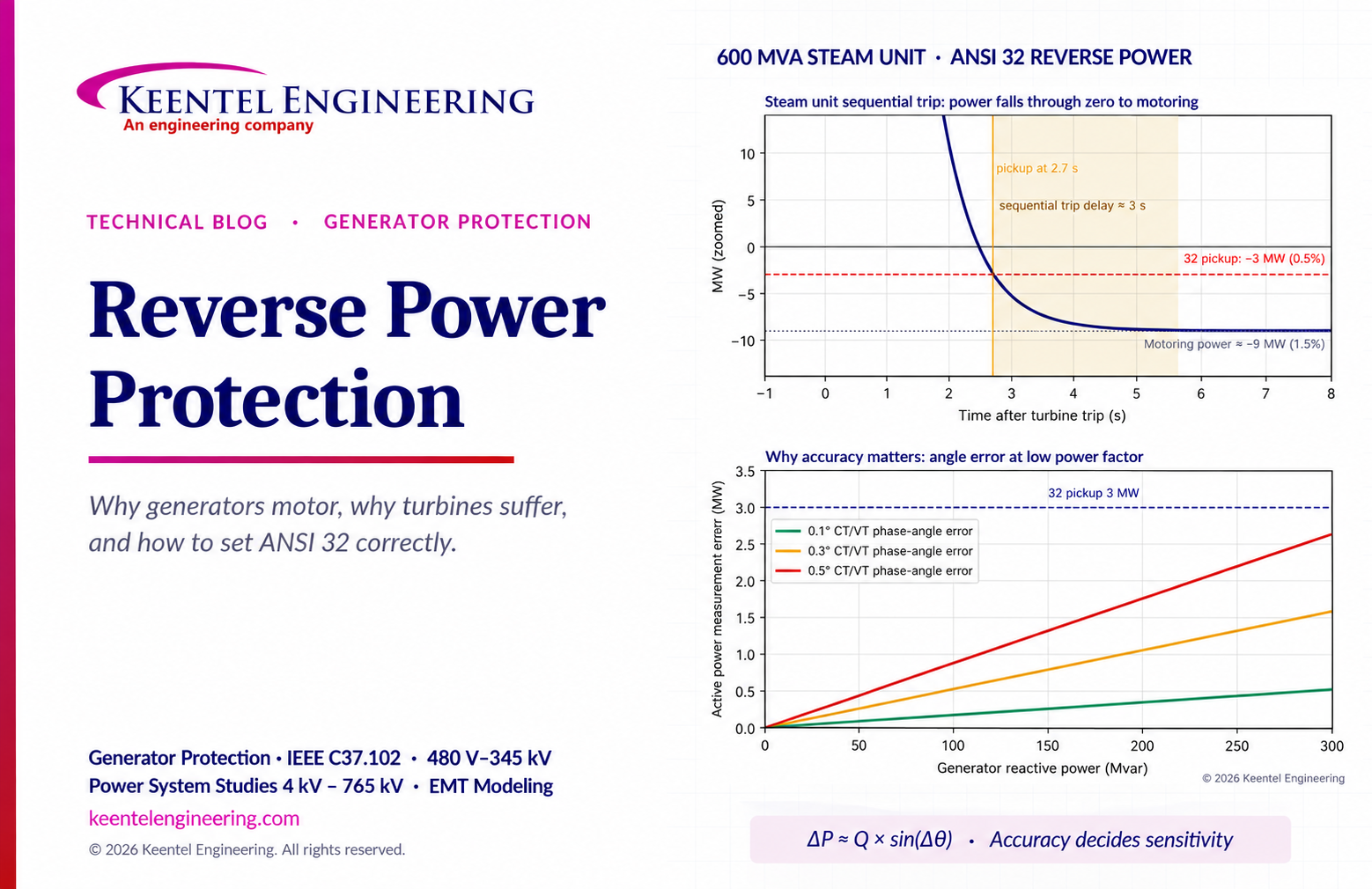
Learn reverse power protection (ANSI 32), generator motoring, relay pickup settings, time delays, sequential tripping and testing for US power plants.
Copy
By Team 2 Dexora
•
October 20, 2026
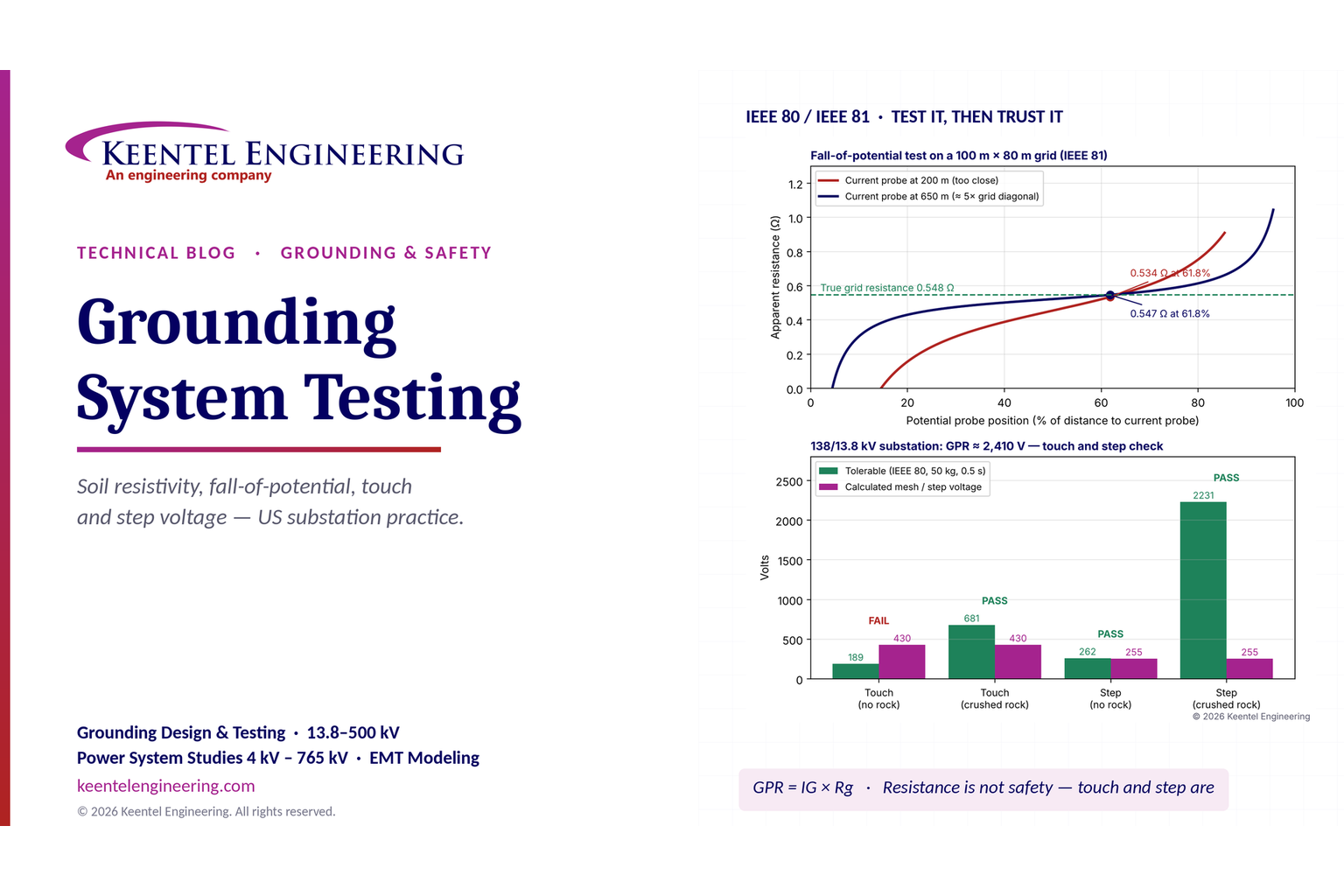
Explore grounding system testing with Keentel Engineering. Learn IEEE 80/81 methods, soil resistivity, ground resistance, and touch and step voltage safety.
By SANDIP R PATEL
•
October 13, 2026
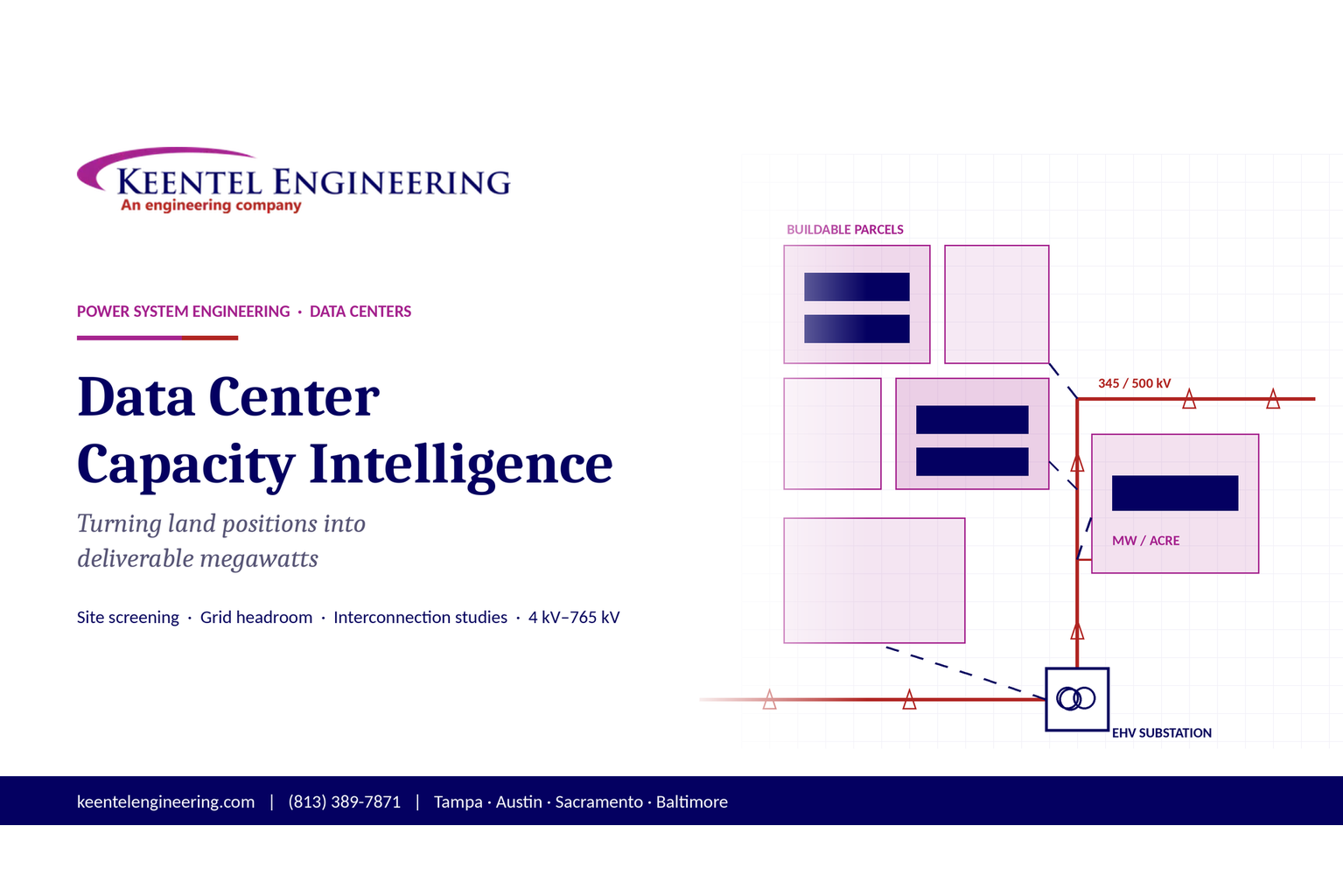
Plan data center capacity with land screening, MW-per-acre estimates, grid power availability and interconnection feasibility studies from Keentel Engineering.
By SANDIP R PATEL
•
October 11, 2026
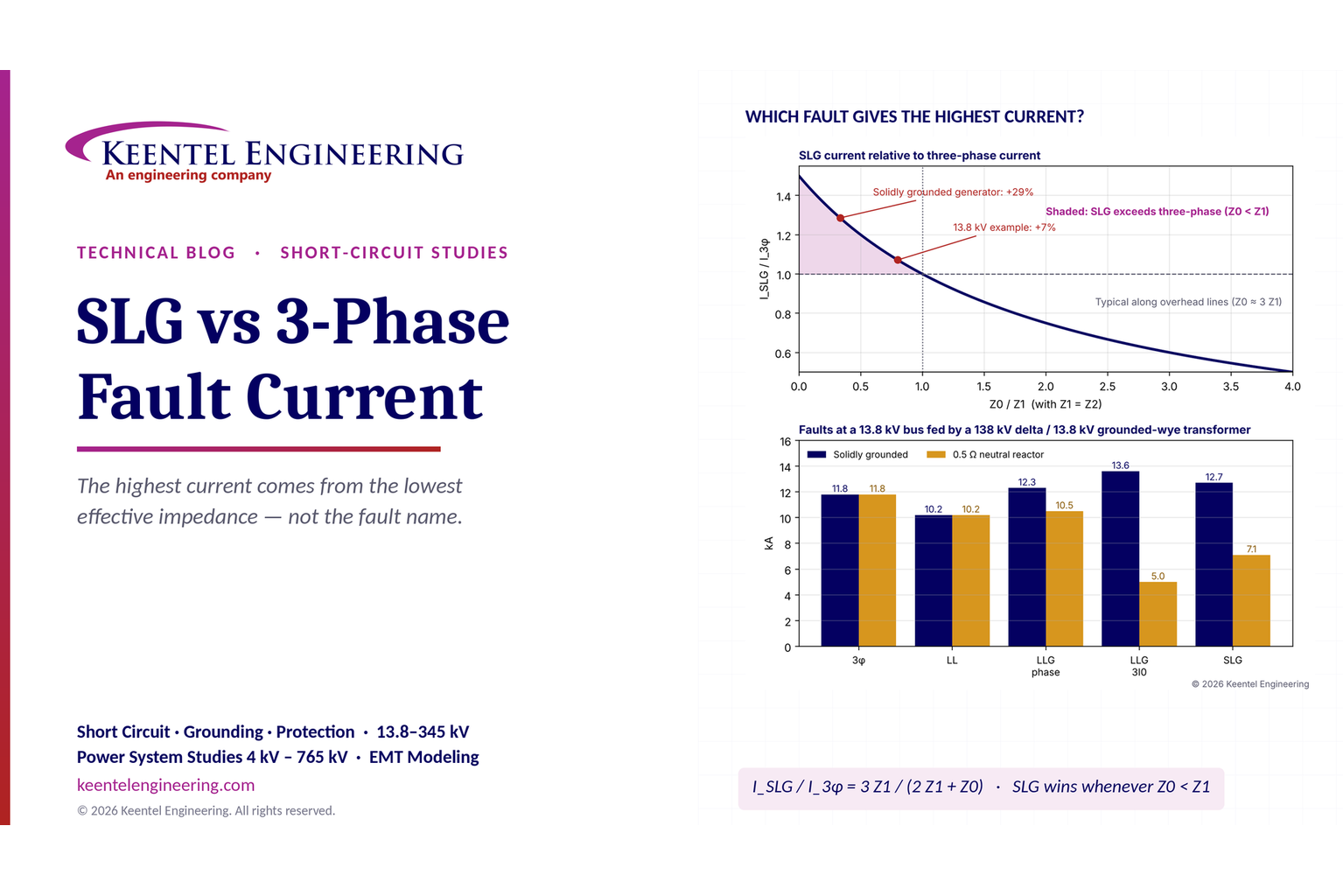
Learn which fault produces the highest current at a bus, why SLG faults can exceed three-phase faults, and how symmetrical components determine fault duty.
By SANDIP R PATEL
•
October 11, 2026
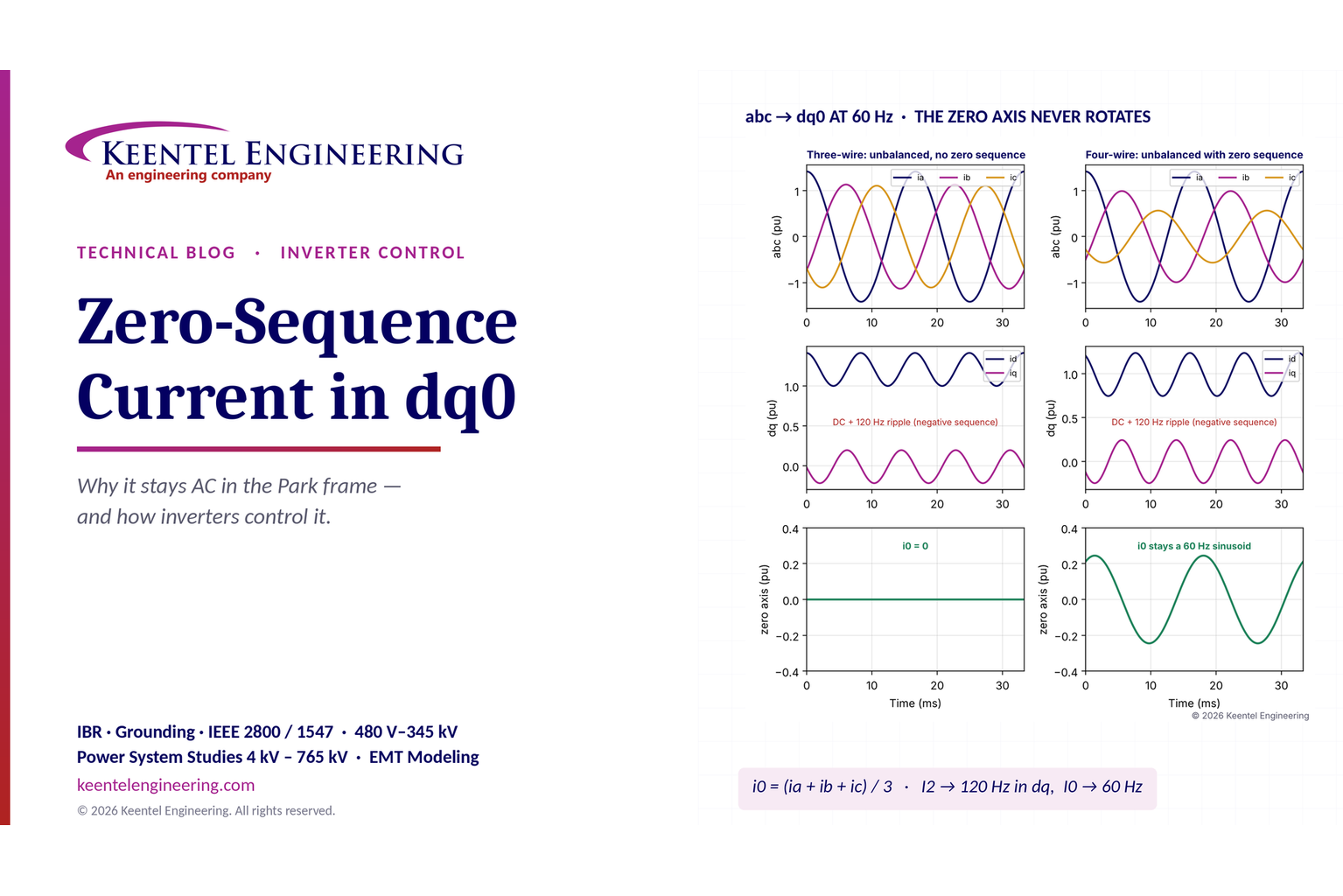
Learn why zero-sequence current pulsates in the dq0 frame, how Park's transformation works, and how inverter controls handle unbalance and ground faults.
By SANDIP R PATEL
•
October 11, 2026
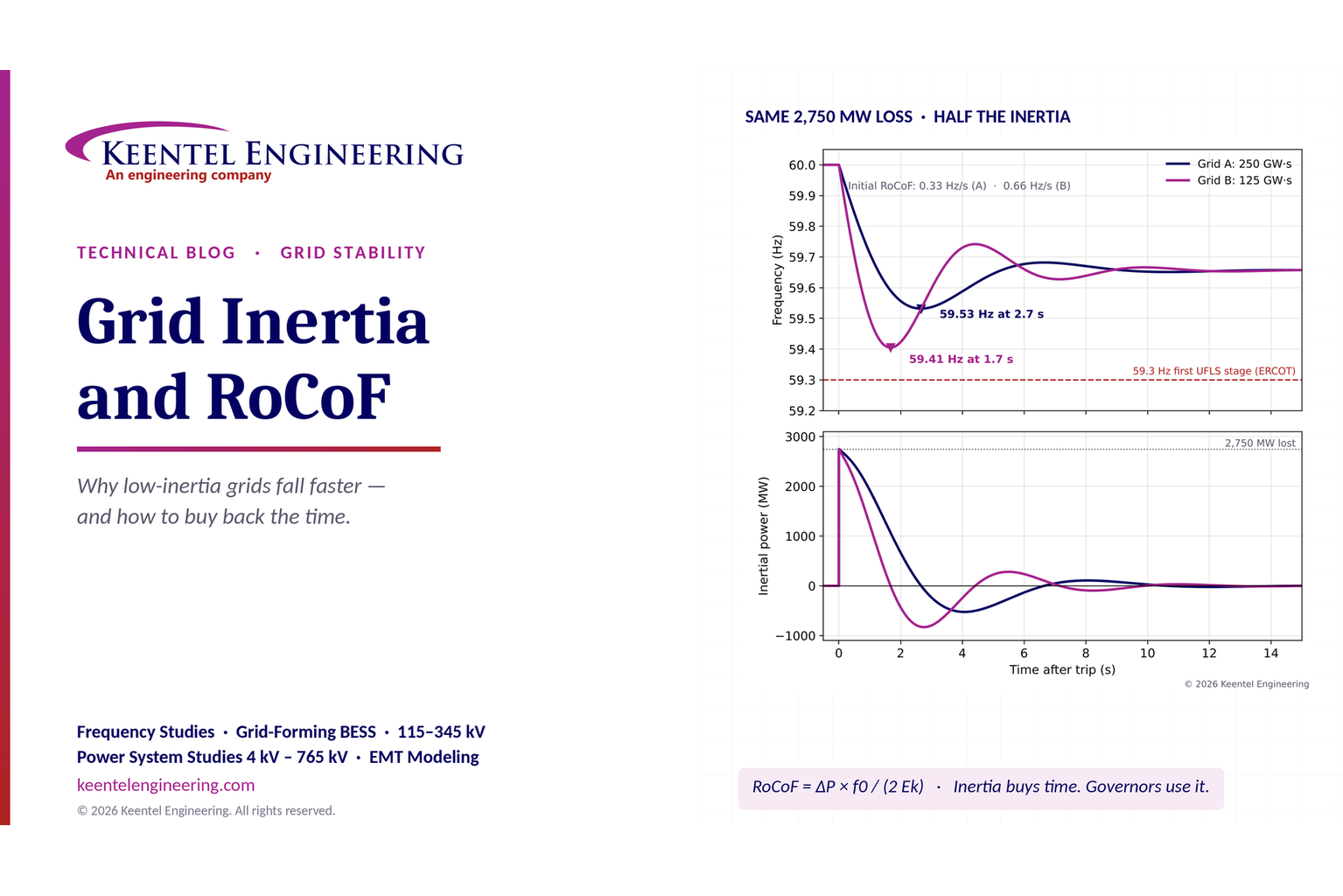
Explore grid inertia, RoCoF and frequency response, with swing equation calculations, frequency nadir analysis and US power system simulation examples.
By SANDIP R PATEL
•
October 11, 2026
Learn transient stability analysis, swing equation, equal-area criterion and critical clearing time with a 345 kV worked example and NERC TPL-001 guidance.
By SANDIP R PATEL
•
October 11, 2026
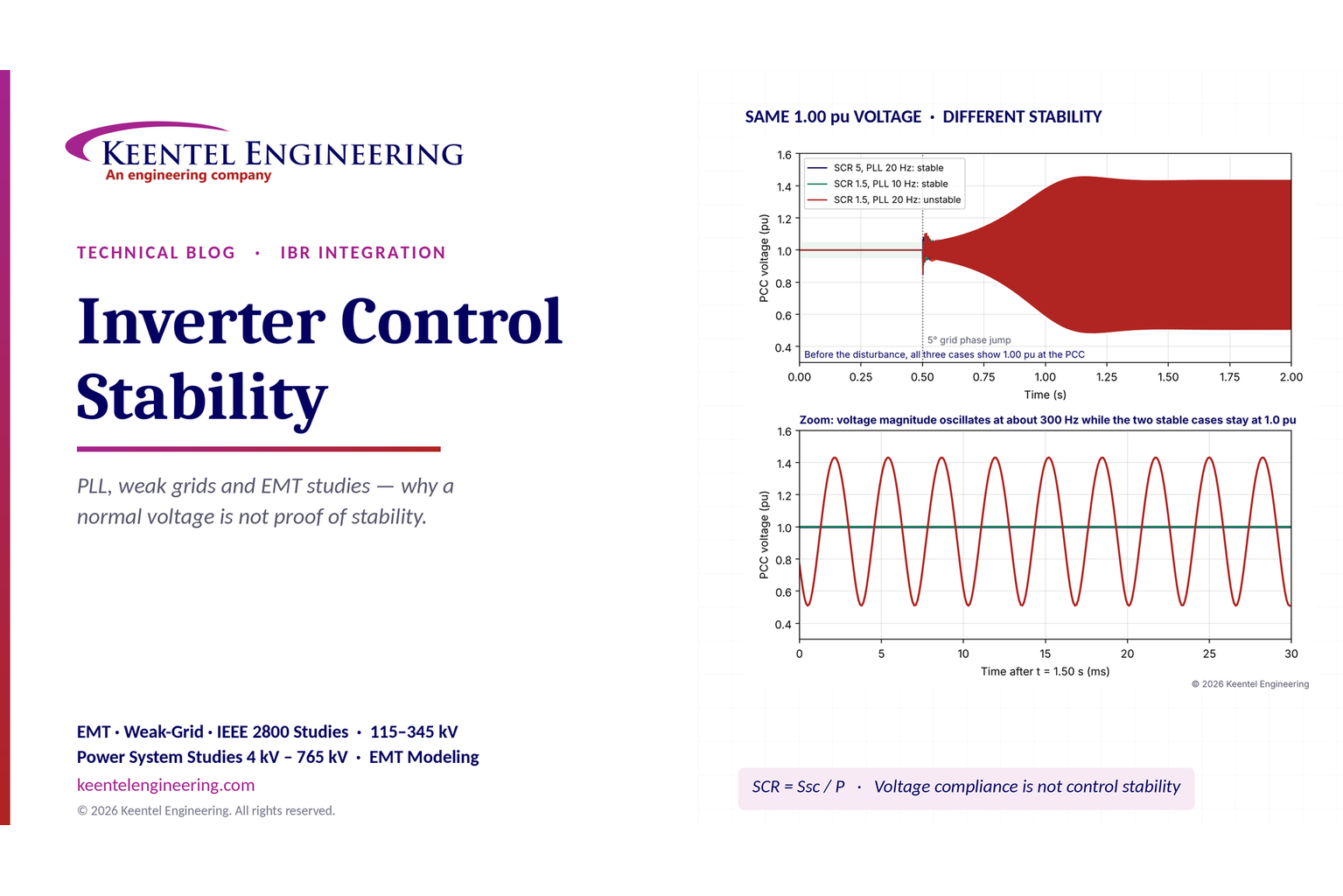
Learn why inverter controls become unstable in weak grids, how PLL bandwidth and SCR affect stability, and how PSCAD EMT studies identify and mitigate oscillations.
By SANDIP R PATEL
•
October 11, 2026
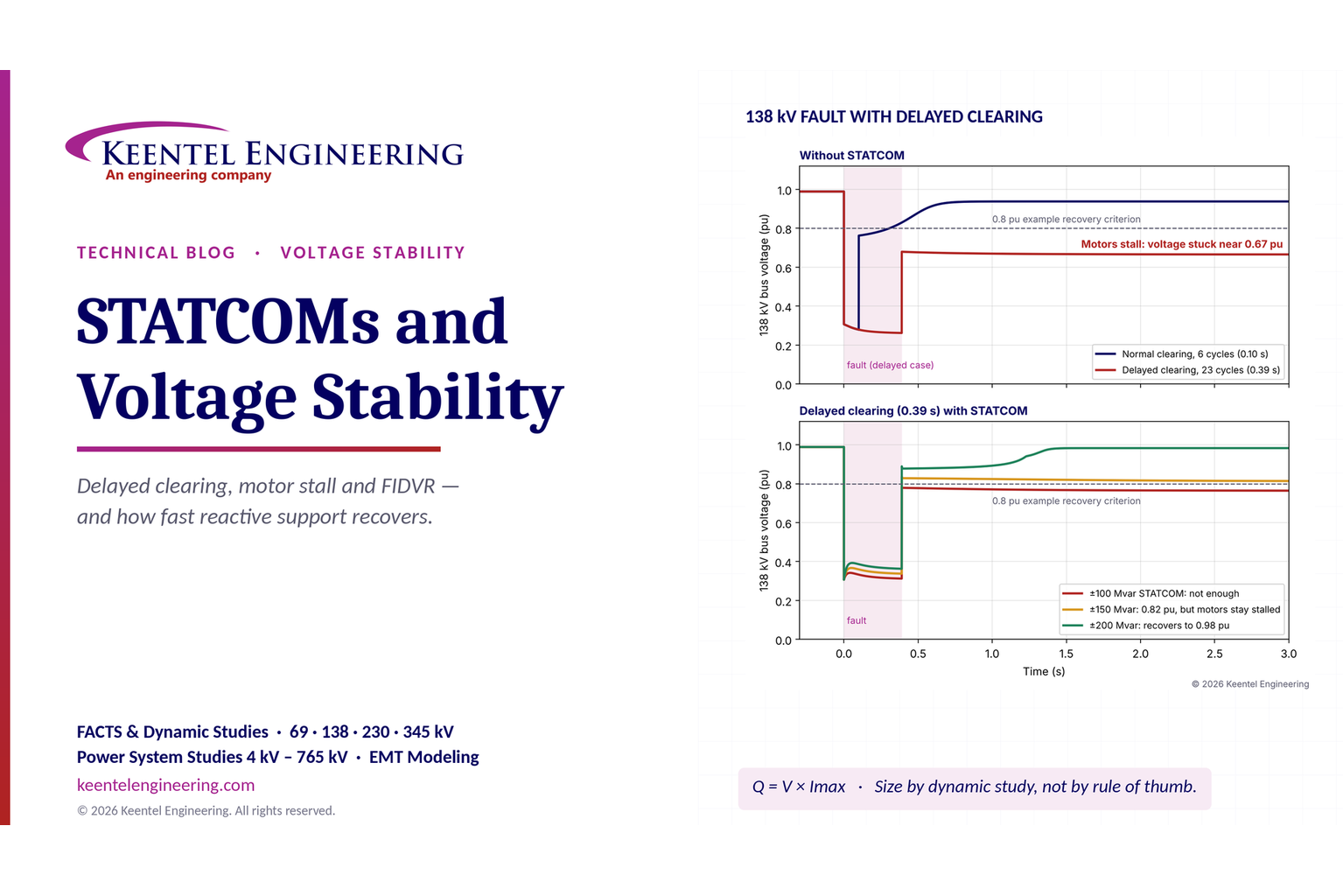
Learn how STATCOMs improve voltage stability and prevent FIDVR. Explore reactive power sizing, delayed fault clearing, NERC criteria and 138 kV simulation results.