



About Keentel Engineering
Your Trusted Partner in Electrical Engineering and Power Systems
At Keentel Engineering, we deliver electrical power engineering services built on 30 years of experience and a commitment to excellence. Our clients include utilities, developers, EPCs, and public agencies across the U.S.
Unlike firms that sacrifice technical depth to chase billable hours, we prioritize precision, compliance, and value engineering. From transmission services and relay modeling to winterization and SCADA planning, we never compromise on quality.

Why Choose Keentel Engineering?
Client-Focused Work Approach
At Keentel Engineering, we take pride in being the go-to electrical power engineering firm for power and utility system planning, substation design, protection, control, and power system analysis. The following attributes distinguish our team in utility-grade substation engineering and compliance-driven project delivery.
30 Years of Experience
With three decades of hands-on project delivery, we bring unmatched expertise in substation layout design, substation electrical and civil engineering, relay protection, and grid-tie solutions. Our experience includes projects in complex terrain, urban retrofit environments, and utility-scale renewable integrations.
Quality with Innovation
Our engineering process applies AutoCAD 3D, BIM modeling, and system-level substation design practices to ensure accurate planning, reduced errors, and efficient coordination across all project stakeholders.
Our workflow includes 3D substation design, enabling clash-free coordination between structural, electrical, and civil disciplines.
Attention to Detail
From grounding grid studies to relay protection settings, we engineer every detail to improve system reliability, performance, and operational safety. Our rigorous QA/QC process ensures compliance with IEEE, NFPA, and ISO/TSO interconnection standards.
Among leading electrical substation design companies, Keentel Engineering stands out for 30+ years of proven high-voltage and utility-grade project delivery.
Keentel Engineering video
Accreditations and memberships




Contact details
Tell Us About Your Project
1 business day replyFirst name, email and what you're interested in are all we need to get moving. Everything else, including drawings or an RFP, is optional.
We reply within one business day. Sending this does not create a contract or an engineer and client relationship.

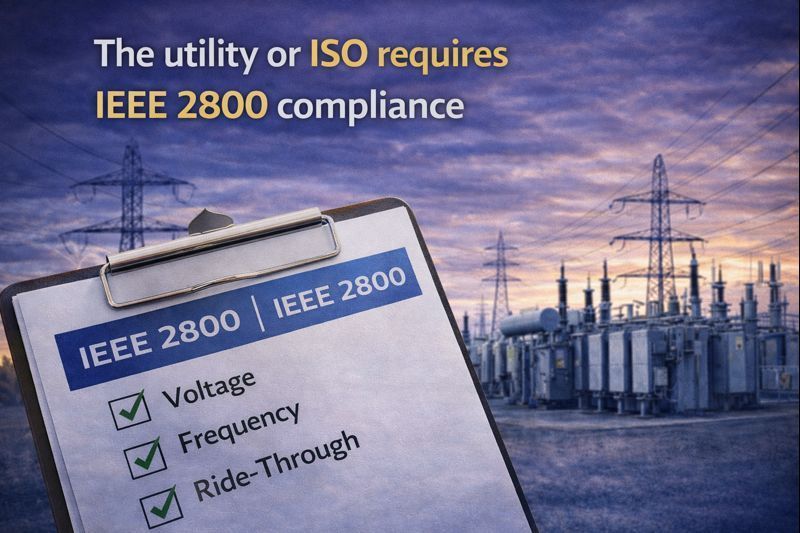
Keentel Engineering’s IEEE 2800 Compliance Services
Keentel Engineering offers a structured, study-driven approach to IEEE 2800 compliance, tailored to each project’s technology, interconnection point, and regulatory environment.
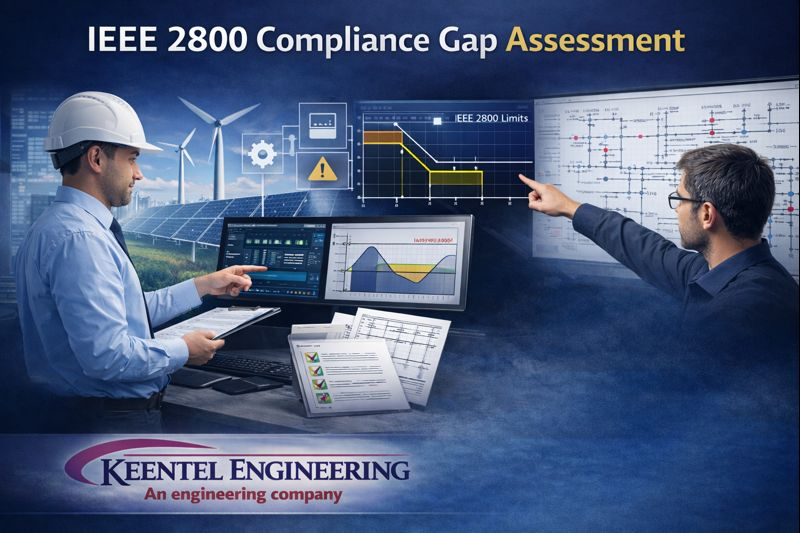
IEEE 2800 Compliance Gap Assessment
- Evaluation of inverter capabilities and plant-level controls
- Review of ride-through performance against IEEE 2800 limits
- Assessment of reactive power capability and control modes
- Identification of protection and modeling deficiencies
- Reference Point of Applicability (RPA) alignment review
Outcome:
Clear compliance roadmap with prioritized action items.

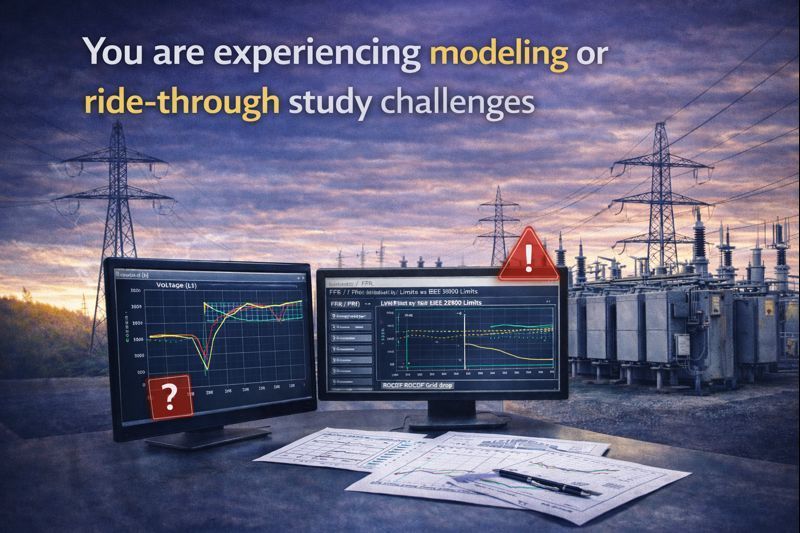
Dynamic Modeling & Simulation (RMS & EMT)
- PSS®E RMS modeling for system-wide stability studies
- PSCAD / EMT modeling for weak-grid conditions
- Alignment between RMS and EMT model behavior
- Validation of OEM-provided models against IEEE 2800 criteria
Outcome:
Utility-accepted models ready for submission.

Voltage, Frequency & Ride-Through Validation
- Low- and high-voltage ride-through (LVRT / HVRT)
- Frequency and ROCOF ride-through
- Fast Frequency Response (FFR) and Primary Frequency Response (PFR)
- Dynamic voltage and reactive current support
Outcome:
Demonstrated compliance with IEEE 2800 envelopes.

Reactive Power & Voltage Control Planning
- Reactive power capability curve development
- Voltage regulation and power factor control modes
- Coordination with STATCOMs, capacitor banks, and plant controllers
- Fast reactive current injection for voltage support
Outcome:
Stable voltage performance and improved grid support.
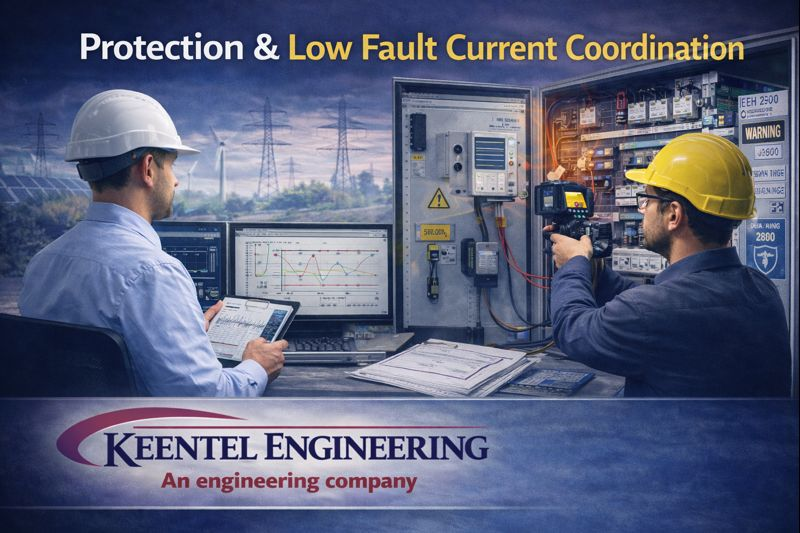
Protection & Low Fault Current Coordination
- Evaluation of inverter fault current contribution strategies
- Relay coordination for low short-circuit environments
- ROCOF, voltage, and islanding protection assessments
- Alignment with IEEE 2800 protection guidance
Outcome:
Reliable protection without unnecessary tripping.
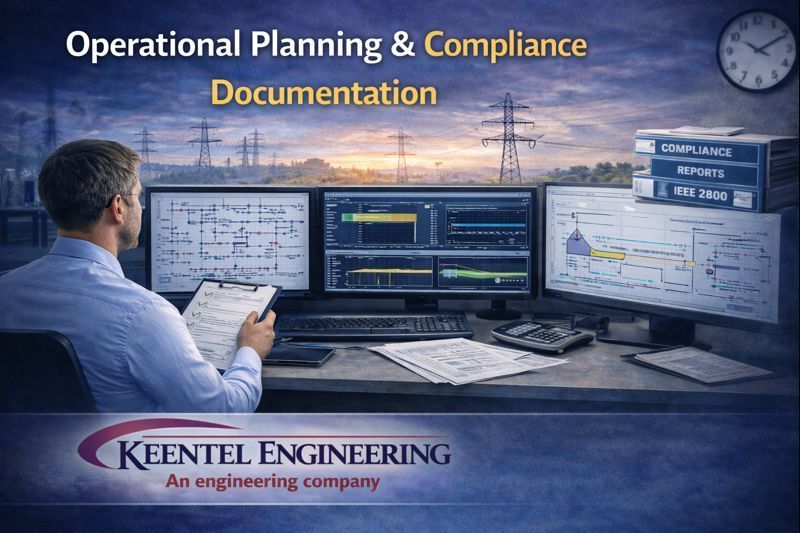
Operational Planning & Compliance Documentation
- Operational performance planning aligned with IEEE 2800
- Compliance documentation for utilities and ISOs
- Support during commissioning, testing, and model validation
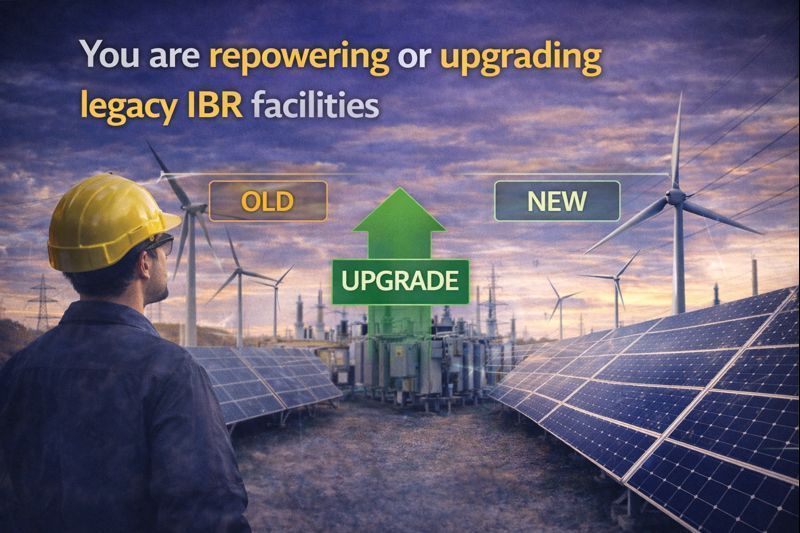
- Change management for repowering or control updates
Outcome:
Long-term compliance and operational certainty.



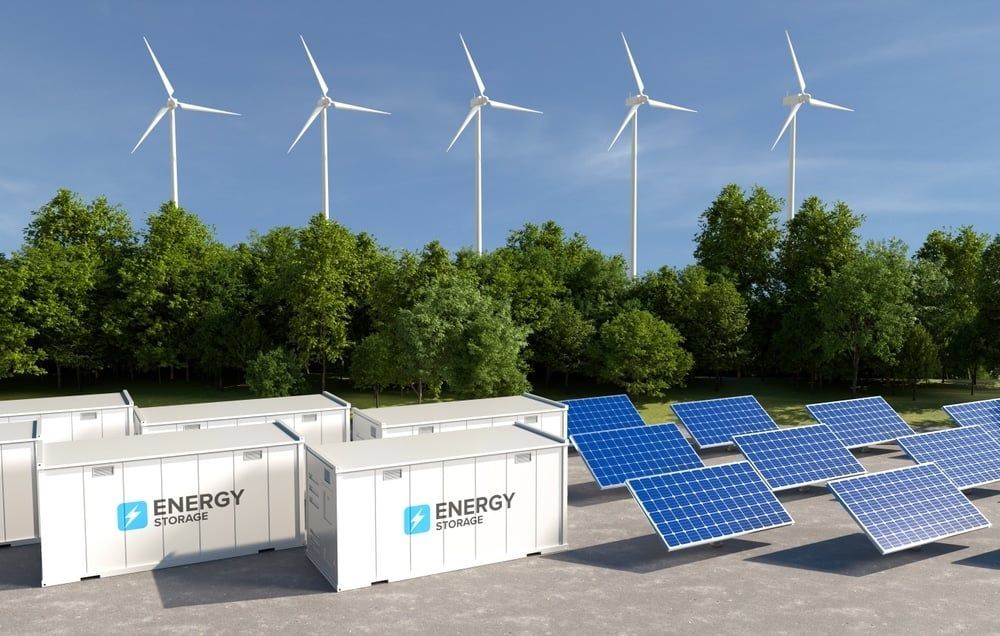

Who We've Served
Serving utilities, EPCs, developers, and infrastructure organizations supporting critical power systems nationwide.
















IEEE P2800™ / IEEE 2800 Compliance Case Studies
Click any project to view detailed engineering challenges, solutions, and outcomes.




×
PRC-029-1 Voltage Ride-Through Compliance – Utility-Scale Solar
Challenge
Firmware updates raised concerns that inverter protection logic could trip within mandatory voltage ride-through envelopes.
Solution
Validated PSSE models, reviewed LVRT/HVRT logic, assessed reactive current injection, and coordinated inverter and relay settings.
Outcome
Achieved full PRC-029-1 compliance with settings-only updates and delivered audit-ready evidence.
×
PRC-029-1 Frequency Ride-Through & ROCOF – Wind Facility
Challenge
Post-disturbance event raised ROCOF sensitivity and compliance concerns.
Solution
Reviewed SER/DFR data, validated Attachment 2 performance, conducted ROCOF analysis, and benchmarked model behavior.
Outcome
Confirmed compliant ride-through and optimized ROCOF margins for future resilience.
×
ERCOT NOGRR 245 Voltage Ride-Through – Solar + BESS Hybrid
Challenge
ERCOT required proof of voltage ride-through and maximized capability across hybrid controls.
Solution
Performed PSSE VRT studies, reviewed PV/BESS controller coordination, and developed a settings-only maximization plan.
Outcome
Demonstrated compliance and avoided hardware upgrades while meeting ERCOT deadlines.
×
ERCOT Frequency Ride-Through & IFRTCR Support
Challenge
Uncertainty around frequency ride-through compliance prior to ERCOT enforcement deadlines.
Solution
Simulated frequency events, evaluated droop/ROCOF, and prepared a complete IFRTCR package.
Outcome
IFRTCR accepted by ERCOT, enabling a controlled path to full compliance.
×
PRC-029-1 R4 Hardware Limitation Documentation
Challenge
Legacy inverter hardware could not meet updated ride-through envelopes.
Solution
Coordinated with OEMs, documented physical limitations, and prepared formal R4 justification.
Outcome
Accepted exemption path and avoided immediate retrofit costs.
×
Ride-Through Performance Failure Investigation
Challenge
ERCOT required root-cause investigation following ride-through failure.
Solution
Analyzed SCADA/DFR data, reconstructed events, and updated dynamic models.
Outcome
Submitted compliant report and restored ERCOT confidence.
×
IEEE 2800-2022 Capability Gap – Multi-Site Portfolio
Challenge
Portfolio-wide uncertainty around IEEE 2800 capability compliance.
Solution
Benchmarked inverter and controller performance and prioritized mitigation paths.
Outcome
Delivered repeatable compliance roadmap across regions.
×
Conditional PSCAD EMT Modeling – Hybrid Stability
Challenge
Anomalous voltage recovery triggered ERCOT EMT validation request.
Solution
Developed site-level PSCAD model and simulated fault recovery scenarios.
Outcome
Confirmed stable behavior and avoided additional mitigation.

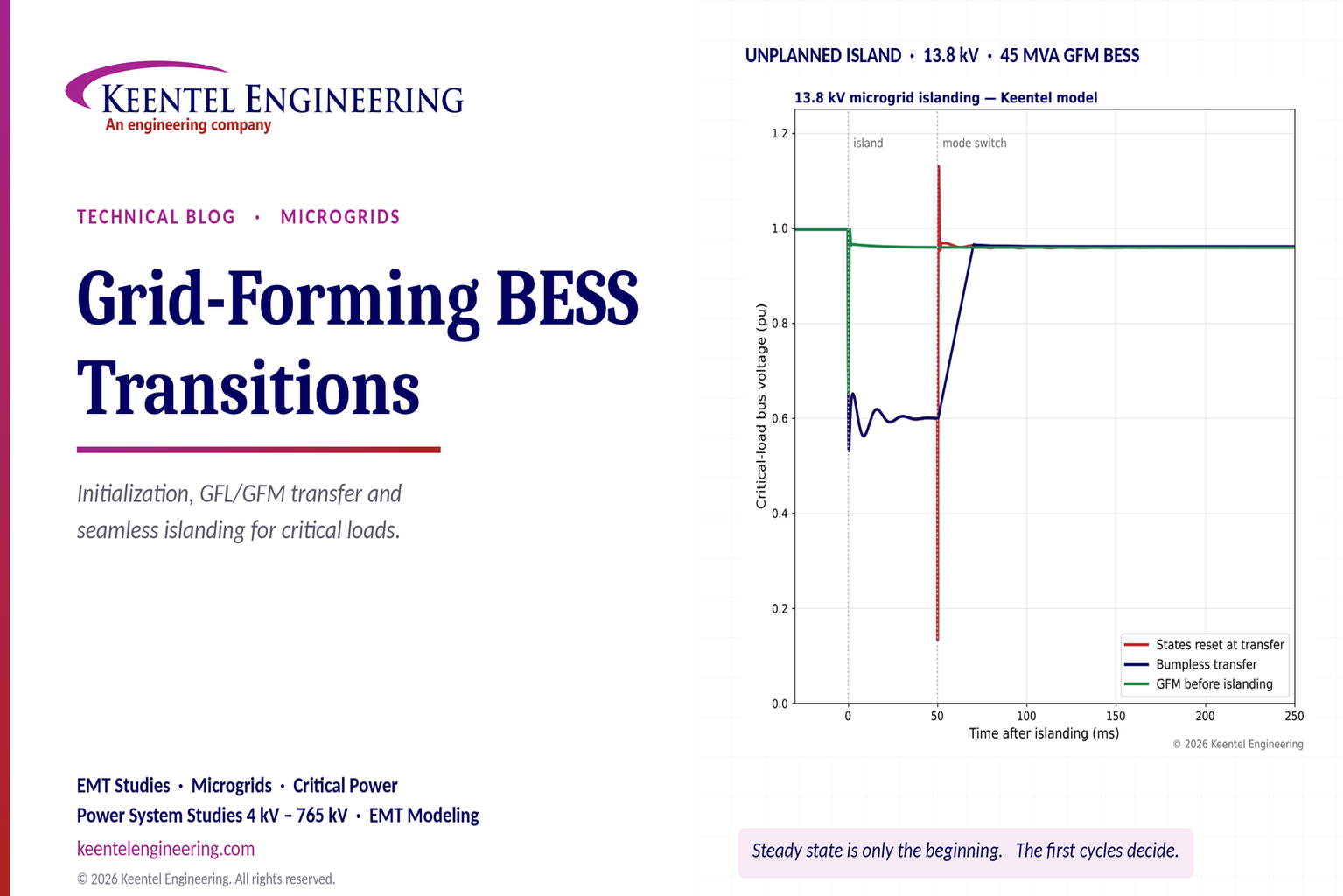
Explore grid-forming BESS initialization, GFL-to-GFM transitions, seamless islanding, EMT simulations, current limiting and microgrid protection.
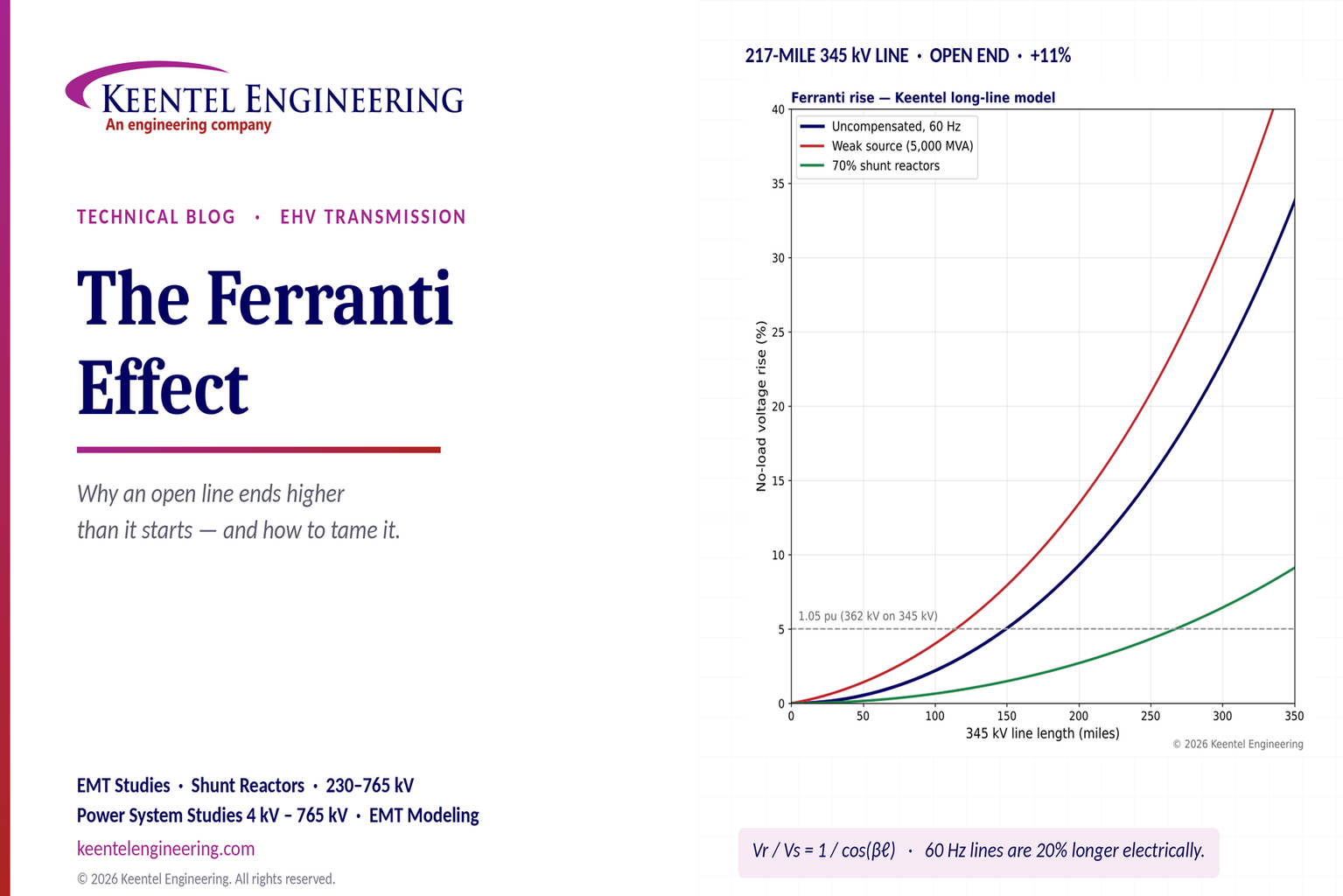
Explore the Ferranti effect in EHV transmission lines: voltage rise, 345 kV examples, switching overvoltages, shunt reactor sizing and mitigation.
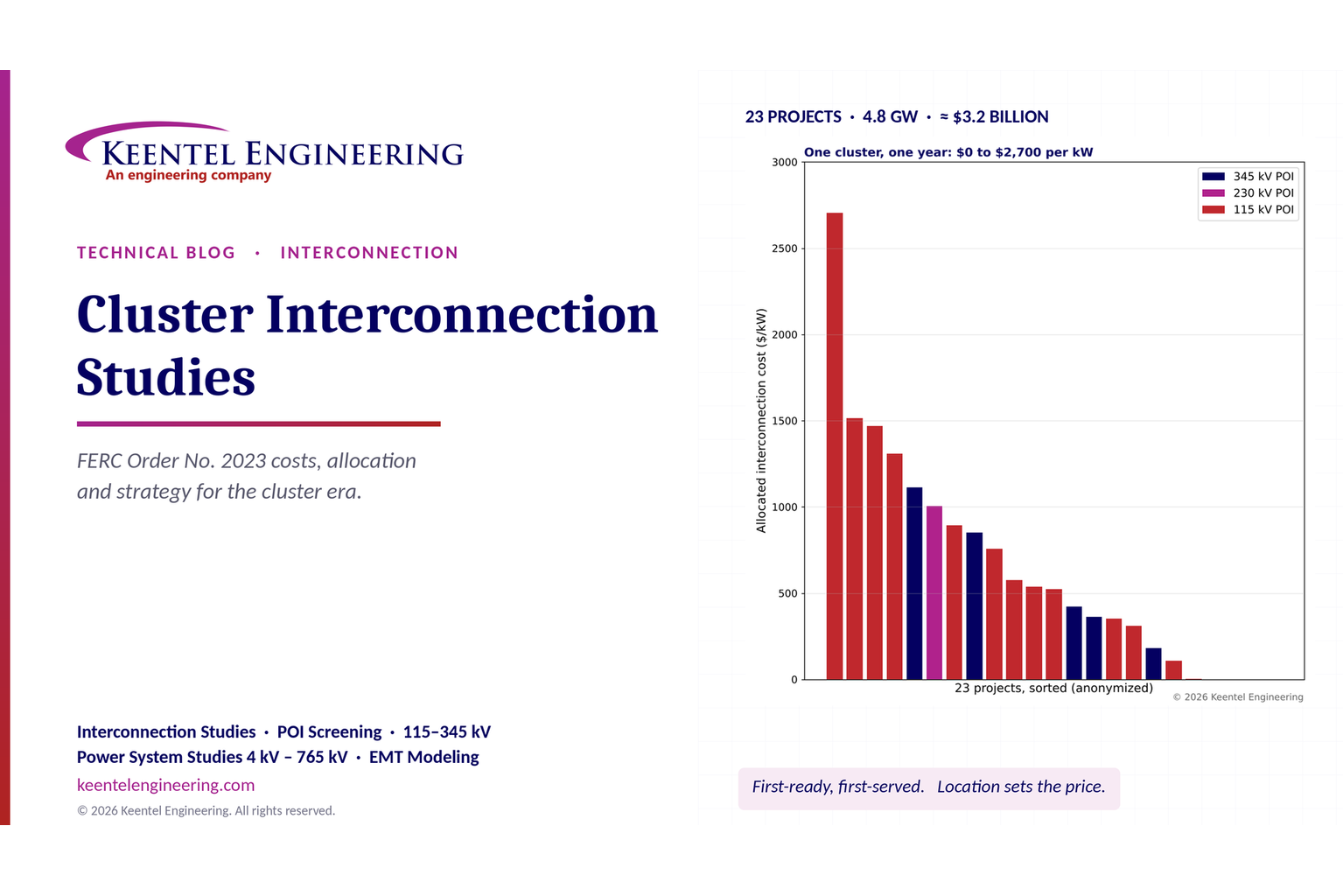
Explore cluster interconnection studies under FERC Order 2023, including network upgrades, cost allocation, withdrawal penalties and developer strategy.
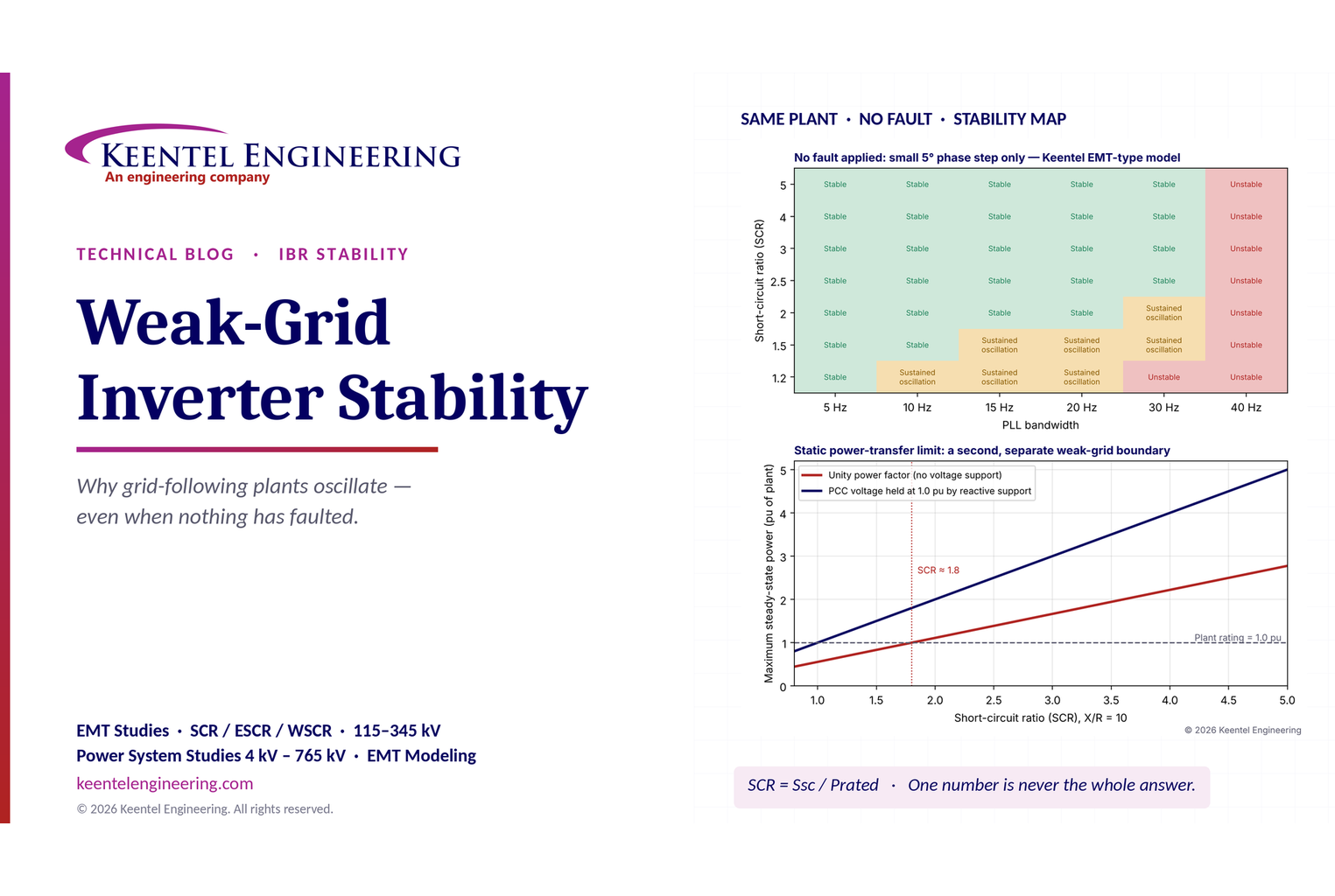
Learn why grid-following inverters become unstable without grid faults. Explore SCR, PLL interactions, EMT studies, grid strength, and mitigation.
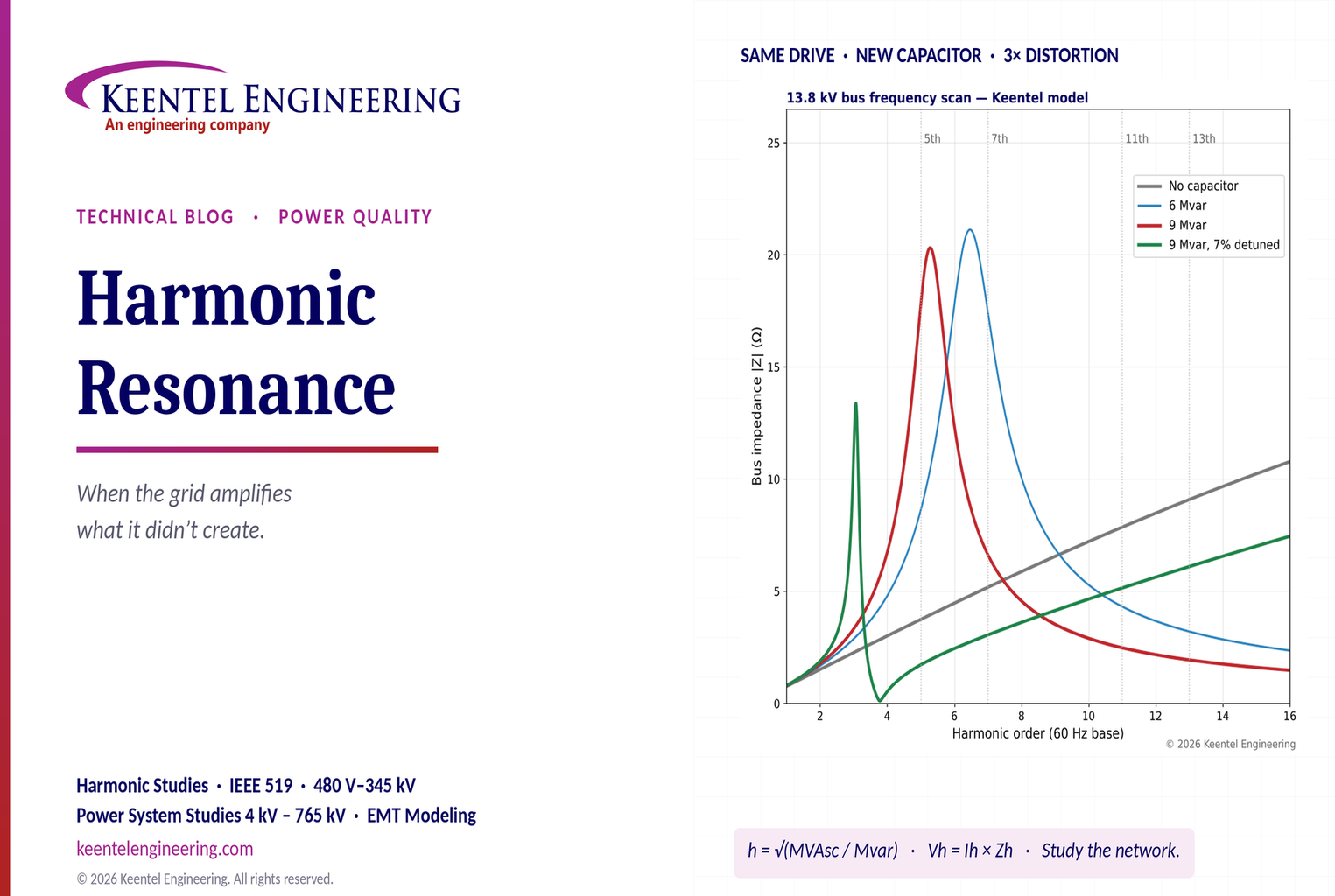
Learn how harmonic resonance amplifies distortion in power systems. Explore capacitor banks, detuned reactors, frequency scans, and IEEE 519 solutions.
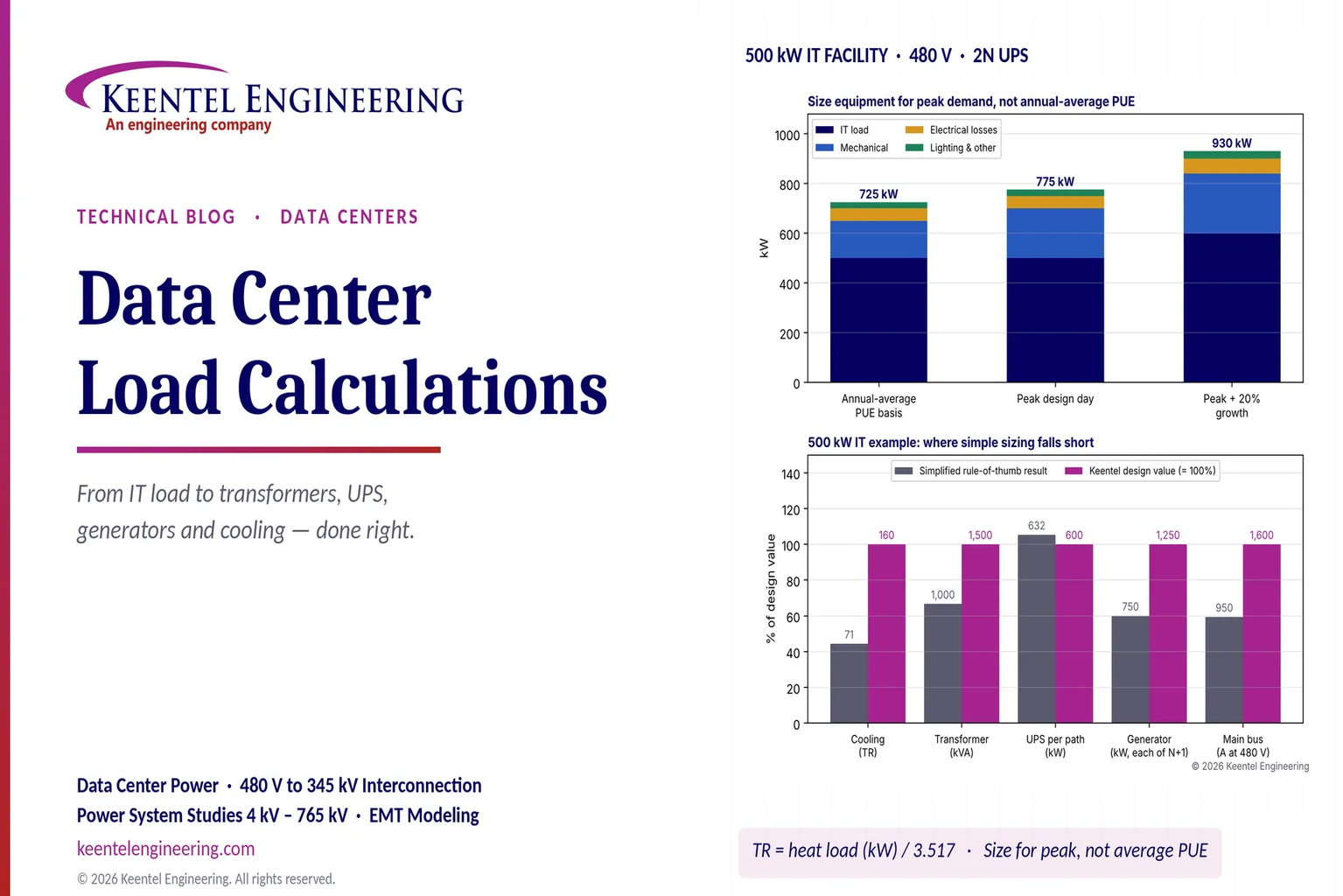
Learn data center electrical load calculations, including IT demand, PUE, UPS and generator sizing, cooling loads, redundancy, and worked US examples.
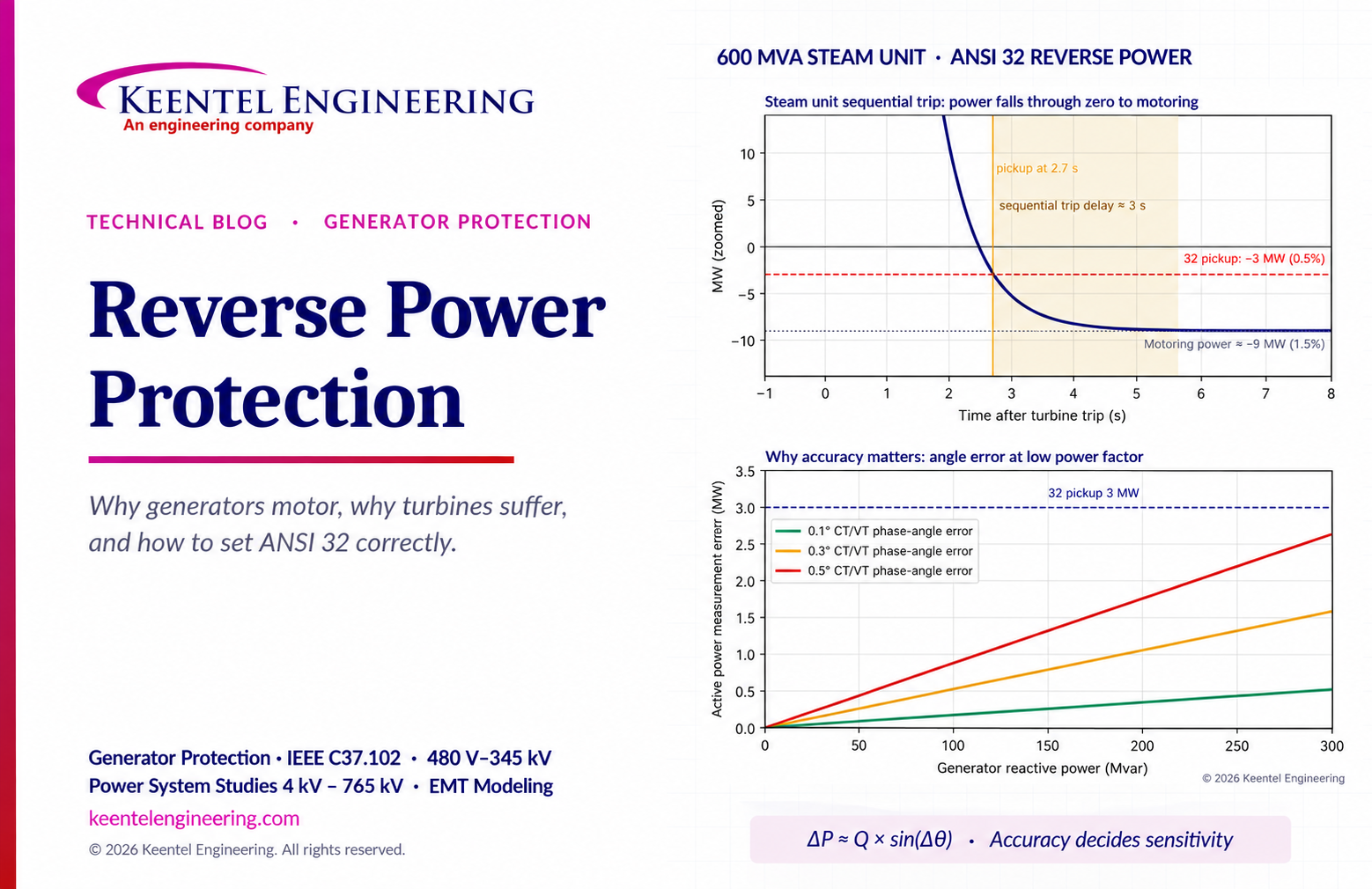
Learn reverse power protection (ANSI 32), generator motoring, relay pickup settings, time delays, sequential tripping and testing for US power plants.
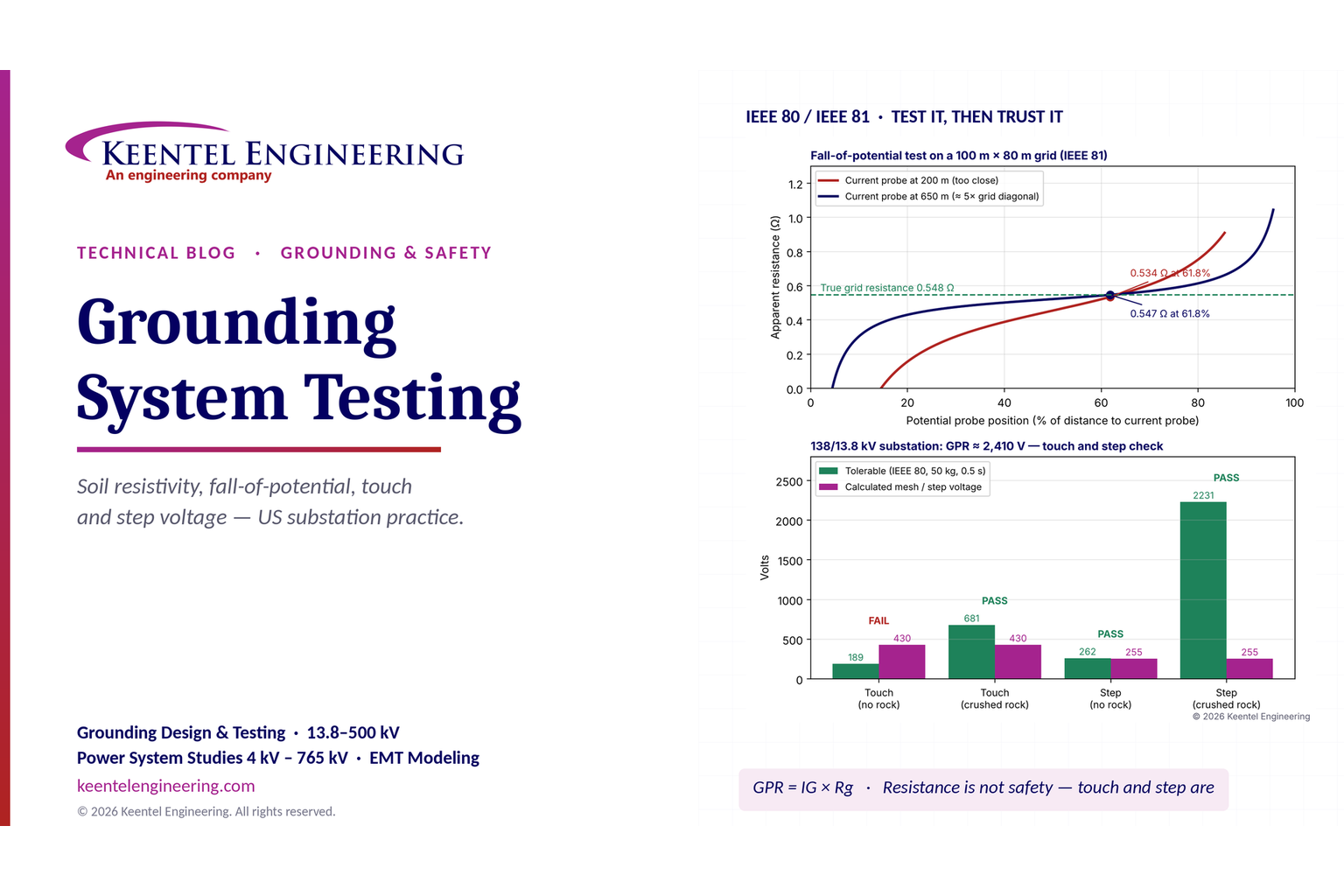
Explore grounding system testing with Keentel Engineering. Learn IEEE 80/81 methods, soil resistivity, ground resistance, and touch and step voltage safety.
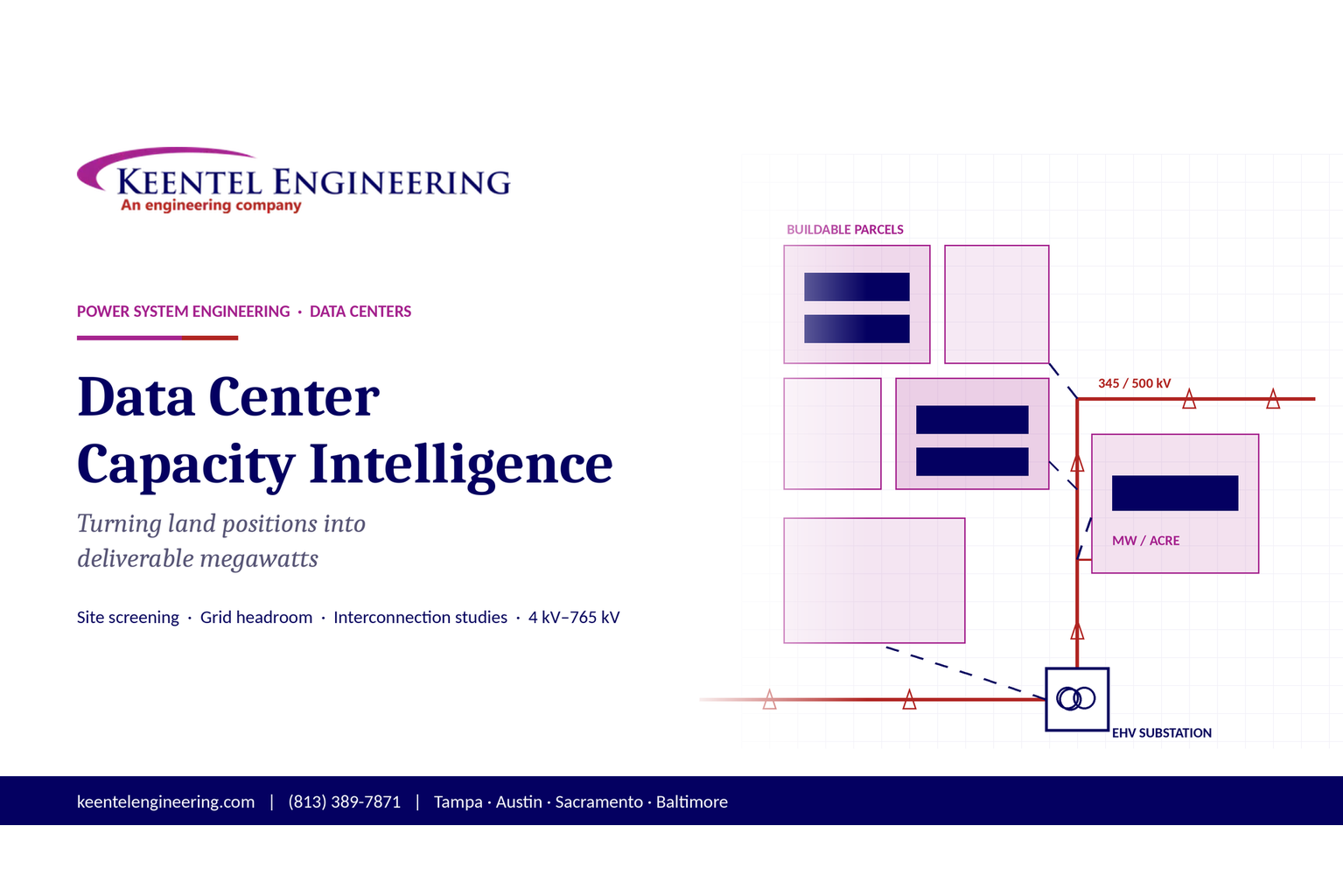
Plan data center capacity with land screening, MW-per-acre estimates, grid power availability and interconnection feasibility studies from Keentel Engineering.
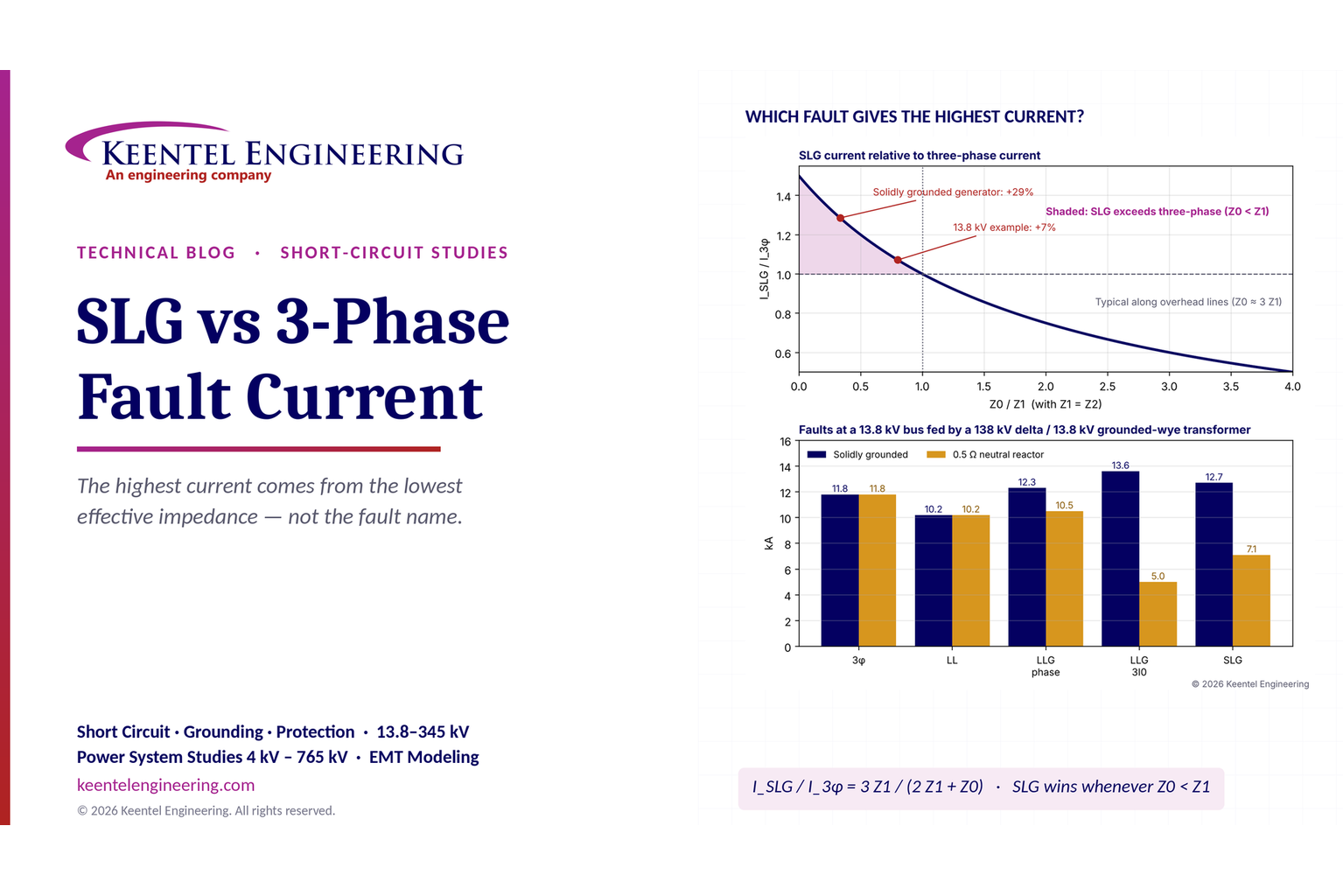
Learn which fault produces the highest current at a bus, why SLG faults can exceed three-phase faults, and how symmetrical components determine fault duty.
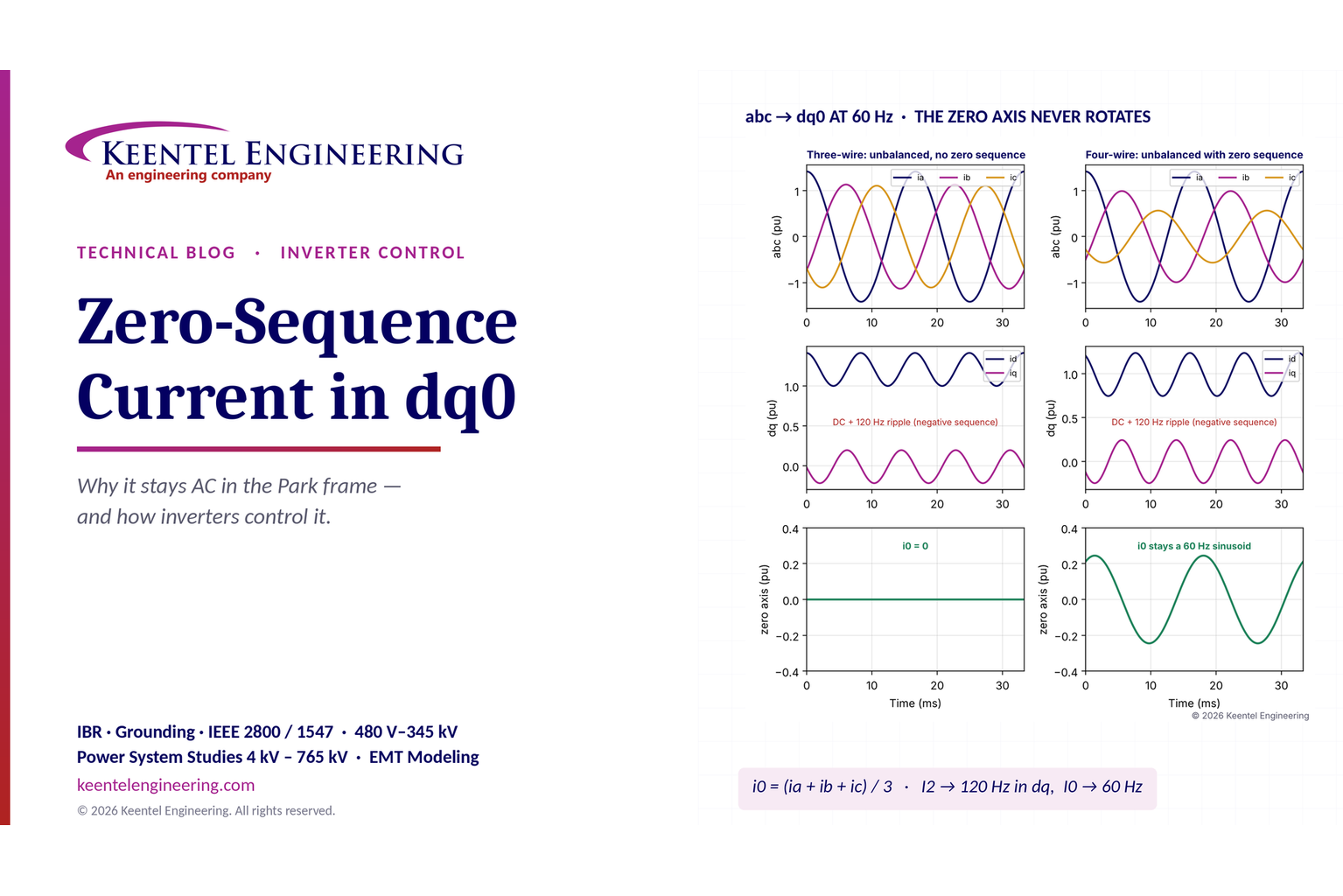
Learn why zero-sequence current pulsates in the dq0 frame, how Park's transformation works, and how inverter controls handle unbalance and ground faults.
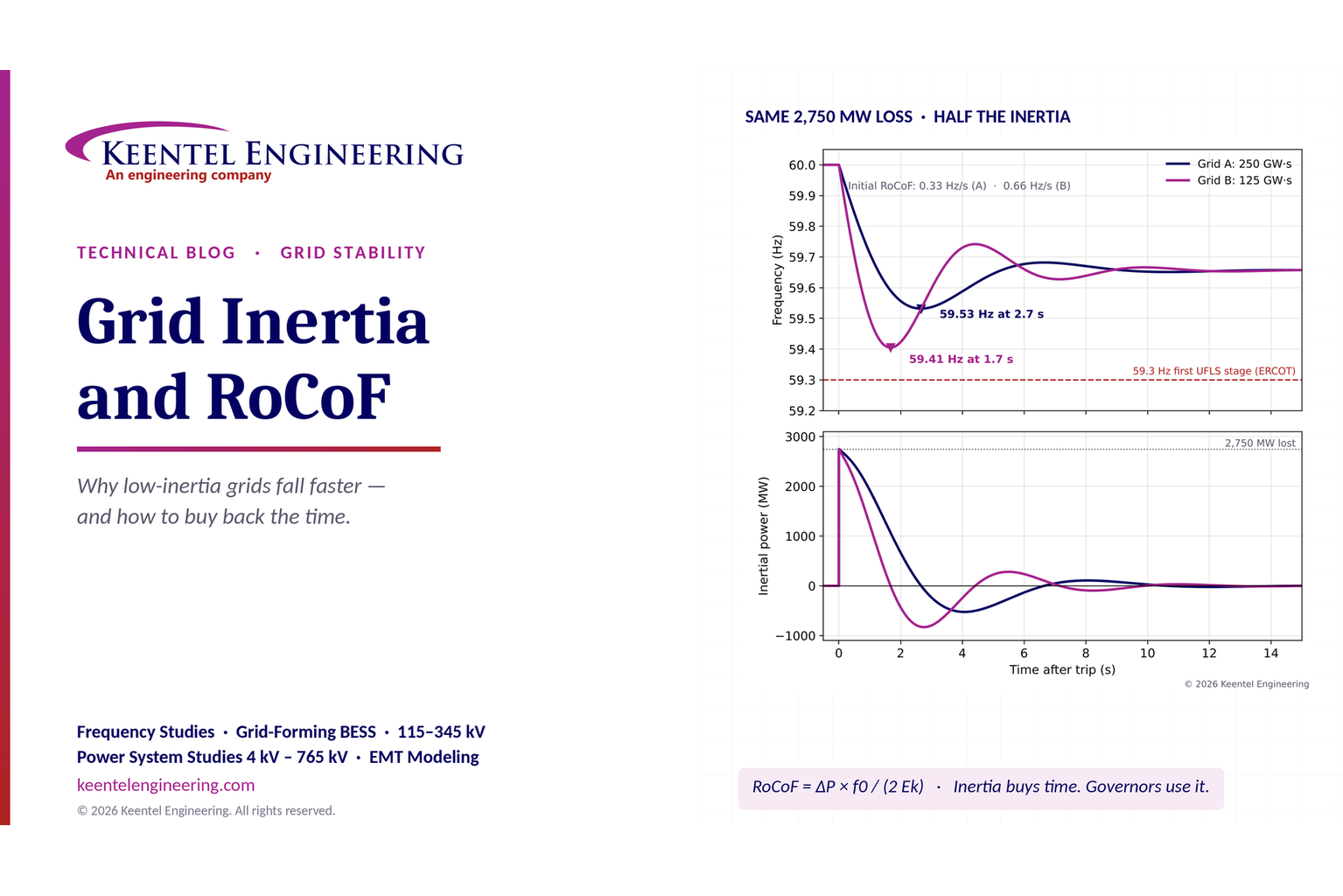
Explore grid inertia, RoCoF and frequency response, with swing equation calculations, frequency nadir analysis and US power system simulation examples.