A Coordinated Electric System Interconnection Review—the utility’s deep-dive on technical and cost impacts of your project.
Challenge: Frequent false tripping using conventional electromechanical relays
Solution: SEL-487E integration with multi-terminal differential protection and dynamic inrush restraint
Result: 90% reduction in false trips, saving over $250,000 in downtime
| Category | Metric |
|---|---|
| VPP capacity (Lunar Energy) | 650 MW |
| Lunar funding raised | US$232 million |
| Data center BESS example | 31 MW / 62 MWh |
| ERCOT grid-scale batteries | 15+ GW |
| LDES tenders (H1 2026) | Up to 9.3 GW |
| Lithium-ion share of LDES by 2030 | 77% |
| FEOC initial threshold | 55% |
| BESS tariff rate (2026) | ~55% |
| Capacity gain from analytics | 5–15% |
What is T&D Co-Simulation?
Confusing Physical Connections with Logical Nodes in IEC 61850
How PJM's Interconnection Reforms Are Reshaping the Grid and What It Means for Engineering Services

Apr 15, 2022 | blog
Introduction: A Grid at a Crossroads
The North American electricity grid is undergoing one of its most significant transformations in decades. Surging power demand from data centers, AI infrastructure, electric vehicles, and industrial electrification is colliding head-on with a generation supply pipeline that has historically moved too slowly to keep pace. At the center of this challenge is interconnection the critical process by which new power plants and storage resources physically connect to the transmission grid.
For engineering firms like Keentel Engineering Services, understanding the evolving interconnection landscape is not merely academic. It shapes project timelines, capital planning, permitting strategy, and the engineering scope of work for every new generation asset we support from utility-scale solar and wind to battery storage and hybrid facilities.
This post draws on PJM's March 2026 update from Vice President of Planning Jason Connell to unpack the reform landscape, assess what is working, and identify where engineering expertise remains the decisive factor in getting projects across the finish line.
The Old Problem: A Broken Queue
For years, PJM's interconnection queue operated on a first-come, first-served basis. Developers — many of them speculative flooded the queue with applications regardless of project viability. The result was a massive backlog that delayed genuinely investment-ready projects and consumed enormous engineering and administrative resources in studying projects that would never be built.
The numbers tell the story starkly: since 2020, PJM studied 294 GW worth of projects to complete interconnection agreements for just 103 GW and of those, only 23 GW actually went into service. That means roughly 74% of all studied projects withdrew at some point, including 26 GW of projects that had already signed interconnection agreements.
This was not merely an administrative inconvenience. Every withdrawn project consumed engineering study capacity, delayed viable projects, and added costs to the entire system. For developers and their engineering partners, unpredictable timelines made financial modeling nearly impossible and strained relationships with transmission owners responsible for conducting
grid impact studies.
Key Stat: 74% of all projects studied by PJM between 2020 and 2026 ultimately withdrew from the queue including 26 GW that had already signed interconnection agreements.
The Reform: First-Ready, First-Served
PJM's reformed interconnection process represents a fundamental philosophical shift — from first-come, first-served to first-ready, first-served. The new Cycle-based model requires developers to meet progressive milestones to remain in the study process. Projects that cannot demonstrate readiness are removed, freeing up study capacity for viable developments.
The immediate practical result: PJM accepted new generation applications through April 27, 2026, with all submissions due by that date. After this deadline, every generation project seeking interconnection with PJM will be in active process clearing the last of any legacy backlog and starting fresh under the new rules.
Projects that clear the new Cycle process will have a turnaround of between one and two years depending on their grid impact a dramatic improvement over the multi-year waits that plagued the old queue. The Federal Energy Regulatory Commission (FERC) has fully approved PJM's interconnection timelines, providing regulatory certainty for developers and their engineering teams.
What Is Already in the Pipeline: 54 GW Awaiting Construction
One of the most important and underappreciated findings from PJM's update is that 54 GW of generation has already cleared PJM's interconnection process and requires nothing further from PJM to begin construction. These projects have their interconnection agreements in hand. The barrier is not the grid; it is permitting.
Developers consistently identify state and local permitting timelines as their greatest obstacle to breaking ground. This is precisely where engineering firms like Keentel Engineering Services provide decisive value: navigating the technical documentation, environmental studies, land-use compliance, and agency coordination that determine how fast a project can move from approved interconnection agreement to shovels in the ground.
Some states have already acted to streamline permitting. Engineering teams that understand both the federal interconnection framework and the specific permitting environment in each state are uniquely positioned to accelerate these projects.
Engineering Insight:
54 GW of generation has cleared PJM's process and needs nothing from PJM to build. The bottleneck is now permitting and construction readiness where Keentel Engineering Services specializes.
Interim Initiatives: Expedited Tracks for Urgent Capacity
Recognizing that the reformed process, while faster, still requires time, PJM has introduced two interim initiatives targeting the most urgent near-term capacity gaps:
1. Expedited Interconnection Track
Filed with FERC on February 27, 2026, this two-year interim program provides a faster path to interconnection for advanced projects of 250 MW accredited capacity or greater.No more than ten projects will be approved per calendar year, and the process is designed to minimize disruption broader new project queue. For large-scale generation developers with shovel ready projects, this track represents a significant opportunity to accelerate commercial operation .
2. Reliability Resource Initiative (RRI)
This one-time initiative has already selected 41 projects representing approximately 8,000 MW of generation for accelerated study completion by end of 2026. These projects span a range of technologies and have been identified as critical to near-term grid reliability.
Critically, PJM has confirmed that these interim initiatives for large projects will not displace the smaller renewable and storage projects that make up 25 GW of the 30 GW scheduled for study completion by end of 2026. Solar, wind, battery storage, and hybrid projects remain strongly represented in the pipeline.
Technology and Innovation: AI in the Interconnection Process
PJM is actively pursuing technological acceleration of the study process itself, including a collaboration with Google and Tapestry to leverage artificial intelligence in evaluating New Service Requests. The AI tool, called HyperQ, is being tested to streamline elements of the technical evaluation phase with early results indicating meaningful time savings in specific study components.
While PJM is developing these tools to speed up their internal processes, engineering firms supporting developers must also embrace technology to remain competitive. At Keentel Engineering Services, we continuously evaluate how advanced modeling tools, automated compliance checking, and AI-assisted design workflows can improve quality and shorten timelines for our clients.
Key Interconnection Mechanisms: What Engineering Teams Need to Know
PJM's update highlights three specific interconnection mechanisms with direct engineering implications:
CIR Transfer
The new Capacity Interconnection Rights (CIR) transfer process allows retiring generators to transfer their grid connection rights to replacement resources at the same site. This streamlined process affirmed by FERC in its January 29, 2026 order promotes efficient reuse of existing transmission infrastructure. For engineering teams working on repowering or replacement projects, understanding how to structure the CIR transfer documentation is now a critical competency.
Surplus Interconnection Service
This mechanism allows the unused portion of an existing interconnection service allocation to be utilized — for example, adding battery storage to an underutilizing renewable facility. Engineering teams designing co-located storage additions must account for how surplus service is calculated, documented, and approved within PJM's study framework.
Provisional Interconnection Service
This service allows generators to begin operating and injecting energy before all required network upgrades are completed, provided that an interim deliverability study confirms no transmission violations. PJM is expanding availability of this service to generators that do not yet qualify for Capacity Interconnection Rights but can offer energy in the interim. For developers facing long upgrade timelines, provisional service can be the difference between a project that generates revenue on schedule and one that waits years for final approvals.
The Bigger Picture: Electricity Demand Is Not Waiting
All of PJM's reform work is occurring against a backdrop of rapidly escalating electricity demand driven by data centers, AI computing infrastructure, advanced manufacturing, and the electrification of transportation and heating. PJM, state governors across all 13 states in its service territory, and the White House have aligned to treat grid expansion as an economic and national security priority.
The engineering community is central to this effort. New power resources cannot connect to the grid without skilled engineering teams to design the interconnection facilities, navigate the study process, manage the permitting gauntlet, and ensure that generation assets are built to specification and on schedule. The reform of PJM's interconnection process removes a major bureaucratic obstacle but it cannot substitute for engineering excellence at the project level.
How Keentel Engineering Services Supports Your Interconnection Journey
At Keentel Engineering Services, we bring deep expertise across the full interconnection lifecycle:
- Pre-application feasibility and grid impact screening
- New Service Request preparation and submission coordination
- Technical review and response to PJM Feasibility Study and System Impact Study results
- Interconnection agreement negotiation support and milestone compliance tracking
- CIR transfer structuring for repowering and site reuse projects
- Surplus Interconnection Service documentation and analysis
- Provisional Interconnection Service strategy and interim deliverability support
- Permitting coordination at federal, state, and local levels
- Construction phase engineering and commissioning oversight
Whether you are advancing a 10 MW solar facility or a 500 MW gas peaker repowering, our team has the technical depth and process knowledge to move your project forward efficiently under PJM's new Cycle interconnection framework.
© 2026 Keentel Engineering Services. All rights reserved.
This blog post is original content produced by Keentel Engineering Services for informational purposes. Factual references to PJM's March 2026 interconnection update are used for educational commentary under fair use principles.
KEENTEL ENGINEERING SERVICES
Frequently Asked Questions | PJM Interconnection & Grid Infrastructure
20 Frequently Asked Questions: PJM Interconnection Reforms and Grid Development
Authoritative answers from the engineering experts at Keentel Engineering Services |April 2026
Q1: What is PJM's interconnection process, and why does it matter for new power projects?
PJM (PJM Interconnection LLC) is the regional transmission organization managing the electricity grid across 13 states and Washington D.C. Its interconnection process is the formal pathway by which new generation resources — power plants, solar farms, battery storage, wind farms, and hybrid facilities — receive approval to physically connect to the high-voltage transmission network and supply power to the grid.
For any new generation project within PJM's territory, completing the interconnection process is not optional — it is a legal and technical prerequisite for commercial operation. The process determines how the new resource will connect, what grid upgrades (if any) it must fund, and what capacity and energy delivery rights it will hold. At Keentel Engineering Services, navigating this process is a foundational service we provide to developers, utilities, and independent power producers.
Q2: What changed in PJM's interconnection process with the recent reforms?
PJM has transitioned from a first-come, first-served model which allowed speculative developers to fill the queue regardless of project viability — to a first-ready, first-served Cycle-based model. Under the new rules, developers must demonstrate readiness by meeting progressive milestones to remain in the study process. Projects that cannot prove viability at each stage are removed from the queue.
This change has fundamentally improved the efficiency of PJM's study process. The speculative projects that previously consumed study resources and delayed ready-to-build projects are now filtered out early. The result is a queue that better reflects actual investment intent and gives serious developers higher confidence in their timeline projections.
Keentel Engineering Services helped clients prepare for these reforms and continues to guide developers through the new Cycle submission requirements and milestone obligations.
Q3: What is the 'Cycle' process in PJM's new interconnection model?
The new Cycle process is PJM's reformed framework for accepting, studying, and processing interconnection applications in defined cohorts rather than on a continuous rolling basis. Applications are submitted during a defined window, studied together as a cluster, and processed with a target turnaround of one to two years depending on the complexity of each project's grid impact.
The most recent submission window closed on April 27, 2026, with all applications received by that deadline forming the first full Cycle cohort under the reformed rules. PJM has confirmed that all generation projects seeking interconnection will be in active process following that deadline, effectively eliminating the legacy backlog.
For developers, the Cycle model provides clearer timelines and reduces the uncertainty that plagued the old rolling queue. Keentel Engineering Services assists clients in preparing strong Cycle submissions that satisfy PJM's technical and commercial readiness requirements.
Q4: Why did 74% of PJM interconnection projects withdraw, and what does it mean for developers today?
Between 2020 and 2026, PJM studied 294 GW worth of projects to deliver interconnection agreements for 103 GW yet 74% of all studied projects ultimately withdrew, including 26 GW of projects that had already signed interconnection agreements. The withdrawals largely reflected the speculative nature of submissions under the old first-come, first-served system, where the low cost of filing an application incentivized developers to reserve queue positions without genuine project commitments.
For today's developers, this history has two important implications:
- The old queue's inefficiencies inflated cost estimates and delayed legitimate projects a problem the new reforms directly address.
- The new Cycle rules impose real financial and technical milestones that weed out speculative entries, meaning developers who enter the queue now are competing against more serious, better-prepared counterparts.
Keentel Engineering Services prepares clients to meet these milestones from day one, reducing the risk of costly withdrawals.
Q5: What is a Capacity Interconnection Right (CIR), and what is a CIR Transfer?
A Capacity Interconnection Right (CIR) is the right held by a generating unit to inject a specific amount of electrical capacity into the grid at a particular point on the transmission system. CIRs are acquired through the interconnection process and are essential for a generator to participate in PJM's capacity market (the Reliability Pricing Model) and receive capacity payments.
A CIR Transfer is the new streamlined process that allows a retiring generator to transfer its CIR to a replacement resource at the same site. FERC affirmed this mechanism in its January 29, 2026 order, noting that it 'promotes the efficient use of existing infrastructure.' This is particularly valuable for repowering projects — replacing aging fossil fuel plants with new renewable or storage resources at the same grid connection point.
Keentel Engineering Services specializes in structuring CIR transfer applications, ensuring that the technical documentation and study submissions satisfy both PJM's engineering requirements and FERC's regulatory standards.
Q6: What is Surplus Interconnection Service, and when should a developer consider it?
Surplus Interconnection Service allows the unused portion of an existing interconnection service allocation at a generation facility to be used by additional resources at the same site. The most common application is adding battery storage to a solar or wind facility that does not operate at full capacity every hour of every day.
For example, a 100 MW solar facility that has a 100 MW interconnection agreement but only generates at full output for a fraction of the day has 'surplus' interconnection capacity during off-peak generation hours. Battery storage co-located at that site can utilize that surplus capacity to charge and discharge without requiring a new interconnection application for the full battery capacity.
Developers should consider Surplus Interconnection Service when:
- Adding energy storage to an existing or permitted renewable site
- Optimizing the use of an existing transmission connection
- Seeking to avoid the cost and timeline of a full new interconnection application
Keentel Engineering Services provides engineering analysis to determine the available surplus, prepare the required study submissions, and coordinate with PJM on the approval process.
Q7: What is Provisional Interconnection Service, and how can it accelerate a project's revenue timeline?
Provisional Interconnection Service allows a new generator to begin operating and injecting energy into the grid before all required network upgrades associated with its interconnection agreement are completed. To qualify, the generator must pass an interim deliverability study confirming that its operation does not cause transmission violations in the absence of the full upgrade package.
PJM is expanding Provisional Interconnection Service availability to generators that do not yet qualify for Capacity Interconnection Rights — meaning that even projects earlier in the upgrade queue can potentially begin generating revenue while waiting for long-term system improvements.
The financial impact can be substantial. A project that achieves commercial operation two to three years before its full network upgrades are complete can generate significant energy revenue and reduce overall project payback periods. Keentel Engineering Services evaluates each client's project for Provisional Service eligibility and prepares the technical documentation required for the interim deliverability study.
Q8: If 54 GW of generation has cleared PJM's process, why hasn't it been built?
This is one of the most consequential findings in PJM's March 2026 update: 54 GW of generation has completed PJM's interconnection process, has signed interconnection agreements, and requires nothing further from PJM to proceed to construction — yet much of it has not been built. Developers consistently identify permitting as their greatest obstacle.
Permitting encompasses a wide range of approvals:
- Federal environmental reviews (NEPA, Endangered Species Act consultations)
- State siting and certificate approvals
- Local zoning and land-use permits
- Air quality permits for thermal generation
- Water withdrawal and discharge permits
- Transmission line easements and rights-of-way
The permitting timeline is often longer and less predictable than the interconnection study timeline itself. Some states have enacted legislation to streamline energy project permitting; others have not. Keentel Engineering Services provides permitting coordination services that run parallel to the interconnection process, positioning clients to begin construction as quickly as possible once their interconnection agreement is signed.
Q9: What is the Expedited Interconnection Track and which projects qualify?
The Expedited Interconnection Track is a two-year interim program filed with FERC on February 27, 2026, designed to provide a faster path to interconnection for large, advanced projects of 250 MW accredited capacity or greater. A maximum of ten projects per calendar year will be selected for this track.
Projects that qualify must demonstrate an advanced level of readiness — including site control, permitting progress, and financial commitment — that distinguishes them from projects still in early development. The track is designed to address the grid's most urgent near-term capacity needs without displacing the broader queue of smaller projects.
For developers with large, near-shovel-ready projects, the Expedited Track represents a meaningful opportunity to compress the interconnection timeline. Keentel Engineering Services assists clients in evaluating whether their projects meet the qualification criteria and in preparing the competitive submission required for selection.
Q10: What is the Reliability Resource Initiative (RRI) and which projects were included?
The Reliability Resource Initiative (RRI) is a one-time, targeted initiative in which PJM identified 41 specific projects representing approximately 8,000 MW of generation for accelerated interconnection study completion by the end of 2026. These projects were selected based on their potential to address near-term grid reliability concerns in PJM's service territory.
The RRI represents PJM's recognition that the normal study queue, even under the reformed Cycle process, could not move fast enough to address the immediate reliability challenges posed by accelerating demand growth and planned generator retirements. By fast-tracking this specific cohort, PJM aims to add meaningful capacity to the grid on a compressed schedule.
Projects included in the RRI span multiple technologies and locations across PJM's 13-state territory. While the RRI enrollment window has closed, understanding its mechanics is relevant for future initiatives that PJM or FERC may pursue as grid stress continues to mount.
Q11: How does rising data center and AI demand affect the interconnection queue?
Data centers and artificial intelligence computing facilities are among the fastest-growing sources of electricity demand in the United States, and PJM's service territory which includes major data center corridors in Virginia, Ohio, and other states — is at the epicenter of this trend. PJM's planning analyses project that demand growth will significantly exceed historical rates, with large new loads from hyperscale data facilities, semiconductor manufacturing, and EV charging infrastructure contributing to the imbalance.
This demand surge affects the interconnection queue in several ways:
- It increases the urgency of connecting new generation resources, driving both the reform agenda and the interim initiatives described in PJM's March 2026 update.
- It adds large new load interconnection requests to PJM's queue alongside generation projects, requiring transmission upgrades that affect generation interconnection costs.
- It creates competitive pressure on queue positions and study resources.
Keentel Engineering Services works with both generation developers and large electricity consumers to navigate this increasingly complex interconnection environment, including providing load interconnection support for large industrial and data center clients.
Q12: How long does PJM's interconnection process take under the new Cycle model?
Under the reformed Cycle model, PJM has committed to a study turnaround of between one and two years for projects in each Cycle, depending on the complexity of the project's grid impact. Projects with minimal transmission impacts common for storage additions and projects near existing high-voltage infrastructure will generally fall toward the shorter end of this range. Projects requiring significant network upgrades will take longer.
This represents a substantial improvement over the old queue, where study timelines routinely stretched to five years or more due to the volume of speculative projects clogging the system. FERC has fully approved PJM's new timeline commitments, providing regulatory certainty.
Developers should note that the interconnection study timeline is only one component of the overall project development schedule. Permitting, financing, equipment procurement, and construction each add additional time. Keentel Engineering Services helps clients develop integrated project schedules that account for all phases and identify opportunities to run permitting and financing in parallel with the PJM study process.
Q13: What role does the Federal Energy Regulatory Commission (FERC) play in PJM's interconnection reforms?
FERC is the federal regulatory authority with jurisdiction over wholesale electricity markets and transmission in the United States. All of PJM's interconnection rules including the new Cycle process, the Expedited Interconnection Track, Surplus Interconnection Service, and CIR Transfer require FERC approval before taking effect.
FERC has been an active driver of interconnection reform, issuing Order 2023 (and subsequent orders) mandating that all regional transmission organizations implement a more efficient, cluster-based interconnection process similar to what PJM has adopted. FERC's January 29, 2026 order affirming CIR Transfers and its review of the Expedited Interconnection Track filing reflect the agency's continued engagement in accelerating generation development.
Understanding the FERC regulatory layer is essential for developers, as FERC filings, protests, and orders can affect project timelines and cost allocations. Keentel Engineering Services monitors FERC regulatory developments and provides clients with timely analysis of how new orders affect their interconnection strategy.
Q14: What is the role of transmission owners in PJM's interconnection process?
Transmission owners (TOs) are the utilities and companies that own and operate the high-voltage transmission infrastructure within PJM's service territory. TOs play a critical role in the interconnection process because they are responsible for conducting the engineering studies that determine how a new generator affects the grid and what upgrades are needed.
When PJM reformed its interconnection process, it did so with direct coordination and cooperation from transmission owners — a point specifically noted in PJM's March 2026 update. TOs must review feasibility and system impact studies, design the required network upgrades, and ultimately execute the construction of those upgrades under the interconnection agreement.
Delays at the transmission owner level — whether due to resource constraints, competing upgrade priorities, or engineering complexity — can affect project timelines even when the developer is fully ready to proceed. Keentel Engineering Services maintains working relationships with engineering teams across PJM's transmission owner community and helps clients proactively identify and address potential TO-level delays.
Q15: How does AI technology fit into the future of interconnection studies?
PJM's March 2026 update highlights an active collaboration with Google and Tapestry to develop and test an AI tool called HyperQ, which is designed to streamline specific phases of the interconnection study process particularly the evaluation of New Service Requests. Early results indicate meaningful time savings in these evaluation components.
This development reflects a broader industry trend toward applying machine learning and AI to power system analysis, where large volumes of data and repetitive computational tasks are well-suited to automation. The potential benefits include:
- Faster initial screening of generator interconnection applications
- More consistent application of study criteria across large volumes of requests
- Earlier identification of technical issues that would require network upgrades
- Reduced manual review burden on PJM and transmission owner engineers
Keentel Engineering Services actively monitors AI developments in power systems engineering and incorporates advanced modeling tools into our workflow where validated and appropriate — ensuring our clients benefit from the same efficiency gains that PJM is pursuing at the RTO level.
Q16: What should a developer do first when considering a new generation project in PJM?
Before submitting a formal interconnection application, developers should complete a thorough pre-application assessment that covers four areas:
- Preliminary grid screening: Identify the nearest available points of interconnection, review PJM's publicly available transmission maps and generation interconnection data, and obtain a preliminary sense of expected network upgrade costs. Keentel Engineering Services conducts these screening studies using PJM's open-access transmission data.
- Site selection and control: Secure site control (ownership or option agreement) before submitting an application, as most Cycle processes require demonstrated site control to satisfy readiness milestones.
- Permitting landscape assessment: Understand the federal, state, and local permitting requirements for the project location and technology type. Early engagement with permitting agencies can significantly shorten approval timelines.
- Financial readiness: Assess the capital structure and financing strategy for the project, including the potential cost of required network upgrades, which can range from negligible to hundreds of millions of dollars depending on the project location.
Keentel Engineering Services offers pre-application feasibility studies that address all four of these dimensions, giving clients a clear-eyed view of project viability before committing to formal application costs.
Q17: How are small renewable and storage projects affected by the interim initiatives for large projects?
PJM has explicitly confirmed that the interim initiatives — the Expedited Interconnection Track and the Reliability Resource Initiative — will not displace smaller renewable and storage projects from the study queue. Of the 30 GW scheduled for interconnection study completion by end of 2026, 25 GW consists of smaller renewable and storage projects. Only the remaining 5 GW is associated with the large-project interim initiatives.
Furthermore, PJM anticipates that solar, wind, battery storage, and hybrid projects will be strongly represented in the new Cycle 1 cohort following the April 2026 application window close. The long-term interconnection pipeline continues to be dominated by clean energy technologies, reflecting both the economics of renewable development and the policy priorities of PJM's 13-state service territory.
Keentel Engineering Services supports projects across the full size spectrum — from community solar facilities under 5 MW to utility-scale wind and storage projects exceeding 200 MW — and tailors our interconnection support services to the specific requirements of each project size and technology type.
Q18: What network upgrades might be required as part of an interconnection agreement, and who pays for them?
Network upgrades are the transmission system improvements that PJM determines are necessary to reliably accommodate a new generator's power output without causing voltage violations, thermal overloads, or stability issues. They can range from minor substation modifications costing tens of thousands of dollars to major new transmission lines costing hundreds of millions.
Under PJM's interconnection rules, the developer of the new generation resource is generally responsible for funding the network upgrades identified in the interconnection study. These costs are documented in the interconnection agreement and must be paid before the generator can achieve commercial operation (unless Provisional Interconnection Service is available).
Upgrade costs are one of the most significant variables affecting project economics. A project that is technically feasible and permitted may become uneconomical if the required network upgrades are prohibitively expensive. Keentel Engineering Services assists clients in:
- Estimating potential upgrade costs before formal application
- Identifying alternative points of interconnection that may trigger lower upgrade costs
- Evaluating cost-sharing opportunities with other projects in the same study cluster
- Negotiating the terms of interconnection agreements to protect client interests
Q19: How do state policies affect interconnection and project development timelines within PJM?
While PJM's interconnection process is a federal regulatory construct overseen by FERC, state policies have an enormous practical impact on project development timelines within PJM's territory. The 13 states in PJM's footprint — including Pennsylvania, Ohio, New Jersey, Maryland, Virginia, Illinois, Indiana, Michigan, North Carolina, and others — each have their own siting laws, renewable portfolio standards, permitting processes, and utility regulatory structures.
States that have streamlined their energy project permitting processes can significantly compress the development timeline for projects that have already cleared PJM's interconnection queue. States with more complex or contested permitting environments can add years to a project's timeline even after PJM has approved the interconnection.
PJM's March 2026 update specifically acknowledges permitting as the primary obstacle for the 54 GW of generation that has cleared the interconnection process but remains unbuilt — and notes that some states have taken action to address this. Keentel Engineering Services tracks regulatory developments across all 13 PJM states and provides clients with state-specific permitting strategy advice tailored to each project's location and technology.
Q20: Why should a developer choose Keentel Engineering Services for interconnection and grid development support?
Keentel Engineering Services brings a combination of technical depth, regulatory expertise, and project management discipline that is essential for successfully navigating today's evolving interconnection landscape. Our value to clients spans the full project lifecycle:
- Technical excellence: Our engineering team has hands-on experience with PJM's study processes, transmission modeling tools, and interconnection agreement mechanics — ensuring that our clients' applications are technically complete and defensible from day one.
- Regulatory fluency: We stay current with every FERC order, PJM tariff revision, and state regulatory development that affects our clients' projects, translating complex regulatory language into actionable project strategy.
- Permitting coordination: We manage the federal, state, and local permitting processes in parallel with the interconnection study, compressing the overall development timeline.
- Client-centered service: We treat every project as if it were our own, providing transparent communication, realistic timeline assessments, and proactive problem-solving when challenges arise.
- Proven track record: Our team has supported successful interconnection and development outcomes across a broad range of project sizes, technologies, and PJM service territories.
In an environment where the interconnection process has been reformed, demand is surging, and the engineering talent market is competitive, working with an experienced and dedicated engineering partner is not a luxury — it is a competitive necessity.

About the Author:
Sandip "Sonny" R. Patel, P.E.
IEEE Senior Member · Founder & CEO, Keentel Engineering
In 1995, Sonny Patel earned his Electrical Engineering degree from the University of Illinois. But degrees don't build legacies — action does.
For three decades, he has worked the power industry from every side of the table: 16 years as a utility engineer at Exelon/Commonwealth Edison; generation leadership across hydroelectric, industrial steam turbine, and a 9 GW renewable fleet; NERC Regional Entity Senior Compliance Engineer and Audit Team Lead, auditing some of the nation's largest utilities; and testing and commissioning lead on equipment up to 765 kV — the very top of the North American grid.Utility. Generator. Regulator. Consultant. Few engineers have seen all four seats. Fewer still have sat in them.
His experience spans nuclear, hydro, conventional generation, renewables, oil and gas, mining — and today's data centers, where he is authoring a three-book series on data center design. He is a Licensed Professional Engineer in six states and a Licensed Electrical Contractor in Florida (Unlimited EC) — he doesn't just design the work; he's qualified to stand behind its execution.Today, as Founder and CEO of Keentel Engineering, Sonny leads a nationwide team of engineers delivering substation design, power system studies, NERC compliance, and commissioning — done right, coast to coast.Three decades. Every side of the table. One standard: accountable engineering.
Services

Let's Discuss Your Project
Let's book a call to discuss your electrical engineering project that we can help you with.
About the Author:
Sandip "Sonny" R. Patel, P.E.
IEEE Senior Member · Founder & CEO, Keentel Engineering
In 1995, Sonny Patel earned his Electrical Engineering degree from the University of Illinois. But degrees don't build legacies — action does.
For three decades, he has worked the power industry from every side of the table: 16 years as a utility engineer at Exelon/Commonwealth Edison; generation leadership across hydroelectric, industrial steam turbine, and a 9 GW renewable fleet; NERC Regional Entity Senior Compliance Engineer and Audit Team Lead, auditing some of the nation's largest utilities; and testing and commissioning lead on equipment up to 765 kV — the very top of the North American grid.
Utility. Generator. Regulator. Consultant. Few engineers have seen all four seats. Fewer still have sat in them.
His experience spans nuclear, hydro, conventional generation, renewables, oil and gas, mining — and today's data centers, where he is authoring a three-book series on data center design. He is a Licensed Professional Engineer in six states and a Licensed Electrical Contractor in Florida (Unlimited EC) — he doesn't just design the work; he's qualified to stand behind its execution.
Today, as Founder and CEO of Keentel Engineering, Sonny leads a nationwide team of engineers delivering substation design, power system studies, NERC compliance, and commissioning — done right, coast to coast.Three decades. Every side of the table. One standard: accountable engineering.
Leave a Comment
Thank you for contacting us.
We will get back to you as soon as possible.
We will get back to you as soon as possible.
Oops, there was an error sending your message.
Please try again later.
Please try again later.
Related Posts
By SANDIP R PATEL
•
October 3, 2026
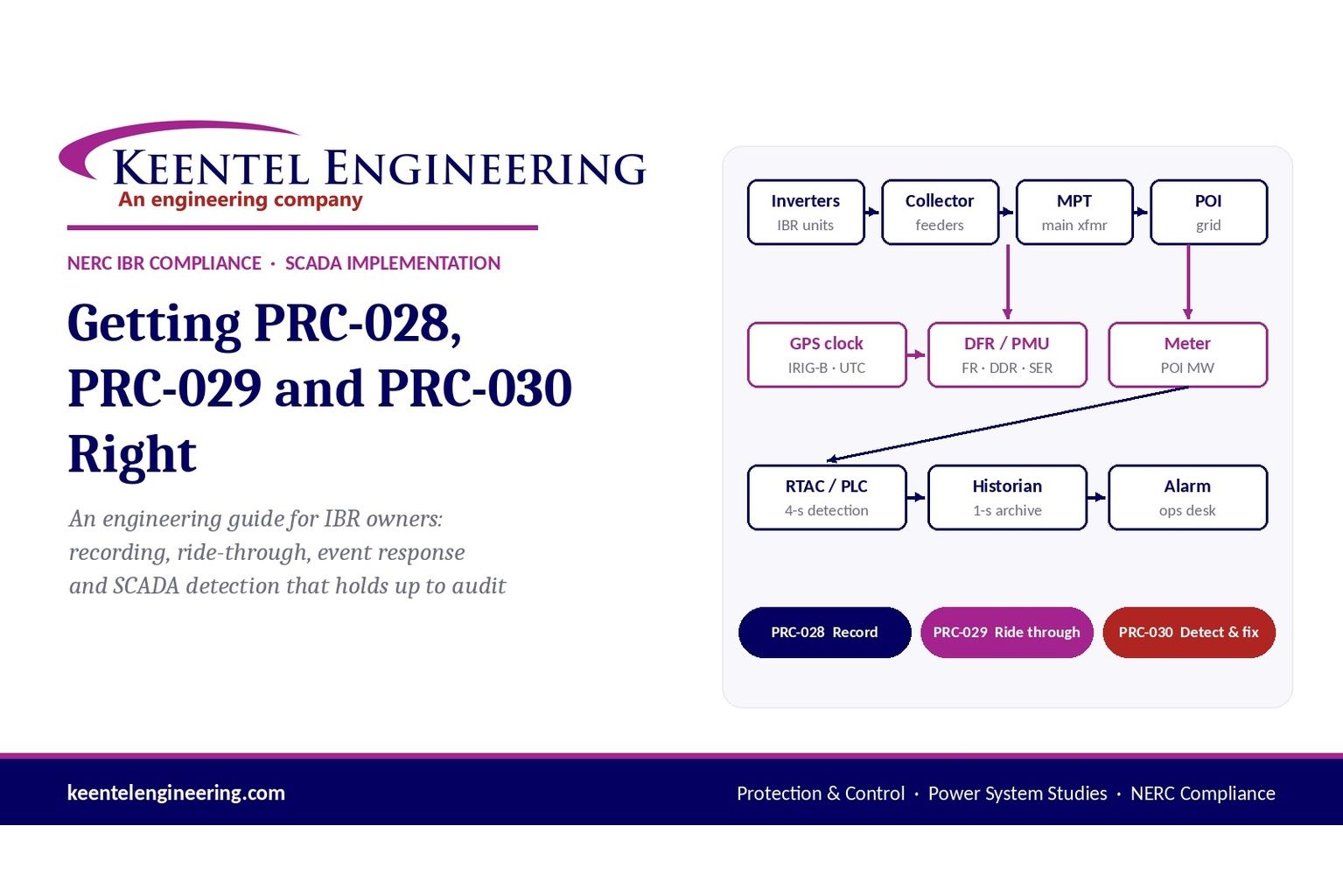
Engineering guide to PRC-028 disturbance recording, PRC-029 ride-through and PRC-030 event detection for inverter-based resources.
By SANDIP R PATEL
•
October 3, 2026
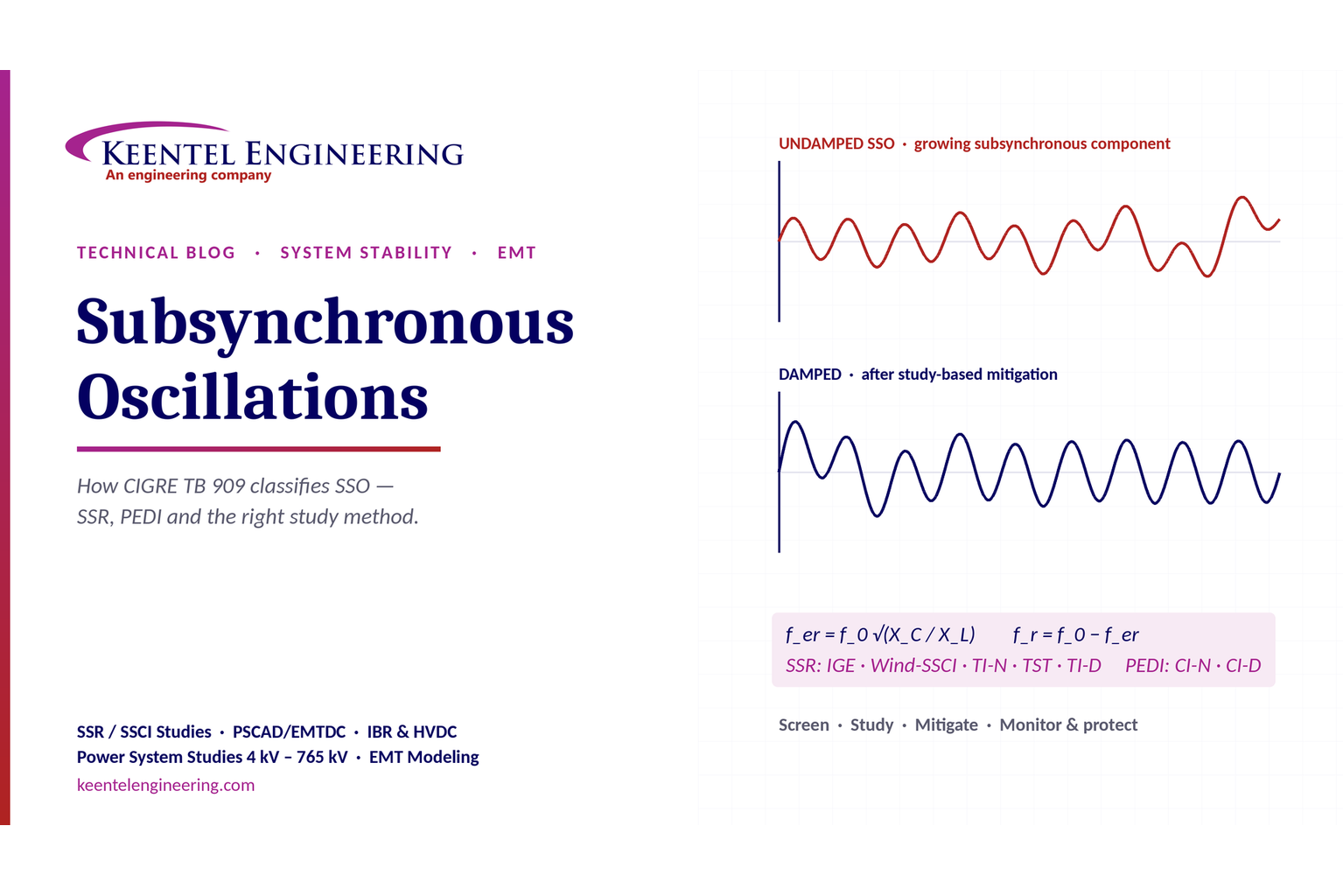
A practical guide to SSO classification, SSR, PEDI, Wind-SSCI, EMT analysis, mitigation and protection based on CIGRE TB 909.
By SANDIP R PATEL
•
October 6, 2026
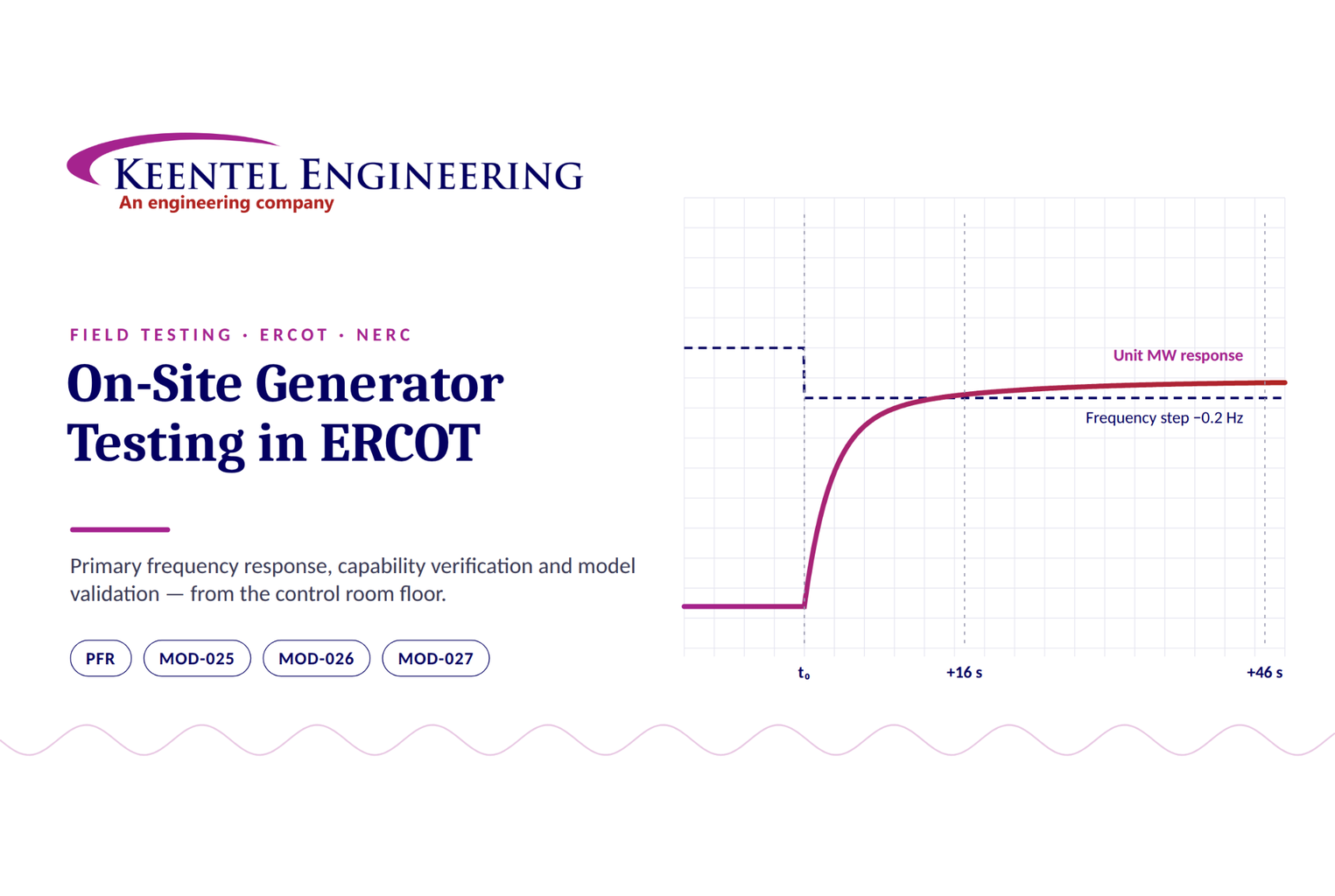
Learn ERCOT generator testing for PFR, MOD-025 and MOD-026/027, including staged tests, capability verification, dynamic models and field testing.
By SANDIP R PATEL
•
October 3, 2026
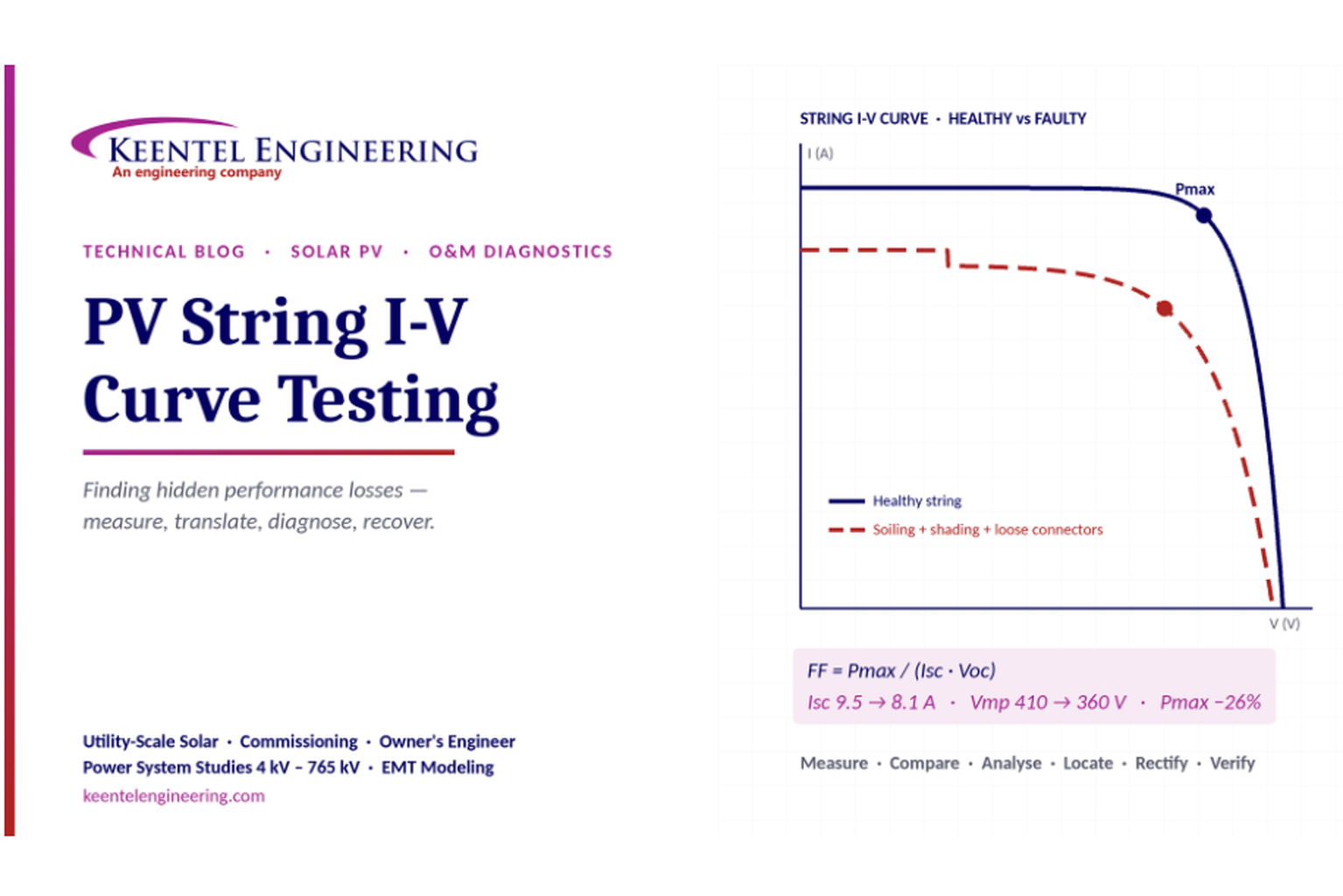
Learn how PV string I-V curve testing identifies hidden solar performance losses, including soiling, shading, mismatch, degradation, and wiring faults.
By SANDIP R PATEL
•
October 3, 2026
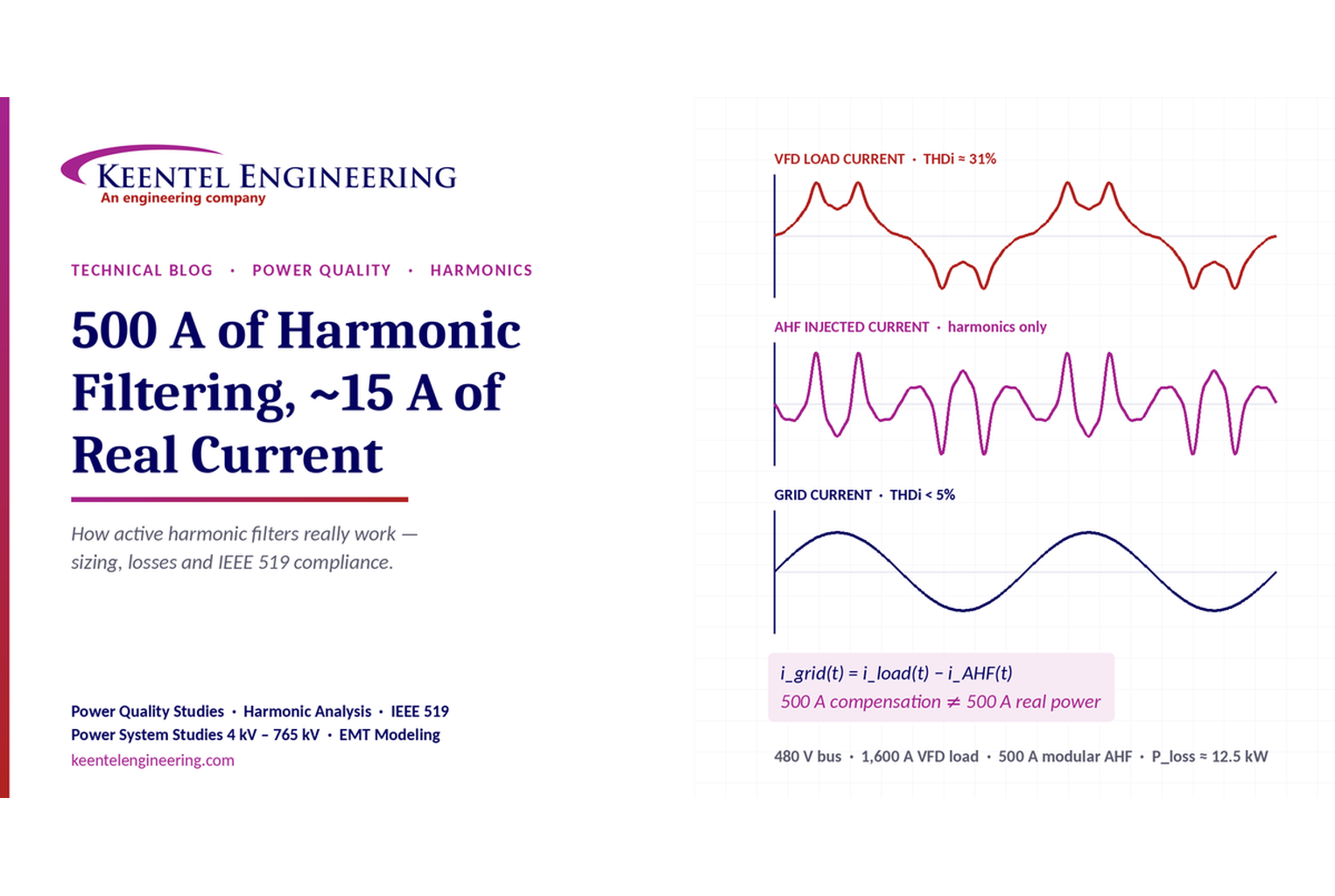
Learn how active harmonic filters work, how to size AHF systems, reduce VFD harmonics, calculate losses, and meet IEEE 519 TDD limits at the PCC.
By SANDIP R PATEL
•
October 3, 2026
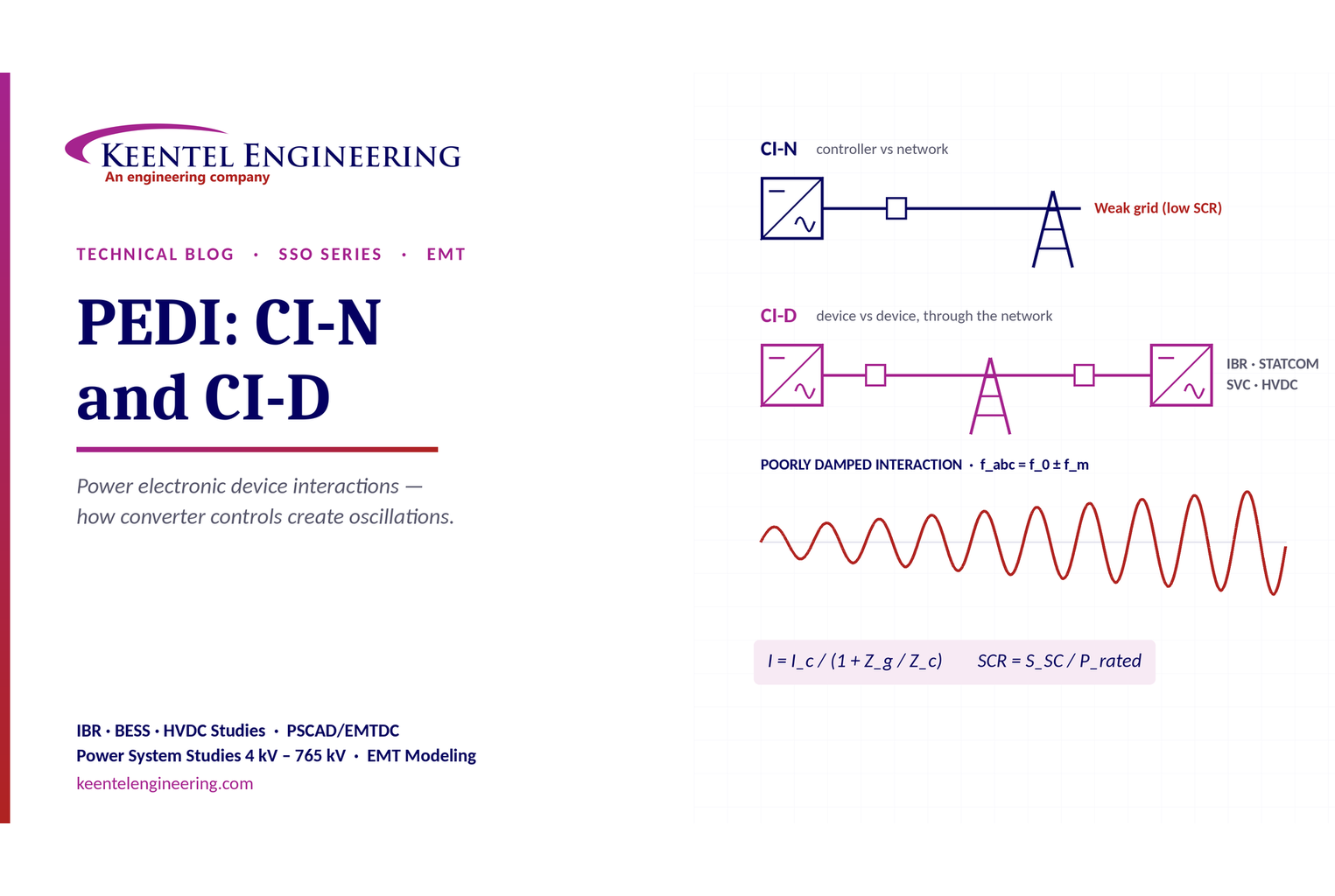
Learn power electronic device interactions (PEDI), including CI-N and CI-D, weak-grid stability, SCR, EMT studies, impedance analysis and mitigation for IBRs.
By SANDIP R PATEL
•
October 3, 2026
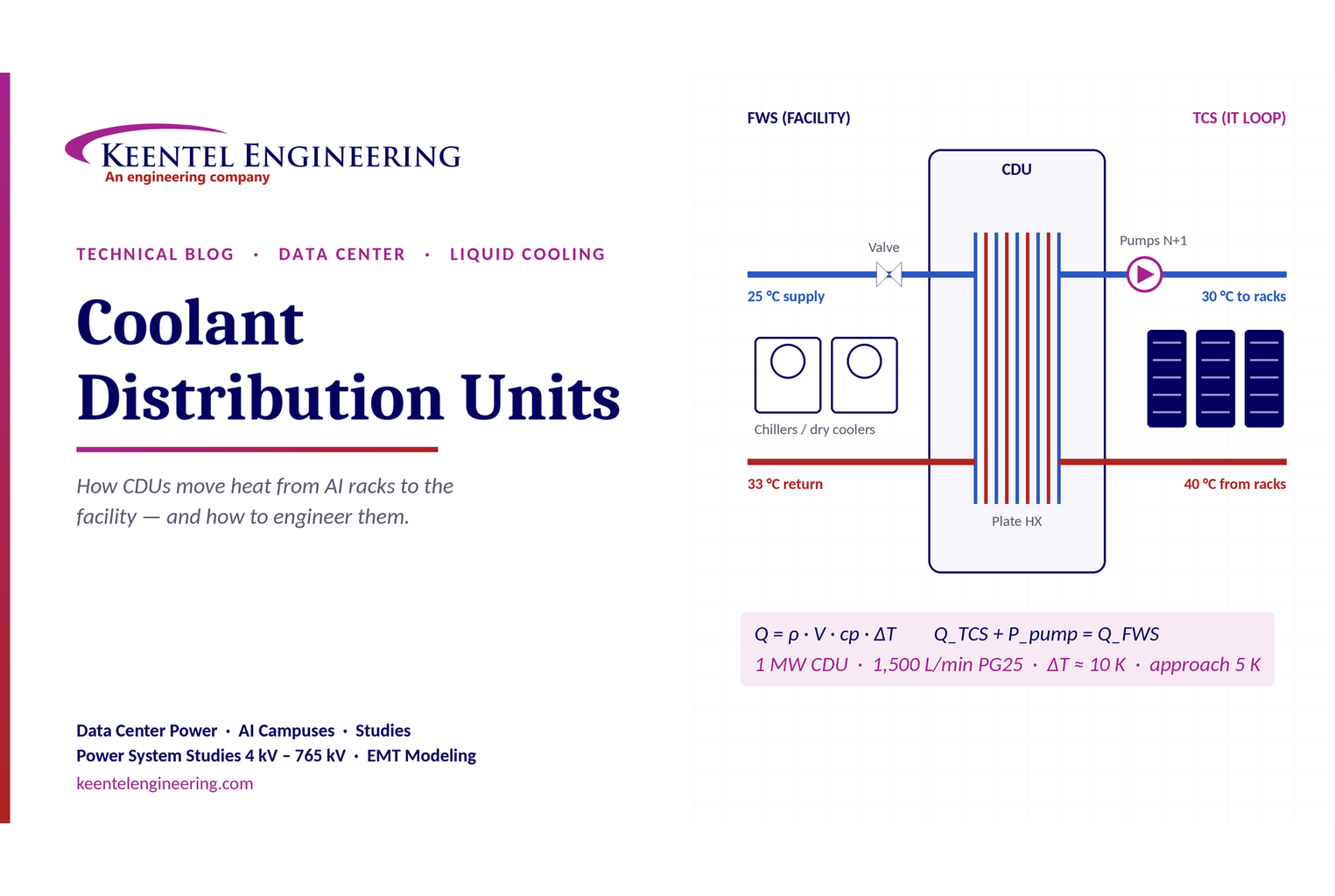
Learn how data center coolant distribution units (CDUs) work, including FWS and TCS loops, heat transfer, sizing, redundancy and liquid cooling for AI data centers.
By SANDIP R PATEL
•
October 3, 2026
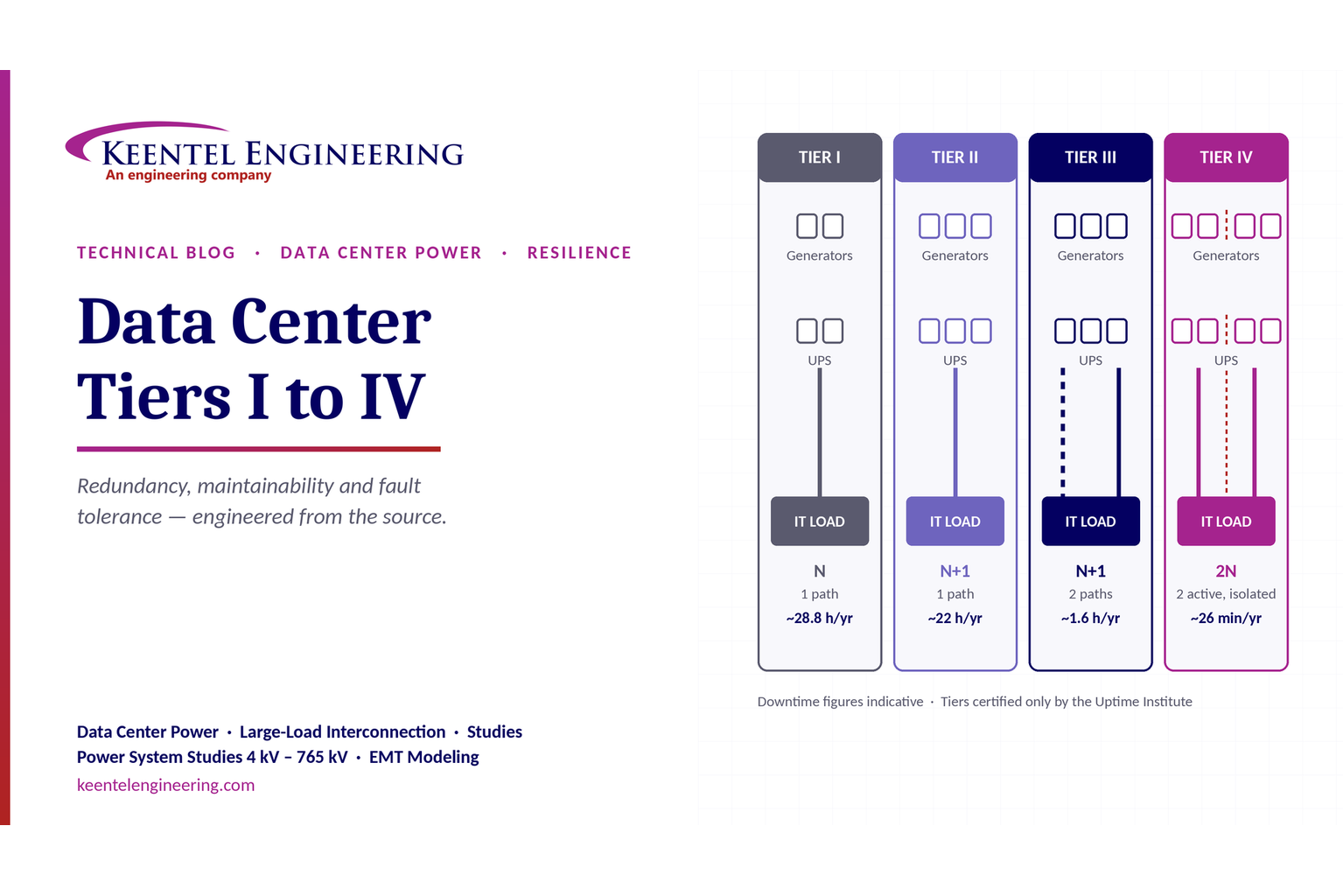
Compare Data Center Tiers I–IV, including redundancy, uptime, Tier III concurrent maintainability, Tier IV fault tolerance, UPS, generators and power design.
By SANDIP R PATEL
•
October 3, 2026
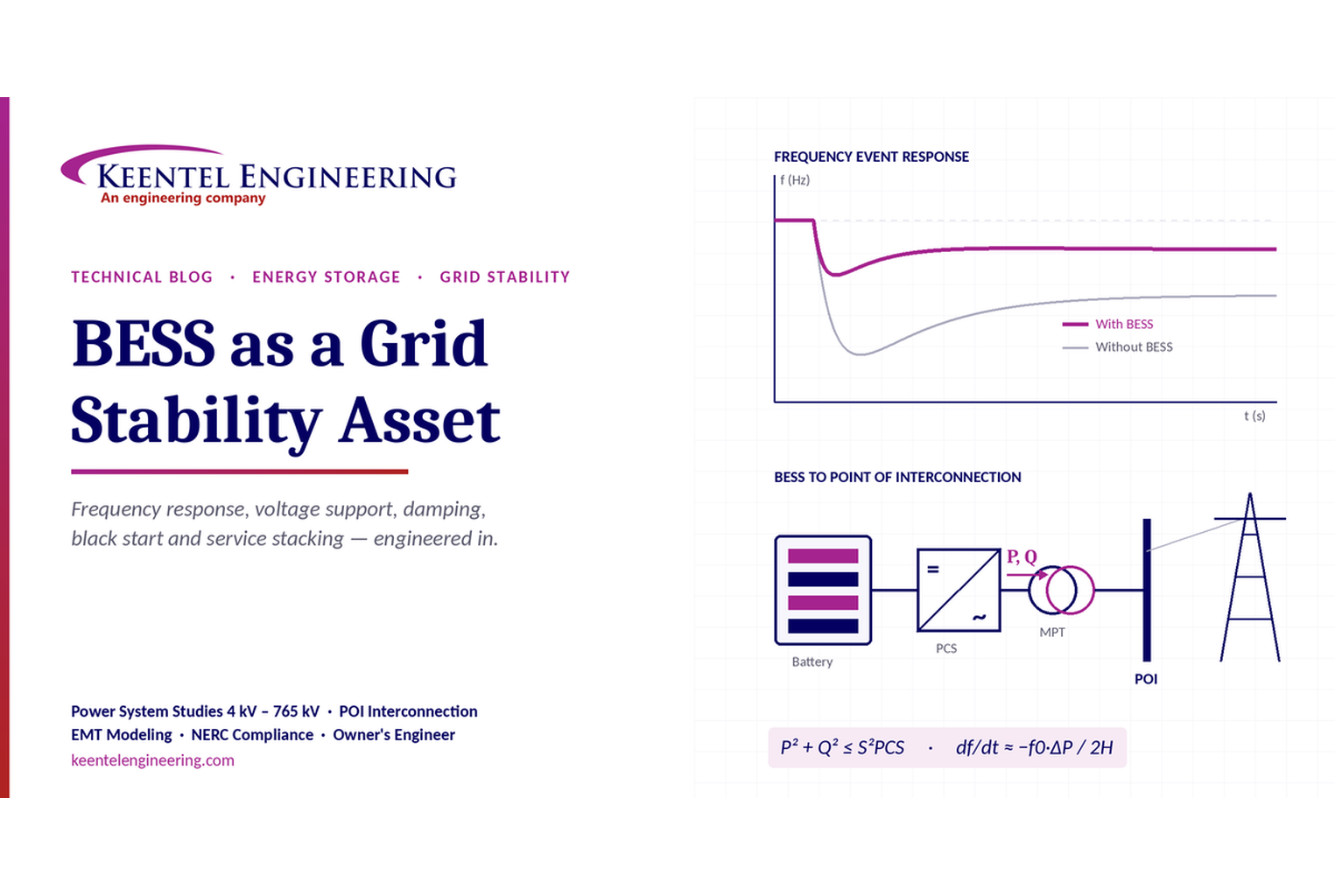
Learn how BESS supports grid stability through fast frequency response, voltage support, oscillation damping, black start, grid-forming controls and EMT studies.