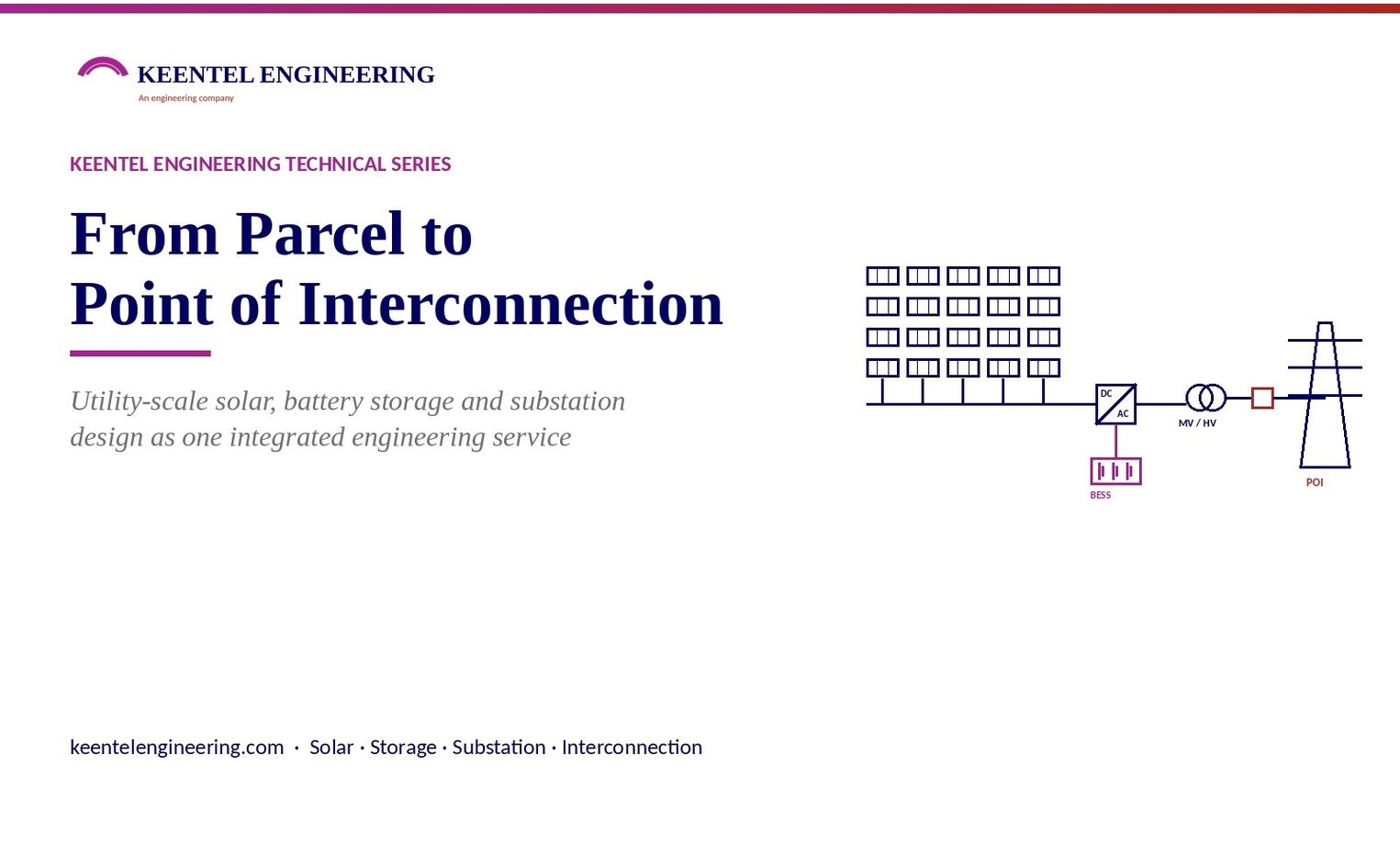


A Coordinated Electric System Interconnection Review—the utility’s deep-dive on technical and cost impacts of your project.

Challenge: Frequent false tripping using conventional electromechanical relays
Solution: SEL-487E integration with multi-terminal differential protection and dynamic inrush restraint
Result: 90% reduction in false trips, saving over $250,000 in downtime

Category Metric
VPP capacity (Lunar Energy) 650 MW
Lunar funding raised US$232 million
Data center BESS example 31 MW / 62 MWh
ERCOT grid-scale batteries 15+ GW
LDES tenders (H1 2026) Up to 9.3 GW
Lithium-ion share of LDES by 2030 77%
FEOC initial threshold 55%
BESS tariff rate (2026) ~55%
Capacity gain from analytics 5–15%

NERC Compliance and PRC Alignment with SEL-351S Feeder Protection Applications

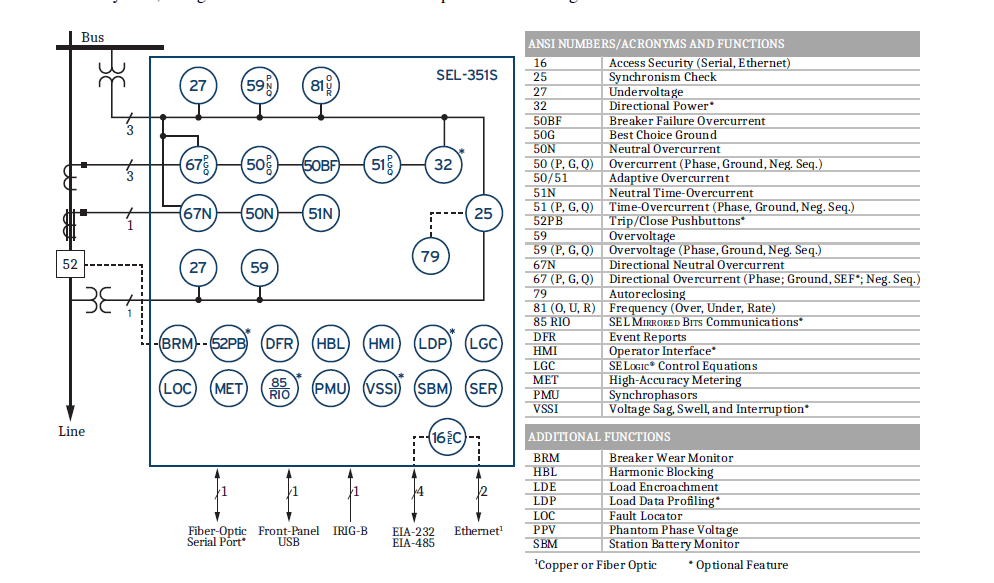
SEL-351S feeder protection relay functional diagram showing ANSI protection elements supporting NERC PRC compliance for substation feeder protection systems.
Calendar icon. D

Feb 20,2026  | blog

Executive Overview

  • Transmission Owners (TO)
  • Generator Owners (GO)
  • Generator Operators (GOP)
  • Distribution Providers (DP)
  • Transmission Operators (TOP)


This section provides a detailed alignment between SEL-351S protection functions and key PRC standards including:


  • PRC-005 – Protection System Maintenance
  • PRC-023 – Transmission Relay Loadability
  • PRC-024 – Generator Frequency and Voltage Protection
  • PRC-026 – Relay Performance During Stable Power Swings
  • PRC-027 – Coordination of Protection Systems
  • PRC-019 – Coordination of Generating Unit or Plant Capabilities
  • PRC-028 – Event Reporting and Misoperation Analysis
  • PRC-029 – Disturbance Monitoring and Model Validation (IBR relevance)


Keentel Engineering provides full lifecycle support including protection design, documentation, settings validation, testing, and audit support aligned with NERC compliance programs.


1. PRC-005 – Protection System Maintenance

Standard Intent

PRC-005 requires entities to establish and implement a documented Protection System Maintenance Program (PSMP) ensuring that protection systems are maintained and tested at defined intervals.


Protection Systems include:


  • Protective relays
  • Associated instrument transformers (CTs/PTs)
  • DC supply
  • Trip coils
  • Communications systems
  • Control circuitry

SEL-351S Compliance Support Features

1. Self-Monitoring and Diagnostics


The SEL-351S continuously performs internal self-tests and reports abnormal conditions via:


  • Relay Word bits
  • Alarm outputs
  • Event reports
  • Front-panel indicators


This supports condition-based maintenance and reduces reliance solely on time-based intervals.


2. Oscillography and Event Recording

The relay provides:

  • 15-, 30-, or 60-cycle oscillography
  • Up to 128 samples per cycle
  • Sequential Events Recorder (SER)


These capabilities support:


  • Verification of protection operation
  • Post-maintenance validation
  • Misoperation investigations


3. Breaker Wear Monitoring

SEL-351S integrates:

  • Interruption current monitoring
  • Close-to-open count tracking
  • Manufacturer wear curve integration
  • Operate time recording


This directly supports PRC-005 requirements for monitoring:


  • Trip circuit performance
  • Breaker health
  • Mechanical operation timing


Keentel Engineering includes breaker wear data in maintenance documentation packages.


4. DC Supply Monitoring

The relay measures and records station battery voltage.


This supports:


  • DC system supervision requirements
  • Documentation of minimum trip voltage during operation
  • Early detection of charger or battery degradation


5. Documentation and Evidence Preparation

For PRC-005 audits, Keentel provides:


  • Maintenance interval matrix
  • Test procedures aligned with relay functionality
  • Event record validation documentation
  • Breaker timing reports
  • Battery voltage trend logs
  • Protection element functional test reports

2. PRC-023 – Transmission Relay Loadability

Standard Intent

PRC-023 requires transmission protective relays to be set so they do not operate unnecessarily for stable power swings or expected load conditions.

SEL-351S Compliance Alignment

1. Load Encroachment Logic


The SEL-351S includes positive-sequence impedance-based load encroachment blocking.

This allows:


  • Overcurrent elements to be set below peak load
  • Secure operation during heavy load
  • Compliance with loadability margins


2. Negative-Sequence Protection Use


Where phase elements must be raised to satisfy PRC-023 loadability, negative-sequence elements provide:


  • Sensitive fault detection
  • Security during balanced heavy load


3. Keentel Engineering Compliance Process


For PRC-023 validation, we provide:


  • Peak loading study
  • Emergency rating analysis
  • Impedance margin verification
  • Load encroachment impedance region documentation
  • Relay setting justification report

3. PRC-024 – Generator Frequency and Voltage Protection

Standard Intent

PRC-024 ensures that generator protective relays do not trip generating units for frequency or voltage excursions within defined ride-through curves.

SEL-351S Compliance Features

The relay includes:


  • Six levels of 81U/81O frequency protection
  • Multiple 27/59 voltage elements
  • Adjustable time delays
  • Undervoltage supervision of frequency elements

1. Ride-Through Curve Coordination


Keentel Engineering performs:


  • Overlay of NERC PRC-024 ride-through curves
  • Frequency element pickup/time verification
  • Voltage element pickup/time verification
  • Confirmation of no overlap within “no-trip zone”


2. Documentation Package


We prepare:


  • Ride-through comparison plots
  • Relay setting sheets
  • Time-domain simulation results
  • Compliance certification letter

4. PRC-026 – Relay Performance During Stable Power Swings

While PRC-026 primarily applies to out-of-step relays, feeder relays can contribute to system performance issues if improperly set.


The SEL-351S supports compliance through:


  • Load encroachment logic
  • Directional supervision
  • Secure negative-sequence logic
  • ROCOF supervision (when applied correctly)


Keentel validates relay stability during:


  • Stable swing simulations
  • Load transfer events
  • Large motor starting scenarios

5. PRC-027 – Coordination of Protection Systems

Standard Intent

PRC-027 requires coordination of protection systems for BES Elements.

SEL-351S Compliance Alignment


The relay supports:


  • IEEE and IEC inverse curves
  • 38 recloser curves
  • Adjustable time-dial ranges
  • Fast/slow coordination logic
  • Directional coordination
  • Sequence coordination logic


Keentel Engineering Deliverables


  • Complete Time-Current Coordination (TCC) study
  • Downstream device coordination analysis
  • Fault current study
  • Curve overlay documentation
  • Settings coordination summary report

6. PRC-019 – Generator Capability Coordination

Where SEL-351S is used at generator interconnection points:


  • Voltage elements must not conflict with AVR capability
  • Frequency elements must not conflict with governor limits
  • Reverse power must align with generator protection philosophy


Keentel validates:


  • Generator capability curve overlays
  • Protective element interaction analysis
  • Voltage/frequency stability margins

7. PRC-028 – Misoperation Analysis and Reporting

SEL-351S provides detailed disturbance evidence including:


  • High-resolution oscillography
  • SER with millisecond time stamping
  • Relay Word bit tracking
  • Synchrophasor data (if enabled)


Keentel Engineering supports:


  • Misoperation root cause analysis
  • Evidence preservation packages
  • Protection redesign recommendations

8. PRC-029 – Disturbance Monitoring and Model Validation (IBR Relevance)

When applied in inverter-based resource (IBR) applications:


  • ROCOF elements must align with interconnection requirements
  • Voltage ride-through must match model assumptions
  • Synchrophasor output may support model validation


Keentel provides:


  • PSCAD / PSSE ride-through simulations
  • Model validation reports
  • Relay logic alignment documentation

9. Audit-Ready Documentation Package

Keentel Engineering provides a complete NERC-ready compliance binder including:


  1. Protection Philosophy Document
  2. Relay Settings Justification Report
  3. Loadability Study (PRC-023)
  4. Ride-Through Study (PRC-024)
  5. Coordination Study (PRC-027)
  6. Maintenance Program Matrix (PRC-005)
  7. Breaker Monitoring Reports
  8. Event Record Archive
  9. Synchrophasor Configuration Documentation
  10. Compliance Attestation Letter

10. Risk Mitigation Through Proper Engineering

Improper configuration of feeder relays can lead to:


  • Nuisance tripping
  • Generator ride-through violations
  • Protection misoperations
  • NERC audit findings
  • Financial penalties


Properly engineered SEL-351S applications, supported by Keentel Engineering, mitigate these risks through:


  • Protection stability analysis
  • Verified load encroachment boundaries
  • Directional element validation
  • Breaker failure timing verification
  • Fault simulation and relay response testing

Conclusion

The SEL-351S is not merely a feeder overcurrent relay it is a comprehensive protection, automation, and monitoring platform capable of supporting full alignment with NERC PRC reliability standards when properly engineered.


Through detailed studies, documentation, and validation processes, Keentel Engineering ensures:


  • Technical protection integrity
  • System reliability
  • Regulatory compliance
  • Audit readiness


A smiling man with glasses and a beard wearing a blue blazer stands in front of server racks in a data center.

About the Author:

Sonny Patel P.E. EC

IEEE Senior Member

In 1995, Sandip (Sonny) R. Patel earned his Electrical Engineering degree from the University of Illinois, specializing in Electrical Engineering . But degrees don’t build legacies—action does. For three decades, he’s been shaping the future of engineering, not just as a licensed Professional Engineer across multiple states (Florida, California, New York, West Virginia, and Minnesota), but as a doer. A builder. A leader. Not just an engineer. A Licensed Electrical Contractor in Florida with an Unlimited EC license. Not just an executive. The founder and CEO of KEENTEL LLC—where expertise meets execution. Three decades. Multiple states. Endless impact.

Four workers in safety vests and helmets stand with arms crossed near wind turbines.

Let's Discuss Your Project

Let's book a call to discuss your electrical engineering project that we can help you with.

Man in a blazer and open shirt, looking at the camera, against a blurred background.

About the Author:

Sonny Patel P.E. EC

IEEE Senior Member

In 1995, Sandip (Sonny) R. Patel earned his Electrical Engineering degree from the University of Illinois, specializing in Electrical Engineering . But degrees don’t build legacies—action does. For three decades, he’s been shaping the future of engineering, not just as a licensed Professional Engineer across multiple states (Florida, California, New York, West Virginia, and Minnesota), but as a doer. A builder. A leader. Not just an engineer. A Licensed Electrical Contractor in Florida with an Unlimited EC license. Not just an executive. The founder and CEO of KEENTEL LLC—where expertise meets execution. Three decades. Multiple states. Endless impact.

Leave a Comment

Related Posts

Transformer protection systems
By SANDIP R PATEL August 8, 2026
Learn how transformer protection systems use CTs, relays, differential protection, REF, and testing to protect critical substation assets and grid reliability.
nerc
By SANDIP R PATEL August 7, 2026
Understand NERC PRC-029-1 ride-through requirements for IBRs in the CAISO region — voltage/frequency curves, key dates, EMT modeling, and compliance steps.
Substation grounding design with IEEE Std 80 earthing grid schematic.
By SANDIP R PATEL July 31, 2026
Learn substation grounding design using IEEE Std 80, CDEGS, soil resistivity modeling, touch and step voltage analysis, GPR, and earthing best practices.
Capacitor Banks & Power Factor Correction Design Guide
By SANDIP R PATEL July 29, 2026
Learn capacitor bank sizing, power factor correction, NEC Article 460 requirements, harmonic mitigation, protection, and installation for industrial power systems.
On-Load vs Off-Circuit Transformer Tap Changer comparison showing OLTC and OCTC voltage regulation p
By SANDIP R PATEL July 29, 2026
Learn the differences between On-Load and Off-Circuit Tap Changers, including OLTC vs OCTC operation, voltage regulation, IEEE standards, maintenance, and transformer selection.
ERCOT Form W and PUCT Part A & Part B filing guide for large load interconnection
By SANDIP R PATEL July 28, 2026
Learn the differences between the PUCT Generating Capacity Report and ERCOT Form W, including Part A vs Part B, PCLR, WLPUN, BYOG projects, and Batch Zero compliance.
PGRR144 Batch Zero and Batch 1 ERCOT grid interconnection guide with Texas transmission modeling
By SANDIP R PATEL July 28, 2026
Learn how PGRR144, Batch Zero, and Batch 1 affect ERCOT large-load interconnections, dynamic model requirements, MQT testing, PERC1, and project readiness.
ERCOT PCLR pathway showing LPC-to-MPC power access, SCED bid-cap control, large-load curtailment, an
By SANDIP R PATEL July 28, 2026
ERCOT PCLR Batch Zero large-load interconnection pathway
Delta-Star Transformer Earth Fault & Zero-Sequence Guide
By SANDIP R PATEL July 27, 2026
Learn why LV earth-fault current cannot cross a Delta-Star transformer, how zero-sequence current behaves, and what it means for protection design.