

A Coordinated Electric System Interconnection Review—the utility’s deep-dive on technical and cost impacts of your project.

Challenge: Frequent false tripping using conventional electromechanical relays
Solution: SEL-487E integration with multi-terminal differential protection and dynamic inrush restraint
Result: 90% reduction in false trips, saving over $250,000 in downtime

Understanding Power System Stability through PSSE+TSAT and PSCAD/EMTDC: From Positive Sequence to EMT Simulations

Calendar icon. D

May 30, 2025 | Blog

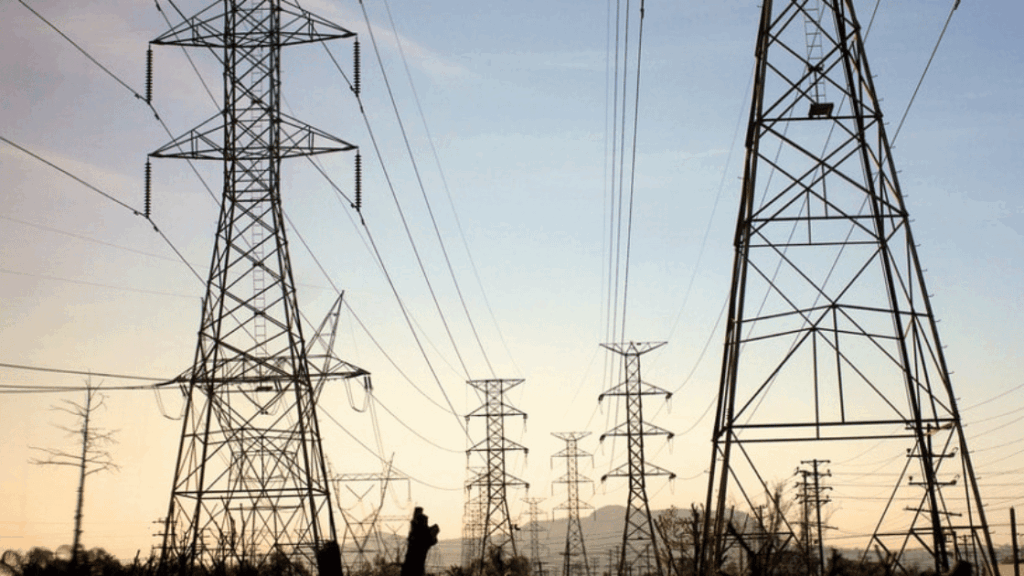
Power lines and towers against a light blue and yellow sky.

Introduction

In an evolving electric grid landscape dominated by renewable energy resources and inverter-based technologies, the importance of accurately modeling and analyzing dynamic system responses cannot be overstated. Two of the most powerful tools used in power system dynamics and transient studies are PSSE + TSAT and PSCAD/EMTDC. Together, these platforms enable engineers to assess everything from steady-state stability to high-fidelity electromagnetic transients.

This blog explores how these tools are applied in modern grid analysis, with a focus on:

  • PSSE+TSAT for Positive Sequence Dynamic Studies
  • PSCAD/EMTDC for Electromagnetic Transient Simulations
  • Model Benchmarking and Parameter Tuning
  • Capturing PSPD (Posture, Sensitivity, Performance, Damping) Response Characteristics


A common question in modern power system studies is PSCAD vs PSSE, as each tool serves a different purpose in stability and transient analysis.


1. PSSE + TSAT: Positive Sequence Dynamics and Stability

Positive sequence models simplify the analysis of three-phase power systems by representing only the balanced component. Tools like PSSE (Power System Simulator for Engineering) and TSAT (Transient Security Assessment Tool) are built to use these models for wide-area system stability analysis under NERC reliability standards.

Applications of PSSE + TSAT

  • Stability Assessment: Evaluating small-signal and transient stability after faults.
  • PSPD Responses: Analyzing generator and inverter posture, system sensitivity, dynamic performance, and damping response.
  • NERC PRC Compliance: Meeting dynamic model validation requirements under standards such as PRC-019, PRC-024, and PRC-113.

Parameter Tuning in PSSE

Parameter tuning ensures that the model aligns with field data and real-world behavior:

  • Tuning governor and exciter models for accurate frequency response
  • Adjusting PSS (Power System Stabilizer) gains for adequate damping
  • Validating dynamic response against PMU or SCADA data


PSSE testing and validation processes ensure that dynamic models accurately reflect real-world system behavior.


2. PSCAD/EMTDC: Electromagnetic Transient Simulations for Inverter Behavior

The Need for EMT Simulations

Inverter-based resources (IBRs), such as solar PV and battery energy storage systems (BESS), respond to grid events based on complex control algorithms. EMT tools like PSCAD/EMTDC simulate the detailed switching behavior, control loops, and non-linear characteristics of power electronic systems.


PSCAD EMT simulations provide high-fidelity results for inverter-based resources, capturing fast switching behavior that RMS tools cannot represent.

Key Features of PSCAD/EMTDC

  • Sub-cycle Accuracy: Captures switching harmonics, voltage sags/swells, and control interactions.
  • Model Benchmarking: Validates EMT models by comparing with test results and RMS models.
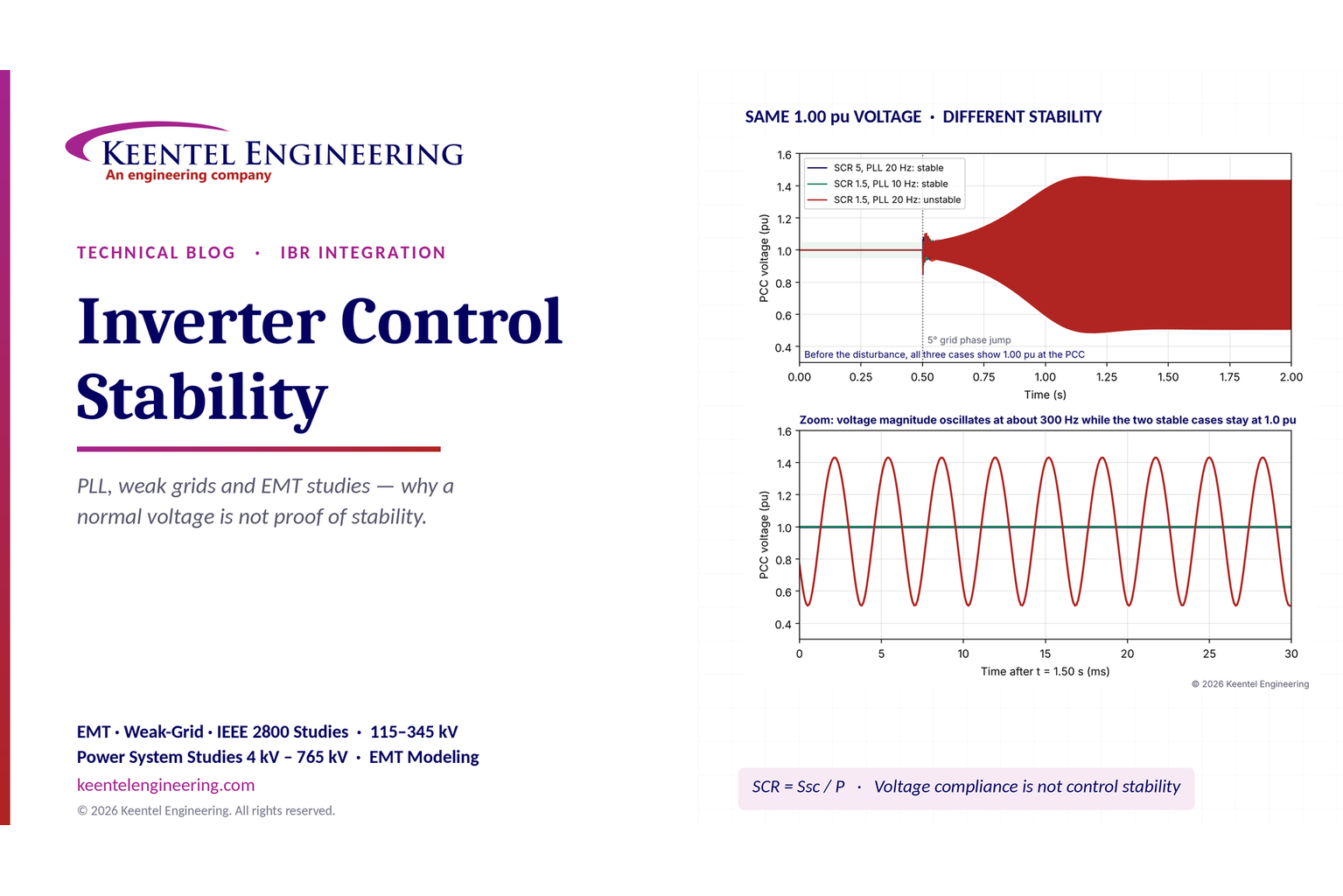
  • Detailed IBR Behavior: Includes FRT (Fault Ride Through), current injection controls, PLL (Phase-Locked Loop) dynamics, and frequency response.

EMT Model Benchmarking

Model benchmarking aligns the PSCAD representation with:

  • Manufacturer black-box models
  • IEEE 2800 and PRC-024 ride-through curves
  • Site-specific commissioning test data


For deeper insights into model validation, read our guide on model accuracy and verification for emt simulations


3. Integrated Approach for System-Wide Analysis

When comparing PSSE vs PSCAD, engineers typically use PSSE for system-wide dynamic screening and PSCAD for detailed electromagnetic transient analysis.

Combining RMS and EMT Studies

A typical workflow involves:

  1. Run PSSE + TSAT to screen scenarios and identify critical contingencies.
  2. Drill into PSCAD for inverter-rich clusters or weak grid points.

This hybrid approach offers both computational efficiency and accuracy where it matters.


4. Challenges and Best Practices

Challenges

  • Model fidelity vs. simulation time
  • Parameter validation without complete manufacturer data
  • Ensuring consistency between RMS and EMT models

Best Practices

  • Start with validated RMS models.
  • Use dynamic equivalents to reduce PSCAD run time.
  • Regularly benchmark EMT models with commissioning tests.

Conclusion

A robust grid requires tools like PSSE + TSAT for large-scale dynamics and PSCAD/EMTDC for detailed transient simulations. Mastery of both platforms is crucial for engineers working on modern power systems with high penetrations of inverter-based resources. Proper modeling, tuning, and benchmarking ensure that system planners and operators can trust simulation results to reflect real-world performance.

If you need support with PSSE or PSCAD modeling, connect with our experts through the contact us page


FAQs on PSSE + TSAT and PSCAD/EMTDC Modeling

  • 1. What is the main difference between PSSE and PSCAD?

    PSSE performs positive sequence dynamic simulations; PSCAD performs detailed EMT-level simulations including switching and non-linear effects.

  • 2. What does TSAT add to PSSE?

    TSAT complements PSSE by enabling large-scale, batch-mode transient security assessment for multiple contingencies.

  • 3. What are PSPD responses in dynamic modeling?

    PSPD stands for Posture, Sensitivity, Performance, and Damping—used to assess how models behave under disturbances.

  • 4. Why is parameter tuning critical in PSSE?

    Tuning aligns simulation models with real-world generator or inverter behavior, ensuring credible results.

  • 5. What types of events are analyzed in TSAT?

    TSAT models faults, line trips, generator outages, and other contingencies to evaluate system stability.

  • 6. Why use PSCAD for inverter-based resources?

    PSCAD captures detailed control interactions and fast transients that are missed in RMS tools like PSSE.

  • 7. What is EMT simulation?

    Electromagnetic Transient simulation models electrical behavior with very high time resolution (μs level).

  • 8. How are EMT models benchmarked?

    They are compared with factory test data, field test results, or validated RMS models for consistency.

  • 9. What is a black-box model in PSCAD?

    A model provided by OEMs with encrypted internal logic but accurate behavior for simulation purposes.

  • 10. Can PSSE and PSCAD be integrated?

    Not directly, but hybrid simulations or sequential studies can be performed using both tools.

  • 11. What is FRT capability in EMT models?

    Fault Ride Through—the ability of an inverter to stay connected during voltage/frequency disturbances.

  • 12. How does PLL behavior affect inverter stability?

    PLL dynamics determine the inverter's synchronization and can impact stability during faults.

  • 13. What standards guide inverter modeling?

    IEEE Std 2800, NERC PRC-024, PRC-113, and utility-specific interconnection guides.

  • 14. What is the role of PSS in PSSE models?

    The Power System Stabilizer improves damping of oscillations and enhances system stability.

  • 15. How is damping assessed in PSSE?

    Using modal analysis or response to small disturbances, particularly in eigenvalue studies.

  • 16. What is a dynamic equivalencing method in PSCAD?

    It reduces complex network models into equivalent systems for faster simulation.

  • 17. When should EMT simulation be prioritized?

    For weak grid, high IBR penetration, or detailed transient protection coordination studies.

  • 18. Can PSCAD simulate protection systems?

    Yes, with custom relay models or built-in logic blocks for overcurrent, distance, etc.

  • 19. How is data validated in PSSE studies?

    Using PMU data, SCADA records, and event logs from grid disturbances.

  • 20. What is model tuning in PSCAD?

    Adjusting controller gains and time constants to match expected field behavior.


A smiling man with glasses and a beard wearing a blue blazer stands in front of server racks in a data center.

About the Author:

Sonny Patel P.E. EC

IEEE Senior Member

In 1995, Sandip (Sonny) R. Patel earned his Electrical Engineering degree from the University of Illinois, specializing in Electrical Engineering . But degrees don’t build legacies—action does. For three decades, he’s been shaping the future of engineering, not just as a licensed Professional Engineer across multiple states (Florida, California, New York, West Virginia, and Minnesota), but as a doer. A builder. A leader. Not just an engineer. A Licensed Electrical Contractor in Florida with an Unlimited EC license. Not just an executive. The founder and CEO of KEENTEL LLC—where expertise meets execution. Three decades. Multiple states. Endless impact.

Four workers in safety vests and helmets stand with arms crossed near wind turbines.

Let's Discuss Your Project

Let's book a call to discuss your electrical engineering project that we can help you with.

Man in a blazer and open shirt, looking at the camera, against a blurred background.

About the Author:

Sonny Patel P.E. EC

IEEE Senior Member

In 1995, Sandip (Sonny) R. Patel earned his Electrical Engineering degree from the University of Illinois, specializing in Electrical Engineering . But degrees don’t build legacies—action does. For three decades, he’s been shaping the future of engineering, not just as a licensed Professional Engineer across multiple states (Florida, California, New York, West Virginia, and Minnesota), but as a doer. A builder. A leader. Not just an engineer. A Licensed Electrical Contractor in Florida with an Unlimited EC license. Not just an executive. The founder and CEO of KEENTEL LLC—where expertise meets execution. Three decades. Multiple states. Endless impact.

Leave a Comment

Related Posts

Biggest Mistakes in Analyzing Modern Substation Schematics
By SANDIP R PATEL April 11, 2026
Discover 15 critical mistakes in modern substation schematic analysis, including IEC 61850, protection zones, GOOSE, CT/VT issues, and grid reliability risks.
Advanced large load modeling for grid reliability with data center power systems.
By SANDIP R PATEL April 10, 2026
Learn how large load modeling improves grid reliability for data centers and modern power systems using advanced EMT, dynamic studies, and compliance strategies.
ERCOT large load interconnection surge with data centers, renewable energy, and grid reliability
By SANDIP R PATEL April 10, 2026
ERCOT faces a surge in large load interconnections driven by AI data centers. Explore grid challenges, batch studies, and developer strategies
Data center power diagram with MVDC, UPS, transformers, generators, and IT load.
By SANDIP R PATEL April 10, 2026
Learn how EMT modeling improves data center grid stability, AI load integration, and power quality. Expert insights by Keentel Engineering.
Advanced power system diagram with five buses, generator, transformer, and protection system
By SANDIP R PATEL April 7, 2026
Advanced power system studies for DER, EMT modeling, and grid stability. Expert T&D co-simulation by Keentel Engineering.
MOD-026-2 compliance diagram for dynamic model validation of inverter-based resources in power
By SANDIP R PATEL April 7, 2026
Learn MOD-026-2 compliance requirements for dynamic model verification and validation of inverter-based resources, ensuring power system reliability and NERC compliance.
PJM First Use rule elimination for DER interconnection under FERC Order 2222
By SANDIP R PATEL April 7, 2026
Explore PJM’s First Use rule reform, DER interconnection changes, and FERC Order 2222 impacts on solar, BESS, and distribution-level grid integration.
Advanced PSSE and PSCAD modeling services for solid-state transformers in data center power systems
By SANDIP R PATEL April 7, 2026
Advanced PSSE and PSCAD modeling for solid-state transformers in data centers. Ensure grid compliance, stability, and high-performance power systems.
FlexGEB smart building with solar, HVAC, battery storage, and grid-connected energy systems.
By SANDIP R PATEL April 6, 2026
Explore FlexGEB smart buildings using solar, storage, HVAC, and IoT to boost energy efficiency, demand flexibility, and grid resilience.