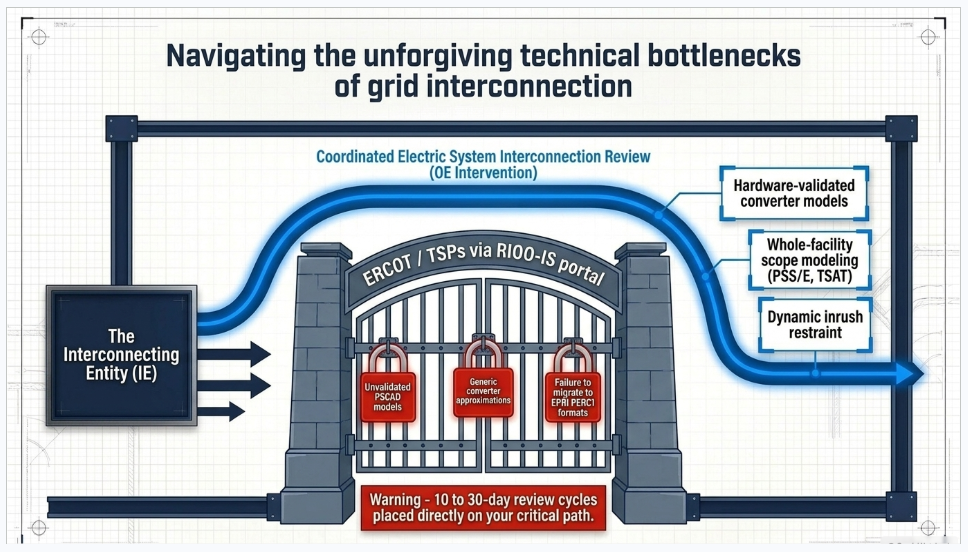
A Coordinated Electric System Interconnection Review—the utility’s deep-dive on technical and cost impacts of your project.
Challenge: Frequent false tripping using conventional electromechanical relays
Solution: SEL-487E integration with multi-terminal differential protection and dynamic inrush restraint
Result: 90% reduction in false trips, saving over $250,000 in downtime
ERCOT enforces all of the above through simulation, which means your model is your compliance case. The bar is now high:
- Whole-facility scope. The model must represent everything the IT load, the UPS and power conversion, the cooling plant, the protection and control systems in formats compatible with ERCOT's study platforms (PSS/E, PSCAD, TSAT).
- Real control loops, not approximations. Generic textbook representations are unacceptable. The model must capture the actual inner control behavior of your power electronics.
- Hardware-validated converter models. For electronic loads, the PSCAD model must be benchmarked against actual hardware testing including voltage ride-through and subsynchronous response. A model assembled from standard PSCAD library blocks fails by definition, because a generic block has never been tested against your vendor's hardware. The good news: validation is a hardware-type test, so results for a given converter product are reusable across every facility that uses it.
- Format migration. Facilities that previously submitted the older composite load model (CMLD) format must transition to EPRI's PERC1 format.
- Three checkpoints. Models are reviewed before the stability study begins (no model, no study), before each quarterly stability assessment, and for electronic loads one final time before energization, when you must submit as-built models with a documented comparison against the previously studied data and a sworn attestation that the model matches actual field settings. ERCOT's review takes 10 business days, extendable by 20 put it on your critical path.
- A living obligation. Change your technology, controls, or relay settings in a way that affects ride-through including converting a crypto mining site to an AI data center — and you've triggered a new interconnection study, even if your megawatts don't change.
| Parameter | Detail |
|---|---|
| System | 230 kV / 138 kV transmission corridors, wind and wet-snow icing exposure |
| Data basis | 15 years of minute-resolution forced-outage records + regional weather observations |
| Core methods | Event grouping, MVA performance curves, time-to-95%-restore, area outage rate curves, fragility modeling, rerun-history benefits, exceedance and log-domain risk metrics |
| Headline result | ≈85% of maximum resilience benefit at 60% of original capital; worst-event restoration window cut from 11 days to 5 in rerun-history terms |
| Decision supported | Capital portfolio selection; resilience plan filing; post-investment verification framework |
| System / Topic | Governing Standard(s) | What It Controls |
|---|---|---|
| Overall plant electrical distribution | IEEE 141 (Red Book); IEEE 666 | Distribution architecture, voltage selection, design of generating station auxiliary service systems |
| Power system studies | IEEE 399 (Brown Book); IEEE 551 | Load flow, symmetrical/asymmetrical short circuit, motor starting methodologies down to the lowest LV panelboard |
| Protection & coordination | IEEE 242 (Buff Book); IEEE 3004.5; IEEE C37 series | Generator relaying (21, 59N, 87G), time-current coordination, selective clearing between LV and MV tiers |
| GSU / UAT / SST transformers | IEEE C57.12.00 and C57 family | Transformer ratings, impedance, testing, loading |
| HV switchyard breakers | IEEE C37.06 | AC high-voltage circuit breaker preferred ratings |
| MV switchgear (13.8 kV) | IEEE C37.20.2; IEEE C37.20.7 | Metal-clad construction, compartmentalization, vacuum breakers; arc-resistant design with plenum venting |
| MV cable | UL 1072; ICEA S-93-639 (NEMA WC 74) | Type MV-105 shielded cable, 133% insulation level for HRG systems |
| LV switchgear (480 V) | IEEE C37.13; UL 1558 | Metal-enclosed LV power circuit breaker switchgear to 635 V, draw-out ACBs with electronic trip units |
| Motor control centers | UL 845; NEMA ICS 18 | LV-MCC construction, MCCB/MCP protection for motors under ~200 HP |
| Motors | NEMA MG-1 | Motor performance, starting characteristics, service factors |
| DC & battery systems | IEEE 485; IEEE 946 | Lead-acid battery sizing (125/250 VDC), DC auxiliary system design |
| Grounding | IEEE 80; IEEE 142 (Green Book) | Ground grid step/touch potential limits; system grounding including high-resistance grounding |
| Lightning protection | IEEE 998 | Direct-stroke shielding of switchyard and outdoor generator structures |
| Arc flash & electrical safety | IEEE 1584; NFPA 70E | Incident energy calculation; worker safety boundaries and PPE |
| Fire protection | NFPA 850 | Fire protection and risk management for combustion turbine generating plants |
| Installation code | NEC (NFPA 70); NESC | Wiring methods inside the plant fence; overhead/outdoor clearances at the switchyard |
| Interconnection & compliance | FERC LGIP; NERC MOD-025/026/027, PRC-019/024/029, FAC-008 | Interconnection process, model validation, protection/ride-through coordination, facility ratings |
| IFC / Construction Deliverable | Purpose |
|---|---|
| Stamped IFC packages | Legal basis for construction; P.E. responsible charge |
| Final relay settings & TCCs | Protection as-installed matches the coordination study |
| Calculation archive | Owner records; NERC audit evidence trail |
| Commissioning procedures | Safe, sequenced energization; MOD field testing |
| Construction support | RFIs, field changes, FAT/SAT witness |
| As-builts & model handoff | Operating baseline; future study currency |
| Metric | Outcome |
|---|---|
| Defects found pre-occupancy | Three topology defects and one settings-mismatch family corrected before load migration; the shared-switchboard defect alone would have invalidated the concurrently-maintainable claim on day one |
| IST findings | Fourteen additional discrepancies surfaced under scenario testing (control logic, alarm mapping, one generator sequencing fault) — all closed before handover instead of during operations |
| Black-building test | Passed on second execution; the first attempt exposed the generator sequencing fault under true block load, exactly the failure the compressed plan would never have found |
| Handover quality | Operations team certified on the actual failure scenarios; corrected EOPs and settings documentation delivered as controlled documents |
| Business outcome | Occupancy proceeded three weeks behind the original date — against an independent estimate that the uncorrected sequencing fault carried a high probability of a full facility outage within the first year |
Part 2 — Frequently Asked Questions: Large Load Interconnection
| Contact | Details |
|---|---|
| Headquarters | 400 N Ashley Dr STE 2600, Tampa, FL 33602 |
| Phone | (813) 389-7871 |
| contact@keentelengineering.com | |
| Florida Firm Registration | No. 36853 |
| Additional Offices | Austin, TX • Sacramento, CA • Baltimore, MD |
| Who | Acronym | Plain-English Role |
|---|---|---|
| ERCOT | — | The grid's air traffic controller. It doesn't own power lines or plants; it directs the flow of electricity across most of Texas and referees the admission process for new generators. |
| Interconnecting Entity | IE | You — the developer or owner trying to connect a new plant (or significantly modify an existing one). You file the application and drive the process. |
| Resource Entity | RE | The registered owner/operator of the generator once it becomes an official market participant. Often the same company as the IE, wearing a different hat. |
| Qualified Scheduling Entity | QSE | Your plant's voice on the grid. The QSE handles round-the-clock communications with ERCOT — telemetry, schedules, dispatch instructions. Every generator must have one. |
| Transmission Service Provider | TSP | The utility that owns the wires and substation you'll connect to. The TSP runs your detailed study, builds the connection facilities, and signs your interconnection contract. |
| RIOO-IS | — | ERCOT's online portal where the whole process lives — applications, documents, status tracking, and checklists all flow through it. |
| Who | Acronym | Plain-English Role |
|---|---|---|
| ERCOT | — | The grid's air traffic controller. It doesn't own power lines or plants; it directs the flow of electricity across most of Texas and referees the admission process for new generators. |
| Interconnecting Entity | IE | You — the developer or owner trying to connect a new plant (or significantly modify an existing one). You file the application and drive the process. |
| Resource Entity | RE | The registered owner/operator of the generator once it becomes an official market participant. Often the same company as the IE, wearing a different hat. |
| Qualified Scheduling Entity | QSE | Your plant's voice on the grid. The QSE handles round-the-clock communications with ERCOT — telemetry, schedules, dispatch instructions. Every generator must have one. |
| Transmission Service Provider | TSP | The utility that owns the wires and substation you'll connect to. The TSP runs your detailed study, builds the connection facilities, and signs your interconnection contract. |
| RIOO-IS | — | ERCOT's online portal where the whole process lives — applications, documents, status tracking, and checklists all flow through it. |
| Who | Acronym | Plain-English Role |
|---|---|---|
| ERCOT | — | The grid's air traffic controller. It doesn't own power lines or plants; it directs the flow of electricity across most of Texas and referees the admission process for new generators. |
| Interconnecting Entity | IE | You — the developer or owner trying to connect a new plant (or significantly modify an existing one). You file the application and drive the process. |
| Resource Entity | RE | The registered owner/operator of the generator once it becomes an official market participant. Often the same company as the IE, wearing a different hat. |
| Qualified Scheduling Entity | QSE | Your plant's voice on the grid. The QSE handles round-the-clock communications with ERCOT — telemetry, schedules, dispatch instructions. Every generator must have one. |
| Transmission Service Provider | TSP | The utility that owns the wires and substation you'll connect to. The TSP runs your detailed study, builds the connection facilities, and signs your interconnection contract. |
| RIOO-IS | — | ERCOT's online portal where the whole process lives — applications, documents, status tracking, and checklists all flow through it. |
| Who | Acronym | Plain-English Role |
|---|---|---|
| ERCOT | — | The grid's air traffic controller. It doesn't own power lines or plants; it directs the flow of electricity across most of Texas and referees the admission process for new generators. |
| Interconnecting Entity | IE | You — the developer or owner trying to connect a new plant (or significantly modify an existing one). You file the application and drive the process. |
| Resource Entity | RE | The registered owner/operator of the generator once it becomes an official market participant. Often the same company as the IE, wearing a different hat. |
| Qualified Scheduling Entity | QSE | Your plant's voice on the grid. The QSE handles round-the-clock communications with ERCOT — telemetry, schedules, dispatch instructions. Every generator must have one. |
| Transmission Service Provider | TSP | The utility that owns the wires and substation you'll connect to. The TSP runs your detailed study, builds the connection facilities, and signs your interconnection contract. |
| RIOO-IS | — | ERCOT's online portal where the whole process lives — applications, documents, status tracking, and checklists all flow through it. |
| Who | Acronym | Plain-English Role |
|---|---|---|
| ERCOT | — | The grid's air traffic controller. It doesn't own power lines or plants; it directs the flow of electricity across most of Texas and referees the admission process for new generators. |
| Interconnecting Entity | IE | You — the developer or owner trying to connect a new plant (or significantly modify an existing one). You file the application and drive the process. |
| Resource Entity | RE | The registered owner/operator of the generator once it becomes an official market participant. Often the same company as the IE, wearing a different hat. |
| Qualified Scheduling Entity | QSE | Your plant's voice on the grid. The QSE handles round-the-clock communications with ERCOT — telemetry, schedules, dispatch instructions. Every generator must have one. |
| Transmission Service Provider | TSP | The utility that owns the wires and substation you'll connect to. The TSP runs your detailed study, builds the connection facilities, and signs your interconnection contract. |
| RIOO-IS | — | ERCOT's online portal where the whole process lives — applications, documents, status tracking, and checklists all flow through it. |
| Who | Acronym | Plain-English Role |
|---|---|---|
| ERCOT | — | The grid's air traffic controller. It doesn't own power lines or plants; it directs the flow of electricity across most of Texas and referees the admission process for new generators. |
| Interconnecting Entity | IE | You — the developer or owner trying to connect a new plant (or significantly modify an existing one). You file the application and drive the process. |
| Resource Entity | RE | The registered owner/operator of the generator once it becomes an official market participant. Often the same company as the IE, wearing a different hat. |
| Qualified Scheduling Entity | QSE | Your plant's voice on the grid. The QSE handles round-the-clock communications with ERCOT — telemetry, schedules, dispatch instructions. Every generator must have one. |
| Transmission Service Provider | TSP | The utility that owns the wires and substation you'll connect to. The TSP runs your detailed study, builds the connection facilities, and signs your interconnection contract. |
| RIOO-IS | — | ERCOT's online portal where the whole process lives — applications, documents, status tracking, and checklists all flow through it. |
| Who | Acronym | Plain-English Role |
|---|---|---|
| ERCOT | — | The grid's air traffic controller. It doesn't own power lines or plants; it directs the flow of electricity across most of Texas and referees the admission process for new generators. |
| Interconnecting Entity | IE | You — the developer or owner trying to connect a new plant (or significantly modify an existing one). You file the application and drive the process. |
| Resource Entity | RE | The registered owner/operator of the generator once it becomes an official market participant. Often the same company as the IE, wearing a different hat. |
| Qualified Scheduling Entity | QSE | Your plant's voice on the grid. The QSE handles round-the-clock communications with ERCOT — telemetry, schedules, dispatch instructions. Every generator must have one. |
| Transmission Service Provider | TSP | The utility that owns the wires and substation you'll connect to. The TSP runs your detailed study, builds the connection facilities, and signs your interconnection contract. |
| RIOO-IS | — | ERCOT's online portal where the whole process lives — applications, documents, status tracking, and checklists all flow through it. |
Protection Design
What Is an Owner’s Engineer and Why Your Capital Project Needs One
Aug 9, 2026 | Blog
A practical guide to independent engineering oversight for solar, storage, and electrical infrastructure — how it protects budget, schedule, and quality from development through commissioning.
Every major capital project runs on a simple, uncomfortable truth: the parties building it and the party paying for it do not always have the same incentives. The engineering, procurement, and construction (EPC) contractor is motivated to deliver a facility that meets the contract at the lowest cost to itself. The equipment manufacturers want their hardware specified and accepted. The lender wants its collateral protected. Somewhere in the middle sits the owner — carrying the financial risk, living with the asset for the next thirty years, and frequently without the in-house technical depth to independently judge whether what is being designed and built is truly in its best interest.
The Owner’s Engineer exists to close that gap. Acting solely as the technical advocate for the owner, the Owner’s Engineer brings independent, discipline-level expertise to every stage of a project — reviewing the design, validating the studies, scrutinizing the equipment, watching the construction, and confirming the plant actually performs before final payments are made. On a well-run project the Owner’s Engineer is quietly invisible; on a troubled one, it is often the difference between an asset that meets its business case and one that does not.
This article explains what an Owner’s Engineer does, where the role adds the most value across the project lifecycle, how Keentel Engineering delivers these services for solar, energy storage, and high-voltage electrical projects, and answers the questions owners most frequently ask. It closes with three anonymized case studies drawn from representative engagements.
What Is an Owner’s Engineer?
An Owner’s Engineer (OE) is an independent engineering firm retained by the project owner to provide technical oversight and advisory services throughout a project’s development, design, construction, and commissioning. The defining word is independent. The OE does not design the project for construction, does not build it, and does not supply its equipment. Its only client is the owner, and its only product is objective engineering judgment exercised on the owner’s behalf.
That independence is what separates the OE from the other engineers on a project, and the distinction matters:
- The Engineer of Record (EOR), usually working for the EPC, produces and stamps the construction design. Their duty runs to the design’s code compliance and to their employer.
- The EPC contractor executes the work under a fixed-price or similar contract, with a built-in incentive to control its own cost and schedule.
- The Lender’s Independent Engineer (IE) protects the financing party, certifying milestones so that debt or grant funds can be released — a role focused on the lender’s risk, not the owner’s day-to-day technical decisions.
- The Owner’s Engineer sits beside the owner, translating between all of these parties and ensuring the owner’s technical, commercial, and long-term operational interests are protected at every decision point.
An owner without an Owner’s Engineer is negotiating a highly technical, multi-hundred-million-dollar transaction while relying on the counterparties to grade their own homework.
Why Owners Need an Owner’s Engineer
Modern generation and storage projects have grown enormously in scale and complexity, while the window to design, finance, and build them has compressed. A single utility-scale project can involve a million solar modules, hundreds of inverters, a large battery energy storage system, a collector substation, a high-voltage interconnection, and layers of federal or lender compliance — all delivered by different contractors and OEMs on parallel schedules. The opportunities for a costly technical decision to slip through are numerous, and most of them are invisible until they become expensive.
An Owner’s Engineer protects the owner in four concrete ways:
1. Catching problems when they are still cheap to fix
The cost of correcting an engineering error grows by orders of magnitude as a project advances. A miscoordinated protective device or an undersized conductor identified in a 30 percent design review costs a comment and a markup to fix. The same error found after equipment is energized can mean re-work, replacement, schedule delay, and finger-pointing over who pays. Independent design review is the single highest-return activity an OE performs.
2. Preserving the owner’s leverage
Once a contract is signed and mobilization begins, the owner’s negotiating position erodes with every passing week. An OE engaged early — before the EPC contract and equipment specifications are finalized — helps the owner lock in the right technical requirements, warranties, performance guarantees, and acceptance criteria while leverage is highest.
3. Providing capacity the owner does not have in-house
Few owners — whether a utility, cooperative, municipality, or independent power producer — keep a full bench of solar, battery, protection, and high-voltage substation specialists on staff for a project they may build once a decade. The OE supplies that depth on demand, scaled to the project, without the owner having to hire and carry it permanently.
4. Confirming the asset actually performs
The most important moment in a project is not groundbreaking; it is acceptance. The OE reviews commissioning and performance testing to confirm the plant meets its guarantees before the owner signs off, releases retainage, and assumes operational responsibility. A rigorous commissioning review is the owner’s last, best chance to hold the contractor accountable while money is still on the table.
The Owner’s Engineer Scope, Stage by Stage
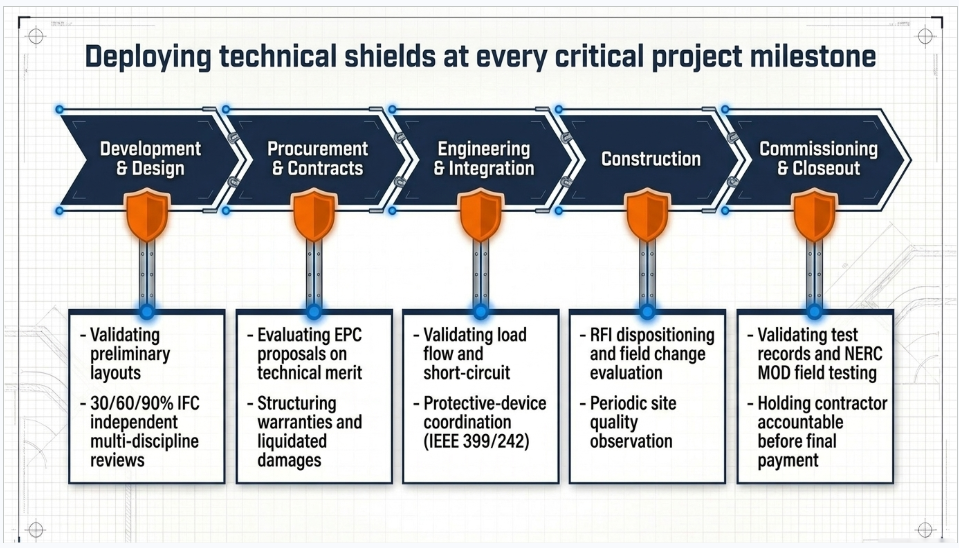
While every engagement is tailored, a comprehensive Owner’s Engineer scope tracks the project across its full lifecycle. The following stages describe where the role typically applies.
Development and Design
In the earliest phase, the OE helps the owner establish the technical basis of the project: defining the owner’s project requirements, reviewing preliminary layouts and energy models, sanity-checking capacity and production assumptions, and advising on site constraints such as floodplains, wetlands, setbacks, and access. As the design matures, the OE performs independent, multi-discipline review of design packages at progressive milestones — typically 30, 60, and 90 percent and issued-for-construction — confirming conformance with the owner’s specifications, applicable codes, and good utility practice, and maintaining a tracked comment log through resolution.
Procurement and Contracts
The OE supports the owner in evaluating EPC and major-equipment proposals on technical merit, not just price. This includes reviewing technical specifications and scopes of work, comparing bidders on an equal basis, assessing proposed equipment substitutions, and helping structure warranties, performance guarantees, liquidated-damages provisions, and acceptance criteria so the owner is protected if performance falls short. Where the owner is furnishing major equipment directly, the OE helps define the responsibility boundaries between owner-supplied and contractor-installed scope.
Engineering and Integration Studies
Utility-scale plants are systems, not collections of parts. The OE reviews and validates the electrical studies that make the parts work together: load flow, short-circuit, protective-device coordination, arc-flash, grounding, and the reactive-power and voltage-support requirements imposed at the point of interconnection. For projects pairing solar with storage, the OE pays particular attention to how the battery’s controls and modes of operation integrate with the plant and the grid.
Construction
During construction the OE provides ongoing technical support — reviewing and dispositioning requests for information, shop drawings, and submittals; evaluating field changes and nonconformances; and conducting periodic site visits at key milestones to observe conformance with the design and quality expectations. The cadence of on-site presence is scaled to the owner’s risk tolerance, from periodic milestone visits to a full-time resident engineer.
Commissioning, Testing, and Closeout
As the plant approaches energization, the OE reviews commissioning plans, test procedures, and acceptance criteria, then witnesses or reviews the records from cold and hot commissioning, performance testing, and substation completion. At closeout, the OE reviews as-built drawings, operations and maintenance manuals, warranties, and final documentation for completeness, supporting the owner’s final acceptance and turnover to operations.
Where an Owner’s Engineer Adds the Most Value
Across hundreds of decision points, a handful consistently produce the greatest return on the owner’s investment in independent engineering:
- Independent design review. The earlier a design flaw is caught, the cheaper it is to fix. Nothing an OE does pays back faster.
- Interconnection and protection. The interface with the grid is technically demanding, schedule-critical, and unforgiving; errors here delay energization and revenue.
- Owner-furnished equipment. When owners buy major equipment directly to control cost or meet content requirements, the handoff to the installing contractor creates gaps in storage, insurance, and warranty responsibility that an OE closes before they become disputes.
- Energy storage integration and safety. Battery systems introduce controls complexity and fire-safety requirements that many owners are encountering for the first time.
- Commissioning and performance verification. The owner’s final leverage to enforce the contract lives here.
- Regulatory and financing compliance. Federally funded projects add prevailing-wage, domestic-content, and environmental-review obligations that must be engineered into the project, not bolted on afterward.
Keentel Engineering’s Owner’s Engineer Services
Keentel Engineering provides independent Owner’s Engineer and technical advisory services for utility-scale solar, battery energy storage, and high-voltage electrical infrastructure. We work exclusively in the owner’s interest, bringing discipline-level expertise across the technologies that define modern generation projects, and scaling our involvement to fit the project — from a focused design review to full lifecycle oversight from development through commissioning.
Core Capabilities
- Photovoltaic systems: array and single-axis tracker design review, energy modeling and production validation, module and inverter evaluation, and DC/AC system engineering.
- Battery energy storage (BESS): system sizing and integration review, controls and mode-of-operation assessment, augmentation strategy, and fire-safety and code-compliance review.
- Substation and interconnection: collector substation and GSU review, protection and coordination studies, grounding, and point-of-interconnection compliance.
- Collection systems: medium-voltage collection design review, cable and equipment rating checks, and constructability assessment.
- Integration studies: load flow, short-circuit, protective-device coordination, arc-flash, and reactive-power/voltage-support review across the integrated plant.
- Program support: project management, design and construction meeting leadership, submittal and RFI management, site observation, commissioning review, and as-built and closeout review.
Why Owners Choose Keentel
Keentel is a multi-discipline, NSPE member firm with professional engineers experienced in the full stack of utility-scale generation — from the DC field to the high side of the substation. We maintain four U.S. offices (Tampa, Austin, Sacramento, and Baltimore), giving owners responsive remote support paired with regional field coverage, and we hold credentials that reflect our standards of practice, including IEEE Senior Membership on staff, D-U-N-S registration, and BBB A+ accreditation. Above all, we bring an owner-first mindset: our recommendations are made solely to protect our client’s budget, schedule, quality, and long-term operation of the asset.
4
U.S. offices — national reach
Full stack
DC field to HV substation
Owner-only
No EPC or OEM conflicts
How an Engagement Works
Keentel scales its involvement to the owner’s needs and risk profile. A typical engagement begins with a scoping conversation to understand the project, the owner’s in-house capabilities, and where independent expertise adds the most value. We then propose a tailored scope — anything from a one-time design or study review to continuous oversight across a multi-year build — priced transparently on a time-and-materials basis so the owner pays for the expertise it actually uses. Throughout, we operate as an extension of the owner’s team: responsive, documented, and focused on keeping the project on budget, on schedule, and on spec.
Case Studies
The following case studies illustrate how independent Owner’s Engineer services protect owners in practice. In keeping with our confidentiality commitments, all client names, locations, and identifying details have been withheld, and figures are presented as representative rather than as attributions to any specific party.
CASE STUDY 01 · DESIGN REVIEW
Independent Design Review Uncovers Costly Errors Before Construction
The Situation
An owner developing a large utility-scale solar project engaged an EPC contractor under an accelerated schedule. With limited high-voltage and protection expertise in-house, the owner retained Keentel as Owner’s Engineer to independently review the design packages as they were issued.
The Challenge
The EPC’s design was progressing quickly toward issued-for-construction, and the owner had no independent way to judge whether the electrical design was sound. Several disciplines — collection system, protection, and grounding — were being finalized in parallel, increasing the chance that an integration error would be locked in before anyone noticed.
What Keentel Did
Keentel performed a structured, multi-discipline review at each design milestone, maintaining a tracked comment log through resolution. Our engineers identified a protective-device coordination gap that would have left part of the collection system inadequately protected, several conductor and equipment ratings that did not reconcile with the plant’s fault-current study, and grounding details that fell short of the owner’s specification. Each finding was documented with a recommended correction and back-checked once resolved.
The Outcome
Every issue was corrected on the drawing board — before procurement and construction — at the cost of a design markup rather than field re-work, replacement equipment, or a delayed energization. The owner entered construction with a design it could trust and a documented record of due diligence for its lender.
Pre-construction
Errors caught on paper
Multi-discipline
Protection · ratings · grounding
Zero field re-work
On the reviewed items
CASE STUDY 02 · ENERGY STORAGE
Battery Storage Integration and Fire-Safety Review De-Risks a First-of-Its-Kind Build
The Situation
An owner adding a large battery energy storage system to its portfolio for the first time engaged Keentel to provide Owner’s Engineer support focused on the storage system’s integration, controls, and safety.
The Challenge
The owner’s team was highly capable on conventional generation but had not previously delivered grid-scale storage. Key risks were concentrated in areas unique to batteries: how the system’s controls and modes of operation would integrate with the plant and the grid, whether the design met evolving fire-safety codes, and how capacity would be maintained over the project’s contracted life.
What Keentel Did
Keentel reviewed the storage system’s integration and controls philosophy against the plant’s interconnection requirements, evaluated the fire-safety and code-compliance approach — including the documentation the local authority having jurisdiction and emergency responders would require — and assessed the proposed augmentation strategy for holding capacity over time. We also reviewed the commissioning and performance-test plans to ensure acceptance criteria were unambiguous and enforceable.
The Outcome
The owner entered commissioning with a storage system whose controls, safety case, and performance criteria had been independently vetted. Ambiguities that could have surfaced as disputes at acceptance were resolved in advance, and the owner gained an internal reference for evaluating future storage projects.
First-of-kind
De-risked for the owner
Controls + safety
Independently vetted
Enforceable
Acceptance criteria set
CASE STUDY 03 · OWNER-FURNISHED EQUIPMENT
Closing the Owner-Furnished Equipment Gap on a Multi-Contract Project
The Situation
On a large generation project, the owner elected to purchase several categories of major equipment directly and have the EPC install them. Keentel was retained as Owner’s Engineer to oversee the technical interfaces across the multiple contracts.
The Challenge
Splitting supply from installation created classic seams: unclear responsibility for equipment storage and insurance between delivery and installation, ambiguous warranty handoffs, and the risk that a delivery-window mismatch would idle the installing contractor or expose the owner to damage claims with no clear owner.
What Keentel Did
Keentel mapped the responsibility boundaries between owner-furnished and contractor-installed scope in detail, flagging where storage, offloading, insurance, and warranty obligations needed to be assigned explicitly rather than left to assumption. We reviewed delivery windows against the construction sequence to surface conflicts early and coordinated the technical interface points among the owner, the equipment suppliers, and the installing contractor.
The Outcome
Responsibility gaps that commonly become change orders and warranty disputes were assigned and documented before they could materialize. The owner preserved the cost advantage of buying equipment directly while avoiding the interface risk that often erodes it.
Seams closed
Storage · insurance · warranty
Delivery vs build
Conflicts surfaced early
Cost advantage
Preserved without added risk
The Bottom Line
To discuss how an Owner’s Engineer can protect your solar, storage, or electrical infrastructure project, contact Keentel Engineering:
Head Office — Tampa, FL · (813) 389-7871
Offices in Tampa · Austin · Sacramento · Baltimore
NSPE Member Firm · IEEE Senior Member · D-U-N-S Registered · BBB A+ Accredited
© 2026 Keentel Engineering. This article is provided for general informational purposes and does not constitute engineering advice for any specific project. Case studies are anonymized; all client and project identifying details have been withheld to preserve confidentiality.
Frequently Asked Questions
Q. What exactly does an Owner’s Engineer do?
An Owner’s Engineer provides independent technical oversight on behalf of the project owner across design, procurement, construction, and commissioning. In practice that means reviewing designs and studies, evaluating equipment and contractor proposals, supporting the owner during construction with RFI and submittal review and site visits, and confirming the plant performs before final acceptance — always acting solely in the owner’s interest.
Q. How is an Owner’s Engineer different from the EPC’s engineer?
The EPC’s engineer produces and stamps the construction design and answers to the EPC contractor, whose incentive is to control its own cost. The Owner’s Engineer answers only to the owner and independently reviews that design to make sure it serves the owner’s interests. The two roles are complementary but their loyalties are different — which is precisely why an owner benefits from having its own.
Q. Do I still need an Owner’s Engineer if I have a lender’s Independent Engineer?
Yes. The lender’s Independent Engineer protects the financing party and certifies milestones so funds can be released; it is not tasked with advising the owner on day-to-day technical decisions or advocating for the owner’s long-term operational interests. The two roles coexist on most financed projects, and the Owner’s Engineer often serves as the owner’s technical interface to the lender’s IE.
Q. When should I bring an Owner’s Engineer on board?
As early as possible — ideally before the EPC contract and major-equipment specifications are finalized. The owner’s leverage to set technical requirements, warranties, and acceptance criteria is highest before contracts are signed, and the value of independent review is greatest during design, when errors are cheapest to correct. That said, an OE can add value at any stage, including stepping into a project already underway.
Q. How much does an Owner’s Engineer cost?
Owner’s Engineer fees are typically a small fraction of total project cost and vary with scope, project size, duration, and how much on-site presence is required. A remote-weighted advisory scope with periodic site visits costs far less than a full-time resident engineering presence. Because the role routinely prevents change orders, schedule delays, and performance shortfalls that dwarf its fee, owners generally view it as risk mitigation that pays for itself.
Q. Can an Owner’s Engineer also be my design engineer?
Generally the roles are kept separate to preserve independence. The value of the Owner’s Engineer comes from reviewing others’ work objectively; if the same firm produced the design, that independence is compromised. Keentel serves as an independent reviewer and advisor and does not act as the EPC’s engineer of record on the projects it oversees.
Q. What is “owner-furnished equipment,” and why does it matter?
On many projects the owner purchases major equipment — modules, transformers, batteries — directly, to control cost or meet content requirements, and the EPC installs it. This split creates gaps in responsibility for storage, offloading, insurance, and warranty at the handoff between owner and contractor. An Owner’s Engineer defines those boundaries clearly up front so that damage, delay, or defect claims do not fall through the cracks.
Q. Do you handle battery storage as well as solar?
Yes. Energy storage is a core competency. Beyond electrical integration, Keentel reviews battery controls and modes of operation, augmentation strategy to hold capacity over the asset’s life, and the fire-safety and code-compliance requirements that increasingly govern how and where storage can be built and how emergency responders interface with it.
Q. How do federal funding requirements affect the engineering?
Federally supported projects layer in obligations such as prevailing-wage rules, domestic-content requirements, and environmental review. These are not paperwork exercises bolted on at the end — they influence equipment selection, documentation, and schedule, and they need to be engineered into the project from the start. An Owner’s Engineer familiar with these programs helps the owner stay compliant without unnecessary cost or delay.
Q. How much of the work is remote versus on-site?
It depends on the owner’s preference and the project’s risk profile. Much of an Owner’s Engineer’s work — design and study review, submittal and RFI dispositioning, commissioning document review — is performed efficiently from the office, complemented by targeted site visits at key milestones. Owners who want continuous field oversight can add a resident engineer. Keentel scales the mix to fit each project.

About the Author:
Sandip "Sonny" R. Patel, P.E.
IEEE Senior Member · Founder & CEO, Keentel Engineering
In 1995, Sonny Patel earned his Electrical Engineering degree from the University of Illinois. But degrees don't build legacies — action does.
For three decades, he has worked the power industry from every side of the table: 16 years as a utility engineer at Exelon/Commonwealth Edison; generation leadership across hydroelectric, industrial steam turbine, and a 9 GW renewable fleet; NERC Regional Entity Senior Compliance Engineer and Audit Team Lead, auditing some of the nation's largest utilities; and testing and commissioning lead on equipment up to 765 kV — the very top of the North American grid.Utility. Generator. Regulator. Consultant. Few engineers have seen all four seats. Fewer still have sat in them.
His experience spans nuclear, hydro, conventional generation, renewables, oil and gas, mining — and today's data centers, where he is authoring a three-book series on data center design. He is a Licensed Professional Engineer in six states and a Licensed Electrical Contractor in Florida (Unlimited EC) — he doesn't just design the work; he's qualified to stand behind its execution.Today, as Founder and CEO of Keentel Engineering, Sonny leads a nationwide team of engineers delivering substation design, power system studies, NERC compliance, and commissioning — done right, coast to coast.Three decades. Every side of the table. One standard: accountable engineering.
Services

Let's Discuss Your Project
Let's book a call to discuss your electrical engineering project that we can help you with.
About the Author:
Sandip "Sonny" R. Patel, P.E.
IEEE Senior Member · Founder & CEO, Keentel Engineering
In 1995, Sonny Patel earned his Electrical Engineering degree from the University of Illinois. But degrees don't build legacies — action does.
For three decades, he has worked the power industry from every side of the table: 16 years as a utility engineer at Exelon/Commonwealth Edison; generation leadership across hydroelectric, industrial steam turbine, and a 9 GW renewable fleet; NERC Regional Entity Senior Compliance Engineer and Audit Team Lead, auditing some of the nation's largest utilities; and testing and commissioning lead on equipment up to 765 kV — the very top of the North American grid.
Utility. Generator. Regulator. Consultant. Few engineers have seen all four seats. Fewer still have sat in them.
His experience spans nuclear, hydro, conventional generation, renewables, oil and gas, mining — and today's data centers, where he is authoring a three-book series on data center design. He is a Licensed Professional Engineer in six states and a Licensed Electrical Contractor in Florida (Unlimited EC) — he doesn't just design the work; he's qualified to stand behind its execution.
Today, as Founder and CEO of Keentel Engineering, Sonny leads a nationwide team of engineers delivering substation design, power system studies, NERC compliance, and commissioning — done right, coast to coast.Three decades. Every side of the table. One standard: accountable engineering.
Leave a Comment
Thank you for contacting us.
We will get back to you as soon as possible.
We will get back to you as soon as possible.
Oops, there was an error sending your message.
Please try again later.
Please try again later.
Related Posts
By SANDIP R PATEL
•
October 3, 2026
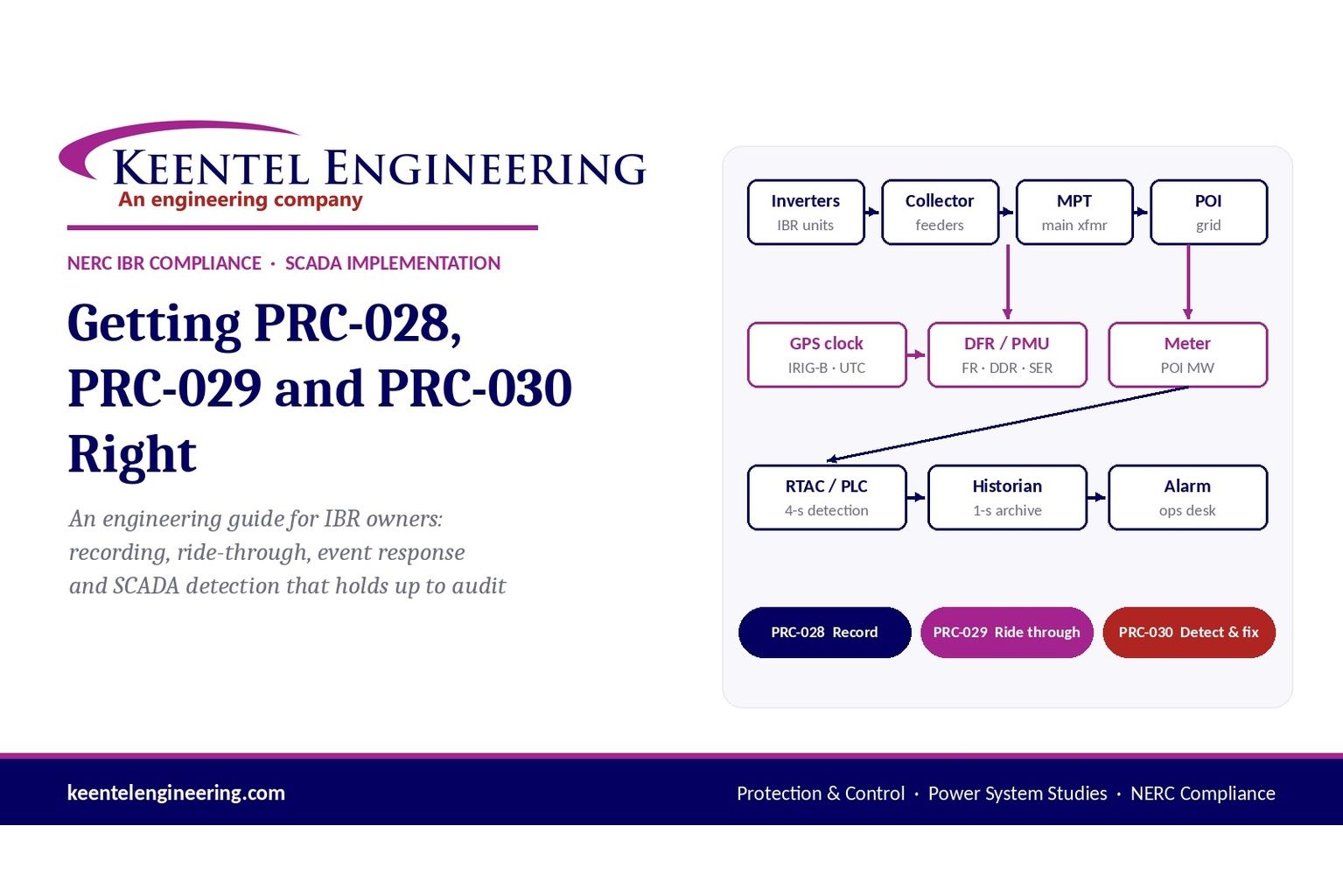
Engineering guide to PRC-028 disturbance recording, PRC-029 ride-through and PRC-030 event detection for inverter-based resources.
By SANDIP R PATEL
•
October 3, 2026
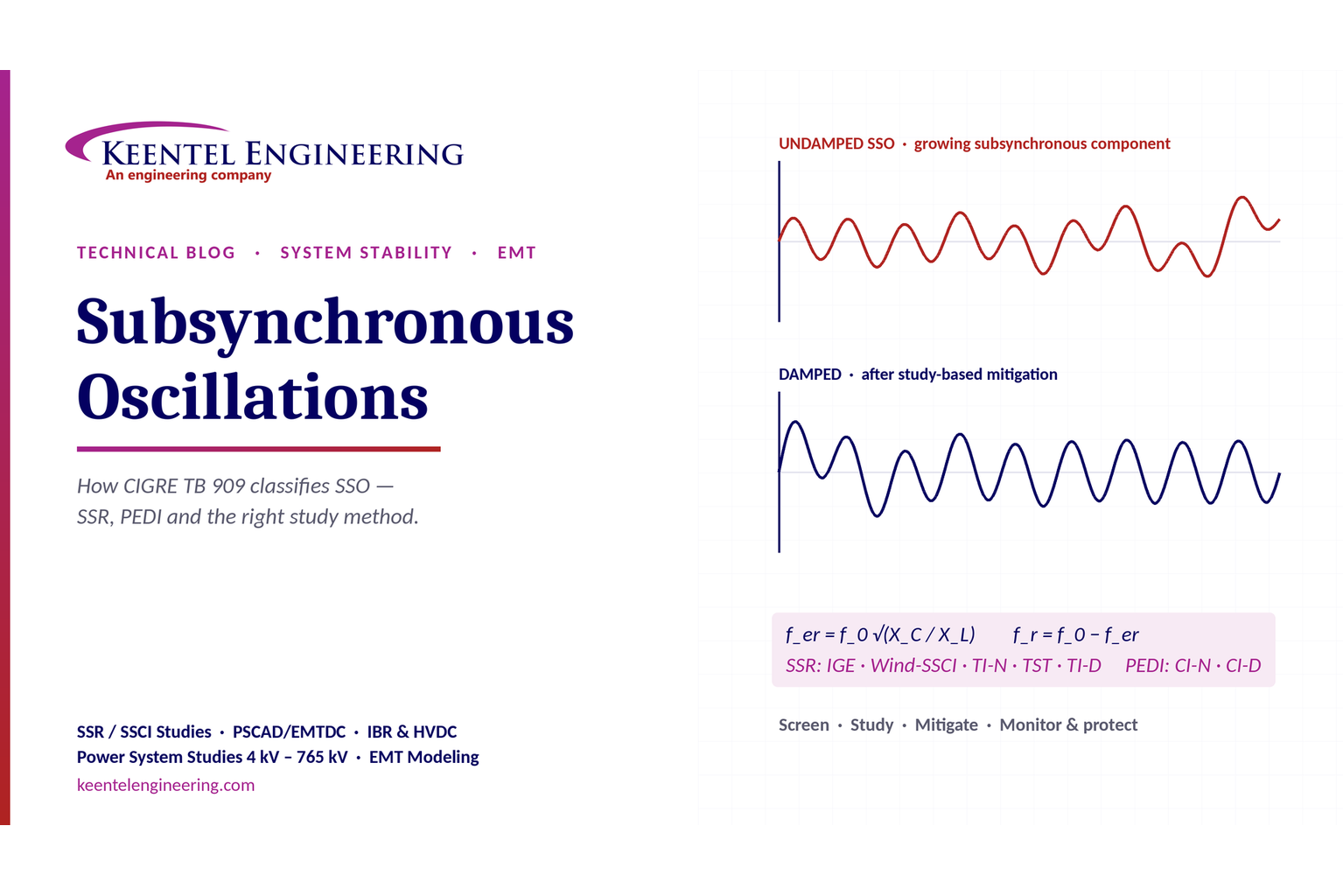
A practical guide to SSO classification, SSR, PEDI, Wind-SSCI, EMT analysis, mitigation and protection based on CIGRE TB 909.
By SANDIP R PATEL
•
October 6, 2026
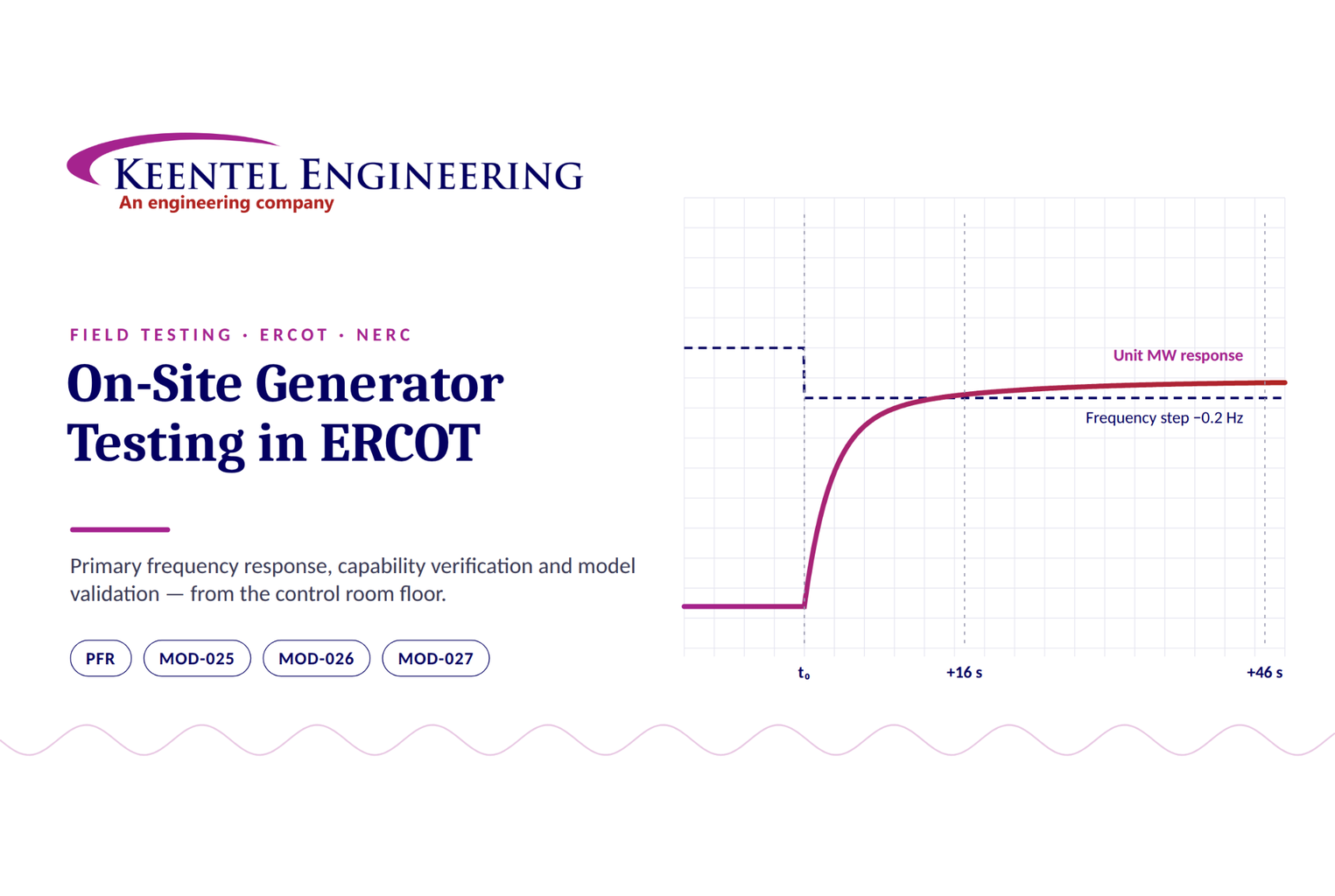
Learn ERCOT generator testing for PFR, MOD-025 and MOD-026/027, including staged tests, capability verification, dynamic models and field testing.
By SANDIP R PATEL
•
October 3, 2026
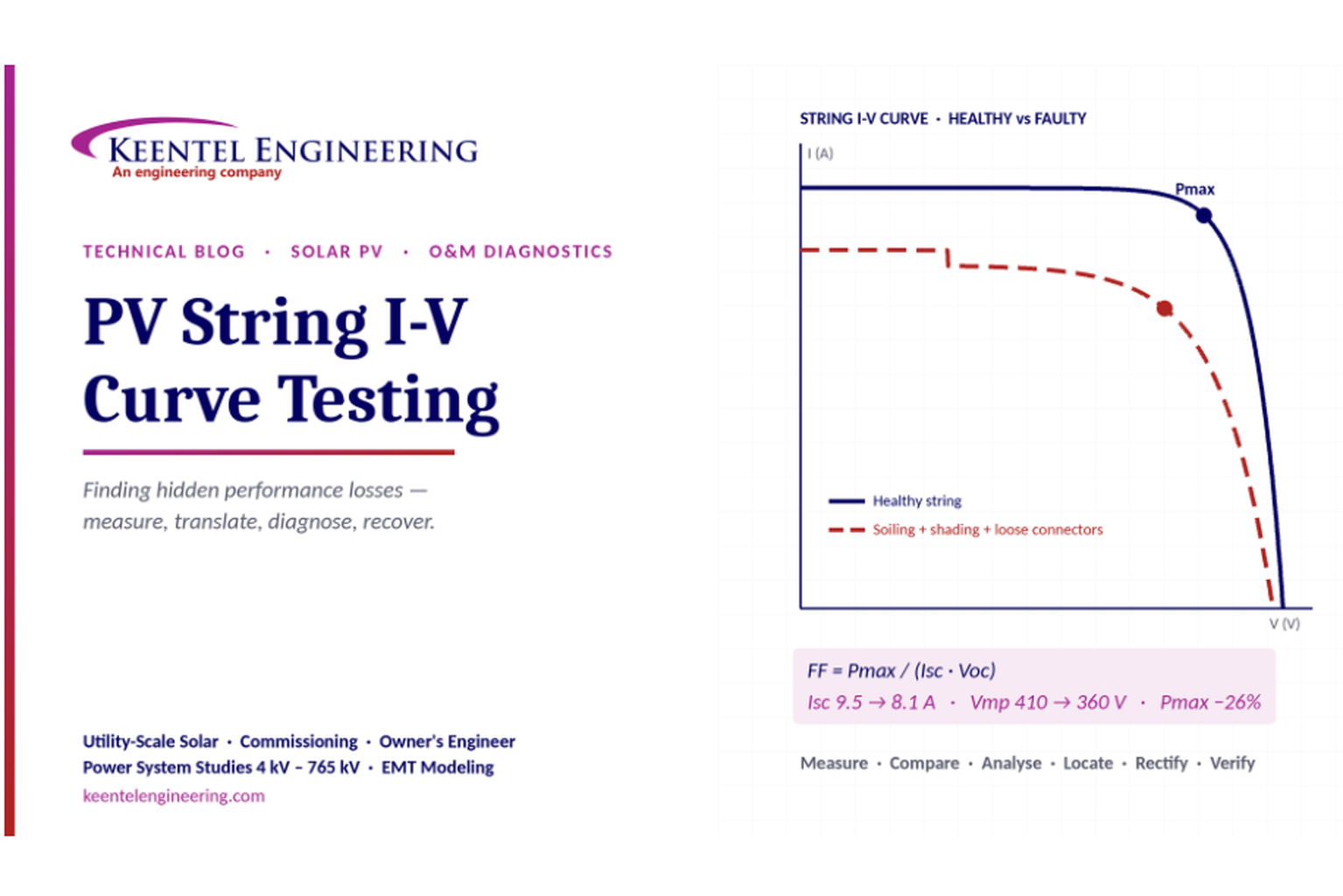
Learn how PV string I-V curve testing identifies hidden solar performance losses, including soiling, shading, mismatch, degradation, and wiring faults.
By SANDIP R PATEL
•
October 3, 2026
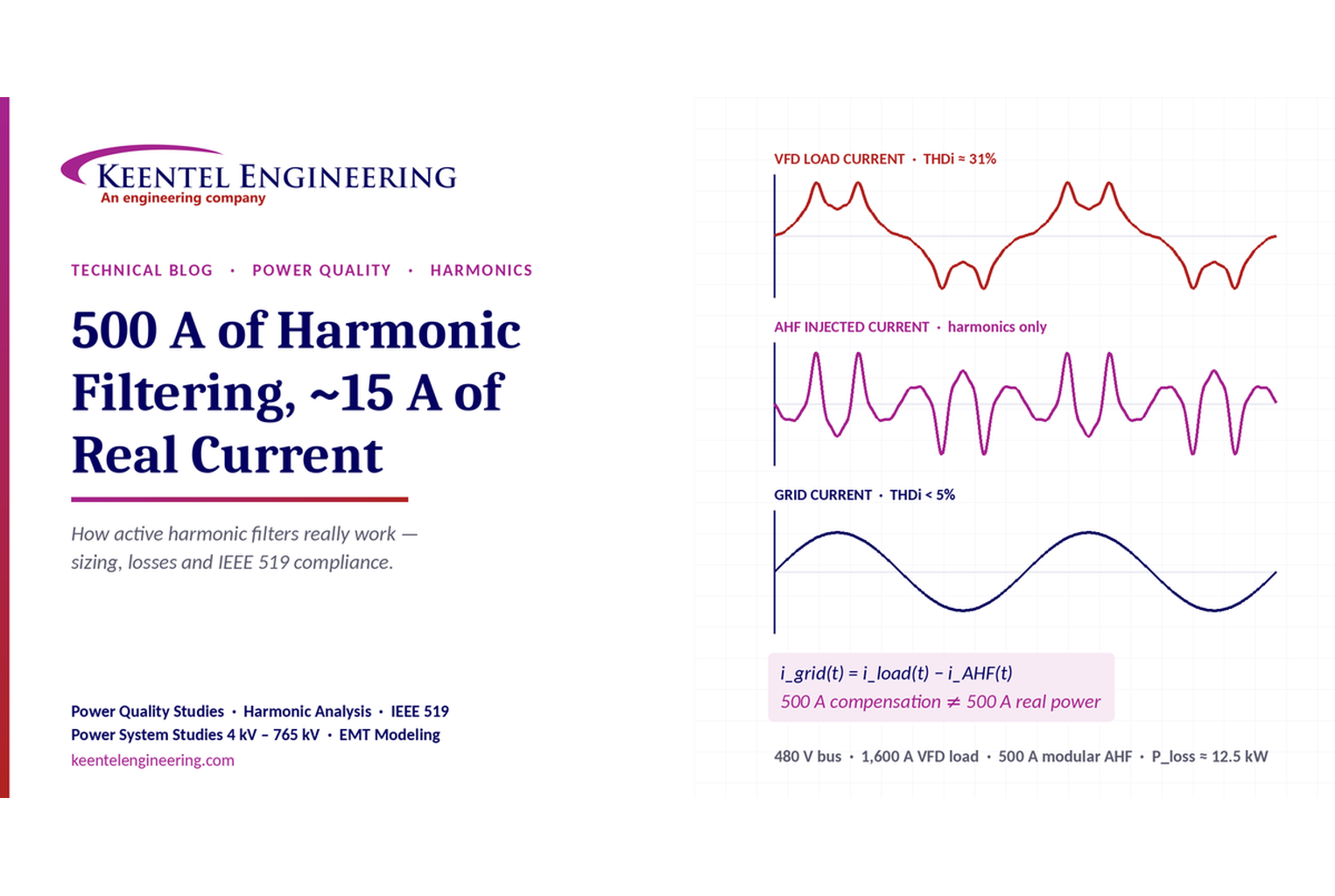
Learn how active harmonic filters work, how to size AHF systems, reduce VFD harmonics, calculate losses, and meet IEEE 519 TDD limits at the PCC.
By SANDIP R PATEL
•
October 3, 2026
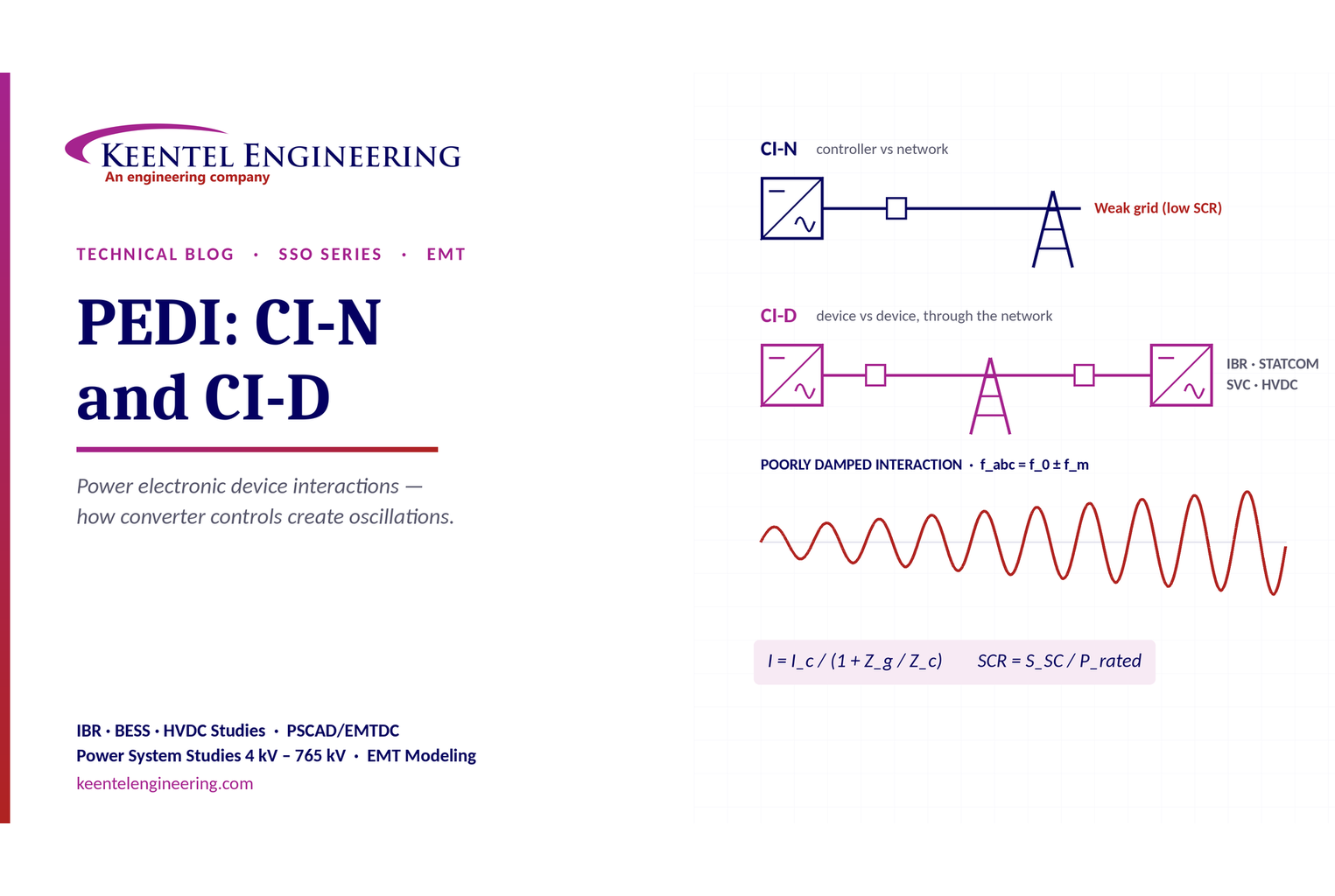
Learn power electronic device interactions (PEDI), including CI-N and CI-D, weak-grid stability, SCR, EMT studies, impedance analysis and mitigation for IBRs.
By SANDIP R PATEL
•
October 3, 2026
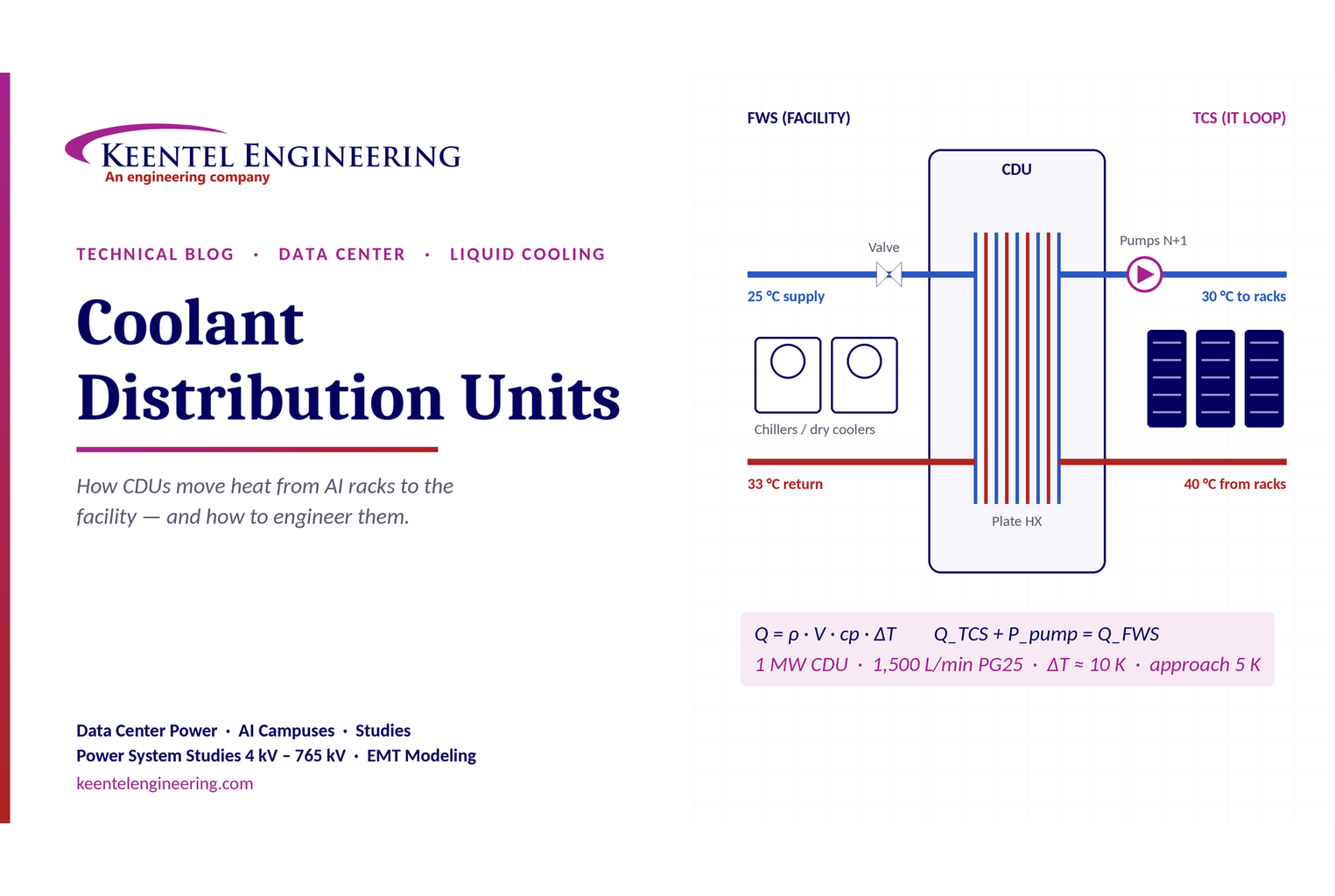
Learn how data center coolant distribution units (CDUs) work, including FWS and TCS loops, heat transfer, sizing, redundancy and liquid cooling for AI data centers.
By SANDIP R PATEL
•
October 3, 2026
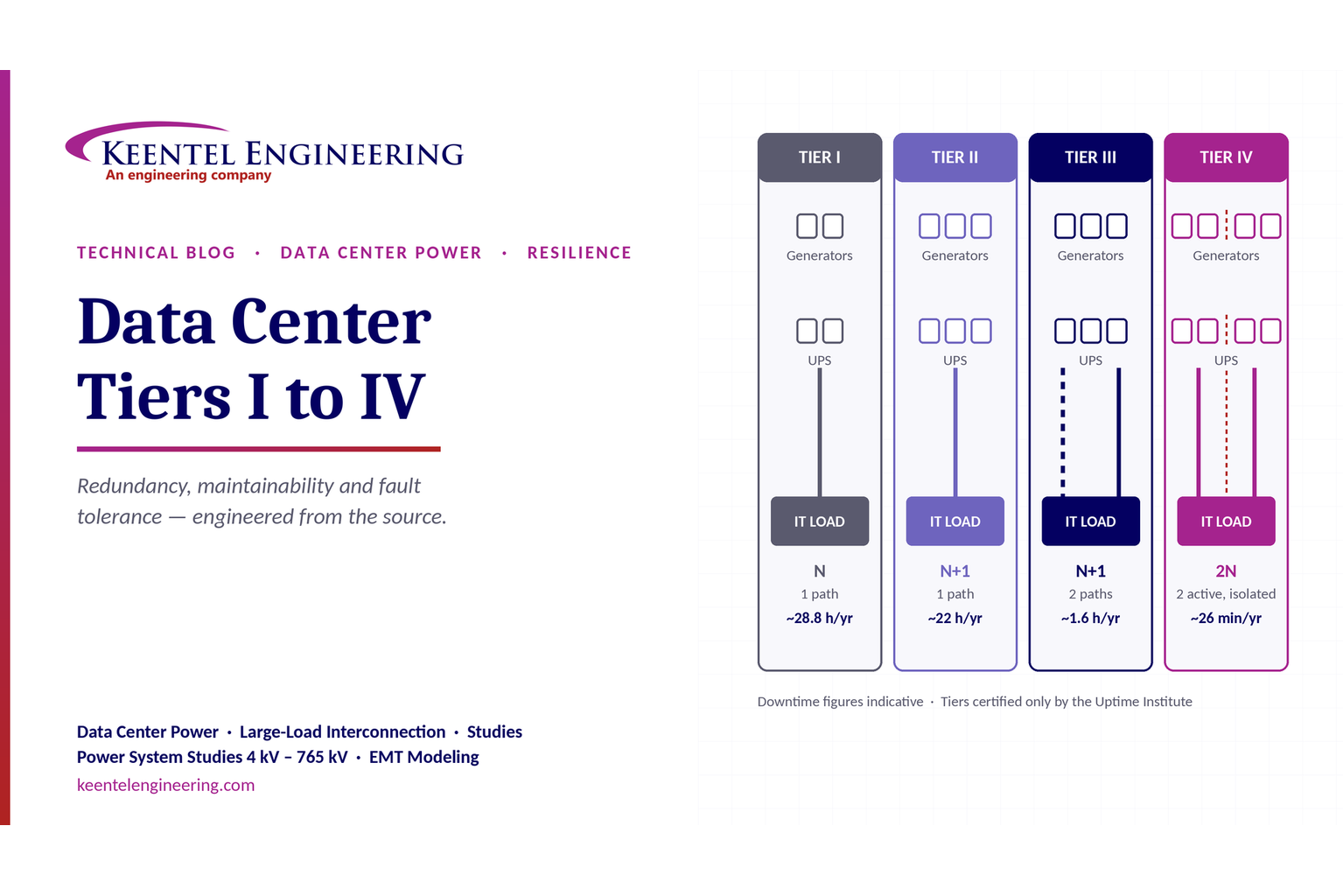
Compare Data Center Tiers I–IV, including redundancy, uptime, Tier III concurrent maintainability, Tier IV fault tolerance, UPS, generators and power design.
By SANDIP R PATEL
•
October 3, 2026
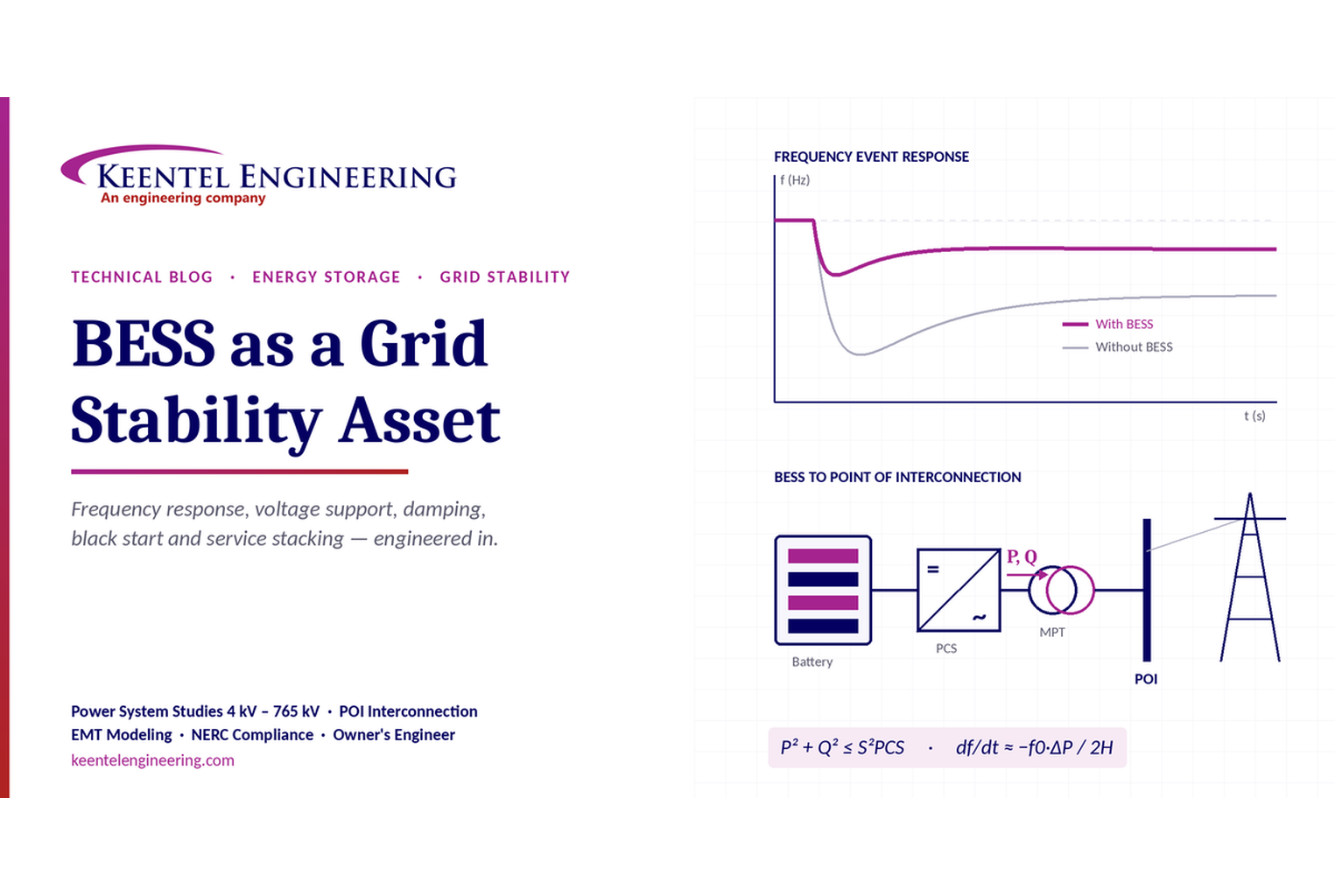
Learn how BESS supports grid stability through fast frequency response, voltage support, oscillation damping, black start, grid-forming controls and EMT studies.