A Coordinated Electric System Interconnection Review—the utility’s deep-dive on technical and cost impacts of your project.
Challenge: Frequent false tripping using conventional electromechanical relays
Solution: SEL-487E integration with multi-terminal differential protection and dynamic inrush restraint
Result: 90% reduction in false trips, saving over $250,000 in downtime
ERCOT enforces all of the above through simulation, which means your model is your compliance case. The bar is now high:
- Whole-facility scope. The model must represent everything the IT load, the UPS and power conversion, the cooling plant, the protection and control systems in formats compatible with ERCOT's study platforms (PSS/E, PSCAD, TSAT).
- Real control loops, not approximations. Generic textbook representations are unacceptable. The model must capture the actual inner control behavior of your power electronics.
- Hardware-validated converter models. For electronic loads, the PSCAD model must be benchmarked against actual hardware testing including voltage ride-through and subsynchronous response. A model assembled from standard PSCAD library blocks fails by definition, because a generic block has never been tested against your vendor's hardware. The good news: validation is a hardware-type test, so results for a given converter product are reusable across every facility that uses it.
- Format migration. Facilities that previously submitted the older composite load model (CMLD) format must transition to EPRI's PERC1 format.
- Three checkpoints. Models are reviewed before the stability study begins (no model, no study), before each quarterly stability assessment, and for electronic loads one final time before energization, when you must submit as-built models with a documented comparison against the previously studied data and a sworn attestation that the model matches actual field settings. ERCOT's review takes 10 business days, extendable by 20 put it on your critical path.
- A living obligation. Change your technology, controls, or relay settings in a way that affects ride-through including converting a crypto mining site to an AI data center — and you've triggered a new interconnection study, even if your megawatts don't change.
| Parameter | Detail |
|---|---|
| System | 230 kV / 138 kV transmission corridors, wind and wet-snow icing exposure |
| Data basis | 15 years of minute-resolution forced-outage records + regional weather observations |
| Core methods | Event grouping, MVA performance curves, time-to-95%-restore, area outage rate curves, fragility modeling, rerun-history benefits, exceedance and log-domain risk metrics |
| Headline result | ≈85% of maximum resilience benefit at 60% of original capital; worst-event restoration window cut from 11 days to 5 in rerun-history terms |
| Decision supported | Capital portfolio selection; resilience plan filing; post-investment verification framework |
| System / Topic | Governing Standard(s) | What It Controls |
|---|---|---|
| Overall plant electrical distribution | IEEE 141 (Red Book); IEEE 666 | Distribution architecture, voltage selection, design of generating station auxiliary service systems |
| Power system studies | IEEE 399 (Brown Book); IEEE 551 | Load flow, symmetrical/asymmetrical short circuit, motor starting methodologies down to the lowest LV panelboard |
| Protection & coordination | IEEE 242 (Buff Book); IEEE 3004.5; IEEE C37 series | Generator relaying (21, 59N, 87G), time-current coordination, selective clearing between LV and MV tiers |
| GSU / UAT / SST transformers | IEEE C57.12.00 and C57 family | Transformer ratings, impedance, testing, loading |
| HV switchyard breakers | IEEE C37.06 | AC high-voltage circuit breaker preferred ratings |
| MV switchgear (13.8 kV) | IEEE C37.20.2; IEEE C37.20.7 | Metal-clad construction, compartmentalization, vacuum breakers; arc-resistant design with plenum venting |
| MV cable | UL 1072; ICEA S-93-639 (NEMA WC 74) | Type MV-105 shielded cable, 133% insulation level for HRG systems |
| LV switchgear (480 V) | IEEE C37.13; UL 1558 | Metal-enclosed LV power circuit breaker switchgear to 635 V, draw-out ACBs with electronic trip units |
| Motor control centers | UL 845; NEMA ICS 18 | LV-MCC construction, MCCB/MCP protection for motors under ~200 HP |
| Motors | NEMA MG-1 | Motor performance, starting characteristics, service factors |
| DC & battery systems | IEEE 485; IEEE 946 | Lead-acid battery sizing (125/250 VDC), DC auxiliary system design |
| Grounding | IEEE 80; IEEE 142 (Green Book) | Ground grid step/touch potential limits; system grounding including high-resistance grounding |
| Lightning protection | IEEE 998 | Direct-stroke shielding of switchyard and outdoor generator structures |
| Arc flash & electrical safety | IEEE 1584; NFPA 70E | Incident energy calculation; worker safety boundaries and PPE |
| Fire protection | NFPA 850 | Fire protection and risk management for combustion turbine generating plants |
| Installation code | NEC (NFPA 70); NESC | Wiring methods inside the plant fence; overhead/outdoor clearances at the switchyard |
| Interconnection & compliance | FERC LGIP; NERC MOD-025/026/027, PRC-019/024/029, FAC-008 | Interconnection process, model validation, protection/ride-through coordination, facility ratings |
| IFC / Construction Deliverable | Purpose |
|---|---|
| Stamped IFC packages | Legal basis for construction; P.E. responsible charge |
| Final relay settings & TCCs | Protection as-installed matches the coordination study |
| Calculation archive | Owner records; NERC audit evidence trail |
| Commissioning procedures | Safe, sequenced energization; MOD field testing |
| Construction support | RFIs, field changes, FAT/SAT witness |
| As-builts & model handoff | Operating baseline; future study currency |
| Metric | Outcome |
|---|---|
| Defects found pre-occupancy | Three topology defects and one settings-mismatch family corrected before load migration; the shared-switchboard defect alone would have invalidated the concurrently-maintainable claim on day one |
| IST findings | Fourteen additional discrepancies surfaced under scenario testing (control logic, alarm mapping, one generator sequencing fault) — all closed before handover instead of during operations |
| Black-building test | Passed on second execution; the first attempt exposed the generator sequencing fault under true block load, exactly the failure the compressed plan would never have found |
| Handover quality | Operations team certified on the actual failure scenarios; corrected EOPs and settings documentation delivered as controlled documents |
| Business outcome | Occupancy proceeded three weeks behind the original date — against an independent estimate that the uncorrected sequencing fault carried a high probability of a full facility outage within the first year |
Part 2 — Frequently Asked Questions: Large Load Interconnection
| Contact | Details |
|---|---|
| Headquarters | 400 N Ashley Dr STE 2600, Tampa, FL 33602 |
| Phone | (813) 389-7871 |
| contact@keentelengineering.com | |
| Florida Firm Registration | No. 36853 |
| Additional Offices | Austin, TX • Sacramento, CA • Baltimore, MD |
| Who | Acronym | Plain-English Role |
|---|---|---|
| ERCOT | — | The grid's air traffic controller. It doesn't own power lines or plants; it directs the flow of electricity across most of Texas and referees the admission process for new generators. |
| Interconnecting Entity | IE | You — the developer or owner trying to connect a new plant (or significantly modify an existing one). You file the application and drive the process. |
| Resource Entity | RE | The registered owner/operator of the generator once it becomes an official market participant. Often the same company as the IE, wearing a different hat. |
| Qualified Scheduling Entity | QSE | Your plant's voice on the grid. The QSE handles round-the-clock communications with ERCOT — telemetry, schedules, dispatch instructions. Every generator must have one. |
| Transmission Service Provider | TSP | The utility that owns the wires and substation you'll connect to. The TSP runs your detailed study, builds the connection facilities, and signs your interconnection contract. |
| RIOO-IS | — | ERCOT's online portal where the whole process lives — applications, documents, status tracking, and checklists all flow through it. |
| Who | Acronym | Plain-English Role |
|---|---|---|
| ERCOT | — | The grid's air traffic controller. It doesn't own power lines or plants; it directs the flow of electricity across most of Texas and referees the admission process for new generators. |
| Interconnecting Entity | IE | You — the developer or owner trying to connect a new plant (or significantly modify an existing one). You file the application and drive the process. |
| Resource Entity | RE | The registered owner/operator of the generator once it becomes an official market participant. Often the same company as the IE, wearing a different hat. |
| Qualified Scheduling Entity | QSE | Your plant's voice on the grid. The QSE handles round-the-clock communications with ERCOT — telemetry, schedules, dispatch instructions. Every generator must have one. |
| Transmission Service Provider | TSP | The utility that owns the wires and substation you'll connect to. The TSP runs your detailed study, builds the connection facilities, and signs your interconnection contract. |
| RIOO-IS | — | ERCOT's online portal where the whole process lives — applications, documents, status tracking, and checklists all flow through it. |
| Who | Acronym | Plain-English Role |
|---|---|---|
| ERCOT | — | The grid's air traffic controller. It doesn't own power lines or plants; it directs the flow of electricity across most of Texas and referees the admission process for new generators. |
| Interconnecting Entity | IE | You — the developer or owner trying to connect a new plant (or significantly modify an existing one). You file the application and drive the process. |
| Resource Entity | RE | The registered owner/operator of the generator once it becomes an official market participant. Often the same company as the IE, wearing a different hat. |
| Qualified Scheduling Entity | QSE | Your plant's voice on the grid. The QSE handles round-the-clock communications with ERCOT — telemetry, schedules, dispatch instructions. Every generator must have one. |
| Transmission Service Provider | TSP | The utility that owns the wires and substation you'll connect to. The TSP runs your detailed study, builds the connection facilities, and signs your interconnection contract. |
| RIOO-IS | — | ERCOT's online portal where the whole process lives — applications, documents, status tracking, and checklists all flow through it. |
| Who | Acronym | Plain-English Role |
|---|---|---|
| ERCOT | — | The grid's air traffic controller. It doesn't own power lines or plants; it directs the flow of electricity across most of Texas and referees the admission process for new generators. |
| Interconnecting Entity | IE | You — the developer or owner trying to connect a new plant (or significantly modify an existing one). You file the application and drive the process. |
| Resource Entity | RE | The registered owner/operator of the generator once it becomes an official market participant. Often the same company as the IE, wearing a different hat. |
| Qualified Scheduling Entity | QSE | Your plant's voice on the grid. The QSE handles round-the-clock communications with ERCOT — telemetry, schedules, dispatch instructions. Every generator must have one. |
| Transmission Service Provider | TSP | The utility that owns the wires and substation you'll connect to. The TSP runs your detailed study, builds the connection facilities, and signs your interconnection contract. |
| RIOO-IS | — | ERCOT's online portal where the whole process lives — applications, documents, status tracking, and checklists all flow through it. |
| Who | Acronym | Plain-English Role |
|---|---|---|
| ERCOT | — | The grid's air traffic controller. It doesn't own power lines or plants; it directs the flow of electricity across most of Texas and referees the admission process for new generators. |
| Interconnecting Entity | IE | You — the developer or owner trying to connect a new plant (or significantly modify an existing one). You file the application and drive the process. |
| Resource Entity | RE | The registered owner/operator of the generator once it becomes an official market participant. Often the same company as the IE, wearing a different hat. |
| Qualified Scheduling Entity | QSE | Your plant's voice on the grid. The QSE handles round-the-clock communications with ERCOT — telemetry, schedules, dispatch instructions. Every generator must have one. |
| Transmission Service Provider | TSP | The utility that owns the wires and substation you'll connect to. The TSP runs your detailed study, builds the connection facilities, and signs your interconnection contract. |
| RIOO-IS | — | ERCOT's online portal where the whole process lives — applications, documents, status tracking, and checklists all flow through it. |
| Who | Acronym | Plain-English Role |
|---|---|---|
| ERCOT | — | The grid's air traffic controller. It doesn't own power lines or plants; it directs the flow of electricity across most of Texas and referees the admission process for new generators. |
| Interconnecting Entity | IE | You — the developer or owner trying to connect a new plant (or significantly modify an existing one). You file the application and drive the process. |
| Resource Entity | RE | The registered owner/operator of the generator once it becomes an official market participant. Often the same company as the IE, wearing a different hat. |
| Qualified Scheduling Entity | QSE | Your plant's voice on the grid. The QSE handles round-the-clock communications with ERCOT — telemetry, schedules, dispatch instructions. Every generator must have one. |
| Transmission Service Provider | TSP | The utility that owns the wires and substation you'll connect to. The TSP runs your detailed study, builds the connection facilities, and signs your interconnection contract. |
| RIOO-IS | — | ERCOT's online portal where the whole process lives — applications, documents, status tracking, and checklists all flow through it. |
| Who | Acronym | Plain-English Role |
|---|---|---|
| ERCOT | — | The grid's air traffic controller. It doesn't own power lines or plants; it directs the flow of electricity across most of Texas and referees the admission process for new generators. |
| Interconnecting Entity | IE | You — the developer or owner trying to connect a new plant (or significantly modify an existing one). You file the application and drive the process. |
| Resource Entity | RE | The registered owner/operator of the generator once it becomes an official market participant. Often the same company as the IE, wearing a different hat. |
| Qualified Scheduling Entity | QSE | Your plant's voice on the grid. The QSE handles round-the-clock communications with ERCOT — telemetry, schedules, dispatch instructions. Every generator must have one. |
| Transmission Service Provider | TSP | The utility that owns the wires and substation you'll connect to. The TSP runs your detailed study, builds the connection facilities, and signs your interconnection contract. |
| RIOO-IS | — | ERCOT's online portal where the whole process lives — applications, documents, status tracking, and checklists all flow through it. |
Protection Design
| Parameter | Detail |
|---|---|
| Facility type | Mixed commercial campus with mechanical plant |
| Service | 480 V, 3-phase, multiple sub-boards |
| Problem | Chillers, AHUs, pumps, lighting |
| Solution | Distributed automatic banks at the sub-boards feeding mechanical loads |
| Installed rating | Sized to lift PF to ~0.97 across metered feeders Sized to lift PF to ~0.97 across metered feeders |
| Protection | NEC 460.8 sizing; bonded and discharge-verified NEC 460.8 sizing; bonded and discharge-verified |
| Parameter | Result | IEEE Std 80 Limit | Status |
|---|---|---|---|
| Grid resistance R_g (extended system) | 0.34 Ω | As low as practicable | Excellent (deep electrode contribution) |
| Earth potential rise | 3,808 V | N/A | Reference |
| Peak touch voltage (substation) | 486 V | 720 V (0.25 s) | Within limit |
| Peak touch voltage (mill building floor) | 412 V | 720 V | Within limit |
| Peak touch voltage (previously affected operator station) | 398 V | 720 V | Compliant |
| Step voltage (worst case, fence perimeter) | 298 V | 2,340 V | Within limit |
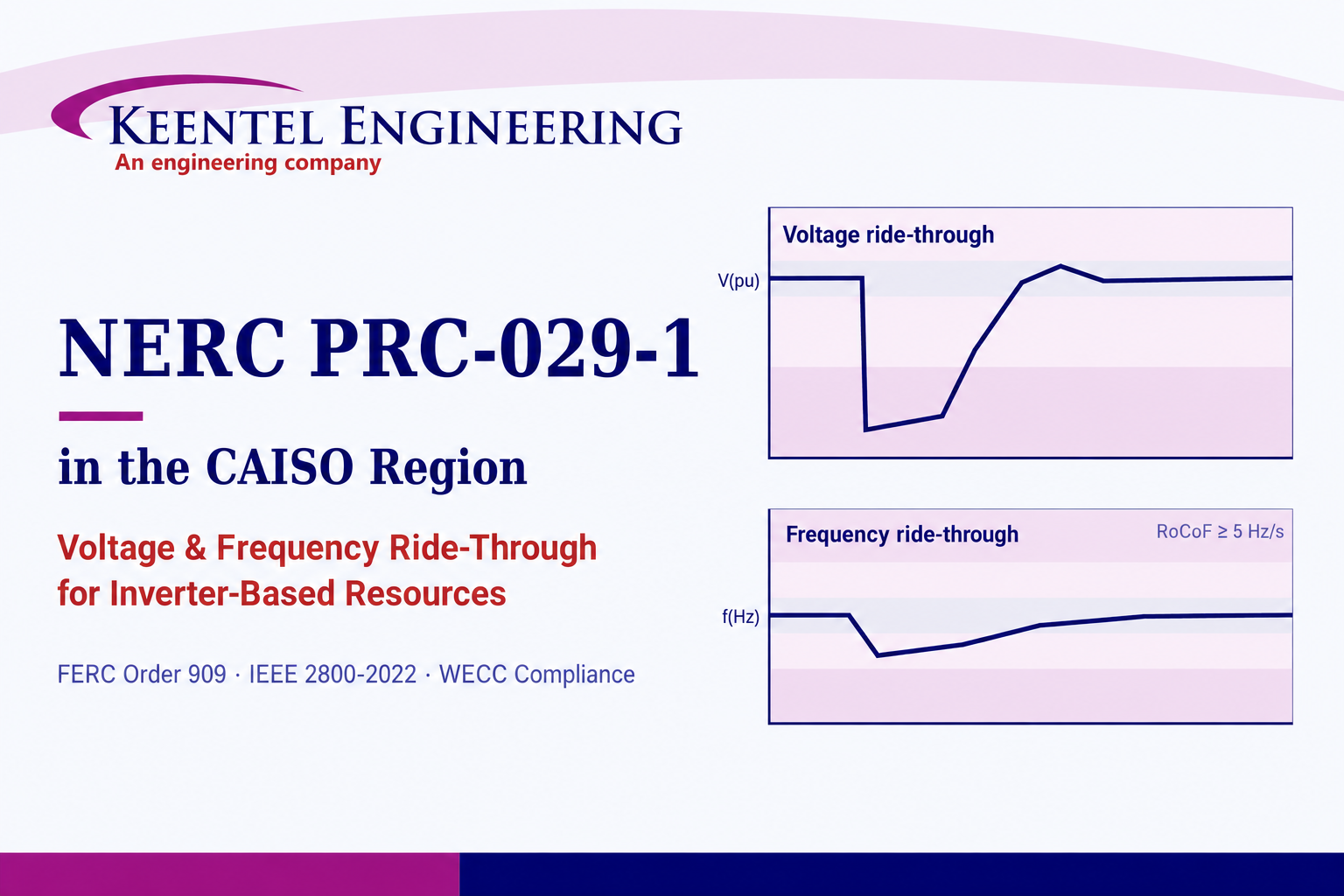
NERC PRC-029-1 in the CAISO Region
Aug 6, 2026 | Blog
Voltage and Frequency Ride-Through Requirements — and How Keentel Helps IBR Owners Comply
For years, inverter-based resources (IBRs) — solar PV, battery energy storage systems (BESS), and Type-3/Type-4 wind — were governed for ride-through purposes largely by PRC-024, a standard originally built around the protection settings of synchronous machines. The problem: IBRs don't behave like synchronous machines, and a settings-only framework failed to capture how power-electronic controls actually respond to disturbances.
The consequences showed up on the grid. In a series of events — most notably the 2022 Odessa disturbances in Texas, where a single transmission fault led to the unexpected loss of roughly 1,700 MW of solar output — inverters tripped offline or entered momentary cessation instead of supporting the system through the event. NERC event analyses repeatedly found IBRs disconnecting during disturbances even when their protection settings technically complied with the older standard.
FERC Order No. 901 directed NERC to close these reliability gaps across data sharing, model validation, and performance. The result on the ride-through side is PRC-029-1 — Frequency and Voltage Ride-through Requirements for Inverter-Based Resources, a performance-based standard that tells IBRs not just how to set their relays, but how they must actually behave during voltage and frequency excursions.
What PRC-029-1 Is — and Who It Applies To in the CAISO Region
FERC approved PRC-029-1 in Order No. 909 on July 24, 2025, alongside PRC-024-4 (which now governs synchronous generators, Type-1/Type-2 wind, and synchronous condensers) and a new formal NERC definition of “Ride-through.” This action formally moves IBRs out of the PRC-024 world and into a dedicated, performance-based compliance regime.
A key structural point for owners: PRC-029-1 adopts the voltage and frequency ride-through performance curves of IEEE 2800-2022, giving the industry technical standard the force of a mandatory NERC reliability requirement.
How this applies in the CAISO / WECC footprint
PRC-029-1 is a continent-wide NERC reliability standard. In the Western Interconnection — which includes the CAISO balancing area — it is enforced by WECC as the Regional Entity, and applies to registered IBR Generator Owners (GOs). For a California IBR asset, three distinct but overlapping obligations now sit on top of each other:
- CAISO interconnection requirements — Appendix H of the LGIA and IEEE 2800 alignment during interconnection studies and model review.
- NERC registration and PRC-029-1 compliance — mandatory ride-through performance, audited through WECC via the NERC Align workflow.
- Companion NERC standards — PRC-024-4 for applicable resources, and PRC-028-1 for disturbance monitoring.
The applicability net has also widened. Consistent with Order No. 901's IBR registration framework, the threshold for capturing IBR facilities has moved down toward the ~20 MVA range (from the older 75 MVA world), pulling many more projects into scope. Owners who previously assumed they were too small to be registered should re-check their status.
Key Dates and Phased Implementation
PRC-029-1 does not switch on all at once. The implementation is phased, and the exact dates should always be confirmed against NERC's official implementation plan, but the widely reported schedule is:
- Effective date: expected October 1, 2026 — the first day of the first calendar quarter twelve months after FERC approval.
- BES IBR facilities: compliance obligations beginning around the October 1, 2026 effective date.
- Non-BES IBR facilities: compliance by January 1, 2027.
- Design requirements (R1–R3): phased in at the effective date / January 1, 2027 depending on facility classification.
- Operational requirements: triggered once PRC-028-1 disturbance monitoring is operational.
- R4 legacy exemption window: a 12-month period beginning on the effective date, for existing IBRs with genuine hardware limitations.
The practical message: the design and evaluation work needs to start now. Many projects entering development today will not be commissioned within twelve months, and retrofitting ride-through behavior after the fact is far more expensive than designing for it up front.
Voltage Ride-Through Requirements
Voltage ride-through is the core of PRC-029-1. Rather than a single “trip / don't trip” line, the standard defines voltage-versus-time regions (drawn from IEEE 2800) that dictate exactly how an IBR must respond as terminal voltage deviates from nominal.
The ride-through regions
- Continuous operation: within the normal band (approximately 0.90–1.10 per unit), the IBR must operate continuously and indefinitely.
- Mandatory operation (ride-through / “no-trip”) zone: for excursions outside the continuous band but within defined magnitude-and-duration envelopes, the IBR must remain connected and continue exchanging current. Tripping here is a violation.
- Permissive operation zone: for more severe or longer excursions, the IBR may trip but is not required to.
- May cease injection / momentary cessation zone: only within narrowly defined deep-undervoltage or high-overvoltage conditions may the IBR temporarily cease current injection — and it must return rapidly once voltage recovers.
What the inverter must actually do
- Stay connected through faults — ride through both balanced (three-phase) and unbalanced faults for the defined durations rather than disconnecting.
- Provide dynamic voltage support — inject reactive (and where applicable active) current during low-voltage events, scaled to the depth of the deviation; absorb reactive current during high-voltage events.
- Limit and control momentary cessation — blanking out current is only permitted in the narrow high/low-voltage extremes the standard defines.
- Ride through phase-angle jumps of up to 25 degrees — a real challenge for phase-lock-loop (PLL) designs.
- Recover active power quickly — restore output promptly and in a controlled manner once voltage returns to the normal band.
For CAISO-region owners, these voltage requirements overlap heavily with the ride-through intent of CAISO Appendix H — but the specific curves, thresholds, and (critically) the enforcement mechanism differ. Designing a plant to satisfy one does not automatically satisfy the other; the settings and control behavior have to be reconciled across both.
Frequency Ride-Through Requirements
PRC-029-1 also establishes frequency-versus-time ride-through obligations, again aligned with IEEE 2800 curves. The goal is to keep IBRs online and supportive through off-nominal frequency events instead of letting them cascade offline.
Core frequency provisions
- Continuous operation band — within a defined band around 60 Hz, the IBR must operate continuously.
- Ride-through envelopes — for excursions above and below the continuous band, the standard defines magnitude-and-duration envelopes within which the IBR must not trip.
- RoCoF ride-through of at least 5 Hz per second — demanding for control and PLL stability, especially in low-inertia areas. (RoCoF is evaluated over a defined averaging window and excludes the fault-on/clearing instant.)
- Frequency response — where required, provide the expected active-power-versus-frequency response and recover real power per the standard following an excursion.
Under CAISO Appendix H, frequency ride-through was historically handled by pointing to “the applicable NERC Reliability Standard … or successor requirements.” PRC-029-1 is effectively that successor for IBRs — so the CAISO frequency obligation and the NERC frequency requirement now converge on the same performance-based framework.
How PRC-029-1 Fits With PRC-024-4, PRC-028-1, IEEE 2800, and CAISO Appendix H
- PRC-029-1 — performance-based ride-through requirements for IBRs (the “how the plant must behave” standard).
- PRC-024-4 — frequency and voltage protection settings for synchronous generators, Type-1/2 wind, and synchronous condensers (IBRs are removed from this).
- PRC-028-1 — disturbance monitoring for IBRs; PRC-029-1's operational requirements are tied to PRC-028-1 monitoring being in place.
- IEEE 2800-2022 — the technical performance baseline whose ride-through curves PRC-029-1 adopts.
- CAISO Appendix H — the contractual interconnection requirements for asynchronous (inverter-based) facilities connecting to the CAISO grid.
A California BESS or solar project has to satisfy the CAISO interconnection layer and the mandatory NERC layer, with IEEE 2800 as the common technical thread and WECC as the compliance enforcer. Harmonizing inverter and plant-controller settings so a single, consistent configuration meets all of them is a core engineering exercise — not a paperwork one.
Legacy IBRs and R4 Exemptions
Recognizing that some existing IBRs physically cannot meet the new curves without hardware replacement, PRC-029-1 includes an exemption provision (Requirement R4). A Generator Owner of an IBR already in service by the effective date, with known hardware limitations that prevent compliance with R1–R3, may request an exemption from specific requirements during the 12-month exemption window.
- In Order No. 909, FERC directed NERC Compilance to broaden the acceptable forms of evidence for demonstrating that legacy equipment cannot comply — beyond just OEM-provided damage curves.
- FERC specifically flagged HVDC-connected IBRs with chopper circuits (e.g., certain offshore wind) and long-lead-time projects already in development as categories needing accommodation.
- If hardware is later modified after an exemption is granted, the GO must notify its Planning Coordinator, Transmission Planner, Reliability Coordinator, and Transmission Operator (within 90 days) and then comply with the applicable R1–R3 requirements.
- NERC must file an informational report on the reliability impact of granted exemptions after the request period closes.
Building a defensible exemption package — with the right technical evidence — is itself a specialized engineering and documentation task.
Why Compliance Now Demands EMT Modeling
A crucial shift under PRC-029-1: a protection-settings review is no longer sufficient. Because the standard is performance-based, demonstrating compliance requires showing how the plant actually behaves during disturbances. That means:
- Positive-sequence models (PSS®E / PSLF) for system-level dynamic studies, and
- Electromagnetic transient (EMT) models (PSCAD) that capture the fast, non-linear behavior of inverter controls, PLL dynamics, current limiting, and momentary cessation logic.
EMT simulation provides the technically defensible basis for proving ride-through compliance — across a range of short-circuit ratios (SCRs), flat-run stability checks, and voltage/frequency disturbance tests at the Point of Interconnection. CAISO's own model validation expectations reinforce this: unvalidated or generic models that don't match field behavior undermine both interconnection approval and PRC-029-1 demonstration.
Where IBR Owners Commonly Struggle
- PLL stability under phase jumps and high RoCoF — meeting the 25° phase-jump and 5 Hz/s RoCoF requirements without nuisance tripping.
- Reconciling three frameworks at once — CAISO Appendix H, PRC-029-1, and IEEE 2800 with a single control configuration.
- Momentary cessation logic — configured too aggressively, it violates the standard; too conservatively, it risks equipment.
- Model fidelity — EMT and positive-sequence models that don't reproduce real inverter behavior.
- Legacy fleet decisions — retrofit, reconfigure, or pursue an R4 exemption, and assembling the evidence.
- Registration uncertainty — facilities newly captured near the ~20 MVA threshold.
- Coordinating the operational trigger — aligning PRC-028-1 monitoring with PRC-029-1 operational requirements.
How Keentel Engineering Assists IBR Owners with PRC-029-1
Keentel Engineering actively supports Generator Owners, developers, and asset managers through the full technical, modeling, protection, and compliance implications of PRC-029-1 — bringing over three decades of utility-scale power-system experience and engineers licensed across the U.S., including California.
Ride-Through Design Evaluations — Plant-level voltage and frequency ride-through design evaluations against the PRC-029-1 / IEEE 2800 curves — assessing whether the inverter and plant-controller design will ride through the required voltage regions, frequency envelopes, phase-angle jumps, and RoCoF events, and identifying gaps early.
EMT and Positive-Sequence Modeling and Validation — Building and validating PSCAD EMT models and PSS®E / PSLF positive-sequence models, and running the disturbance, SCR-sweep, flat-run, and voltage/frequency test simulations needed to demonstrate ride-through at the POI and satisfy CAISO model validation.
Inverter and Plant-Controller Tuning (Including PLL) — Optimizing inverter control parameters, PLL behavior, reactive-current logic, and plant-level controls so the plant meets the mandatory-operation zones and recovery requirements without nuisance trips.
Protection Coordination and PRC-024-4 Alignment — Reviewing protection philosophy and relay logic (with deep SEL expertise) to align settings with PRC-024-4 where applicable and avoid conflicts with the PRC-029-1 ride-through obligations.
Legacy Fleet Strategy and R4 Exemption Packages — Evaluating retrofit-versus-reconfigure-versus-exempt options and preparing defensible R4 exemption documentation using the broadened evidence forms FERC directed.
PRC-028-1 Disturbance Monitoring Integration — Supporting the design and integration of GPS-synchronized, high-resolution disturbance monitoring so operational ride-through requirements can be met and demonstrated.
Registration, Gap Assessment, and Audit Support — Confirming NERC registration status under the widened applicability, performing compliance gap assessments and roadmaps, and guiding clients through the NERC Align workflow and WECC audit preparation.
End-to-End Owner's Engineer Support —
Acting as an independent Owner's Engineer from interconnection study through commissioning and ongoing compliance across CAISO and other ISO/RTO territories.
An Action Timeline for CAISO-Region IBR Owners
- Confirm applicability and registration under the widened IBR threshold.
- Run a PRC-029-1 gap assessment against your current inverter/plant design and control settings.
- Build or validate EMT and positive-sequence models and simulate the required ride-through cases.
- Tune inverter and plant controls (including PLL) to meet the voltage regions, frequency envelopes, 25° phase jump, and 5 Hz/s RoCoF.
- Reconcile CAISO Appendix H, PRC-029-1, and IEEE 2800 into one consistent configuration.
- Decide legacy strategy — retrofit, reconfigure, or prepare an R4 exemption — before the exemption window.
- Integrate PRC-028-1 monitoring to support operational requirements.
- Assemble audit-ready evidence and prepare for WECC compliance.
Conclusion
PRC-029-1 turns IBR ride-through from a settings checkbox into a demonstrated performance obligation — one that IBR owners in the CAISO region must meet on top of their CAISO interconnection requirements, and prove through validated modeling and audit-ready evidence. With the effective date approaching and design lead times long, the window to evaluate and remediate is open now.
Keentel Engineering helps IBR owners turn that complexity into a clear compliance path — from ride-through design evaluation and EMT modeling through control tuning, protection coordination, exemption strategy, and WECC audit support.
Confirming your fleet's PRC-029-1 readiness or reconciling it with
CAISO Appendix H? Keentel Engineering can assess your gaps and build a compliance roadmap.

About the Author:
Sandip "Sonny" R. Patel, P.E.
IEEE Senior Member · Founder & CEO, Keentel Engineering
In 1995, Sonny Patel earned his Electrical Engineering degree from the University of Illinois. But degrees don't build legacies — action does.
For three decades, he has worked the power industry from every side of the table: 16 years as a utility engineer at Exelon/Commonwealth Edison; generation leadership across hydroelectric, industrial steam turbine, and a 9 GW renewable fleet; NERC Regional Entity Senior Compliance Engineer and Audit Team Lead, auditing some of the nation's largest utilities; and testing and commissioning lead on equipment up to 765 kV — the very top of the North American grid.Utility. Generator. Regulator. Consultant. Few engineers have seen all four seats. Fewer still have sat in them.
His experience spans nuclear, hydro, conventional generation, renewables, oil and gas, mining — and today's data centers, where he is authoring a three-book series on data center design. He is a Licensed Professional Engineer in six states and a Licensed Electrical Contractor in Florida (Unlimited EC) — he doesn't just design the work; he's qualified to stand behind its execution.Today, as Founder and CEO of Keentel Engineering, Sonny leads a nationwide team of engineers delivering substation design, power system studies, NERC compliance, and commissioning — done right, coast to coast.Three decades. Every side of the table. One standard: accountable engineering.
Services

Let's Discuss Your Project
Let's book a call to discuss your electrical engineering project that we can help you with.
About the Author:
Sandip "Sonny" R. Patel, P.E.
IEEE Senior Member · Founder & CEO, Keentel Engineering
In 1995, Sonny Patel earned his Electrical Engineering degree from the University of Illinois. But degrees don't build legacies — action does.
For three decades, he has worked the power industry from every side of the table: 16 years as a utility engineer at Exelon/Commonwealth Edison; generation leadership across hydroelectric, industrial steam turbine, and a 9 GW renewable fleet; NERC Regional Entity Senior Compliance Engineer and Audit Team Lead, auditing some of the nation's largest utilities; and testing and commissioning lead on equipment up to 765 kV — the very top of the North American grid.
Utility. Generator. Regulator. Consultant. Few engineers have seen all four seats. Fewer still have sat in them.
His experience spans nuclear, hydro, conventional generation, renewables, oil and gas, mining — and today's data centers, where he is authoring a three-book series on data center design. He is a Licensed Professional Engineer in six states and a Licensed Electrical Contractor in Florida (Unlimited EC) — he doesn't just design the work; he's qualified to stand behind its execution.
Today, as Founder and CEO of Keentel Engineering, Sonny leads a nationwide team of engineers delivering substation design, power system studies, NERC compliance, and commissioning — done right, coast to coast.Three decades. Every side of the table. One standard: accountable engineering.
Leave a Comment
Thank you for contacting us.
We will get back to you as soon as possible.
We will get back to you as soon as possible.
Oops, there was an error sending your message.
Please try again later.
Please try again later.
Related Posts
By SANDIP R PATEL
•
September 19, 2026
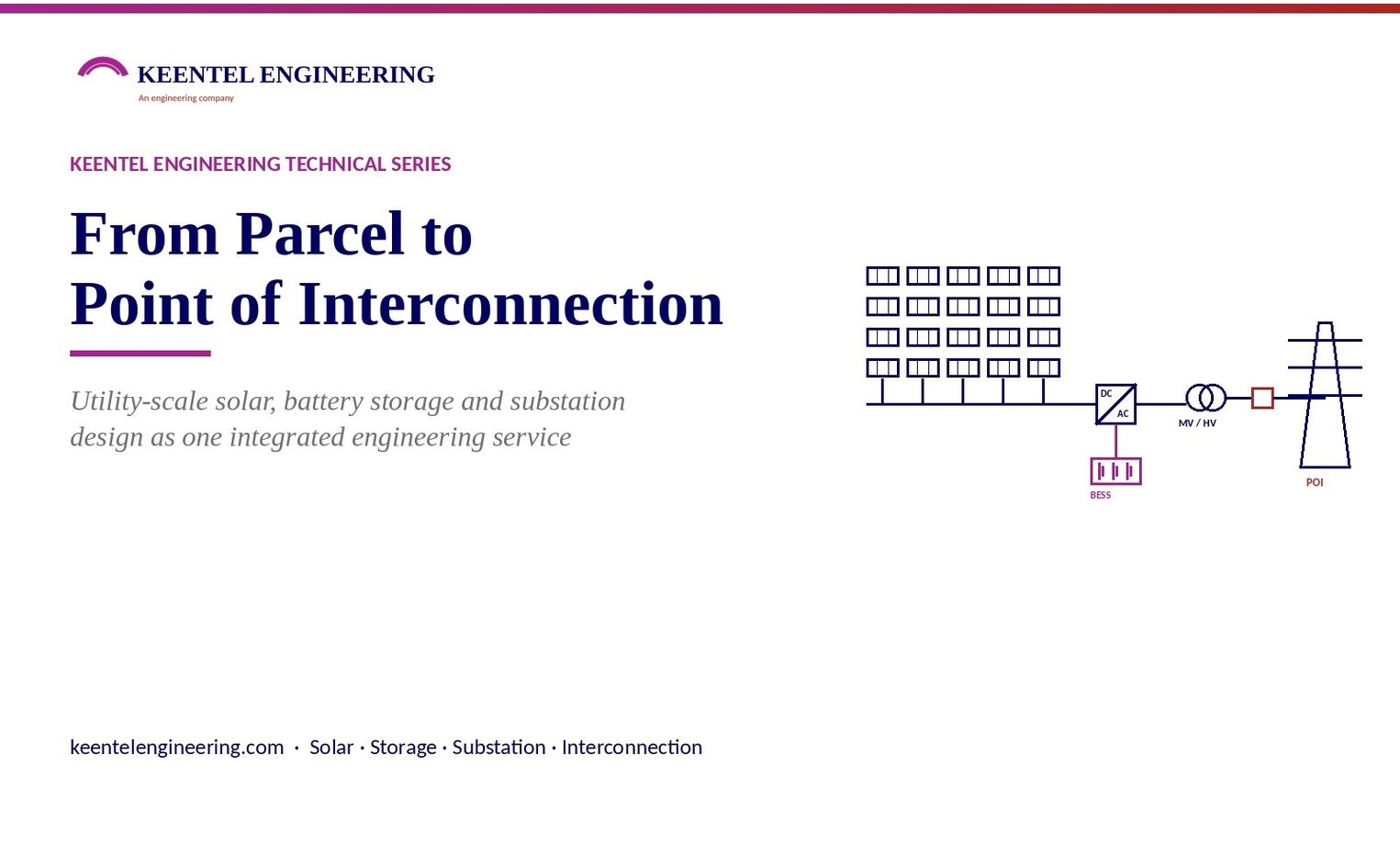
Explore utility scale solar engineering from site assessment to POI interconnection, including PV design, BESS, substation and grid studies.
By SANDIP R PATEL
•
September 18, 2026
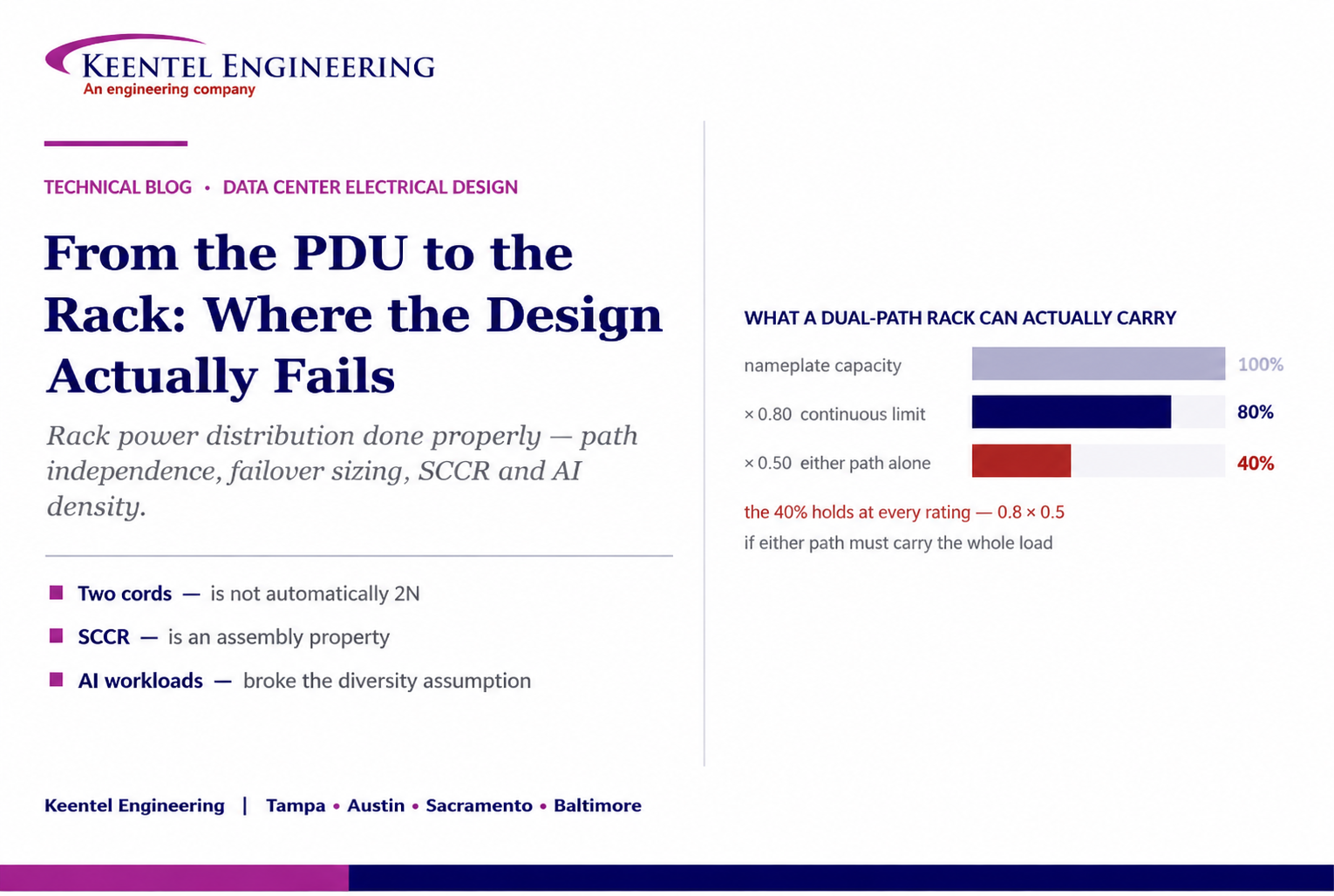
Learn how to size rack power distribution, PDU and RPP systems for continuous loads, A/B redundancy, failover capacity, SCCR and high-density AI data centers.
By SANDIP R PATEL
•
September 18, 2026
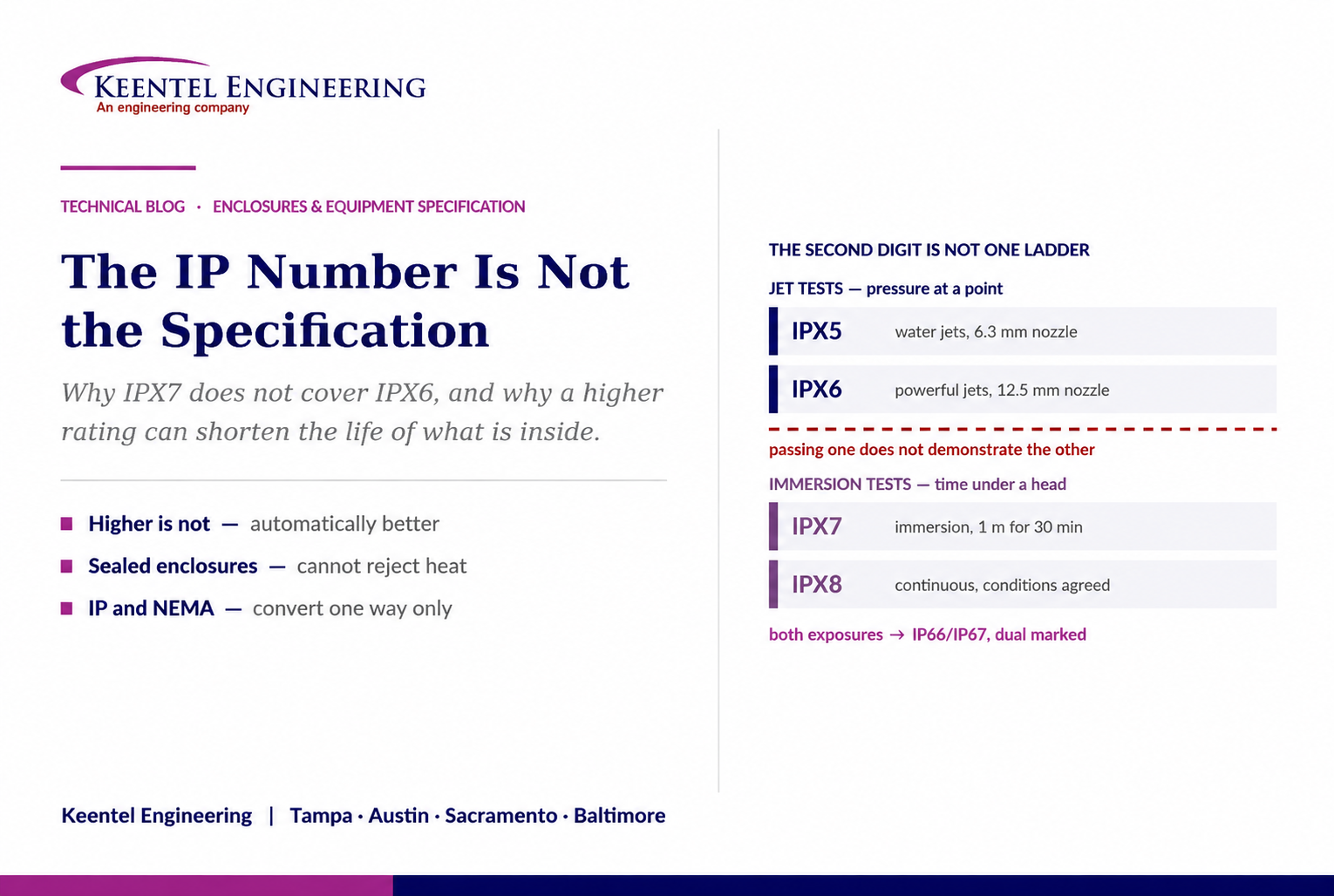
Learn why IP ratings like IP66, IP67, and IP68 do not tell the full story. Understand enclosure selection, NEMA differences, heat, corrosion, and protection.
By SANDIP R PATEL
•
September 9, 2026
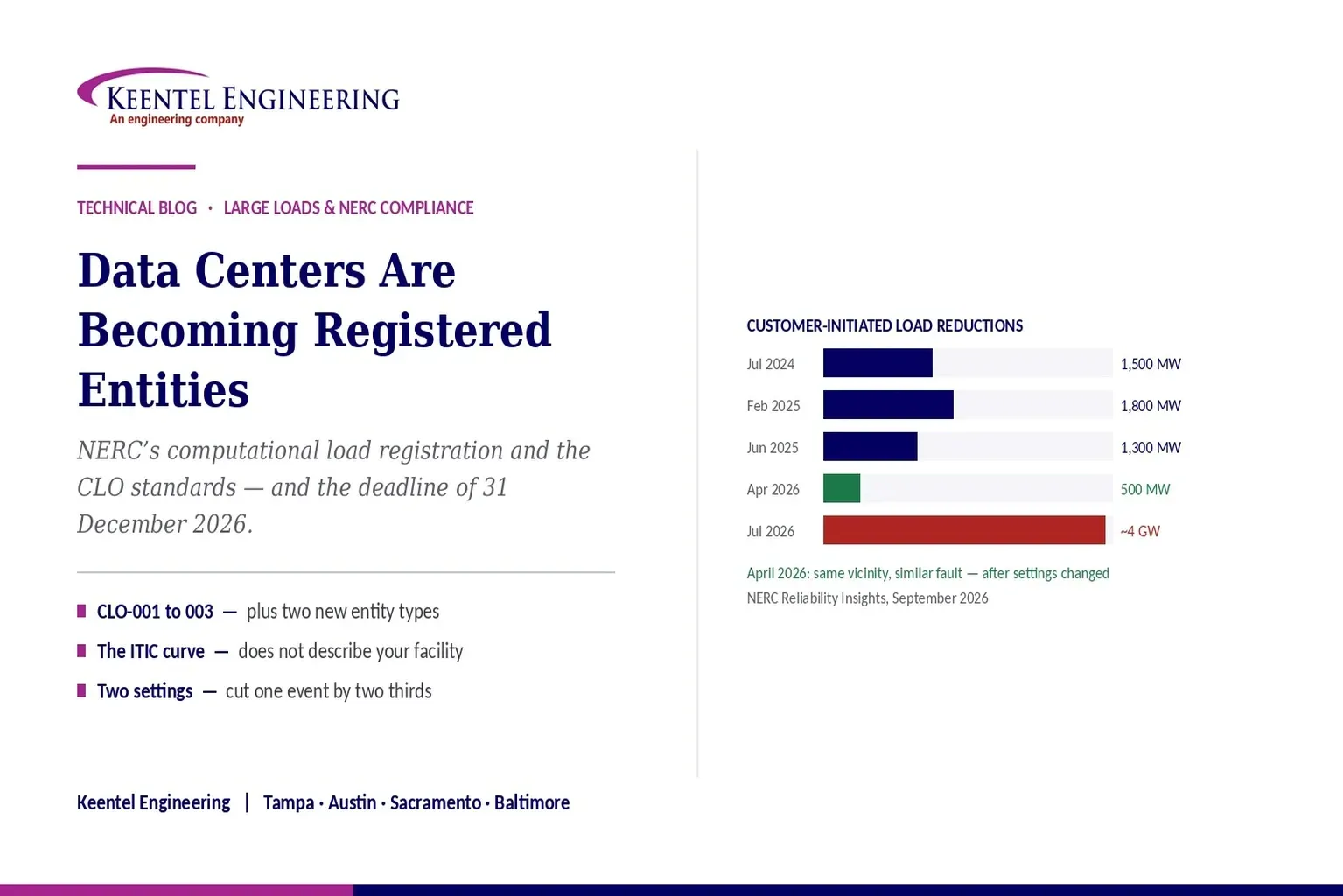
Learn how NERC computational load registration impacts data centers, CLO standards, ride-through requirements, modeling, and grid reliability compliance.
By SANDIP R PATEL
•
September 7, 2026
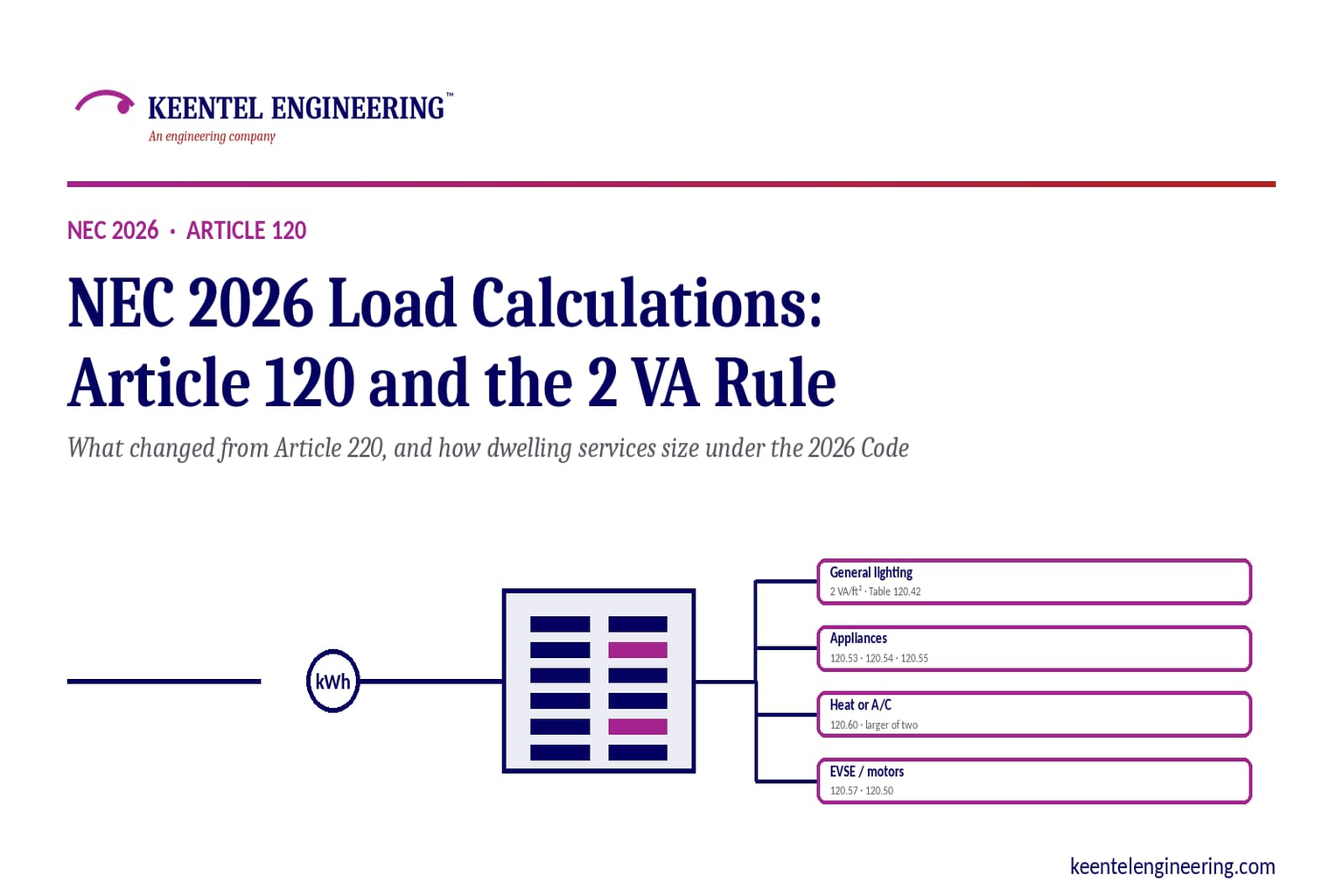
Learn NEC 2026 load calculations, Article 120 changes, the 2 VA rule, EV charging requirements, service sizing, and dwelling calculation methods.
By SANDIP R PATEL
•
September 7, 2026
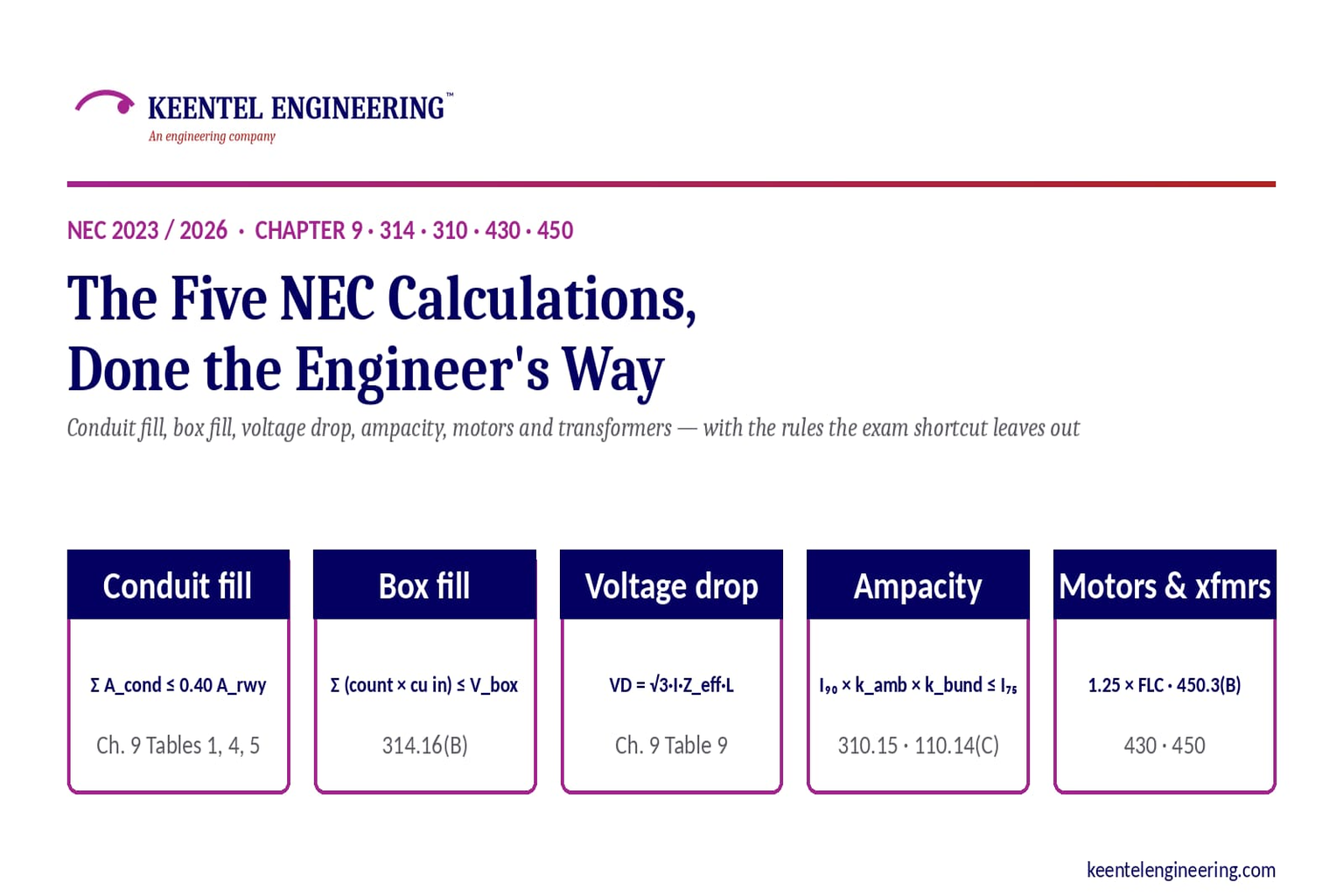
Learn five essential NEC calculations covering conduit fill, voltage drop, ampacity, motor circuits, and transformer protection with engineering examples.
By SANDIP R PATEL
•
September 7, 2026
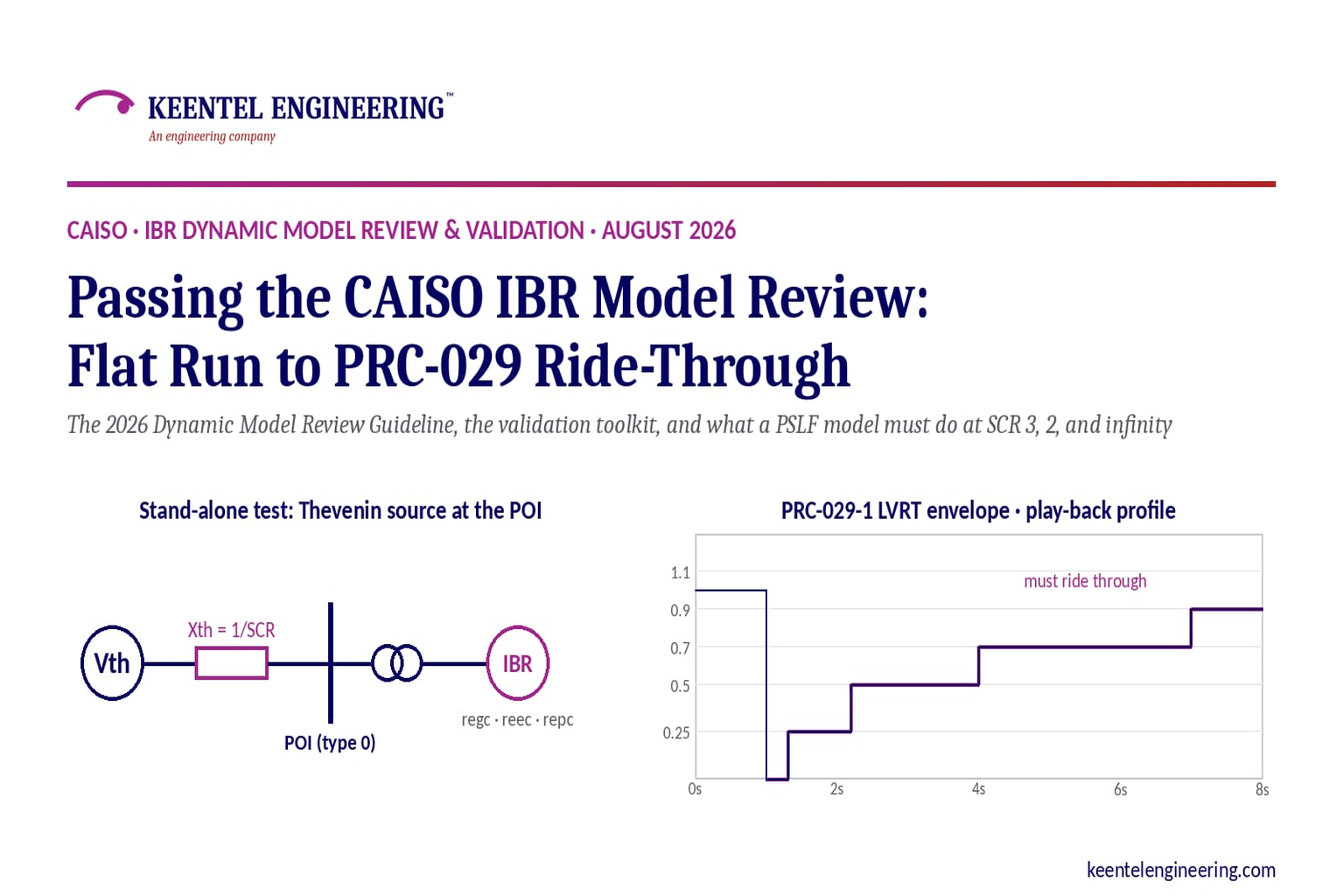
Learn how CAISO reviews IBR models using PSLF validation, PRC-029-1 ride-through requirements, WECC models, and inverter resource compliance testing.
By SANDIP R PATEL
•
September 7, 2026
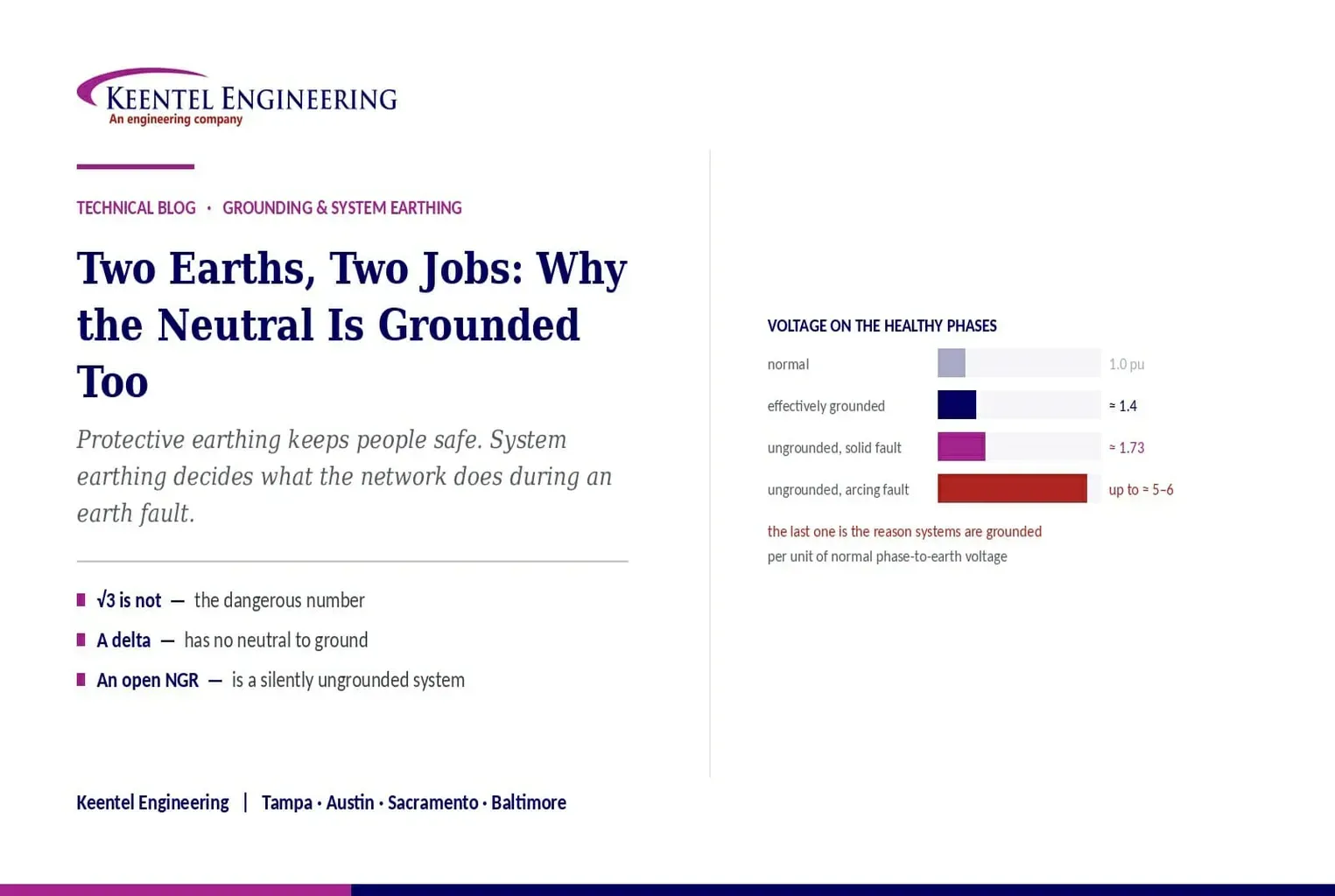
Understand system earthing and protective earthing, neutral grounding methods, effective grounding, ground grids, and insulation coordination for power systems
By SANDIP R PATEL
•
September 6, 2026
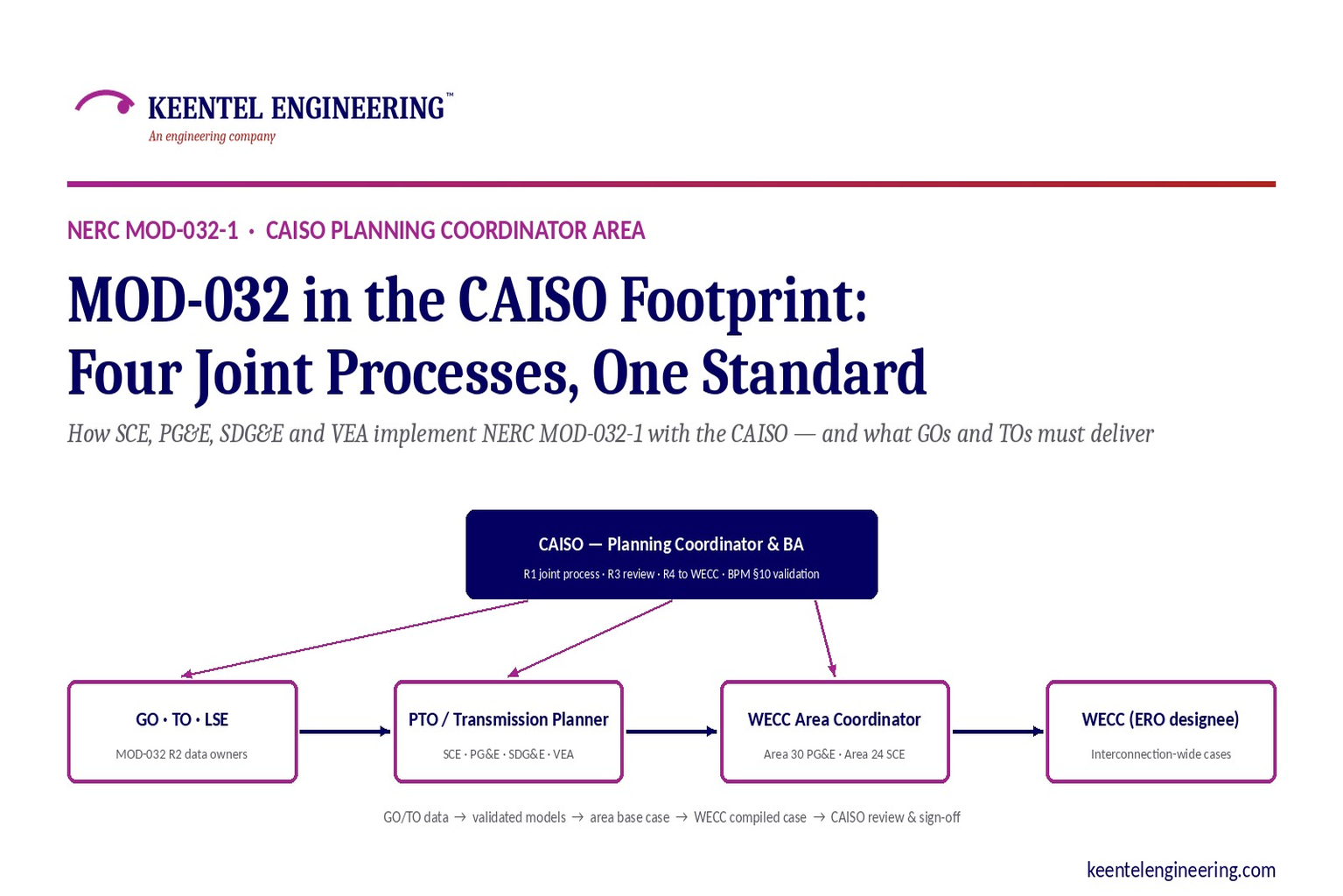
Learn how NERC MOD-032-1 applies across CAISO, SCE, PG&E, VEA and SDG&E, including generator data, PSLF models, EMT requirements and WECC submissions.