A Coordinated Electric System Interconnection Review—the utility’s deep-dive on technical and cost impacts of your project.
Challenge: Frequent false tripping using conventional electromechanical relays
Solution: SEL-487E integration with multi-terminal differential protection and dynamic inrush restraint
Result: 90% reduction in false trips, saving over $250,000 in downtime
The three operating regions you have to design to
| Device | Output vs voltage | Response | Best suited to | Main limitations |
|---|---|---|---|---|
| Mechanically switched capacitor or reactor | Proportional to voltage squared | Seconds; discrete steps; limited switching operations per day | Steady-state reactive supply, voltage profile, loss reduction | No dynamic capability; step voltage change on switching; capability collapses when most needed |
| Static var compensator | Capacitive branches proportional to voltage squared | A few cycles; continuously controllable | Continuous control where cost matters and deep voltage support is not the driver | Square-law capability loss; harmonic filters are part of the plant and interact with the network |
| STATCOM | Approximately proportional to voltage — constant current capability | One to two cycles closed loop; converter response faster still | Voltage stability margin, weak interconnections, fast disturbance recovery, flicker and unbalance compensation | Higher capital cost; converter losses; adds a converter and its control dynamics to the network |
| Synchronous condenser | Governed by machine capability and excitation | Excitation response in the hundreds of milliseconds; inherent inertial response instantaneous | System strength and inertia, short-circuit contribution, black start support | Rotating plant with maintenance and losses; slower controlled response than a converter |
| STATCOM with energy storage | Reactive as a STATCOM, plus real power within the storage rating | As STATCOM for reactive; real power limited by storage | Where a real power deficiency is part of the problem | Cost and complexity of the storage; different failure and maintenance profile |
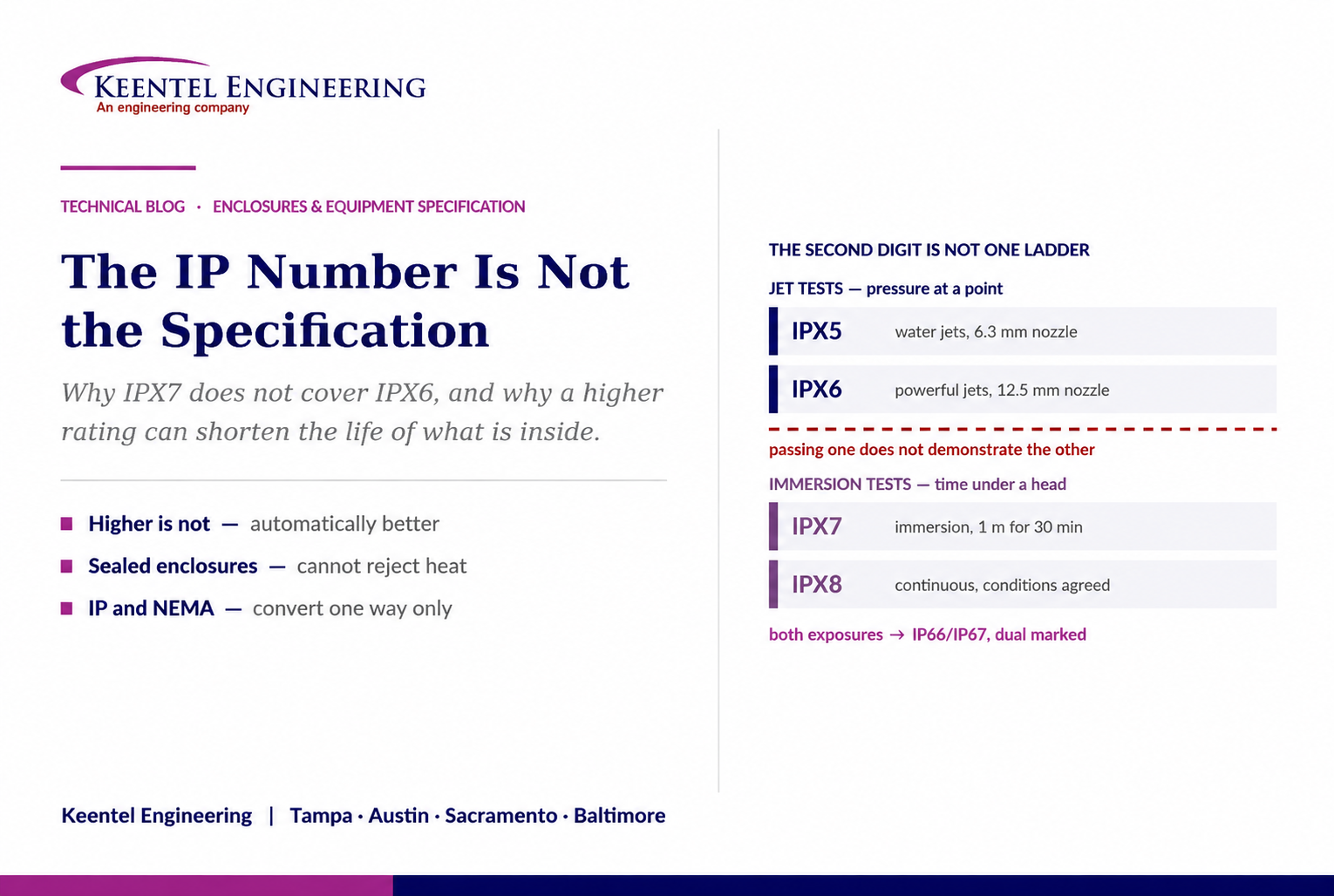
The IP Number Is Not the Specification
September 18, 2026 | Blog
Why IPX7 Does Not Cover IPX6, What the Rating Says Nothing About, and Why Specifying a Higher Number Can Shorten the Life of the Equipment Inside
1. Executive Summary
Ingress protection charts circulate constantly, and most of them are accurate about what the numbers mean. The one this paper works from is better than most: the digit definitions are right, the descriptions of dust-protected versus dust-tight are right, and the split between the first and second characteristic numerals is correctly stated.
It also contains one sentence that is wrong in a way that costs money, and it is the sentence people remember: higher IP ratings provide better protection. Above the sixth digit that is not how the standard works. IPX7 is an immersion test and IPX6 is a powerful-jet test, and passing one does not demonstrate the other. An enclosure marked IP67 has not been shown to withstand a hose. If both are required, the enclosure must be dual-marked — IP66/IP67 — and that dual marking is a different and more expensive product.
Three further things are absent from the chart and from most treatments of the subject, and each one decides whether an installation survives.
- An IP rating says nothing about corrosion, impact, ultraviolet exposure, internal heat, gasket ageing or explosion protection. Two enclosures on the same coastal site can both be IP66 and one of them will be perforated in five years, because the number describes holes and water and not metallurgy.
- Sealing an enclosure removes its ability to reject heat. Every watt dissipated inside a sealed box leaves through the walls or not at all, so specifying IP66 in place of IP54 either forces a larger enclosure, adds a cooling unit, or quietly derates the equipment inside. Component life falls with internal temperature, and the person who wrote the higher number into the specification is rarely the person who sees the failures.
- A sealed outdoor enclosure breathes. Daily thermal cycling draws humid air past imperfect gaskets, it condenses on the coldest internal surface overnight, and a genuinely sealed enclosure has no path to drain it. The wettest enclosures on many sites are the ones with the highest ratings.
For projects in the United States there is a further translation problem. The ingress protection framework is an international one, and the enclosure types the authority having jurisdiction will actually reference include tests that it does not contain. The mapping between them runs in one direction only, and treating the two as interchangeable is one of the more common specification errors in this market.
This paper works through the digits, the tests behind them, what the rating excludes, the thermal and condensation consequences of over-specifying, the one-way relationship with the North American enclosure types, and a defensible method for selecting an enclosure rather than picking a number off a chart.
The correction worth carrying into the next specification review
Above the sixth digit the second numeral stops being a ladder. IPX7 and IPX8 are immersion tests, IPX5 and IPX6 are jet tests, and they are different exposures rather than increasing grades of the same one.
If the enclosure will see both a hose and standing water, the specification says IP66/IP67. It does not say IP67 and hope.
2. What the Two Digits Actually Mean
The rating is written as the letters IP followed by two characteristic numerals. The first describes protection against solid objects and against access to hazardous parts. The second describes protection against water. Where a numeral is not specified it is replaced by an X, which means the characteristic was not tested rather than that it failed.
| First numeral | Protection against solid objects | Access probe |
|---|---|---|
| 0 | No protection | None |
| 1 | Objects of 50 mm and greater | Back of hand — a 50 mm sphere |
| 2 | Objects of 12.5 mm and greater | Finger — a jointed test finger of 12 mm diameter and 80 mm length |
| 3 | Objects of 2.5 mm and greater | Tool — a 2.5 mm rod |
| 4 | Objects of 1.0 mm and greater | Wire — a 1.0 mm rod |
| 5 | Dust protected — ingress not entirely prevented, but not in a quantity that interferes with operation or impairs safety | Wire — 1.0 mm |
| 6 | Dust tight — no ingress of dust | Wire — 1.0 mm |
The second numeral is the one that causes the trouble, because the tests behind it are not variations of a single exposure. They are distinct physical conditions.
| Second numeral | Condition | Test, in outline |
|---|---|---|
| 1 | No protection | Dripping water for a defined period with the enclosure upright |
| 2 | Drips with the enclosure tilted up to 15° | As above, repeated at tilted positions |
| 3 | Spraying water up to 60° from vertical | Oscillating tube or hand-held spray nozzle |
| 4 | Splashing water from any direction | As above, extended to the full sphere |
| 5 | Water jets | A 6.3 mm nozzle at approximately 12.5 litres per minute, from roughly 2.5 to 3 metres |
| 6 | Powerful water jets | A 12.5 mm nozzle at approximately 100 litres per minute, from roughly 2.5 to 3 metres |
| 7 | Temporary immersion | Immersion to a defined depth — conventionally one metre to the top of the enclosure — for thirty minutes |
| 8 | Continuous immersion | Conditions more severe than numeral 7, agreed between manufacturer and user |
| 9 | High-pressure, high-temperature jets | Approximately 80 litres per minute at roughly 80 to 100 bar and 80 °C, at close range |
Read those two tables together and the structure of the problem becomes visible. The first numeral is a genuine ladder — an enclosure that excludes a 1.0 mm wire necessarily excludes a 50 mm sphere. The second numeral is a ladder only as far as numeral 6. After that it changes subject.
3. The First Digit Is Also a Safety Rating
The chart presents the first numeral purely as protection against dust and objects getting in. That is half of what it describes, and the omitted half is the half that protects people.
The first numeral simultaneously defines protection against access to hazardous parts, tested with a standardised probe representing a part of the body or a tool. The probe must not touch live parts, and for higher voltages it must not approach them closely enough to matter. The second numeral is about the enclosure keeping water out; the first is also about the enclosure keeping people out.
The practical consequence appears in switchgear and panel specifications, where a requirement for protection against finger contact is written using the access-probe designation rather than a full ingress rating. A panel that is finger-safe at its terminals is specified that way because a person with the door open should not be able to contact a live part with a finger — an internal-arc and shock-safety requirement that has nothing to do with rain.
That is why an assembly can carry a modest overall ingress rating and still have a demanding internal access rating. The two are answering different questions, and a specification that only states one has only asked one of them.
4. The Ladder That Is Not a Ladder
This section is the correction the rest of the paper depends on.
The note at the foot of the chart says that higher ratings provide better protection. Up to the sixth numeral, that holds. Beyond it, it does not, and the standard is explicit on the point: an enclosure marked to numeral 7 or 8 is not suitable for exposure to water jets unless it is also marked to numeral 5 or 6.
The reason is physical rather than bureaucratic. The two families of test apply opposite kinds of stress to a seal.
- A jet test applies high local pressure and high velocity to a small area, moving across the enclosure. It probes whether a seal can resist being driven open at a point, and whether a gasket can be dislodged or a joint forced. Water arrives with momentum.
- An immersion test applies low, uniform, static pressure over the whole surface for a sustained period. It probes whether a seal leaks slowly under a modest continuous head. Water arrives with time.
A design can pass either without passing the other. A compliant labyrinth or drip-shield arrangement may shed a powerful jet and admit water steadily when submerged. A flexible seal that performs well under uniform submersion pressure may be lifted locally by a jet.
The specification consequence is direct and frequently missed.
| If the enclosure will see | The correct marking is | What goes wrong otherwise |
|---|---|---|
| Wash-down or hose cleaning only | IP65 or IP66 | Specifying IP67 obtains an immersion-rated enclosure with no demonstrated jet performance |
| Occasional flooding or standing water only | IP67 | Specifying IP66 obtains jet performance with no demonstrated immersion behaviour |
| Both — wash-down and possible submersion | IP66/IP67, dual marked | A single marking demonstrates one exposure. The other is untested and unsupported |
| High-pressure hot wash-down | IPX9, usually dual marked with a jet or immersion rating | An IP66 enclosure has not been tested at wash-down pressures and temperatures |
Why this is worth raising with a supplier in writing
Dual-marked enclosures exist and are readily available, and they cost more than singly marked ones because they have passed two test regimes.
A supplier quoting IP67 against a specification that needed IP66/IP67 is offering a cheaper product that meets the words on the page. The words are what should change.
5. IP68 Is Not a Defined Performance
The chart describes numeral 8 as protection against continuous immersion deeper than one metre. That is the right general idea and it conceals an important qualification.
For every other numeral, the standard defines the test. For numeral 8 it does not fix one. The requirement is that the conditions are more severe than those for numeral 7, and that the actual conditions — depth and duration — are agreed between the manufacturer and the user.
That makes a bare specification of IP68 close to meaningless. One manufacturer may have tested to one and a half metres for thirty minutes. Another may have tested to three metres for a week. Both may mark the product IP68 and both are entitled to. They are not the same product and they are not interchangeable in a flood-prone installation.
Where numeral 8 is genuinely required, the specification should state the depth and duration the equipment must survive, and the submittal review should confirm that the manufacturer tested to at least those conditions rather than to some lesser condition that still satisfies the marking. It is one of the few places in enclosure specification where reading the manufacturer’s test statement is not optional.
6. The Letters the Chart Leaves Out
The rating can carry letters as well as numerals, and they occasionally matter a great deal.
An additional letter after the two numerals describes protection against access to hazardous parts where that protection is better than the first numeral alone implies. The letters correspond to the same probes as the first numeral — back of hand, finger, tool and wire, in increasing order of severity.
This is how an enclosure with modest solid-object protection can still be declared finger-safe. An assembly that is open enough to admit dust but constructed so that a finger cannot reach a live part is described using the numeral for the one and the letter for the other. The chart, which treats the first numeral as the whole of the solid-object story, cannot express that.
A supplementary letter after that carries information specific to the equipment. The commonly encountered ones indicate high-voltage apparatus, whether the enclosure was in motion or stationary during the water test, and whether the enclosure was tested under specified weather conditions.
The motion letter deserves a note. Whether a rotating machine was turning during its water test changes the result materially, because shaft seals behave differently in motion and at rest. Where an enclosure contains rotating equipment and the specification is silent, the test condition should be confirmed rather than assumed.
7. What an IP Rating Says Nothing About
This is the most consequential section of the paper, because it is the list of things an installation actually fails from.
| Not covered by the rating | Why it matters | What governs instead |
|---|---|---|
| Corrosion | Two enclosures on the same coastal site can both be IP66 while one perforates in a few years. Chlorides attack some stainless grades by pitting and crevice corrosion; painted mild steel fails at every scratch and fastener | Material and grade selection, coating system, fastener and hinge metallurgy, and the corrosivity of the actual site |
| Mechanical impact | Hail, vandalism, vehicle contact and dropped tools. A rating describes holes, not toughness | A separate impact-resistance classification, and the wall thickness and material |
| Ultraviolet exposure | Polymer enclosures chalk, embrittle and crack. Gaskets harden and take a permanent set, and the enclosure loses the rating it was tested to hold | Material formulation and stabiliser package, and a realistic replacement interval for seals |
| Internal heat | A sealed enclosure rejects heat only through its walls. Components inside age with temperature — see Section 8 | Thermal calculation, enclosure area, and any cooling or ventilation provision |
| Gasket ageing and compression set | The rating is demonstrated once, on a new enclosure, with the door closed correctly — see Section 11 | Seal material, service temperature range, latch and hinge design, and maintenance |
| Explosive atmospheres | A dust-tight enclosure is not an explosion-protected one. The concepts are unrelated | The hazardous-location classification and the corresponding protection method |
| Arc containment | A high ingress rating does not mean an assembly will contain an internal arcing fault safely | The internal-arc classification of the assembly |
The pattern running through that table is worth stating plainly. The rating answers one question well — can solids and water get in through the enclosure as built and closed. Every other failure mode of an outdoor
electrical enclosure is outside it, and a specification that states an ingress rating and nothing else has specified one property out of seven.
8. Sealed Enclosures Cannot Reject Heat
This is the consequence of over-specification that is most often discovered after commissioning, and it follows directly from the physics of a sealed box.
Everything dissipated inside an enclosure must leave it. In a ventilated enclosure, most of it leaves with the air. In a sealed enclosure, all of it must pass through the walls by conduction, and from the outer surface by convection and radiation. The internal temperature rises until the wall can carry the dissipated power at the resulting temperature difference.
The practical implications compound.
- Heat rejection scales with the effective external surface area and the temperature difference. Doubling the dissipation inside a fixed enclosure roughly doubles the required temperature rise, and there is no ventilation term available to offset it.
- Solar gain works against the same surface. An enclosure in direct sun in a hot climate can sit well above ambient before any internal dissipation is considered, which is why sun shields and light-coloured finishes are engineering measures rather than cosmetic ones.
- Equipment inside carries its own ambient limit, and exceeding it means derating rather than failure — at first. Drives, protective devices, power supplies and controllers all publish reduced output above a stated internal ambient, and a design that ignores this obtains less capacity than it paid for.
- Component life falls with temperature. The relationship is well established for the electrolytic capacitors found in drives, power supplies and inverters, where service life falls sharply with each increment of operating temperature. The enclosure decision made on a drawing shows up as a maintenance interval a decade later.
So moving a specification from a ventilated rating to a sealed one is not a free improvement. It obliges one of three responses: a larger enclosure with more surface area, an active cooling or heat-exchange unit — which must itself carry the required rating and adds a component that can fail — or acceptance of a derated internal ambient. Choosing none of the three means the third has been chosen by default.
The question to ask when someone proposes raising a rating
What is the dissipation inside this enclosure, what is the design ambient including solar gain, and what internal temperature does the higher rating produce?
If nobody has that number, the rating is being raised on instinct, and the equipment inside will pay for it..
9. The Condensation Trap
The second consequence of over-sealing is counterintuitive enough that it is worth setting out step by step, because it produces the opposite of what the specification intended.
A sealed outdoor enclosure is not a vacuum flask. It contains air, and that air responds to the daily temperature cycle.
- During the day the enclosure heats from internal dissipation and solar gain. The air inside expands and a small amount is pushed out past gasket imperfections, cable entries and threaded joints.
- At night the enclosure cools. The air inside contracts and draws replacement air in through the same imperfect paths. That replacement air is ambient, and outdoors it is frequently close to saturation at night.
- As the enclosure continues to cool, the moisture in that air condenses on the coldest internal surface — typically the roof or an external wall, and typically directly above the equipment.
- The cycle repeats daily. A genuinely sealed enclosure has no drain, so the water accumulates rather than leaving.
The result is the finding that surprises people on site: the wettest enclosures are often the ones with the highest ratings. An enclosure at a lower rating with a proper drain path sheds what gets in. A high-rated enclosure collects what it breathes.
The engineering responses are well established and they belong in the specification rather than in a later remediation.
- A breather-drain fitting, which equalises pressure through a membrane that passes water vapour and blocks liquid water, and which drains condensate. These are available in versions that maintain the enclosure rating, and they directly break the breathing cycle rather than managing its consequences.
- An enclosure heater controlled by a thermostat or humidistat, sized to hold the internal surface above the dew point. The heater is a load and a failure point and needs its own supply and protection, which is a design item rather than an accessory.
- Orientation and thermal design that avoids a cold surface directly over the equipment, and gland plates arranged so that any water that does form has somewhere to go that is not a terminal block.
- Entry from below wherever possible, with glands and conduit arranged so that the enclosure is not fed by a conduit run that drains into it. A conduit system is a very effective water transport mechanism and it frequently delivers into the enclosure the specification worked hardest to seal.
10. The Weakest Penetration Governs
An enclosure rating describes a complete assembly in a defined condition. It is not a property the box retains regardless of what is done to it.
Every penetration is part of the rated boundary: cable glands, conduit hubs, gland plates, viewing windows, operator devices, vents, drains, breathers, and any hole cut on site. The assembled rating is the lowest rating among the enclosure and everything fitted to it.
An IP66 enclosure fitted with glands rated to a lesser degree is not an IP66 installation. The same is true of a window, a pushbutton, a lamp, or a padlockable handle. Each of those is a product with a rating of its own, and the submittal review should confirm each one rather than the enclosure alone.
Two field practices deserve specific attention because they are common and they void the rating silently.
- Field-drilled holes. A hole cut on site is rated by what is fitted into it. An unused hole, a hole with a loose grommet, or a gland fitted without its sealing washer removes the rating at that point, and no inspection of the nameplate will reveal it.
- Unused gland plate entries and knockouts. These need proper blanking plugs of the appropriate rating, not tape, not a blank cut from scrap, and not nothing.
There is also a mounting condition. Many enclosures hold their rating only in a stated orientation and only when mounted per the manufacturer’s instructions, because the drainage and shedding behaviour of the roof and door edge depends on it. An enclosure mounted flat or inverted for site convenience may not retain what its label claims.
11. It Is a Type Test on a New Enclosure
.The rating is established by a type test, performed once, on a representative sample, in a laboratory, with the enclosure new and correctly closed. That is a legitimate and useful basis, and it is not a statement about the enclosure in year twelve on a site.
Several things change between the laboratory and the end of service life.
- Gaskets take a compression set. An elastomer held compressed for years does not fully recover, and the sealing force falls. Temperature cycling and ultraviolet exposure accelerate it.
- Doors are opened. Every maintenance visit is an opportunity for a gasket to be pinched, a latch to be left partly engaged, a cable to be routed across a seal face, or a door to be closed against debris on the sealing surface.
- Fasteners and latches loosen or corrode. The rating depends on a defined closing force distributed around the door. A seized latch or a missing fastener changes it.
- Sealing surfaces are damaged. Impact, corrosion and simple wear on the flange or door edge defeat a seal that the gasket itself is still capable of making.
The practical response is to treat the rating as a property to be maintained rather than a property that was purchased. That means seals on an inspection schedule with a defined replacement interval, closing hardware checked as a maintenance item, and enclosure condition recorded as part of routine inspection rather than noticed when something inside fails.
It also means that the initial specification should consider whether the required rating is one the site will realistically maintain. A demanding rating on an enclosure that is opened weekly and never inspected will not survive the first year.
12. IP and NEMA Are Not Interchangeable
For a project in the United States this is the most important practical point in the paper, and it is the one the chart cannot address because it is written from an international perspective.
North American practice classifies enclosures by type rather than by an ingress numeral, and those type designations are defined by a body of tests that includes several conditions the international framework does not contain — most notably corrosion resistance, gasket ageing, the effect of external ice formation, and in some types resistance to oil and coolant.
The relationship between the two is therefore asymmetric, and the North American standard states the asymmetry directly: a type designation may be taken as satisfying a corresponding ingress rating, but an ingress rating may not be taken as satisfying a type designation. The conversion runs one way.
| Direction | Is it permitted? | Why |
|---|---|---|
| A North American type designation cited as meeting an approximate ingress rating | Generally yes, using the published conversion | The type tests encompass the ingress conditions and add further ones |
| An ingress rating cited as meeting a North American type designation | No | The ingress tests do not cover corrosion, gasket ageing, icing, or oil and coolant exposure. The evidence for those simply does not exist. |
Two further points make the translation harder than a lookup table suggests.
- Some type designations have no clean ingress equivalent because they describe a different strategy. The common outdoor type intended for rain is ventilated and drained — it is designed to admit water and shed it, rather than to exclude it. No ingress numeral describes that behaviour, and treating it as equivalent to a sealed rating misunderstands what it is.
- The corrosion-resistant variant of a type designation is distinguished specifically by its corrosion performance, which the ingress framework does not test at all. An enclosure offered as meeting the ingress equivalent of a corrosion-resistant type has demonstrated the water and dust half and none of the reason the type exists.
The consequence for a specification is simple. On a project where the authority having jurisdiction, the utility standard or the client standard references enclosure types, the specification should state the type. An international rating may be stated alongside it for suppliers who work to that framework, but it cannot be the governing requirement, and an offered product carrying only an ingress rating has not demonstrated compliance.
13. Hazardous Locations Are a Different Question
Because the highest first numeral is described as dust tight, it is periodically assumed that a dust-tight enclosure is suitable for a combustible dust atmosphere. It is not, and the assumption is dangerous enough to deserve its own section.
An ingress rating establishes that dust does not enter. Protection in an explosive atmosphere establishes something entirely different: that the equipment cannot ignite the atmosphere it sits in, whether by a spark, an arc, or a hot surface. The protection concepts used to achieve that — containing an explosion within a robust enclosure, preventing sparking under normal operation, limiting available energy, pressurising the enclosure, or encapsulating the components — have no relationship to a water and dust rating.
A dust-tight enclosure may well form part of a protection method for a dust atmosphere, and an ingress requirement is frequently one element of the applicable equipment standard. It is an element, not the answer.
The engineering sequence is therefore: classify the area first, select the protection method and equipment marking appropriate to that classification, and treat the ingress rating as an additional environmental requirement layered on top. Reversing the order — selecting a well-sealed enclosure and reasoning backwards to suitability — produces equipment that is watertight and unsuitable.
14. How to Actually Select an Enclosure
Everything above is negative — what the number does not tell you. This section is the positive statement: a defensible selection method that produces a specification a supplier can quote against and a reviewer can check.
- Establish the governing framework first. Does the authority having jurisdiction, the utility standard or the client standard reference enclosure types or ingress ratings? That answer determines which language the specification is written in, and it is settled before anything else.
- Characterise the actual exposure, in words, before choosing a number. Is the enclosure rained on, hosed, submerged, buried, in blowing dust, in a wash-down area, in surf spray, under a dripping pipe? Each of those maps to a different test, and several of them map to more than one.
- Decide whether jet and immersion exposure both apply. If they do, the marking must cover both. This is the single check that catches the error in Section 4, and it takes one question.
- Assess corrosivity separately and select material accordingly. Coastal, industrial, agricultural and chemical environments each attack differently, and the answer is a material and coating decision that the ingress rating does not touch.
- Perform the thermal calculation. Internal dissipation, design ambient, solar gain, enclosure area and finish, and the resulting internal temperature against the ambient limit of everything inside. This determines whether the chosen rating is viable or whether it forces a larger enclosure or active cooling.
- Design the condensation strategy deliberately. Breather-drains, heaters, entry position and gland plate arrangement, decided at design rather than discovered in service.
- Specify every penetration to the same rating. Glands, hubs, windows, operators, vents and blanking plugs, each stated, each reviewed at submittal.
- Add the requirements the ingress rating cannot express. Impact resistance where hail or vandalism is credible, ultraviolet stability for polymer enclosures and seals, lock and security provisions, and any arc-related classification for the assembly.
- State the maintenance basis. Seal inspection and replacement interval, closing hardware checks, and enclosure condition recorded as part of routine inspection. A rating that is not maintained is a rating that was purchased once.
- Review the submittal against the specification, not against the marketing. Confirm the marking, the dual marking where required, the test conditions where the numeral does not define them, the material and grade, and the rating of every accessory fitted to the enclosure.
15. Where This Bites: Solar, Storage and Substations
The abstract points above land differently depending on the asset, and these are the cases we see most often.
15.1 Utility-Scale Solar
- String combiner and recombiner enclosures sit in full sun for their entire life. Ultraviolet degradation of polymer housings and seals, not water, is the dominant ageing mechanism, and the internal temperature from fuse and disconnect losses stacks on top of solar gain.
- Inverter enclosures publish a derating curve against ambient. On a hot site the curve, not the ingress rating, determines how much of the nameplate is available on the afternoon that matters most.
- Tracker controllers and distributed devices are opened in the field for maintenance more often than any other enclosure on the site, which makes seal condition and closing discipline a real reliability factor rather than a theoretical one.
- Conduit entering from above into any of these is a water delivery system. Entry position is a design decision with a service-life consequence.
15.2 Battery Energy Storage
- Enclosure strategy for storage interacts with fire and explosion protection requirements, including deflagration venting and detection provisions. Those obligations can be in direct tension with a sealing instinct, and they are resolved by the applicable fire protection standards rather than by choosing a higher number.
- Thermal management inside an enclosure containing cells is a safety system, not a comfort feature, and it is sized against the enclosure’s ability to reject heat.
- Auxiliary and control enclosures on a storage site carry the same condensation and corrosion exposure as any other outdoor cabinet, and they are frequently specified with less care than the equipment they protect.
15.3 Substations and Transmission
- Control buildings, marshalling kiosks and outdoor cabinets in coastal or industrial environments are a corrosion problem first and an ingress problem second. Material grade, fastener metallurgy and coating system decide the outcome.
- Condensation inside outdoor marshalling and relay cabinets is a recurring cause of terminal corrosion, insulation degradation and nuisance operation, and heaters and breather-drains are the standard answer for good reason.
- Enclosure ratings on protection and control cabinets should be assessed together with the internal heat load, because a populated relay cabinet dissipates more than an empty one and is frequently specified as though it did not.
- Where the facility falls under utility or reliability standard obligations, enclosure and equipment condition is part of the maintenance evidence, which makes the inspection basis in Section 11 a compliance matter as well as an engineering one.
16. Reading the Chart Correctly
The digit definitions are right
The first and second numeral descriptions, the distinction between dust-protected and dust-tight, and the note that the first numeral runs to six and the second to nine are all correct. It is a better chart than most.
But higher is not simply better
Above the sixth numeral the second digit changes subject from jets to immersion. Marking to numeral 7 or 8 does not demonstrate jet performance, and where both exposures apply the enclosure must be dual marked.
The first numeral is also an access rating
It defines protection against reaching hazardous parts with a body part or tool, not only against objects getting in. That is a personnel safety function and the chart does not mention it.
Numeral 8 does not define a test
Its conditions are agreed between manufacturer and user and need only be more severe than numeral 7. A bare specification of the top rating does not specify a performance, and the manufacturer’s stated test conditions have to be read.
The common uses columns are orientation, not selection criteria
Listing an industrial or outdoor application against a rating is a reasonable starting point and it is not a method. The exposure has to be characterised for the actual installation, and corrosion, heat, impact and ultraviolet exposure decided separately.
And none of it translates directly to North American practice
The enclosure types referenced by most authorities and utility standards in this market include corrosion, gasket ageing and icing tests that the ingress framework does not contain. The conversion runs one way only, and an ingress rating cannot be offered as evidence of a type designation.
17. Keentel Engineering Services
Keentel Engineering is an electrical power systems engineering firm. Enclosure and equipment specification sits inside the broader work of designing installations that survive their environment and satisfy the authority that inspects them.
17.1 Specification and Design
- Equipment and enclosure specification written against the governing framework for the project, with exposure characterised, ingress and type requirements stated correctly, and dual marking called out where both jet and immersion exposure apply.
- Material, grade and coating selection for the site corrosivity, including coastal, industrial and chemical environments where the ingress rating is not the governing property.
- Enclosure thermal calculation — internal dissipation, design ambient, solar gain and surface area — with the resulting internal temperature checked against the ambient limits of the equipment inside, and cooling or ventilation specified where the calculation requires it.
- Condensation strategy including breather-drain and heater provision, entry position, and gland plate arrangement.
- Control building, marshalling kiosk, e-house and outdoor cabinet design, and layout of protection, control and auxiliary equipment within them.
17.2 Studies and Analysis
- Short-circuit, protective coordination, arc-flash, load flow, motor starting and harmonic studies, with assembly ratings verified against calculated available fault current.
- Grounding and bonding design, soil resistivity interpretation, ground grid design and step and touch potential analysis.
- Lightning and surge protection design and coordination of device placement at enclosure entries.
- Insulation coordination and equipment rating verification across the installation.
17.3 Review, Submittal and Commissioning
- Submittal review against the specification rather than the datasheet headline — confirming marking, dual marking, stated test conditions, material and grade, and the rating of every accessory and penetration fitted to the enclosure.
- Design review of engineering and vendor packages, and QA/QC of third-party specifications and studies.
- Commissioning specification and test procedures, including enclosure condition, sealing, entry and blanking verification as recorded items rather than assumed ones.
- Maintenance basis development — seal inspection and replacement intervals, closing hardware checks and enclosure condition recording, including where this forms part of reliability standard maintenance evidence.
17.4 Project Engineering
- Utility-scale solar, storage and hybrid plant electrical design, including collector systems, combiner and inverter arrangements, and auxiliary and control distribution.
- Substation and point-of-interconnection design, transmission line design, and interconnection engineering and application support.
- Data center and large load electrical design, including critical distribution and the enclosure and equipment specification that supports it.
- Owner’s engineer services through design, procurement, construction and handover, and investigation where corrosion, moisture ingress, overheating or premature equipment failure has occurred.
Keentel Engineering holds a Florida Certificate of Authorization and maintains offices in Tampa, Austin, Sacramento, and Baltimore, supporting projects across the interconnections.
18. Frequently Asked Questions
Q1. What do the two digits in an IP rating mean?
The first characteristic numeral describes protection against solid objects and against access to hazardous parts, running from 0 to 6. The second describes protection against water, running from 0 to 9. An X in either position means that characteristic was not tested, not that it failed.
Q2. Is a higher IP rating always better?
Not above the sixth numeral, and this is the most important correction to make. Numerals 5 and 6 are water jet tests; numerals 7 and 8 are immersion tests. They are different exposures rather than increasing grades of one exposure, and passing one does not demonstrate the other.
Q3. So an IP67 enclosure is not necessarily hose-proof?
Correct. An enclosure marked IP67 has demonstrated temporary immersion and has not demonstrated resistance to a powerful water jet. If both matter, the enclosure must be dual marked IP66/IP67, which is a different and more expensive product.
Q4. Why can an enclosure pass immersion and fail a jet?
Because the two tests apply opposite stresses to a seal. A jet applies high local pressure and velocity to a small moving area and probes whether a seal can be driven open at a point. Immersion applies low uniform static pressure over the whole surface for a sustained period and probes slow leakage. A design can be good at one and not the other.
Q5. What does IPX9 cover?
High-pressure, high-temperature water jets at close range — roughly 80 litres per minute at 80 to 100 bar and 80 °C. It is the wash-down condition found in food, beverage and vehicle applications, and an enclosure rated for ordinary jets has not been tested anywhere near it.
Q6. Is IP68 a defined performance?
No, and this is a frequent misunderstanding. For every other numeral the test is defined. For numeral 8 the standard requires only that the conditions be more severe than numeral 7, with the actual depth and duration agreed between manufacturer and user. Two IP68 products may have been tested to completely different conditions.
Q7. How should I specify IP68 then?
State the depth and duration the equipment must survive, and confirm at submittal review that the manufacturer tested to at least those conditions. A bare marking is not a specification here.
Q8. What does the first digit have to do with safety?
It simultaneously defines protection against access to hazardous parts, tested with a standardised probe representing the back of a hand, a finger, a tool or a wire. Finger-safe requirements in switchgear are written using that framework, and the concern is shock and internal arc rather than rain.
Q9. What are the letters that sometimes follow the numerals?
An additional letter describes access protection where it is better than the first numeral implies, using the same probe hierarchy. A supplementary letter carries equipment-specific information such as high-voltage apparatus, whether the enclosure was in motion or stationary during the water test, and whether it was tested under specified weather conditions.
Q10. Does the motion letter matter?
For enclosures containing rotating equipment, yes. Shaft seals behave differently turning and at rest, so whether the machine was running during its water test changes the result. Where the specification is silent, confirm the test condition rather than assuming it.
Q11. Does an IP rating cover corrosion?
No. Two enclosures on the same coastal site can both be IP66 and one can perforate in a few years. Corrosion is governed by material grade, coating system and fastener metallurgy against the site corrosivity, and none of that is tested by an ingress rating.
Q12. What else does it not cover?
Mechanical impact, ultraviolet degradation, internal heat, gasket ageing, explosive atmospheres and internal arc containment. The rating answers one question — can solids and water get in through the enclosure as built and closed — and every other failure mode of an outdoor cabinet sits outside it.
Q13. Why would a higher rating make things worse?
Because a sealed enclosure cannot reject heat by ventilation. Everything dissipated inside must pass through the walls, so internal temperature rises until the wall can carry it. That forces a larger enclosure, an active cooling unit, or a derated internal ambient — and choosing none of the three means the third has been chosen by default.
Q14. How much does internal temperature matter?
A great deal. Equipment publishes reduced output above a stated internal ambient, so an unassessed enclosure delivers less capacity than was purchased. Component life also falls with temperature — the relationship is well established for the electrolytic capacitors used in drives, power supplies and inverters — so the drawing decision becomes a maintenance interval years later.
Q15. What is the condensation trap?
A sealed outdoor enclosure breathes. It heats during the day and pushes air out past imperfect seals, then cools at night and draws humid ambient air back in. That moisture condenses on the coldest internal surface, and a genuinely sealed enclosure has no drain, so it accumulates. The wettest enclosures on many sites are the ones with the highest ratings.
Q16. How is condensation addressed properly?
A breather-drain fitting that equalises pressure through a membrane passing vapour and blocking liquid, available in versions that maintain the enclosure rating. Alternatively or additionally a thermostat or humidistat-controlled heater sized to hold surfaces above dew point, plus entry from below and gland plate arrangement decided at design.
Q17. Does conduit affect this?
Substantially. A conduit system is an effective water transport mechanism, and a run entering from above frequently delivers water directly into the enclosure the specification worked hardest to seal. Entry position is a design decision with a service-life consequence.
Q18. Do accessories affect the enclosure rating?
Yes — the assembled rating is the lowest rating among the enclosure and everything fitted to it. Glands, hubs, windows, operator devices, vents, drains and blanking plugs each carry their own rating, and each should be confirmed at submittal rather than the enclosure alone.
Q19. What about holes drilled in the field?
A field-drilled hole is rated by what is fitted into it. An unused hole, a loose grommet, or a gland fitted without its sealing washer removes the rating at that point, and nothing on the nameplate will reveal it. Unused knockouts need proper blanking plugs of the appropriate rating.
Q20. Does the enclosure keep its rating for life?
No. It is a type test performed once on a new, correctly closed enclosure. Gaskets take a compression set, doors are opened and closed imperfectly, fasteners loosen or corrode, and sealing surfaces get damaged. The rating is a property to be maintained rather than one that was purchased.
Q21. Are IP ratings and North American enclosure types interchangeable?
No, and the relationship is one-way. The North American type designations include corrosion resistance, gasket ageing, external icing and in some types oil and coolant tests that the ingress framework does not contain. A type designation may be cited as meeting an approximate ingress rating; an ingress rating may not be cited as meeting a type designation.
Q22. What should the specification say on a US project?
State the enclosure type where the authority having jurisdiction, the utility standard or the client standard references types. An ingress rating may be stated alongside it for suppliers working to that framework, but it cannot be the governing requirement, and a product offered with only an ingress rating has not demonstrated compliance.
Q23. Is a dust-tight enclosure suitable for a combustible dust atmosphere?
No, and the assumption is dangerous. An ingress rating establishes that dust does not get in. Explosion protection establishes that the equipment cannot ignite the atmosphere it sits in, by spark, arc or hot surface. Classify the area first, select the protection method and marking for that classification, and treat ingress as an additional environmental requirement layered on top.
Q24. What is the right way to select an enclosure?
Establish the governing framework, characterise the actual exposure in words, decide whether jet and immersion both apply, assess corrosivity and select material separately, perform the thermal calculation, design the condensation strategy, specify every penetration to the same rating, add impact and ultraviolet requirements the rating cannot express, state the maintenance basis, and review the submittal against the specification.
Q25. If I take one thing from this, what should it be?
The A and B path test at representative load — an actual transfer, at load, with the surviving path measured against its continuous rating, which is what finds the failover sizing problem before service. And the thermal scan at representative load, which requires load banks, because a loose termination at ten percent occupancy is not yet hot enough to find.
References and Further Reading
The following are referenced by subject in the body of this document. The current published edition of each standard governs its own content, and the edition adopted by the authority having jurisdiction governs code requirements. Test parameters and classifications summarised here are given in outline for orientation and must be read in the standard itself.
Ingress Protection and Enclosure Classification
- IEC 60529, Degrees of protection provided by enclosures (IP Code) — the source of the characteristic numerals, the additional and supplementary letters, and the test conditions for each degree* — International Electrotechnical Commission (IEC Webstore)
- IEC 62262, Degrees of protection provided by enclosures for electrical equipment against external mechanical impacts (IK code) — International Electrotechnical Commission (IEC Webstore)
- NEMA 250, Enclosures for Electrical Equipment (1000 Volts Maximum) — including the enclosure type definitions, the corrosion, gasket ageing and external icing tests, and the one-way conversion guidance discussed in Section 12* — National Electrical Manufacturers Association (NEMA)
- UL 50 and UL 50E, Enclosures for Electrical Equipment, Non-Environmental and Environmental Considerations — UL Standards & Engagement (UL Standards)
Equipment, Assemblies and Installation
- NFPA 70, National Electrical Code — including the provisions on enclosure selection for the environment, conduit and cable entries, and equipment in wet, damp and outdoor locations* — National Electrical Manufacturers Association (NFPA)
- ANSI C2, National Electrical Safety Code — for enclosures in electric supply stations and lines* — Institute of Electrical and Electronics Engineers (IEEE Standards)
- UL 508A for industrial control panels, IEC 61439 for low-voltage switchgear and controlgear assemblies, and IEC 62271 for high-voltage switchgear and controlgear — including the internal arc classification referenced in Section 7* — UL Standards & Engagement and International Electrotechnical Commission (IEC Webstore)
- IEEE Std C37.20 series for metal-enclosed switchgear, and IEEE Std 1402 for physical security of electric power substations — IEEE Standards Association (IEEE Standards)
Environment, Corrosion and Hazardous Locations
- ISO 9223, Corrosion of metals and alloys — corrosivity of atmospheres, classification, determination and estimation, and ISO 12944 for protective paint systems — International Organization for Standardization (ISO)
- NFPA 70 Articles covering hazardous (classified) locations, the NFPA 497 and NFPA 499 recommended practices for area classification, and the IEC 60079 series for explosive atmospheres — National Fire Protection Association and International Electrotechnical Commission (NFPA)
- NFPA 855, Standard for the Installation of Stationary Energy Storage Systems, with NFPA 68 and NFPA 69 for deflagration venting and explosion prevention — National Fire Protection Association (NFPA)
- UL 1741 and IEC 62109 for photovoltaic power conversion equipment, and the manufacturer’s published ambient derating data for the specific equipment selected — UL Standards & Engagement and International Electrotechnical Commission
(UL Standards)
Notice and Disclaimer
This document is original technical content prepared by Keentel Engineering LLC for general professional information. It is not project-specific engineering advice and does not constitute an enclosure selection, an equipment specification, a thermal calculation, or a code compliance determination for any installation. Enclosure and equipment selection must be established by project-specific analysis against the actual exposure, site corrosivity, internal heat load and the code edition and standards applicable to the project.
Descriptions of degrees of protection, characteristic numerals, letters, test conditions and enclosure type designations are summaries prepared for orientation and are not a substitute for the standards themselves, which govern in every respect. Test parameters are stated in outline and approximate terms; the governing values, tolerances, durations and acceptance criteria are those in the current published edition of the applicable standard. Standards are revised, and equivalences and conversions between classification systems are subject to the limitations and caveats stated in the standards that publish them.
Statements about material behaviour, corrosion, ultraviolet degradation, thermal performance and component life are general engineering discussion. Actual performance depends on the specific product, materials, installation, environment and duty, and must be established from manufacturer data and project-specific calculation rather than inferred from general relationships.
Work on or near electrical equipment carries specific hazards. Enclosure opening, inspection and maintenance must be carried out under an appropriate safe system of work by qualified persons. Equipment in hazardous (classified) locations requires area classification and protection methods established by qualified persons, and no statement in this document should be relied upon for suitability in an explosive atmosphere.
Keentel Engineering LLC is an independent engineering consultancy. Reference to any standard, code, listing organisation, industry association, regulator, or product category in this document does not imply affiliation with, endorsement by, or sponsorship from any such organisation or manufacturer.

About the Author:
Sandip "Sonny" R. Patel, P.E.
IEEE Senior Member · Founder & CEO, Keentel Engineering
In 1995, Sonny Patel earned his Electrical Engineering degree from the University of Illinois. But degrees don't build legacies — action does.
For three decades, he has worked the power industry from every side of the table: 16 years as a utility engineer at Exelon/Commonwealth Edison; generation leadership across hydroelectric, industrial steam turbine, and a 9 GW renewable fleet; NERC Regional Entity Senior Compliance Engineer and Audit Team Lead, auditing some of the nation's largest utilities; and testing and commissioning lead on equipment up to 765 kV — the very top of the North American grid.Utility. Generator. Regulator. Consultant. Few engineers have seen all four seats. Fewer still have sat in them.
His experience spans nuclear, hydro, conventional generation, renewables, oil and gas, mining — and today's data centers, where he is authoring a three-book series on data center design. He is a Licensed Professional Engineer in six states and a Licensed Electrical Contractor in Florida (Unlimited EC) — he doesn't just design the work; he's qualified to stand behind its execution.Today, as Founder and CEO of Keentel Engineering, Sonny leads a nationwide team of engineers delivering substation design, power system studies, NERC compliance, and commissioning — done right, coast to coast.Three decades. Every side of the table. One standard: accountable engineering.
Services

Let's Discuss Your Project
Let's book a call to discuss your electrical engineering project that we can help you with.
About the Author:
Sandip "Sonny" R. Patel, P.E.
IEEE Senior Member · Founder & CEO, Keentel Engineering
In 1995, Sonny Patel earned his Electrical Engineering degree from the University of Illinois. But degrees don't build legacies — action does.
For three decades, he has worked the power industry from every side of the table: 16 years as a utility engineer at Exelon/Commonwealth Edison; generation leadership across hydroelectric, industrial steam turbine, and a 9 GW renewable fleet; NERC Regional Entity Senior Compliance Engineer and Audit Team Lead, auditing some of the nation's largest utilities; and testing and commissioning lead on equipment up to 765 kV — the very top of the North American grid.
Utility. Generator. Regulator. Consultant. Few engineers have seen all four seats. Fewer still have sat in them.
His experience spans nuclear, hydro, conventional generation, renewables, oil and gas, mining — and today's data centers, where he is authoring a three-book series on data center design. He is a Licensed Professional Engineer in six states and a Licensed Electrical Contractor in Florida (Unlimited EC) — he doesn't just design the work; he's qualified to stand behind its execution.
Today, as Founder and CEO of Keentel Engineering, Sonny leads a nationwide team of engineers delivering substation design, power system studies, NERC compliance, and commissioning — done right, coast to coast.Three decades. Every side of the table. One standard: accountable engineering.
Leave a Comment
Thank you for contacting us.
We will get back to you as soon as possible.
We will get back to you as soon as possible.
Oops, there was an error sending your message.
Please try again later.
Please try again later.
Related Posts
By SANDIP R PATEL
•
September 18, 2026
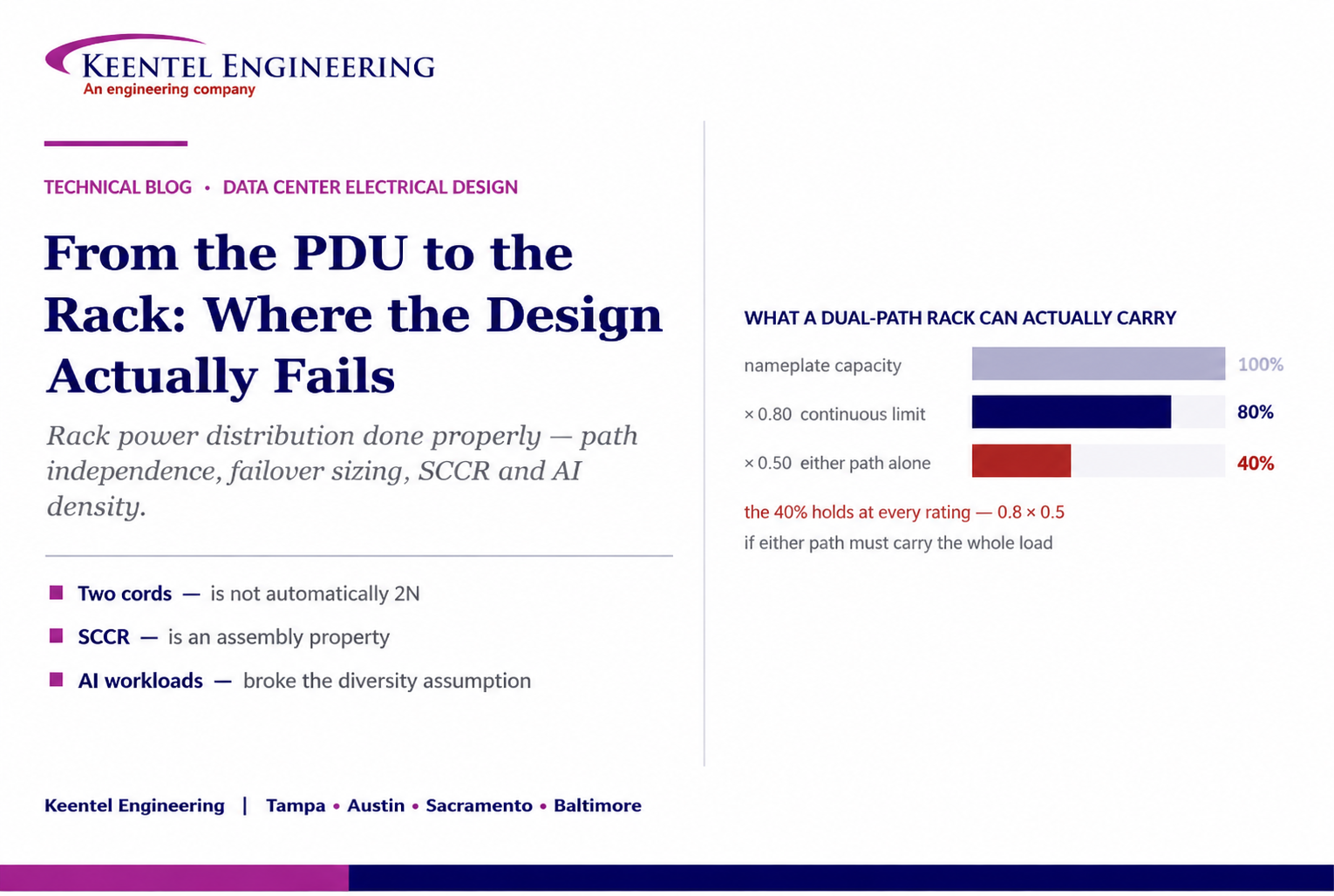
Learn how to size rack power distribution, PDU and RPP systems for continuous loads, A/B redundancy, failover capacity, SCCR and high-density AI data centers.
By SANDIP R PATEL
•
September 9, 2026
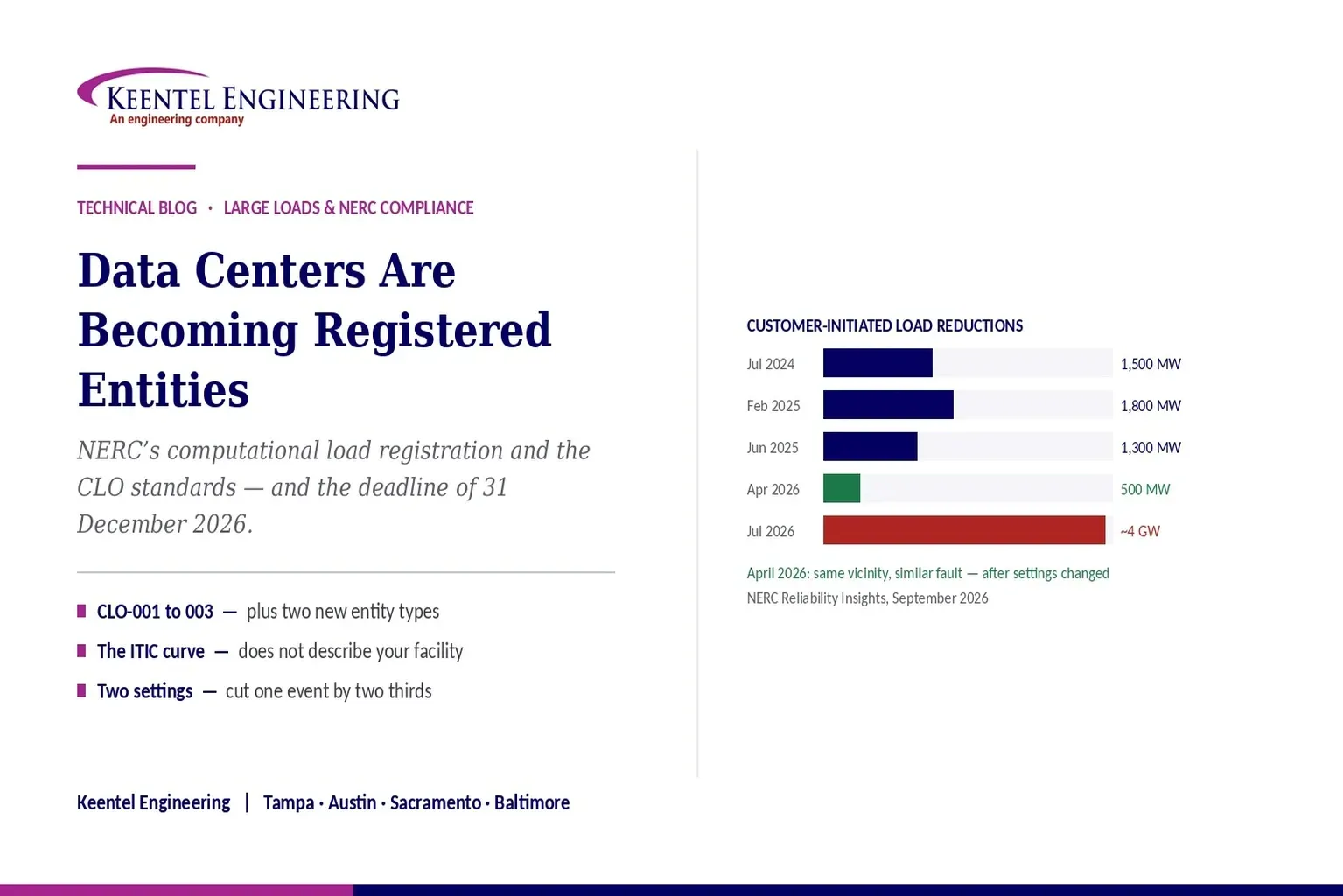
Learn how NERC computational load registration impacts data centers, CLO standards, ride-through requirements, modeling, and grid reliability compliance.
By SANDIP R PATEL
•
September 7, 2026
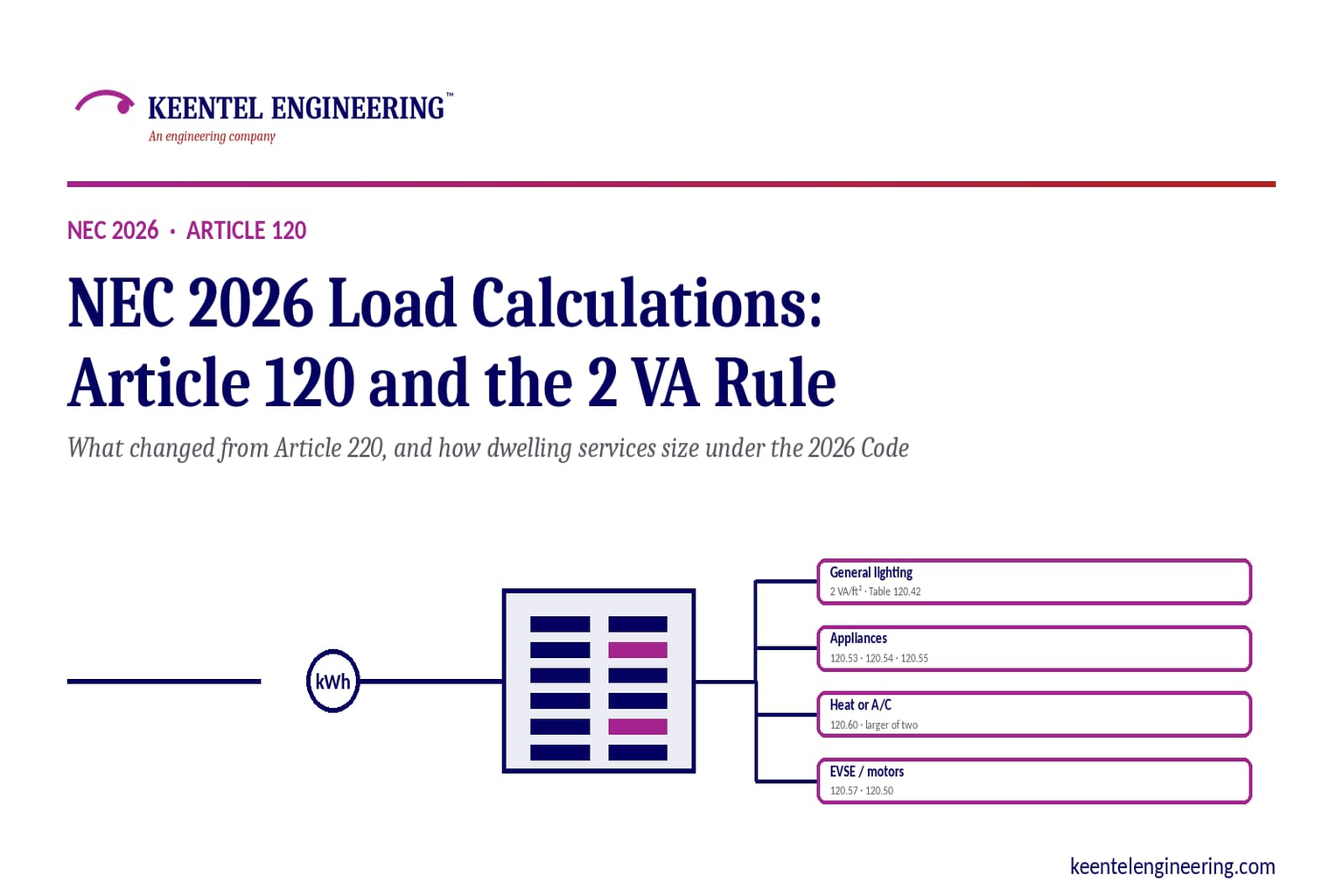
Learn NEC 2026 load calculations, Article 120 changes, the 2 VA rule, EV charging requirements, service sizing, and dwelling calculation methods.
By SANDIP R PATEL
•
September 7, 2026
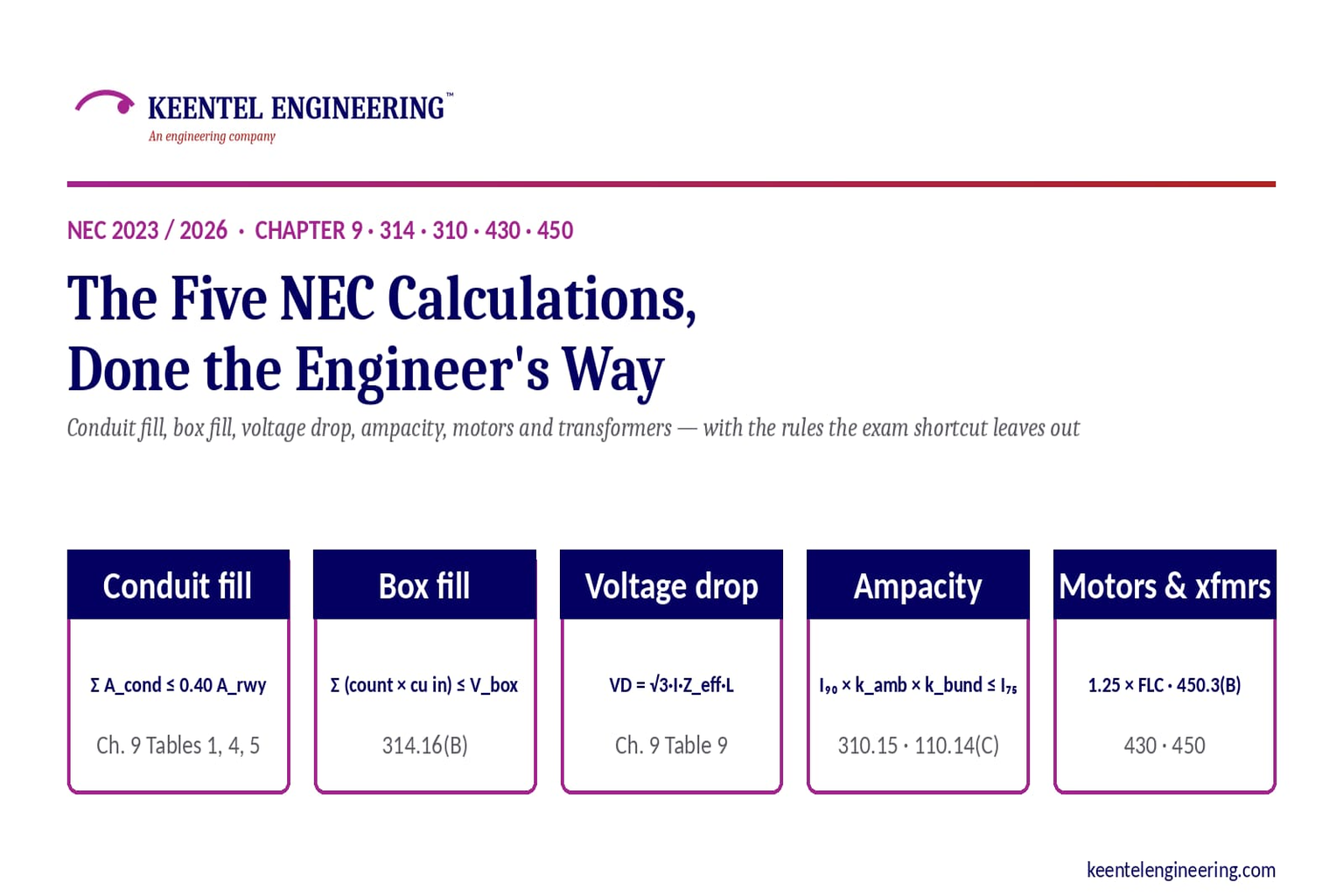
Learn five essential NEC calculations covering conduit fill, voltage drop, ampacity, motor circuits, and transformer protection with engineering examples.
By SANDIP R PATEL
•
September 7, 2026
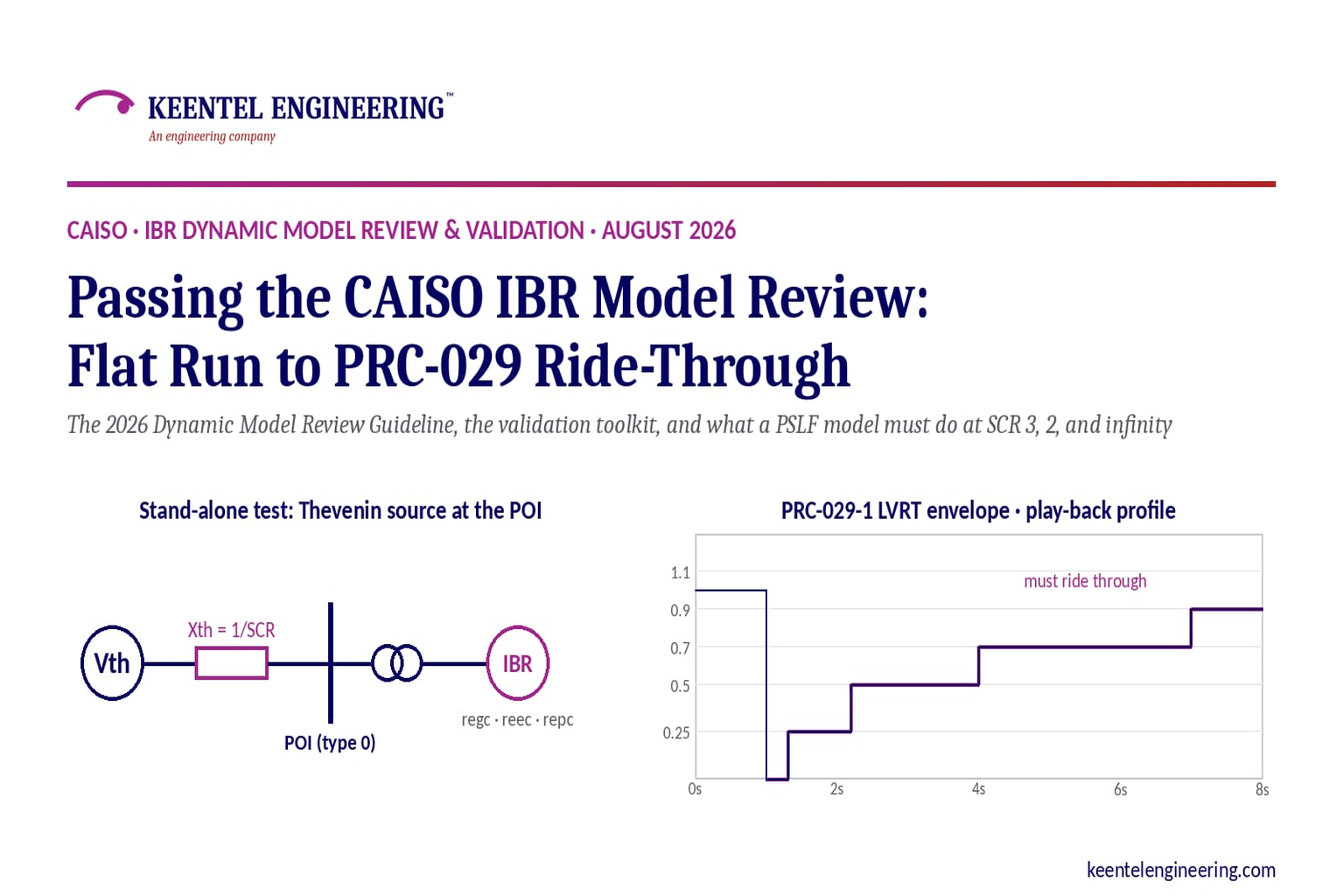
Learn how CAISO reviews IBR models using PSLF validation, PRC-029-1 ride-through requirements, WECC models, and inverter resource compliance testing.
By SANDIP R PATEL
•
September 7, 2026
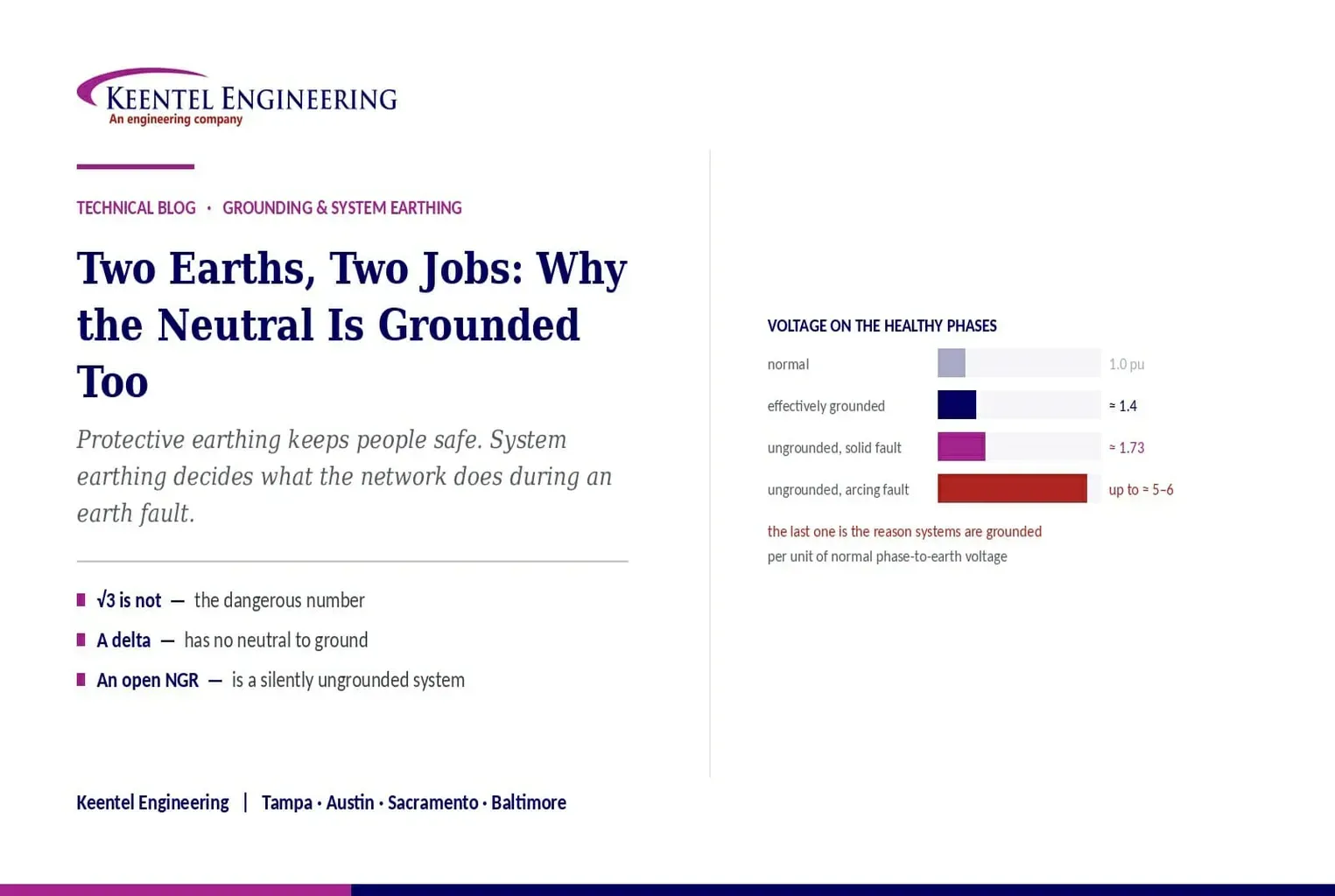
Understand system earthing and protective earthing, neutral grounding methods, effective grounding, ground grids, and insulation coordination for power systems
By SANDIP R PATEL
•
September 6, 2026
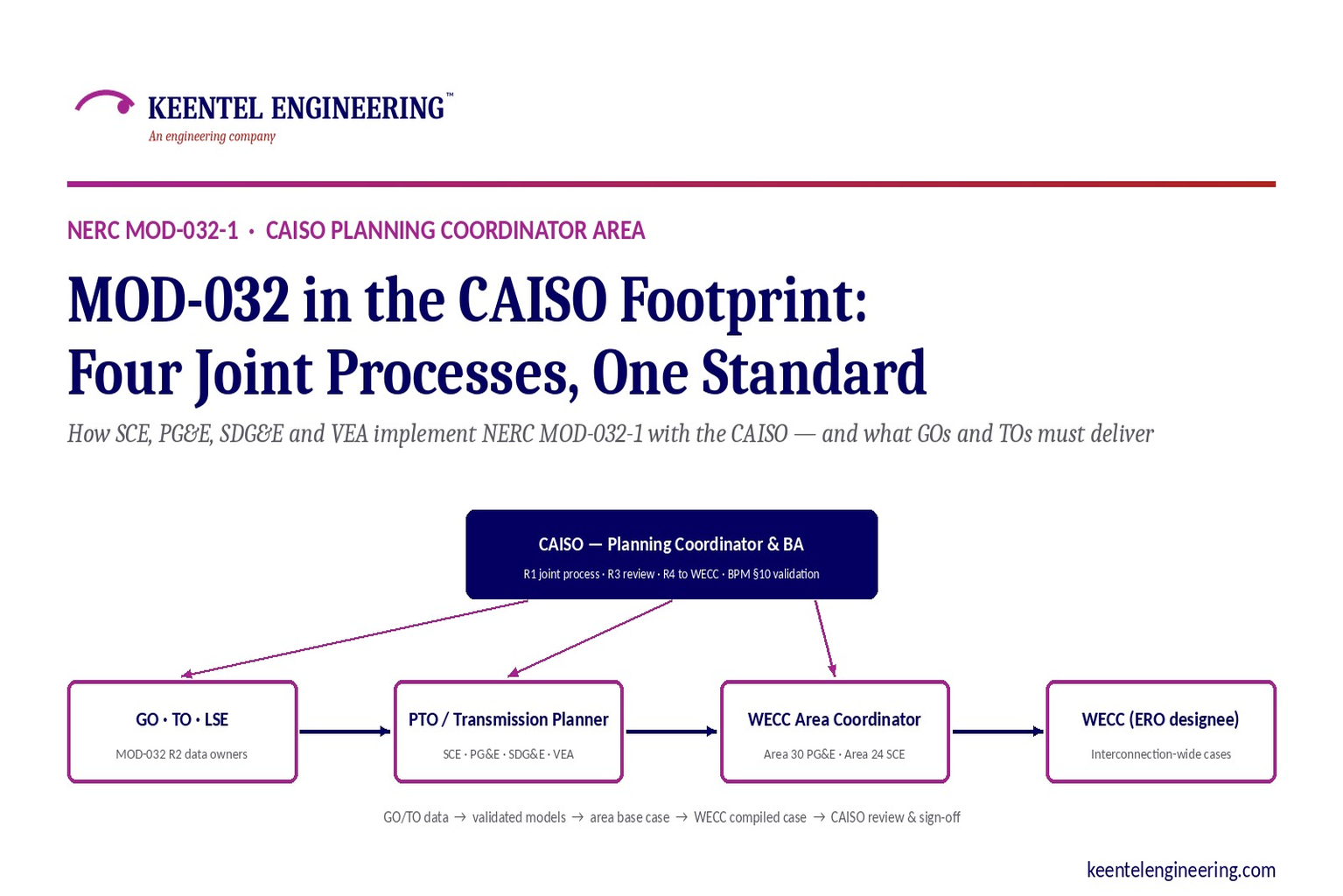
Learn how NERC MOD-032-1 applies across CAISO, SCE, PG&E, VEA and SDG&E, including generator data, PSLF models, EMT requirements and WECC submissions.
By SANDIP R PATEL
•
September 6, 2026
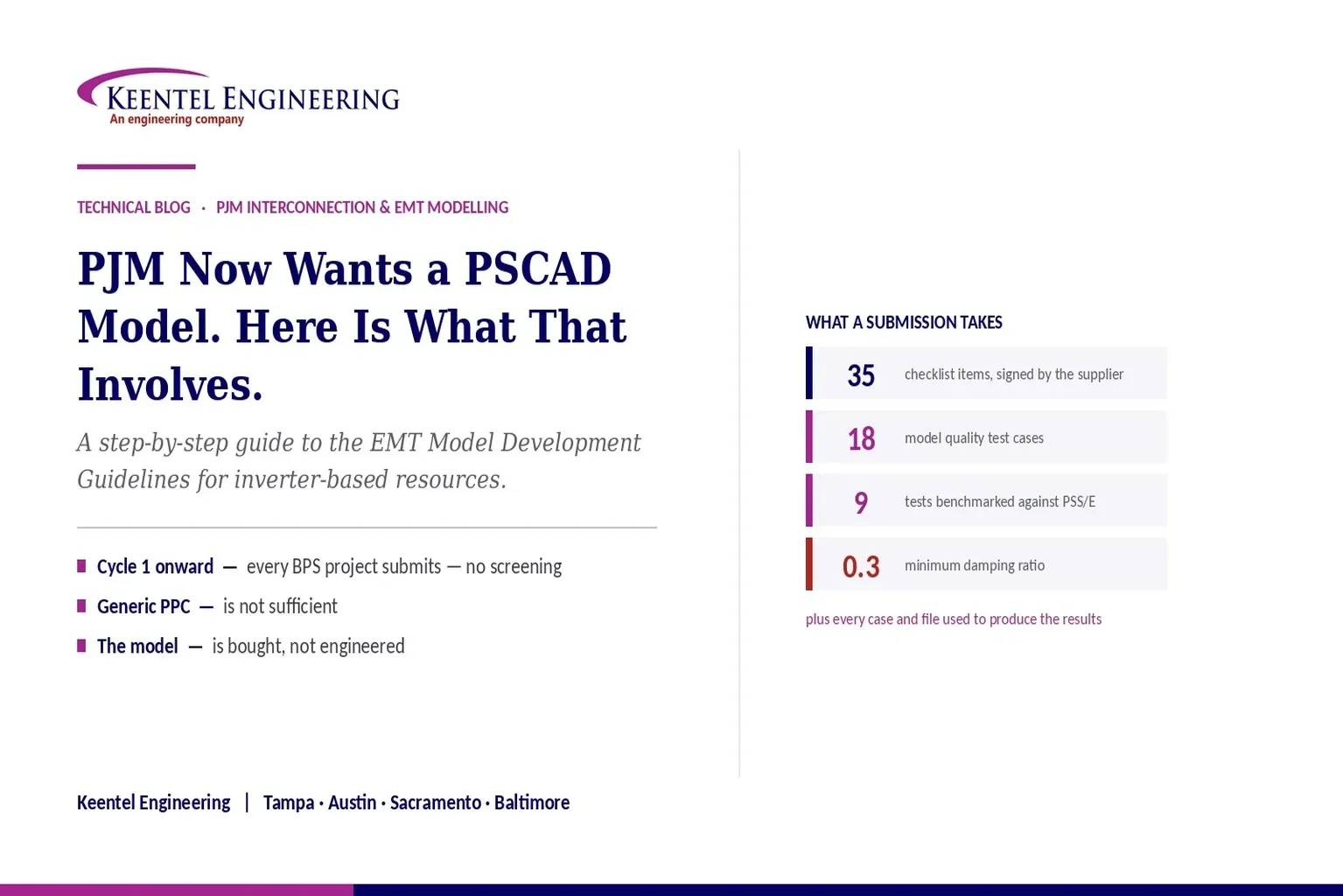
Learn PJM PSCAD model requirements for inverter-based resources, EMT testing, PSS/E benchmarking, ride-through studies, and compliance submissions
By SANDIP R PATEL
•
September 6, 2026
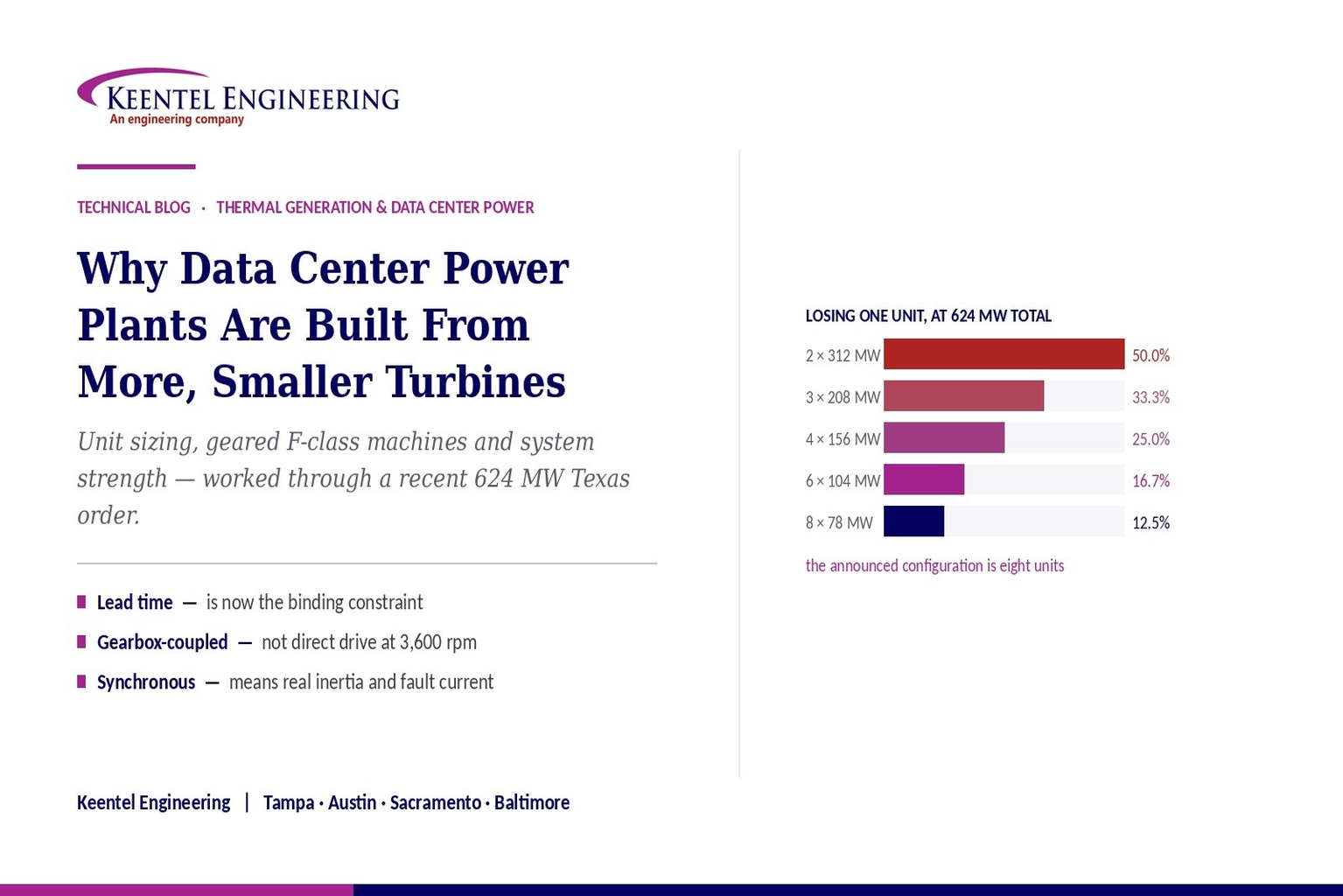
Learn why data center power plants use multiple smaller gas turbines, covering 624 MW capacity, redundancy, grid connection, system strength, and engineering.