
A Coordinated Electric System Interconnection Review—the utility’s deep-dive on technical and cost impacts of your project.

Simplifying Energy-Storage Interconnection in New York: SIR to NYISO Class-Year

Calendar icon.

April 29, 2025 | Blog

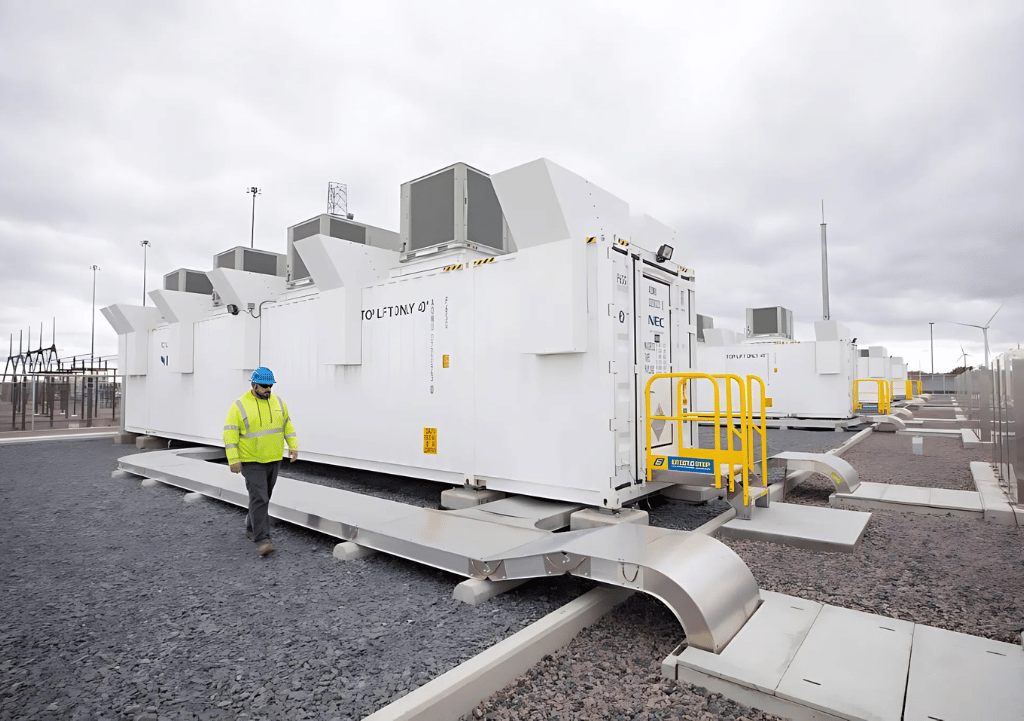
Man in safety vest walks past rows of large, white power storage containers on a gravel lot.

How Keentel Engineering guides developers through utility, SIR and NYISO pathways


The boom in clean-energy assets has pushed energy-storage systems (ESS) to the front line of grid reliability—but interconnecting a battery project in New York can feel like running three different marathons at once. Requirements vary by system size, point of interconnection, and whether you plan to trade in the NYISO wholesale markets. Keentel Engineering’s team of PE-licensed power engineers and NYISO veterans de-risks that journey from the first pre-app call to the final deliverability study.


Which interconnection path applies to your ESS?

Decision filter Typical rule of thumb
< 5 MW, distribution level Standardized Interconnection Requirements (SIR) & utility CESIR
5–20 MW, distribution or NPCC tie-line Utility Non-SIR or NYISO Small Generator Interconnection Procedures (SGIP)
> 20 MW or transmission-connected NYISO Large Facility Interconnection Procedures (LFIP) + FERC tariff

(Need a primer on utility studies first? See our in-depth Power-System Studies)


Step-by-step roadmap we manage for you

  1. Pre-Application Report – confirms feeder capacity and voltage constraints.
  2. Preliminary Screening / Supplemental Analysis – screens for reverse power flow, flicker, fault duty.
  3. CESIR – full utility engineering review; we model upgrades, relaying and anti-islanding.
  4. NYISO Feasibility, SIS & Facilities Study – for projects > 20 MW or any market-participant asset.
  5. Deliverability Analysis (CRIS) – secures capacity revenues; we handle Class-Year enrolment and cost-allocation.

Pro tip: run utility CESIR and NYISO SIS in parallel; Keentel’s dual-track process routinely saves 4-6 months.

Energy-Storage Interconnection — FAQs

1. Which projects follow New York’s Standardized Interconnection Requirements (SIR)?

Battery or hybrid resources ≤ 5 MW AC that connect at distribution voltage use the SIR path, ending with a CESIR if required.

2. When must I involve NYISO?

If you plan to sell into NYISO’s wholesale markets or interconnect to a FERC-jurisdictional line, you must file under NYISO SGIP (≤ 20 MW) or LFIP (> 20 MW).

3. What if my project fails Preliminary Screening?

You can trim the design to pass, request a Supplemental Analysis, or move straight to a full CESIR.

4. What is a CESIR study?


5. How do I check if my distribution circuit is FERC-jurisdictional?

Email NYISO’s Interconnection queue team (icpc@nyiso.com) with the feeder number and POI; they’ll confirm status.

6. What is NYISO’s Fast-Track option?

Inverter-based projects < 5 MW that meet voltage and distance screens can skip parts of SGIP for quicker approval.

7. What application fees should I budget?

Expect about $750 for a Pre-App report, $2,500 for Supplemental Analysis, and $10 k + for NYISO SIS/Facilities studies, rising with project size.

8. Define the Class-Year Facilities Study.

NYISO’s annual, grouped Facilities Study that assigns system-upgrade costs and grants CRIS (capacity) rights.

9. How long does NYISO interconnection take for > 20 MW projects?

Typically 18–24 months, depending on SRIS results, Class-Year timing, and required upgrades.

10. Can Keentel manage utility and NYISO processes in parallel?

Yes—our dual-track approach handles both utility CESIR and NYISO SIS simultaneously, cutting total schedule months.

Proof in Projects — Keentel Energy-Storage Interconnection Wins

1. 4.5 MW Behind-the-Meter Battery | Utility SIR Path

  • Challenge: Rapid approval under the Value of Distributed Energy Resources (VDER) tariff.
  • Solution: Pre-application report, Appendix K package, and full CESIR coordination.
  • Result: Utility “Notice-to-Proceed” in 8 months—record time for an SIR battery project.

2. 30 MW Front-of-Meter ESS | NYISO SGIP Fast Track

  • Challenge: NYISO small-generator queue plus capacity-market deliverability.
  • Solution: Feasibility → SIS → Facilities Study; secured ERIS & CRIS rights.
  • Result: Entered NYISO market queue 6 months ahead of competing projects.

3. 9 MW Hybrid Storage | Expedited Utility Non-SIR

  • Challenge: Tight local “Smart Grid” rules; avoid full CESIR cost.
  • Solution: Pre-app + Supplemental Analysis, negotiated cost-sharing on minor upgrades.
  • Result: Interconnection approved with no CESIR—saved ≈ $250 k in study fees.

4. 50 MW Transmission-Connected BESS | NYISO LFIP + Class Year

  • Challenge: High deposits and a long LFIP timeline for a transmission POI.
  • Solution: Site-control documentation, SRIS package, milestone tracking, Class-Year ranking strategy.
  • Result: ERIS & CRIS rights secured in 22 months, clearing the way for financial close.

Each success shows how Keentel’s dual-track expertise—utility SIR/CESIR and NYISO SGIP/LFIP—compresses schedules and controls upgrade costs for battery-storage developers.

From a behind-the-meter battery NY pilot to a 50 MW BESS interconnection, every energy-storage interconnection succeeds by matching the right NYISO interconnection process. Keentel guides each project: first through the Standardized Interconnection Requirements (SIR) and its CESIR study New York utilities demand—then, if a FERC-jurisdictional distribution circuit or market play is involved, into NYISO SGIP requirements or the deeper NYISO LFIP study. We secure ERIS rights NYISO and CRIS rights NYISO, control upgrade costs in the NYISO Class Year study, and wrap up the final deliverability study battery storage—giving developers a bankable battery-storage interconnection New York can trust.

Why EPCs and IPPs choose Keentel

  • Expertise: 30 + NYISO filings, multi-state P.E.s, and published IEEE PES papers on storage interconnection.
  • Regulatory fluency — we speak PSC, FERC and NYISO tariff language, preventing costly re-studies.
  • Economic optimisation — deliverability strategy often saves clients 15 % on upgrade cost allocations.

See the official NYISO Interconnection Procedures for reference—then let Keentel translate the fine print into a bankable schedule.

Ready to move from concept to COD?

Man in a blazer and open shirt, looking at the camera, against a blurred background.

About the Author:

Sonny Patel P.E. EC

IEEE Senior Member

In 1995, Sandip (Sonny) R. Patel earned his Electrical Engineering degree from the University of Illinois, specializing in Electrical Engineering . But degrees don’t build legacies—action does. For three decades, he’s been shaping the future of engineering, not just as a licensed Professional Engineer across multiple states (Florida, California, New York, West Virginia, and Minnesota), but as a doer. A builder. A leader. Not just an engineer. A Licensed Electrical Contractor in Florida with an Unlimited EC license. Not just an executive. The founder and CEO of KEENTEL LLC—where expertise meets execution. Three decades. Multiple states. Endless impact.

Four workers in safety vests and helmets stand with arms crossed near wind turbines.

Let's Discuss Your Project

Let's book a call to discuss your electrical engineering project that we can help you with.

Man in a blazer and open shirt, looking at the camera, against a blurred background.

About the Author:

Sonny Patel P.E. EC

IEEE Senior Member

In 1995, Sandip (Sonny) R. Patel earned his Electrical Engineering degree from the University of Illinois, specializing in Electrical Engineering . But degrees don’t build legacies—action does. For three decades, he’s been shaping the future of engineering, not just as a licensed Professional Engineer across multiple states (Florida, California, New York, West Virginia, and Minnesota), but as a doer. A builder. A leader. Not just an engineer. A Licensed Electrical Contractor in Florida with an Unlimited EC license. Not just an executive. The founder and CEO of KEENTEL LLC—where expertise meets execution. Three decades. Multiple states. Endless impact.

Leave a Comment

Related Posts

Lifecycle management of T&D switchgear using condition monitoring data, showing engineers analyzing
By SANDIP R PATEL January 24, 2026
Learn how utilities use condition monitoring data to manage T&D switchgear lifecycles, reduce failure risk, extend asset life, and enable condition-based maintenance.
Frequency response characteristics of voltage measurement systems illustrated with substation and wa
By SANDIP R PATEL January 21, 2026
Explore frequency response characteristics of voltage measurement systems used in power substations and grid analysis by Keentel Engineering.
Keentel Engineering white paper cover on reevaluating IEEE and IEC substation standards for increase
By SANDIP R PATEL January 21, 2026
Professional white paper cover by Keentel Engineering on reevaluating IEEE and IEC substation standards, featuring an electrical substation under fault conditions.
Learn how PJM D-Curve reactive capability testing is performed for wind farms and inverter-based res
By SANDIP R PATEL January 15, 2026
Learn how PJM D-Curve reactive capability testing is performed for wind farms and inverter-based resources, including testing requirements, measurement basis, and eDART submission support.
Energy sector integration showing power grids, wind turbines, solar energy, and multi-energy system
By SANDIP R PATEL January 1, 2026
Explore how energy sector integration reshapes modern power grids, improving decarbonization, resilience, and system planning based on CIGRE TB 973 insights.
Diagram illustrating real-code EMT modeling for HVDC, FACTS, and inverter-based resources in power s
By SANDIP R PATEL January 1, 2026
Learn how IEEE/CIGRE real-code EMT modeling improves HVDC, FACTS, and inverter-based resource studies with higher fidelity, compliance accuracy, and tool-independent simulation.
A practical guide to upcoming NERC Reliability Standards (2026–2028), key effective dates, and compl
By SANDIP R PATEL December 29, 2025
A practical guide to upcoming NERC Reliability Standards (2026–2028), key effective dates, and compliance readiness for inverter-based resource owners.
Cover of a guide on ERCOT Model Quality Tests for IBR owners and developers, wit
By SANDIP R PATEL December 26, 2025
Complete technical guide to ERCOT Model Quality Tests (MQT) for inverter-based resources. Covers PRC-029-1, IEEE 2800-2022, PSCAD, SCR testing, and pass/fail criteria.
Graphic for PRC-030-1, event analysis for inverter-based resources. Solar farm, technicians monitoring data, equipment.
By SANDIP R PATEL December 26, 2025
PRC-030-1 compliance guide for Generator Owners covering IBR event analysis, corrective action plans, audit requirements, and post-disturbance obligations.