

A Coordinated Electric System Interconnection Review—the utility’s deep-dive on technical and cost impacts of your project.

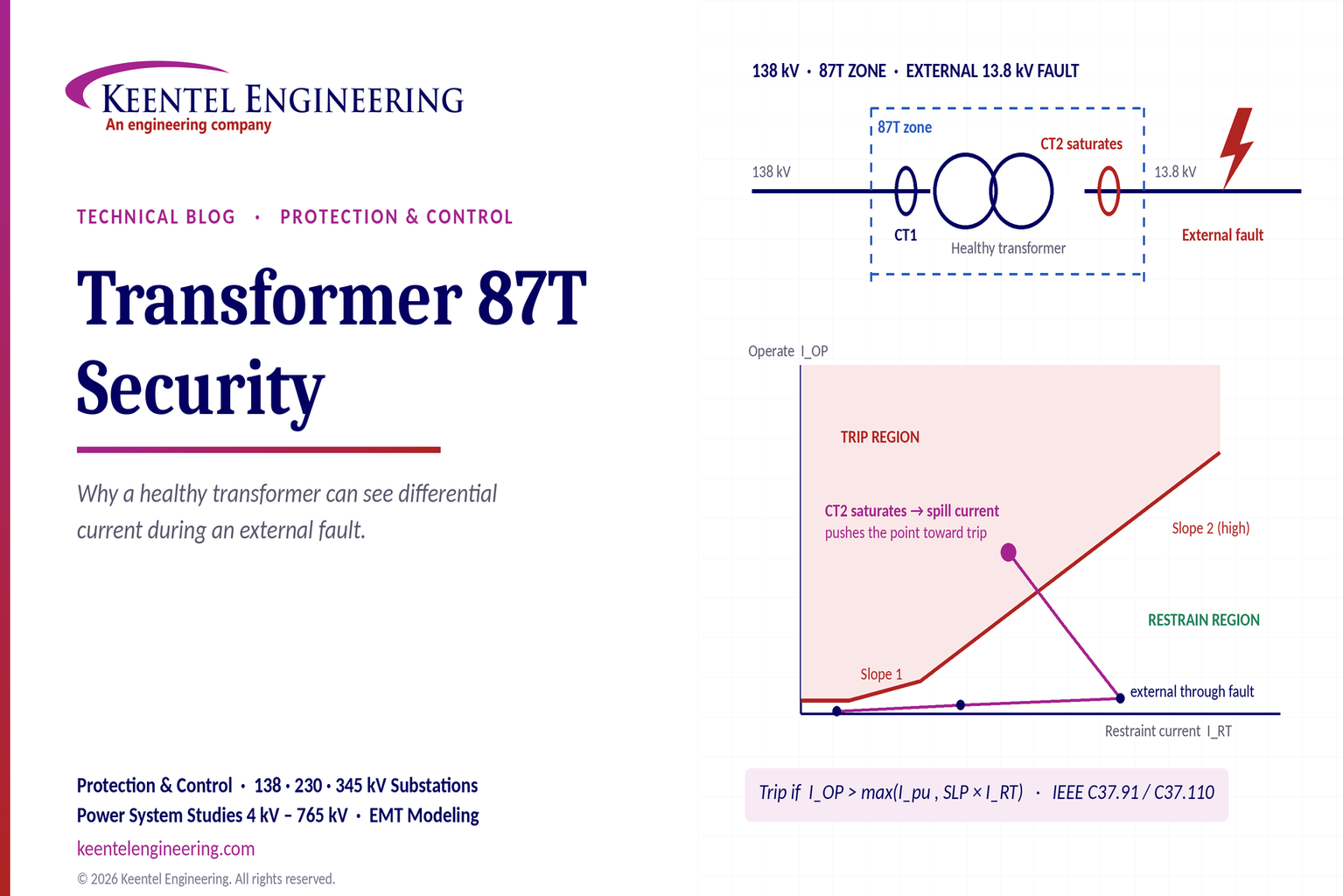
Challenge: Frequent false tripping using conventional electromechanical relays
Solution: SEL-487E integration with multi-terminal differential protection and dynamic inrush restraint
Result: 90% reduction in false trips, saving over $250,000 in downtime

Category Metric
VPP capacity (Lunar Energy) 650 MW
Lunar funding raised US$232 million
Data center BESS example 31 MW / 62 MWh
ERCOT grid-scale batteries 15+ GW
LDES tenders (H1 2026) Up to 9.3 GW
Lithium-ion share of LDES by 2030 77%
FEOC initial threshold 55%
BESS tariff rate (2026) ~55%
Capacity gain from analytics 5–15%

What is T&D Co-Simulation?

Confusing Physical Connections with Logical Nodes in IEC 61850

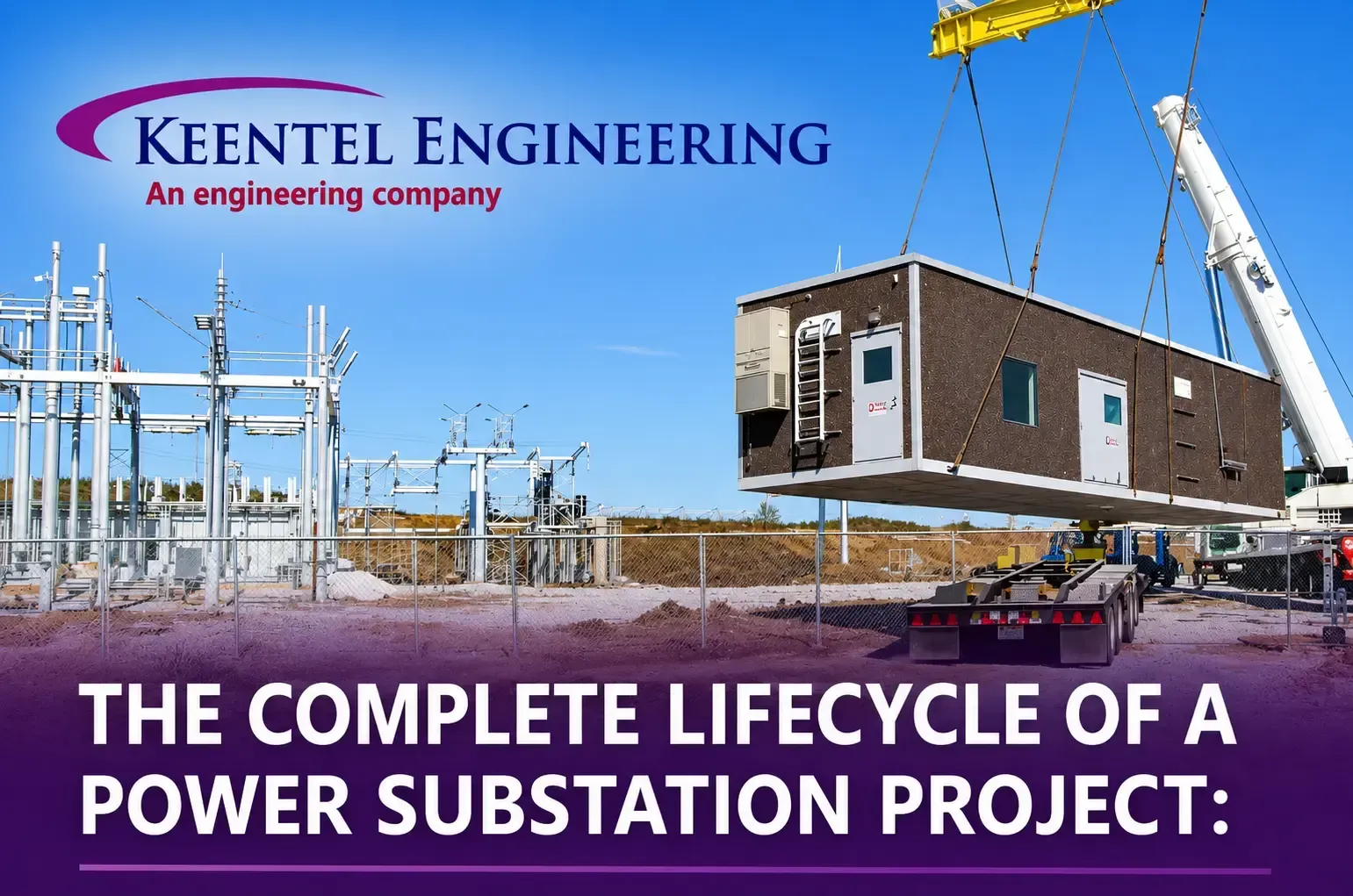
The Complete Lifecycle of a Power Substation Project: From Design to Commissioning(A Keentel Engineering Technical Guide) Source Reference

Keentel Engineering power substation construction project
Calendar icon. D

 Apr 19, 2022  | blog

Introduction

Power substations are the backbone of modern electrical infrastructure, enabling safe, efficient transmission and distribution of electricity across regions. However, the development of a substation is far more than installing transformers and switchgear—it is a complex, multi-phase engineering process involving planning, environmental compliance, civil works, electrical integration, and commissioning.


At Keentel Engineering, we specialize in delivering turnkey substation engineering services aligned with IEEE, IEC, NERC, and utility-specific standards. This guide walks through the complete lifecycle of a substation project, incorporating real-world engineering practices, environmental considerations, and construction methodologies.


1. Substation Design Phase: Engineering the Foundation of Reliability

1.1 Site Selection & Planning


One of the most critical decisions in any substation project is site selection. The document emphasizes that land availability, environmental constraints, and proximity to transmission lines are key drivers.


Key Engineering Considerations:


  • Avoid flood-prone, marshy, or seismic zones 
  • Maintain distance from schools, hospitals, and communities 
  • Ensure minimal environmental and social disruption 
  • Optimize routing for incoming/outgoing transmission lines 


Keentel Insight:


Poor site selection leads to long-term operational risks, including:


  • Foundation instability 
  • Environmental non-compliance 
  • Increased CAPEX/OPEX 


1.2 Environmental & Regulatory Design Criteria


Modern substations must incorporate environmental mitigation from day one, not as an afterthought.


Critical Requirements:


  • Noise control (barriers, equipment placement) 
  • Oil containment systems 
  • Fire protection systems 
  • Drainage and pollution control 


As noted in the document, failure to include these early can lead to cost escalation later


1.3 Substation Configuration: AIS vs GIS


Air Insulated Substations (AIS)


  • Outdoor equipment 
  • Lower cost 
  • Requires larger land area 


Gas Insulated Substations (GIS)


  • Compact, indoor installation 
  • Ideal for urban or space-constrained areas 
  • Uses SF₆ gas insulation 


Keentel Engineering Perspective:


We recommend:


  • AIS for rural / utility-scale projects 
  • GIS for urban / industrial / high-reliability environments 

2. Pre-Construction Phase: Data-Driven Engineering

2.1 Surveys & Feasibility Analysis


Includes:


  • Topographical mapping (1:50,000 scale) 
  • GPS-based site marking 
  • Environmental baseline studies (soil, noise, air) 


Engineering Output:


  • Site feasibility report 
  • Risk mitigation strategy 
  • Preliminary SLD and layout 


2.2 Substation Layout Design


The layout defines:


  • Equipment placement 
  • Voltage level segregation (benching) 
  • Drainage and access roads 


The document highlights cut-and-fill operations and benching in hilly terrain, which directly impact stability and cost. 


2.3 Equipment Sizing and Selection


Typical equipment includes:


  • Circuit Breakers (SF₆, Vacuum) 
  • CTs, PTs, CVTs 
  • Surge Arresters 
  • Busbars and isolators 


Keentel Engineering Approach:


We integrate:


  • Load flow studies 
  • Short circuit analysis 
  • Protection coordination 

3. Construction Phase: Civil & Structural Execution

3.1 Site Preparation & Foundations


Construction begins with:


  • Excavation and RCC foundation works 
  • Soil stabilization 
  • Drainage implementation 


The document notes that improper soil handling can lead to erosion and groundwater contamination. 


3.2 Control Room & Auxiliary Infrastructure


Includes:


  • Control building construction 
  • Cable trays and trenches 
  • Earthing grid installation 


Key Engineering Element:


  • Grounding system design is critical for safety and fault current dissipation.


3.3 Environmental & Safety Management


During construction:


  • Waste management must be controlled 
  • Worker camps must follow sanitation standards 
  • Oil and chemical handling must prevent contamination 

4. Erection Phase: Electrical Installation

4.1 Transformer Installation


Challenges include:


  • Heavy transport logistics 
  • Road and bridge load limitations 
  • Specialized lifting methods (jack & slide systems) 


4.2 Switchyard Assembly


Installation of:


  • Busbars 
  • Gantries 
  • Line bays 
  • Surge arresters 


Risk:


Improper erection can lead to fatal safety incidents or system faults.


4.3 Control & Protection Systems


Includes:


  • Relay panels 
  • SCADA systems 
  • PLCC communication 


These systems enable:


5. Commissioning Phase: Bringing the System Online

5.1 Testing & Energization


Activities include:


  • Transformer oil filling 
  • Functional testing of protection systems 
  • Energization of auxiliary systems 


The document highlights risks such as:


  • Oil leakage 
  • Electrical faults during charging 


5.2 Communication & SCADA Integration


SCADA systems enable:


  • Real-time monitoring 
  • Remote switching 
  • Fault detection 


5.3 Final Integration & Restoration


Includes:


  • Line termination 
  • Soil restoration 
  • Environmental rehabilitation 

6. Distribution Substations (Below 33 kV)

These are typically:


  • Located near load centers 
  • Mounted on poles or ground structures 
  • Used for final voltage transformation 


They follow similar lifecycle steps but at smaller scale and reduced complexity. 


Conclusion: Why Lifecycle Engineering Matters

A substation project is not just construction it is a lifecycle engineering challenge involving:


  • Design optimization 
  • Environmental compliance 
  • Construction quality 
  • Operational reliability 


At Keentel Engineering we provide:


  • End-to-end substation design 
  • NERC & ISO compliance support 
  • Protection & control engineering 
  • Construction oversight and commissioning 

Frequently Asked Questions (FAQs)

  • 1. What are the main stages of a substation project?

    Design, pre-construction, construction, erection, and commissioning.


  • 2. What is the difference between AIS and GIS substations?

    AIS uses air insulation and requires more space, while GIS uses SF₆ gas and is compact.


  • 3. Why is site selection critical?

    It affects cost, environmental impact, reliability, and long-term maintenance.


  • 4. What studies are required before substation design?

    • Load flow 
    • Short circuit 
    • Protection coordination 
    • Environmental studies 

  • 5. What are the major environmental risks?

    • Oil leakage 
    • Soil erosion 
    • Noise pollution 
    • Water contamination

  • 6. How long does a substation project take?

    Typically 12–36 months, depending on size and complexity.


  • 7. What is benching in substation design?

    Creating stepped levels for equipment placement, especially in hilly terrain.


  • 8. What is the purpose of earthing systems?

    To safely dissipate fault currents and protect equipment and personnel.


  • 9. What is SCADA in substations?

    A system for remote monitoring and control of substation operations.


  • 10. Why is transformer transportation challenging?

    Due to heavy weight, road limitations, and logistical constraints.


  • 11. What safety systems are required in substations?

    • Fire protection systems 
    • Oil containment 
    • PPE compliance 
    • Grounding systems 

  • 12. What is PLCC?

    Power Line Carrier Communication used for communication over transmission lines.


  • 13. What are common construction risks?

    • Poor soil conditions 
    • Environmental violations 
    • Worker safety issues 

  • 14. What standards apply to substations?

    • IEC 
    • IEEE 
    • NERC 
    • Local utility standards 

  • 15. What is the role of EPC contractors?

    They handle engineering, procurement, and construction execution.


  • 16. What is a transformer bay?

    A designated area where transformers are installed and connected.


  • 17. How is oil leakage prevented?

    Using containment pits and proper drainage systems.


  • 18. What are distribution substations?

    Lower voltage substations (≤33 kV) used near consumers.


  • 19. Why is environmental baseline data important?

    It helps measure and mitigate project impact.


  • 20. What makes Keentel Engineering different?

    • 30+ years of expertise 
    • NERC compliance specialization 
    • Advanced power system studies 
    • End-to-end engineering services
  • 21. What is frequency droop control?

    DER response to frequency deviations.

  • 22. What is voltage control in DERs?

    Reactive power support affecting grid voltage.


  • 23. What is behind-the-meter DER?

    Generation or storage located on the customer side of the meter.


  • 24. Why exclude demand response from DER?

    Because it behaves as load, not generation.


  • 25. How can Keentel help with compliance?

    Through modeling, data frameworks, studies, and audit support.


A smiling man with glasses and a beard wearing a blue blazer stands in front of server racks in a data center.

About the Author:

Sonny Patel P.E. EC

IEEE Senior Member

In 1995, Sandip (Sonny) R. Patel earned his Electrical Engineering degree from the University of Illinois, specializing in Electrical Engineering . But degrees don’t build legacies—action does. For three decades, he’s been shaping the future of engineering, not just as a licensed Professional Engineer across multiple states (Florida, California, New York, West Virginia, and Minnesota), but as a doer. A builder. A leader. Not just an engineer. A Licensed Electrical Contractor in Florida with an Unlimited EC license. Not just an executive. The founder and CEO of KEENTEL LLC—where expertise meets execution. Three decades. Multiple states. Endless impact.

Four workers in safety vests and helmets stand with arms crossed near wind turbines.

Let's Discuss Your Project

Let's book a call to discuss your electrical engineering project that we can help you with.

Man in a blazer and open shirt, looking at the camera, against a blurred background.

About the Author:

Sonny Patel P.E. EC

IEEE Senior Member

In 1995, Sandip (Sonny) R. Patel earned his Electrical Engineering degree from the University of Illinois, specializing in Electrical Engineering . But degrees don’t build legacies—action does. For three decades, he’s been shaping the future of engineering, not just as a licensed Professional Engineer across multiple states (Florida, California, New York, West Virginia, and Minnesota), but as a doer. A builder. A leader. Not just an engineer. A Licensed Electrical Contractor in Florida with an Unlimited EC license. Not just an executive. The founder and CEO of KEENTEL LLC—where expertise meets execution. Three decades. Multiple states. Endless impact.

Leave a Comment

Related Posts

Keentel Engineering: Upgrading from Legacy SCADA to IEC 61850 Compliant Substation Automation System
By SANDIP R PATEL April 18, 2026
Explore the shift from legacy SCADA systems to Smart Substation Automation Systems (SAS). Learn how Keentel Engineering helps modernize power grids with IEC 61850 solutions. Get started today!
NERC MOD-032-2 Compliance Chart
By SANDIP R PATEL April 18, 2026
Discover Keentel Engineering's expert solutions for NERC MOD-032-2 compliance, IBR & DER modeling. Get your power systems future-ready with our engineering excellence.
Primary injection testing setup with engineers inspecting current transformer commissioning in power
By SANDIP R PATEL April 17, 2026
Learn primary injection testing, CT commissioning, and current transformer validation. Ensure reliable substation protection systems discover best practices.
ASPEN power system analysis by Keentel Engineering for efficient electrical grid optimization.
By SANDIP R PATEL April 17, 2026
Optimize grids with ASPEN Power System Analysis, OneLiner & planning tools. Improve protection coordination and compliance. Discover solutions today.
MISO Planning Modeling Technical Guide banner with Keentel Engineering branding
By SANDIP R PATEL April 17, 2026
Master the MISO Planning Modeling Manual with expert insights on power system modeling, compliance, and generator requirements. Learn more today.
The image shows a map of Texas, highlighting regions associated with ERCOT
By SANDIP R PATEL April 16, 2026
Master ERCOT 2026 data and modeling requirements. Learn steady state, dynamic modeling, validation, and compliance strategies to avoid delays and rejections.
Power grid towers with digital network illustration and engineering article title.
By SANDIP R PATEL April 15, 2026
A detailed overview of PJM interconnection reforms, including the shift to a Cycle-based model, reduced queue delays, and the impact on grid reliability, project development, and engineering services.
Biggest Mistakes in Analyzing Modern Substation Schematics
By SANDIP R PATEL April 11, 2026
Discover 15 critical mistakes in modern substation schematic analysis, including IEC 61850, protection zones, GOOSE, CT/VT issues, and grid reliability risks.
Advanced large load modeling for grid reliability with data center power systems.
By SANDIP R PATEL April 10, 2026
Learn how large load modeling improves grid reliability for data centers and modern power systems using advanced EMT, dynamic studies, and compliance strategies.