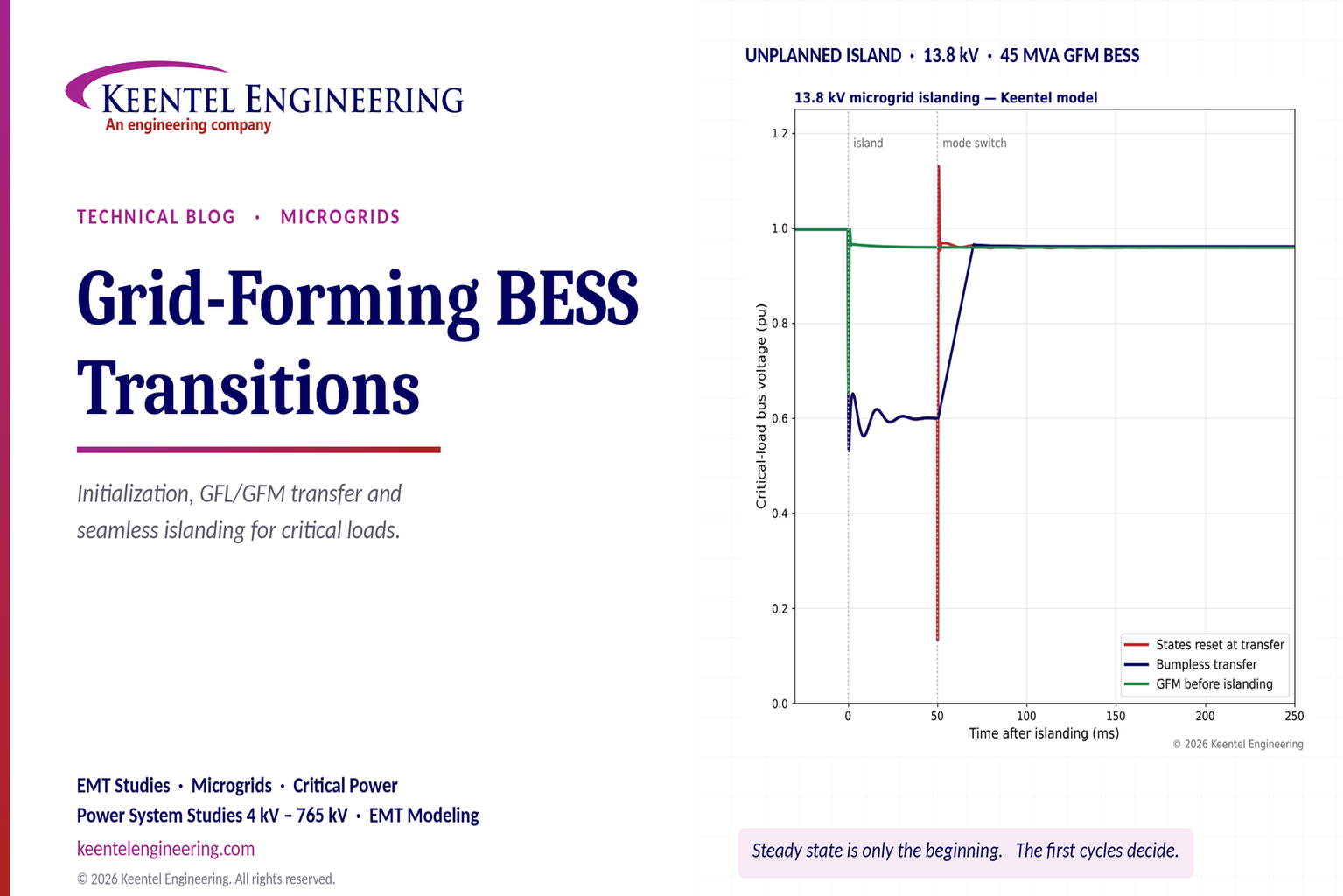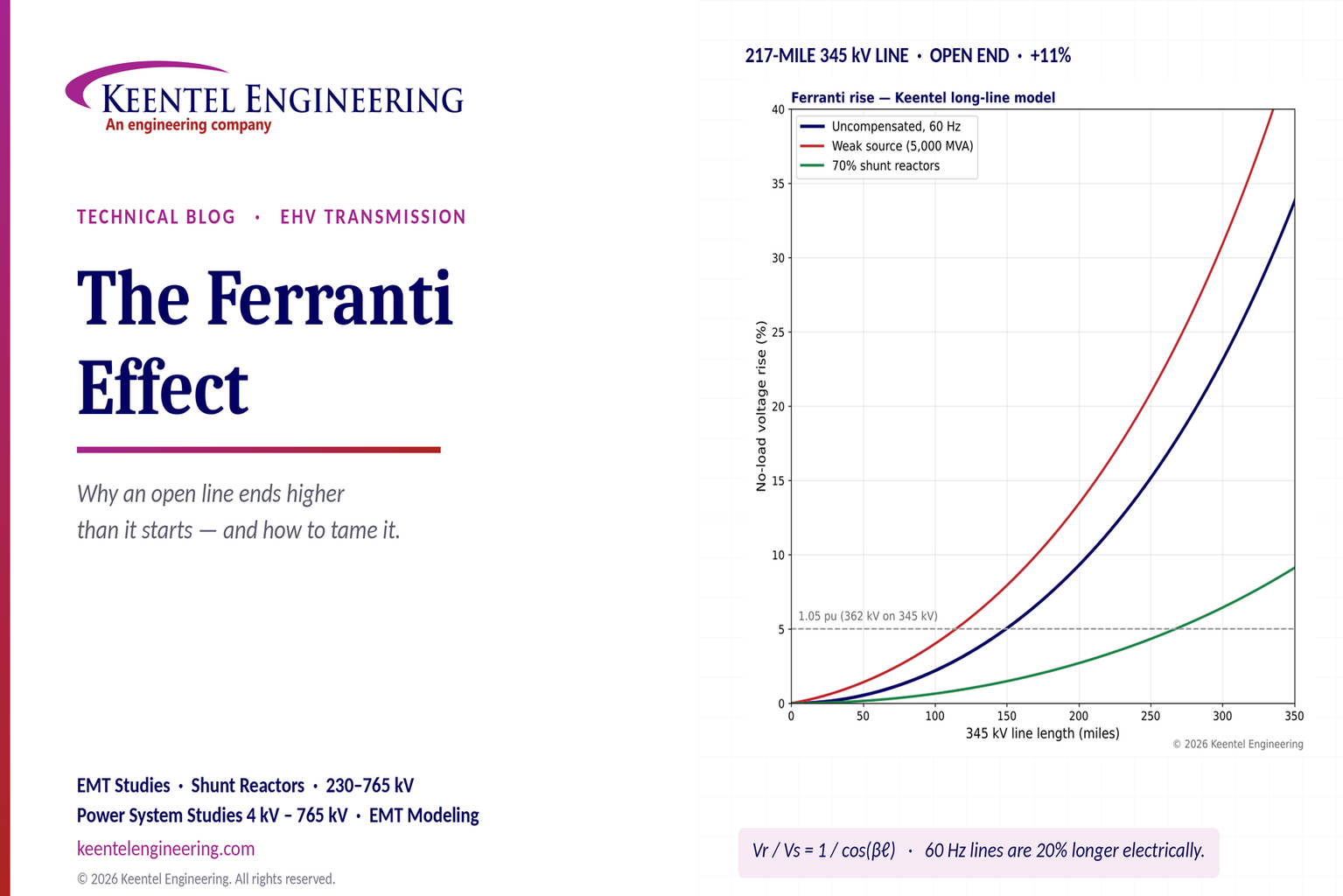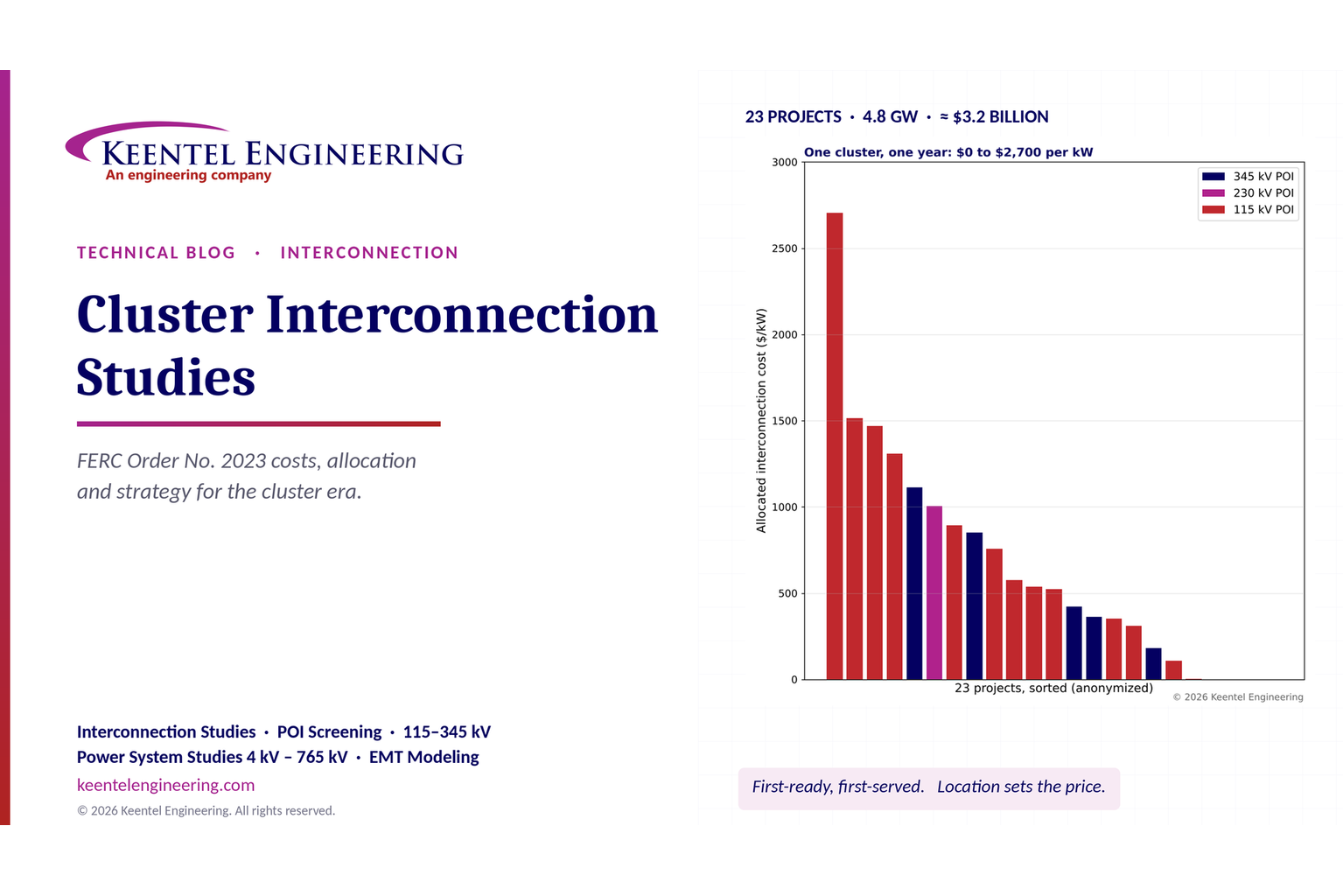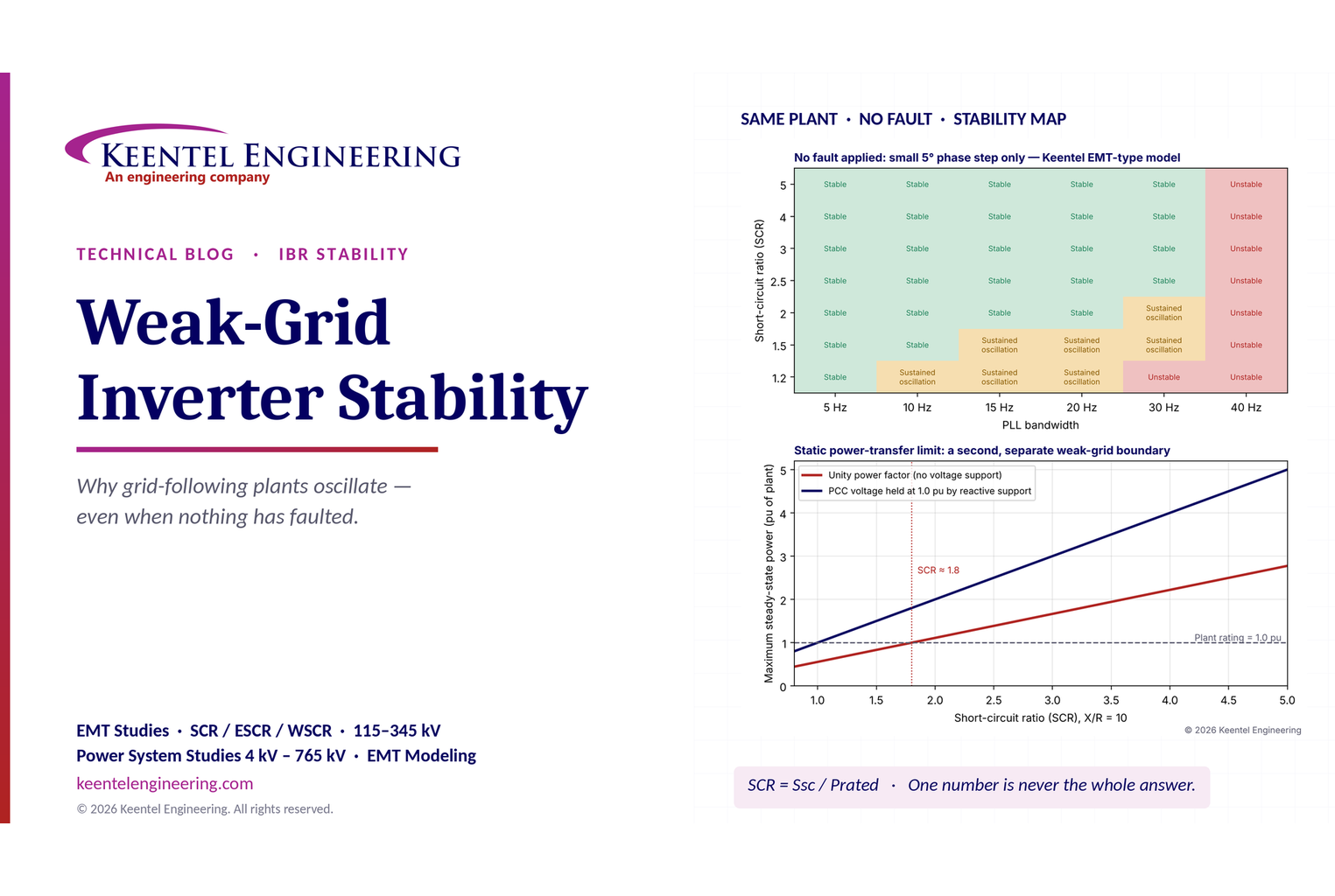


A Coordinated Electric System Interconnection Review—the utility’s deep-dive on technical and cost impacts of your project.

PSCAD Power System Studies: Four Real-World Case Studies

Calendar icon. D

May 5, 2025 | Blog

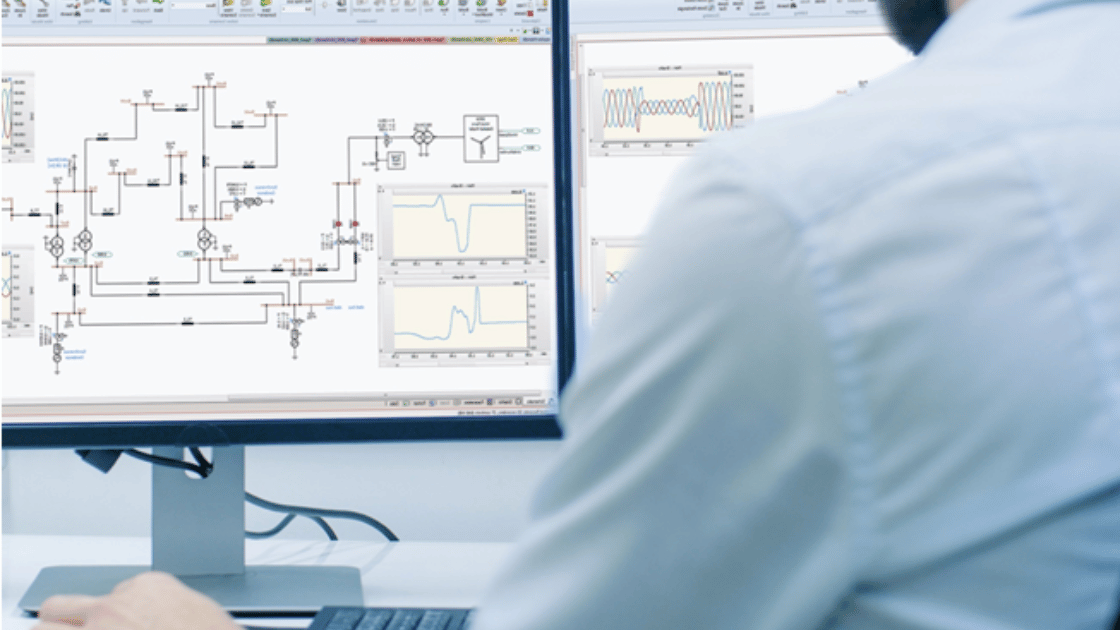
Person looking at two computer monitors displaying technical diagrams and graphs.

PSCAD (Power Systems Computer Aided Design) is the industry standard for high-fidelity electromagnetic transient (EMT) and dynamic studies. At Keentel Engineering, our PSCAD modeling services help utilities, renewable developers, and independent power producers validate grid interconnection performance, ensure ride-through compliance, and optimize protection schemes. Below are four detailed case studies showcasing how our PSCAD-driven power system studies delivered actionable insights and millions in cost savings.


Case Study 1
Transient Stability Analysis for a 345 kV Renewable Interconnection

Client: Confidential Renewable Energy Developer (Midwest, USA)
Scope: 600 MW combined wind + BESS interconnection at a 345 kV POI adjacent to a weak grid.
Challenge: Verify ride-through capability, critical clearing times, and voltage recovery under fault conditions per NERC PRC-024-2.

Keentel Solution

  • Developed detailed PSCAD models for wind turbines, BESS converters, collector system, and substation.
  • Simulated three-phase, single-line-to-ground, and double-line-to-ground faults.
  • Determined breaker critical clearing times and evaluated dynamic reactive support needs.

Results

  • Demonstrated full compliance without adding reactive support equipment.
  • Saved the client $2 million in avoided hardware upgrades.

Case Study 2
EMT Simulation of Inverter-Based Resources in a Weak 115 kV Grid

Client: Confidential Utility Company (Southwest, USA)
Scope: 200 MW solar PV plant interconnection to a low-SCR 115 kV network.
Challenge: Identify sub-synchronous oscillations and high-frequency instabilities that RMS tools couldn’t capture.

Keentel Solution

  • Built a full EMT PSCAD model of PV inverters, plant controller, and grid-tie transformer.
  • Conducted VSC interaction and high-frequency stability analyses.
  • Developed mitigation strategies: PLL tuning and passive damping filters.

Results

  • Detected and neutralized damaging resonances early.
  • Kept the project on schedule without costly reactive power over-design.

Case Study 3
PSCAD Lightning Surge Study for a 500 kV Transmission Line

Client: Confidential Transmission Owner (Southeast, USA)
Scope: Validate insulation coordination for new 500 kV line and associated substations under direct lightning and back-flashover.
Challenge: Ultra-high voltage levels required precise energy-absorption modeling beyond standard arrester sizing.

Keentel Solution

  • Created a PSCAD model including tower geometry, insulator strings, and ground wire.
  • Simulated lightning strikes and storm variations across different soil resistivities.
  • Optimized surge arrester ratings and insulation levels.

Results

  • Reduced equipment capital cost by 8% while improving surge protection margins.
  • Minimized outage risk from lightning events.

Case Study 4
Controlled-Switching & TRV Analysis for 345 kV Circuit Breakers

Client: Confidential IPP (Texas, USA)
Scope: Evaluate transformer inrush, transient recovery voltage (TRV), and restrike risk at a new 345 kV/138 kV switching station.
Challenge: Insurance underwriter required proof that controlled switching would mitigate high inrush currents and TRV stresses.

Keentel Solution

  • Modeled station transformers, reactors, and breakers in PSCAD.
  • Ran point-on-wave switching simulations per IEEE C37.011 and IEC 62271-100.
  • Tuned controlled-switching device parameters and specified mitigation hardware.

Results

  • Achieved a 40% reduction in inrush current and guaranteed TRV compliance.
  • Secured favorable insurance terms and avoided costly breaker upgrades.

Our Service

Learn more about our full PSCAD Modeling Services and how we can tailor dynamic, EMT, and transient analyses to your project’s needs.


Next Steps

Ready to leverage PSCAD for your next interconnection or protection study?


A smiling man with glasses and a beard wearing a blue blazer stands in front of server racks in a data center.

About the Author:

Sonny Patel P.E. EC

IEEE Senior Member

In 1995, Sandip (Sonny) R. Patel earned his Electrical Engineering degree from the University of Illinois, specializing in Electrical Engineering . But degrees don’t build legacies—action does. For three decades, he’s been shaping the future of engineering, not just as a licensed Professional Engineer across multiple states (Florida, California, New York, West Virginia, and Minnesota), but as a doer. A builder. A leader. Not just an engineer. A Licensed Electrical Contractor in Florida with an Unlimited EC license. Not just an executive. The founder and CEO of KEENTEL LLC—where expertise meets execution. Three decades. Multiple states. Endless impact.

Four workers in safety vests and helmets stand with arms crossed near wind turbines.

Let's Discuss Your Project

Let's book a call to discuss your electrical engineering project that we can help you with.

Man in a blazer and open shirt, looking at the camera, against a blurred background.

About the Author:

Sonny Patel P.E. EC

IEEE Senior Member

In 1995, Sandip (Sonny) R. Patel earned his Electrical Engineering degree from the University of Illinois, specializing in Electrical Engineering . But degrees don’t build legacies—action does. For three decades, he’s been shaping the future of engineering, not just as a licensed Professional Engineer across multiple states (Florida, California, New York, West Virginia, and Minnesota), but as a doer. A builder. A leader. Not just an engineer. A Licensed Electrical Contractor in Florida with an Unlimited EC license. Not just an executive. The founder and CEO of KEENTEL LLC—where expertise meets execution. Three decades. Multiple states. Endless impact.

Leave a Comment

Related Posts

ERCOT Batch Zero large load interconnection guide
By SANDIP R PATEL July 5, 2026
Learn ERCOT Batch Zero requirements, large load interconnection, ride-through standards, dynamic modeling, compliance timelines, and grid approvals.
PRC-028-1 and NOGRR255 compliance with SEL-2240 Axion and SEL-3555 RTAC
By SANDIP R PATEL July 5, 2026
Learn how to achieve PRC-028-1 and ERCOT NOGRR255 compliance using the SEL-2240 Axion and SEL RTAC for disturbance monitoring, DFR engineering, and IBR facilities.
PJM EMT modeling guidelines for inverter-based resources
By SANDIP R PATEL July 3, 2026
Learn PJM EMT model development requirements for inverter-based resources, including PSCAD modeling, benchmark testing, EMT studies, and Decision Point II compliance.
Power transformer testing and commissioning
By SANDIP R PATEL July 2, 2026
Master power transformer testing and commissioning with expert guidance on TTR, winding resistance, insulation testing, impedance tests, CT verification, and safe energization.
Fast real-time EMT simulation for low-inertia power systems
By SANDIP R PATEL July 2, 2026
Discover fast real-time EMT simulation for low-inertia power systems, HIL testing, PSCAD modeling, cloud-based EMT, OEM controller integration, and transient stability assessment.
Fundamentals of substation protection and power system relays
By SANDIP R PATEL June 30, 2026
Learn substation protection, protective relaying, relay coordination, fault analysis, and power system protection fundamentals.
Utility-scale solar and battery storage engineering infrastructure
By SANDIP R PATEL June 30, 2026
Learn utility-scale solar engineering, battery storage integration, grid interconnection, power system studies, and commissioning best practices.
Data center design engineering with grid-to-rack power and cooling
By SANDIP R PATEL June 29, 2026
WHITE PAPER |Learn data center design, power infrastructure, cooling systems, redundancy, and grid interconnection to build reliable, efficient facilities.
Transmission line engineering from 30% design to IFC
By SANDIP R PATEL June 29, 2026
Learn how transmission line design progresses from 30% to IFC, covering clearance, sag-tension, structures, foundations, and engineering best practices.