New projects approaching COD
Solar, wind, BESS, hybrid and thermal projects that need registration, applicability and evidence recovery in place before commercial operation.

Your Trusted Partner in Electrical Engineering and Power Systems
At Keentel Engineering, we deliver electrical power engineering services built on 30 years of experience and a commitment to excellence. Our clients include utilities, developers, EPCs, and public agencies across the U.S.
Unlike firms that sacrifice technical depth to chase billable hours, we prioritize precision, compliance, and value engineering. From transmission services and relay modeling to winterization and SCADA planning, we never compromise on quality.
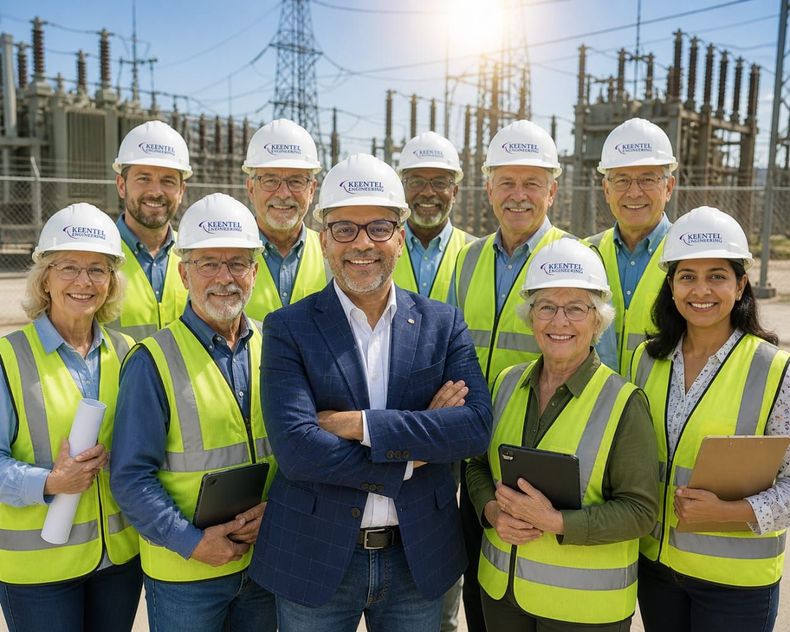
At Keentel Engineering, we take pride in being the go-to electrical power engineering firm for power and utility system planning, substation design, protection, control, and power system analysis. The following attributes distinguish our team in utility-grade substation engineering and compliance-driven project delivery.
With three decades of hands-on project delivery, we bring unmatched expertise in substation layout design, substation electrical and civil engineering, relay protection, and grid-tie solutions. Our experience includes projects in complex terrain, urban retrofit environments, and utility-scale renewable integrations.
Our engineering process applies AutoCAD 3D, BIM modeling, and system-level substation design practices to ensure accurate planning, reduced errors, and efficient coordination across all project stakeholders.
Our workflow includes 3D substation design, enabling clash-free coordination between structural, electrical, and civil disciplines.
From grounding grid studies to relay protection settings, we engineer every detail to improve system reliability, performance, and operational safety. Our rigorous QA/QC process ensures compliance with IEEE, NFPA, and ISO/TSO interconnection standards.
Among leading electrical substation design companies, Keentel Engineering stands out for 30+ years of proven high-voltage and utility-grade project delivery.




First name, email and what you're interested in are all we need to get moving. Everything else, including drawings or an RFP, is optional.
Every obligation you carry under the NERC Reliability Standards flows from two decisions: the functions your organization is registered for, and the requirements that apply to each facility under those functions. Registration is governed by the NERC Rules of Procedure and the Statement of Compliance Registry Criteria. Applicability is set out in Section 4 of each standard and, often, in the wording of individual requirements.
Get registration wrong in one direction and you operate with obligations nobody is tracking — a risk that surfaces the moment your Regional Entity identifies the gap. Get it wrong in the other direction and you fund programs, evidence and audits for requirements that were never yours.
Applicability is also rarely a yes-or-no answer for a whole standard. A PRC standard may apply to some protective functions and not others; a FAC requirement may apply only to certain facilities; a phased-in version may apply to one site this year and another next year. Those distinctions need to be written down, with a basis, before an auditor asks.
Registration answers who you are. Applicability answers what you must prove. Both need a documented technical basis that a Regional Entity reviewer can follow without a meeting.
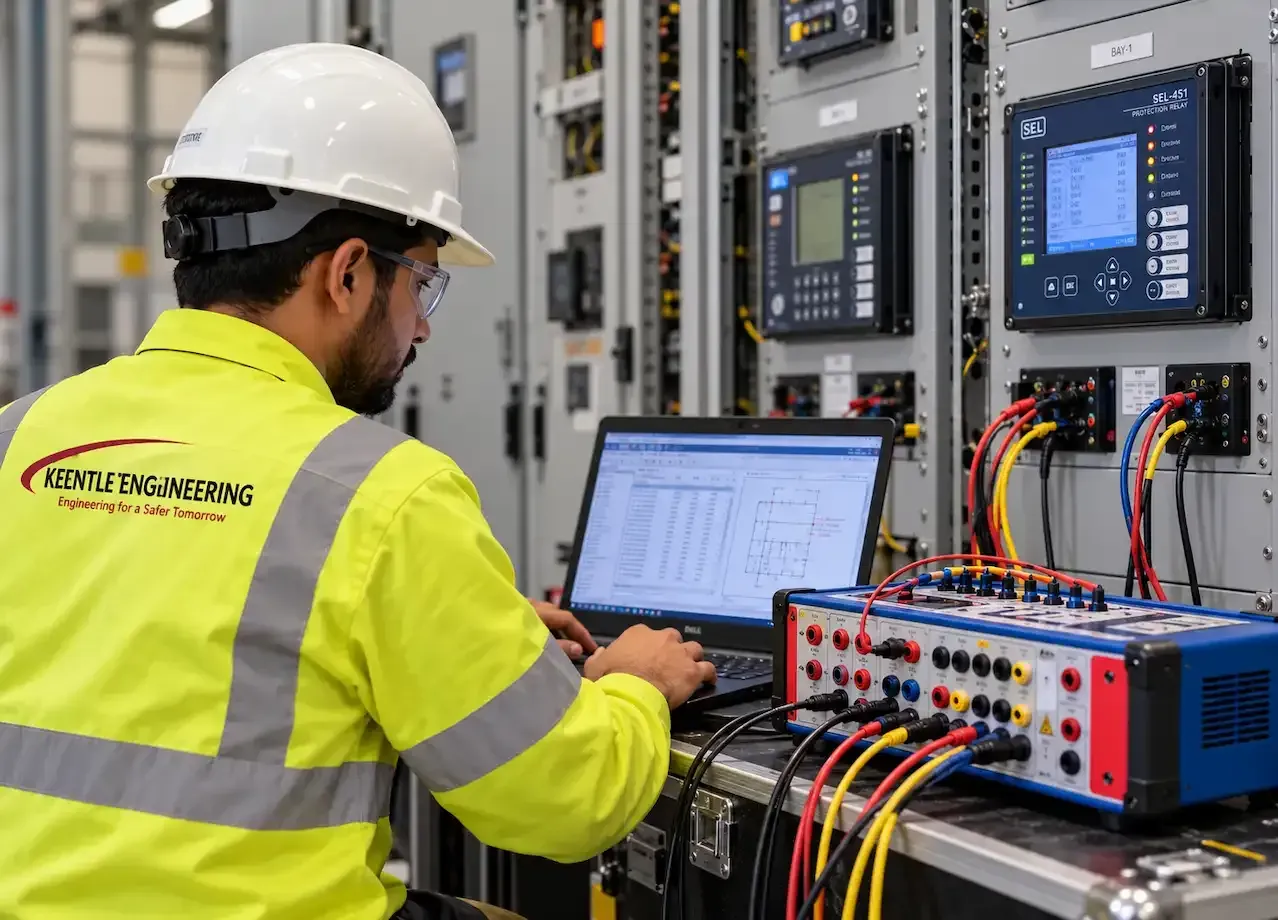
A registration and applicability assessment is the right first step whenever your asset base, ownership or the rules themselves change.
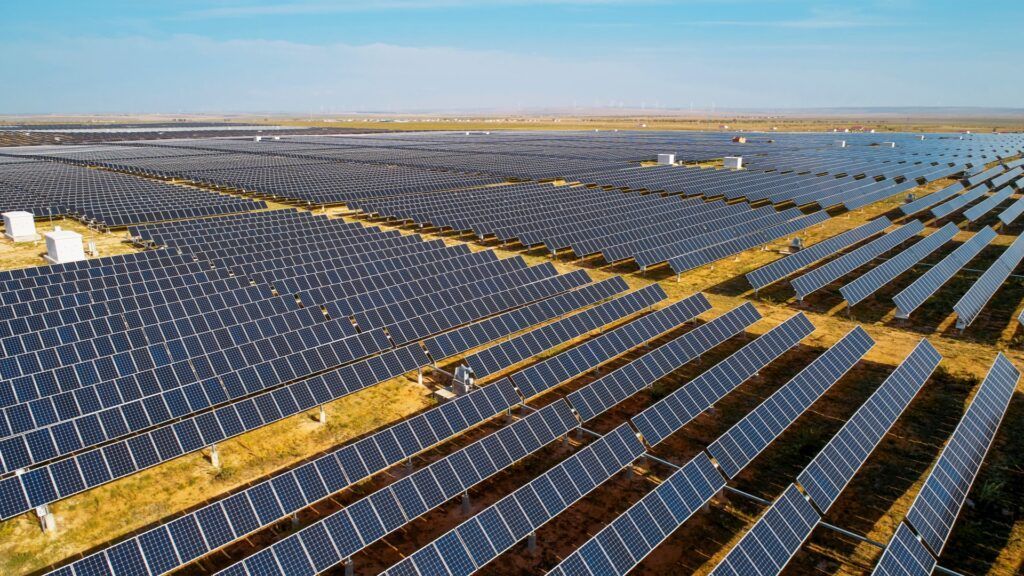
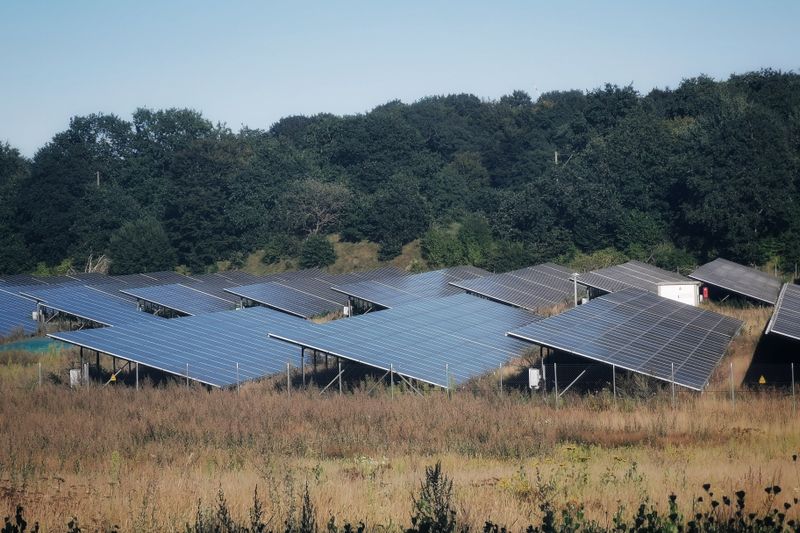
Solar, wind, BESS, hybrid and thermal projects that need registration, applicability and evidence recovery in place before commercial operation.
Portfolios of inverter-based resources below the traditional BES thresholds that are now captured by the expanded Generator Owner and Generator Operator registration.
New 100 kV-and-above lines, transformers, reactive devices or substations that change what your TO/TOP program must cover.
Portfolio purchases, asset transfers, new operating agreements and changes to who performs GOP functions.
Adding storage to solar, re-rating inverters or expanding a plant can change aggregate nameplate and therefore registration status.
Organizations that registered years ago and have never re-validated whether their functions and applicability still match the assets they own.
The BES definition starts from a core rule — Transmission Elements operated at 100 kV or higher, and Real Power and Reactive Power resources connected at 100 kV or higher — and then applies specific inclusions (I1–I5) and exclusions (E1–E4). Our assessment walks every relevant element through each test and records the result.
| Criterion | What it addresses | What we verify |
|---|---|---|
| I1 — Transformers | Transformers with the primary terminal and at least one secondary terminal operated at 100 kV or higher, unless excluded by E1 or E3 | Nameplate and operating voltages, winding configuration, E1/E3 interaction |
| I2 — Generating resources | Individual units above 20 MVA, or plants above 75 MVA aggregate, including generator step-up transformers, connected at 100 kV or higher | Gross nameplate by unit and plant, GSU high-side voltage, point of connection |
| I3 — Blackstart Resources | Resources identified in the Transmission Operator's restoration plan | Restoration plan designation and communications with the TOP |
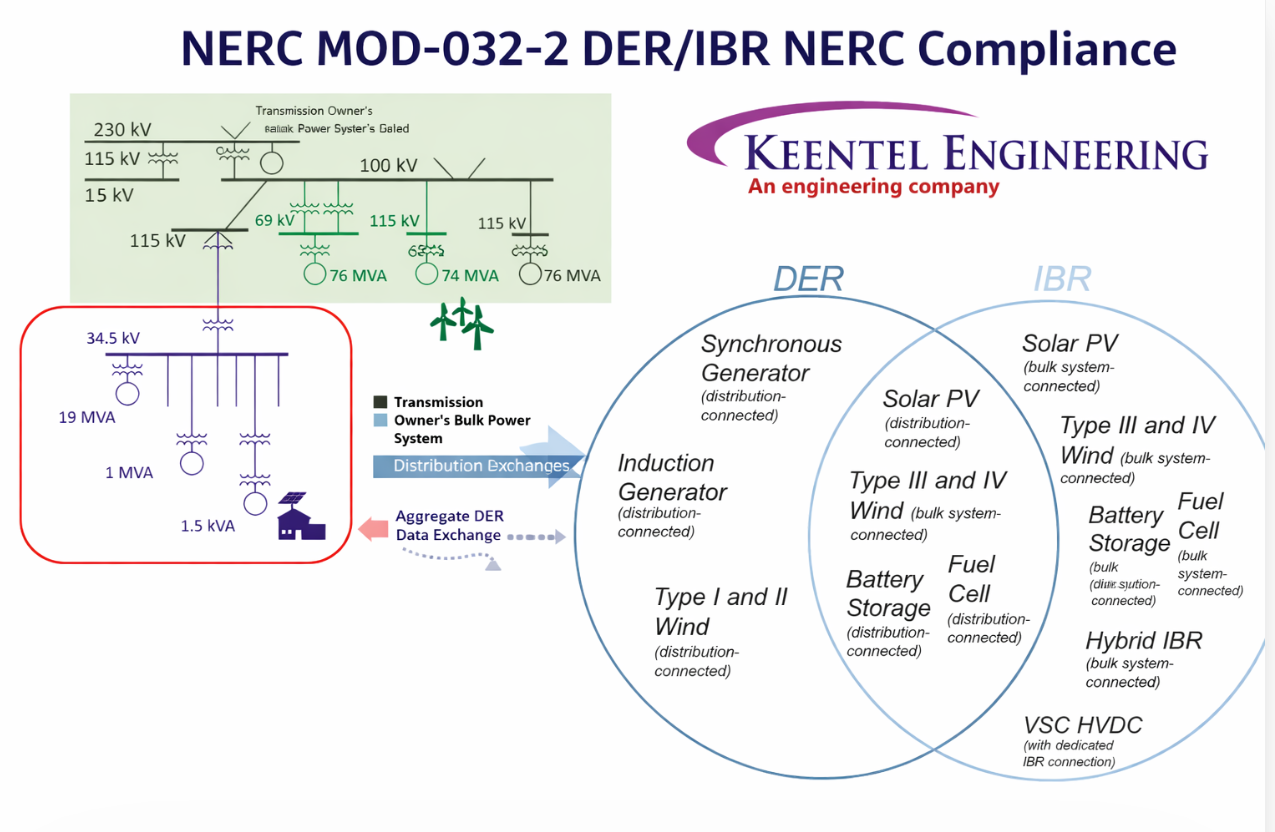
| I4 — Dispersed power producing resources | Wind, solar and similar resources totaling more than 75 MVA aggregated at a common point of connection at 100 kV or higher | Aggregation point, collector system, inverter nameplate totals, phased build-out |
| I5 — Reactive devices | Static or dynamic reactive devices connected at 100 kV or higher, or through a dedicated transformer with a high side at 100 kV or higher | STATCOM, SVC, capacitor and reactor connections |
| E1 — Radial systems | Radial systems serving load from a single point of connection at 100 kV or higher, with generation limits | Topology, normally-open points, connected generation |
| E2 — Behind-the-meter generation | Customer-owned generation serving on-site load under stated net-capacity conditions | Net capacity to the grid, standby and backup arrangements |
| E3 — Local networks | Networks that distribute power to load rather than transfer bulk power | Power-flow direction, connection points, generation limits |
| E4 — Customer reactive devices | Reactive devices owned and operated by a retail customer for its own use | Ownership, operation and purpose |
Where an element is borderline, we document the reasoning and identify whether the BES exception process is worth pursuing. Exceptions follow a formal procedure and a technical justification; they are not decided informally with a phone call.
Get registration and applicability right the first time.
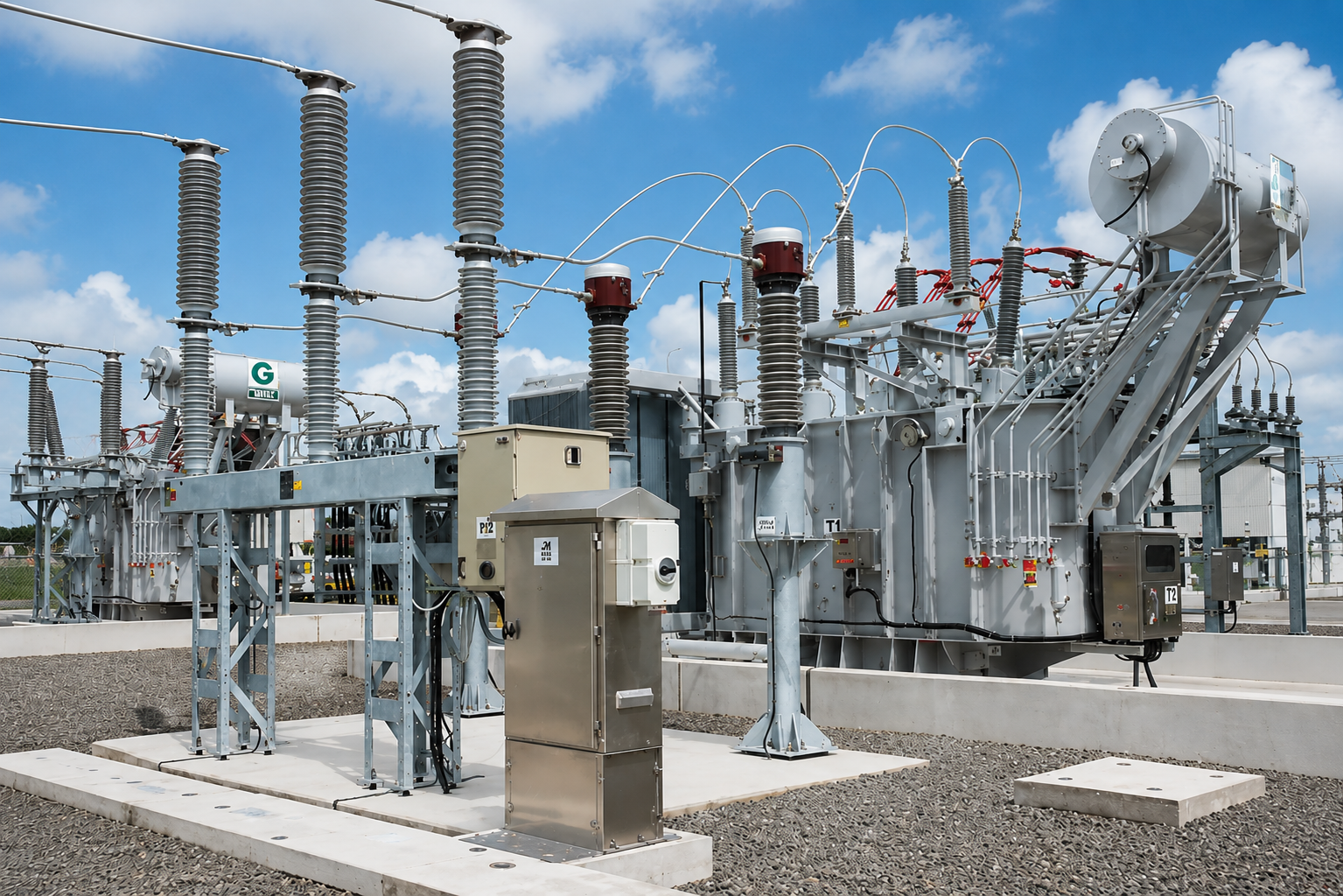
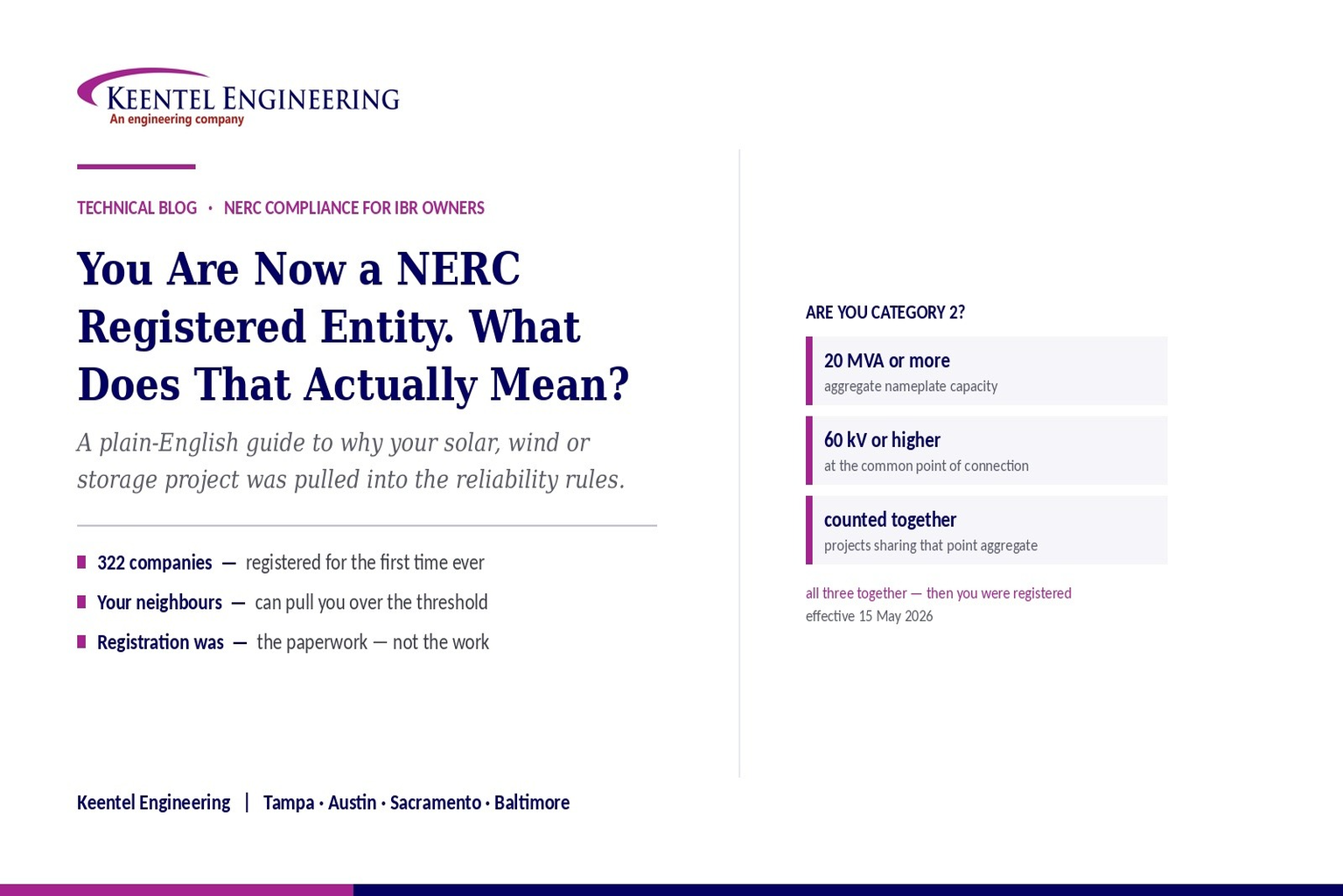
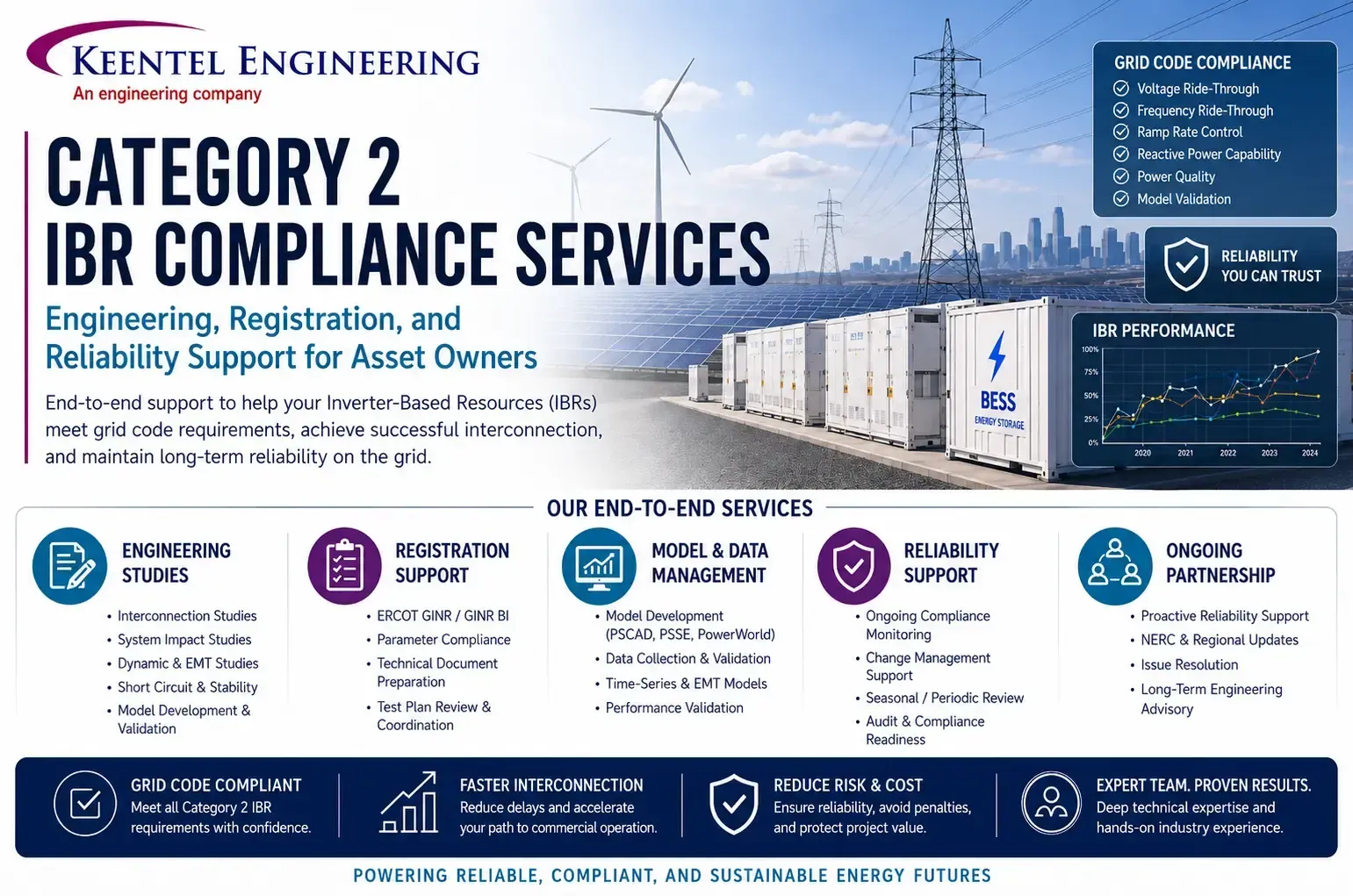
NERC's registration criteria now capture certain inverter-based resources that sit below the traditional BES thresholds. The Category 2 Generator Owner and Generator Operator criteria apply to non-BES IBRs with an aggregate nameplate capacity of 20 MVA or more, delivered through a system designed primarily for that capacity to a common point of connection at 60 kV or higher.
For owners of multiple solar, wind and storage sites, the screening question is rarely one site at a time. Aggregation, phased construction, shared collector systems and co-located storage all change the answer.
See our dedicated IBR Category 2 GO/GOP Registration & Compliance page for the full post-registration program.
Which of GO, GOP, TO, TOP, TP, PC, DP, BA, RP or TSP you hold today, and which you should hold once planned assets energize.
An element-by-element walk through the BES definition and the IBR Category 2 criteria, tied to one-line drawings.
Which of MRO, NPCC, ReliabilityFirst, SERC, Texas RE or WECC oversees each asset, and how ownership and operating agreements divide responsibility.
Whether a Joint Registration Organization (JRO) or Coordinated Functional Registration (CFR) fits your structure — and exactly which requirements each party would own.
Every applicable O&P requirement, by asset and function, marked applicable, not applicable or conditional, with the reason stated.
Current and future-enforceable versions, phased-in requirements and the dates each one reaches each facility.
Technical justification where a narrower registration or a BES exception is supportable — and a clear warning where it is not.
Preparation of the information needed for registration and support with Regional Entity correspondence.
We collect the asset list, ownership and operating agreements, interconnection agreements and any existing registration records.
Engineers review single-line diagrams, nameplate data and points of connection to establish voltages, capacities and topology.
Each element is tested against the BES inclusions and exclusions and the Category 2 IBR criteria, and the result is recorded with drawing references.
We map registered functions to the parties that actually perform them and confirm the Regional Entity for every asset.
Every O&P requirement is assessed against every asset and function, with effective dates and the basis for each decision.
We support registration filings and hand the matrix to your compliance program — or to our gap analysis — so the next step starts immediately.
| Deliverable | What it contains | How you use it |
|---|---|---|
| Registration Determination Memo | Engineer-reviewed technical basis for each registered function and each borderline decision | Support for registration filings and Regional Entity questions |
| BES / IBR Determination Worksheet | Element-by-element inclusion and exclusion analysis with drawing references | Evidence of how scope was set, for audits and future re-assessment |
| Requirement-Level Applicability Matrix | Each O&P requirement by asset and function, with status and basis | The master scope document for your compliance program |
| Effective-Date Tracker | Current versions, future-enforceable versions and phased-in dates by facility | Input to the compliance calendar |
| Evidence Source Map | Which party holds settings, models, test reports and data for each requirement | Directs evidence recovery from EPCs, OEMs and O&M providers |
| Registration Filing Support Package | Organized entity, contact and facility information for registration | Faster, cleaner registration and fewer follow-up requests |
| Mistake | Why it matters |
|---|---|
| Treating applicability as standard-level | Individual requirements often apply to specific facilities or functions; a blanket "applies" creates unnecessary evidence, and a blanket "does not apply" creates exposure. |
| Not documenting "not applicable" decisions | An auditor will ask why a requirement was excluded. Without a written basis, the decision has to be re-argued under time pressure. |
| Missing aggregation across phases | Separate phases sharing a point of connection can push a site over a registration threshold even when each phase alone does not. |
| Assuming an operating agreement moves compliance | Contracting GOP work to an O&M provider does not by itself move registration or compliance responsibility. JRO or CFR arrangements must be formalized. |
| Ignoring future-enforceable versions | A new version with a later effective date may need engineering work — ride-through studies, new settings, model updates — well before it is enforceable. |
| Not re-assessing after change | Repowering, storage additions, new lines and acquisitions can change registration status without anyone noticing. |
Send us your asset list and one-lines.
BES and Category 2 decisions depend on voltages, capacities, topology and points of connection. Our power-system engineers make those determinations directly from the drawings.
Former audit-team leadership and subject-matter experience help us anticipate the questions a Regional Entity will ask about scope.
The same team can take the applicability matrix straight into gap analysis, program development and evidence — nothing is lost in a handoff.
We support entities across MRO, NPCC, ReliabilityFirst, SERC, Texas RE and WECC, and account for regional expectations.
NERC registration is the process of listing an organization on the NERC Compliance Registry for the reliability functions it performs, such as Generator Owner, Generator Operator, Transmission Owner or Transmission Operator. Once registered, the organization must comply with every Reliability Standard requirement that applies to those functions and its facilities.
Registration is based on the NERC Statement of Compliance Registry Criteria. NERC and the Regional Entities apply those criteria and can identify entities that should be registered. An organization can also request registration, deregistration or a change of functions, and there are procedures to challenge a registration decision.
Registration determines which functions you hold. Applicability determines which specific requirements apply to which of your facilities under those functions. Two Generator Owners can have very different compliance obligations depending on their facilities, technology and effective dates.
It may. Inverter-based resources below the traditional BES thresholds can fall under the Category 2 Generator Owner and Generator Operator criteria if they have an aggregate nameplate of 20 MVA or more and connect through a system designed primarily for that capacity at 60 kV or higher. Aggregation across phases and co-located resources must be considered.
It is a table listing every applicable Operations & Planning requirement against each of your facilities and registered functions, showing whether each requirement applies, does not apply or applies conditionally — and why. It becomes the master scope document for your compliance program and audit preparation.
Sometimes. Options can include a BES exception for specific elements, correcting an over-registration, or formalizing a joint or coordinated registration so responsibilities are clearly divided. Each option needs a technical and procedural justification. Our assessment identifies where scope reduction is supportable and where it is not.
The registered entity is responsible for compliance with the requirements of the functions it is registered for. Contracting out operation does not automatically transfer registration or compliance responsibility. Where responsibilities are genuinely shared, a Joint Registration Organization or Coordinated Functional Registration can formalize who owns which requirements.
A single-site assessment with complete drawings and agreements is usually measured in weeks. Portfolios take longer depending on the number of sites and how quickly one-lines, nameplate data and agreements can be collected from developers, EPCs and asset managers.
Engage early and plan the response carefully, including with legal counsel. Our role is to establish the technical facts — what the facilities are, what criteria they meet and when — so your organization can decide how to approach registration and your Regional Entity.
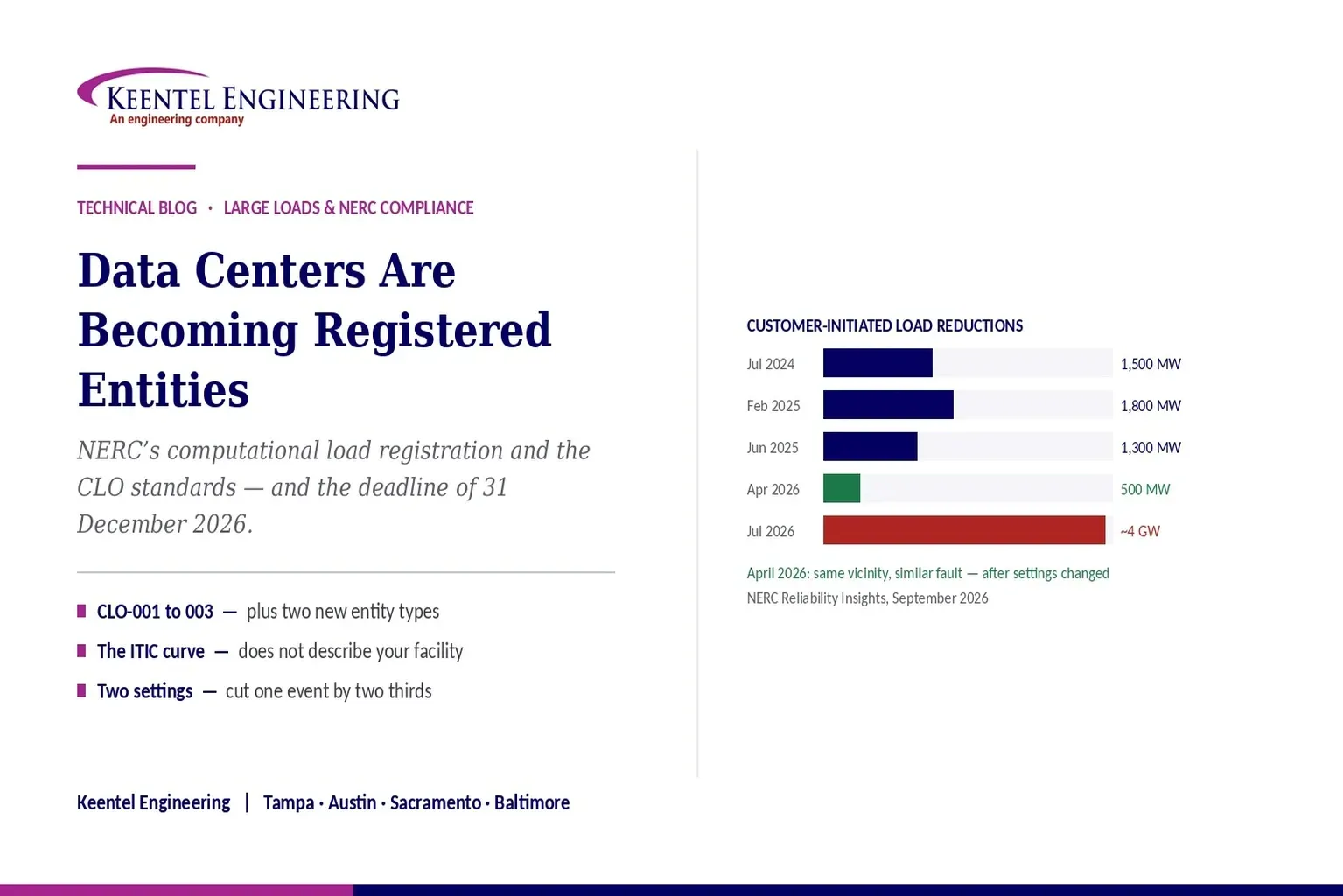
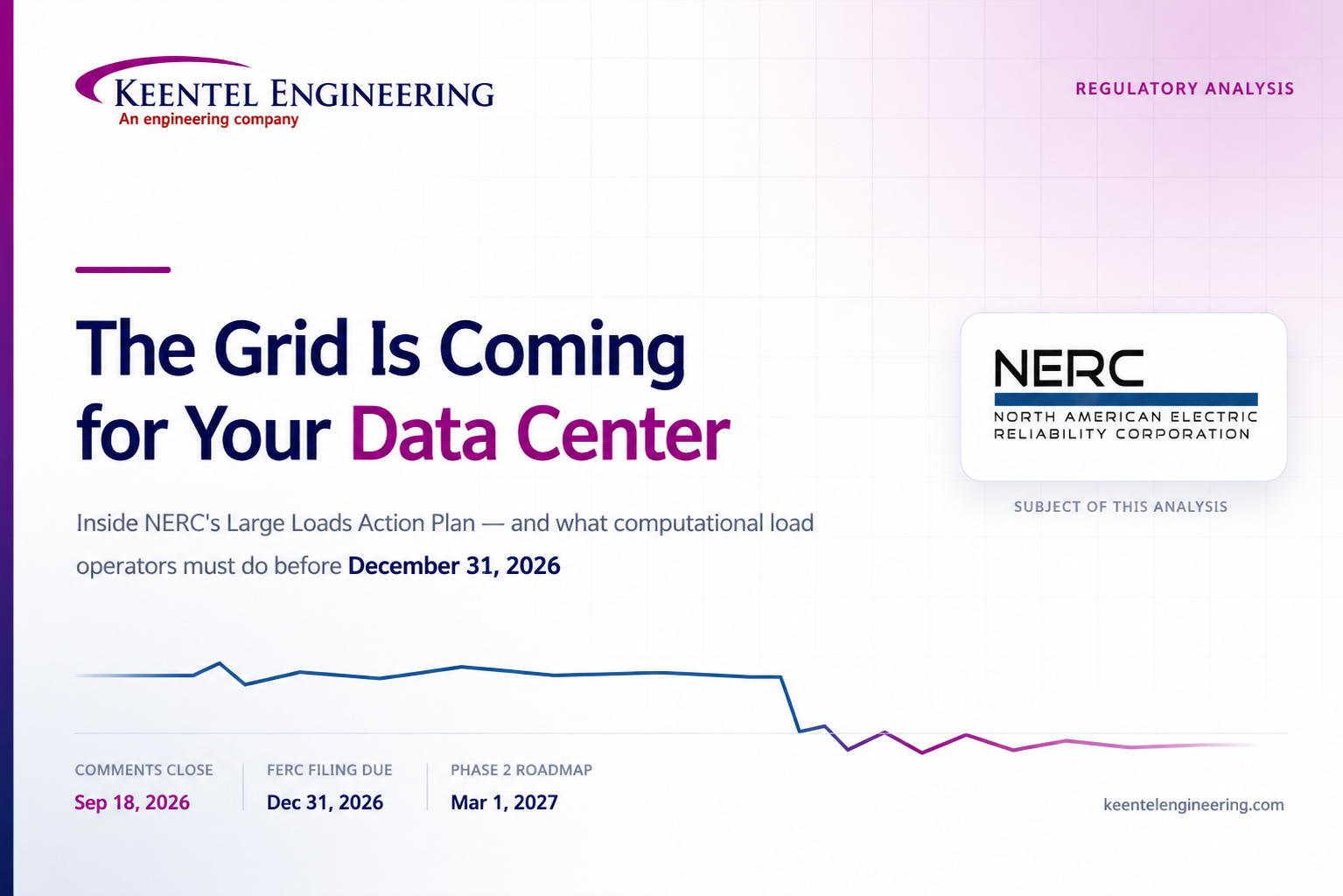
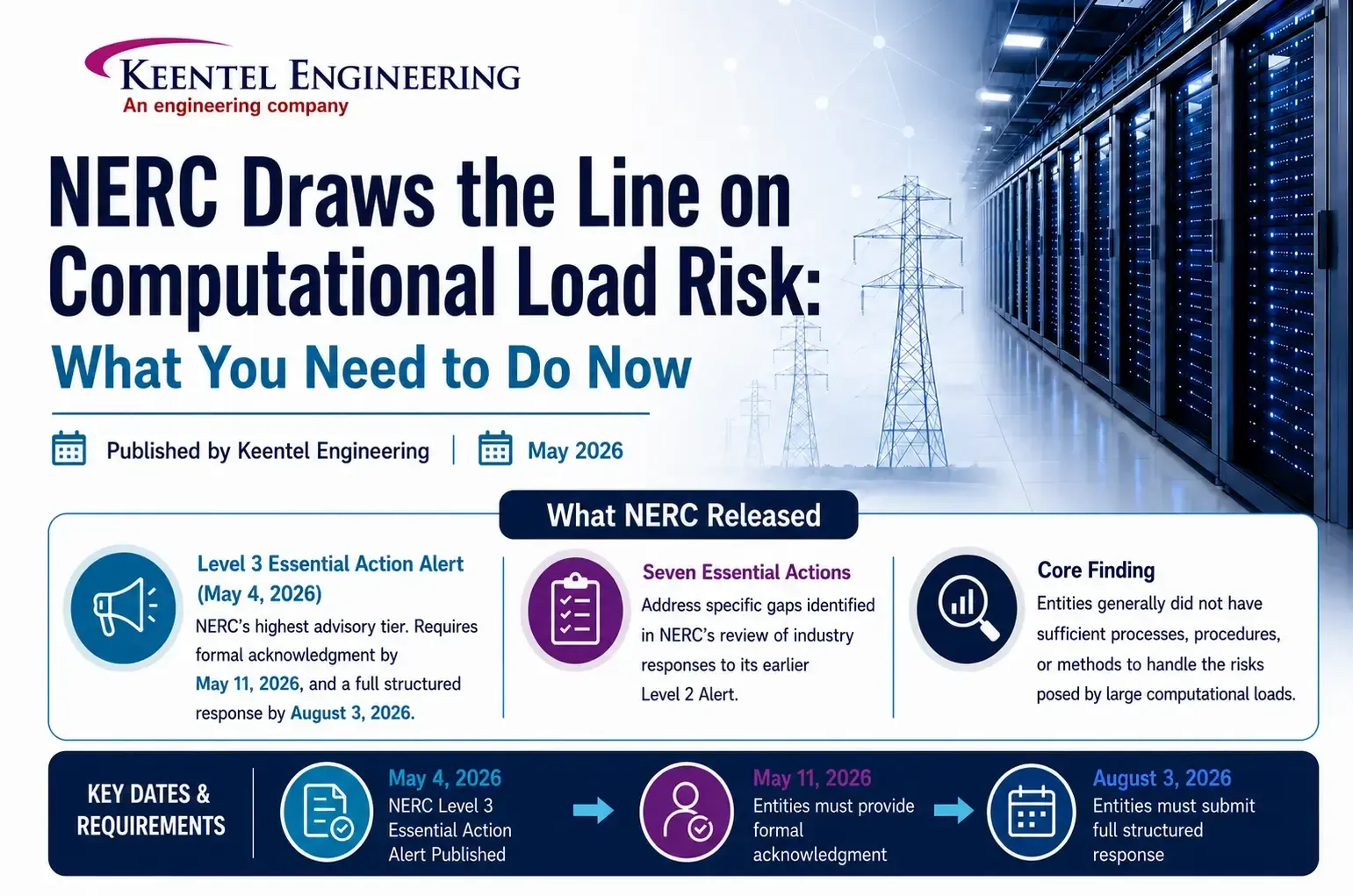
NERC is developing registration and standards activity for large computational loads. Today, load alone does not generally create a registration obligation, but that is changing. See our Large Load & Data Center NERC Compliance page for the current status and what to prepare now.
Send us your asset list and one-lines. Keentel will tell you which functions you hold, which requirements apply to each facility, and what evidence you will need — with the technical basis written down.
Serving utilities, EPCs, developers, and infrastructure organizations supporting critical power systems nationwide.