
A Coordinated Electric System Interconnection Review—the utility’s deep-dive on technical and cost impacts of your project.

Revolutionizing Transformer Protection with SEL-487E: A Keentel Engineering Perspective

Calendar icon. D

April 25, 2025 | Blog

Functional overview diagram with schematic symbols and text, overlaid on a photograph of power lines.

In today’s modern power systems, transformer protection is more than a safeguard—it’s a cornerstone of grid resilience and operational continuity. At Keentel Engineering, we deliver next-generation transformer protection engineering services tailored to evolving utility needs and backed by advanced devices like the SEL-487E transformer protection relay, a leading solution for advanced differential protection and substation automation.


from Schweitzer Engineering Laboratories (SEL).


Whether you’re modernizing aging infrastructure or deploying new high-voltage (HV) substations, the SEL-487E provides an intelligent, integrated solution for protecting multi-terminal transformers, feeders, buses, and more.

The SEL-487E is widely used in modern substations for reliable transformer differential protection and fault detection.


Key Features of SEL-487E for Your Substation Needs

The SEL-487E relay combines high-speed differential protection with advanced monitoring and communication capabilities. with flexible communication, monitoring, and integration features that make it ideal for utility, industrial, and renewable applications. Key features include:

Engineers rely on SEL transformer differential relay technology to detect internal faults and ensure system stability.

Multi winding Differential Protection

Supports up to six three-phase terminals with configurable CT ratios, REF elements, and protection for autotransformers or transformers with tertiary windings.

High-Speed Adaptive Protection

Less than 1.5-cycle fault detection response with dual-slope differential logic ensures system integrity even under CT saturation or distorted signals.

Centralized Protection & Control

Simplify your substation architecture with a single device capable of protecting buses, transformers, lines, and feeders simultaneously.

Advanced Monitoring & Diagnostics

Through-fault, thermal, breaker wear, and PMU-based asset monitoring enhance predictive maintenance.

Digital Secondary System Integration

With TiDL® and Sampled Values (SV), modernize your secondary systems using secure, fiber-based communication protocols.

See Our Service: Substation Design Service


Why Choose Keentel for SEL-487E Integration Projects?

  • 30+ years of protection and control engineering experience
  • Licensed Professional Engineers across multiple U.S. states
  • Trusted by utilities, IPPs, and critical infrastructure clients
  • Extensive experience in digital substation upgrades and IEC 61850 deployments
  • Full relay setting and validation services for SEL-487E and supporting devices

Frequently Asked Questions (FAQ)

  • 1. What transformers are compatible with SEL-487E?

    SEL-487E supports two- and three-winding transformers, including tertiary and autotransformer configurations.

  • 2. Can it detect turn-to-turn faults?

    Yes. Its patented negative-sequence differential element detects faults involving just 2% of the winding.

  • 3. How does SEL-487E handle CT ratio mismatches?

    It supports up to a 35:1 mismatch without loss of protection quality.

  • 4. Does it offer backup protection?

    Yes. It includes time overcurrent, breaker failure, and distance protection elements.

  • 5. What digital communication protocols are supported?

    Protocols include IEC 61850, DNP3, PRP, HSR, synchrophasors, and SEL Mirrored Bits®.

  • 6. Can the relay be used for generator step-up (GSU) transformers?

    Yes, including temperature monitoring and volts/hertz overexcitation protection.

  • 7. How is inrush current handled?

    Waveform-based detection and harmonic blocking/restraining avoid misoperations during inrush.

  • 8. What are TiDL and SV technologies?

    They are SEL’s digital secondary systems for fiber-optic communication replacing copper wiring.

  • 9. Can the SEL-487E function as a PMU?

    Yes. It supports full IEEE C37.118 PMU functionality.

  • 10. Is the relay customizable for substation-specific applications?

    Yes. Through seLogic control equations, users can customize protection logic and alarms.


How Keentel Engineering Adds Value

At Keentel, we offer complete protection and control engineering around SEL-487E technology, ensuring smooth implementation from design to commissioning. Our services include:


Ensure accurate relay coordination with our power system studies services for protection analysis.

  • Relay setting calculations and coordination studies
  • Substation protection and control design
  • SCADA and HMI integration with IEC 61850
  • Firmware testing and digital secondary system integration
  • Relay commissioning with SEL tools: acSELerator QuickSet, SEL Compass, and Commissioning Assistant

Real-World Case Studies from Keentel Engineering

Case Study 1: Industrial Plant Transformer Protection Upgrade

Challenge: Frequent false tripping using conventional electromechanical relays
Solution: SEL-487E integration with multi-terminal differential protection and dynamic inrush restraint
Result: 90% reduction in false trips, saving over $250,000 in downtime

Case Study 2: Utility Substation Digital Retrofit

Challenge: Upgrade of aging relay-based protection
Solution: Deployment of SEL-487E-5 with SV protocol
Result: Simplified wiring, remote diagnostics, enhanced time synchronization

Case Study 3: Wind Farm GSU Transformer Protection

Challenge: Protecting GSU transformers from internal faults and breaker miscoordination
Solution: SEL-487E with RTD modules, synchronism-check logic, and voltage restraint
Result: Prevented overexcitation damage and ensured breaker interlock safety

Case Study 4: Substation Modernization Using TiDL

Challenge: Seismic risk and maintenance overhead in legacy substations
Solution: TiDL-based relay scheme using SEL-TMU and SEL-487E-5
Result: Eliminated copper wiring, reduced maintenance, improved safety and uptime


Ready to Modernize Your Protection System?

Whether you’re upgrading protection for a GSU transformer, retrofitting a substation, or digitizing your grid operations—Keentel Engineering is your trusted SEL-487E system integration partner.

Contact Us today for custom solutions in transformer protection and digital relay integration.


A smiling man with glasses and a beard wearing a blue blazer stands in front of server racks in a data center.

About the Author:

Sandip "Sonny" R. Patel, P.E.

IEEE Senior Member · Founder & CEO, Keentel Engineering

In 1995, Sonny Patel earned his Electrical Engineering degree from the University of Illinois. But degrees don't build legacies — action does.

For three decades, he has worked the power industry from every side of the table: 16 years as a utility engineer at Exelon/Commonwealth Edison; generation leadership across hydroelectric, industrial steam turbine, and a 9 GW renewable fleet; NERC Regional Entity Senior Compliance Engineer and Audit Team Lead, auditing some of the nation's largest utilities; and testing and commissioning lead on equipment up to 765 kV — the very top of the North American grid.Utility. Generator. Regulator. Consultant. Few engineers have seen all four seats. Fewer still have sat in them.

His experience spans nuclear, hydro, conventional generation, renewables, oil and gas, mining — and today's data centers, where he is authoring a three-book series on data center design. He is a Licensed Professional Engineer in six states and a Licensed Electrical Contractor in Florida (Unlimited EC) — he doesn't just design the work; he's qualified to stand behind its execution.Today, as Founder and CEO of Keentel Engineering, Sonny leads a nationwide team of engineers delivering substation design, power system studies, NERC compliance, and commissioning — done right, coast to coast.Three decades. Every side of the table. One standard: accountable engineering.

Four workers in safety vests and helmets stand with arms crossed near wind turbines.

Let's Discuss Your Project

Let's book a call to discuss your electrical engineering project that we can help you with.

Man in a blazer and open shirt, looking at the camera, against a blurred background.

About the Author:

Sandip "Sonny" R. Patel, P.E.

IEEE Senior Member · Founder & CEO, Keentel Engineering

In 1995, Sonny Patel earned his Electrical Engineering degree from the University of Illinois. But degrees don't build legacies — action does.

For three decades, he has worked the power industry from every side of the table: 16 years as a utility engineer at Exelon/Commonwealth Edison; generation leadership across hydroelectric, industrial steam turbine, and a 9 GW renewable fleet; NERC Regional Entity Senior Compliance Engineer and Audit Team Lead, auditing some of the nation's largest utilities; and testing and commissioning lead on equipment up to 765 kV — the very top of the North American grid.

Utility. Generator. Regulator. Consultant. Few engineers have seen all four seats. Fewer still have sat in them.

His experience spans nuclear, hydro, conventional generation, renewables, oil and gas, mining — and today's data centers, where he is authoring a three-book series on data center design. He is a Licensed Professional Engineer in six states and a Licensed Electrical Contractor in Florida (Unlimited EC) — he doesn't just design the work; he's qualified to stand behind its execution.

Today, as Founder and CEO of Keentel Engineering, Sonny leads a nationwide team of engineers delivering substation design, power system studies, NERC compliance, and commissioning — done right, coast to coast.Three decades. Every side of the table. One standard: accountable engineering.

Leave a Comment

Related Posts

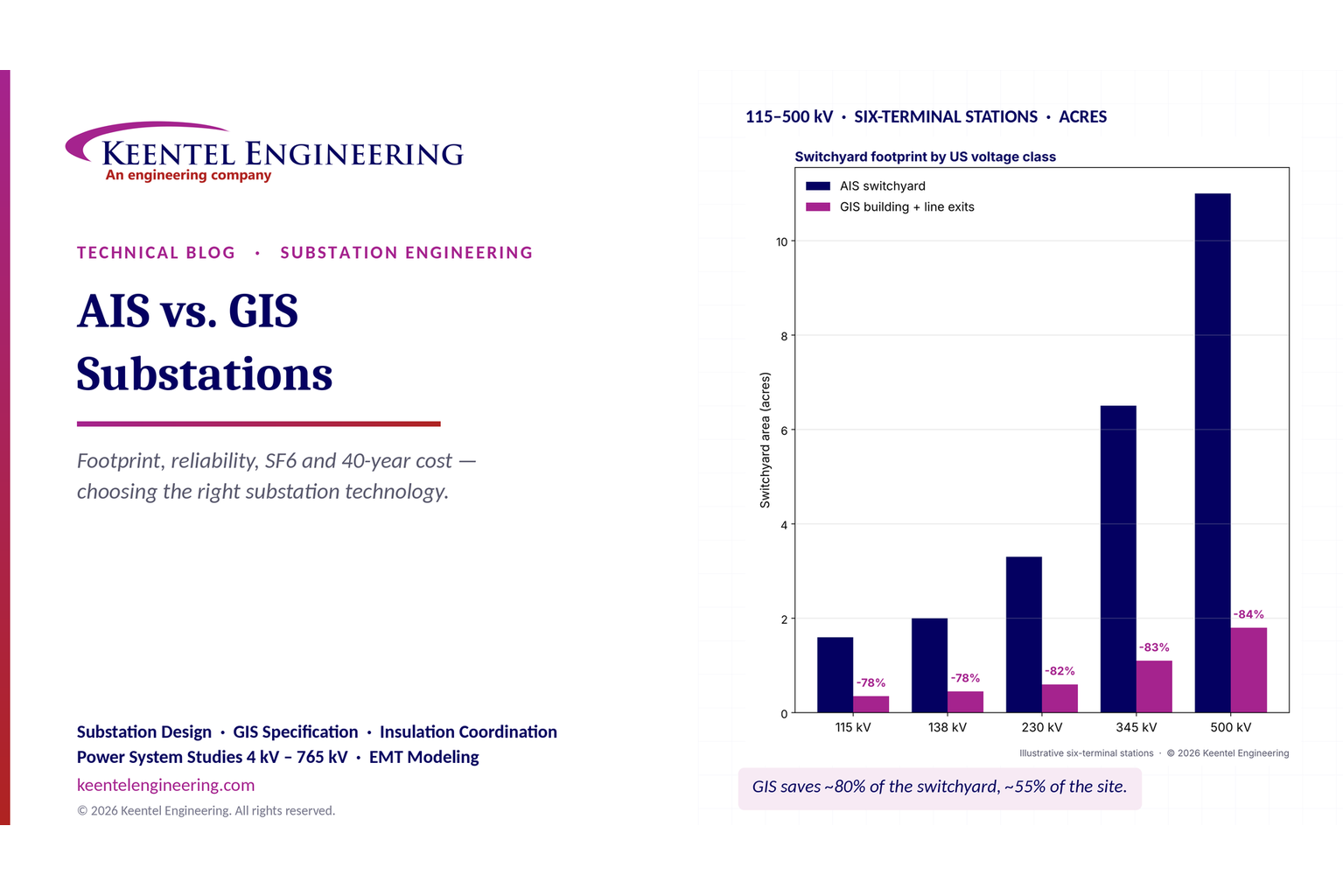
AIS vs GIS Substations: Differences, Cost & Reliability
By SANDIP R PATEL • October 31, 2026
Compare AIS vs GIS substations by cost, footprint, reliability, maintenance and SF6 impact. Explore design differences and life-cycle costs for US substations.
By SANDIP R PATEL • October 30, 2026
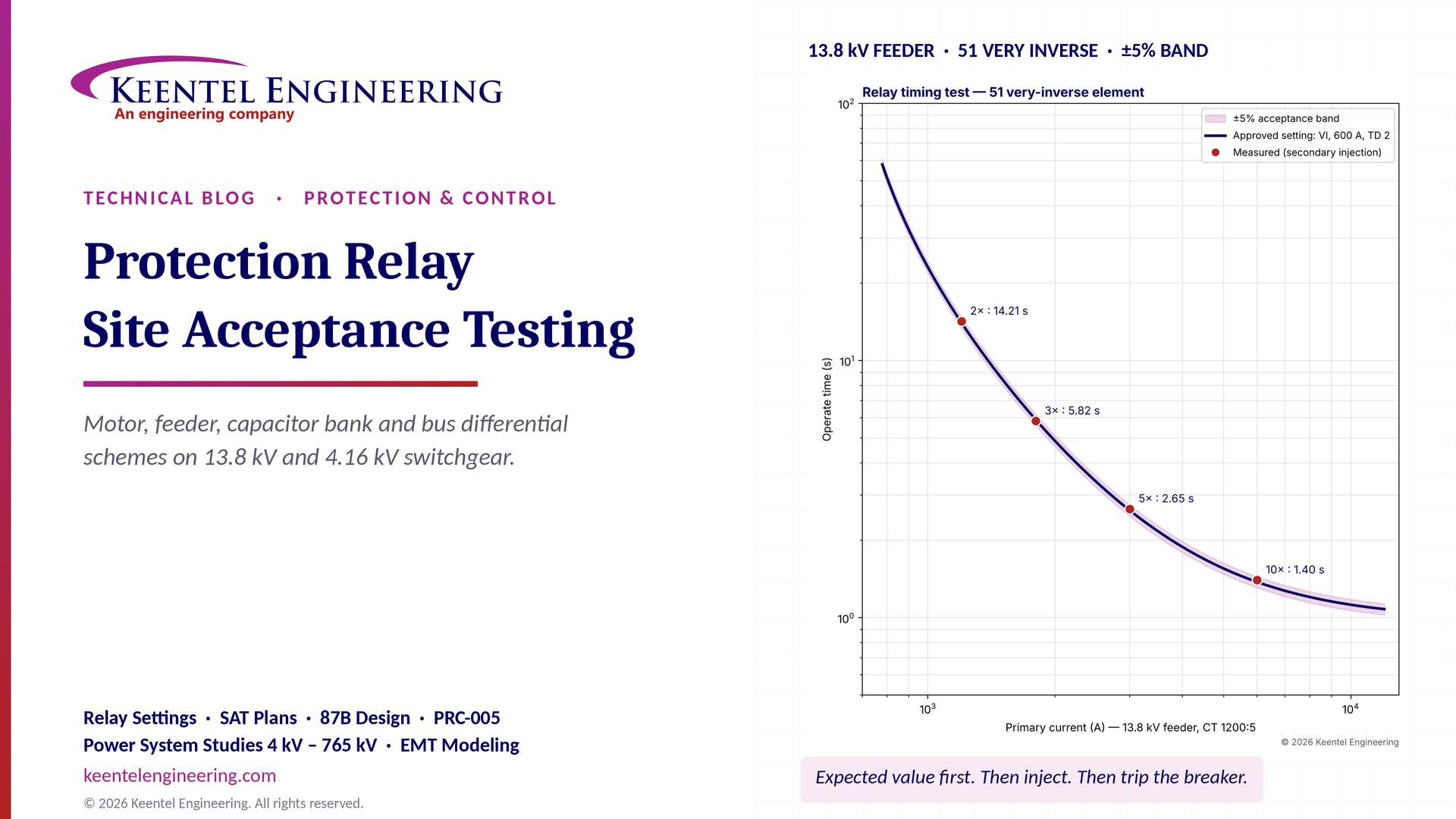
Protection relay site acceptance testing (SAT) guide covering CT/VT checks, secondary injection, motor relays, 87B bus differential and IEEE/NETA standards.
 SPP HILL requirements, HDPS interconnection studies
By SANDIP R PATEL • October 30, 2026
Understand SPP HILL requirements, HDPS interconnection studies, voltage and frequency ride-through, EMT modeling, weak-grid screening, and compliance.
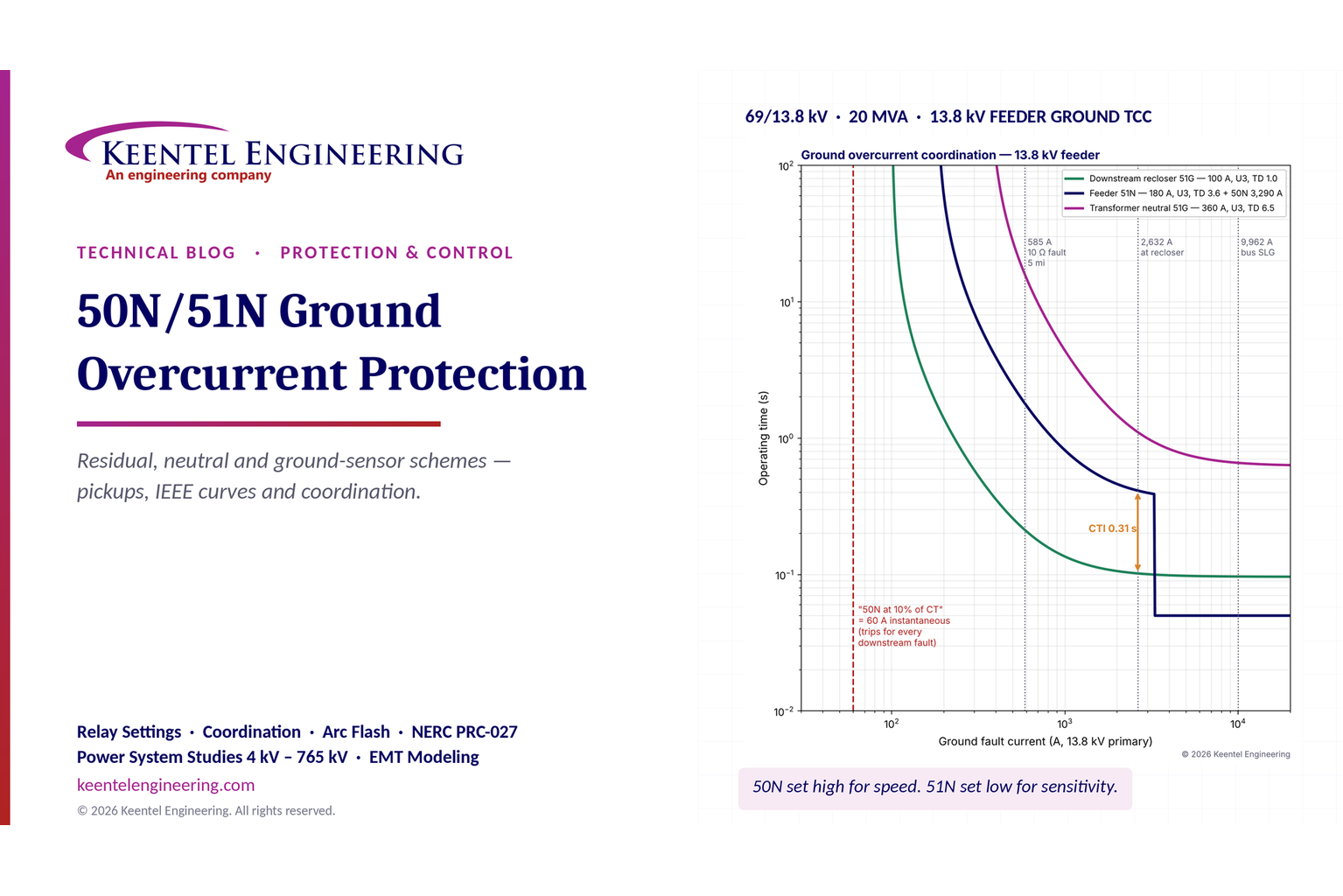
50N/51N ground overcurrent protection TCC coordination for a 13.8 kV feeder
By SANDIP R PATEL • October 29, 2026
Learn 50N/51N ground overcurrent protection, relay settings, CT connections, IEEE curves, TCC coordination and ground fault protection for substations.
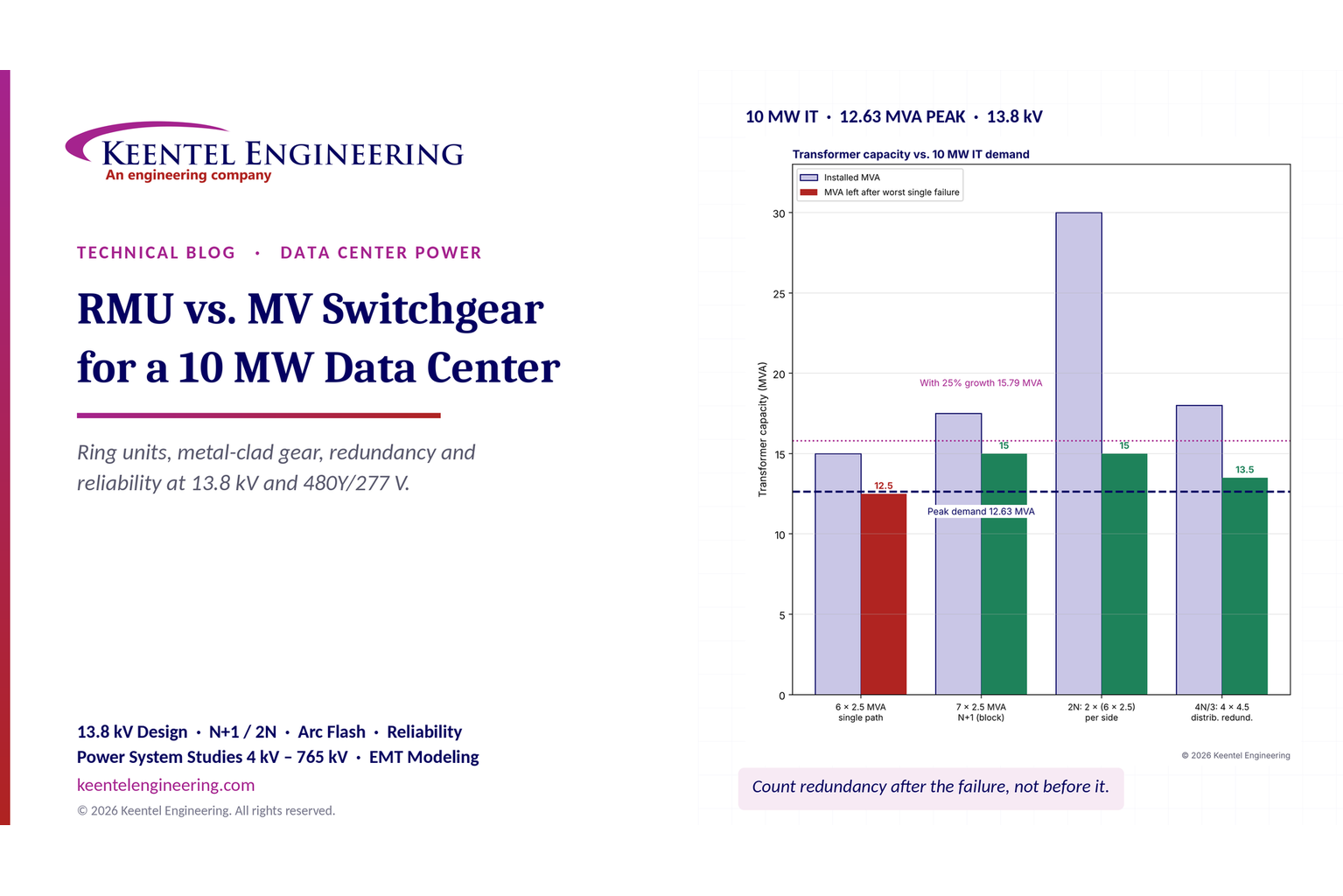
RMU vs MV switchgear for a 10 MW data center showing transformer capacity and redundancy
By SANDIP R PATEL • October 29, 2026
Compare RMU vs. MV switchgear for a 10 MW data center. Explore 13.8 kV design, transformer sizing, N+1/2N redundancy, arc flash and reliability.
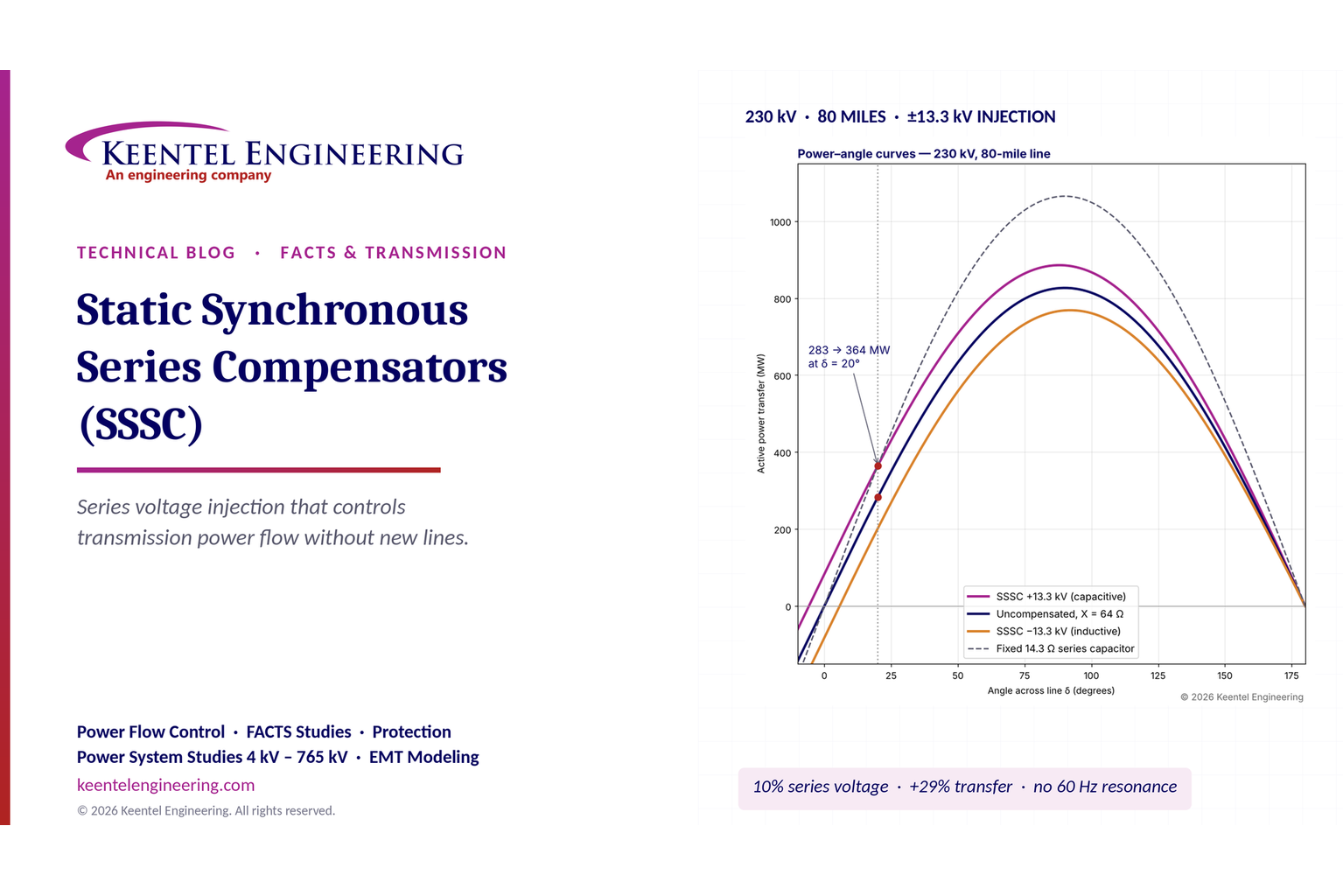
Static synchronous series compensator SSSC power angle curve for 230 kV transmission line
By SANDIP R PATEL • October 29, 2026
Learn how static synchronous series compensators (SSSC) control transmission power flow, improve grid stability and support FACTS applications, with examples.
Data center rack power density comparison with 208V and 415V feed capacity
By SANDIP R PATEL • October 28, 2026
Explore what's inside a data center rack, from servers and switches to PDU sizing, UPS, A/B redundancy, cooling and power design for high-density AI racks.
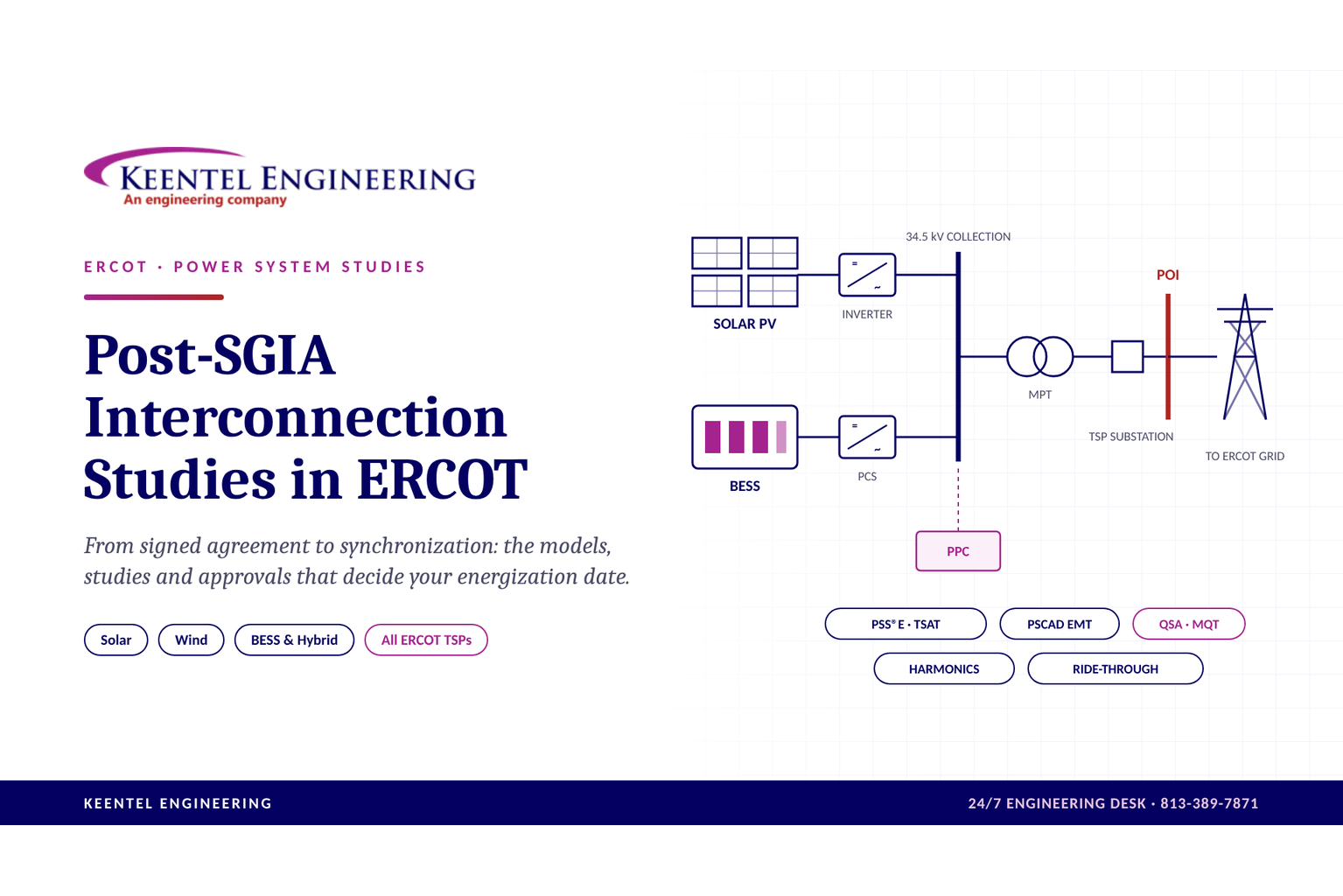
Post-SGIA interconnection studies in ERCOT showing solar PV BESS and grid connection
By SANDIP R PATEL • October 28, 2026
Explore post-SGIA interconnection studies in ERCOT, including PSCAD, PSS/E, QSA, model validation, TSP approvals and solar, wind and BESS commissioning.
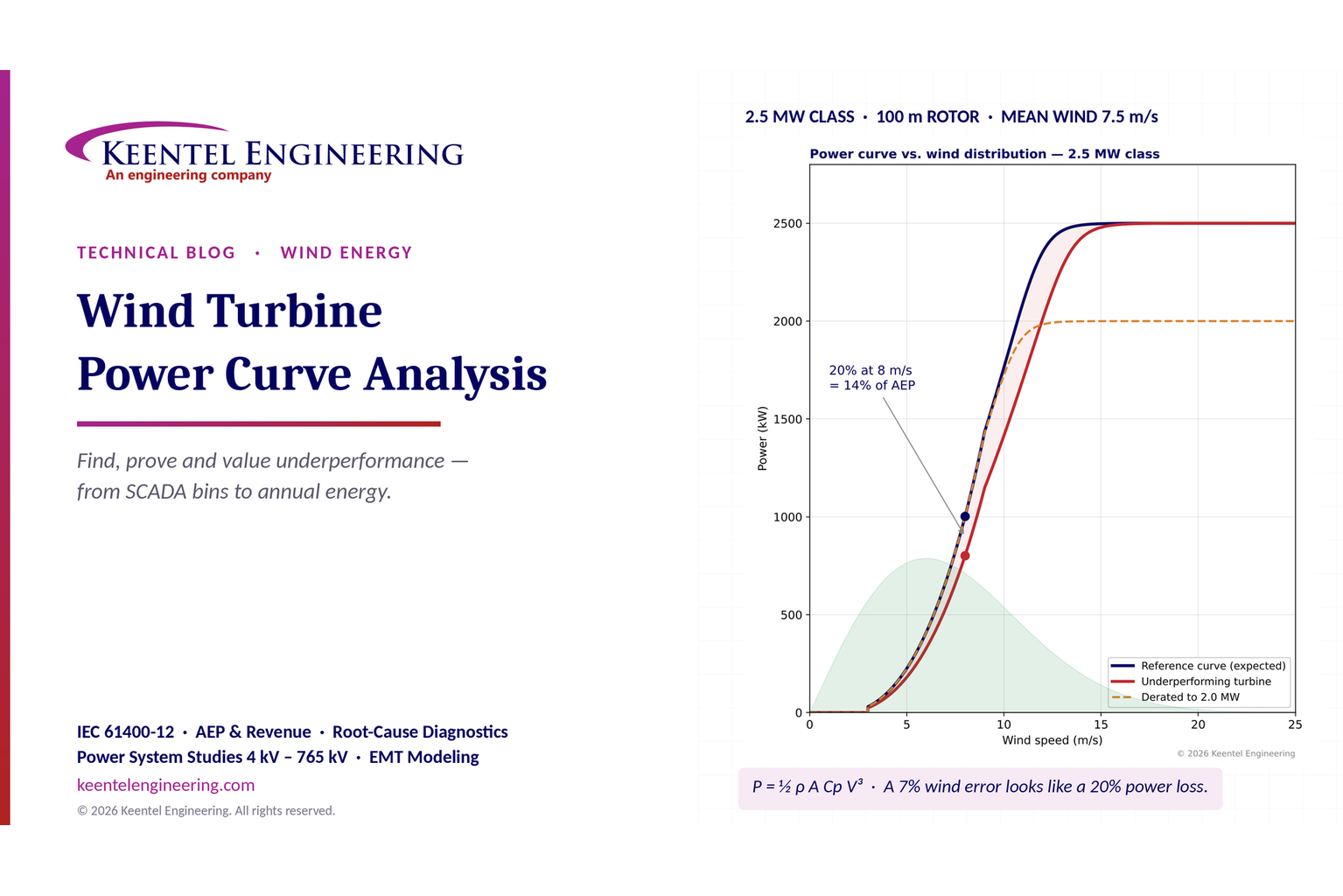
Wind turbine power curve analysis showing expected and underperforming turbine output
By SANDIP R PATEL • October 27, 2026
Learn wind turbine power curve analysis using SCADA data, IEC 61400-12, AEP calculations and diagnostics to identify underperformance and energy losses.