Your audit notification
If you have received it, the notification letter and pre-audit data request define the scope and audit period directly.

Your Trusted Partner in Electrical Engineering and Power Systems
At Keentel Engineering, we deliver electrical power engineering services built on 30 years of experience and a commitment to excellence. Our clients include utilities, developers, EPCs, and public agencies across the U.S.
Unlike firms that sacrifice technical depth to chase billable hours, we prioritize precision, compliance, and value engineering. From transmission services and relay modeling to winterization and SCADA planning, we never compromise on quality.

At Keentel Engineering, we take pride in being the go-to electrical power engineering firm for power and utility system planning, substation design, protection, control, and power system analysis. The following attributes distinguish our team in utility-grade substation engineering and compliance-driven project delivery.
With three decades of hands-on project delivery, we bring unmatched expertise in substation layout design, substation electrical and civil engineering, relay protection, and grid-tie solutions. Our experience includes projects in complex terrain, urban retrofit environments, and utility-scale renewable integrations.
Our engineering process applies AutoCAD 3D, BIM modeling, and system-level substation design practices to ensure accurate planning, reduced errors, and efficient coordination across all project stakeholders.
Our workflow includes 3D substation design, enabling clash-free coordination between structural, electrical, and civil disciplines.
From grounding grid studies to relay protection settings, we engineer every detail to improve system reliability, performance, and operational safety. Our rigorous QA/QC process ensures compliance with IEEE, NFPA, and ISO/TSO interconnection standards.
Among leading electrical substation design companies, Keentel Engineering stands out for 30+ years of proven high-voltage and utility-grade project delivery.



First name, email and what you're interested in are all we need to get moving. Everything else, including drawings or an RFP, is optional.
A mock audit is a structured rehearsal of your NERC compliance audit, run by people independent of the day-to-day compliance program. It tests whether your evidence proves compliance for each requirement in scope, whether your narratives are clear and accurate, and whether your subject-matter experts can explain their work under questioning.
Internal reviews tend to confirm that the process exists. A mock audit asks the harder questions: Does the evidence cover the full audit period? Does it cover every applicable facility? Would a sample of records selected by someone else hold up? Does what your engineer says in the interview match what your procedure says on paper?
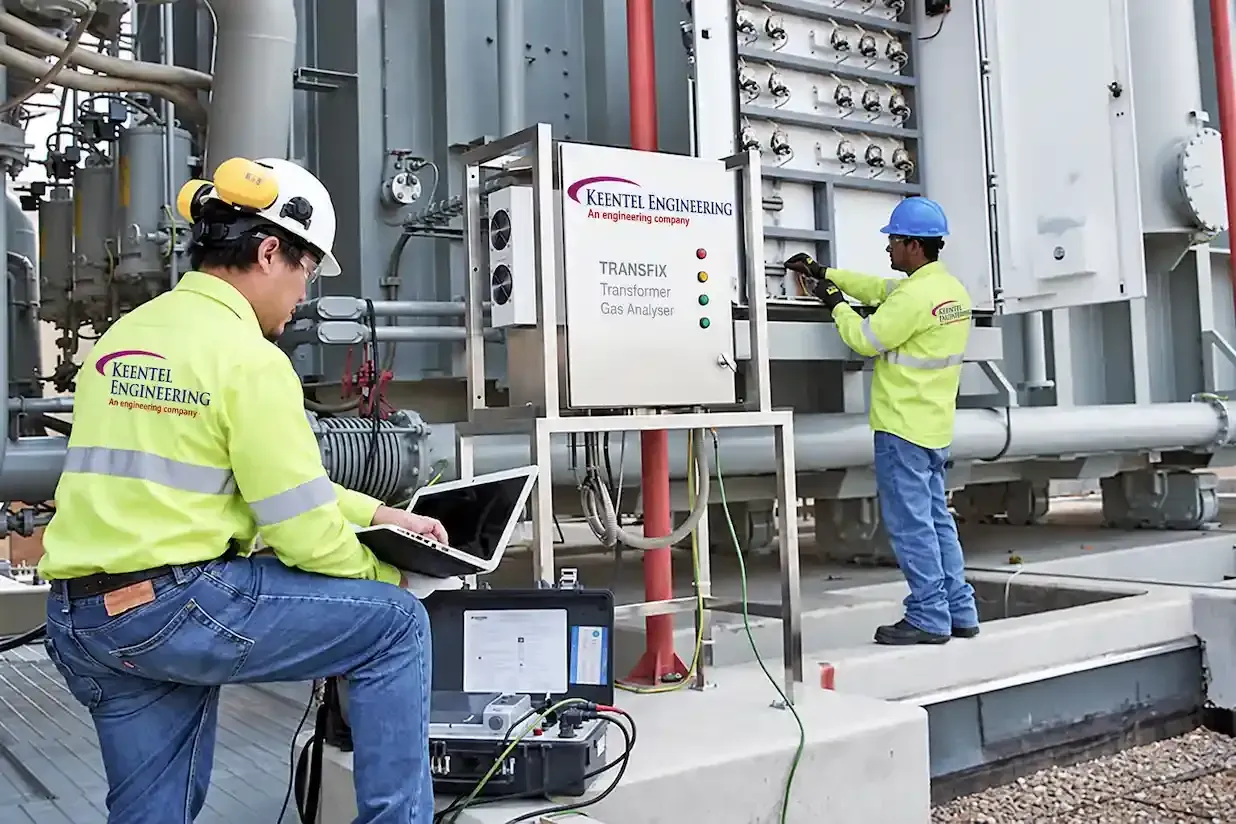
Because much of O&P compliance evidence is engineering — maintenance records, settings, ratings, test data and models — Keentel's mock audits are staffed by engineers who can evaluate whether the technical content is right, not just whether a document exists.
A mock audit is only valuable if it is honest. Our job is to find what an auditor would find — and to tell you plainly.

A mock audit should look like the audit you will actually receive. We build the scope from the same inputs your Regional Entity uses.
If you have received it, the notification letter and pre-audit data request define the scope and audit period directly.
Your COP and Inherent Risk Assessment results indicate which standards and requirements your Regional Entity considers highest risk for your entity.
The ERO Enterprise's annual plan identifies risk elements and associated standards that Regional Entities are asked to consider in monitoring. We map those to your registered functions.
Each Regional Entity adds its own regional risk considerations. We account for the priorities of MRO, NPCC, ReliabilityFirst, SERC, Texas RE or WECC as applicable.
Prior audit findings, self-reports, mitigation plans and recommendations are frequently revisited. We confirm that mitigation was completed and is sustained.
New facilities, new standard versions, staff turnover and changed procedures since your last audit are common sources of gaps.
Prepare for your Regional Entity review with an independent mock audit of requirement-level evidence, engineering records, and subject-matter expert responses. Keentel can help identify issues while there is still time to address them.
We confirm scope, audit period and facilities, identify evidence owners and agree logistics — on-site, remote or hybrid, mirroring your expected audit format.
We issue a data request modeled on a Regional Entity pre-audit request, including RSAWs, procedures and supporting evidence, with a realistic deadline.
Our reviewers test submitted evidence against each requirement and select samples — records, facilities, components, dates — the way an auditor would.
Where evidence is incomplete or unclear, we issue follow-up requests, testing your team's ability to respond quickly and consistently.
Subject-matter experts are interviewed requirement by requirement, including questions on sampled records and technical judgment.
We hold an exit briefing, then deliver the readiness scorecard, detailed observations and a prioritized remediation plan.
Auditors rarely review every record. They select samples and expect each sampled item to be fully supported. A program that is sound on average can still fail when the sample lands on the one relay without a test record or the one facility whose rating was never updated.


Every sample is documented so that you can see exactly what was tested, what was found and what the auditor would likely conclude.
Mock interviews are where many organizations learn the most. Our interviewers ask the questions a Regional Entity auditor would ask, follow up on sampled evidence, and probe the boundary between what the procedure says and what actually happens.
We give each SME specific feedback: where an answer was clear and supported, where it created doubt, and where the person needed evidence at hand that they didn't have. For engineering topics — protection coordination, ratings, model validation — our engineers can tell the difference between a correct answer that was explained badly and a technical gap.
The goal is not to script your people. It is to make sure they understand the requirement, know where their evidence is and can explain it confidently.

From SME interview feedback and technical evidence sampling to requirement-by-requirement readiness and remediation planning, discover how Keentel helps your team prepare defensible audit responses.
Each observation is classified so you can prioritize. Our categories are internal to the mock audit — they are not Regional Entity determinations — but they are designed to reflect how an audit team would view the issue.
| Category | What it means | Typical response |
|---|---|---|
| Possible noncompliance | Evidence indicates the requirement may not have been met during the audit period — for example, a missed maintenance interval or a missing required study | Establish the facts immediately; evaluate mitigation and the self-report decision with counsel |
| Evidence gap | The work appears to have been performed, but the evidence is missing, incomplete or does not cover the full audit period or all facilities | Recover records; strengthen evidence retention going forward |
| Narrative issue | The RSAW narrative is unclear, inaccurate, inconsistent with the evidence or does not address every part of the requirement | Rewrite the narrative and re-map evidence |
| Process or internal control weakness | Compliance was achieved but relies on individuals or informal practices; a control gap could lead to future noncompliance | Formalize procedures and controls; see Compliance Program & Internal Controls Development |
| Interview readiness | SMEs could not clearly explain the process or evidence, or statements conflicted with procedures | Targeted coaching and procedure alignment |
| Good practice | Strong, well-supported evidence or control that should be maintained and, where useful, replicated | Document and preserve |
The scorecard gives leadership a clear view of audit readiness, and gives your compliance team a working list.
| Scorecard field | What it shows |
|---|---|
| Standard and requirement | Each requirement in scope, by registered function and facility |
| Readiness rating | Ready, ready with minor actions, significant actions required, or potential exposure |
| Evidence status | Complete, partial or missing, with the audit-period coverage confirmed |
| Narrative status | Accepted as written, needs revision or needs to be written |
| Interview readiness | SME identified and prepared, or further preparation needed |
| Action, owner and date | Specific remediation, the person responsible and a target date before the evidence deadline |
The milestones below are recommended practice, not regulatory deadlines. Your actual timing depends on your Regional Entity's schedule and notification. Earlier is always better — evidence that doesn't exist cannot be created retroactively.
| Timing (recommended) | Milestone | Purpose |
|---|---|---|
| 12+ months before expected audit | Confirm expected audit window, review COP and CMEP Implementation Plan, refresh applicability matrix | Know your likely scope early |
| 9–12 months before | Conduct gap analysis or confirm prior mitigation is complete | Leave time for engineering work that may take months — studies, testing, settings changes |
| 6–9 months before | Mock audit: mock data request, evidence sampling, mock interviews | Surface gaps while there is time to close them |
| 3–6 months before | Close remediation items; rewrite narratives; finalize evidence index | Evidence package substantially complete before notification |
| On notification | Confirm scope; assign owners; start data request tracker | Respond quickly to the pre-audit data request |
| Before evidence submission | Final quality review of RSAWs and evidence; SME refresher sessions | Submit a consistent, complete package through Align and SEL |

Former NERC audit-team leadership and subject-matter experts shape how we sample, question and report.
Our engineers can judge whether settings, ratings, test data and models are technically sound — not just present.
The same team can close the gaps we find: studies, coordination reviews, ratings and evidence packages.
We mirror the format your Regional Entity is expected to use, so your team rehearses under realistic conditions.
A mock audit is a simulated NERC compliance audit conducted by an independent team. It follows the structure of a real Regional Entity audit — data request, evidence review, sampling, interviews and an exit briefing — to identify gaps and prepare your team before the actual audit.
A gap analysis assesses your program broadly against applicable requirements, often before the program is mature. A mock audit tests audit readiness for a specific scope and audit period, using sampling and interviews the way an audit team would. Many entities do a gap analysis first and a mock audit closer to the audit.
As recommended practice, roughly six to nine months before the expected audit gives enough time to close gaps, including engineering work such as studies or testing. A shorter-horizon mock audit after notification is still valuable, but focuses on narratives, evidence organization and interview readiness.
We use your audit notification if available, your Compliance Oversight Plan and Inherent Risk Assessment, the risk elements in the 2026 CMEP Implementation Plan, your Regional Entity's regional priorities, your compliance history and changes since your last audit.
No. The mock audit is performed for your organization and the report is delivered to you. Many entities involve legal counsel in structuring the engagement. If the mock audit reveals possible noncompliance, your organization decides how to address it, including whether to self-report.
We document the facts and scope of the issue quickly — which facilities, which dates, what evidence exists. Your organization, with counsel, can then decide on mitigation and whether to self-report. Addressing an issue proactively is generally viewed more favorably than having it discovered during an audit. See our Self-Report, Investigation & Enforcement Support page.
Yes. Mock interviews with subject-matter experts are a core part of the engagement. We provide individual feedback on clarity, accuracy and evidence support, and identify where procedures and actual practice differ.
An exit briefing, a requirement-by-requirement readiness scorecard, detailed observations with the samples reviewed, a classification of each finding, rewritten or annotated narratives where needed, and a prioritized remediation plan with owners and dates.
Yes. Because Keentel is a power-system engineering firm, we can perform the remediation work — protection coordination reviews, Facility Ratings, verification test support, planning studies and evidence packages — as well as rewrite narratives and procedures.
Yes. Remote and hybrid mock audits work well, especially when your Regional Entity is expected to conduct the actual audit off-site. We use the same screen-sharing and evidence-review approach your auditors will use.
 Modeling & Ratings Compliance Engineering
 Planning & Studies Compliance Engineering
 NERC Registration & Applicability Assessment
NERC Compliance Gap Analysis & Risk Assessment
NERC Registration & Applicability Assessment
NERC Compliance Gap Analysis & Risk Assessment
 NERC Compliance Program & Internal Controls Development
 Self-Report, Investigation & Enforcement Support
NERC Compliance Audit Support
Self-Report, Investigation & Enforcement Support
NERC Compliance Audit Support
 RSAW Evidence Development
Tell us your expected audit window and scope. Keentel will run a realistic mock audit, show you exactly where you stand requirement by requirement, and help you close the gaps before your Regional Entity arrives.
Serving utilities, EPCs, developers, and infrastructure organizations supporting critical power systems nationwide.