Philosophy
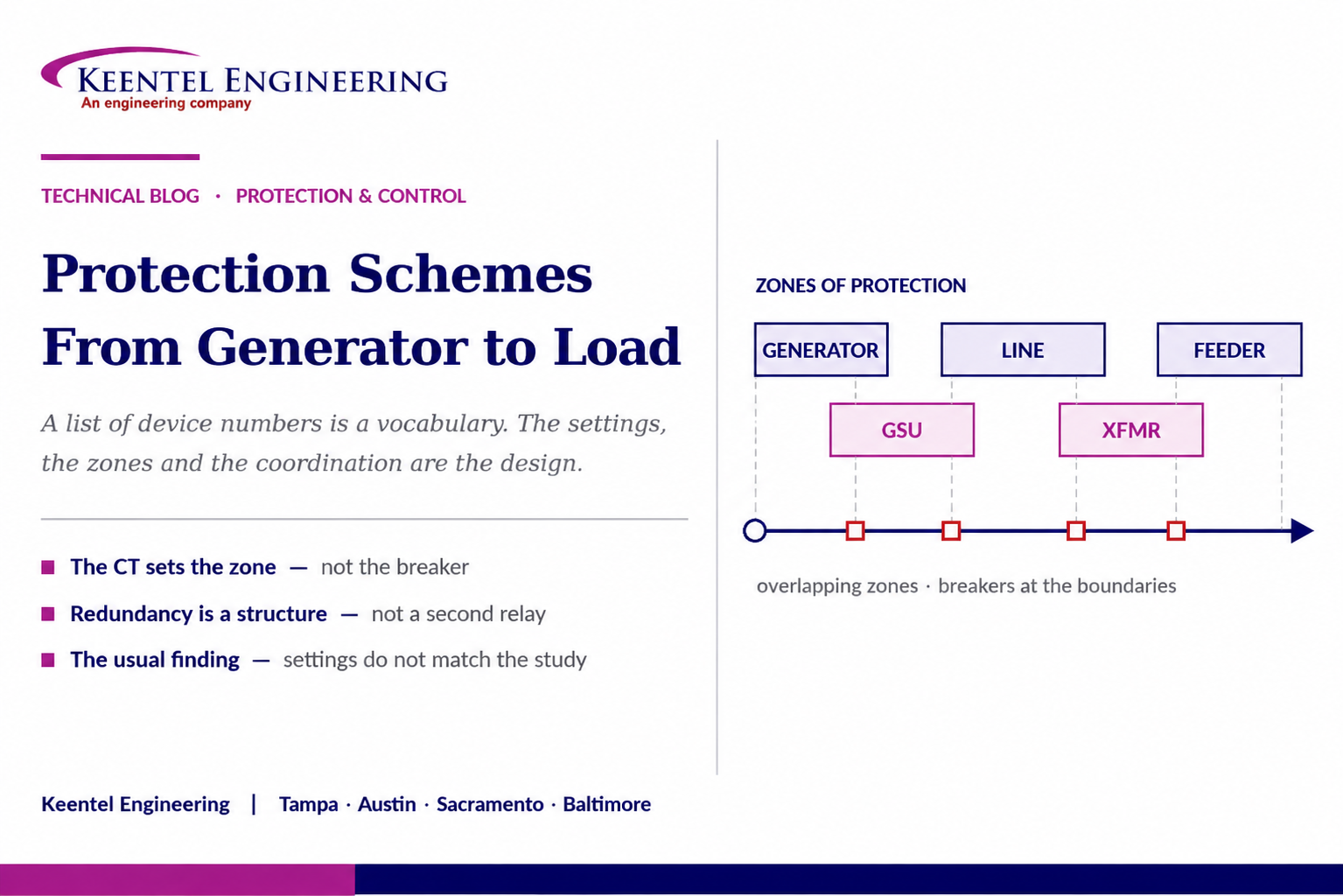
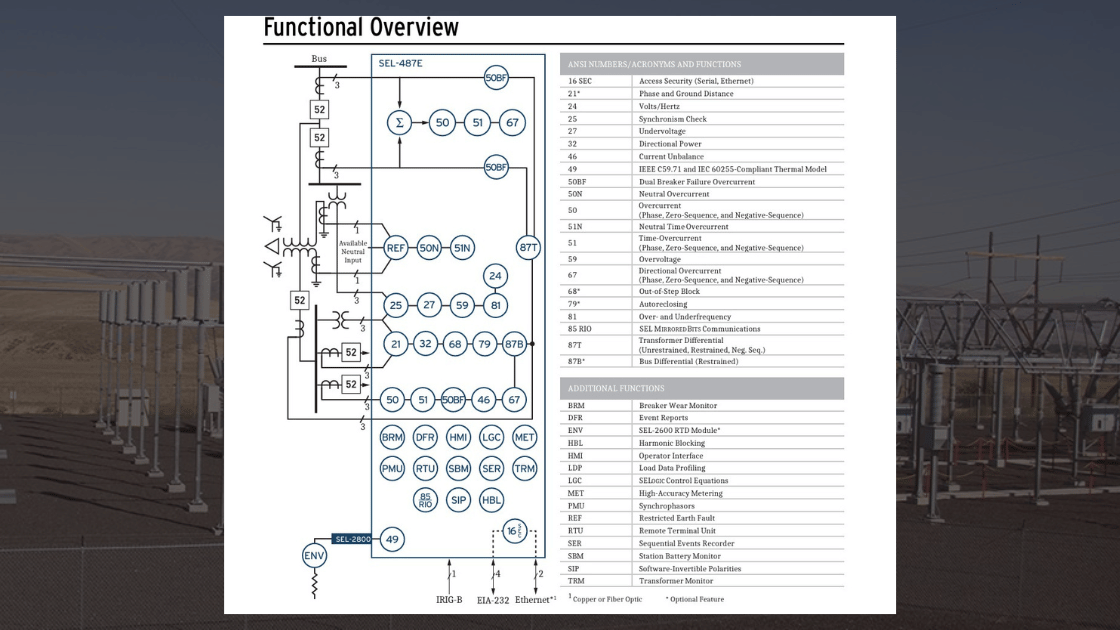
Protection philosophy, redundancy and scheme selection against the owner's standard.

Where the Study, the Design and the Compliance Obligation Meet. Protection scheme design, relay settings and coordination, IEC 61850 station architecture, SCADA integration and the PRC evidence that follows — at distribution, transmission and generator terminals, from 4 kV to 765 kV.
Your Trusted Partner in Electrical Engineering and Power Systems
At Keentel Engineering, we deliver electrical power engineering services built on 30 years of experience and a commitment to excellence. Our clients include utilities, developers, EPCs, and public agencies across the U.S.
Unlike firms that sacrifice technical depth to chase billable hours, we prioritize precision, compliance, and value engineering. From transmission services and relay modeling to winterization and SCADA planning, we never compromise on quality.

At Keentel Engineering, we take pride in being the go-to electrical power engineering firm for power and utility system planning, substation design, protection, control, and power system analysis. The following attributes distinguish our team in utility-grade substation engineering and compliance-driven project delivery.
With three decades of hands-on project delivery, we bring unmatched expertise in substation layout design, substation electrical and civil engineering, relay protection, and grid-tie solutions. Our experience includes projects in complex terrain, urban retrofit environments, and utility-scale renewable integrations.
Our engineering process applies AutoCAD 3D, BIM modeling, and system-level substation design practices to ensure accurate planning, reduced errors, and efficient coordination across all project stakeholders.
Our workflow includes 3D substation design, enabling clash-free coordination between structural, electrical, and civil disciplines.
From grounding grid studies to relay protection settings, we engineer every detail to improve system reliability, performance, and operational safety. Our rigorous QA/QC process ensures compliance with IEEE, NFPA, and ISO/TSO interconnection standards.
Among leading electrical substation design companies, Keentel Engineering stands out for 30+ years of proven high-voltage and utility-grade project delivery.




First name, email and what you're interested in are all we need to get moving. Everything else, including drawings or an RFP, is optional.
A setting sheet is the one document where a bus configuration, a fault study, an equipment rating and a reliability standard all have to agree at once.
That is why protection is where inconsistency surfaces. The coordination study assumed a fault duty the short circuit model no longer produces; the relay was replaced but the scheme was never re-verified; the setting in the relay does not match the setting in the compliance evidence.
We design the scheme, model the relays, produce and coordinate the settings, and support the testing that proves them — with the short circuit and coordination work that underpins all of it done by the same firm.
Scheme design · Relay settings · Coordination · IEC 61850 · SCADA · RAS and load shedding · PRC evidence

Protection philosophy, redundancy and scheme selection against the owner's standard.
One-lines, three-lines, AC and DC schematics, panel design, wiring and connection diagrams.
Short circuit, coordination, setting sheets, relay files and coordination curves.
IEC 61850 station architecture, SCD engineering, SCADA point lists and telemetry.
Test plans, witnessing, troubleshooting attendance and as-left review.
PRC evidence, maintenance program design, misoperation analysis and mitigation.
Every element is designed against a current IEEE guide. Several editions frequently cited in the industry are no longer current.
| What We Protect | Governing Guide | The Engineering |
|---|---|---|
| Transmission lines | IEEE C37.113 | Distance zone reach, directional comparison, permissive and blocking pilot schemes, weak infeed, single-pole tripping, reclosing and PRC-023 loadability. |
| Line current differential | IEEE C37.243 | Channel asymmetry, alignment, transformer treatment, charging-current compensation and backup protection. |
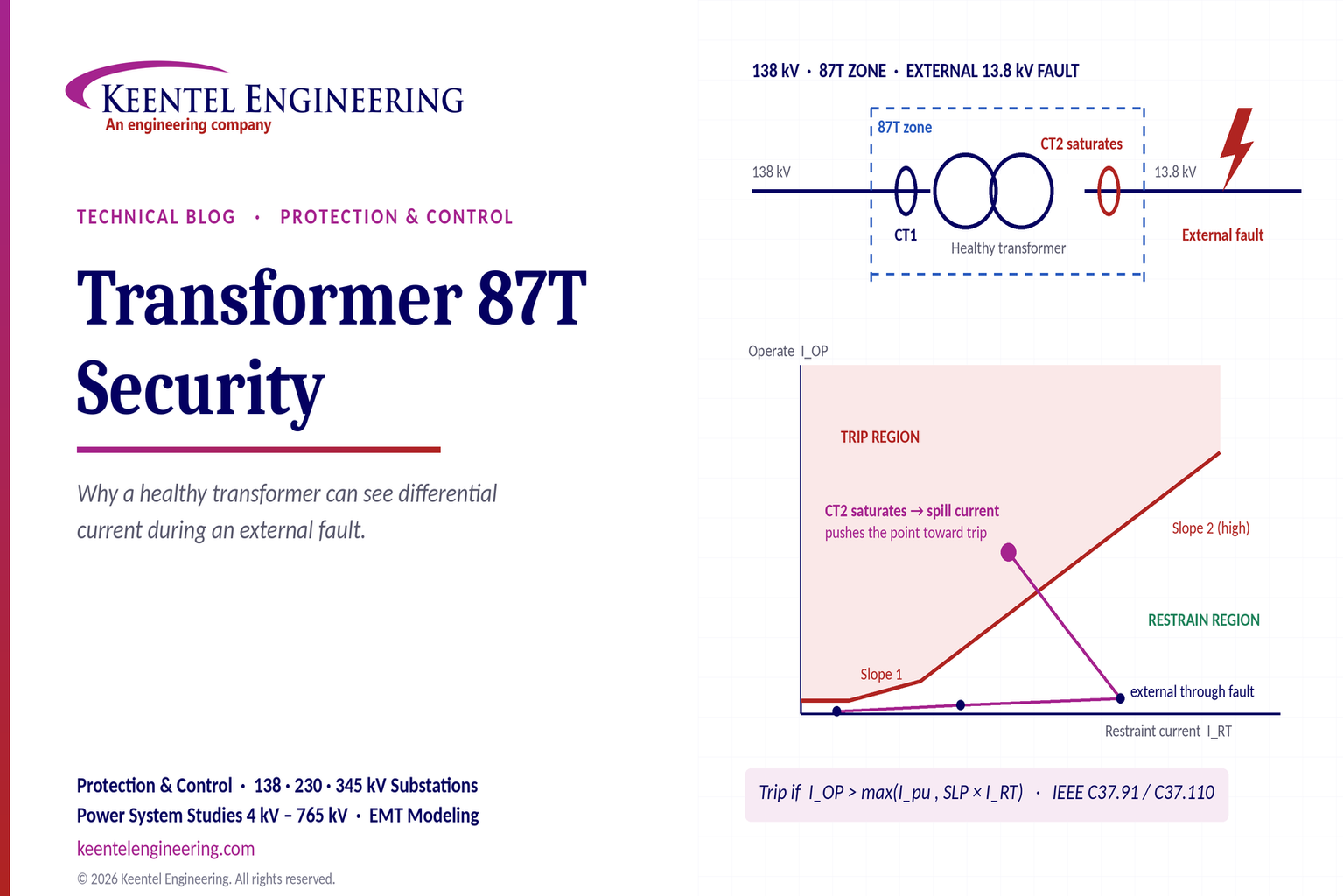
| Power transformers | IEEE C37.91-2021 | Percentage differential, inrush restraint, restricted earth fault, overload, cooling alarms and through-fault duty. |
| Buses | IEEE C37.234-2021 | Busbar differential, CT selection, saturation, dynamic bus replica and check-zone arrangement. |
| Generators | IEEE C37.102-2023 | Differential, ground fault, loss of field, negative sequence, reverse power, over-excitation, voltage and frequency protection. |
| Breaker failure | IEEE C37.119-2025 | Initiation, current supervision, timer coordination, retrip and adjacent-zone clearing. |
| Distribution feeders | IEEE C37.230-2020 | Overcurrent coordination, reclosing, cold-load pickup, fuse-saving and DER-aware settings. |
| Motors | IEEE C37.96 / 3004.8 | Thermal overload, locked rotor, starting, unbalance and differential protection. |
IEEE Std 242 was inactivated in 2021. Its content migrated into the IEEE 3004 series, including 3004.5, 3004.7, 3004.8 and 3004.11. Keentel identifies the applicable standard edition.
Primary and secondary protection, dual DC supplies, separate trip coils and independent measurement paths.
Ratio, accuracy class, burden and CT saturation under worst-case fault conditions.
Battery duty cycle, charger sizing, DC short circuit and voltage drop to the trip coil.
Where a protection philosophy exists, we design to it and identify conflicts. Where none exists, Keentel can establish redundancy, scheme selection and setting conventions.
No standard prescribes what a settings package must contain. This is what ours contains, and why each part is in it.

Replacing older relays requires re-deriving settings against the current fault study, re-verifying programmable logic, trip and close paths, communications and SCADA integration.
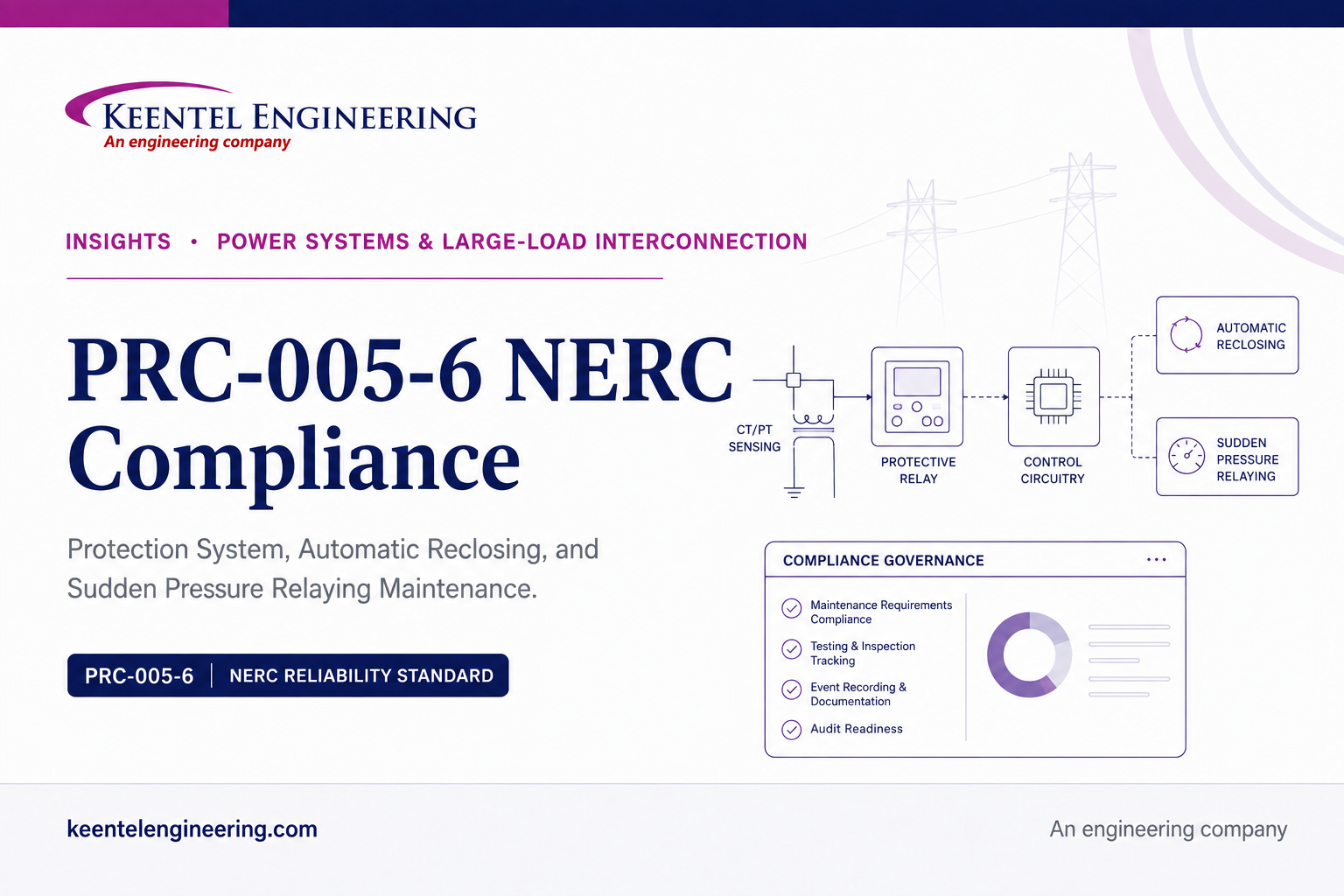
PRC-004 requires misoperation evidence and PRC-005 requires maintenance records. Keentel provides settings registers, revision histories and as-left documentation.
When selectivity and equipment protection conflict, Keentel presents the engineering exposure and options for a scheme change, device change or documented compromise.
Most PRC findings concern settings, supporting calculations or maintenance records that cannot be reconciled with the actual engineering evidence.
| Standard | Subject | Engineering Evidence |
|---|---|---|
| PRC-002 | Disturbance monitoring | Sequence of events, fault and dynamic disturbance recording, coverage and retrieval. |
| PRC-004-6 | Misoperation identification | Cause analysis, notification, corrective action planning and records. |
| PRC-005-6 | Protection maintenance | Maintenance program, intervals, justification and as-found/as-left documentation. |
| PRC-006 | Underfrequency load shedding | Allocation, relay settings, scheme design and supporting studies. |
| PRC-012-2 / PRC-017 | Remedial action schemes | Attachment 1, periodic evaluations, operation analysis and testing. |
| PRC-019 | Generator voltage control | Voltage regulator limiter, protection and equipment coordination. |
| PRC-023 | Transmission relay loadability | Loadability calculations and justified exceptions. |
| PRC-024-4 | Voltage/frequency protection | Generator and IBR settings within applicable no-trip envelopes. |
| PRC-025 | Generator loadability | Load-responsive protection on generators and associated equipment. |
| PRC-026 | Stable power swing | Screening and supporting studies. |
| PRC-027 | Protection coordination | Coordination processes and studies across owners. |
| PRC-028-1 | IBR monitoring | Event recording, UTC synchronisation, sampling and COMTRADE/CSV data. |
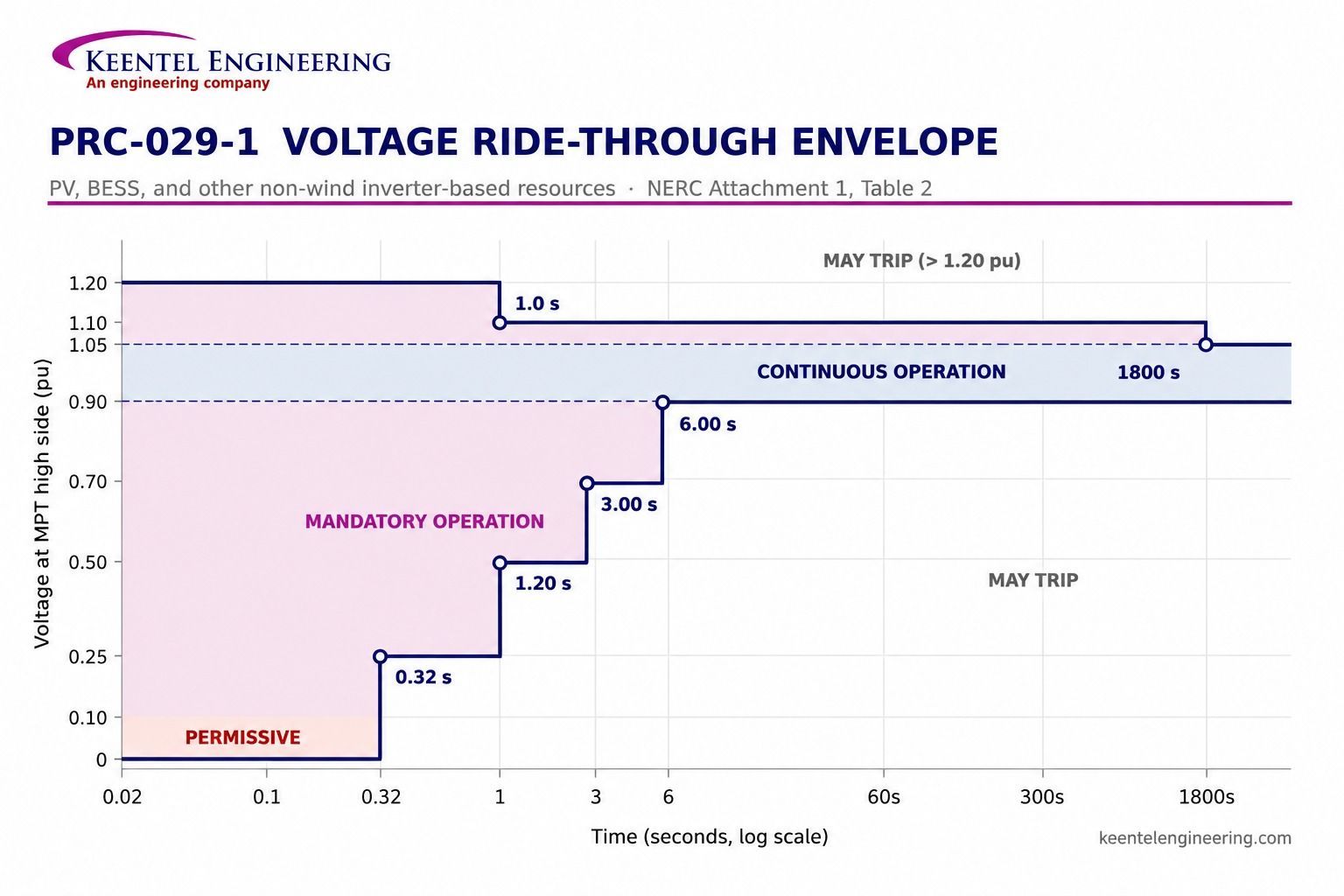
| PRC-029-1 | IBR ride-through | Ride-through, reactive support, current prioritisation and restoration. |
| PRC-030-1 | Unexpected IBR events | Event analysis, technical justification, corrective action and mitigation. |
Keentel produces technical engineering evidence. NERC CIP cybersecurity is handled as a separate discipline coordinated with the client's cybersecurity team.
Protection setting changes, OEM availability and technical evidence preparation are central to inverter-based resource compliance.

Frequency and voltage protection settings inside the applicable no-trip envelope.
IBR ride-through, reactive support, resource applicability and hardware limitations.
Unexpected IBR event identification, analysis, correction or technical justification and mitigation.
The July 2026 NERC compliance bulletin warned about limited availability of qualified inverter OEMs and contractors needed for setting modifications.
Determine applicability, establish the required envelope, identify affected elements and produce a verified OEM change list.
Implement changes to inverter firmware. That task belongs to the OEM, not Keentel.
Determine captured plants, resource types and dates.
Compare current settings with required values.
Document as-left records and the technical basis.
Applicability, standard editions and compliance dates must be verified for each engagement.
Four Western Interconnection disturbances in four months resulted in major output losses from solar, wind and BESS resources.
| Disturbance | Lost | What Happened |
|---|---|---|
| Vincent 500 kV — 25 March 2024 | 1,046 MW | Phase-to-ground fault. 28 solar PV and wind units tripped. |
| Hickory–Red Butte — 12 May 2024 | 532 MW | Phase-to-phase fault. Eight solar PV units tripped. |
| Windhub — 20 May 2024 | 698 MW | Differential protection operation. 22 solar, wind and BESS units tripped. |
| Midway–Vincent — 15 June 2024 | 934 MW | Fire-induced line trip. 37 solar, wind and BESS units tripped. |

Keentel develops an as-left baseline so that post-update verification is a documented comparison.
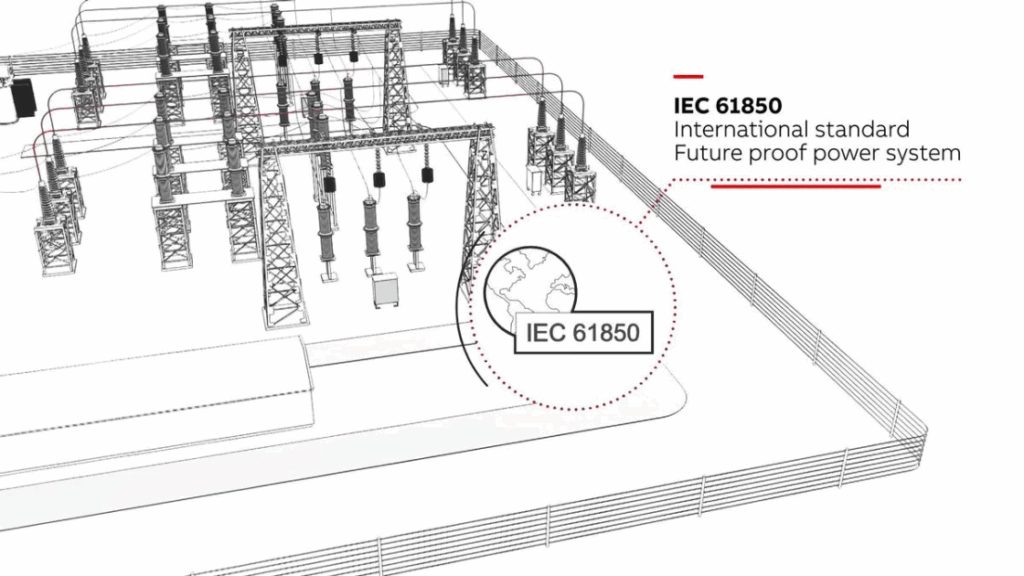
Station bus is mainstream. Process bus is not. Digital substation architecture must reflect the owner's actual testing and maintenance capability.
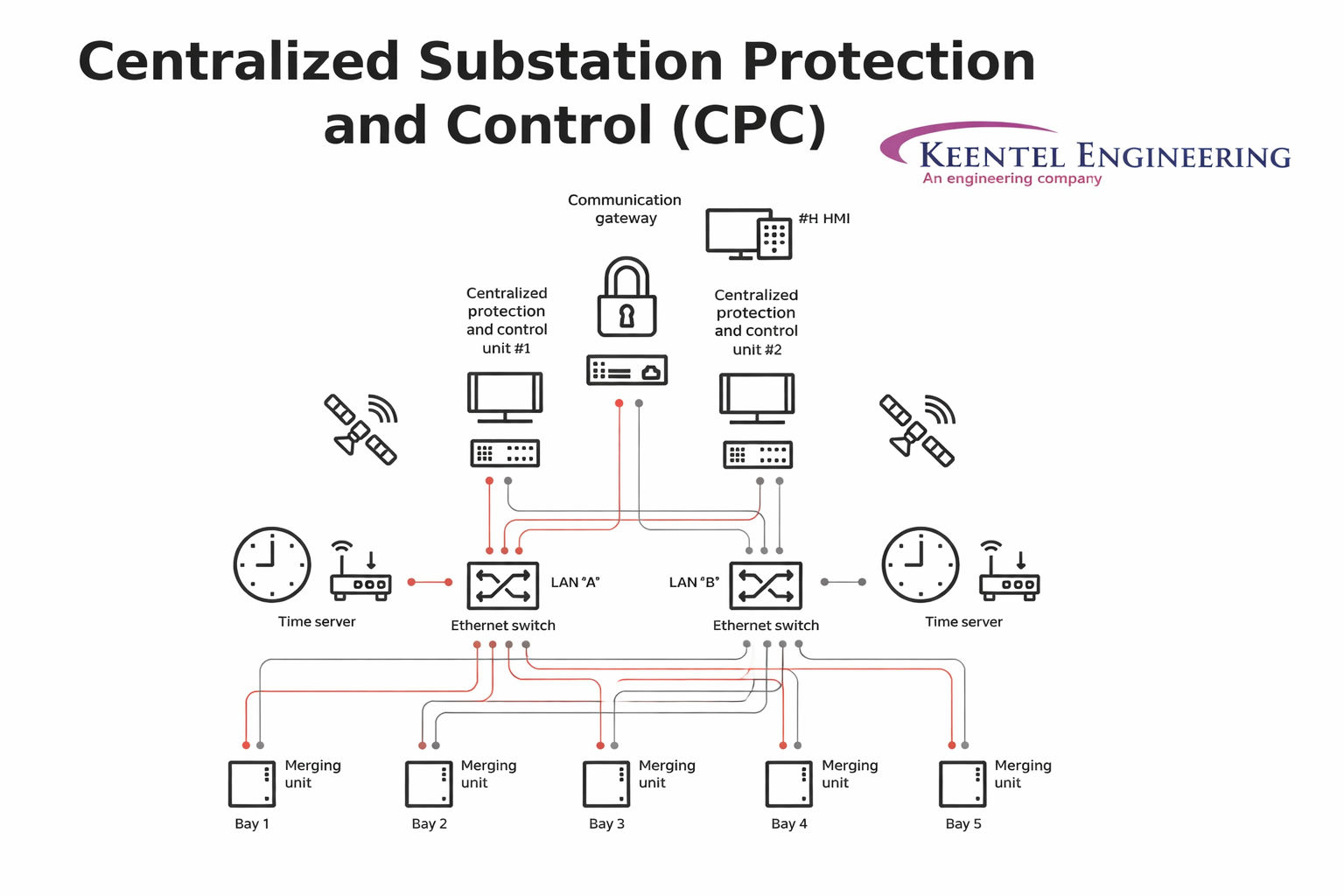
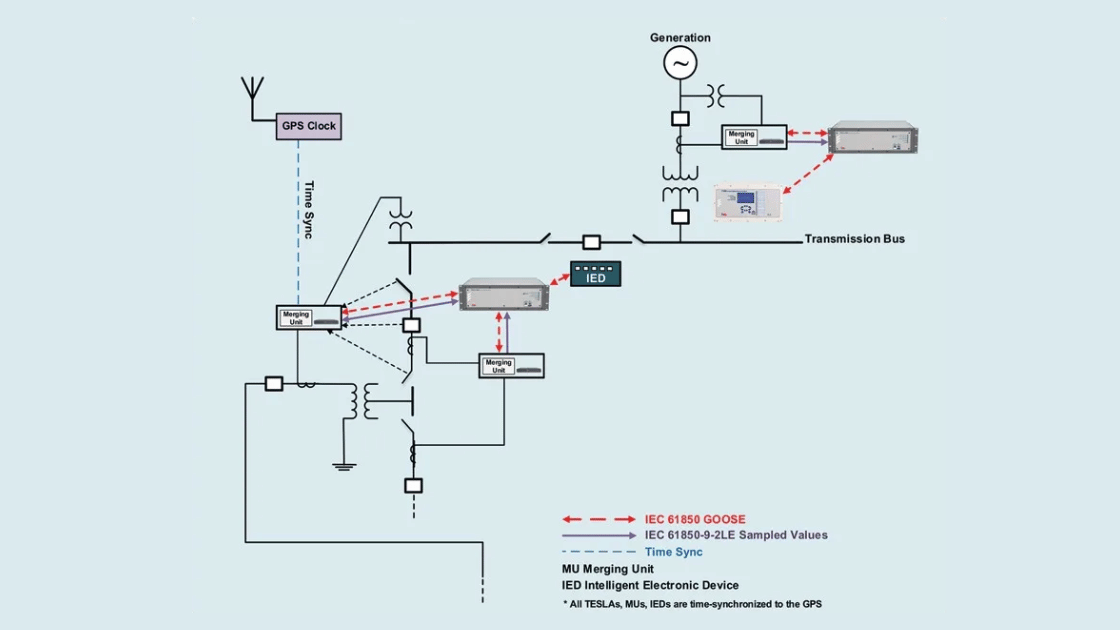
Keentel engineers station architecture, GOOSE protection schemes, SCL and SCD configuration, SCADA data models and project-specific integration testing.
Network topology, PRP and HSR redundancy, time synchronisation and separation of protection from station traffic.
Interlocking, breaker failure initiation, transfer trip and blocking, with supervision and performance requirements.
System specifications, IED capabilities, instantiated descriptions and station configuration documentation.
Logical nodes, datasets, report control blocks and SCADA/historian point mapping.
Merging units and sampled values evaluated against testing and maintenance capability.
Factory and site testing, project-specific interoperability verification and handover.
Certification alone does not prove that multiple vendors' devices will operate together in a particular protection scheme. Project-specific SCD engineering and integration testing are still required.
These schemes act on the power system rather than only one protection element, and they carry demanding documentation requirements.
PRC-012-2 lifecycle documentation, Reliability Coordinator review, periodic evaluations, event analysis and PRC-017 maintenance.
PRC-006 underfrequency load shedding, allocation, relay settings, supporting studies and applicable UVLS programs.
PMU placement, specification, data concentration architecture and event analysis under IEC/IEEE 60255-118-1.
Keentel develops scheme logic, arming and operating criteria, supporting studies, Attachment 1 packages and testing procedures.
Logic, arming criteria, documentation and periodic evaluation support.
Allocation, protection settings, program design and verification.
PMU specification, disturbance analysis and data architecture.
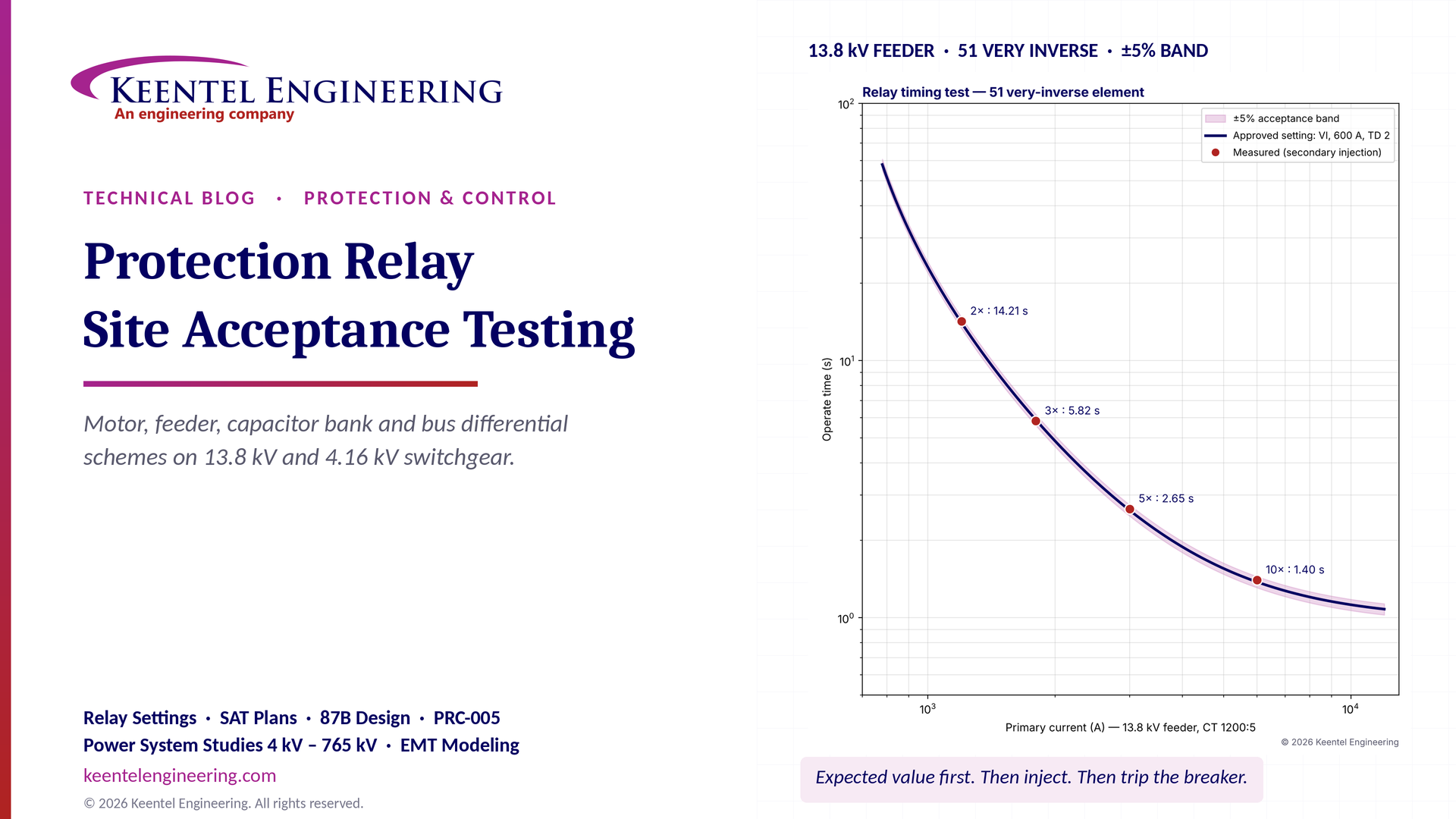
We write the test plan, attend the test and review the results. We do not self-perform relay testing.
Field execution, calibrated test equipment, accredited reports, isolation, safety and switching.

Power system protection testing guide.
Acceptance testing specifications.
Maintenance testing specifications.
Synchronised testing at both line terminals verifies relays, logic, communications and timing.
Settings, records and human performance are important addressable factors in protection misoperations.

The client flyer reports 133 misoperations in 2024, compared with 277 in 2016. Its cited assessment attributes causes to equipment failures (44%), human performance (39%) and unknown or other (17%). These are regional figures.
Generation additions, new lines and transformer replacements can change source impedance and coordination.
New relay capabilities may change coordination and incident energy.
Compare actual settings against the documented as-left baseline.
Settings audits against current models, fleet-wide comparisons, coordination reviews and maintenance program assessments address exposure before the next event.
Incident energy depends on available fault current and clearing time. Protective settings influence clearing time after installation.
Short circuit, protection coordination and arc flash results come from one maintained system model with consistent assumptions.
New generation, transformer replacements, source upgrades and settings adjustments can invalidate previous labels. Re-analysis maintains the accuracy of the results.
At qualifying facilities, protection and control assets may fall within the owner's BES cybersecurity program. Our engineering operates within applicable access, approval and change-management controls.
Keentel works within the client's CIP change-management, patch and electronic access controls. It does not offer CIP cybersecurity compliance services or act as the responsible entity.
Field verification, drawing reconciliation and as-found settings retrieval can form the first project phase.
Naming the cyber boundary at the start keeps protection engineering scope, approvals and implementation paths clear before settings, firmware or access-related changes begin.
Protection philosophy, relay settings, coordination studies, short circuit, equipment duty and arc flash studies.
Panel design, wiring diagrams, AC/DC schematics, IEC 61850 SCD and SCADA telemetry.
RAS documentation, commissioning plans, PRC evidence packages, settings audits and misoperation analysis.
Multi-year protection and control design across seven EHV bulk supply point substations at 380 / 132 / 33 / 13.8 kV class for a national transmission utility.
132 kV GIS grid station primary and secondary design across three 50 MW wind projects. Client references available under NDA.
Voltage, configuration and what is protected.
Models, firmware and whether they are staying.
A replacement, new terminal, finding or event.
Working within yours or supplying design input.
Short circuit, protection settings, arc flash and equipment duty use consistent assumptions.
Applicable editions are identified rather than relying on superseded guidance.
PRC obligations are considered alongside engineering decisions.
Keentel plans, witnesses and troubleshoots; qualified contractors execute relay testing.
Engineering conclusions and calculations are documented for technical review.
Florida-registered firm, Reg. No. 36853, with engineering prepared for utility review.
NERC PRC standards, IEEE C37 guides, IEEE 3004 series, IEEE 1584/1584.1, IEC 61850, IEC/IEEE 60255-118-1, ANSI/NETA ATS and MTS, NFPA 70 and NFPA 70E. The source flyer is dated August 2026; applicable editions and compliance dates should be verified for each engagement.
Share your one-line diagram, relay list and project requirements. Our engineering team will help define the technical scope, required inputs and next steps.
Serving utilities, EPCs, developers, and infrastructure organizations supporting critical power systems nationwide.